Youth!

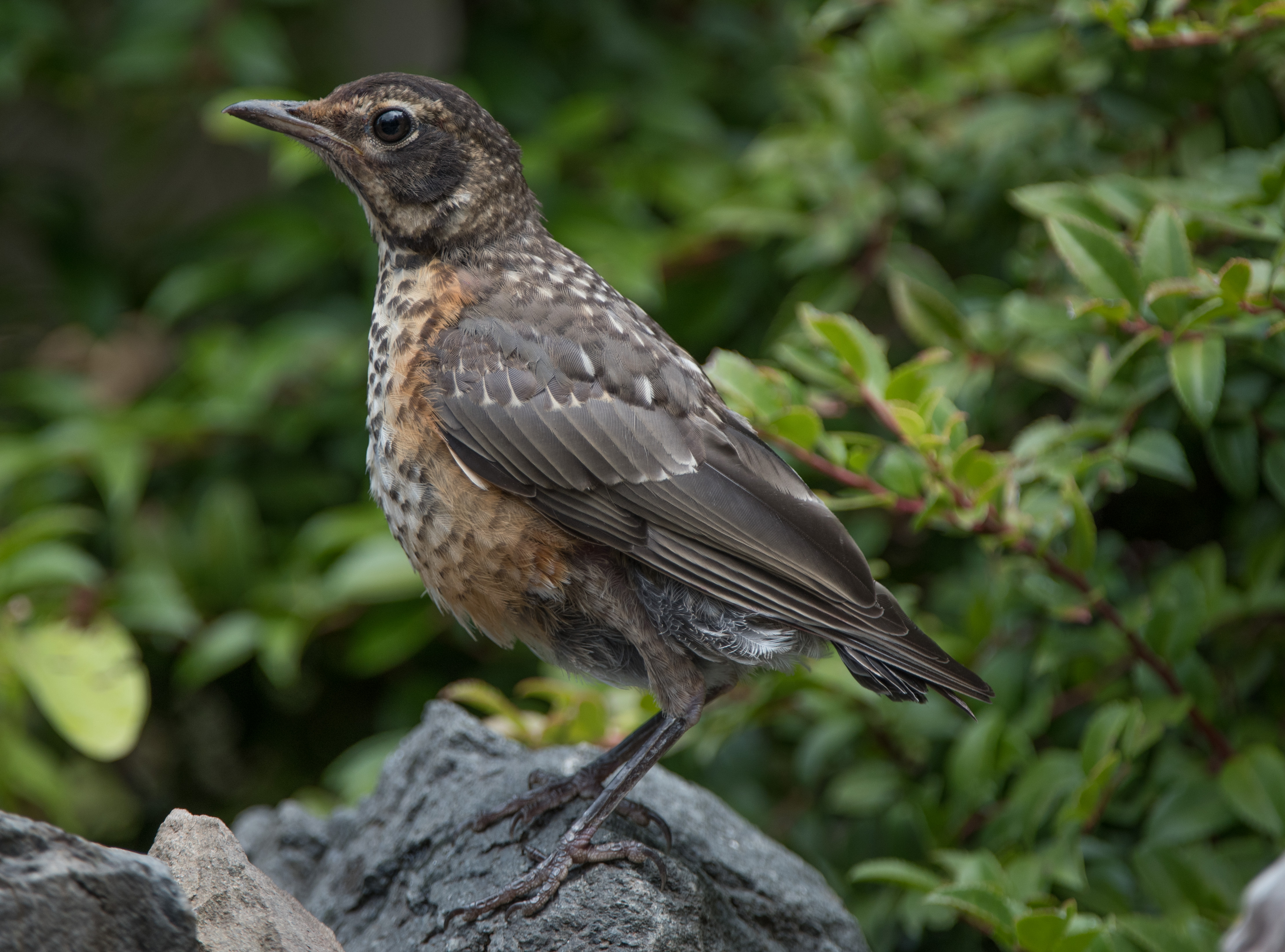
As I mentioned in a prior post, we have begun to see the results of a successful breeding season in the area.  And thus far it’s even more successful because we have yet to see any cowbird juveniles in the yard.  Interestingly, all of the juveniles we’ve seen so far are the product of year-round residents, which presumably had an earlier start at breeding and nest building.  So this post will feature some of the juveniles we are seeing in the yard.

Here are photos of juvenile Pine siskins, the first sitting on a branch and the second being fed by an adult.

This is a Dark-eyed junco (Oregon race) that has been around the yard for a week or so now. It has been operating fairly independently almost from the day it arrived.  I have one photo of the parents in attendance but after that day the juvenile has been on its own with no attention from the adults.

If it were not for that first photo I took I would have had a difficult time determining the juvenile’s identity.  I think this is the cutest of the juveniles we have.

Here’s a juvenile House finch begging Dad for food…

And later after the parent has left.

A juvenile House sparrow

And several photos of the male Downy woodpecker feeding a juvenile male suet.  Interestingly enough, I haven’t seen the female involved in any feeding activity.  The juvenile male finally managed to access the inverted suet feeder after two tries about 5-6 days after these photos were taken.

In this photo the young woodpecker joined the father on the peanut feeder but was only obtaining food that he was fed by his father, not directly from the feeder although the food was right in his face!

I saved this photo because of the story behind it.  The young Downy had been sitting on this branch being fed by its father.  Its father was away from the perch when a crow flew into the yard.  The young woodpecker, already mindful of its safety, immediately moved to put the branch between himself and the crow. 


Build It and They Will Come!

I was only able to spend about an hour and a half in the yard late on the afternoon of June 2, but I obtained some very nice photos of some of my visitors.  I’m just going to post some of the photos I took without much explanation.

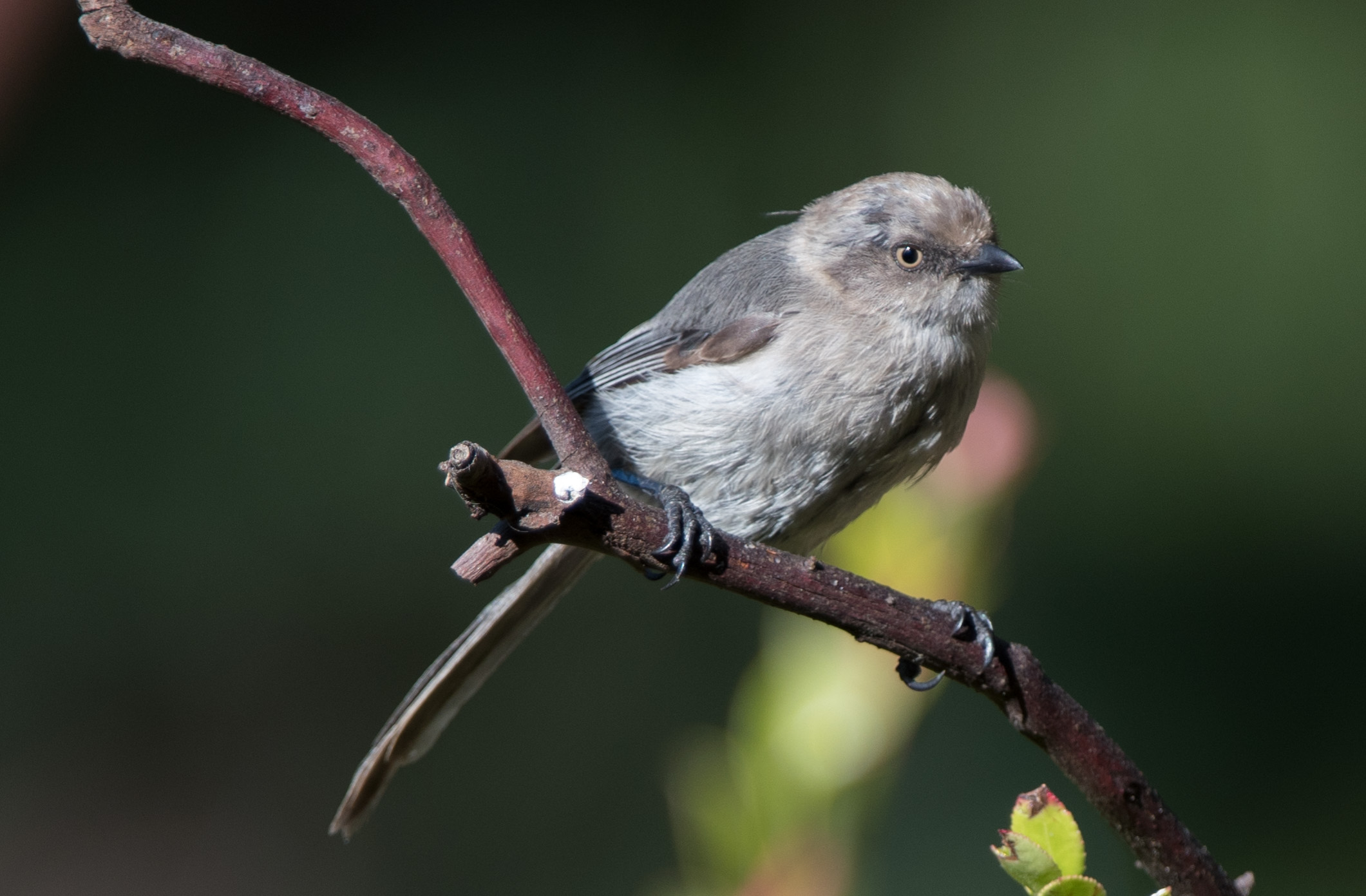
Male Bushtit

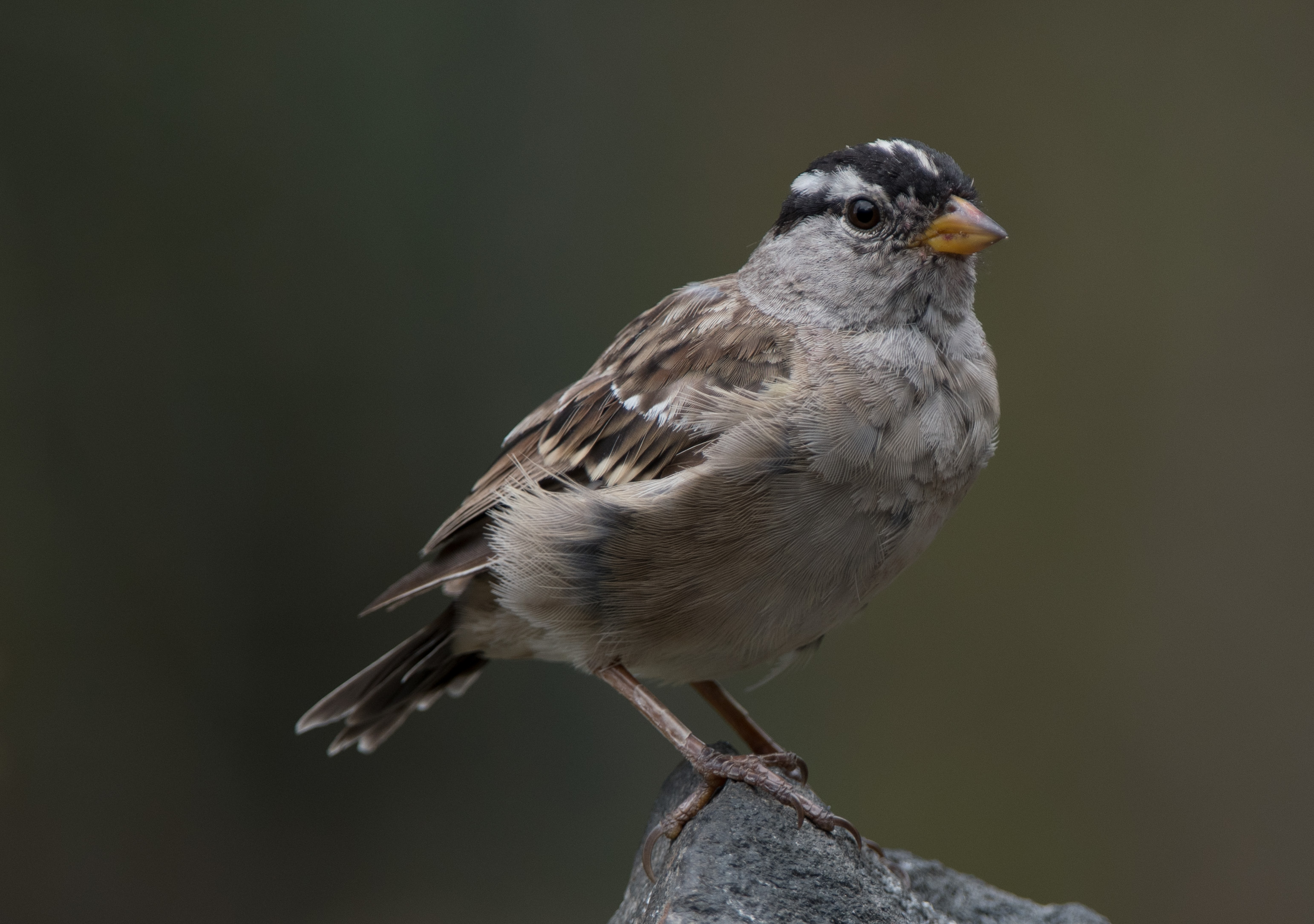
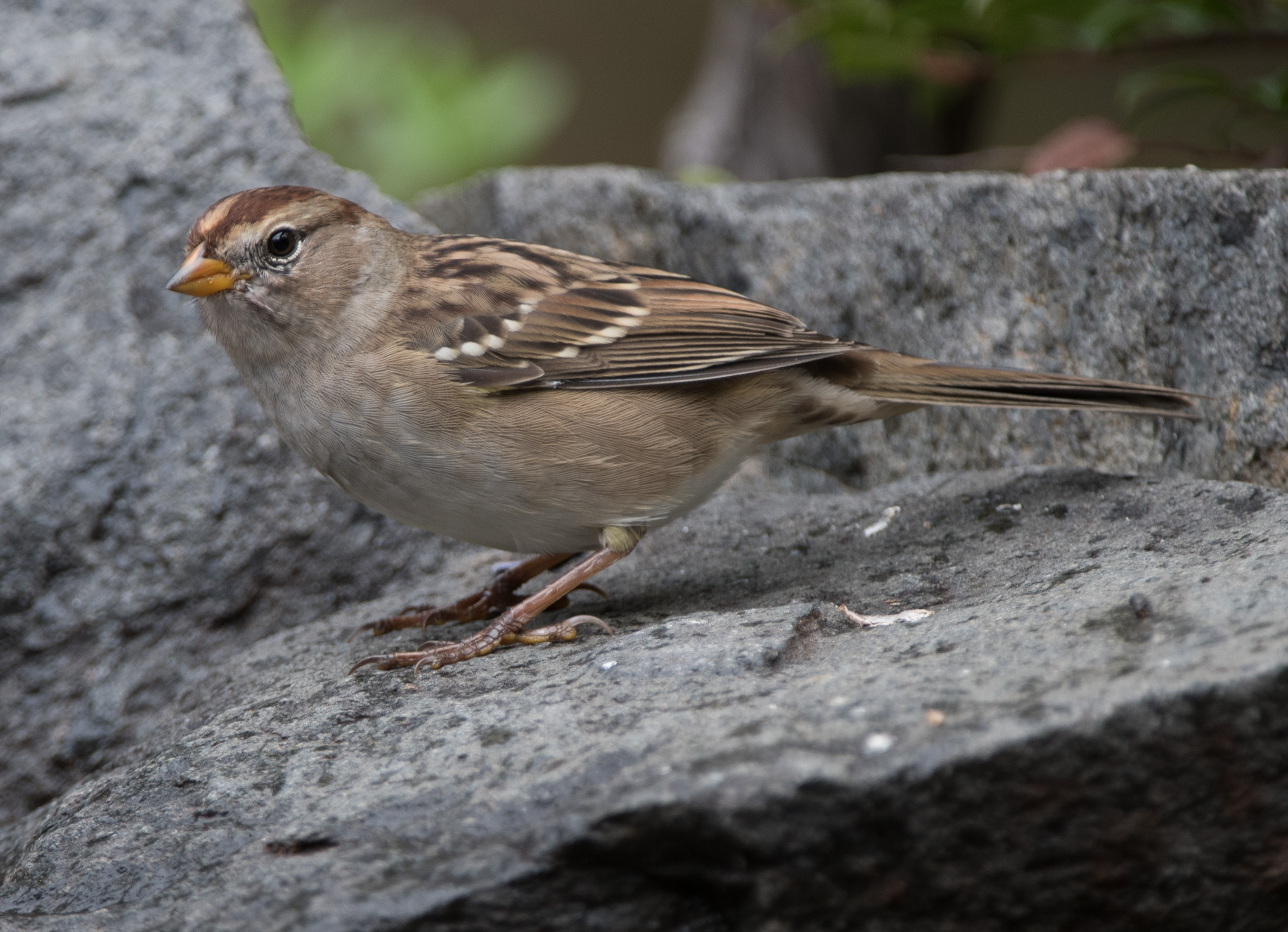
White-crowned sparrow

Female Brown-headed cowbird.  (I later saw the male through the kitchen window.)

European starling

Male American goldfinch

Spotted towhee.  I’m fairly certain that this is a male but I sometimes have difficulty distinguishing the sexes of the pair I have in the yard unless I see them together.

And just about when I had given up on warblers, I had an Orange-crowned warbler and a male Yellow-rumped warbler (Audubon’s) visit the yard in fairly quick succession.

These weren’t the only birds I photographed and of course they aren’t the only photographs I have of the birds I did photograph.  Habitat rewards!

Late Spring Yard Birds

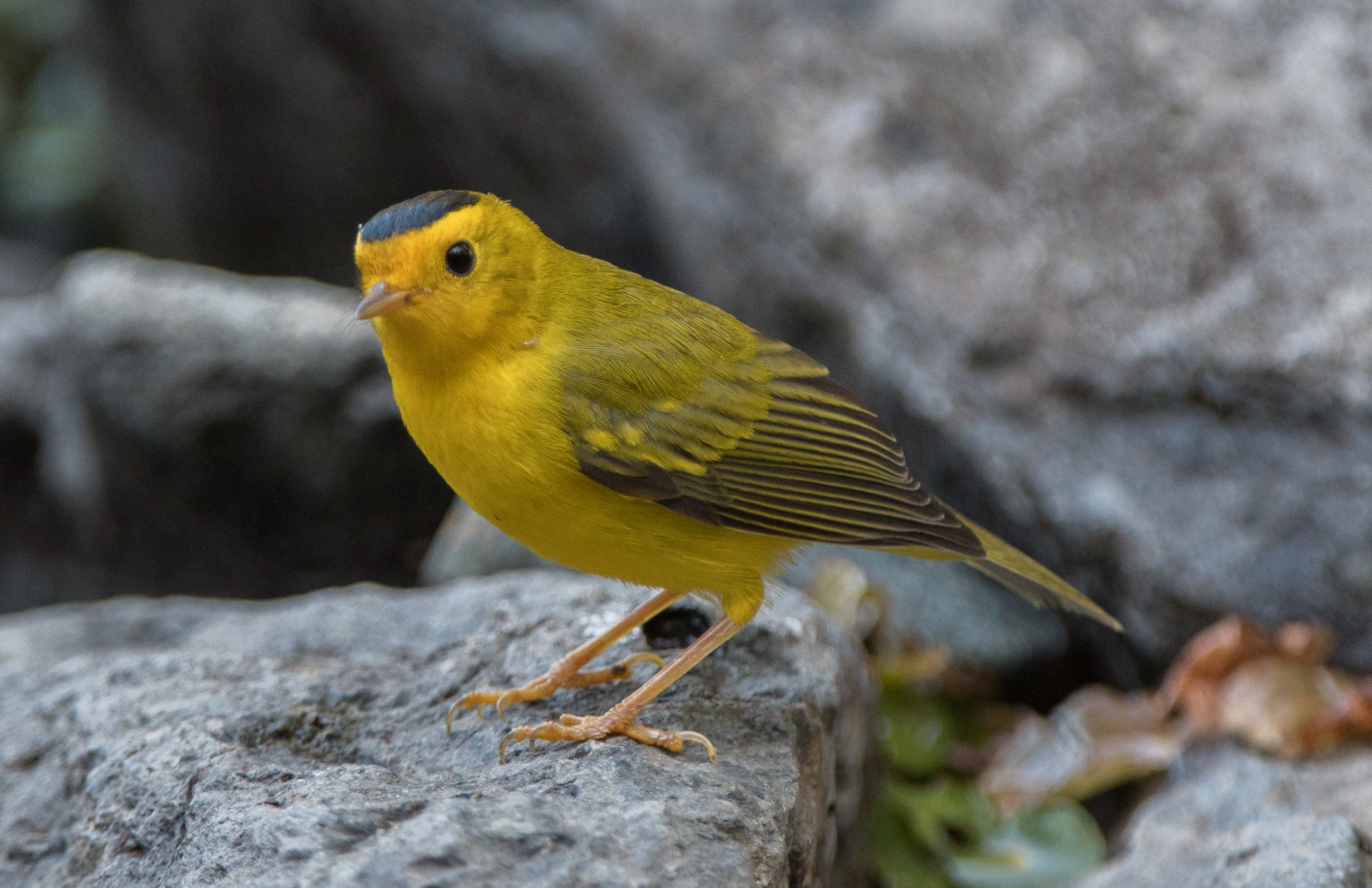
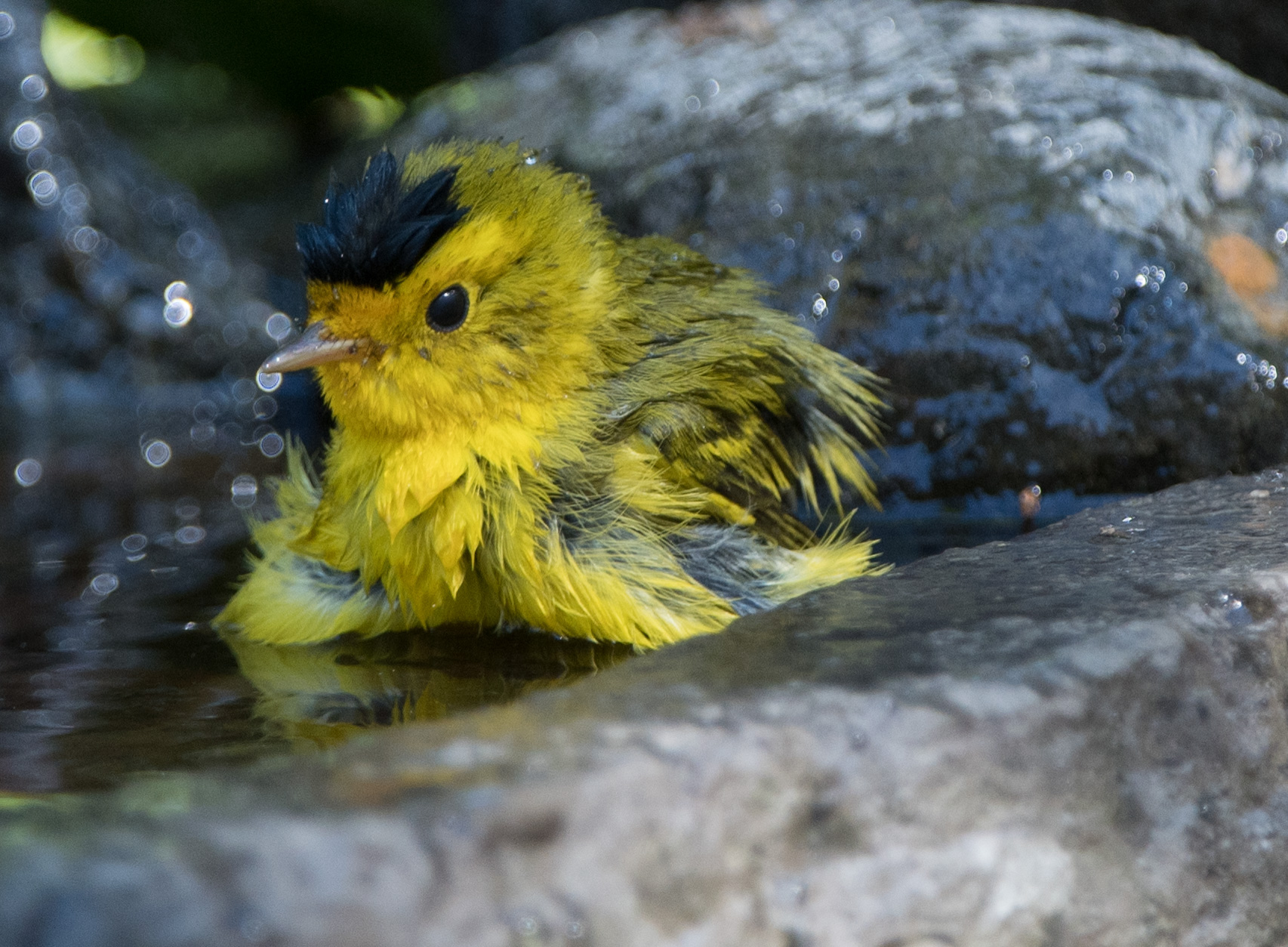
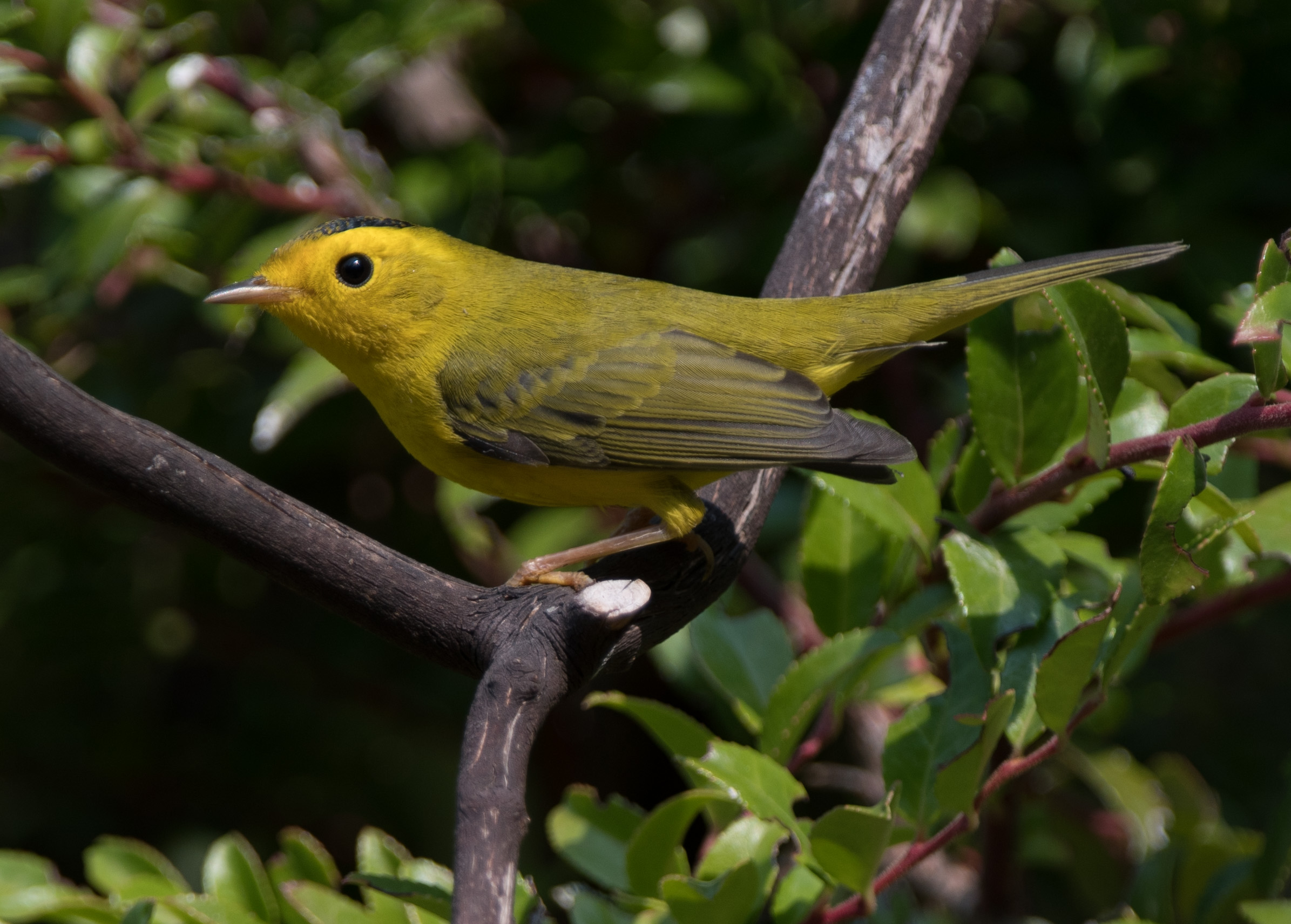
We had a great influx of warblers and other migrants for the first three weeks or so of May but things dropped off rather rapidly after that.  We had many sightings of Wilson’s warblers (probably our most numerous), Orange-crowned warblers and a few sightings of male Yellow-rumped warblers and two sightings on the same day of a MacGillivray’s warbler.  It pains me that despite two visits I obtained no photos of the latter!

Things have settled down now so I’m going to post some of the 171 yard photos I kept from May 17, 2017.  (This daily total included 50 photos of Wilson’s warblers.)

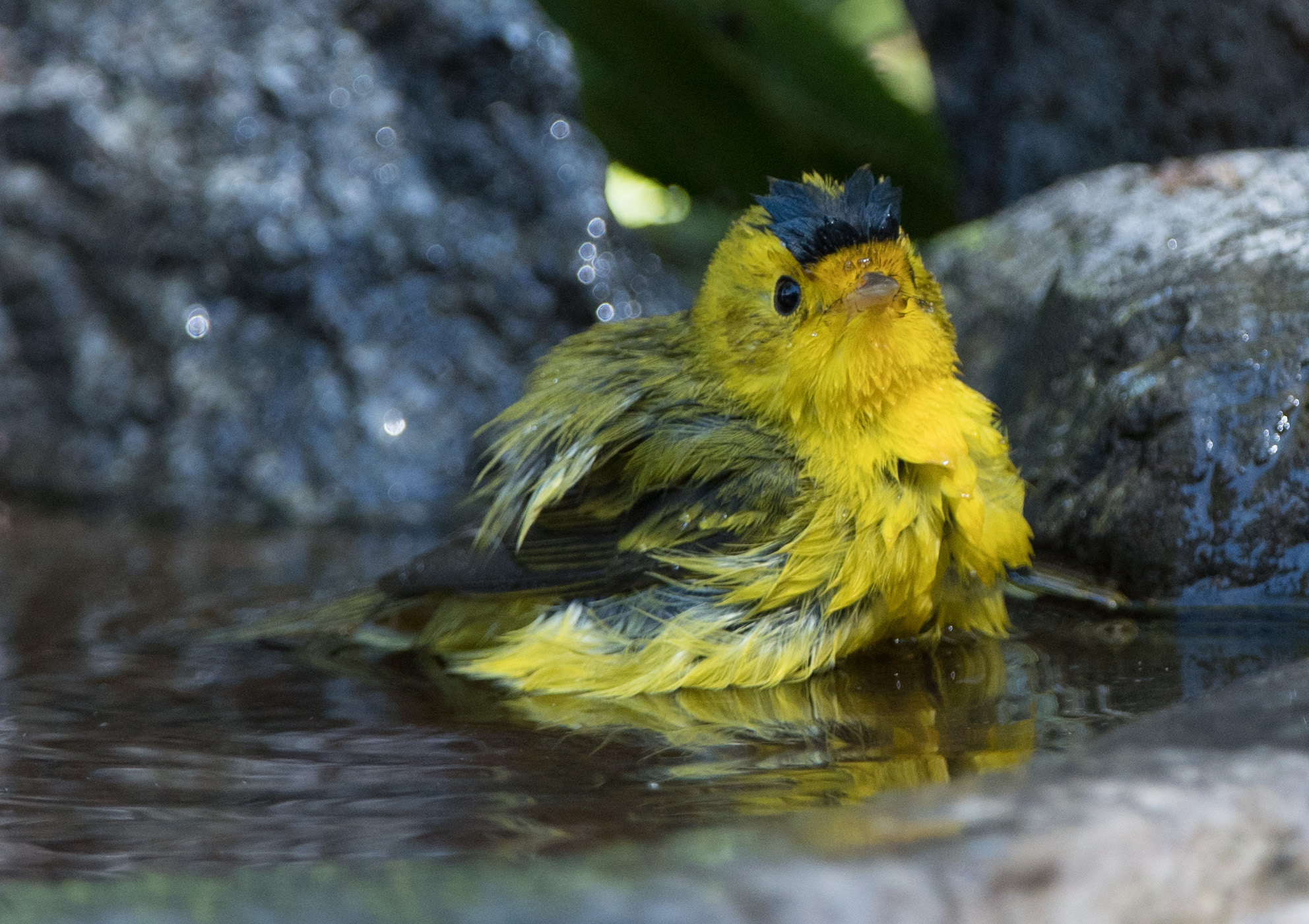
This is a male Wilson’s warbler as evidenced by the black cap.

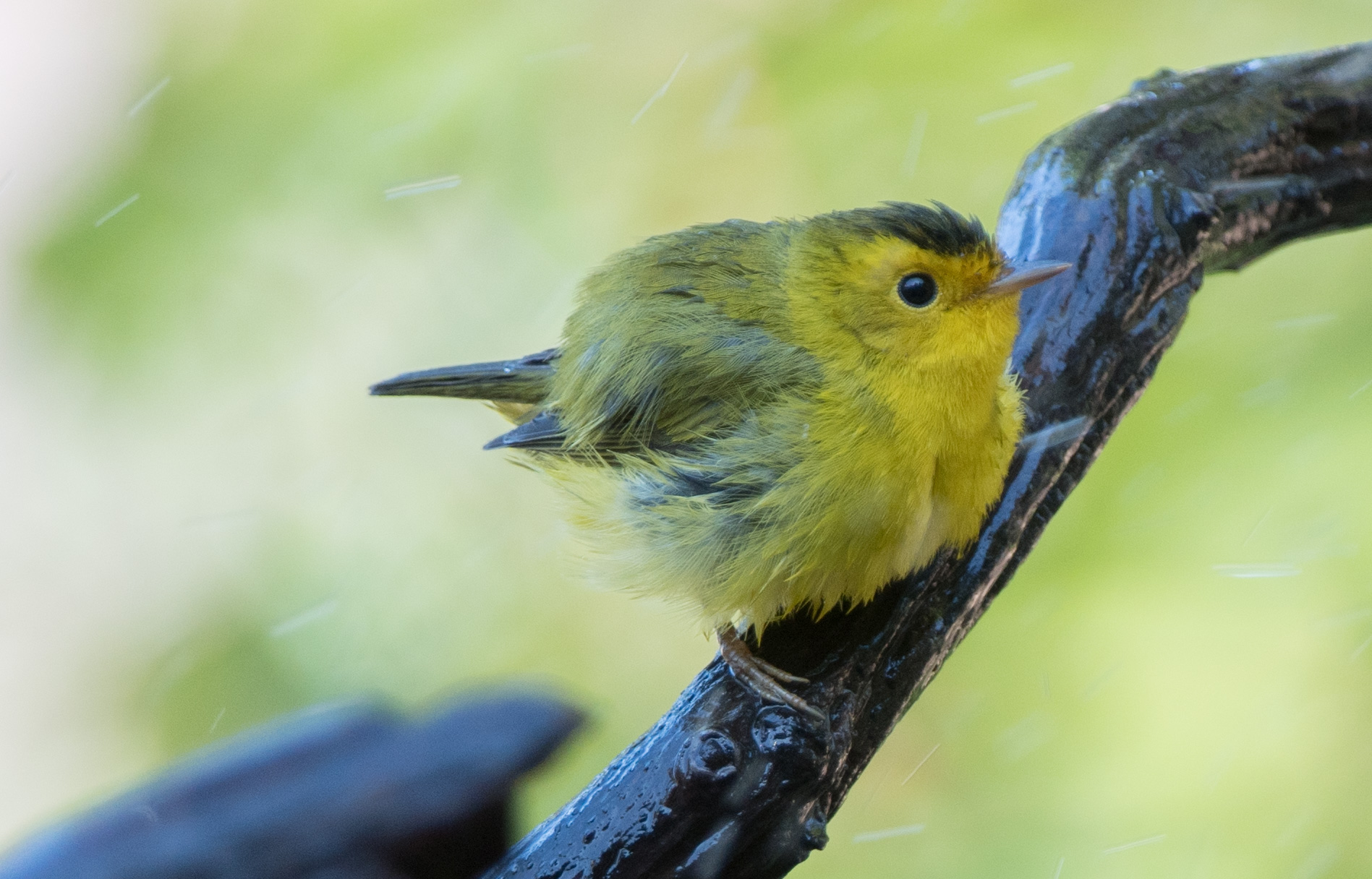
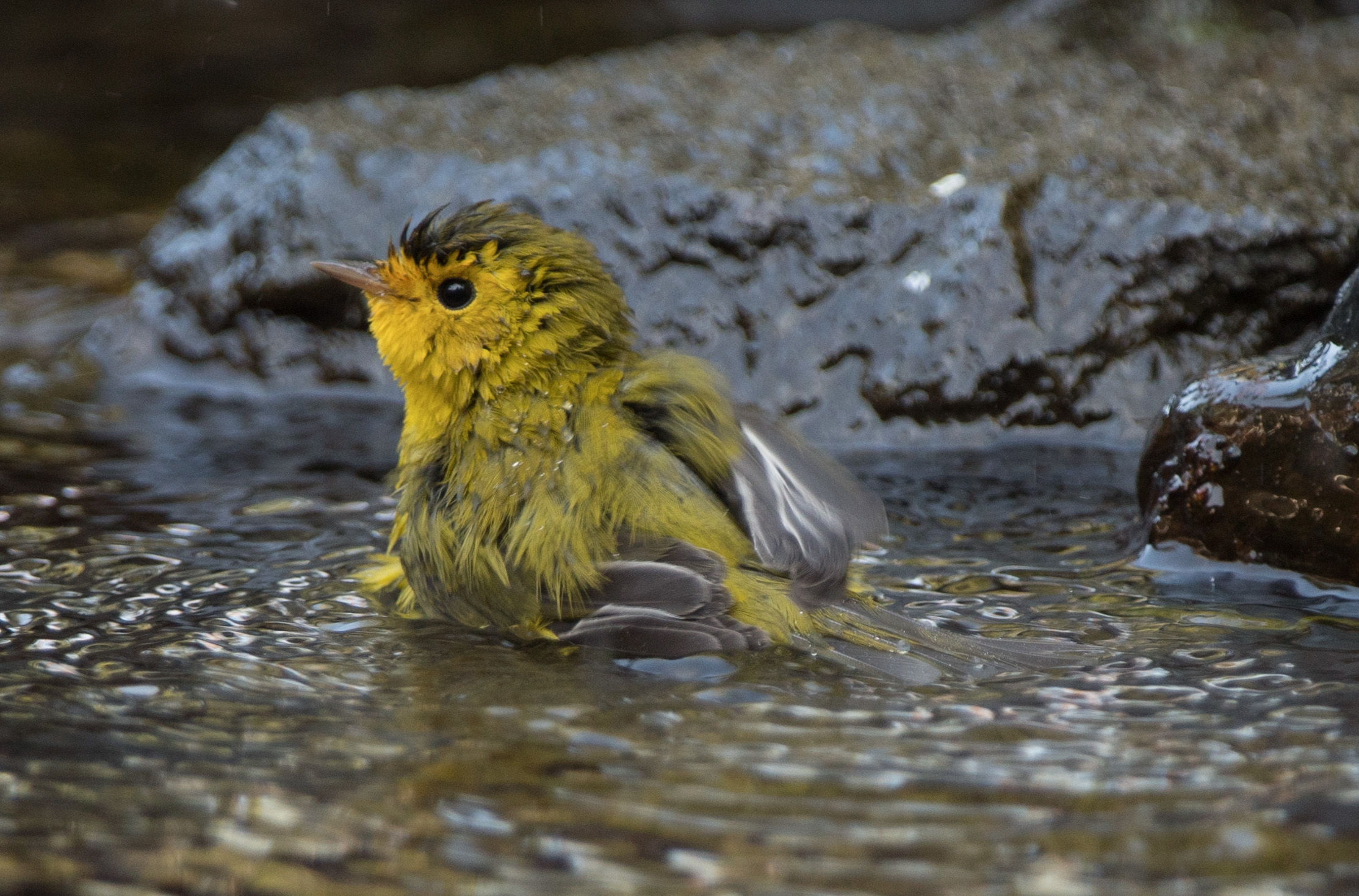
The female Wilson’s warbler‘s cap, pictured below, is much more subtle.  The challenge to birders identification of the sexes is that the birds are usually up in the trees

Here’s a photo of an Orange-crowned warbler.  The orange crown is normally very difficult to see, but I get to view it by virtue of the birds taking baths and getting the tops of their heads wet from which the orange crown often emerges.

A male American goldfinch with a Pine siskin behind it.  We usually have from 15-20 goldfinches in the yard at any one time.

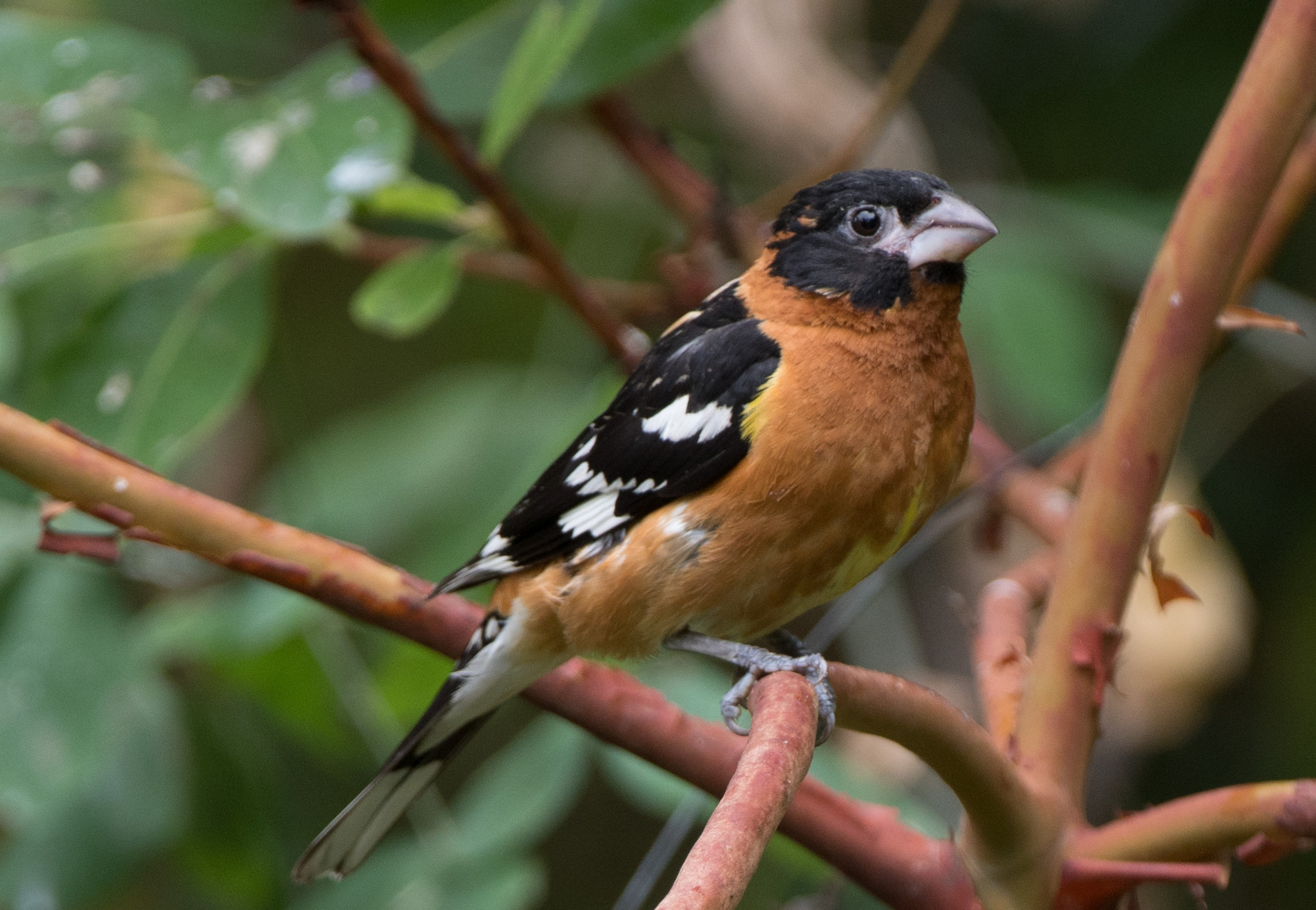
A male Black-headed grosbeak

We have a pair of crows hanging out in the yard, mainly bringing food in to hydrate it in one of our bird baths so that they can get moisture to their young.  (My theory!)

And the star of the show on this particular day… visits by a Warbling vireo.

It’s that time of year and though the visits from some migrants have slowed to a trickle, I’ve observed the following species feeding young in the yard:

  • House sparrows 
  • House finches 
  • American goldfinches 
  • Pine siskins 
  • Downy woodpeckers 
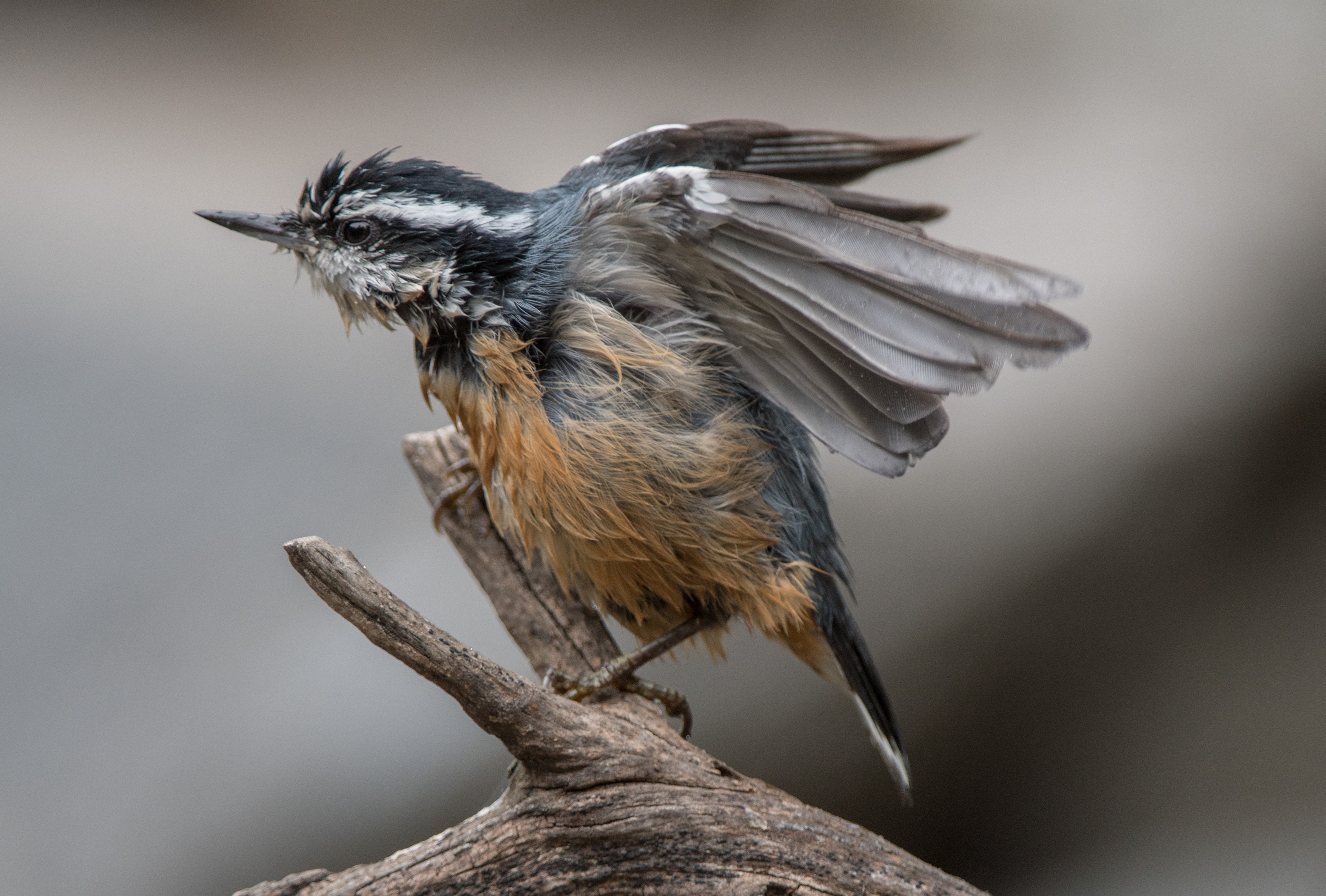
  • Red-breasted nuthatches 
  • Dark-eyed juncos (Oregon race) 
  • Spotted towhees 

Today (5/31/2017), for the second time, I observed an Osprey flying overhead carrying nesting material in the form of a stick.

Disaster in the Yard!

There is lots of news from the yard as of late. On the afternoon/evening of Tuesday, May 23 the wind began increasing until by 7-8pm we were in the midst of a full-scale gale… one of the most severe I can remember in the sixteen years we’ve lived here. (Friends and relatives in Bellevue and Oregon seemed to have escaped the phenomenon.) Before dark my wife looked out the kitchen window and told me that I wasn’t going to like what had happened in the yard. I looked out and saw that the trunk of the large madrone tree (~20’ tall), the main bird staging object for the entire yard, had snapped about eight feet off the ground! This was an absolute disaster as far as birding is concerned. The birds used the tree as the major center staging area for the yard and I’ve photographed many birds in that tree. Now it was gone!

I carefully inspected the tree the next day (Wednesday, May 24) and determined that if I cut off about the bottom six feet of the top of the tree I might be able to salvage it for a non-living staging structure adjacent to the watercourse, and over the next few hours that’s exactly what I did. (I have photos of all of this but unless you are familiar with the yard you wouldn’t be able to notice the changes.) The loss of the madrone tree has changed the fundamental birding traffic flow in the yard and I’m still trying to adjust.
Early in the day (Wednesday, May 24) we had a visit from a MacGillivray’s warbler, and late in the afternoon when I was involved in my salvage/clean-up project the warbler returned. Very unfortunately I wasn’t able to get a photo of the bird on either visit. However, after the project was mostly finished, I had a visit from a Wilson’s warbler and another, which I managed to photograph, from a male Yellow-rumped warbler (Audubon’s race) which actually used the new staging tree and which I managed to photograph.

On a more positive note, while in the yard this afternoon (Thursday, May 25) a pair of Osprey made several over-flights and during one the Osprey was dangling a stick about two feet long.

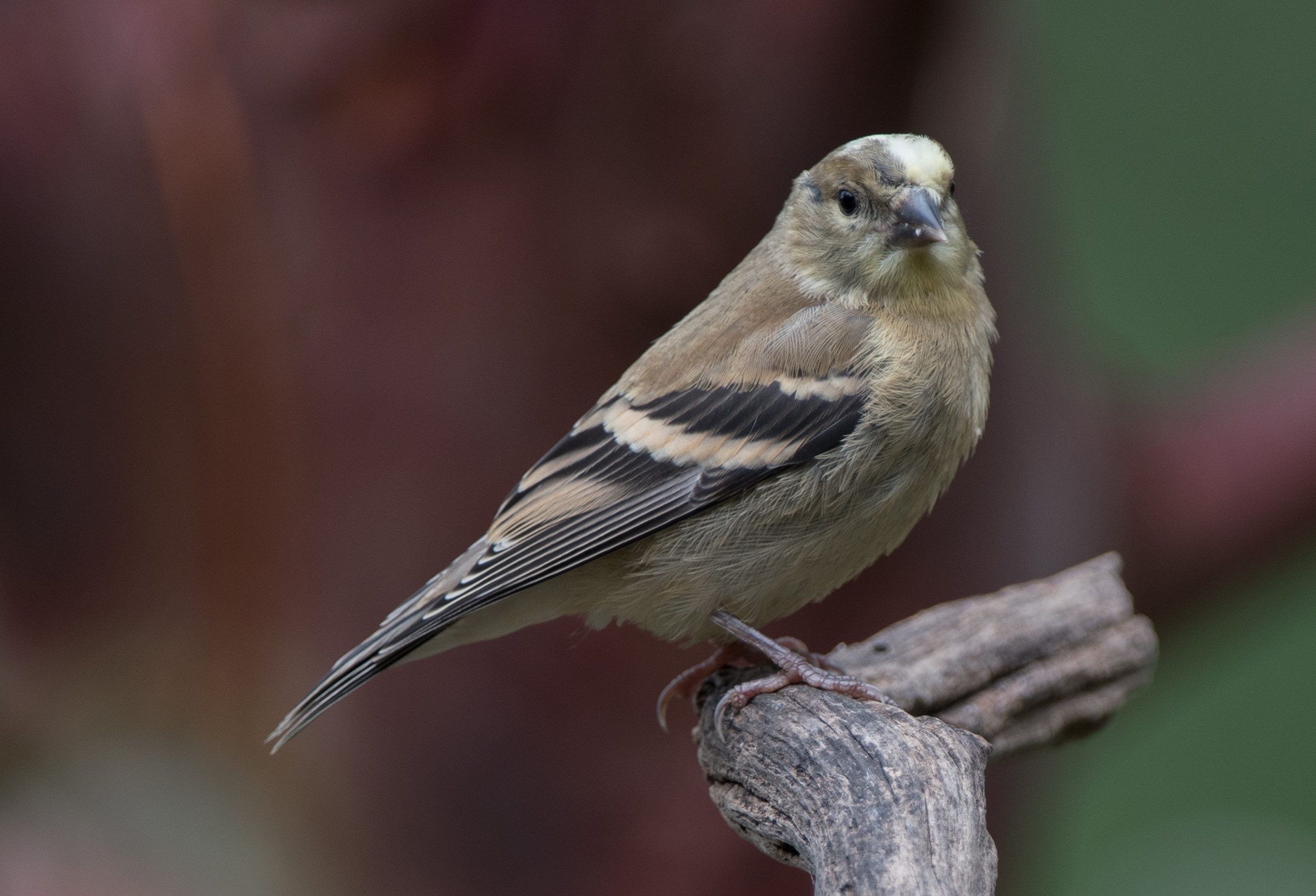
I counted seven male American goldfinches in the yard on May 24 and that wasn’t all of them. Since there would have presumably been at least an equal number of females that puts our count at 20 or above. Today I saw and photographed a young goldfinch being fed.

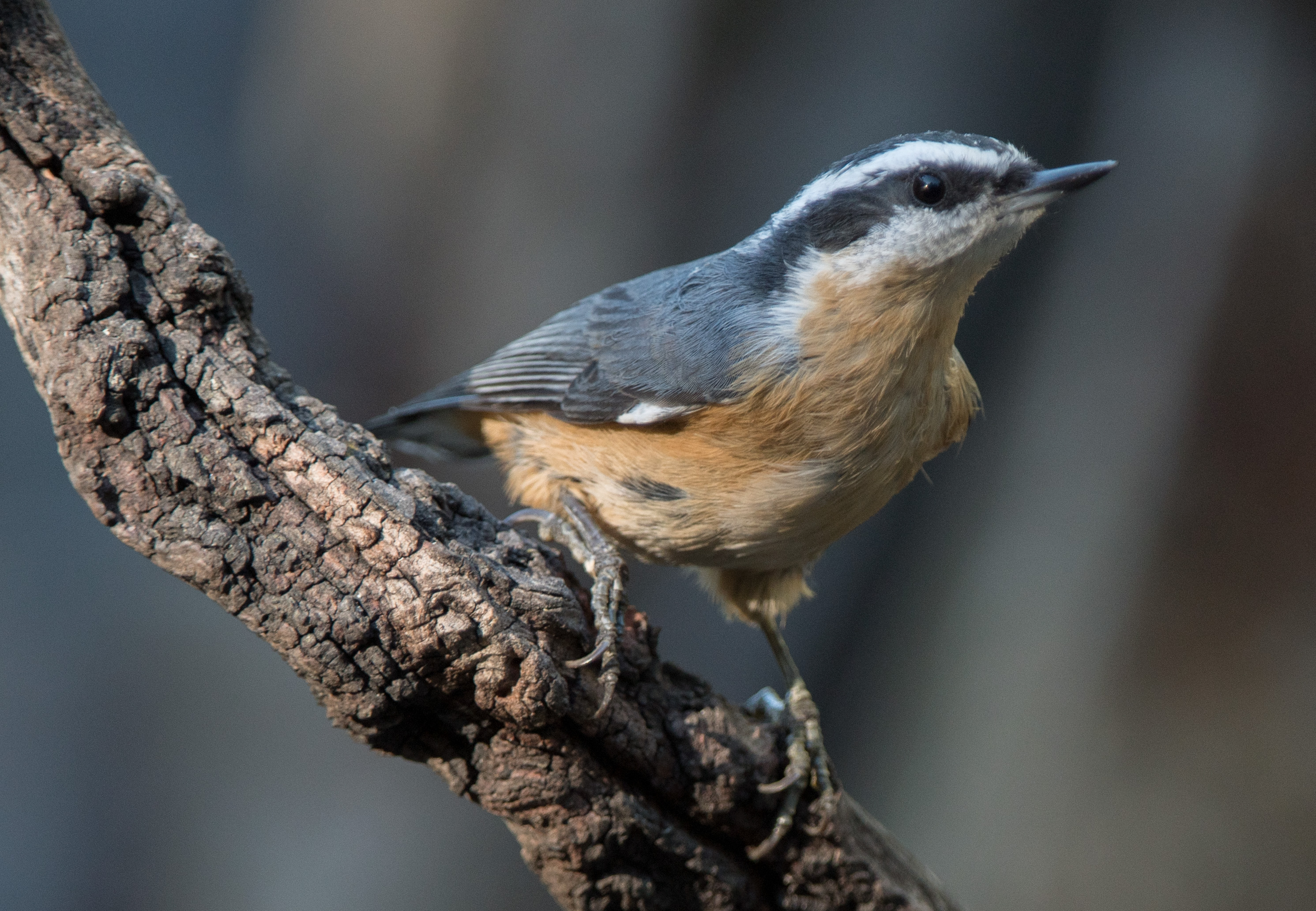
While I’m on the subject of juveniles, we had an adorable (independent) Red-breasted nuthatch in the yard and at least two juvenile Dark-eyed juncos (Oregon race) also operating somewhat independently in the yard. I saw one of the juncos being fed but they weren’t all following their parents around and one took the opportunity to take a very leisurely bath in the bottom of the watercourse.


I’ve been enjoying the migration taking place in and through our yard.  The vast majority of our migrating visitors are Wilson’s warblers

and Orange-crowned warblers.

We have been inundated by both and I have scores of photos.

Other visitors are Black-headed grosbeaks.  We have at least one pair, and I recently confirmed that we have at least two males.

In a prior post I showed a photo of a Red-breasted nuthatch attempting to hide a seed in a crack of a madrone tree.  The nuthatch has been still trying to hide a peanut piece in the same crack.  Here is the nuthatch with the food still in its beak after repeatedly attempting to position the food carefully in the crack.

This spring we had a flock of about 25 Bushtits that visited the feeders several times a day.  The group access has ended, but one pair seems to be returning for food.  This is a photo of the female.

Over the past several days (5/9-10) a pair of crows began bringing in small snakes.  I lost count at five snakes and I’m sure there have been at least ten.  It’s a real mystery to me as to where the crows are finding the snakes.

But the BIG news, which occurred on May 10, was a White-throated sparrow that made three separate trips to the water feature over the course of the afternoon.  Just this past winter I photographed (and saw) my first White-throated sparrow in Skagit County, and here was one that was good enough to appear in my yard while I had my camera at hand!