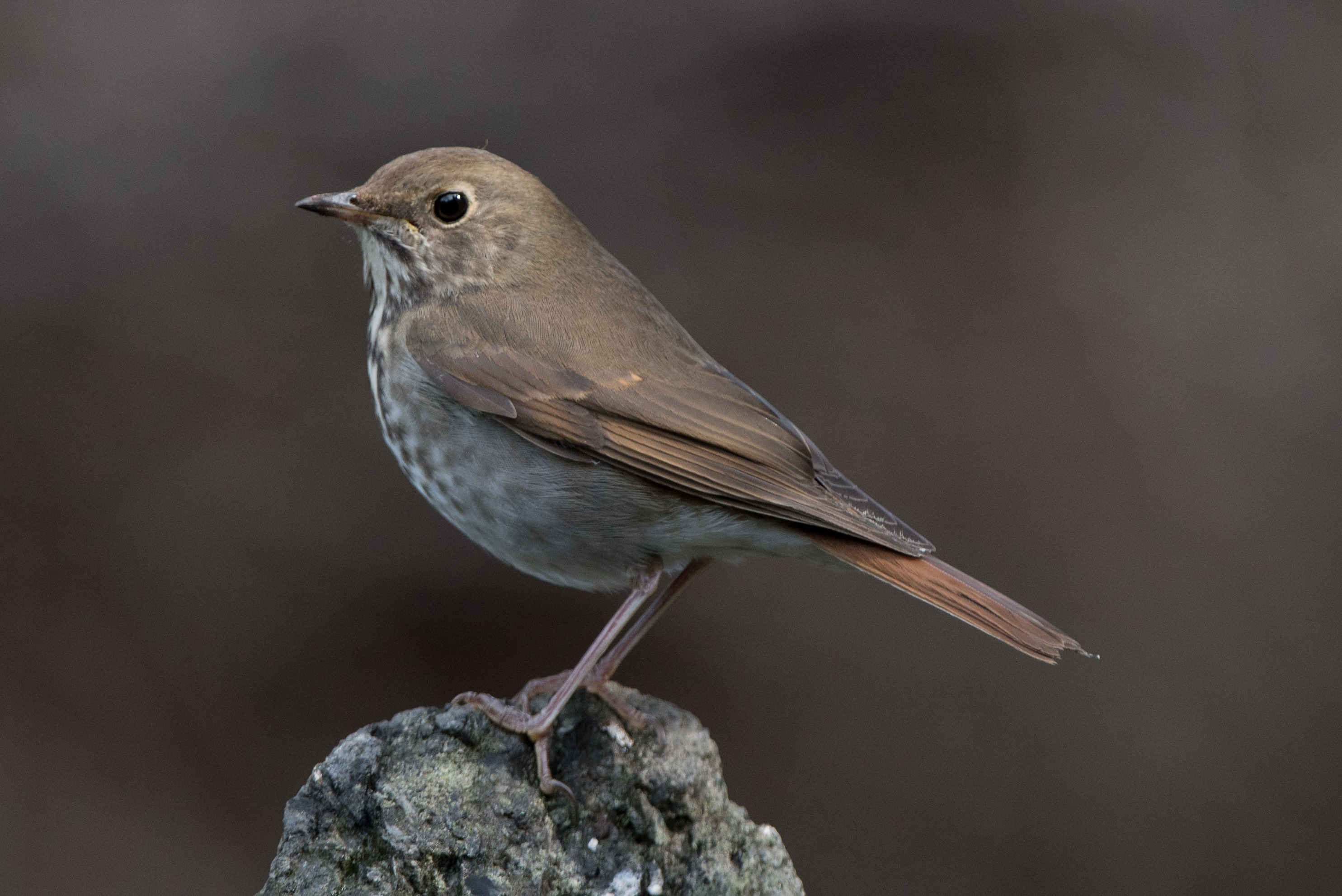
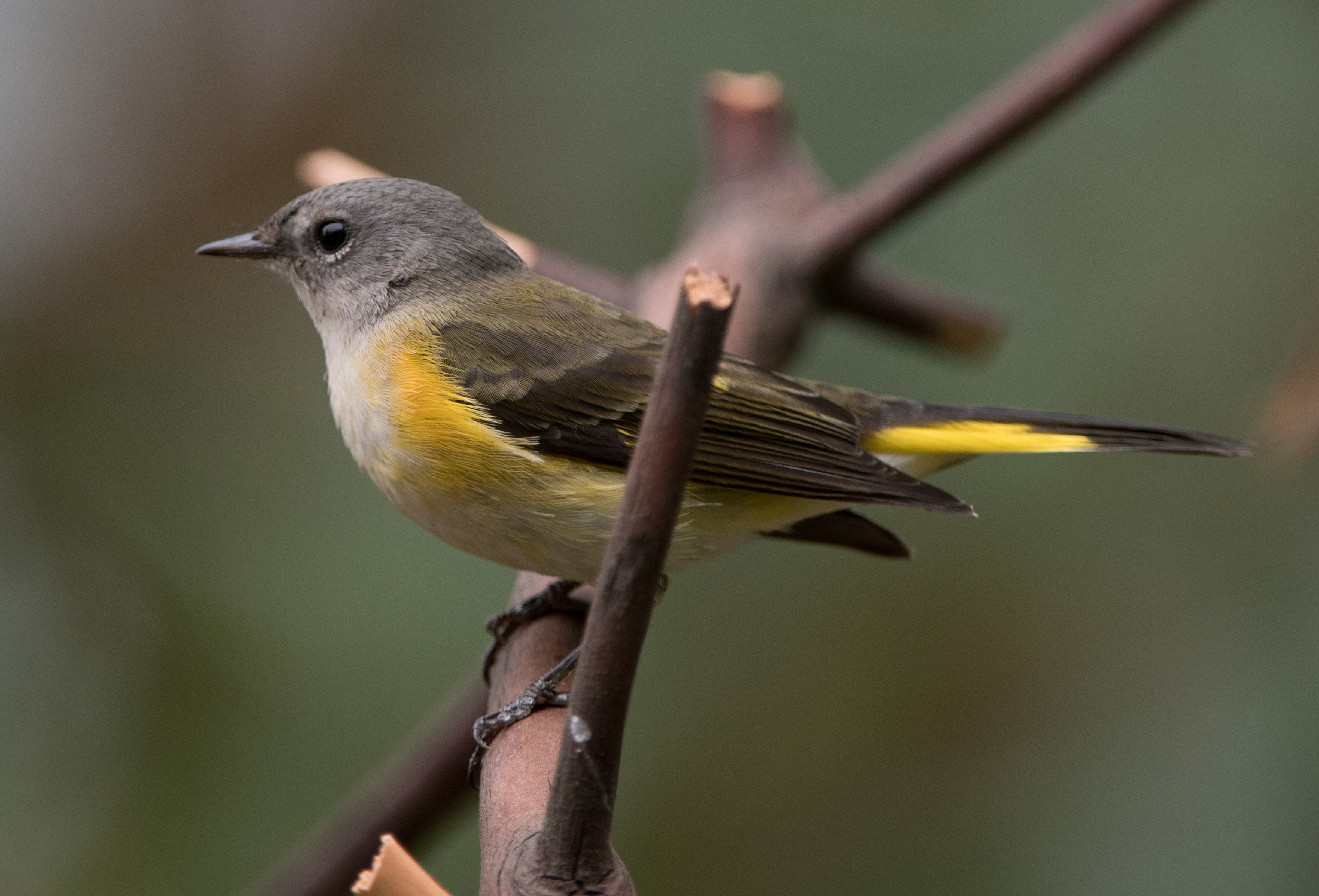
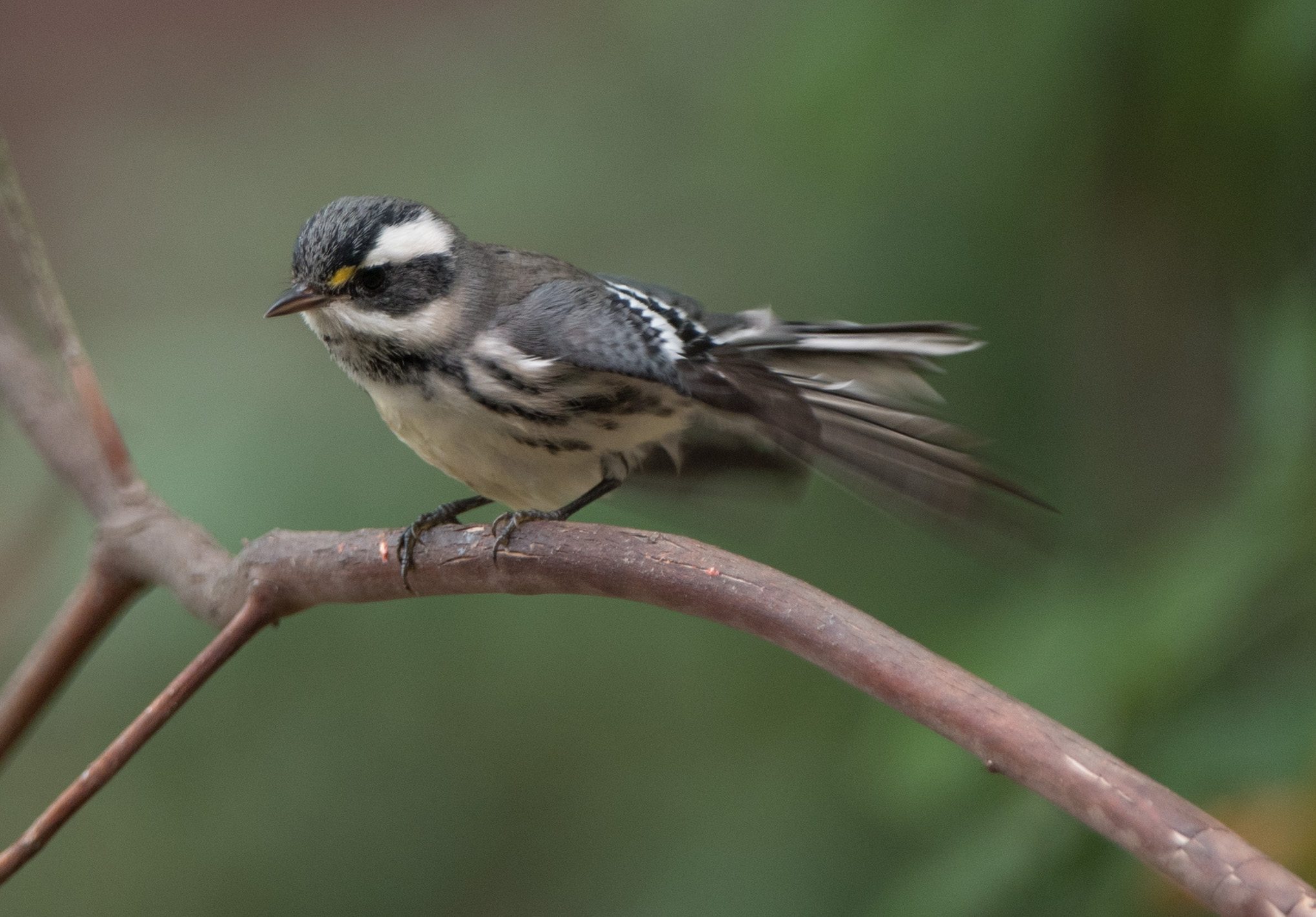
I have had a very productive month of yard photography, with two new species of birds visiting the yard. The first, a female American redstart, was displayed in my prior blog post on this site. The yard has been so productive it’s been difficult to tear myself away, but increasing problems with my right hand have made me want to limit my typing.
So here is the month in a capsule…
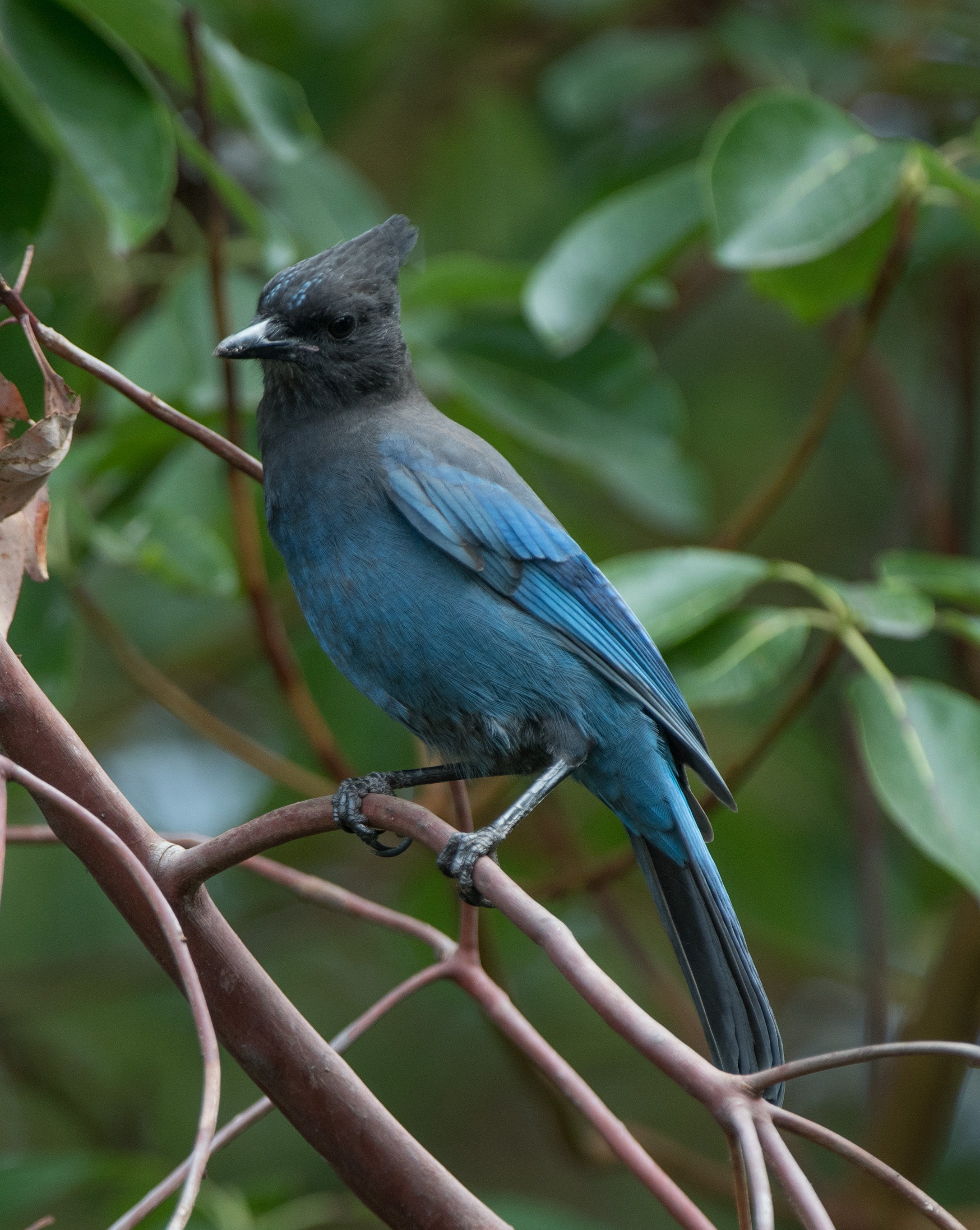
In early September we had a visit from a pair of Stellar’s jays. Theirs was a one-day visit and I managed only one distant photo of one of the birds. My wife and I made a trip to Oregon September 17 – 22. On the morning after we returned (September 23) at least one of the jays was back in the yard. Early the next morning my wife saw the jay accessing our small platform feeder and taking a peanut. By the time I made it into the yard with my camera the bird was gone, but I was motivated for photographs and spent considerable time in the yard unsuccessfully waiting for it to return over the next few days.
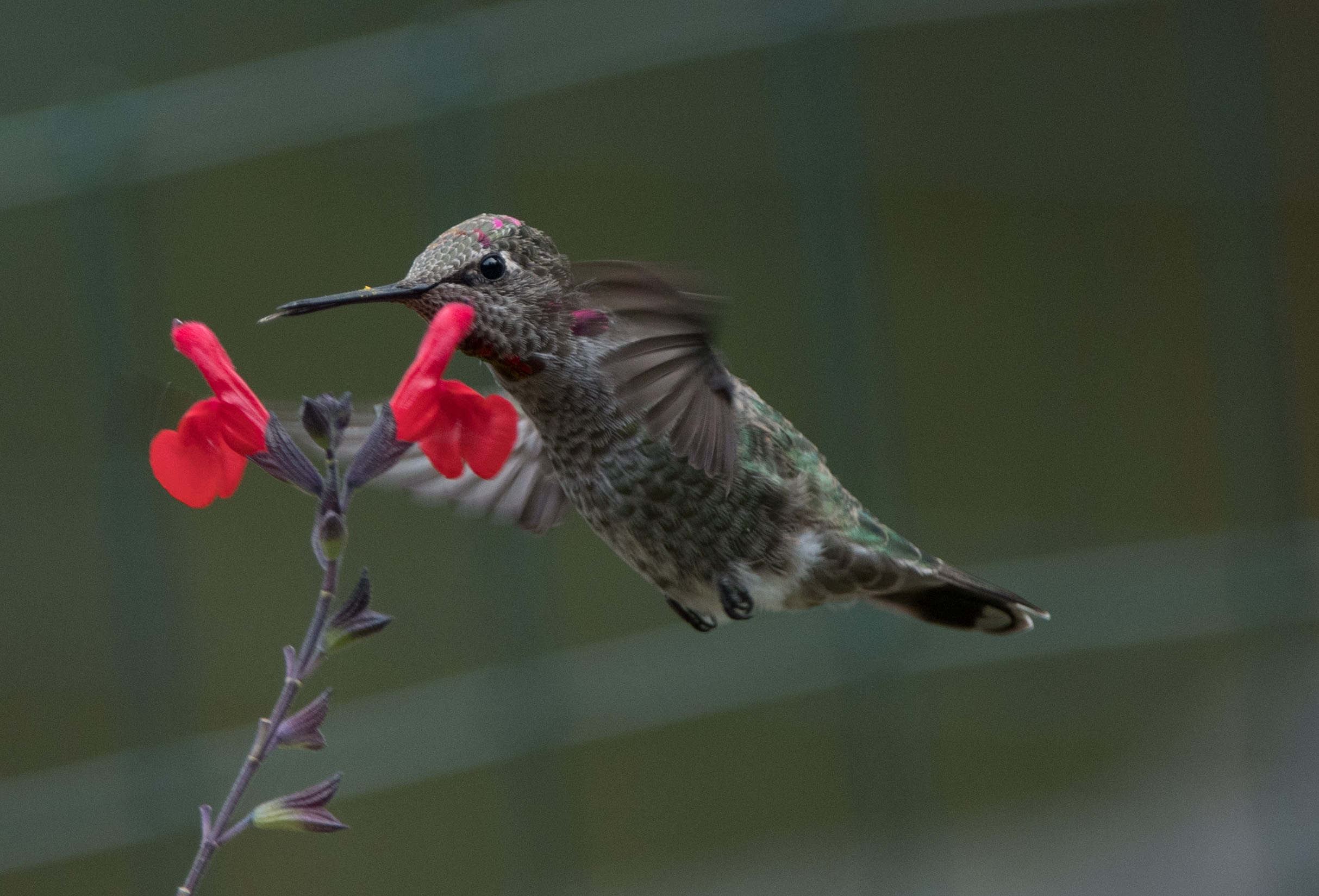
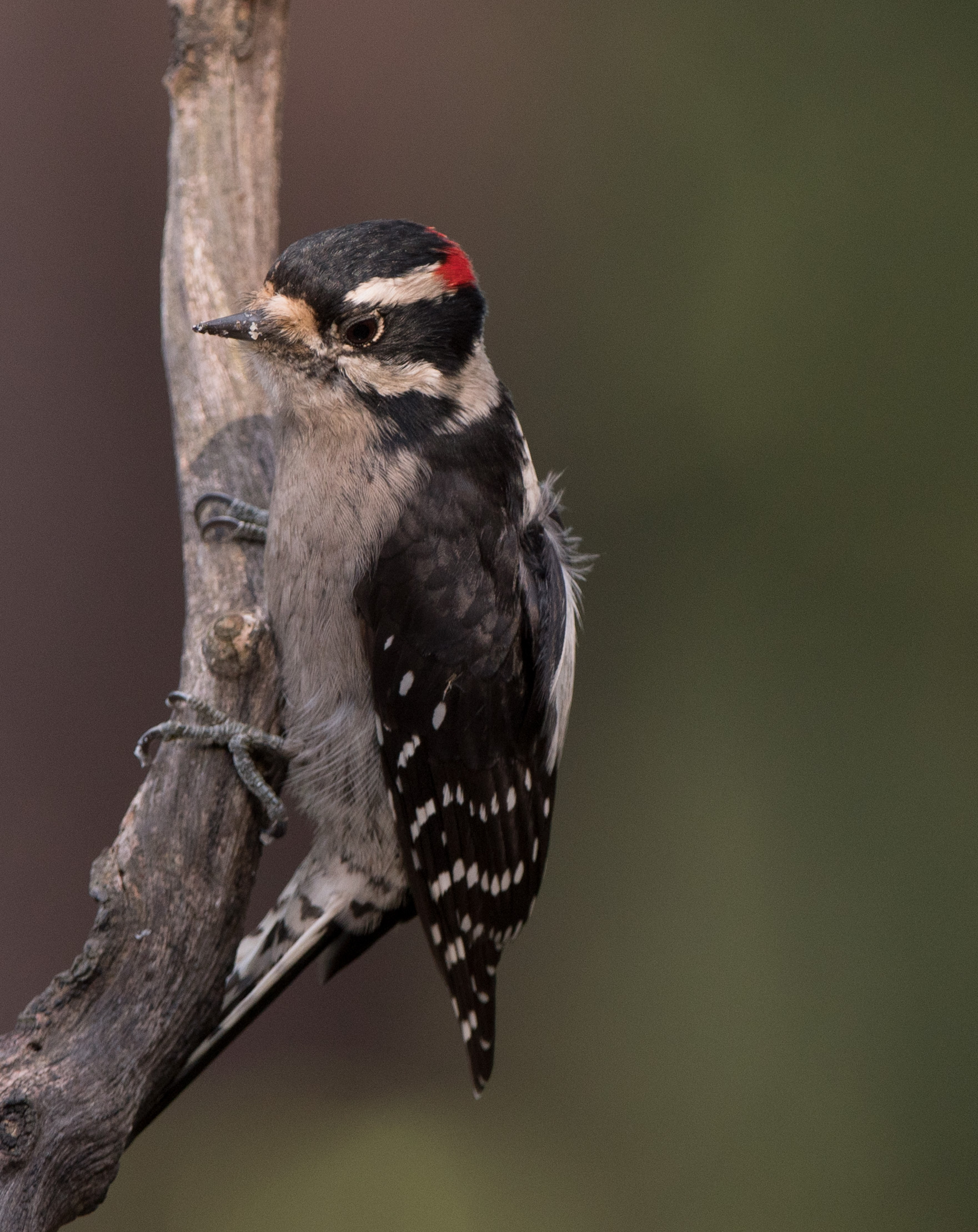
On September 24, waiting in the yard for the jays, I managed to obtain nice photos of a male Anna’s hummingbird and a male Downy woodpecker.
Later the afternoon of September 24 I was taking a break from the Seahawks game (they ended up losing to New York by six points) and sitting outside by the kitchen window I noticed some movement over to my side where we have a large area of flat ground cover. There was a small bird with a big eye and wing bars staring at me. I realized almost immediately that it was a Hutton’s vireo, a very unusual visitor to the yard and difficult to pick out from the background of American goldfinches and considerable other bird activity in the yard. After a few seconds the vireo flew up into a small grove of trees over and behind me… and it was backlit. I thought it would fly down to water but I never saw it again. I really hated being in the yard with my camera and not getting a photo of the vireo.
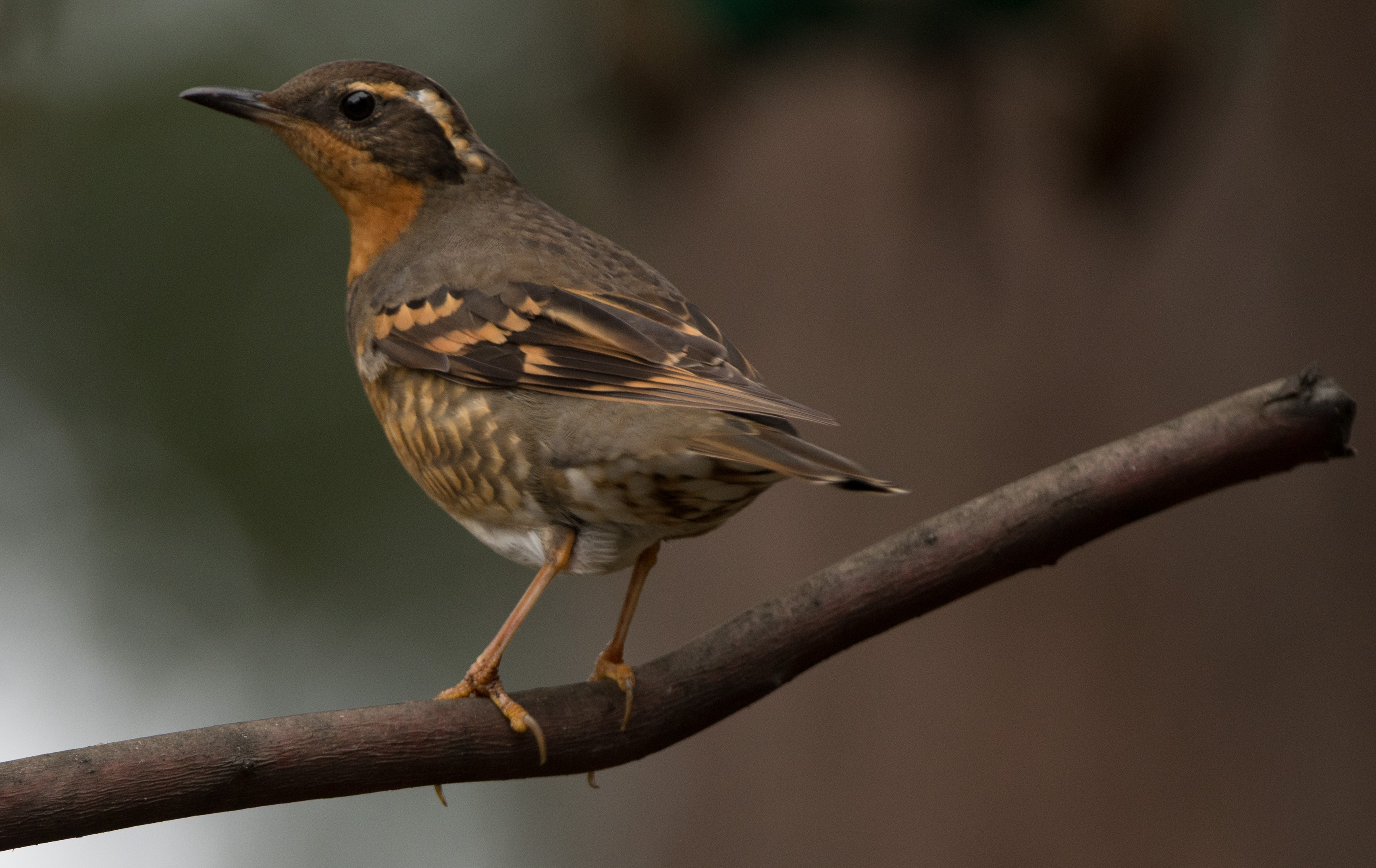
My sister, who lives outside Austin, Texas, and hosts my spring birding travels to the area, has never seen a Varied thrush. She and her family have made plans to join us for Thanksgiving and I told her that we would try to find a Varied thrush. I knew that the thrushes came down from the mountains in the winter but thought that they might not arrive until November. I checked my records and was somewhat surprised to find that I had logged all first arrivals in October (except last year’s in November) so I am hopeful that we might have some around the house by then.
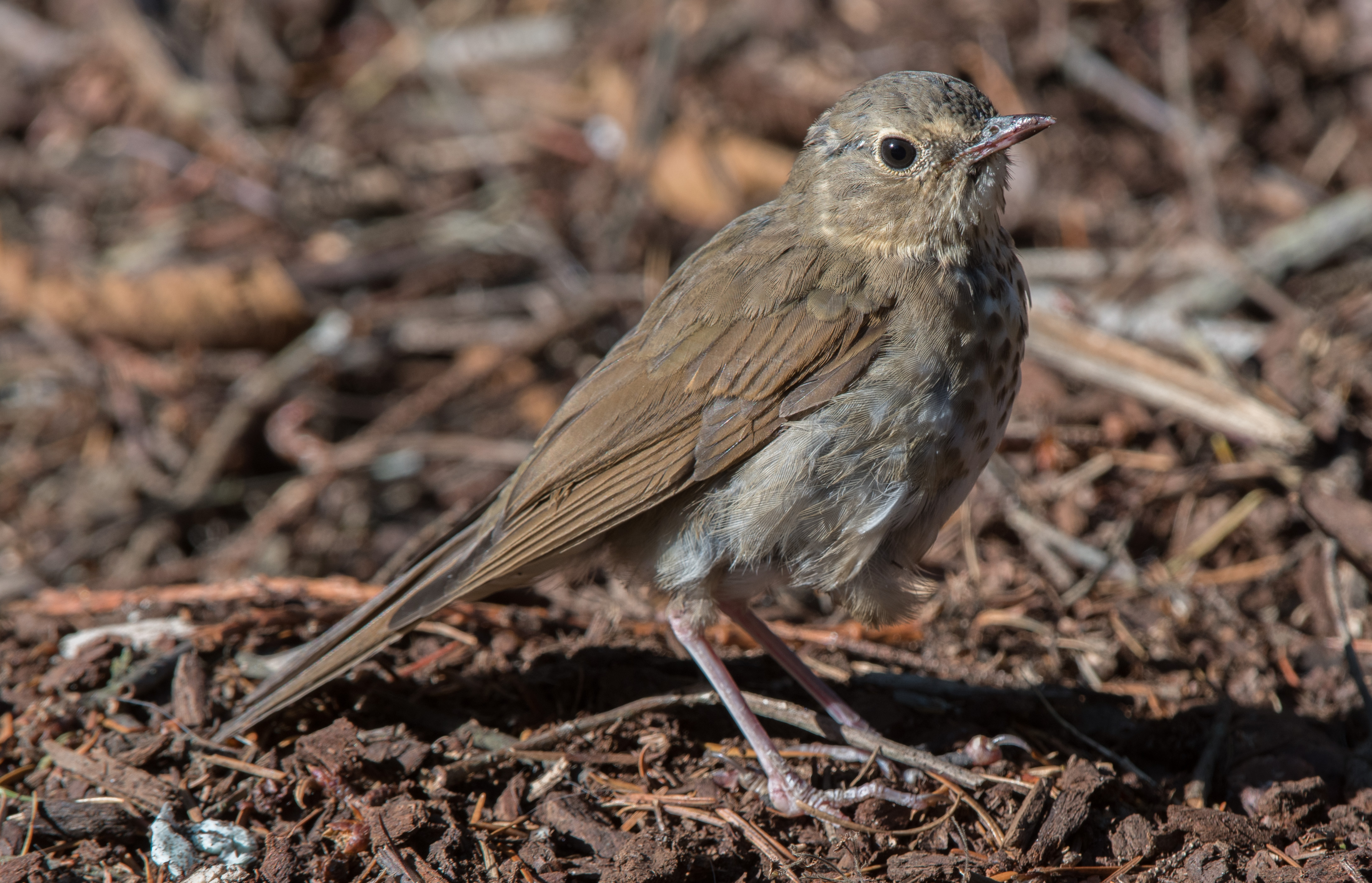
Late on the same afternoon ( September 24) I looked out the kitchen window and saw an American robin or two in the yard, but one perched on a bench with its back to me looked a little odd. Realizing that the robins and thrushes often travel together I grabbed my binoculars and while I was gazing at the bird it turned and I could see that it was a male Varied thrush, our first of the season and the earliest I had logged one over the past ten years. I am hoping this bodes well for being able to find one for my sister at Thanksgiving.
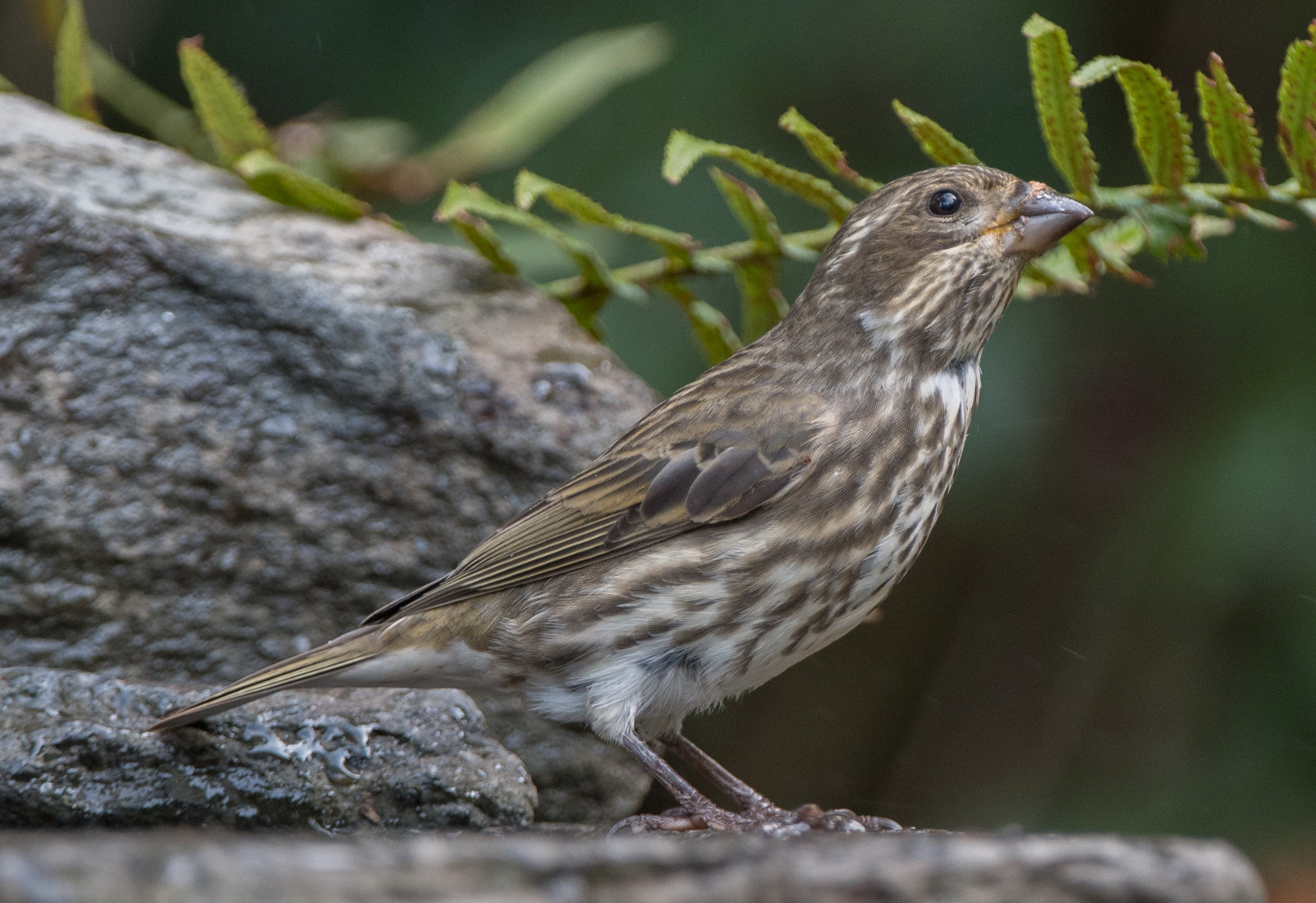
As if all this wasn’t enough, on September 25 I was still waiting in the yard to get photos of the jays when a small finch-like bird caught my attention. I initially thought it resembled a female Purple finch, but I had never seen (or at least identified) one in the ten years we‘ve lived at this location. I managed to take many photos and submitted some of them to friends more knowledgable than I. The confirmation was that it was a female Purple finch, and by that afternoon I had two of the female finches in the yard. So this represented yet another new yard bird!

Soon after one of the Stellar jays showed up in the yard and I obtained some photographs, thus successfully ending a several days’ frustrating wait.
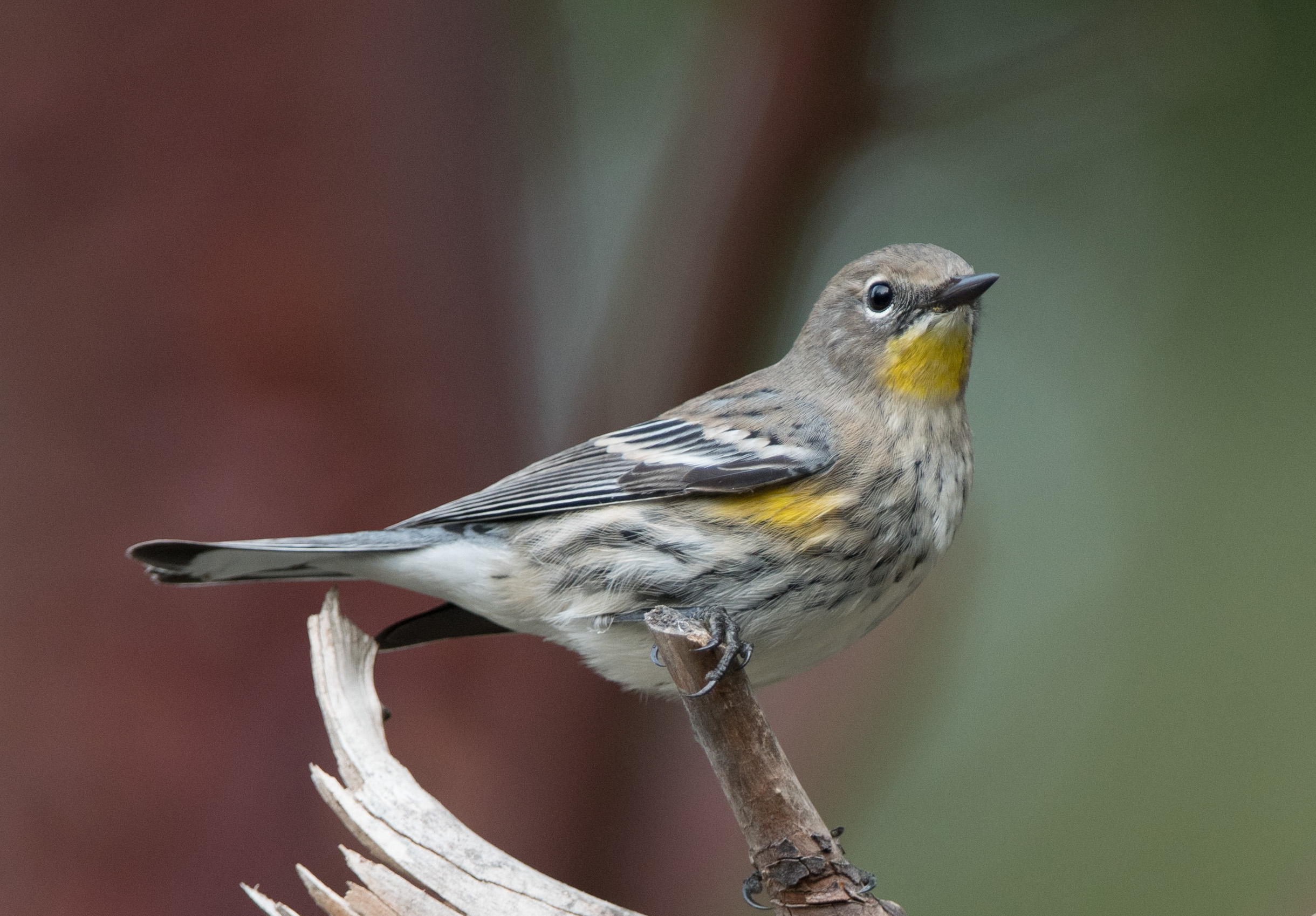
Later in the afternoon I glanced out the kitchen window and spied two female Yellow-rumped warblers (Audubon’s) in and around the watercourse at the same time and managed to get outside in time to get photos of both.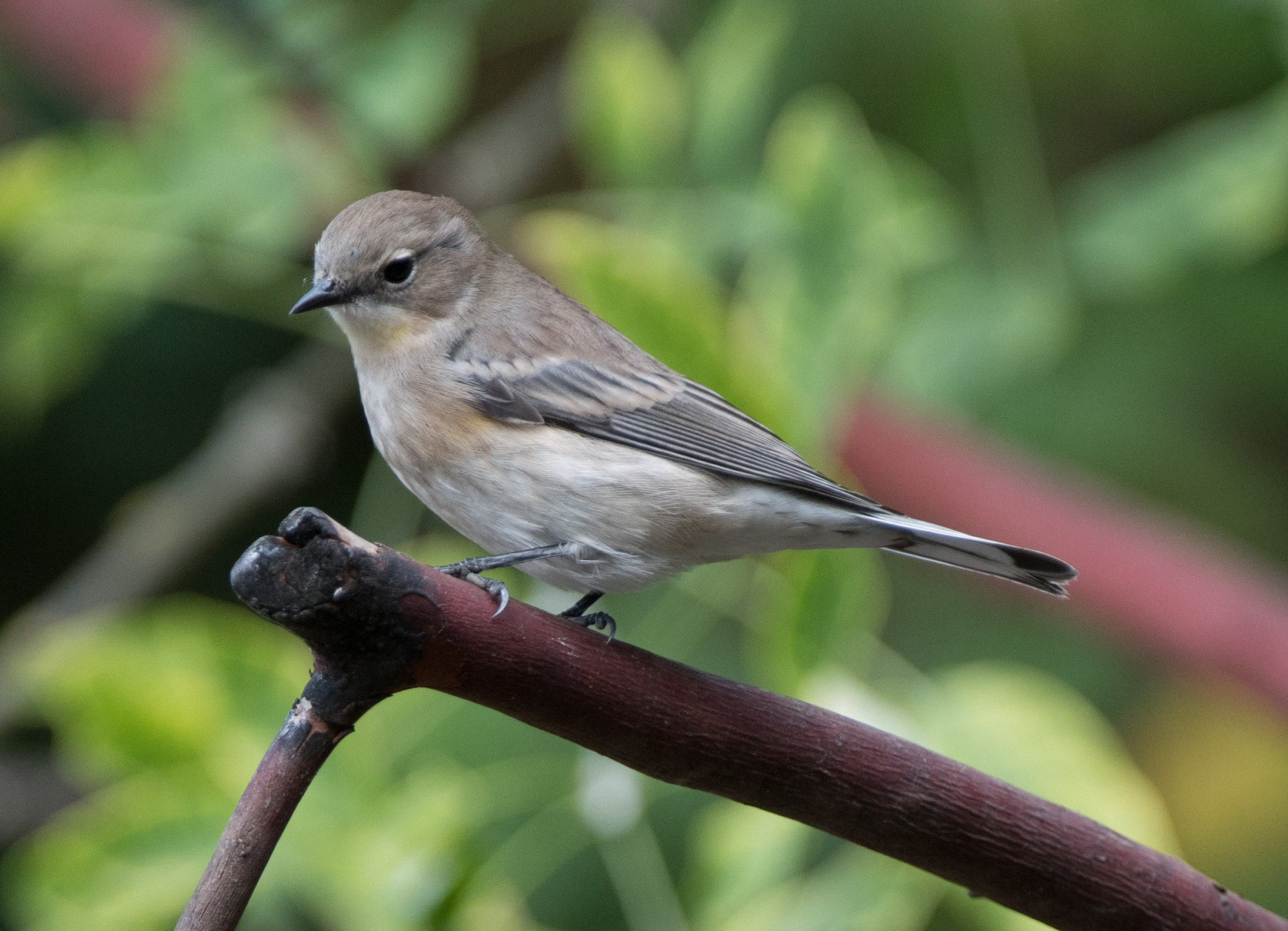
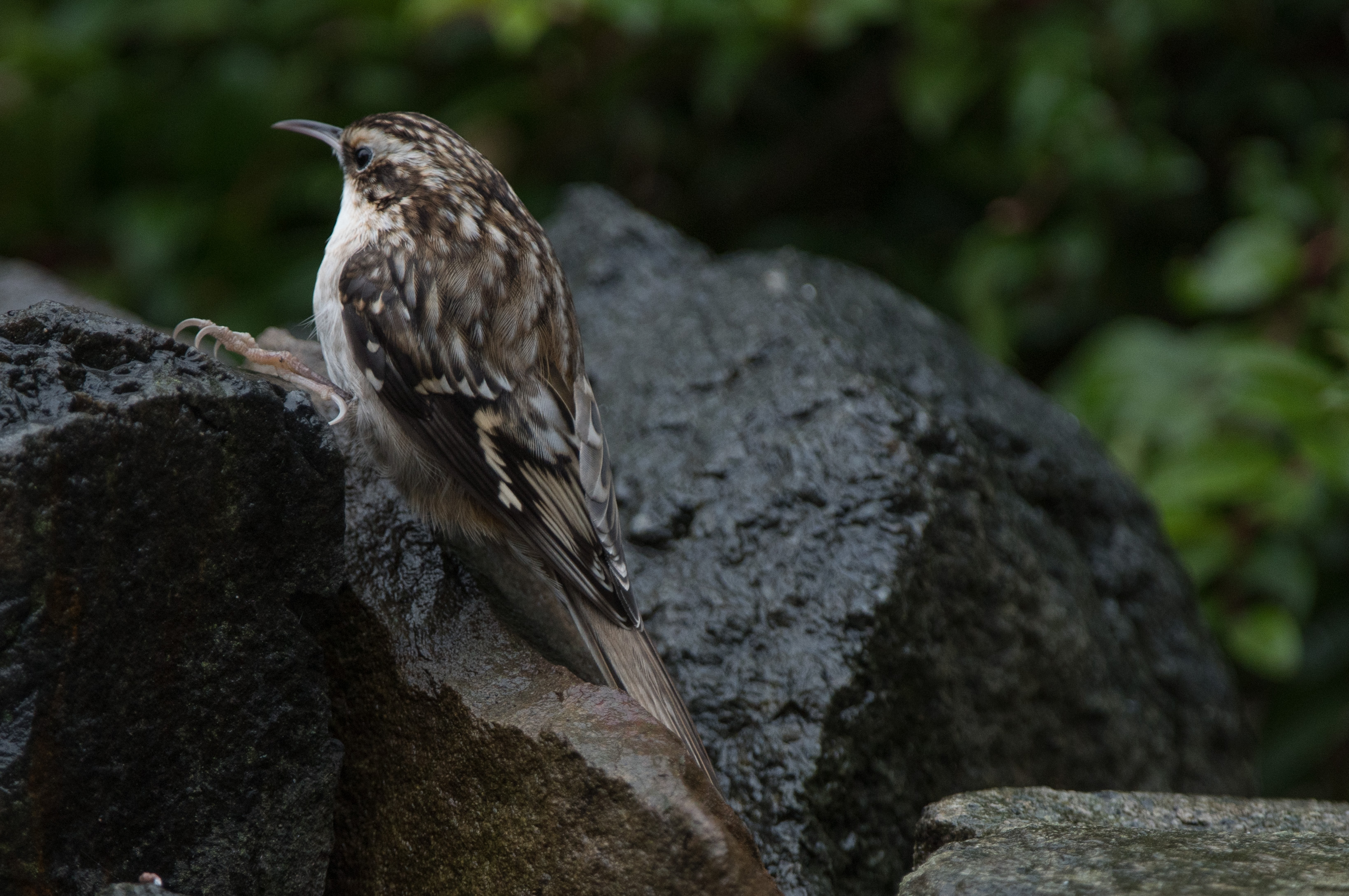
Later while outside, I had a visit from a Brown creeper, an infrequent and difficult to photograph visitor. I managed to get some photos of it while it was around one of the water features.

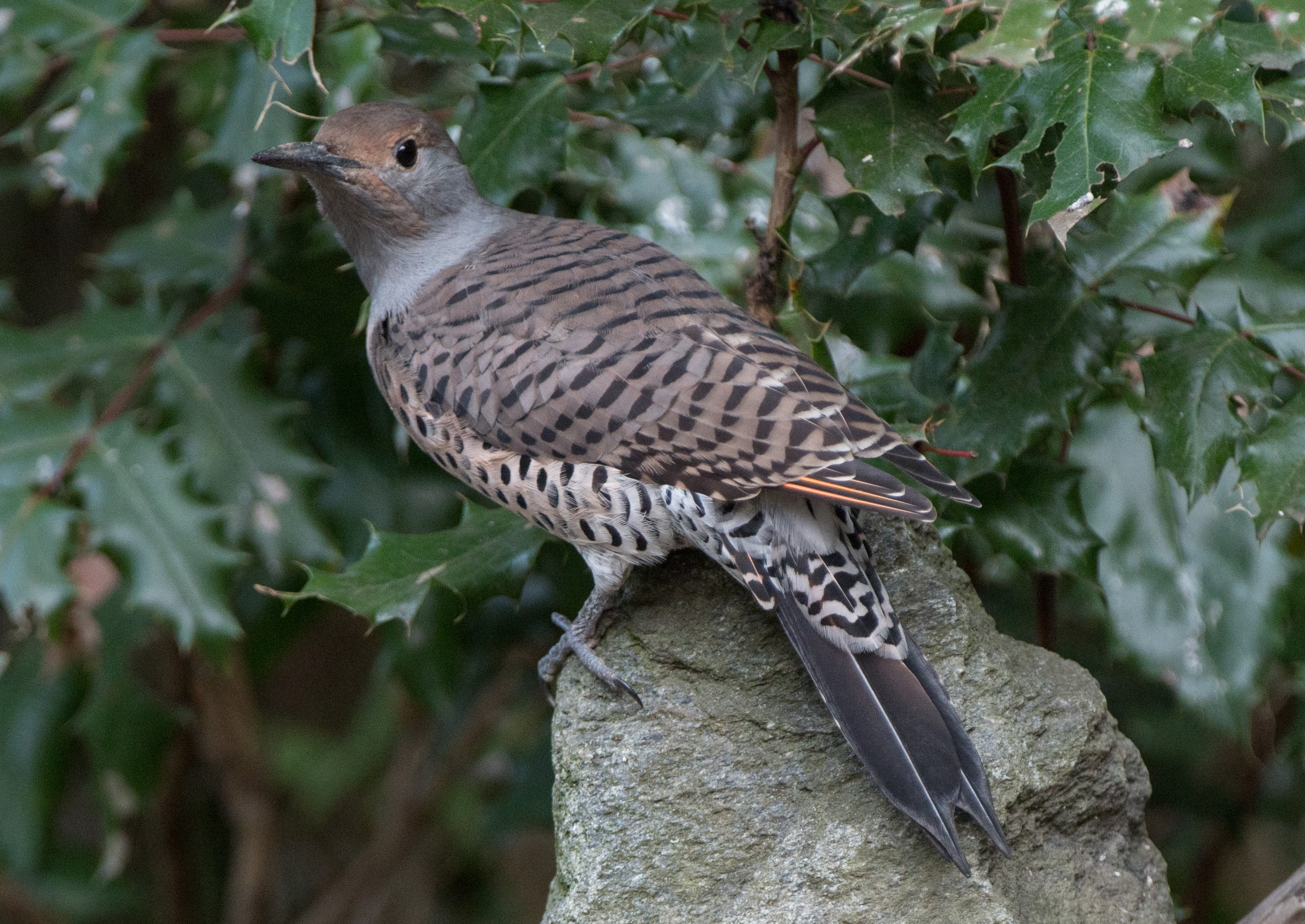
Finally, late in the afternoon a female Northern flicker flew into the yard, a fairly common occurrence. However in this case the flicker visited a stone bird bath and I was able to get several very good photos.
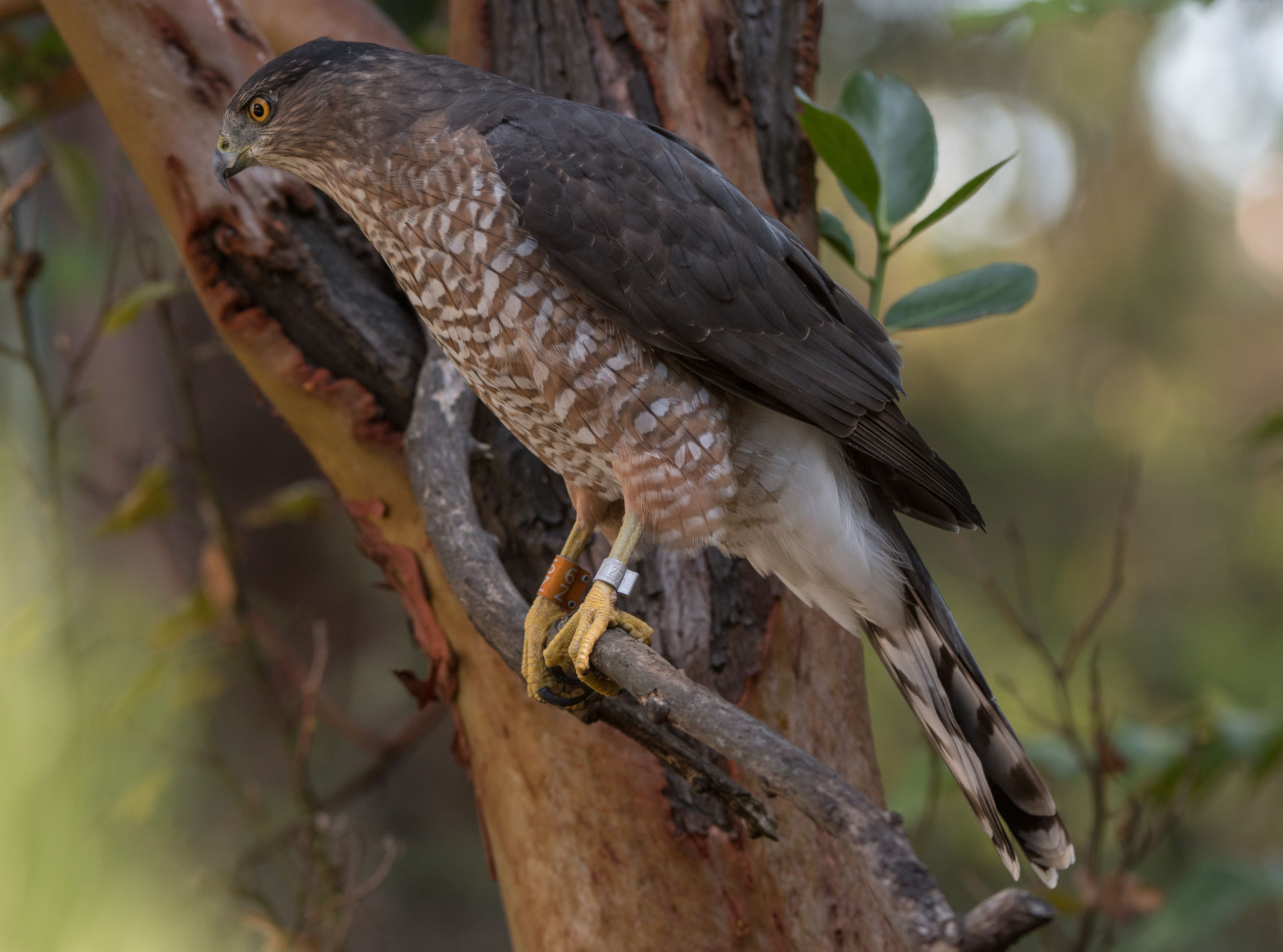
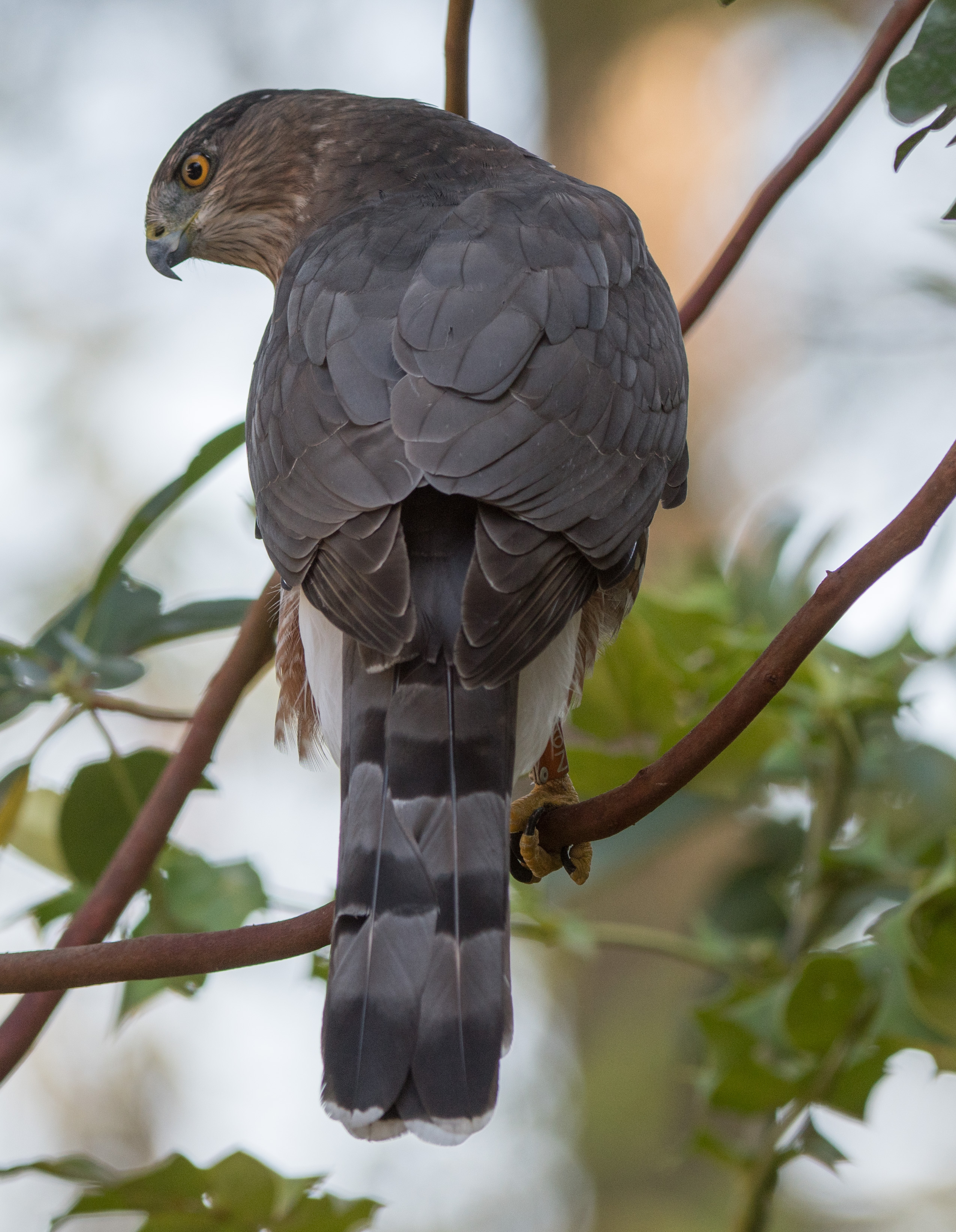
I was quite happy with my accomplishments for the month but was sitting in the yard with my camera just after noon on September 26 when I was startled by a Cooper’s hawk which flew right in front of me and landed on one of my staging branches less than eight feet away! We sat eye-to-eye for about two minutes before it flew to another staging perch only about 20 feet away, where I was able to slowly reposition my camera for several photos.
The photos were so sharp I was able to read the details on the hawk’s leg bands. I managed to contact the bander and discovered that the hawk is a year-old female that was banded in Seattle and released across Fidalgo Bay from us. I was told that she’s old enough to breed and it could be that she’s currently looking for a mate.
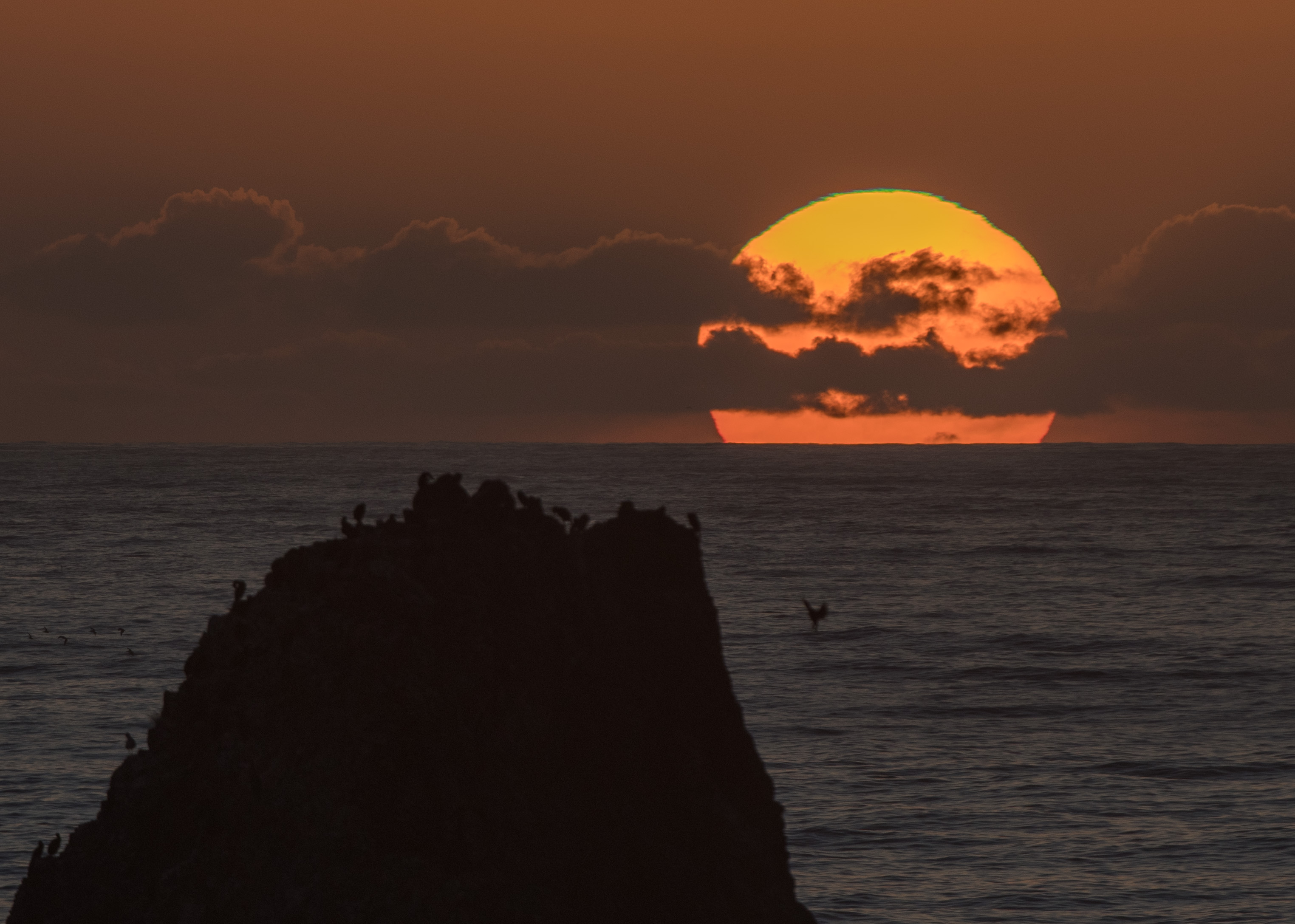
In all likelihood, unless something very special happens along by early October, this will be my last post for awhile due to outpatient surgery on my finger, wrist and arm, all in one trip to the operating room! I’ll leave you with this Cannon Beach, OR, sunset photo I took. earlier this month I hope to return to the blogging/photography world soon.