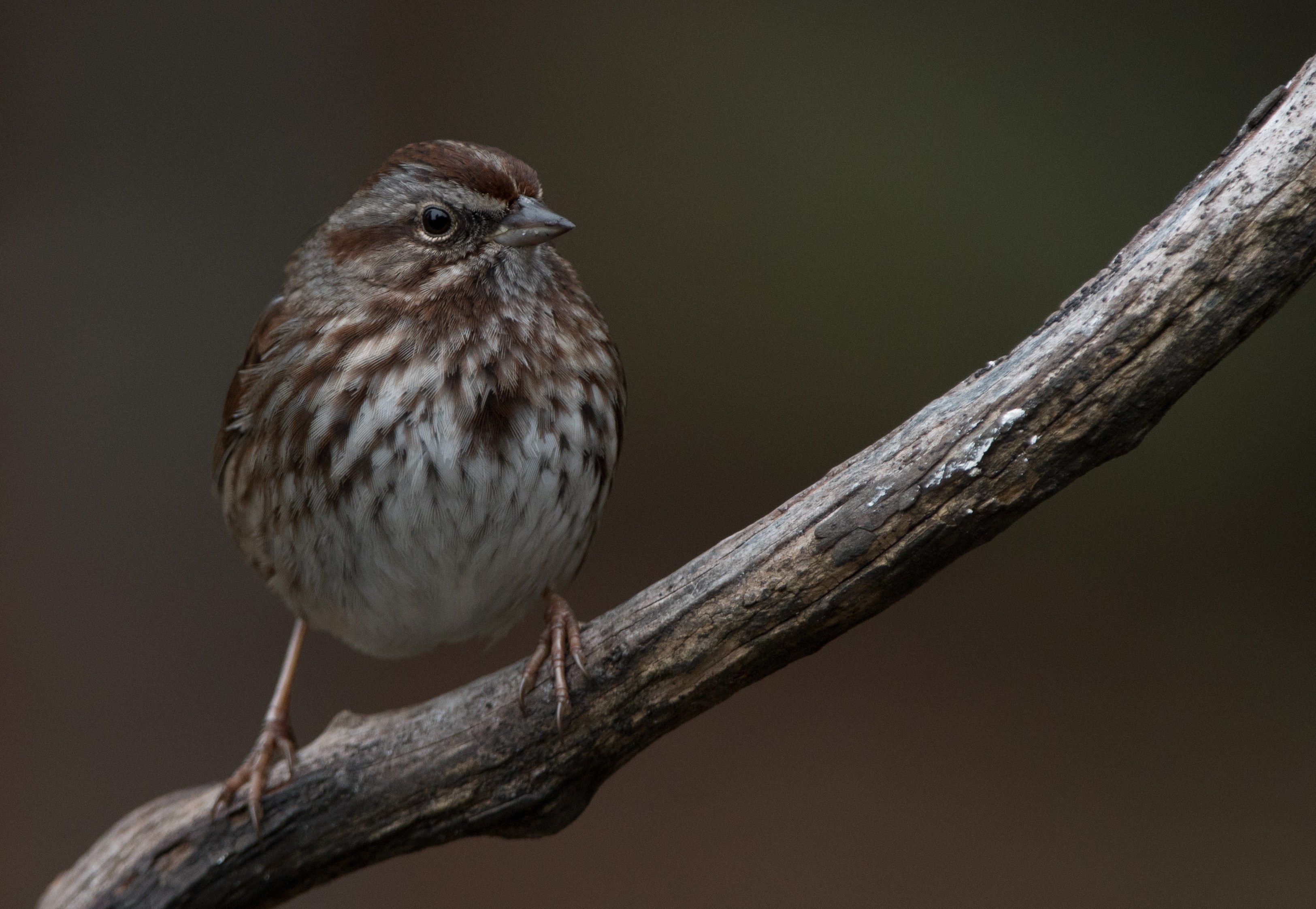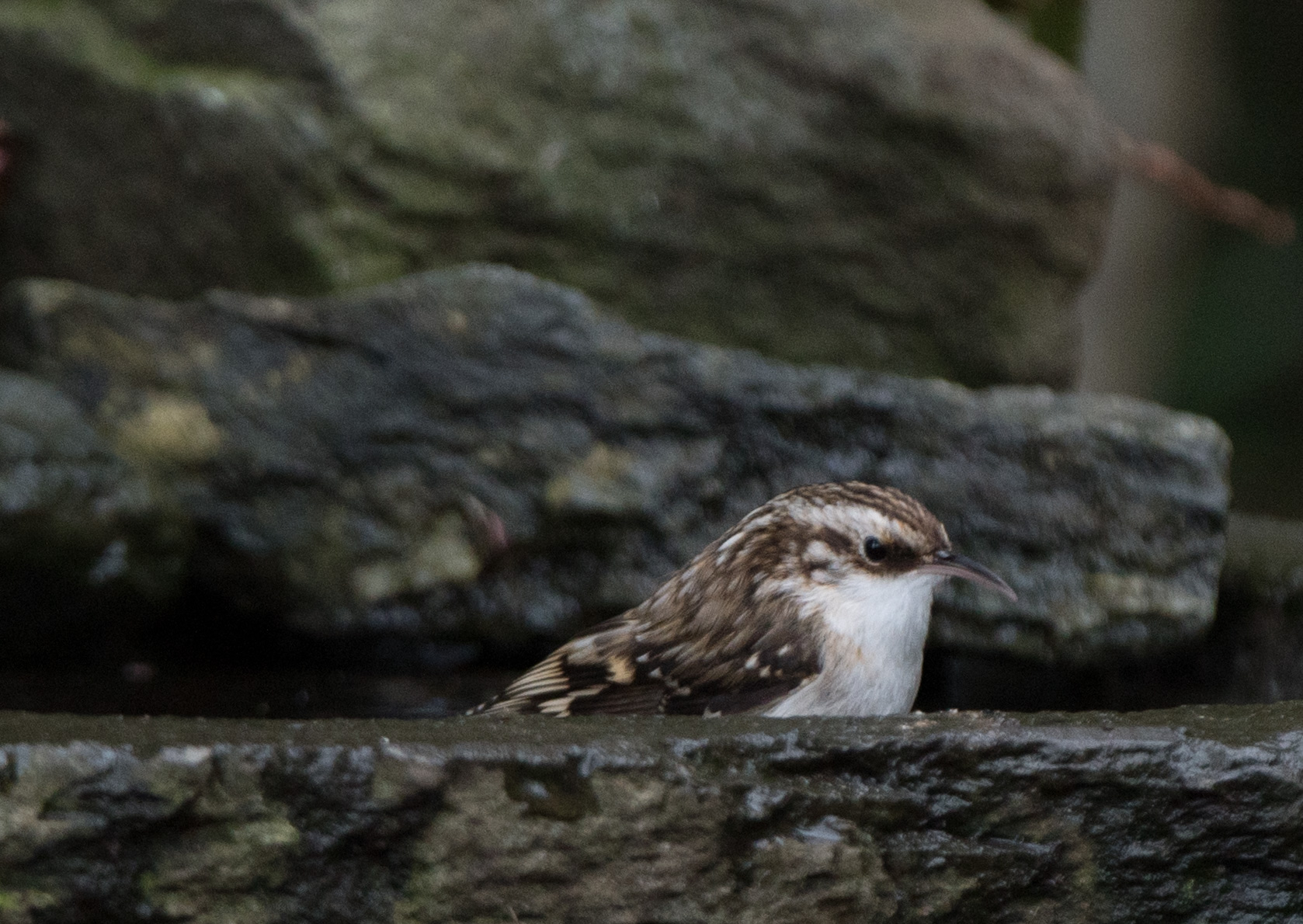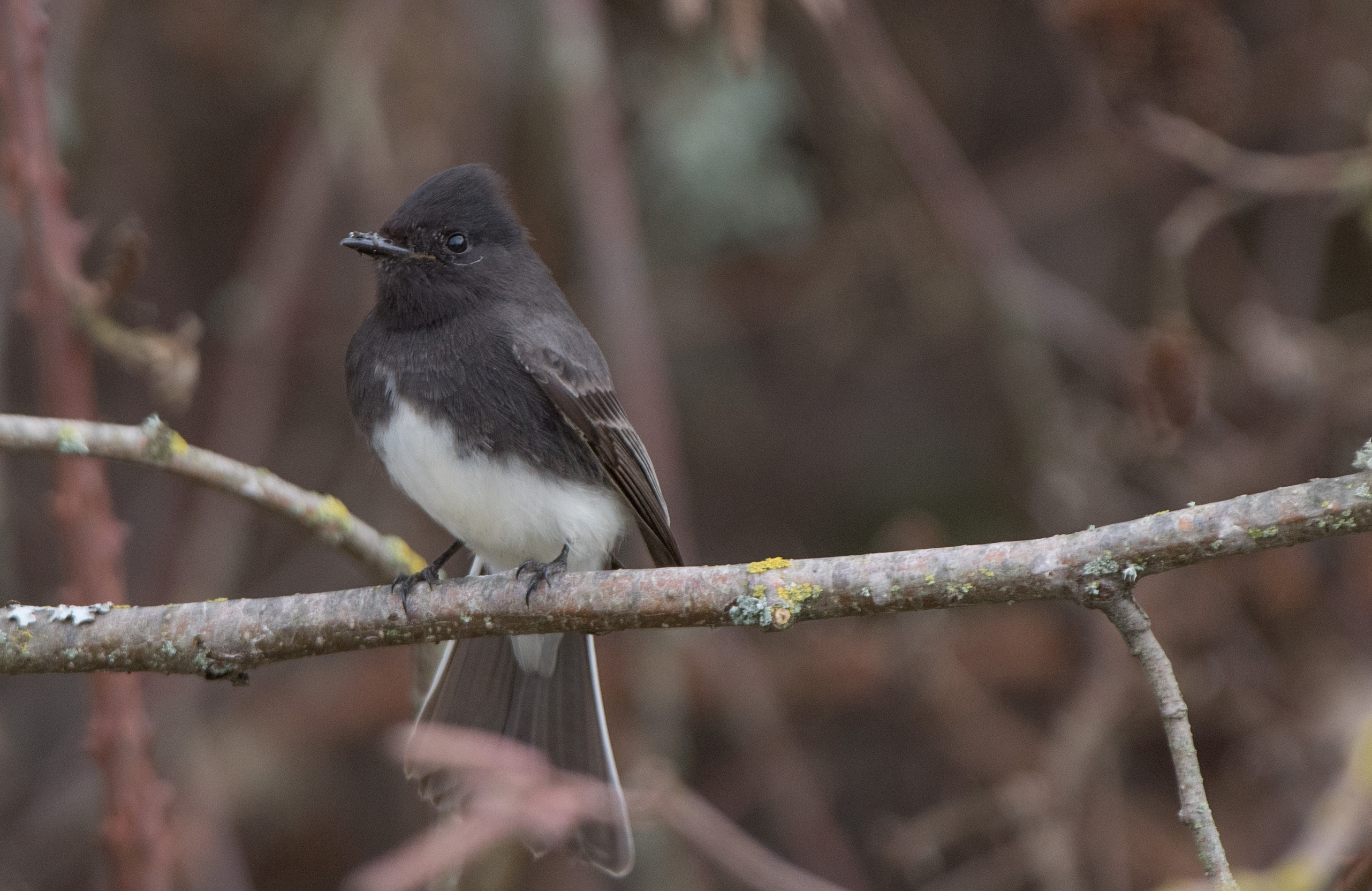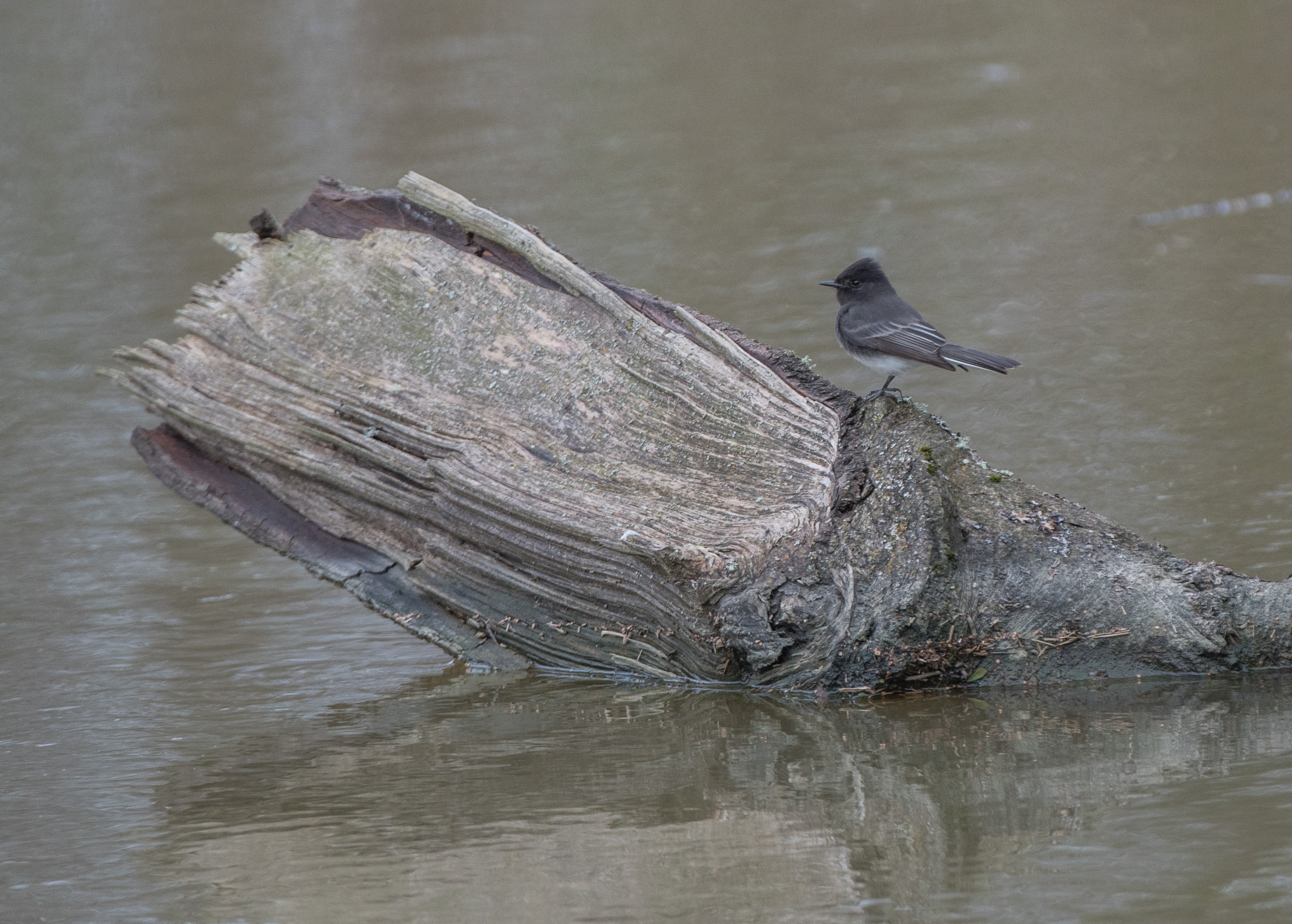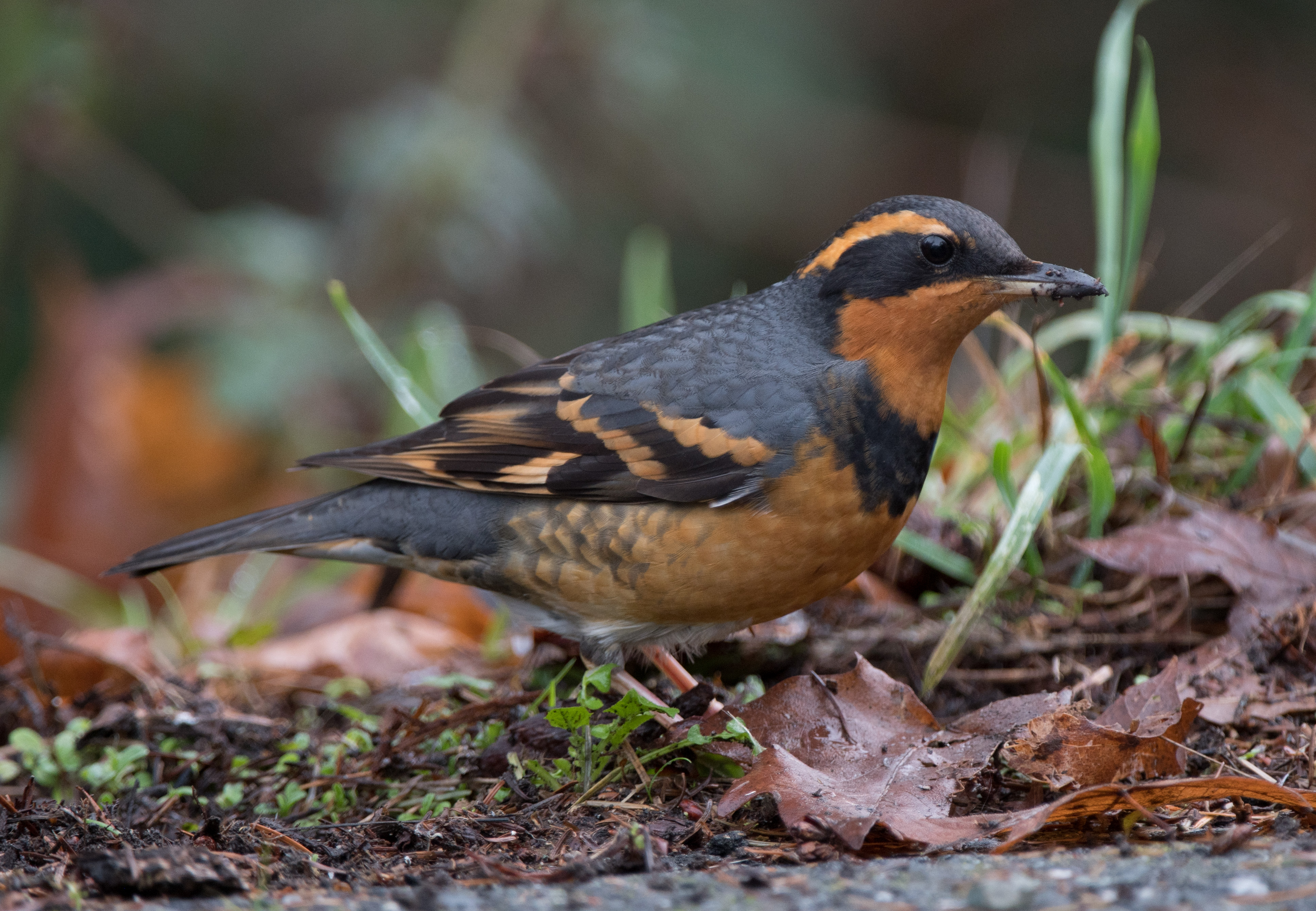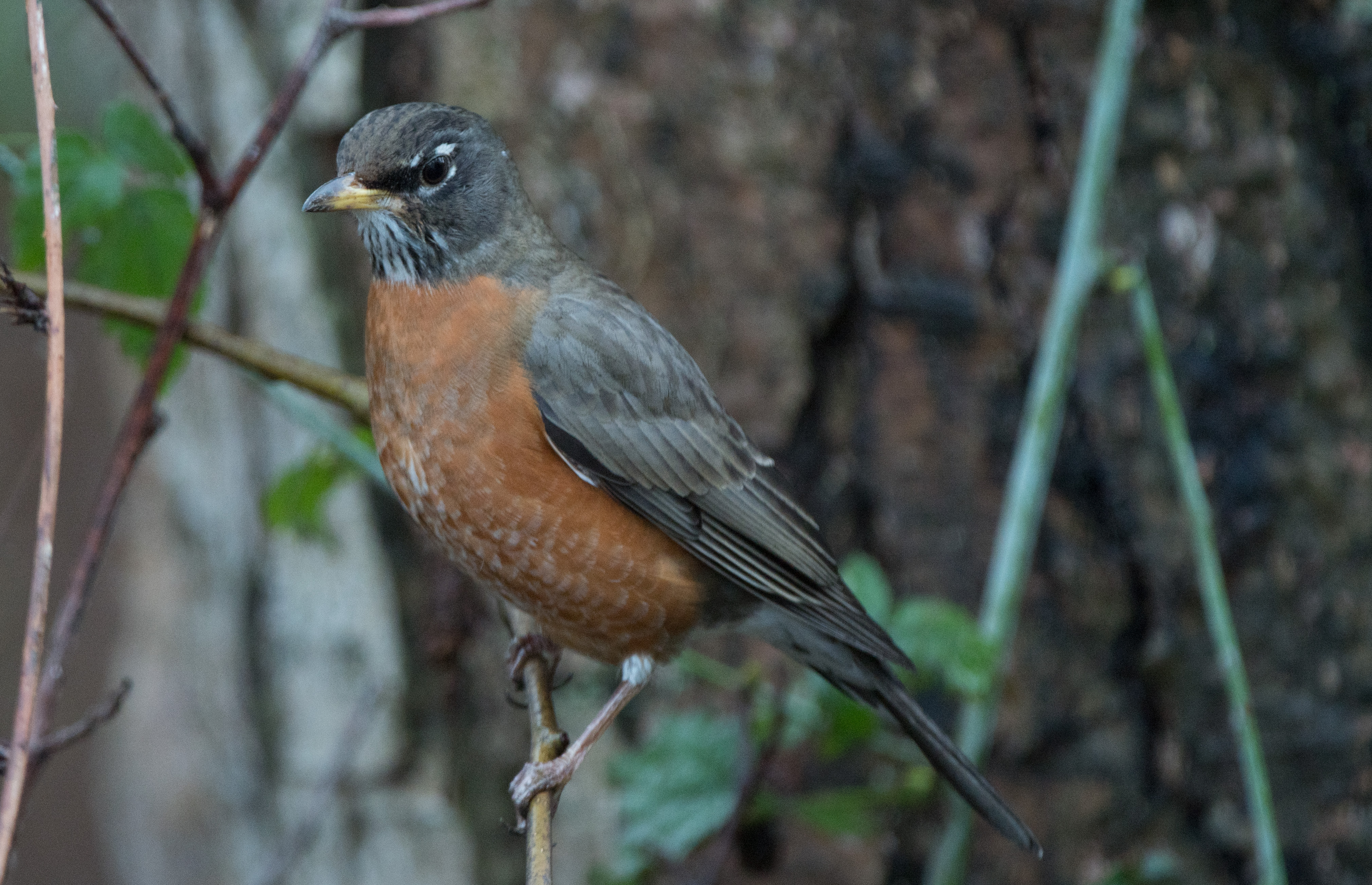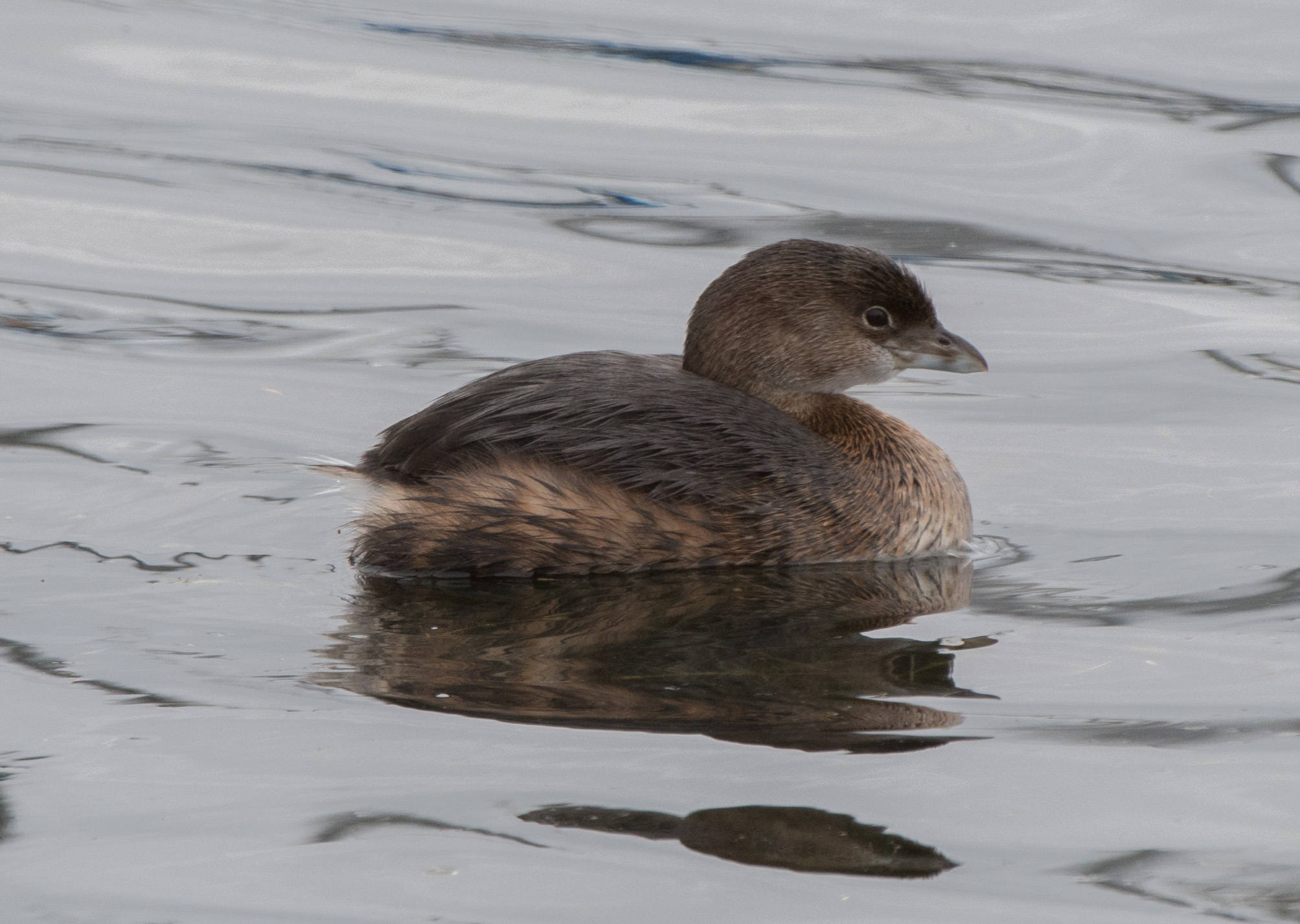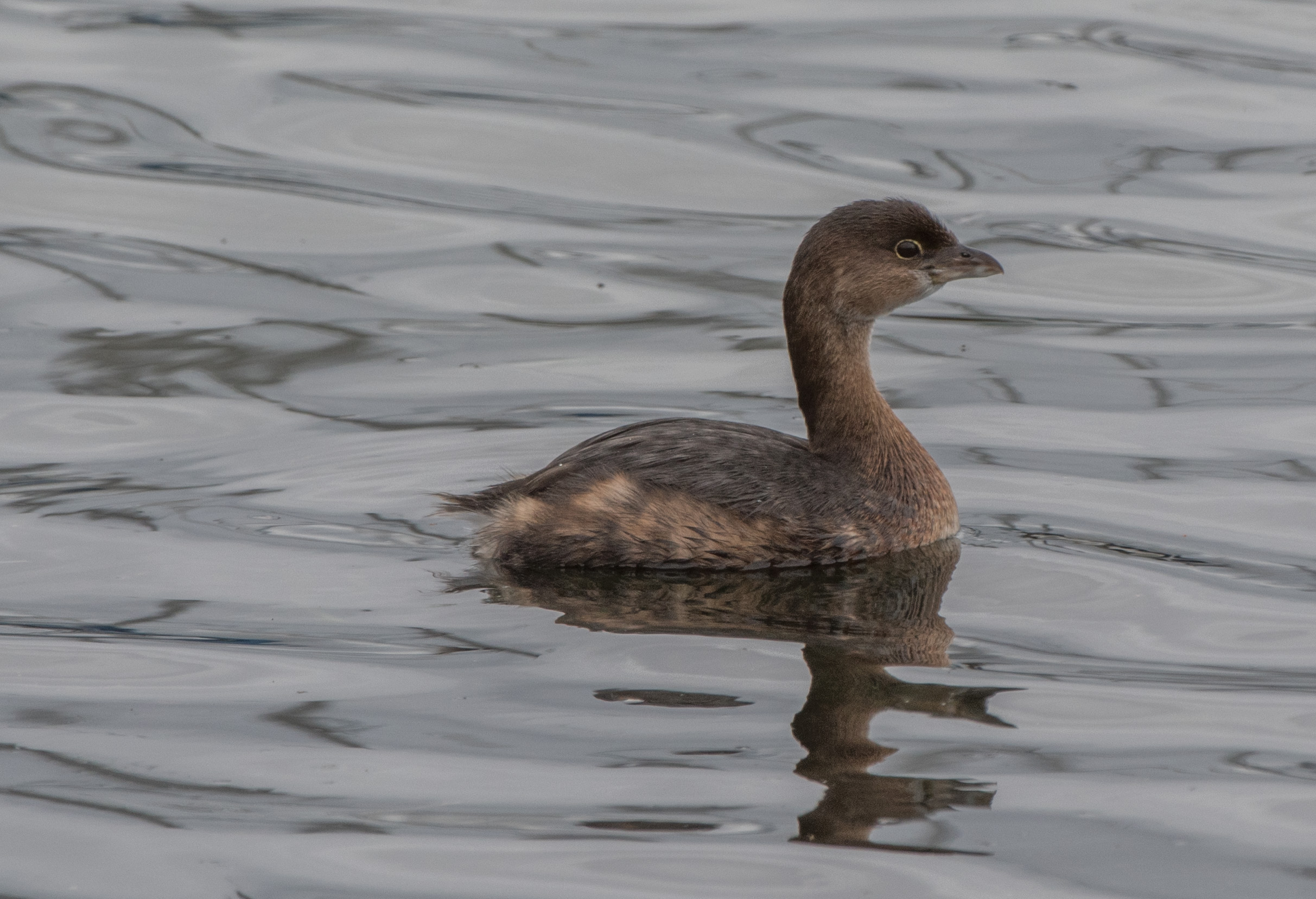
More Yard Birds

The only downstairs window in our house that overlooks our watercourse is located in the kitchen.  On many occasions lately I’ve looked out the window and seen a warbler in or around our watercourse.  I usually waste no time in going for my camera and trying to sneak out of the house to a viewing point.  However I’m almost always frustrated by the warbler’s lack of appreciation for my stealth mode and it almost always flees the yard before I can obtain any photos.  This has happened too many times lately.  So… you will see no warblers in this post.

Yesterday afternoon I spent about three hours in the yard and obtained some nice photos, although none were of unusual visitors.

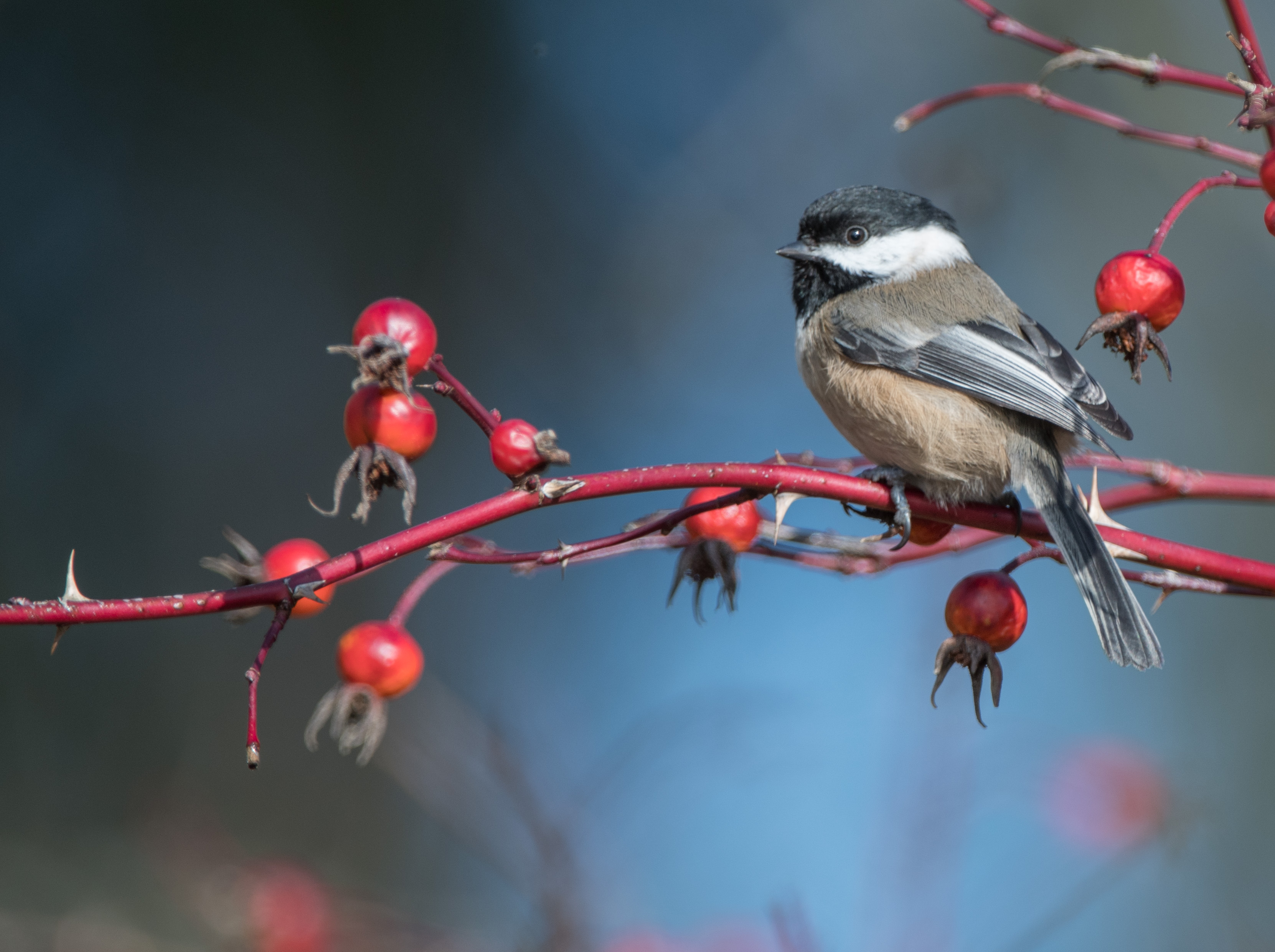
I’ll begin by exhibiting three different birds of similar appearance about which I’m occasionally asked.  First, the Black-capped chickadee, a bird that prefers areas featuring deciduous bushes and trees.

Next, its “cousin”, the Chestnut-backed chickadee that prefers areas dominated by conifers…

Both of the chickadees are of similar size and shape.  The male common House sparrow is significantly larger but has colors that somewhat resemble the Chestnut-backed chickadee.

The next two birds are White-crowned sparrows, the first a bird exhibiting adult plumage and the second a juvenile.

We had an unexpected late-season juvenile American robin, accompanied by both parents, appear in the yard yesterday.  The question of where this bird’s siblings might be was answered by the appearance of an accipiter in the yard a couple of days ago, and indeed it took an unidentified bird from the yard.  I was able to obtain some bad photos of it eating its prey and while doing so observed (and photographed!) a Peregrine falcon landing in the top of one of the fir trees in the adjacent parkland.

We still have Black-headed grosbeaks visiting the feeder and females/juveniles visiting the watercourse.  I am unable to distinguish the females from the juveniles but this bird is clearly an adult male.

After an absence of several days our leucistic, juvenile American goldfinch returned to the yard.  Since it is the only goldfinch I can distinguish from the other 15 or so goldfinches in the yard at any one time it gives me some idea of the comings and goings of this species.

And finally, a juvenile Northern flicker making a rare visit to the watercourse.  While the watercourse is the most universal attractor to birds, not all birds use it with the same frequency.  Se have flickers visit the yard regularly, but they rarely visit the watercourse.

Neighborhood Excitement

I spent more time in the yard today (8/9/2017).  The birds came and went but my only bird of interest was what I think was probably a male Wilson’s warbler, although I can’t be absolutely positive that it wasn’t a female.  The black cap seemed somewhat light… it might have been a juvenile male.  The bird was cooperative in that it flew around the yard for a while, giving me ample opportunity for photos.

Mid-afternoon I decided to run an errand and on the way back to the house decided to drive through the neighborhood, keeping in mind that a neighbor got a good photo of an owl in the neighborhood last week.  l had just passed through what I considered the prime owl habitat area when I spied a Barred owl in a cedar tree right beside the road.  I took many photos and even managed to alert several neighbors who also were able to view the owl.

More Yard Interest

It seems lately we’re seeing an early migration, or perhaps fledglings exploring the greater environment. Here are a few days of yard sightings from today and recent days…

Perhaps the most interesting sighting has been this leucitic, juvenile American goldfinch that visited the yard on two non-consecutive days.

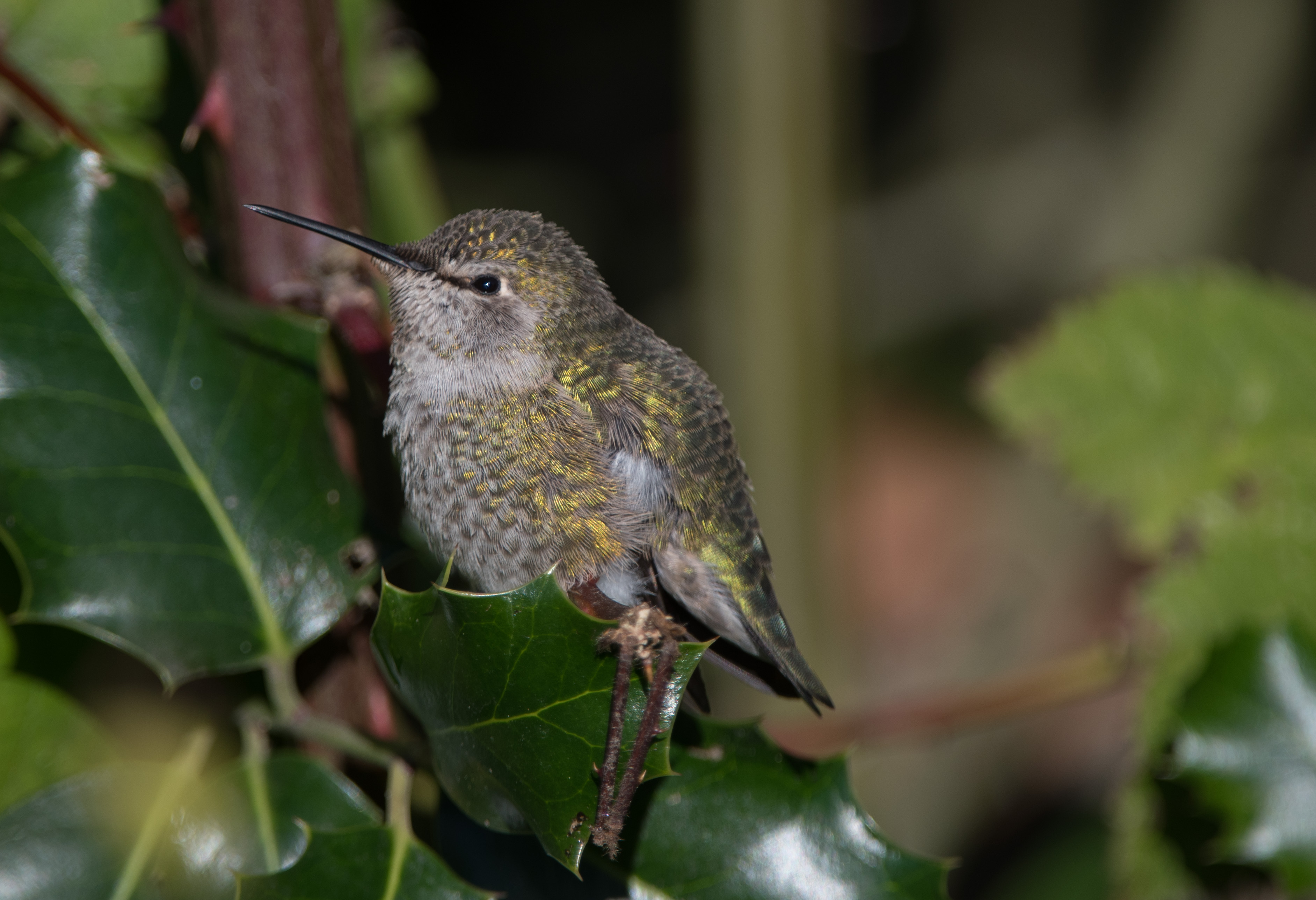
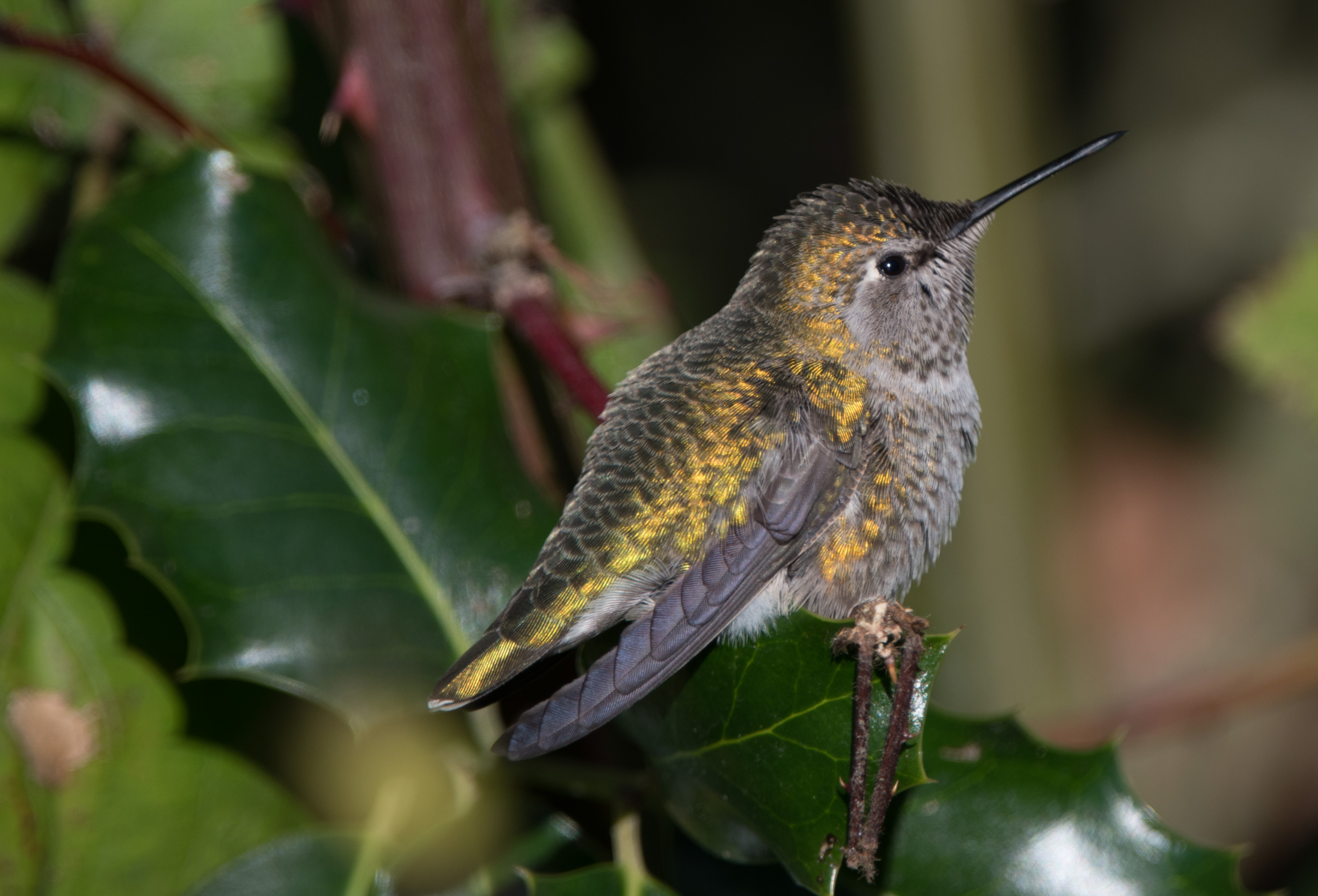
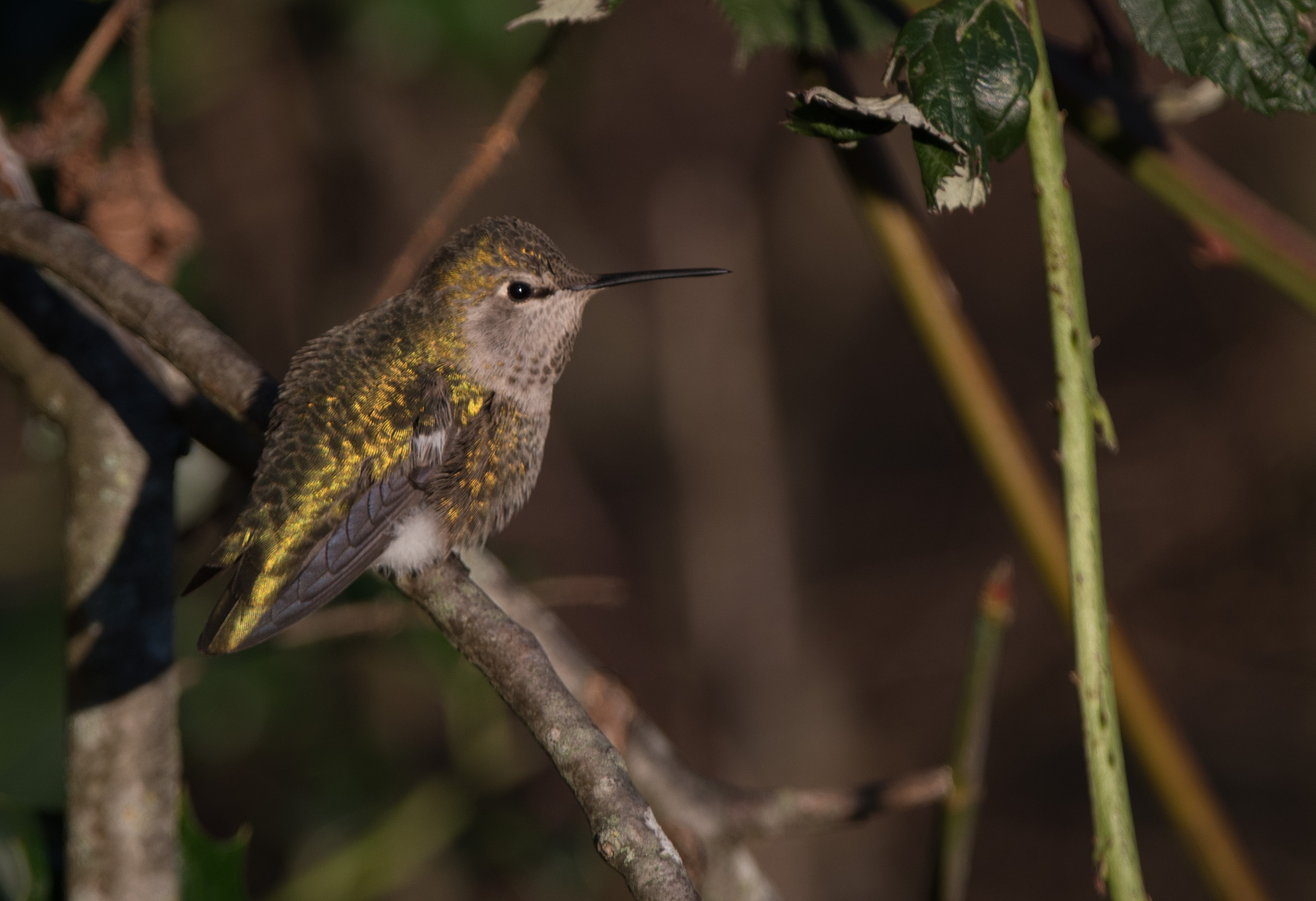
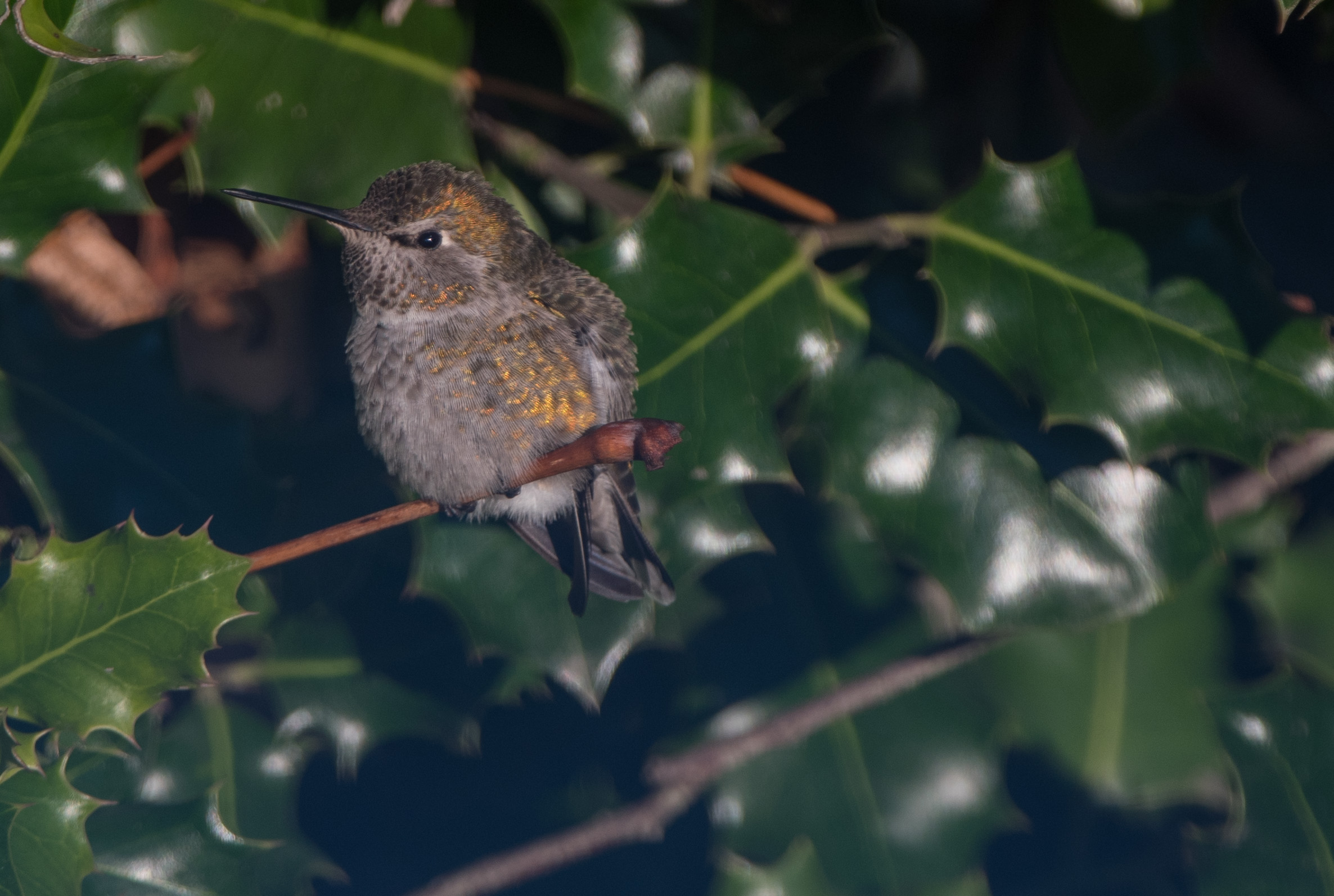
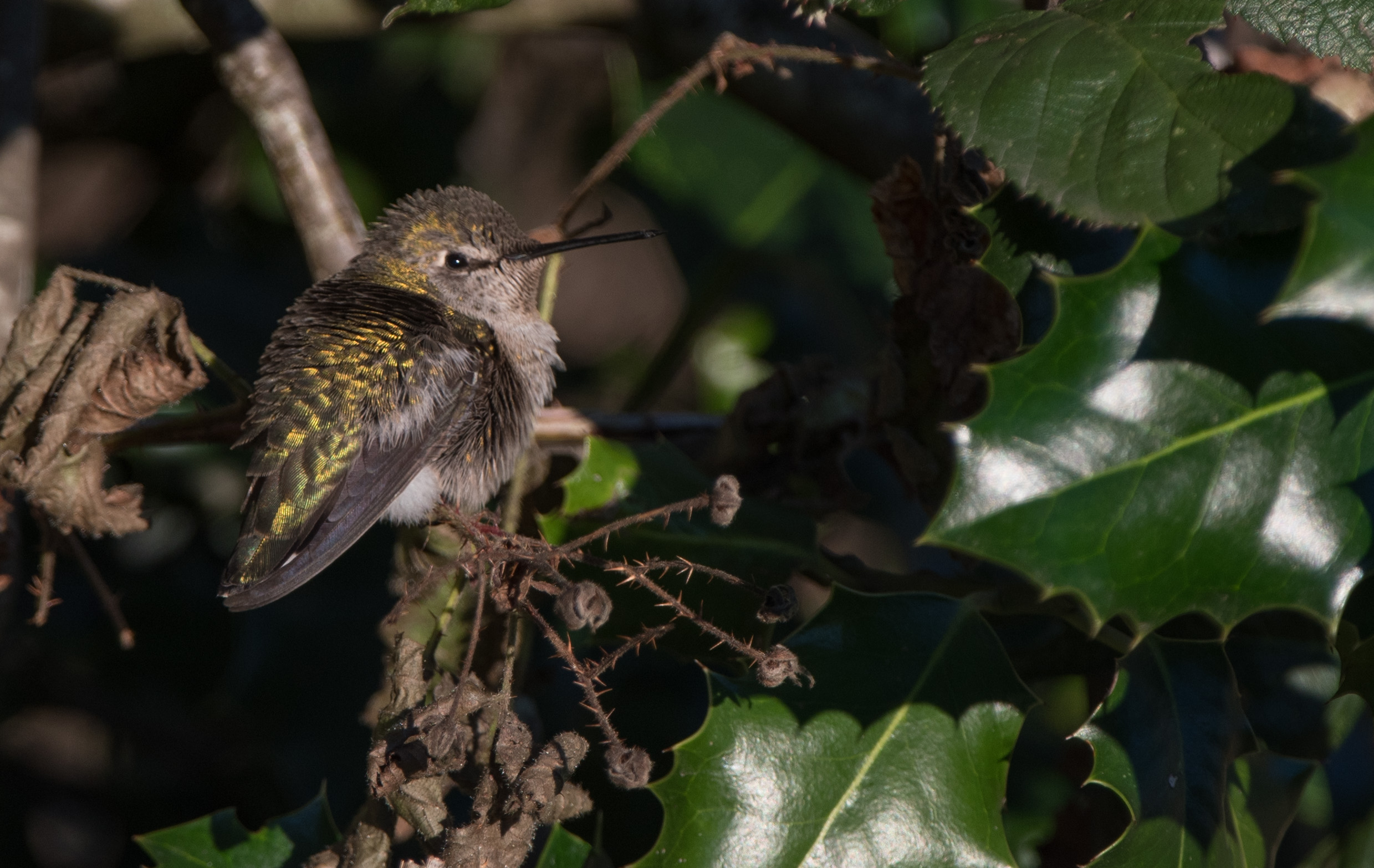
We have two male Anna’s hummingbirds contesting control of the yard with each other and at least one female Rufous hummingbird.  The males don’t seem to be mortal enemies at all times and I’ve suspected that one might be the other’s offspring.  The adult male is probably the same one that over-wintered here this last season.

Just for good measure here’s a female Anna’s hummingbird feeding on salvia in the yard…

We’ve had two, and possibly three, batches of California quail this season.  (One of these years, if I live long enough, I’m going to figure out where these birds go in winter!)  Nature takes a heavy toll before these birds reach adulthood.  Just recently two of the coveys combined giving an extra set of eyes and ears for protection.

The yard is full of American goldfinches and they’re eating us out of house and home.  Here’s a photo of a male feeding a juvenile some of our sunflower seed…

This Orange-crowned warbler visited the watercourse late yesterday afternoon…

And finally, here’s a juvenile Western tanager that visited the yard and watercourse just this (8/7/2017) morning…

A Quick Yard Post

In my last post I mentioned how some interesting birds were beginning to visit the yard… perhaps the beginnings of an early fall migration.  I spent a little time in the yard on the afternoon of July 29 and had a male Wilson’s warbler visit the yard, flying around the yard several times before finally visiting the watercourse multiple times.

For comparison, here is a male American goldfinch

And while we’re featuring some bold colors, here is a male House finch

For a couple of weeks I’ve noticed a native honeysuckle high above the ground projecting from a madrone grove at the edge of the yard.  Today I noticed a female Rufous hummingbird accessing the bloom.  I was too far away for a really good photo but I had direct sunlight on the subject with a dark background.

Summer Birding in Anacortes

I walk five mornings a week in Washington Park and this past week had a couple of interesting experiences (sans photos) there.  On July 25 I was watching a group of about 7-8 Black oystercatchers on the beach near Green Point when another group of about the same size flew in.  I began a more serious count and counted a total of 15 oystercatchers, the most I had counted in all of my years of visiting that location in the park.

Then on July 27 I had just begun my walk when I spied what was probably a Barred owl (probably a juvenile) sitting in a tree very near the road.  I watched it for several minutes and was joined by another couple (also birders) and we all watched the owl for several more minutes. It flew from the tree to the roadside right in front of us and we got to watch it until it was frightened by a couple of less-aware walkers.

We’ve been consistently seeing Barred owls along the southeastern half of the loop road early in the mornings for at least the past couple of weeks.

We’ve had a dearth of warblers and other interesting birds in the yard for the past couple of months, but things have picked up some lately.  On July 27 I spent considerable time in the yard with a handsome reward.  I had notice an unusual number of birds in the yard during the morning but nothing other than the usual visitors.  I decided to opt for a more detailed look with my camera.  As I was idly watching the bird traffic I was suddenly presented with two unusual visitors at once… a juvenile Cedar waxwing and a male Wilson’s warbler!

(These two photos are of the same waxwing, but this first photo of the waxwing was post-bath!)

The appearance of these two birds inspired me so I decided to spend a little more time in the yard.  It was a very good thing I did because a while later I was surprised by another warbler.  At the time I was absorbed in photographing it I thought it was an Orange-crowned warbler, but after it left the yard I had time to gather my thoughts and realized that it was a MacGillivray’s warbler, a very rare visitor to the yard!  I suspect that this bird is either a female or a juvenile and not a mature male which would have a darker mantle and make it easier to recognize.  The main identifying factor is the split white eye ring.

I’ll throw in a Black-headed grosbeak just for good measure.  I’m guessing that this is either a female or a juvenile.  We’ve had at least two pairs of grosbeaks in the yard this season and they, and their offspring, are regular visitors to the feeders.

The next day I was inspired to sit in the yard again.  I photographed this Orange-crowned warbler early and a male Wilson’s warbler in the afternoon.  Unfortunately I saw the Wilsons warbler bathing in the watercourse from the kitchen window but failed to sneak a good photo of it, having to settle for a shot of it preening in a madrone tree.

The hummingbird wars are on in earnest with a male Anna’s hummingbird attempting to keep another Anna’s and one or more female Rufous hummingbirds at bay and off the feeders and the salvia.

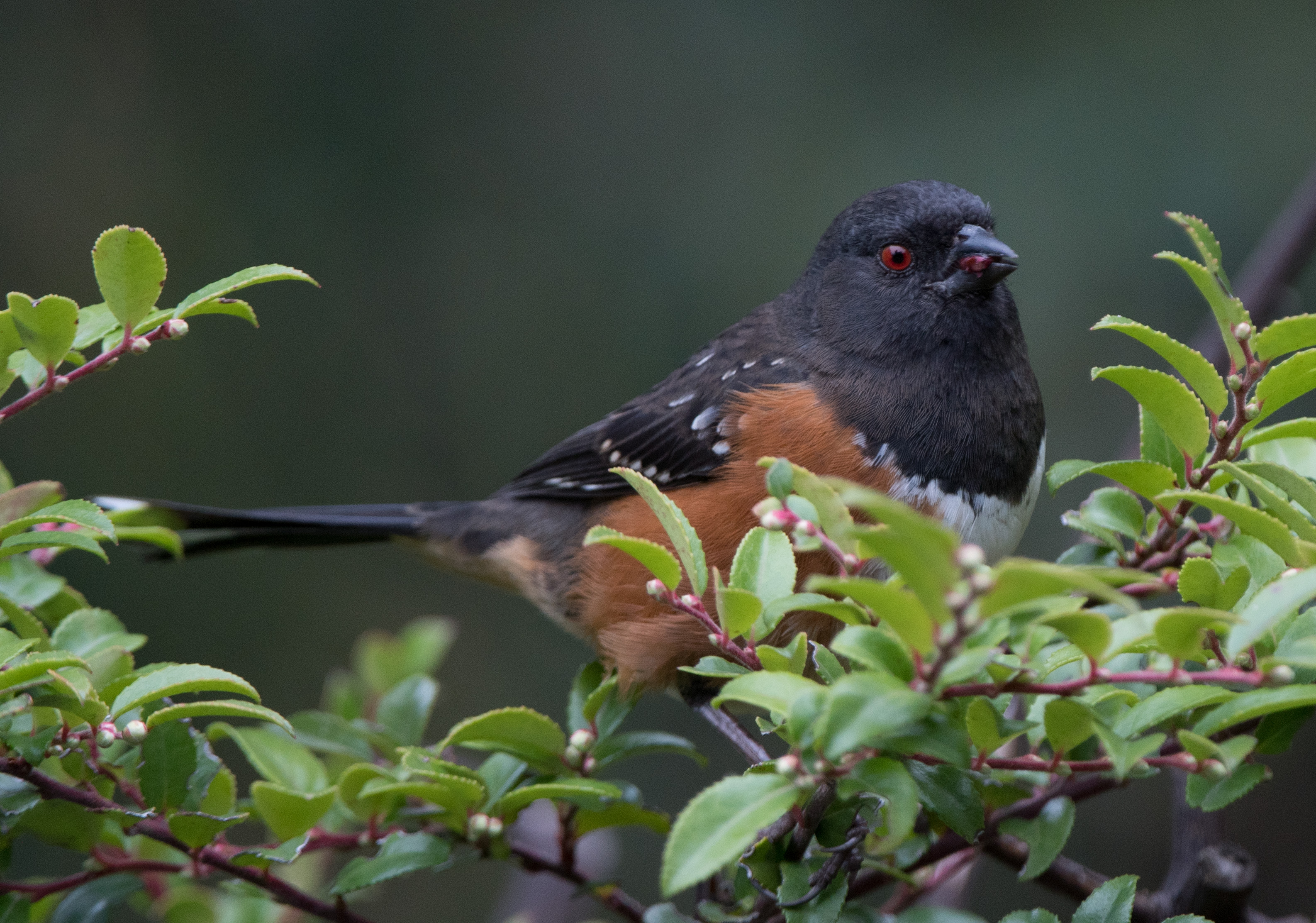
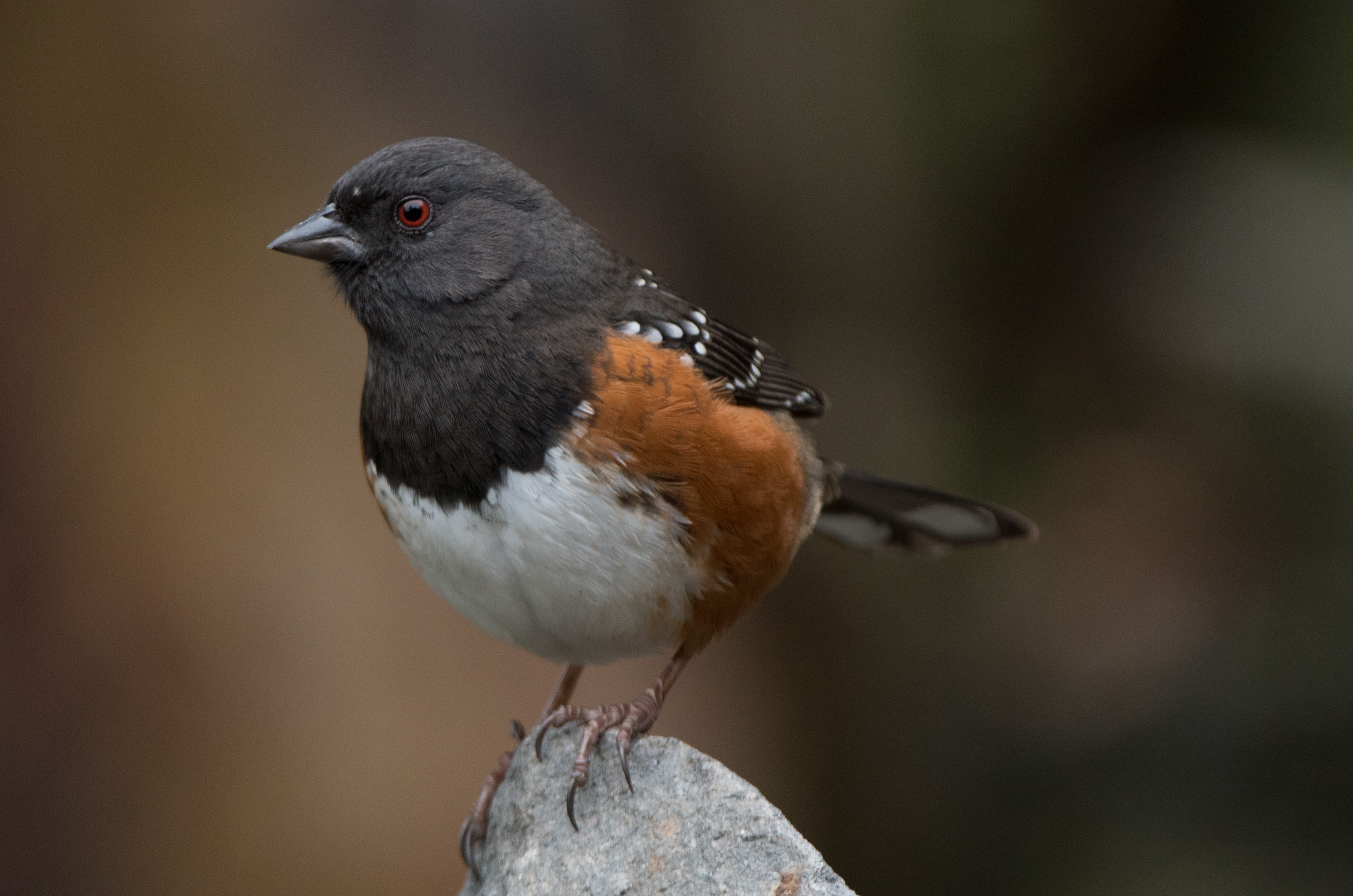
And finally (remember there’s always a “finally”!), while I was initially buoyed by the lack of juvenile Brown-headed cowbirds the area fielded this season, we now have Spotted towhees, White-crowned sparrows and Dark-eyed juncos (Oregon race) all feeding cowbird chicks.  : (   These are all species that have been susceptible to cowbird predation in past seasons here in the yard.