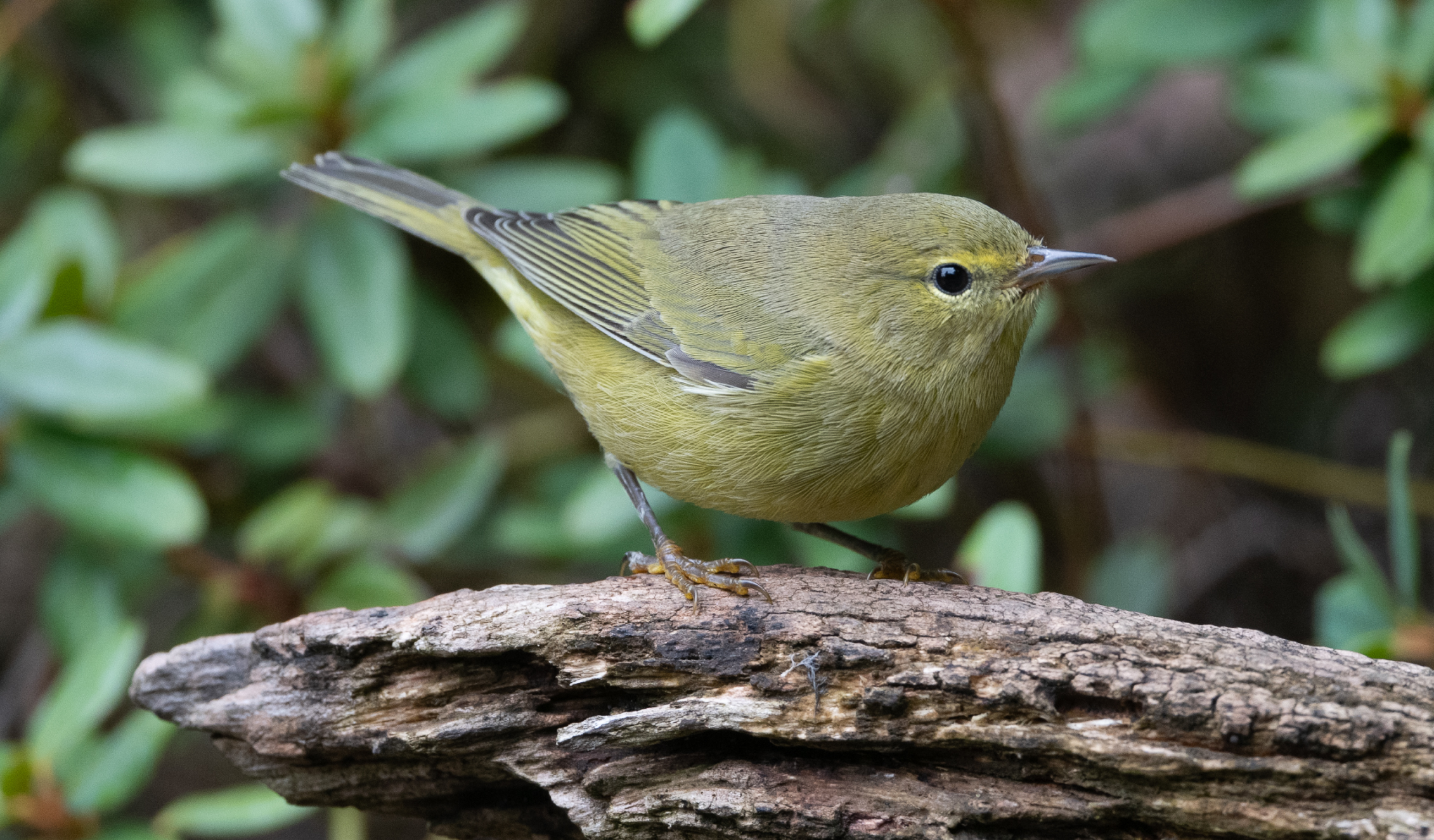
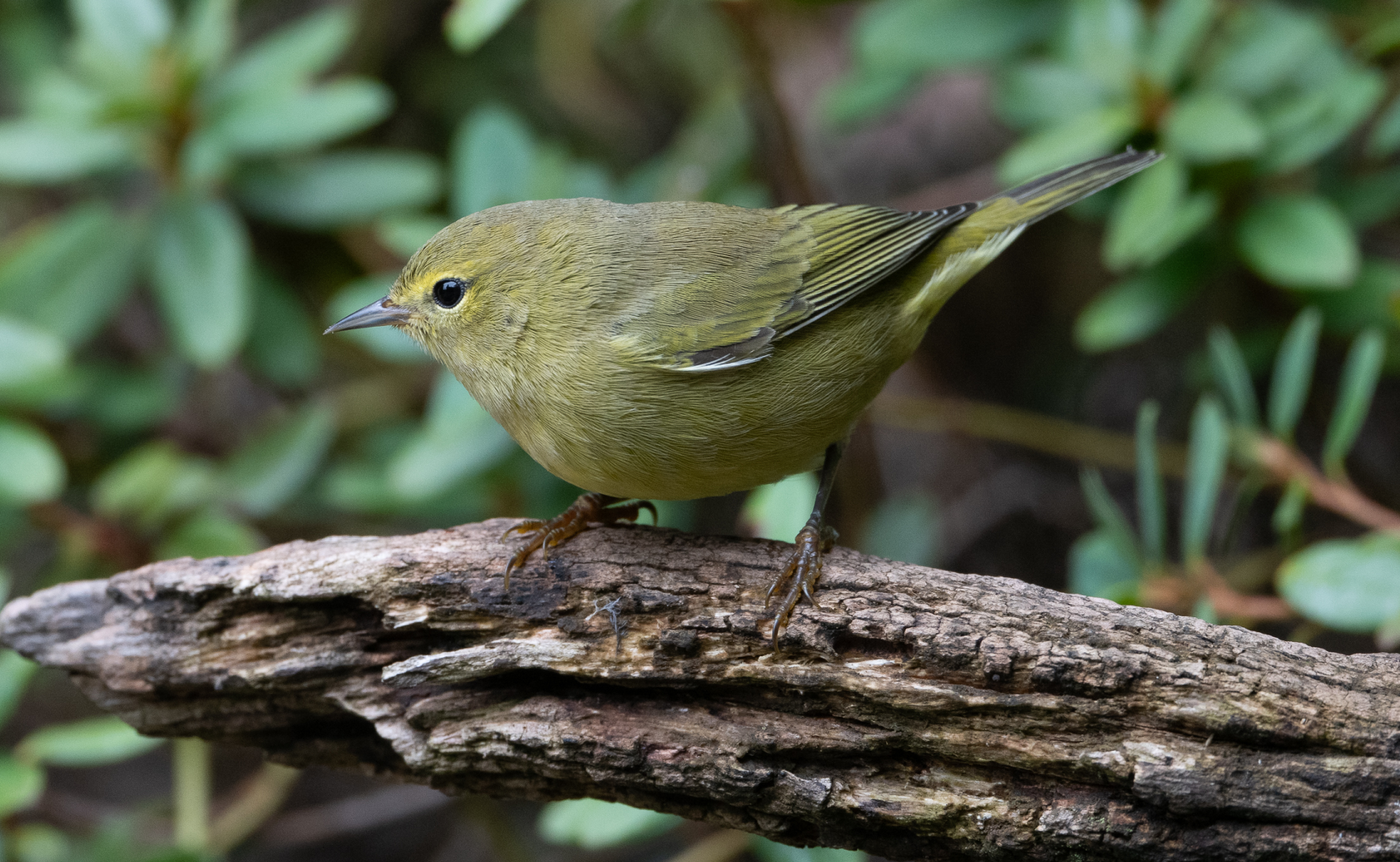
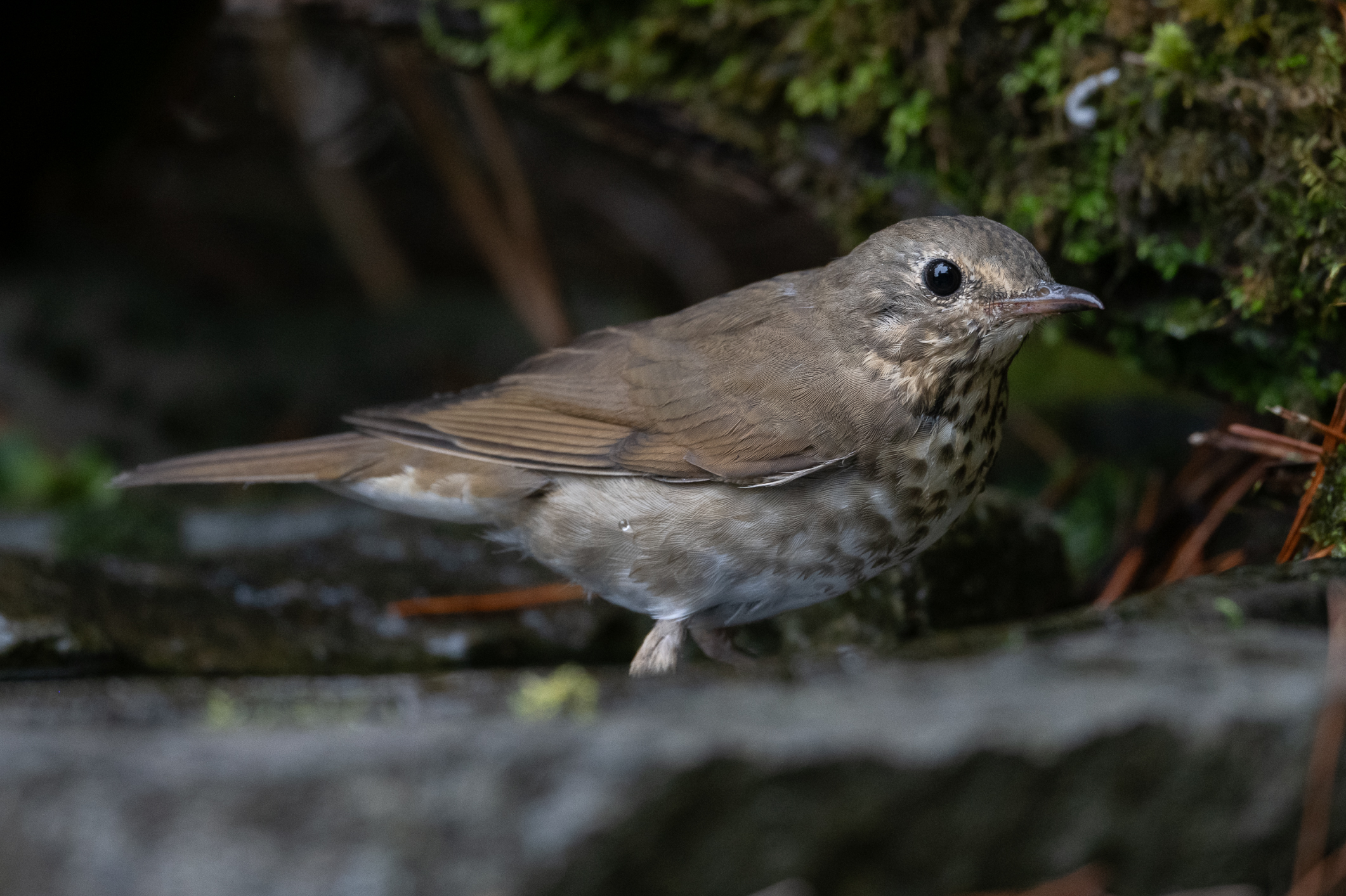
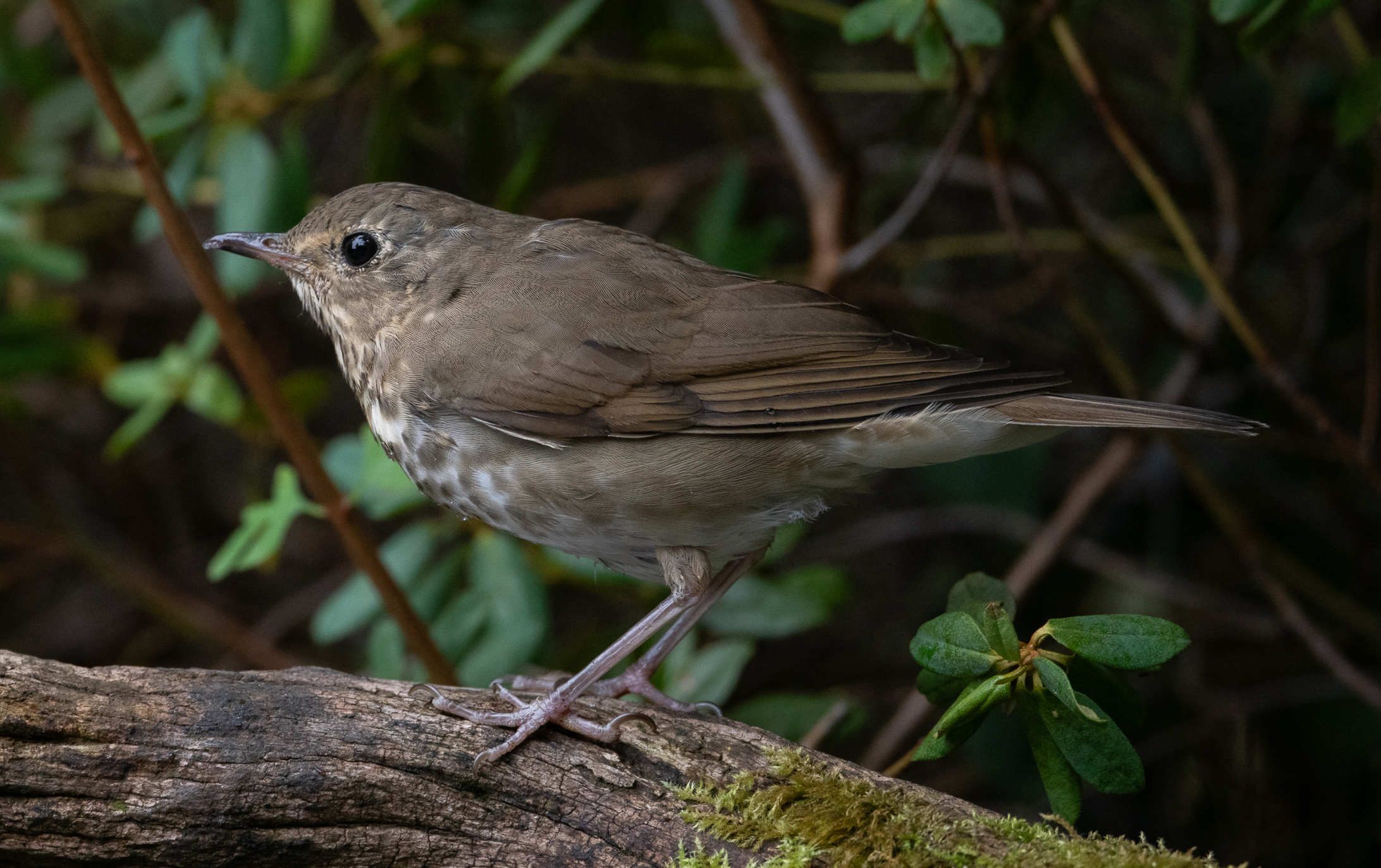
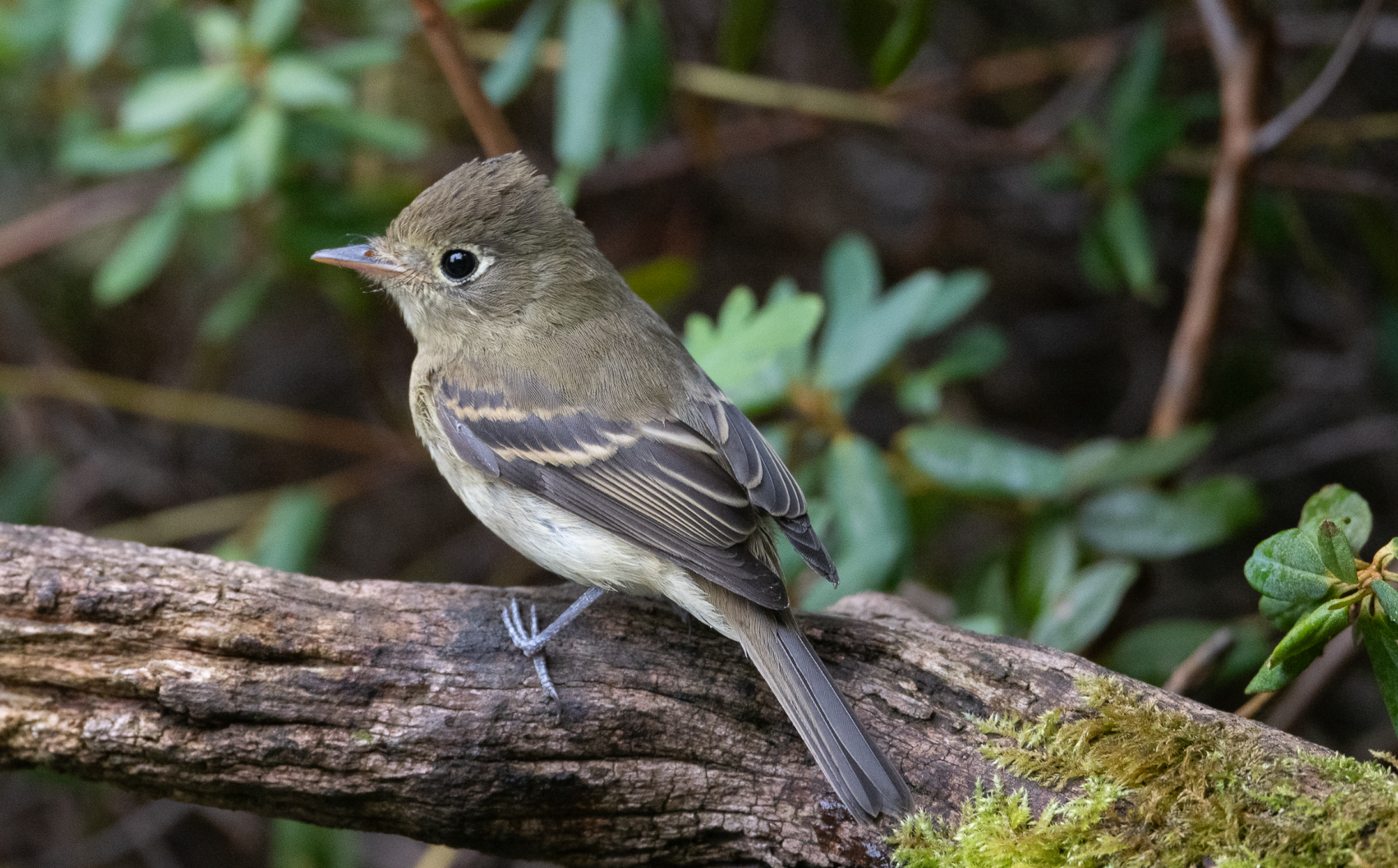
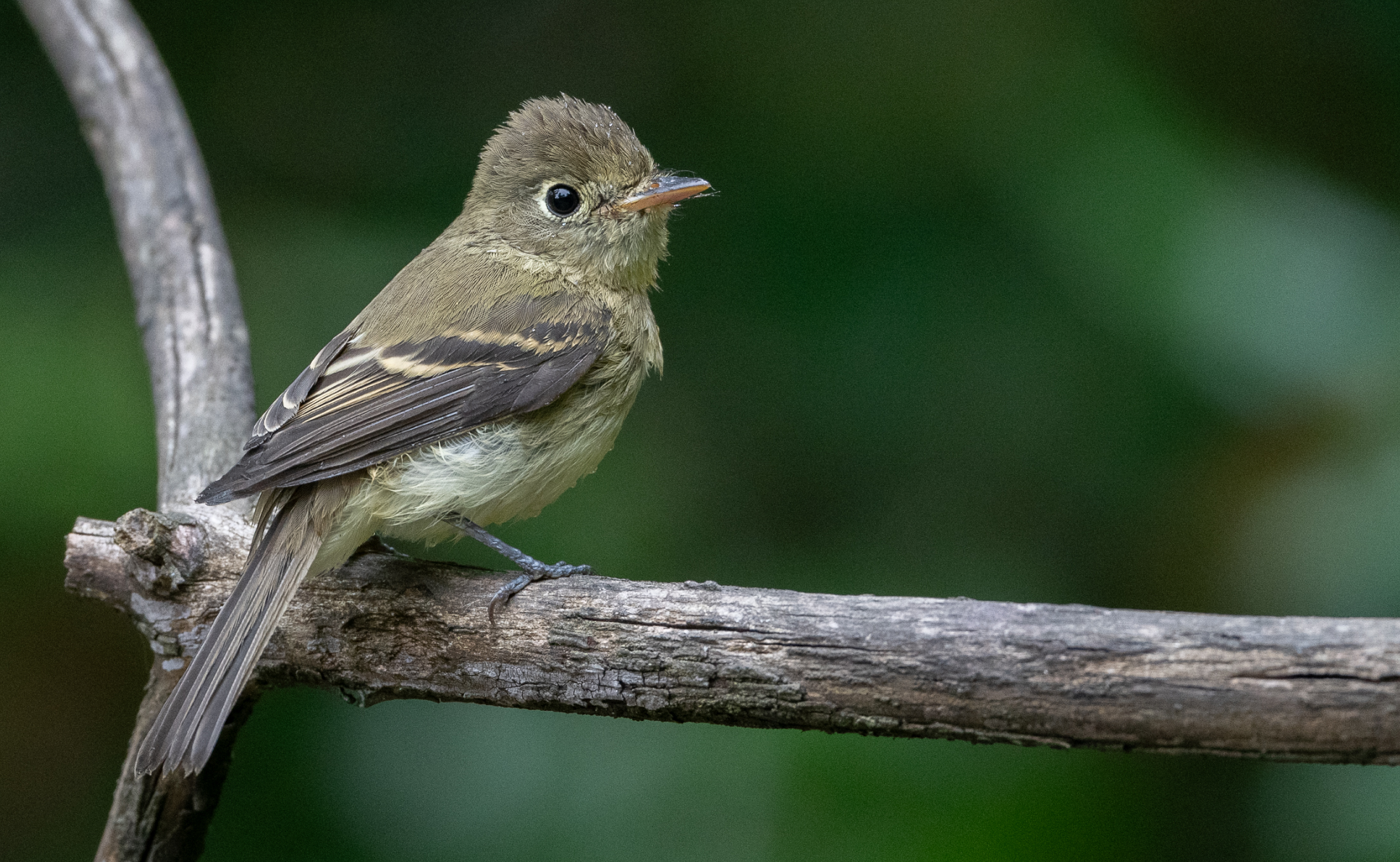
I spent a little time in the yard on the afternoon of August 30, 2026, and had the opportunity to photograph some of my rarer visitors. I began my vigil shortly after 3pm, what has become prime time for avian visitors. Soon after my arrival I had a visit from an Orange-crowned warbler, the first of at least two visits for the species that afternoon although it would be the only one from which I obtained photos. The Orange-crowned warblers are year-round residents, although not usually regular visitors.
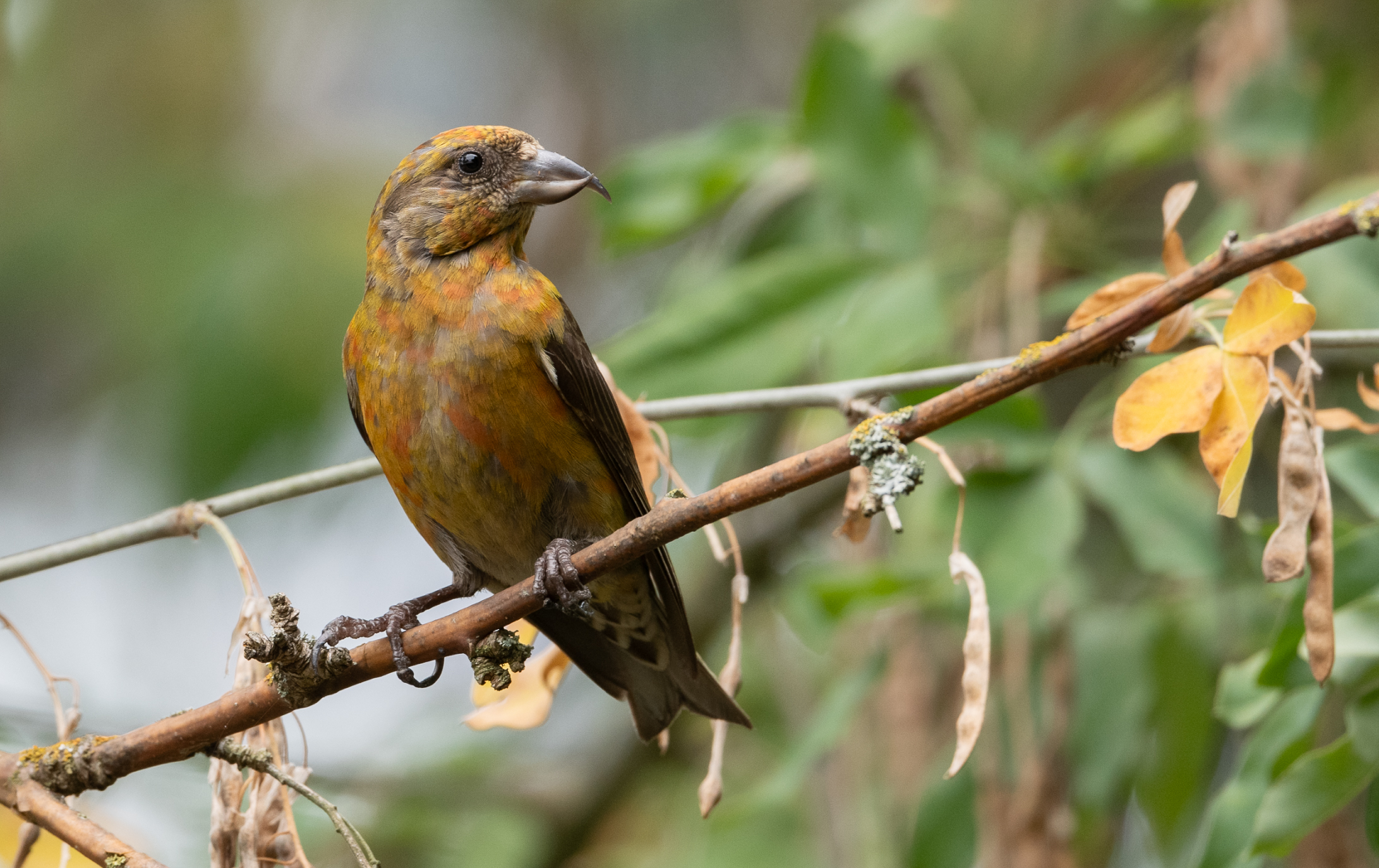
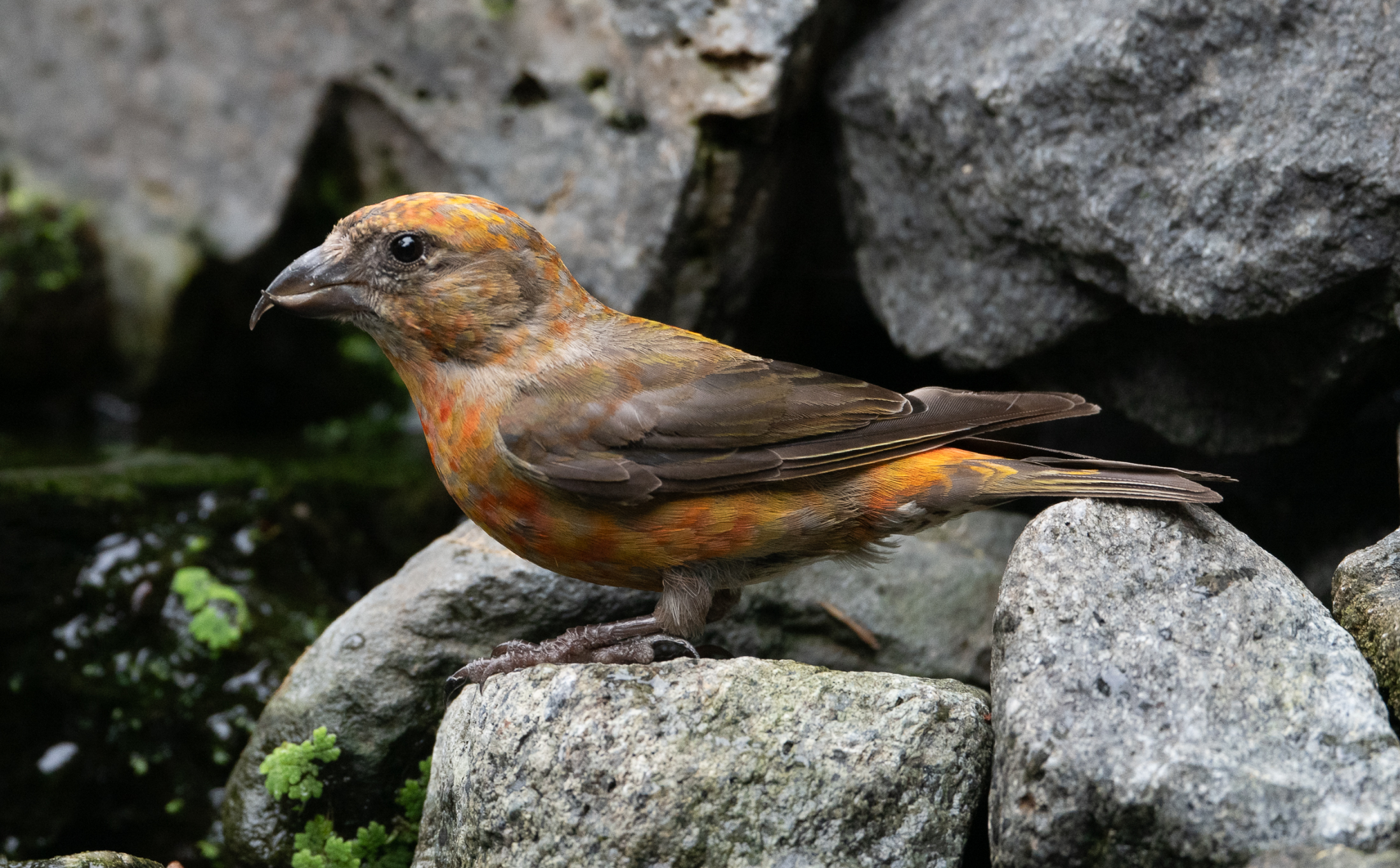
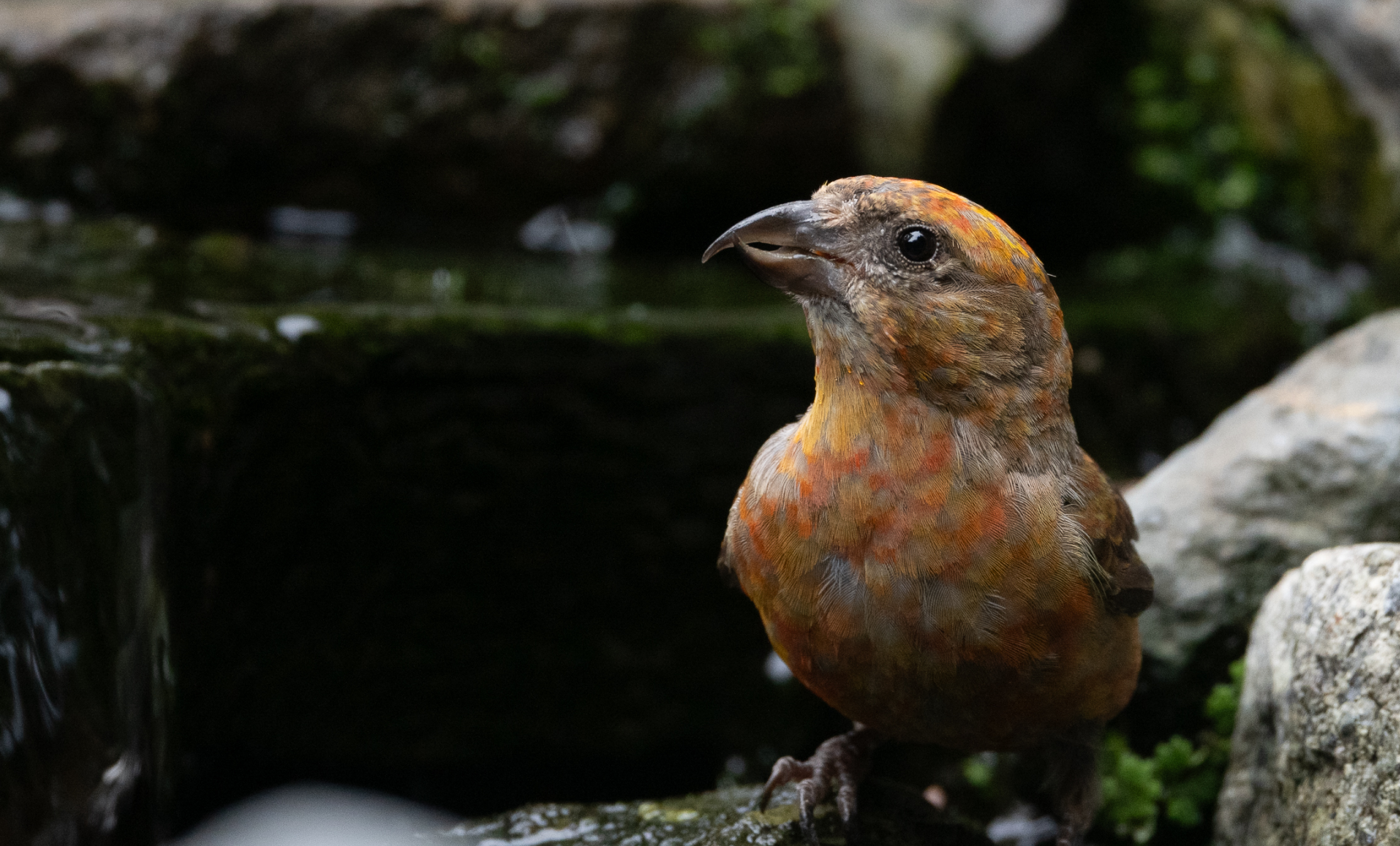
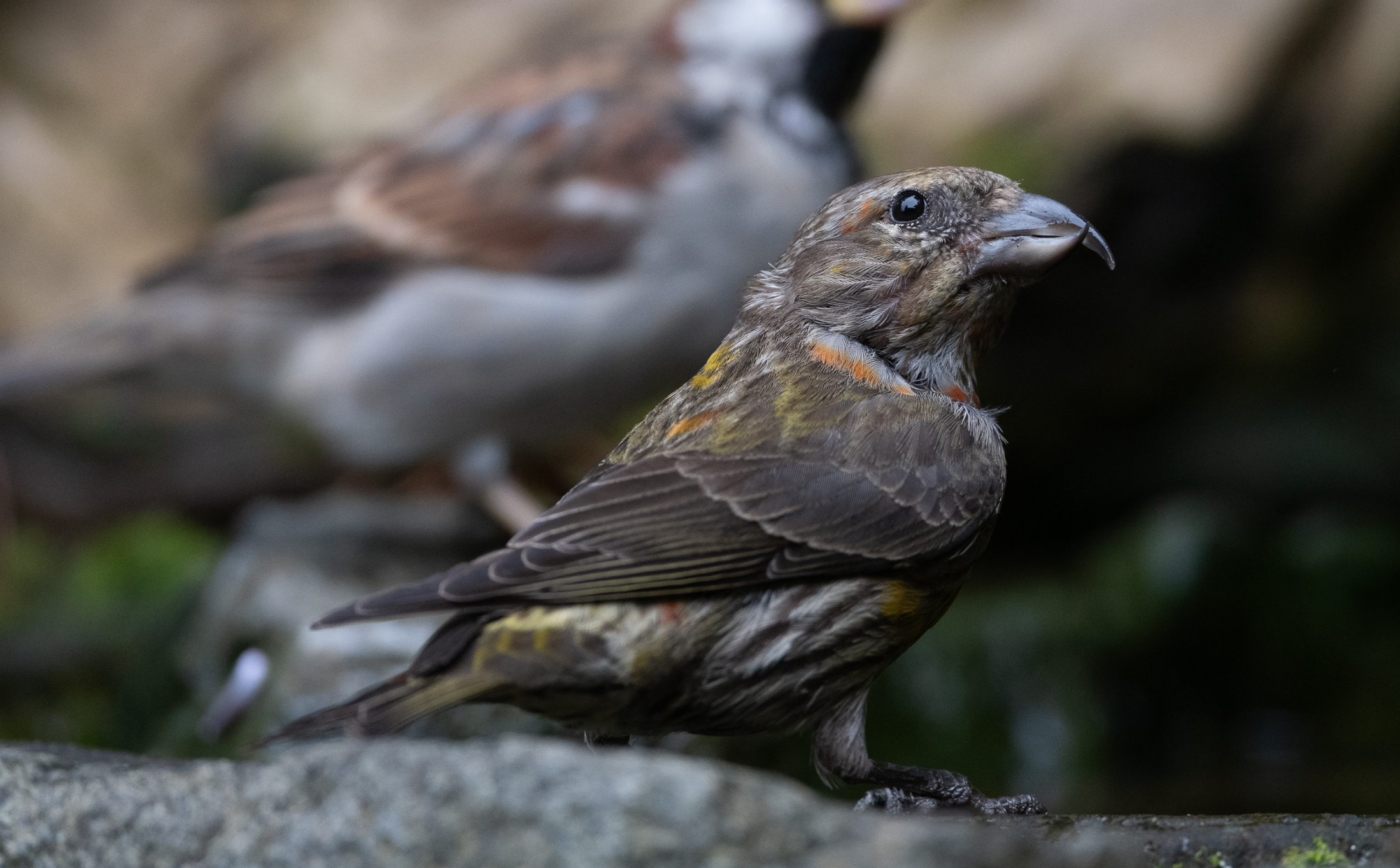
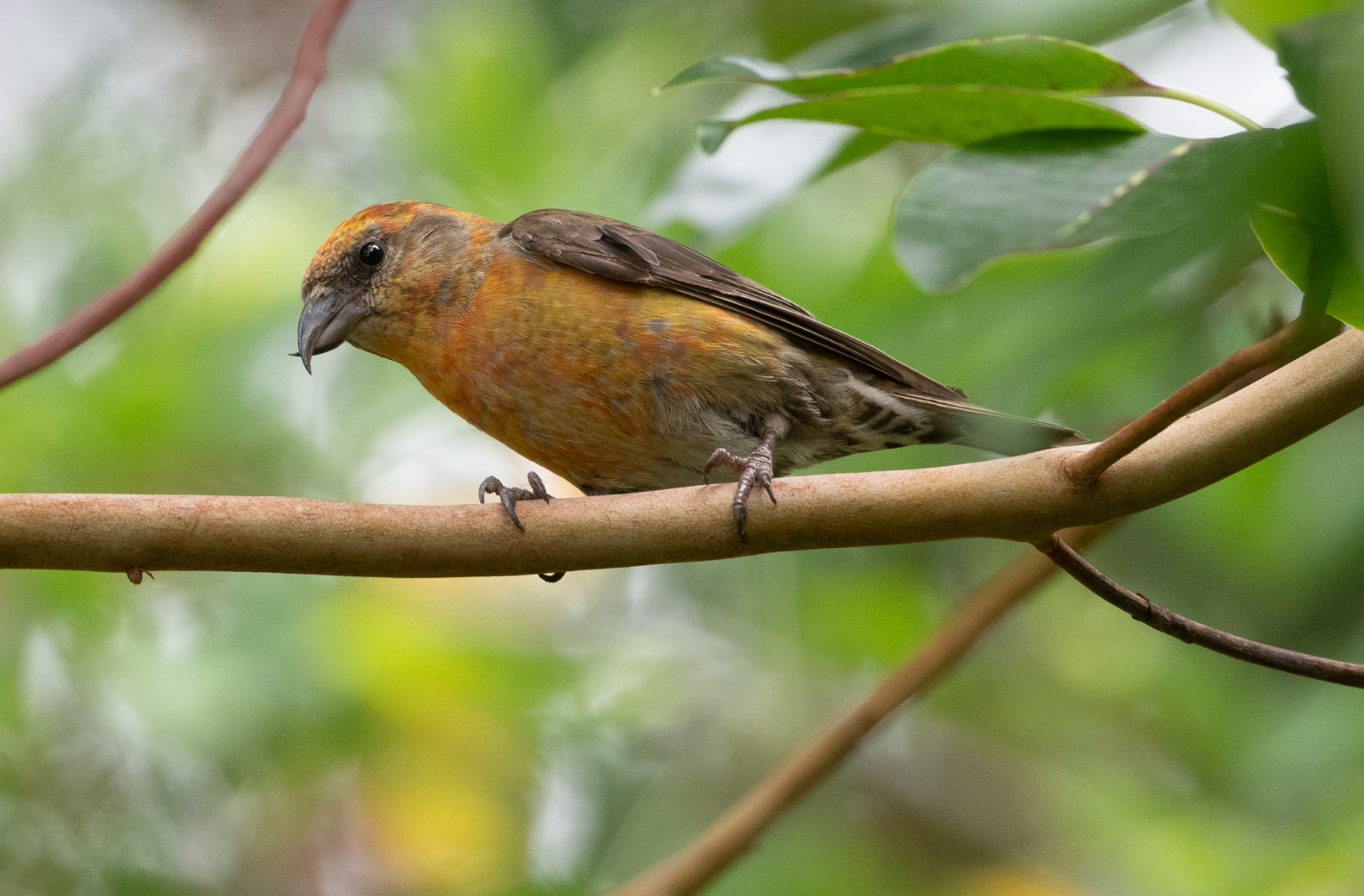
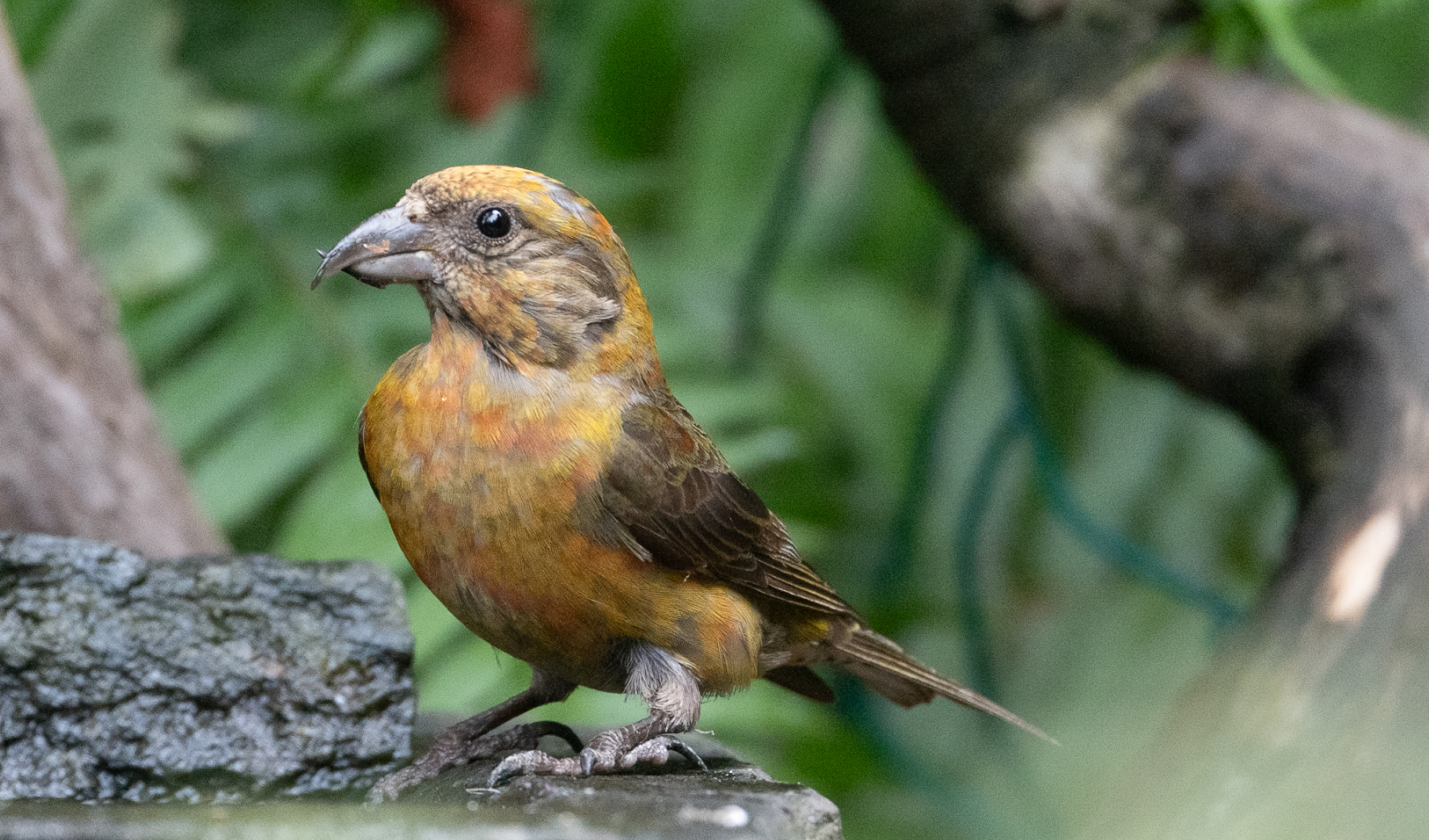
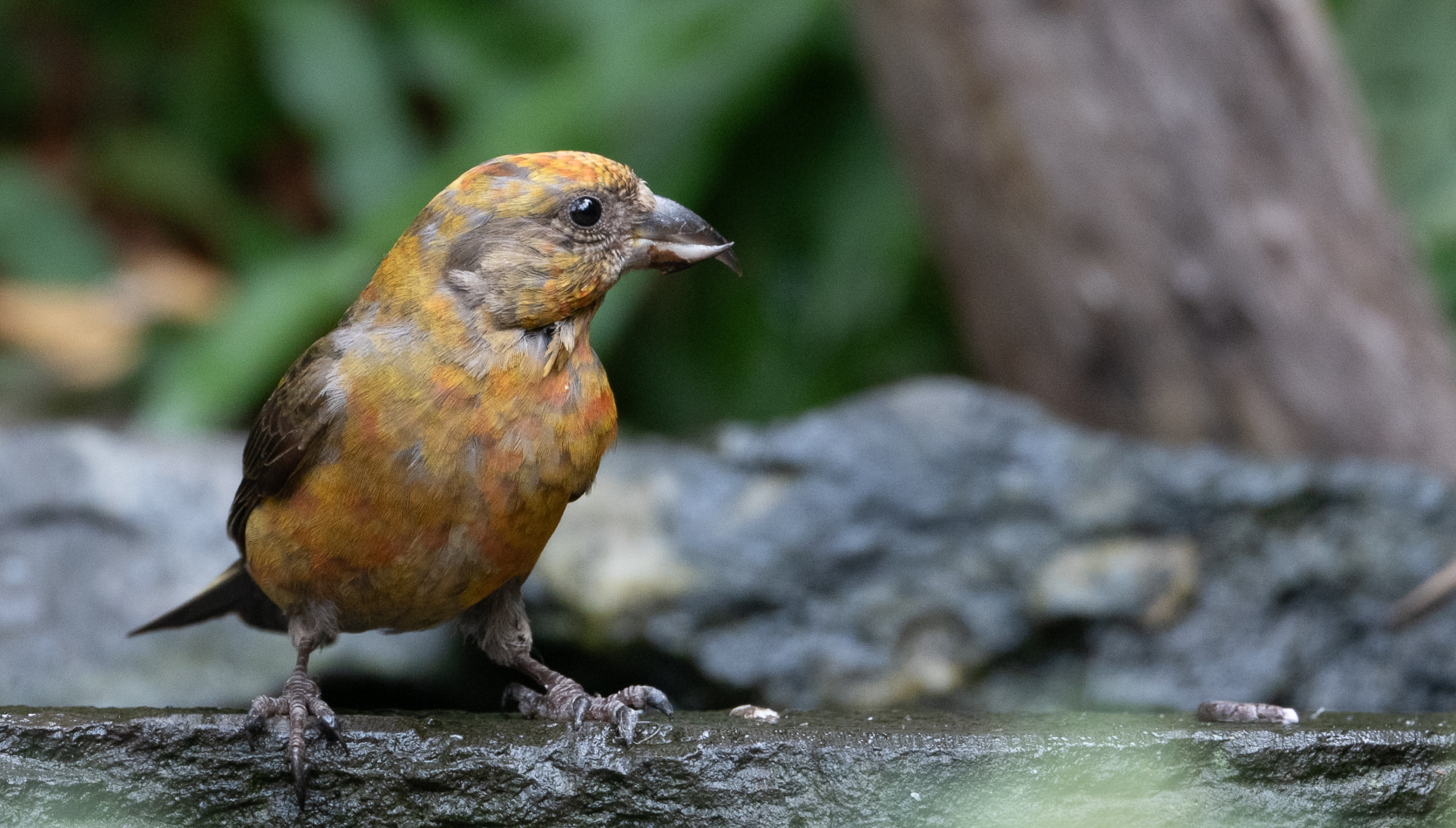
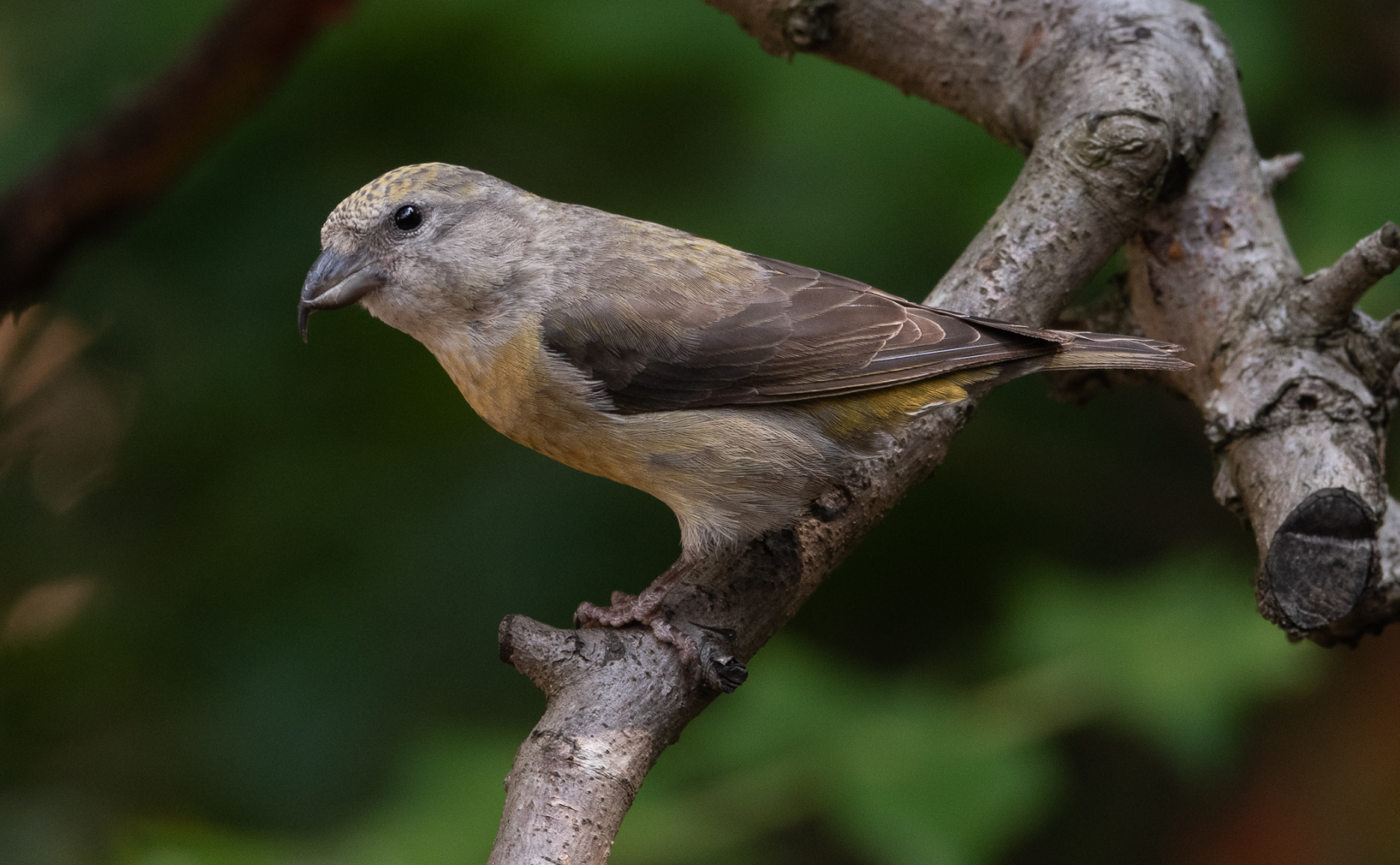
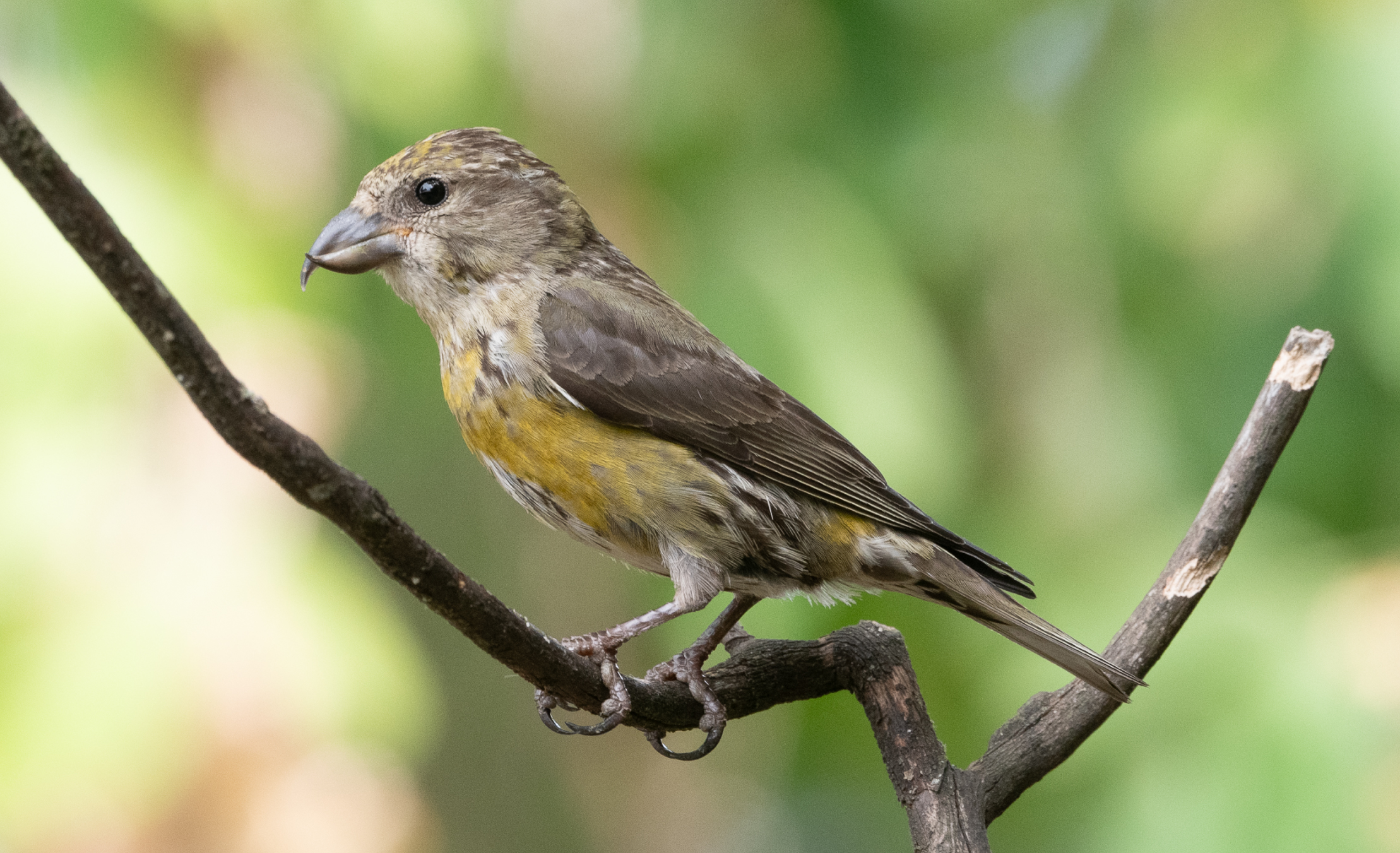
I had at least three Red crossbill visits during the afternoon. The last visit was from a juvenile with hardly any color. I almost missed it as it was intermingled with several sparrows.
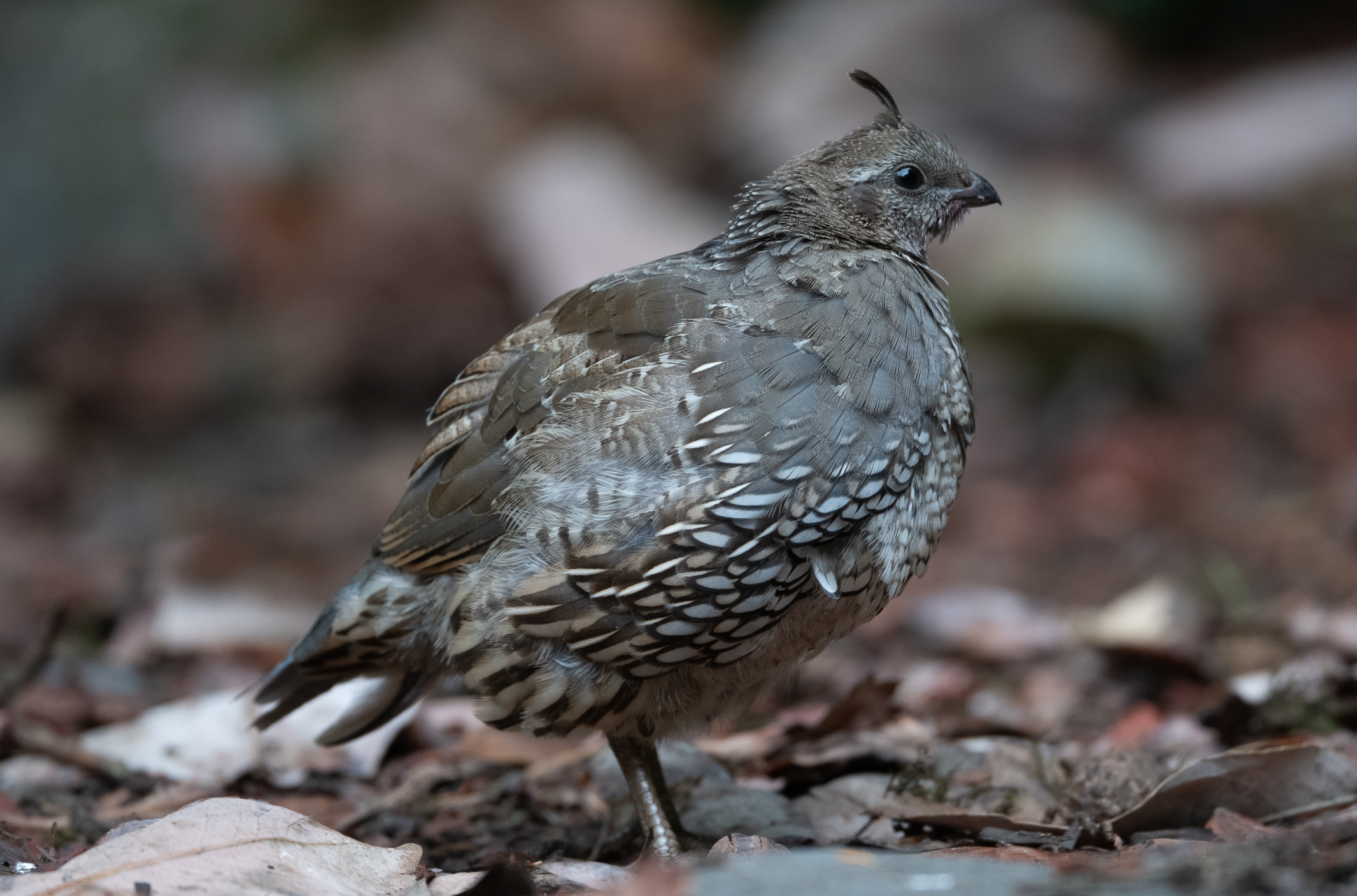
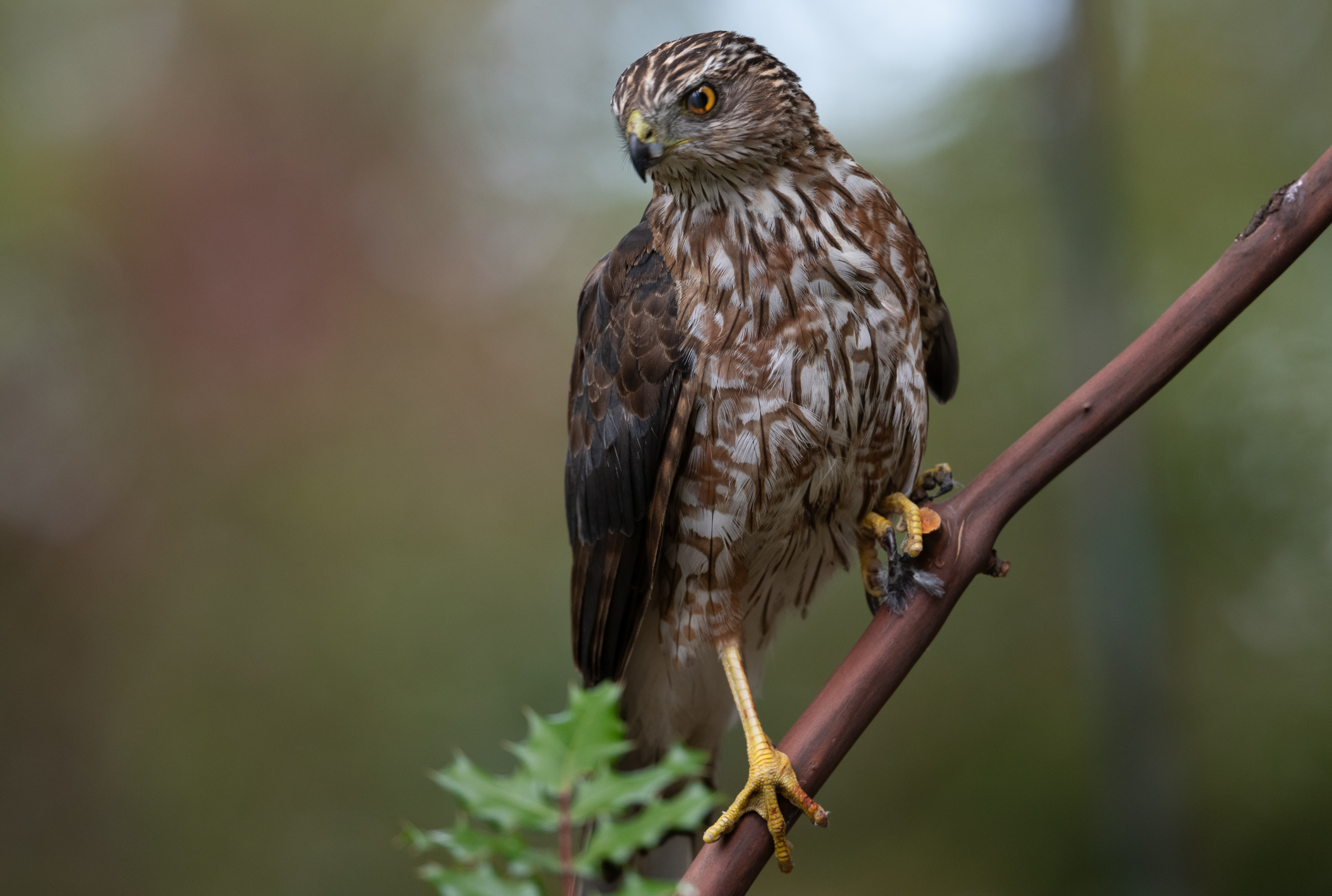
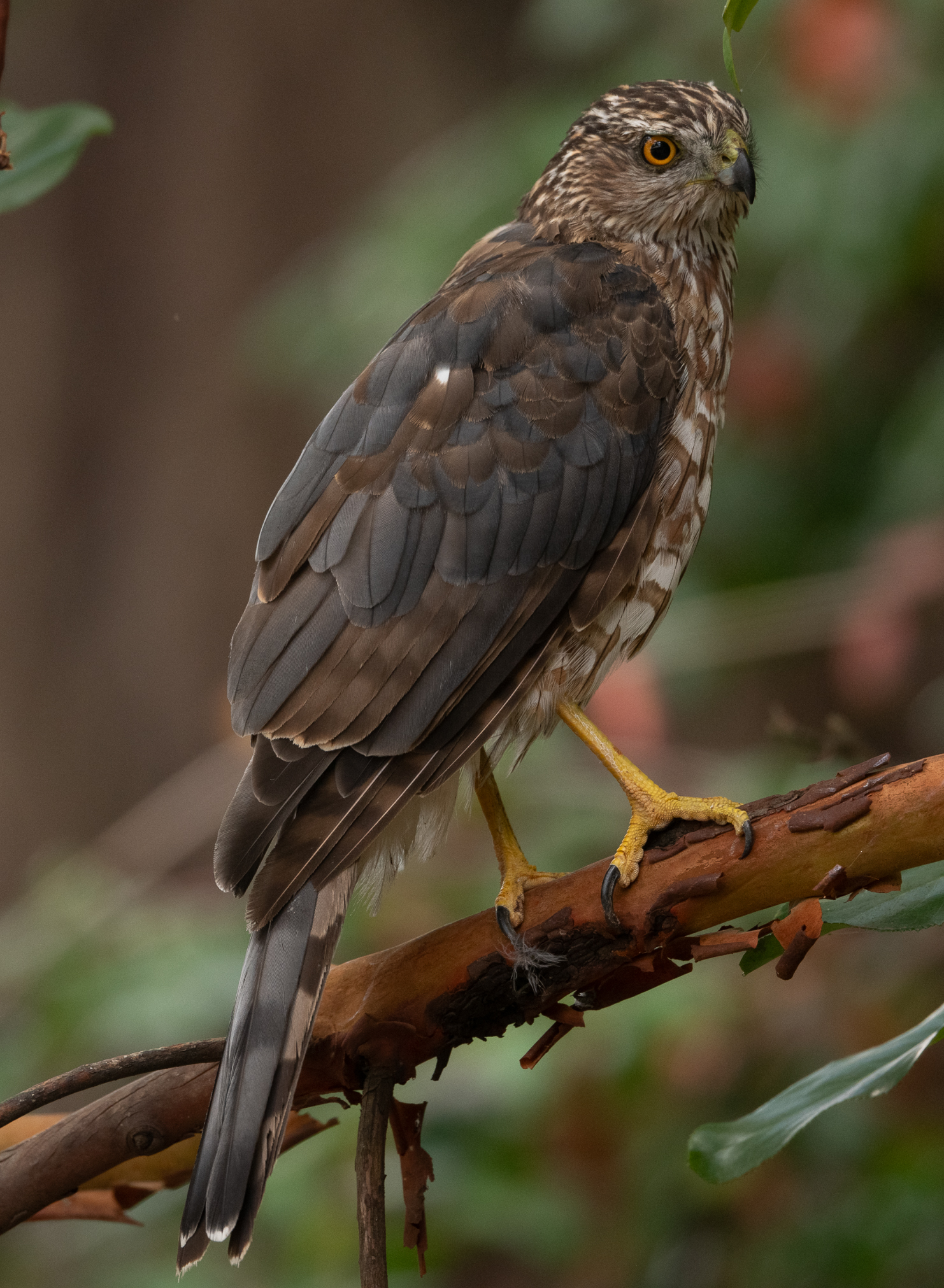
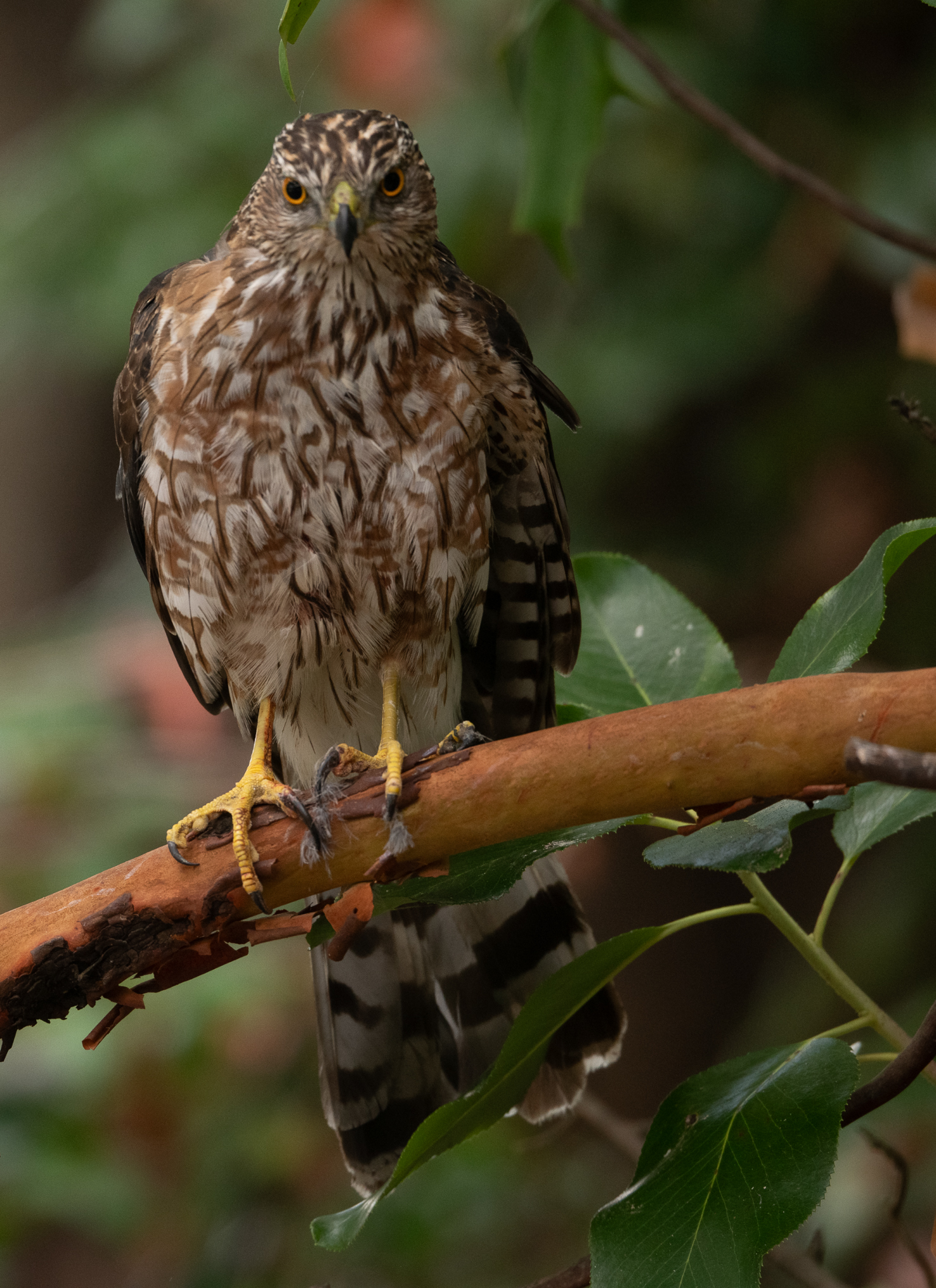
A small covey of California quail showed up next. They were shy and I couldn’t get many photos, but after not having seen any in the yard for a couple of months I was glad to have them back. I suspect that the Cooper’s hawk, pictured and chronicled in recent posts, probably has something to do with their scarcity and absence.
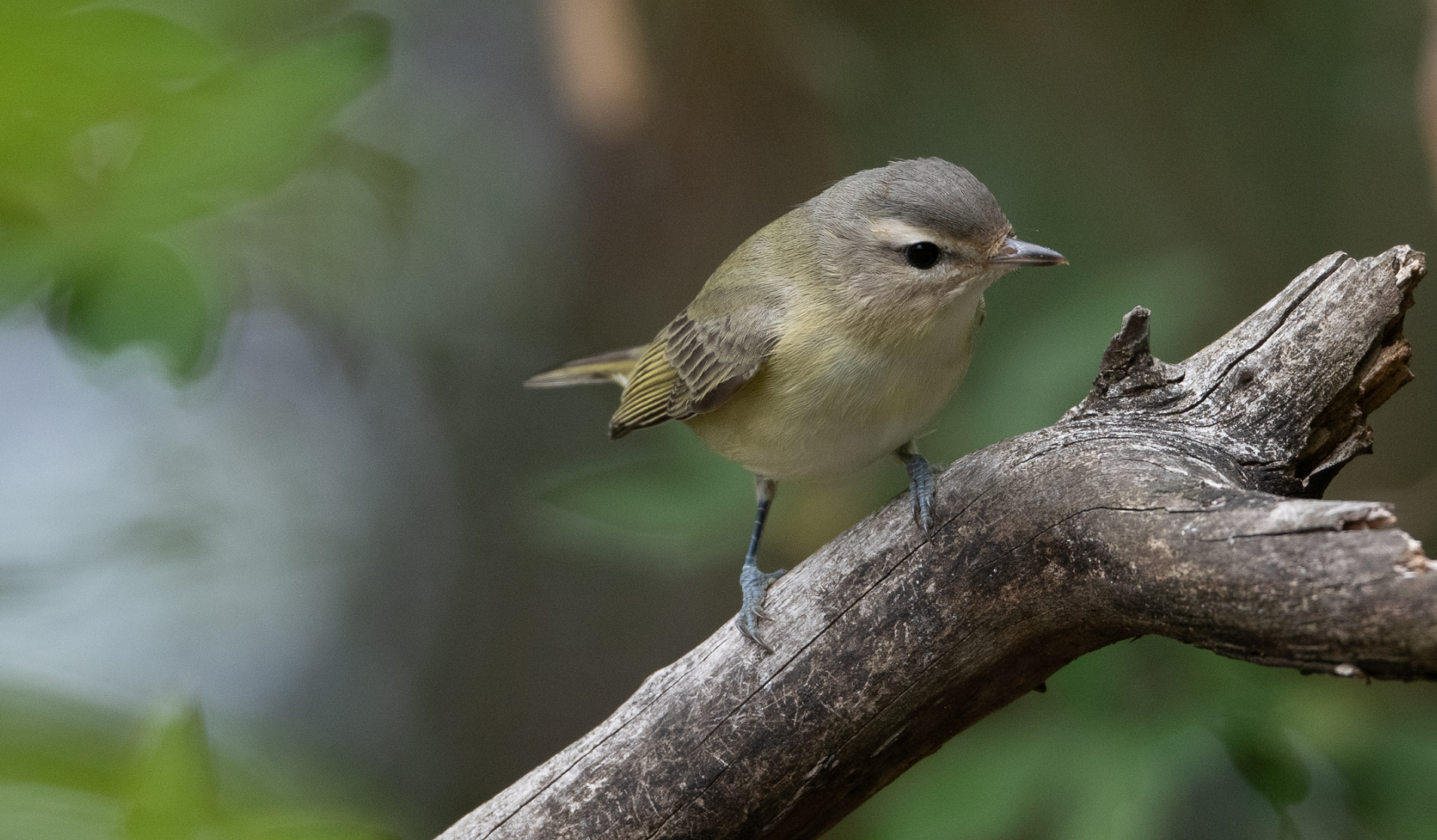
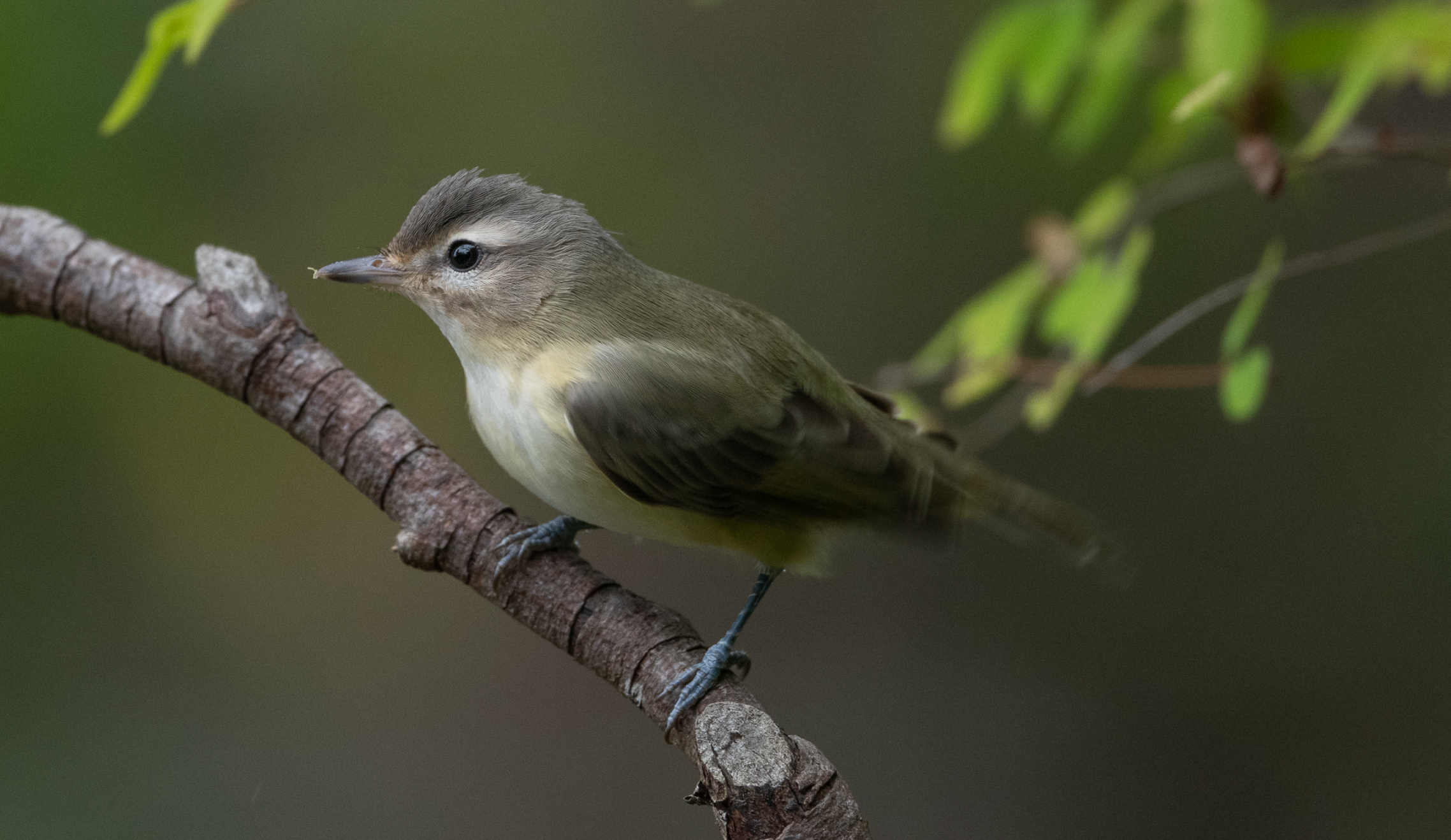
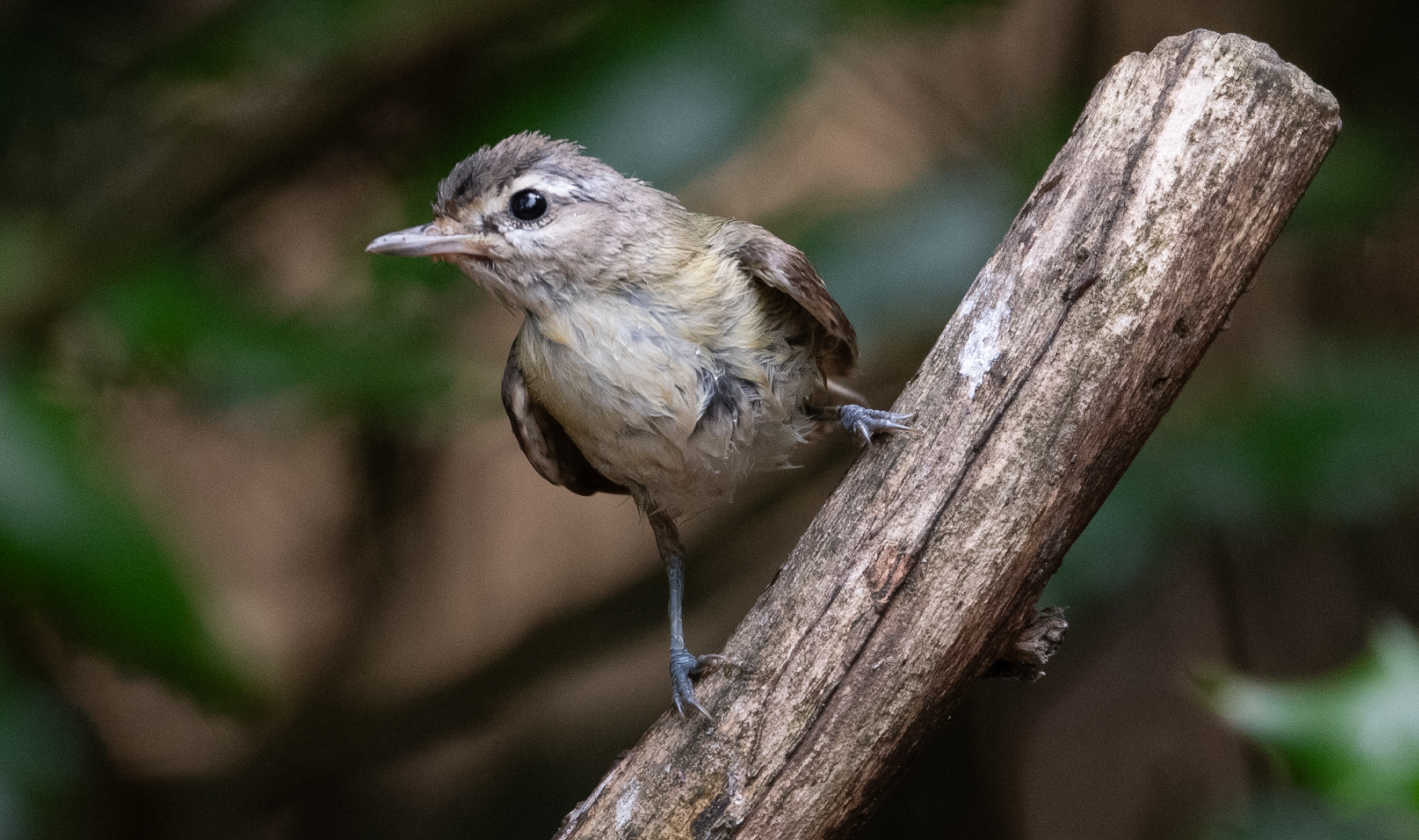
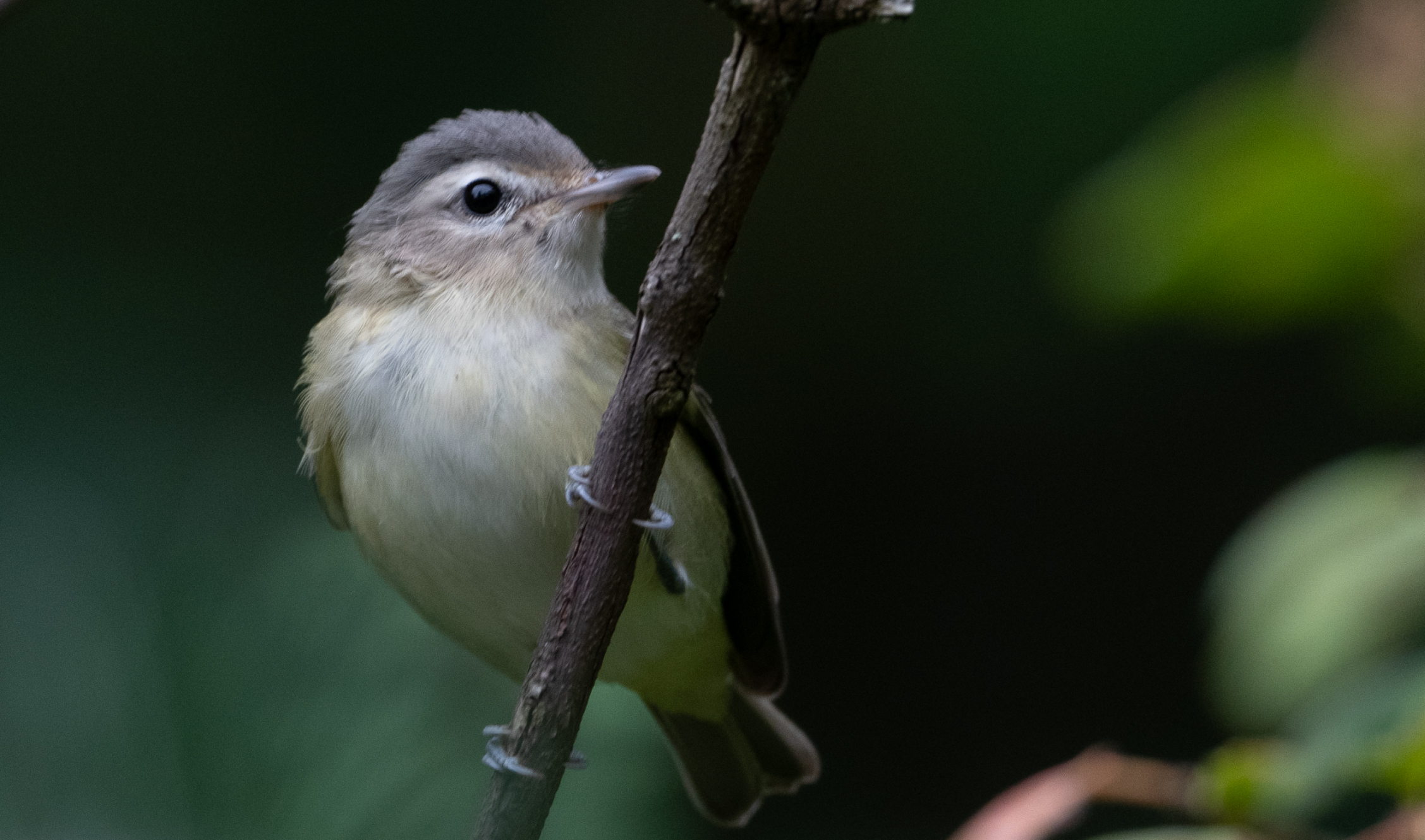
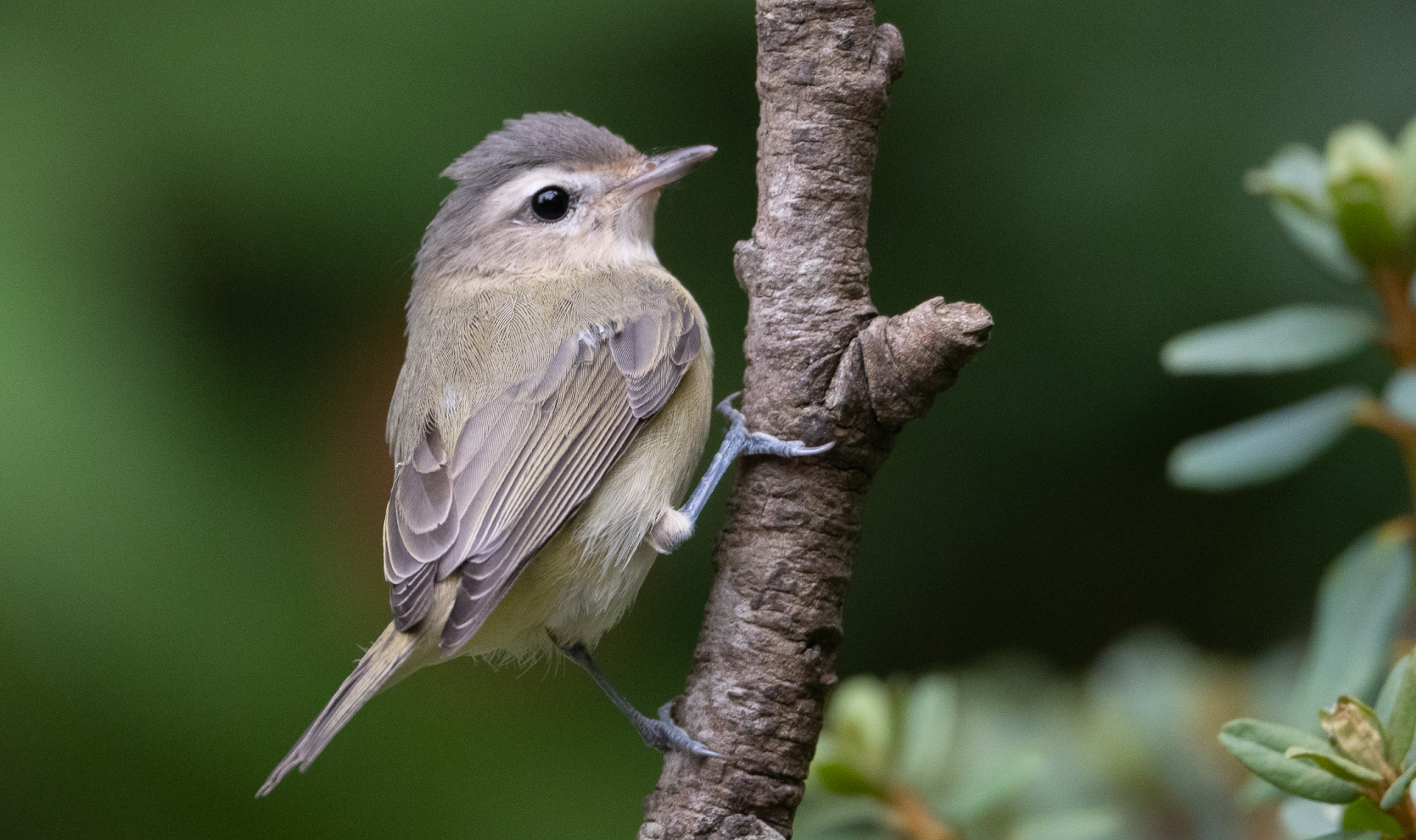
Next up in the yard was a Western Warbling vireo, a very rare visitor but one I’ve had once or twice in the past month or so. It hung around the yard for a considerable time, giving me many opportunities for photos when my tracking skills managed to focus on a constantly moving target!
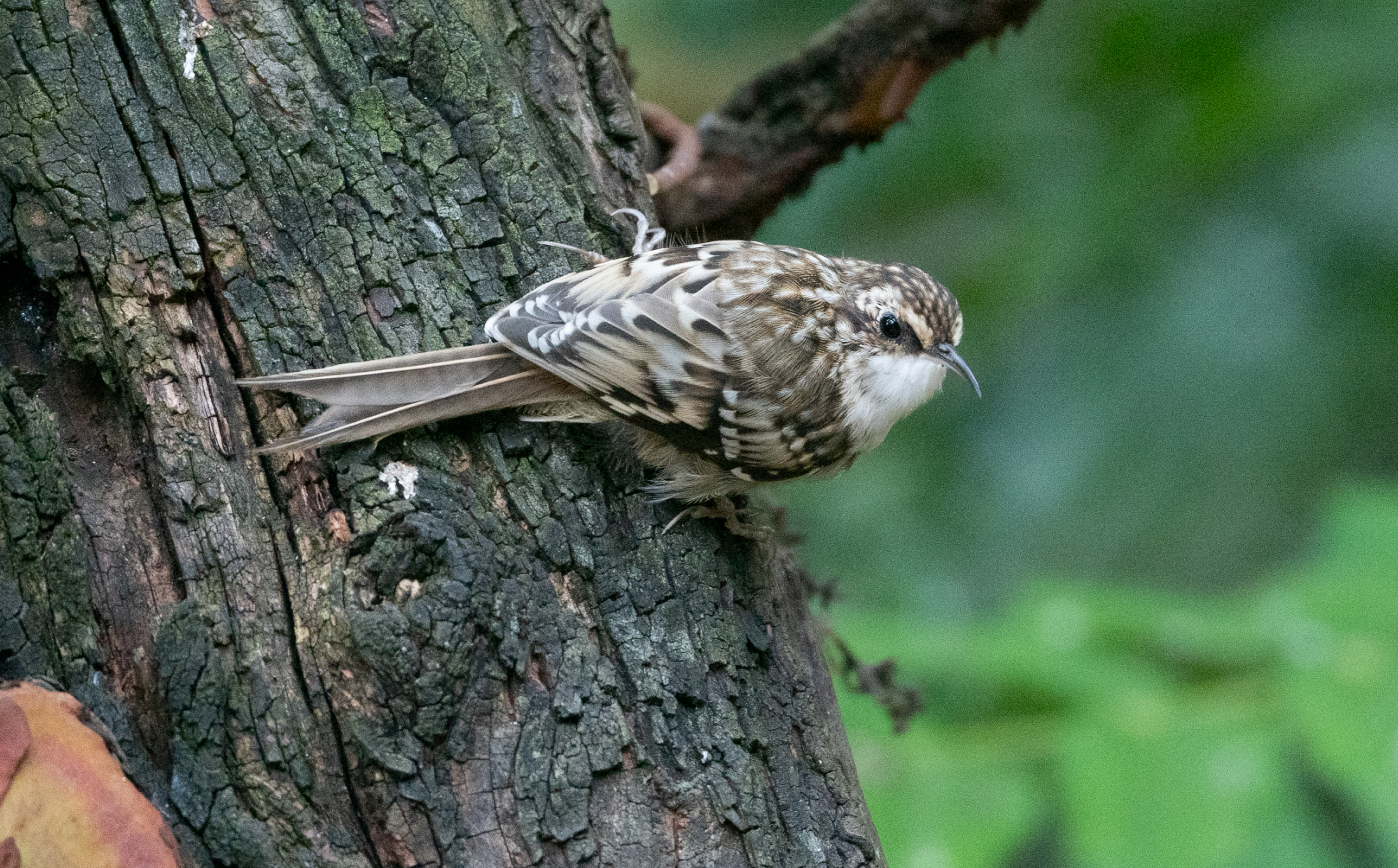
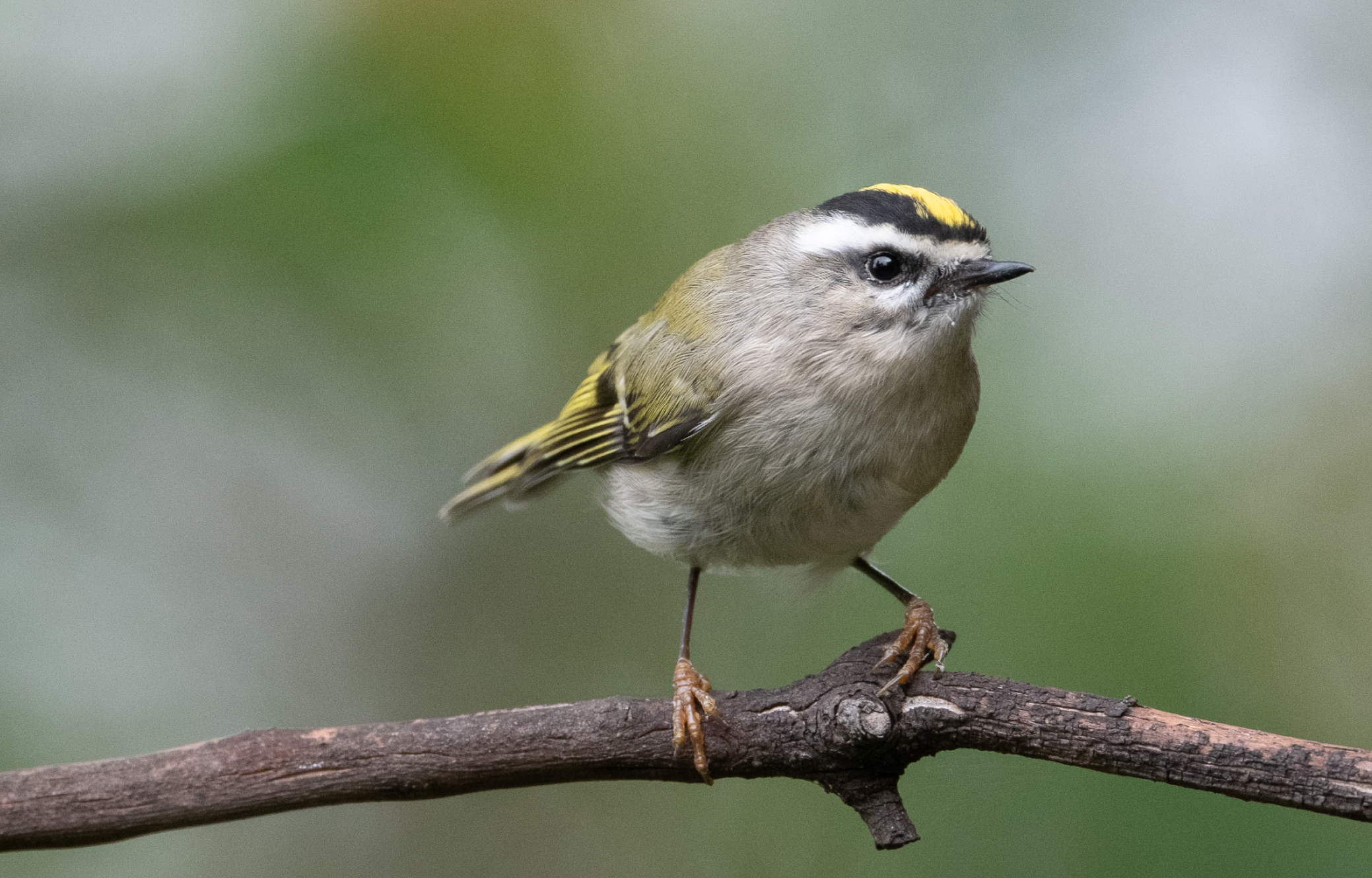
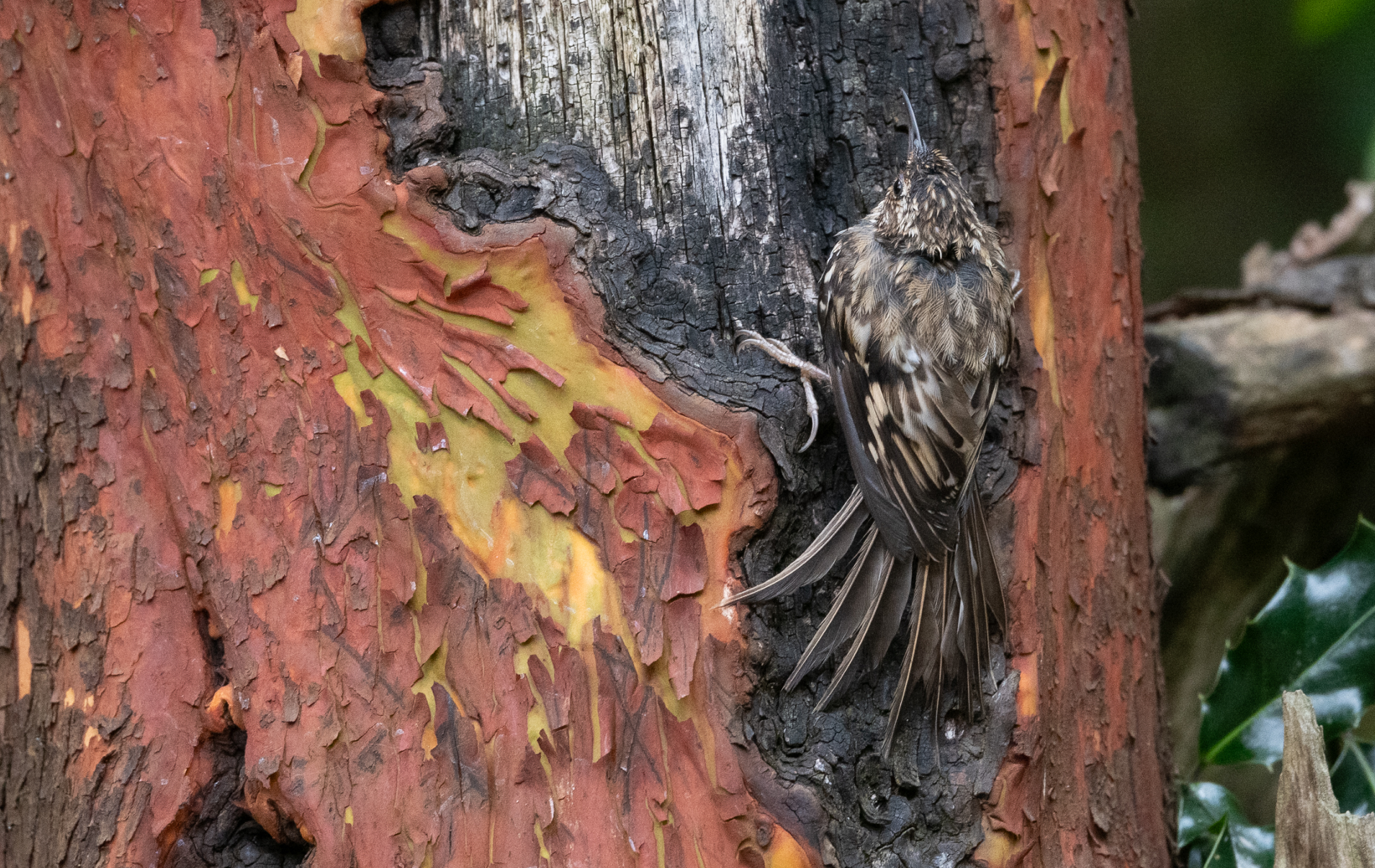
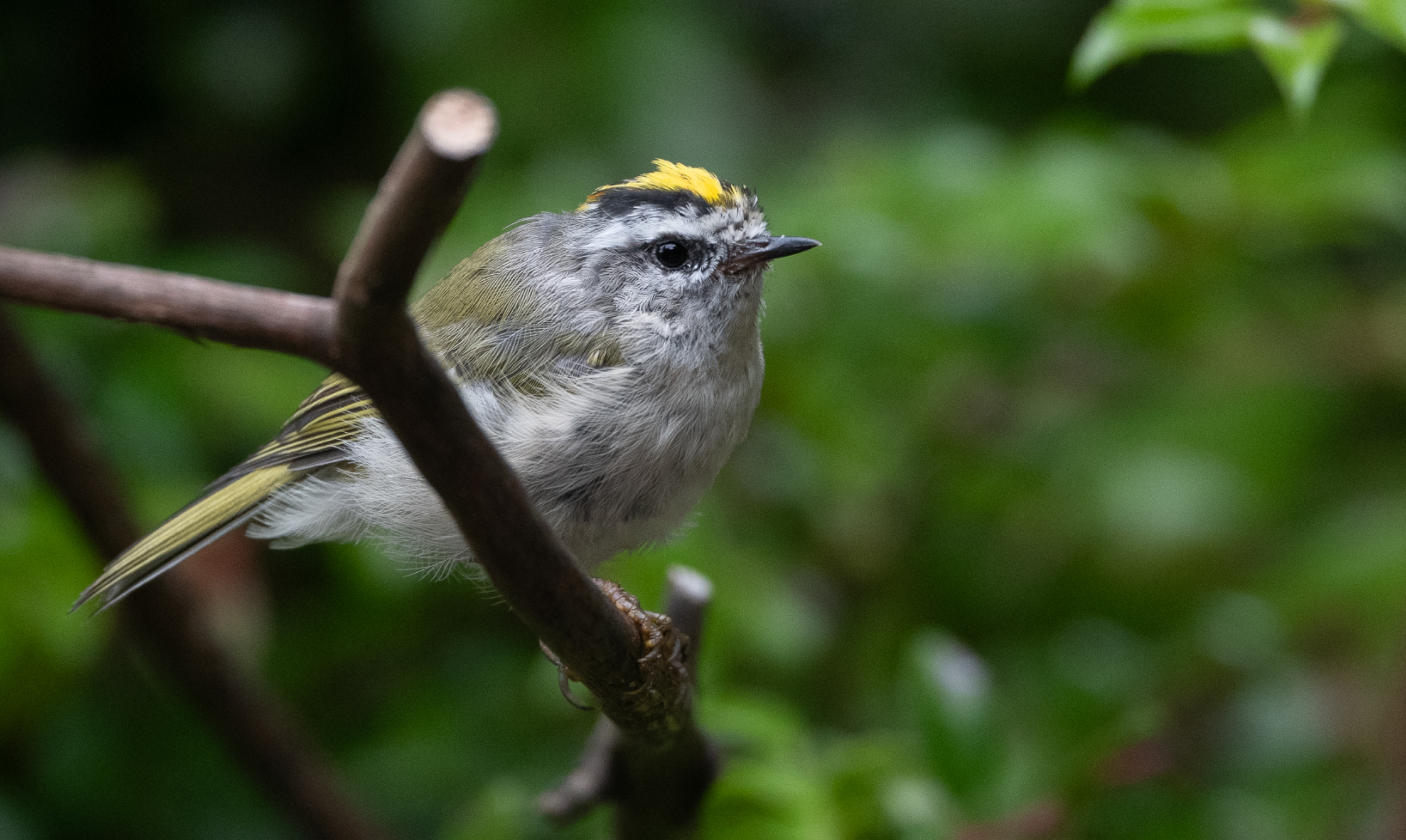
It was beginning to get rather late, but I had two other welcome visitors show up. I consider neither rare, but days can sometimes go by between their appearances.
Another rather short afternoon in the yard on August 25, 2026. It started as a rather slow afternoon. I saw one interesting bird but it was back lit and there was no chance of me identifying it as it never came any where near ground level.
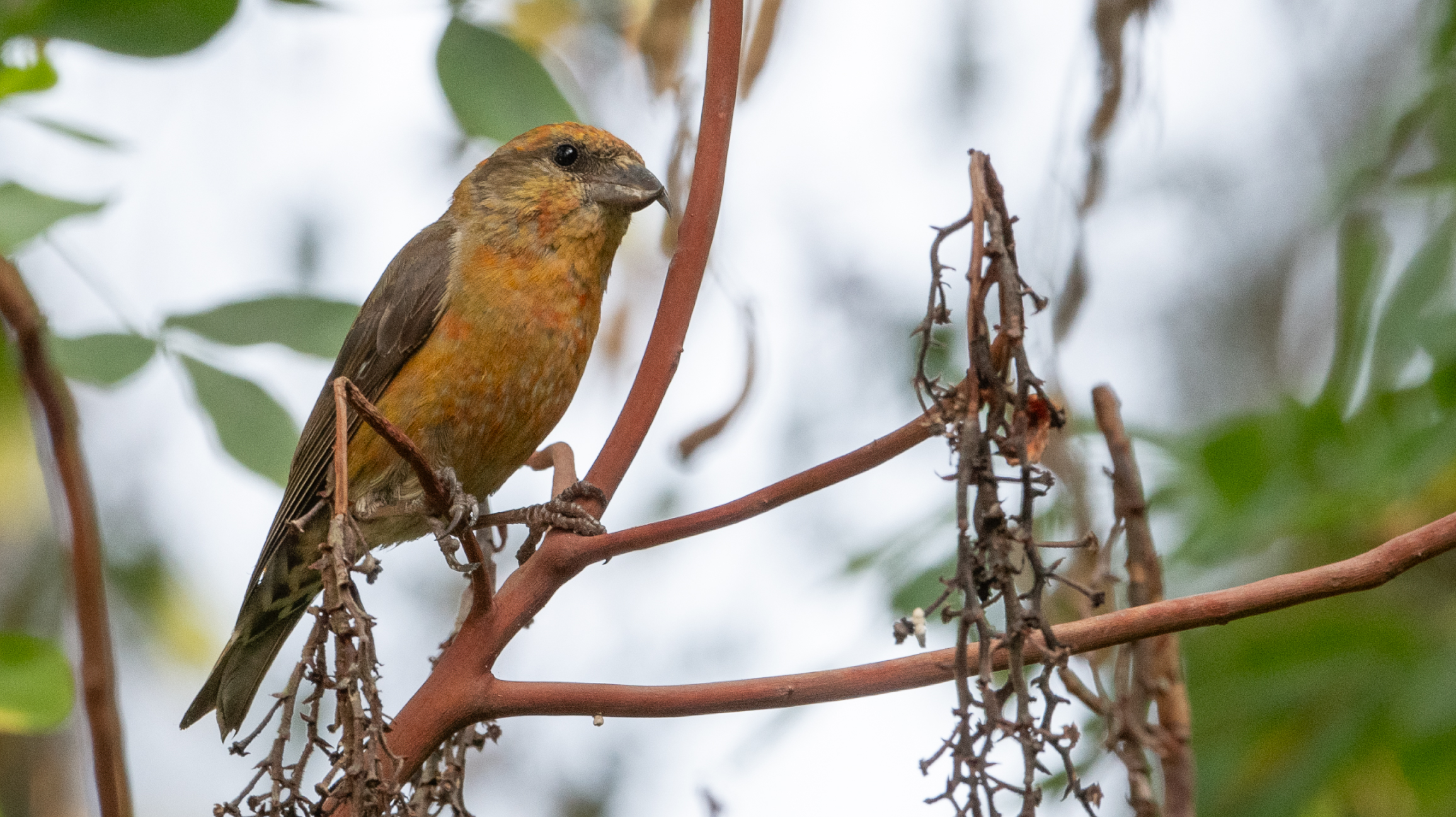
I was getting discouraged when I saw some movement in a madrone tree and upon viewing through my camera lens I could see it was a male Red Crossbill. It disappeared… as did all of the other birds in the yard.
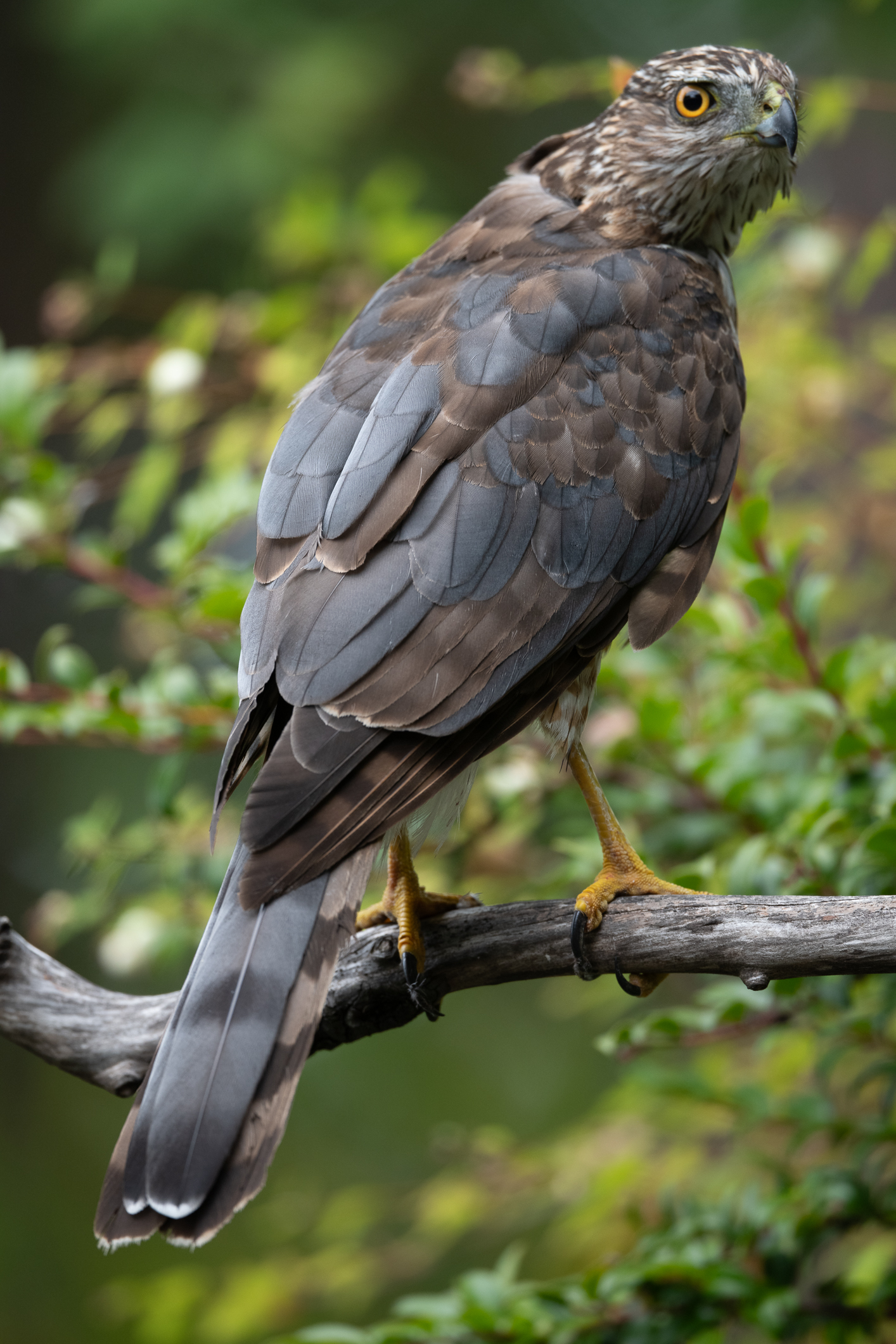
I then saw some movement out by my brush pile and realized a friend was back… the Cooper’s hawk It came within good camera range but not so close that I couldn’t get the entire bird in the picture frame.
On August 22, 2026. we began the day at 57 degrees (!) with a nice overcast. It promised to be a good birding day and I was hopeful the overcast might bring some migrants. What it brought initially was an overwhelming abundance of House sparrows… I estimate at least 25. By their sheer numbers they commandeered all of the feeders and bird baths, driving most of the other birds out of the yard.
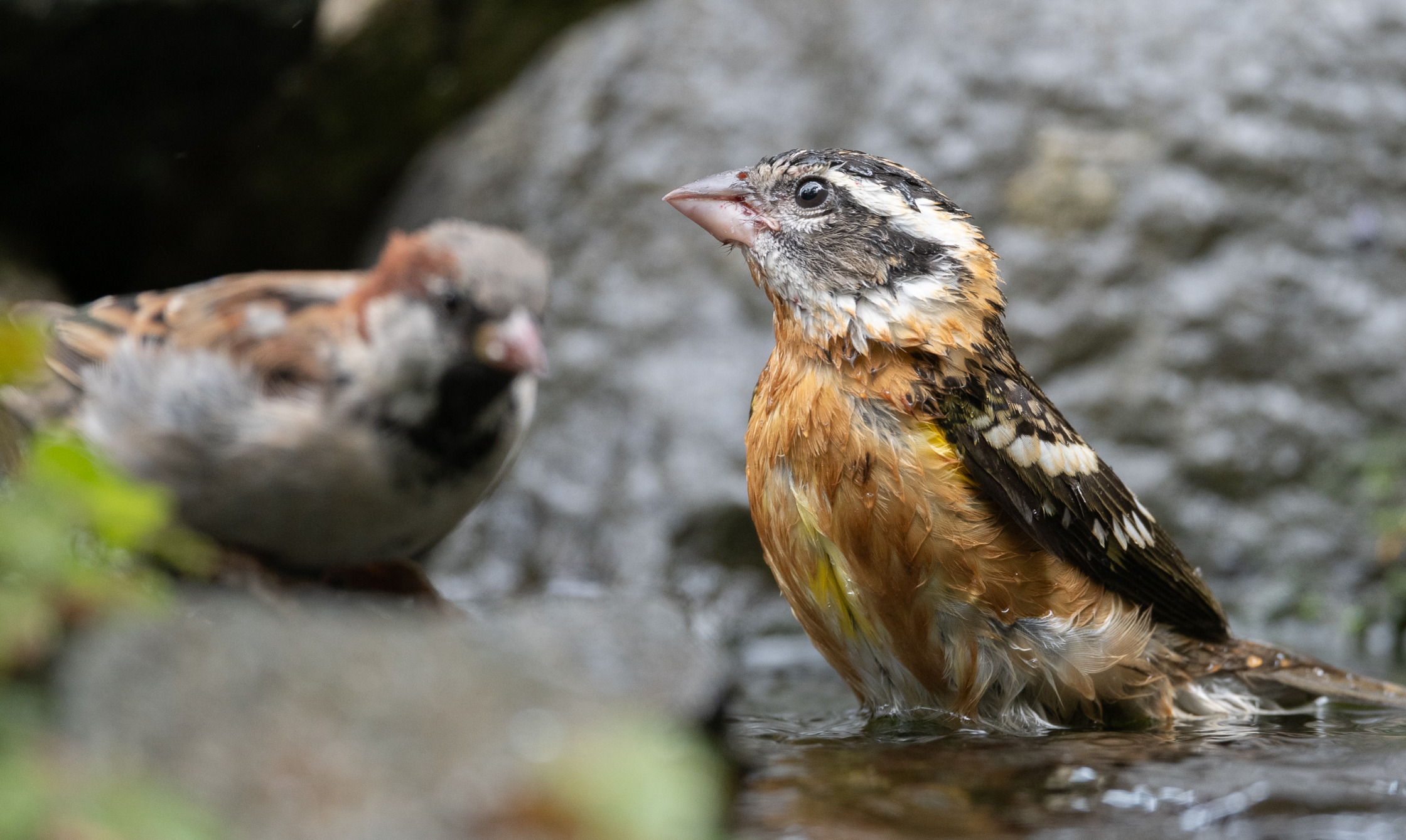
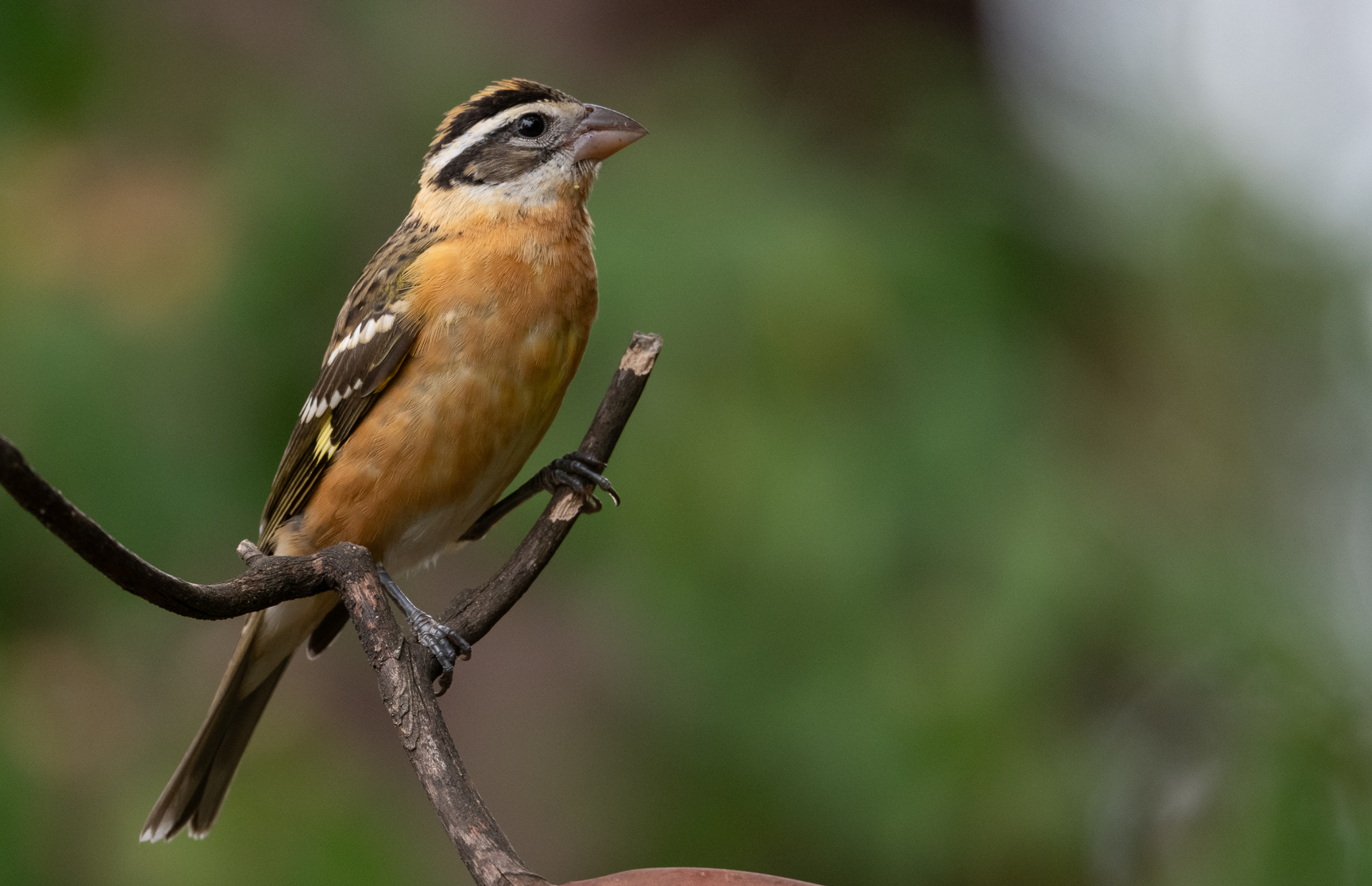
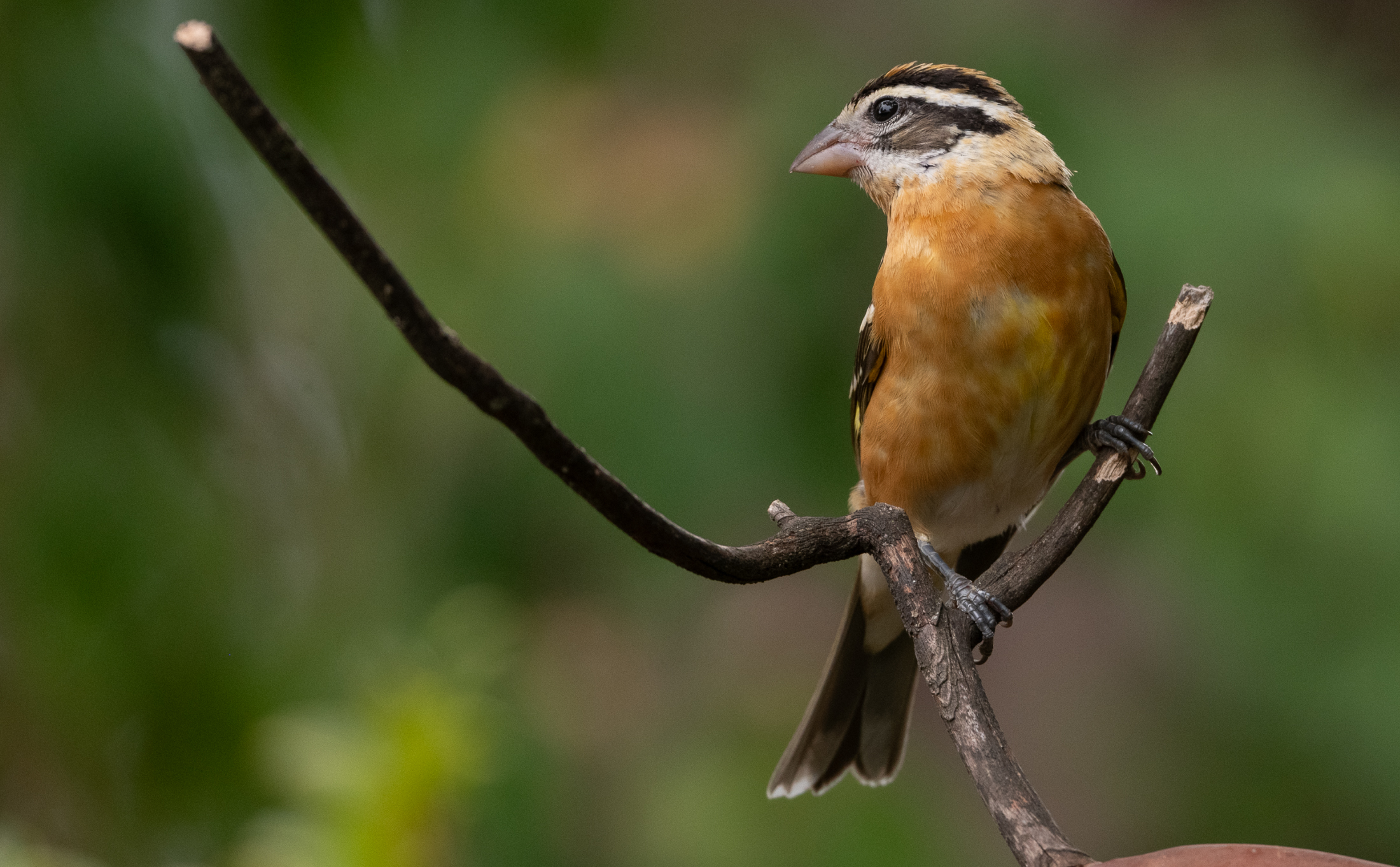
A Black-headed grosbeak eventually entered the yard and competed with the sparrow hoards for space at my stone bird bath, at the far edge of what I consider an acceptable distance for birding photography. Later, the grosbeak (or another) entered the yard and accessed the watercourse, again among sparrows but giving me a better opportunity for photos.
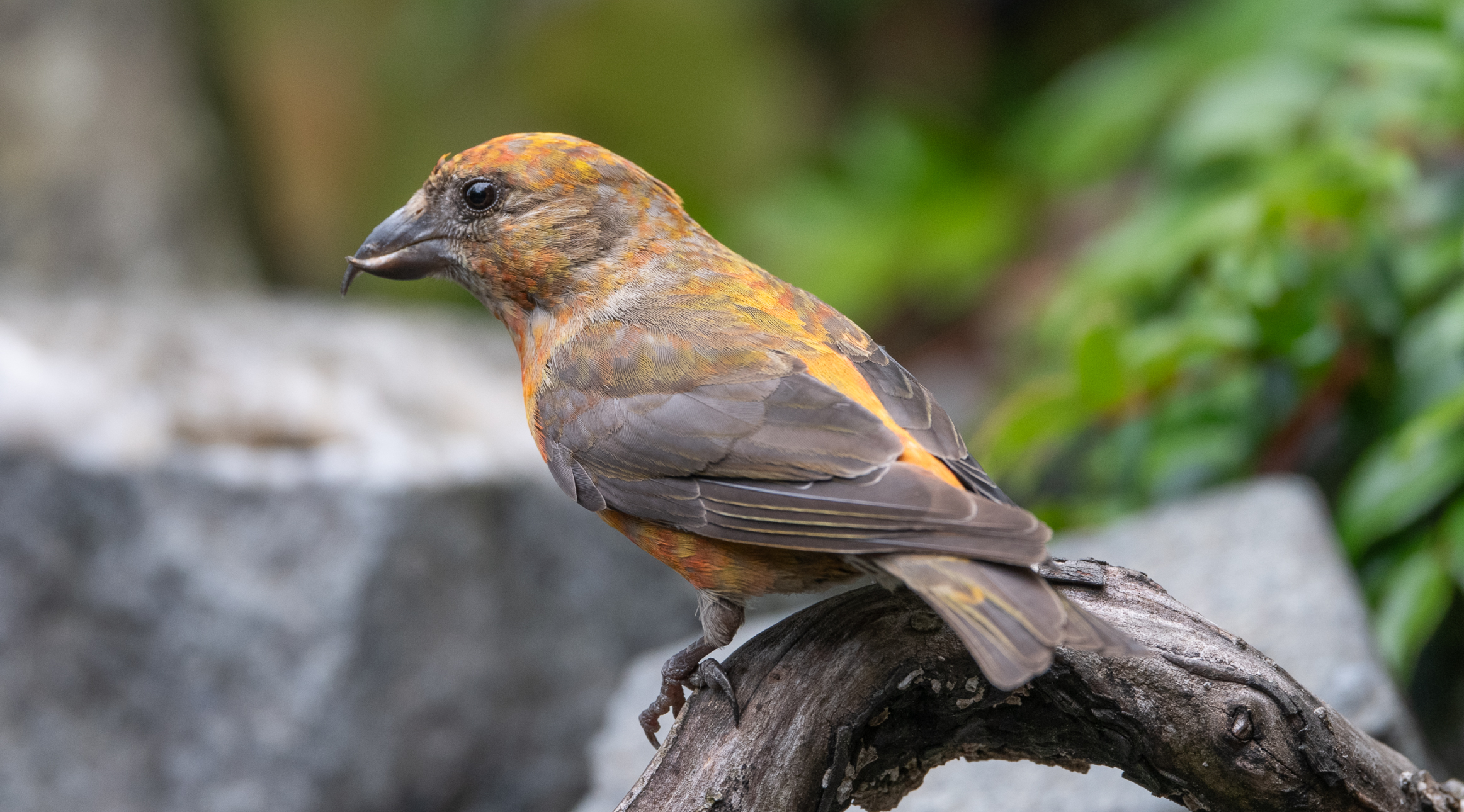
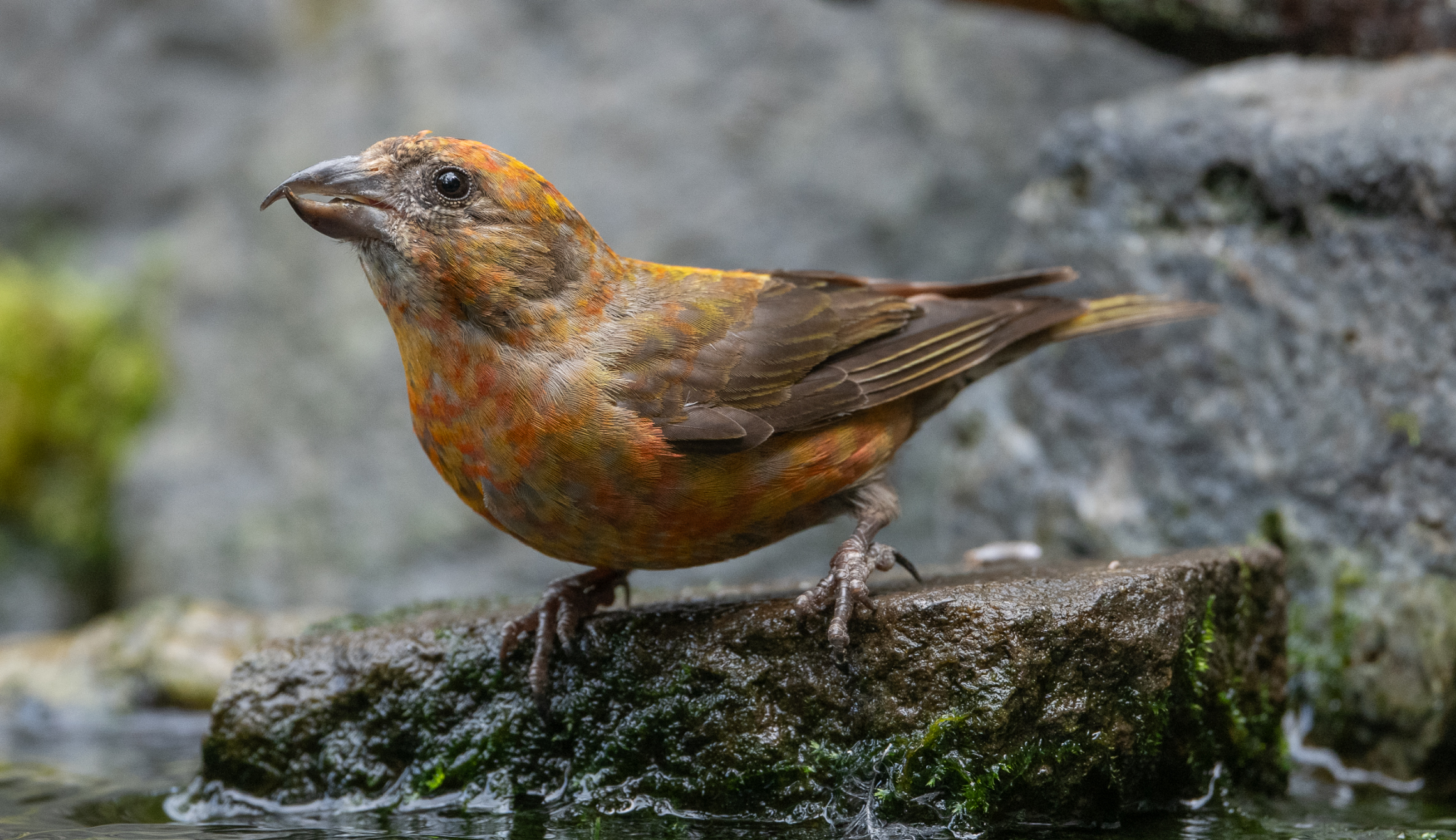
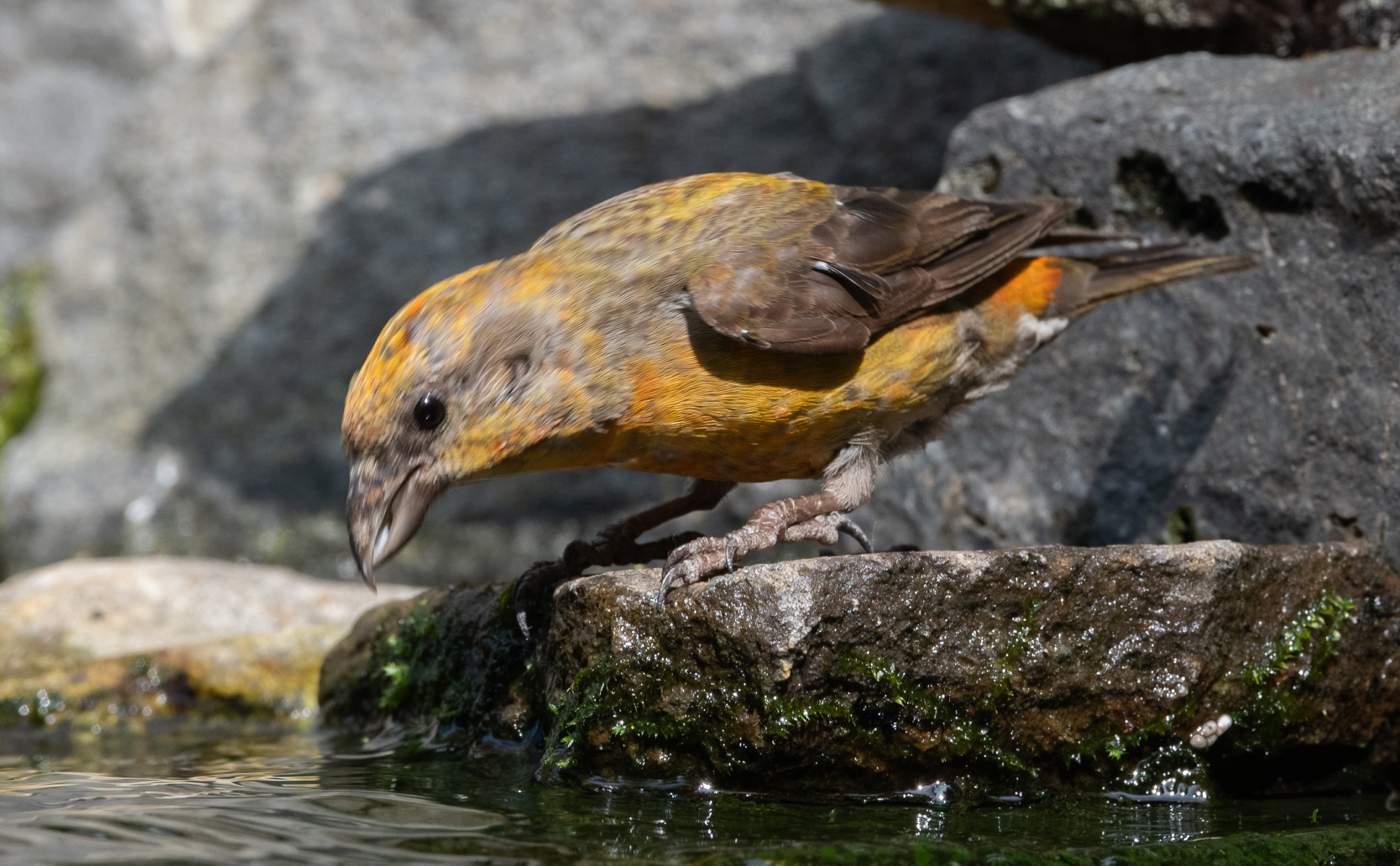
Next, a male Red crossbill visited the watercourse (among sparrows) and provided excellent opportunities for photographs.
Twenty-five minutes later, among more sparrow incursions, a male and female or juvenile Red crossbill appeared at the stone bird bath but they left after I got only a few photos of the male. The female’s back was to me and I never got an opportunity for photographs of her.
When I have multiple sightings of relatively rare birds I’m always wondering if I’ve seen the same bird more than once or if I’ve seen different birds. Despite getting good photos of the birds I usually have no way of telling them apart. Today with the crossbills it was different. Crossbills can have their beaks oriented either of two ways. The upper bill can cross over the lower bill to the right or to the left which, in itself, seems like an amazing feature of evolution. In examining my photos of the two male crossbills you can see that I photographed two different birds because of how their beaks crossed!
These are photos of the crossbill at the watercourse, and you can see that the upper bill crosses to the right over the lower bill.
These are photos of the crossbill at the stone bird bath, and it’s upper bill clearly crosses to the left over the lower bill.
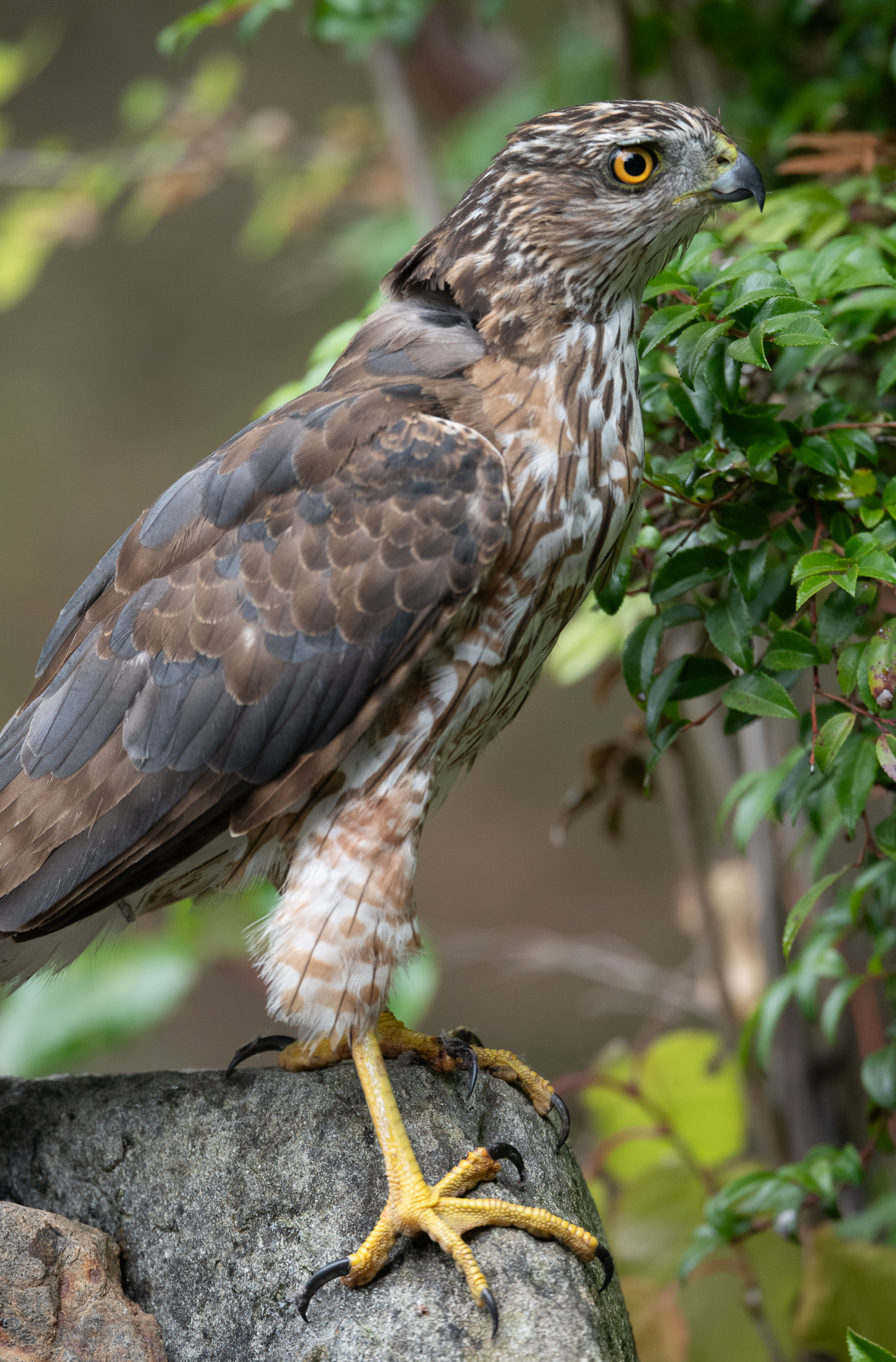
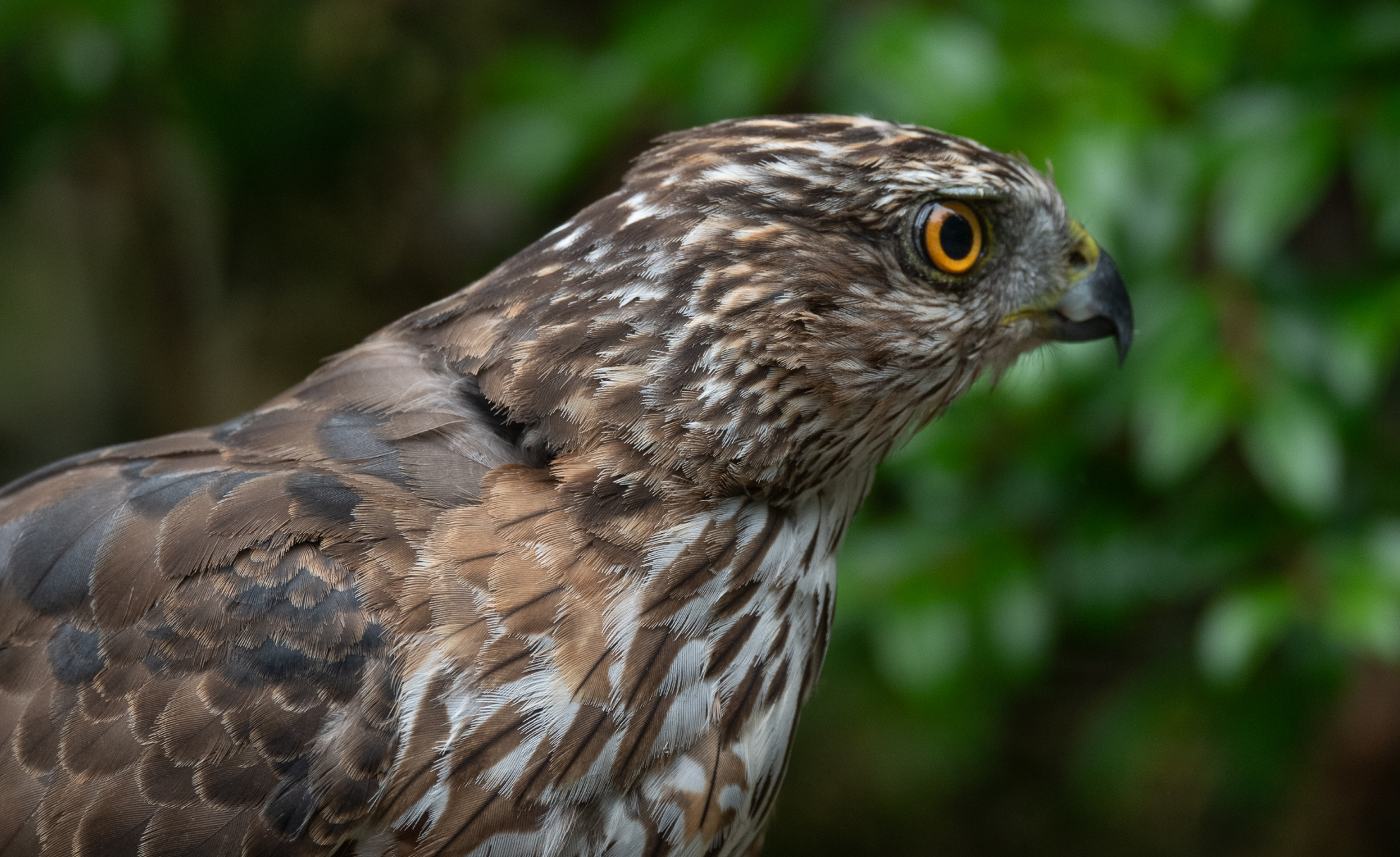
My afternoon birding ended very suddenly at 3pm when all (and I do mean all!) the birds in the yard left very suddenly… a sure indication of an accipiter’s arrival. (See note below!) I hadn’t seen one fly in but I knew there must be one close by. After a minute or so I saw some movement behind an evergreen huckleberry bush growing about twenty feet in front of me on the other side of my watercourse. I sat very still and watched as an accipiter emerged into view beside the watercourse and only about fifteen feet away! I took picture after picture (54 in all) with the accipiter being so close I couldn’t fit the entire bird in the frame! The bird seemed oblivious to the click of my camera’s shutter/mirror at each shot. The hawk finally wandered around the far side of the watercourse/huckleberry bush. I never saw it leave the yard. The hawk’s arrival was sign that my afternoon birding was over!
I’m never confident of my identification of accipiter species so I sent photos to a couple of people who are better birders than I. I’m told this is a Cooper’s hawk hatched in 2025 and molting into adult plumage.
NOTE: I’m in way over my head on this, but I’m told that the Cooper’s Hawk was recently reclassified from the genus Accipiter to the genus Astur, a reclassification that apparently also applied to the American goshawk. Sharp-shinned hawks remain Accipiters. Those reclassifications were a sad day for my birding identification skills!
I had another great afternoon of yard birding on n August 16, 2026. Shortly after noon while setting up in the yard I noticed a small bird with rather nondescript features. It briefly disappeared before reappearing at my stone bird bath and taking a “dip bath”… a hallmark feature of a vireo. I managed to get a few distant photos which allowed me to identify it as a Western Warbling vireo. (In 2025 the warbling vireo species was separated into Eastern and Western species so the word “Western” was appended to the species we have here in the Pacific Northwest.) Unfortunately the bird was at the outer edge of what I consider acceptable range and, other than a brief initial approach, never came closer.
I had Red crossbills showing up at various times during the afternoon. Most of the visits were by unaccompanied juveniles of indeterminate sex.
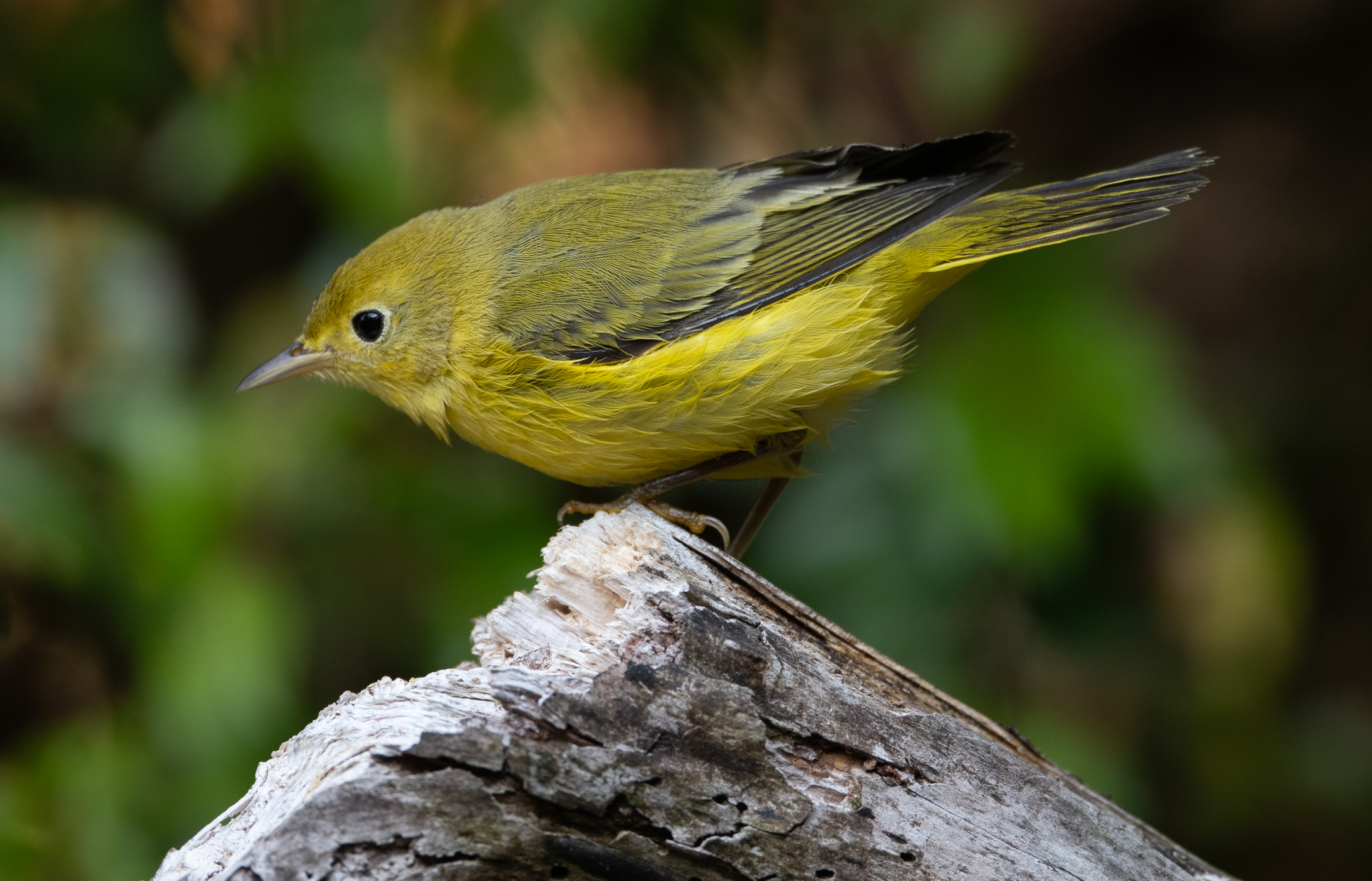
I had what I believe to be a Yellow warbler arrive in the yard and give me ample opportunity for good photos.
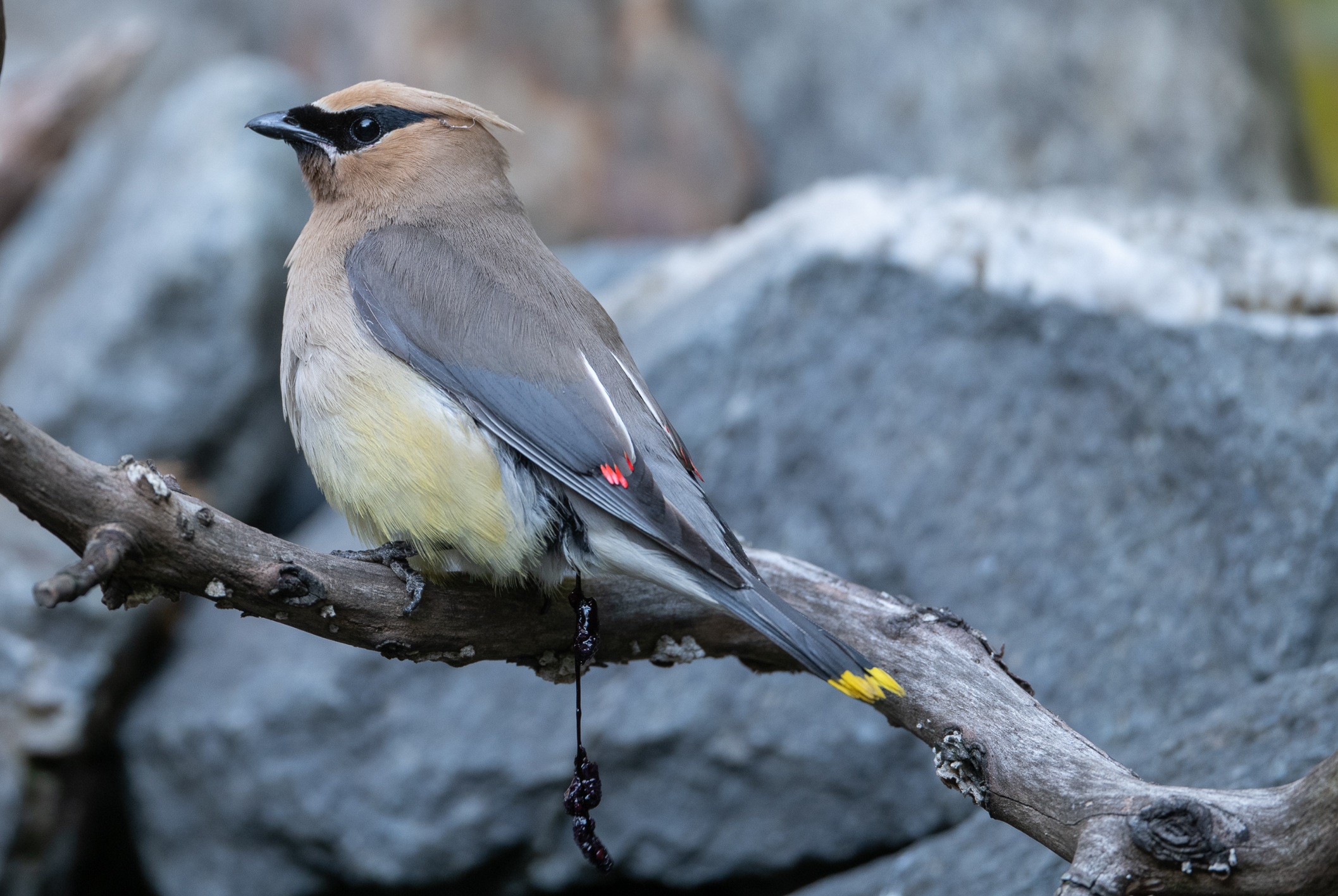
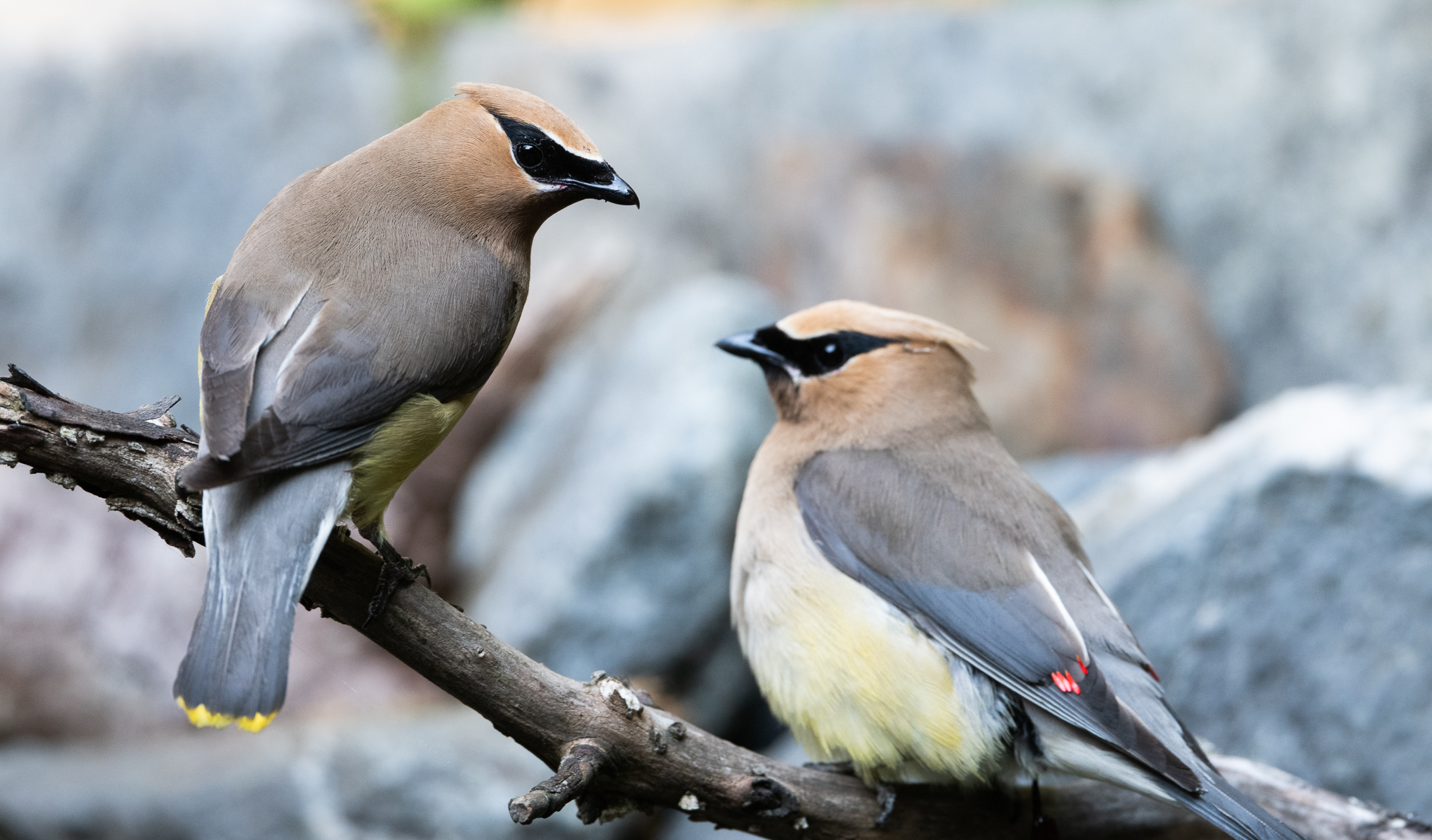
I got a quick glance at a bird that flew into my evergreen huckleberry bush adjacent to the watercourse. I thought it might be a crossbill but a pair of Cedar waxwings (an adult and juvenile) emerged right in front of me at the watercourse. These were the first waxwings I had seen this year!
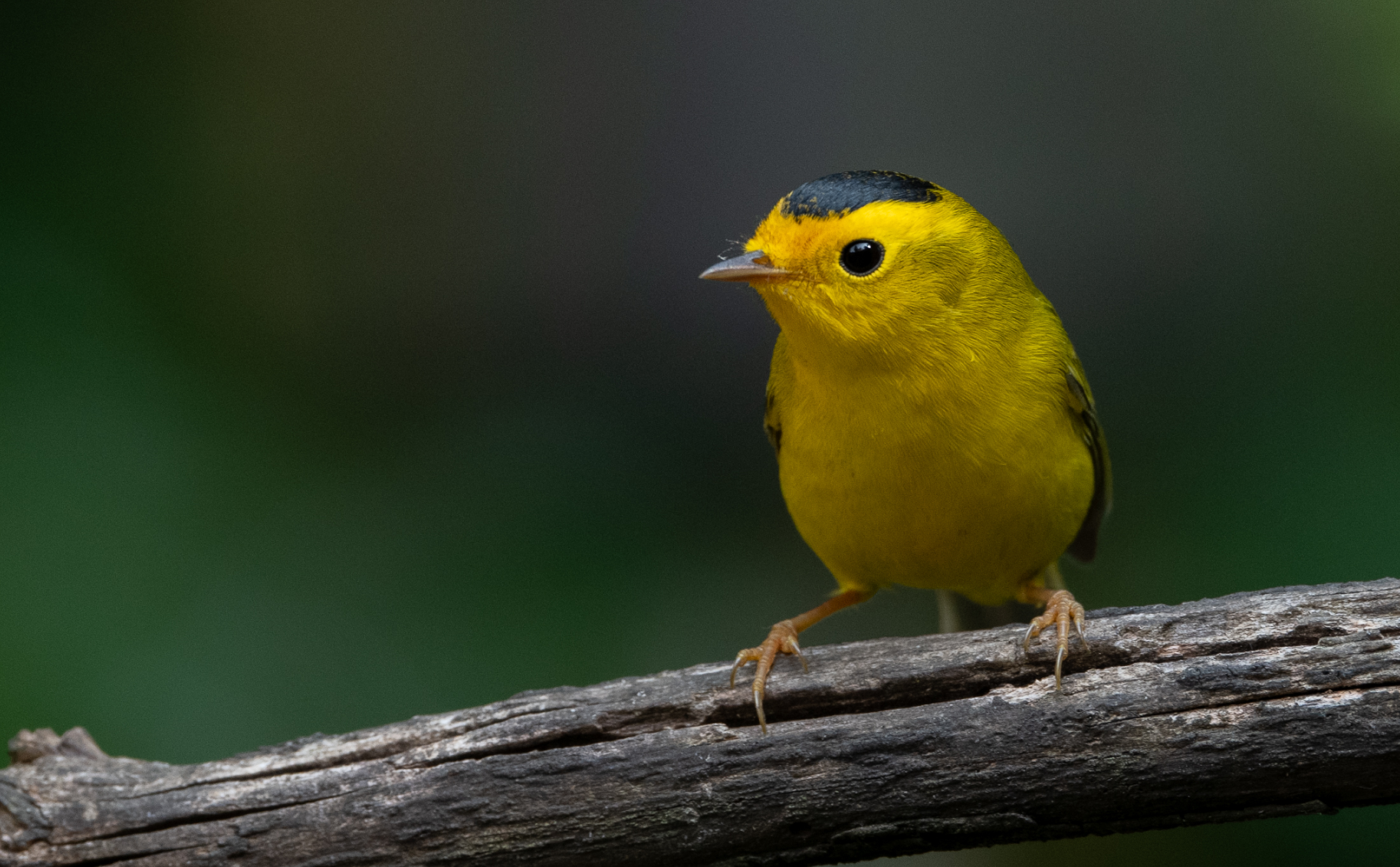
Finally, I was more than surprised to have a brightly colored male Wilson’s warbler appear and give me very nice opportunities for photographs.
As with so much of birding photography, my photos had come at a high cost in time but in for this afternoon my time was well rewarded!
My birding day began when I looked out my office window on the morning of August 9, 2026, and saw a Black-headed grosbeak on my hanging platform feeder. I had been seeing grosbeaks for several days but they were either on the feeder or at such a distance I couldn’t get a good photo. That was going to change in the afternoon!
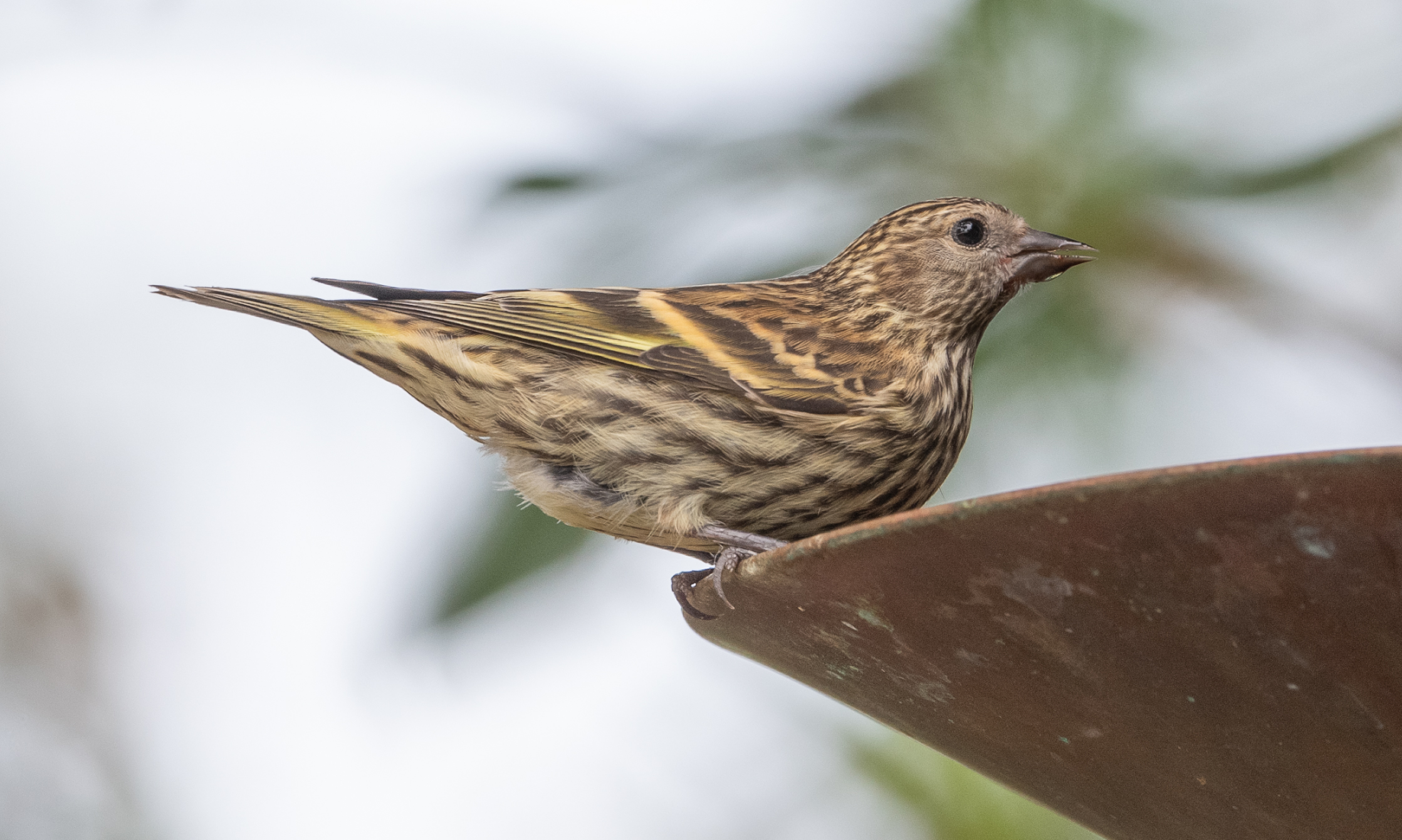
I got outside with my camera shortly after noon and my first significant bird was a Pine siskin I saw on a hanging water feature. Siskins are an eruptive species and this was the first I had seen in the yard in at least a couple of months. I had no chance for a photo of the bird off the water feature… I had to take what I was given.
Next up was a female/juvenile Red crossbill, the first crossbill I’ve seen in the yard this year. A neighbor had been reporting that the Merlin app had detected them at her house for the past couple of days. The crossbill came down to the watercourse and I was able to get a photo.
Next up, a while later was what I assume was a male Red crossbill. It was a bright orange and I obtained photos as it approached the watercourse for a drink.. It and other female/juvenile crossbills returned to the yard on several occasions during the rest of the afternoon.
My next significant encounter was a Black-headed grosbeak. It, or its relatives, returned to the yard several times during the afternoon.
I finally took a dinner break around 5ish. When cleaning up the dishes I glanced out the kitchen window to see a Swainson’s thrush on the pedestal bird bath adjacent to the window. I quickly took a ‘record shot’ out the window then managed to sneak outside for a couple of better photos. The bird left the yard but a short time later returned to my stone bird bath. Later as I surveyed the yard, I looked up and was startled to see that the thrush had sneaked into the bird bath nearest me which gave me my best opportunity for photographs of the species I’ve had this year. (See prior post.)
I next was surprised to see what I assume was a Western flycatcher (formerly a Pacific Slope flycatcher) land in front of and very near me. It availed itself of many of my staging sticks and gave me a multitude of opportunities for good photos. Several times it flew into a Japanese maple so close to me that my lens wouldn’t focus on it (less than five feet from me)!
At this point a Brown creeper visitedthe stone bird bath, its usual preferred watering hole.
A male Golden-crowned kinglet, not rare but largely absent from the yard lately, then came to the watercourse twice for a bath.
It was getting late but I was still getting intermittent visits from grosbeaks and crossbills. My attention was drawn to some suspicious movement in some snowberry bushes. I tracked the activity through the bushes and a Warbling vireo emerged just above my nearest water feature! It proceeded to ‘dip bathe’ but used a perch in the bush out of my sight. However I did manage a few photos when it utilized a couple of my staging sticks.
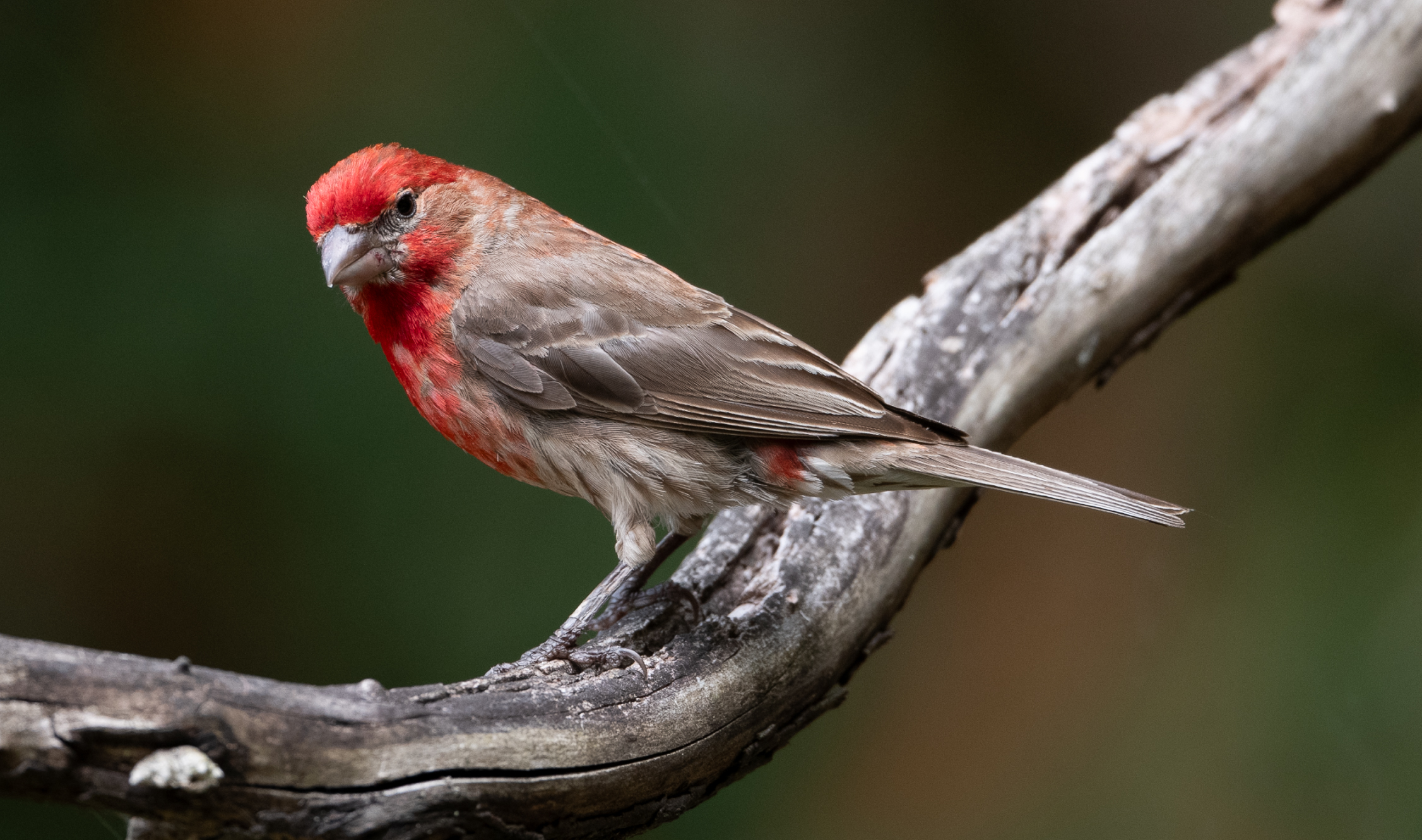
And, finally, as a bonus, I’m going to throw in this brightly-colored male House finch.
I can’t emphasize enough how unusual it was to see and photograph all these birds in the yard, especially in one afternoon. I would have been happy enough with a visit from only one, but to have so many relatively rare (for my yard) birds visit was truly amazing and very gratifying! During the afternoon, with time out for a nap and dinner, I had taken almost 300 photographs, far from a record but documenting many rarities that I only rarely see or am able to photograph in the yard! I assume that the fall migration is now beginning to take place!