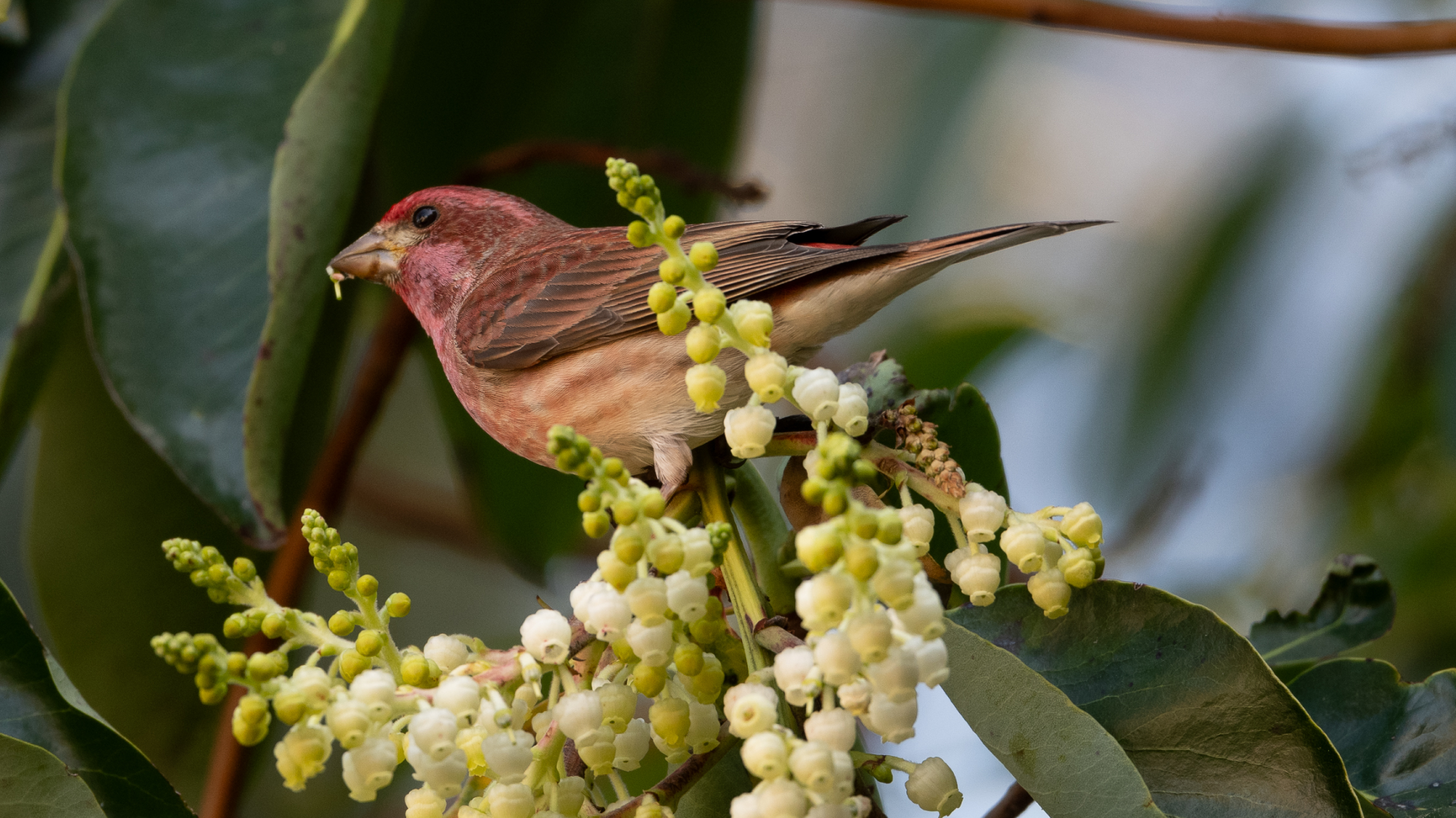
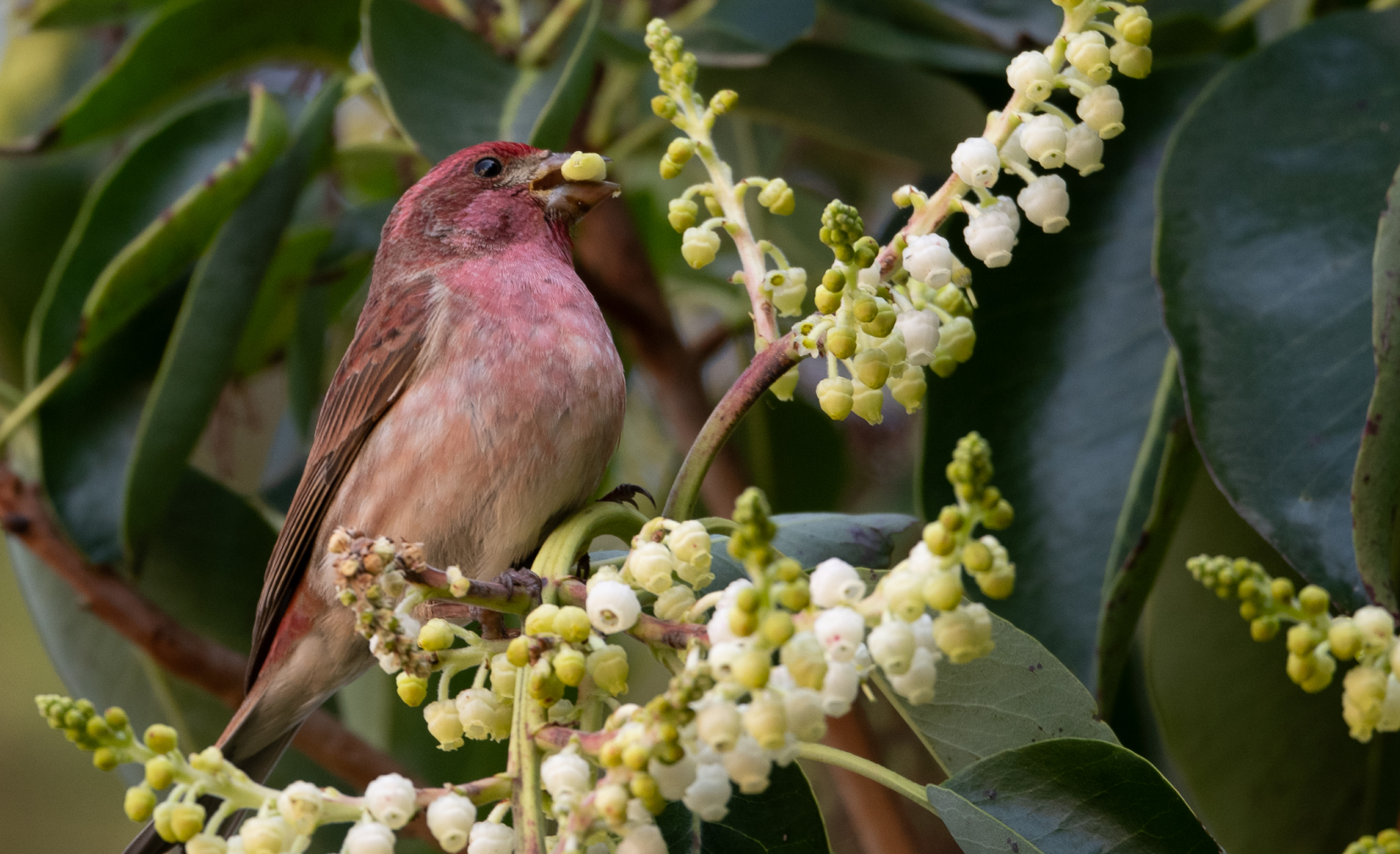
I spent some time in the yard on April 6, 2026, and photographed a bird I suspected might be a male Purple finch. I wasn’t sure because I’ve never knowingly photographed a male in the yard in my 25+ years living in the Cap Sante neighborhood. I say knowingly because the male House finch is quite similar and sports a broad range of red, especially during the breeding season. I sent photos of this bird to three different birders whose skills I respect and they all confirmed it’s a male Purple finch! (Thank you birding friends!)
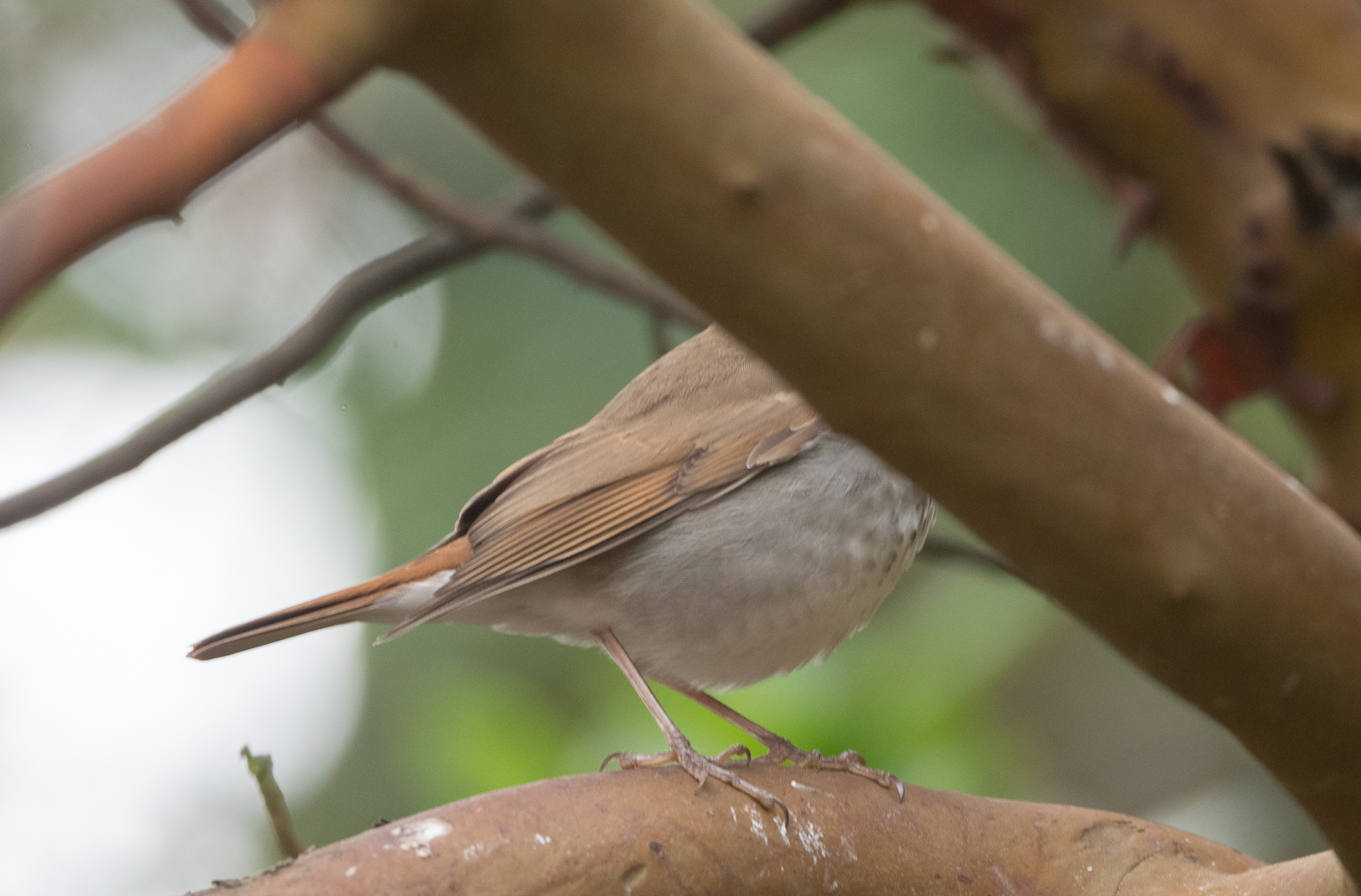
In late morning on April 13, 2026, I got a quick glimpse of a dull brown bird flying into the main (truncated) Madrona tree in my yard. I got a very quick glimpse of its breast before it parked its front half behind the main trunk of the tree, leaving only its rear half viewable. My curiosity piqued, I viewed the bird through my telephoto lens and arrived at an identification with only the back half of it showing. While there’s a possibility that the bird is a Swainson’s thrush, the contrasting reddish-brown tail would indicate it’s a Hermit thrush, probably on its way to other environs for the breeding season! This is quite a rare bird for the yard and I was glad to see and photograph it for documentation, even though I only got only half the bird!
The afternoon was cool (51 degrees), overcast and with a light breeze. I arrived in the yard a little late (about 3pm). Initially there were very few birds in the yard. I finally counted four Golden-crowned sparrows but they seemed unusually reluctant to approach me.
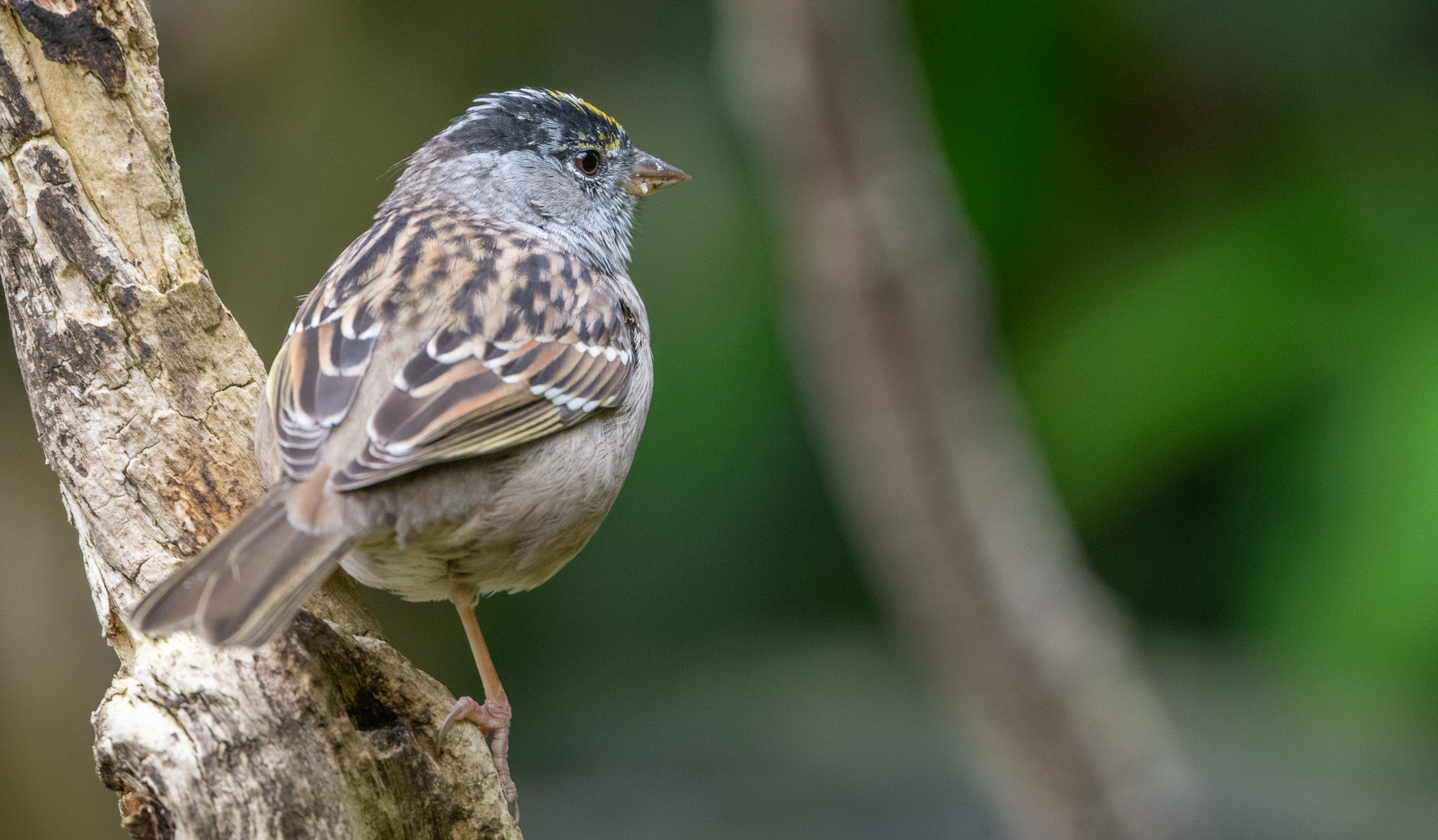
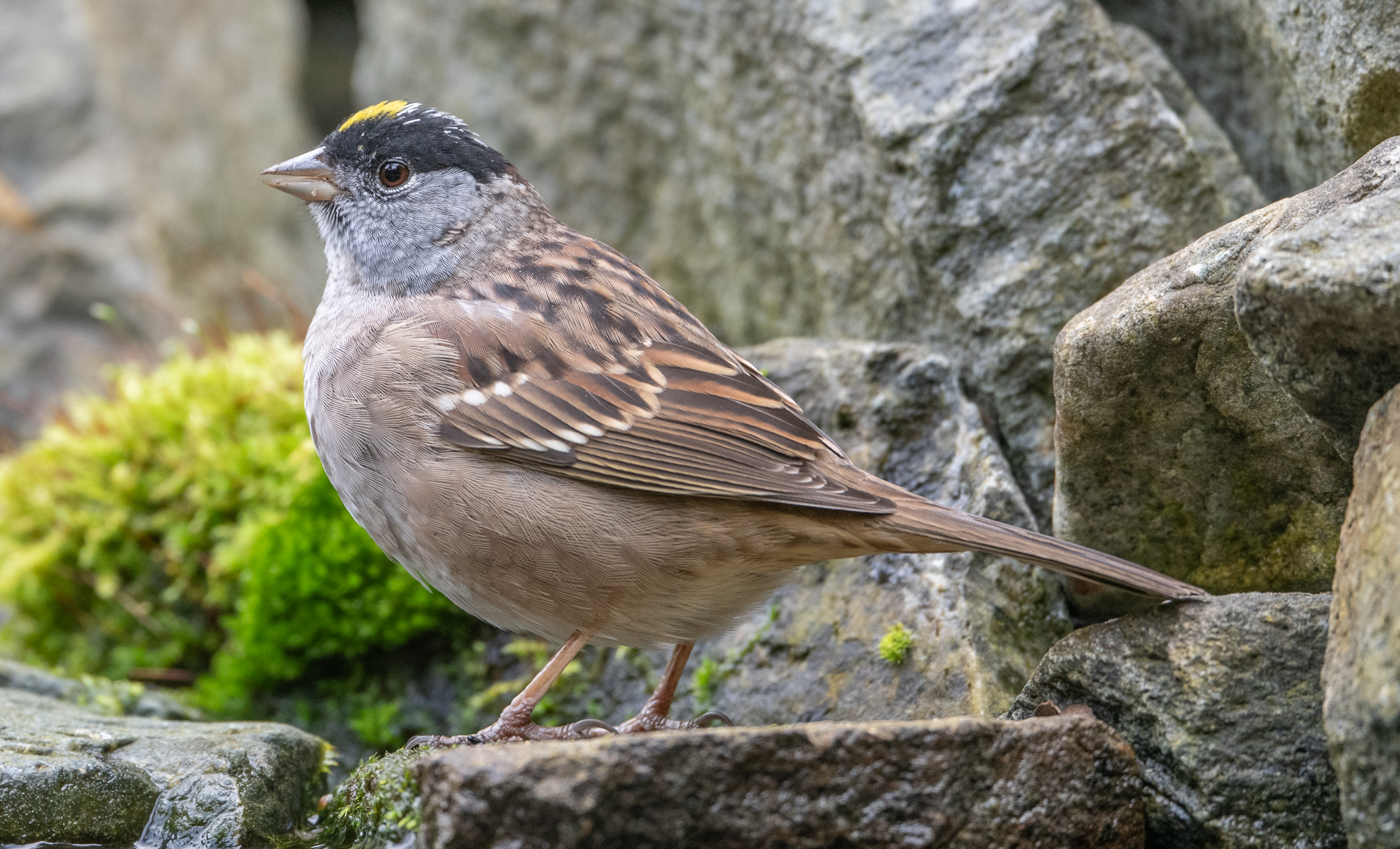
I was excited by seeing what I thought might be two warblers enter the yard but they were on the far side of the yard in bushes and quickly left. A while later I saw our winter resident Orange-crowned warbler on the suet feeder but it didn’t remain in the yard long.
Shortly after 4pm I glanced towards the watercourse as two birds appeared simultaneously. One was an Orange-crowned warbler and the other a male Yellow-rumped (Audubon) warbler! Both here and in Texas I have observed that different species of warblers often seem to travel in ‘waves’ and arrive together. Adhering to the old adage, “Strike while the iron is hot”, I took over 60 photos of the Yellow-rumped warbler! Ironically, both of these warblers are named for features that can be difficult to discern in the field.
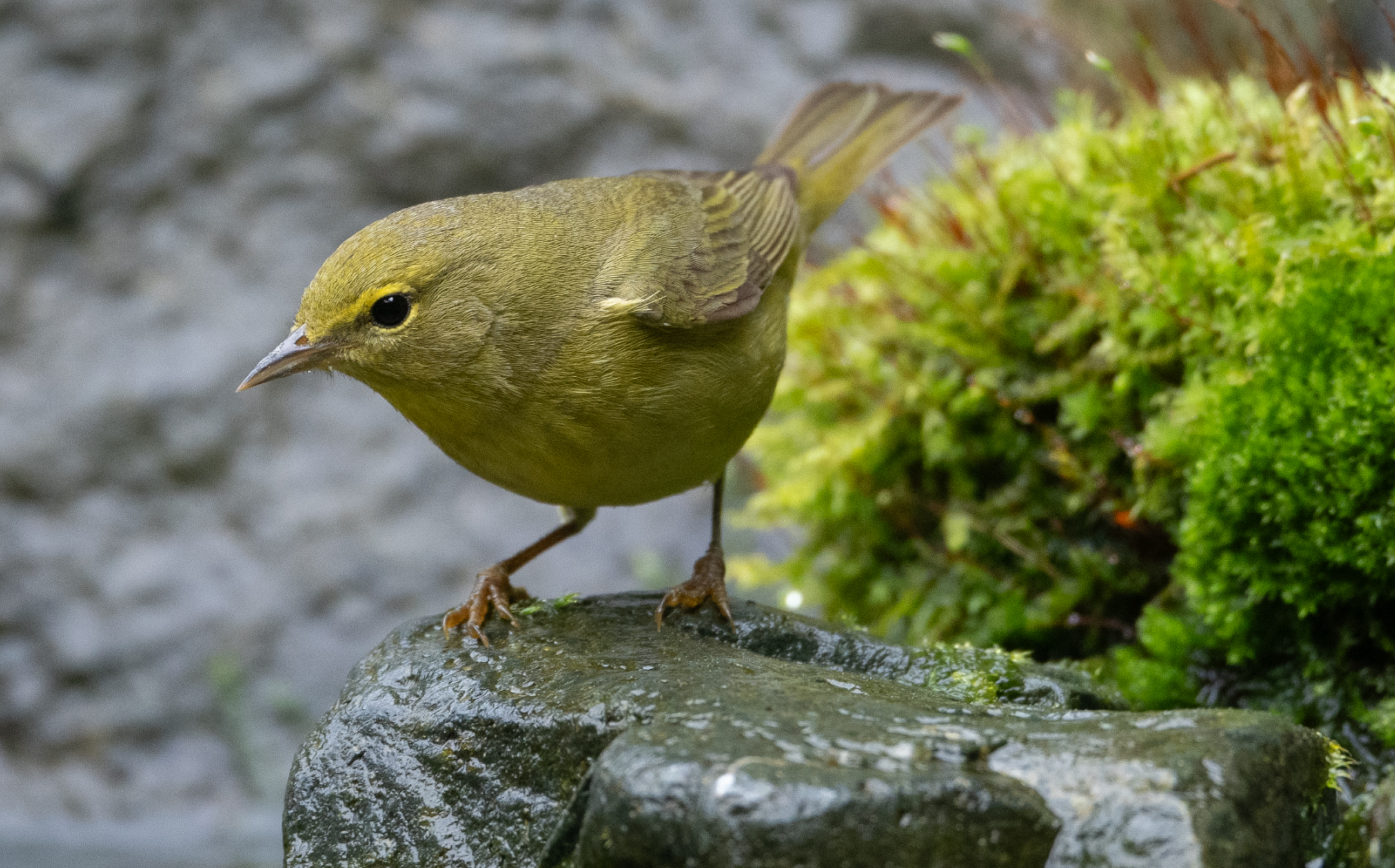
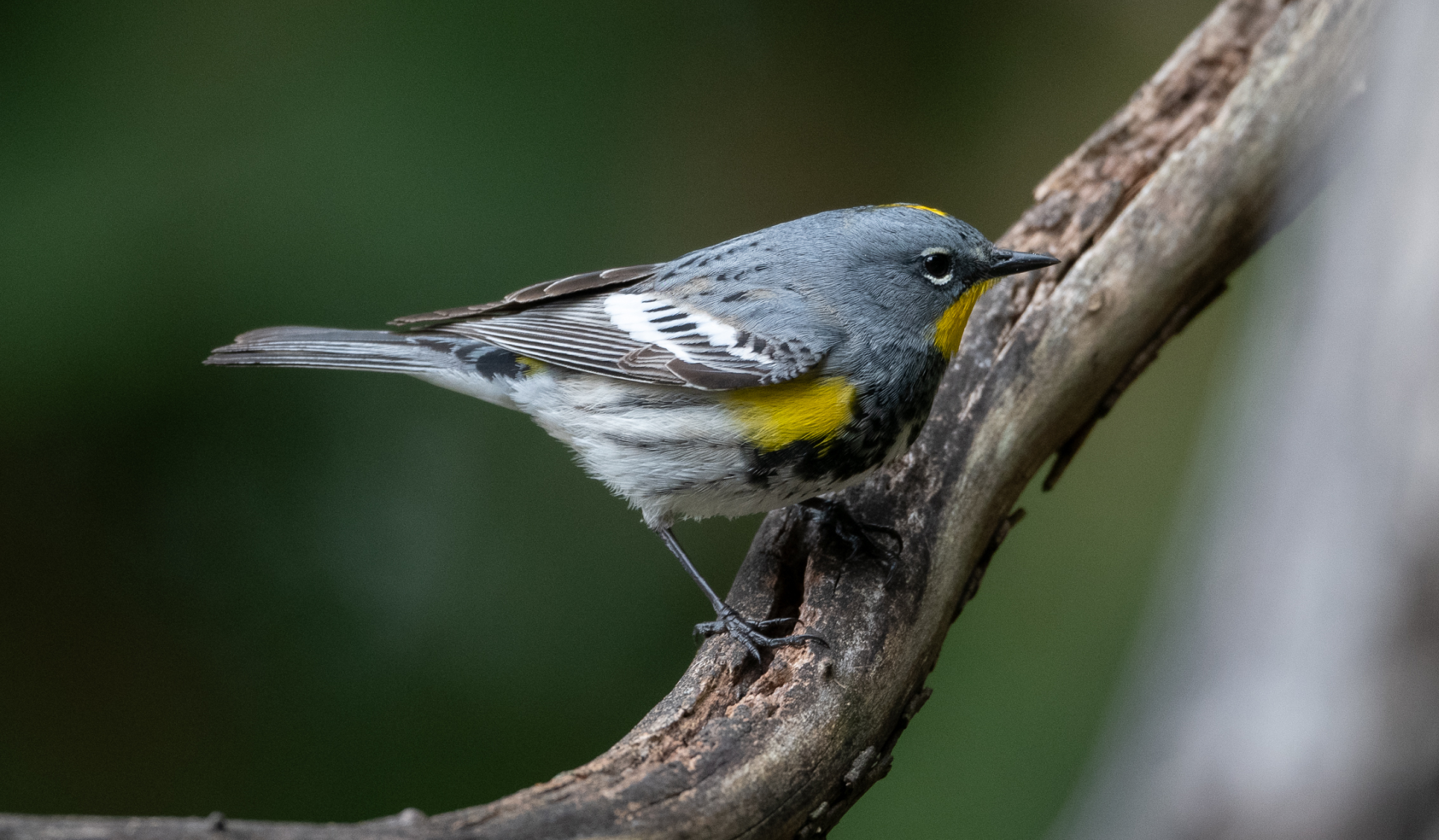
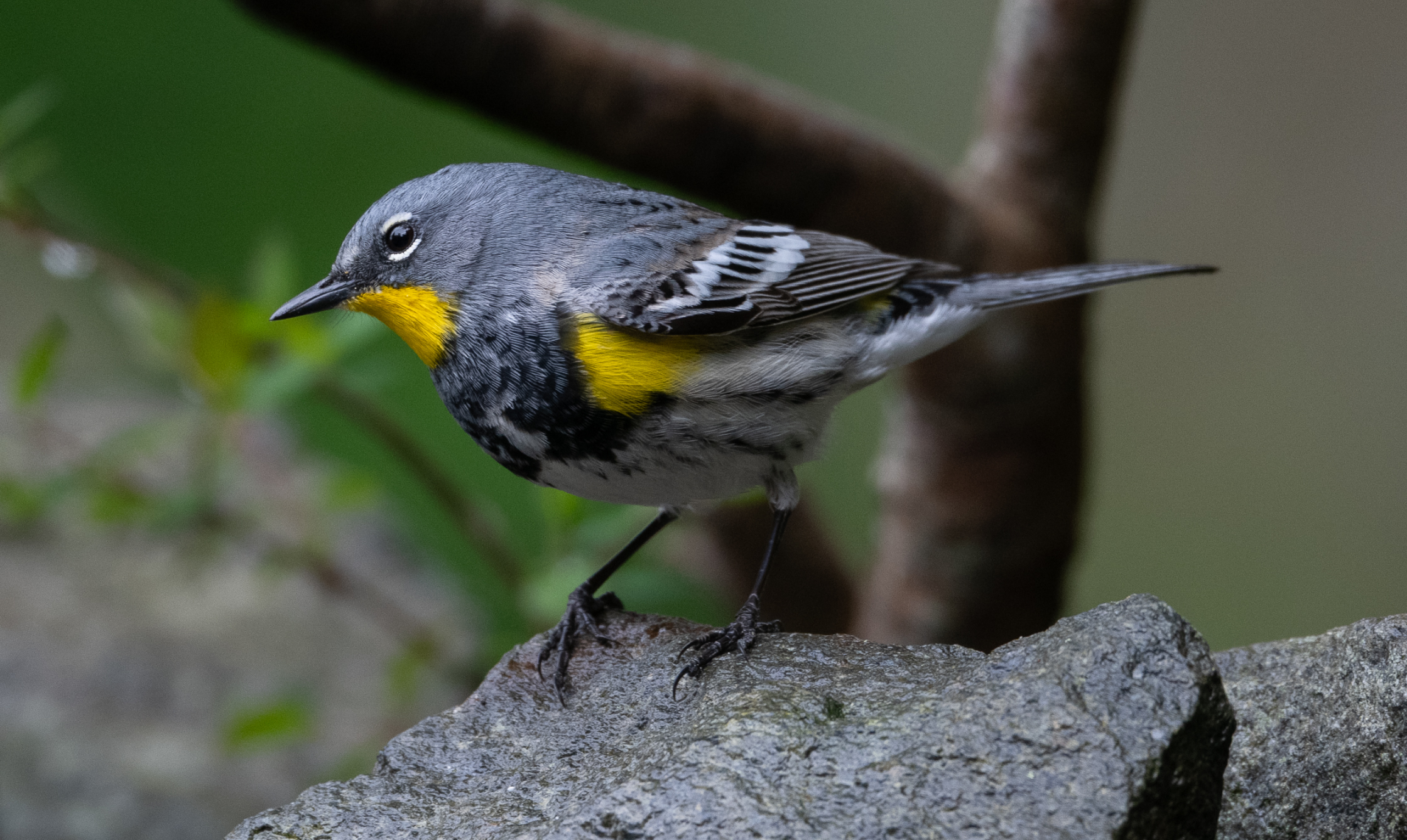
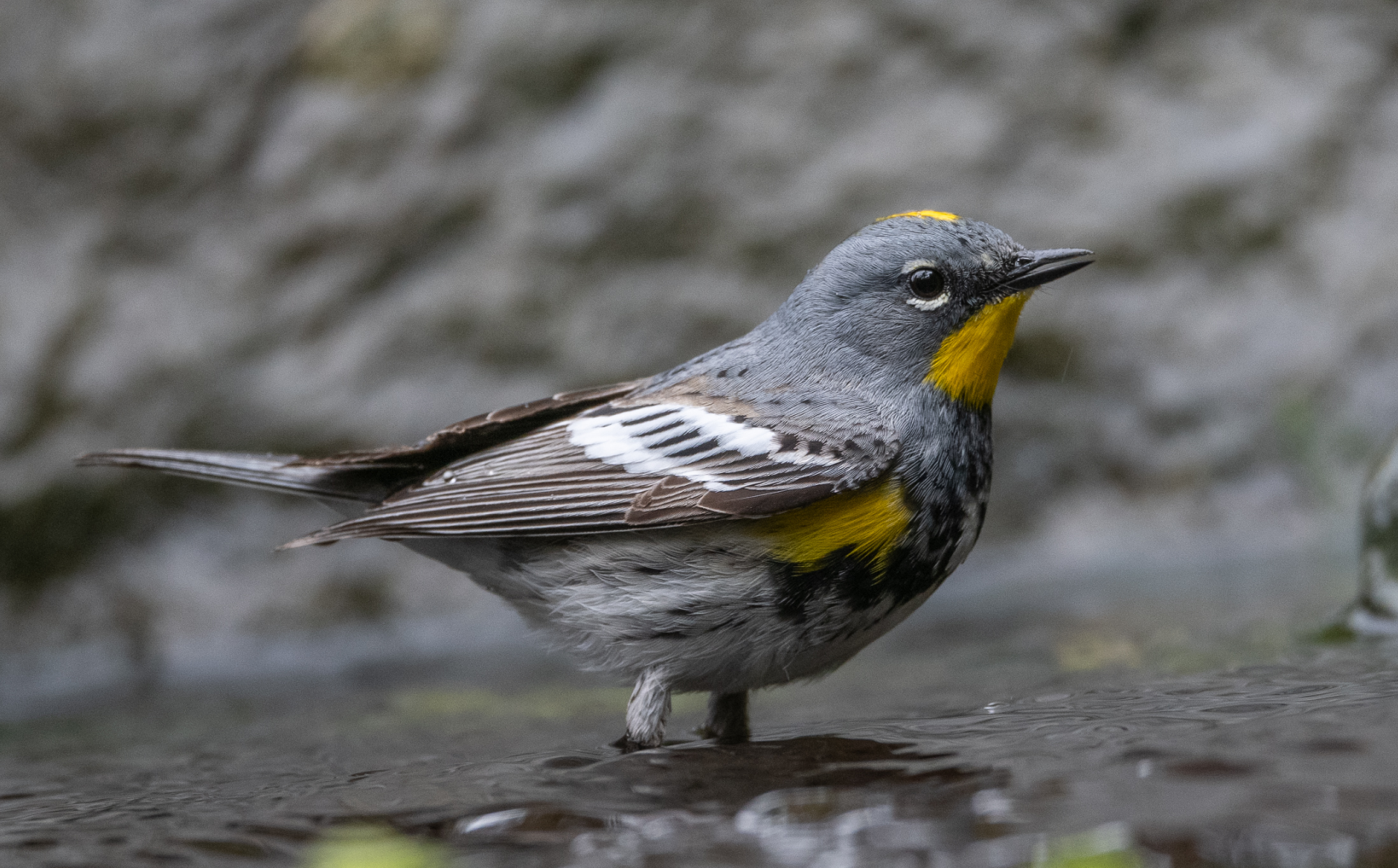
Both birds were intent on accessing the watercourse… the Orange-crowned warbler was first but stayed only briefly. The Yellow-rumped warbler took a minute or two to reach the watercourses but took its time bathing. It then flew to the Golden Chain tree and preened for a few minutes before returning to the watercourse for a second bath!
I saw my first Yellow-rumped warbler of the season (also a male) in Washington Park on March 31 and this is the third one (all males, 4/3, 4/10 & 4/13) I’ve seen in the yard this season. As far as my yard is concerned, the male Yellow-rumped warblers are usually the first warblers to arrive each spring. My most numerous warblers are the Wilson’s warblers but they have yet to start arriving. And it’s still early… May is warbler arrival month in my yard.