On March 4, 2026, we had a cloudless day with developing light winds. It seemed to me to be a perfect day to see migrating birds. I set up in the yard about 1pm hopeful that I might see a warbler or two.
The first interesting bird I saw was a male American goldfinch. It wasn’t my first arrival of that species this spring, but it was certainly an early one. I couldn’t manage to get a clear photograph of it, but I did get what I term a ‘record’ shot, a rather poor quality picture but enough for identification purposes.
The next bird of interest was an Orange-crowned warbler, but the bird’s path through the yard indicated to me that it was the same warbler that became habituated to my bird feeders during the winter. I obtained several low quality photos of the bird and in processing the photos realized the bird had an insect in its beak! It showed interest in the suit feeder, but I hadn’t realized the feeder was empty, and the bird left the yard.
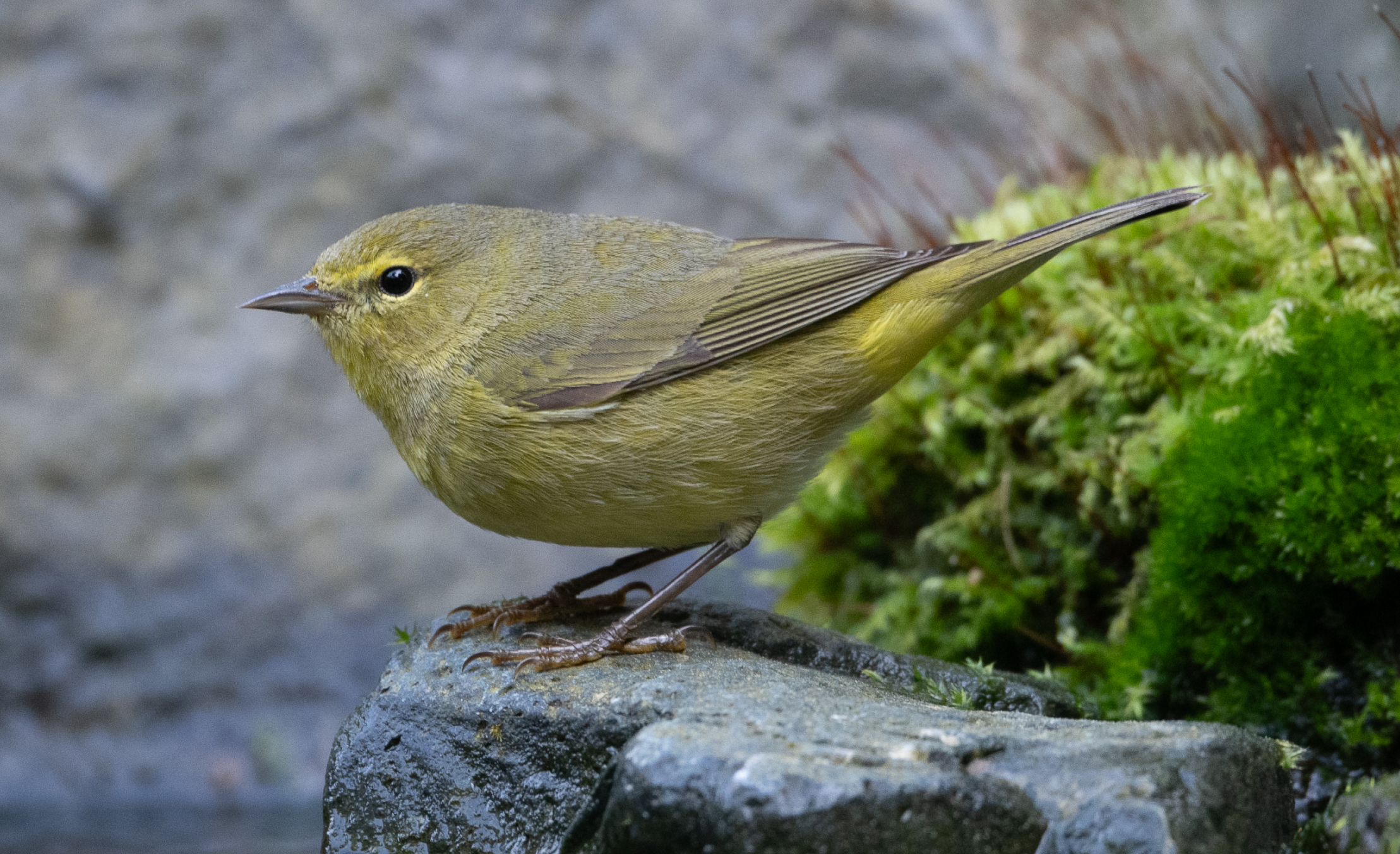
After sitting in the yard for a little over two hours, a little after 3pm I had a second visit from an Orange-crowned warbler. It flew into the yard and almost immediately went for the top of the watercourse. I managed to get quite a few photos of it.
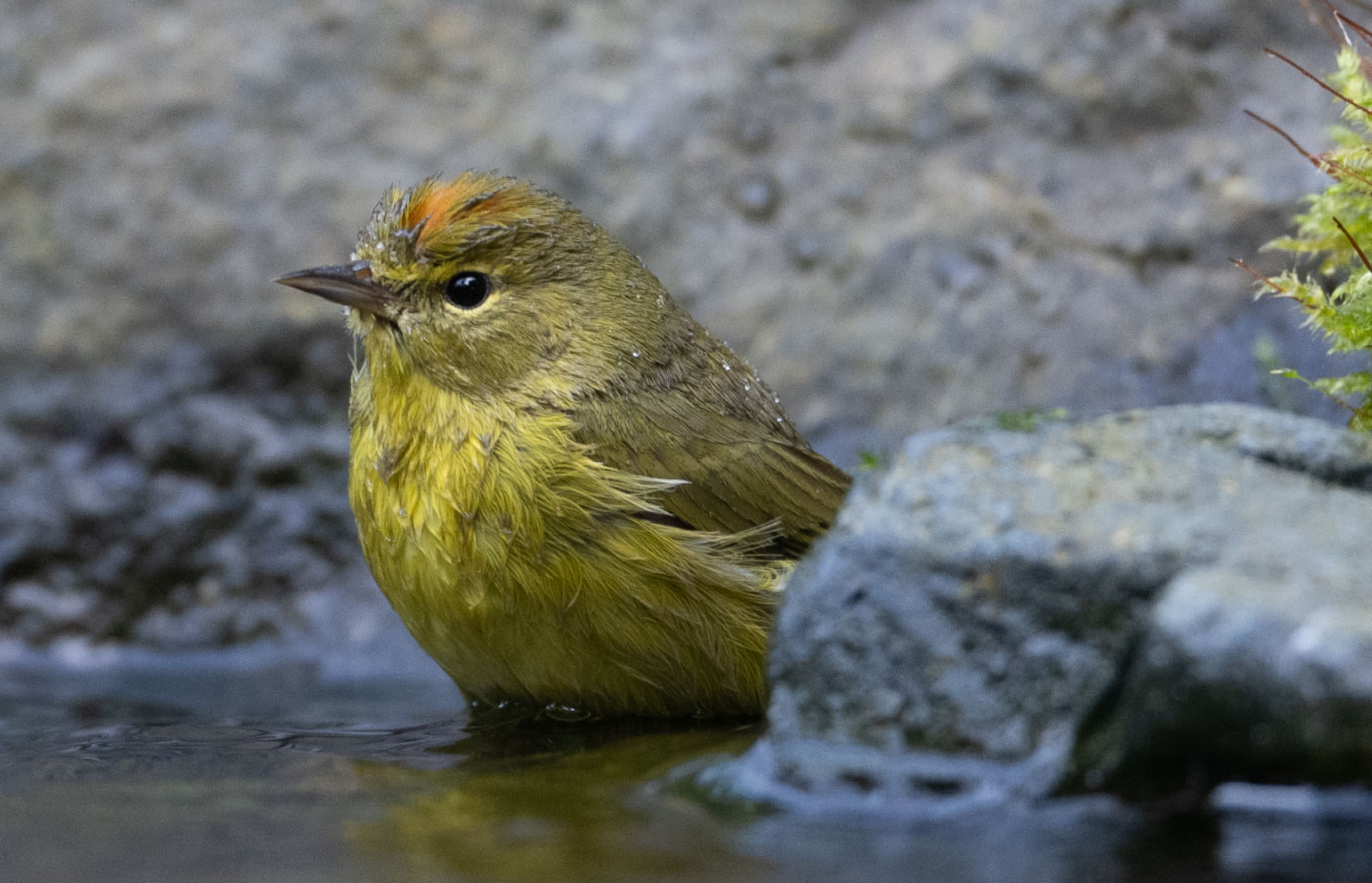
In this second photograph you can see the warbler’s orange crown for which it was named, a feature difficult to observe unless the bird is bathing.
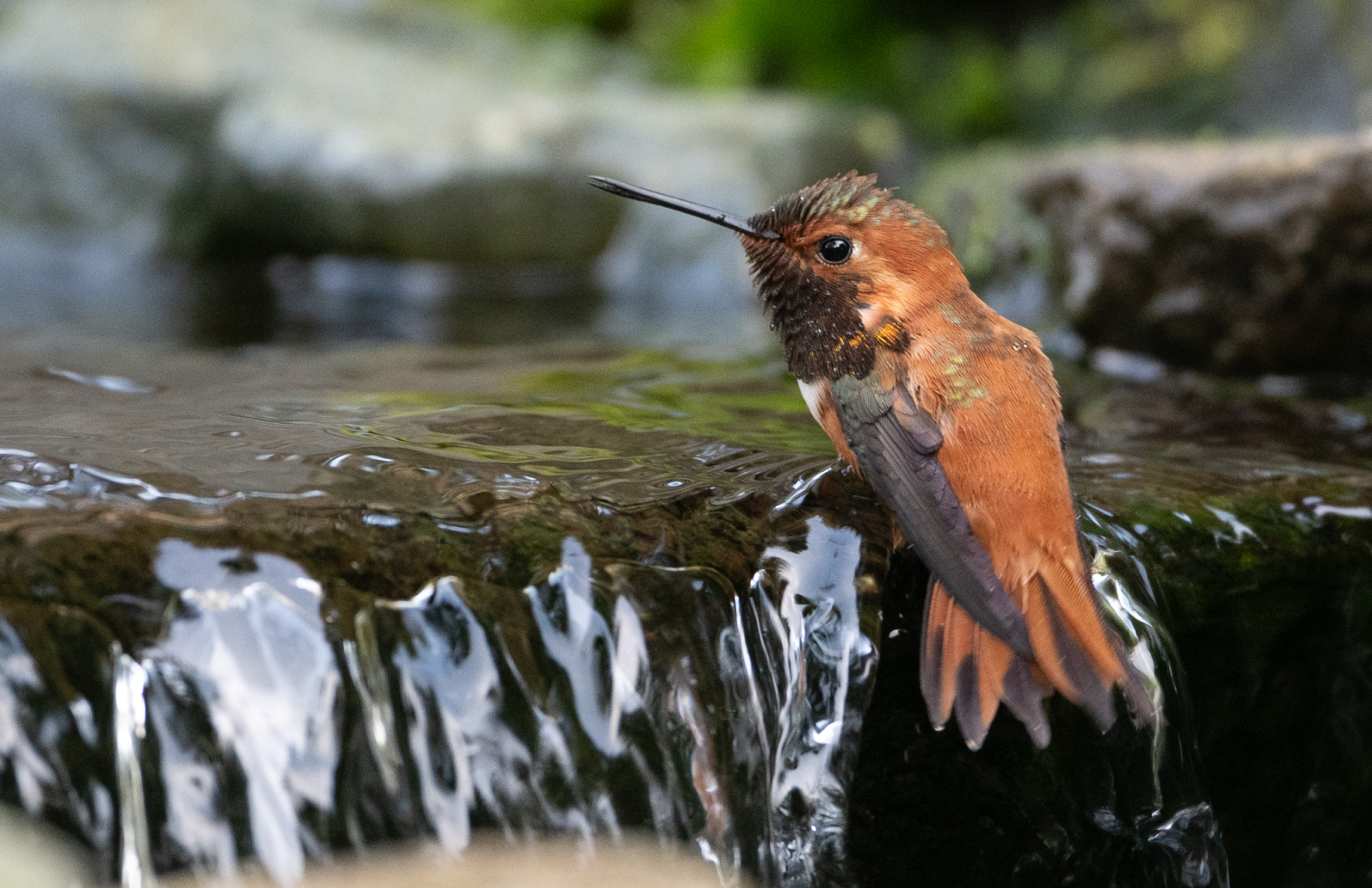
As I was photographing the warbler I noticed that there was a male Rufous hummingbird taking a bath at the edge of one of the water drops in the watercourse, in the same view in my lens as the warbler! I managed to get several pictures of the hummingbird.
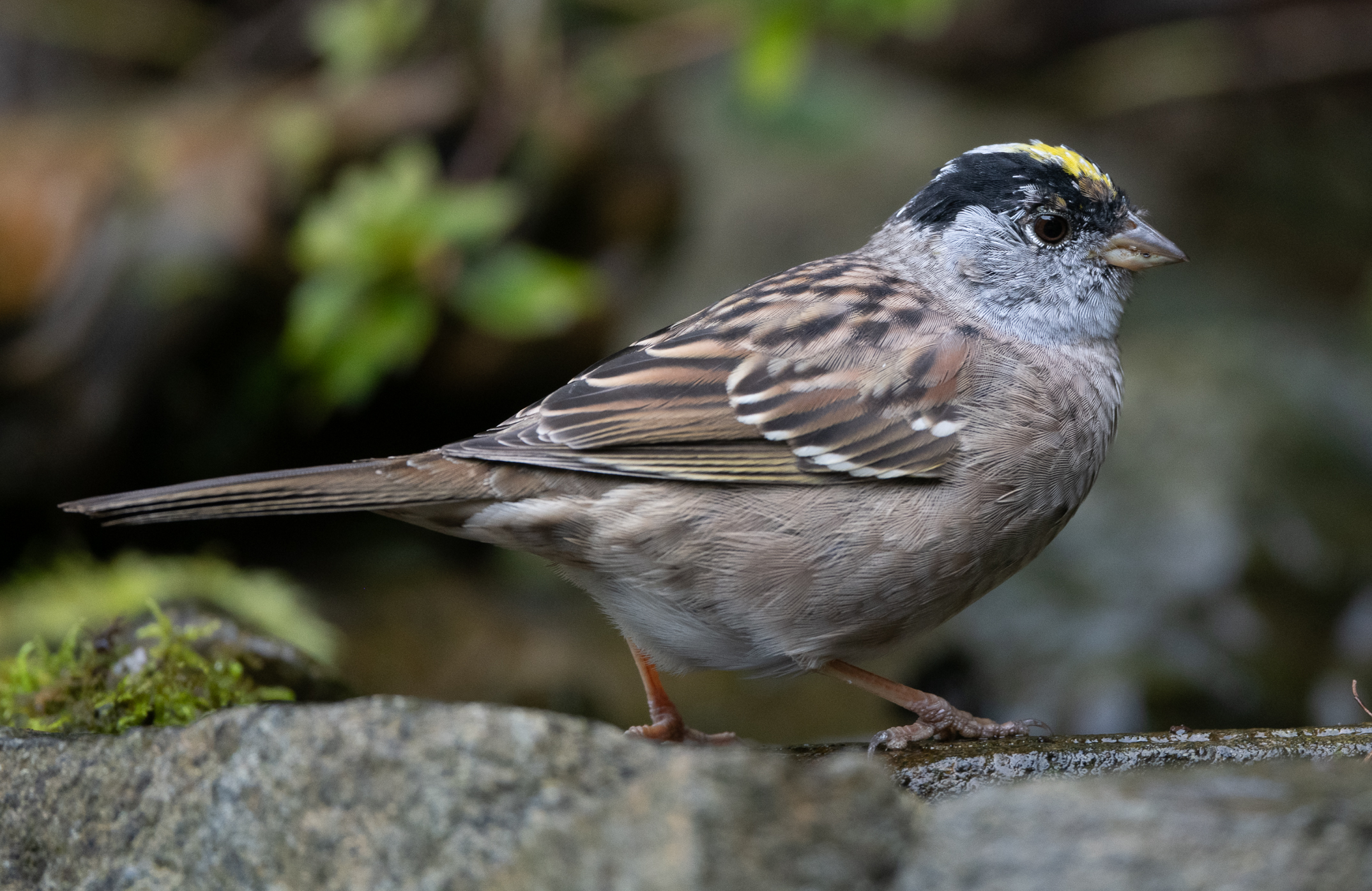
At one point in the afternoon, I counted six Golden-crowned sparrows, which probably came close to constituting the majority that were around the yard at the time. This image appears to be a male which has developed much of its breeding plumage.
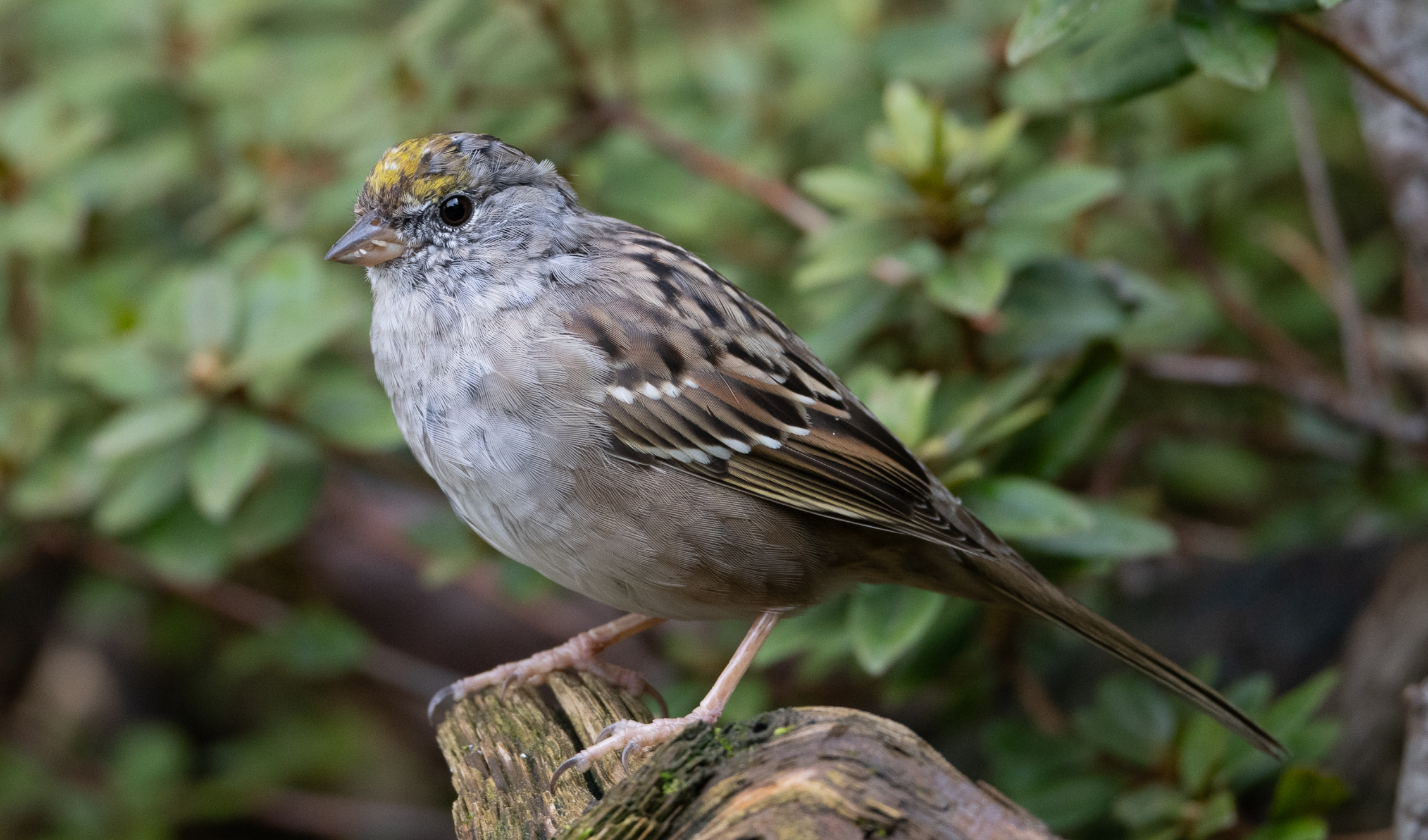
I would guess that this image is of a female. Many of the birds that I assume are females have rather rough patches of feathers around their faces,,, I assume they are molting or getting ready for breeding season.
Other members of the sparrow family in the yard this afternoon were the House sparrow, a Song Sparrow, two Fox sparrows and a single White-crowned sparrow.
A male American goldfinch also visited the yard, probably the same one I had seen earlier in the day.
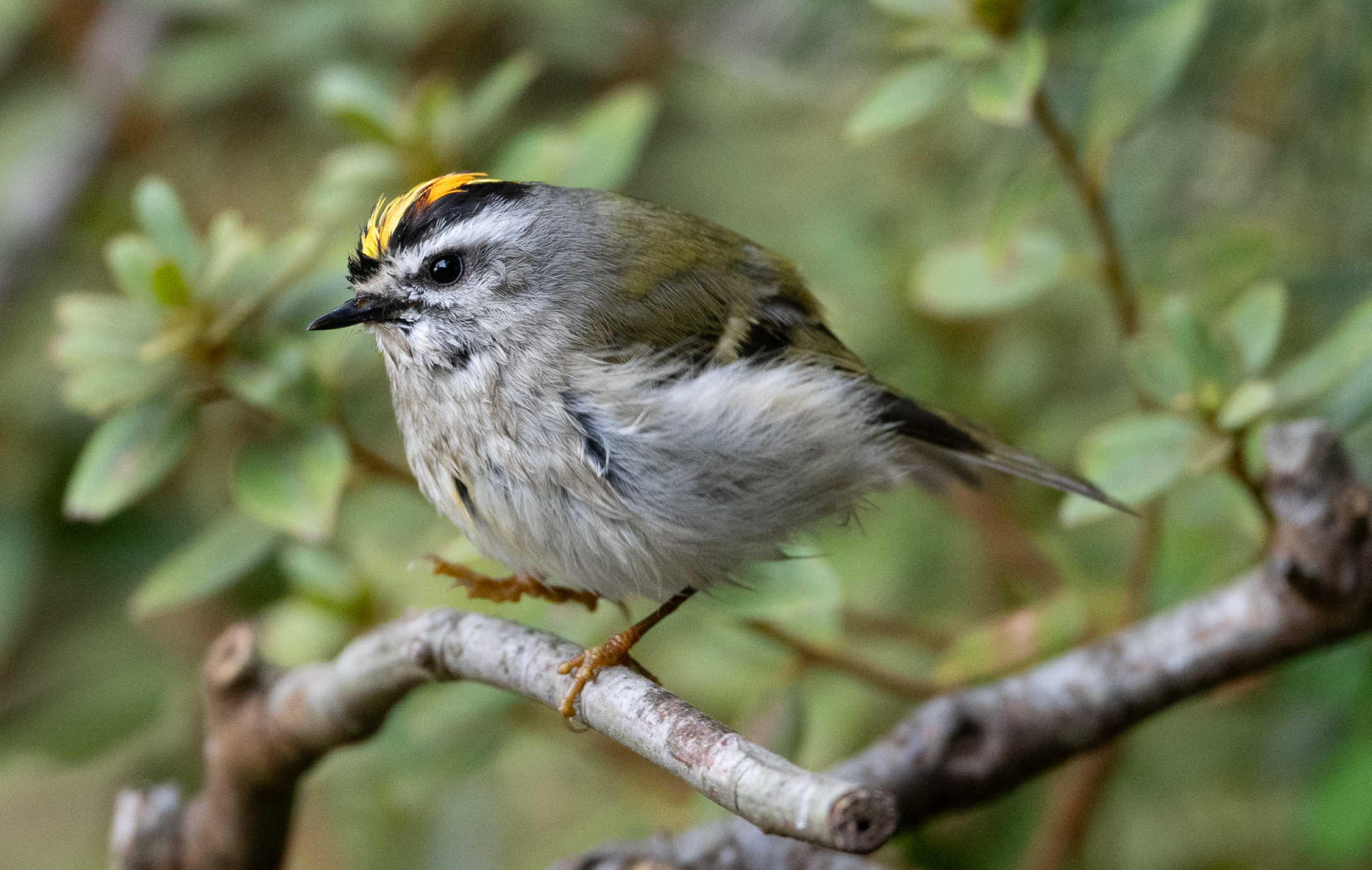
Along the way I got photos of this male Golden-crowned kinglet that stopped by for a bath.
I also extensively photographed a Black-capped chickadee eating emerging foliage from a Snowberry bush.
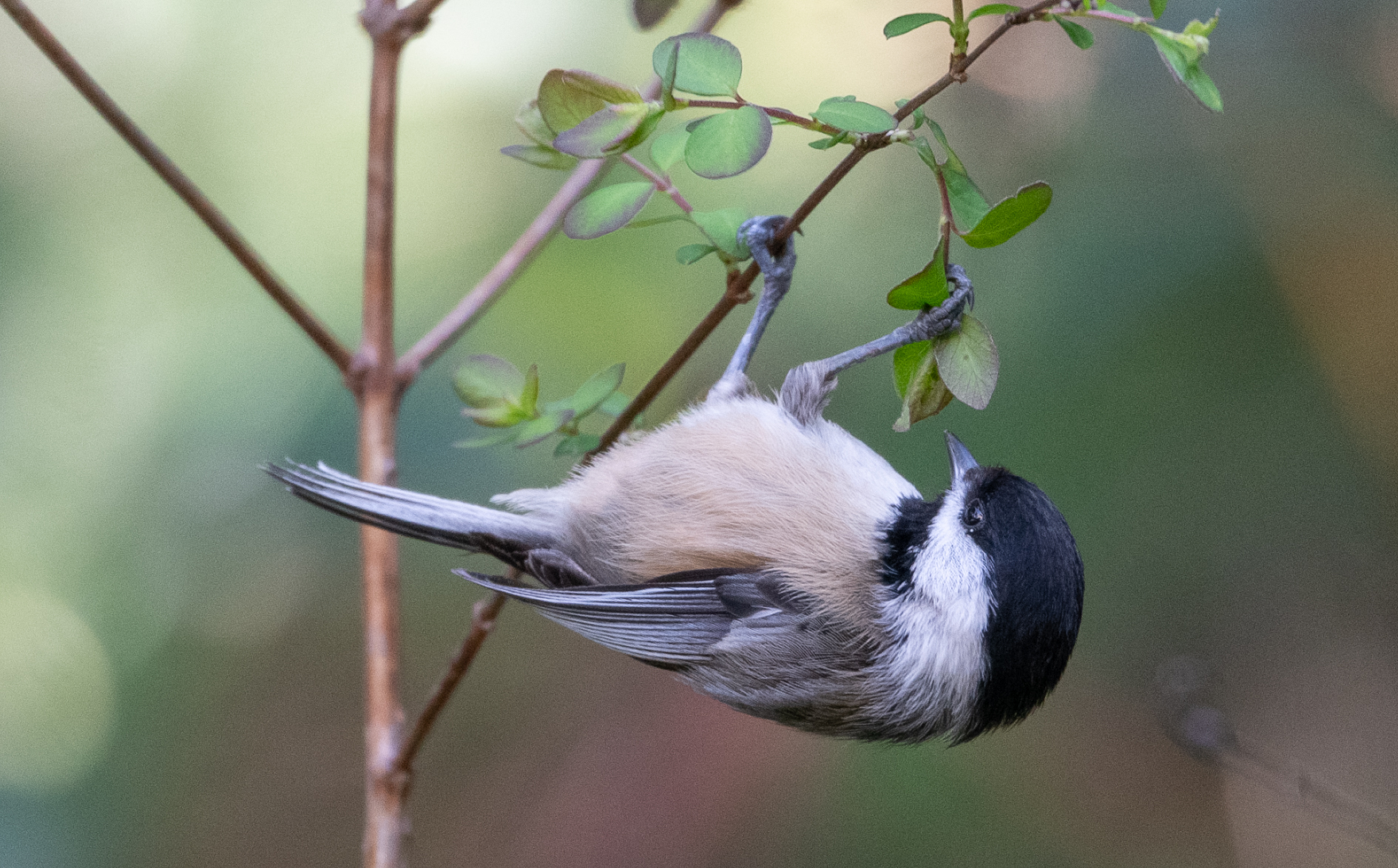
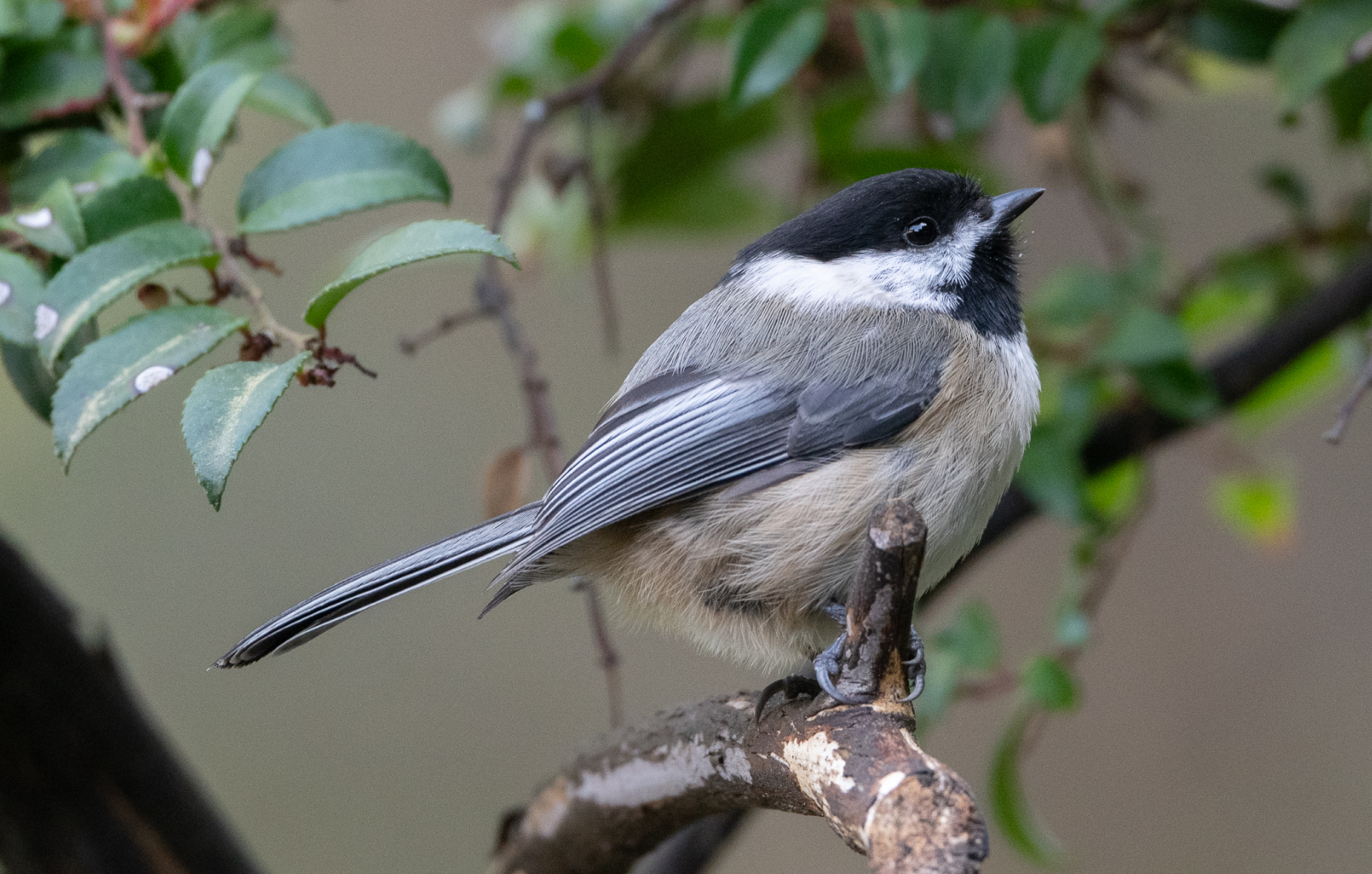
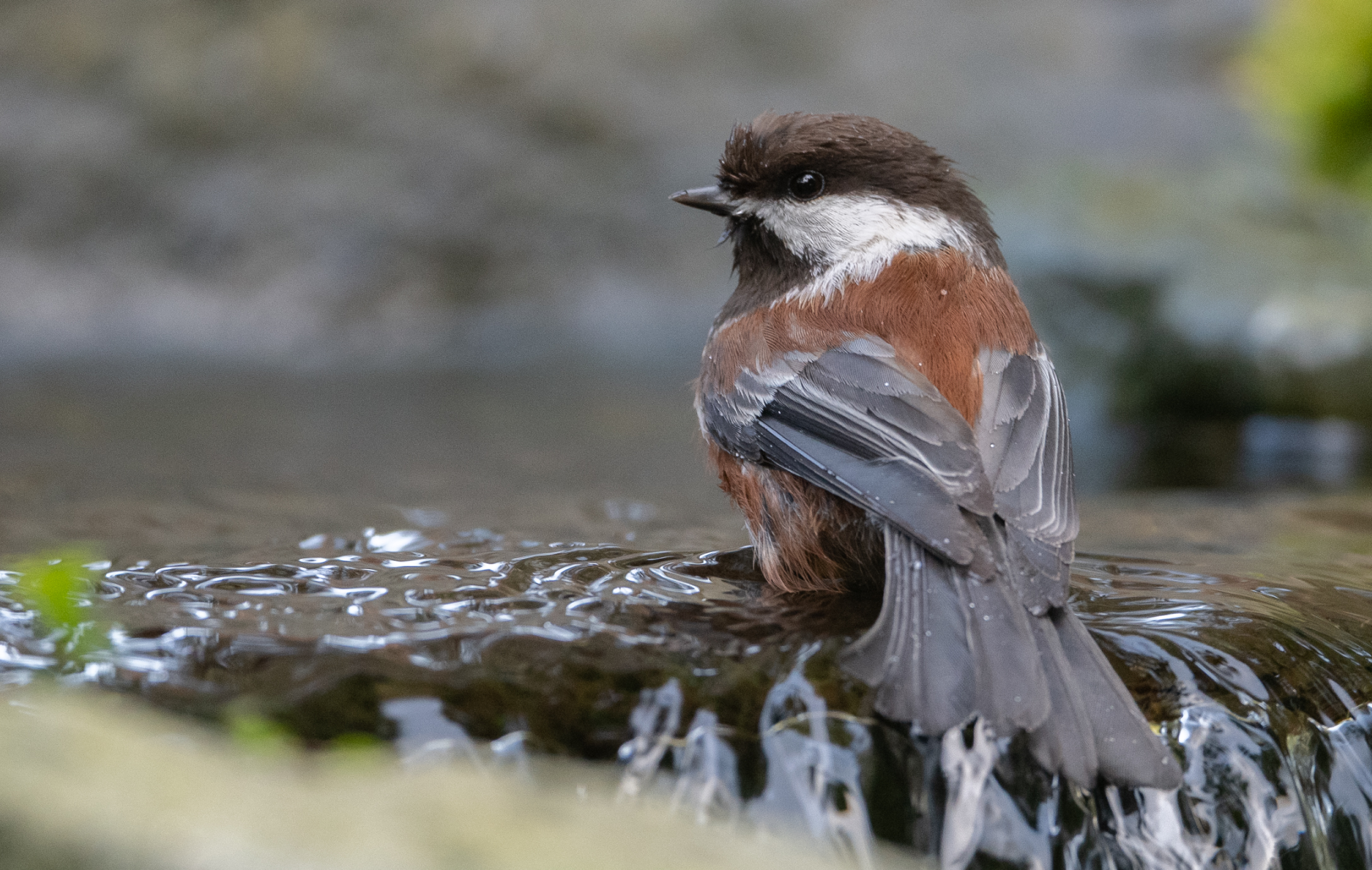
Here is a photo of a Chestnut-backed chickadee for comparison. When viewed from the front the chickadees look remarkably similar.
I wasn’t happy with the breeze that sprung up about the time I started birding. It made the low 50s temperature feel substantially cooler and I wasn’t sure but what it might affect bird migration, although the migration aspects of the wind conditions are pure speculation. This was my second consecutive three-hour afternoon of birding.