Summer Birding in Anacortes

I walk five mornings a week in Washington Park and this past week had a couple of interesting experiences (sans photos) there.  On July 25 I was watching a group of about 7-8 Black oystercatchers on the beach near Green Point when another group of about the same size flew in.  I began a more serious count and counted a total of 15 oystercatchers, the most I had counted in all of my years of visiting that location in the park.

Then on July 27 I had just begun my walk when I spied what was probably a Barred owl (probably a juvenile) sitting in a tree very near the road.  I watched it for several minutes and was joined by another couple (also birders) and we all watched the owl for several more minutes. It flew from the tree to the roadside right in front of us and we got to watch it until it was frightened by a couple of less-aware walkers.

We’ve been consistently seeing Barred owls along the southeastern half of the loop road early in the mornings for at least the past couple of weeks.

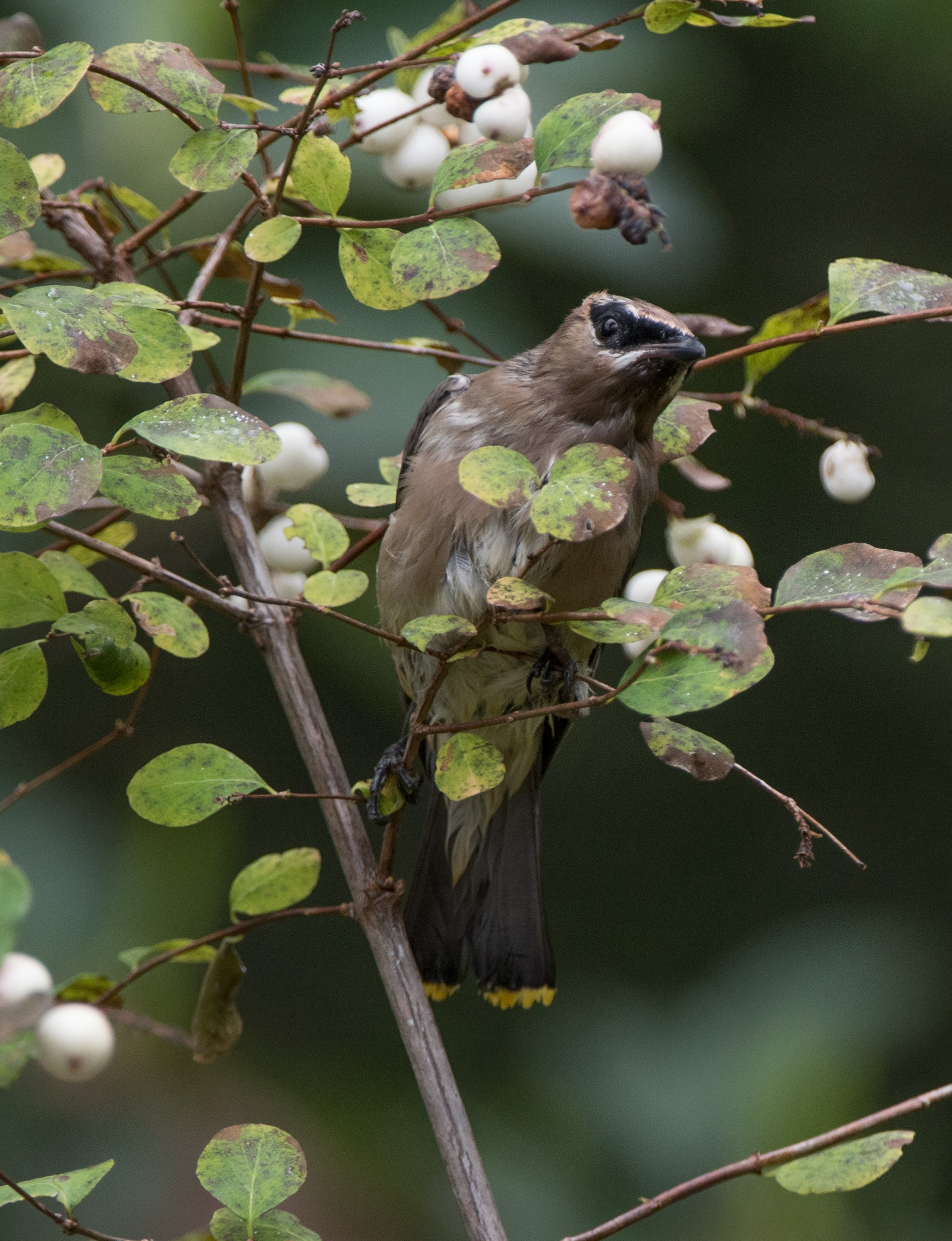
We’ve had a dearth of warblers and other interesting birds in the yard for the past couple of months, but things have picked up some lately.  On July 27 I spent considerable time in the yard with a handsome reward.  I had notice an unusual number of birds in the yard during the morning but nothing other than the usual visitors.  I decided to opt for a more detailed look with my camera.  As I was idly watching the bird traffic I was suddenly presented with two unusual visitors at once… a juvenile Cedar waxwing and a male Wilson’s warbler!

(These two photos are of the same waxwing, but this first photo of the waxwing was post-bath!)

The appearance of these two birds inspired me so I decided to spend a little more time in the yard.  It was a very good thing I did because a while later I was surprised by another warbler.  At the time I was absorbed in photographing it I thought it was an Orange-crowned warbler, but after it left the yard I had time to gather my thoughts and realized that it was a MacGillivray’s warbler, a very rare visitor to the yard!  I suspect that this bird is either a female or a juvenile and not a mature male which would have a darker mantle and make it easier to recognize.  The main identifying factor is the split white eye ring.

I’ll throw in a Black-headed grosbeak just for good measure.  I’m guessing that this is either a female or a juvenile.  We’ve had at least two pairs of grosbeaks in the yard this season and they, and their offspring, are regular visitors to the feeders.

The next day I was inspired to sit in the yard again.  I photographed this Orange-crowned warbler early and a male Wilson’s warbler in the afternoon.  Unfortunately I saw the Wilsons warbler bathing in the watercourse from the kitchen window but failed to sneak a good photo of it, having to settle for a shot of it preening in a madrone tree.

The hummingbird wars are on in earnest with a male Anna’s hummingbird attempting to keep another Anna’s and one or more female Rufous hummingbirds at bay and off the feeders and the salvia.

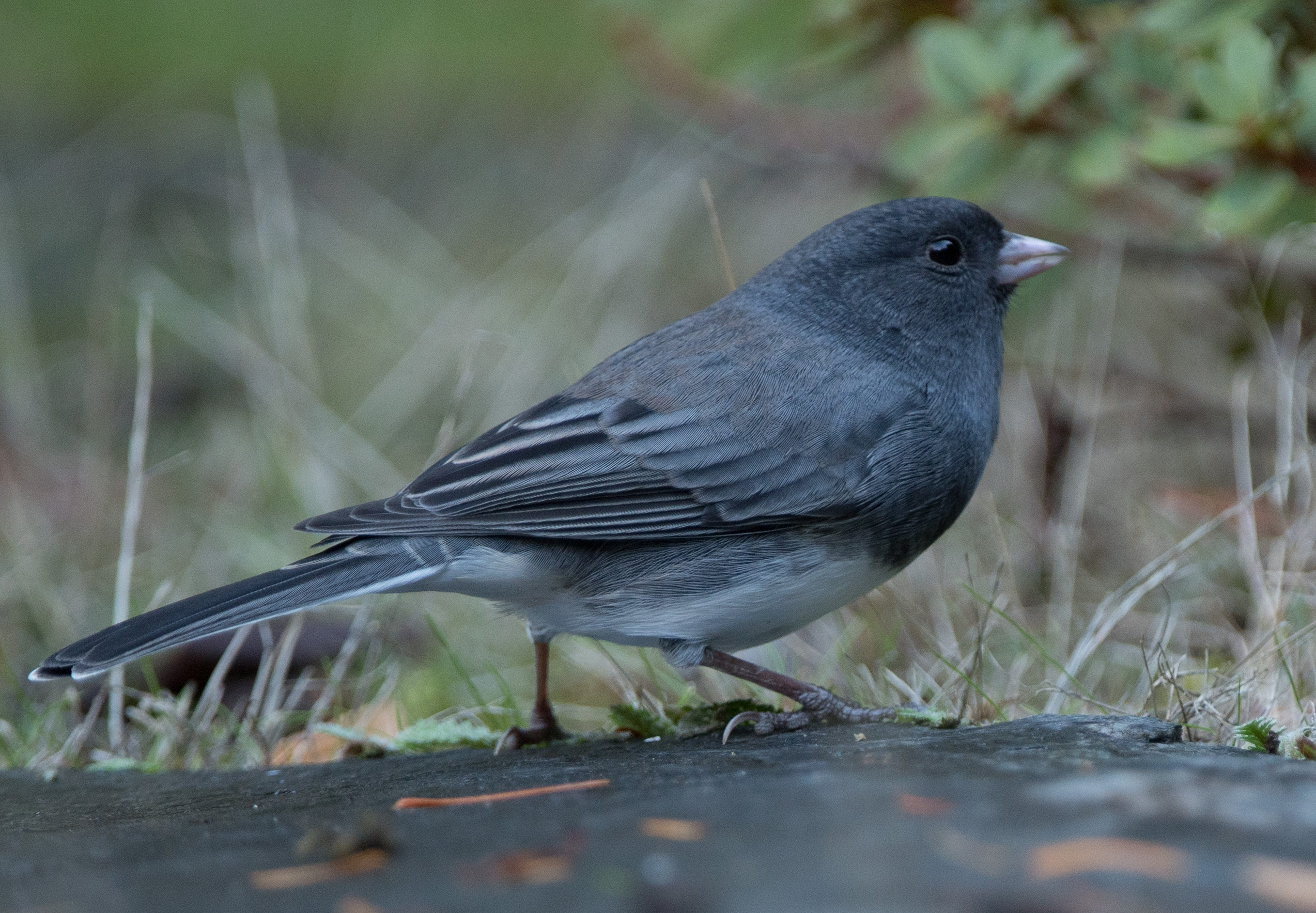
And finally (remember there’s always a “finally”!), while I was initially buoyed by the lack of juvenile Brown-headed cowbirds the area fielded this season, we now have Spotted towhees, White-crowned sparrows and Dark-eyed juncos (Oregon race) all feeding cowbird chicks.  : (   These are all species that have been susceptible to cowbird predation in past seasons here in the yard.


Back into the Yard

It’s been awhile since I last posted a blog.  I’m having difficulty with my typing due to Dupuytren’s contracture (look it up!) in my right ring finger, so my touch typing is drastically slowed due to a prolific number of “l’s”, “o’s”, “p’s and other surrounding characters from the keyboard.  I hope to get the condition corrected (for what will be the third time), this time surgically.  However, things will undoubtedly get worse before they get better.  So posts will probably get rather sporadic until I recover from an anticipated surgery to correct the condition.

I spent about an hour and a half in the yard this afternoon and obtained some good photos of mostly common visitors.  So here we go…

This White-crowned sparrow, which I can identify by its lack of a tail, helped raise a Brown-headed cowbird this season.

This is a juvenile Brown-headed cowbird, but not necessarily the one the sparrow (pictured above) raised.  We have at least two juvenile cowbirds visiting the yard and it is unlikely they were nest-mates.  If you aren’t familiar with cowbird breeding strategies I suggest you perform a little investigation.  It’s an interesting story.

This is what the White-crowned sparrow should have raised, and it’s possible, I suppose, that it raised both birds.

Continuing with the juvenile theme, the Red-winged blackbirds who are nesting in the pond adjacent to the sewer treatment plant below us are now bringing juveniles to our feeders.  That’s the juvenile in the upper left of the photo, begging for food from its mother.

Here’s another photo of the blackbirds with the juvenile nearest the camera and the female in the background

Here is a photo of a male Red-winged blackbird that I’ve photographed previously this season.  For whatever reason (henpecking?) he’s missing the feathers on the top of his head.  The blackbirds only visit our yard/feeders while they are raising young.  In the non-breeding season the sexes, while still gregarious, often separate.

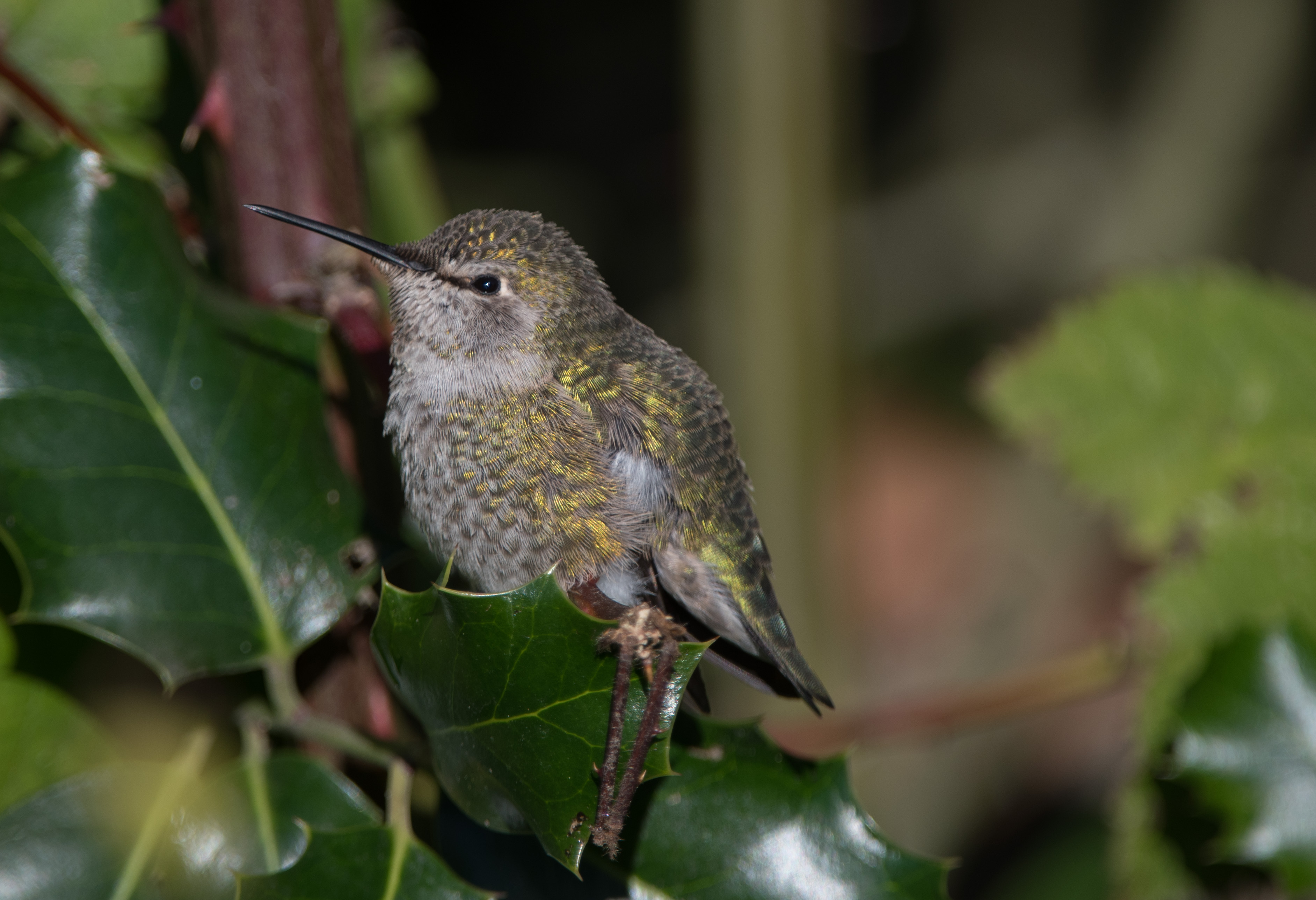
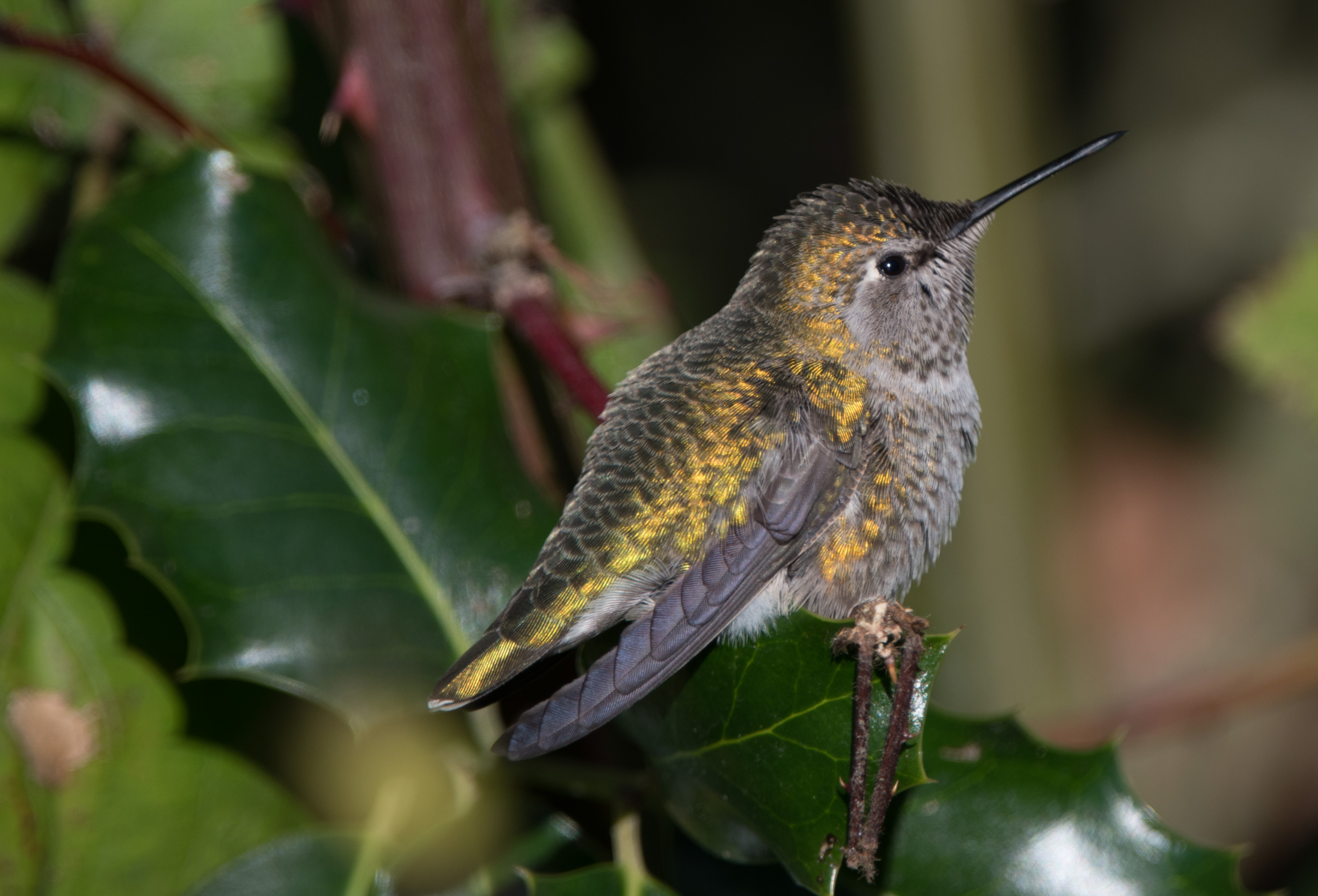
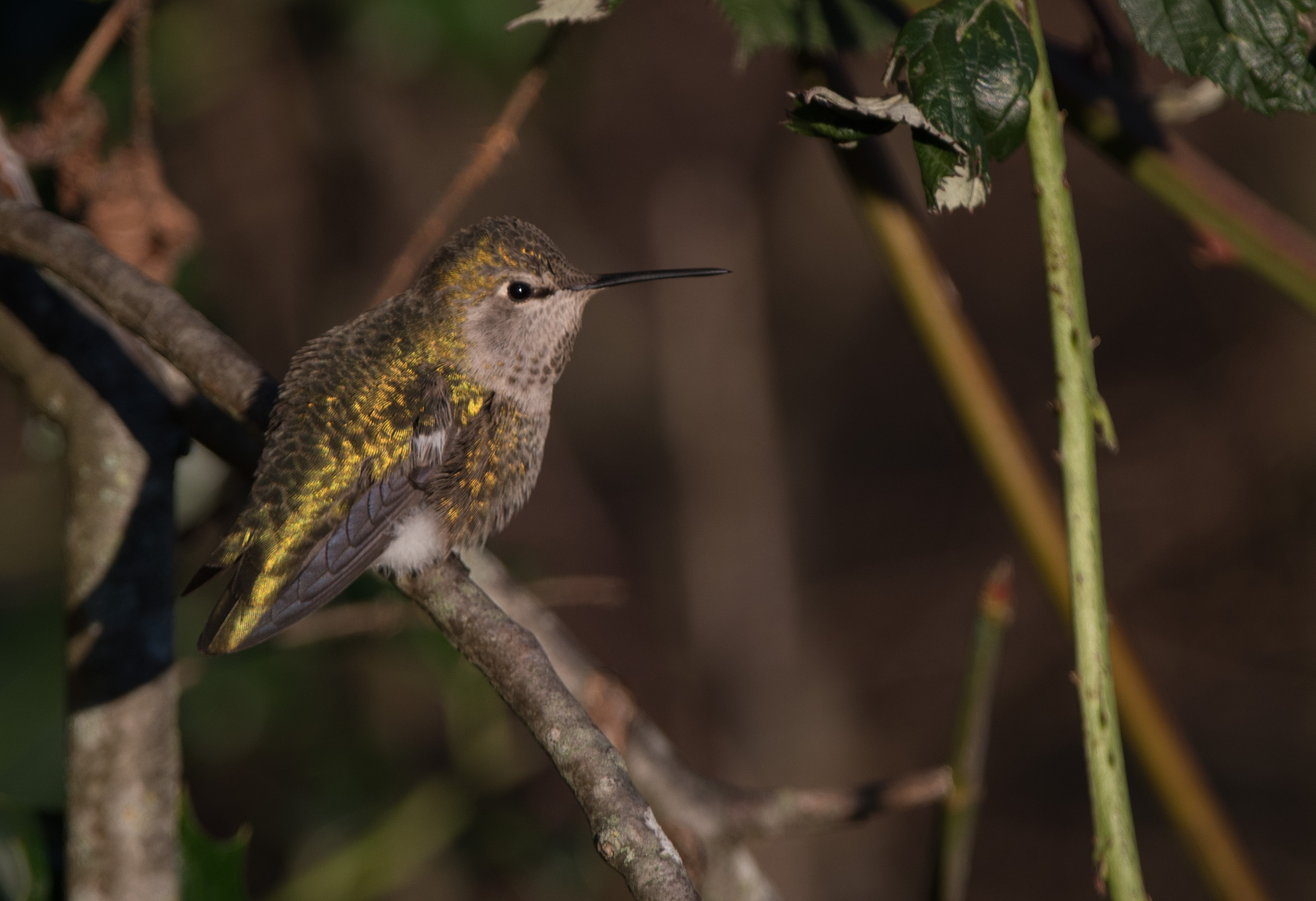
This is either a juvenile or female Anna’s hummingbird.  Many of the Anna’s hummingbirds remain with us through the winter… and NOT just because people leave feeders out.

One of a series of juvenile American robins that visit our yard to utilize our water features…

A male House finch which may, or may not, be from this year’s crop.  This one leans towards an orange or peach color, but there is a large variation in the colors of the males.

We have at least two pairs of Black-headed grosbeaks who visit the yard from time to time.  This male appears that he might have been eating blackberries.

And finally, during my time in the yard this afternoon we had a very brief visit from a female Western tanager.  This is the first tanager we’ve seen in probably six weeks or so.    I was very fortunate to obtain this photo…

Concluding Arizona

This blog post is going to put the wraps on Arizona, a trip that ended April 17, 2017.

This photo is of an unidentified lizard hanging out in a parking lot island where we stayed just outside Tucson for our last couple of nights in Arizona.

While I’m on the subject of unidentified species, here’s a flycatcher working the same parking lot as the lizard.

These Cactus wrens both had nests and were bringing food to young.

My big find was a grouping of grasses which attracted a male Lazuli bunting.  Until I posted this I had assumed that I was photographing a single male over two days, but after viewing these photos I’m inclined too believe that I actually photographed more than one male.  The male was a steady customer and I have many really good photos of it in the grasses and in the immediate area.  

I’ll depart Arizona with one last photo of a Cactus wren.

I’ve been spending substantial time in the yard lately but unless something really interesting appears I’ll be on to Central Texas next (late April, 2017).


Moving on in AZ

A close call for my AZ continuity… on June 21 I had a pair of Cedar waxwings enter the yard and go to the watercourse.  And, unlike most such incidents, I had time to retrieve my camera from the house and seat myself very near the watercourse.  The waxwings chose not to linger on my staging sticks so I didn’t get the kind of photos I felt needed to be posted immediately, so I’m continuing with Arizona.

While in Portal I was made aware of a pair of Arizona woodpeckers‘ nest hole in a dead tree, so I staked it out with a considerable sacrifice of both time and comfort.  I was rewarded with the parents making several trips to the nest that I was able to photograph.  I was amazed that the adults could squeeze into the small nest hole, turn around inside and emerge head first.  These photos are both of the male.  (I believe that this woodpecker used to be known as the Strickland woodpecker.)

Here’s a photo of the woodpecker looking out the nest hole… 

This is a photo of a Black-throated sparrow and I was very happy to get it.  As it was we had several sightings and I was able to obtain several photos of a quality better than I had hoped.

I photographed this male Blue-throated hummingbird in the Portal, AZ area.  It’s the largest hummingbird in North America.

This White-breasted nuthatch was in Madera Canyon back on the west side of the mountains.

In writing this blog, I have to have a field guide on my lap due to some unfamiliarity with some of the birds I photographed.  This is especially true of this bird… a male Phainopepla, a striking flycatcher of the southwest deserts.

An unidentified female hummingbird feeding on a blooming ocotillo plant.

At our final destination in Tucson, a resort golf course, I was surprised to find a very habitable wildlife habitat.  I discovered two Cactus wren nests, one of which is pictured here.  I would have to say that this nest is about as safe from predators as nests can be made.  I just wonder how many chicks are lost in fledging.


Arizona – Portal

The place we were staying just outside Portal had a very heathy population of Acorn woodpeckers and most had already laid claim to holes in the many large trees on the property.  These birds are simply adorable and fairly tolerant of human presence.

You might assume that this woodpecker has a hole in the side of a tree, but to obtain this photo I had to lay on my back and shoot directly overhead.  The hole was in the bottom of a large limb and this woodpecker is hanging its head out looking down at me.

The facility where we stayed had a lot of feeders out and attracted a lot of birds, but the conditions were rather poor for photography.  However I did manage to photograph this Scott’s oriole in the vicinity of the feeders.

One of the nicer features of the place we were staying was that each of our cabins was provided one or two platform feeders with sunflower seeds, and I moved our feeders around to take advantage of sunlight and places from which I could photograph.  Here a Pine siskin sits in the area of one of the platform feeders.

A Lesser goldfinch…

Here’s a Bridled titmouse, a bird found only in a narrow range in NM and AZ.  I think this one is having a bad hair day!

There’s a very generous birder who lives in or just outside of Portal who shares his property with the public for birding purposes and maintains several different feeders and watering stations.  He even provides a picnic table, chairs and a shade tree for birders!  There are many species of birds that can be seen on his property.  Pictured below are Western Scrub-jays at his viewing area.

A bird I really came to appreciate, and which I have rarely seen on my travels, is this Green-tailed towhee, also at the aforementioned viewing area.  The harsh lighting doesn’t do this bird justice.

And finally (remember, there is always a ‘finally’), this Great Horned owl had a nest in a cavity of a tree at Portal’s only restaurant.  Not to worry… I’m not nearly as close as it appears!