It seems like a relatively rare occasion here in the Pacific Northwest when the weather actually agrees with the calendar with regard to spring. We’ve had a few nice spring-like days lately and they’ve generated some bird sightings. But first…
On Monday, March 19, I received my Nikon 200-400mm lens back from the Nikon repair facility in Los Angeles. I had been prepared for a large repair bill akin to the one I had to pay two years ago, but in this case Nikon came through and repaired the lens for free. I had been apprehensive that I would see some unusual bird during the len’s absence but such was not the case. So now my photography is back in action!
On March 17, we saw our first Rufous hummingbird (a male) in the yard. I checked prior records and found that this arrival was relatively late compared to prior years.
On March 18 we spotted our first American goldfinch (a male) at one of our feeders. While some of these birds overwinter here they usually are not in our yard during the winter season.
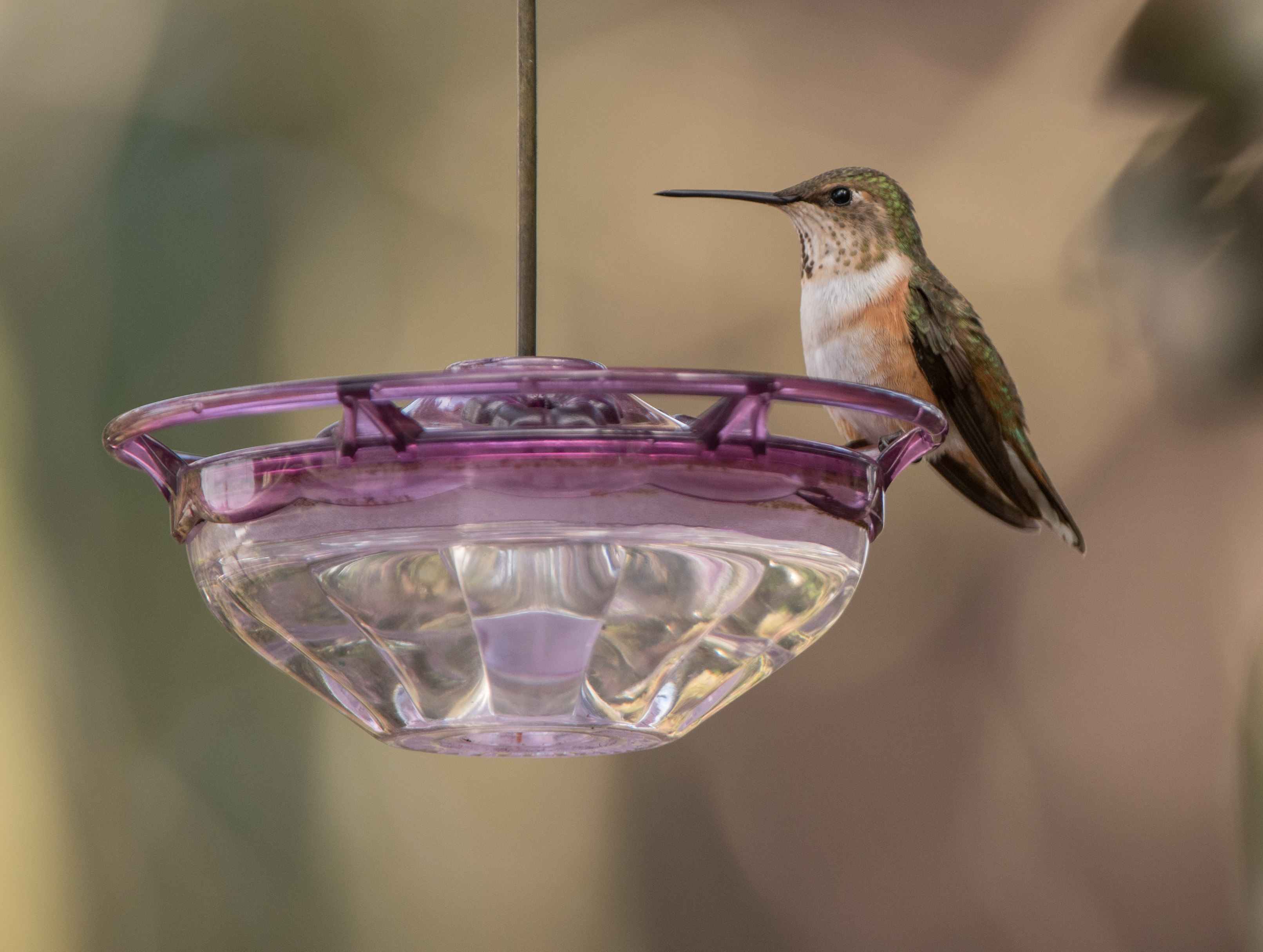
On March 19 our first female Rufous hummingbird showed up in the yard and I managed to get a photo of the actual bird. The bird disappeared and wasn’t seen the next day, but by March 21 it (or a relative) was back and seemed to be settling into the yard. (This is the actual sighting of the first female Rufous hummingbird in the yard, which happened to arrive while I was monitoring the yard with my newly-repaired lens!)
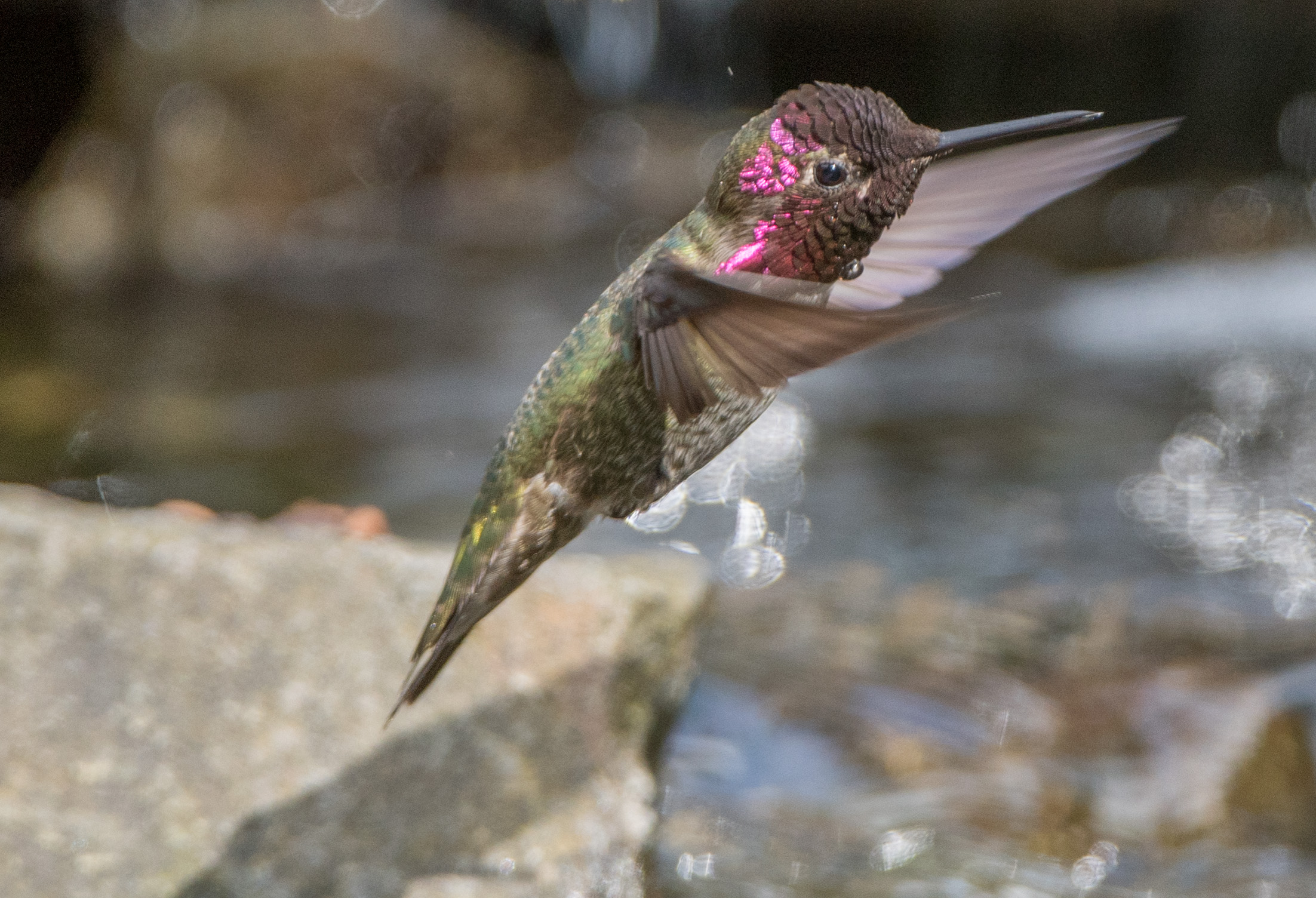
We’ve had at least 2-3 Anna’s hummingbirds spend the winter with us, including at least one female. This male is accessing the water feature.
Also on March 21 we had a White-crowned sparrow show up in the yard. We had one that lingered into the fall but it was gone 2-3 months ago. Some are in the area year-round but they don’t overwinter in our yard.
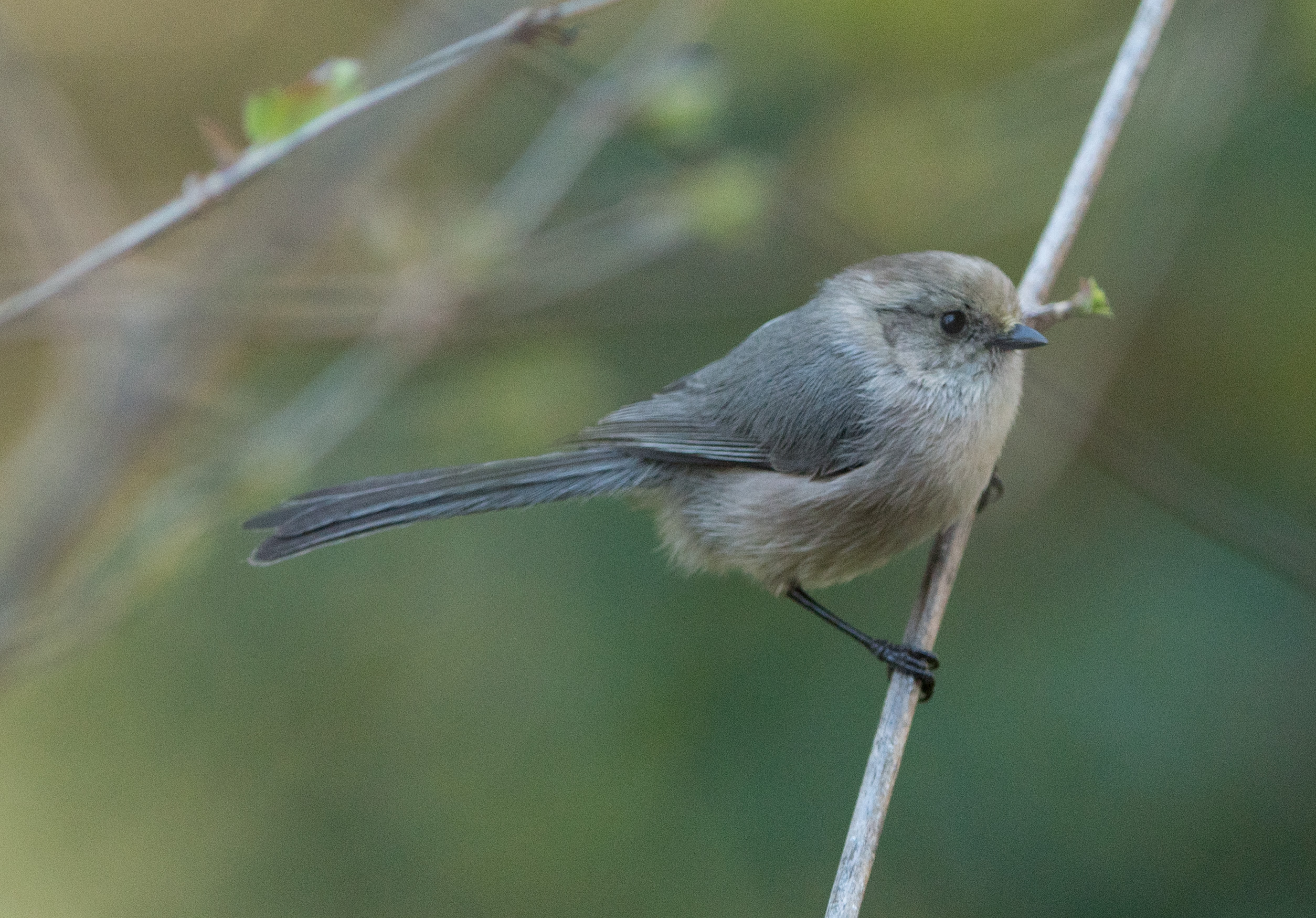
The flocks of Bushtits that have frequented the yard have now broken up into breeding pairs, and at least one pair is returning to our suet feeder rather frequently. (This is the male… the female has proven much more difficult to photograph.)
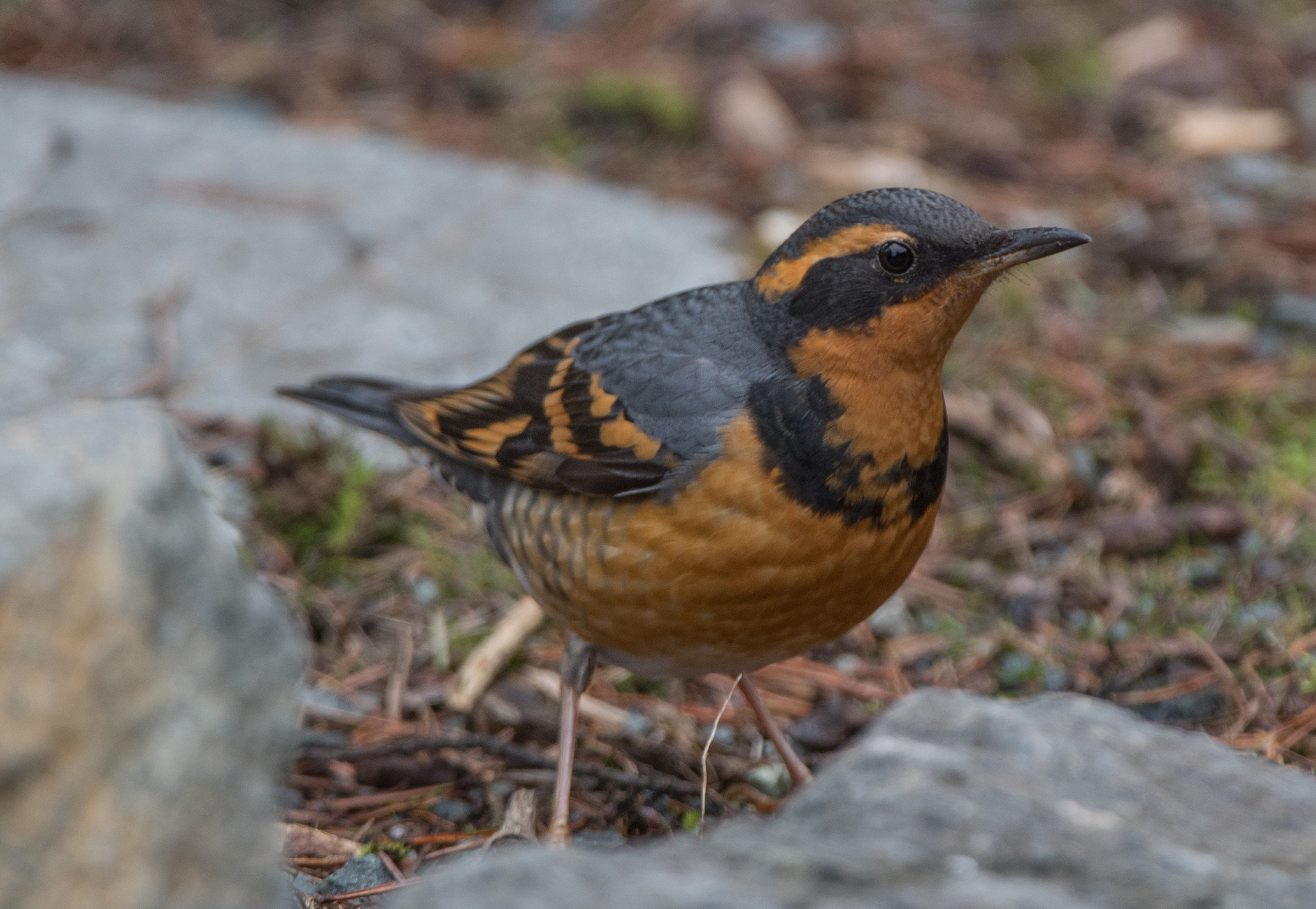
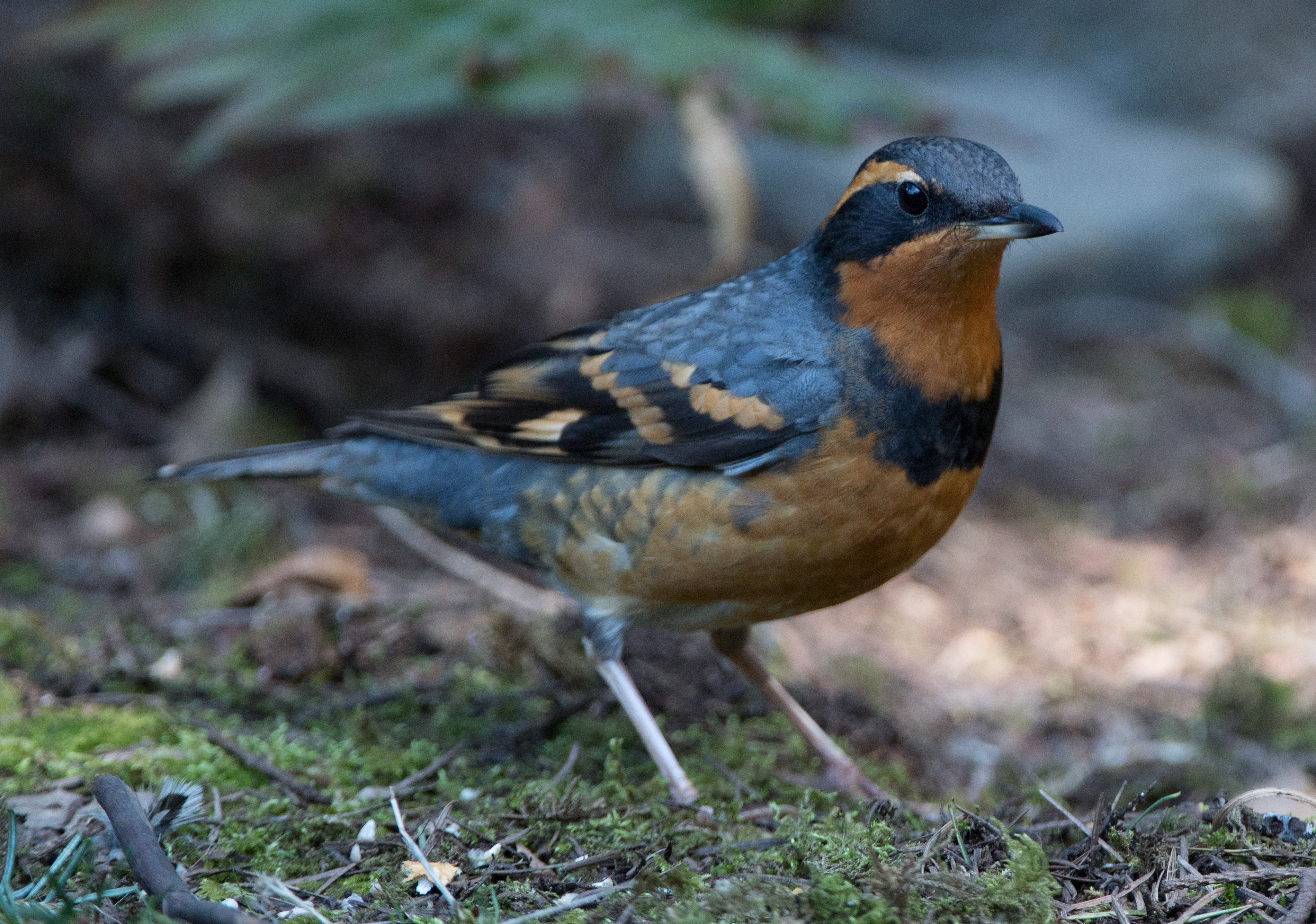
We’ve had at least three Varied thrushes in the yard at one time, but the much more common occurrence is a single male. The thrushes will be headed back up into the Cascades for breeding season soon but as of March 22 we still have two males visiting the yard.
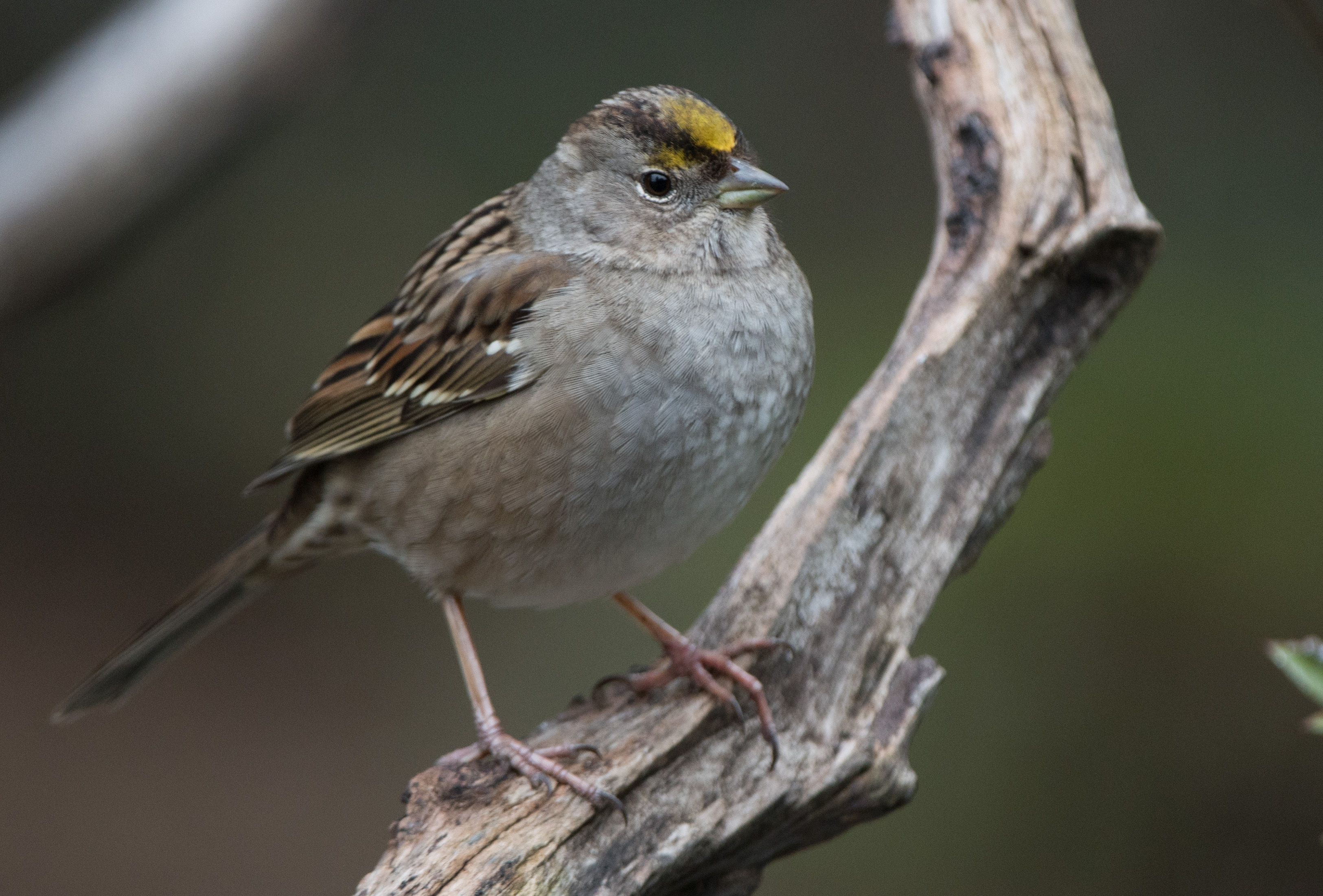
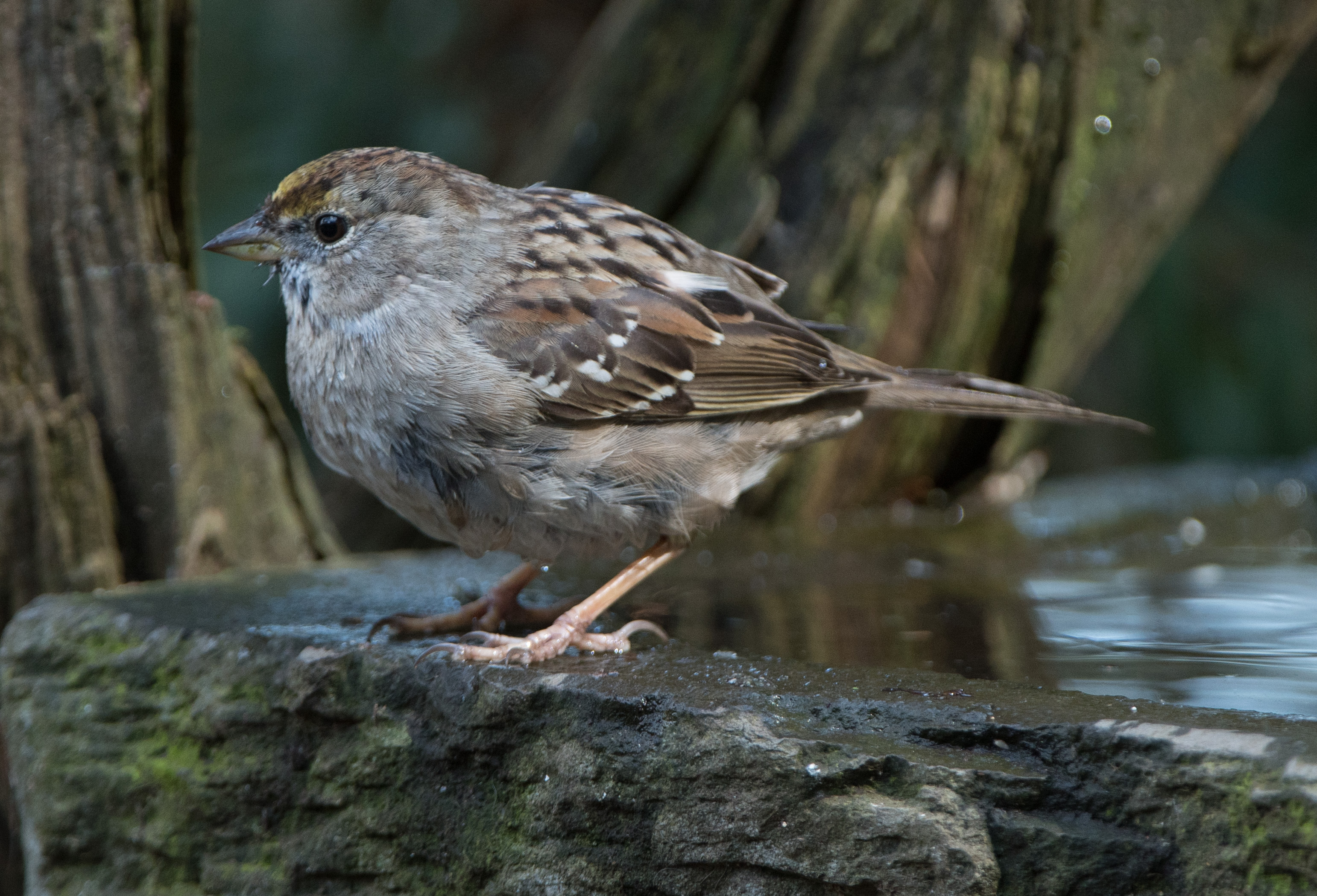
We’ve had 5-6 Golden-crowned sparrows spend the winter in the yard. They are slowly beginning to develop their breeding plumage and will be leaving in the next few weeks for breeding grounds farther north. It seems like the males wait until their plumage peaks and then they abruptly migrate, robbing us of longer views of their golden crown.
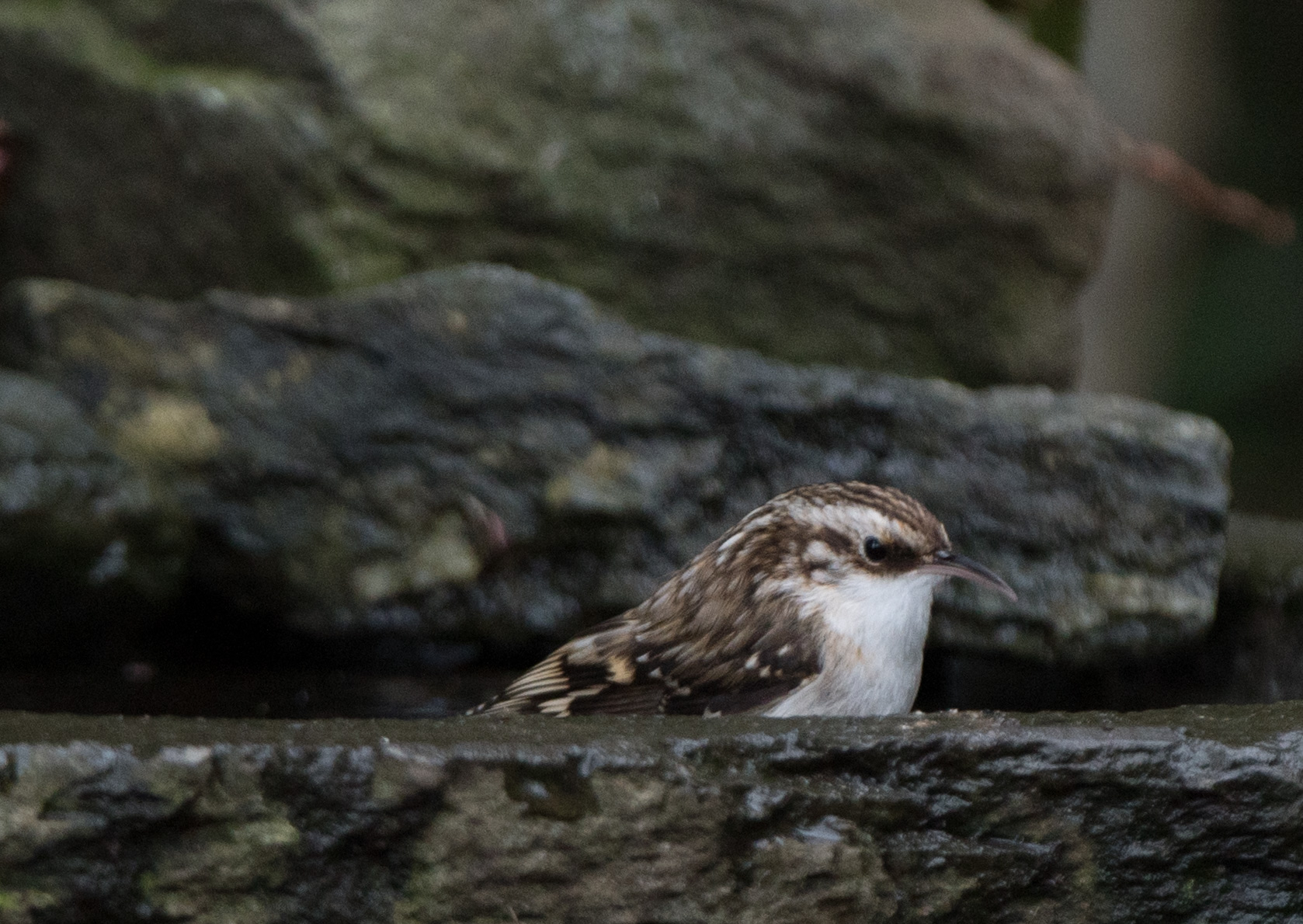
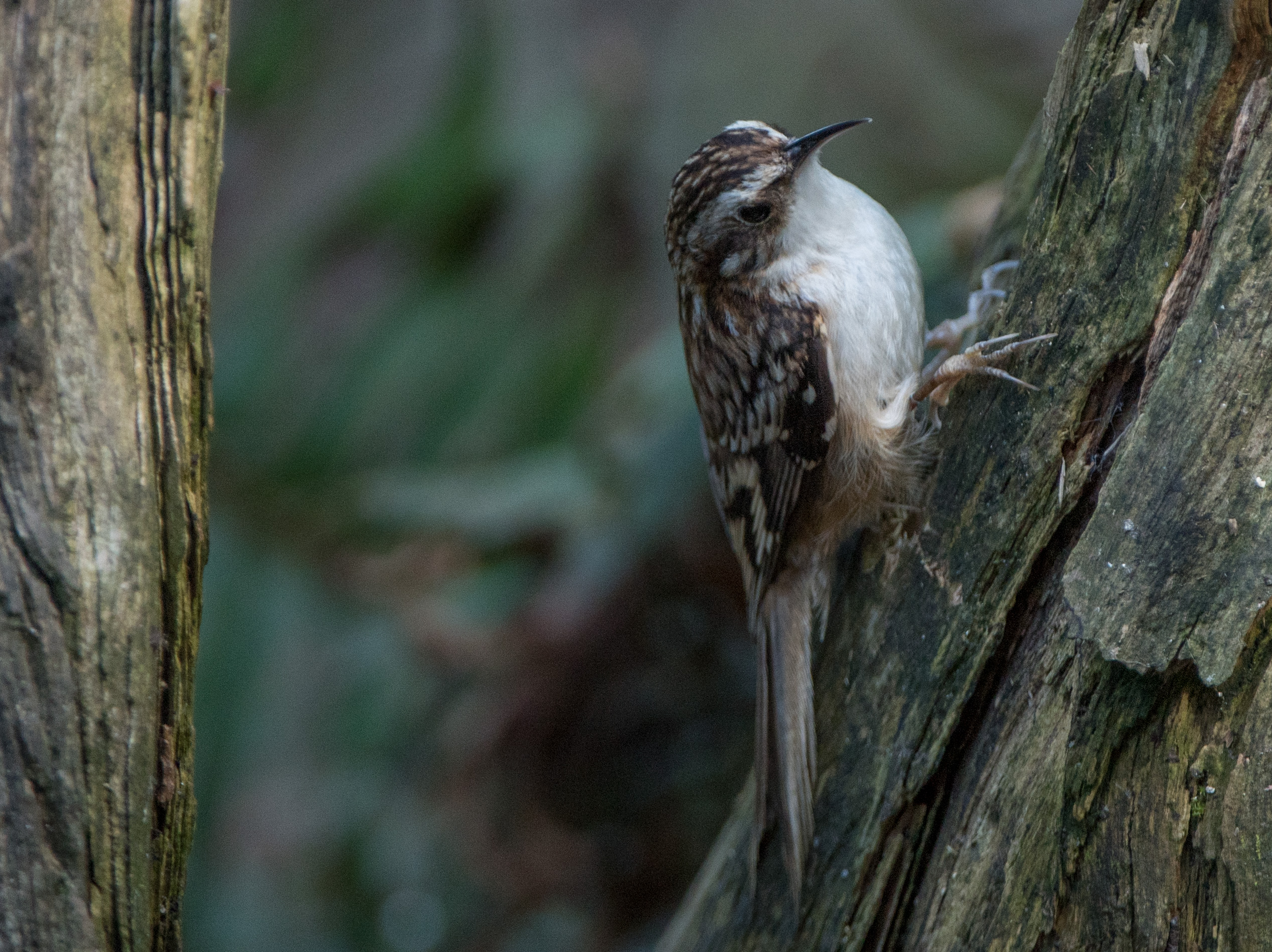
While enjoying our pre-rain sunny day on March 21 a Brown creeper entered the yard and attempted to access one of the bird baths. Unfortunately the bird bath was in use by a couple of larger birds and the creeper’s timidity kept it from the bath.
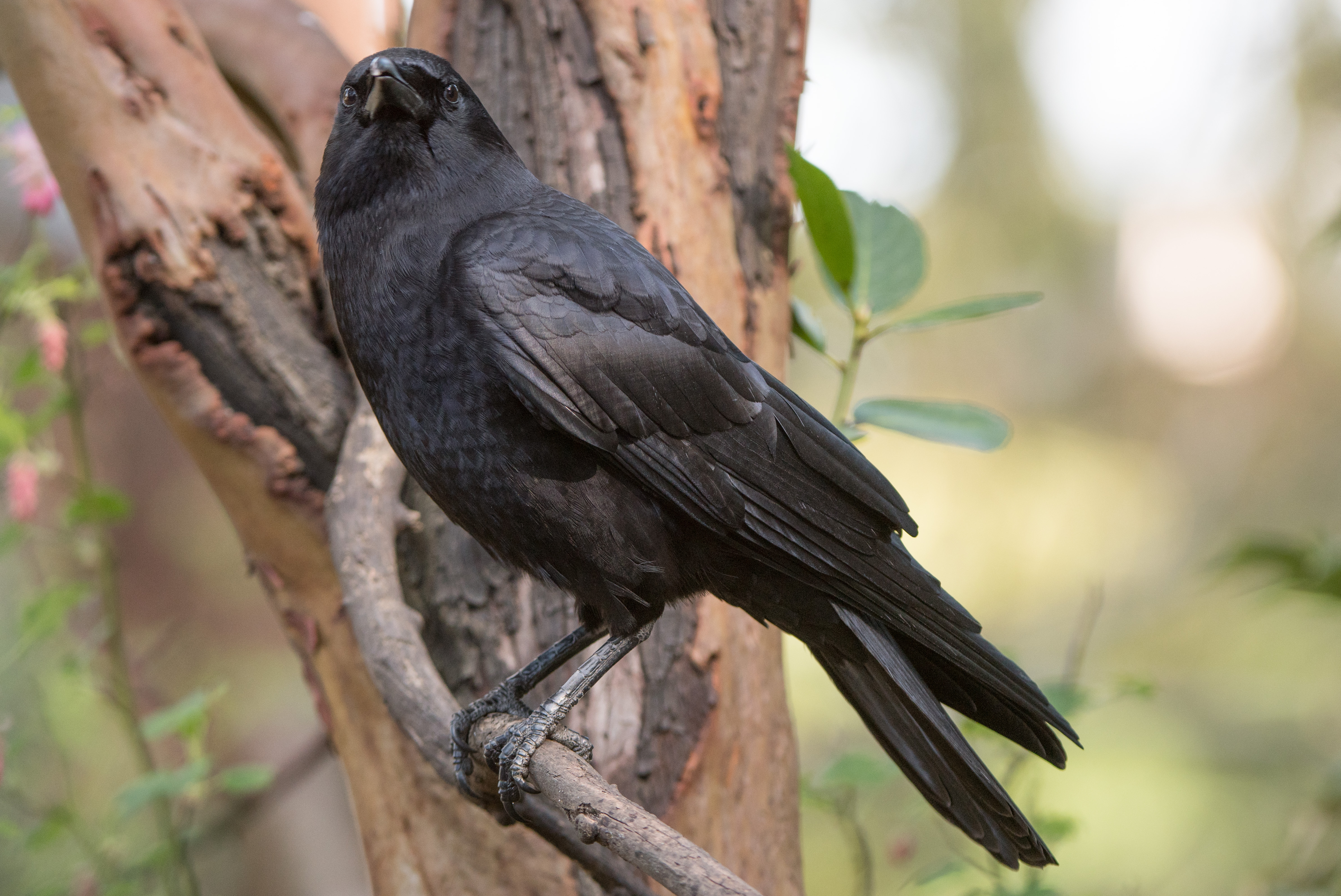
On March 20 I observed two different crows, one in the yard and another in the marina area, transporting nesting materials. The crows, too, have begun to pair up for the mating season and a couple have staked a claim to our yard. They are probably influenced by the peanuts I feed them. I’ve noted in prior years that the crows eschew picking up sticks from the ground and instead prefer to wrestle dead twigs from the canopy.