Winter Woes

My posts this winter have been somewhat sporadic.  There were the three hand/arm surgeries in October (from which I’m still attempting to recover my typing skills), then there has been a considerable amount of rain, heavy overcast and now wind in the interim.  Added to these problems is the fact that I just haven’t encountered as many interesting birds as in some past years.

Despite my handicap I recently managed to generate a 14-page vignette for a history project relating to my elementary school, but every key accessed by my ring and little fingers on my right hand still requires considerable slowing.  (My worst nightmare is a word like “lollipop” but fortunately that word doesn’t arise in my writings very often!)

I was recently made aware of reports of a Black phoebe that had been seen at the Headquarters Tract of the Washington Department of Fish and Wildlife (WDFW) on Fir Island.  The phoebe was considerably out of range, usually being found only as far north as southern Oregon.  We’ve seen many on our travels through CA, AZ and NM.

The WDFW HQ tract on Fir Island is a large piece of land with a vast area of phoebe habitat (they’re almost always found around water) and I had no idea where the bird might be.  On Jan 18 I drove around the two parking lots and was on my way out when I spied a small bird fly-catching about 100 feet away.  I parked and carefully moved down to Wiley Slough and over the next couple of hours managed a few photos of the phoebe.

On Jan 19 I returned despite windy conditions only to find at least 5-6 (apparently juvenile Barn?) swallows working the area.  The phoebe made a couple of brief appearances but was probably discouraged by all of the swallow activity, which, by the way, made it very difficult to track the location of the phoebe.  As I was leaving the tract I again found the phoebe and managed more photos, but at a decided greater distance than I would have liked.

While at Wiley Slough waiting for the phoebe I amused myself by photographing a couple of female Buffleheads that sporadically cruised up and down the slough.

Stalking the Wild Varied Thrush!

Each winter the cold weather and snow drives the beautiful Varied thrushes down from the mountains.  They begin appearing at our house in the fall but return to their higher elevation breeding grounds in the spring.  As far as photography is concerned, each year the Varied thrush is a target bird for me.  We almost always have at least a few visit our yard but this year the visits have been somewhat scarcer than in prior years and the birds have been much shyer.
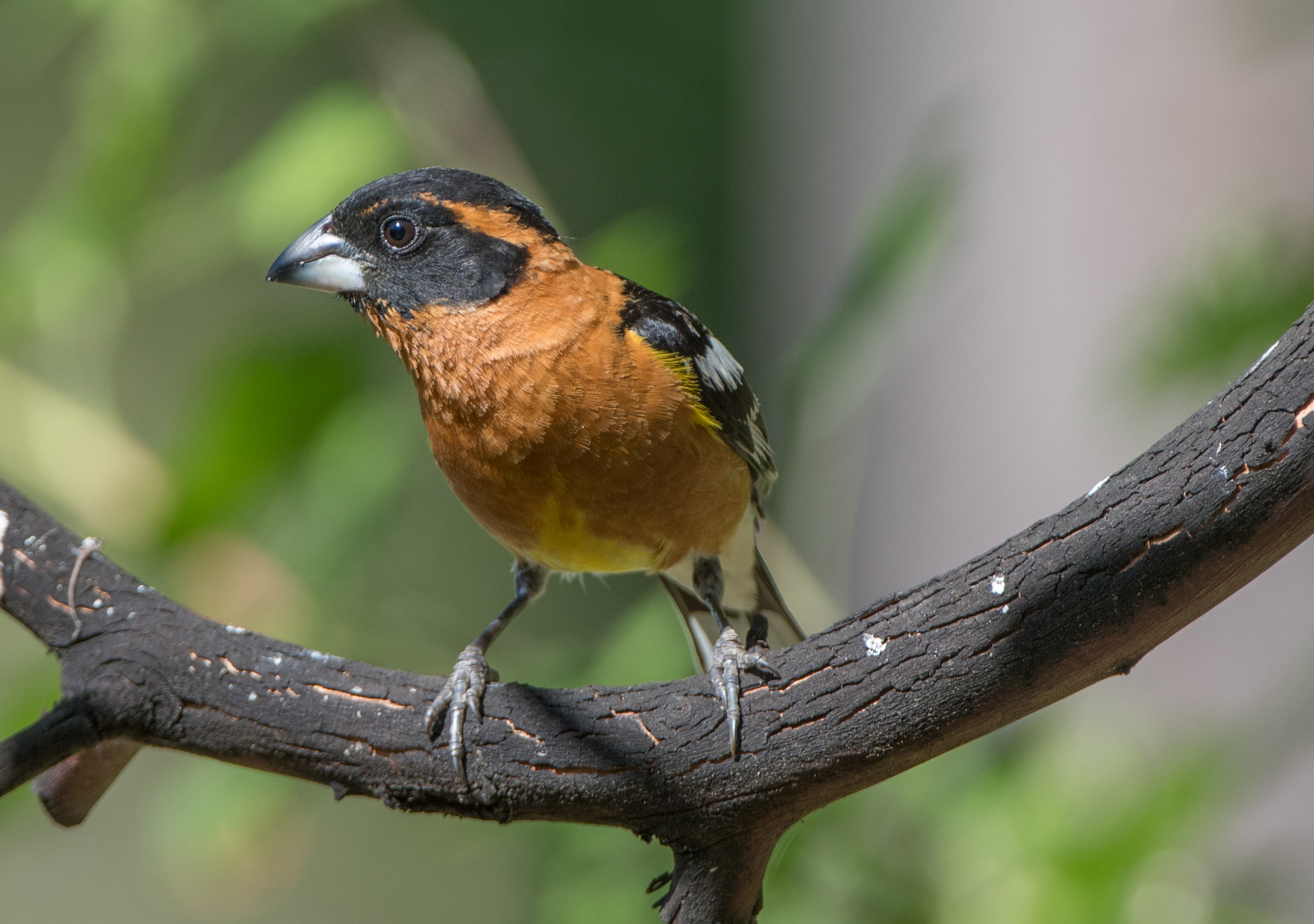
I’ve had some luck with finding one or two in the area of the Cap Sante wetland on occasion but on Saturday, January 6, 2018 I found the situation for which I had been hoping.  There were several thrushes around the wetland.  Most were sorting through the leaf litter but I think some may have been visiting holly trees in the area.  I found an accommodating male that allowed me to creep to within about eight feet of him and I took almost 100 photos, most of which had to be discarded due to his almost constant motion of turning over the leaf litter looking for bugs and worms.  (He appeared to be VERY successful!)

Both the Varied thrush and the American robin are members of the thrush family (“cousins”, so to speak).  For contrast, here is a robin that was in the same area…

Strangely enough, during episodes of heavy snowfall I have seen the thrushes eat seed off the ground whereas robins won’t touch it.

After I had almost exhausted my film supply  🙂  I drove down to the northwest corner of the Cap Sante marina where earlier in the morning I had seen three Pied-billed grebes, one more than I had ever seen there previously.  I took few photos of them before calling it a day for my photography.

And a little hint for my loyal readers…  this May (5, 10 &17) I will emerge from retirement and again teach a beginning birding course for the Anacortes Senior College.  Interested parties can begin signing up for the three-week course in February.  I’ll post additional details on this blog before the end of January.

Sunshine!

The sunny weather we had for several days in the latter part of the week (12/5-7) encouraged me to get out on the road and do some birding.

One or more Bewick’s wrens were working a brush line along a road and passed me several times over the three-day period.

Also working the same brush line, but farther off the ground were Ruby-crowned kinglets.  I believe that these birds are both females, but I also photographed a male.

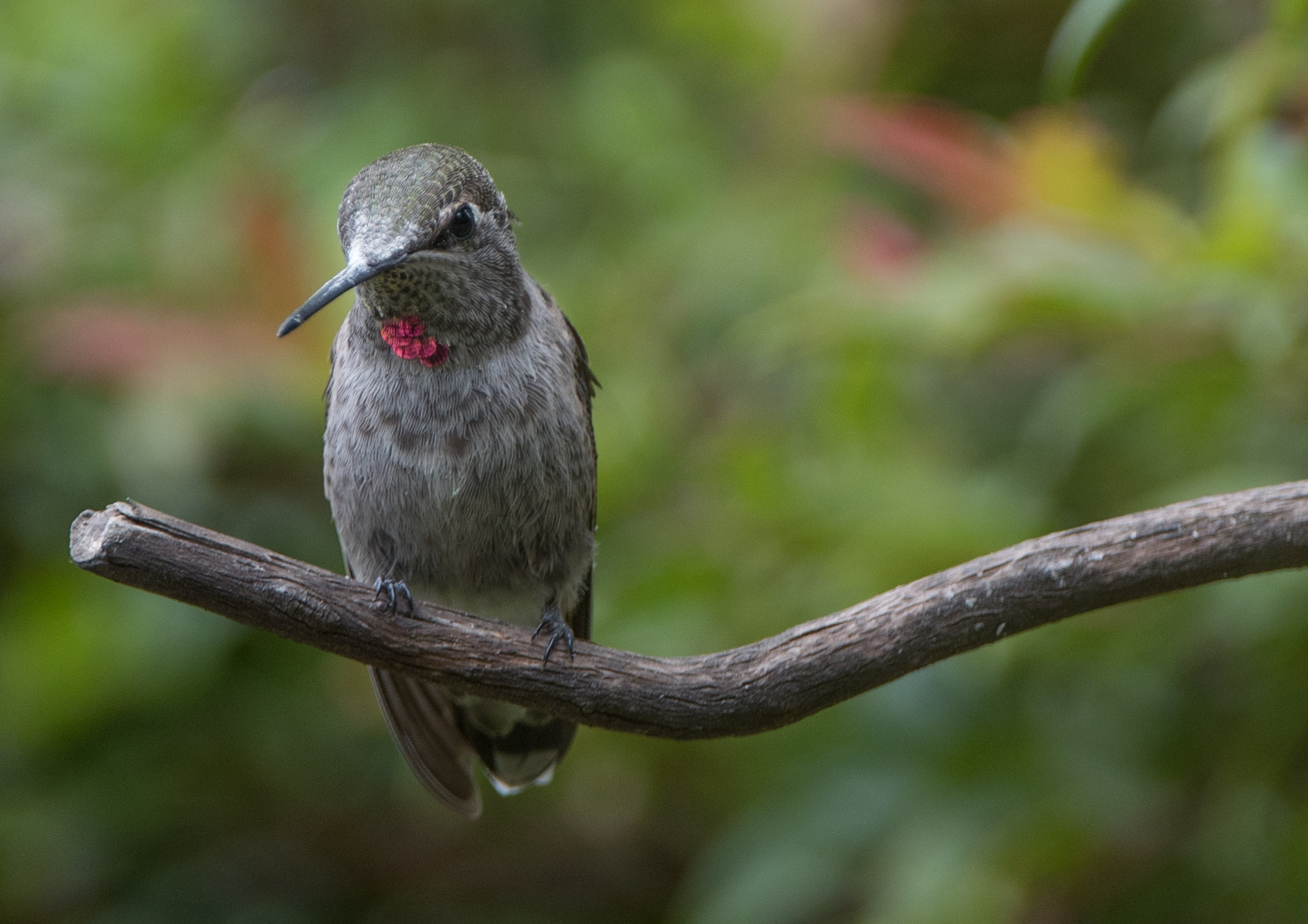
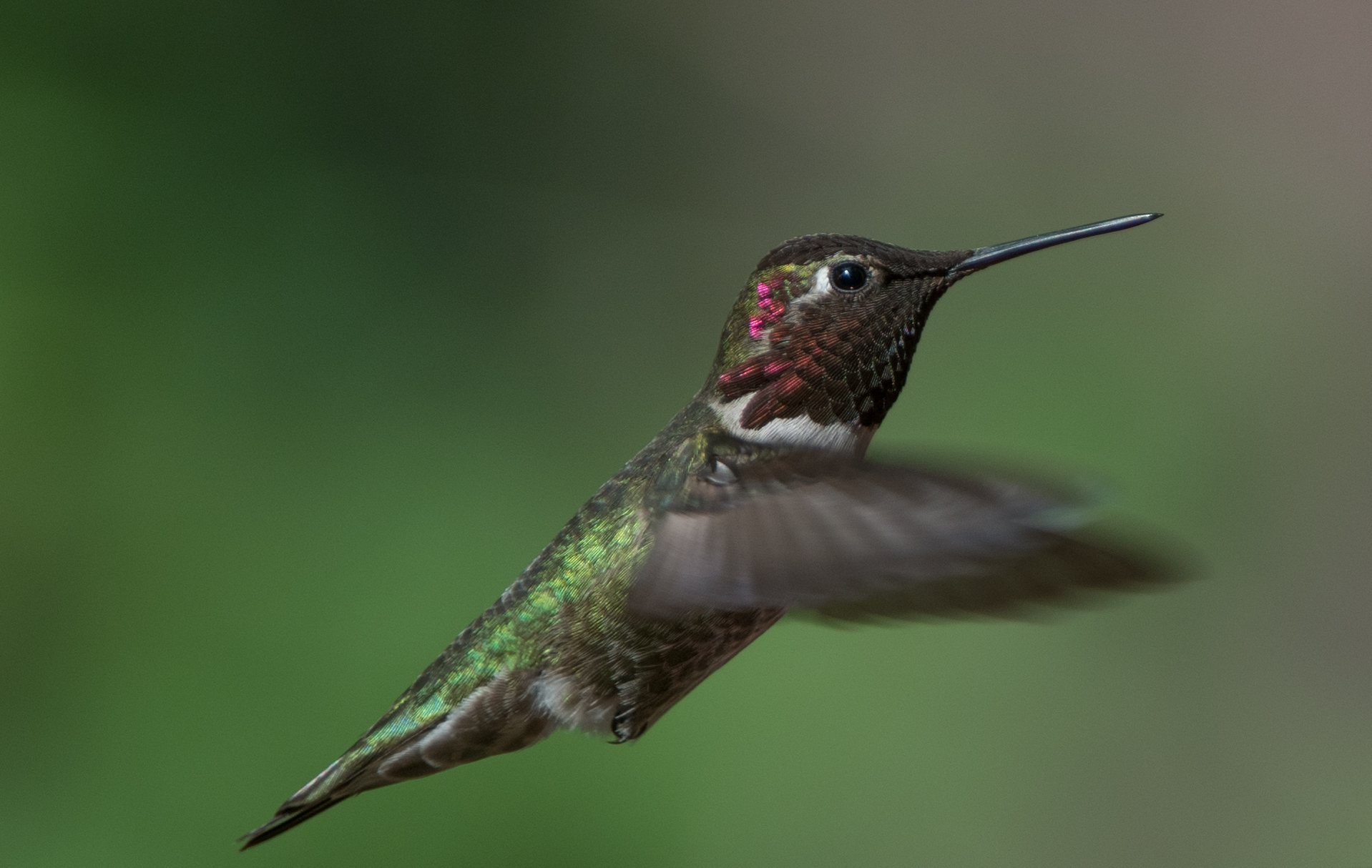
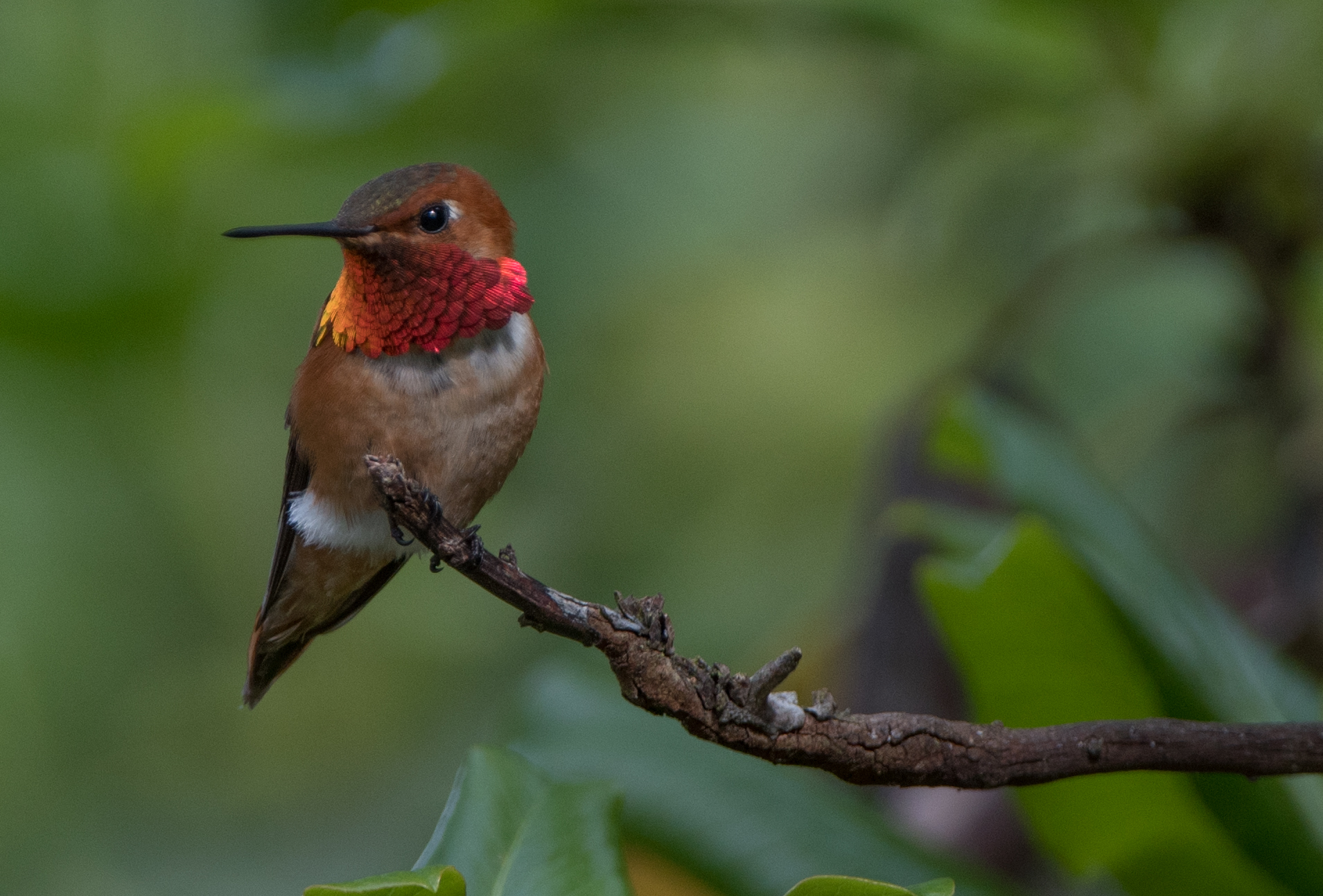
And now for an interesting observation.  A little further along the hedgerow was a large holly bush.  I saw some activity around it and spied a hummingbird sitting on one of its branches.  I began taking photos when my attention was drawn to other birds.  When I looked back at the original hummingbird I realized that there was another sitting within less than a foot of the first one!  I thought this unusual because this was in a relatively rural area and the birds usually aren’t that compatible.

I took more photos, looked away again and when I looked back there were THREE hummingbirds, all sitting within a foot of each other!  There was no fighting among them and they seemed content just to sit in the sun.  On two occasions I saw one fly at great speed towards some houses that were at least 150-yards away, and I guess it’s possible that they were accessing feeders at one of the houses.  My guess is that it was a family that was thus far sticking together into the winter.

As far as I could tell, all of the birds were females and I’m sure that they must be Anna’s hummingbirds who will overwinter here.  I had no way to tell the birds apart, and while I know I photographed all three, I don’t know whether all three are represented in these photos.

Geese

On November 6, 2017, I drove to the field directly to the west of the Burlington Honda dealership with the objective of photographing swans I had previously seen in the field.  Upon arriving I found the field full of Trumpeter swans and Snow geese and spent the better part of an hour photographing them flying in and landing.

I’m somewhat embarrassed to say that my concentration was so focussed on flying swans and geese that I had’t noticed that there were many Cackling geese feeding in the field… with more groups flying in.   I eventually estimated that there were at least 100 Cackling geese in the field.  Prior to this day I had only seen Cackling geese on one occasion, and in that case there was only a single pair!  If you’re not familiar with this bird, it looks very similar to the larger Canada goose but is only about the size of a duck.

I had time while monitoring arrivals to consult the app on my phone regarding the Cackling geese, and when doing so I noticed that there was an Aleutian goose, apparently a sub-species of the Canada goose.  I began looking through all of the geese and finally found a pair of the Aleutian geese.  (Note the white ring around the base of the bird’s neck.)

As I watched flock after flock of birds arrive at the field I noticed an incoming flock with a single bird that didn’t resemble the rest of the flock.  The distance to the odd bird was formidable (I estimated it at more than 150 yards) but took a photo in the hopes that I might be able to identify the bird.  When I processed the photo I was surprised at its quality considering my distance from my subject, and the bird is easily identifiable as a Greater White-fronted goose.

I had been sitting in my car at the edge of the field for well over an hour and my attention was finally drawn to what appeared to be a large clod of dirt about 30 feet away in the recently-plowed field.  I trained my lens on the object and found that it was a motionless Wilson’s snipe which I was able to watch for the rest of the time I was there, about 30 minutes.  Again, I think all of the other activity in and over the field allowed the snipe to go undetected.


I’m Back!

I’m still trying to recover/hone my typing abilities after the three surgeries (elbow, wrist and finger/palm) I had on October 5.  My pre-surgery typing has definitely improved but I’m still having difficulties with the right side of the keyboard.  Thank so many of you for your encouragement and inquiries as to when I would resume blogging.

I’ve managed several birding trips in the car over the past couple of weeks (my usual winter birding activity) and now have a couple of periods in the yard as supplements.  I’ve got enough photos/stories for a couple of blogs, but ‘lm going to publish them in reverse chronological order.  So first these photos I took in the yard on November 11, 2017.

It was a dark and dreary day…  : )  … and much cooler than my healing finger would have liked, but the presence of Varied thrushes in the area around the house induced me to stay outside longer than I would have liked.

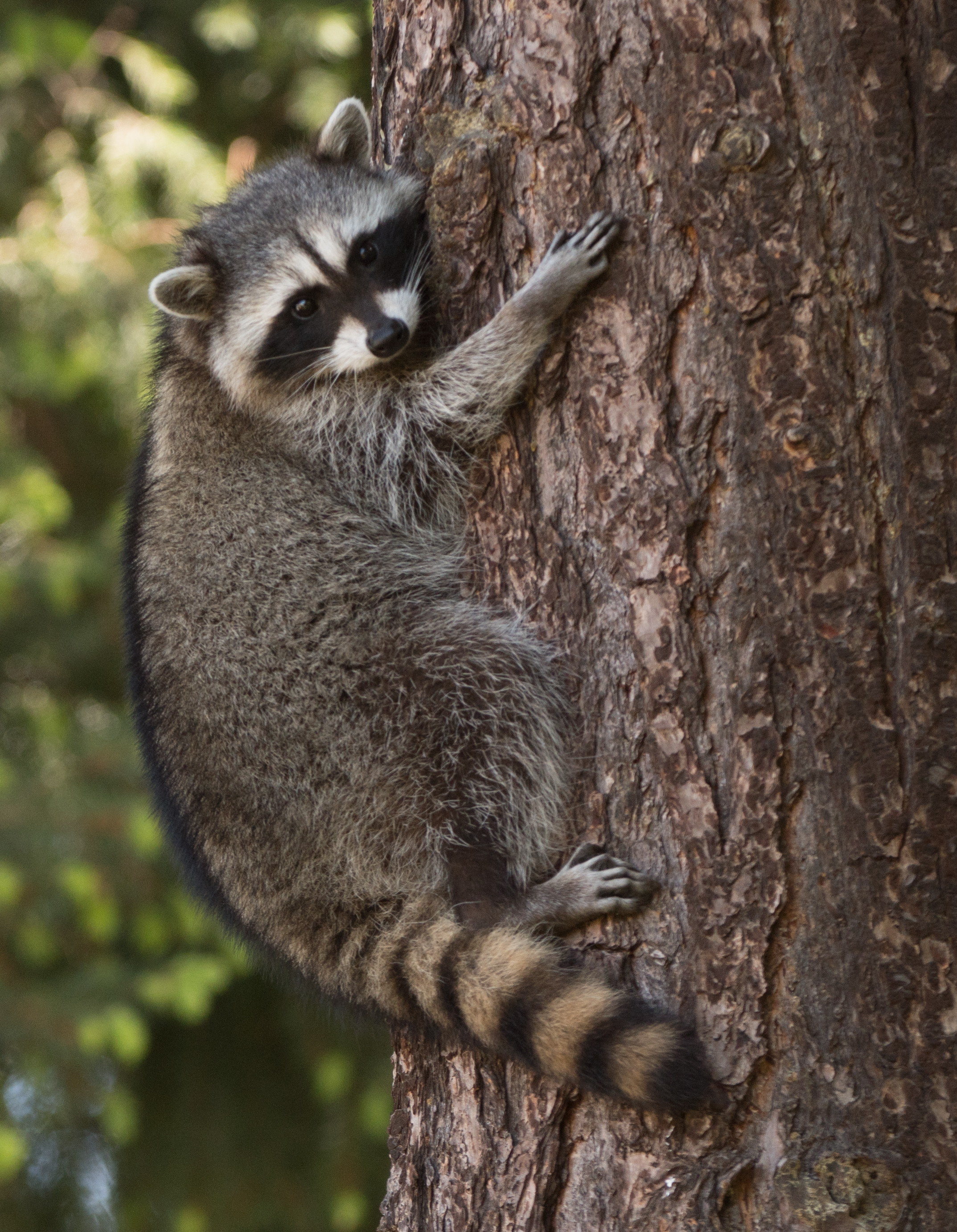
Beginning with the mundane, we have four of these Eastern Gray squirrels in the yard of which I would love to divest ourselves!  This one is taking a rest after gobbling some of the bird seed I scatter for the sparrows.

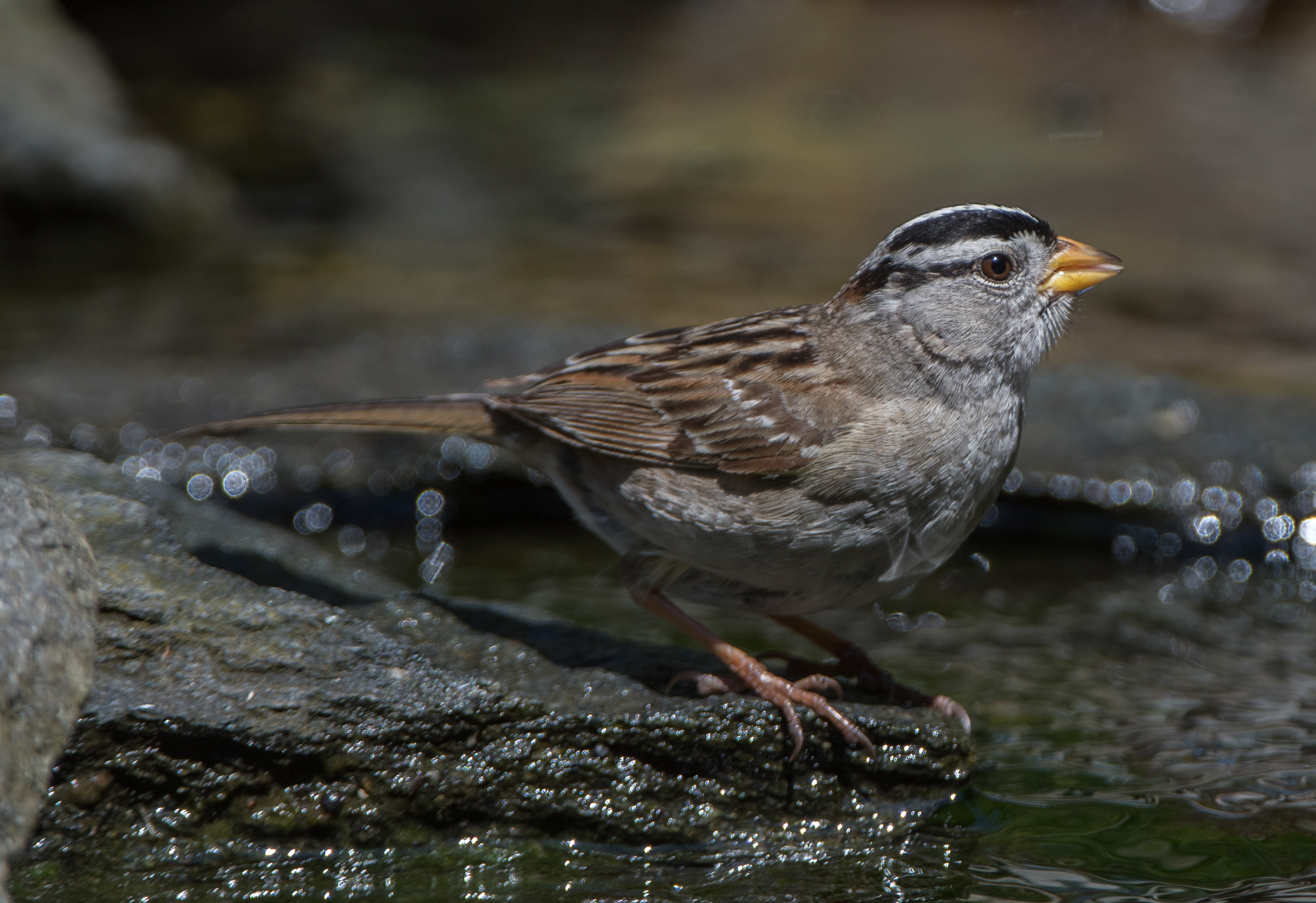
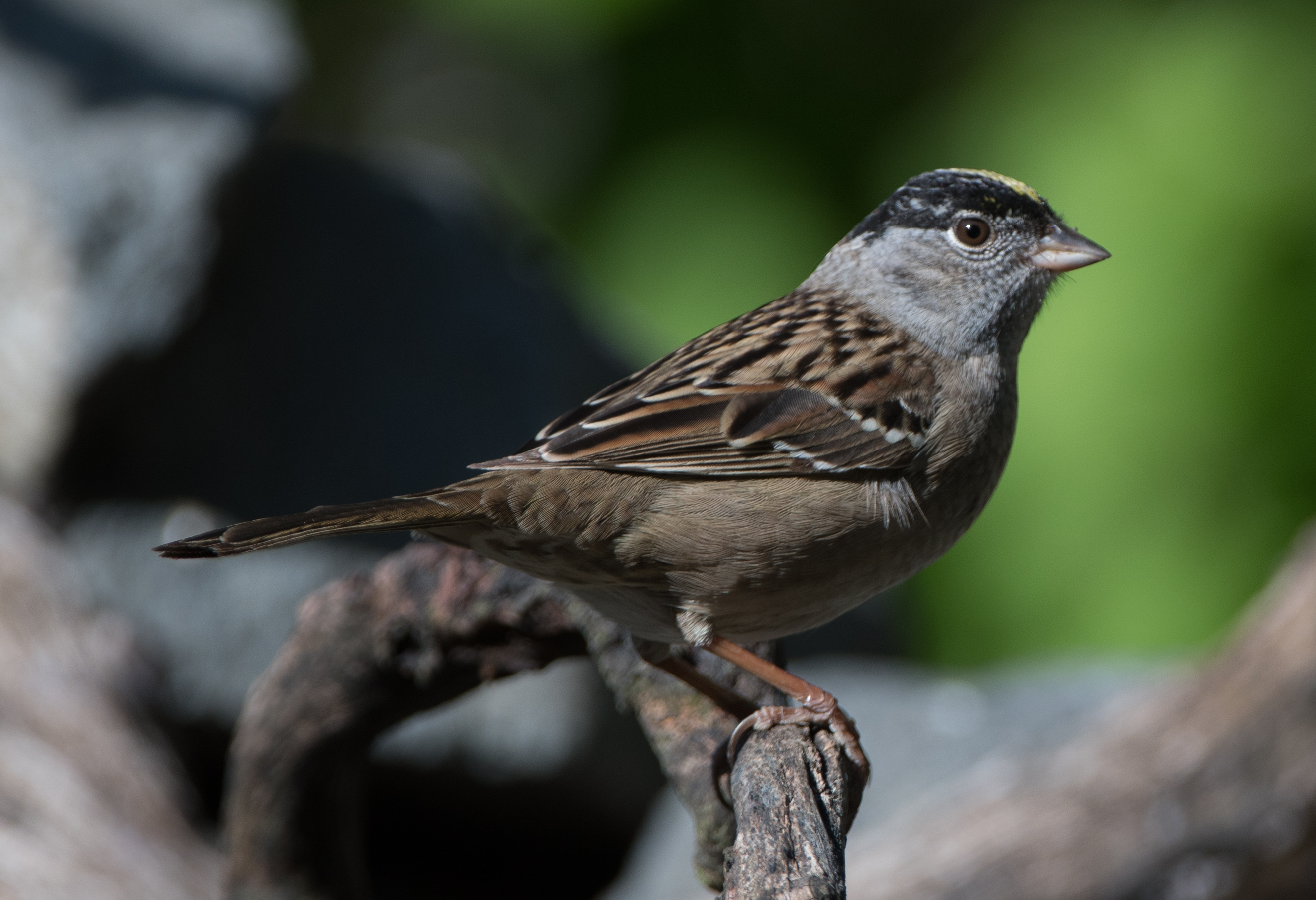
A Golden-crowned sparrow (probably a male)…

And another Golden-crowned sparrow taking a bath in the watercourse…

One of the Song sparrows we have in the yard.  It took me a while before I was really confident of my identification between it…

… and the Fox sparrows

The sparrows are the birds that provide a little something to do while waiting for the more unusual visitors… like this juvenile Cedar waxwing, the first waxwing of which I’m aware that has visited  the yard in about a year. I think this is the first juvenile I’ve ever seen and it is quite a shock comparing it to an adult which always has perfect plumage.

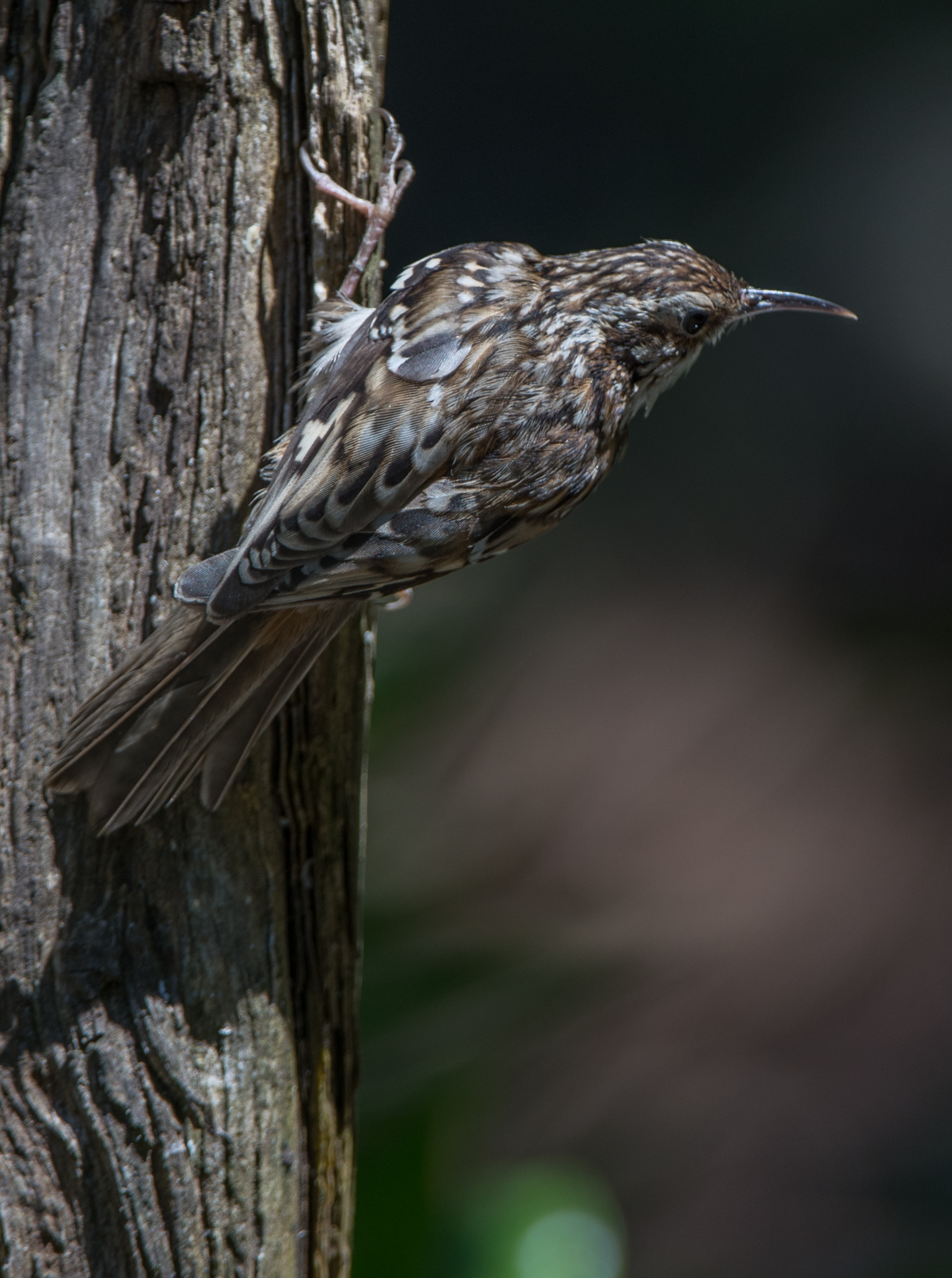
We got an unexpected visit from a Brown creeper, which I’ve said on many occasions is difficult to photograph even when you can find one.

And finally, the bird that motivated my hunt… a Varied thrush, presumably a female.  We had three males in the yard earlier in the week and another male on this day, but I wasn’t able to photograph any of the males.

ln closing I want to note that we have had at least one (and usually only one) Slate-colored Dark-eyed junco in the yard every winter for the past eleven years.  Yesterday I saw a second one, although I never see two at the same time!  Our original visitor this year had a very dark (black) mantle while the one I observed yesterday had a mantle the same color as the bird’s neck and back.