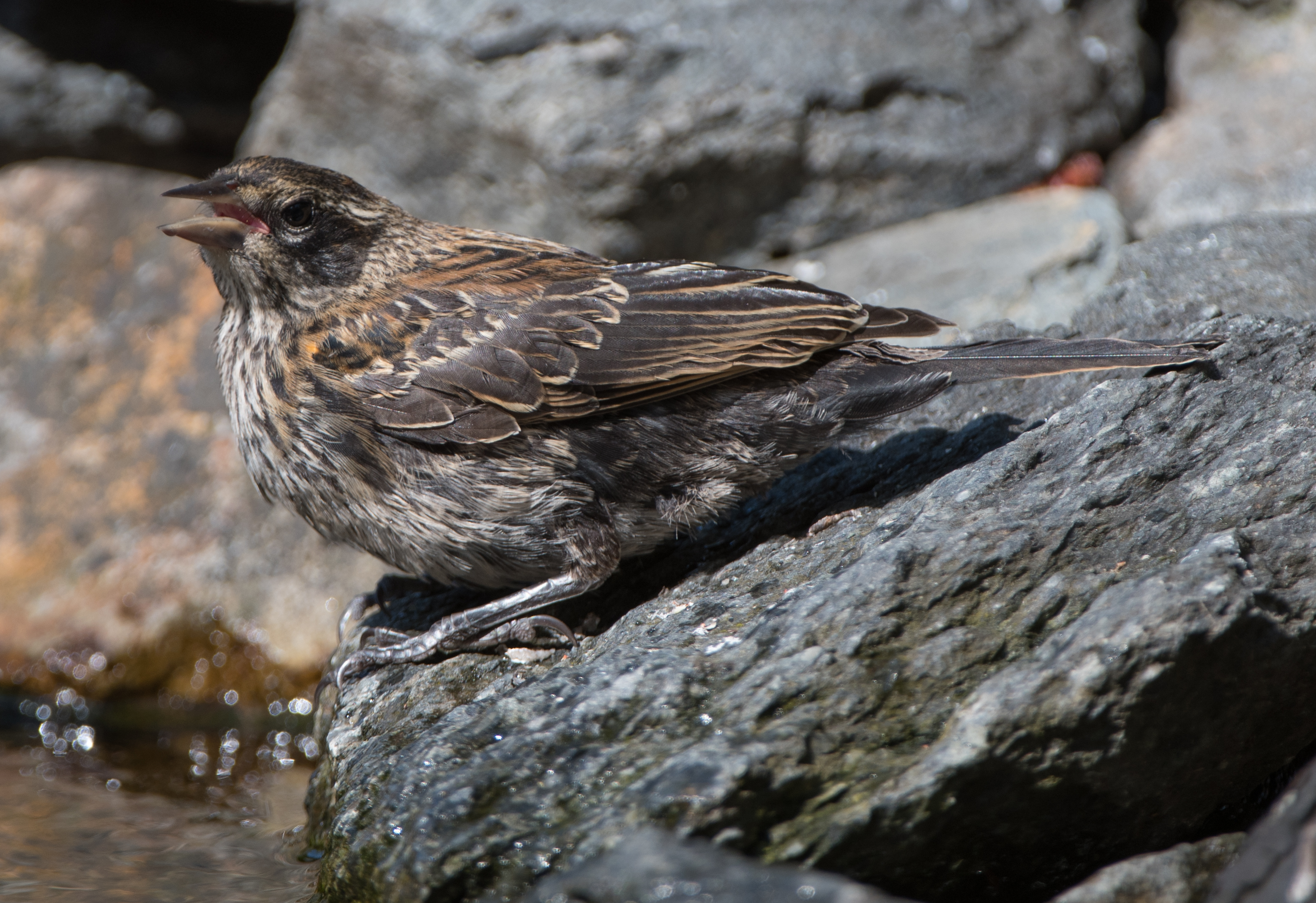
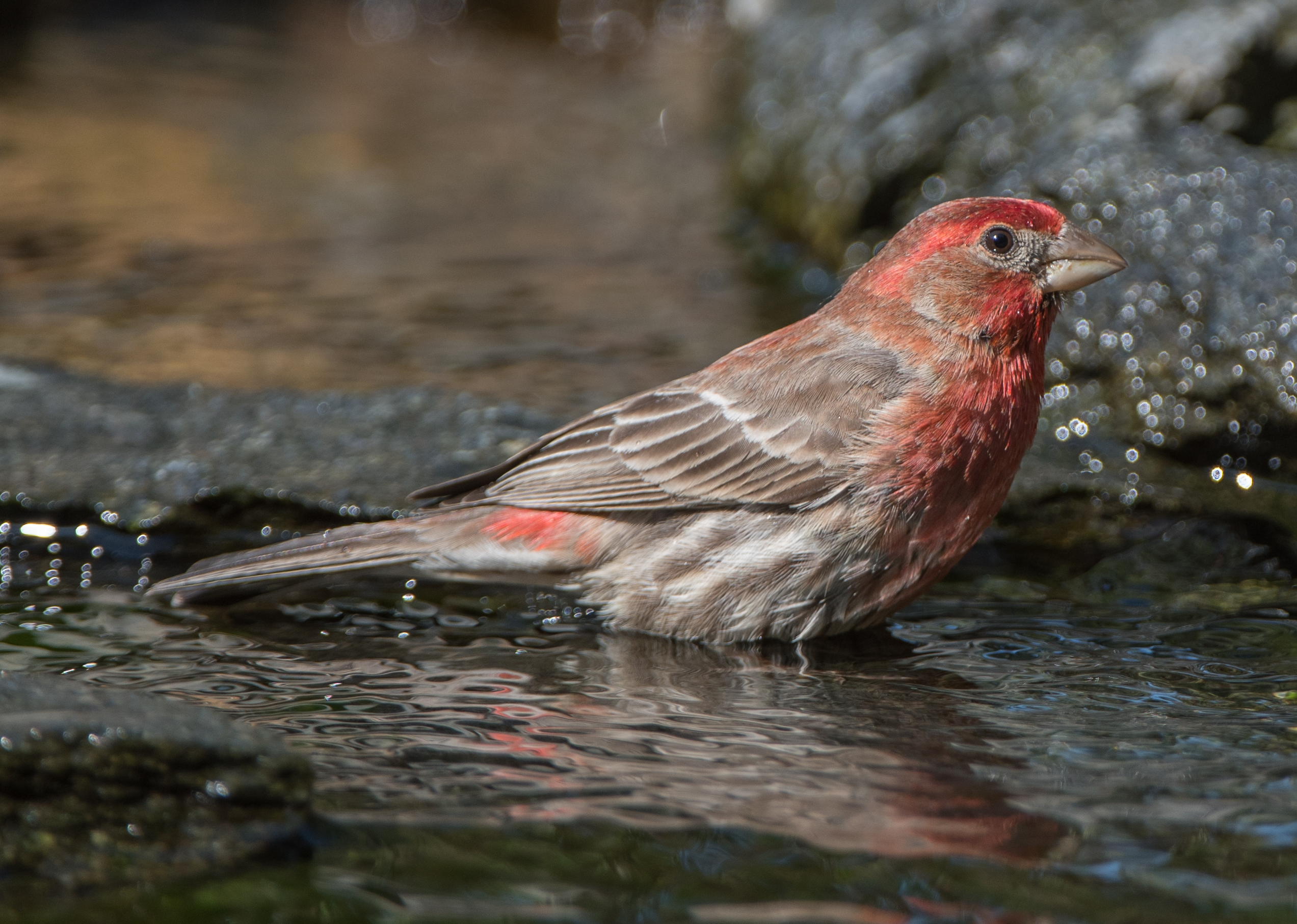
Waiting for More Migrants

We had another migrant first arrival on Saturday, March 31.  I saw the first Turkey vulture soar over our house.  It’s a bird with which we are very familiar due to our Texas connections.

We also had a visit today (April 1) from an accipiter, but I didn’t get a long enough view to ascertain if it was the same Cooper’s hawk that I photographed in the yard last September and published on my blog.

Meanwhile I’ve got a few more photos of yard visitors, taken within the past day or two.

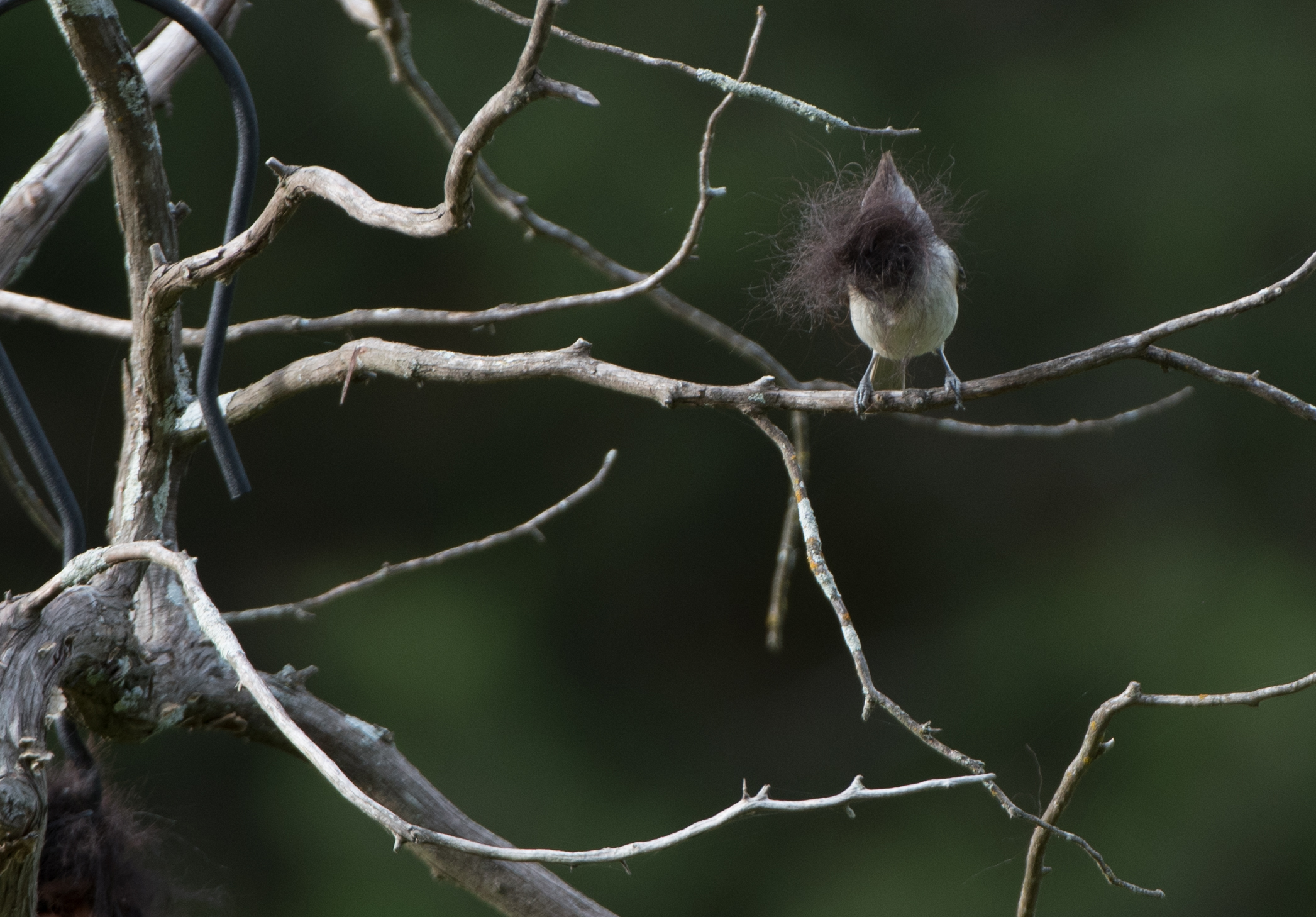
I mentioned in the last blog or two that I had had trouble photographing a female Bushtit in the yard this spring, but I finally photographed one across the yard. Note the yellow eye which identifies the bird as a female.

At least one male Varied thrush is still visiting the yard and eating hulled sunflower seed that I scatter on the ground a couple of times a day.  I’m still trying to figure out why these thrushes eat seed!  I expect that the thrush will be heading to the mountains for breeding season any day now, but maybe they sense that there’s been a late snow and are waiting for a better food supply.

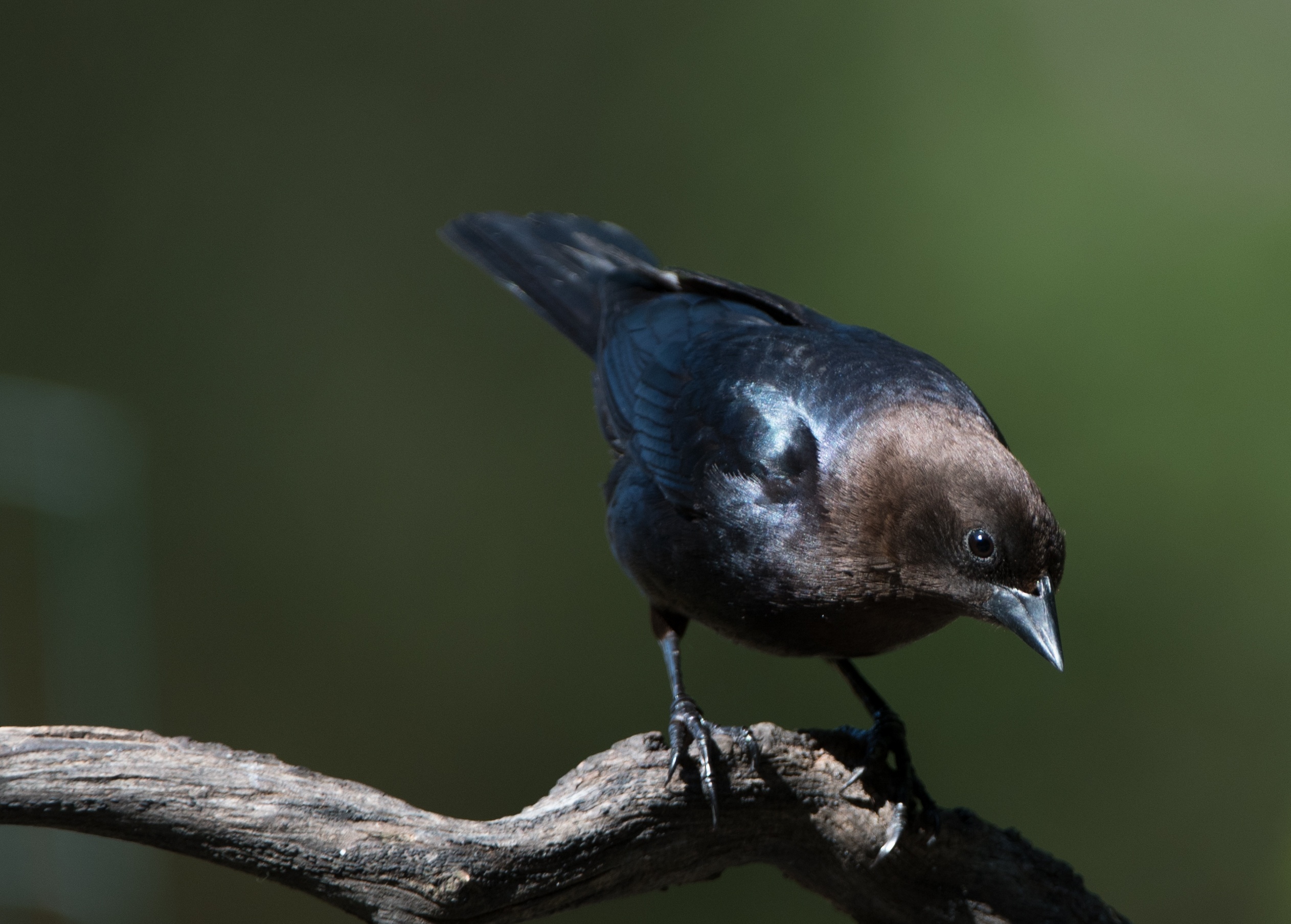
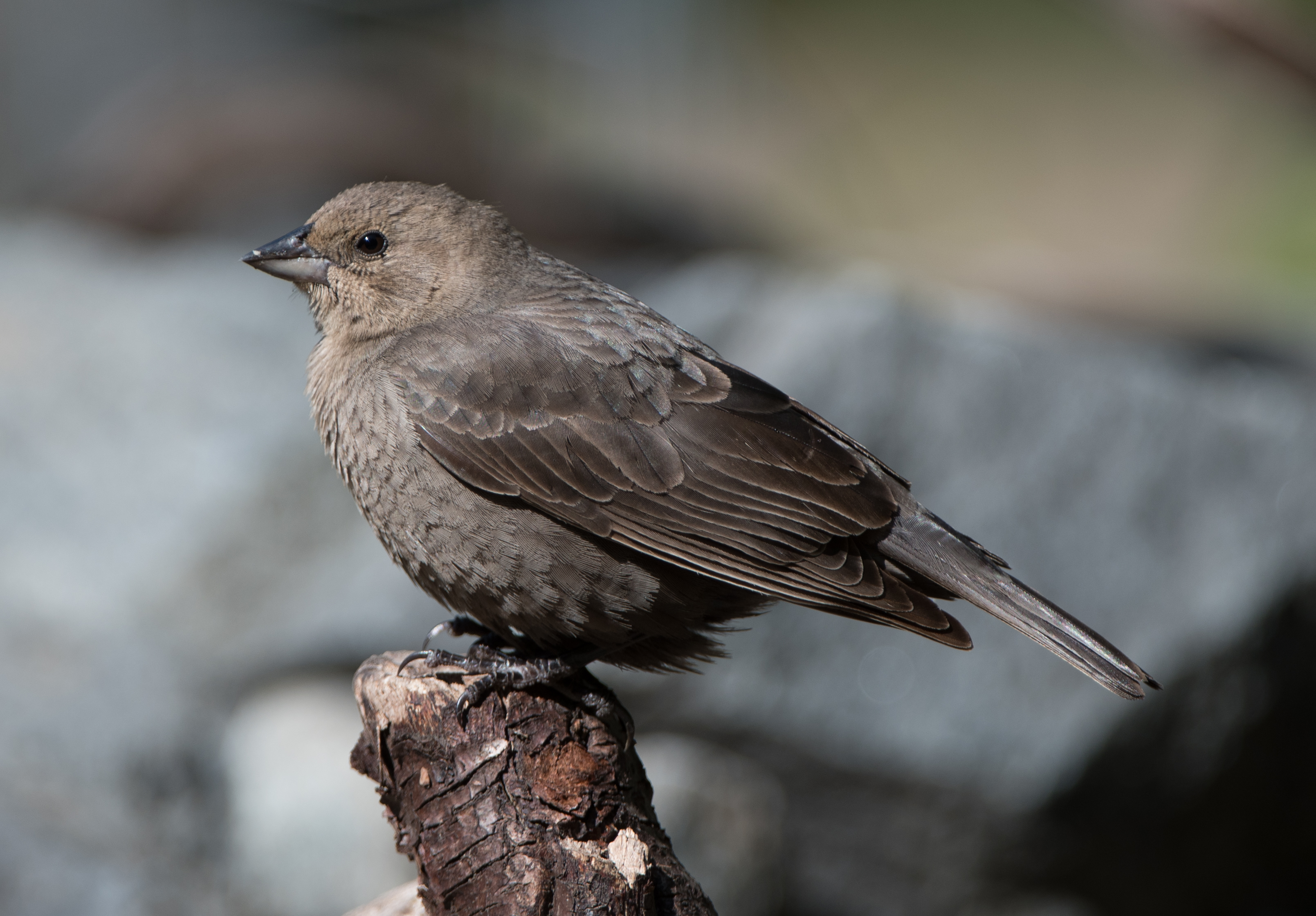
This is the single, prominent White-crowned sparrow that we’ve had in the yard for the past couple of weeks, and that I was having a difficult time photographing.  Last season we had a mating pair but if I’m not mistaken they only fledged a Brown-headed cowbird.

We still have over a half dozen Golden-crowned sparrows that have wintered over and haven’t left for their summer breeding grounds further north.  I’m fairly certain that it’s the most we’ve ever had.  The birds are beginning to morph into their breeding plumage and I’m showing you this photo to illustrate how pitiful they now look.  This one is apparently a male as you can see the beginning of a bright golden crown and the black lines on either side of the crown.  Just about the time they get their full breeding plumage they disappear for the summer and early fall, returning in late fall for the winter.

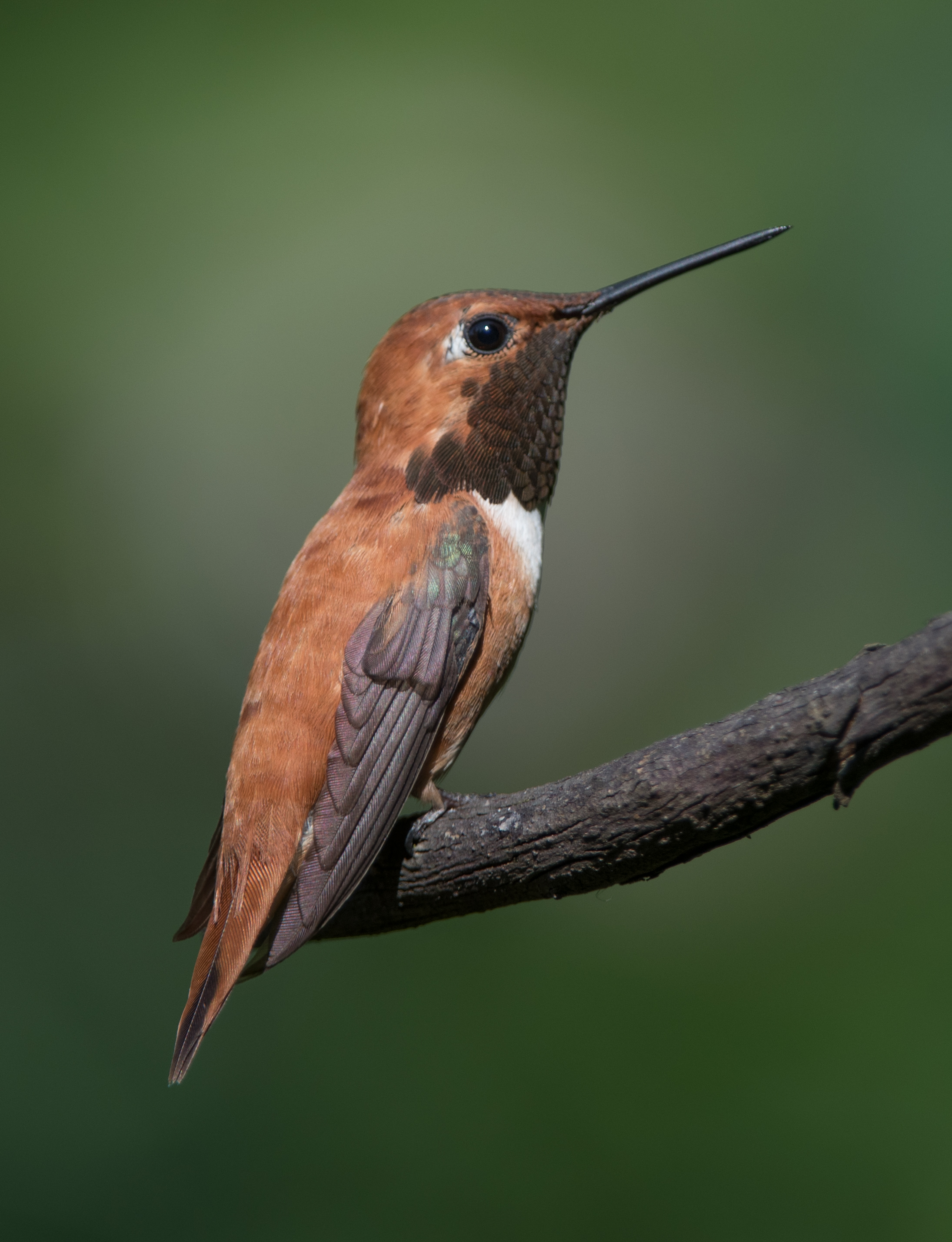
And finally a bit of serendipity.  I was photographing a lily in the yard when it had a quick visit from a male Rufous hummingbird.  At my lens’ magnification, only a short distance is in sharp focus.  Unless the bird is photographed broadside, usually some part of the bird is out of focus.  So even though this hummingbird was only a few inches from the lily, both couldn’t be in focus.  Since I was actually photographing the lily, the image of the hummingbird is what suffered.  But I thought it an interesting photo!

Spring!

It seems like a relatively rare occasion here in the Pacific Northwest when the weather actually agrees with the calendar with regard to spring.  We’ve had a few nice spring-like days lately and they’ve generated some bird sightings.  But first…

On Monday, March 19, I received my Nikon 200-400mm lens back from the Nikon repair facility in Los Angeles.  I had been prepared for a large repair bill akin to the one I had to pay two years ago, but in this case Nikon came through and repaired the lens for free.  I had been apprehensive that I would see some unusual bird during the len’s absence but such was not the case.  So now my photography is back in action!

On March 17, we saw our first Rufous hummingbird (a male) in the yard.  I checked prior records and found that this arrival was relatively late compared to prior years.

On March 18 we spotted our first American goldfinch (a male) at one of our feeders.  While some of these birds overwinter here they usually are not in our yard during the winter season.

On March 19 our first female Rufous hummingbird showed up in the yard and I managed to get a photo of the actual bird.  The bird disappeared and wasn’t seen the next day, but by March 21 it (or a relative) was back and seemed to be settling into the yard.  (This is the actual sighting of the first female Rufous hummingbird in the yard, which happened to arrive while I was monitoring the yard with my newly-repaired lens!)

We’ve had at least 2-3 Anna’s hummingbirds spend the winter with us, including at least one female.  This male is accessing the water feature.

Also on March 21 we had a White-crowned sparrow show up in the yard.  We had one that lingered into the fall but it was gone 2-3 months ago.  Some are in the area year-round but they don’t overwinter in our yard.

The flocks of Bushtits that have frequented the yard have now broken up into breeding pairs, and at least one pair is returning to our suet feeder rather frequently.  (This is the male… the female has proven much more difficult to photograph.)

We’ve had at least three Varied thrushes in the yard at one time, but the much more common occurrence is a single male.  The thrushes will be headed back up into the Cascades for breeding season soon but as of March 22 we still have two males visiting the yard.

We’ve had 5-6 Golden-crowned sparrows spend the winter in the yard.  They are slowly beginning to develop their breeding plumage and will be leaving in the next few weeks for breeding grounds farther north.  It seems like the males wait until their plumage peaks and then they abruptly migrate, robbing us of longer views of their golden crown.

While enjoying our pre-rain sunny day on March 21 a Brown creeper entered the yard and attempted to access one of the bird baths.  Unfortunately the bird bath was in use by a couple of larger birds and the creeper’s timidity kept it from the bath.

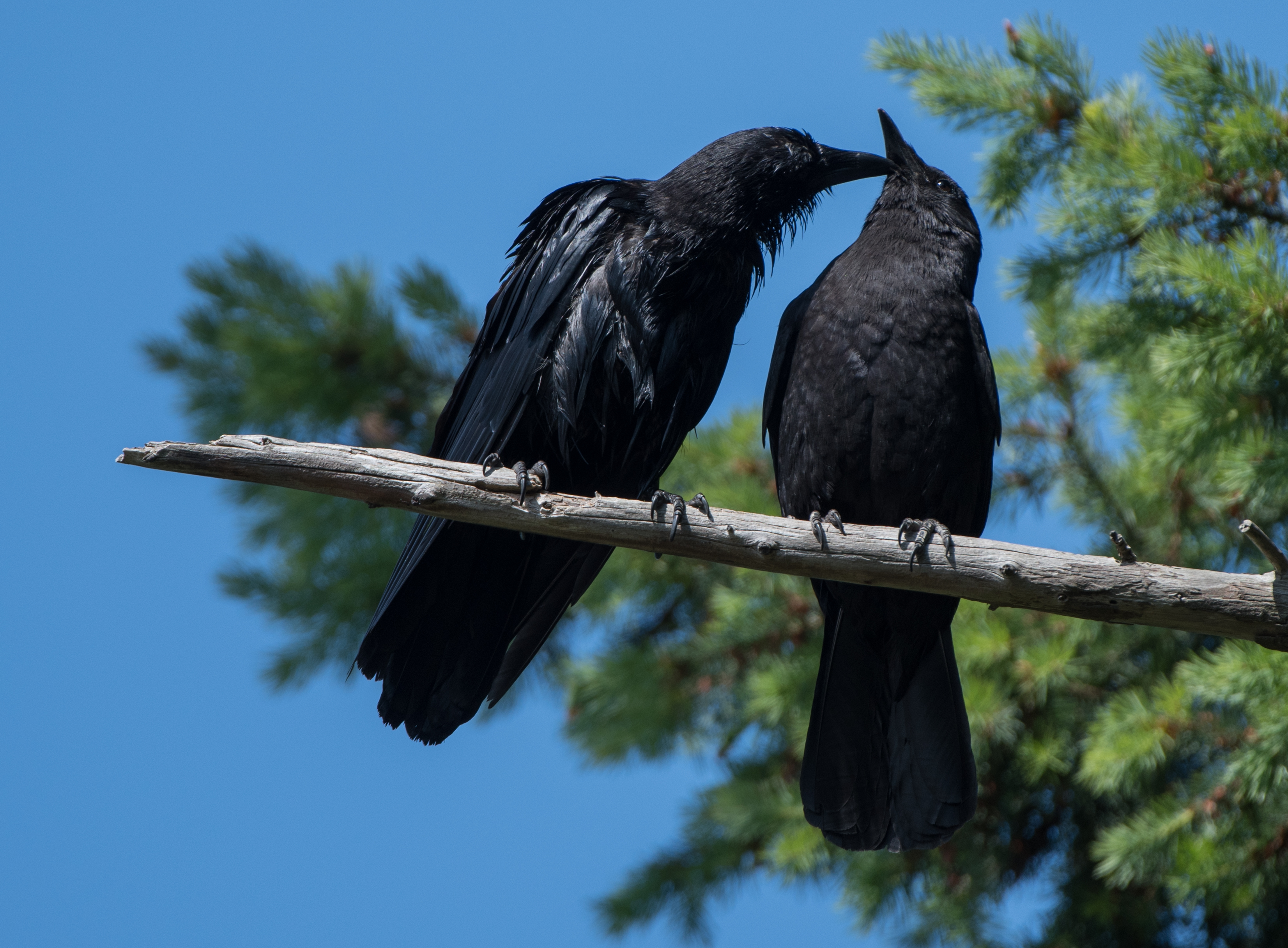
On March 20 I observed two different crows, one in the yard and another in the marina area, transporting nesting materials.  The crows, too, have begun to pair up for the mating season and a couple have staked a claim to our yard.  They are probably influenced by the peanuts I feed them.  I’ve noted in prior years that the crows eschew picking up sticks from the ground and instead prefer to wrestle dead twigs from the canopy.

(Almost) No Photos Post

As of late I have more news than photos, but the individual who considers himself my editor is griping about the lack of posts.  So here’s a post with the news…

I shipped my precious primary lens to Nikon’s repair facility in Los Angeles almost two weeks ago, dreading the repair charge I was assessed two years ago.  (I won’t say what the previous lens repairs cost, but a lot of people have cameras that don’t cost as much!)  Nikon was very prompt in telling me that the repairs would be covered under warranty (which had long ago expired), a fact I appreciated and decided not to argue!  Nikon still has the lens and its status is currently listed as a “parts hold”.

So I haven’t taken any photos since at least early February.  There are no new photos to post, but to appease those of you who access this site for photos I’ll post one of a male Mountain bluebird I took outside Winthrop last summer.  (There is a more dramatic canvass print of this bird displayed in Mary Ann’s Kitchen in Anacortes.)

I was just thinking that we would make it through this season without a significant snow when at least those of us living on the east side of Anacortes managed two.  Our second, on, February 24, was very wet and didn’t last long due to higher temps, but nevertheless was significant.  Both of my observations I’m relating here occurred on that day.

The first observation occurred in my yard during the heaviest part of the snow.  A Ruby-crowned kinglet, a species in unusually short supply at my house this season, and a Bewick’s wren took turns accessing my hanging, inverted suet feeder.  These are both birds that aren’t usually found at suet feeders, but I have had other occurrences of each at the suet feeder this season.

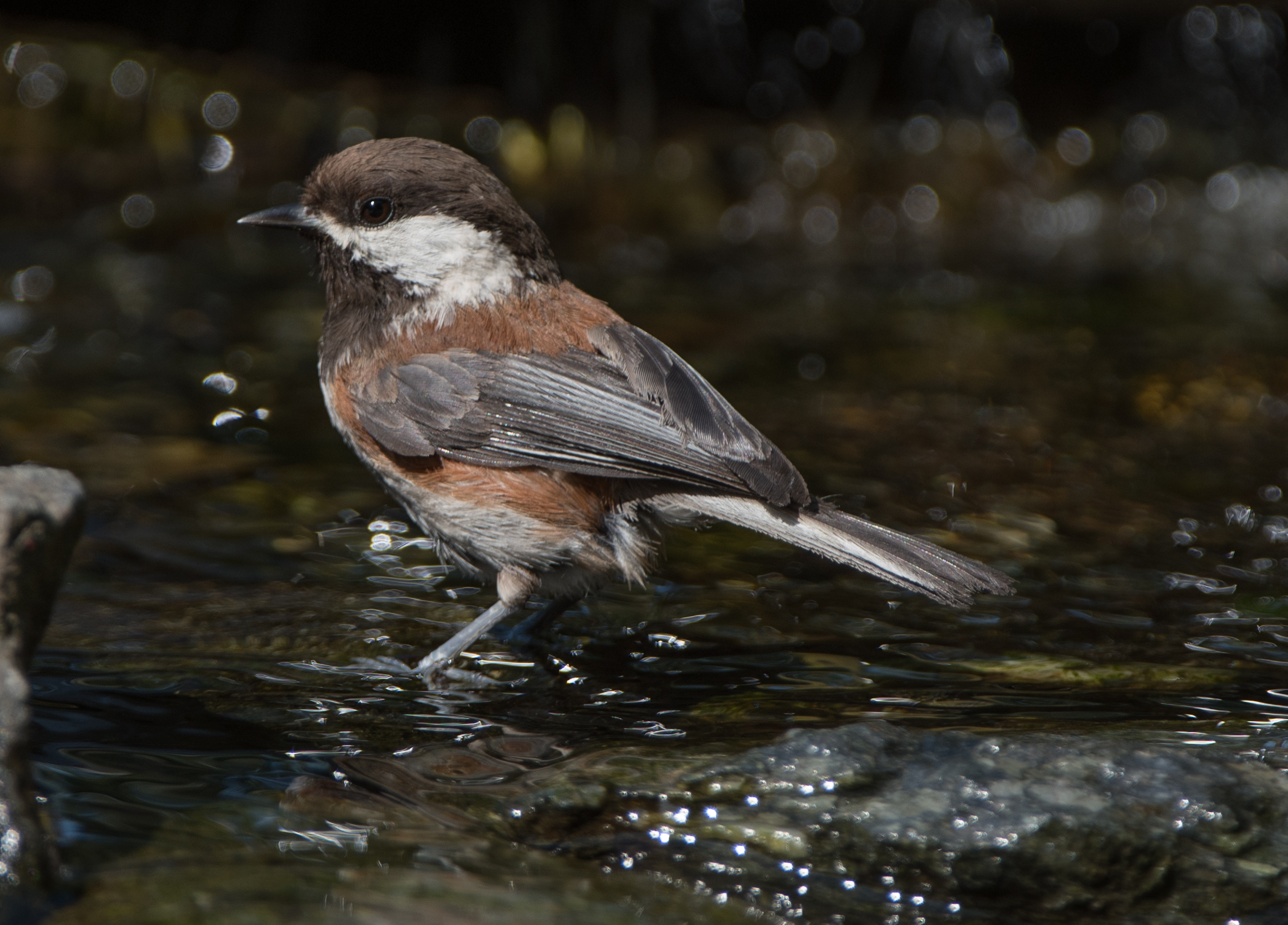
The temperature never dipped below freezing for this second snow but the sheer volume of snow covered the ground for an hour or so.  After most of the snow melted I headed out to make up for some of the walks I missed earlier in the week due to weather.  For about the past year or so I’ve been able to hand-feed Chestnut-backed chickadees and an occasional Red-breasted nuthatch along my route.  (I take great pride in feeding no-waste seed and am NOT responsible for the peanuts, corn, milo and millet that other well-meaning nature lovers leave.)  I’ve noticed several species of sparrows that seem interested in obtaining food from my hand, but until yesterday none could work up the courage to doing so.

Yesterday (2/24/2018) I noticed a Song sparrow approaching unusually close, and it finally took the plunge and hopped onto my hand!  Unlike the other birds which always take a single seed and fly away with it, the sparrow stayed for several “beak-fulls” before retreating back into the bushes.  Although I stayed quite a while longer, it never returned for more seed.

I figured this might be a unique occurrence, but when I returned for another walk the next day the Song sparrow made another trip to my hand.  After it finished I noticed another that seemed interested and extended my hand to within about three inches of the bird before it thought better of the risk and retreated into the bushes.

Rain, Rain and More Rain!

I haven’t been able to get out for photography much lately to to the heavy overcast and rain.  However I did manage an outing on 1/30/2018 and managed to get some photos.

This first photo is of a Black-capped chickadee taken at a favorite stop on Pleasant Ridge.  I’ve photographed many birds at this location previously but never gotten one to pose among the rose hips.

Just outside the entrance to the Wiley Slough F&W HQ tract I found about 8-10 Western meadowlarks, birds I see only rarely in Skagit County and almost always at a distance that precludes good photos.  In this case one of the meadowlarks flew to the near side of a deciduous tree and posed for a few photos.

On my way across Fir Island I encountered three pre-adult Bald eagles.  One was walking about 20′ behind two adult swans who weren’t that happy with the slow motion scenario! It finally flew and I took this photo of one of its companions.

Later, on my return home, I encountered a male Bufflehead that was intent on working the shoreline.  I’ve gotten lots of photos of female Buffleheads but rarely good photos of a male.  While this bird at first glance appears black and white, if you look closely in the right light you can see that the bird’s head is actually a dark green.

On a sad note, my Nikon 200-400mm F4.0 has been making odd noises when focusing.  I just had it repaired a couple of years ago at an exorbitant cost.  However I’ve decided to send it in again before the spring migration arrives and I miss some good photos of the spring migrants.

Retraction Concerning Winter Visitors

In my most recent post (from early this, 1/20) morning I complained about the dearth of winter visitors. This afternoon my wife alerted me to the presence of a male Varied thrush in our watercourse.  I grabbed my camera and tried a different strategy… sneaking out the front door where I was hidden by a wall and a large pot of bamboo.  The technique worked and I was able to set up without the thrush seeing me.

What’s that clicking sound???

I was careful, and lucky… the thrush puttered around the watercourse and yard for 10-15 minutes.  I managed a LOT of photos, not wanting this opportunity to get away from me.

As soon as the thrush left the yard a Golden-crowned kinglet, a species that has been conspicuously absent from the yard this winter, flew into the watercourse but failed to present an opportunity for me to photograph it.

Since I had a good blind location and there were numerous birds in the yard, I remained in my location for awhile.

We had at least seven Golden-crowned sparrows in the yard…

There were at least three Spotted towhees in the yard, this one eating blossoms, buds or fruit off of an Evergreen huckleberry…

This Song sparrow took break from feeding in the yard to visit the watercourse…

A male Anna’s hummingbird took a break from guarding feeders for a brief bath in the watercourse.  I briefly had an opportunity for a photo of it hovering above the watercourse but I wasn’t fast enough to take advantage of the situation.

Finally (by this time I was getting cold!) I noted a Brown creeper visiting our stone birdbath across the yard.  This is a fairly rare visitor to our yard.  In this case I was lucky in that I was in position with my camera ready when I saw it.  It was driven off by another bird but not before I documented its visit.