March Point to Fir Island… a Frequent Route

I managed to get out for another day of photography on the last day of January.  Early appearances were that the clouds which had dogged us for several days were being nudged along by a north wind, so although it seemed a little cooler than usual due to the wind at least the rain would be gone.  The clouds did dissipate, but not to the extent that we had any direct sun.  This would be, as opposed to my previous post, a day of numerous accomplishments but with smaller birds.

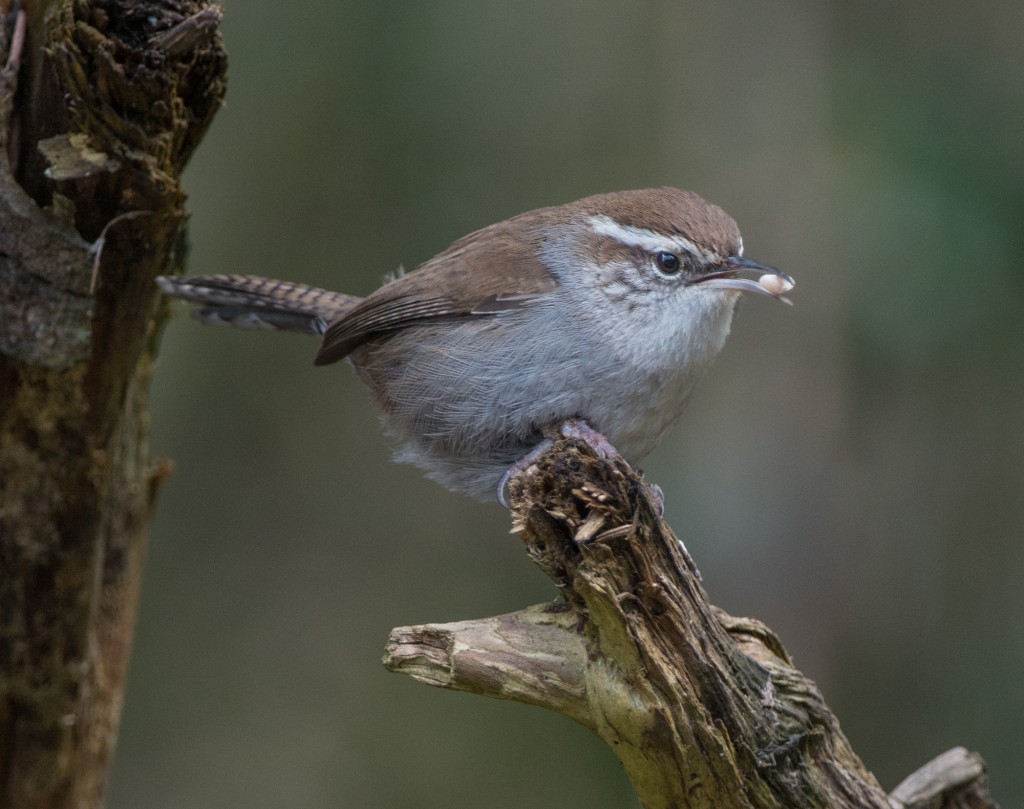
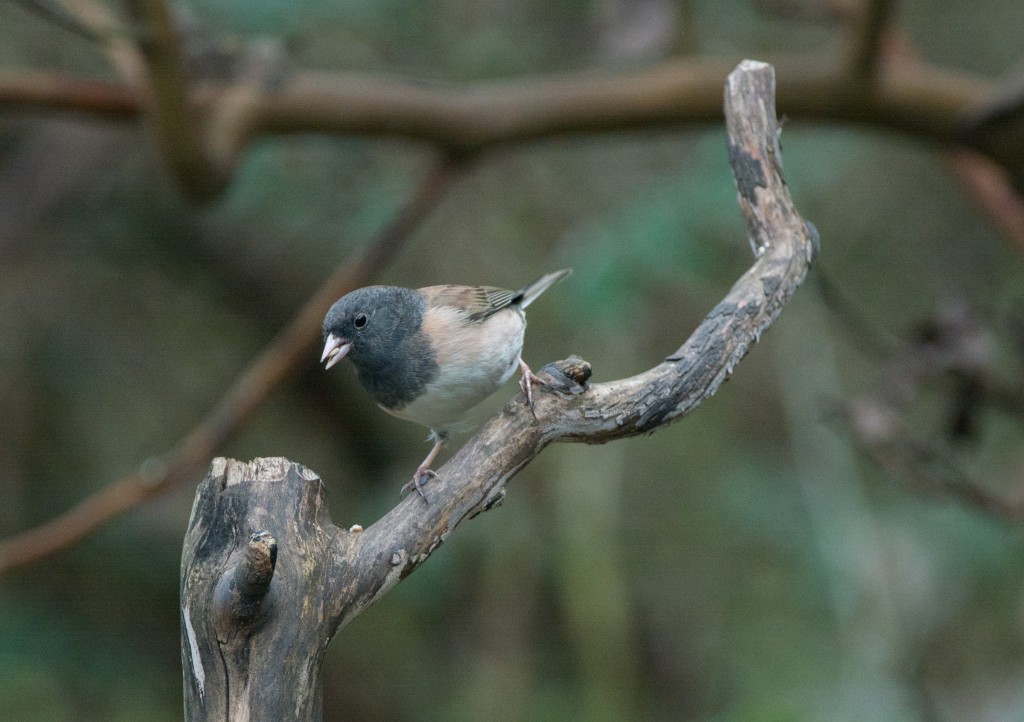
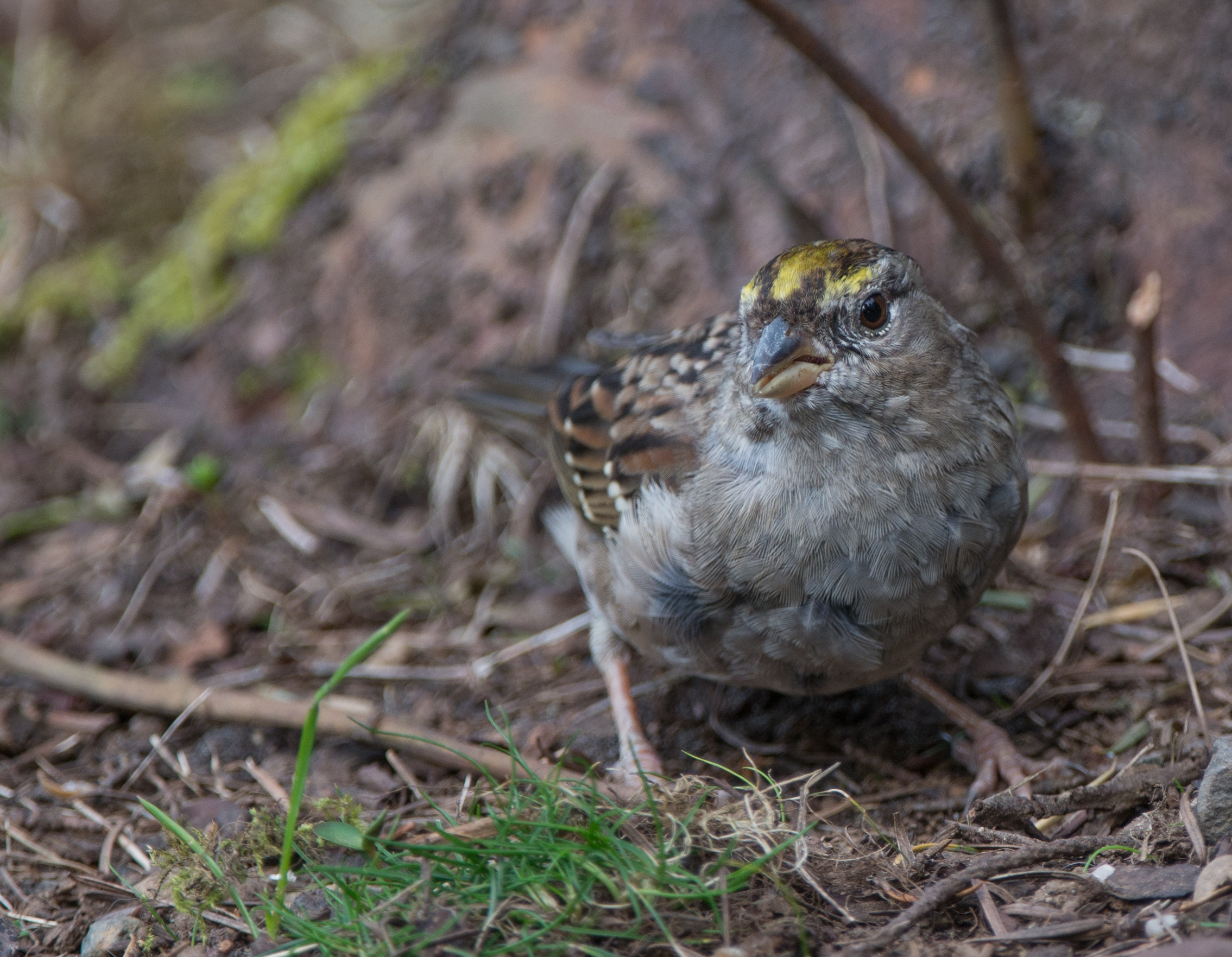
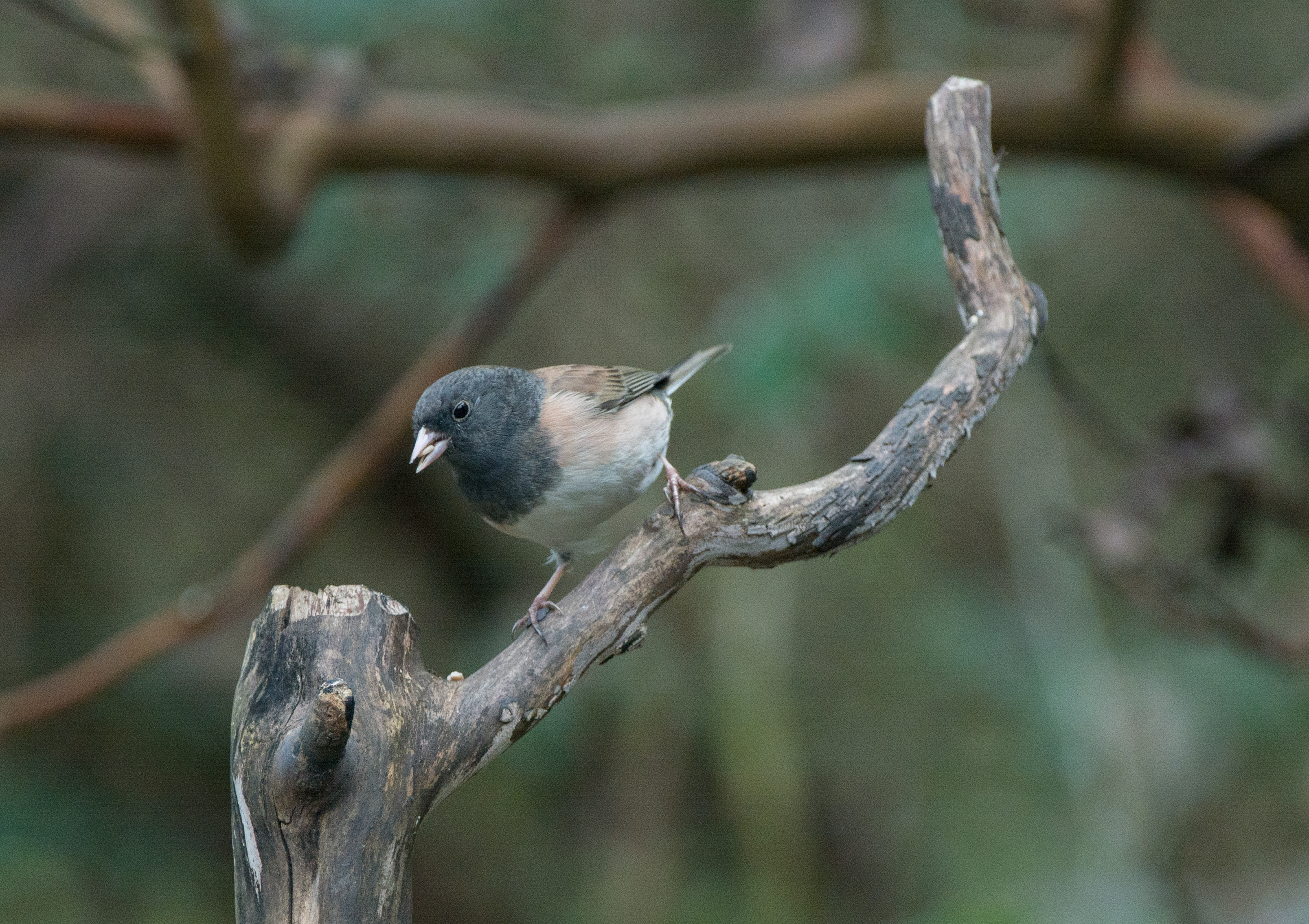
The wind was apparently discouraging to the waterfowl, so my first stop was a rather confined area I’ve found productive for birding which is located just off March Point.  But this area, at first, seemed deserted.  However I managed to locate a large group of Golden-crowned sparrows and before I left I had photographed several species of birds, most, if not all, eating either yarrow seeds or bugs hiding among the dried up seed heads.  Before I left the area I had also photographed Bush tits, Dark-eyed juncos and a single American goldfinch, all working the seed heads.  My suspicions are that these juncos I photographed were the same as the ones I photographed a week or so ago.

DSC_9737

Dark-eyed Junco – Oregon Race

DSC_9730

Male Bushtit

DSC_9711

Male Bushtit

DSC_9697

Golden-Crowned Sparrows on Yarrow Seed Heads

My next destination was Channel Drive along the Swinomish Channel.  There I found the first White-crowned sparrows (at least 3-4) I had seen in many months and a nice supply of Mourning doves, a species that I have found difficult to photograph in a natural setting in the Pacific Northwest.

DSC_9761

Mourning Dove

DSC_9744

White-crowned Sparrow

Finally, on Fir Island, I found this Red-tailed hawk perched on a power line.  This one was overseeing a large group of ducks on some water and was more tolerant of my presence than most of the Red-tails.  If you look carefully you can see that this bird’s beak has a prominent hook to it.  I understand that this is a problem among some of the Red-tailed hawk population.  While it doesn’t interfere with the birds obtaining food, it interferes with the birds ability to dissect the food which can negatively affect the birds’ health.

DSC_9811

Red-Tailed Hawk


Ruby-Crowned Kinglet

Taking advantage of the full sun we were given on 2/5/2014, I set out on another birding excursion in the afternoon.  I had a couple of opportunities to photograph a Yellow-rumped warbler at the HQ tract on Fir Island, but for some reason those photos weren’t in focus.  However these photos of a Ruby-crowned kinglet, which I encountered on the way to FIr Island, were in focus.  And, I am happy to say, the ruby crown can plainly be seen in two of the photographs.  It’s difficult enough photographing this small bird that is constantly in motion, but capturing the ruby crown is a bonus!

DSC_9952 DSC_9953 DSC_9957 DSC_9972

All It Takes Is One Good Bird!

On January 28th (2014) I needed to take my wife to the Bellingham Airport so I loaded up my photographic gear and planned to bird my way back to Anacortes across the Skagit Flats.

It seemed like a bad day for photography.  I managed to find a few goldeneyes within barely photographic range in Bellingham Bay, but as I drove across the flats there was a lack of birds.  There were Red-tailed hawks but they were all on power poles or lines and all had their backs turned to me.  Upon nearing Anacortes I decided to drive around March Point, which had been very productive over the past several weeks.  But even the east side of March Point Road brought no photographic opportunities.  All that was soon to change.

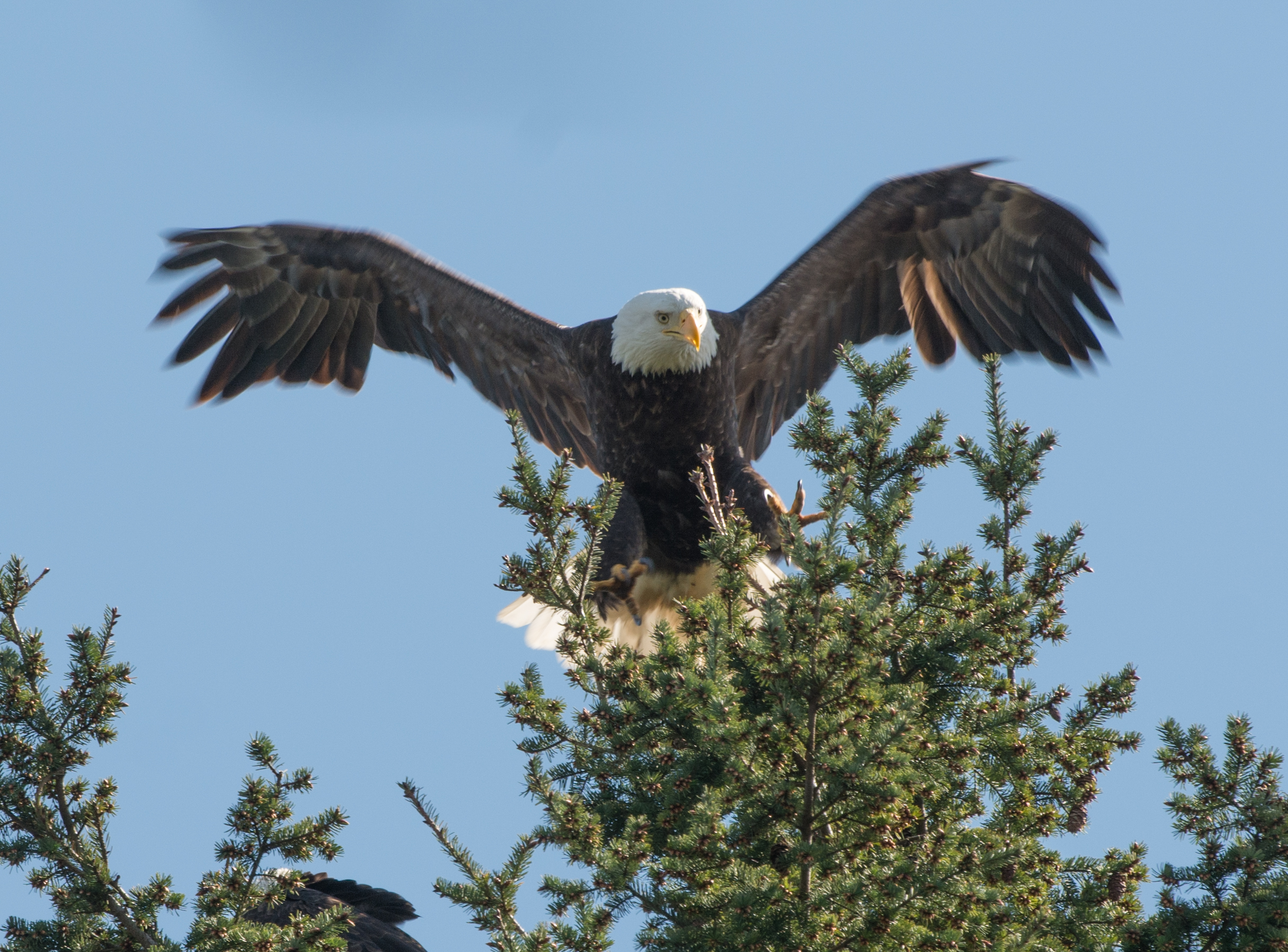
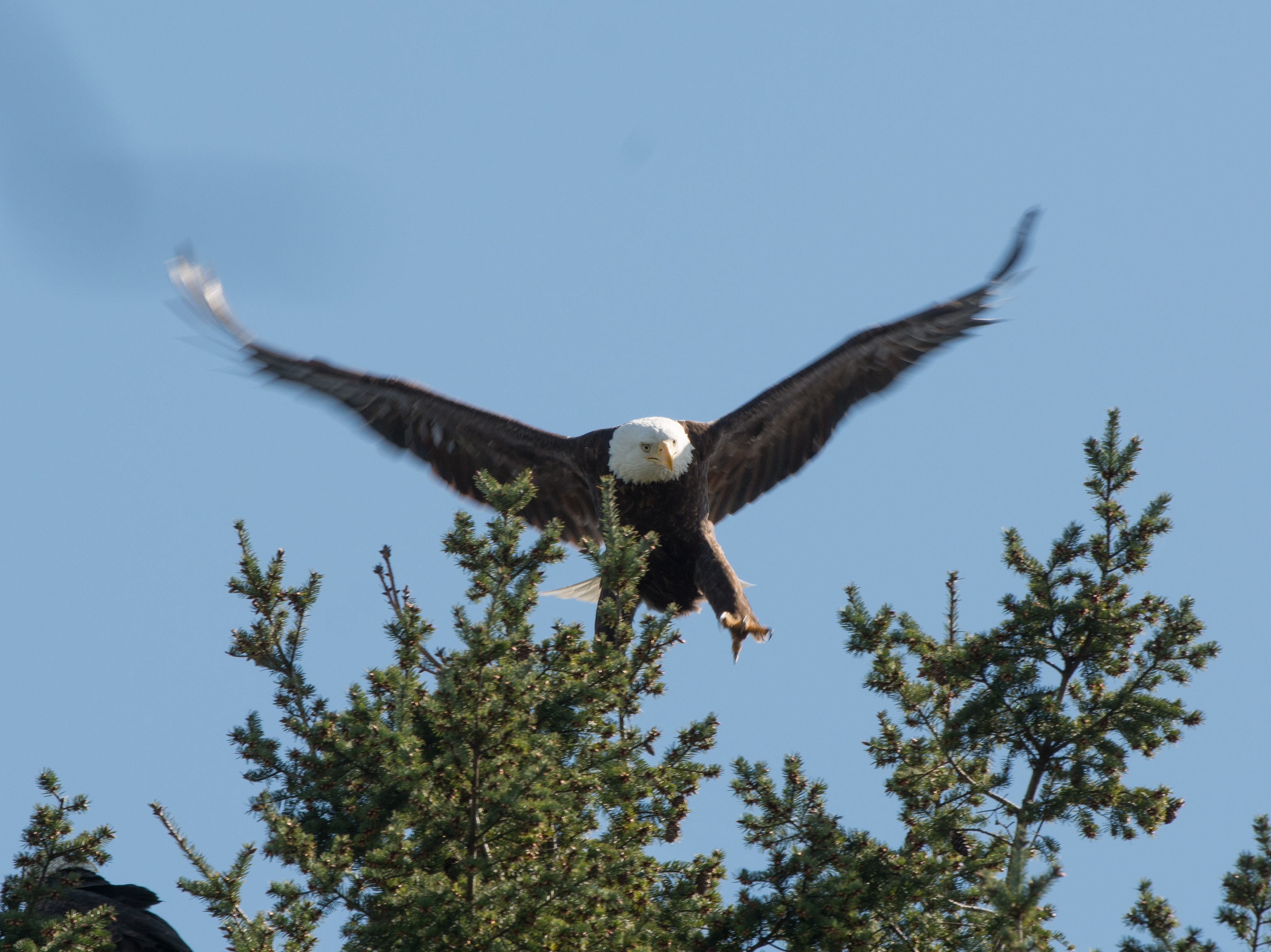
As I drove down the west side of March Point Road a Bald eagle flew across the road towards a nest on refinery property.  As I quickly watched it through the upper portion of my windshield I was aware of a large ‘blob’ on the water side of the road.  A quick glance told me that it was another eagle, and this one was very near the road and at eye level!  I had the composure to drive past it, then turned around and returned for photos.  I was so close to this eagle that I had to back off my 400mm lens just to get it all in the photo!  These are probably some of the best Bald eagle photos I’ve ever taken!


DSC_9664

Bald Eagle

DSC_9677

Bald Eagle


Three Good Days of Birding Photography – 2

January 16 was to be my best of three consecutive days of birding.  After my morning walk and coffee I drove by the Cap Sante Marina mid-morning and saw a male Common merganser in the basin and very near the shore next to which I was driving.  The problem… I didn’t have my good camera with me!  I hurried home, retrieved my camera and returned to the marina to find the Common merganser had disappeared.  However there were now four Hooded mergansers (two pairs) in the yacht basin.  I began taking some photos of them when I noticed a wake coming my way and upon further inspection saw that it was the Common merganser.  Unfortunately, this time it swam along the far dock line, eventually disappearing under the dock and later another dock to the east.  The bird only had to swim a hundred feet or so underwater and for me to reacquire it would necessitate a walk for me of several hundred yards… if it remained in the same place, which it did not.  So I gave up on close shots of the Common merganser.

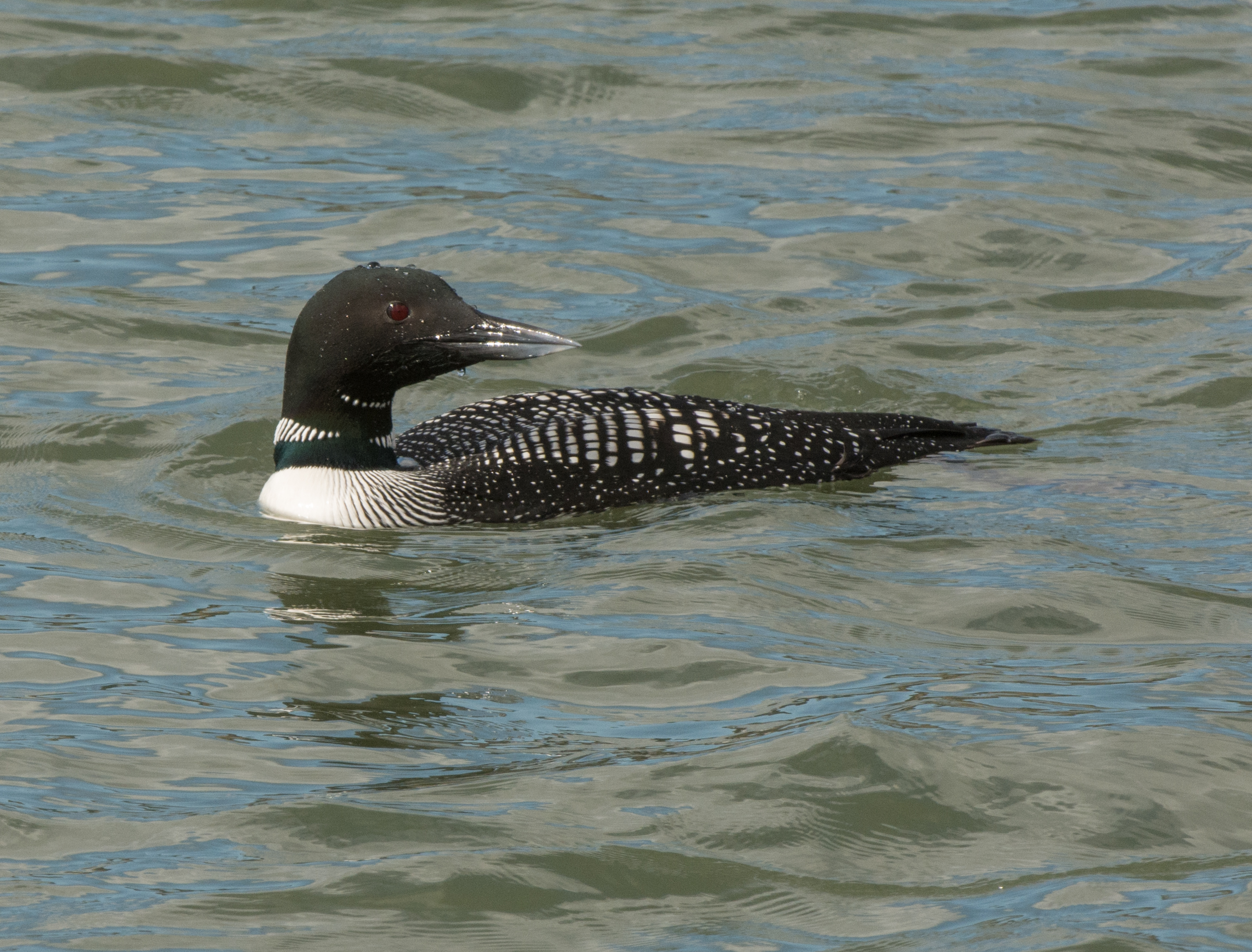
The Hooded mergansers wouldn’t cooperate either so I eventually headed for my car, but then a Common loon showed up on the scene.  This was enough to keep me around for awhile and I was able to maneuver so that I got some fairly good photos of it.

Loon, Common  20140116-04

Common Loon

After I had exhausted my photo opportunities for waterfowl in the marina I set off for March’s Point.  While driving along March’s Point Road I encountered a Belted kingfisher sitting in the light and with no intervening branches.  I took a few photographs of it before moving on.

Kingfisher, Belted  20140116-04

Belted Kingfisher… probably a male.

My next photographic acquisition was a Song sparrow along March’s Point Road, but in the interest of brevity I’m not going to post one of those photographs.  However, shortly after leaving March’s Point Road I encountered a flock of about 8-10 Bushtits, birds I only rarely see and even more rarely get to photograph due to their rapid movements (in what are usually low-light conditions).   However these were in direct sunlight so I enjoyed a relatively long session with them.

Bushtits are extremely gregarious and travel in flocks of from about 5-6 all the way up to maybe 20 or more.  They seldom remain in one place very long but roll through the terrain from one set of trees/bushes to the next.

Bushtit  20140116-17

Bushtit

Bushtit  20140116-09

Bushtit

And now I’m going to backtrack a little.  I mentioned the male Common merganser I found in the marina.  I didn’t get what I consider good bird photographs, but I did get some good artistic photographs, one of which appears below.

Merganser, Common  20140116-05

Male Common Merganser


Clammer!

I generally refrain from offering unsolicited advice to friends, but I continually wonder why so many friends spend so much effort at clamming.  They put out decoys, dress up in camouflage and hip boots, and sit around in blinds using clam calls.  Then when they spot one they have to race to the clam and dig furiously, hoping to reach the clam before it escapes and potentially risking injury to backs and limbs.

I’ve found a much easier way to go about collecting clams, and you don’t have to worry about a license or bag limits.  You visit eBay and buy yourself a “clammer”.  The good ones will bring the clams back to a bucket while you recline along the beach and enjoy a margarita.

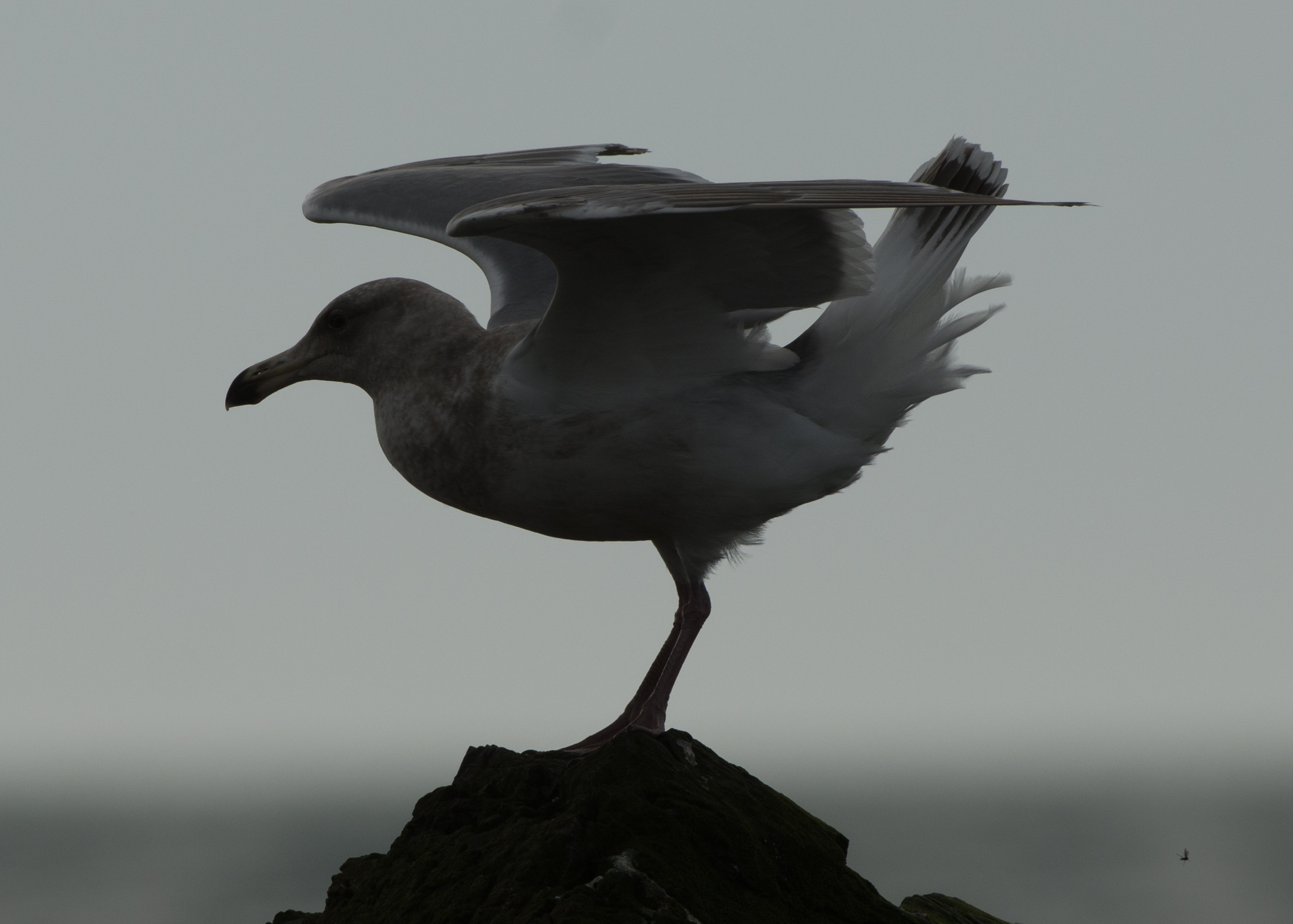
Here’s a photo of my “clammer”… which, I might add, is a former State champion.  I had to pay a little more, but you can’t underestimate the value of a really good clammer!

gull eating clam  20140123-24