A Day of Robins

Friday, October 2, 2015, provided a change of weather from what we had been experiencing earlier in the week.  The day was overcast and much cooler.  My wife called me on the phone shortly after I finished my walk and coffee and told me that the yard was full of American robins.  I was home a few minutes later and they were still around, remaining until after I had taken a mid-morning nap.  I decided that there were probably some good photos to be had and that there was a good chance that our recent Varied thrush visitor might be among them.  I retrieved my camera and took to the yard.  There was no Varied thrush (either by sight or sound) but the birds just kept coming… especially the American robins.

Here are some of the more innocent photos of the robins staging around the watercourse…

Robin, American 20151002-14 Robin, American 20151002-28

There were so many robins trying to use the birdbath that conflicts inevitably arose.  Here are just a few of the incidents of threatening posture that I recorded…

Robin, American 20151002-07 Robin, American 20151002-02 Robin, American 20151002-23

I was hoping that all the activity would bring in a few rarer visitors, but aside from an absolutely featureless Yellow-rumped warbler and a flock of about 40 Snow geese headed south, it was pretty much the same old crowd.

Here’s one of the many European starlings that came down from the treetops for a bath…

Starling, European 20151002-05

and one of our first Golden-crowned sparrows which will presumably be with us for the rest of the winter…

Sparrow, Golden-crowned 20151002-02


An Ordinary Crowd… and a Leucistic Female House Sparrow

There have been no recent unusual discoveries in the yard, lately.  We continue to have daily visits from a male Varied thrush but it’s very shy and continues to elude me.

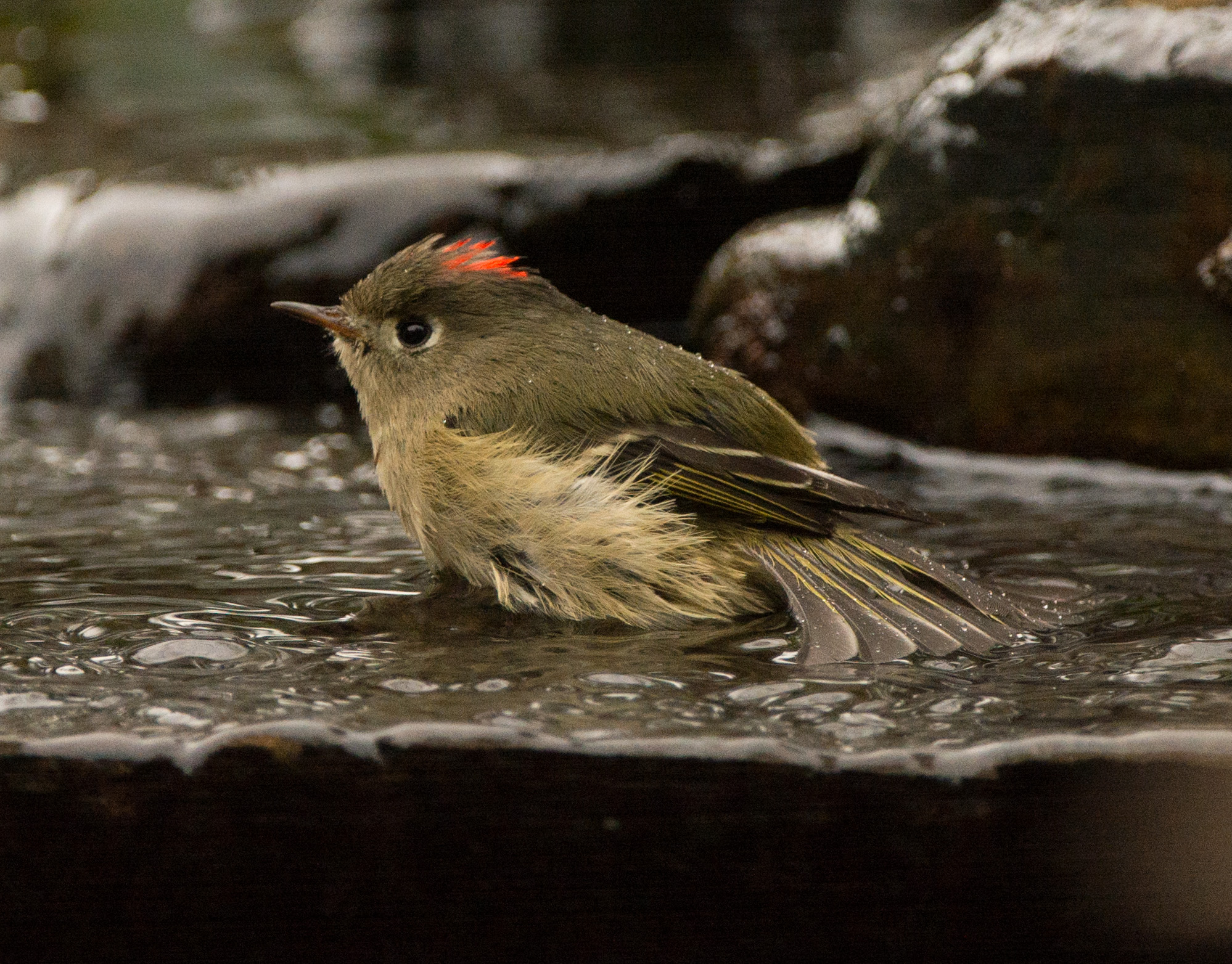
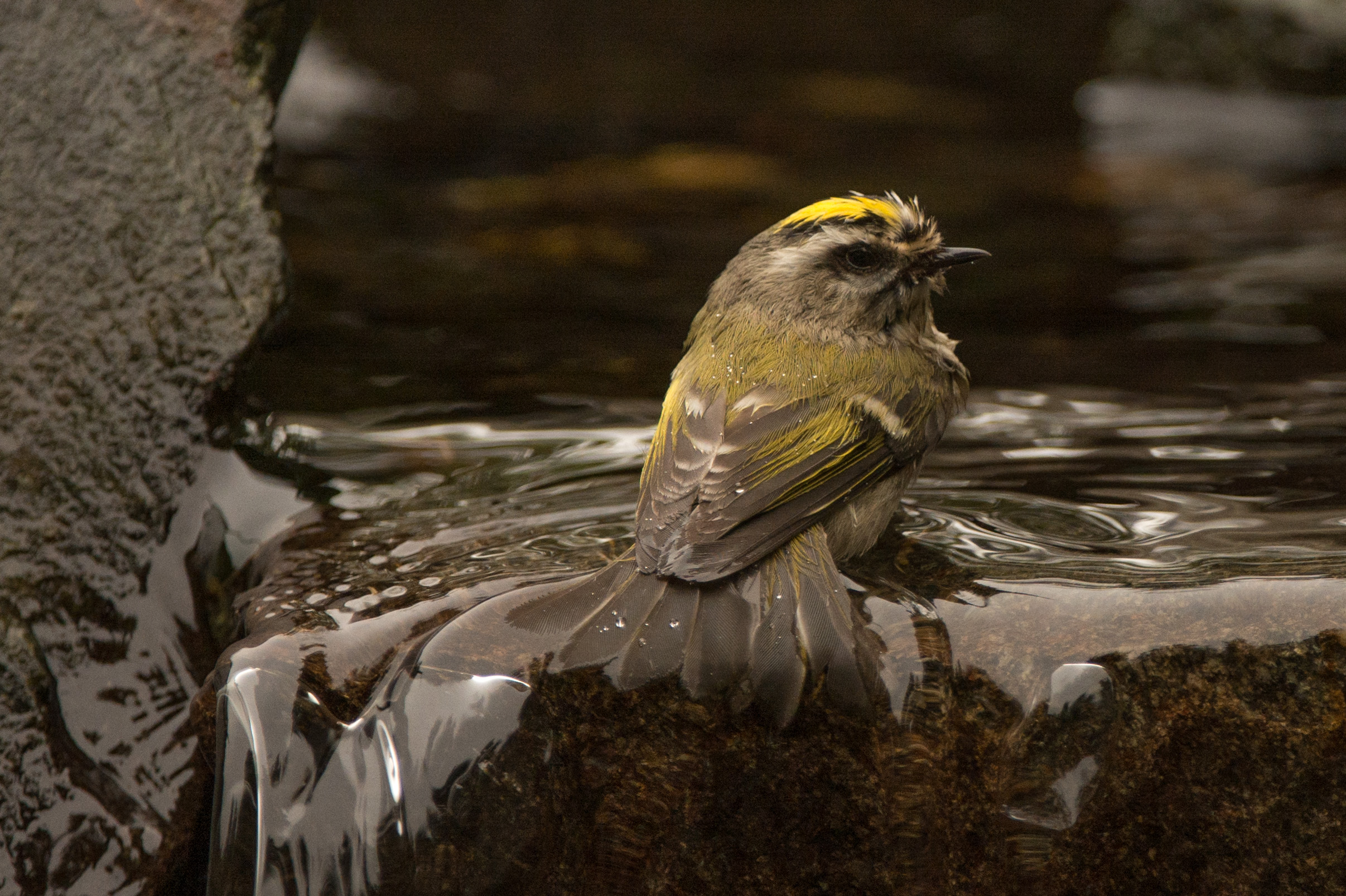
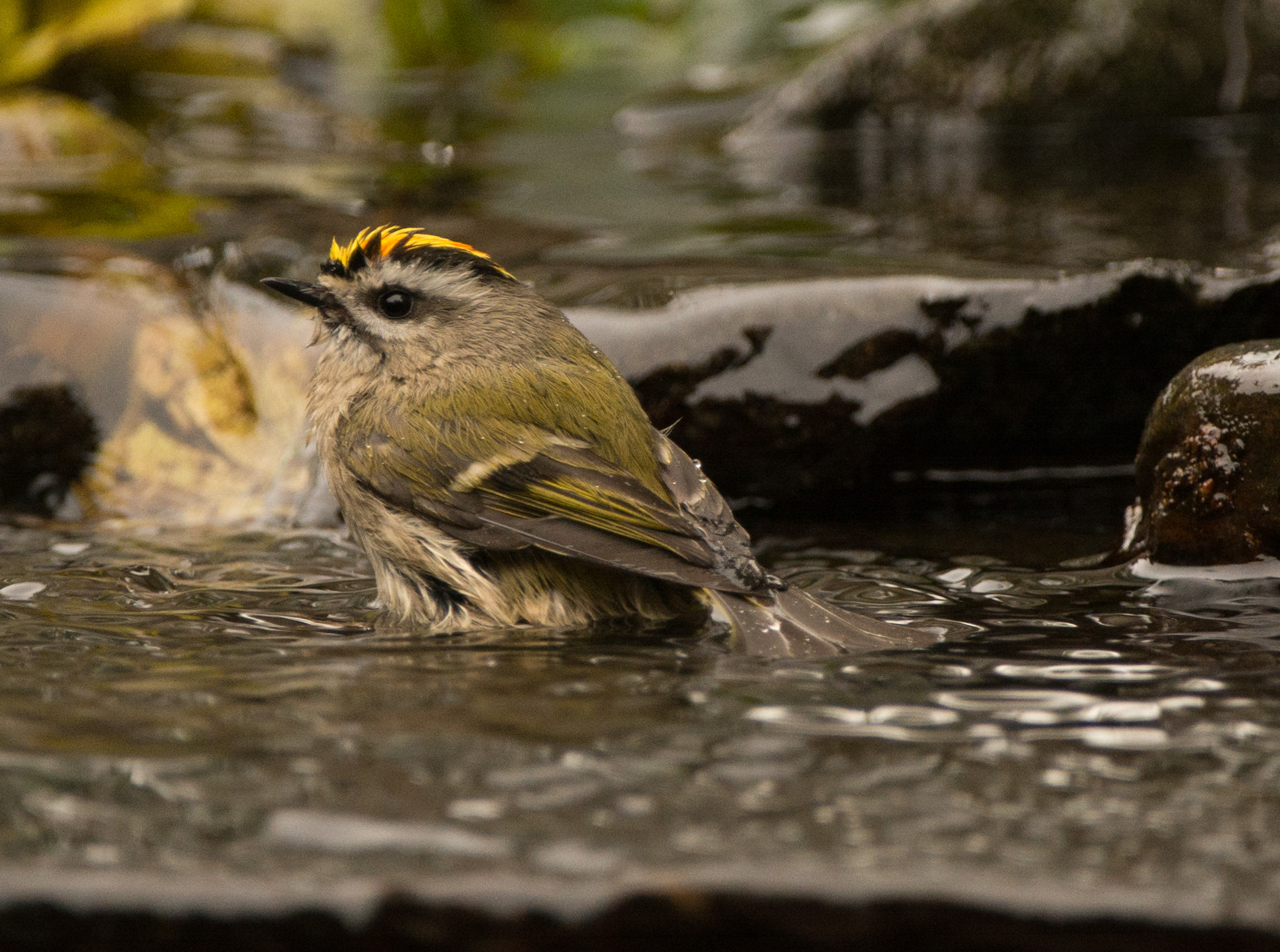
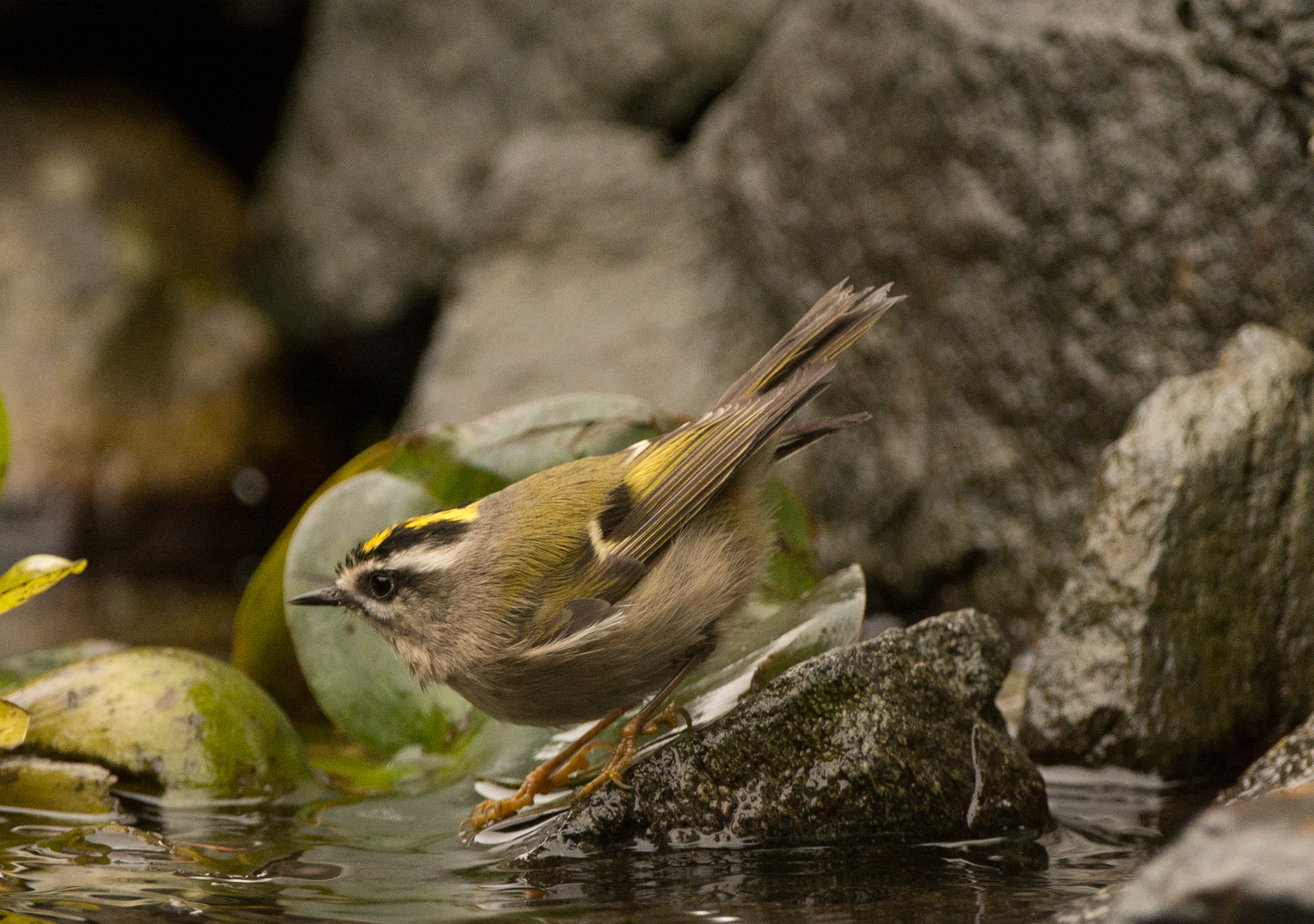
However we are having fairly frequent visits from one or more Golden-crowned kinglets which, after breeding at the higher elevations, will be spending the winter with us.  Earlier this week I obtained some nice photos of a male kinglet, which are posted below.  We know this is a male from the orange ‘crown’ in the middle of the yellow crown, as can be seen very faintly in the second photo.

Kinglet, Golden-crowned 20150927-06 Kinglet, Golden-crowned 20150927-15

For whatever reason, I find it difficult to get really good photos of chickadees, both in exposure and especially with regard to focus.  I can usually fix the exposure in processing (as I do with most of my photos) but the photos which are not in sharp focus get discarded.  This photo of a Black-capped chickadee looks a little under-exposed but I think it looks better that way.

Chickadee, Black-capped 20150927-04

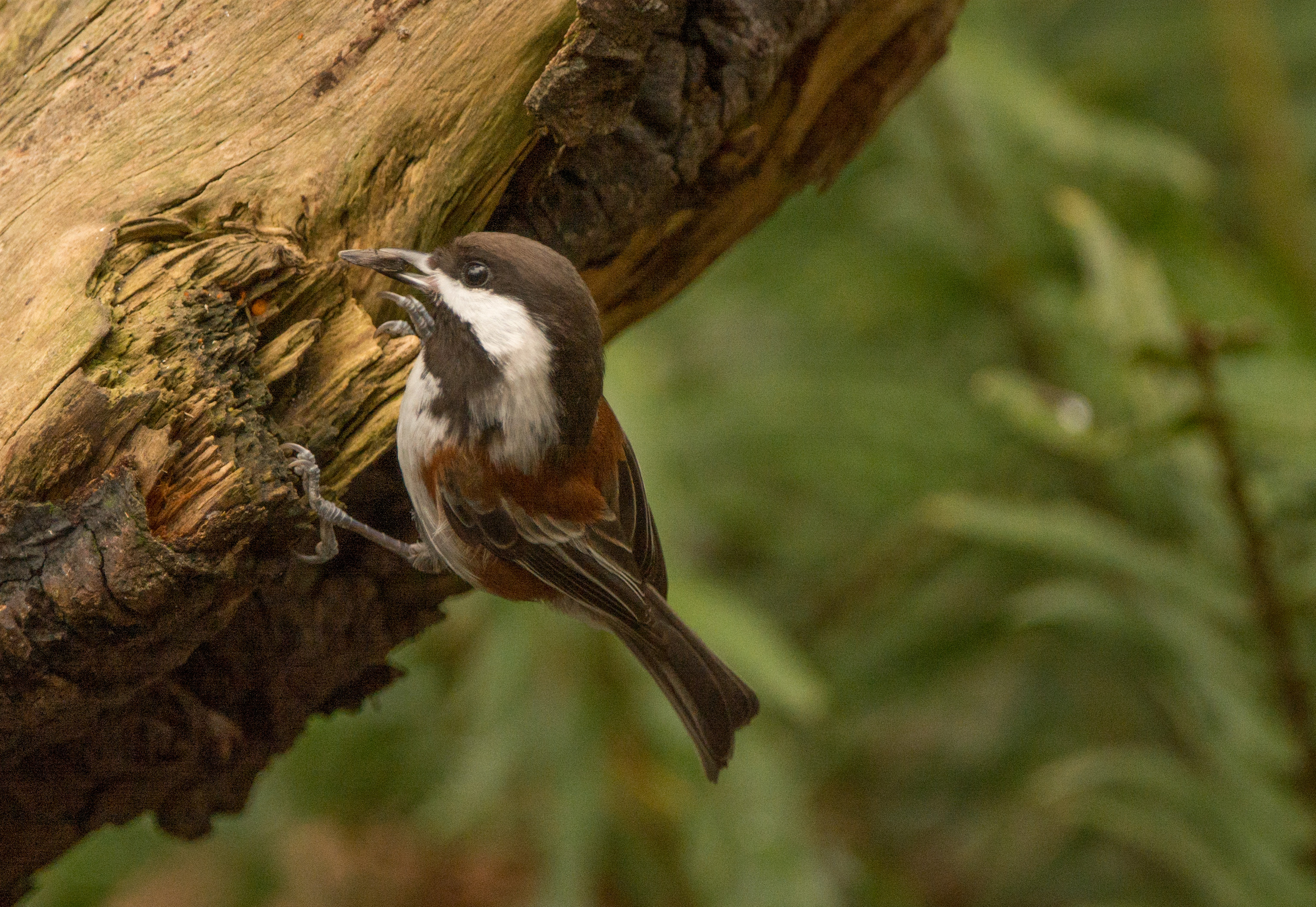
I had friends today who asked me what the difference was between the Black-capped chickadee and the Chestnut-backed chickadee, so I’m going to take this opportunity to show a couple of photos of the latter.

Chickadee, Chestnut-backed 20150926-05 Chickadee, Chestnut-backed 20150926-01

Here’s a photo of a male Anna’s hummingbird which I trust will be spending the winter with us.

Hummingbird, Anna's 20150926-07

And finally (it seems there’s always a “finally”), a photo of what I am referring to as a leucistic female House sparrow.  This may be pushing the term a little in this case, but I’m on a roll this year!

Sparrow, House - leucistic 20150926-01


Juvenile Cedar Waxwings

On September 16, 2015, I had at least seven juvenile Cedar waxwings visit our watercourse for baths. I saw no adults with them and I can’t remember ever seeing more than a pair of adults in our yard, although in Texas the waxwings often hang out in flocks of twenty or more.

Waxwing, Cedar 20150916-03 Waxwing, Cedar 20150916-09

Waxwing, Cedar 20150916-05

Waxwing, Cedar 20150916-08


Leucistic Dark-Eyed Junco – Oregon Race

On September 17, 2015 I observed a leucistic Dark-eyed junco in the yard. The term ‘leucistic’ refers to a lack of color in a species’ normal plumage colors, manifested as white feathers.  In the past I’ve photographed a leucistic American robin, Spotted towhee and Varied thrush.  I noticed that on one or two occasions this bird did not integrate well with the rest of the juncos and I have not seen it again since my original sighting, despite increasing numbers of juncos in the yard.  DSC_0853.

Outing, Varied Thrush & Stellar’s Jay

On Tuesday, September 23, 2015, I decided to make a little excursion over to March Point to see if I could find any migrating terns to photograph. On the way around the Point I discovered Dunlin feeding along the waterline. When I had been in the same area the previous week there was a group of nine, but a with the exception of a single bird preening the rest had been sleeping.

DSC_0916

Just off East March Point Road I managed to ‘pish’ a Song sparrow from a blackberry bramble patch. I’ve noted for the past several weeks that nearly all the sparrows I photograph have blackberry juice on their bills!

DSC_0981

At the southeast end of East March Point Road I found what I had come for… five or six terns flying back and forth looking for fish. I stayed and photographed the birds for 15-20 minutes but never saw a tern dive into the water. I’m a little unsure of what species of terns these are, but I’m leaning towards Caspian.

DSC_0987 DSC_0999 DSC_0985

The terns finally moved on and about the same time they did I noticed a group of birds fly to the shore a couple of hundred yards in front of me… at an area where I could use my car as a blind and photograph whatever had flown in. I approached the new area and found that a group of Killdeer had flown in and were feeding along the shore. I managed a few photos before they got nervous and moved away.

DSC_1011

My route then took me off Fidalgo Island and down Channel Drive, but the only birds I could find to photograph there were a couple of Yellow-rumped warblers who were the recipients of too many ‘twig shadows’ for any kind of photographs to keep.

After running some errands in Burlington and Mount Vernon I returned to March Point and photographed the same birds (except for the terns, which had disappeared) on my return route. It had been a successful outing.

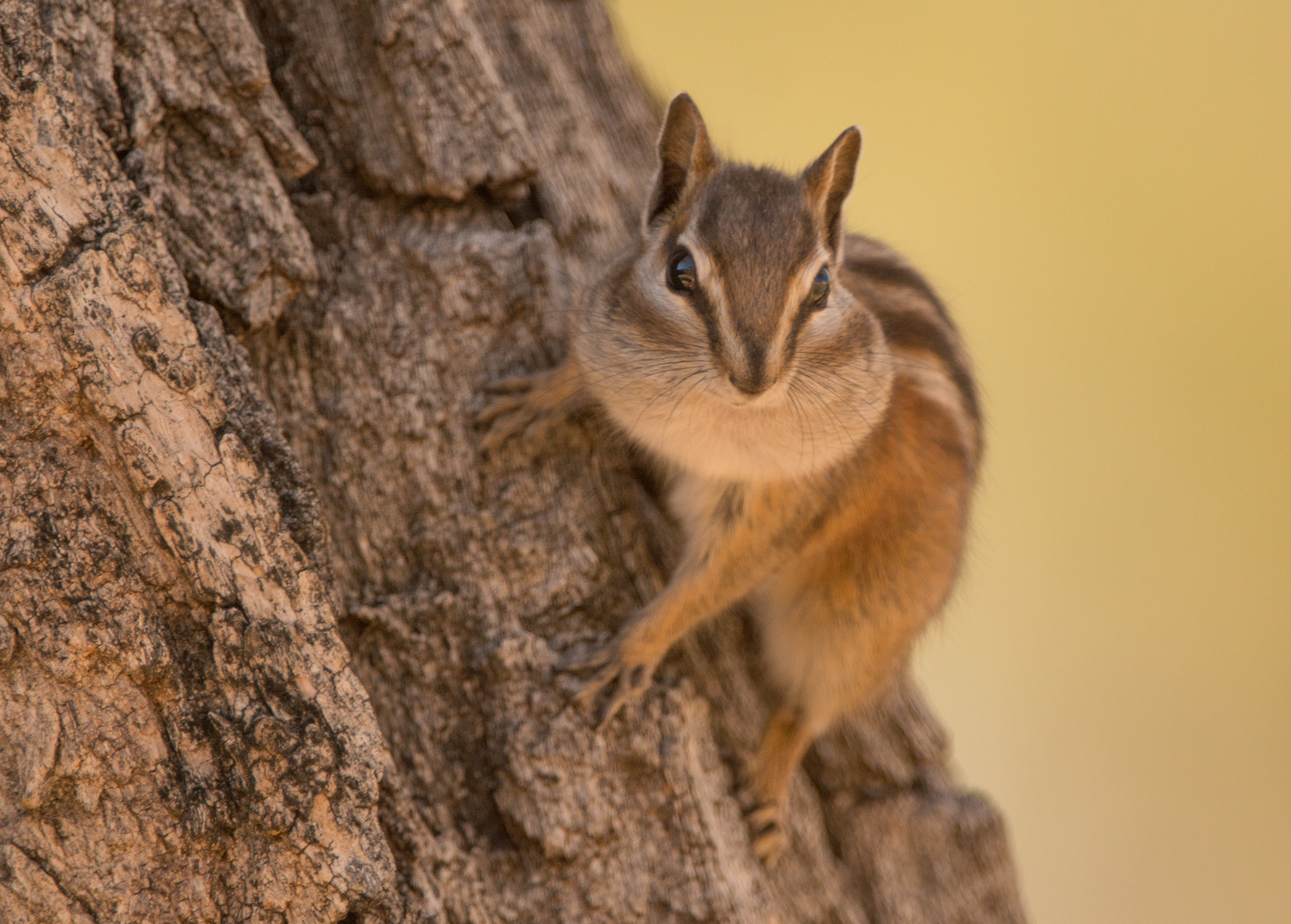
When I arrived back home I unloaded my media card from my camera and stepped out the front door to throw a dropped grape in the area where we commonly have a resident chipmunk. What I thought was a robin flew up from our watercourse but something about it caught my attention. It initially had its back to me but soon turned to face me and I saw immediately that it was a male Varied thrush. Within the past week or so I had been hearing an occasional one on my morning walks in Washington Park. We get them in our yard in the winter but this has to be the earliest date we have ever observed one in the yard. I rushed back in for my camera but of course by the time I returned to the yard the thrush was gone.

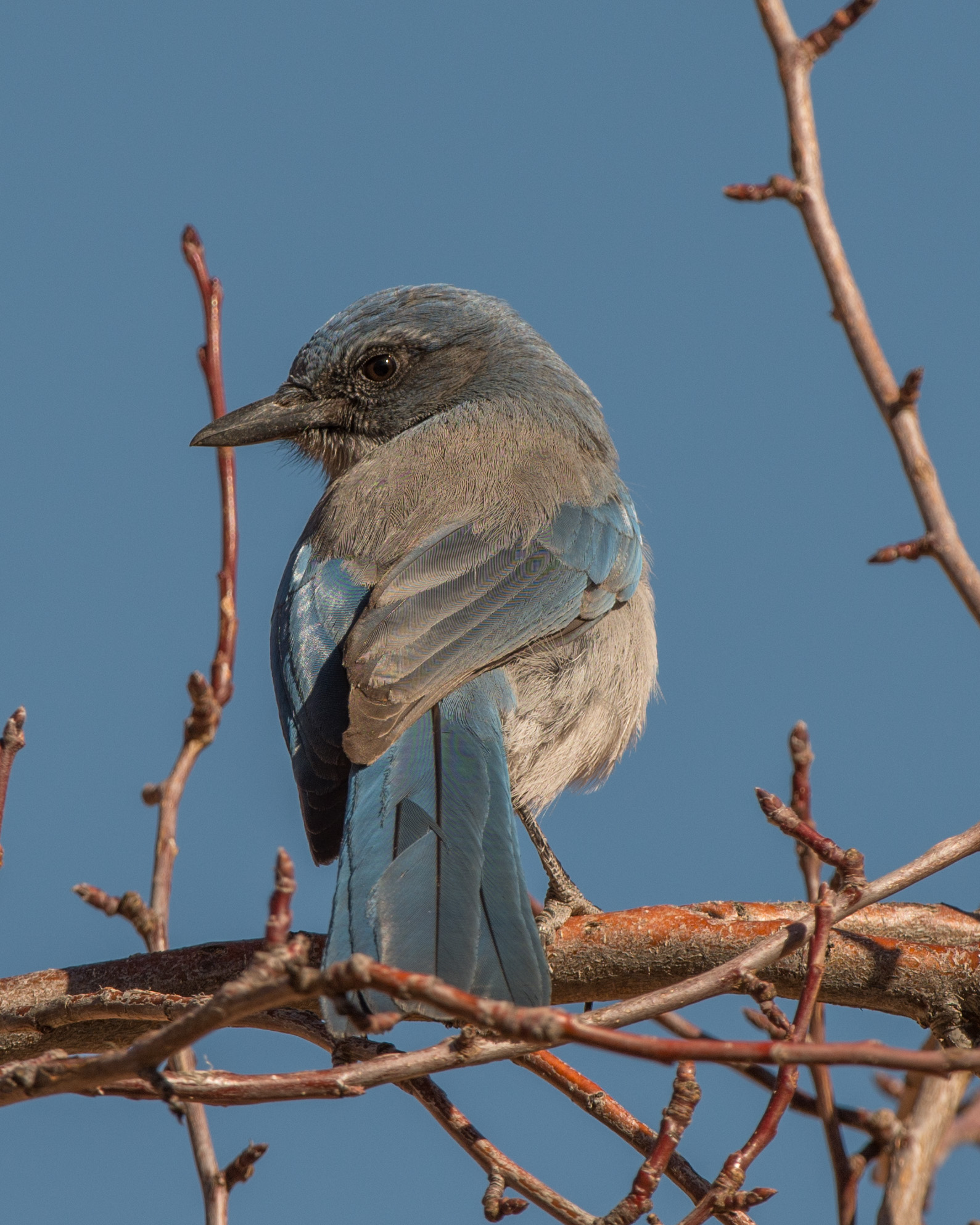
I decided to wait awhile to see if the bird would return, and it wasn’t too long after that I saw a large, dark bird enter the madrones at the edge of the yard. A minute or so later a Stellar’s jay, some of which we have been seeing for the past two to three weeks, worked its way down to one of the bird baths for a drink. As I’ve said in past blog posts, the birds are rare here on Cap Sante. This one was apparently alone and I’m fairly certain that it was a juvenile, so I’m hoping that the family (which consisted of 6-8 birds) may have dispersed and that this individual might decide to stay in the area.

DSC_1051