Unknowing Surrogate Mom

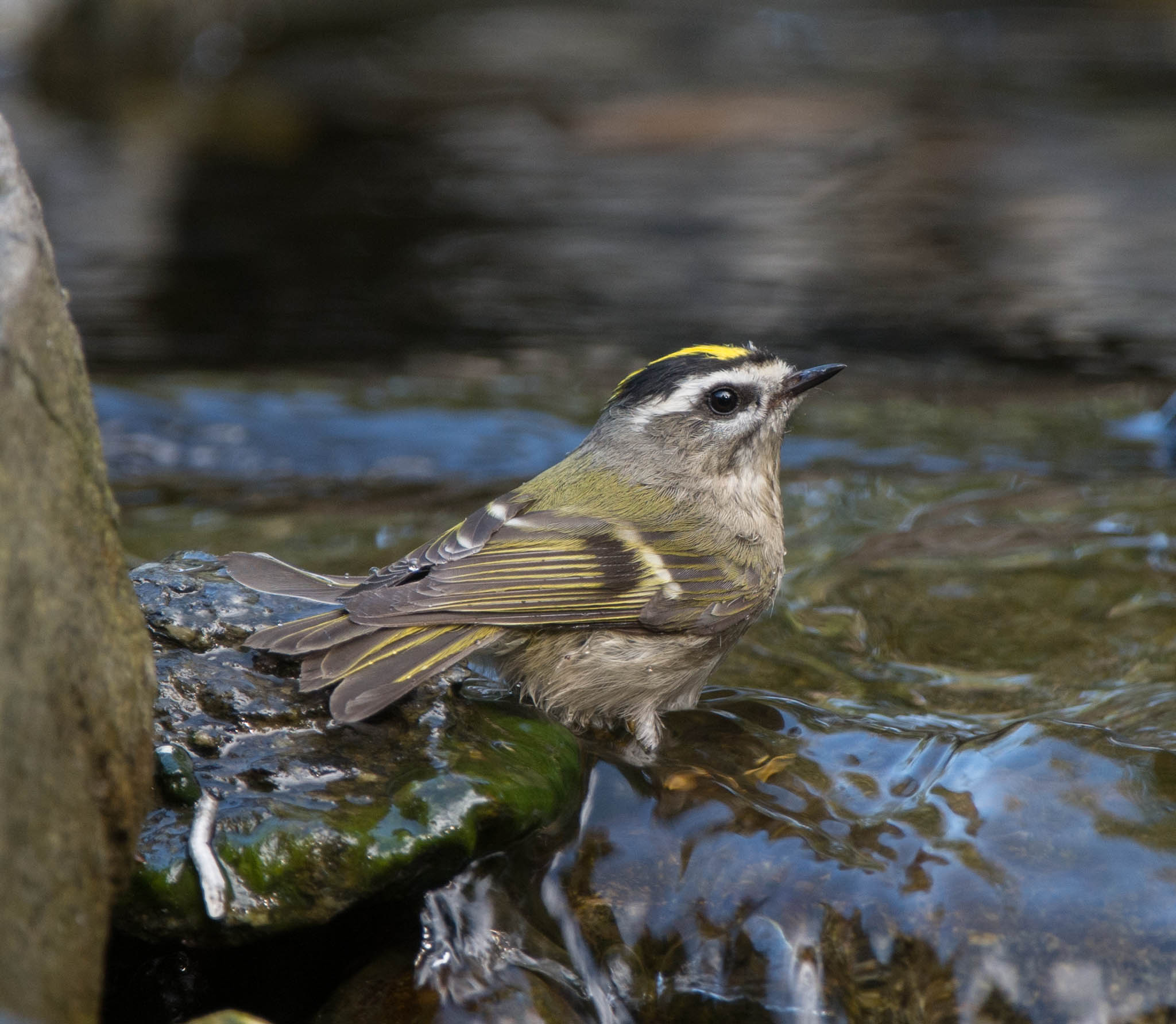
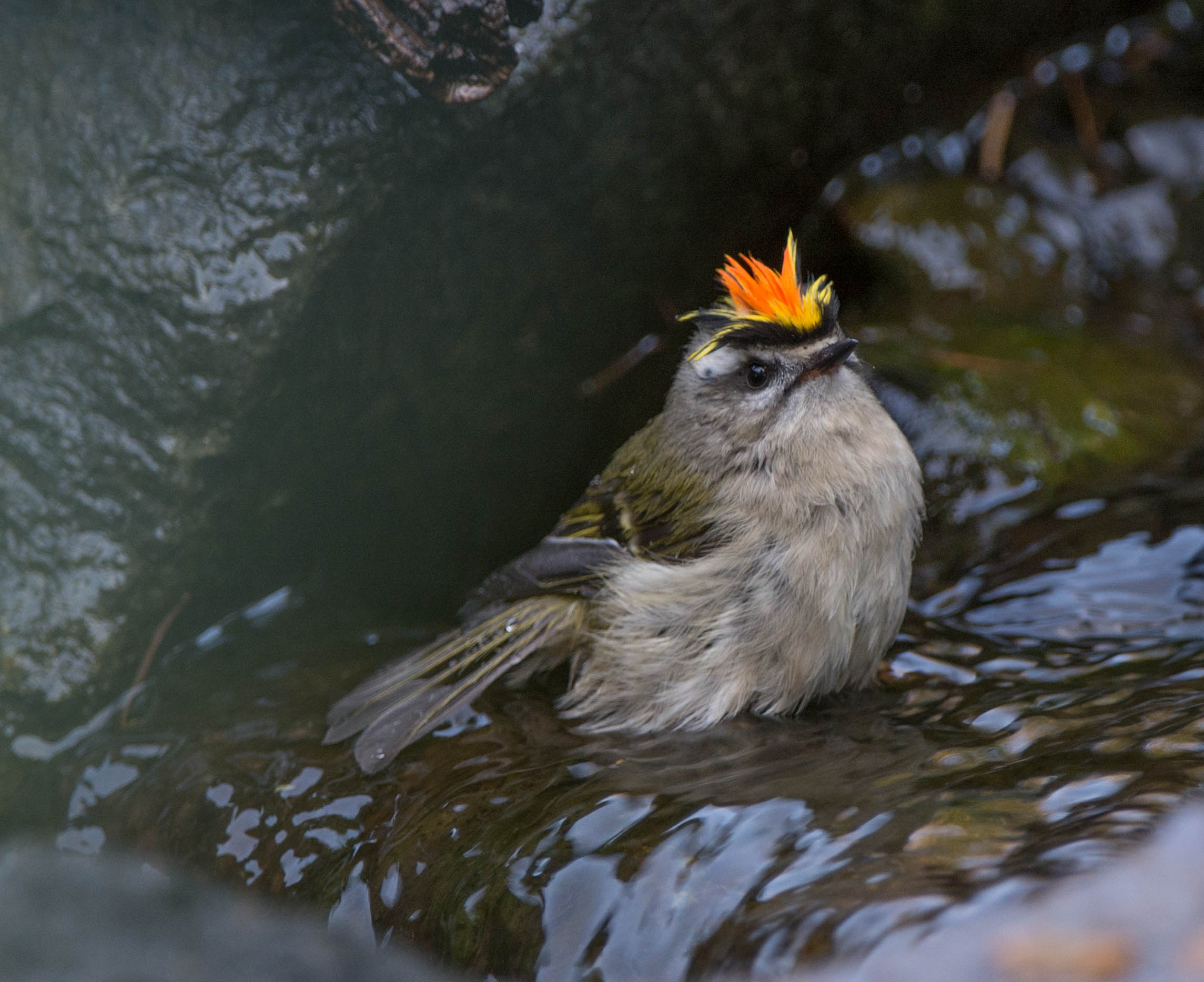
I had another nice day in the yard yesterday (8/12/2013) with sightings of a female Wilson’s warbler and a female Western tanager… and a possible sighting of a Golden-crowned kinglet.  I believe there were a couple of other interesting birds but I can’t recall what they were at this point.  Unfortunately I didn’t get any usable photos of the more interesting birds.

However, for any of you who are beginning birders or live in other areas outside of these birds’ ranges, here are a few photos of three birds that can be confused.

The largest of the birds is a male House sparrow with a seemingly inexhaustible population and range.  Although it is a substantially larger size, it can be confused with the Chestnut-backed chickadee pictured below it.

20130812-DSC_4808

Male House Sparrow

20130812-DSC_4797

Chestnut-backed Chickadee

And another of our three species of chickadees here is the Black-capped chickadee…

20130812-DSC_4806

Black-capped Chickadee

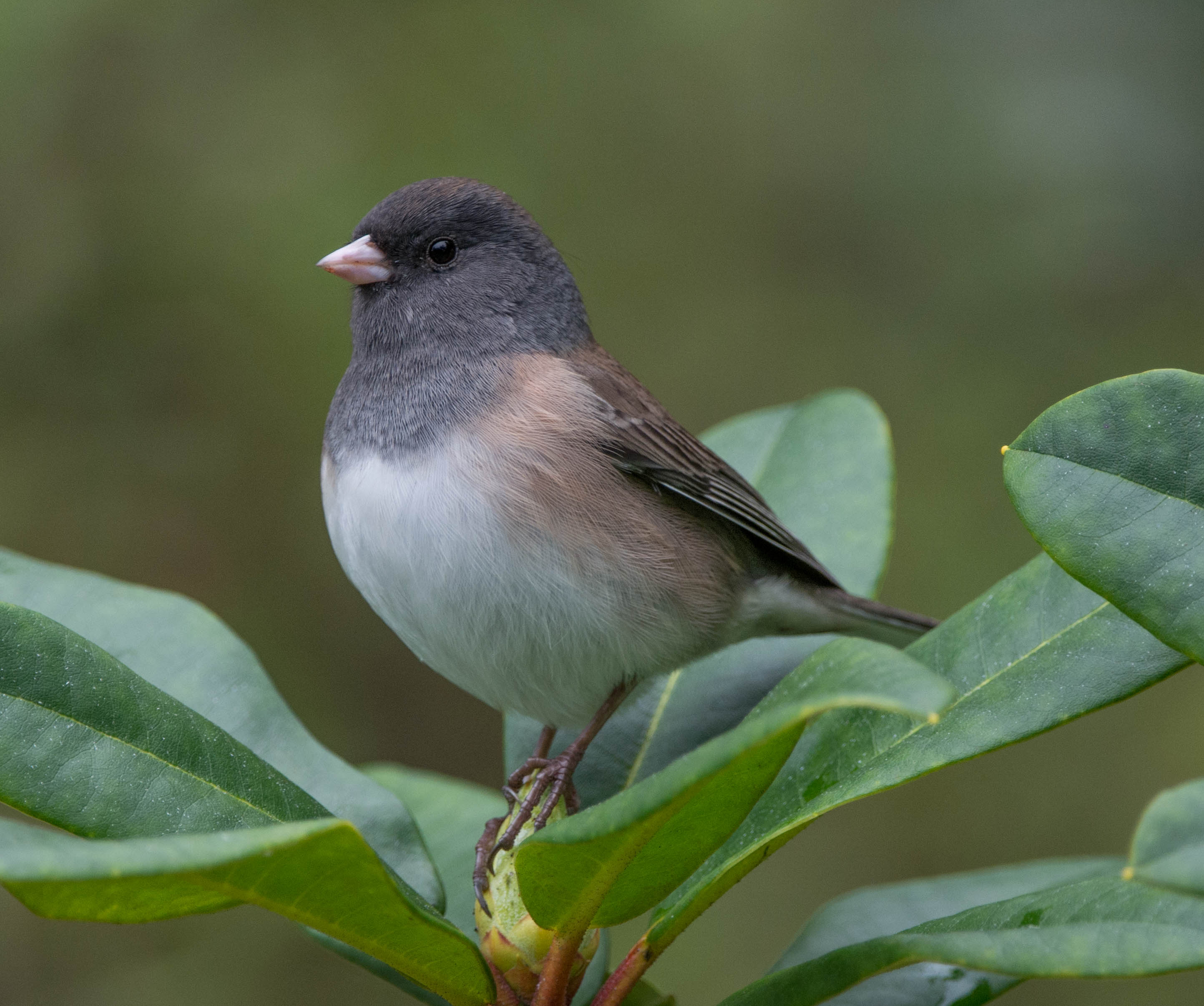
Finally, a sad story.  My wife told me several days ago that she saw a Dark-eyed junco (Oregon race) feeding a juvenile Brown-headed cowbird.  Yesterday I managed to photograph the interaction.  This means that a female Brown-headed cowbird was able to lay an egg in the junco’s nest and the junco is raising the cowbird as its own… despite the cowbird being almost half again larger than the surrogate parent.  And it’s possible that the breeding season was lost for the pair of juncos.  Plus they’re raising yet another cowbird that could do the same thing to them, and will do the same thing to other birds, next season.

20130812-DSC_4846

Dark-eyed Junco in the process of feeding a juvenile Brown-headed Cowbird.


Birding Excursion

I had to have a little work done on my vehicle down in Smokey Point/Arlington on Friday, August 9, 2013.  By about 10am I was ready to ‘bird my way’ back to Anacortes.

I first managed to stumble upon the Portage Creek nature area (not sure what it is officially called) and was surprised at how the good birding portion of the preserve had been allowed to deteriorate.  The entrance of the preserve has been changed to the far side from the entry with which I was familiar and it’s not nearly as bird-friendly, and to get to the better wetlands area required a long walk exposed to the hot sun… there and back.  I decided that was too ‘Texas-like’ for me and drove to the other side.  However before I left the new access I encountered a pair of small flycatchers (pictured below).  I understand that most of these small flycatchers are only identifiable by vocalizations so these may never be identified as to specific species, despite my having obtained good photos.

20130809-DSC_4638 20130809-DSC_4650 20130809-DSC_4670

While I was photographing this pair of flycatchers another bird flew unexpectedly to the top of a nearby tree.  I think that it is probably a female Bullock’s oriole… but again, I’m not sure.

20130809-DSC_4678 20130809-DSC_4673

My next notable encounter, at the Fish and WIldlife HQ tract on Fir Island, was this warbler.  Again, I’m not sure of the species.

20130809-DSC_4711

And finally, at the end of Channel Drive adjacent to the Swinomish Channel, I encountered this pair of warblers.  I have a birding friend who has suggested, and this was my original suspension, that this might be a pair of Common yellowthroats.  If it is, I think I photographed a mature female and a juvenile male.  The birds traveled together and, as you can see, in one of the photographs I was able to get them both.

20130809-DSC_4761 20130809-DSC_4751 20130809-DSC_4737

I don’t normally like to publish photos on my blog that are of unidentified species, but I don’t know how long it might take to resolve the matter.  I have the photos out to a more knowledgeable friend and am hoping for a more educated identification… or at least guess.  If I receive additional information I’ll modify my post by identifying the bird(s) immediately under the photo with a caption.  However I just thought the photos too good to hold until the identifications are resolved.


Coyote!

After my success with warblers the previous day I had high hopes of seeing more today (8/1/2013). The entire day was cloudy, meaning I would be using reduced shutter speeds but wouldn’t have to be concerned so much with shadows from sticks, beaks, etc.   Alas, it was not to be a consecutive warbler day!  I saw not a single warbler.

However, as is usually the case if you just spend enough time at it, the day was far from a loss.  I had been in my birding chair only a short while when my attention was drawn to the activity in a dead pine tree over my head.  The yard was filled with chickadees and nuthatches but a newcomer with a slight yellow tinge drew my attention.  I realized that it had a ‘bump’ on the top of its head, more often referred to as a crest… but not what I term a true crest.  At any rate I realized that it was a small flycatcher.  I thought it was too close to take photos of it but it must have been just in range.  I quickly snapped about half a dozen photos before if flew into some young fir trees, never to return.  Many of these small flycatchers can only be reliably identified by vocalizations so I don’t have much hope of identifying a specific species, but I was happy to get the sighting and some photos.

20130801-DSC_4189

Flycatcher… species unknown.

A short time later I heard the crows raising an alarm and their attention seemed to be directed at the ground.  Mindful that our neighbors had seen a coyote in the same area just the week before, I carefully crossed the yard to where I could view a hillside across the street.  It didn’t take long for a coyote to emerge and I was able to take over a dozen photos… my first of a coyote in the neighborhood.  We’ve had many sightings this spring and have been very careful about letting the cats outside.  In fact, I recently built a protective cage for our cat that likes to spend time outdoors.

20130801-DSC_4255

COYOTE!

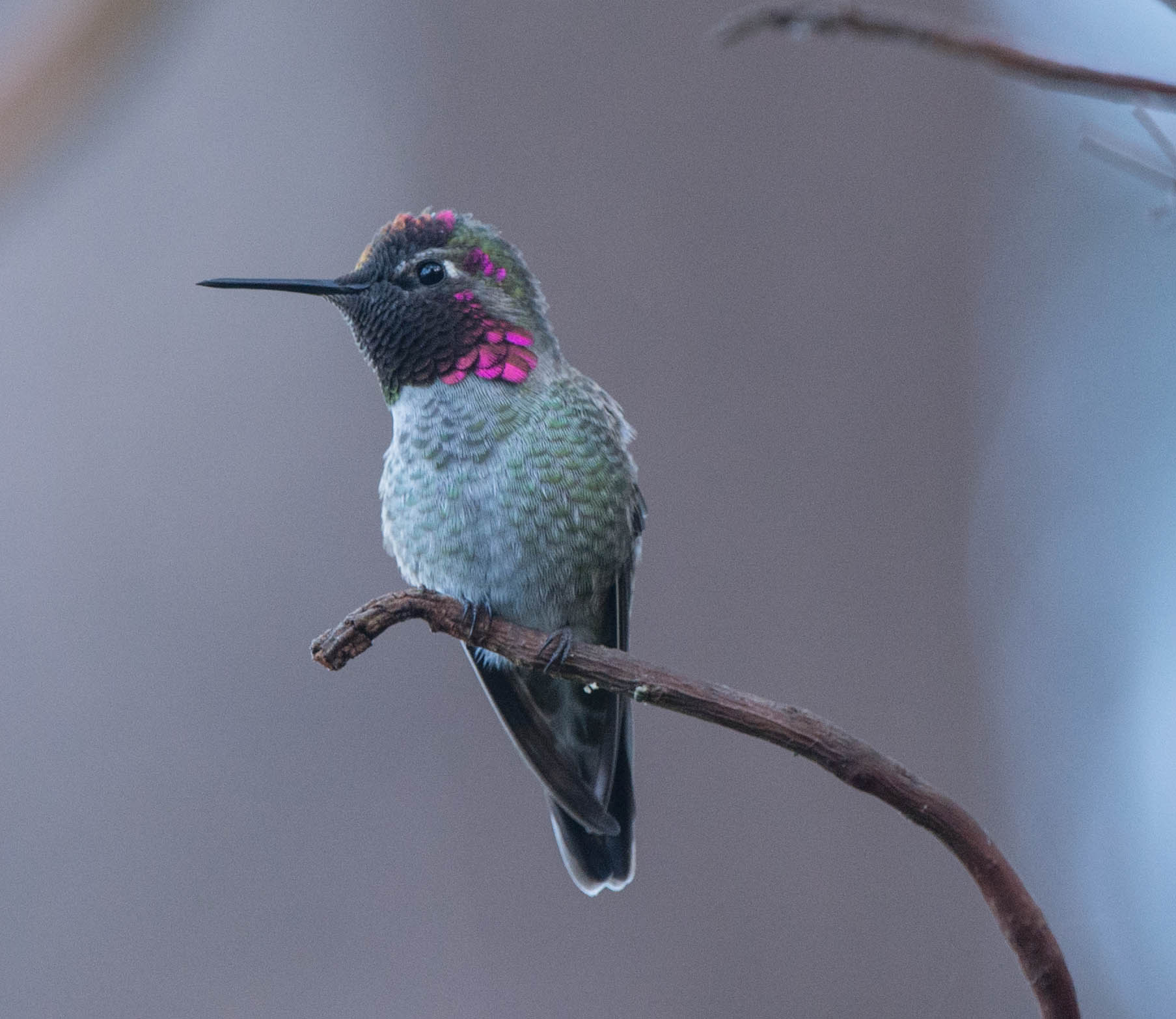
Along the way I managed photos of what I think is a juvenile Anna’s hummingbird.  Its gorget hasn’t fully developed but you can see the basic coloration that would indicate that it’s not a female.

20130801-DSC_4220

Juvenile Male Anna’s Hummingbird

And finally, I had a visit from an American goldfinch family with four young.  The young, instead of having the brilliant yellow of the male or the subdued greenish-yellow of the female, have a sort of dull gold color on the wings that you quickly come to recognize when you spend time looking at the birds.

Juvenile American Goldfinch

Juvenile American Goldfinch


A Warbler Day

20130731-Warbler, Wilson's   20130731 028_

What is it???

I had a great day in the yard today.  After a relatively slow start I started having visits from warblers… at least two Wilson’s warblers and later a Yellow warbler.  The Wilson’s warblers made repeated visits to the yard for at least an hour, at times coming to within six feet of me… far too close for my lens, which needs close to 15 feet to focus.

20130731-Warbler, Wilson's   20130731 019_

Wilson’s warbler… probably a juvenile male.

20130731-Warbler, Wilson's   20130731 008_

Male Wilson’s Warbler.

20130731-Warbler, Wilson's   20130731 003_

Male WIlson’s Warbler.

Later in the afternoon I received a briefer visit from a female Yellow warbler.  Since I didn’t log a Yellow warbler in the spring I was especially grateful to be able to see and photograph this one.

20130731-Warbler, Yellow   20130731 002_

Female Yellow Warbler

20130731-Warbler, Yellow   20130731 006_

Female Yellow Warbler

Between visits from the warblers I amused myself taking photos of some of the more common birds of the yard.

20130731-Nuthatch, Red-breasted   20130731 002_

Red-Breasted Nuthatch

20130730-Chickadee, Chestnut-backed    20130730 003_

Chestnut-Backed Chickadee


And finally, yesterday I obtained a better photo of the oft-mentioned Eurasian Collared dove visiting the yard.

20130730-Dove, Eurasian Collared   20130730 003_

Eurasian Collared Dove

As to the first photo in this post, it’s of a male Wilson’s warbler bathing in the watercourse.

End of July Yard Birds

Exactly a week ago, with guests from Texas in the yard birding with me, I finally had the opportunity to photograph a female Red-winged blackbird.  The birds nest in the wetland below us but during the breeding season make quick forays to the yard to eat seed.  The practice allows them to obtain food without being away from the nest for longer periods of time for hunting purposes.

20130721-Blackbird, Red-winged   20130721 001_

Female Red-Winged Blackbird

The birds finally managed to salvage my birding photography day on Sunday, July 28.  I made my first foray into the yard in the early afternoon and sat for about 1.5 hours with nothing to show for my time except a male House finch and too many House sparrows.

20130728-DSC_3802

Male House Finch

20130728-DSC_3833

Male House Sparrows

I returned to the yard a couple of hour later and it didn’t appear that things were going to be any better, but after about 15 minutes I had a flurry of activity beginning with one of the Eurasian Collared doves (mentioned in previous posts), flying down from a tree almost directly at me.  It flared just above the watercourse and veered into the lower branch of a madrone tree where it played hide-and-seek for about five minutes.

20130728-DSC_3855

Eurasian Collared Dove

It finally flew down to the ground but in an area where I couldn’t observe it.  However my patience finally paid off and it flew to the watercourse where I was able to obtain some photos before it flew from the yard.  In processing the photos I was disappointed in the lack of detail.  I think the camera has difficulty with subjects that don’t offer a lot of contrast (such as Brown creepers), and it’s easy to blow out the color on light-colored birds such as this dove and male American goldfinches.

I’ve noticed on several occasions that when the doves intend to fly out of the local area they rise almost vertically until they get well above the treetops at which point they transition into horizontal flight.  If I can get my wits about me it means that I might be able to get photos of one in flight.

Next up was a male Wilson’s warbler, the second sighting in about a week but with an absence of probably about two months previous to that.  I first noticed it when it flew onto one of the hummingbird feeders and spent considerable time traveling around the top of it.  I usually don’t take photos of birds on feeders but I felt that this was an exception due to the unusual behavior.

Male Wilson's Warbler

Frustrated Male Wilson’s Warbler on Hummingbird Feeder

The warbler flew out of the yard after making an abortive pass or two over the watercourse.  It finally landed on another bird bath but the bath is only about 10-12′ from where I sit and too close for my lens to focus.  The bird finally flew out of the yard but returned very briefly about ten minutes later.

Next up was a Spotted towhee that briefly entered the watercourse and allowed me to obtain photos… perhaps I should say one good photo.

Spotted Towhee

Spotted Towhee

Shortly after that observation a juvenile Spotted towhee, which has been hanging around the yard lately,  accessed a different bird bath which allowed me to obtain photos.

Juvenile Spotted Towhee

Juvenile Spotted Towhee

Despite having one or more broods of towhees raised in the immediate area each year, I’ve never observed a parent feeding one of the youngsters or even one of the youngsters accompanying an adult or begging for food.

All of the foregoing observations occurred in the time frame of about twenty minutes, and another hour of monitoring the yard didn’t yield much else.

However, perhaps my most interesting photo of the day was that of a butterfly which briefly landed on our Pacific yew tree.  Can anyone out there ID this butterfly for me?

Unidentified Butterfly

Unidentified Butterfly