Hummingbirds and Water

I spend a lot of time in the yard watching birds, and despite performing that activity nearly every day I never get bored and it’s unusual if I don’t either learn something new or have some question raised about bird behavior. Today’s post involves some hummingbird behavior I’ve witnessed over this season.

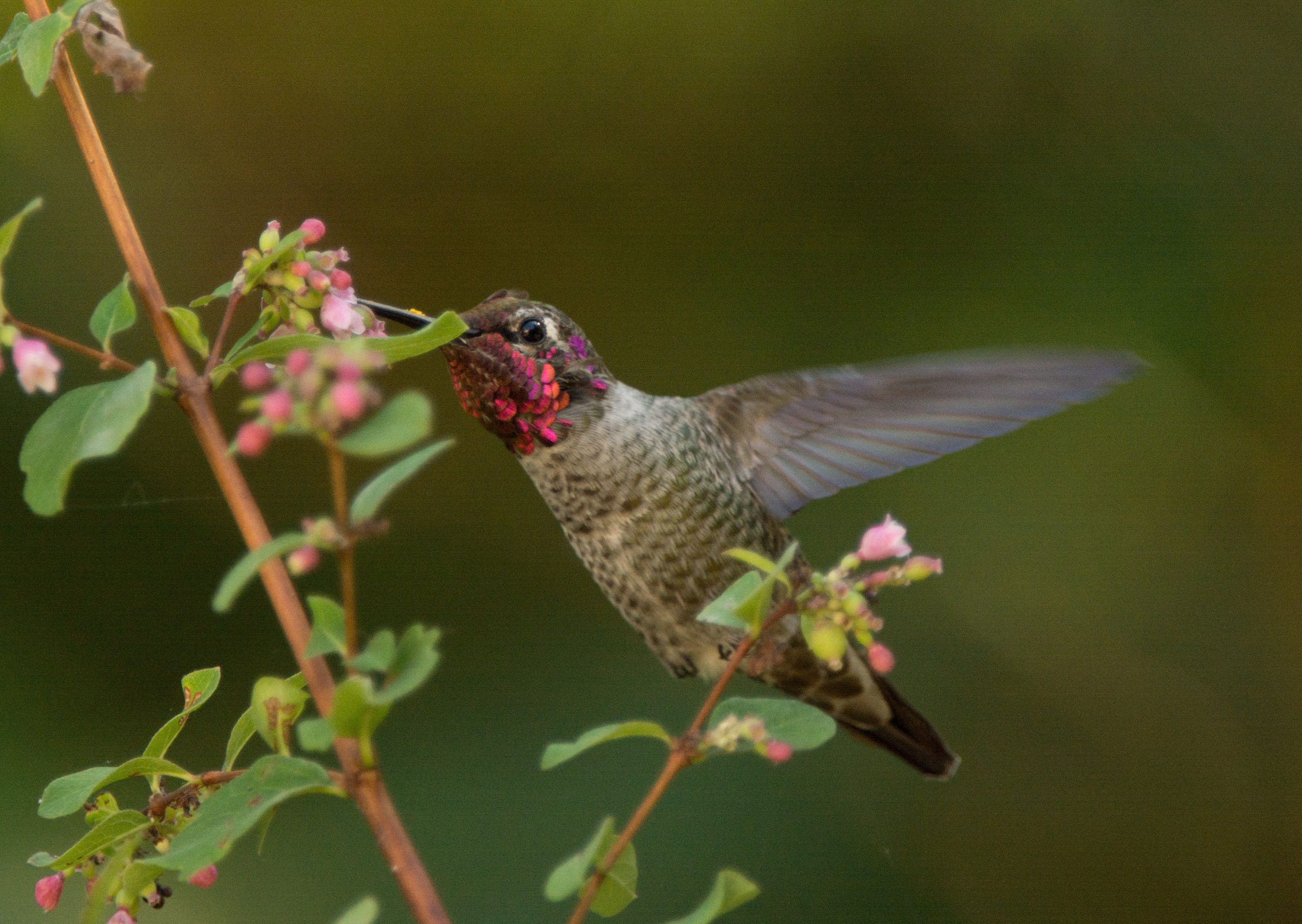
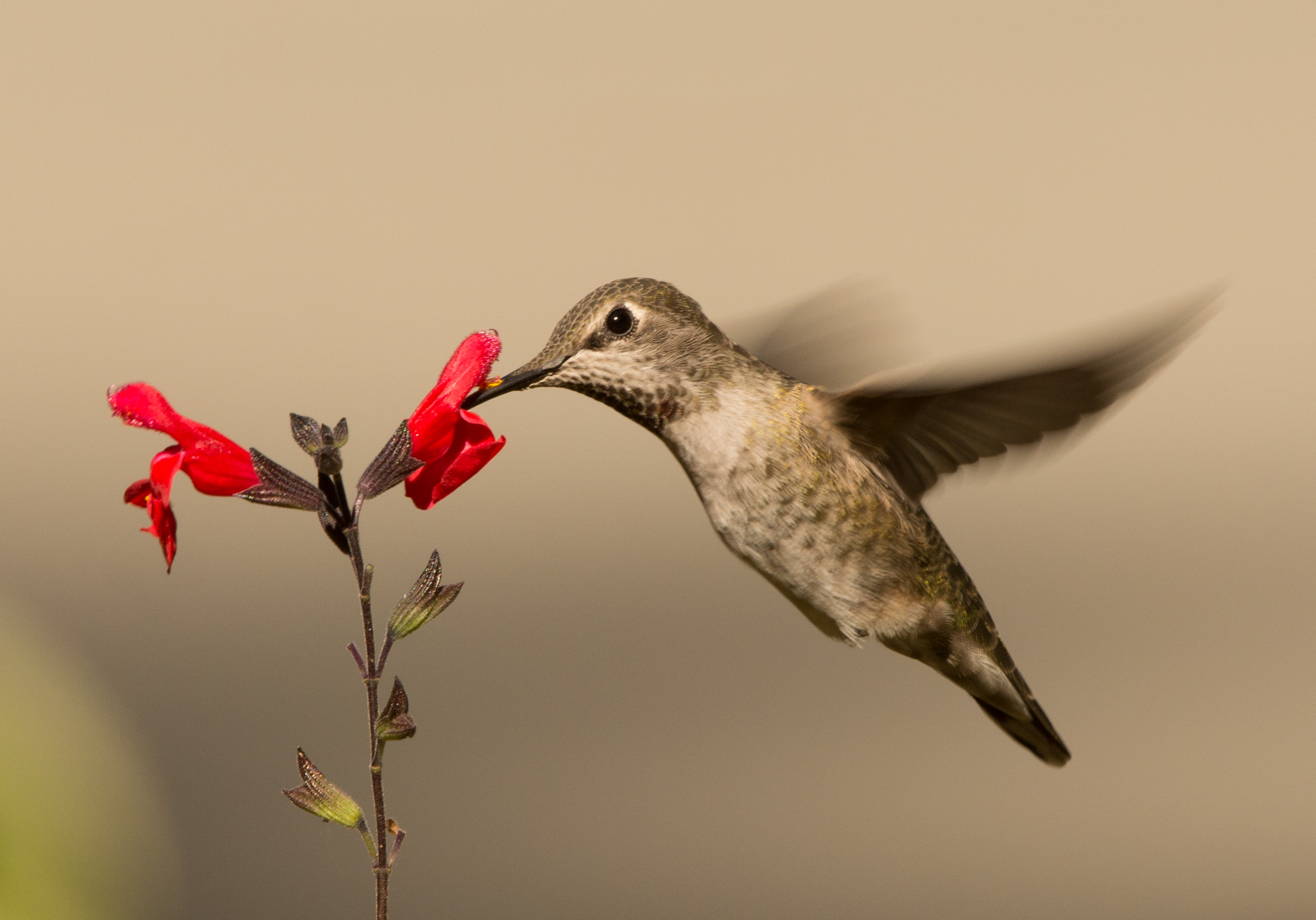
When the Rufous hummingbirds arrive in March there is a lot of activity around not only around the hummingbird feeders we put out, but also in and around our watercourse. The hummingbirds relish visiting the watercourse for a bath and/or a drink of water. There are frequently fights over the watercourse as well as the hummingbird feeders and the flowers in the yard. And I take a lot of photos of the hummingbirds in the watercourse.

Hummingbird, Rufous 20150417-04 Hummingbird, Rufous 20150416-01 Hummingbird, Rufous 20150317-03 Hummingbird, Anna's 20150317-03

But for some reason, it’s been probably close to two months since I’ve seen any hummingbird visit the watercourse. (I just checked my photos and the last photo I took of a hummingbird in the watercourse was on 6/7). And they never visit the other bird baths which don’t feature running water. I’ve taken lots of hummingbird photos since early June, but not a single one of a hummingbird in the watercourse.

I’m left with only the options of photographing hummingbirds on perches or hovering around flowers.Hummingbird, Rufous 20150604-01


Hummingbird, Anna's 20150629-01 leaves me with two questions:

Why don’t the hummingbirds utilize non-flowing bird baths… and

Why do the hummingbirds quit utilizing the watercourse relatively early in the breeding season?


Recent Yard Observations

On August 5 I was observing/photographing birds in the yard when a juvenile (female)  Brown-headed cowbird flew down next to the watercourse.  I took a couple of photographs of it…

DSC_8821

and then as I was looking through my viewfinder another bird appeared in the frame.  It was a White-crowned sparrow and it proceeded to feed the young cowbird.  This is the second breeding season in a row that White-crowned sparrows have raised a cowbird.  The sad thing about this is that this White-crowned sparrow may be sealing its doom for the following breeding season.

DSC_8826

And along the same vein, I was watching a male House finch as it flew into one of the madrone trees.  A small group of juvenile American goldfinches flew onto limbs in the general area, and one of the juveniles settled about a foot from the finch.

DSC_8838

The young goldfinch leaned towards the House finch as if to beg food and the male House  finch leaned towards it and threatened it with its beak.  Immediately after the confrontation the House finch flew, and all the young goldfinches followed it.  This is exactly the same exit from the yard the young goldfinches make with their parents.  It’s as if the young goldfinches had imprinted on the House finch.

Another noteworthy event occurred on August 4 when three Eurasian Collared doves descended into the trees in the yard.  They seemed very interested in going to the ground but never did.  This may only be about the second appearance of these doves since we’ve lived here.

DSC_8796

I managed another good photo of a male Downy woodpecker, probably the same one that appeared in my prior post.  This time the woodpecker was perched on the edge of a rock bird bath we have.

DSC_8833

A European starling in the yard.  I’ve been plagued by these for the past couple of months.  During most of the year I have very few starlings in the yard, but when the young fledge I am absolutely overrun with starlings.  They foul the water in the bird baths and, if I leave it out, cost me at least a suet cake a day.  They’re finally beginning to taper off and it’s “good riddance”!

DSC_8843

Here’s an interesting photo of a young male House finch.  When the birds are very young it’s either difficult or impossible to tell the males from the females.  But if you look closely at this bird you’ll see that some of the bird’s breast feathers are beginning to turn red, signaling that this is a male.

DSC_8840

And to round out this post, a nice photo of a male American goldfinch

DSC_8820


Birds of the Past Few Days

Tanager, Western 20150802-02

We’ll start with a photo of a relatively rare bird that was in the yard on Sunday, 8/2.  We have seen only one other all season and I was very lucky to have been able to separate this bird from all the other traffic in the yard.  Do you know the species and sex of this bird?

After several weeks of unexceptional sightings (with the exception of the Western Scrub jay and a very few Cedar waxwing visits), things have begun to pick up.  I’m once again seeing warblers in the yard… in fact, last week I tallied three different species.  Here are photos of a male Wilson’s warbler and an Orange-crowned warbler

Warlber, Wilson's  20150802-04 Warlber, Orange-crowned 20150802-03

The hummingbirds are mostly gone and are only rarely using the single feeder that I still have up, but here is one of the few remaining Rufous hummingbirds.  This appears to be a juvenile male.

Hummingbird, Rufous 20150802-01

As I believe I might have mentioned in a prior post, Downy woodpeckers in the area apparently had a successful breeding season since for a long time we were being visited by a couple of juveniles.

Woodpecker, Downy 20150802-02

Here’s a photo of a male House finch feeding on some ‘habitat enhancer’ on the ground…

Finch, House 20150802-04

And finally, a photo of an American robin which just finished a bath!

Robin, American 20150802-08


And the photo of the mystery bird at the top of this column?  It’s a female Western tanager.  We only had one other this year and it was a male which made a single appearance a couple of months ago.

Spring Fledges

It’s a tough, unpleasant job having to take up blogging again after having published photographs of a Western Scrub jay in your yard a couple of weeks ago! What can you possibly do for an encore?

The warblers have finally started finding their way back to the yard after a lull of a couple of months. In the last week we’ve had visits from a couple of Yellow-rumped warblers (including a beautiful male Audubon’s, an Orange-crowned warbler that took an extended bath and visits by both male and female Wilson’s warblers, which were conspicuously absent during the spring migration.  I managed to get NO photographs of the birds, although I have many from earlier in the spring and prior years.

And though we had at least one family of Red crossbills with at least three young, they abandoned us two to three weeks ago.

A surprise visitor was this difficult to identify young bird, which is rather nondescript and somewhat resembles several other juvenile species.

Blackbird, Red-winged 20150725-04
Fortunately I was provided a rather obvious clue shortly after its arrival…

Blackbird, Red-winged 20150725-12
In past years adult Red-winged blackbirds have made rather frequent trips to the feeders during the breeding season, my theory being to keep from spending too much time away from the nest. This is the first year when an adult has shown up so late and with one of the juveniles in tow.

Blackbird, Red-winged 20150725-06

We have successfully fledged at least a couple of White-crowned sparrows, another species that visits every spring but until last year (when they raised a Brown-headed cowbird) never spent the breeding season in the area.  (I’m hoping that this is a photo of one of the juvenile White-crowned sparrows!)
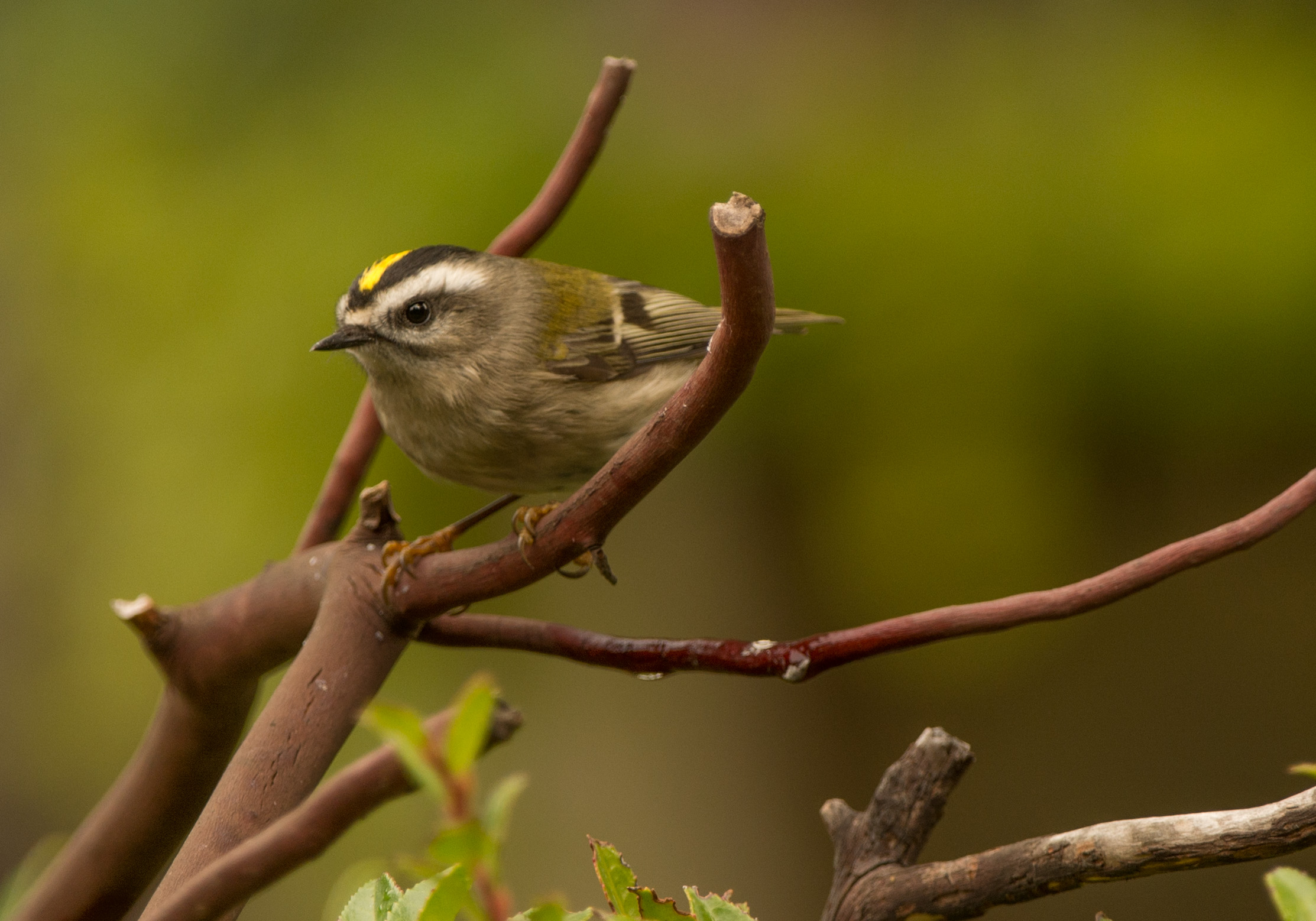
Sparrow, White-crowned 20150717-09

Most of the male Rufous hummingbirds have already left on their fall migration, leaving only a few females and juveniles behind.  (This may not look much like a Rufous hummingbird but I can defend my identification with other photos I took of the bird.)

Hummingbird, Rufous 20150718-01

Downy woodpeckers apparently successfully raised at least one, and possibly two (based on yard exit direction) families this breeding season. For weeks the young woodpeckers spent considerable time at the suet feeder before I took it down due to predation by European starlings. I had a neighbor that complained about the starlings and asked me what to do about them. I told him to leave his feeders up… it would mean fewer trips to my feeders!

But here is an interesting photo I took in early July. This female Downy woodpecker was on one of the staging sticks by a bird bath, and the bird spied a tiny insect hole in the stick. Here you can see her inserting her tongue into the hole to explore for food! This can’t be a good way to make a living!

DSC_7519


A curiosity about birding identification.  I code my photographs with the sex of the birds when I can make that determination.  If the bird is a juvenile I also apply a code for that.  But at this time of year the sexual identification gets somewhat problematic for some species, such as some warblers, hummingbirds, grosbeaks, goldfinches, House finches, crossbills, etc.  The sexes of birds of these species, and others, can’t be safely established by someone with my lowly birding skills.  So in many cases I’m left knowing only that the birds are either juveniles or females.

And finally, presumably during the night of July 19/20, a large dead pine tree in the yard, which was a lot more rotten than I realized, fell over and landed immediately adjacent to the place from which I photograph birds in the watercourse! Had I been sitting in my usual place when it happened it wouldn’t have mattered that it physically missed me… I would have been so frightened that I would have had a heart attack! This dead tree held a suet feeder and was the primary staging tree for the yard, often giving me advance notice of special arrivals. I’m still trying to figure what to do about it, but my current thought is to try to find a smaller dead tree and bury the butt end in the ground. If you have any candidates I would like to hear from you!


IMG_1336

New Yard Species!

On the afternoon of 7/12/2015 my wife called to me from the kitchen and told me that there was a Western Scrub jay in the yard!  I thought it doubtful since I have never seen one in Western Washington but I rushed to the ;window, thinking that we might have a Stellar’s jay in the yard, itself a very rare visitor.  However my wife was right… it was a Scrub jay!

I raced for my camera and sneaked out the door, trying to surreptitiously set up my camera before the bird left.  Unfortunately I was in its full view.  I managed one lousy photo before it briefly jumped to a staging stick in my inventory and then disappeared into a group of young madrone and fir trees.  The photo was good enough for identification but not much else.

Jay, Scrub 20150712-01

Thus began a wait to see if the bird would reappear.  Fifty minutes later there was a combination among some chickadees and nuthatches at the edge of one of the madrones, and a minute or so later the Scrub jay flew out of the trees and onto one of our static bird baths in the yard.  I began taking photos and continued as it flew to a staging stick for our platform feeder and then back into the madrones.  Fortunately when it entered the madrones it landed on a perch that gave me a good visual corridor so I was able to obtain even more photos!

We’ve lived in the Cap Sante neighborhood for over 14 years and this is the first Scrub jay we’ve had in the neighborhood, to my knowledge.  Indeed, it’s the first I’ve seen in Western Washington… and it chose to show itself in our yard while I had my camera ready!

Jay, Scrub 20150712-04 Jay, Scrub 20150712-06 Jay, Scrub 20150712-16