Birds of the Past Few Days

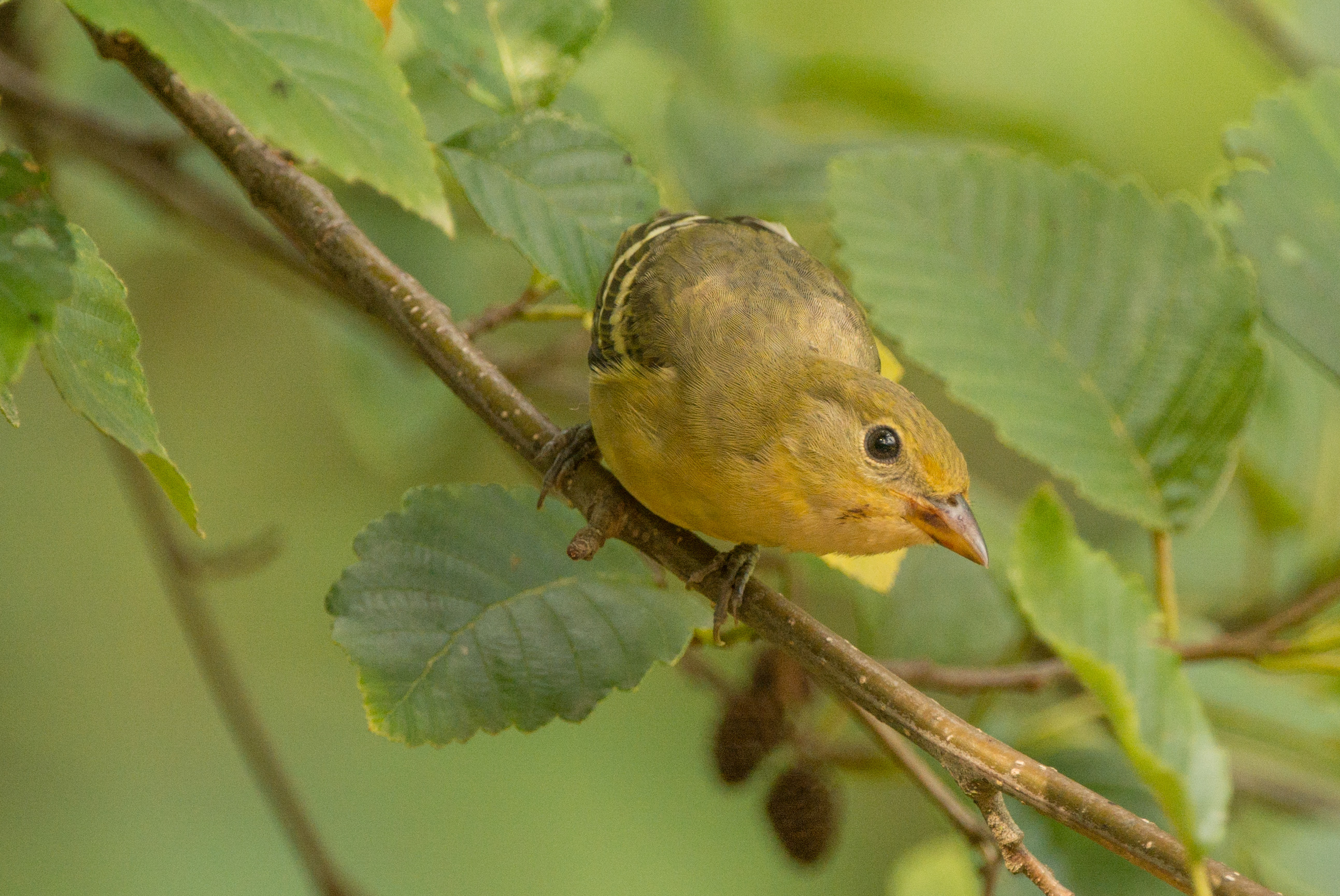
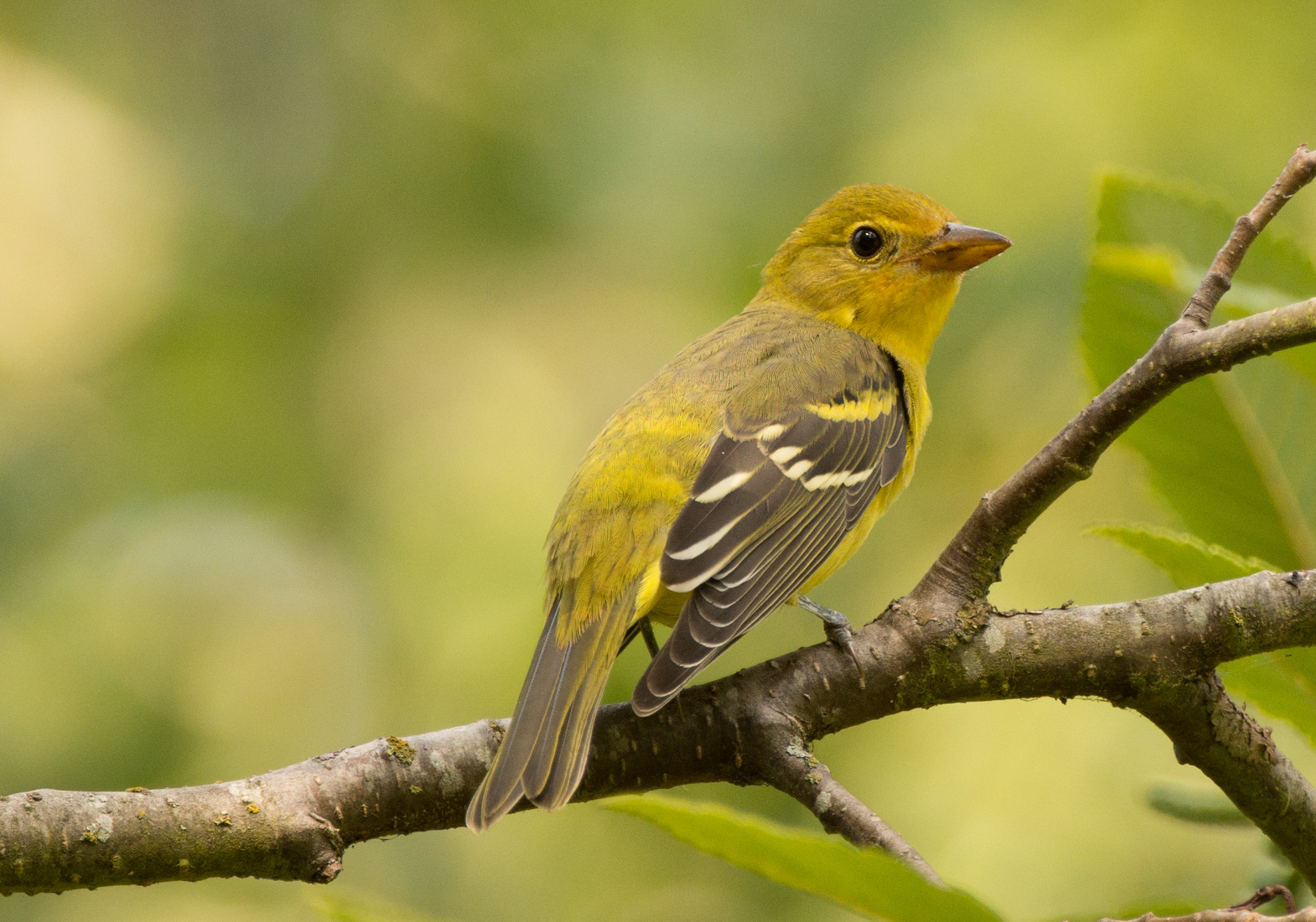
Tanager, Western 20150802-02

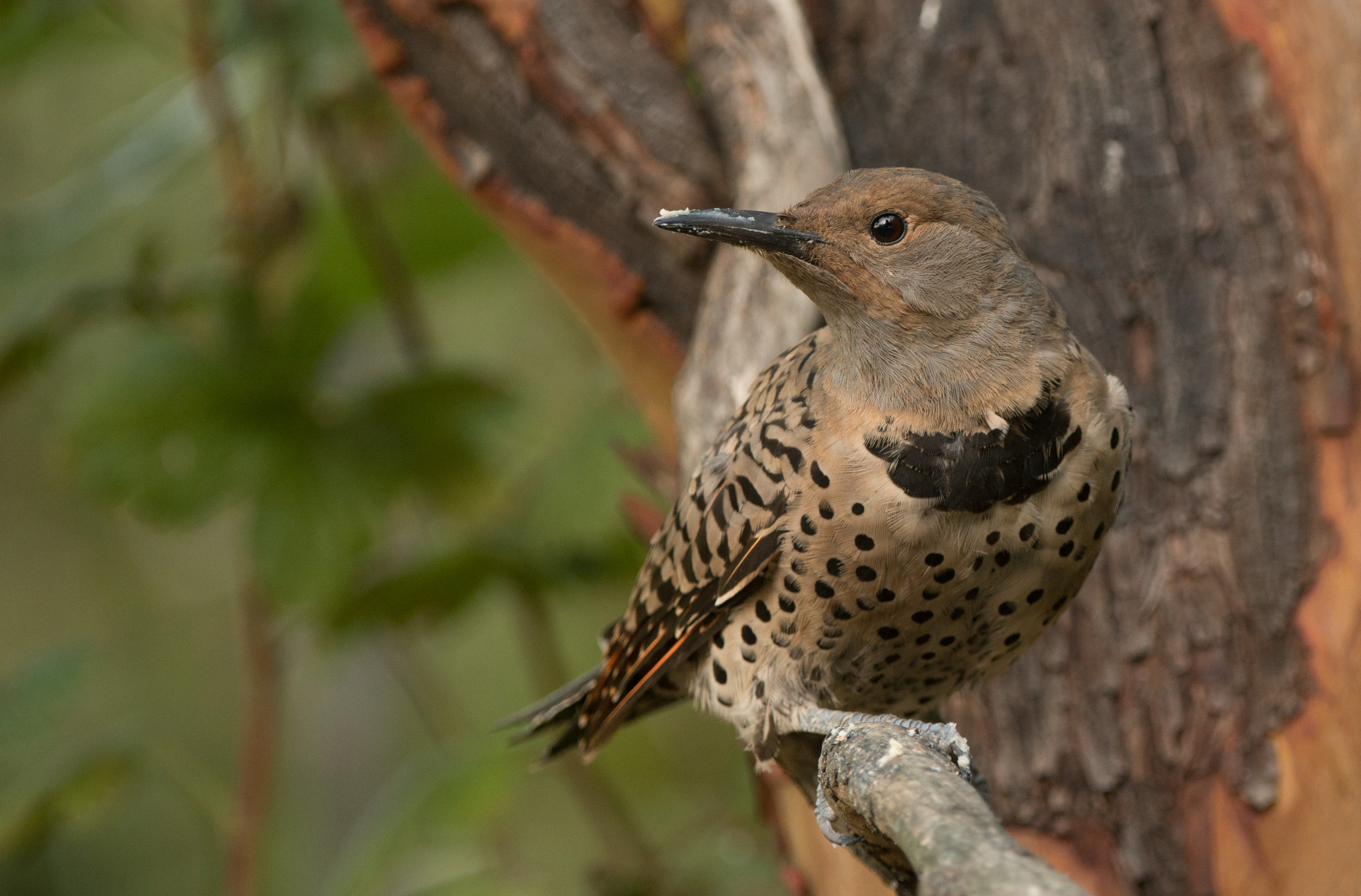
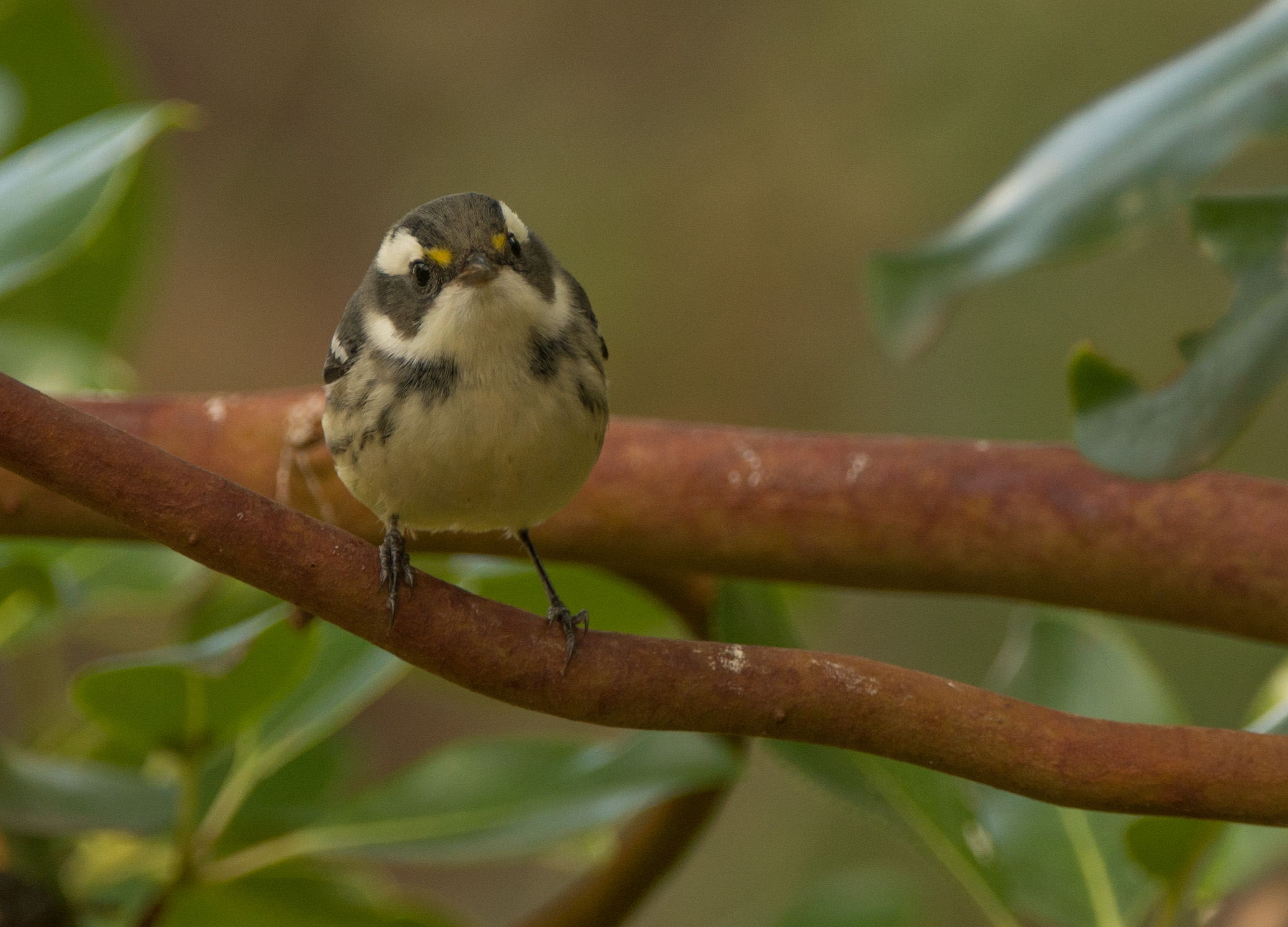
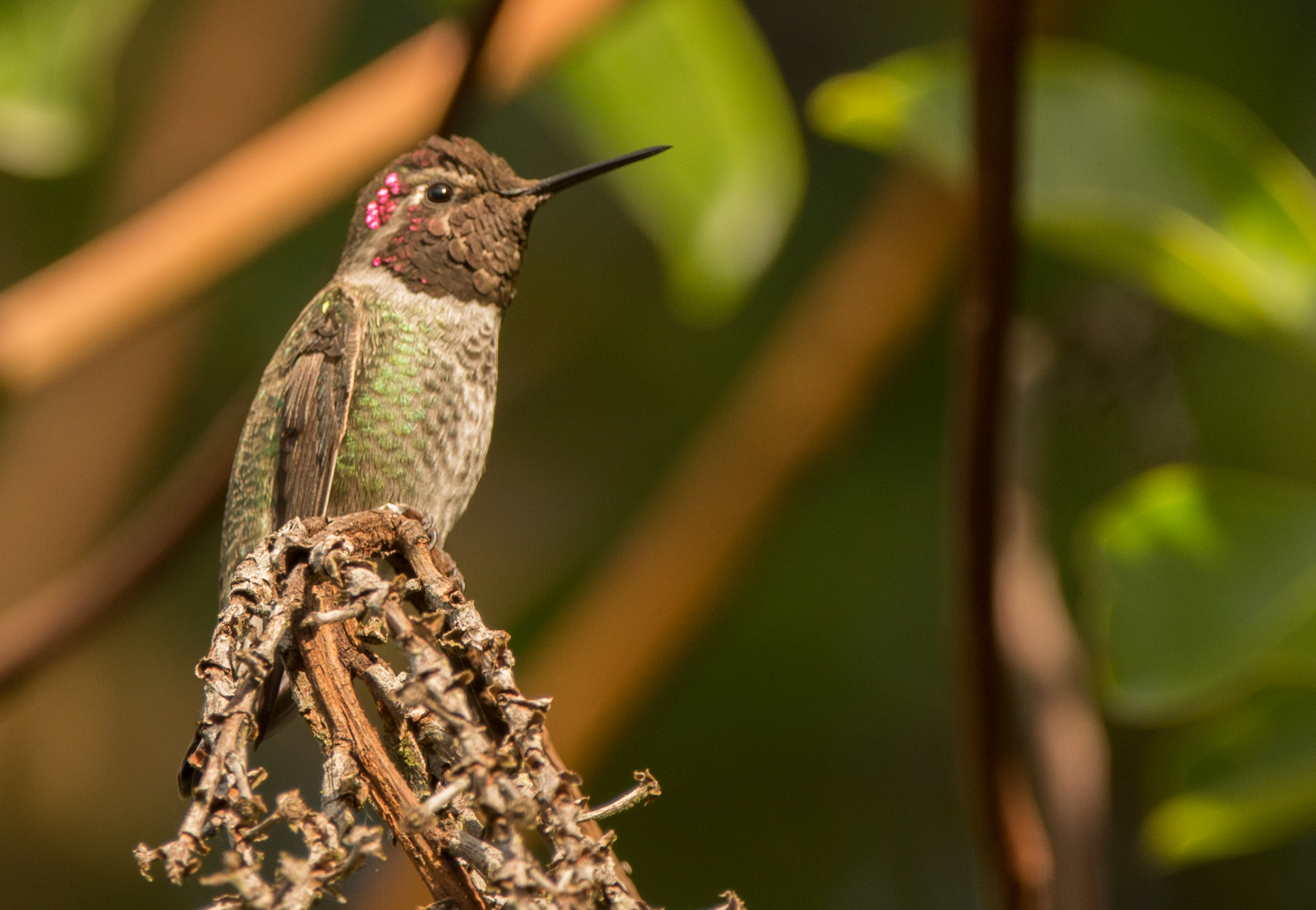
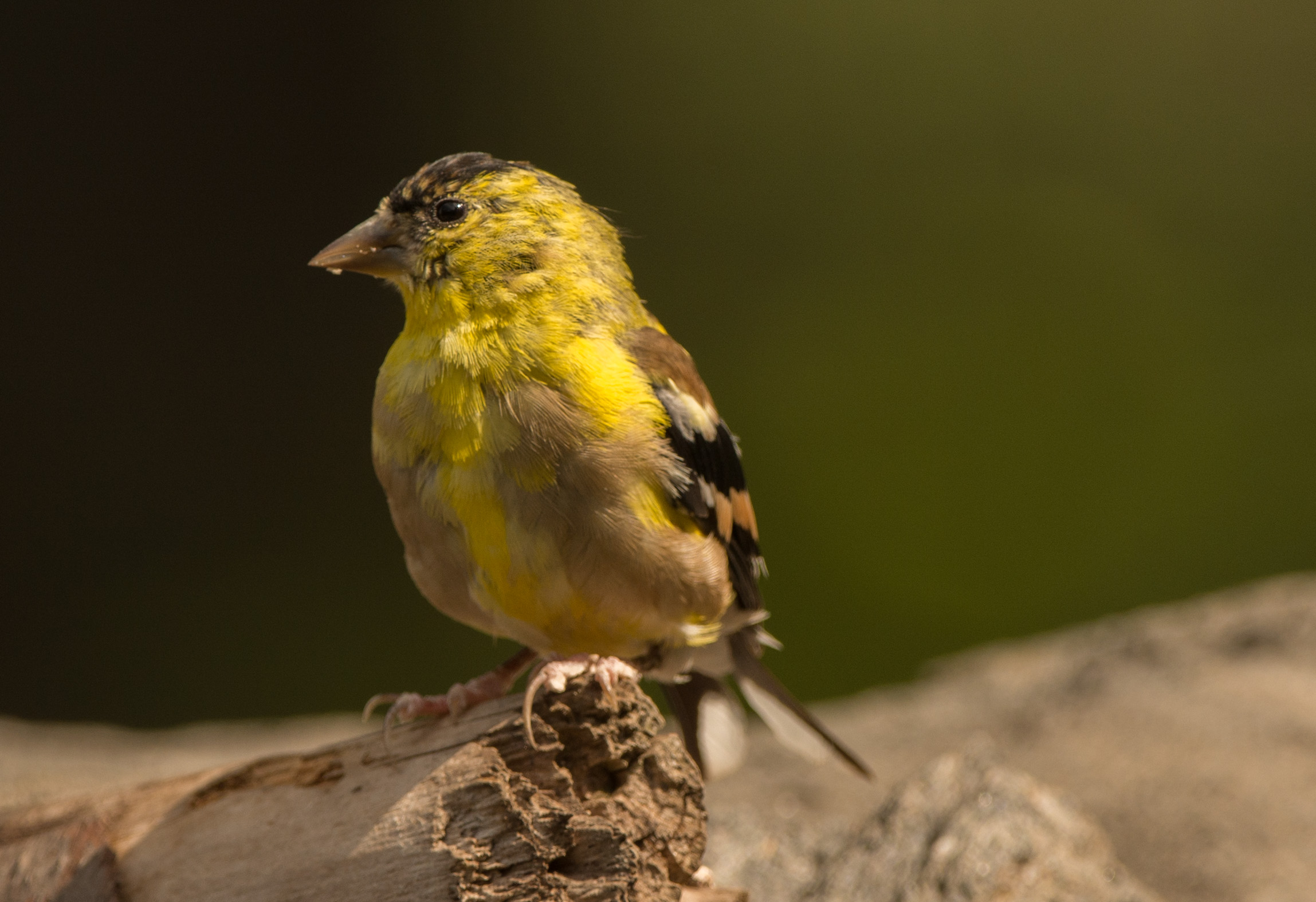
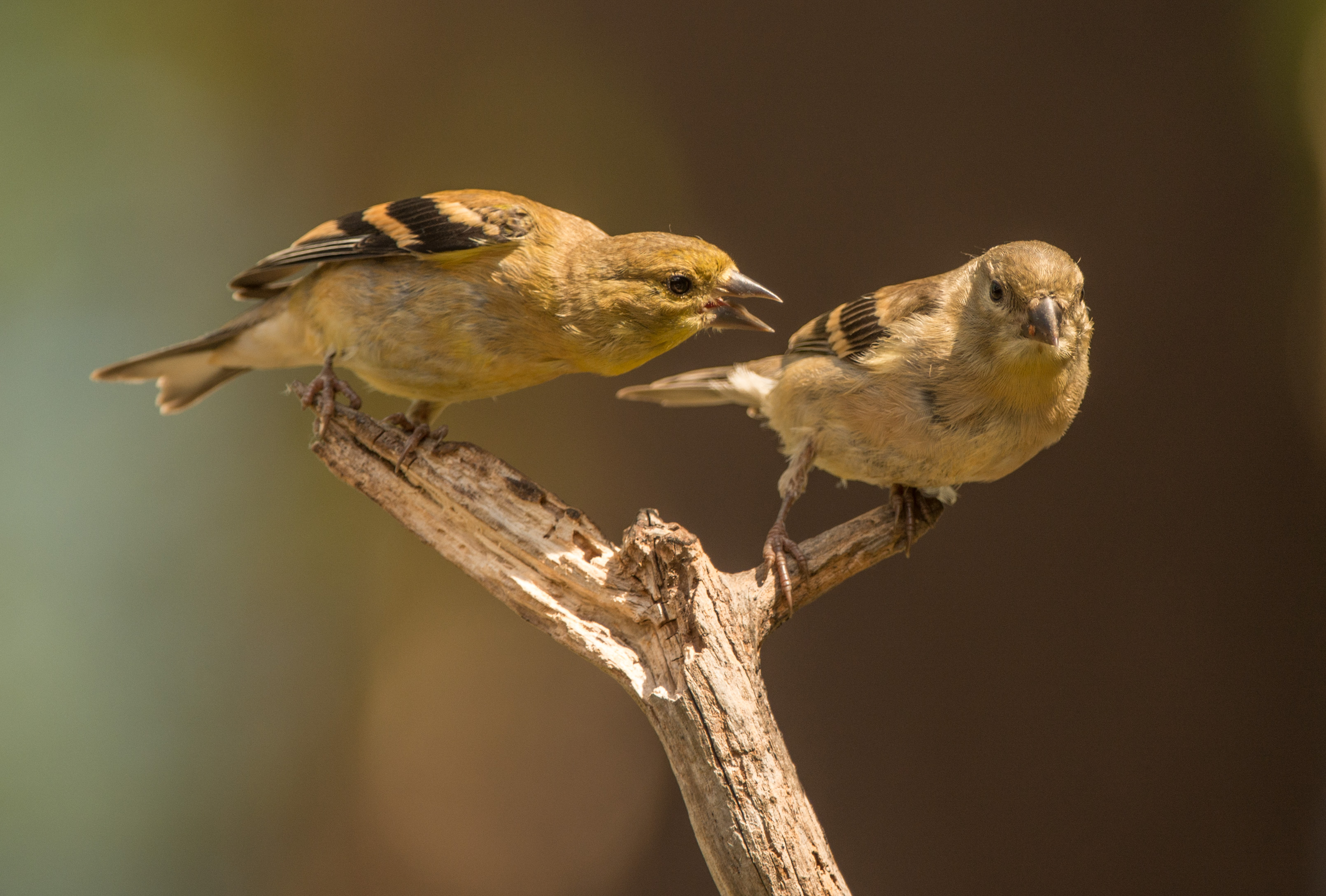
We’ll start with a photo of a relatively rare bird that was in the yard on Sunday, 8/2.  We have seen only one other all season and I was very lucky to have been able to separate this bird from all the other traffic in the yard.  Do you know the species and sex of this bird?

After several weeks of unexceptional sightings (with the exception of the Western Scrub jay and a very few Cedar waxwing visits), things have begun to pick up.  I’m once again seeing warblers in the yard… in fact, last week I tallied three different species.  Here are photos of a male Wilson’s warbler and an Orange-crowned warbler

Warlber, Wilson's  20150802-04 Warlber, Orange-crowned 20150802-03

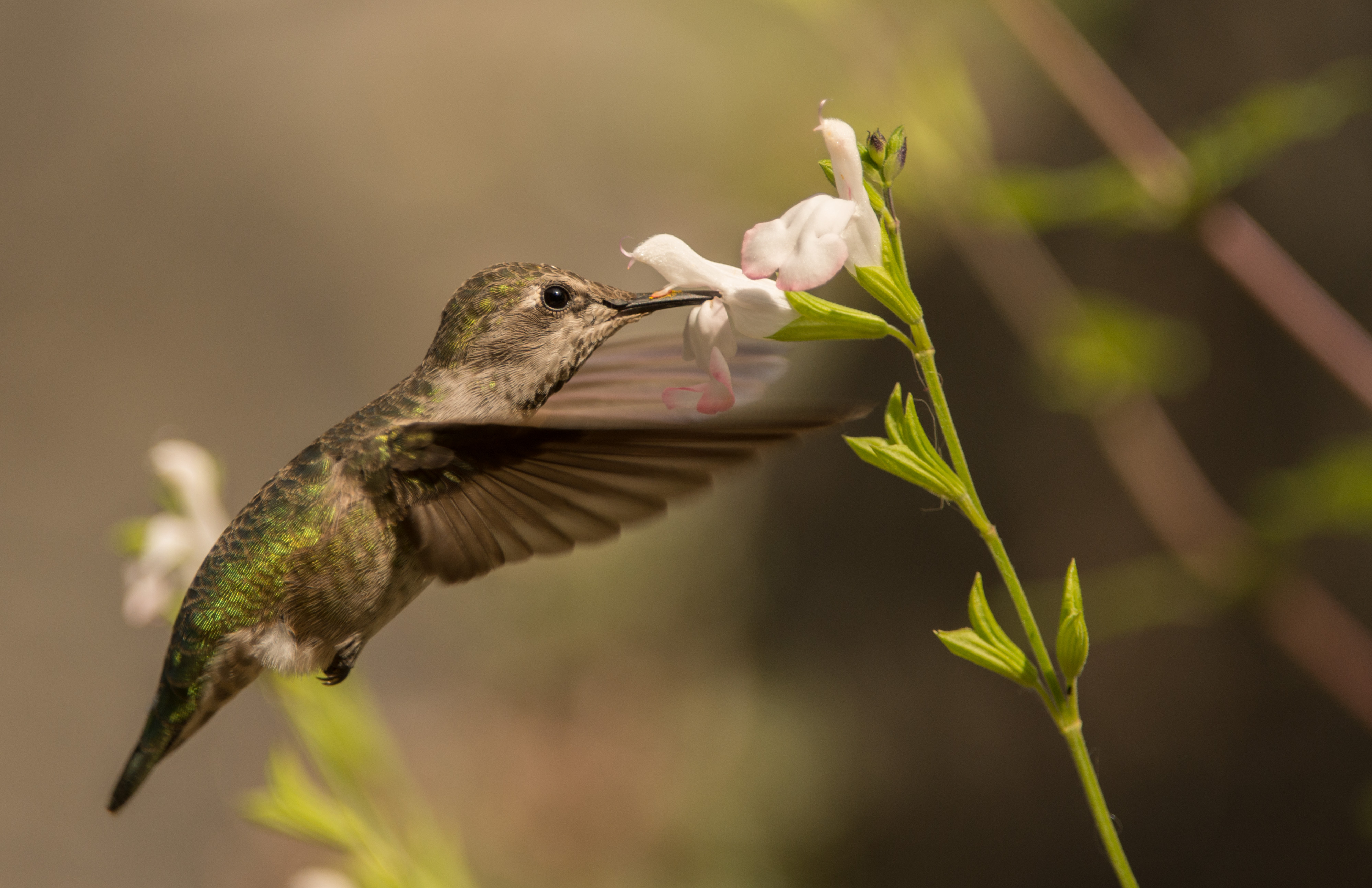
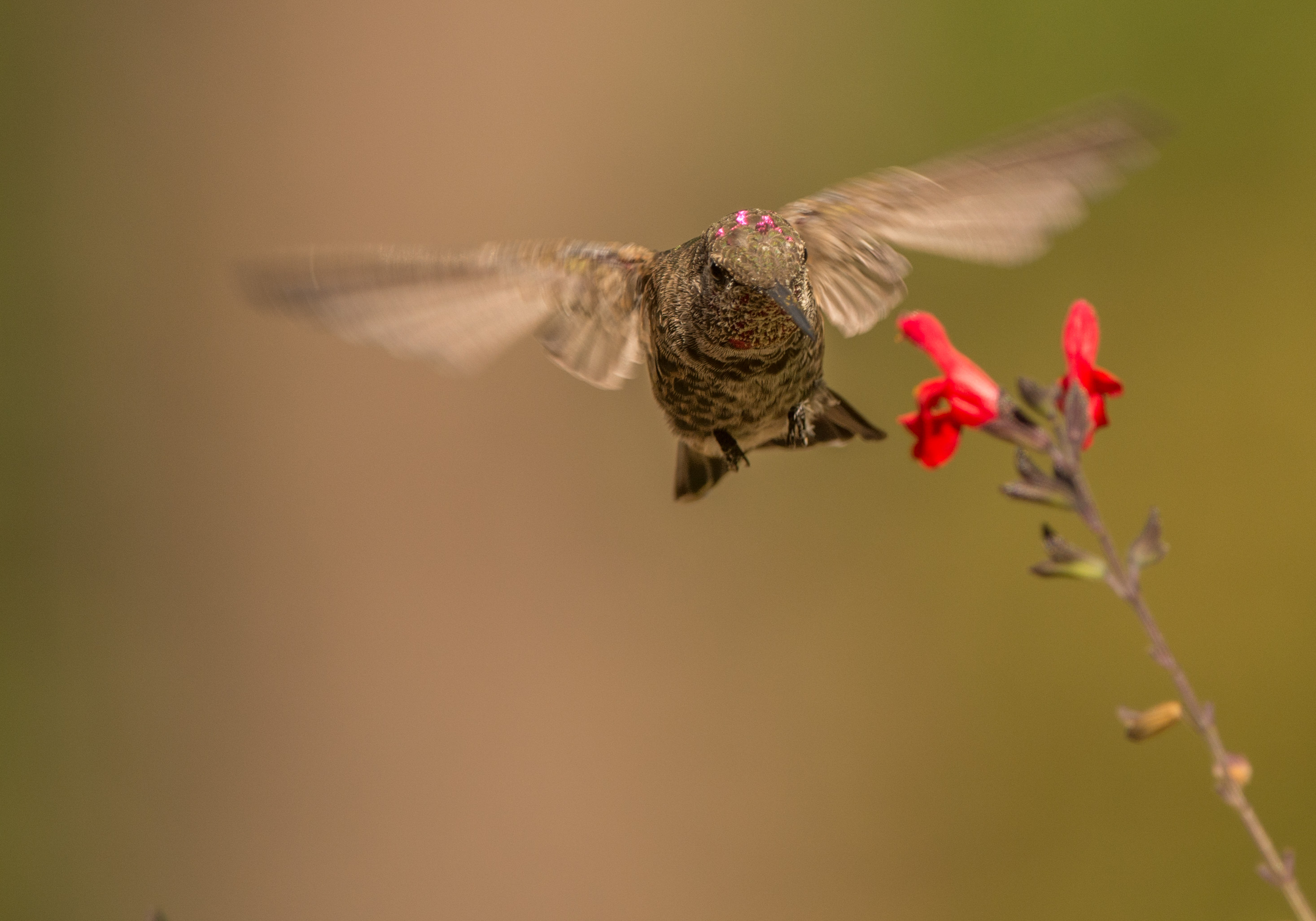
The hummingbirds are mostly gone and are only rarely using the single feeder that I still have up, but here is one of the few remaining Rufous hummingbirds.  This appears to be a juvenile male.

Hummingbird, Rufous 20150802-01

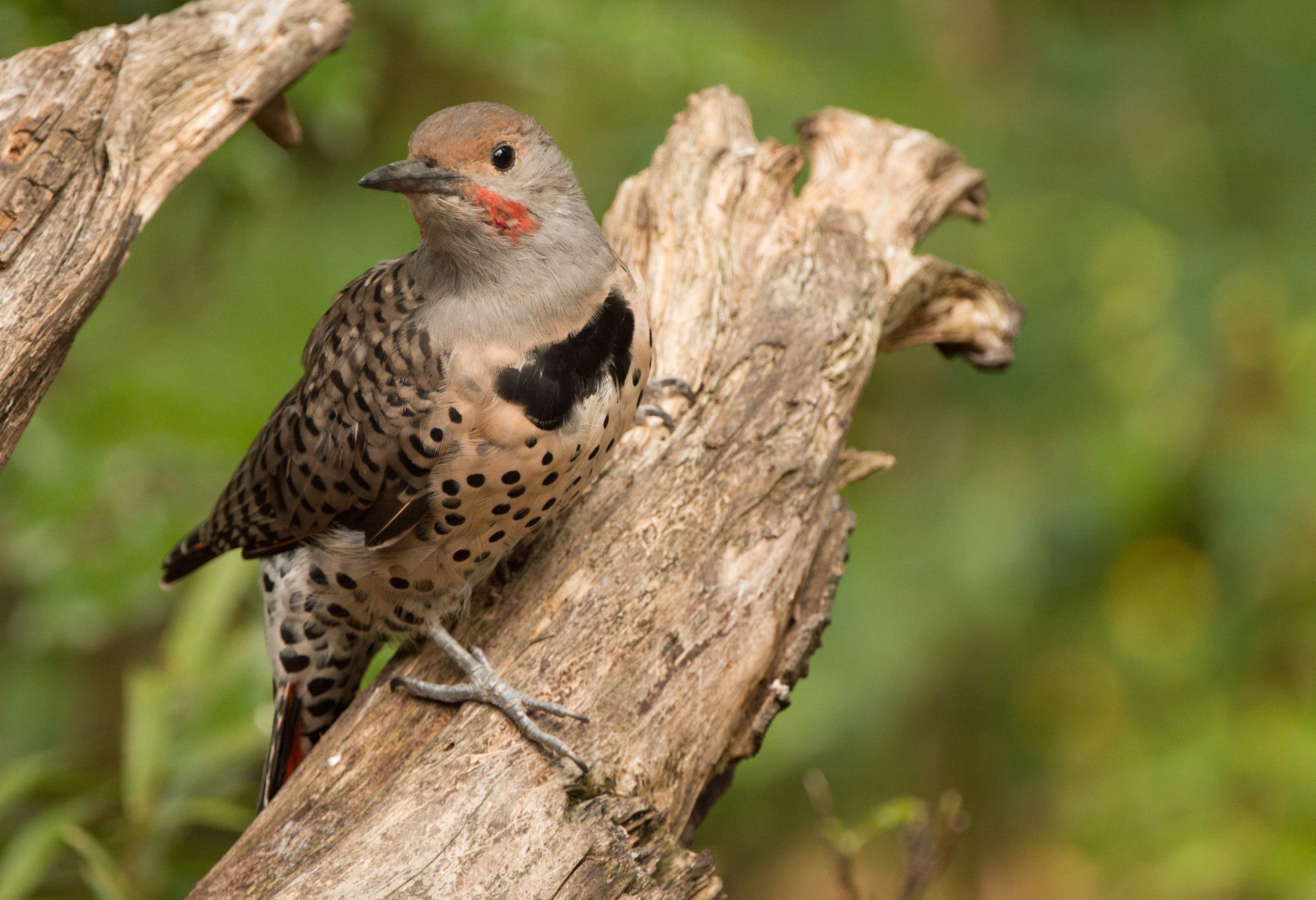
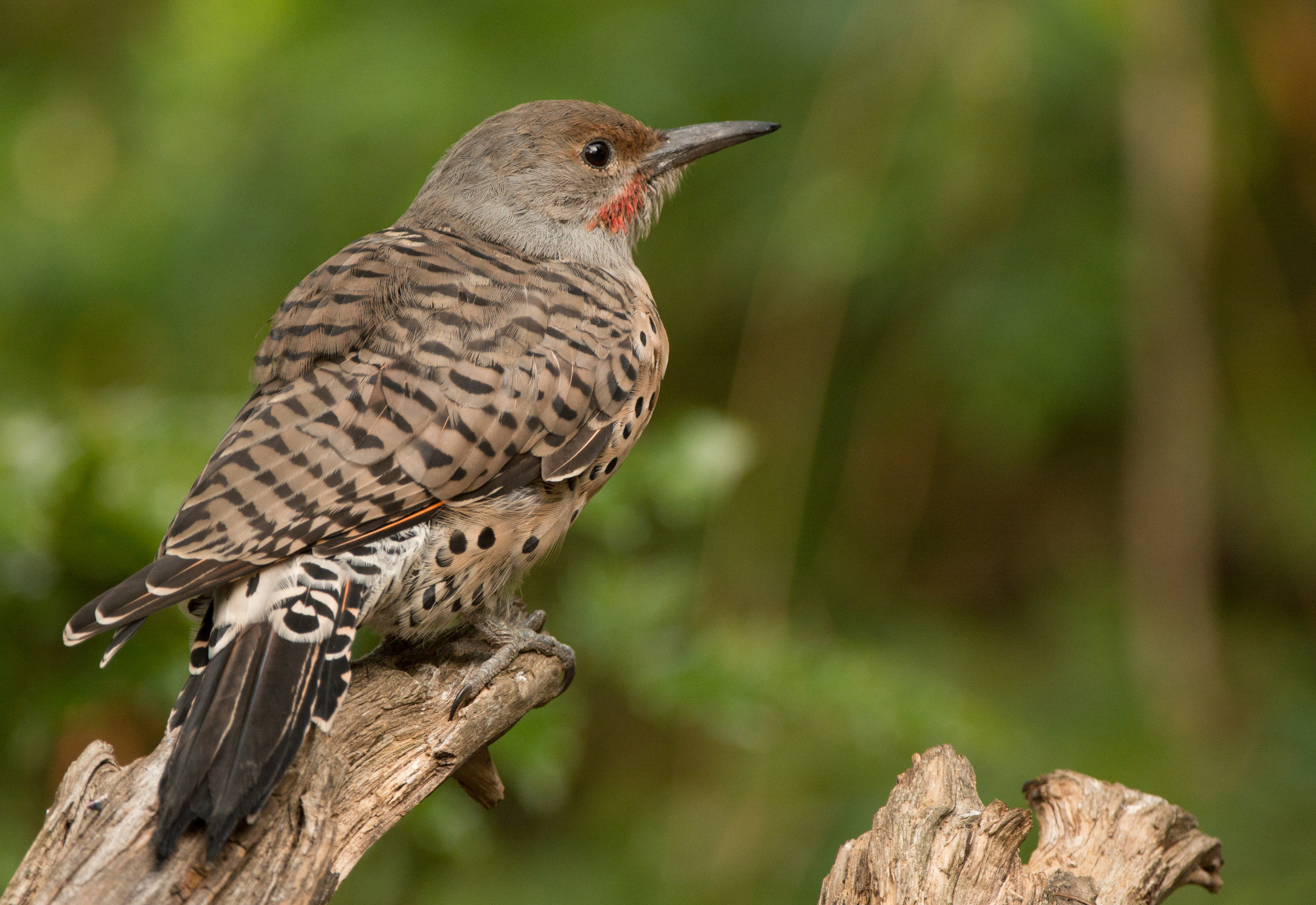
As I believe I might have mentioned in a prior post, Downy woodpeckers in the area apparently had a successful breeding season since for a long time we were being visited by a couple of juveniles.

Woodpecker, Downy 20150802-02

Here’s a photo of a male House finch feeding on some ‘habitat enhancer’ on the ground…

Finch, House 20150802-04

And finally, a photo of an American robin which just finished a bath!

Robin, American 20150802-08


And the photo of the mystery bird at the top of this column?  It’s a female Western tanager.  We only had one other this year and it was a male which made a single appearance a couple of months ago.

Spring Fledges

It’s a tough, unpleasant job having to take up blogging again after having published photographs of a Western Scrub jay in your yard a couple of weeks ago! What can you possibly do for an encore?

The warblers have finally started finding their way back to the yard after a lull of a couple of months. In the last week we’ve had visits from a couple of Yellow-rumped warblers (including a beautiful male Audubon’s, an Orange-crowned warbler that took an extended bath and visits by both male and female Wilson’s warblers, which were conspicuously absent during the spring migration.  I managed to get NO photographs of the birds, although I have many from earlier in the spring and prior years.

And though we had at least one family of Red crossbills with at least three young, they abandoned us two to three weeks ago.

A surprise visitor was this difficult to identify young bird, which is rather nondescript and somewhat resembles several other juvenile species.

Blackbird, Red-winged 20150725-04
Fortunately I was provided a rather obvious clue shortly after its arrival…

Blackbird, Red-winged 20150725-12
In past years adult Red-winged blackbirds have made rather frequent trips to the feeders during the breeding season, my theory being to keep from spending too much time away from the nest. This is the first year when an adult has shown up so late and with one of the juveniles in tow.

Blackbird, Red-winged 20150725-06

We have successfully fledged at least a couple of White-crowned sparrows, another species that visits every spring but until last year (when they raised a Brown-headed cowbird) never spent the breeding season in the area.  (I’m hoping that this is a photo of one of the juvenile White-crowned sparrows!)

Sparrow, White-crowned 20150717-09

Most of the male Rufous hummingbirds have already left on their fall migration, leaving only a few females and juveniles behind.  (This may not look much like a Rufous hummingbird but I can defend my identification with other photos I took of the bird.)

Hummingbird, Rufous 20150718-01

Downy woodpeckers apparently successfully raised at least one, and possibly two (based on yard exit direction) families this breeding season. For weeks the young woodpeckers spent considerable time at the suet feeder before I took it down due to predation by European starlings. I had a neighbor that complained about the starlings and asked me what to do about them. I told him to leave his feeders up… it would mean fewer trips to my feeders!

But here is an interesting photo I took in early July. This female Downy woodpecker was on one of the staging sticks by a bird bath, and the bird spied a tiny insect hole in the stick. Here you can see her inserting her tongue into the hole to explore for food! This can’t be a good way to make a living!

DSC_7519


A curiosity about birding identification.  I code my photographs with the sex of the birds when I can make that determination.  If the bird is a juvenile I also apply a code for that.  But at this time of year the sexual identification gets somewhat problematic for some species, such as some warblers, hummingbirds, grosbeaks, goldfinches, House finches, crossbills, etc.  The sexes of birds of these species, and others, can’t be safely established by someone with my lowly birding skills.  So in many cases I’m left knowing only that the birds are either juveniles or females.

And finally, presumably during the night of July 19/20, a large dead pine tree in the yard, which was a lot more rotten than I realized, fell over and landed immediately adjacent to the place from which I photograph birds in the watercourse! Had I been sitting in my usual place when it happened it wouldn’t have mattered that it physically missed me… I would have been so frightened that I would have had a heart attack! This dead tree held a suet feeder and was the primary staging tree for the yard, often giving me advance notice of special arrivals. I’m still trying to figure what to do about it, but my current thought is to try to find a smaller dead tree and bury the butt end in the ground. If you have any candidates I would like to hear from you!


IMG_1336

New Yard Species!

On the afternoon of 7/12/2015 my wife called to me from the kitchen and told me that there was a Western Scrub jay in the yard!  I thought it doubtful since I have never seen one in Western Washington but I rushed to the ;window, thinking that we might have a Stellar’s jay in the yard, itself a very rare visitor.  However my wife was right… it was a Scrub jay!

I raced for my camera and sneaked out the door, trying to surreptitiously set up my camera before the bird left.  Unfortunately I was in its full view.  I managed one lousy photo before it briefly jumped to a staging stick in my inventory and then disappeared into a group of young madrone and fir trees.  The photo was good enough for identification but not much else.

Jay, Scrub 20150712-01

Thus began a wait to see if the bird would reappear.  Fifty minutes later there was a combination among some chickadees and nuthatches at the edge of one of the madrones, and a minute or so later the Scrub jay flew out of the trees and onto one of our static bird baths in the yard.  I began taking photos and continued as it flew to a staging stick for our platform feeder and then back into the madrones.  Fortunately when it entered the madrones it landed on a perch that gave me a good visual corridor so I was able to obtain even more photos!

We’ve lived in the Cap Sante neighborhood for over 14 years and this is the first Scrub jay we’ve had in the neighborhood, to my knowledge.  Indeed, it’s the first I’ve seen in Western Washington… and it chose to show itself in our yard while I had my camera ready!

Jay, Scrub 20150712-04 Jay, Scrub 20150712-06 Jay, Scrub 20150712-16


California Quail on Cap Sante

In almost all the years we’ve lived in the Cap Sante neighborhood (three locations for 14 years) we’ve had a nice population of California quail.  In the spring/summer of 2013 we seemed to have only one male, and in all of 2014 I saw, and perhaps more importantly heard, no quail.  Sadly, I assumed that they had been extirpated from the neighborhood.  I was therefore elated this spring when we had two different pairs in the yard at the same time!  While they haven’t spent all that much time in the yard, in the past few days we  had a pair bring in three chicks.  Since the broods in the past often numbered about a dozen, the three chicks indicate that the family has already experienced hardships.  But as small as these chicks are, and they are small, the little ones are already capable of at least 4-5 feet of vertical flight.

A couple of days ago I encountered a male a few blocks from our house that was tending seven even smaller chicks than the ones seen in our yard.  I can only hope that all the remaining chicks from both broods survive.

On July 4th the three-chick family visited the yard and gave me the opportunity for photographs.  So here are photos of the parents and one of the chicks…

The male, who serves as an able lookout…

DSC_7251

The female…

DSC_7259

The female and one of the flight-capable chicks…

DSC_7272


Grouse

For several years now I have made a spring excursion to the Winthrop area to bird. There is some productive birding in the area and the birds that are found east of the Cascades tend to include different species from those we commonly see west of the Cascades. So it’s an entirely different birding experience.

It has been our habit in the past to stay at one of the facilities in Winthrop or the immediate vicinity. However this year I waited rather late to make our reservations so we ended up staying at Sun Mountain Lodge for three nights of our trip. The lodge is a high-end facility near the top of a mountain with grand views of the surrounding Methow Valley. Part of the grounds on the front of the lodge are manicured but on the whole the lodge is surrounded by native vegetation. And this vegetation provides habitat for grouse.

Grouse, Dusky 20150613-11

My prior encounters with grouse had only been rare occasions on the road and one I photographed early in the morning with bad light and on part of the manicured grounds, hardly the kind of photo you want in your portfolio. One morning I drove down to Beaver Lake to bird and my wife walked down to the lake from the lodge. On the way she encountered a female grouse (hen) with two half-grown chicks. Since her walk was the better part of a mile, her encounter didn’t motivate me to lug my camera, lens and monopod (which together weigh 13 pounds and are awkward to carry) across the landscape hoping to happen upon a grouse.

Grouse, Dusky 20150613-24

On our last afternoon at the lodge I woke from a nap with only about 30-45 minutes until sunset. I decided to make a short excursion behind the lodge to see what I might be able to photograph. I slogged cross-country for several hundred yards with uneven footing, remembering that east of the Cascades I should be wary of poisonous snakes. Finding nothing to photograph I switched to the front of the lodge and walked some of the paved roads. I hadn’t gone far before I saw some movement near a large rock beside the road, and further investigation revealed a grouse hen with a half-grown chick by her side. I gave her a wide berth to get more light behind me, and when I finally settled for photos I was surprised that instead of retreating into the native habitat she made her way towards me! She was originally about 30’ from me and closed to less than half that distance with no apparent concern for her two chicks that were independently roaming the area. She finally ignored me and continued grazing in the area.

Grouse, Dusky 20150613-29

The area where I had found the grouse was an island with native vegetation between the road/parking area and the lodge, and was located less than 100’ from the lodge. I took many photos, mostly of the hen since she was larger and her head stuck up above the vegetation. The chicks were difficult to see… I tracked them mainly by the vegetation swaying above them as they moved and fed.

I rose early the next morning and reasoned that the grouse may have spent the night in the island where I had left them the previous evening. So I returned to the area to try to find the grouse and get more photos under more favorable lighting conditions. Bingo! I located another hen on a separate island but in the same area, and this hen had either four or five half-grown chicks. I stalked this group for over an hour and took many more photographs. When I finally grew tired of photographing grouse I headed back to our room, but I reached another island with native habitat and encountered a second (for the day) hen with three half-grown chicks. This resulted in even more photographs.

Grouse, Dusky 20150614-20

During this second encounter I again had the hen move towards me. At one point one of the chicks started moving directly towards me. I stood still and resolved to note just how close the chick would get. The distance started with about 4’, then 2’, then 1’, then 4” (!) before the chick encountered the base of my monopod and jumped away. I’ve seen chickens that exhibit a lot more caution!

Grouse, Dusky 20150614-41

I had been uncertain the previous evening as to the species of grouse that lived in the area. Nancy posed the question to the front desk clerk and received an indeterminate answer… and I received another indeterminate answer the following morning from the morning crew. However the desk clerk with whom my wife spoke provided my favorite quote from the trip when he told her that, quite frankly, some of the locals couldn’t figure out why the birds hadn’t gone extinct!

So I was left with the dilemma as to what species of grouse I had seen and photographed. The field guide I consulted was not much help, so I contacted a friend who is one of the better birders in the county. Here is what I learned from her and a little research on the internet.

Sometime in the last century (that phrase really makes me feel old!) this grouse was listed as two separate species. Then at some point the species were combined and labeled as “Blue grouse”. That species was again split recently with the two resulting species being labeled “Sooty grouse” and “Dusky grouse”. In general, the Dusky grouse is found east of the Cascades and the Sooty grouse is found west of the Cascades. Since my photographs were all taken of grouse east of the Cascades I’ll label them as Dusky grouse. But… apparently some hybridization occurs and I’ve read that some Sooty grouse are found in areas east of the Cascades.

I’m presuming that all of this is a lot more than you ever wanted to know about grouse. For the record, I took 53 grouse photos on the evening of 6/13 and another 146 on the morning of 6/14 for a total of 199 grouse photos. I became really tired of processing grouse photos! I didn’t retain all of the photos but they all still required some amount of processing! You can see how I spend a significant amount of my time!

Grouse, Dusky 20150614-64