I went back to the Cap Sante Marina on Sunday (3/3/2013) afternoon and found what was probably the same Common Loon I photographed Friday. Enough said!
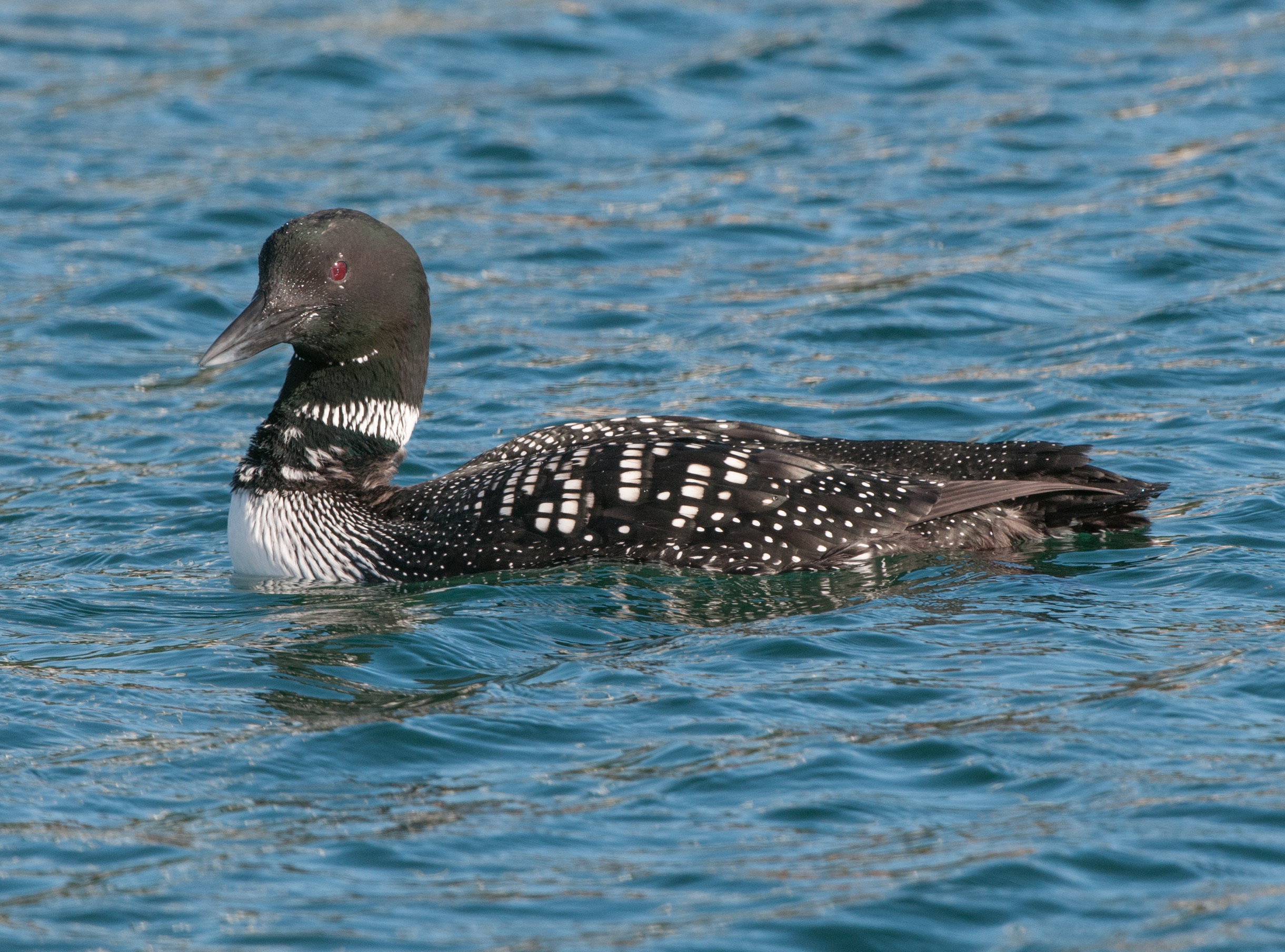
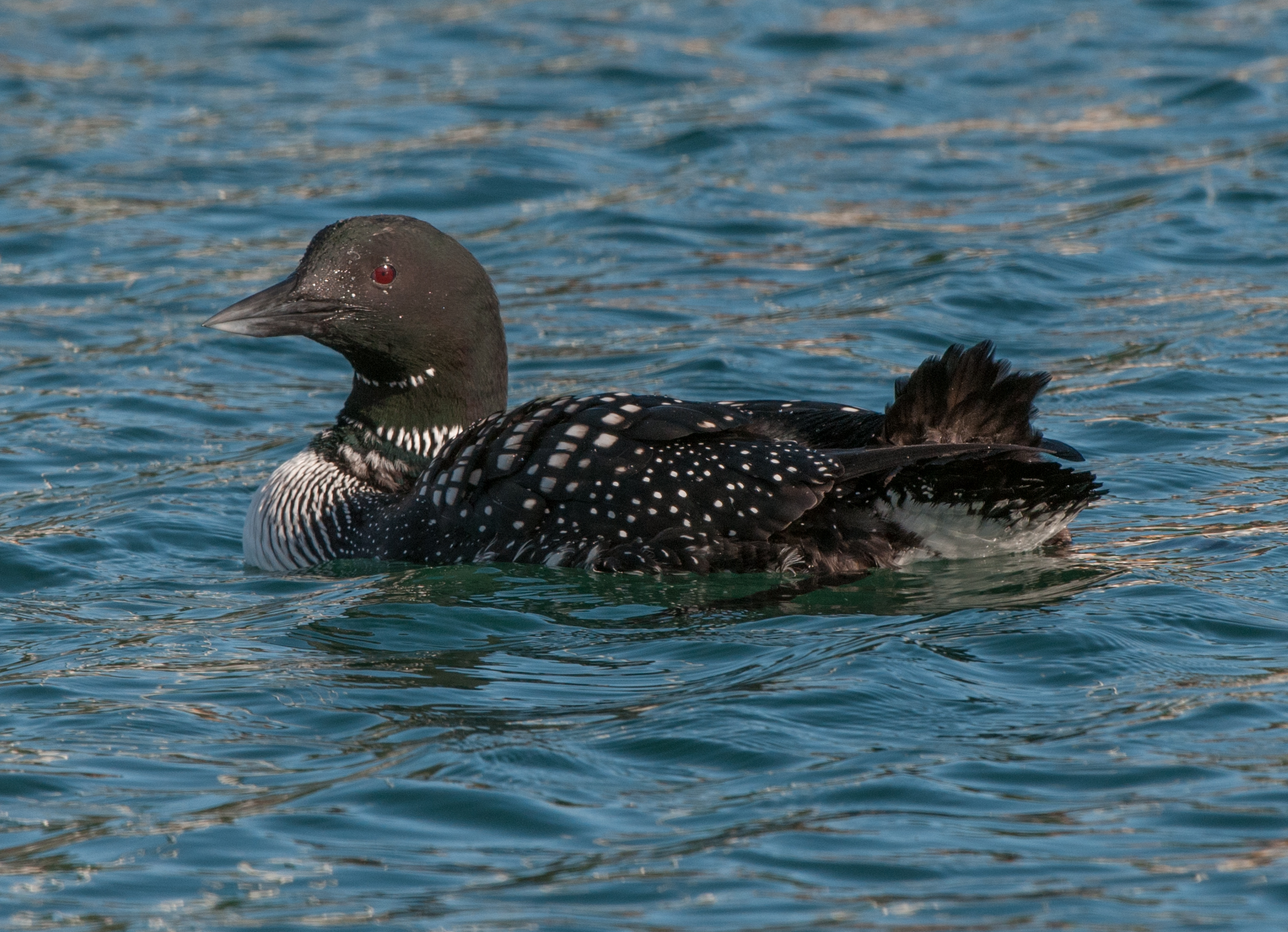
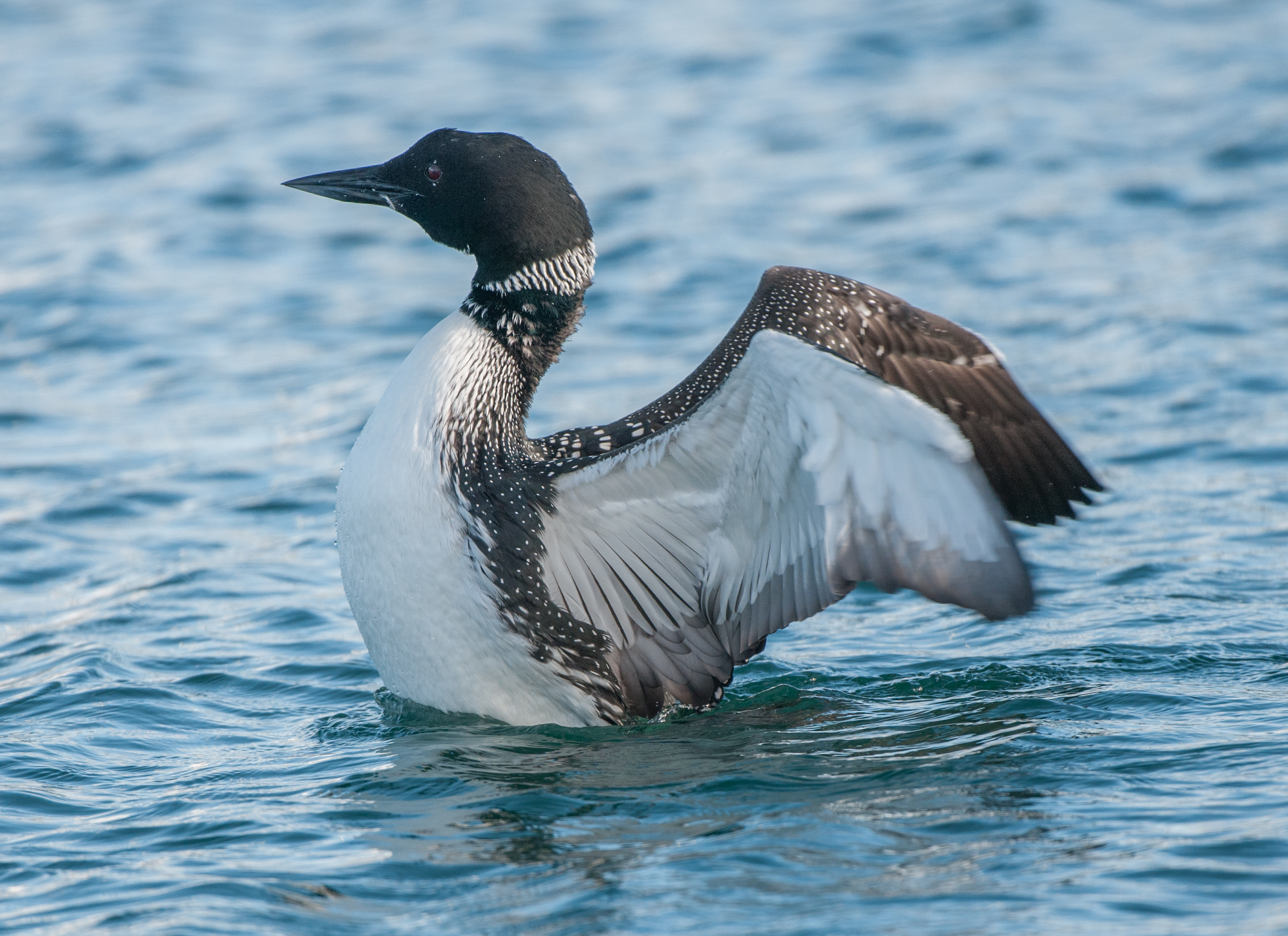
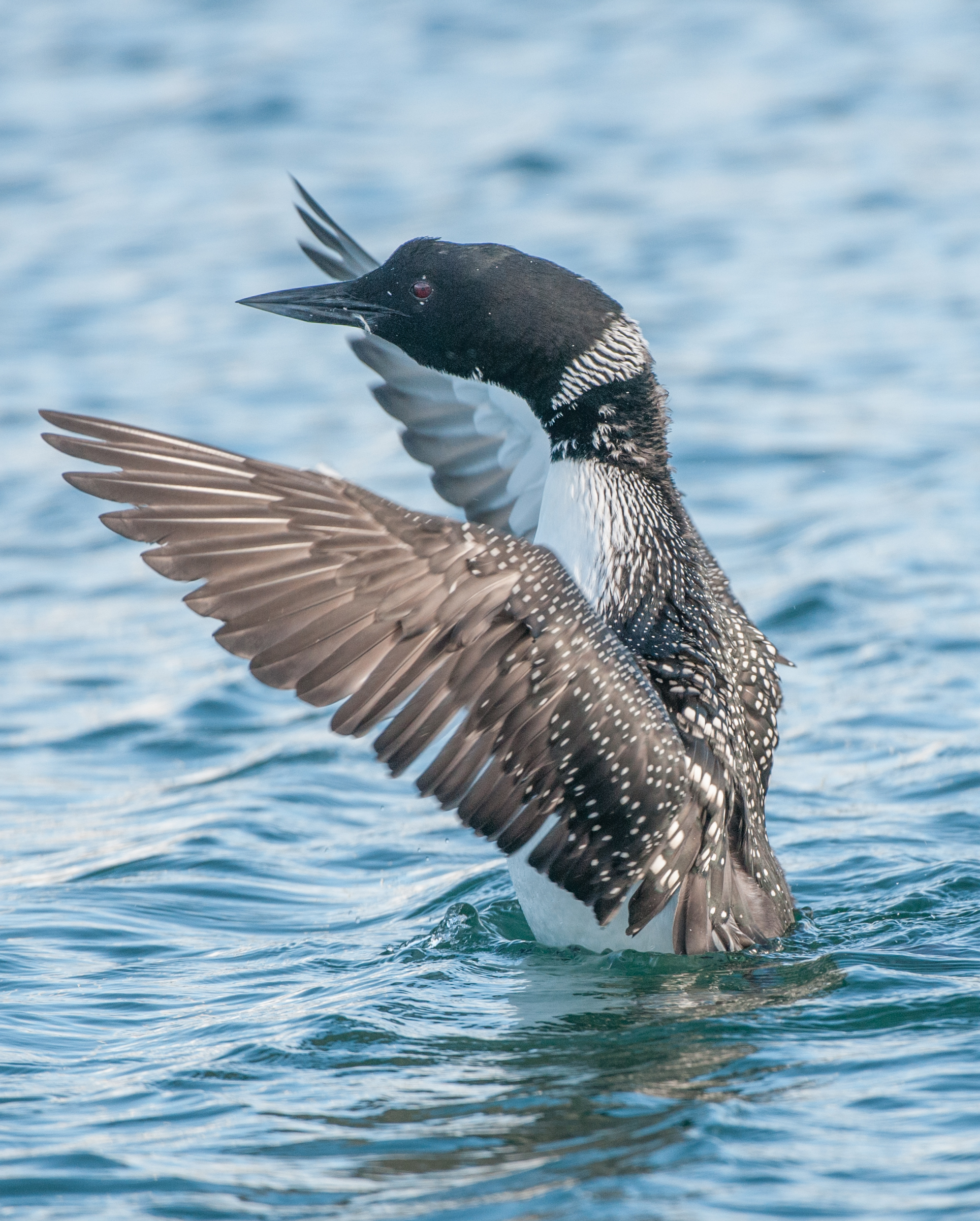
I went back to the Cap Sante Marina on Sunday (3/3/2013) afternoon and found what was probably the same Common Loon I photographed Friday. Enough said!
I’ve noticed for the past week or so that there has been a loon in the north basin of the Cap Sante Marina. Despite breezy conditions on the morning of March 1 I discovered a loon back in the marina and went down with my camera to attempt to photograph it. I found upon reaching the marina that there were actually at least three and possibly four loons in the marina and I was able to photograph two of them, one transitioning to its spectacular breeding plumage.
The first loon I encountered was in non-breeding plumage. I was disappointed and thought that I had seen one in breeding plumage. In the past I have found these birds very wary, but in this case this one kept drifting towards me… against the wind. That indicated that it was deliberately paddling in my direction… a very rare occurrence, in my opinion. Almost the entire time I observed this bird it was preening.
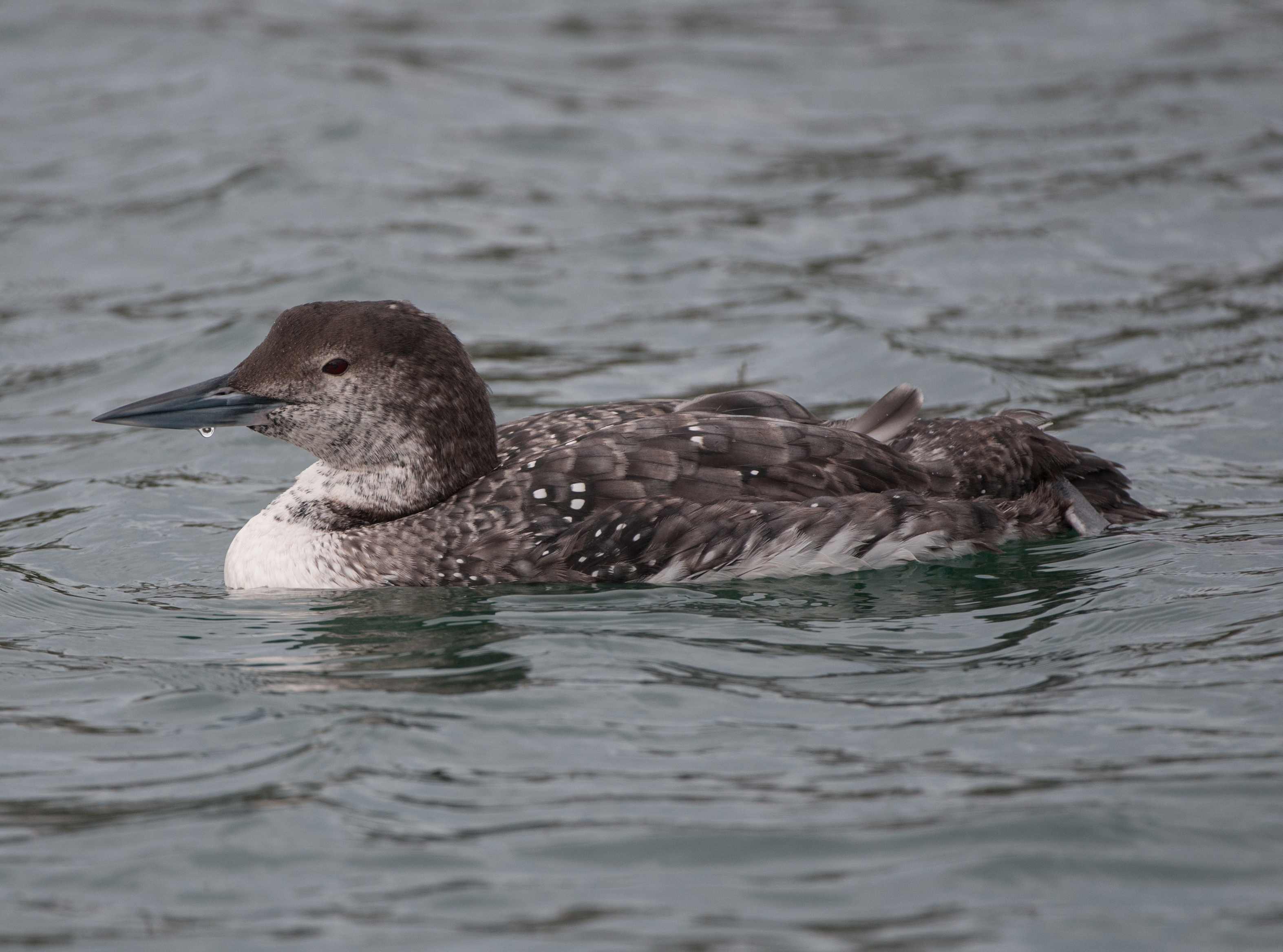
Common Loon in non-breeding plumage
From time to time when these birds are preening they rise from the water and flex their wings. I was fortunate enough to be able to photograph the birds during this maneuver.
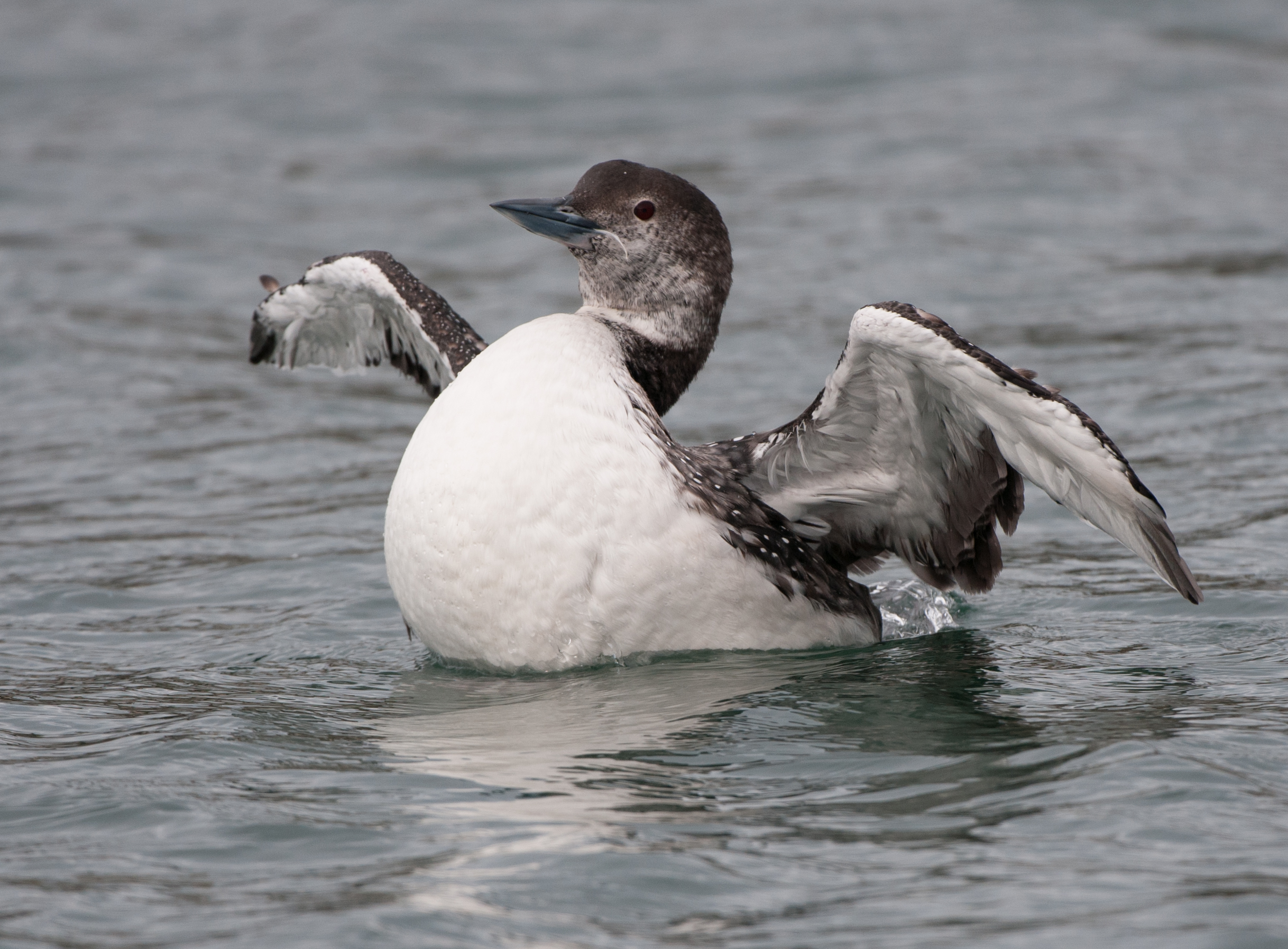
Common loon during preening
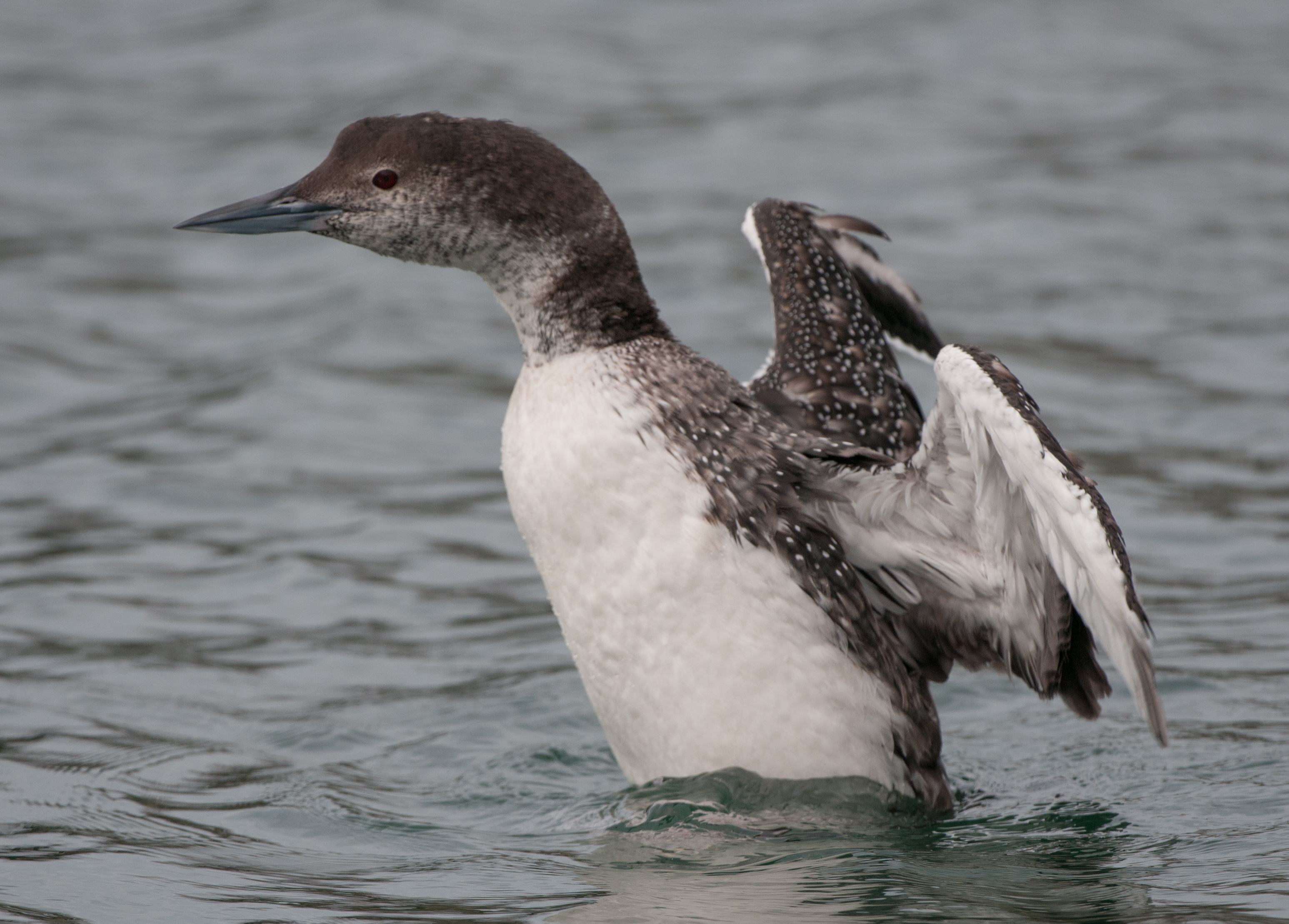
Common loon during preening
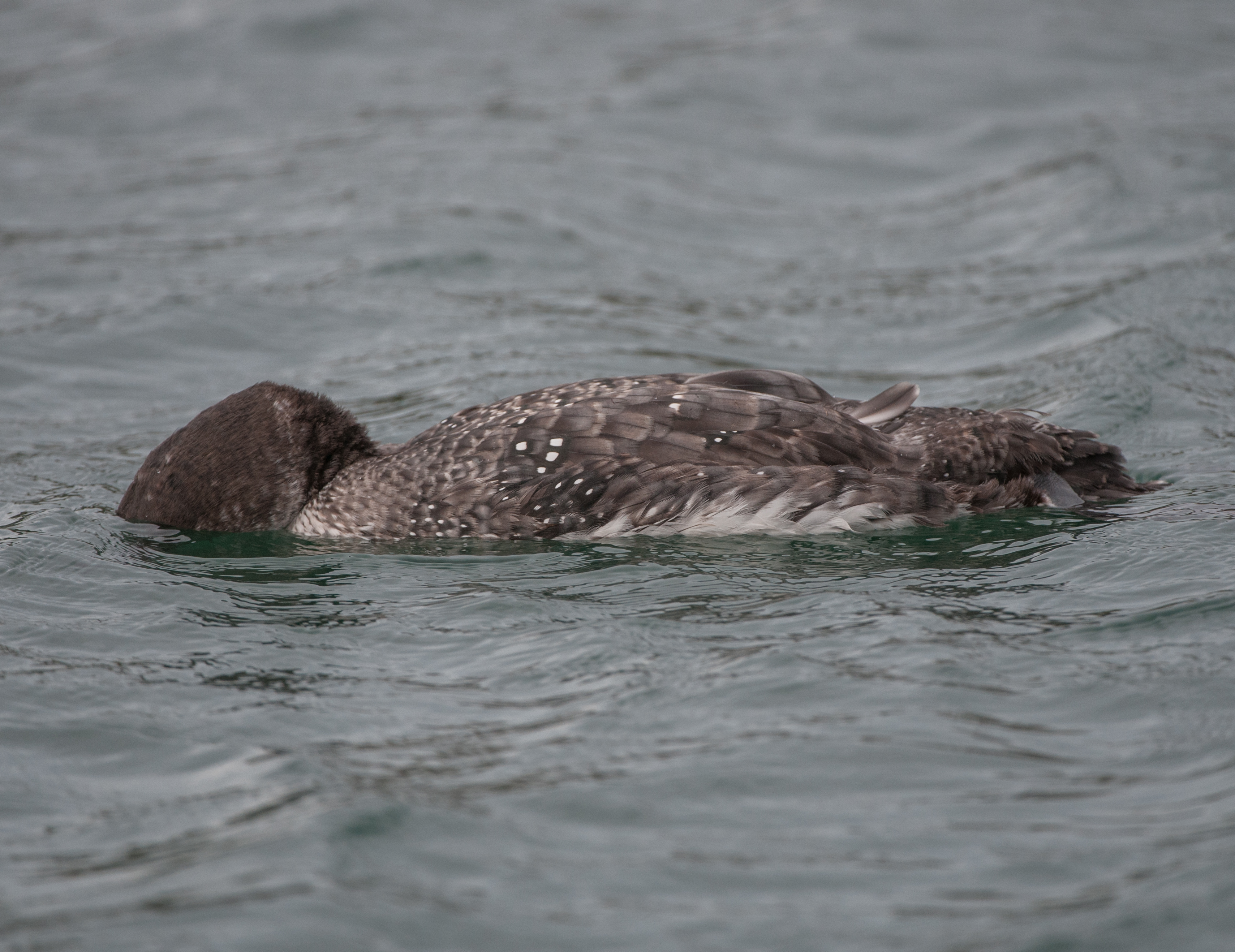
Common Loon on the hunt
Another activity I have observed on many occasions is apparently a hunt for food prior to diving. Loons seem to be one species of waterfowl that exhibit this behavior. In this photo the loon is swimming but inserts its head into the water, apparently looking for a good place to dive.
Here’s the other Common loon, this one transitioning into breeding plumage. I think it has a little way to go and hope to get photos once they acquire full breeding plumage but before they leave the marina.
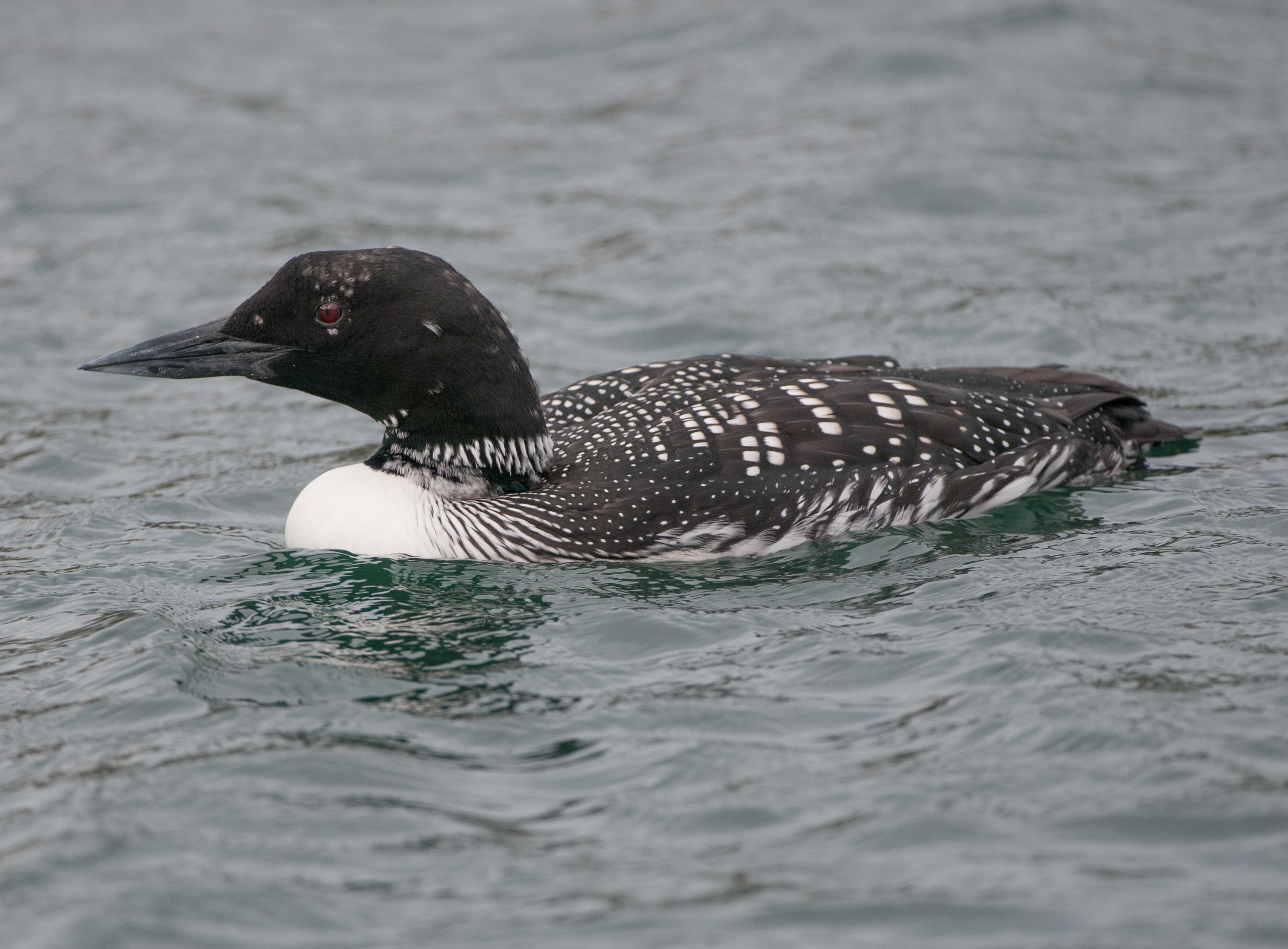
Common Loon in transitioning to breeding plumage
And finally, here is the loon in breeding plumage having a rest. It twists its head to the rear and rests it on its back. I was close enough to the loon to see that it wasn’t closing its eyes, or at least not closing the one facing me.
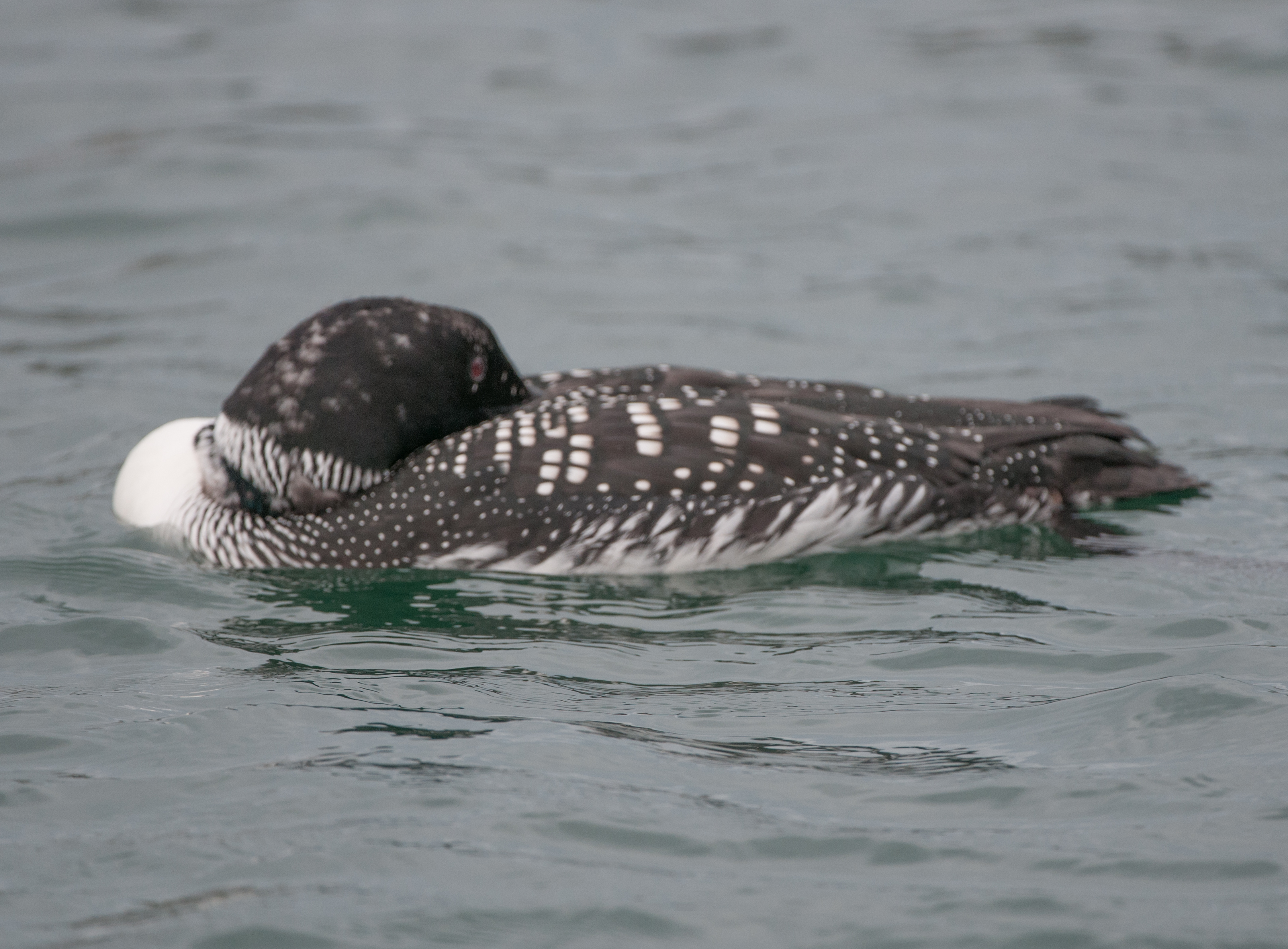
Common Loon in breeding plumage in apparent resting mode
This loon over time also came almost directly towards me, getting just about as close as the other one had. I’ve photographed loons in the marina many times, but I think these two were about as tolerant of human presence as any I’ve encountered.
I had been looking forward to a little sun on the morning of Wednesday, February 20, 2013. My plan was to spend the first part of the day, forecast to be the best part of the day, looking for birds and related photographic opportunities. The weather didn’t cooperate so I took a nap instead (always an optional strategy) but elected to try for a little photography in the afternoon, even though the weather wasn’t any better. Once out I experienced a little intermittent rain but it didn’t keep me from my appointed rounds.
The first part of my journey took me around March Point where I again encountered (presumably) the same Black oystercatcher I had seen on the weekend. (See previous post.) On this day I had my 1.7x tele-extender mounted with my 200-400mm lens which gave me the opportunity to enlarge images substantially. Even though the oystercatcher was further from me on this day I think I obtained better photos.
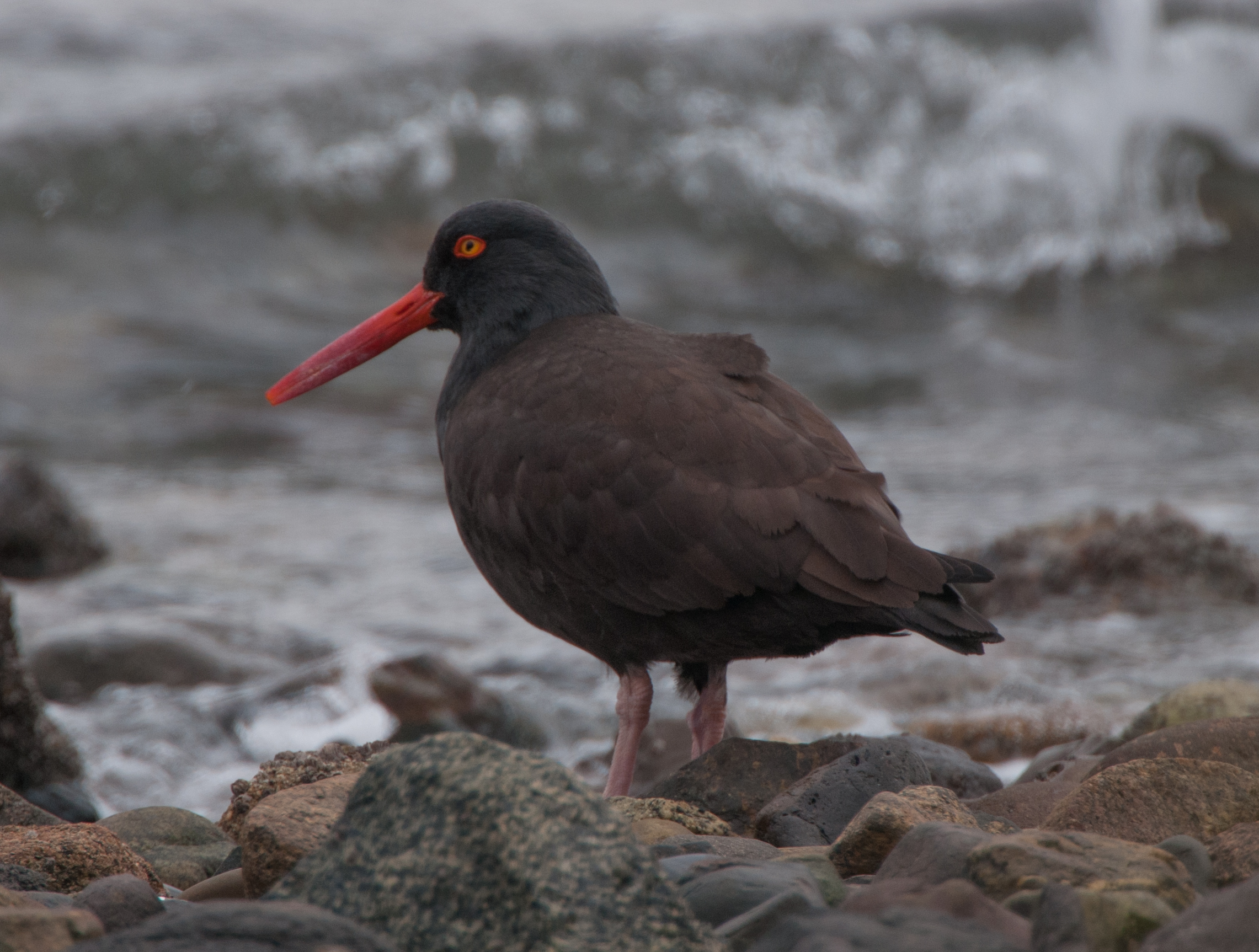
Black Oystercatcher
Next up was a cooperative Red-tailed hawk… perched in a tree! It’s discouraging to have to photograph them on lines or poles, but this one sat while I took several photographs.
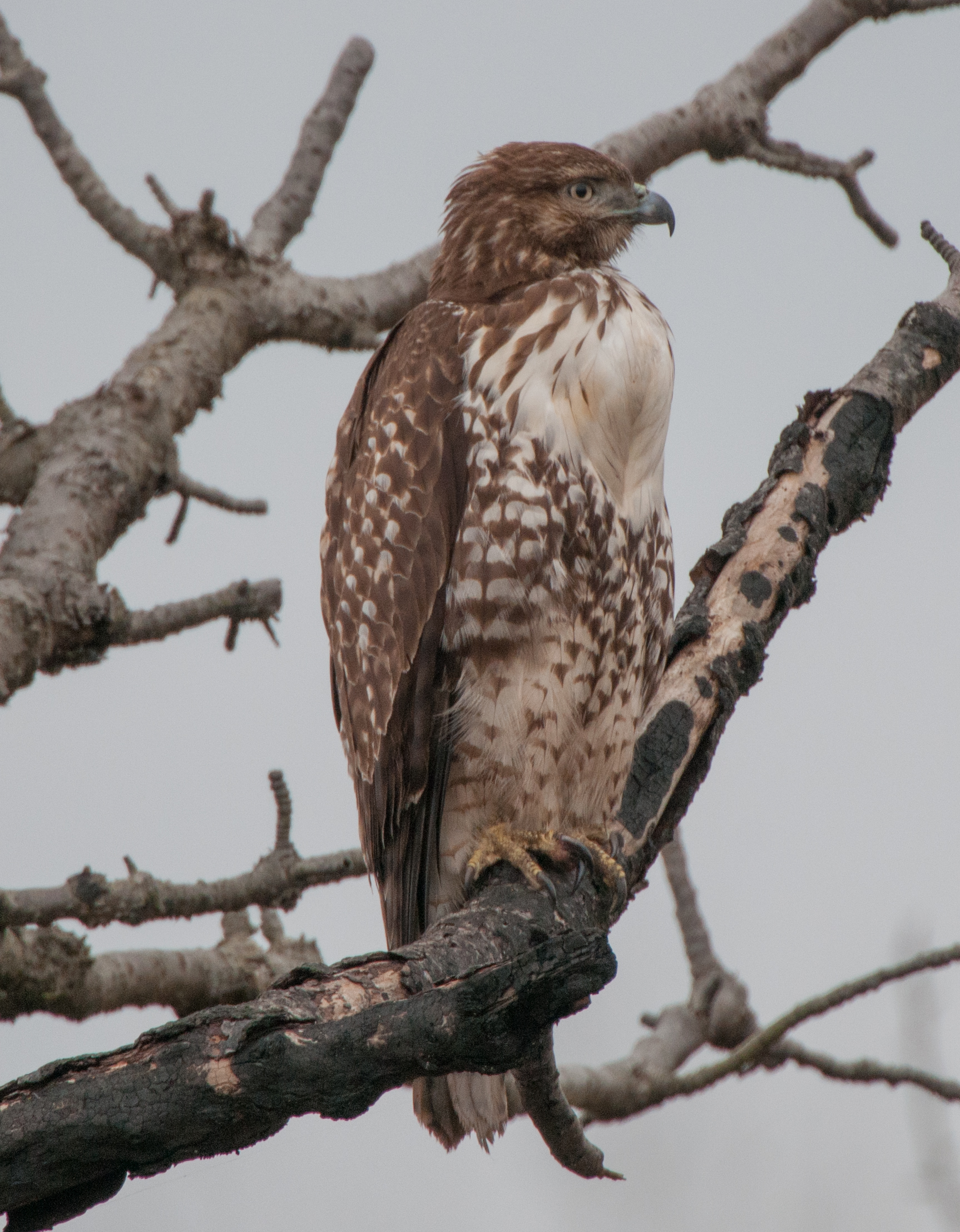
Red-tailed Hawk
My next find, just off Memorial Highway was another male American kestrel. I seem to have had quite an involvement with that bird over the past couple of months… first at the Bosque del Apache NWR (see prior post) and last weekend above the Samish Flats (also a prior post). But that didn’t stop me from taking more photographs of this cooperative bird.
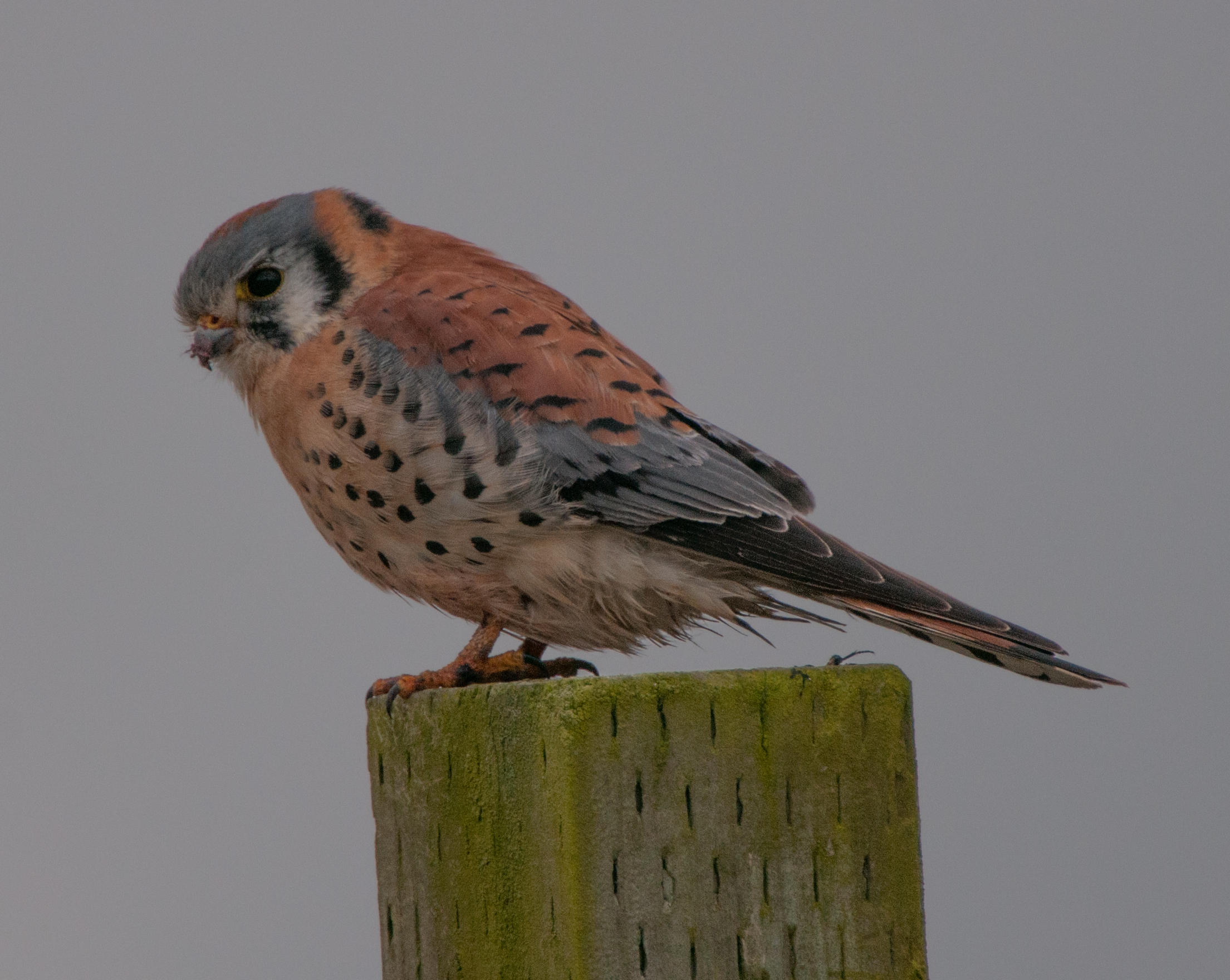
Male American Kestrel
On the way back home I found that the ducks (Northern Pintails and Mallards) had moved closer to shore around March Point despite an ebbing tide, so aided by the tele-extender I managed photos of the ‘quackers’.
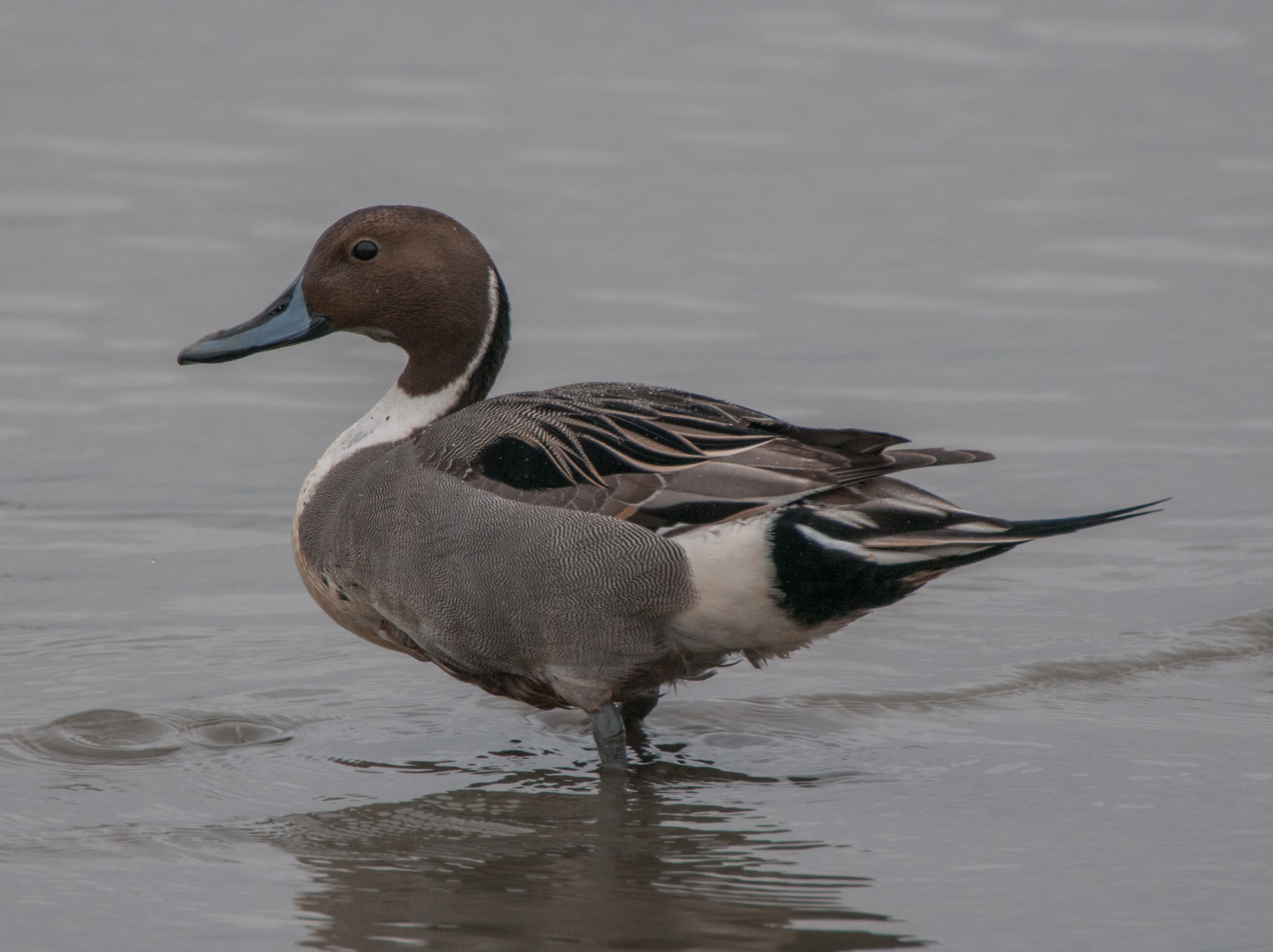
Male Northern Pintail
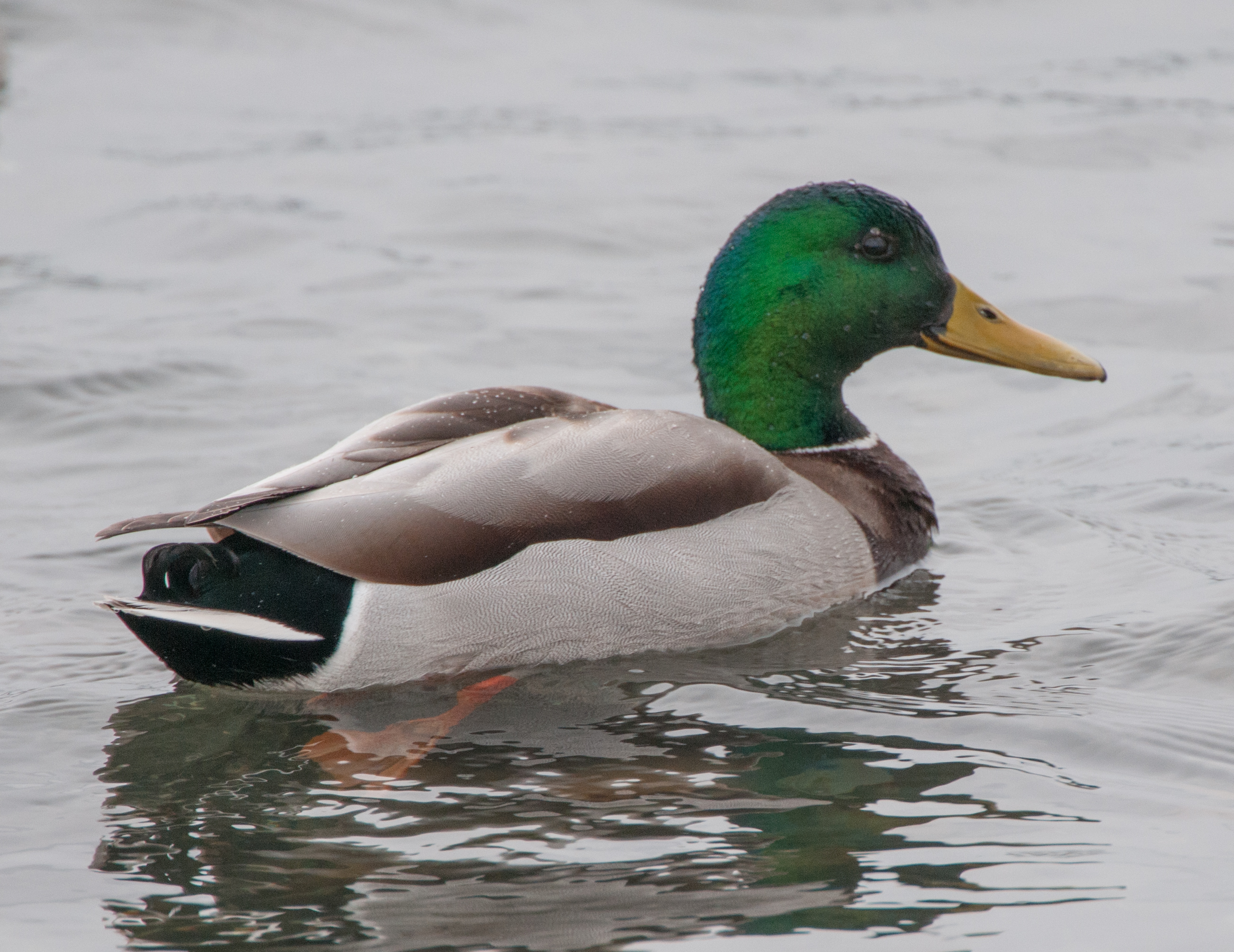
Male Mallard
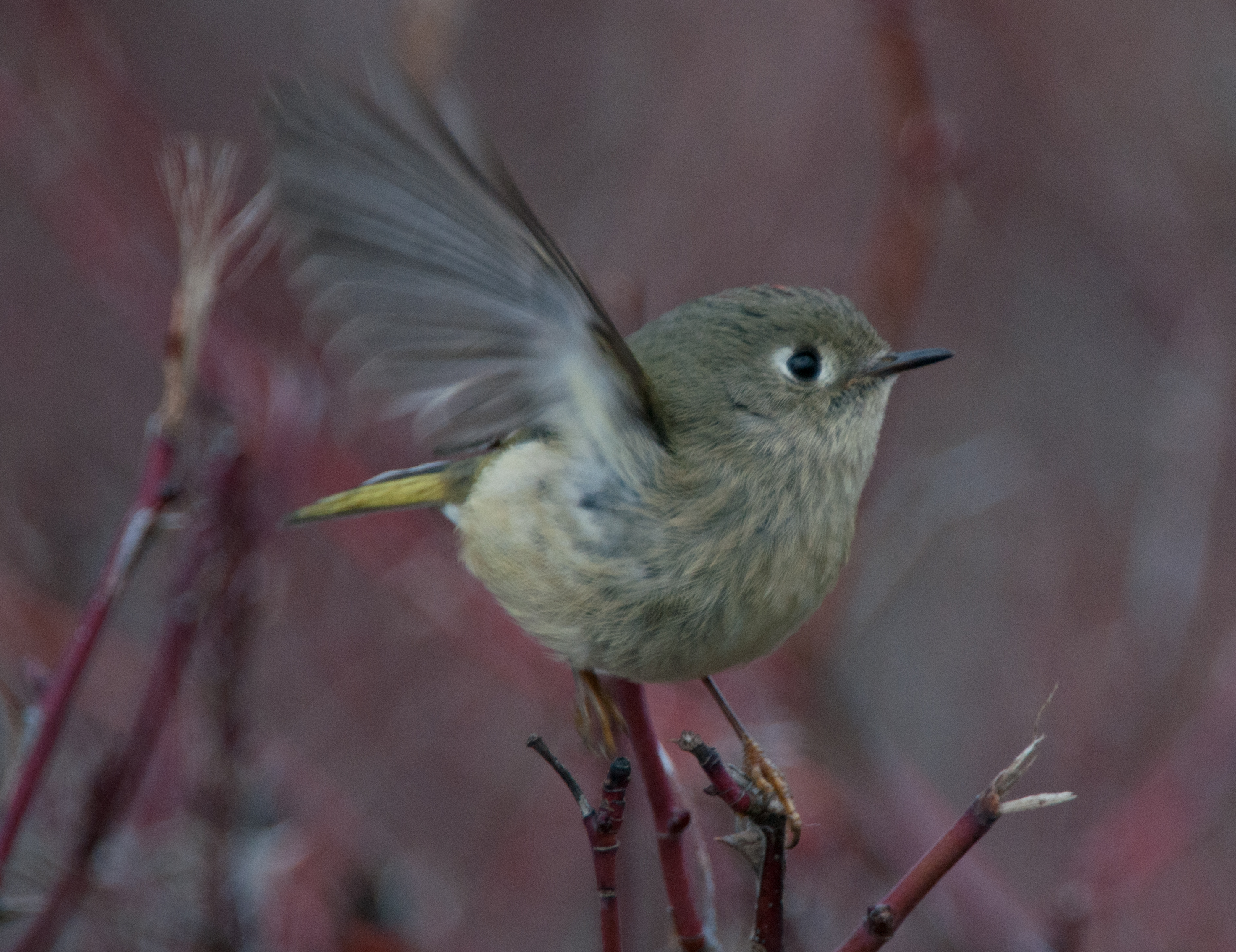
Just as I was about ready to leave the last group of ducks I saw some movement in some bushes along a pullout from the road. I tried ‘pishing’ and for a moment thought I was going to be joined in my car by a Ruby-crowned kinglet. Unfortunately I had my shutter speed set too high, but my Adobe Lightroom software allowed me to significantly lighten the photographs to where they seem very acceptable to me. The kinglet is a difficult bird to photograph (due to size, movement and usual habitat) and I was thrilled to be able to get such good photos. On several occasions the bird came so close to my car that I was unable to focus on it.
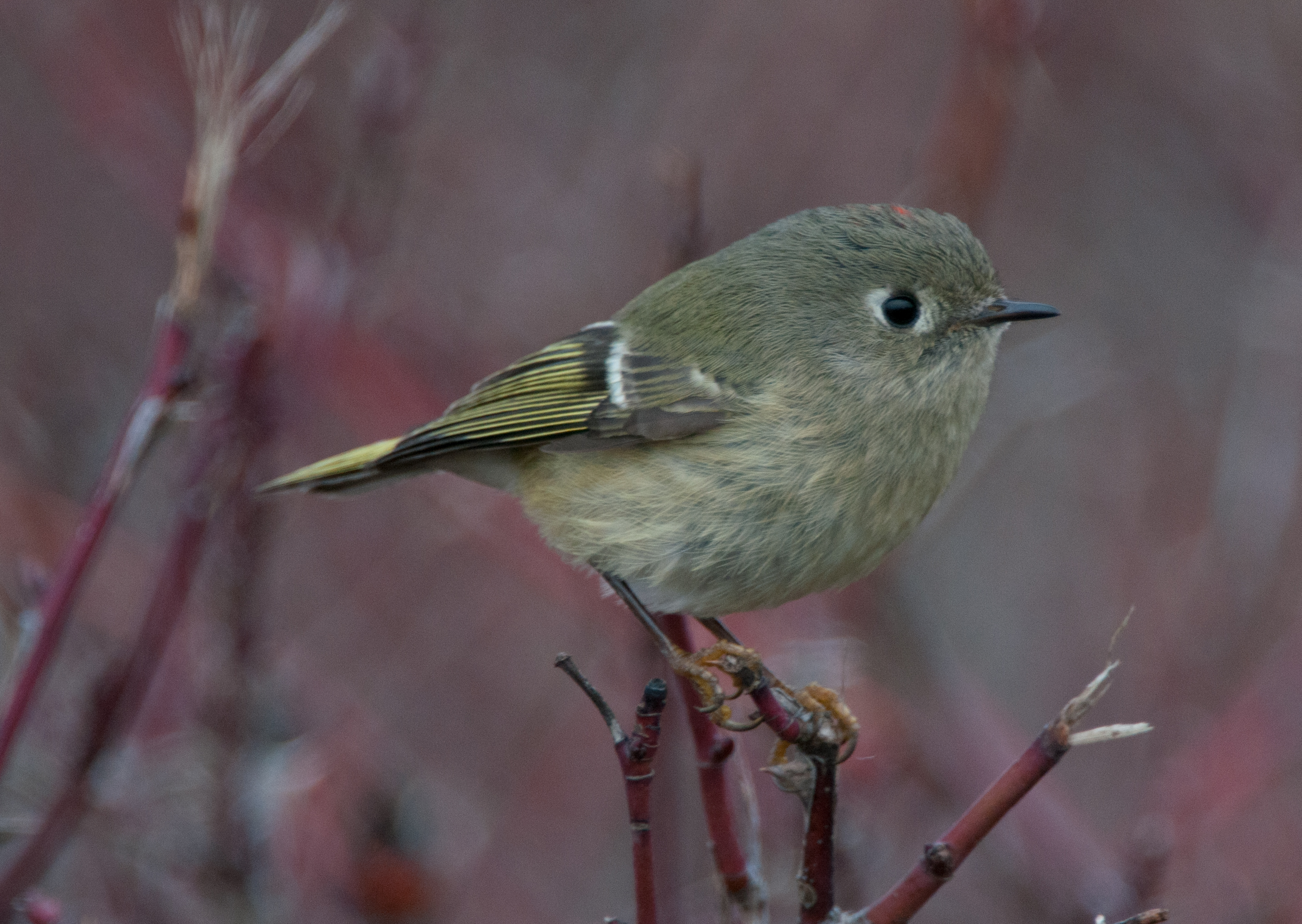
Ruby-crowned Kinglet
(If you look carefully you can see a portion of its ruby crown!)
I sometimes worry that fate has set up one of these days to be my last so that I can go out in a blaze of glory. But I seem to keep hanging in there for more photos, even on unpromising days!
Waving to you a fond farewell for now… thanks for frequenting my blog!
On Friday, February 15 I made a birding excursion to Fir Island to take advantage of beautiful, sunny weather. Sun can often be a friend to a photographer, but depending on each individual shot, it can also be an enemy.
I first toured March Point hoping for some waterfowl. I was disappointed in that regard but there was a reward. For the first time ever, in many, many trips around March Point, I found a single Black oystercatcher along the rocky shoreline on the south side of the refinery. I was a little too far away and the sun wasn’t my friend for photos of the bird, but I felt I had to record it for its perceived rarity at that location. I’m much more accustomed to seeing these birds in Washington Park on my early morning walks.
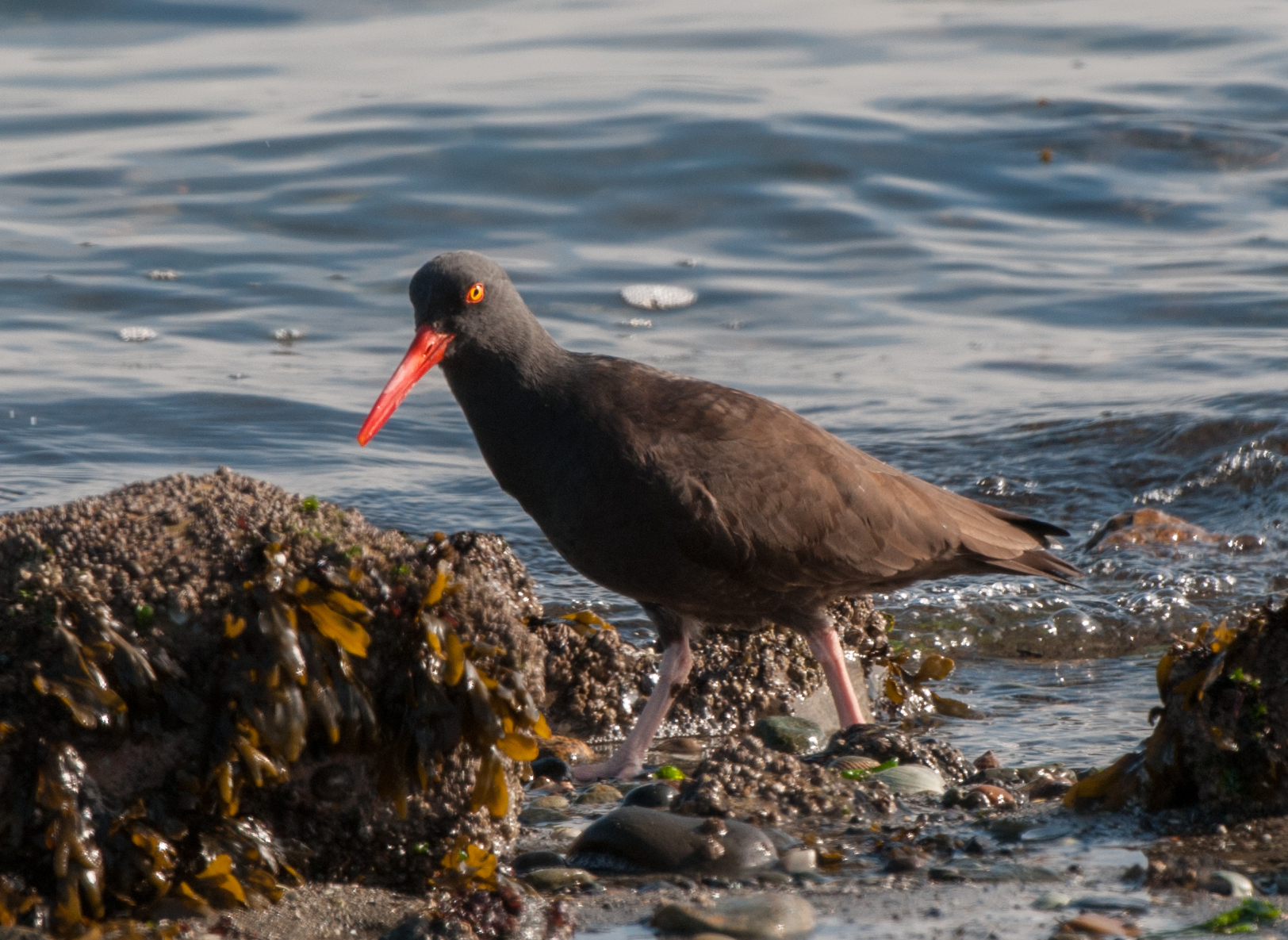
Black Oystercatcher
Just slightly further along I found a Northern flicker on the side of some driftwood. It wasn’t a place that I would have expected to find a flicker but they are in the area on the inside of the loop road.
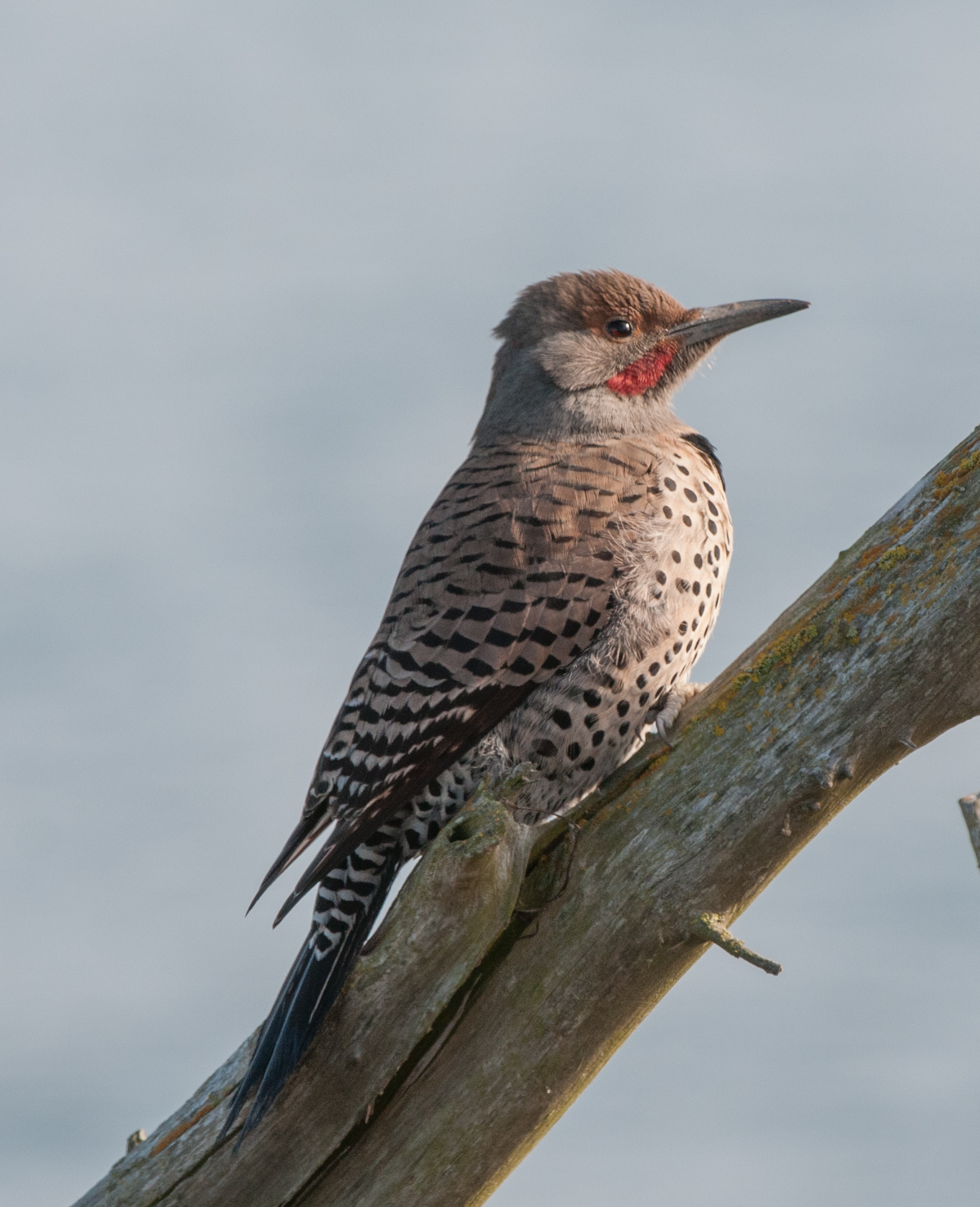
Male Northern Flicker
In driving Channel Drive along the Swinomish Channel I encountered a Red-tailed hawk with an elongated beak. This is apparently a problem in the Red-tailed hawk population. The elongated beak makes it difficult for the birds to eat the food they catch and they can eventually die of starvation. (I’m getting a little beyond my knowledge base here!) I sent photos to the area’s raptor expert… I think he occasionally traps these birds and shaves the beak down to a size where it is again useful.
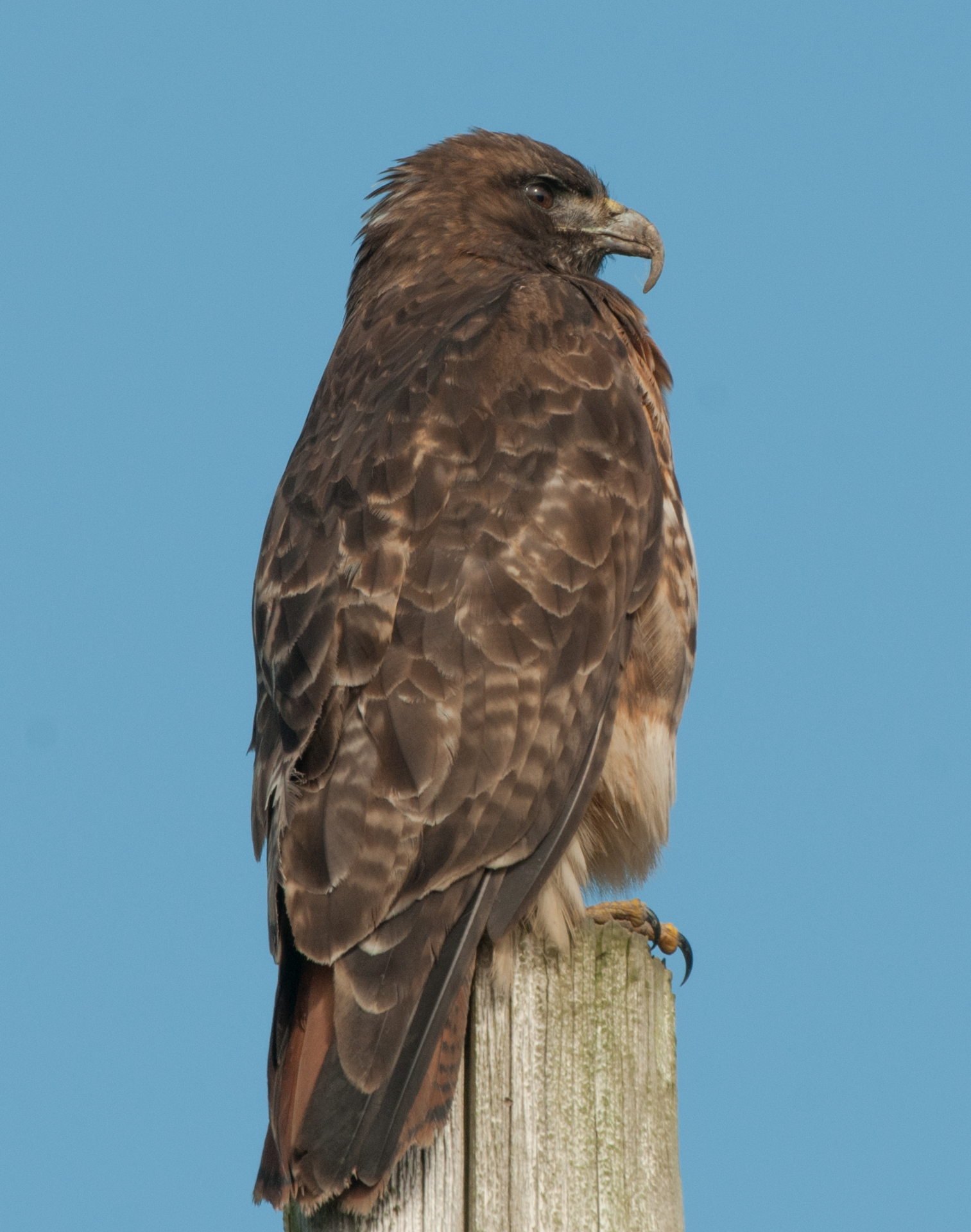
Red-tailed Hawk with elongated beak
Next up was the wildlife access at the end of Rawlins Road. I’ve noticed that the Great Blue heron that frequents that area is getting a lot more used to people. A few short months ago it would fly with the slightest human provocation, but it seems willing to continue to gather food while being watched from not very far away.
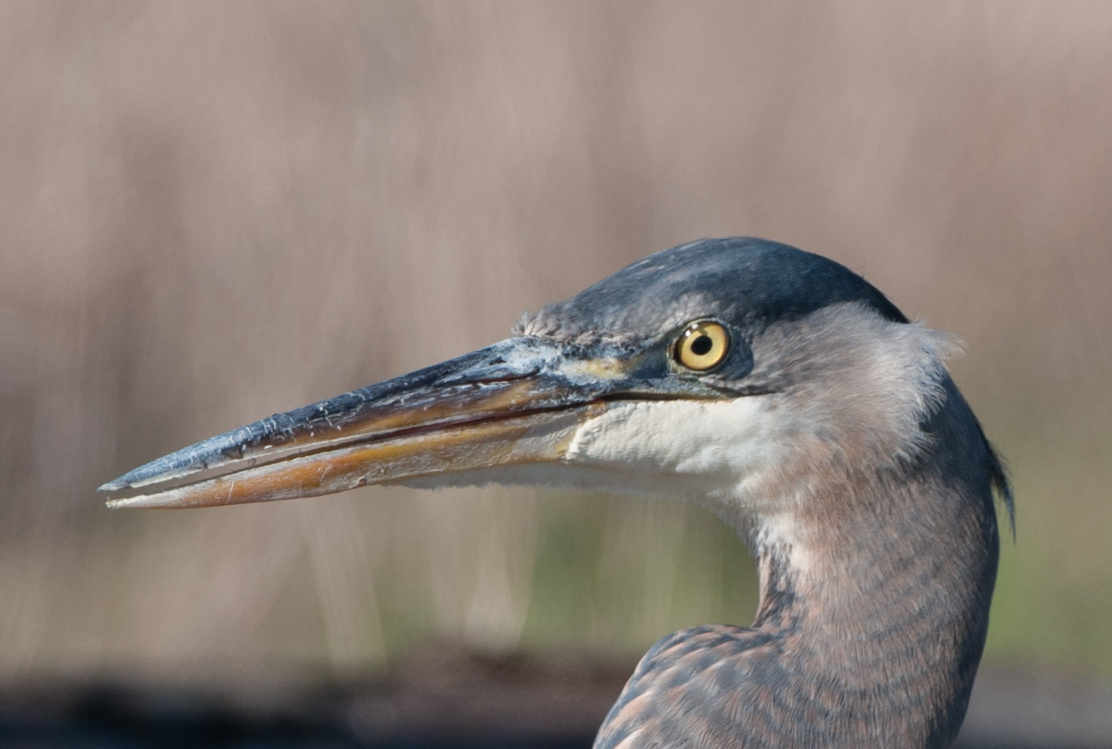
Great Blue Heron
Moving on down the road, I found the main crowd of geese along with a very substantial crowd of onlookers. (In photographing the geese, the sun is usually your friend!) These eruptions are usually caused by a Bald eagle flying in the vicinity.
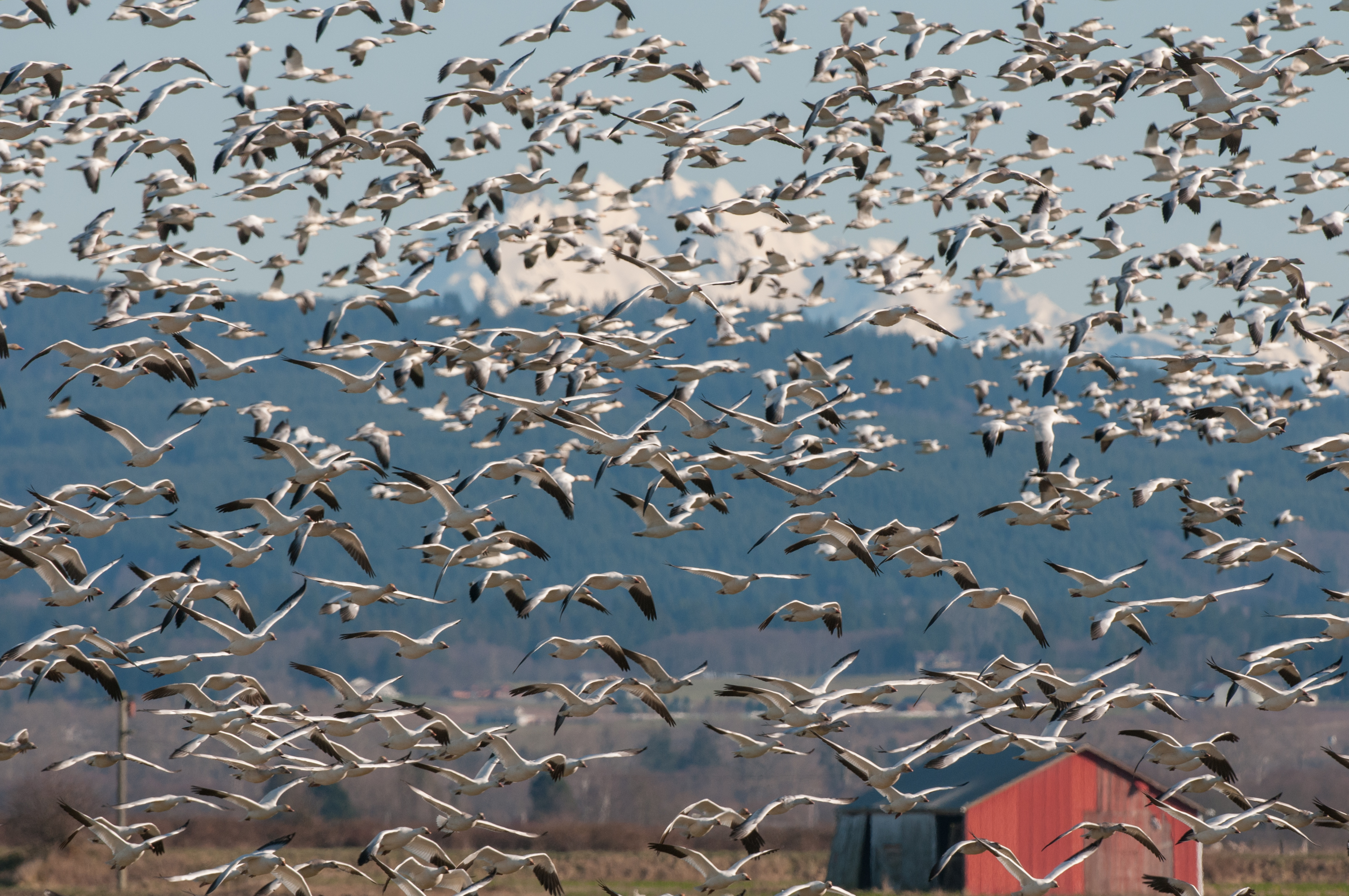
Snow Geese on Fir Island
So now for the most interesting puzzle of the day’s outing! What do the following birds have in common?
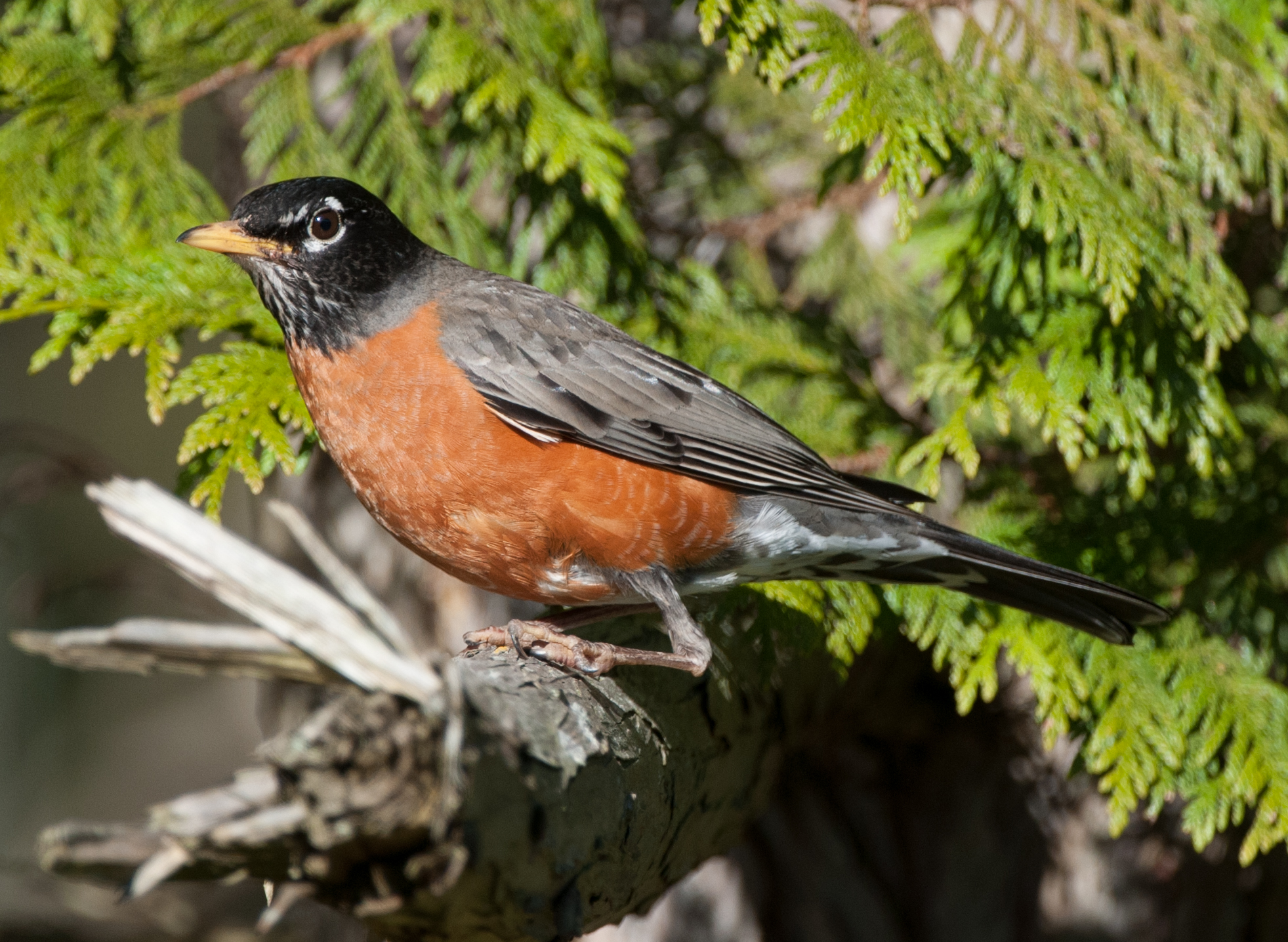
American Robin
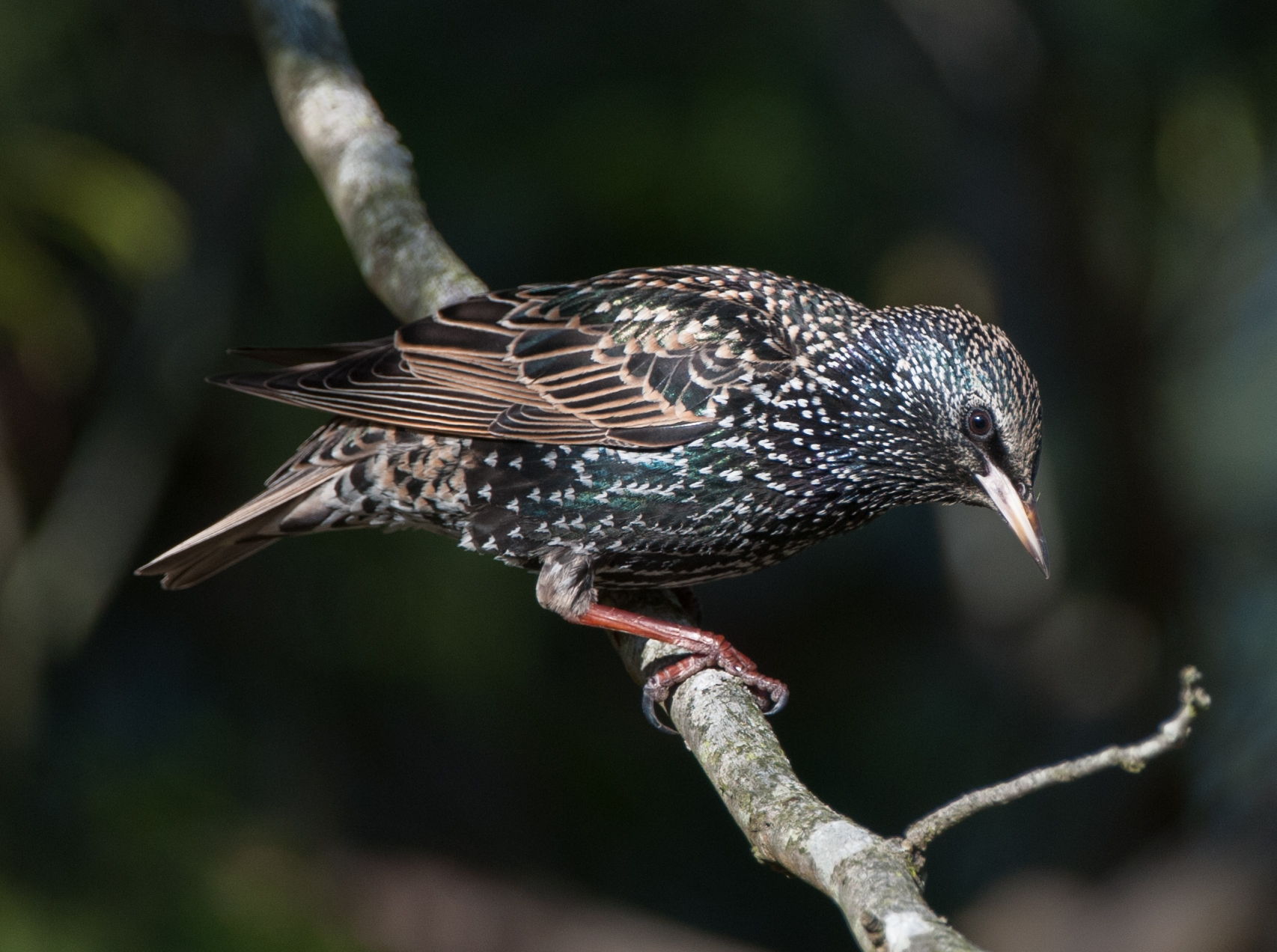
European Starling
(As they are fond of saying in films, “actual birds filmed on location”).
In birding the Dodge Valley area, after retreating from Fir Island, I encountered a substantial number of birds flying to and from the ditch beside the road. They were quite some distance from me and I assumed that they were sparrows (I must start wearing glasses!) but found as I crept closer in the car that they were actually robins. And while a few were going down to the ditch (where I presumed there was water) many of them were frequenting an area back from the road where there was a short but thick patch of salal and grass growing. There seemed to be no depression, no water and no other attractant to the birds. Yet the robins seemed desperate to congregate in an area about eighteen inches in diameter! There was some preening taking place but I could see no behavior that would lead me to believe that they were accessing water or eating.
Soon after I arrived the robins were displaced by a large flock of starlings which had the same goal in mind… to congregate in that same small area. I took several photos of as many as 7-8 birds in that small area at one time and the activity was very vigorous. I considered getting out of the car and investigating, but that would have disturbed the birds and I didn’t want to try to cross the ditch. (You’ll hear about a prior ditch-crossing disaster in a future post!) So I left with the mystery unsolved.
I’m finally back to home turf with regard to photos and have quite a backlog dating to the first of the year. Yesterday I decided that there was really no reason to post photos from my excursions in chronological order, so for this post I’m using the old ‘lifo’ (a cost accounting term for ‘last in, first out’) methodology.
Yesterday, February 16, 2013 was a somewhat uncertain weather day but I decided to take my chances and it turned out to be a very good decision. Since it was a Saturday, I knew I wouldn’t be alone.
I began my journey by driving around March’s Point, mainly to look for waterfowl. The waterfowl were in short supply but I did find this pair of Bald eagles in a tree. These were to be only a couple of the many, many eagles I would see during the day.
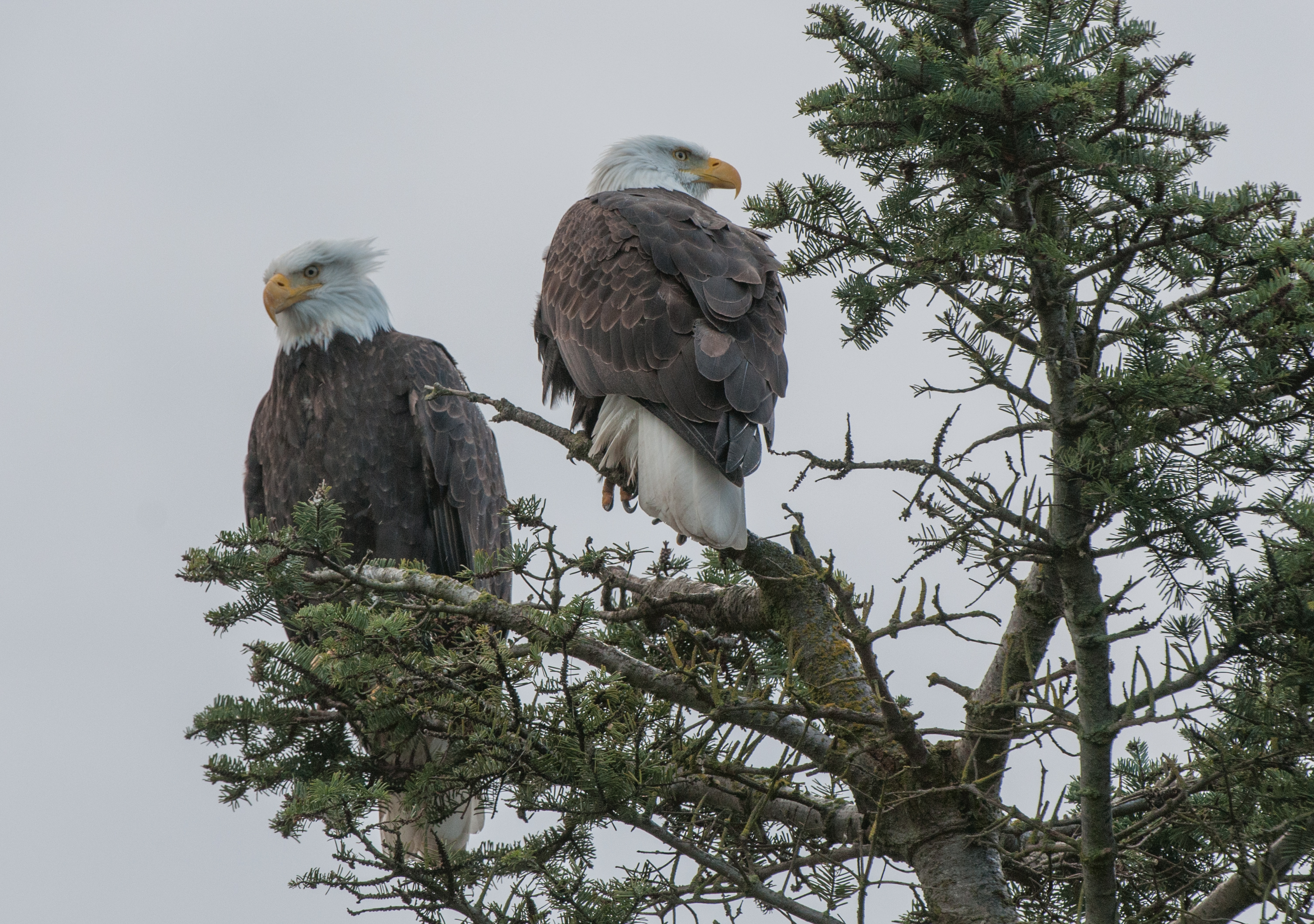
Pair of Bald Eagles on March’s Point
Next up was an American Kestrel along a road that I usually don’t frequent but which will now be on my regular itinerary. I’ve found kestrels to be extremely skittish but this one, I must say, was very accommodating.
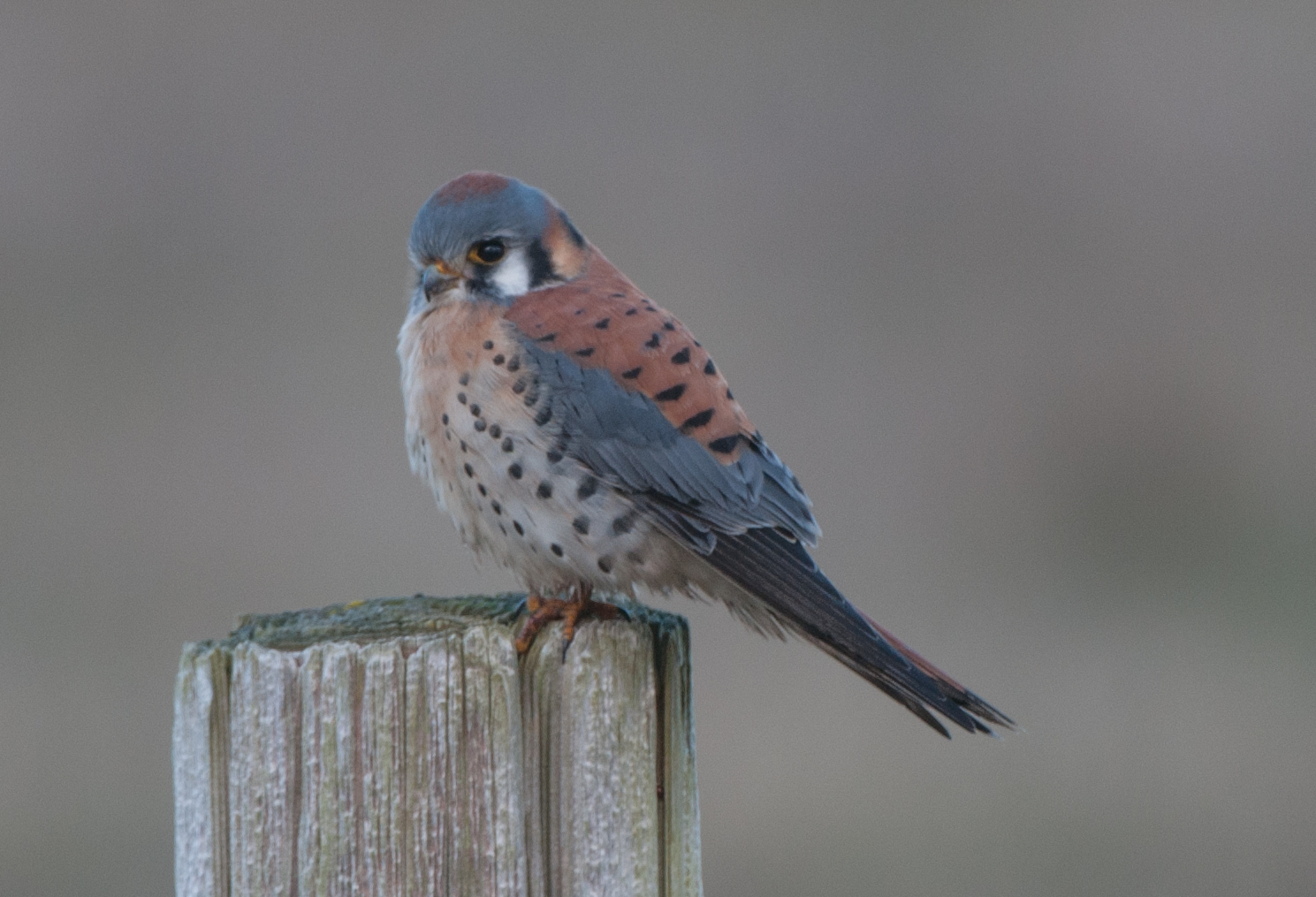
Male American Kestrel
I returned to the same location several hours later and again found the kestrel. This time as I photographed it, it flew to the ground and brought something back up to a fence post. As best I can tell, it’s a small green worm of which it made very fast work.
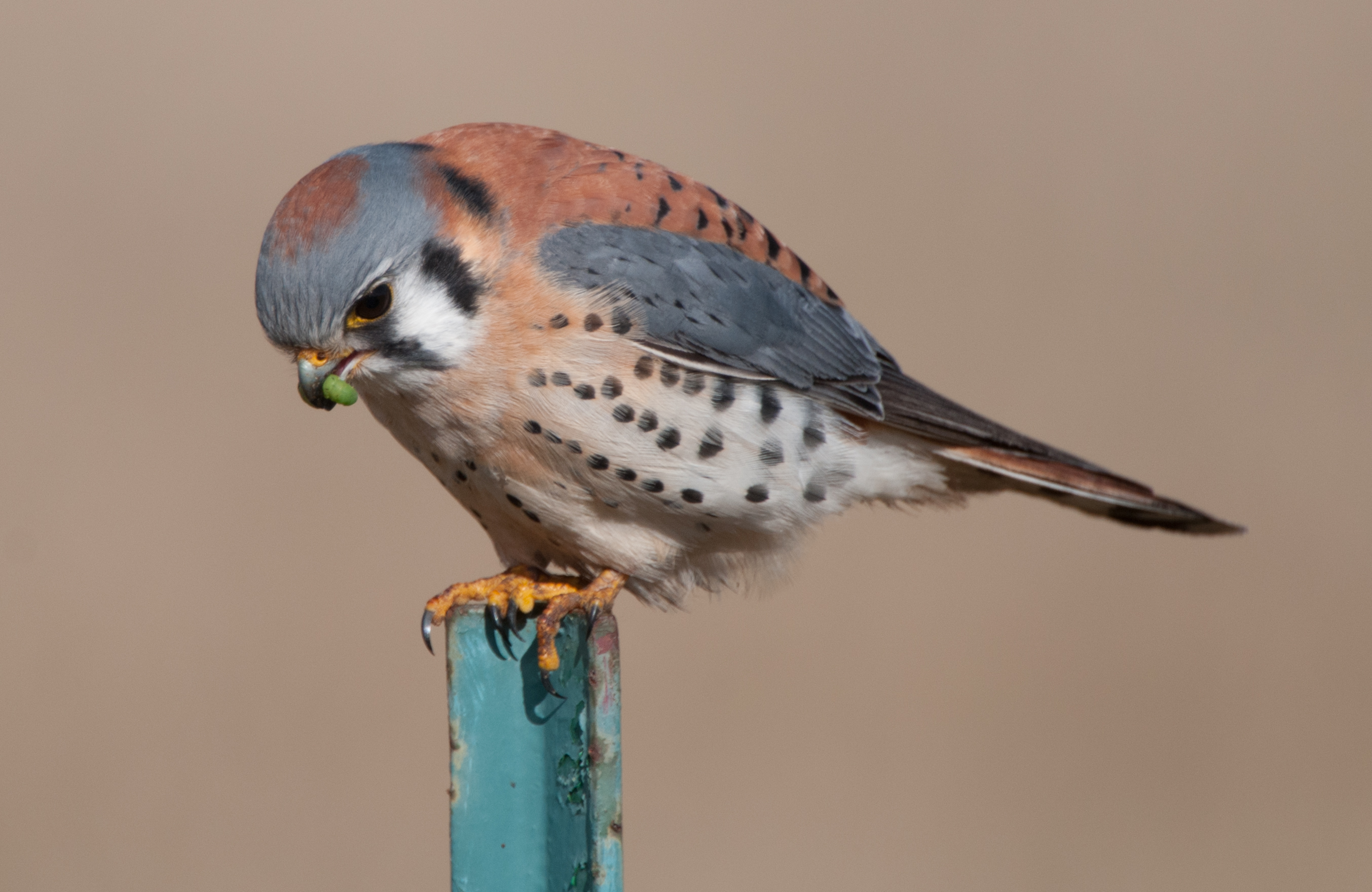
Male American Kestrel with ‘prey’

Male American Kestrel with ‘prey’
I next descended into the Samish Flats area and encountered a Rough-legged hawk on the most common perch they have in the Flats… a power pole. This was the first Rough-legged hawk I had positively identified this year and in processing my photos I was reminded of just how beautiful the birds can be. They are much more tolerant of humans than their Red-tailed cousins and I was able to drive almost under this hawk and photograph it without disturbing it.
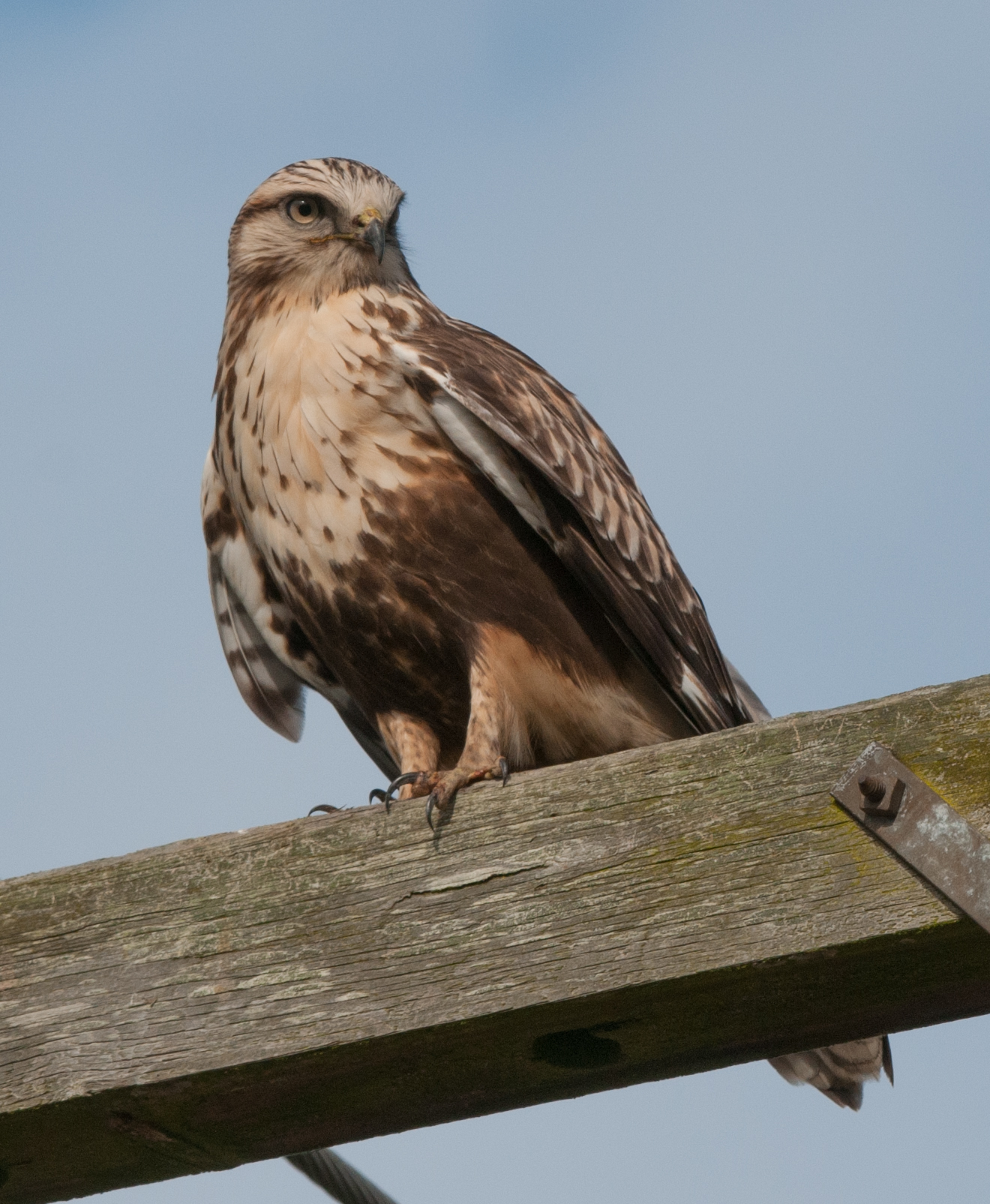
Rough-legged Hawk
I drove less than half a mile and discovered yet another Rough-legged hawk, and it was indeed a rare one… it was in a deciduous bush with few intervening branches!
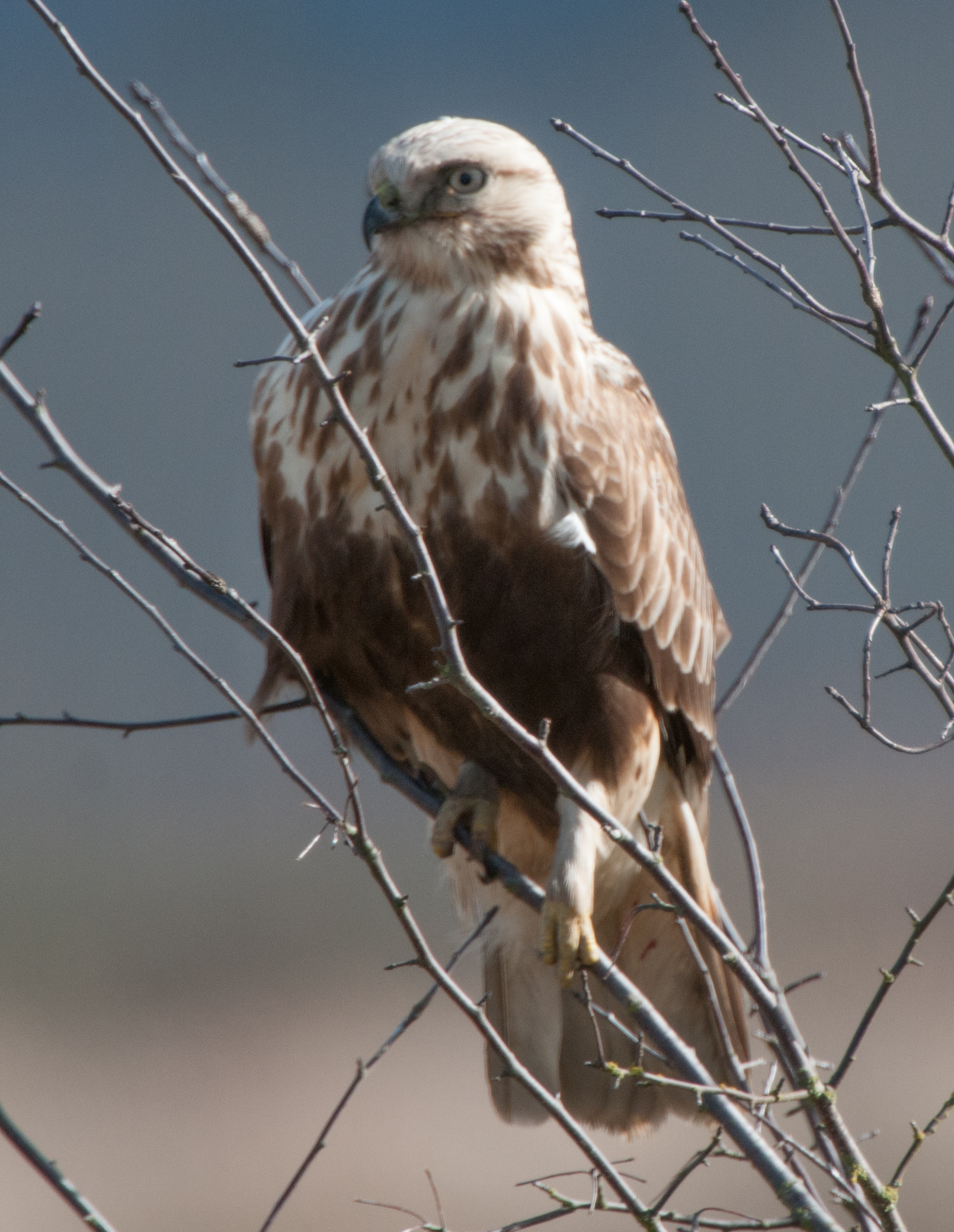
Rough-legged Hawk
While I was maneuvering my vehicle the hawk flew and landed on a sign within maybe 30′ of my car! A sign is down the scale from even a power pole but it didn’t stop me from taking more photos or telling the tale!
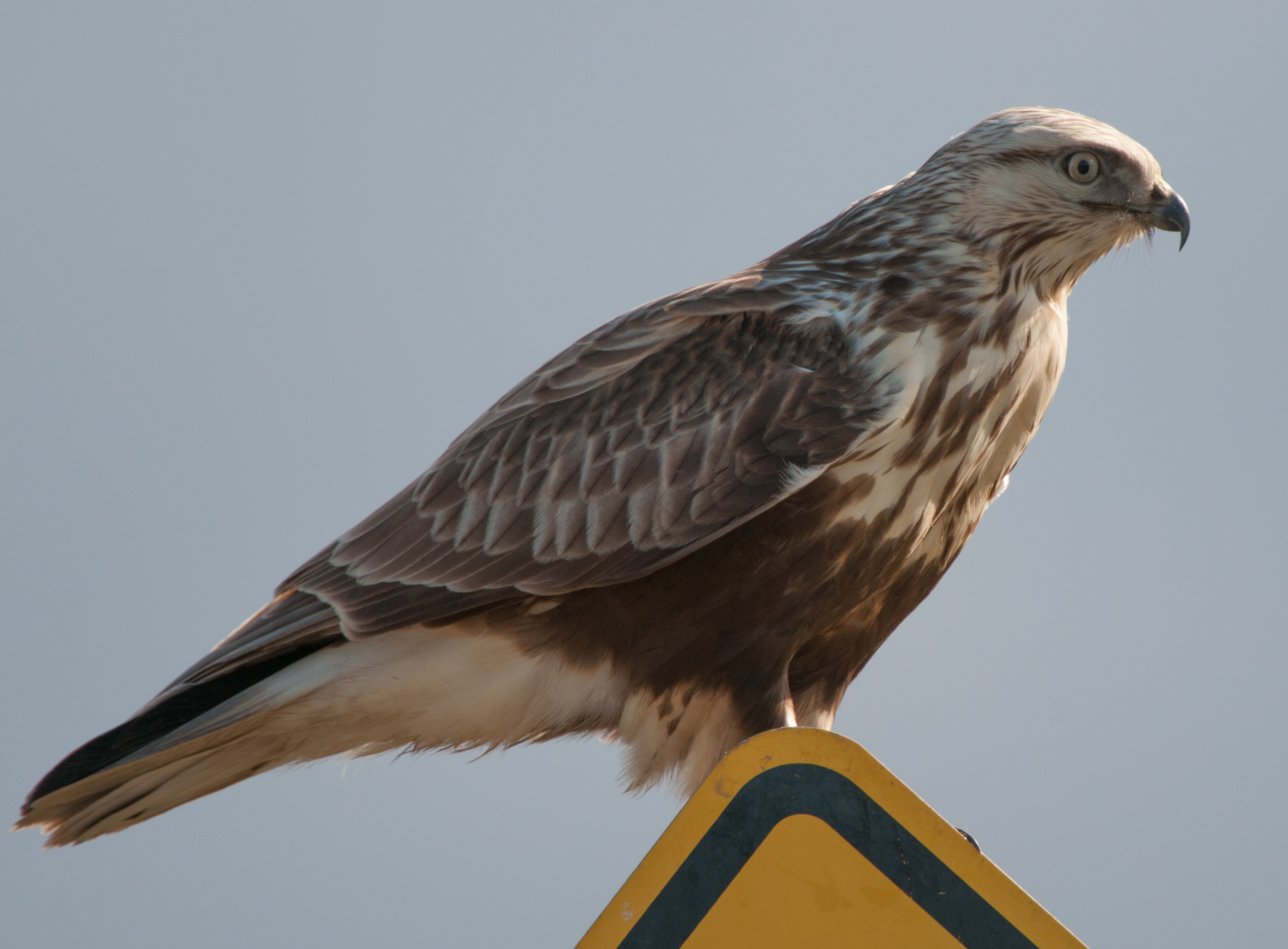
Rough-legged hawk
My final featured raptor from this trip was a Northern harrier I found hunting along the side of the road. The harrier was intent on flying just over the weeds along the road and it gave me several opportunities to photograph it in flight. I’m fairly certain that this bird is a female.
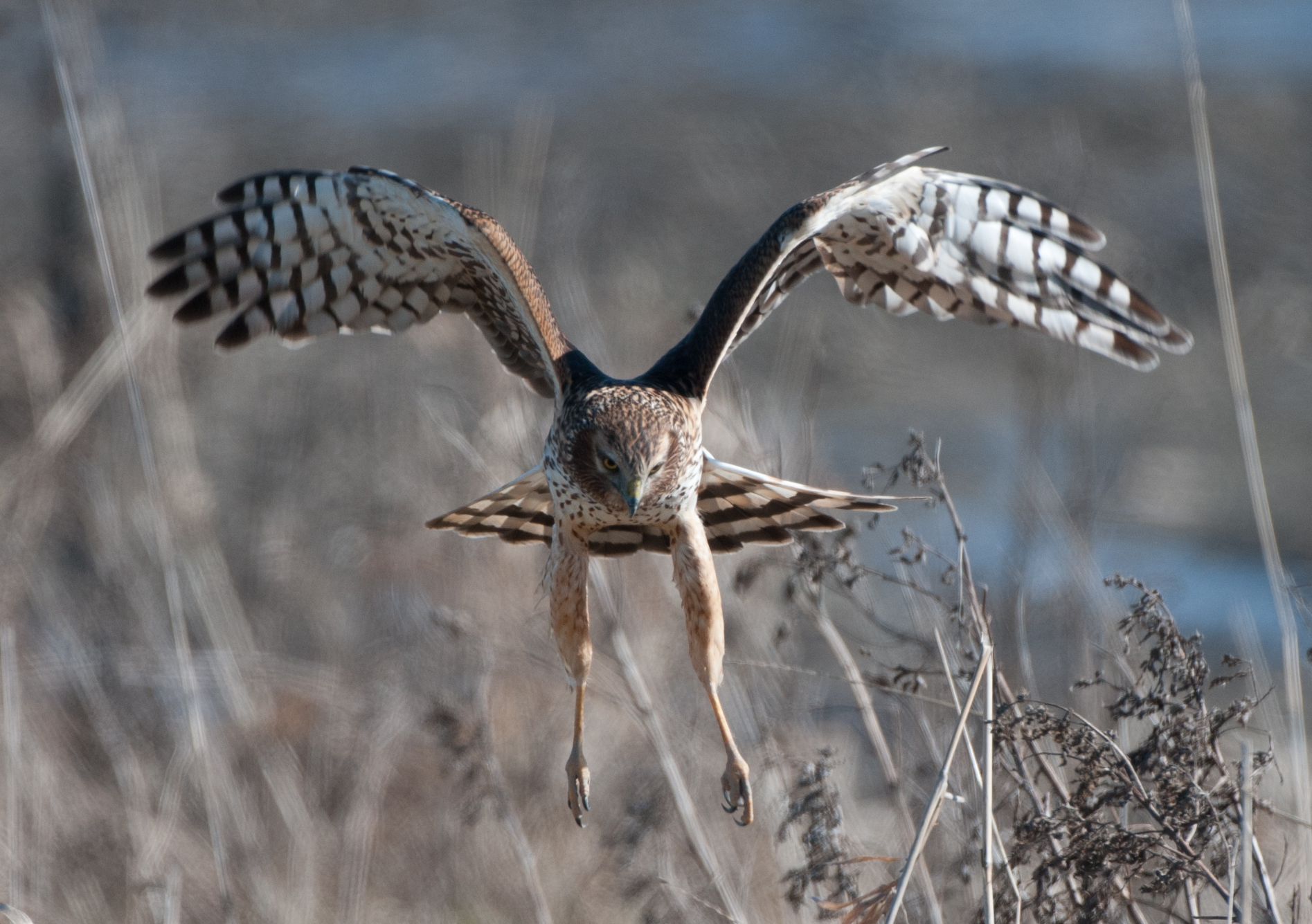
Northern Harrier