Dark-Eyed Junco – Slate-Colored Race

I first want to thank all of you ‘scouts’ who have been keeping me apprised of sightings of the leucistic Varied thrush in Washington Park.  I received another relayed communication that the bird was seen in the park this morning, but I chose not to go until mid-afternoon and saw no sign of the bird as is usual for that time of day.  For the best chances of sighting the bird one needs to be at the park not long after 7am… in other words, virtually in the dark.

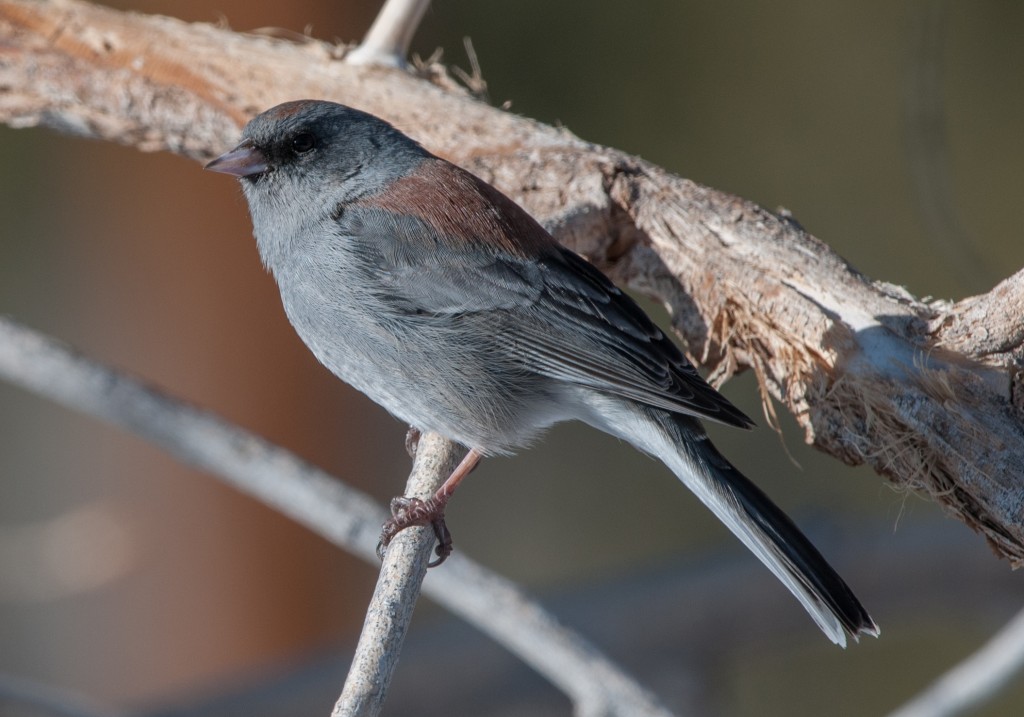
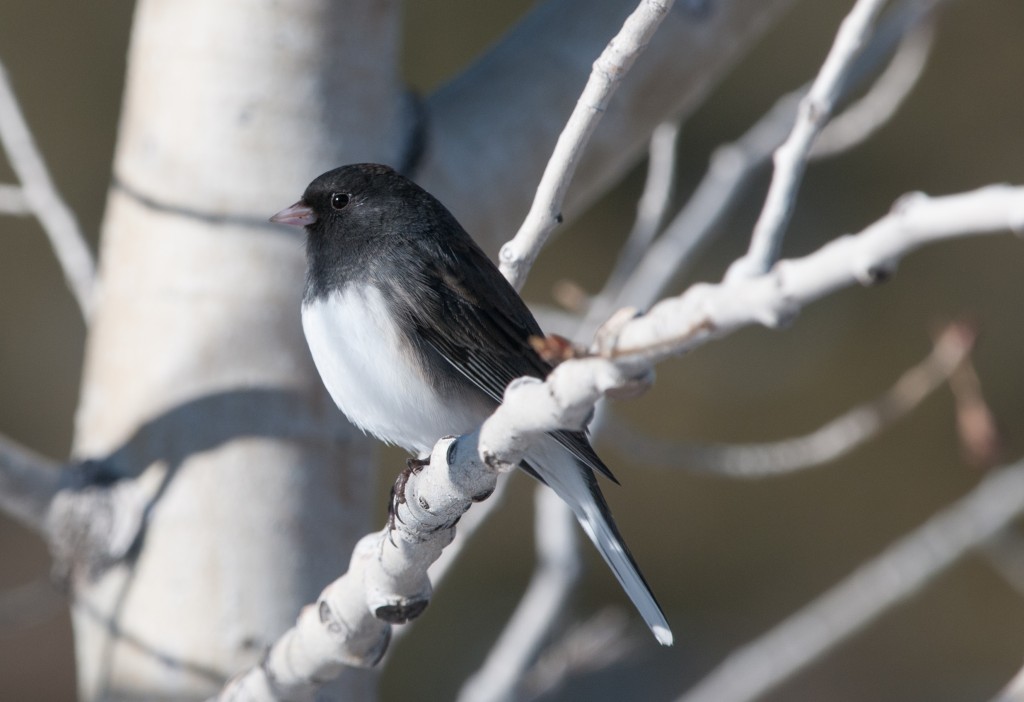
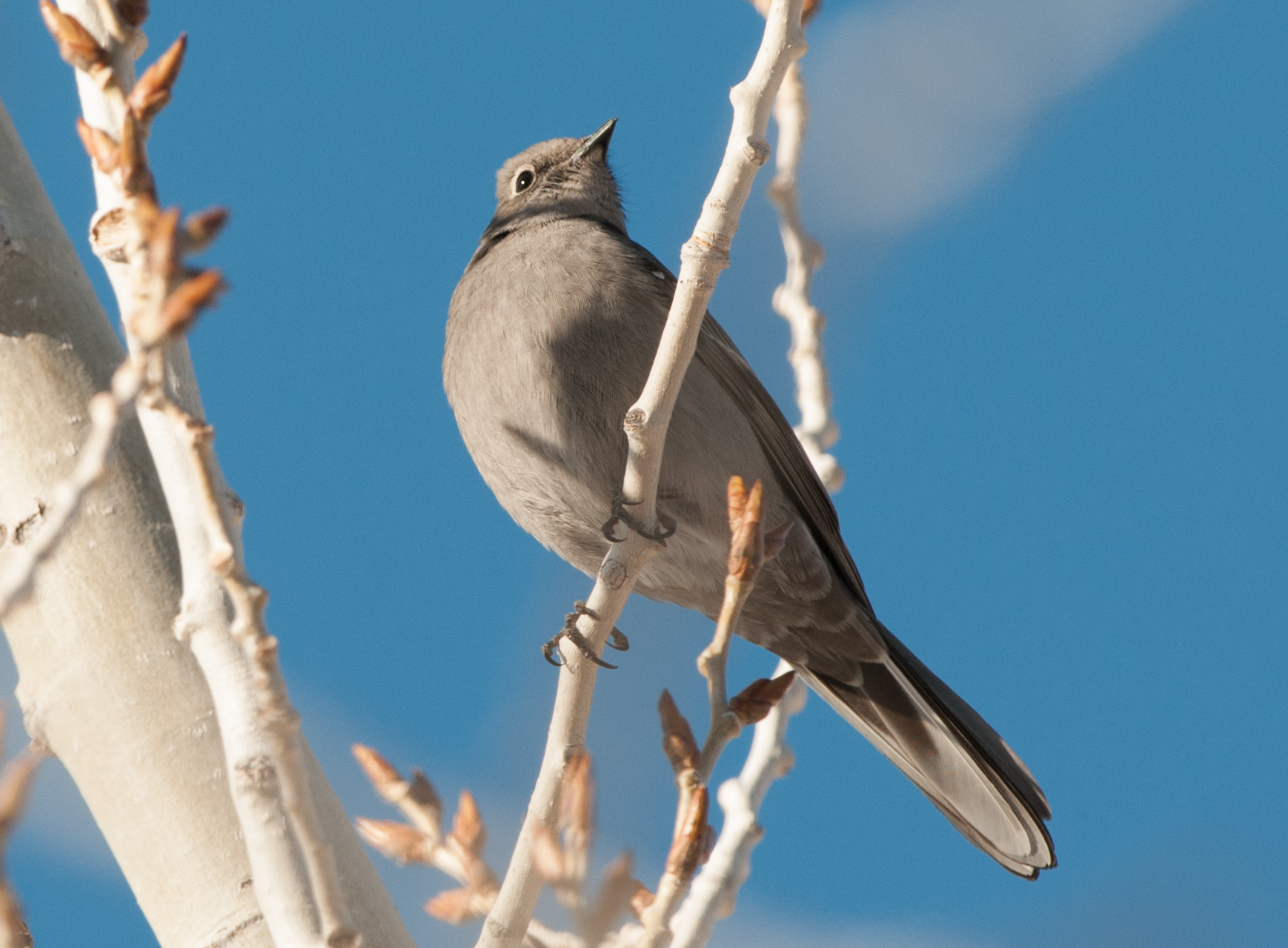
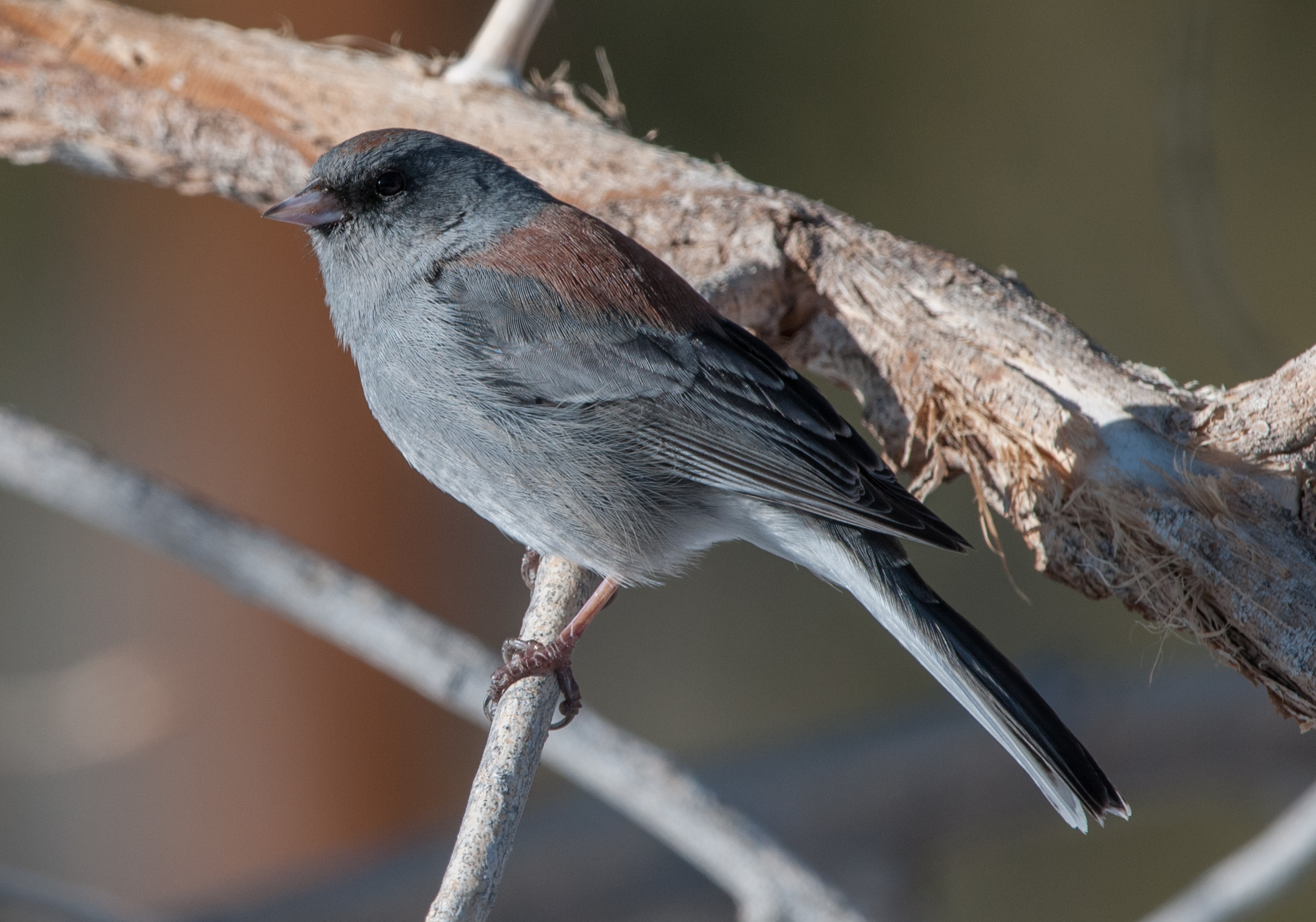
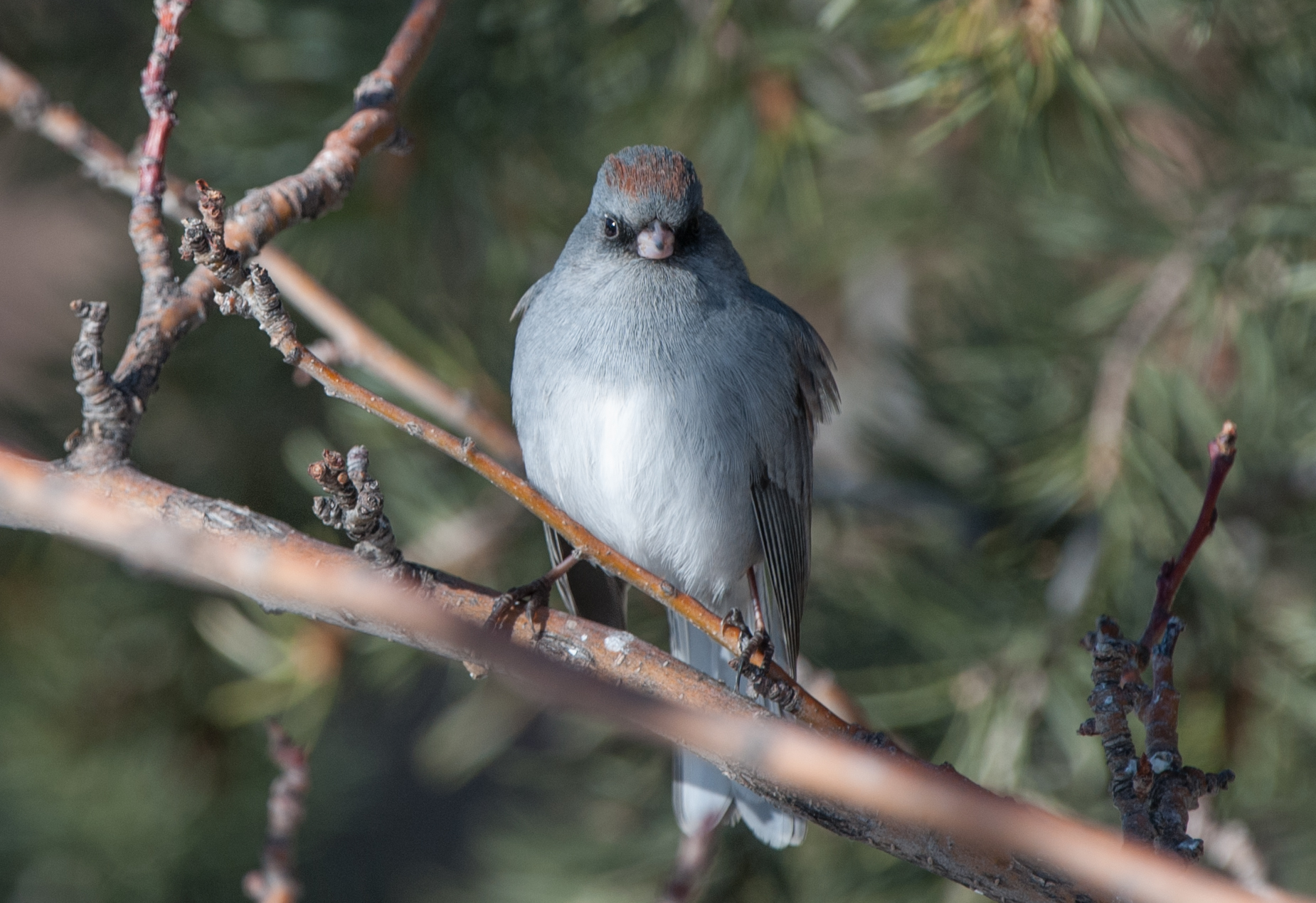
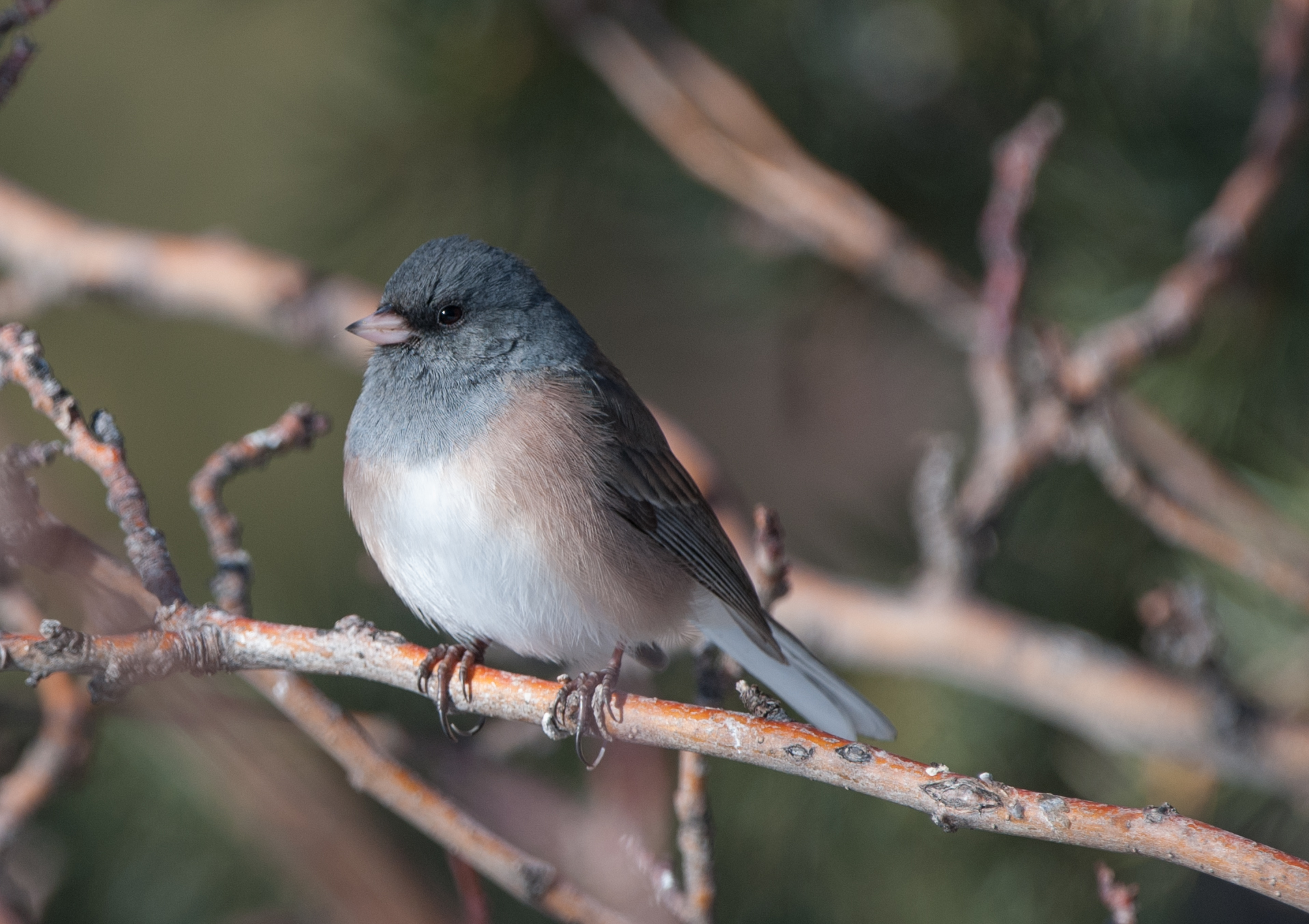
Slate-colored race of a Dark-eyed Junco

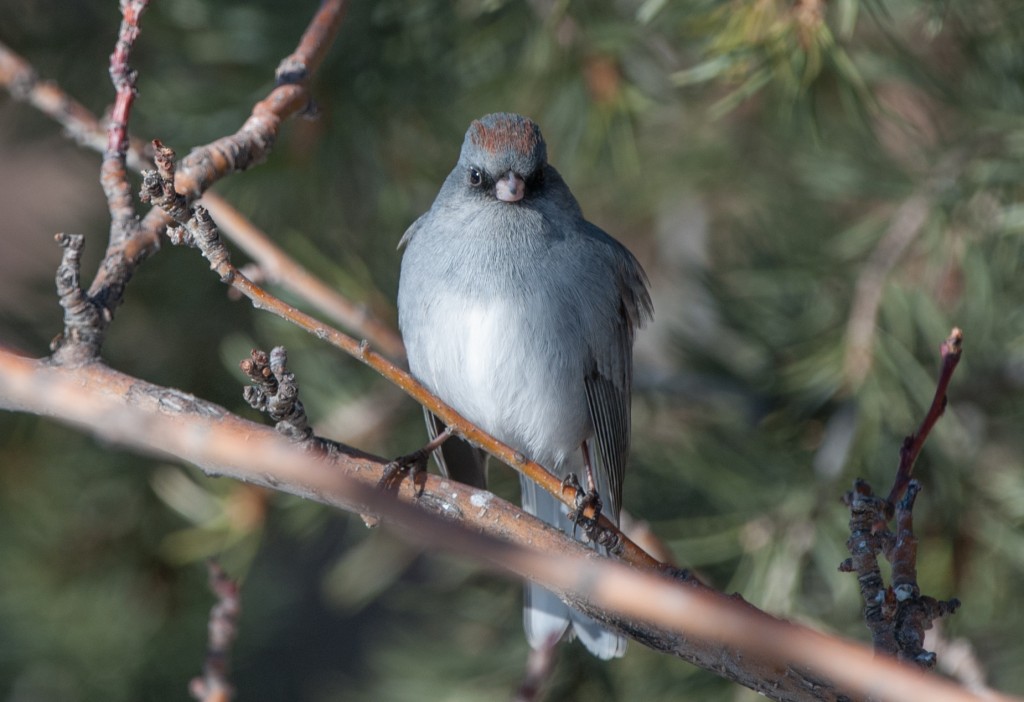
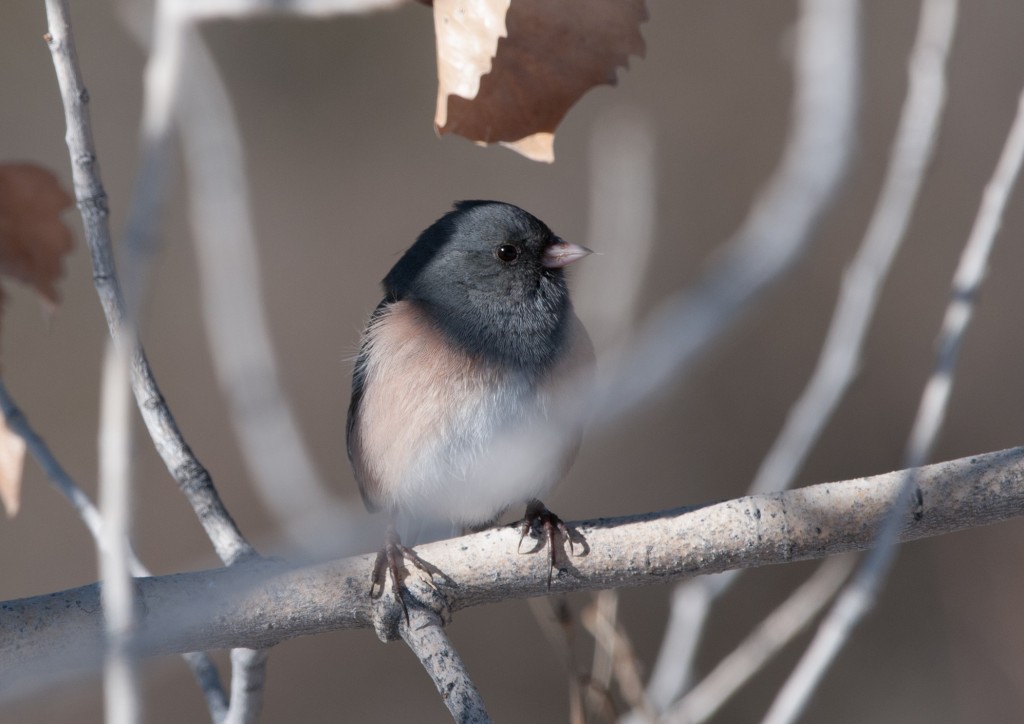
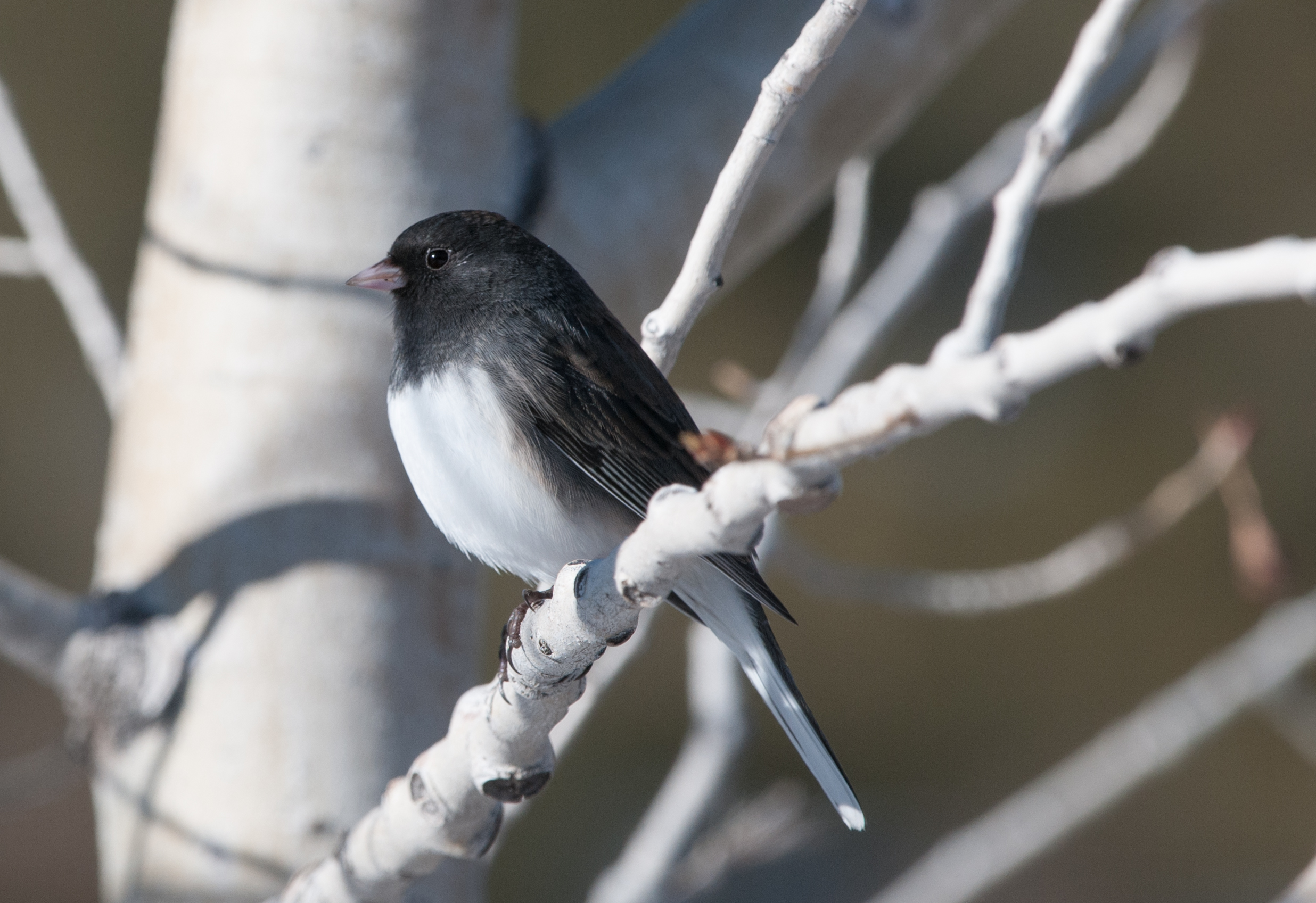
Oregon race of the Dark-eyed junco

On the other hand, I spent a little time in the yard today hoping to obtain more photos of some of our rarer yard birds.  While I saw a male Anna’s hummingbird taking a bath (!) in  water in which I can hardly stand to place my hand due to its temperature, I was unable to obtain a photo.  However I did have some success with one of our rarer visitors… a Dark-eyed junco of the Slate-colored race.  This bird, or one of its kin, has been in our yard every winter since 1996-97!  Each year we only have a single one and I often wonder if it’s the same bird that keeps returning.  It seems rather far-fetched, but then the fact that we have only a single one each year might lend some strength to the theory that it’s the same bird. I would be so appreciative if it would bring its family for the winter!


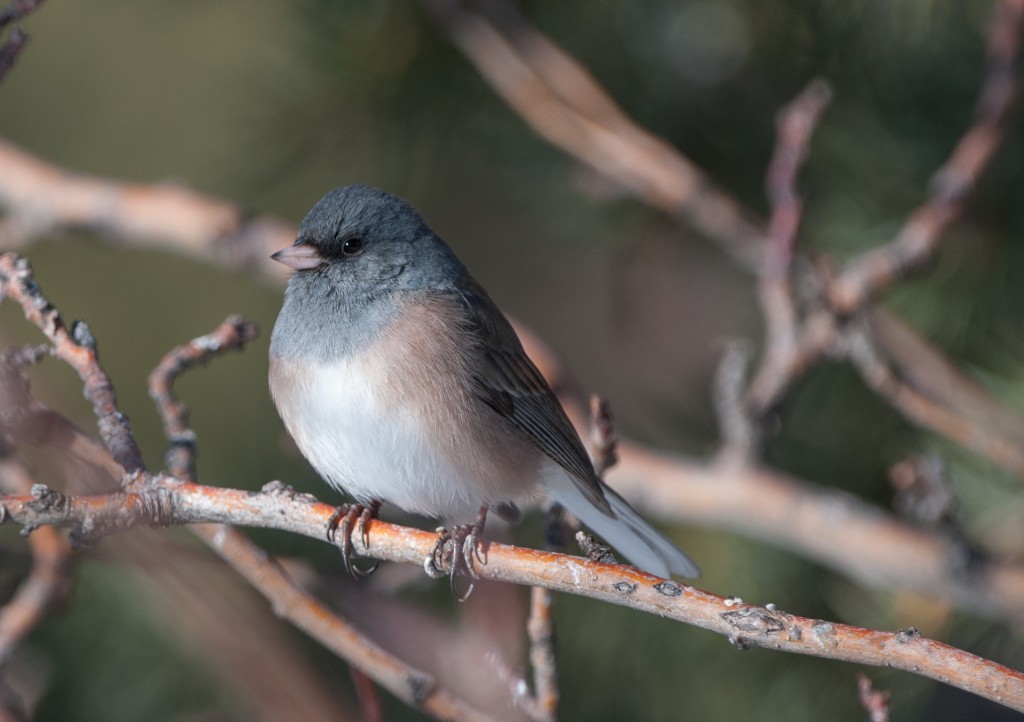
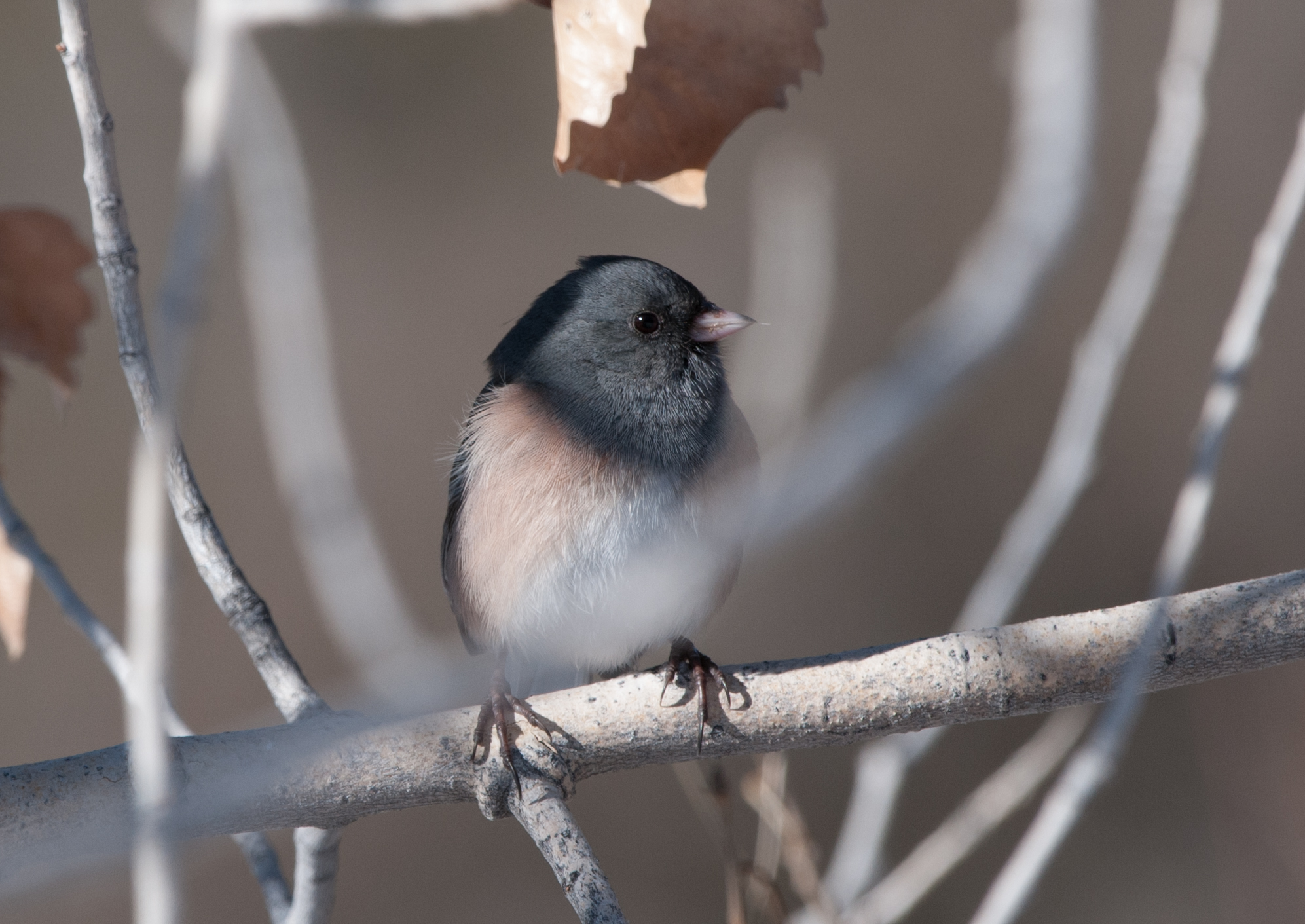
As is the case each year, we are overwhelmed with Oregon race juncos and the color of their plumage varies greatly.  Some are quite striking in their colors and others are very pale.  Picking the Slate-colored junco from the Oregon juncos would be very difficult if it were not for the behavior of the bird.  The Slate-colored junco does not appear to mix well with the other juncos and it is much shyer.  Were it not for these behavioral characteristics I probably wouldn’t notice it.

Oregon race of the Dark-eyed junco

To better appreciate these photos you should click on them to enlarge them to full-screen size!

Red Crossbills in the Yard

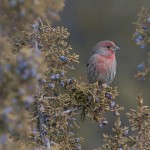
Adult male

We returned from breakfast out on the morning of Saturday, Dec 1 and upon looking out our kitchen window I saw that our watercourse was filled with Red crossbills!  I’ve always considered these birds, if not rare, at least somewhat difficult to locate and observe.  But this year we’ve had many visits to our watercourse, at first by mature adult pairs and later with the addition of young birds.  The plumage of the young birds makes it difficult to tell their sex, but their bills and the fact that they are almost always accompanied by adults makes identification easier.

Female, probably first year

As the season has gone from summer to fall we’re starting to see a variety of ages… adults, young from this year’s breeding season which are getting feathers making them easier to identify, and we’re still getting young birds whose sex we can’t determine. So I have to conclude that the birds have a seemingly long breeding season for the area.

Today in this first visit I observed, I estimate that there must have been as many as a dozen birds.  I managed to sneak out of the house with my camera and position myself to obtain many photos of the birds.  My concentration was probably on the birds whose sex I could identify as they, having brighter colors,were more interesting to photograph.

Early in the afternoon I again glanced out the kitchen window to see six or eight crossbills in our bird bath.  As I watched all the frenetic activity I managed to count at least four males, but that probably wasn’t all of them because the birds kept flying to and from the bird bath from perches beyond my sight.

Product of this year’s breeding season

I think I remember mentioning this in my former blog, but these birds are somewhat unusual in that when they leave the water feature they don’t take the time to stage on any of the areas I’ve prepared but fly directly from the lower yard environs into the upper branches of the trees.  And while I have neighbors who have had crossbills on their feeders, I’ve never observed any of the birds accessing anything but the water in our watercourse or bird baths.

Another mature male

In addition to the crossbills, we had perhaps 25-30 (too many to accurately count) Pine siskins, a Fox sparrow, Golden-crowned sparrows and the usual compliment of nuthatches and chickadees.  We also had a visit from a male Northern flicker.

Male Northern flicker

Hooded Mergansers

These are the photos (of Hooded mergansers) that exceeded my limits on my old blog and caused me to start evaluating new sites.

This photo is of a male with it’s hood, or crest, raised…

In this photo the male’s hood is laid back…

This next photo is of a female and she also has her hood raised…

And finally, a photo of a pair of the mergansers…


Leucistic Varied Thrush

The images above are of Varied thrushes.  The first image is of a ‘normal’ male Varied thrush that was photographed in an apple tree just outside of Washington Park, Fidalgo Island, Skagit County, Washington.

The second two images are of a leucistic Varied thrush photographed less than half a mile from the first bird.  The term leucistic refers to an abnormality in the bird’s DNA that causes its feathers to lack pigmentation.  In this case this bird’s head is white and there is some while that appears on the bird’s sides, something completely absent in a normal Varied thrush.  I think I can safely say that there has never been another bird like this and there will never be another.  Because leucitism is a defect in the bird’s DNA, each case is different.

Unfortunately these birds often don’t live into adulthood.  Their white coloration makes them stand out and an easier prey for predators such as owls and accipiters, both of which live in Washington Park.

The Varied thrush generally spends summers in the higher elevations or at northern latitudes for breeding, but in the winter the birds often come down from the mountains or migrate south for more dependable food supplies.  As thrushes they normally eat insects and berries, but when snow covers the ground I have found they will eat sunflower seeds sprinkled on the ground for other birds.

This bird was first spotted in early November by an early Park walker who informed me of the sighting.  After several tries I managed to obtain these photographs.  To my knowledge no one saw the bird between about Thanksgiving until Thu, 11/29/2012, but I received a report on this date from my spotting network that the bird was again seen this morning.

As soon as weather permits I’ll be out again trying for better photos!