Skeet Shooting

If you didn’t see my last blog post regarding four different species of warblers in the yard in the same day, be sure and page back to see the commentary and photos.

Our weather has been spectacular for the last couple of days and I’ve spent considerable time in the yard hoping for more warblers or other fall visitors, although I can be honest with you and tell you that I have no hopes of having another four-species warbler day. Things are rapidly changing here in the yard and I’m quickly losing light on my watercourse during significant periods of the day.  The sun is dipping lower on the horizon and tall fir trees in the City parkland to the south are casting significant shadows over the entire yard, including my two primary staging trees.  Added to the problem is the bright sun itself, because often the areas behind my prime birding areas are brightly lit and the birding areas are in shadows which results in backlit subjects.

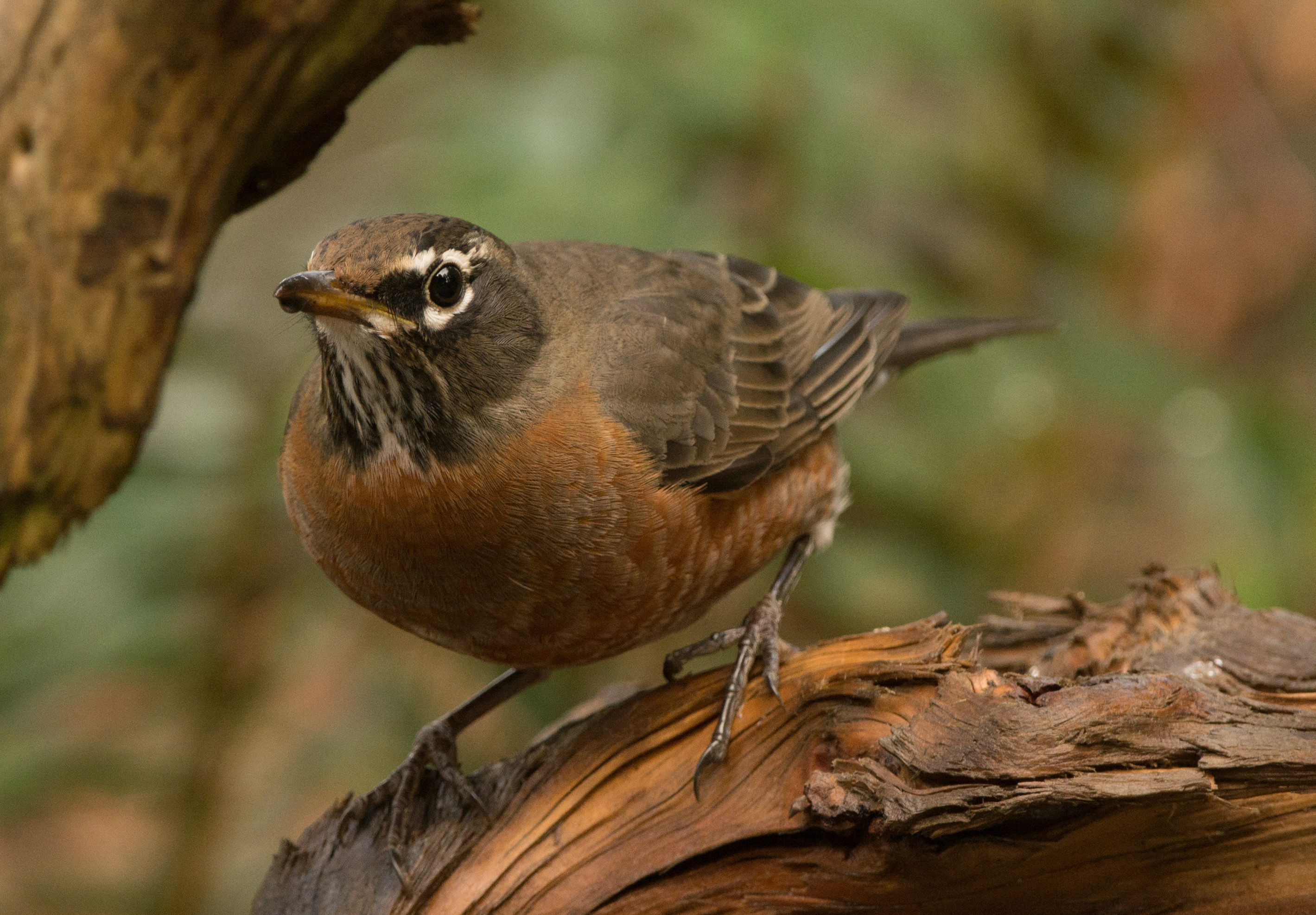
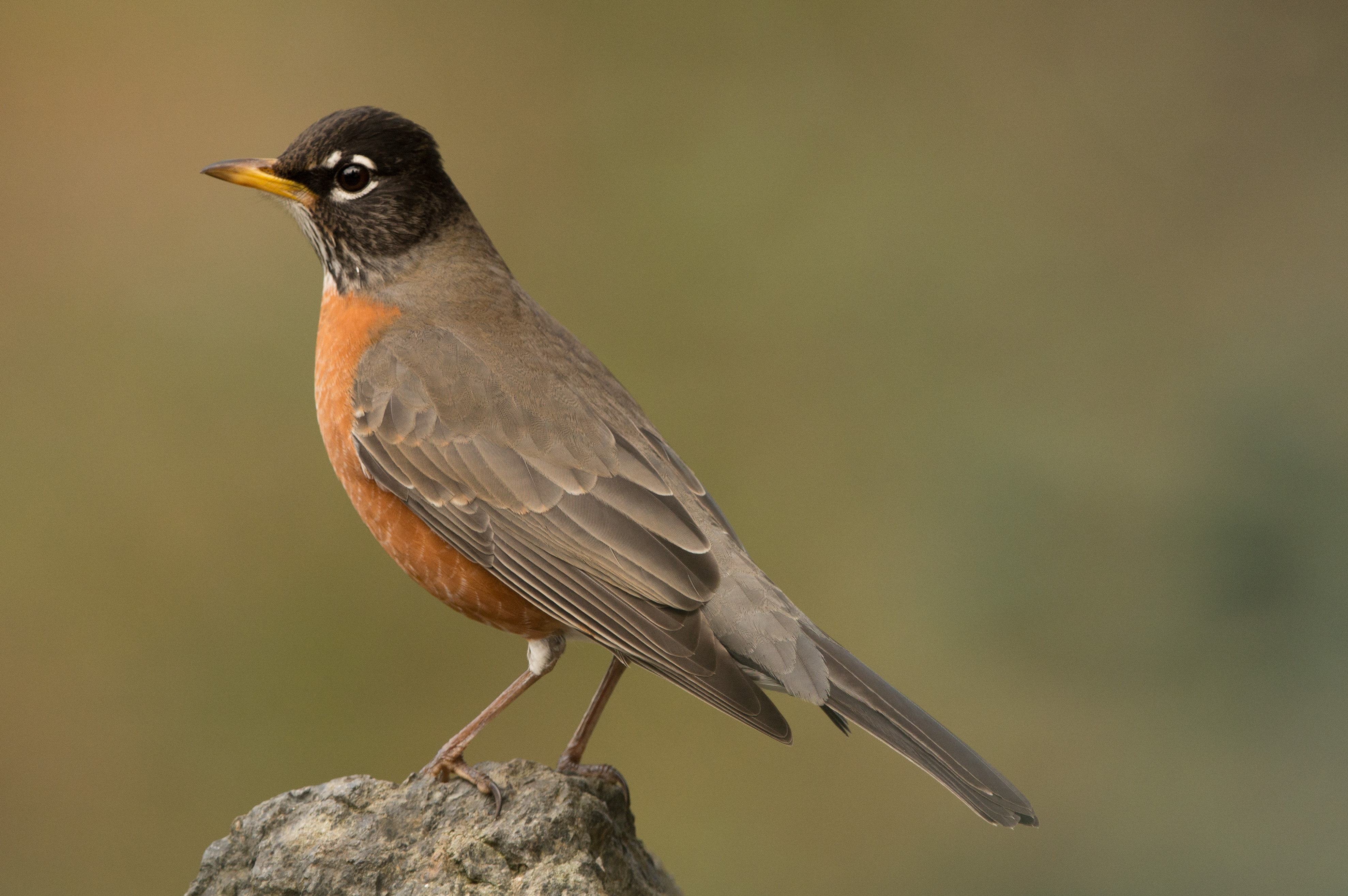
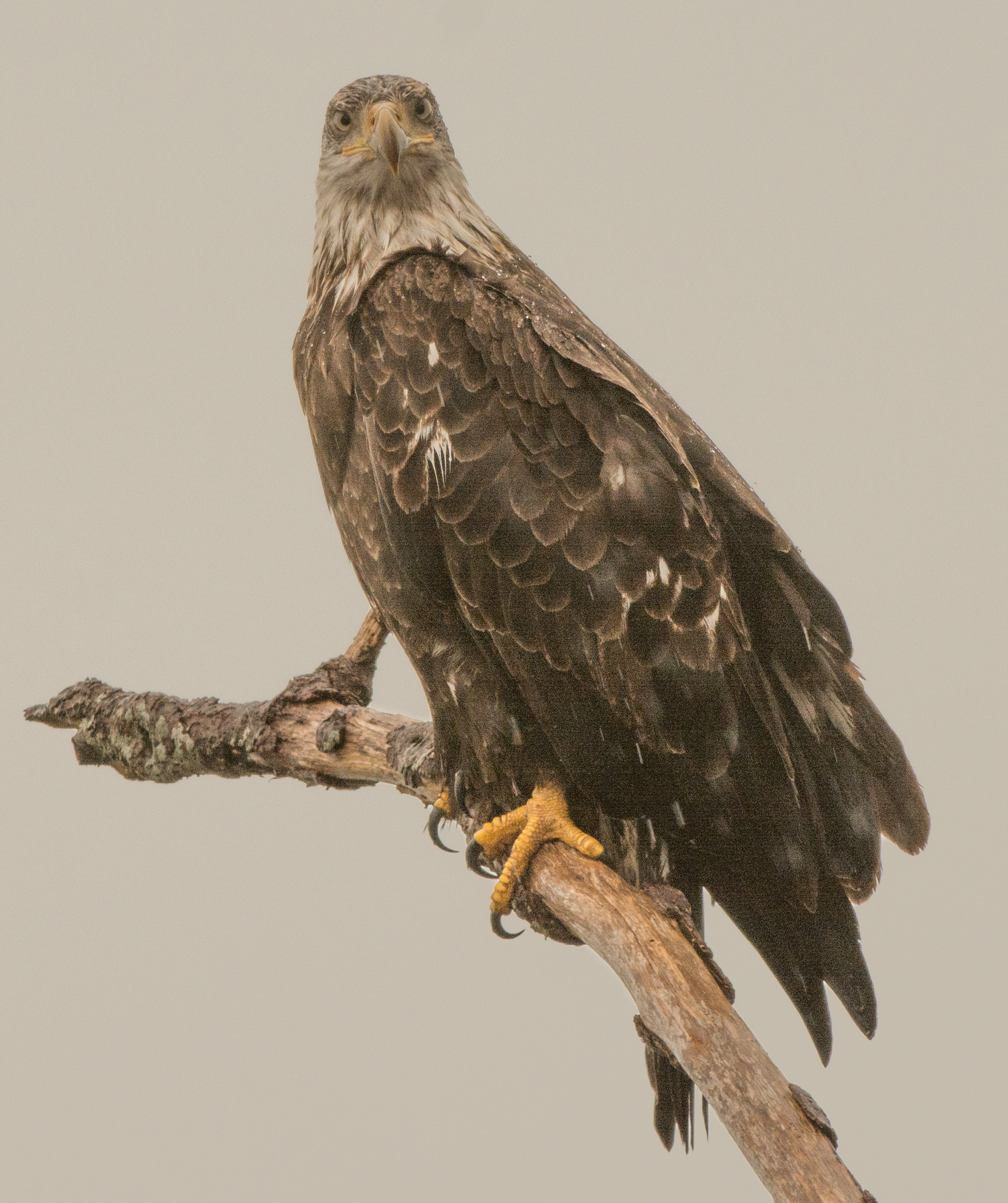
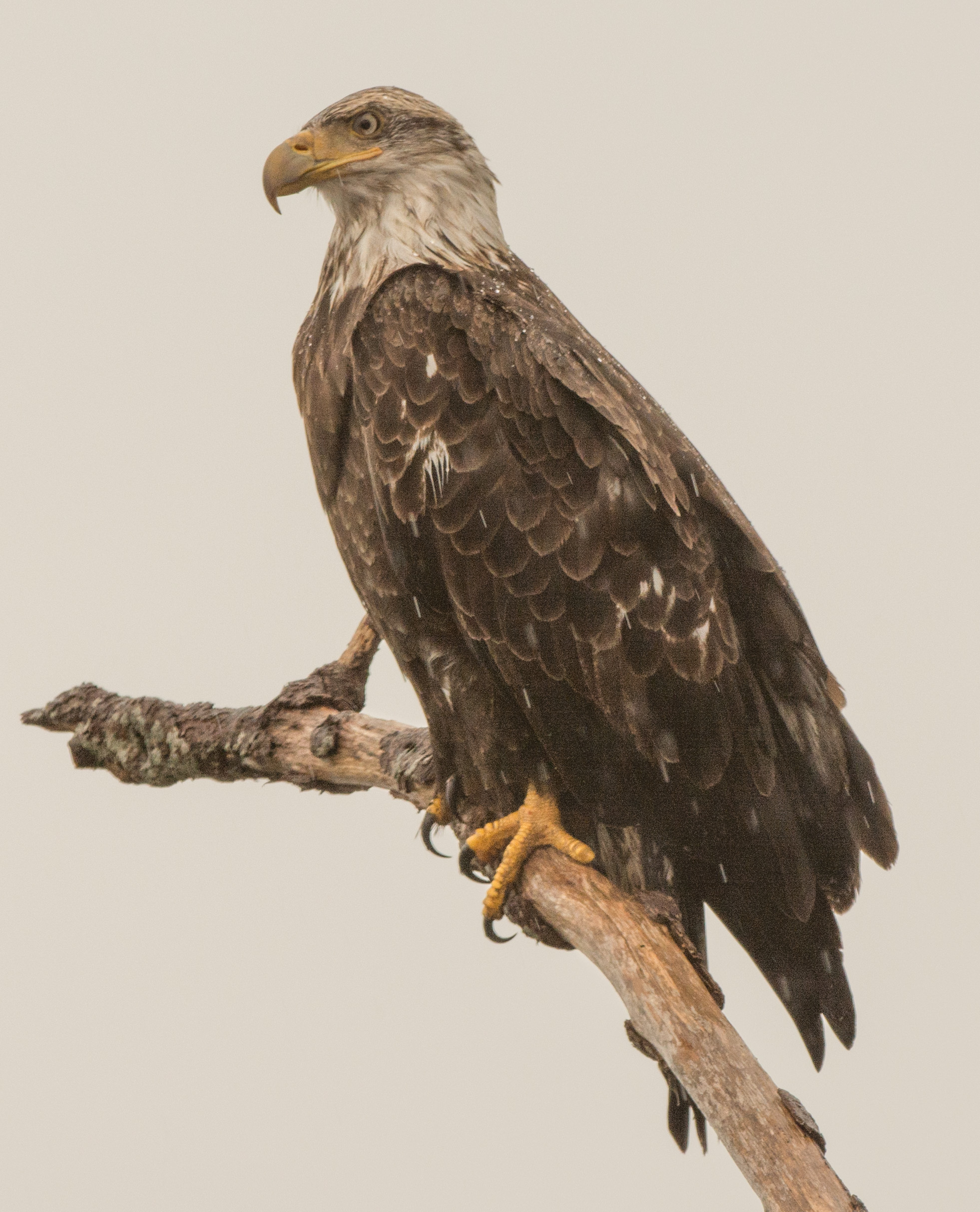
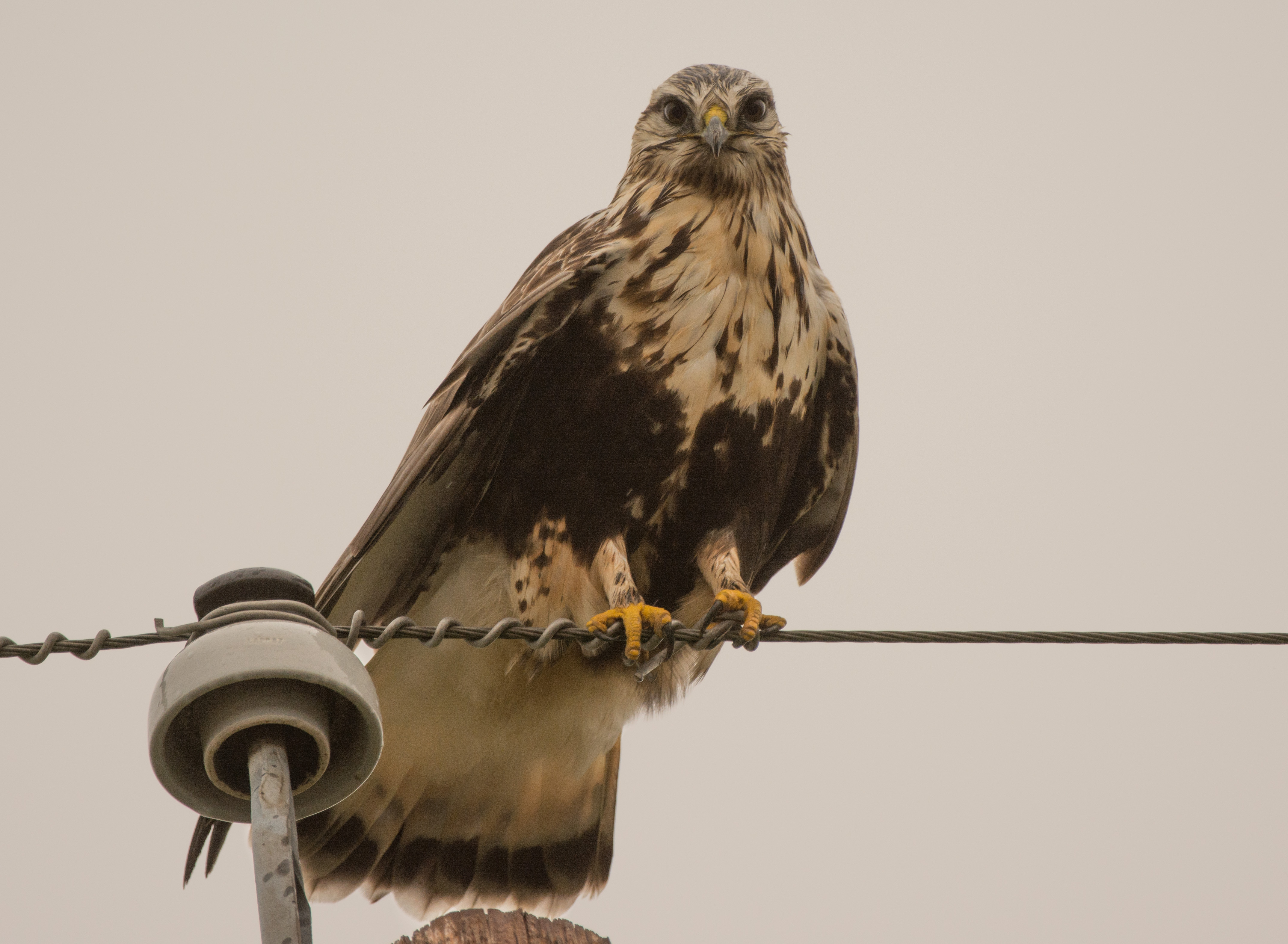
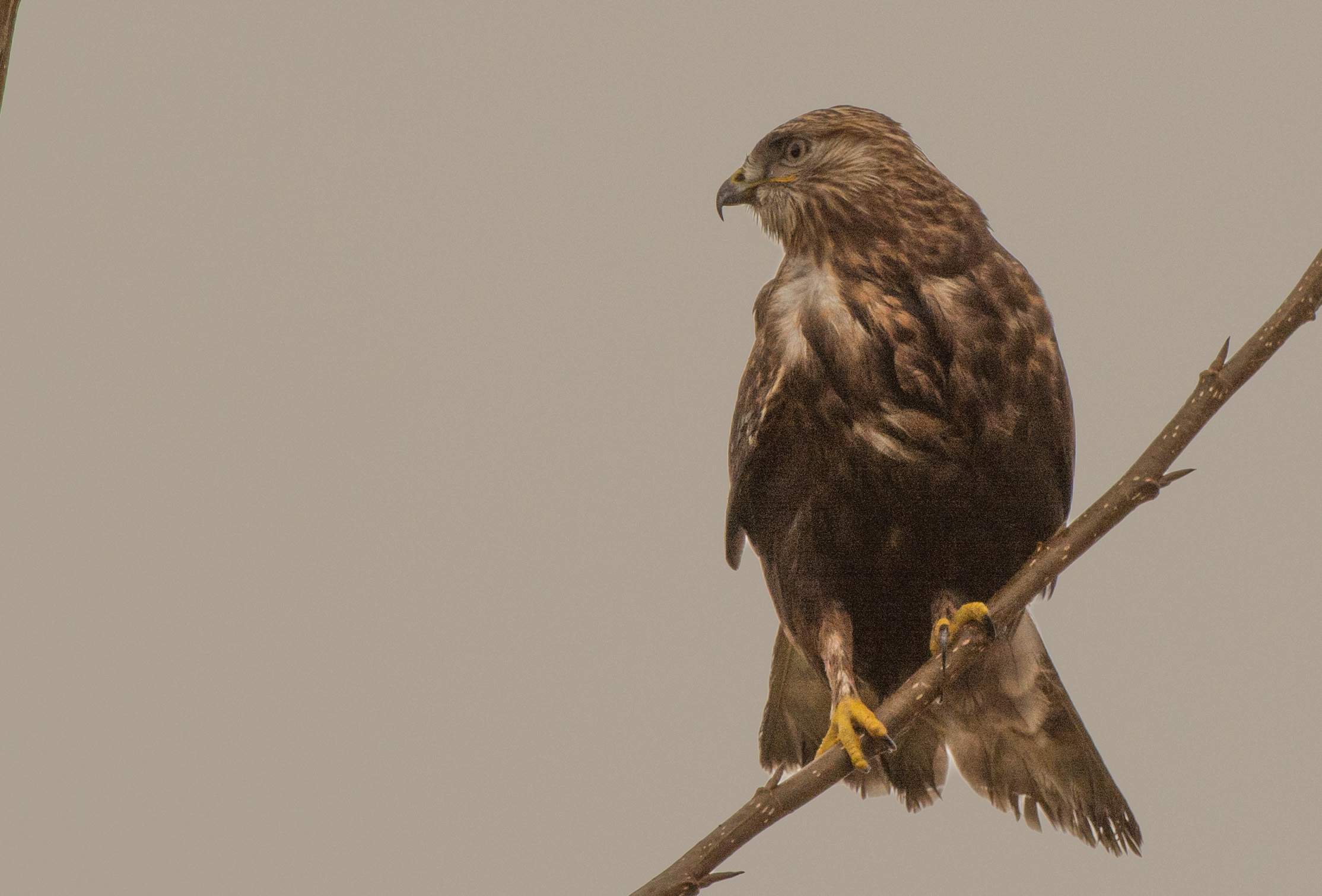
On Friday afternoon I was sitting under a perfectly clear sky, trying to photograph a juvenile American robin that was attempting to sneak into the watercourse on the ground from the back side.  As I concentrated on seeing if the bird would enter a small area of sunlight I was surprised by a shadow passing over the yard.  I quickly looked up and saw a Red-tailed hawk, probably the one I had misidentified about a month ago, circling in the sky overhead at just about the optimal distance for some good photos.  (I know… where is its red tail?  That’s part of the reason I originally misidentified it!)  Unfortunately, by the time I could bring my camera to bear the hawk had soared away.  But I quickly made adjustments to my camera and lens for aerial photography.  (This involves restricting the auto-focus lens distance to greater than about 20′ for faster acquisition and focusing, changing my shutter speed to about 1/1000 of a second and changing the camera’s focus to continuous mode for purposes of tracking a moving target.)

So now I was ready but there was no hawk! I waited four or five minutes and then saw the hawk overhead, BUT it was now at least twice the height it had been when I originally saw it.  Bummer!  But this didn’t stop me from taking about 50 photos as it soared overhead.  So here are a few of the photos… but first, another technical explanation of the photography involved.

All of the photos of the hawk you see below have been drastically enlarged.  I had hoped to show you an original photo that had not been enlarged, but read onl   Using my Adobe Lightroom software I cropped the original photo which has the effect of enlarging it.  But when I do that I’m throwing away maybe 90% or more of the 24mp I have available, so I lose detail in the portion of the image I retain.  So while I think these photos are interesting, they can’t be enlarged like many of the photos I take.  And that, friends, is the advantage to birding photography (where the subject matter generally only occupies a relatively small percentage of the photograph) of having a camera sensor with a large number of pixels.  (I had one or two English teachers who probably would have flunked me over that last sentence, but I found it reads better with parentheses than with commas!)

So with all that technical explanation behind us, here is the unenlarged photo…  Whoops… after all that explanation I just discovered that the original photo exceeds my blog site’s size regulations, so I can’t show you the amazing enlargement of which today’s technology is capable.  If you wish you can email me and I’ll send you both photos as an enclosure in the email.  Sorry…!

DSC_5150 DSC_5156 DSC_5167

So with my presumed success photographing the Red-tailed hawk and with activity in the yard dreadfully slow, I decided to hone my skeet prowess even further by traveling a couple of blocks to the edge of the island and shooting cormorants returning to their roosts after their day spent fishing in Fidalgo Bay.  Here are a couple of results…

DSC_5247 DSC_5235

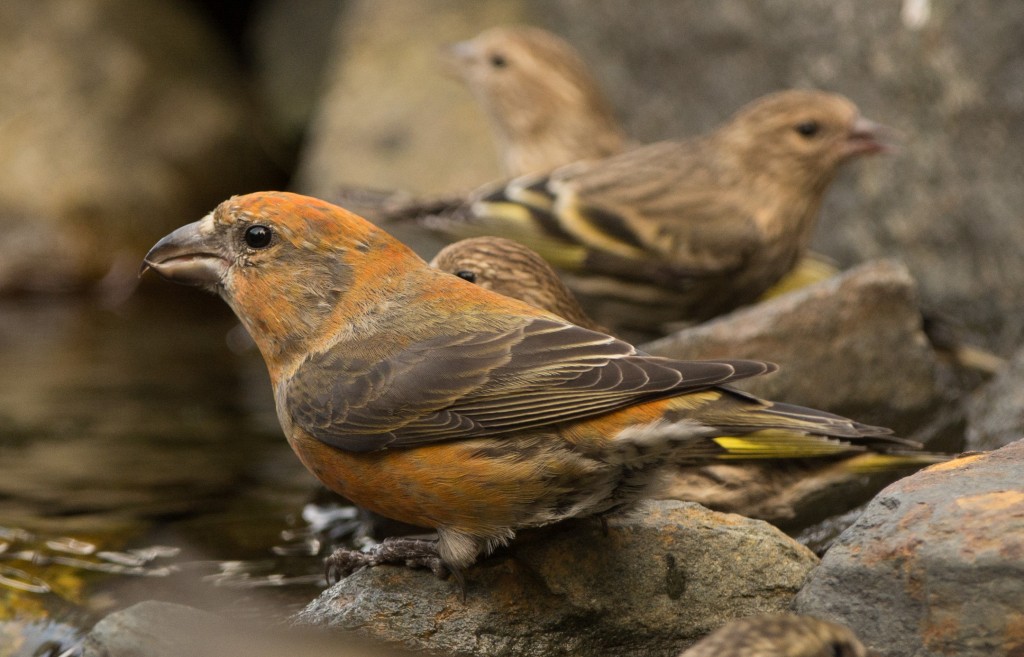
But I don’t want to slight the pair of Red crossbills that did make the effort to effect an appearance in the yard.  It was under less than perfect lighting conditions but that wasn’t their fault!  In this photo we have a male in the foreground and a juvenile in the shadow.  (Pay no attention to the man behind the curtain that House finch lurking in the background!)

DSC_5201


FOUR Warbler Species Day!

I tallied four different warbler species on Wednesday (9/3/2014), and all were in our yard!

The first warbler to visit was a Yellow-rumped Audubon warbler and I saw it sometime around noon when I first occupied my usual position in the yard.  Unfortunately I didn’t have good light at any of the areas that the warbler visited, but I made the most of the situation.

DSC_4983 DSC_4975

My next visitor was a Black-throated Gray warbler, a warbler that wasn’t even on my radar until about a month ago.  For awhile I had visits from one almost every day, but it’s been about three weeks since I saw my last one.  This one showed up late in the afternoon, after I had lost most of the light.

DSC_5028 DSC_5026

Again, late in the afternoon I had a visit from an Orange-crowned warbler.  This has been the most common warbler visitor over the past month or so and I’ve had at least one visit every day with at least one occasion with two in the watercourse at the same time.  I’ve got better photos, but I wanted to include photos I took on this date and some of the bird’s poses were cute.

DSC_5053 DSC_5049

Finally, just about the time I was ready to call it a day, I got a quick glimpse of a warbler flitting behind the leaves of one of the madrona trees.  I knew immediately it was a Townsend’s warbler, and after a little hide and seek it emerged on a limb in full sun!  What a spectacular sight!  This was my first positive sighting this year… in past years I’ve only had a single sighting and it’s always been in the fall.

DSC_5071 DSC_5066

I hung it up at 5:30pm with four different species of warblers observed, and photographed, in our yard!


Coaxing in Rare Visitors

With the good weather we’ve had the last several weeks I’ve had more days to spend in the yard observing and photographing avian visitors.  I usually take somewhere around 150 photographs a day, throw away half of them and post five or six of the ones that are left.  However, since I don’t post a blog every day there are a lot of photographs you don’t get to see.

But enough of the administrative details and on to the birds.  On Tuesday (8/26/2014)  afternoon I observed a pair of mature Red crossbills 100′ or more above the ground.  As I watched, one and then the other flew straight down towards me and landed in a medium-sized madrone tree about 30′ in front of me.  I could barely see the female but before long, without knowing how it had happened, both birds apparently gave up entering the watercourse and left the yard.  I was very disappointed in that this was the first visit of anything other than juvenile crossbills this year.

On Wednesday afternoon my wife told me that, while I was taking a nap, a pair of crossbills had visited the watercourse.  I waited the rest of the afternoon with no successful sightings.

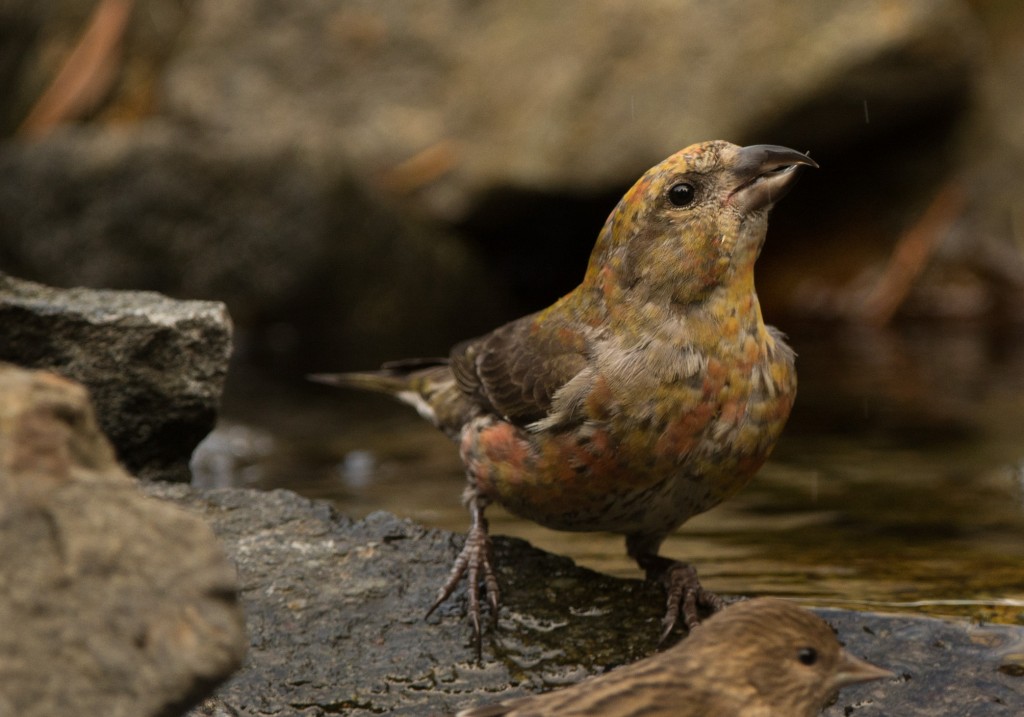
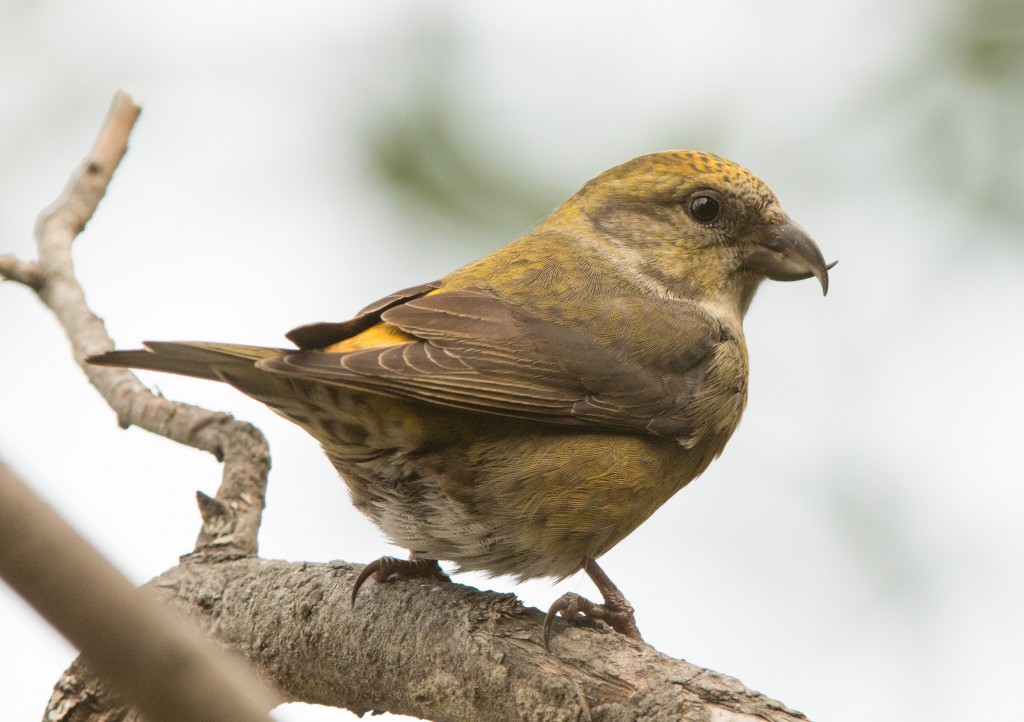
I was back out on Thursday and had two “first year” crossbills visit the watercourse and  was able to obtain photos.

DSC_4511 DSC_4505


I have had successful sightings (with photos) of Orange-crowned warblers on an almost daily basis.  Many of them are very bright and, from at least my point of view, are easily confused with Yellow warblers which are much rarer visitors to our house.  Here are some of the photos I’ve managed of Orange-crowned warblers, all taken on Thursday.

DSC_4485 DSC_4458 DSC_4493

We’ve also had a rather shy female Western tanager visit the yard on an almost daily basis.  It’s obviously interested in the watercourse and the other bird activity in the yard but thus far it won’t leave the cover of the trees for the watercourse.

DSC_4518

And while I wait for the rare visitors, I photograph some of our more mundane visitors.  We have two White-crowned sparrows which are apparently the product of this year’s breeding.  This is unusual for us in that this year was apparently the first in the past seven years that a pair has mated in the area, and unfortunately the first young that showed up with one of the adults was a Brown-headed cowbird!  I had given up hope for a successful breeding season until the two young sparrows appeared.

DSC_4531

And finally, we have a pair of Anna’s hummingbirds with us and there is still a juvenile male Rufous with us.  The Rufous needs to get moving south!  Here’s the male Anna’s that tries to defend the single feeder we have out, the watercourse and the greater yard.  Click on this photo to enlarge it… the bird’s feathers are amazing!

DSC_4553


Welcome Visitor

I spent more time in the yard on Sunday, 8/25/2014 with good results.  I’m still having difficulty sorting out what are either some brightly-colored Orange-crowned warblers with no visible orange on their heads despite being photographed from various angles and what might be Yellow warblers.  That research will continue, but that has no bearing on my special Sunday visitor.

On Sunday I had about my third visit this summer from a vireo, and unfortunately it too is providing something of a challenge with regard to identification.  It’s either a Red-eyed vireo (with no evidence of a red eye!) or a Warbling vireo that seems to have the head shape of a Red-eyed vireo.  I’ve looked at three different references and I’m still having difficulty differentiating the two species, and in addition there’s the possibility that a current year hatchling has thrown itself into the equation.  So without at this point providing a positive identification, here is a welcome, but rare visitor to my yard…

DSC_4230 DSC_4243 DSC_4252

And as long as I am on the subject of vireos, when I was in Texas in late spring (it felt like summer!) I photographed White-eyed vireos there.  It was one of my favorite birds with a mysterious and concerned “expression” always evident.  The bird had the habit of bathing by quickly flying into the water and then out again… too fast for me to photograph even at very high shutter speeds.  The vireo that was in my yard has the same habit.  I have never (in either location) seen one come down to the water and land for a bath.  The one that was in the yard on Sunday visited three different water features in the yard, but never landed at any of them.

I spent a relatively short time in the yard on Saturday (8/23/2014) but had multiple visits from two species of warblers, and at one point I had both species in the watercourse at the same time and had to decide on my priorities for photographs.  Here is a male Wilson’s warbler, still looking quite spiffy for a fall migrant… Warbler, Wilson's  20140822 - 14 Warbler, Wilson's  20140822 - 09

And here are photos of the other species, an Orange-crowned warbler, looking quite different from its entry into the yard and in the middle of its bath…  Warbler, Orange-crowned  20140822 - 17 Warbler, Orange-crowned  20140822 - 08

Warbler, Orange-crowned  20140822 - 24

And finally, an interesting photo of a Black-capped chickadee.  We have a dead tree in the yard into which I have drilled some holes for feeding.  When I’m actively in the yard photographing I fill the holes with hulled sunflower seed to keep the bird activity up.  The chickadees and nuthatches love the arrangement.  In this photo a chickadee has just grabbed a seed and, as is there habit, is off to eat it elsewhere.  Chickadee, Black-capped  20140822 - 07