Clammers!

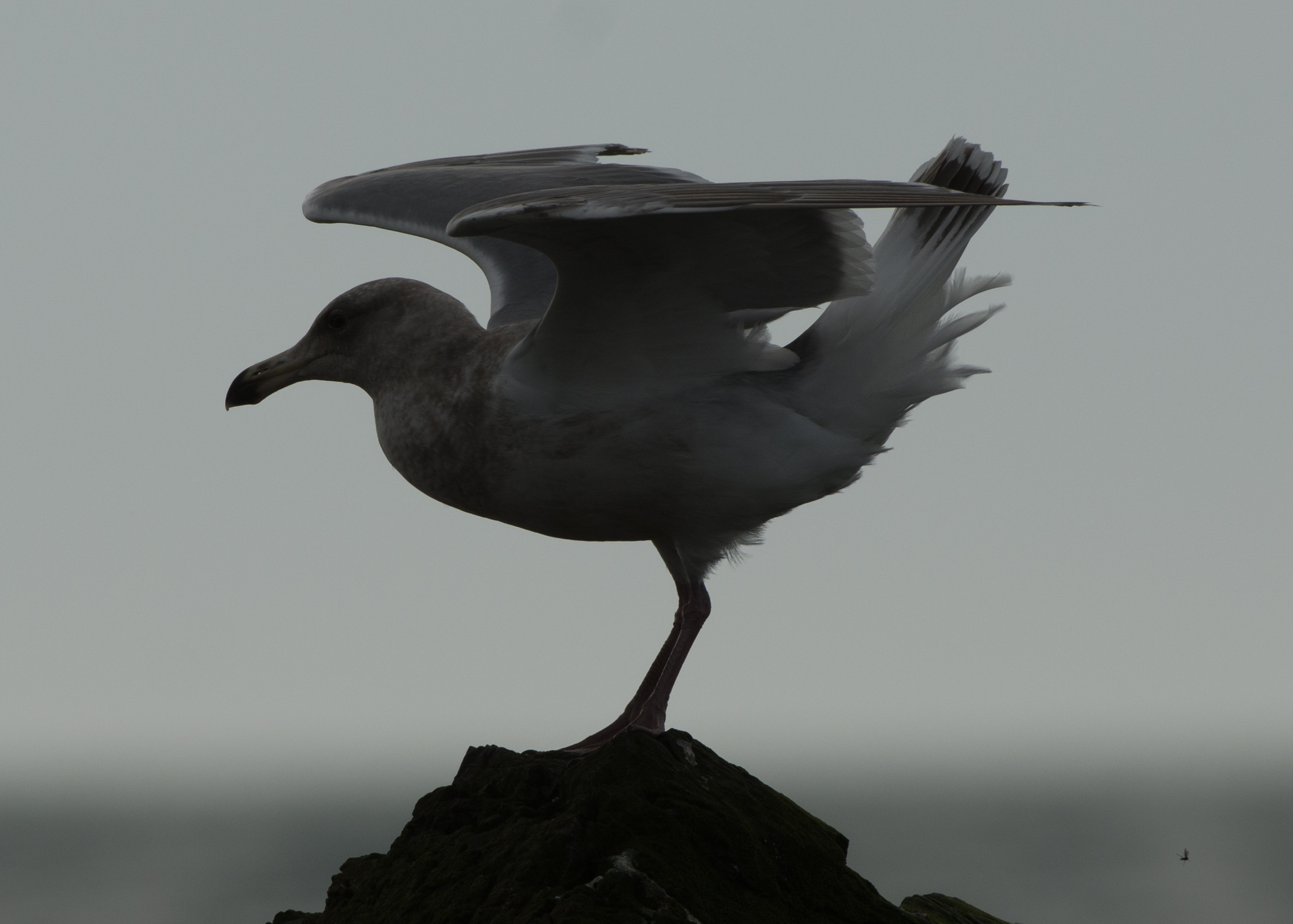
gulls - with clams  20140219-05

I spent considerable time on 2/19 observing and photographing gulls at low tide on March Point.  The gulls were busy procuring and eating clams, and they made it look easy.  They stroll along the beach looking for clams.  In most cases they seem to choose a “free-range’ clam, but I have occasionally seen them pull one off of a rock.  They then take off with the clam and fly up into a stall, always ensuring that they are over a rocky area.  They then drop the clam which cracks when it hits the rocks below.  They then drop down and dine.

gulls - with clams  20140219-17

There is an alternate means of securing a clam, however.  You stand around on the beach waiting until one of your friends drops a clam too close to you, then you beat the clam’s original owner to the clam!

gulls - with clams  20140219-15

Every once in awhile it appears that a gull will want to show off to its friends, and instead of taking action to drop the clam immediately it takes the time and effort to sail over its friends with the clam in its mouth.

This behavior is evident on March Point, along the Tommy Thompson Trail and along the beach in Coupeville.  And in Coupeville the crows have apparently learned and adopted the behavior from the gulls!

Back to the Yard!

On Feb 16, by early afternoon I decided I might have enough light to get some photos of yard birds, and there were plenty around!  These are the first yard birds I’ve photographed in some time and I’m eagerly looking forward to spring migrants, more light and warmer weather!

First up, this Fox sparrow.  I never have but two in the yard at one time, and usually there is only one.

Sparrow, Fox  20140216-02

This winter, and for the past several winters, we have managed to attract Varied thrushes to the yard.  This year they seem to be all males, and 2-3 are all we can count at one time.  The real mystery is that these birds, as thrushes, are generally thought of as being insect and berry eaters.  Yet, unlike their close cousins (American robins) who are also thrushes, these thrushes clearly are attracted to unhulled sunflower seed I scatter in the yard.

Thrush, Varied  20140216-03-2

Thrush, Varied  20140216-04

We are absolutely overrun with Dark-eyed juncos of the Oregon race!  I estimate that there may be as many as 20 or more in the yard at one time!  For as long as we have lived here (almost seven years) we have had a single Dark-eyed junco of the Slate-colored race in the yard.  This year we might have two… one with the darker head and one with a lighter gray head (apparently signaling last year’s production).  I’ve never seen them in the yard at the same time and have thus far been unable to photograph either.

Junco, Dark-eyed - Oregon  20140216-01-2

This past winter we have a Bewick’s wren that has been accessing our inverted suet feeder.  And on this day I watched as the bird ate some unhulled sunflower seed that was scattered on the ground.  Most unusual for a member of the wren family!

Wren, Bewick's  20140216-05


Skagit Flats Birding

By mid-morning on Feb 12 the sun was shining and I decided it was time for yet another birding excursion.  I first made a trip through my neighborhood and found this magnificent male Spotted towhee.

Towhee, Spotted  20140212-01

The sun lasted just about long enough for me to get around a rather uncharacteristically unproductive March’s Point, so finding little to photograph there I continued to Channel Drive where I managed to observe and photograph a female Belted kingfisher catching, and hurrying through (!), lunch.

Kingfisher, Belted  20140212-12


Kingfisher, Belted  20140212-13 I had an errand to run in Burlington so I wandered through the farm fields south of Memorial Highway.  I encountering the most cooperative American kestrel I had ever found in Skagit County.  The bird allowed me to stop almost directly below it for photographs, then stayed in place while I had to move for a large farm truck passing by, and then allowed me to return for more photographs!  I never could see the plumage details to allow me to make a sex determination, but I sort of suspect from its behavior that it might be a female.

Kestrel, American  20140212-05

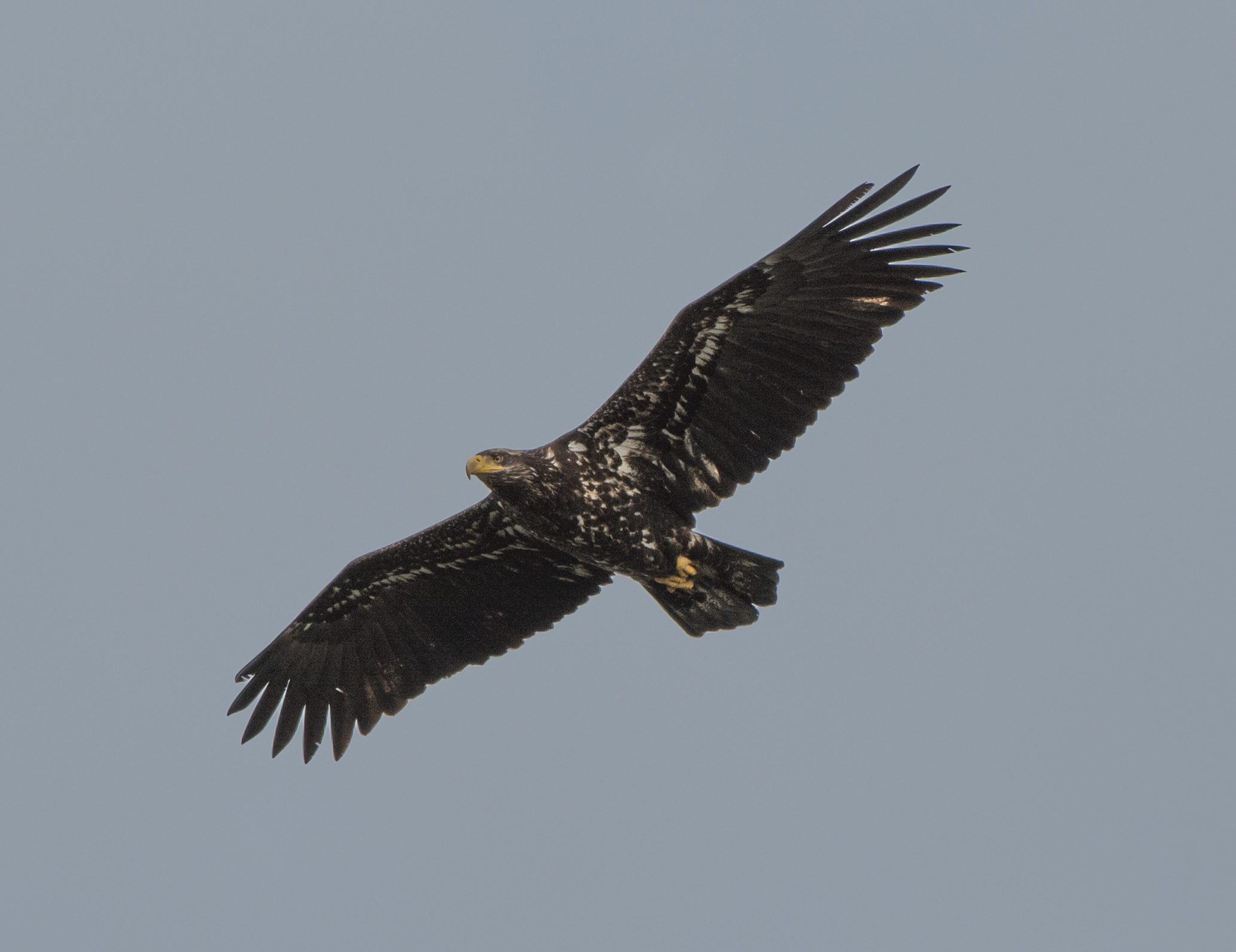
I found this juvenile Bald eagle sitting in a farm field not far from the road, looking around as if it had nothing to do.

Eagle, Bald  20140212-04

On my way back I swung around March’s Point again and photographed this male Northern pintail.

Pintail, Northern  20140212-03


Birding March Point

For the past week or so I’ve spent a couple of hours a day touring March Point and occasionally Channel Drive here in Skagit County.  The birding has been productive, although by and large I keep seeing the same birds day after day.  But the good thing about photographing birds is that they are almost always in different settings or poses.

Earlier in the week I encountered a county mower, a large tractor with an articulated arm that was trimming grass and brush along March Point Road.  On the day I first encountered it, it was on the east side of March’s Point and wasn’t disruptive, but a day later, when I took some of the following shots it was a major factor in my birding.

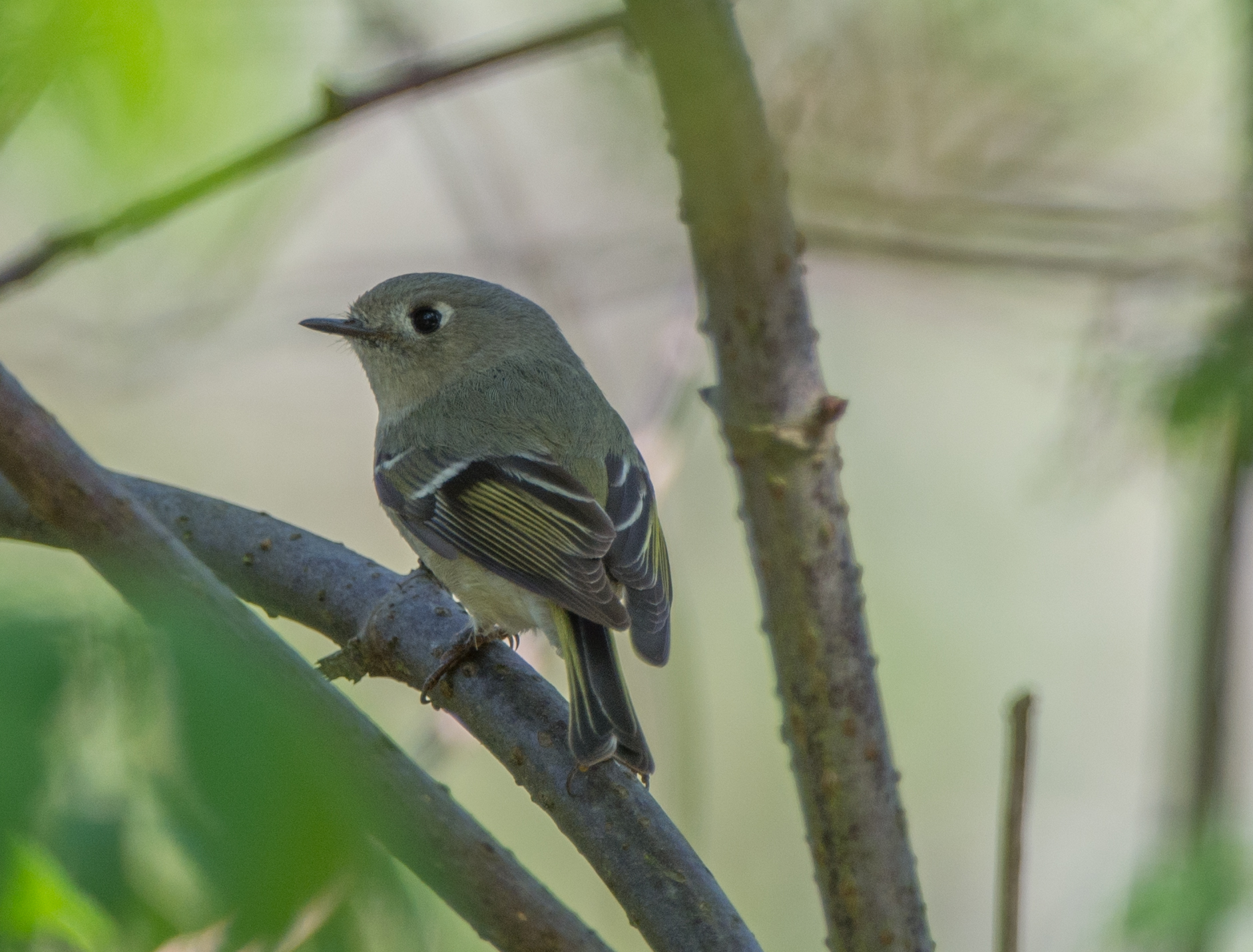
I had discovered a small pocket of birds in one of my favorite stopping areas and had enticed a Ruby-crowned kinglet and small flock of Black-capped chickadees out into the open and was busily photographing them when I became aware of a loud mechanical noise.  I glanced away from my photography and saw the mower headed my way.  I thought I had a bright future at this location but I realized that my photography would be ending in just a matter of seconds, so I rather hurriedly squeezed off a few shots of the chickadees and gave up on the kinglet, which had gotten too close to my vehicle to photograph.  (Photographing kinglets is a rare enough experience that I hate to ‘leave any shots on the table’.)

Chickadee, Black-capped  20140211-07

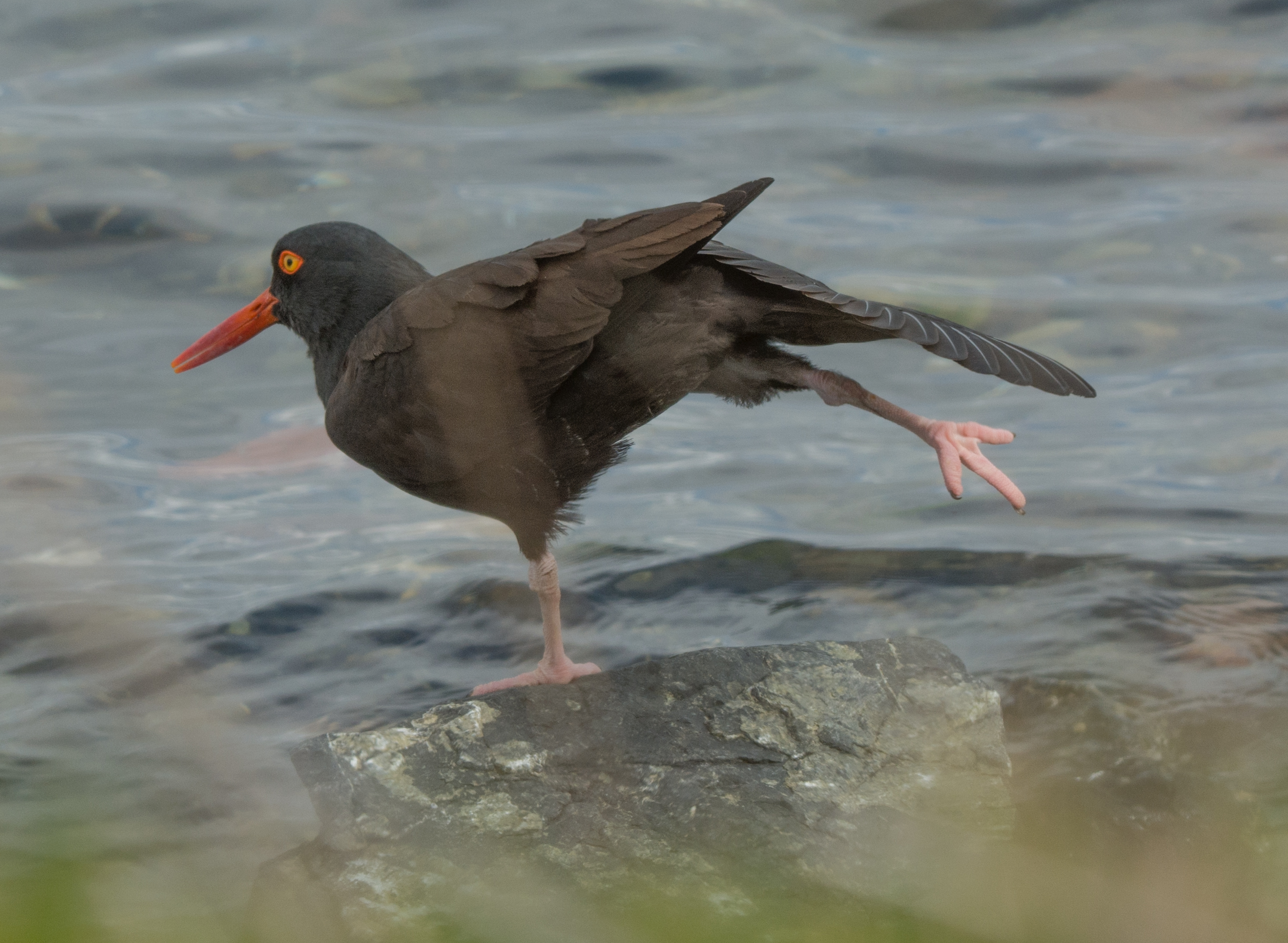
On the east side of March’s Point I encountered the Black oystercatcher that has visited the area from time to time.  I can never count on seeing it there but have encountered it a good many times over the past couple of months.

Oystercatcher, Black  20140211-08 Oystercatcher, Black  20140211-07

The final feather in my cap (pardon the pun!) for the day was this Song sparrow hanging out in the rose hip bushes…

Sparrow, Song  20140211-02


March Point to Fir Island… a Frequent Route

I managed to get out for another day of photography on the last day of January.  Early appearances were that the clouds which had dogged us for several days were being nudged along by a north wind, so although it seemed a little cooler than usual due to the wind at least the rain would be gone.  The clouds did dissipate, but not to the extent that we had any direct sun.  This would be, as opposed to my previous post, a day of numerous accomplishments but with smaller birds.

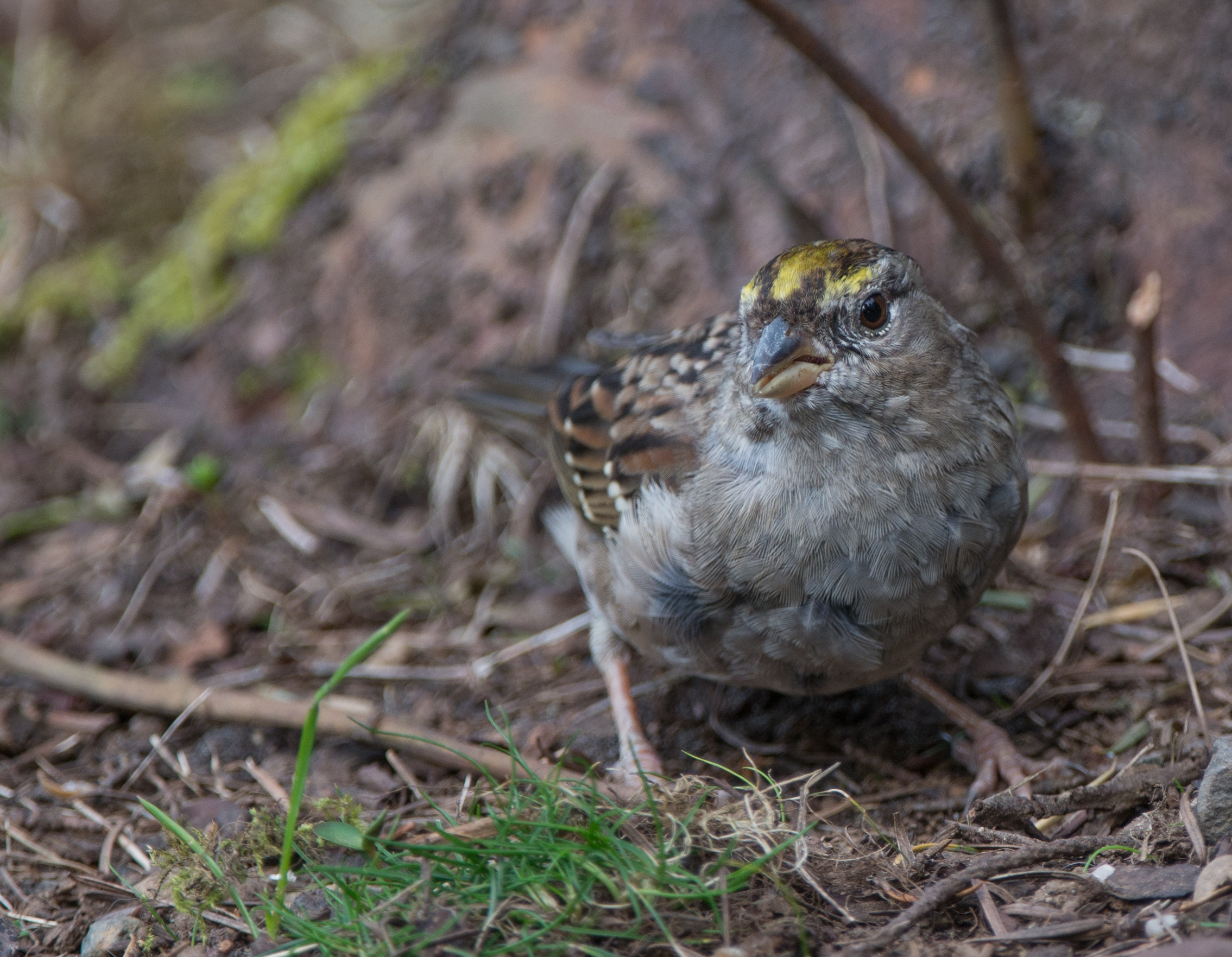
The wind was apparently discouraging to the waterfowl, so my first stop was a rather confined area I’ve found productive for birding which is located just off March Point.  But this area, at first, seemed deserted.  However I managed to locate a large group of Golden-crowned sparrows and before I left I had photographed several species of birds, most, if not all, eating either yarrow seeds or bugs hiding among the dried up seed heads.  Before I left the area I had also photographed Bush tits, Dark-eyed juncos and a single American goldfinch, all working the seed heads.  My suspicions are that these juncos I photographed were the same as the ones I photographed a week or so ago.

DSC_9737

Dark-eyed Junco – Oregon Race

DSC_9730

Male Bushtit

DSC_9711

Male Bushtit

DSC_9697

Golden-Crowned Sparrows on Yarrow Seed Heads

My next destination was Channel Drive along the Swinomish Channel.  There I found the first White-crowned sparrows (at least 3-4) I had seen in many months and a nice supply of Mourning doves, a species that I have found difficult to photograph in a natural setting in the Pacific Northwest.

DSC_9761

Mourning Dove

DSC_9744

White-crowned Sparrow

Finally, on Fir Island, I found this Red-tailed hawk perched on a power line.  This one was overseeing a large group of ducks on some water and was more tolerant of my presence than most of the Red-tails.  If you look carefully you can see that this bird’s beak has a prominent hook to it.  I understand that this is a problem among some of the Red-tailed hawk population.  While it doesn’t interfere with the birds obtaining food, it interferes with the birds ability to dissect the food which can negatively affect the birds’ health.

DSC_9811

Red-Tailed Hawk