Hamming It Up!

I try to discourage birds from posing for me, but some recognize me and figure that they have a better chance of being immortalized in my blog by striking a pose.  So in this instance I’m going to humor a few of them…

A male Brewer’s blackbird demonstrating his balancing stance.  (I could probably perform the same trick if I had a base like he has!)

Blackbird, Brewer's  20140327-19

A male American wigeon…

Wigeon, American  20140327-10

A Great Blue heron…

Heron, Great Blue - with reflection 20140327-03

And finally, the biggest ham of all… a Black oystercatcher…

Oystercatcher, Black  20140327-04

Waterfowl & Shorebirds

Over the past week or so I’ve made several photographic/birding excursions but have failed to post any photos.  So here are some water-related photos…

DSC_2186 On the same day I photographed this gull who was bypassing mussels in favor of a larger meal…

DSC_2271


On March 20, I toured March Point and found a female Bufflehead very close to the shore.  This allowed me to get some very nice photos.  I returned the next day and there were four female Buffleheads in the same place, and before I left (after taking many photos) all four had walked up on the rocky beach.  This was the first time I had ever seen a Bufflehead out of the water!

DSC_2354 DSC_2352

And today (3/25/2014), I spend some time down on West Beach on Whidbey Island.  Having some patience and a little luck finally netted me two Black oystercatchers which flew onto a rock in front of me.  I obtained probably the best oystercatcher photos I have in my portfolio, with the oystercatchers eventually walking within about twenty feet of me as I leaned against a rock and photographed them.  I also saw a lot of other waterfowl.

I’ll leave you with this silhouette of a gull landing on a rock…

DSC_2820


MMM


d this Common loon, in breeding plumage, in the Swinomish Channel last week.

Bird Feeding, Staging Sticks & Photography

Lately we’ve had a few breaks in the weather and I’ve spent time in the yard photographing birds.  As I mentioned in a prior post, I soon will be transitioning from vehicle excursions around the county to photographing birds in my yard.  Part of the reason is comfort… I can control the environment in my vehicle but if I photograph in the yard I am at the mercy of weather conditions.  But another reason is beginning about this time of year I can attract spring migrants to the yard and photograph them under more controlled conditions.  And here is a very brief aspect of how I’m able to do that.

Borrowing a tired cliche from the real estate industry, it’s habitat, habitat, habitat.  Habitat is what attracts birds to your yard… or any area, for that matter.  I don’t have the time or space here to go into details, but my objective is to be able to photograph birds in natural habitat, ie, not on feeders.  I have feeders (and other means) which I use to attract birds to the yard, but once they arrive here it’s my goal to eliminate the feeders from my photographs.  If you have good habitat you can provide strategic staging points for the birds… natural places they will perch when approaching or leaving food and water sources that you provide, and while they are perching at those locations it provides a perfect opportunity for photography.

Here is a photo of a Bewick’s wren using a strategically placed staging stick located adjacent to a bird bath… it’s placed in an area where the birds are likely to use it to access the bird bath.  (This particular wren is unusual in that it has been eating sunflower seeds on the ground, and you can see that it has one in its beak.)

DSC_1768

Here’s a photo of another stick that might look inviting to a bird given the right location.

DSC_1728

But this simple stick, which would make a nice staging location if it were near food or water, holds a secret.  The vertical portion of the stick has been drilled out so that it holds a small amount of seed.  So this staging point is doubly attractive to birds because it not only furnishes food, but also a handy landing point on the way to the food.  And for the photographer, it furnishes a point to photograph a bird in a natural setting.  In the next two photographs a Red-breasted nuthatch and Black-capped chickadee are reaching into the reservoir for a seed.

DSC_1895

DSC_1727

The seed supply is hidden in this photo, so the setting looks natural.  (Note the seed the nuthatch has thrown from the reservoir.)

Here’s a Dark-eyed junco (Oregon race) on the same stick, so this feeder/staging stick is inviting enough to attract at least three species of birds.

Junco, Dark-eyed - Oregon  20140315-05

But there is ample opportunity to photograph birds when they use the stick as a staging point and they are well away from the reservoir, as is the case in the following photo.  With a little luck and the right cropping, you could completely eliminate the seed reservoir from the photograph.

DSC_1863-2

Pictured below is a simple feeder that you can make out of a cheap measuring cup that will cater to small clinging birds such as nuthatches, chickadees and woodpeckers.  Although extremely vulnerable to squirrels, the entire side of the tree becomes a staging area for this feeder type and location.

DSC_1722

Finally, here’s a Black-capped chickadee accessing a water supply furnished in a small PVC cap… very affordable and effective!

Chickadee, Black-capped  20140315-01

Hummingbirds

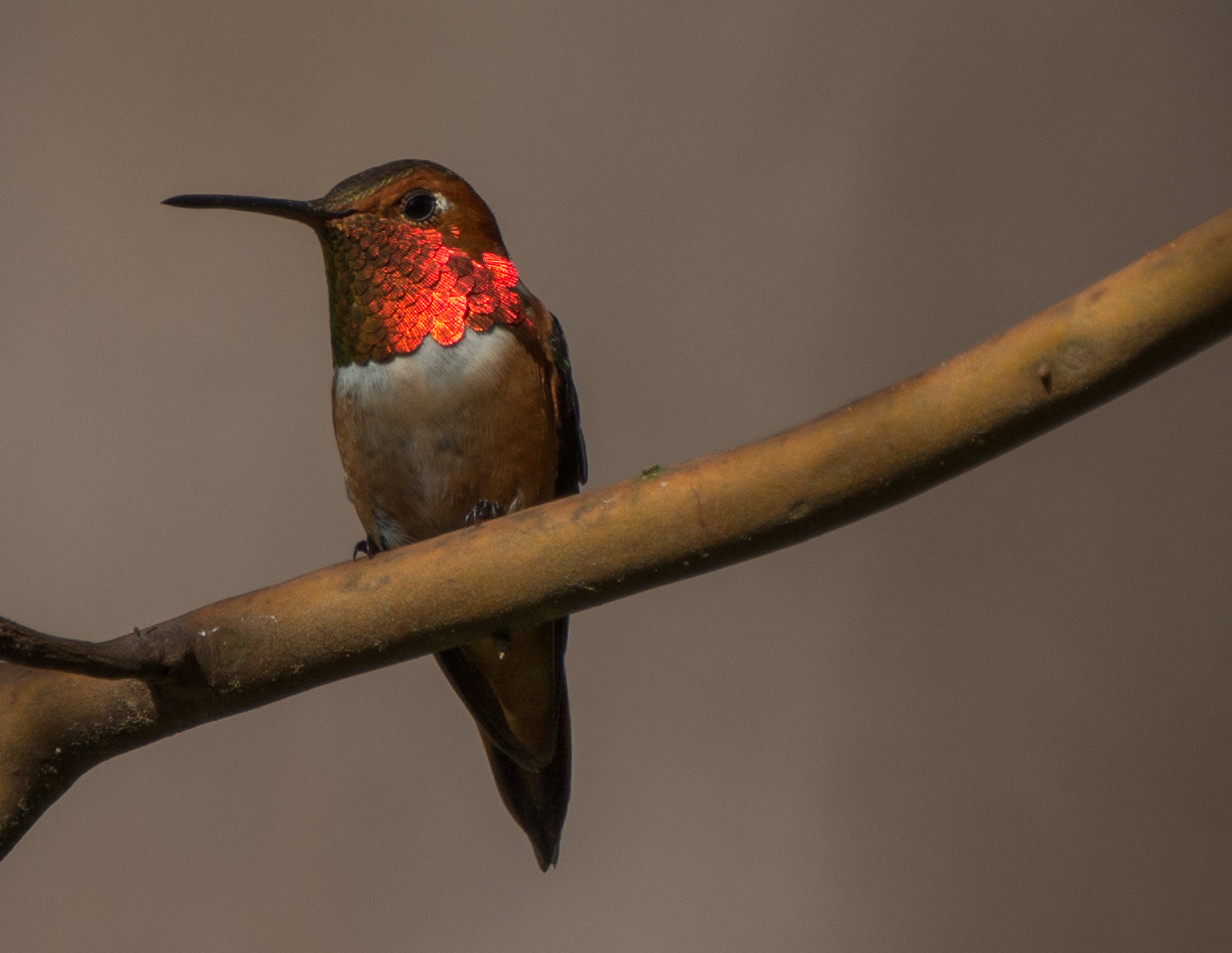
I mentioned in a previous post, and furnished a photograph, of our first male Rufous hummingbird visitor.  On March 15, I spent time in the yard in hopes of photographing more arrivals.  I can’t identify the individual hummingbirds, but we had at least one male Anna’s, presumably the one that has spent the winter with us, a male Rufous and two female Rufous hummingbirds.

Hummingbird, Rufous  20140315-01

One of the first female Rufous hummingbirds to visit the yard in 2014.

At one point I photographed a male Rufous and female Rufous sharing the hummingbird feeder.  (Note:  Skagit Wild Bird is now carrying the Aspects-type feeder in a smaller 4oz. size, perfect for early spring, fall and winter feeding when there are fewer hummingbirds around.

Male and female Rufous hummingbirds sharing feeder.

Male and female Rufous hummingbirds sharing feeder.

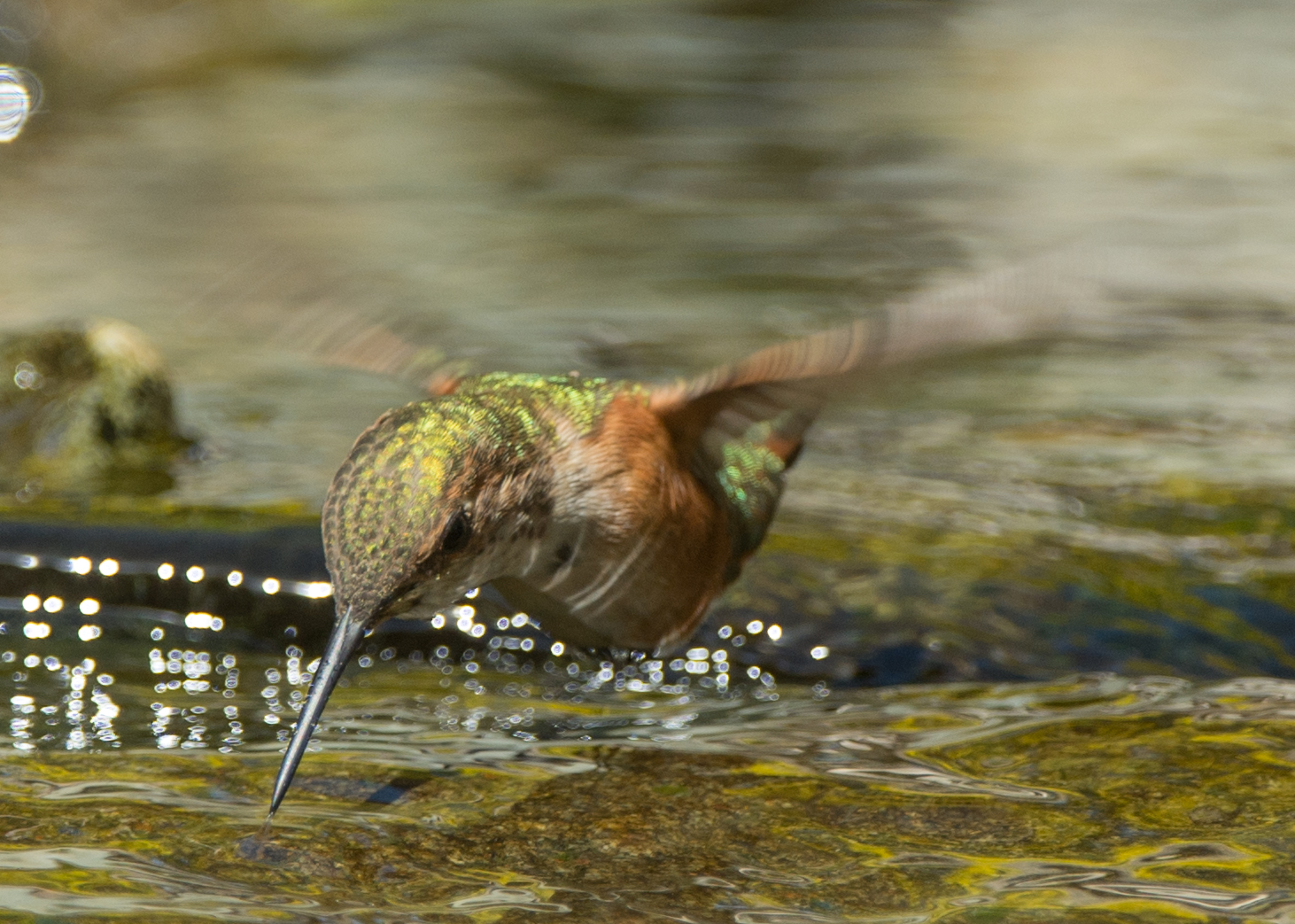
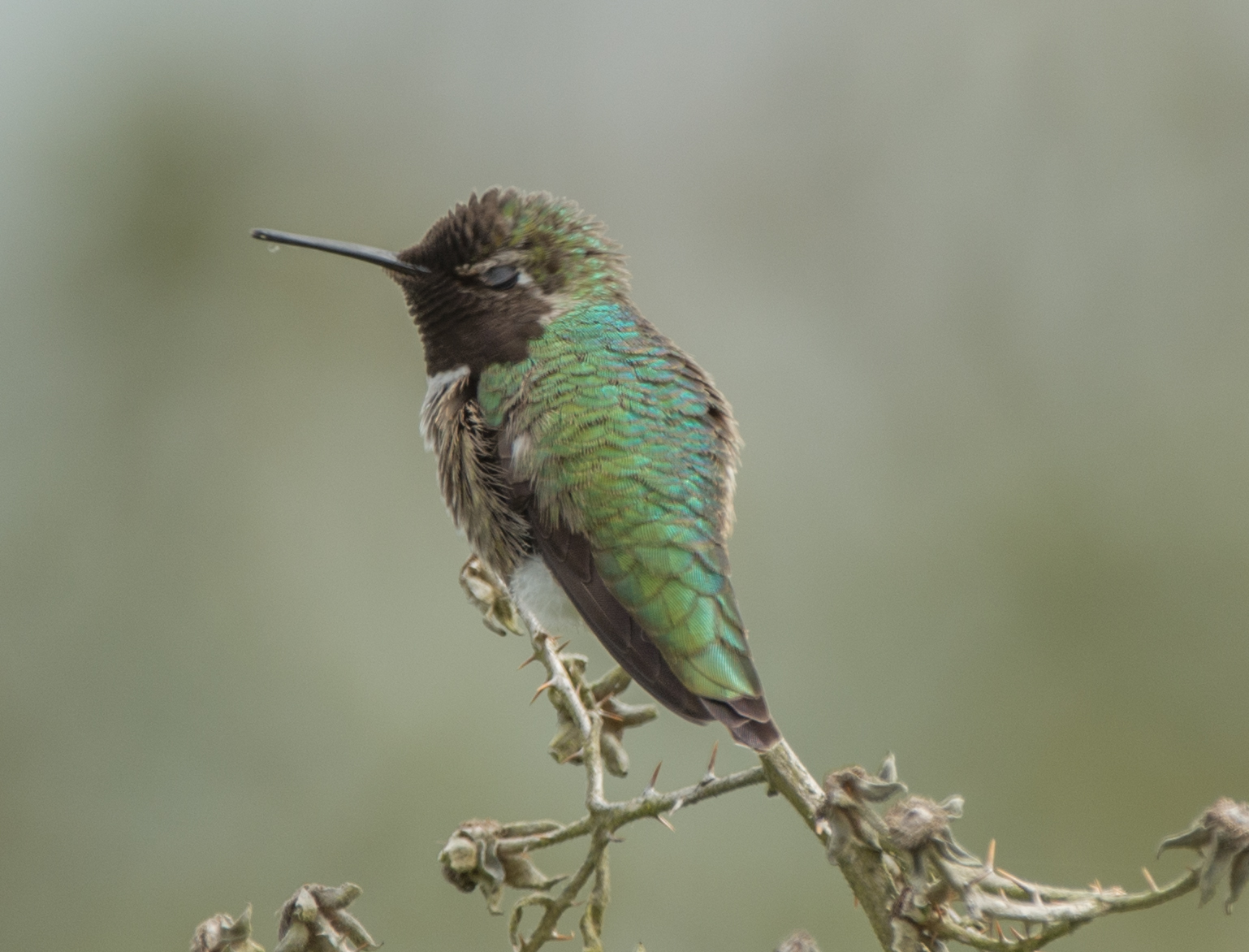
I again spent time in the yard on March 17, hoping for more hummingbirds and a sunnier day.  There was a slight wind blowing and it was cold, and I didn’t get that many bird photos.  However I did get this male Anna’s hummingbird taking a bath in the watercourse… with minimum light and at a higher ISO than I would have liked.

DSC_2075

Male Anna’s hummingbird…


And here are a couple of more Rufous hummingbirds for good measure…

DSC_2098

Male Rufous hummingbird…

DSC_2097

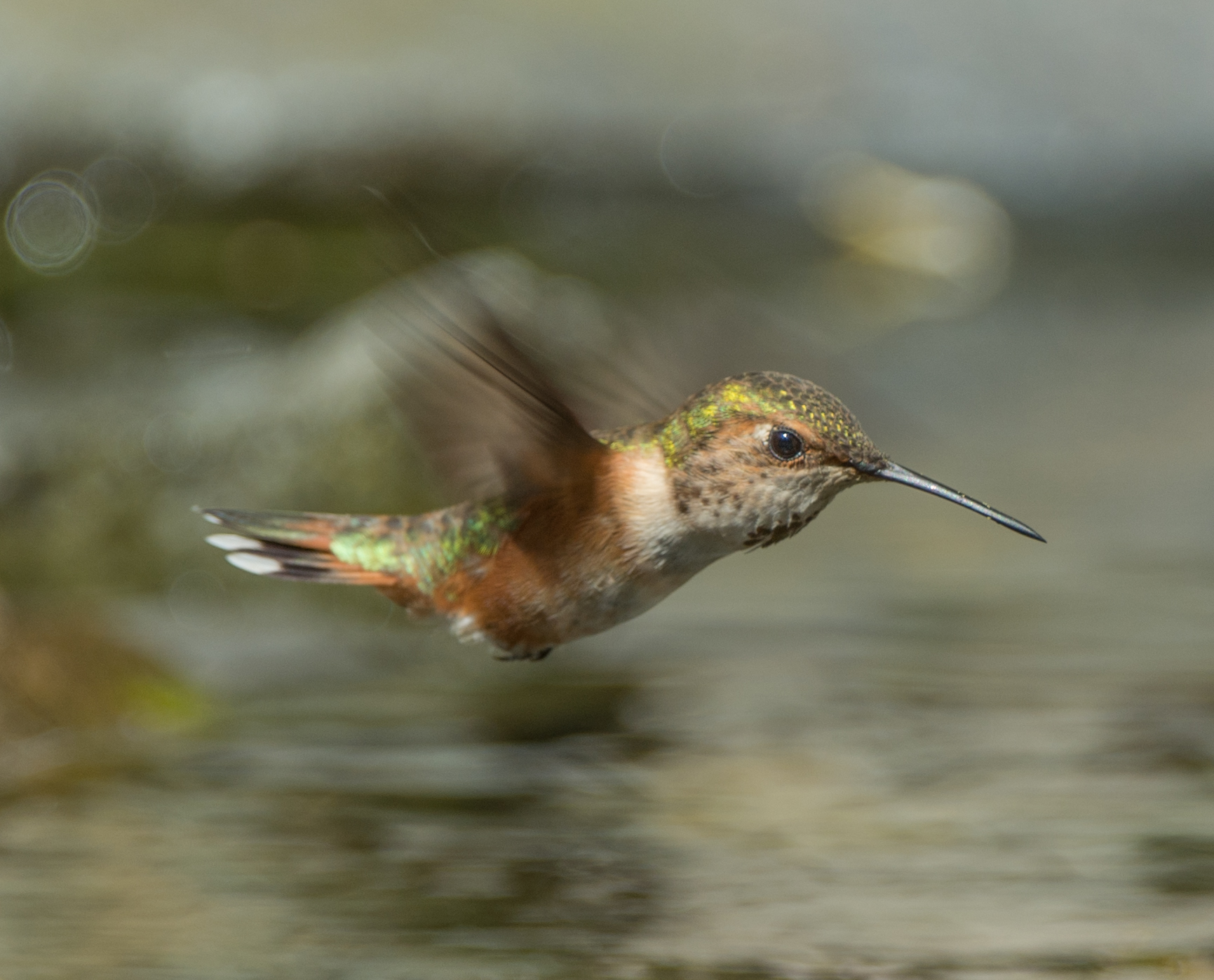
Female Rufous hummingbird…

I expect that the coming months will offer a lot more hummingbird photographic opportunities.  You may get tired seeing the photos, but I never tire of taking them!

Transition to the Yard

On the morning of Friday, March 07, 2014, we finally got a little break in the weather that had been plaguing us for the past week or so.  My wife had plans to be away from the house and so I decided I was going to bird… and for me at this stage of my life, birding equates to photographing birds.  My original thought was to take to the car to see what I could find, but the previous day our first Rufous hummingbird (a male) had shown up and I thought there was a good chance that either it, or another would visit the yard and so I decided to first try my luck in the yard.  It was a fortuitous decision! 

In the course of a little less than three hours (9:50am – ~ 1:00pm) I had a rich assortment of avian visitors.  None of the visitors were unusual, but they provided some unusual photo opportunities.  I ended up taking 209 photos, saved 103 after processing and obtained some excellent photos of some birds which I usually have a very difficult time photographing.  Not only that, but I was able to photograph some birds at just beyond the minimum distance at which my Nikkor 200-400mm lens will focus… about 16 feet. 

The weather cooperated… the temperature was above 50-degrees and the sky was partly (but mostly) cloudy.  At those few times the sun actually shown it was more a detriment than an asset.  For the past couple of weeks I’ve set the ISO on my camera to 320 to take advantage of the extra exposure it gives me in the darker light.  In theory this probably gives me a little less sharpness in my photos but it allows me to photograph in darker areas at a slightly faster shutter speed.  I believe that all my photos taken this day were taken at 1/250 of a second and I used a monopod to steady my camera (Nikon D-7100) and lens. 

So here’s the list of what I saw in the yard today.  An ‘*’ designates that I obtained photos of the bird(s), but not all the photographed birds are included in this post.  . 

 * Varied thrush (2M)

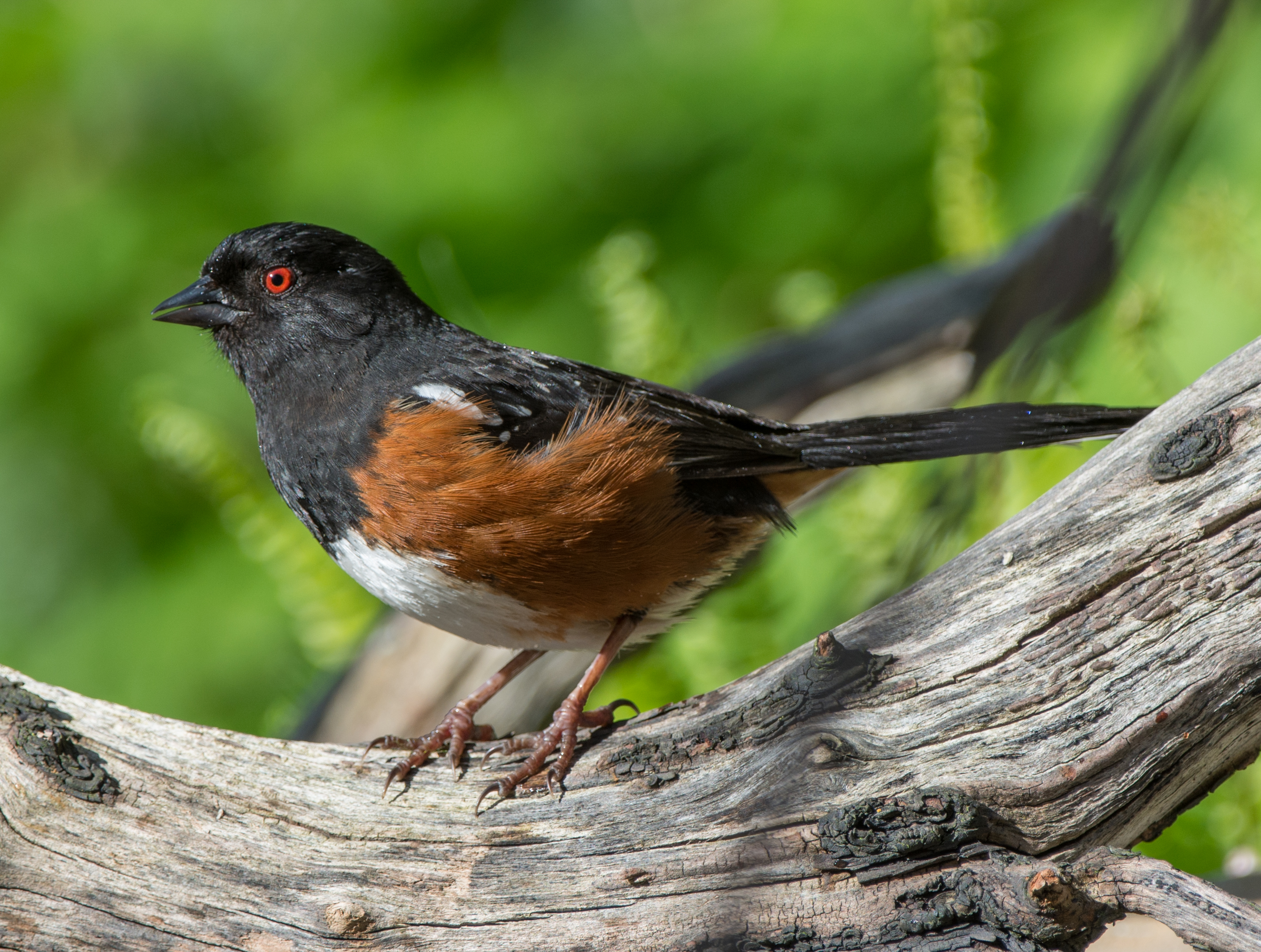
* Spotted towhee (2M)

* House sparrow (M&F)

* Golden-crowned sparrow

* Fox sparrow (2)

* Song sparrow

* Northern flicker (M+1)

* Brown creeper – the find of the day and a couple of excellent photographs!

* Bewick’s wren

* Anna’s hummingbird (M) – bathing in watercourse

* Dark-eyed junco – Oregon race

* Dark-eyed junco – Slate-colored race

* Black-capped chickadee

American robin

Red-breasted nuthatch

Chestnut-backed chickadee

The result of this is that I was probably burdened with just about as much processing time as the three hours it took me to acquire the images.  I shouldn’t complain and this   provides me with a really good blog post. 

This signals a period of transition for my photography.  In the winter I usually find it more comfortable and productive to drive through the county looking for the birds of winter (mostly waterfowl, shorebirds and raptors).  In the spring and summer I have much better photographic opportunities in my own yard with landscaping designed to attract and photograph birds.  So in the coming months you will start seeing many more photographs that will have been taken in our own yard. 

Creeper, Brown 20140307-02 Flicker, Northern  20140307-02 Junco, Dark-eyed - Oregon  20140307-04 Junco, Dark-eyed - Slate-colored  20140307-01 Sparrow, Fox   20140307-02 Sparrow, Fox  20140307-10 Sparrow, Golden-crowned  20140307-02 Sparrow, Song  20140307-02 Thrush, Varied  20140307-06 Wren, Bewick's  20140307-04