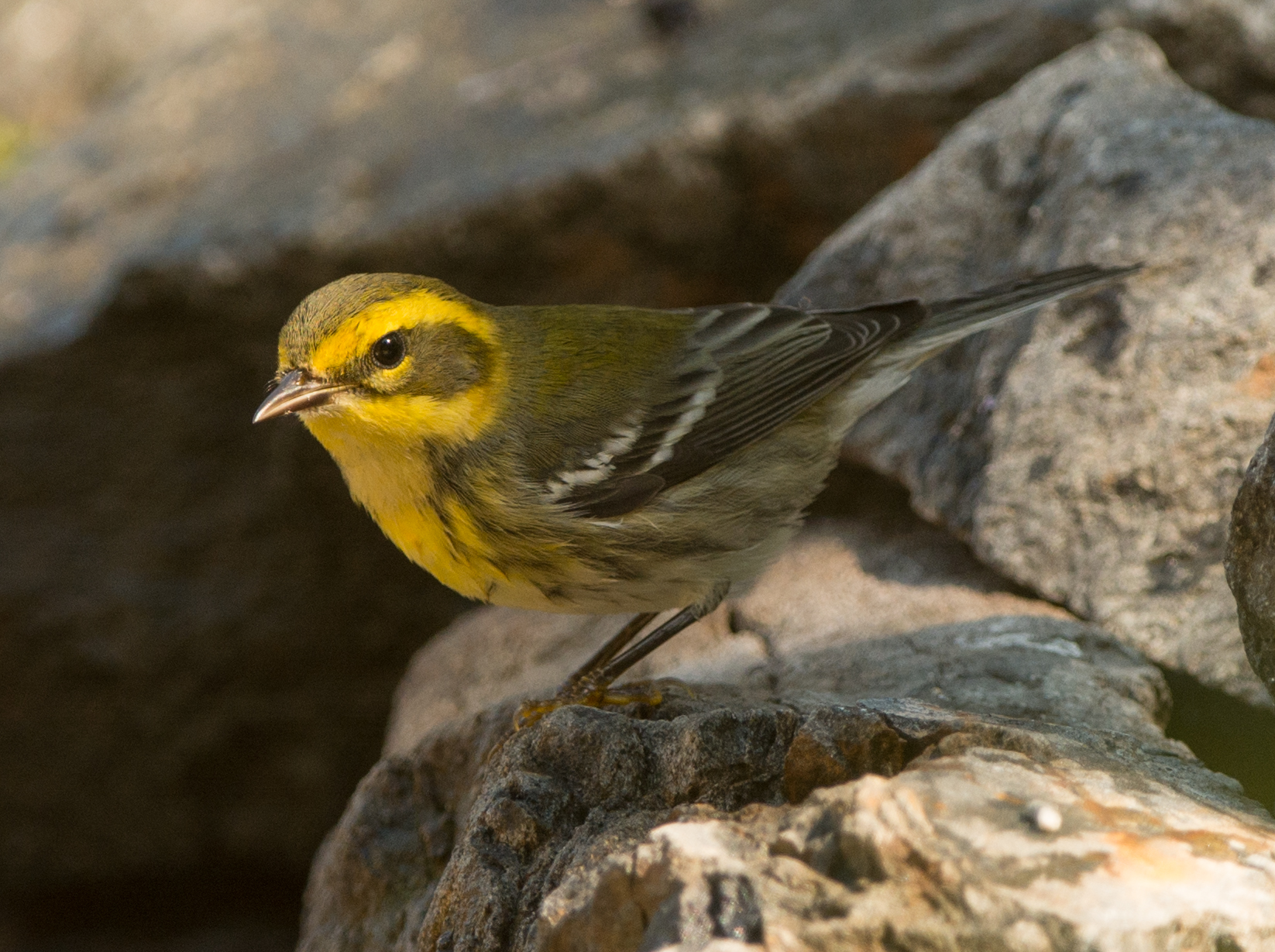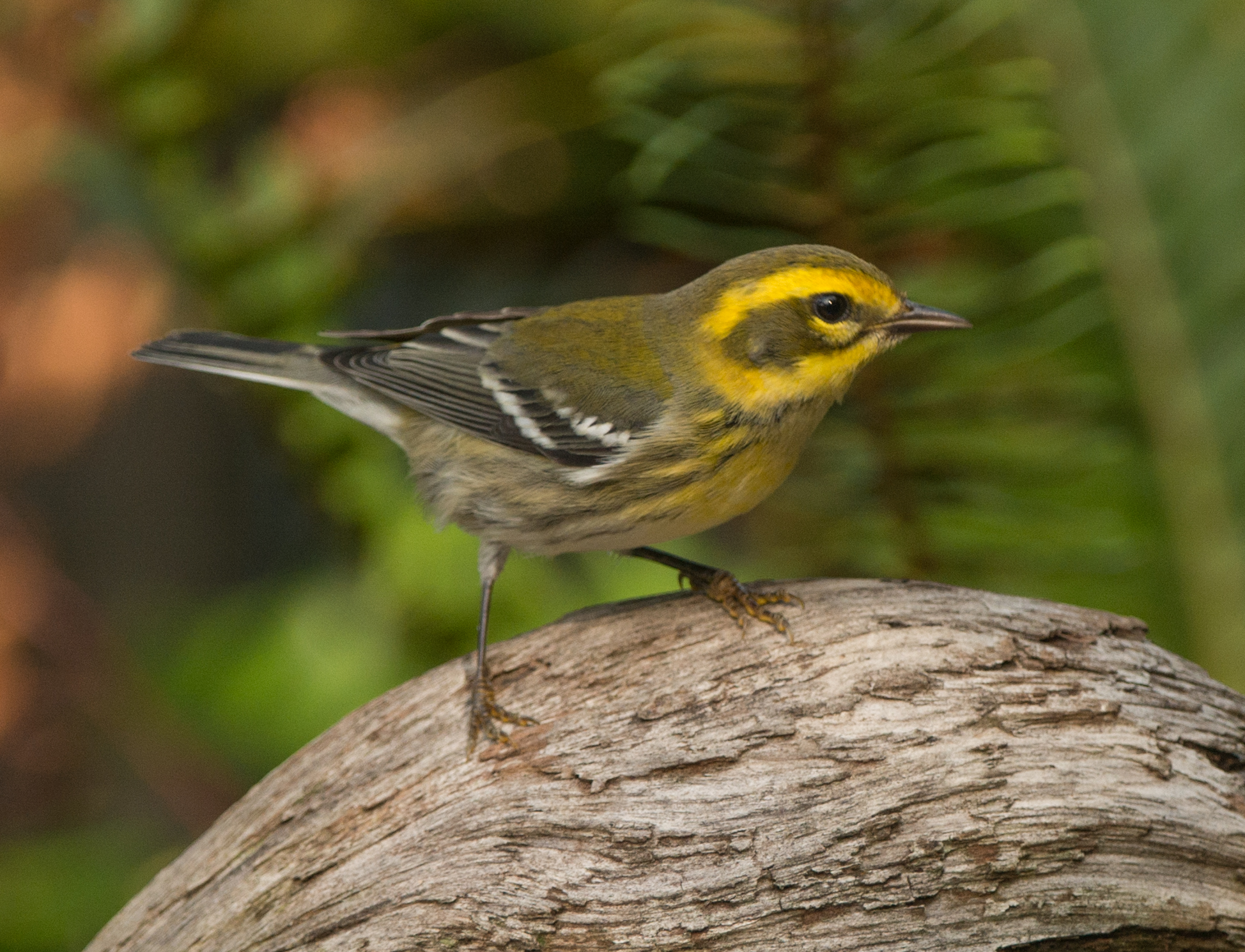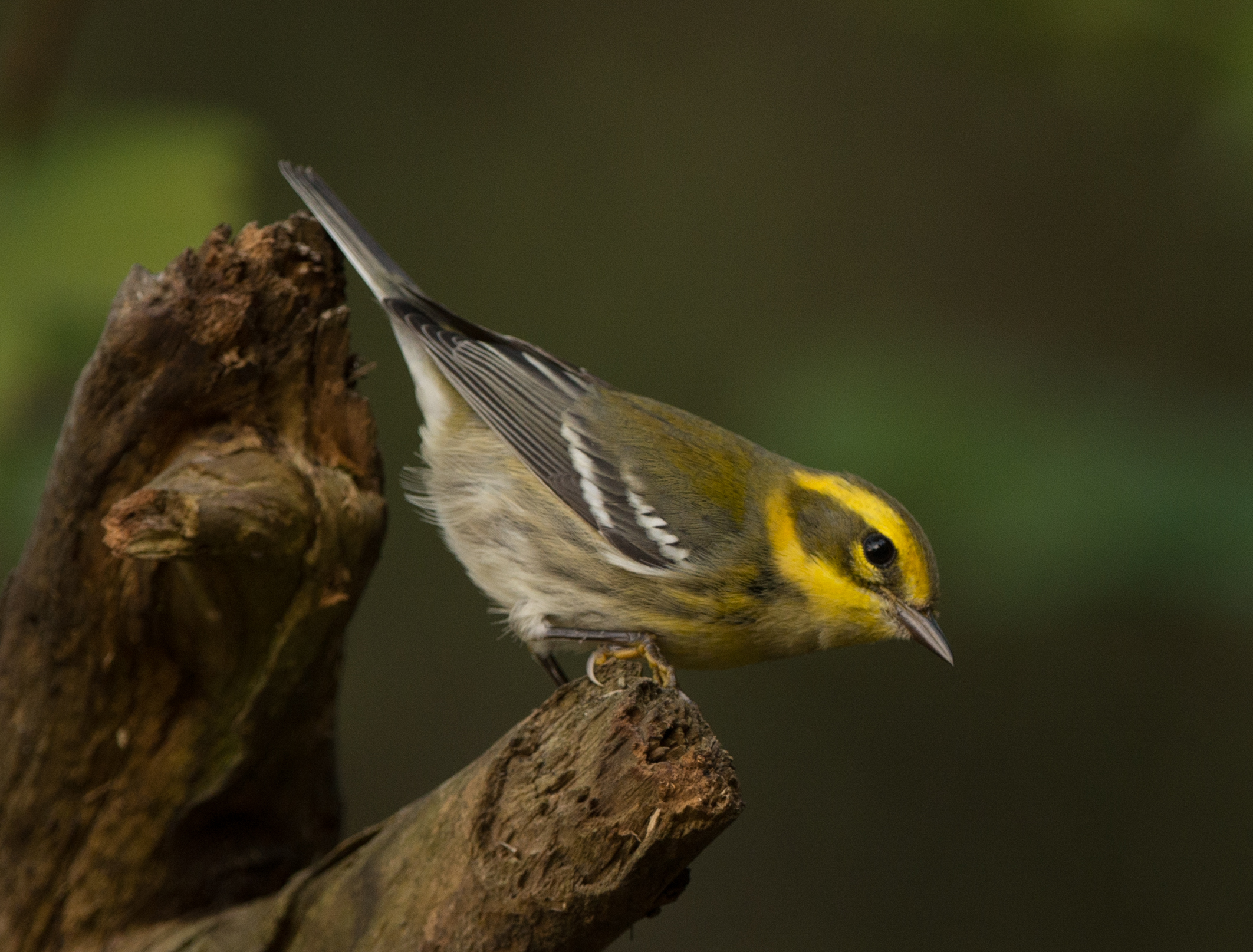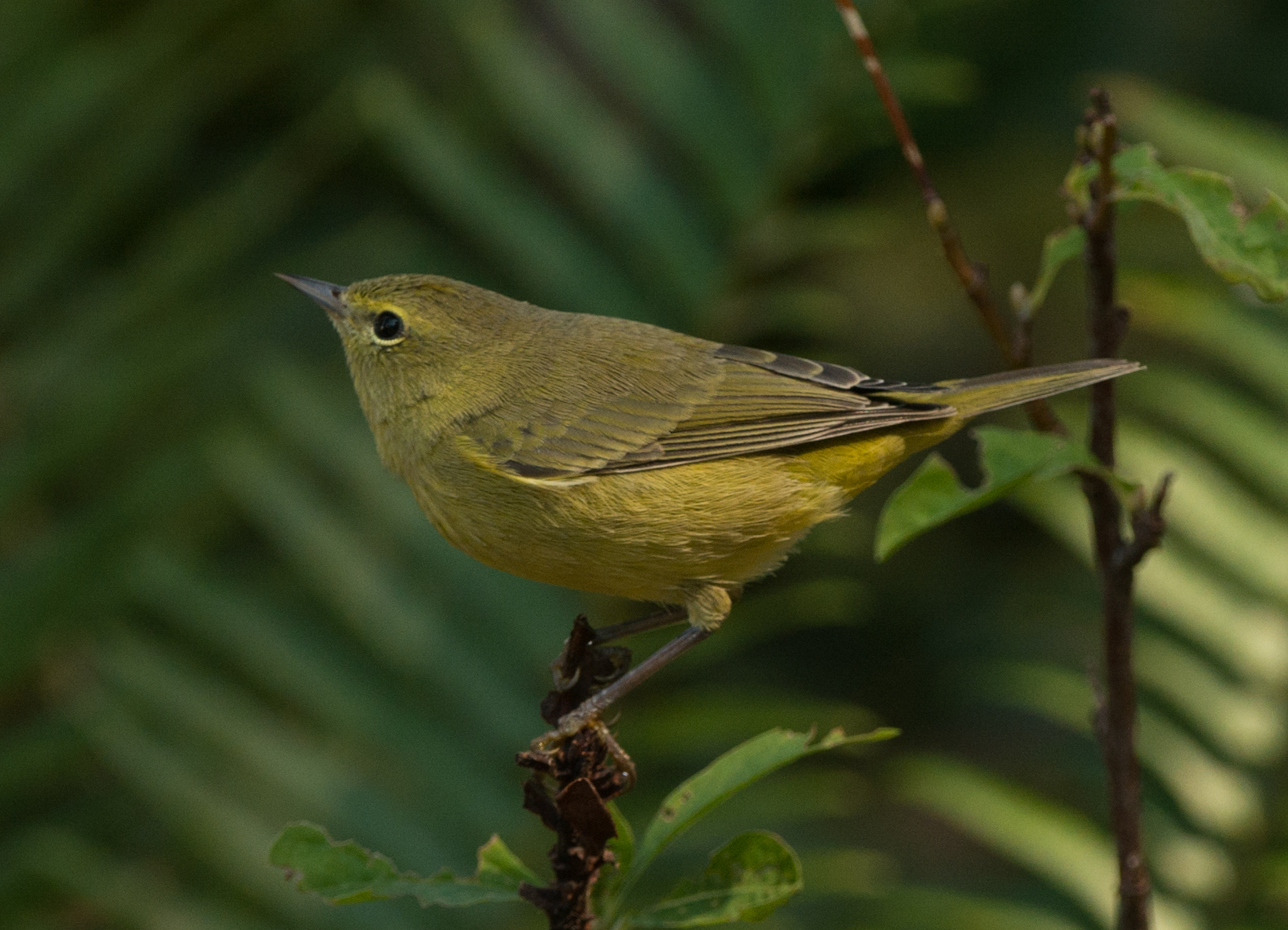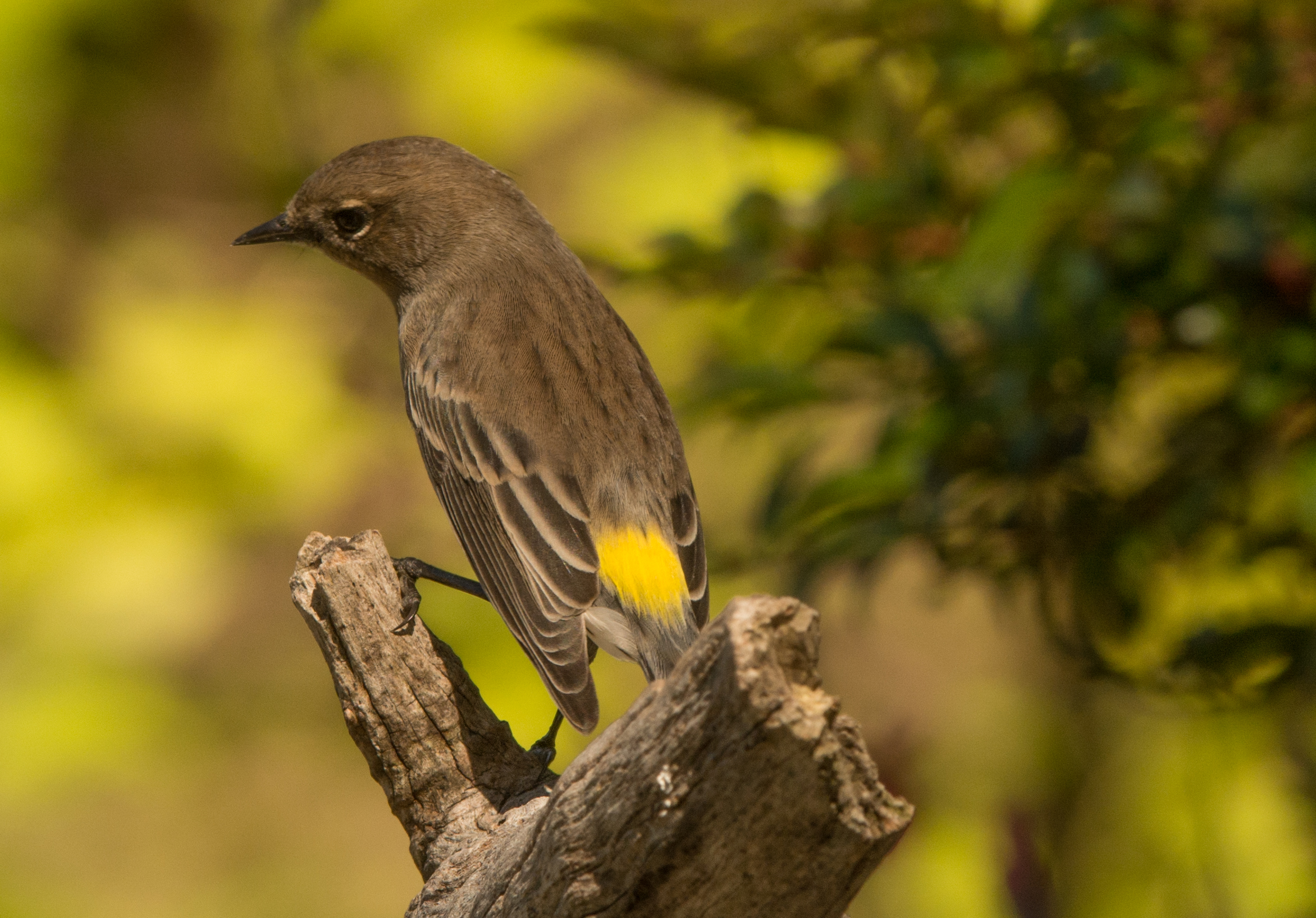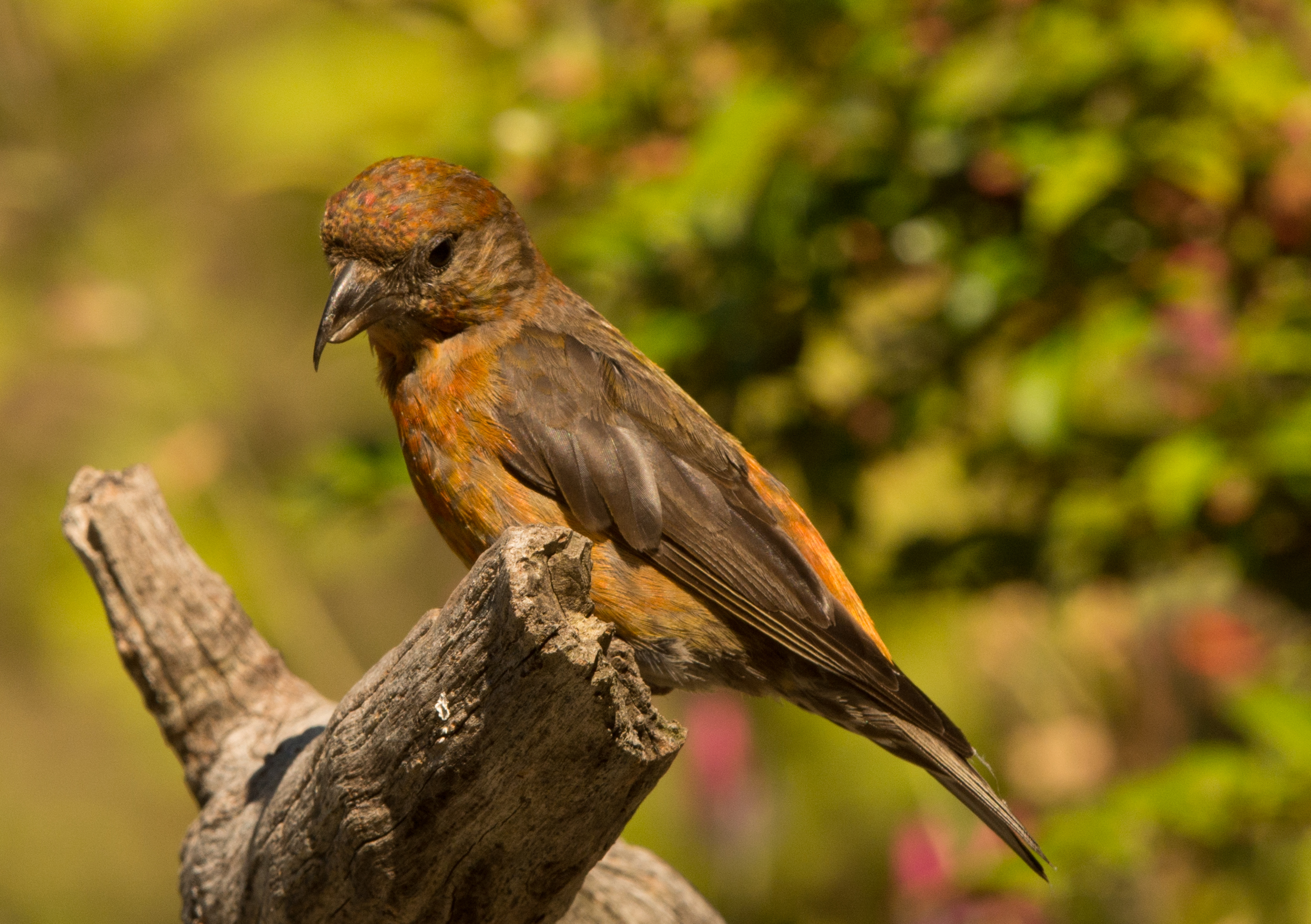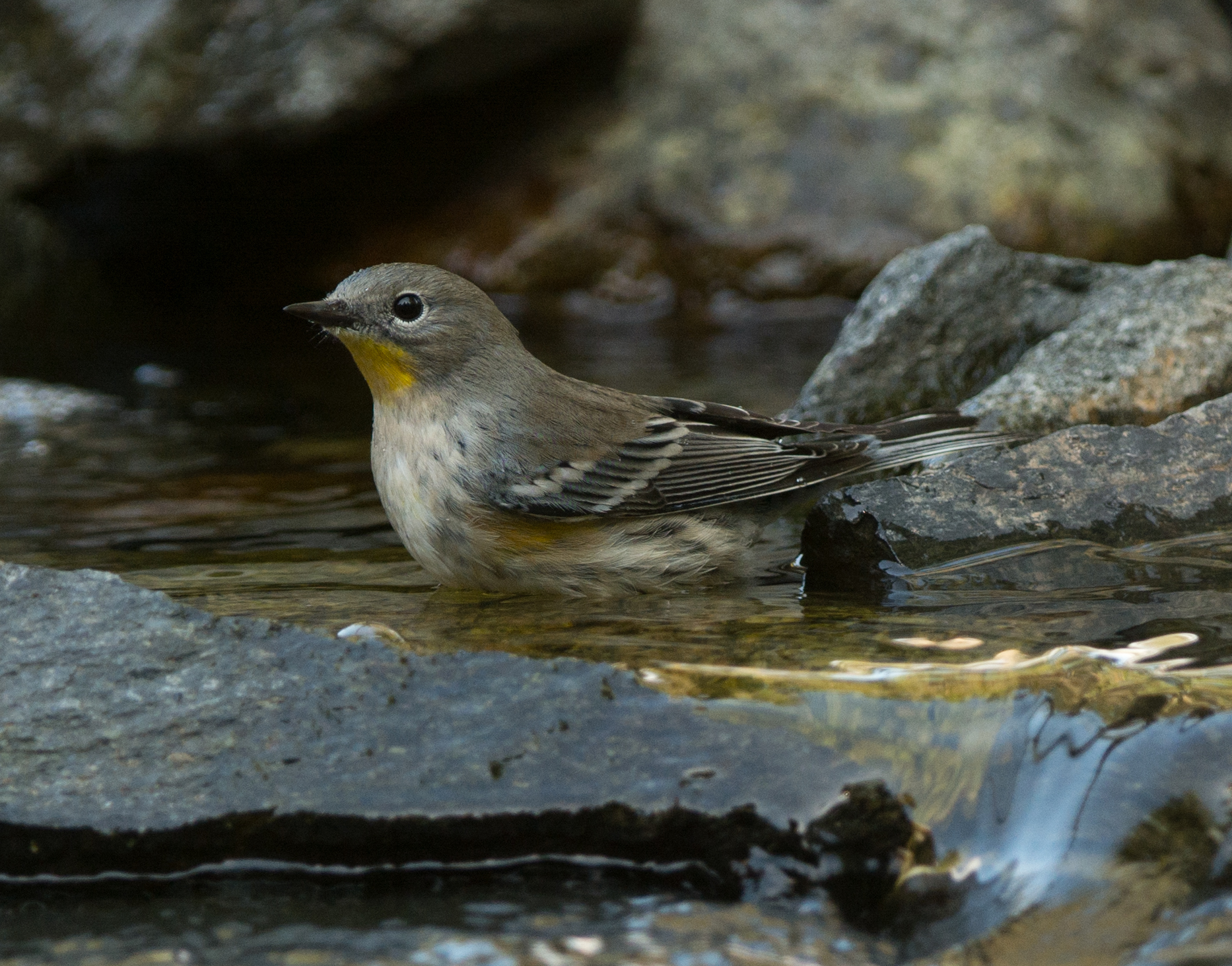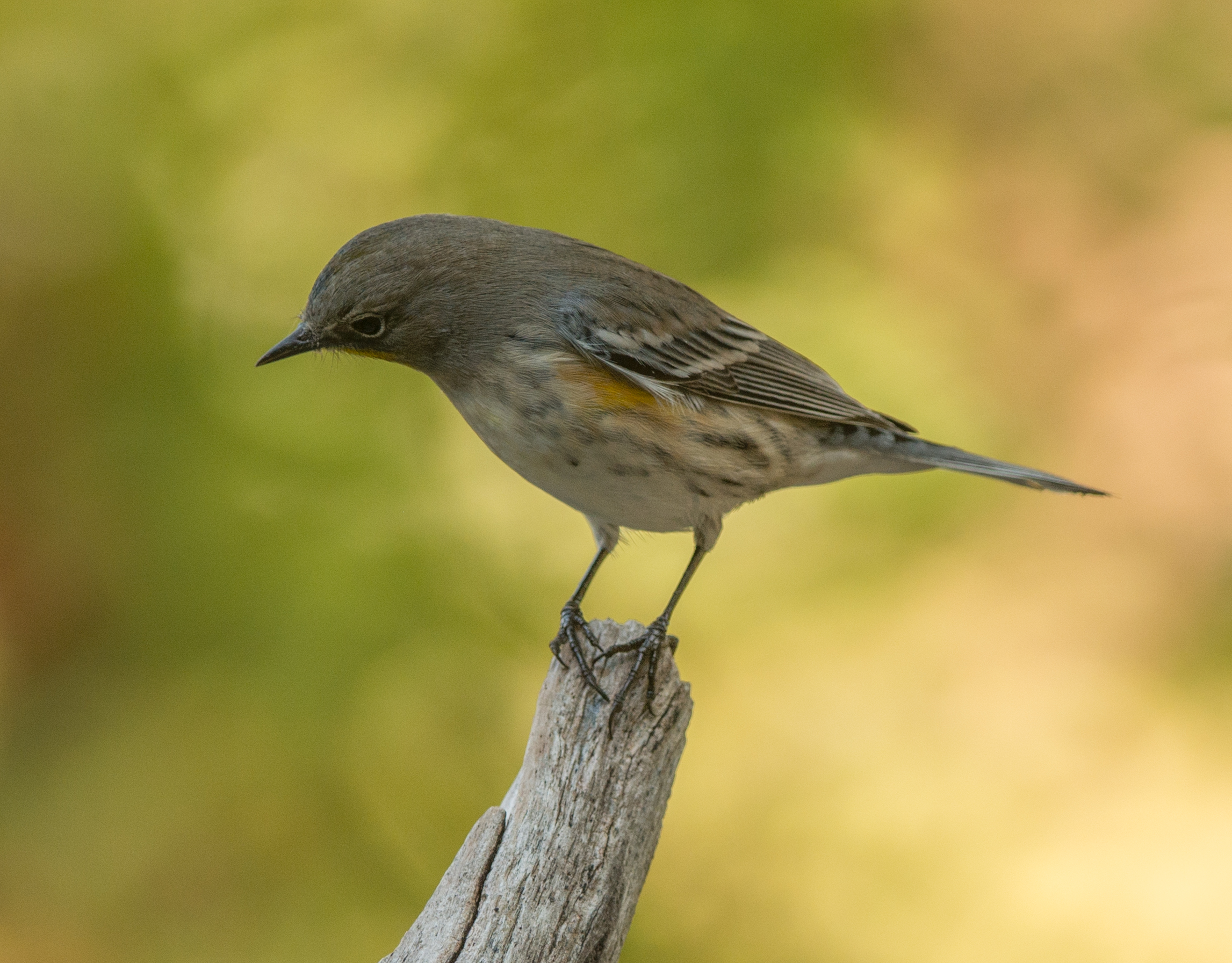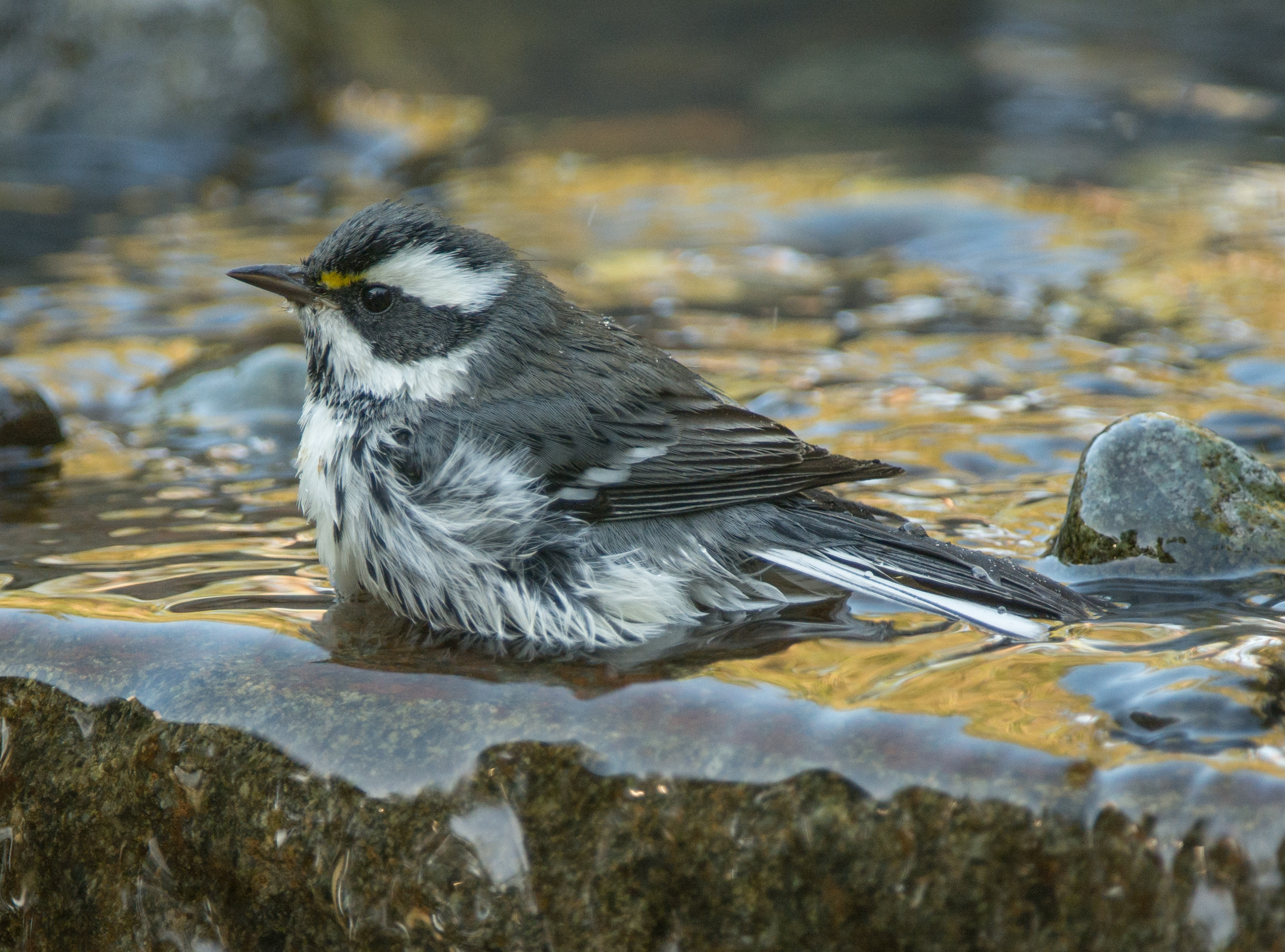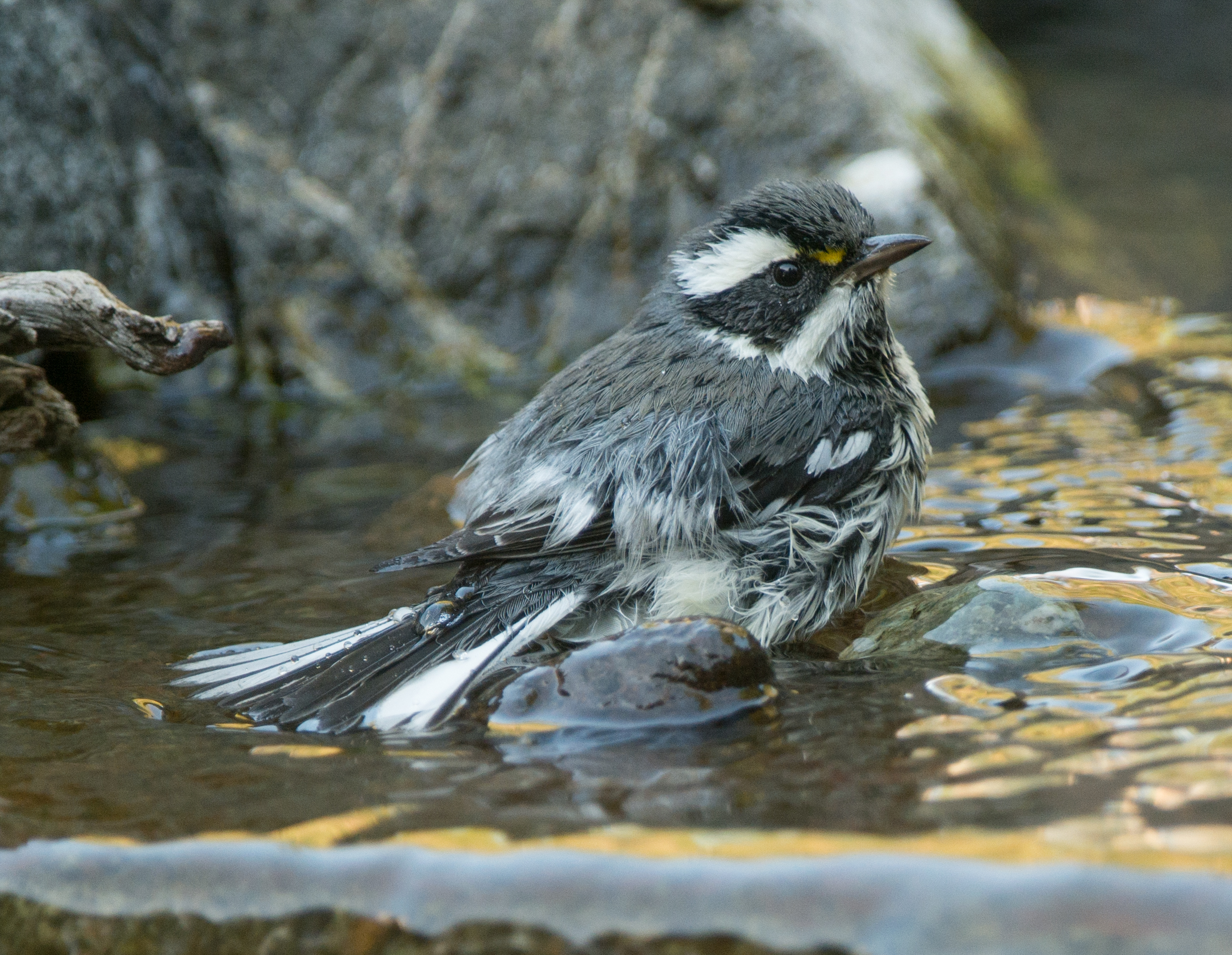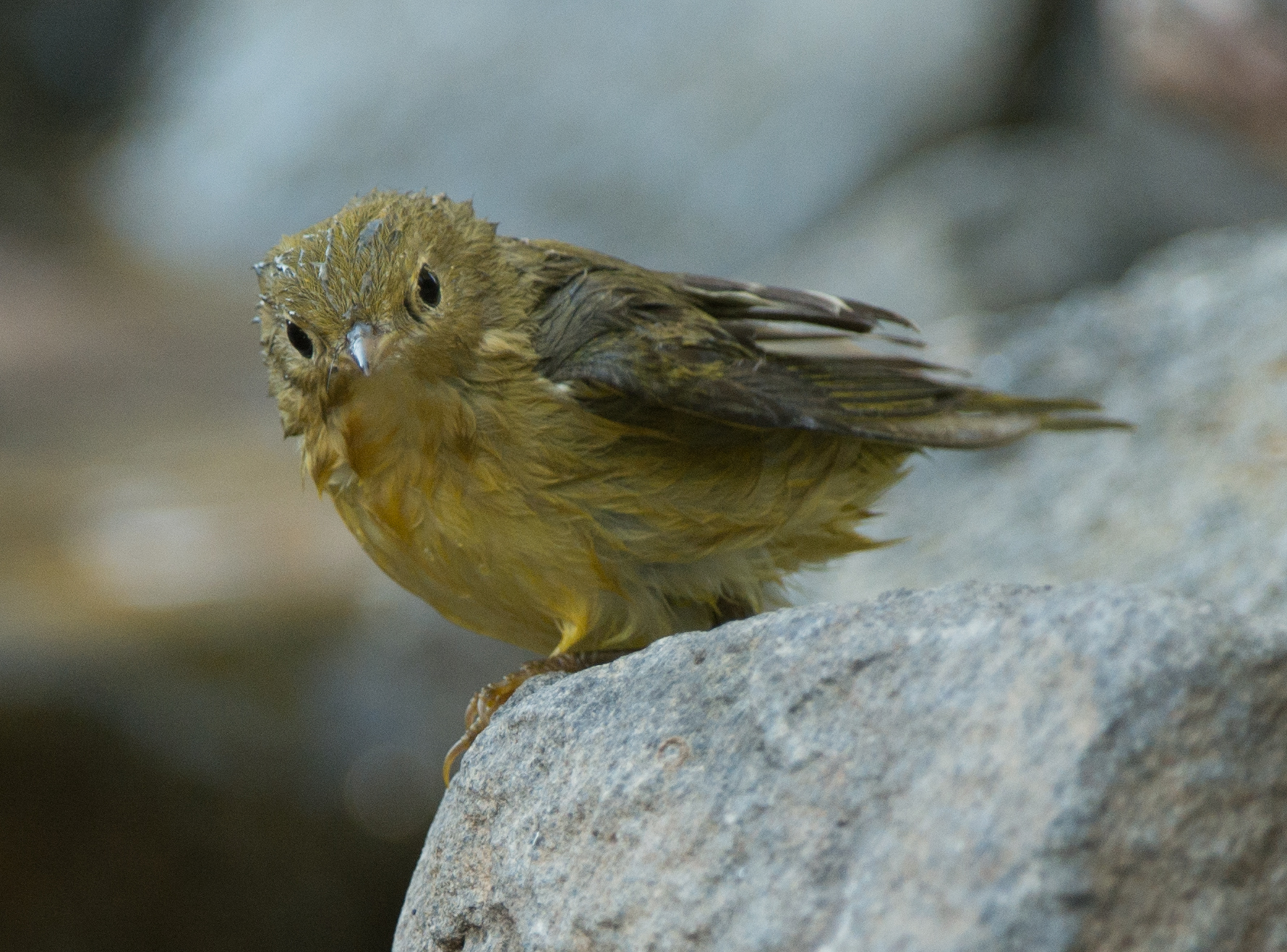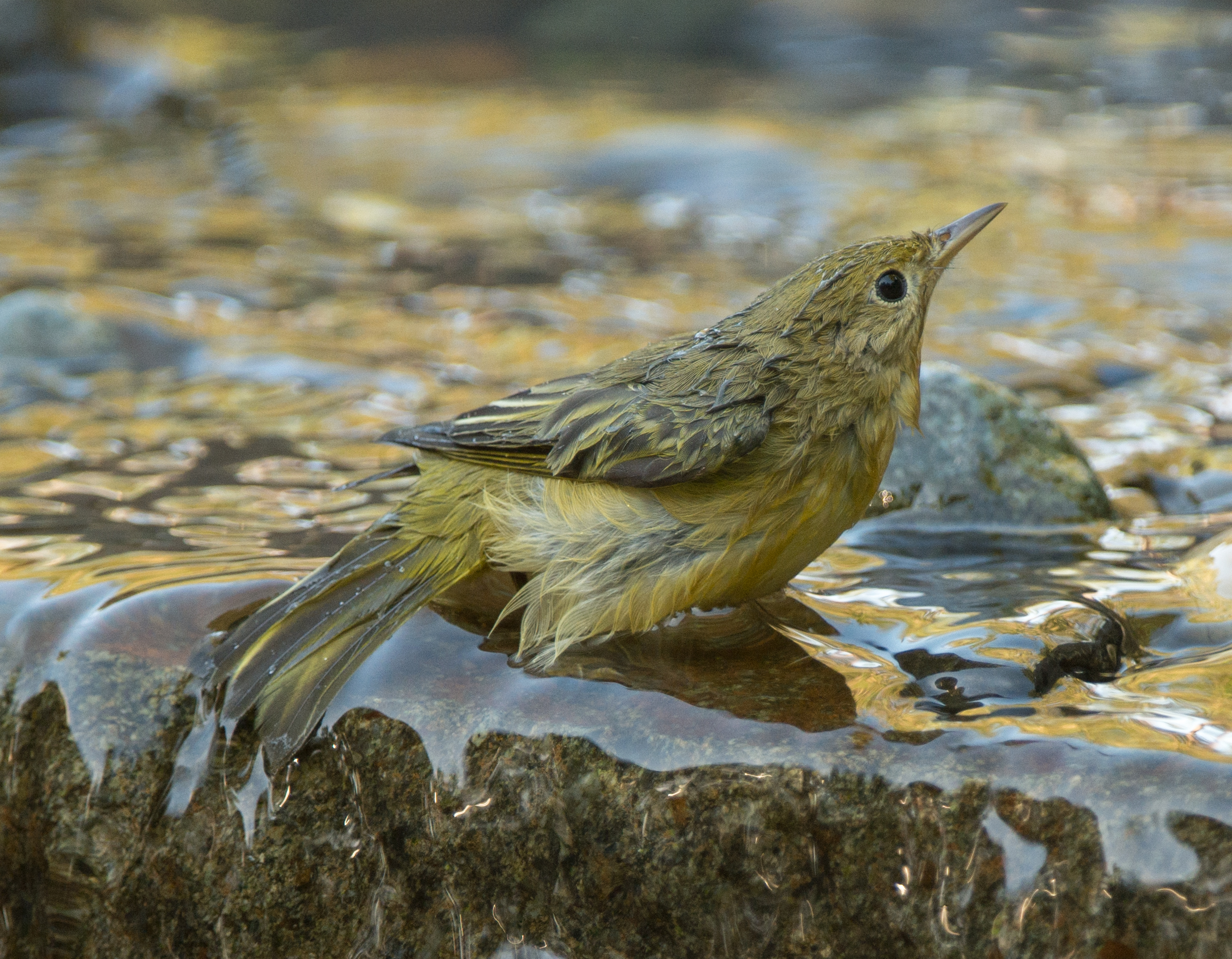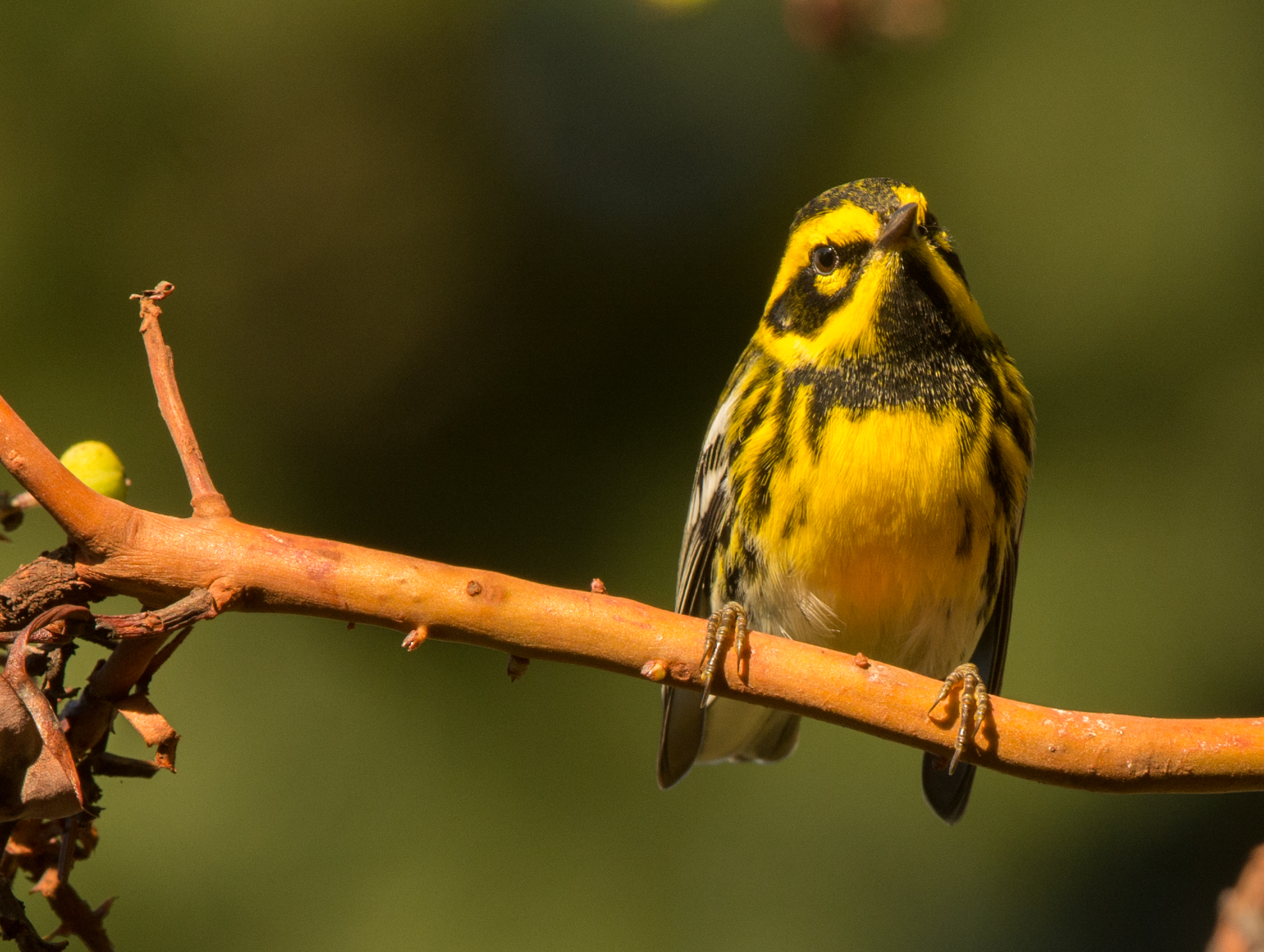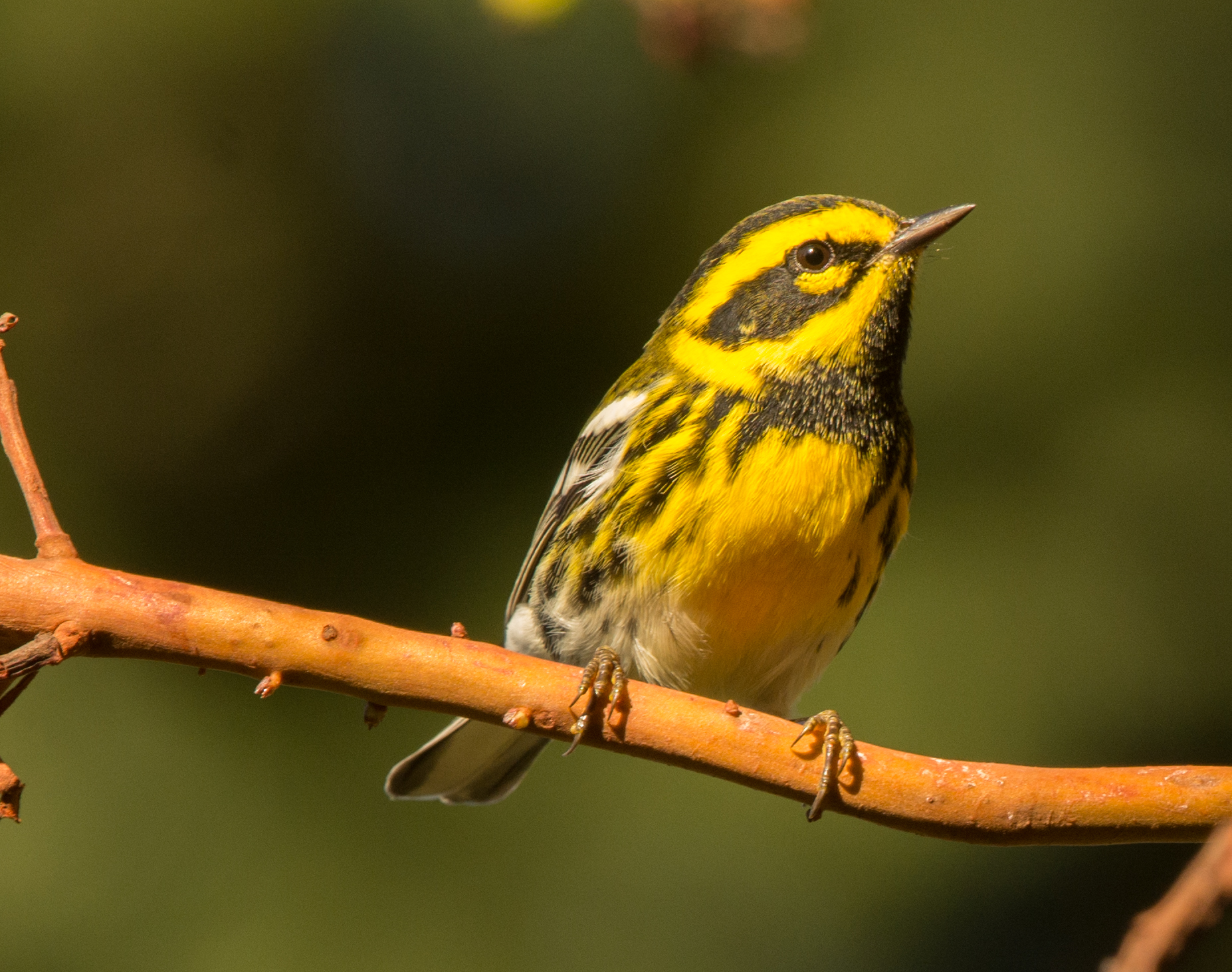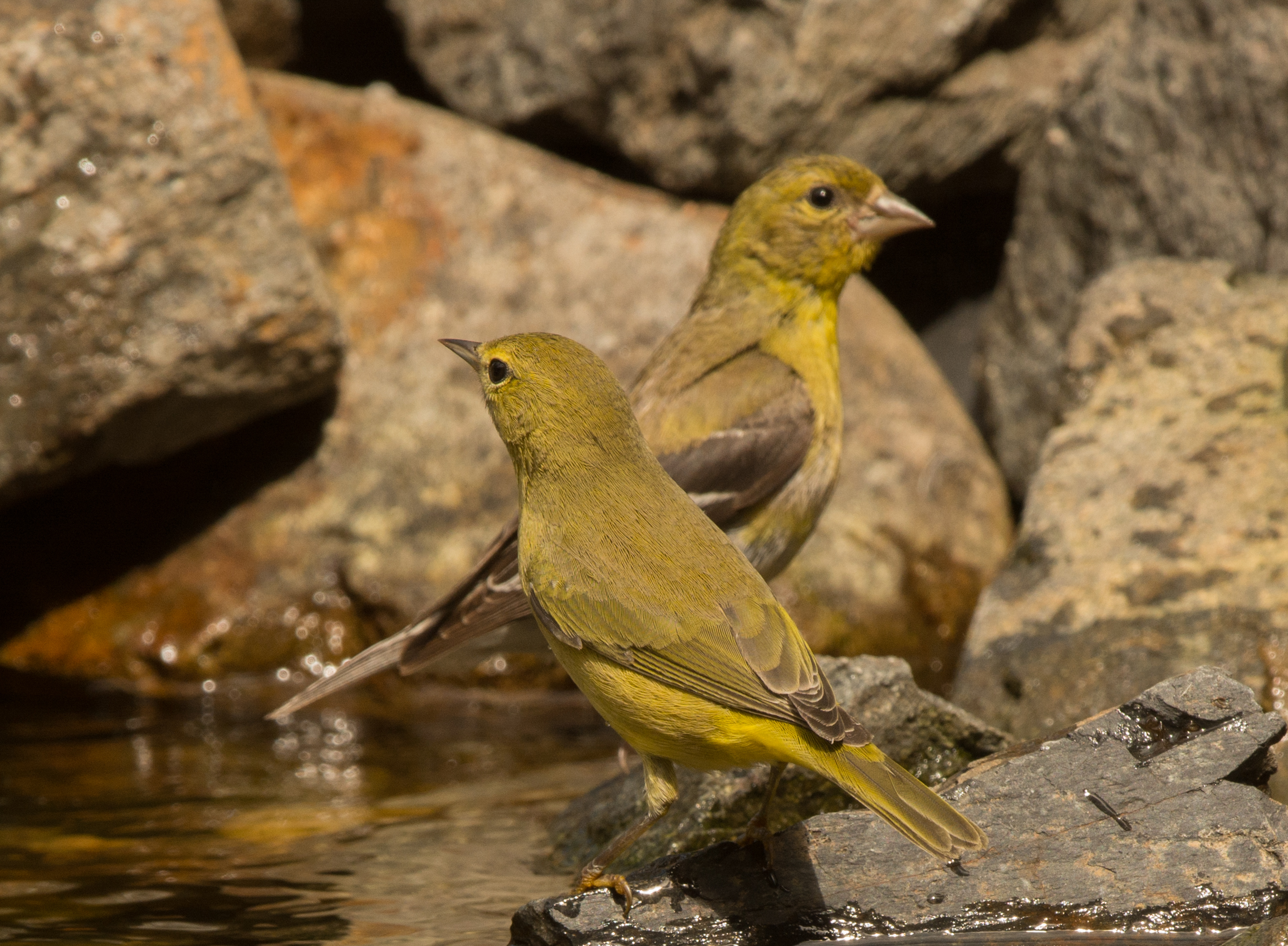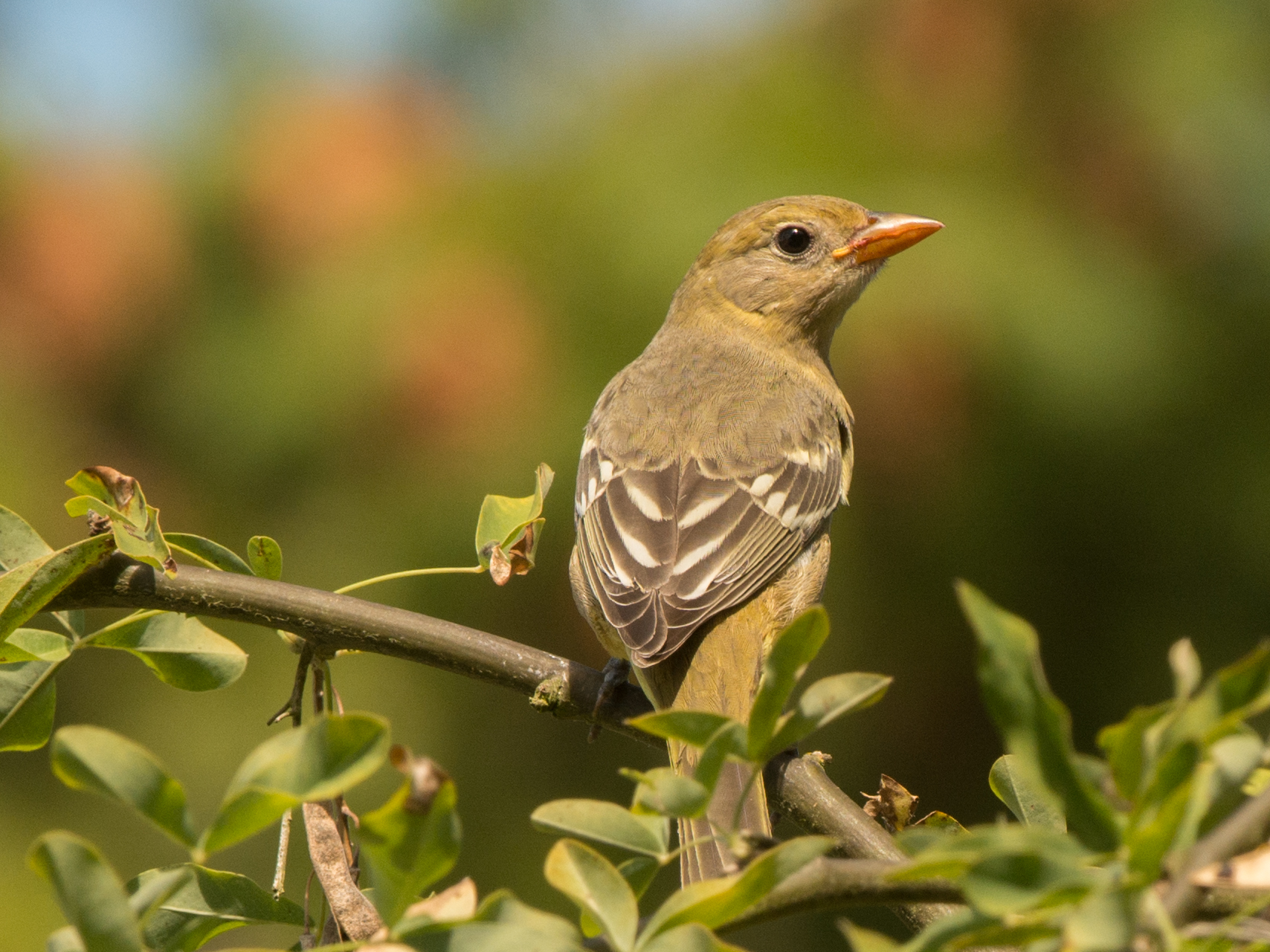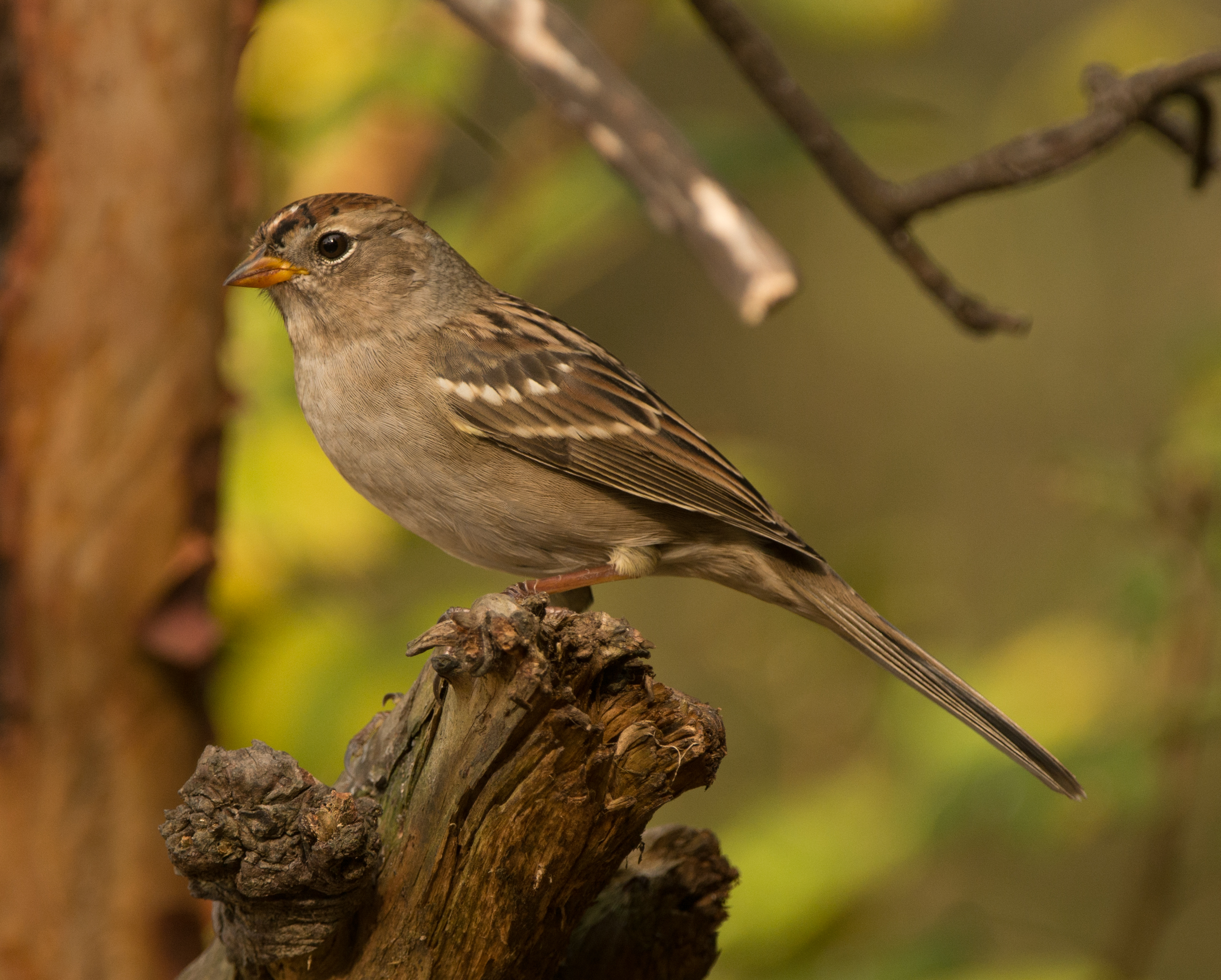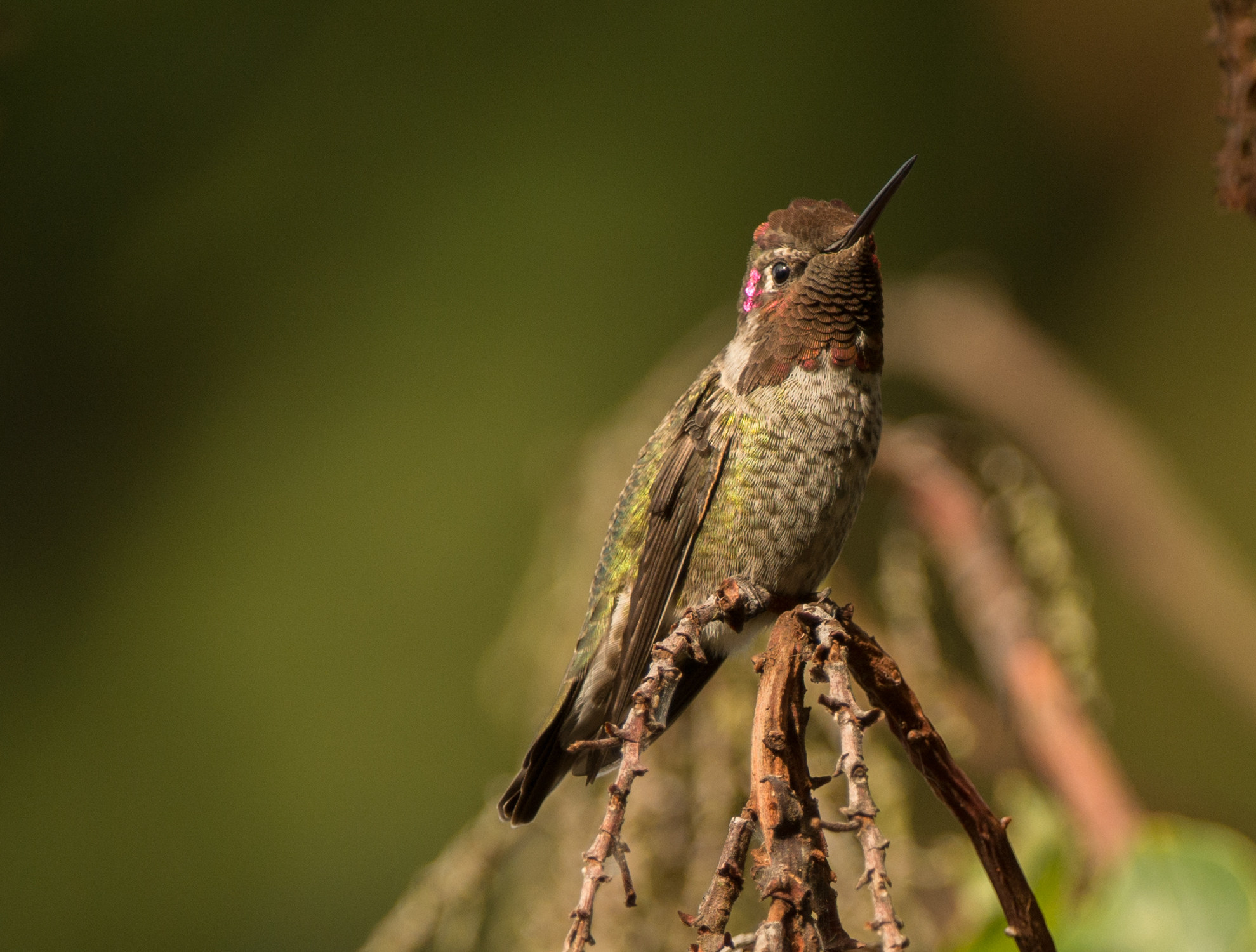
Male Yellow-Rumped (Audubon’s) Warbler

Sometime in May, 2014, I decided to have made substantial improvements to our water feature in the front of our Anacortes home. The history of the water feature, and my reasons for wanting the changes, are as follows.

When my wife and I purchased our current lot in about 2006 we realized that, although the lot offered a small water view, the value of the lot to us was its location adjacent to City park lands that are, at least in theory, undevelopable. And its proximity to the park lands would provide a reservoir from which to facilitate the attraction of birds and other wildlife. So the design of our house and the landscaping of the property would be to facilitate nature observation and not to try to enhance water views which we could conceivably lose by neighbors adding second stories to their homes.

The construction of our house resulted in considerable excavation of rock, and the majority of that rock was retained and used to construct walls on the north and west sides of the house. The contractor also took several truckloads of the rock for personal use, but for the most part I was reluctant to part with much of the rock. Towards the closing days of construction, when we had most of the walls and landscaping completed, and while there was an excavator still on the premises, I had the contractor stack a large pile of the rock in the front of the house, reasoning that we could eventually incorporate either incorporate a watercourse into the rock pile or use the rocks for general landscaping.

At some point after we moved into our home I contracted with a company known as ProScapes to design a watercourse on the rock pile. The watercourse originally cascaded down the north side of the rocks and terminated in a small pond on the same side of the rock pile. At the time it seemed a logical design because visitors to the house would pass the cascade and small pond on the way to the front door.

It wasn’t long before I realized the value of the pond for birding photography but… the water features were on the north side of the pile of rocks. This not only left the water in shadow much of the day but also left me shooting into the sun… at least on the days when we had sun. So I began to think of alternatives. I eventually re-contacted ProScapes and told them I wanted a different design. I wanted the watercourse to cascade off of the south side of the rock pile and then snake around the west (house side) of the rock pile back to the original pool on the north side. I reasoned that this offered several improvements…
• I would have a water feature in and around which to photograph birds on the south side of the rock pile, with the sun to my back.
• There would still be a small pool on the north side to view as guests approached the front door.
• And there would be a small “brook” running along the west side of the rock pile to return water from the base of the cascade to the original pond.
• I wouldn’t have the expense of having to dig a new pond on the south side of the rock pile.
So at some point ProScapes returned and completed the new design.

By this time my photography efforts were getting more serious and I was spending increasing time, year-round, at a vantage point where I could photograph avian watercourse visitors. The sun was now to my back, the main cascade flowed towards me and I took many, many photographs of our avian visitors. But I perceived two problems with this second design. In the first place it was somewhat difficult to maintain. The long, narrow channel running around the west side of the pond tended to collect fir needles and madrona leaves among the rocks before they reached the pond where the skimmer was located. And often, since they had been stuck in the watercourse for some time, by the time they reached the lower pool they were waterlogged and sank before the skimmer could capture them.

The second problem was that some of the rarer, prime birds for photographing, especially warblers, would fly down to the lower pond on the north side of the rock pile while I was established on the south side… out of my view. Or, in some cases, they would bathe/drink from along the western channel. In either case this generally eliminated my opportunity to photograph them.

By about May, 2014, I began considering a third, improved design. I had several goals I wanted to accomplish…
• Provide at least two small waterfall drops that would make more noise and not only provide entertainment for us but also possibly attract more birds with the sound.
• Provide at least one deeper pocket of water in which the larger birds, such as American robins, could bathe.
• Eliminate the pond on the north side and the western channel so that I wouldn’t lose opportunities to photograph the rarer visitors.
• Provide less hazardous access along the watercourse so that I could clean debris, adjust staging sticks, etc. (The second iteration of the watercourse had virtually no access to its upper reaches.)
• Reduce the maintenance on the watercourse by eliminating the western channel that returned water from the south side of the pond to the north side of the pond.

(This blog version is an abbreviated version of some interesting events concerning the initial rework on the pond.  If you are a personal friend ask me and I can fill you in on the details that are missing here!) 

I contacted ProScapes on Monday (July 7) afternoon after the pond had been dismantled and left a message for the owner.  The owner, who was apparently the only one in the company who could review/estimate jobs, was tied up with family matters for a couple of days but he returned my call the same day (Monday). On Wednesday afternoon he came to the house to review/estimate the project and had a crew out Thursday morning to begin the project! Talk about service and a lucky break with respect to timing!

The head pond person was the same individual who had reworked the watercourse on the second project. He was a very agreeable person with whom to work.  As promised, by the end of a short (9:30am-4:30pm) day there was water flowing in the watercourse. From the birds’ point of view they were at first hesitant. Some approached the watercourse but we didn’t see any actually getting a drink or taking a bath.

The primary pond constructor had other obligations on Friday, so he brought a couple of other workers with him and explained what needed to be done to finish the project. By mid-morning the project was completed. By afternoon, if not sooner, we had birds back in the watercourse drinking and bathing in, from at least my point of view, a much-improved environment.

I left to run errands late that morning. When I returned home I took a nap, and when I woke I observed a White-crowned sparrow taking a leisurely bath in the watercourse, previously a rather unusual event for that species. I believe that my wife had first observed an American robin bathing in the watercourse, and they seem to enjoy a leisurely but active bath more than any other species we have here.

Here are a couple of photos of the finished, raw (non-landscaped) watercourse…

517 V pond 517 V pond-2

So the new, improved, third-iteration watercourse is up and running. There’s still considerable work to be done… moving a Japanese maple a few feet into the depression left by the old pond and possibly moving another plant or two to facilitate viewing, but those projects will wait until fall when transplanting will be less risky. And over the next few weeks I’ll be working to lessen the damage caused by construction and to take advantage of new planting opportunities in the many crevices on the rock pile.

So that’s the story, and I hope you can expect some good future postings to my blog site…

But there’s one more interesting event. The following Sunday I finally found the time to get back out in the yard with my camera with the purpose of perhaps photographing a couple of the warblers we had seen visit the watercourse. The first bird to show up around the watercourse was, of course, a female House sparrow. I started to photograph it but then thought that perhaps I should wait for a little more interesting bird for my first photograph. So I passed on the sparrow but began thinking that it could be a long time… even to another day, before I had a bird show up that would justify my first photograph on the new watercourse.

After sitting for the better part of an hour I sensed something above me in our dead pine tree and looking up spied a Cedar waxwing… a bird we hadn’t seen in the yard in many months! As I watched it worked its way down to the watercourse… and the rest, as they say, is history!  The Lone Ranger rides again!

Waxwing, Cedar_

Say Good-Bye to Texas!

Here are some of the best of the rest of the photos that I took in Texas in early May…

We’ll start with a couple of photos of a male Summer tanager.  How do I personally remember the difference between a Scarlet tanager and the similar Summer tanager?  I remember that “the Scarlet tanager isn’t”… that is, the Scarlet tanager is not entirely scarlet.  It has black wings.  This seems to me a clear case of the misnaming of a couple of species of birds!

Tanager, Summer  20140501-04 Tanager, Summer  20140501-10

If you have difficulty telling the various kinds of sparrows apart this bird spells relief.  It’s a Lark sparrow and has very distinctive head markings.

Sparrow, Lark 20140505-07

This next bird is a Mourning dove… found in large numbers across Texas and in much smaller numbers in Western Washington.  I was amazed to find that these birds can occasionally be found (mostly heard) in some of the deeper forested areas.

Dove, Mourning  20140501-07

This next bird is a titmouse.  There used to be a single species (Tufted titmouse) with two different races, the black-crested and the gray-crested.  They have now apparently been separated into two different races and Central Texas is on the border between the two species where hybridizations can be found.  This individual appears to be black-crested and was raising a family in a nest box with what appeared to be a gray-crested mate.  I watched these birds bring food back to the next box numerous times, often with what appeared to be the same kind of juicy caterpillar.

Titmouse, Tufted  20140501-12

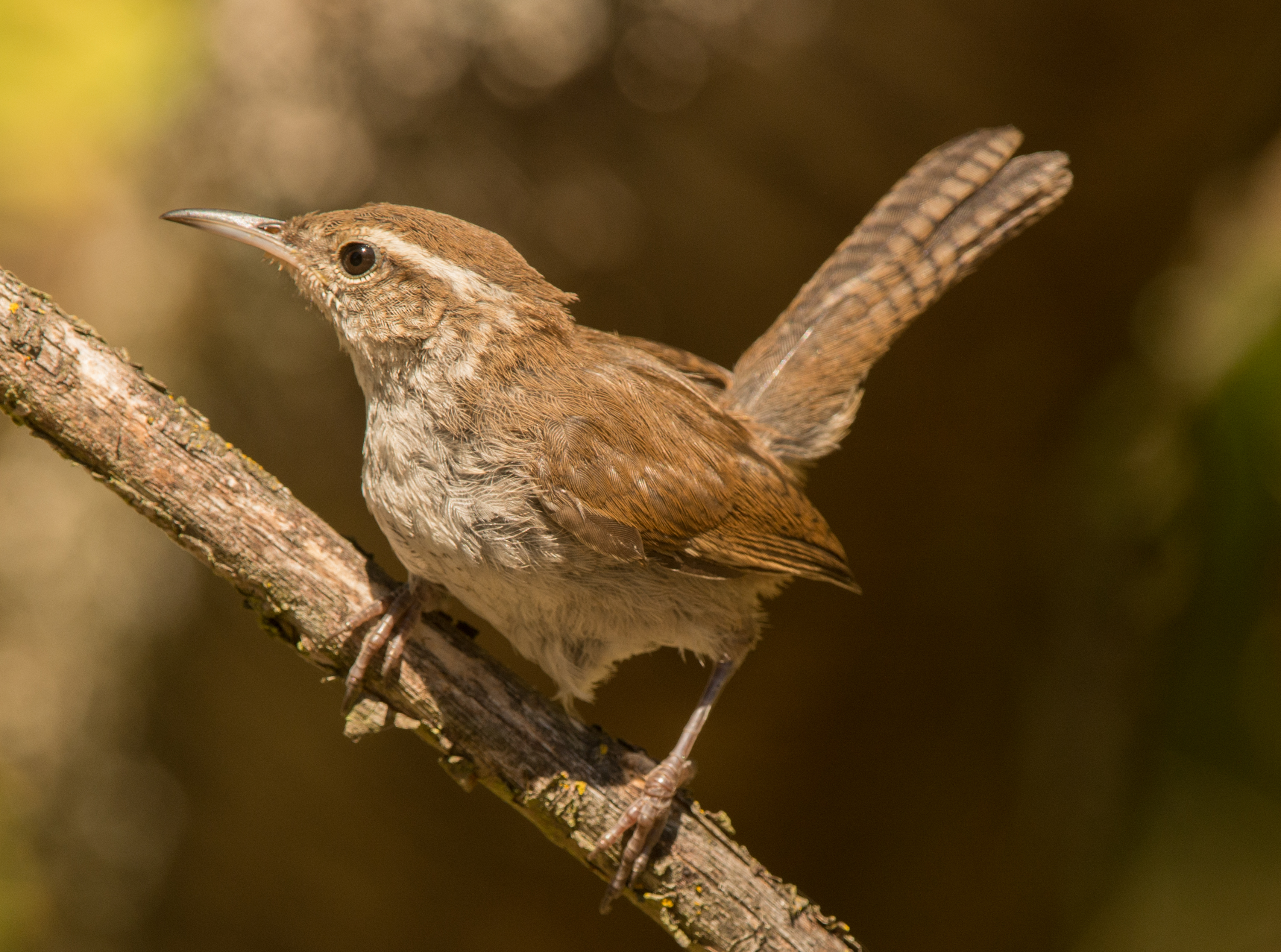
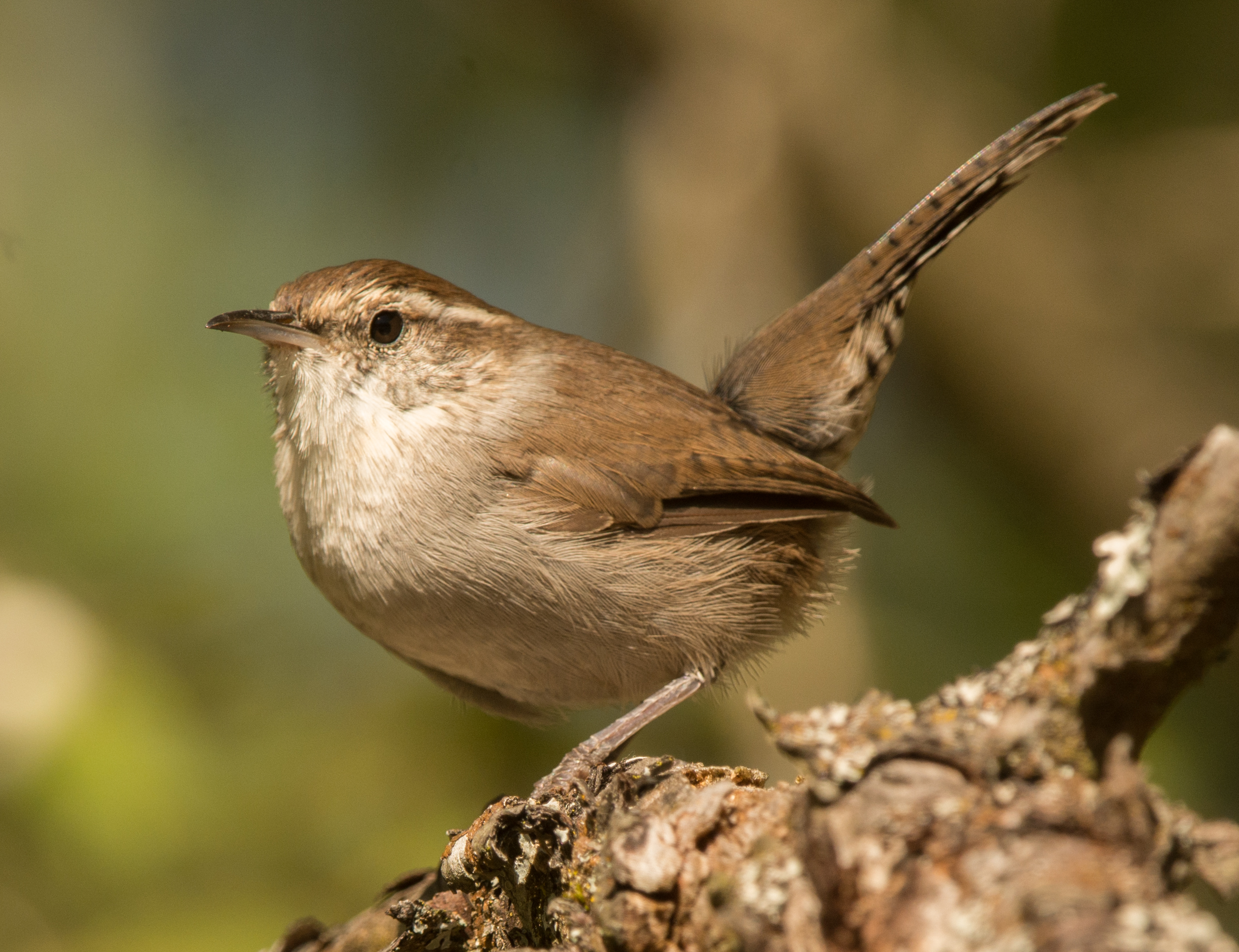
Here’s another Bewick’s wren.  I’ve previously included photos of this bird, including some taken in Western Washington.  This wren closely resembles the Carolina wren, morning’s early wake-up call in the spring!  When people complain about a bird that wakes them in the early morning in Central Texas you can assume that it’s the Carolina wren.

Wren, Bewick's  20140503-04This is a better photo of a bird whose photo I had previously posted… a female American restart.

Redstart, American  20140507-01

Getting on towards the end now, I’m posting another couple of photos of Black-chinned hummingbirds… a male and  female.

Hummingbird, Black-chinned  20140502-01 Hummingbird, Black-chinned  20140502-04

And finally, a ‘not great’ photo of one of Texas’ most interesting birds, the Scissor-tailed flycatcher.  This bird is a magnificent, if not rapid flyer.  With its long tail it is extremely maneuverable and catches insects both in the air and on the ground.

Flycatcher, Scissor-tailed  20140502-01

That wraps it up for Texas.  Next we’ll be off to either Alaska or Eastern Washington with a possible break for a little yard tale first.

One of My Favorite Texas Birds

Vireo, White-eyed  20140429-08

The bird pictured above is a White-eyed vireo, and one of my favorite birds that I see when I visit Texas in the spring.  Its range is generally further east and the Texas Hill Country just barely falls within the bird’s general range.

These birds frequent one of my sister’s bird baths and are somewhat secretive and and mysterious looking.  They bathe “on the fly”, perching on a branch close to the water and then quickly launching themselves towards the water.  They don’t land… just hit the water on the fly and perform the feat over and over again.  I have tried many times to get photos of the bird as it hits the water but thus far have been unsuccessful due to the shadows and the bird’s speed.

Vireo, White-eyed  20140429-09

This past year there didn’t seem to be as many White-eyed vireos as I saw on my trip in 2013, but since my observations occurred on the extreme western edge of the birds’ range, and since the variety of species in the migration we observed seemed to be fewer, I shouldn’t complain!

More Texas Photos

Good news, at least for me!  I’ve finished processing all of the photos (numbering well over 1000) I took in Texas.  Here are a few more…

This Bewick’s wren range extends to the Pacific Northwest… Wren, Bewick's  20140428-04

This Carolina wren was raising a family in a nest box and was feeding young.  On several occasions I saw the bird bring back one of these caterpillars.Wren, Carolina  20140428-10

This is probably everyone’s favorite Texas bird, the amazing male Painted bunting.  The Painted buntings are spring/summer migrants to Central Texas.  Bunting, Painted  20140429-12

And this is the bird’s mate, the female Painted bunting.  Not as spectacular, but an attractive bird nevertheless.  Bunting, Painted  20140429-22

Other mainly spring migrants to Central Texas are the hummingbirds.  Here is the more numerous (male) Black-chinned hummingbird.  Notice the color of the bird’s gorget which is not noticeable unless the light reflects off of it at just the right angle.  Hummingbird, Black-throated  20140429-01

And finally, for this post, the rarer (male) Ruby-throated hummingbird.  Even the males of these two species can be confused when the gorgets are not showing and the birds are darting among the trees and bushes chasing each other at lightening speeds.  And the females, for me at least, are next to impossible to tell apart.  Hummingbird, Ruby-throated  20140429-13


Time to Move On…

This past April I visited my home state, Texas, timed for the spring migration.  I’ve fully processed about three days of about eight, and still have hundreds of photos to go.  I’m still taking photos of birds in the yard but it’s time to move on with my posts and display some of the photos I took in Texas.

Most, if not all, of these photos were taken outside Austin in my sister’s yard… meticulously landscaped for wildlife.  I had plenty of birds to photograph, but the migration wasn’t what any of us thought it could have been.  Theories were that the weather diverted the birds around Central Texas or that the migration was delayed.  Whatever the cause we didn’t see the variety of species we have seen in the past, so that was somewhat of a disappointment.  However it didn’t mean that there weren’t birds to photograph, so here are some of the birds that did happen by.

Here are a couple of favorites that are year-round residents in Central Texas… Northern cardinals

Cardinal, Northern  20140427-02-2 Cardinal, Northern  20140427-06-2

Next are a couple of spring migrants, Nashville warblers

Warbler, Nashville  20140427-09-2 Warbler, Nashville  20140427-20-2

Here is a photo of a male Lesser goldfinch.  The Lesser goldfinches are year-round residents of Central Texas, but their cousins, our American goldfinches are not.  The American goldfinches are migratory residents of Texas but curiously, year-round residents here although much more plentiful in the summer months.  The female Lesser goldfinches are very similar in appearance to the female American goldfinches.

Goldfinch, Lesser  20140427-02-2

Here’s a photo of the scourge of the bird world, a male Brown-headed cowbird.  This bird is found in breeding months here in Western Washington.  The female cowbird usually lays a single egg in the nest of other species.  The young cowbird matures faster than other birds which usually results in the deaths of the legitimate offspring of the parents.  Just this last week I had a pair of White-crowned sparrows, the first that have nested in the immediate vicinity, feeding a single juvenile cowbird (only!).  The young cowbird was substantially bigger than either of its uncomprehending surrogate parents.

Cowbird, Brown-headed  20140427-05-2

And finally, a male Black-chinned hummingbird which is a spring/summer migrant to Central Texas.  If you look very carefully you can see a few pixels of the color of this bird’s purple gorget.

Hummingbird, Black-chinned  20140427-07-2