Fall Visitors

We’re apparently facing the end of our good weather so my birding activities will probably be curtailed somewhat.  However I sat in the yard for a couple of hours yesterday (10/9/2014) and had some very nice visitors.

I had no sooner moved to the yard than a Hutton’s vireo, a first-time visitor to the yard just a couple of weeks ago, flew down to one of the water features.  I managed a good many photos before it flew and disappeared from the yard.

Vireo, Hutton's  20141009 - 03

My next set of interesting birds were a family of Red crossbills, consisting of an adult male, an adult female and three juveniles, one male and two females.

Crossbill, Red  20141009 - 05 Crossbill, Red  20141009 - 06 Crossbill, Red  20141009 - 07

The juvenile male couldn’t get enough of the watercourse on the family visit and, unusual for these birds, he remained and took a long bath by himself.

Crossbill, Red  20141009 - 12

That about does it for the rarer birds, but I also got some nice photos of a Red-breasted nuthatch, one of which I’ll include here…

Nuthatch, Red-breasted  20141009 - 04

I have a backlog of photos for the blog that I took earlier this week but have not completely processed.  I’ll try to post some of them this next weekend.

Methow Valley

In mid-September I took a trip to the Winthrop area, an area I usually visit in June.  I was prepared to be somewhat disappointed in the number of birds/species I saw but I don’t think I was quite prepared for my overall disappointment.  Not only were the bird species significantly down but the number of birds I saw was also disappointing.  The biggest success of the trip is that I found a new (small) area in which to bird, and that area at least, had a plentiful supply of birds.

I actually encountered this Stellar’s jay at Washington Pass on my way home, but decided to include it in this group of photos.

Jay, Stellar's  20140918 - 01

There were three areas I found where some berries, which I couldn’t/can’t identify, were attracting a large number of birds.  The first area I encountered was at a small park on a Davis Lake, due south of the Bear Creek Golf Course.  Berry trees there were attracting a large number of White-crowned sparrows.  These berries, even though they appeared ripe, were somewhat difficult for the birds to remove from the trees.  As a result the sparrows tended to eat the berries in place instead of trying to remove them from the trees to deal with them.  You can see that this sparrow is eating the berry as it is still attached by its stem, and in the upper left of the photo is a berry that has already been ravaged.  (Does that berry look juicy… or what?)

Sparrow, White-crowned  20140917 - 11

The other main berry tree was at the end of the Pearrygin Lake East State Park camping area and that tree was frequented by several different species of birds, although I only saw American robins actually eating the berries.

Robin, American  20140917 - 06

And this next series of photos were taken from a small fishing access road adjacent to Pearrygin State Park West, which was closed due to road maintenance during the time I was there.

Robin, American  20140917 - 08 Robin, American  20140917 - 14 Robin, American  20140917 - 17

It appears that all of the trees with berries are probably the same species and if anyone knows what they are I would appreciate you contacting me.

And finally, at the same location, I photographed this Orange-crowned warbler

Warbler, Orange-crowned  20140917 - 04

Additonal Birds without Regard to Donations

Photos taken in my yard the same day (10/2/2014) as the previous blog, but without regard to the donated staging sticks…

The stars of the day’s show, Red crossbills.  I had at least four visits… a single male, a male and female together and at least two separate visits by juveniles.  I believe this is a juvenile female since the juvenile male I saw was beginning to show some color and this bird does not.

Crossbill, Red  20141002 - 28

This is a pair of Red crossbills drinking together.  (Unfortunately, at the 400mm focal length of my lens, my depth of field is extremely shallow, so only the female is in sharp focus.)

Crossbill, Red  20141002 - 19

And finally, a mature male crossbill.  When I process Red crossbill photos and zoom in on the bird (as I believe you can do by clicking or double clicking on this image), I am amazed at the color palate that is on the bird’s plumage.  It is a wonderful, subtle blend of many, many colors.

Crossbill, Red  20141002 - 03

Next are some photos of what has been a regular fall visitor, with several visits a day and occasionally multiple birds in the yard at the same time… the Yellow-rumped warbler.

Warbler, Yellow-rumped  20141002 - 01 Warbler, Yellow-rumped  20141002 - 11

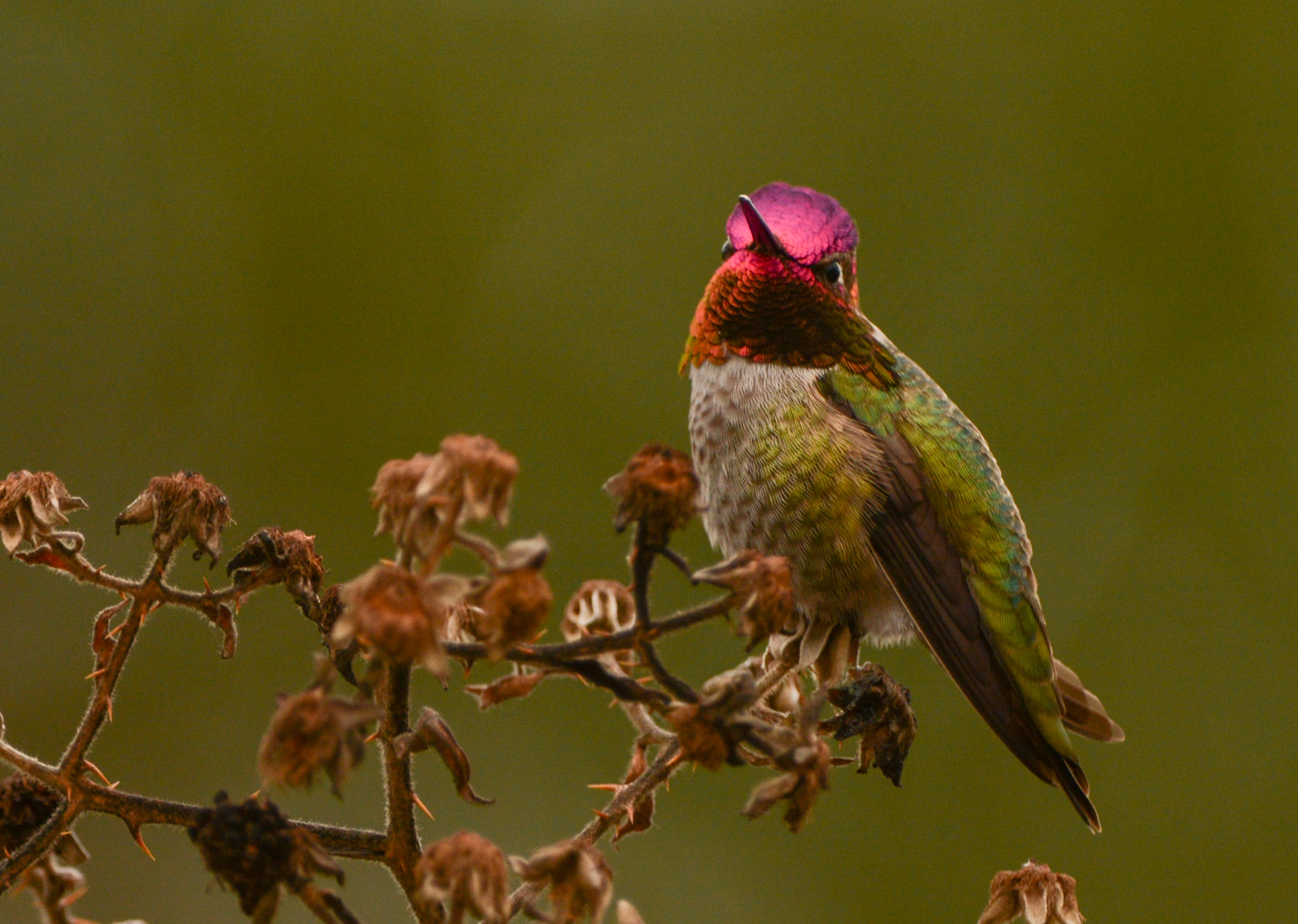
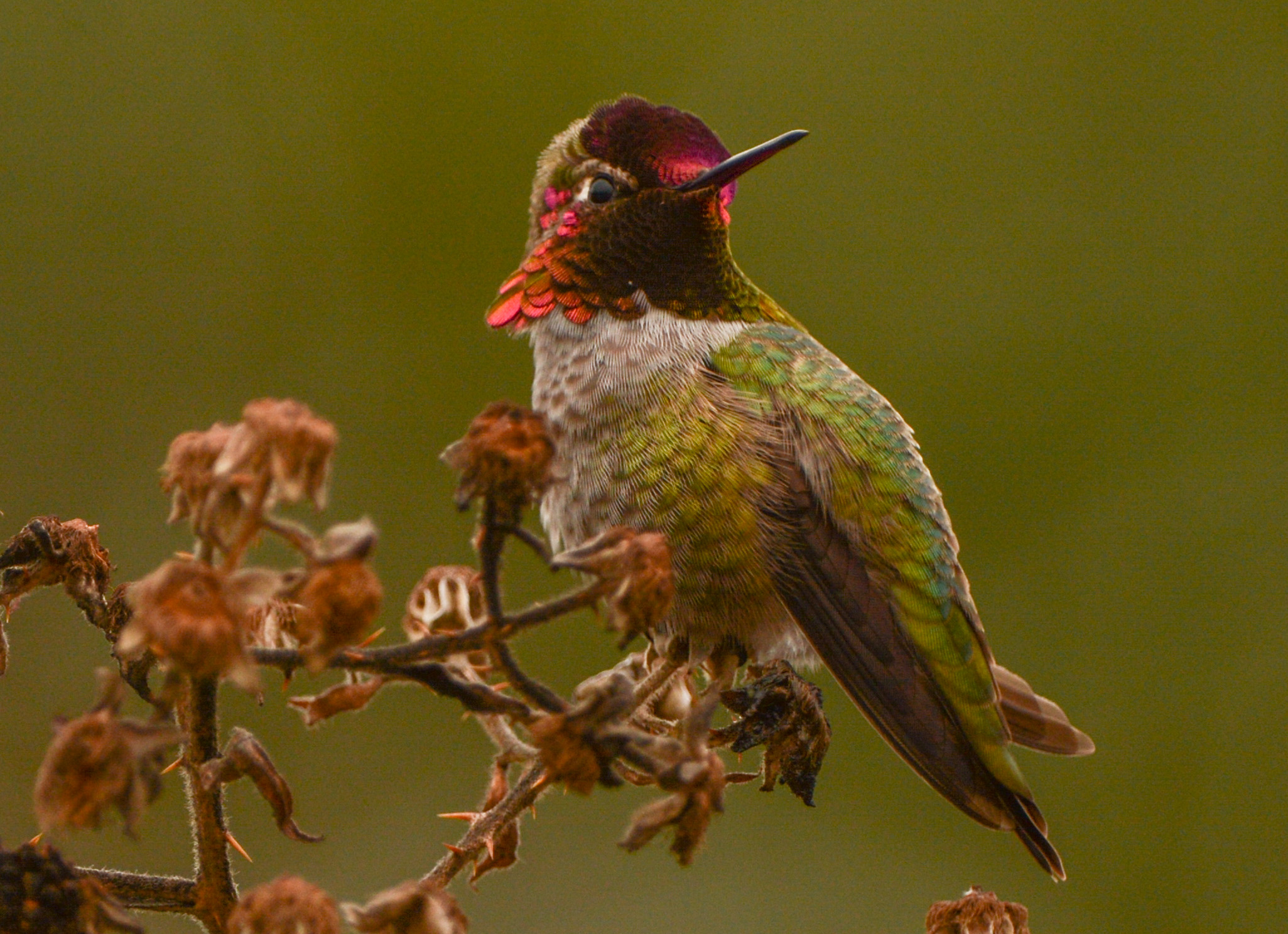
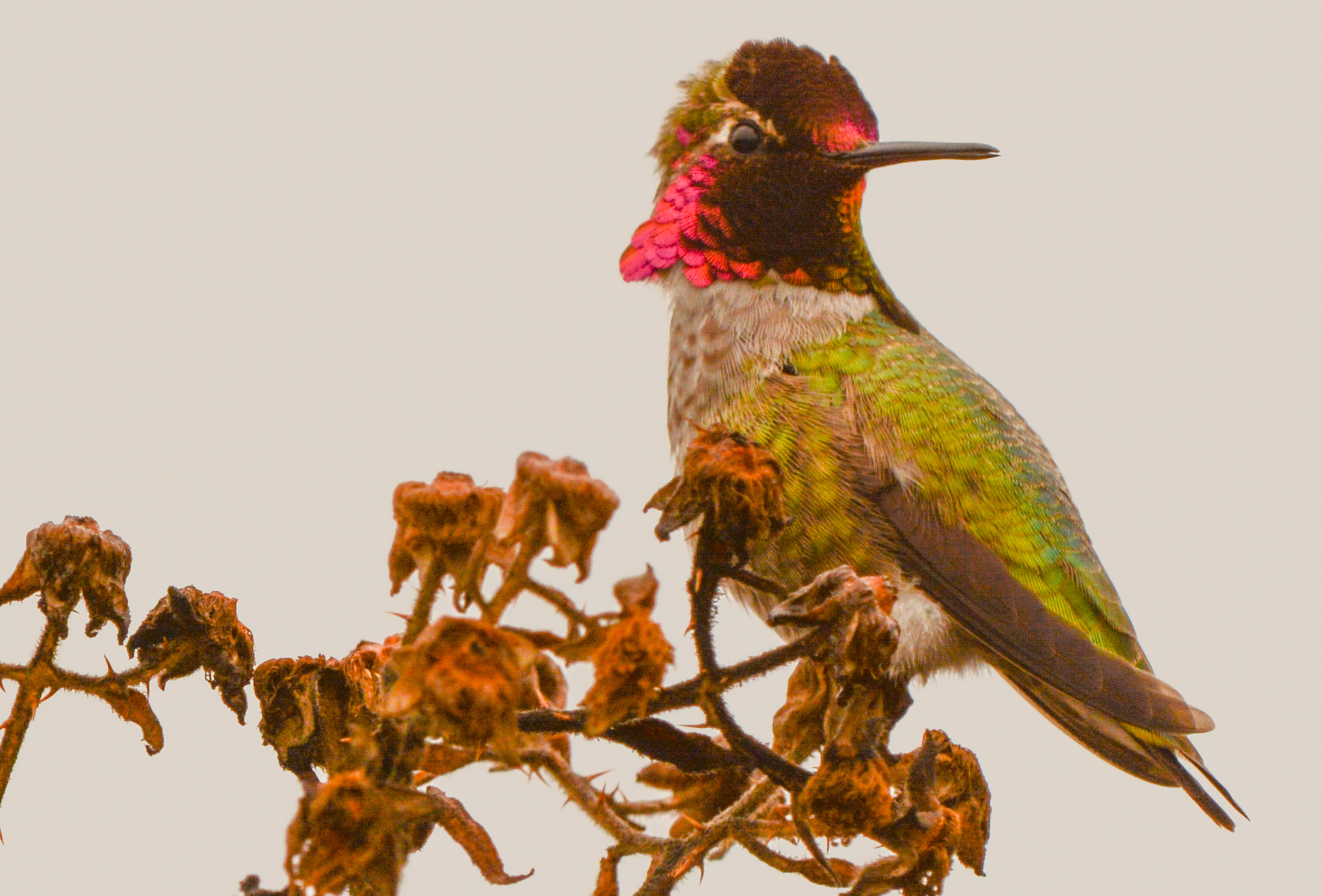
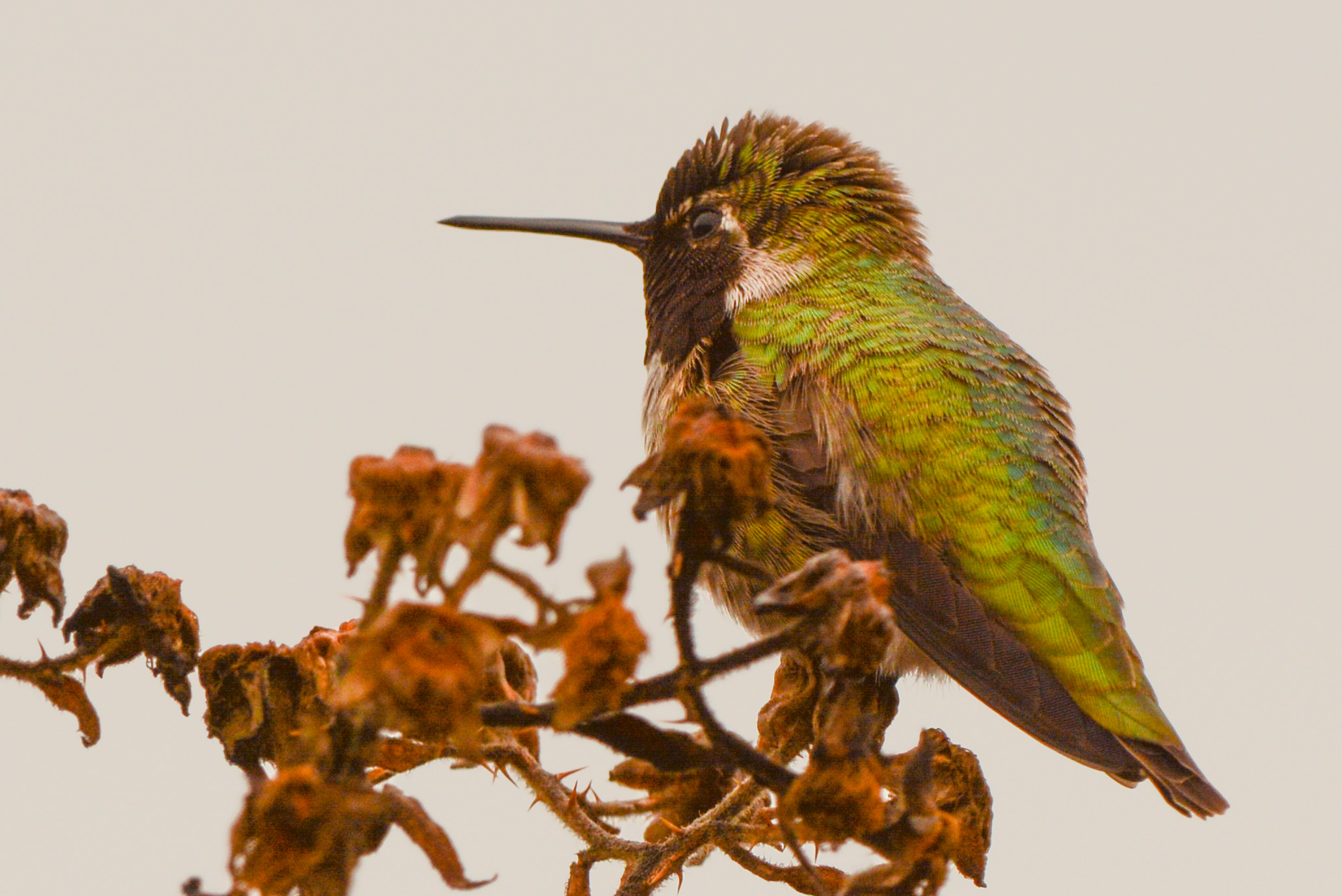
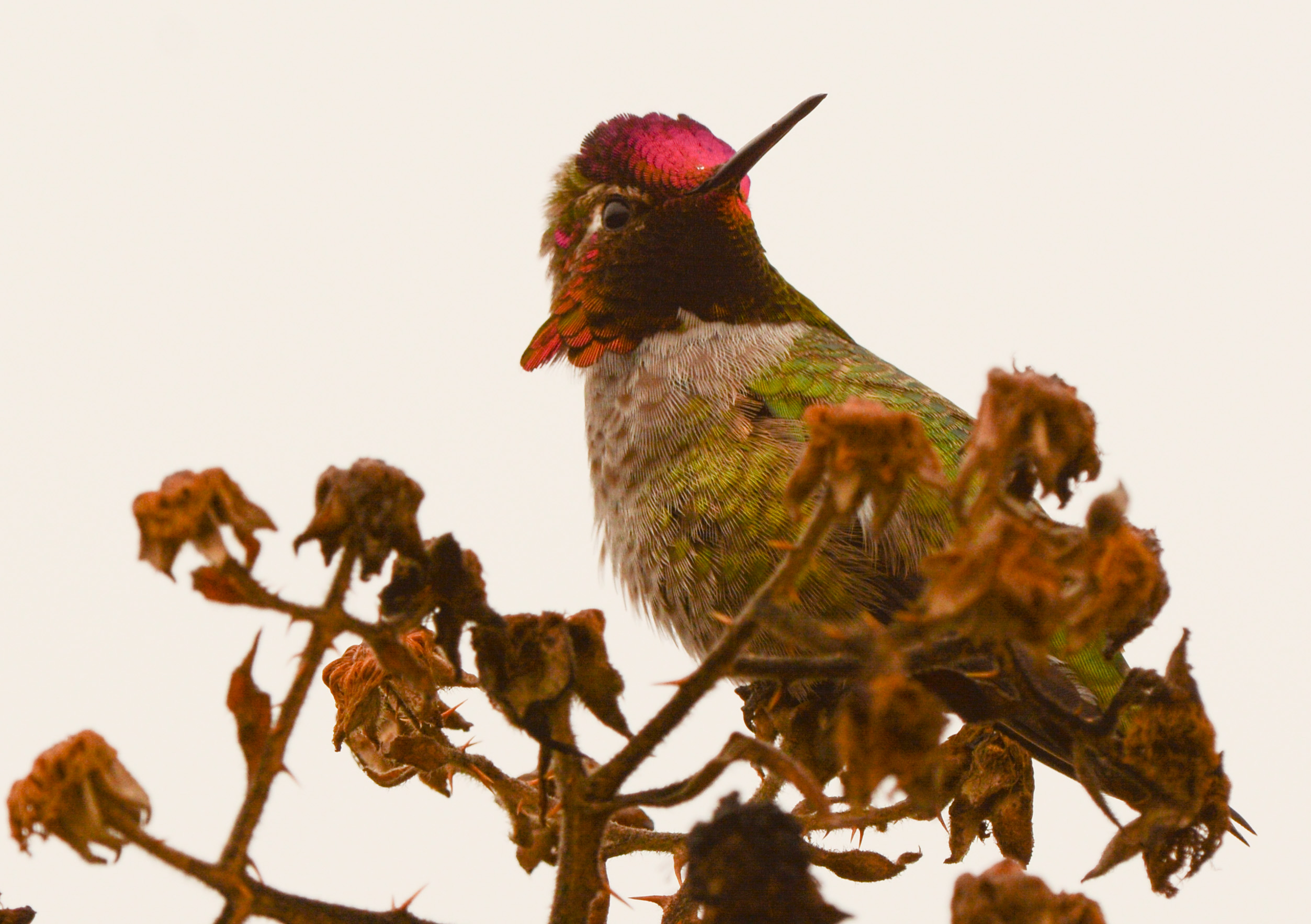
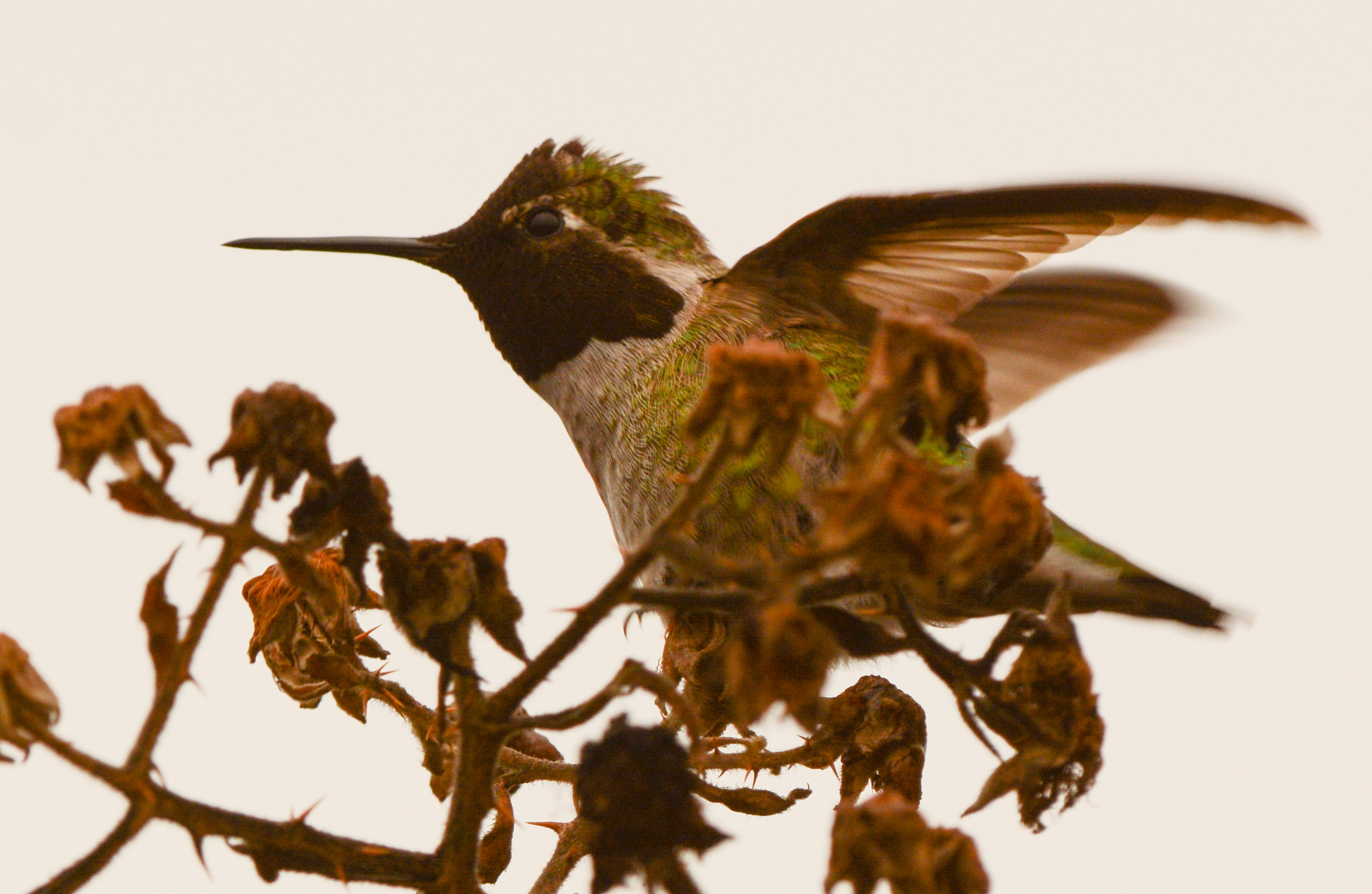
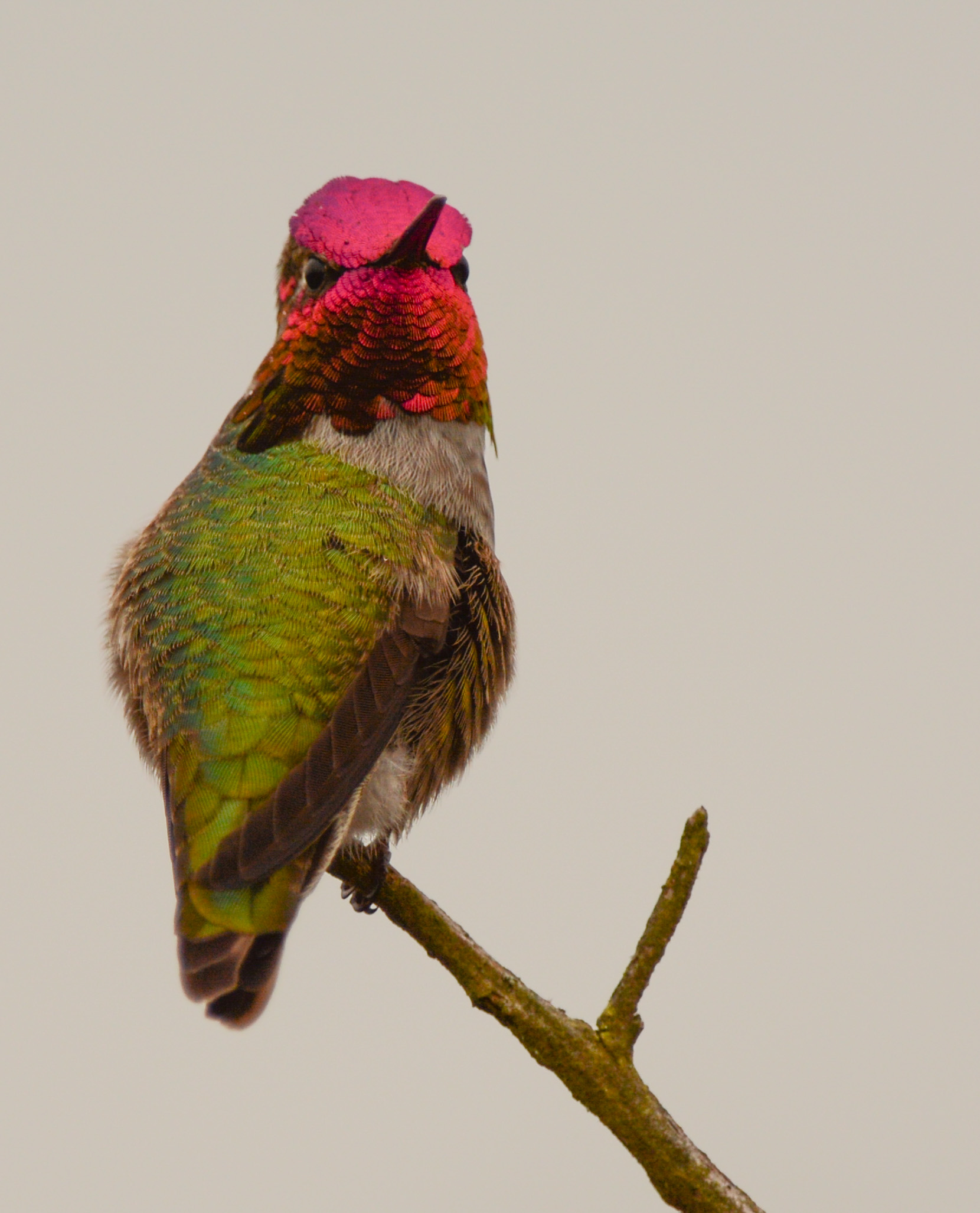
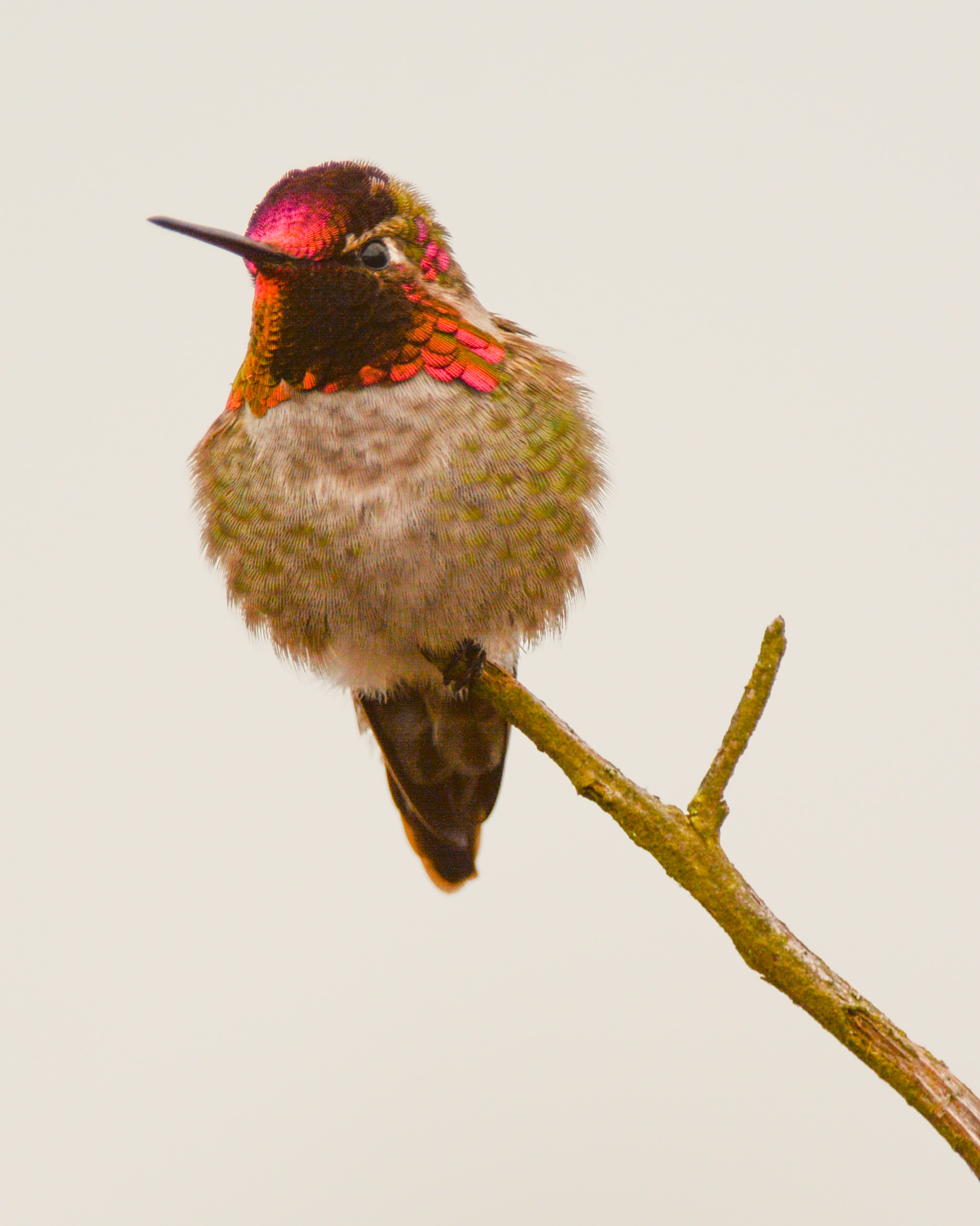
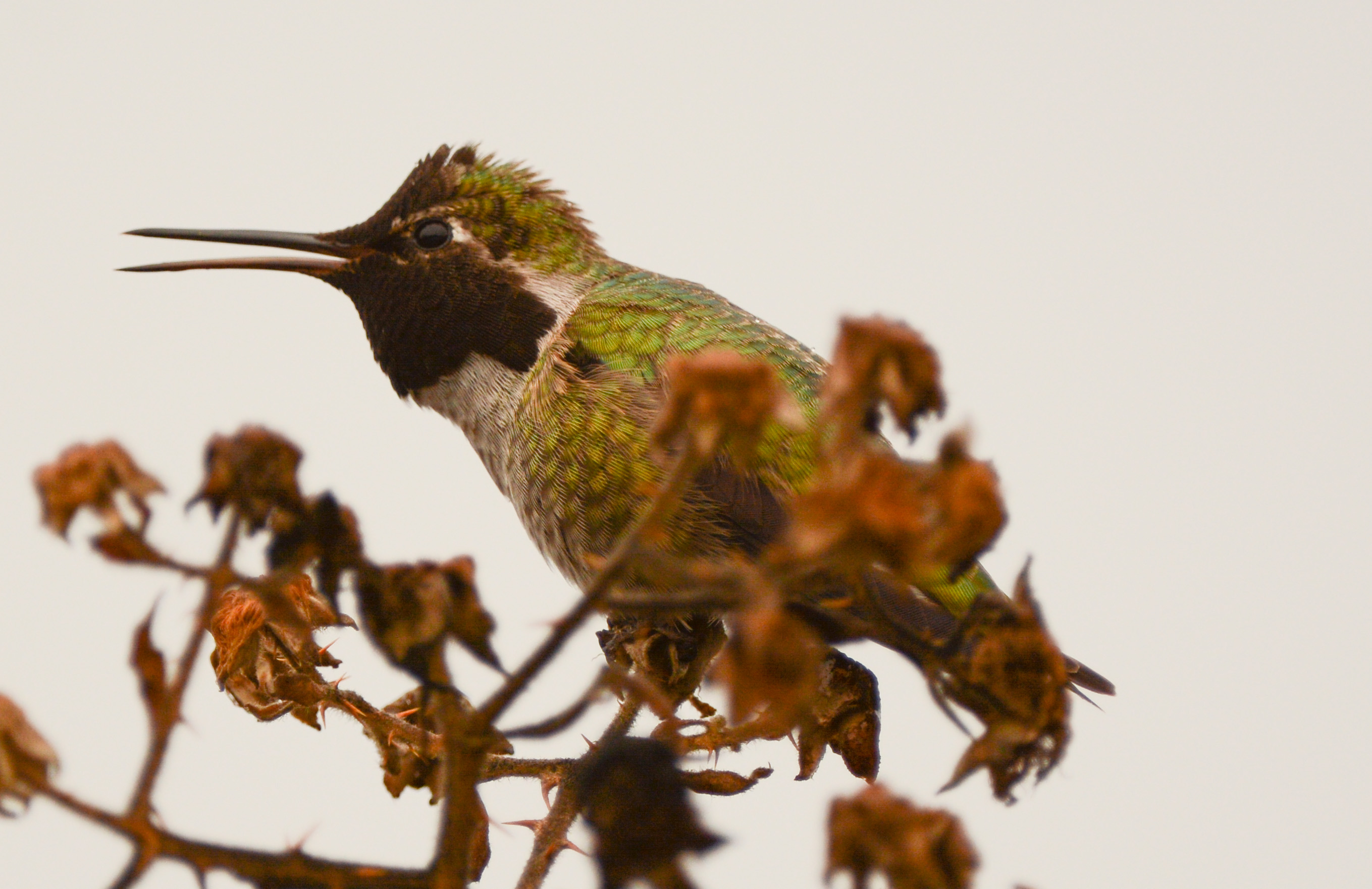
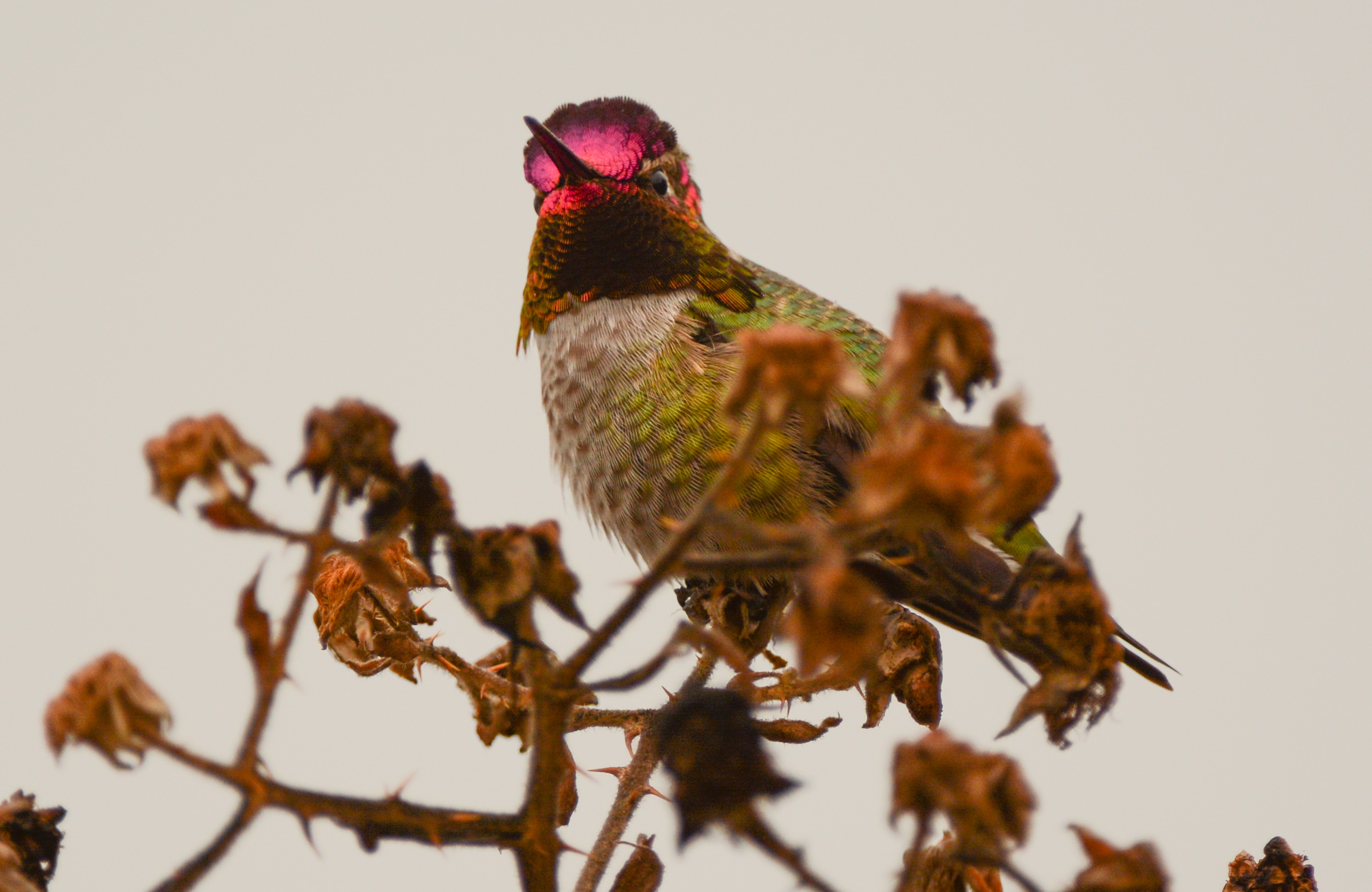
My next star was a male Anna’s hummingbird.  For the first time since the new watercourse was constructed in early July, a hummingbird finally landed in the watercourse and took a bath.  The water in the new watercourse has an increased flow and that might have discouraged the hummingbirds, but this male Anna’s finally took the plunge!

Hummingbird, Anna's  20141002 - 06

The next photographs are of a Golden-crowned kinglet… the species I saw on this day  that motivated me to take to the yard with my camera.

Kinglet, Golden-crowned  20141002 - 07

This species, like the Ruby-crowned kinglet, is capable of raising a bright, crown… in this case orange-colored.  Here you can see the ruby crown, but it’s almost never this visible unless the bird is upset.

Kinglet, Golden-crowned  20141002 - 10


Site Donations Gratefully Accepted!

An excellent example of a double entendre if there ever was one!  Let me explain…

When you read the heading of this new post I’m sure that you thought I was soliciting funds for my blog site.  But what I’m actually soliciting are pieces of wood that I can rotate into and out of the site where I perform much of my photography!

On 10/2/2014 I ran into a friend during my morning walk in Washington Park.  He persuaded me to accompany him to his property to search for “staging sticks” that I might be able to use around my watercourse.  We spent the better part of an hour touring his property scouting for pieces of wood.  We came up with about three pieces that I could use and as soon as I got back home I changed out the staging sticks around my watercourse.  I resolved to obtain some photos of birds on the sticks he had furnished to show my appreciation for his time and effort with regard to his donation.

My intention was to take a late morning nap (I had risen at 4am) but I looked out the window and the yard was full of birds, including one or more Golden-crowned kinglets.  Priorities being what they were, I grabbed my camera, my monopod and my chair and set up near our watercourse.  It wasn’t long before the birds returned from my brief interruption.  For the next couple of hours I took photos, then a nap, and then returned to the yard for more photos.  Two hundred and forty-five (245) photos later (!) I called it quits and left to meet friends for dinner.  After returning from dinner I managed to perform preliminary processing on all the photos, paring them down to 104 “keepers”.

So all of the photos you see below are birds photographed on 10/2/2014 located either on the donated sticks or with the donated sticks in the background.  I am very grateful for the donations and if you have any pieces of wood you would like to donate to the cause I would be glad to consider them.  I must warn you, however, that I am very particular as to the wood I use.  There are many factors that must go into my selection and they are too complicated to go into here.  However, if you are interested from a photography or intellectual standpoint let me know… I’m always ready to share experience and knowledge.

For the non-birders out there, identifications are as follow:

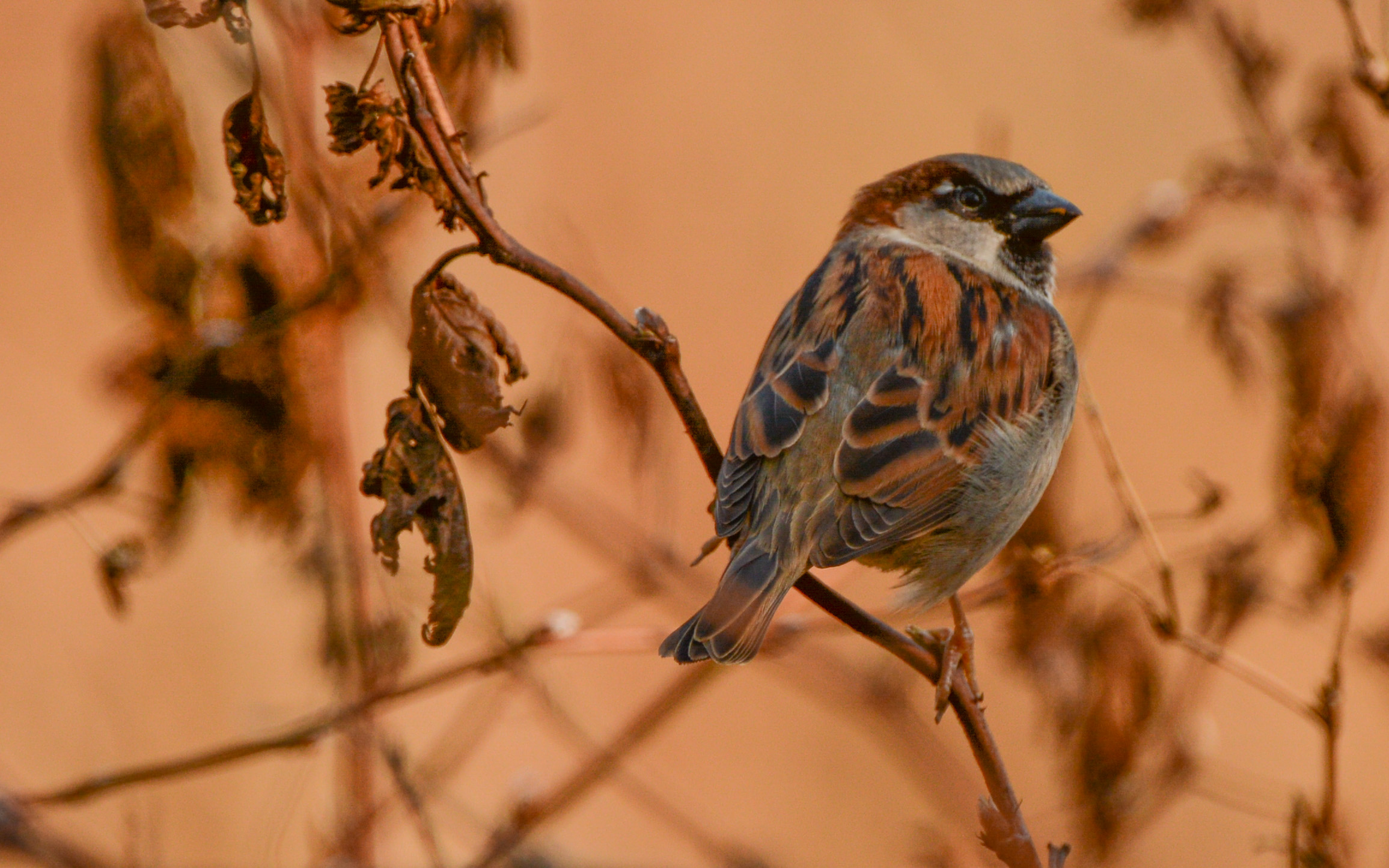
Juvenile male House sparrow

Male Yellow-rumped warbler of the Audubon race

Yellow-rumped warbler of the Audubon race

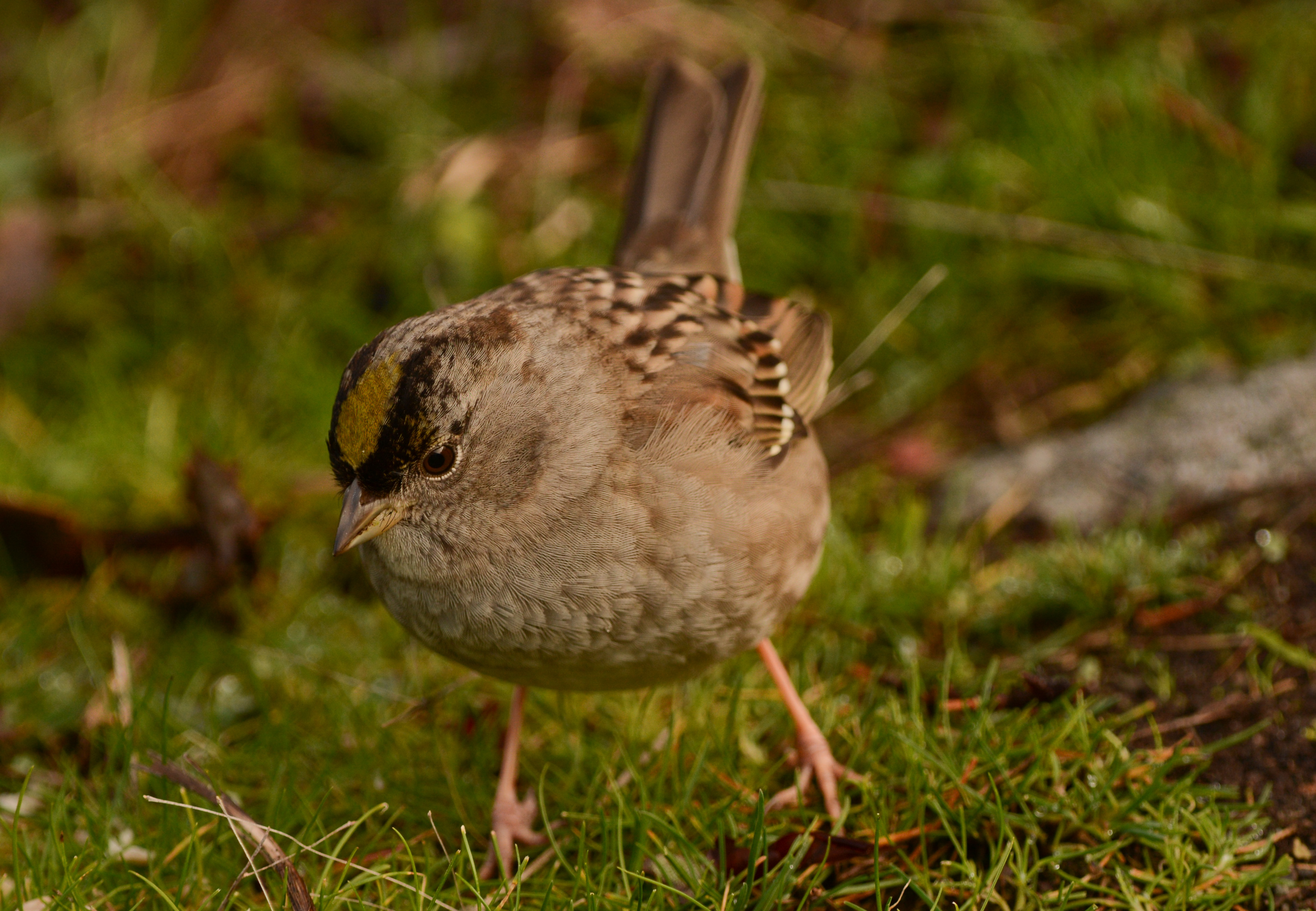
Golden-crowned sparrow (one of our first returnees from the breeding season)

Male Red crossbill (!)

Yellow-rumped warbler of the Audubon race

Chestnut-backed chickadee

DSC_6559 DSC_6588 DSC_6611 DSC_6622 DSC_6633 DSC_6727 DSC_6785


An Interesting Observation with No Photo

On October 1, my wife and I drove to the Alderwood Mall in Lynnwood to visit the Apple Store.  Upon leaving the store my wife wanted to do some shopping and I decided to wait near one of the main intersections of the mall walkways located outdoors but very surrounded by buildings.  This particular area featured a fountain that, at irregular intervals, briefly ejected streams of water out of three tubes that rose into the air and then fell back on river rocks below.  The fountain feature was round and approximately 10-12 feet in diameter.  There were about four surrounding beds with the usual landscaping-fare plantings… hardly an environment that would attract any interesting birds!

I passed some of my time breaking off small pieces of a dog treat and feeding them to a male Brewer’s blackbird (with only one functional leg) and its mate.  When my wife returned from shopping I pointed out the blackbird and as we stood to leave she spied a small sparrow in one of the flower beds directly behind us.  It was standing rather quietly among some of the plantings no further than 3-4 feet away… in other words, I was virtually towering over it.  She noted it wasn’t the expected House sparrow and I took a closer look.  It was a Lincoln’s sparrow!

I can’t imagine what a Lincoln’s sparrow was doing in that environment.  In fact, until just a few years ago, I wouldn’t have been sure that I could have mounted a successful expedition to find one!  Sibley notes that it is found in “grassy, weedy, and brushy areas, often near water”… which is exactly where I now know to look for the species.  But the only part of that habitat description that applied in this instance was the water of the fountain… which didn’t even include a standing pool of water.  And since the fountain and associated planting beds were at a main intersection within the mall, people, including small active children, were walking all around the sparrow’s little island of refuge.