Still waiting for my lens…

As of this post (August 25, 2020) I’m still waiting for Nikon to repair my primary birding lens that they’ve had since July 10, 2020. Today I received an email that the part they need for repairs is due in on August 27 and that they will expedite the repair. I will have been without the lens for at least SEVEN weeks and therefore haven’t been able to generate many photos that meet my standards.

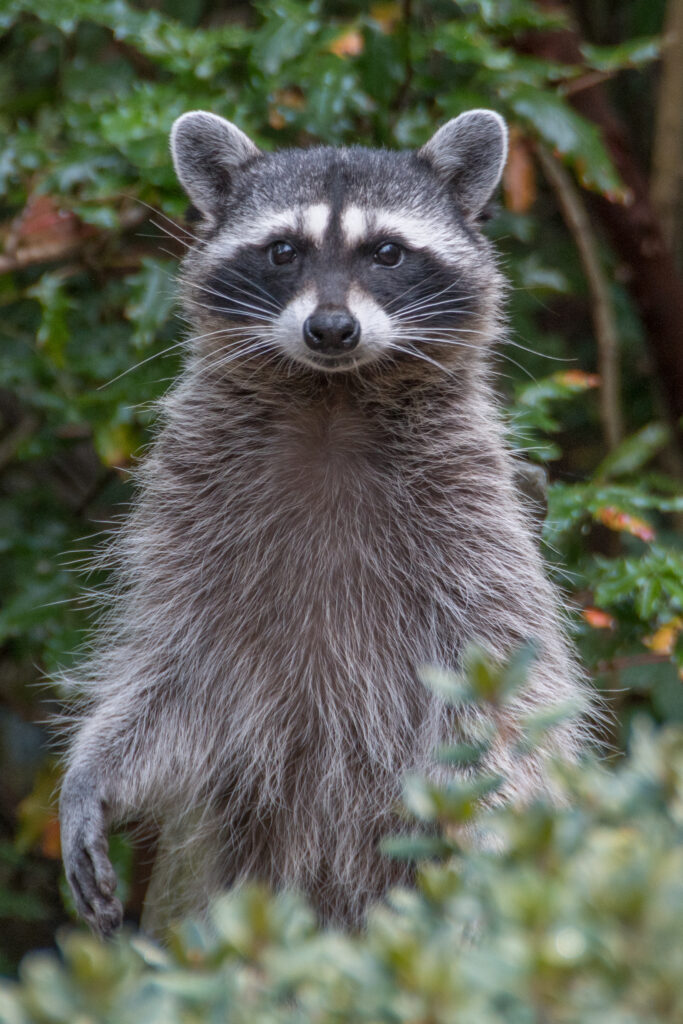
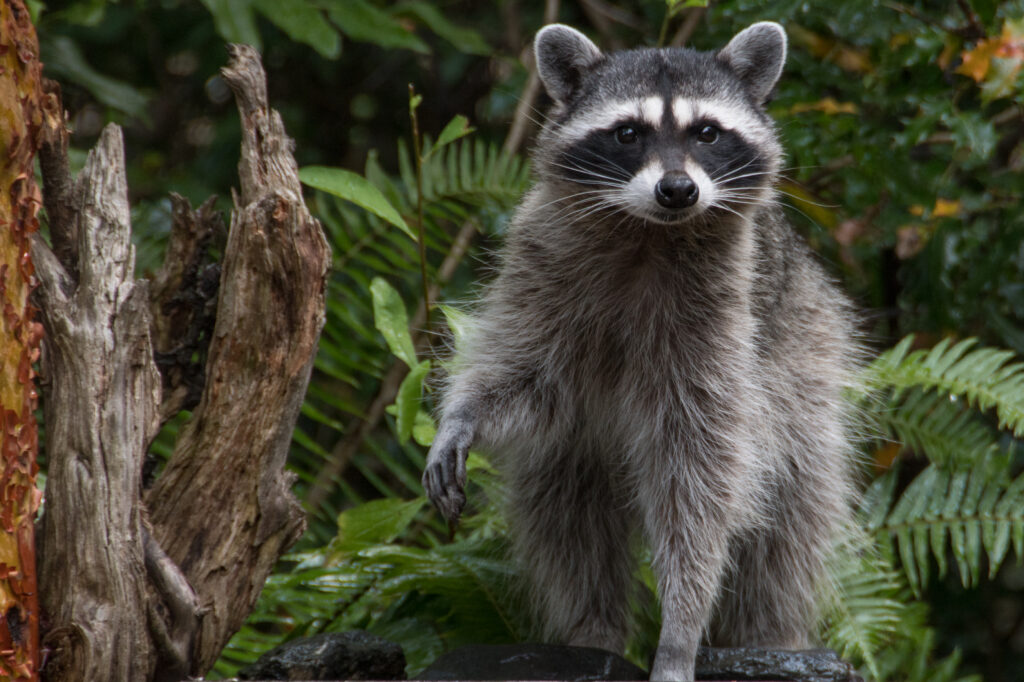
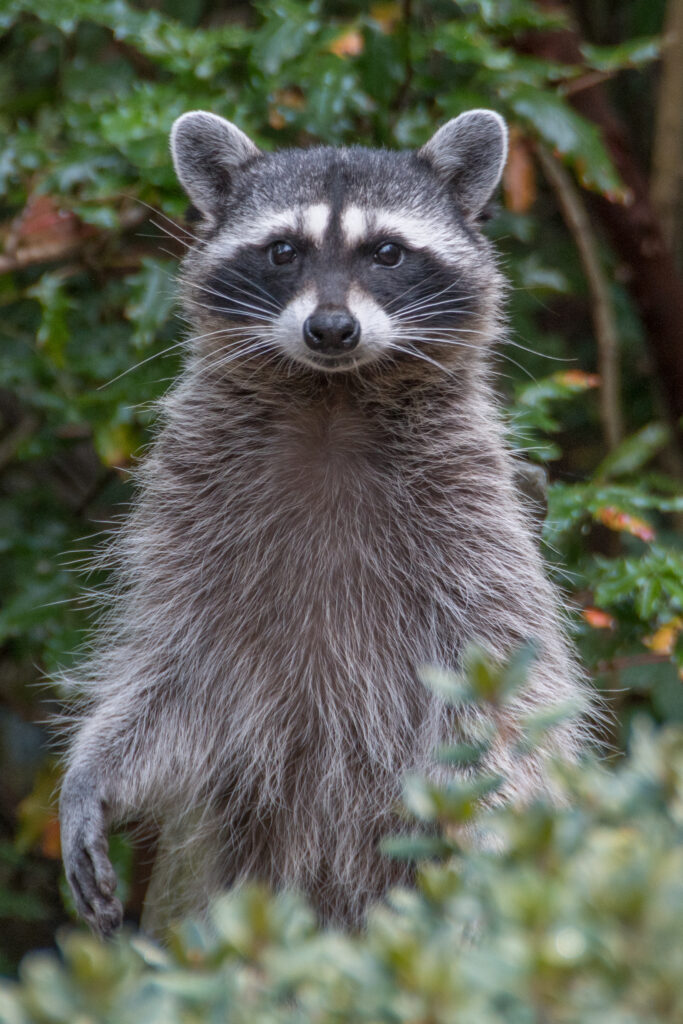
However, I have taken several photos that I’ll share. This raccoon, a regular visitor to the yard, paid us a visit on July 31, 2020.
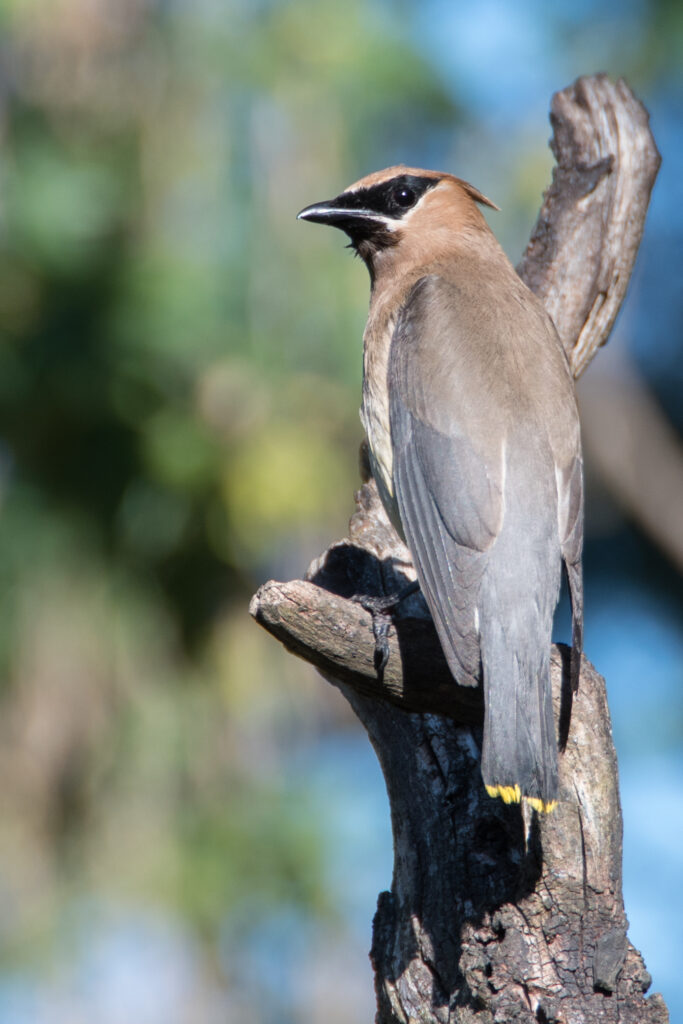
This is a Cedar waxwing that has apparently been an almost daily visitor since early August. Waxwings are generally quite gregarious, but this one shows up only by itself. It may be one of an unmated or mated pair. I’m really disappointed that I haven’t had my good lens as I could have gotten much better photos.
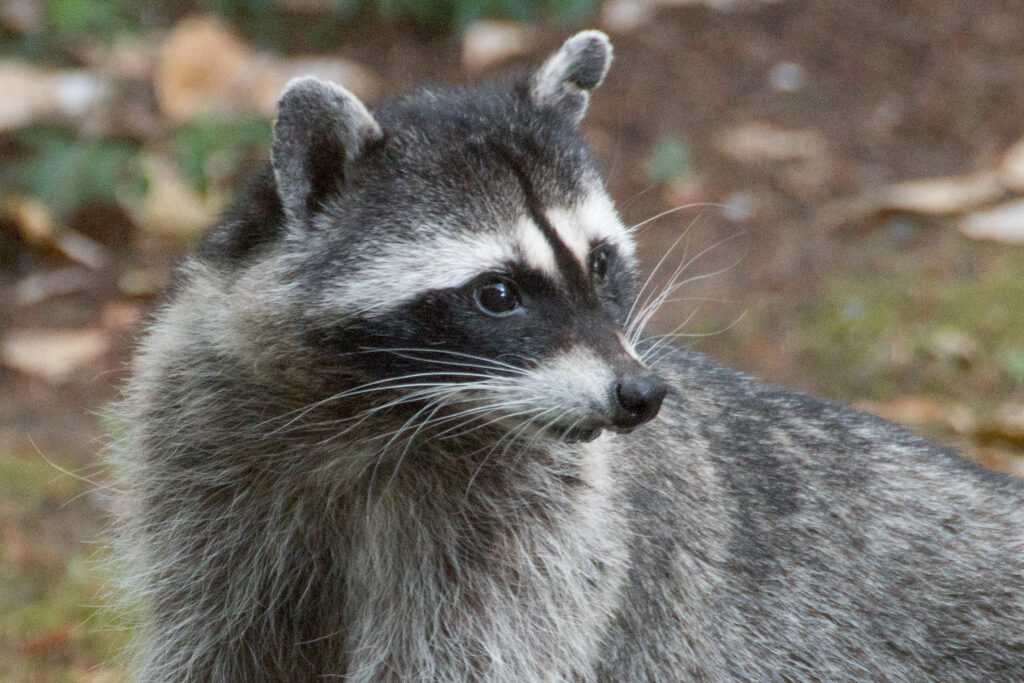
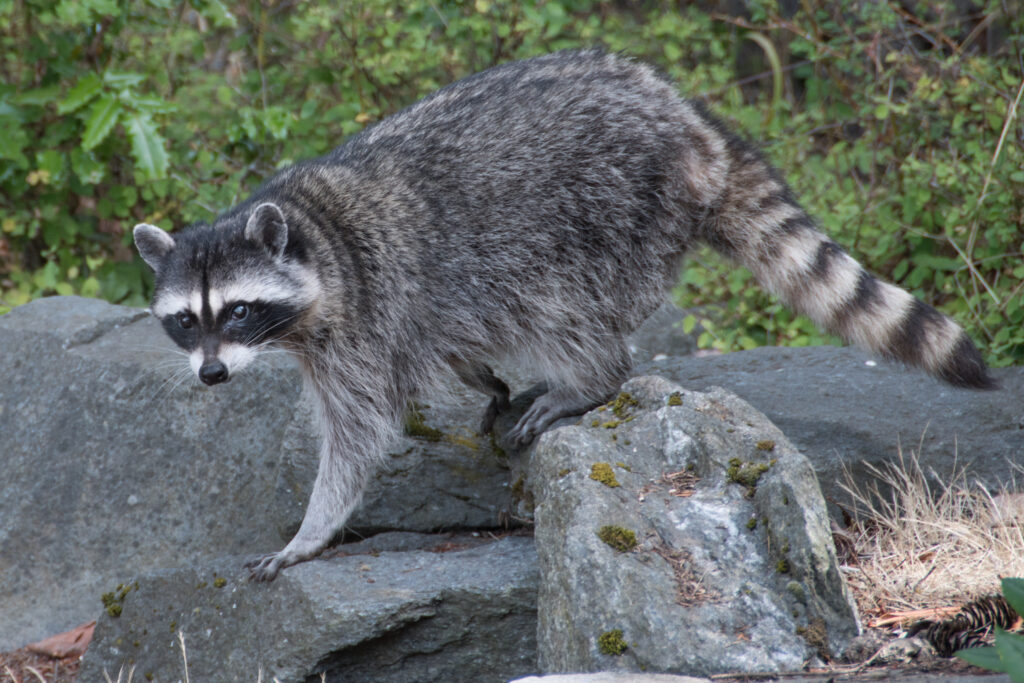
More raccoon photos, probably of the same raccoon, taken August 19, 2020.
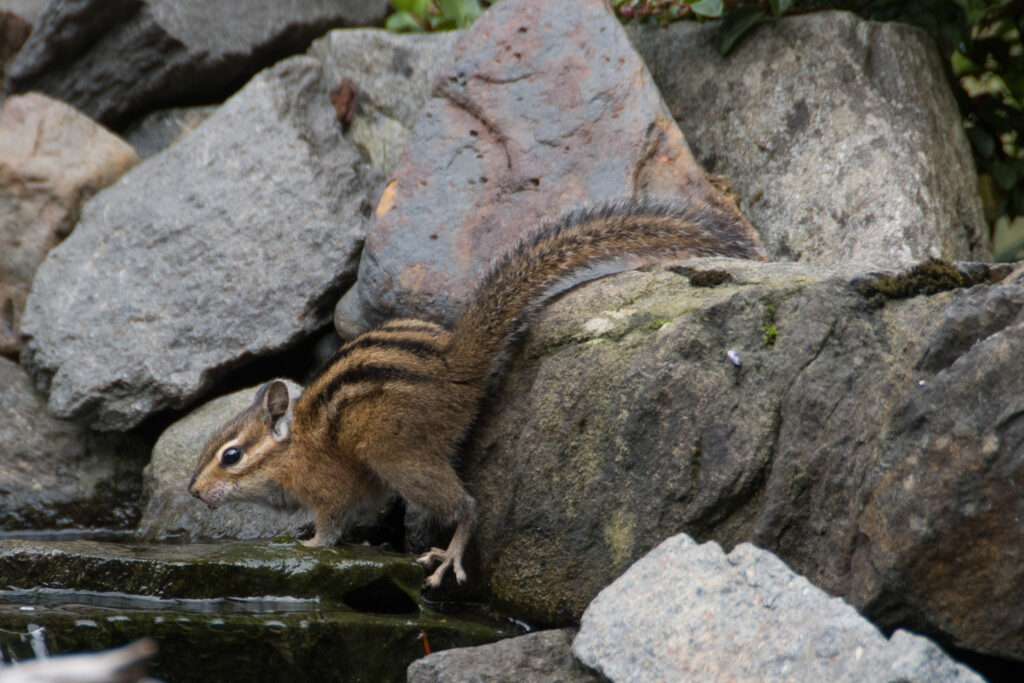
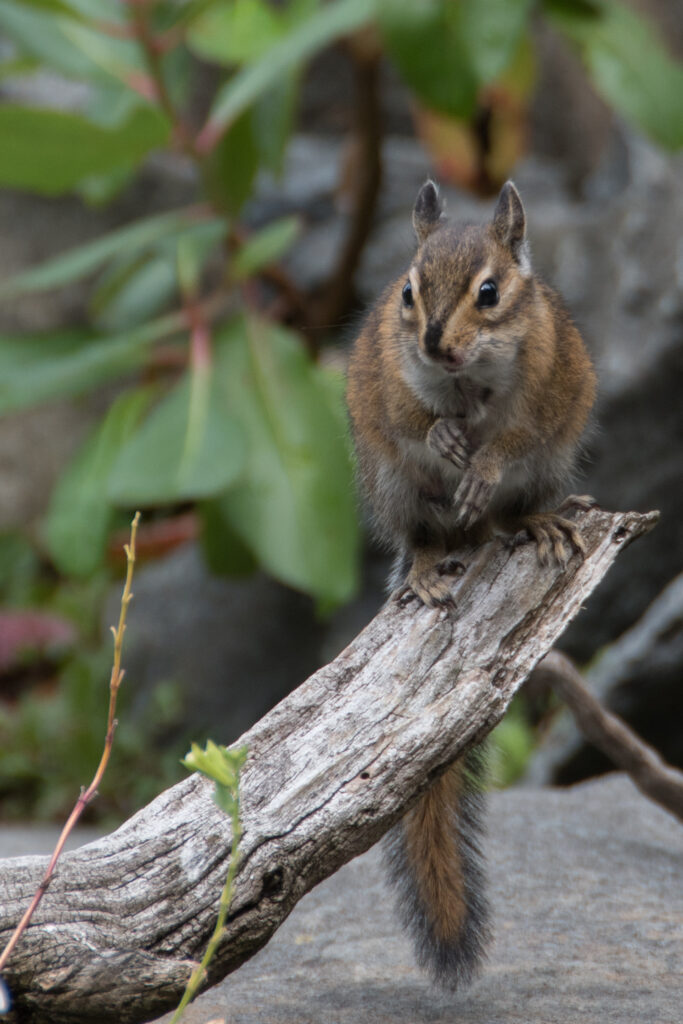
And finally, one of two Townsend’s chipmunks that are regular visitors to the yard, this one photographed on August 23, 2020.
I’m hoping that by sometime in early September I’ll be back photographing birds. I hope you’ll return for a visit!
Blog Post August Status

You may have noticed that I haven’t posted to my blog in a while. There are several reasons for this.

First of all, as I mentioned in my last post, I broke my right ankle in mid-June and was quite immobile for the month that I had to wear a boot. I couldn’t drive with the boot (on my right foot) so I was mainly confined to our house during that time.

Second, in early July my Nikon 200-400mm f4.0 lens began making unusual noises when focusing. I want through this about five years ago and the problem was the focusing motor(s) inside the lens. The lens needed to be sent to Nikon for repair, and like the last time this happened, the needed parts apparently were’t on hand. So as of early August my lens sits languishing on some technician’s desk in LA waiting for parts. In some ways the timing was good.

Which brings me to the third reason… except for juveniles being fed in the yard, things are relatively uninteresting from the viewpoint of variety of species. For the most part it’s the same old birds day after day… with a few exceptions, which I’ll detail below.

And there’s even a fourth reason for not posting… I engaged a friend with more technical experience than I to try to fix a distribution problem with my blog. Some of you signed up to be notified by email when I post a new blog, but something happened to that feature when I requested assistance from the site host. So as of this writing you apparently can’t sign up for notifications and if you signed up previously you probably aren’t getting them.

So I’m eagerly awaiting the repair of my primary birding lens, trying to make do with a Nikon 18-200mm lens… kind like bear hunting with a BB gun! This crisis has motivated me to purchase a backup lens, which if it becomes available and I can purchase one may become my primary birding lens.

Enough of my woes! The raccoon pictured at the top of this post was a visitor on July 31, 2020. I saw it skulking around the edge of the yard and was able to get prepared in the event it decided to come for water. Bingo! It was just about the perfect distance for the 200mm zoom.

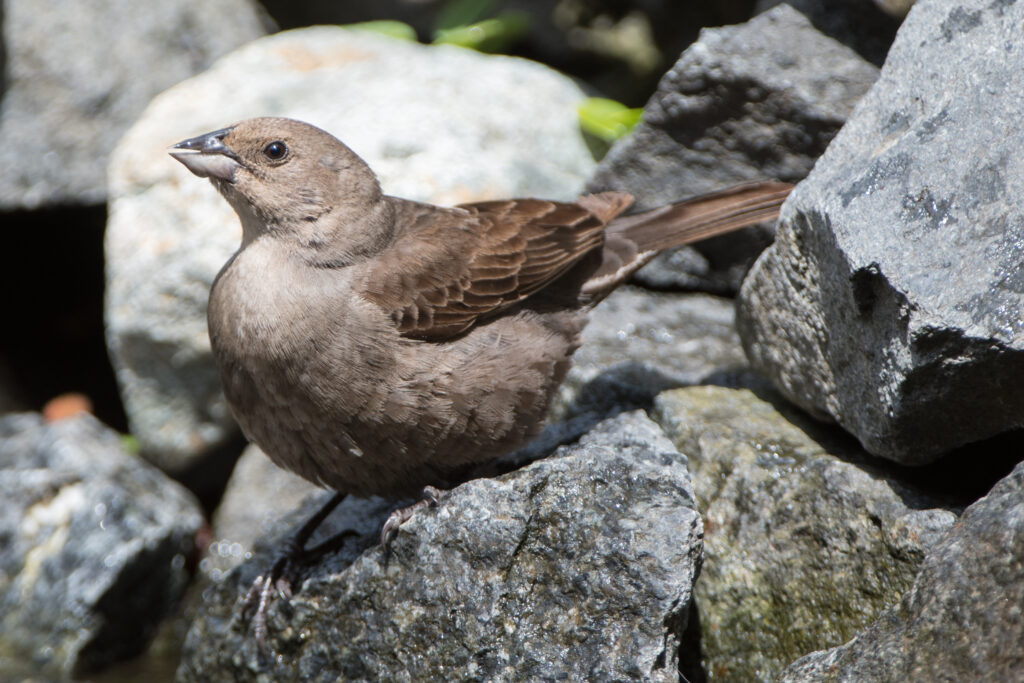
In my last post featuring seasonal juveniles I should have included one other juvenile bird… a Brown-headed cowbird. Fortunately we haven’t had many in the yard this year, but on August 2, 2020 I observed an adult Spotted towhee feeding a cowbird chick. This photo of a cowbird chick was taken May 29.

Other news this month:

We have a male Hairy woodpecker visiting the yard, definitely a rarity considering observations here at the house over the past few years. We had one last fall/winter but it disappeared during breeding season. Now it (or a relative) is back!

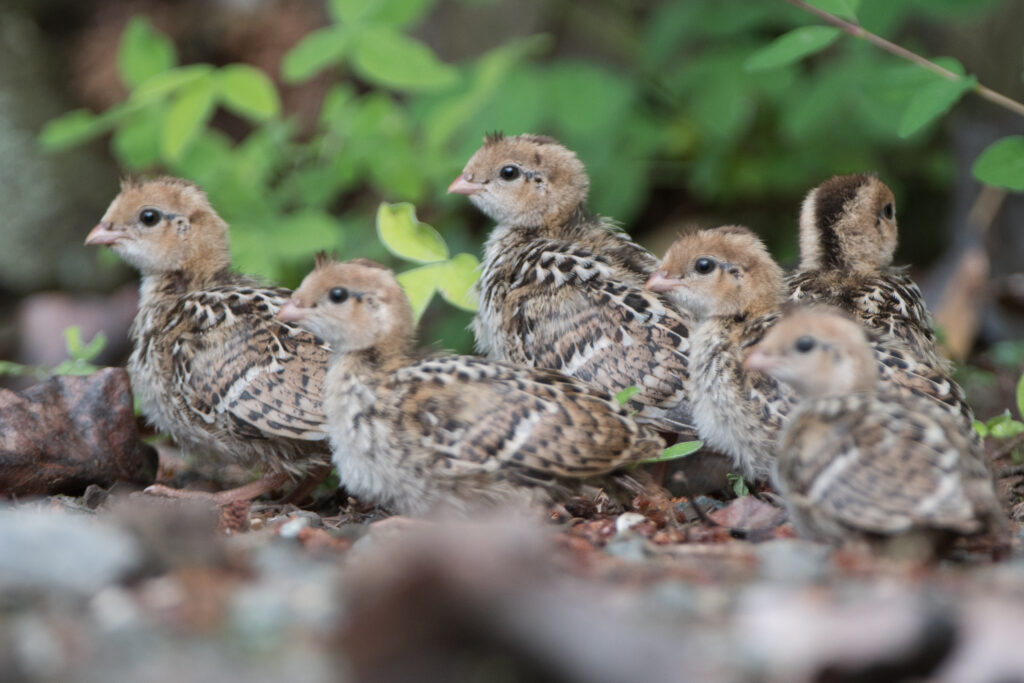
We have at least two movies of California quail visiting the yard. One covey has about 8-10 ‘teenagers’, the males of which are just beginning to show their facial markings. The other covey, much younger chicks, numbers about 10-12.

During July we had two widely-spaced visits by male Audubon Yellow-rumped warblers.

I have been anxiously anticipating visits by Cedar waxwings this summer. Finally, on July 29,30 and 31 (one visit per day) we had one show up at the watercourse. Sorry… no lens, no photos!

July 2, 2020

First a little news. On June 17 I fell and broke my right ankle and just learned July 1 that I’ll be in a boot for three more weeks! Since it is my right ankle I can’t drive so I’m more or less restricted to photograph birds in the yard. On the other hand, I had a nice day in the yard on July 2. The day was cool and overcast, almost perfect for photography other than for a little mist that was falling around midday.

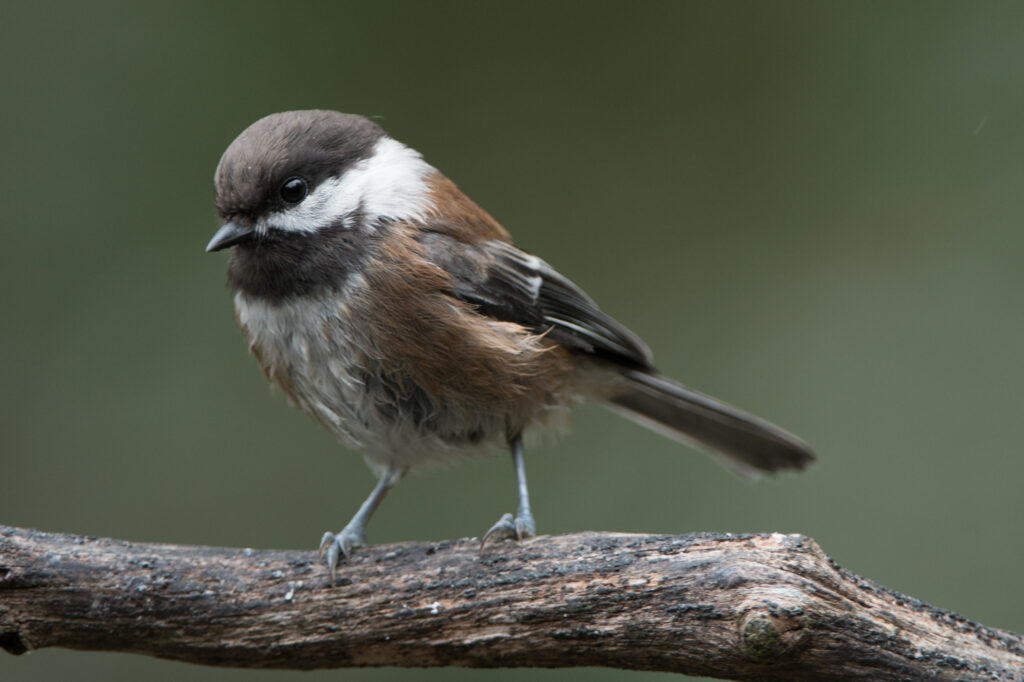
One of the most numerous birds in the yard now, in addition to American goldfinches, are chickadees. We have both species (Chestnut-backed and Black-capped) in the yard… this is a photo of one of the Chestnut-backed chickadees. I estimate that at times we may have as many as 10-12 in the yard at one time, the result of successful breeding seasons for both species.

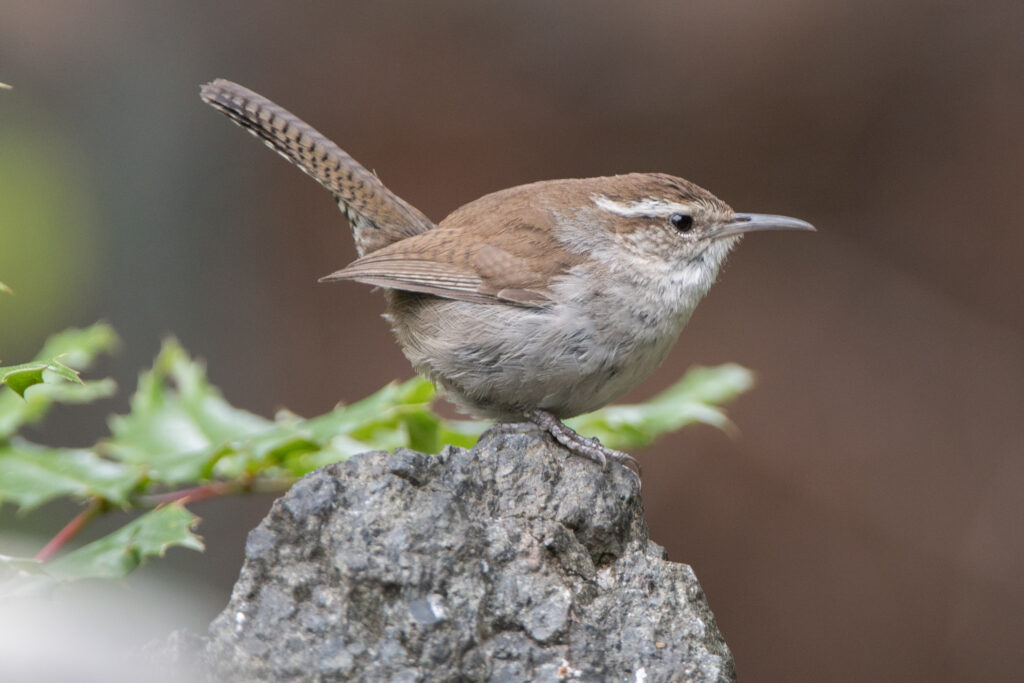
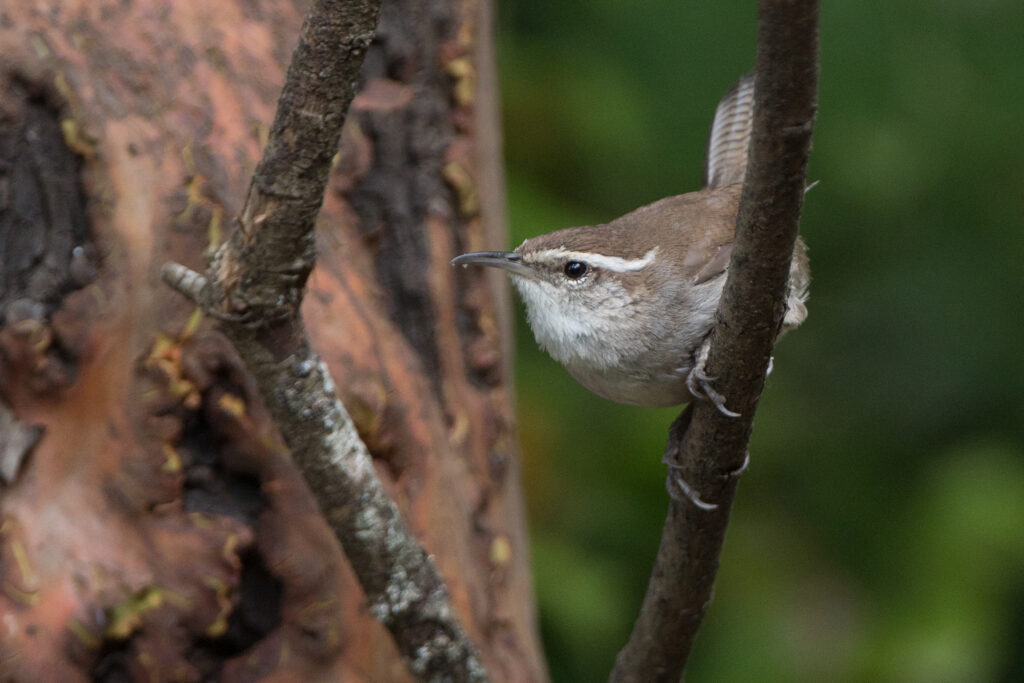
We have at least two Bewick’s wrens in the yard, and judging by the time that they’ve been flyng away with suet I suspect that they may have raised two broods.

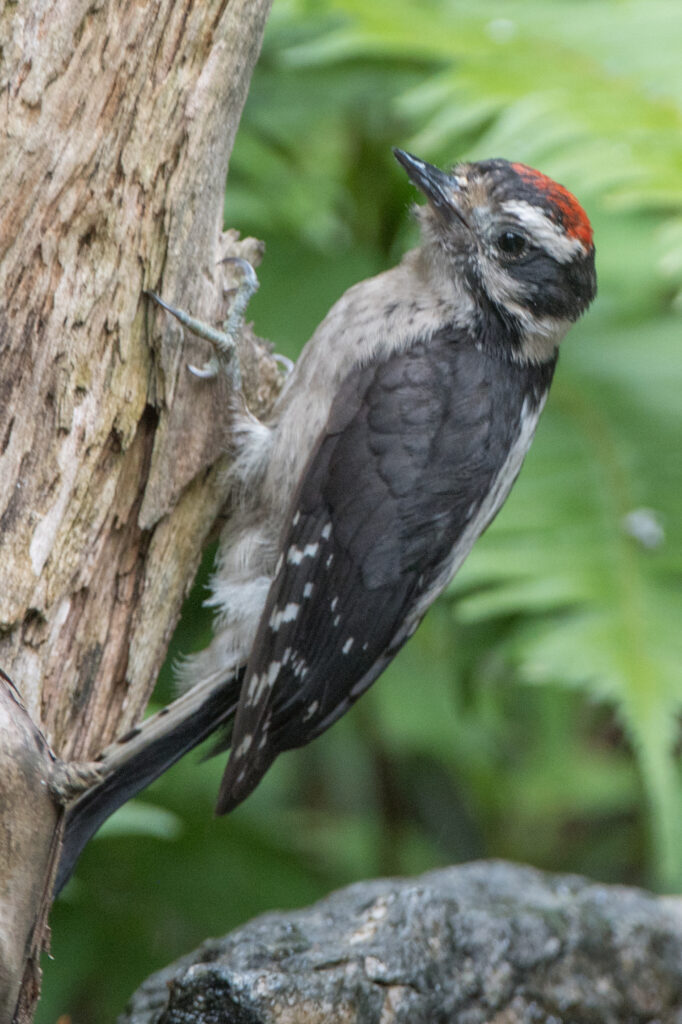
We’ve also has a successful breeding season for Downy woodpeckers. I’ve seen at least two juvenile males in the yard… unfortunately, we also had one killed when flying into a window.

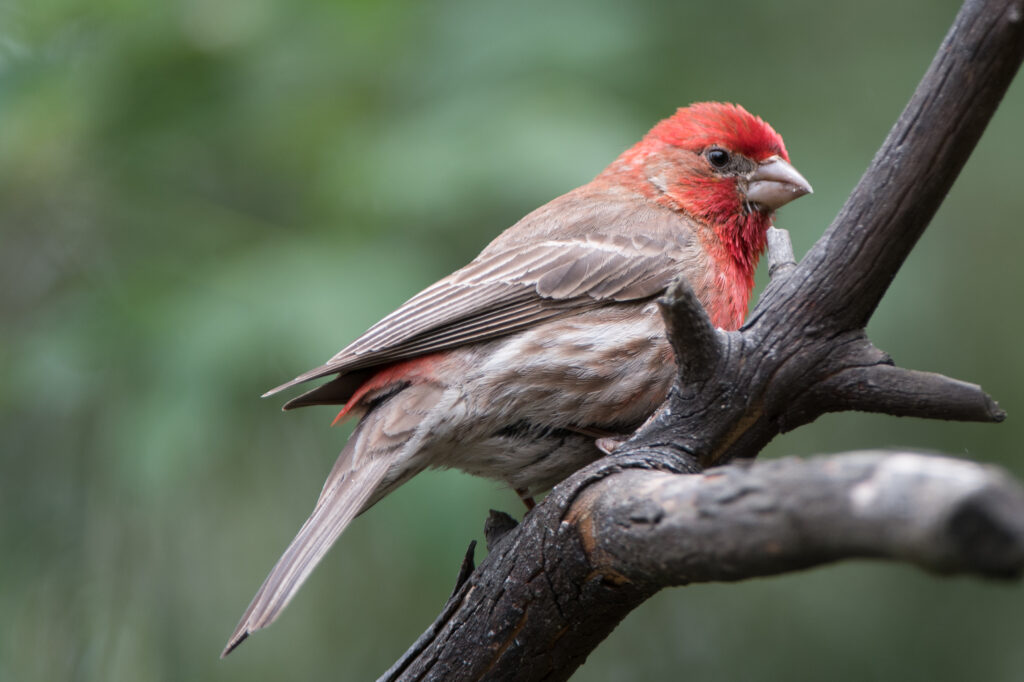
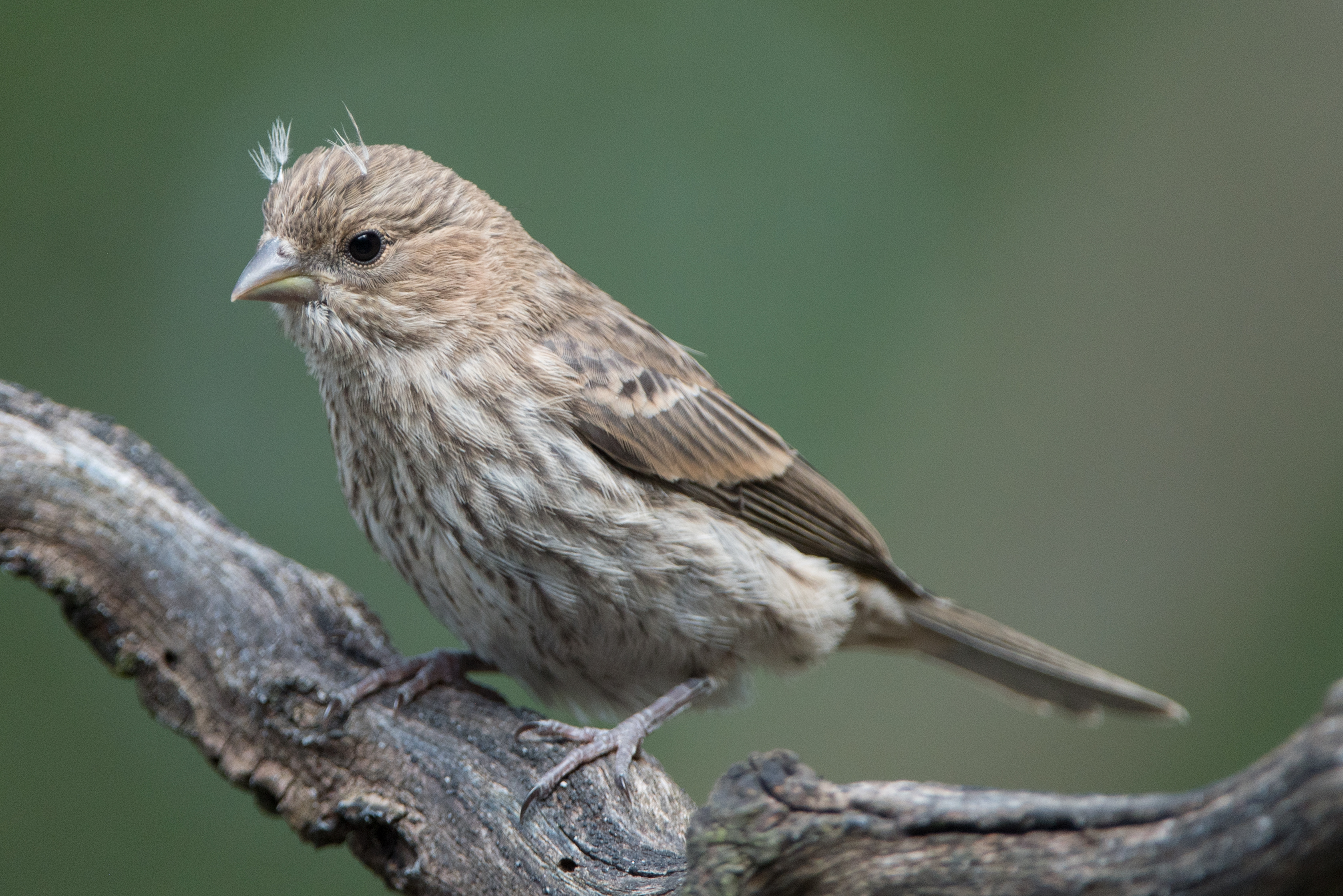
We are getting visits from at least two families of House finches. This male is rather at the higher end of the color spectrum.

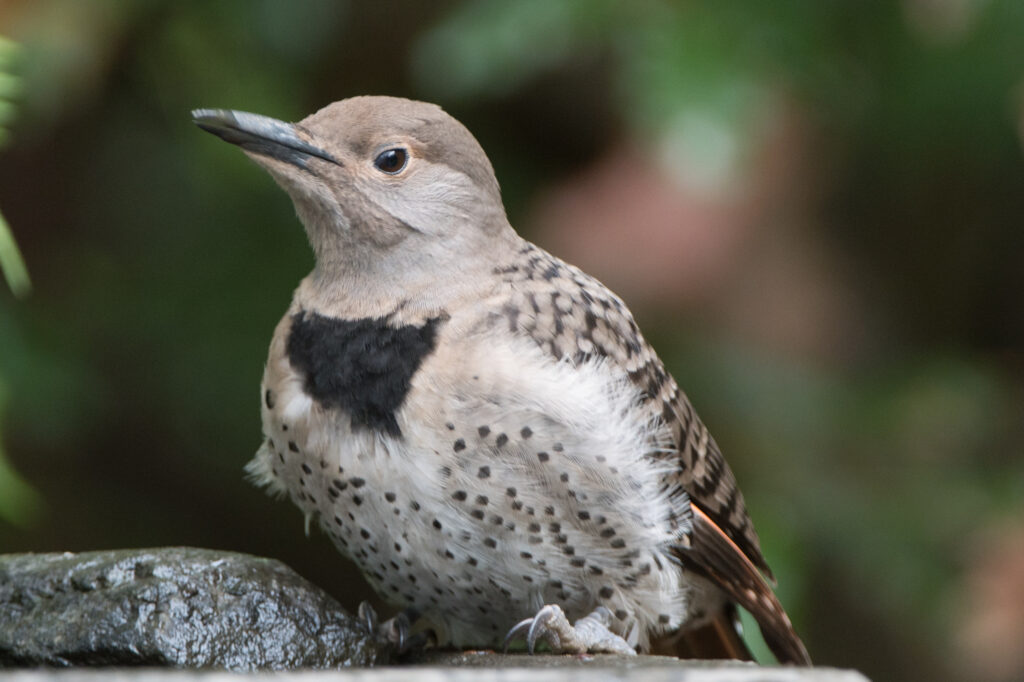
We have an adult male Northern flicker which has been accompanied by two juvenile flickers. This is one of the juveniles accessing one of our water features.

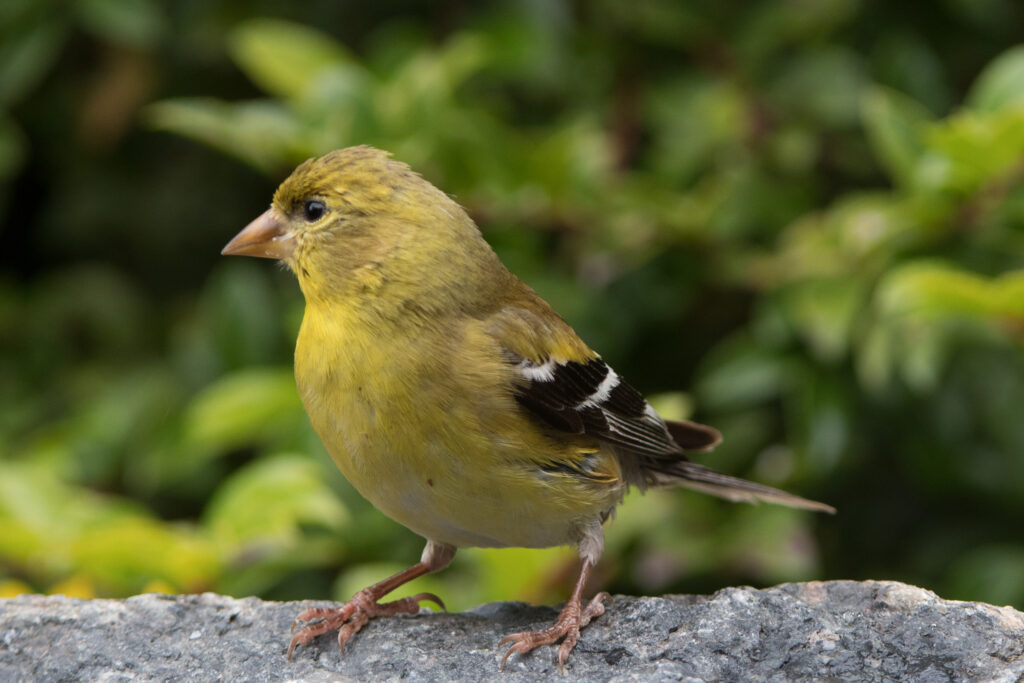
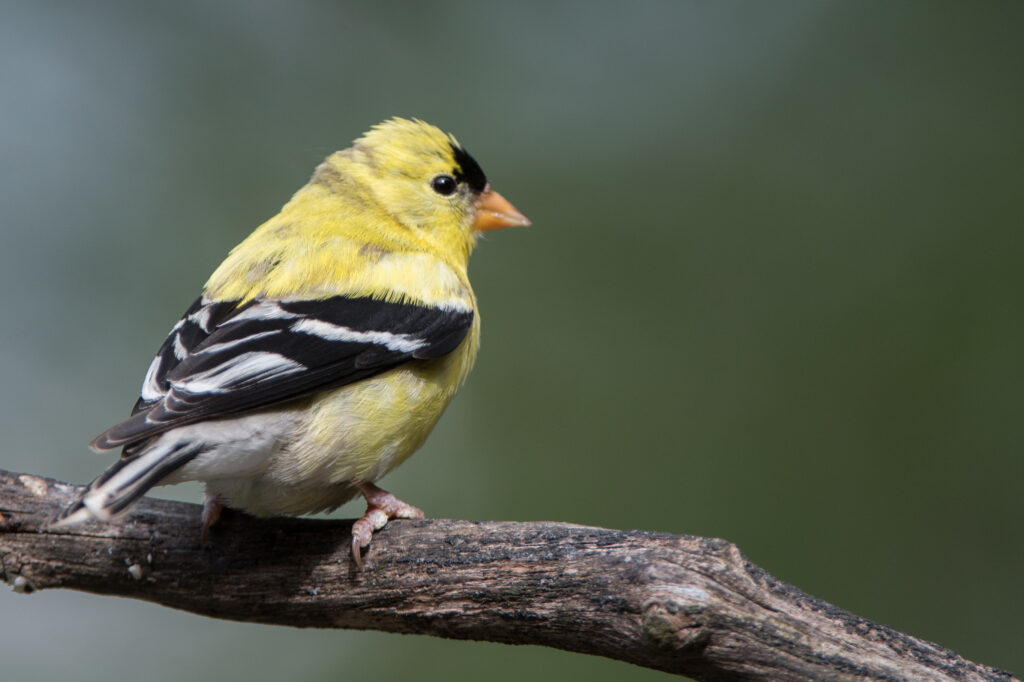
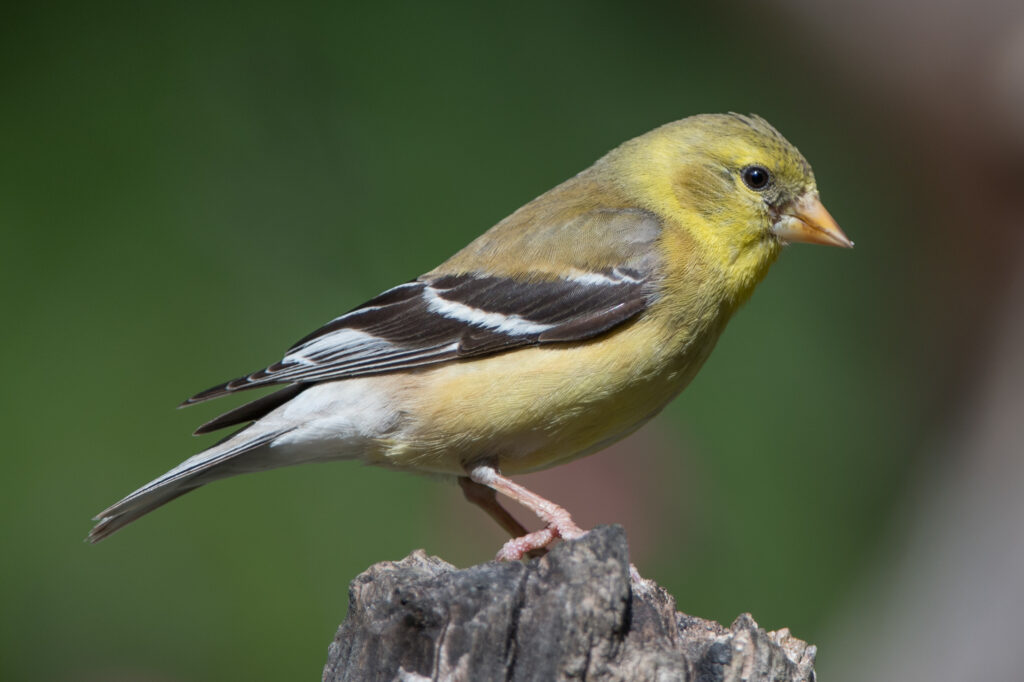
The American goldfinches seem to be taking somewhat of a break lately, with not as many in the yard. This is a female standing above the watercourse.

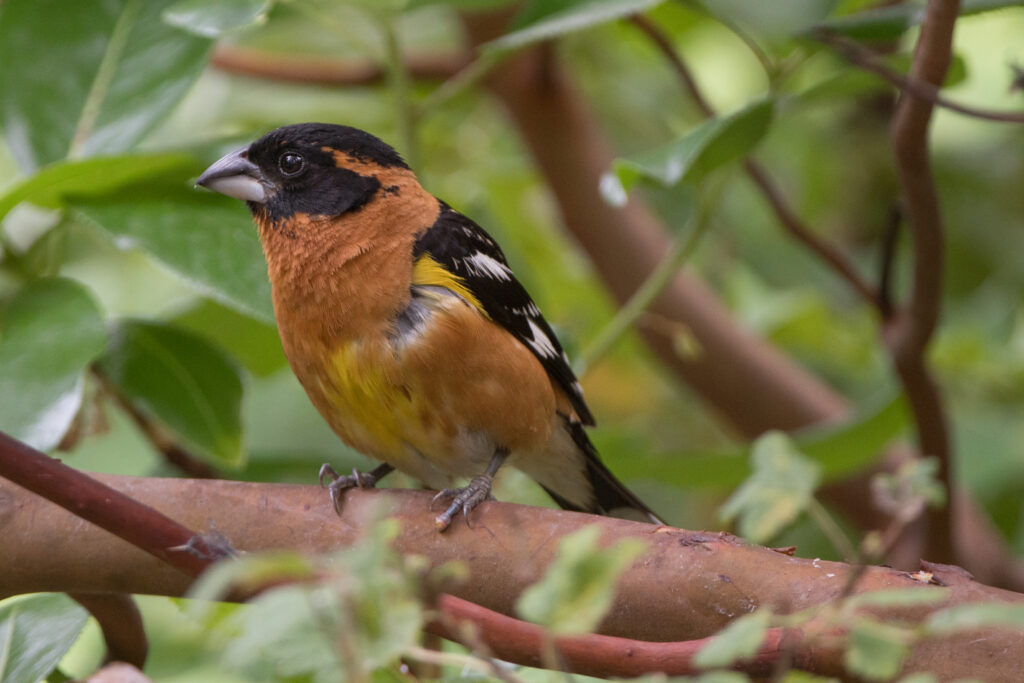
The visitors of the day were the following two grosbeaks which visited at different times. This male Black-headed grosbeak is a regular visitor to our suet feeder.

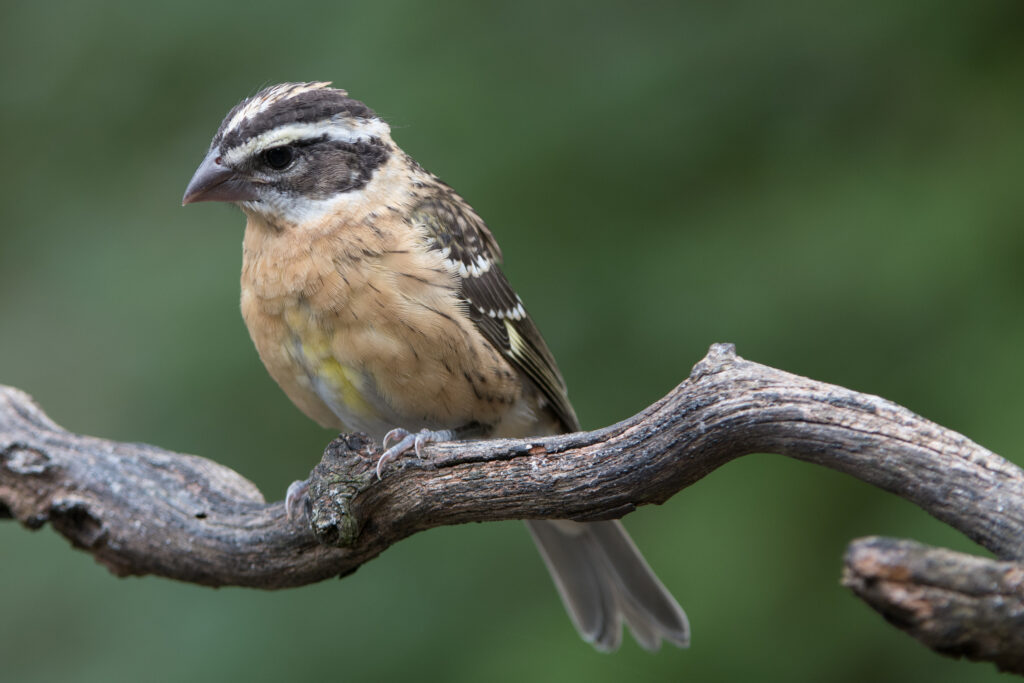
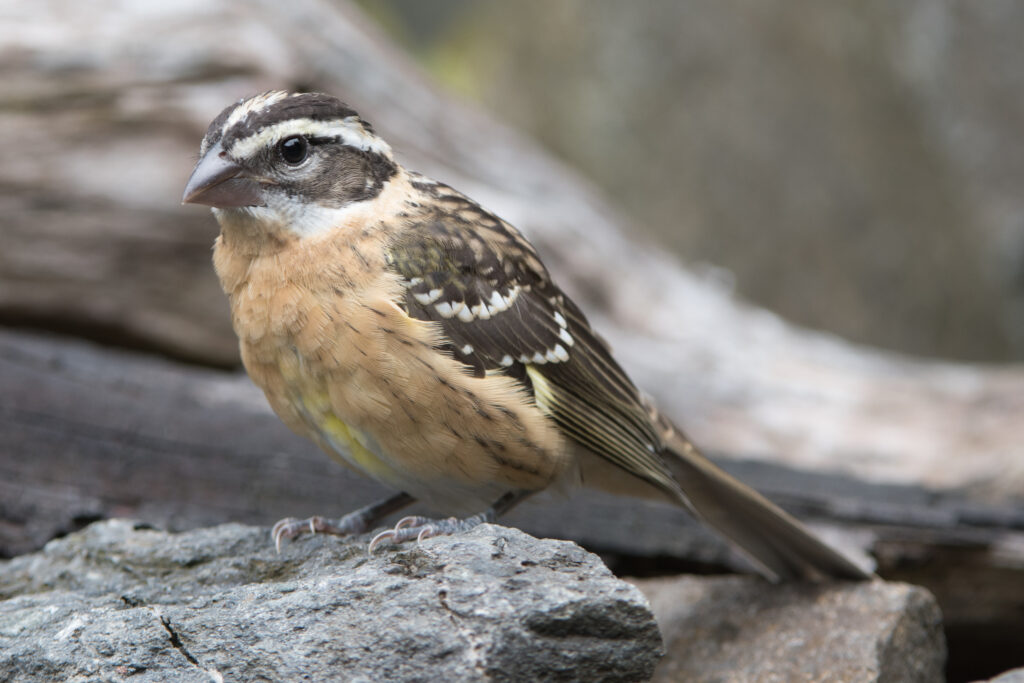
This female Back-headed grosbeak visited later in the day. I was sitting unusually close to our watercourse due to having to navigate with my boot when this female flew and landed directly in front of me on a staging stick above the watercourse. This was unusual for two reasons. First of all, the grosbeaks are among our shier species and this may be the closest I have ever been to one. Second, the grosbeaks don’t usually access our water features.

This female ignored the sound of the camera’s mirror and hopped from staging stick to staging stick and then down to the rocks of the watercourse to obtain a drink. I took numerous photos from only about eight feet away!

Juveniles

It’s that time of year when juvenile birds begin showing up in the yard. Some have little or no resemblance to their parents and can be difficult to identify. I’m going to display some of the juveniles in our yard and point out some characteristics to help identify them.

I’ll take up the rogues gallery first…

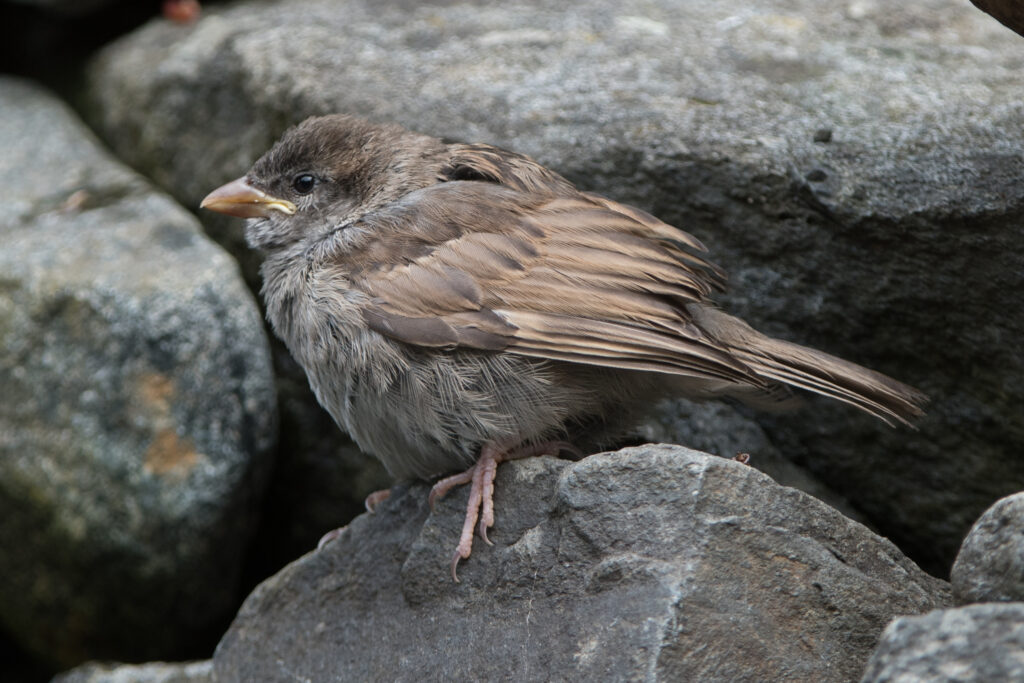
This is a juvenile House sparrow. The juveniles look similar to a female House sparrow but the juveniles can be distinguished by the yellow at the base of the bill, a characteristic of MANY species of juvenile birds. The House sparrow families are often gregarious, with the birds traveling in family (or larger) groups.

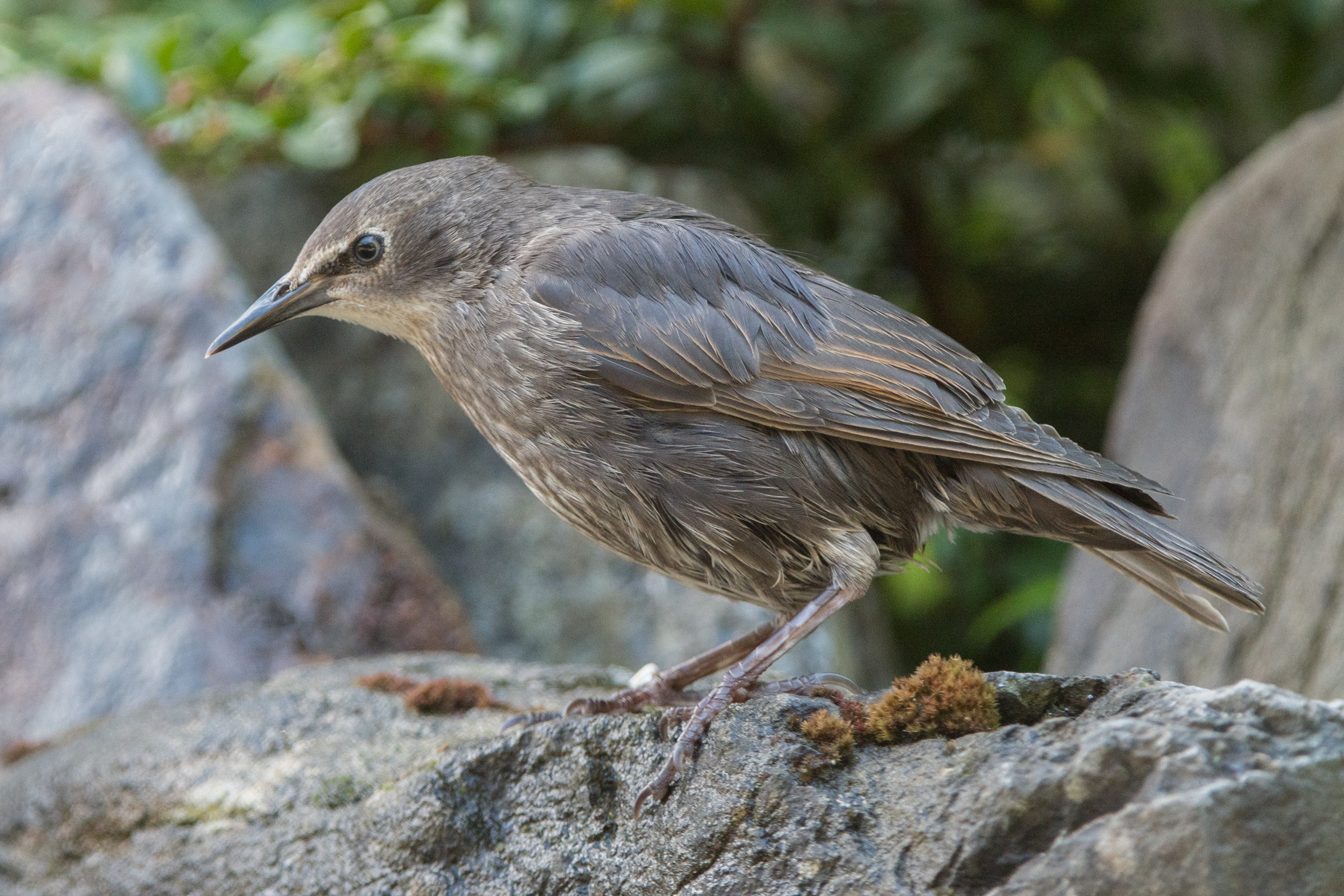
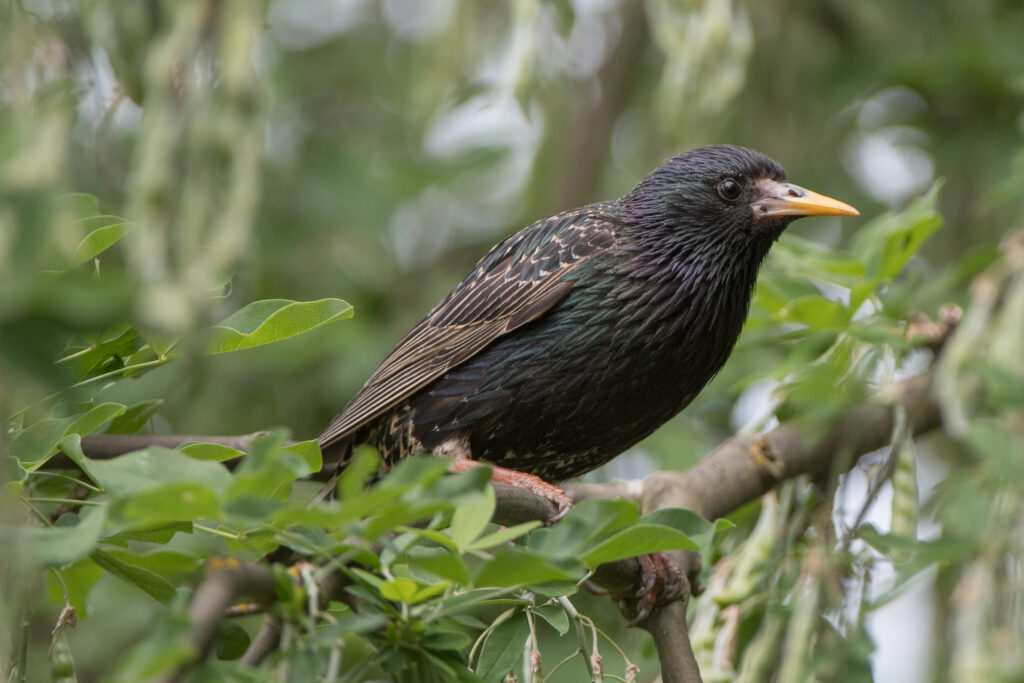
Next up, a juvenile European Starling, another introduced species. These birds are initially a dull gray color and are best distinguished by the length of their beaks.

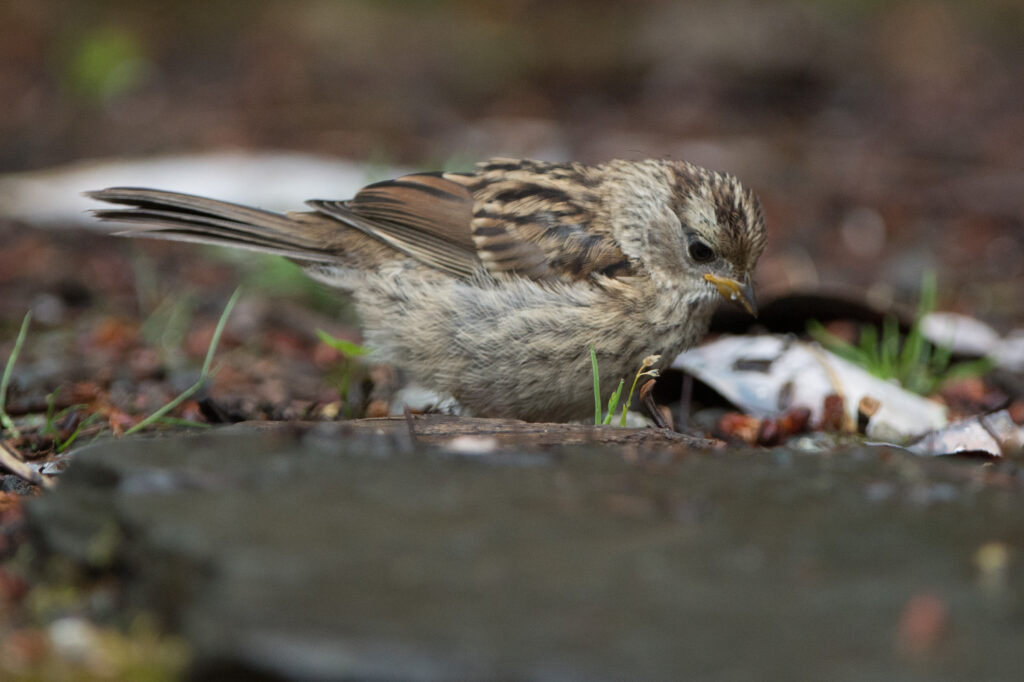
This is a White-crowned sparrow juvenile. Note the gray and brown stripes on top of the bird’s head, and the yellow at the base of the bird’s bill. The bird’s crown will eventually morph to black and white. (There is a very prolific and widespread tan (Taiga) morph that closely resembles this juvenile, but the tan morph lives in the interior of the country and I see none in this area.)

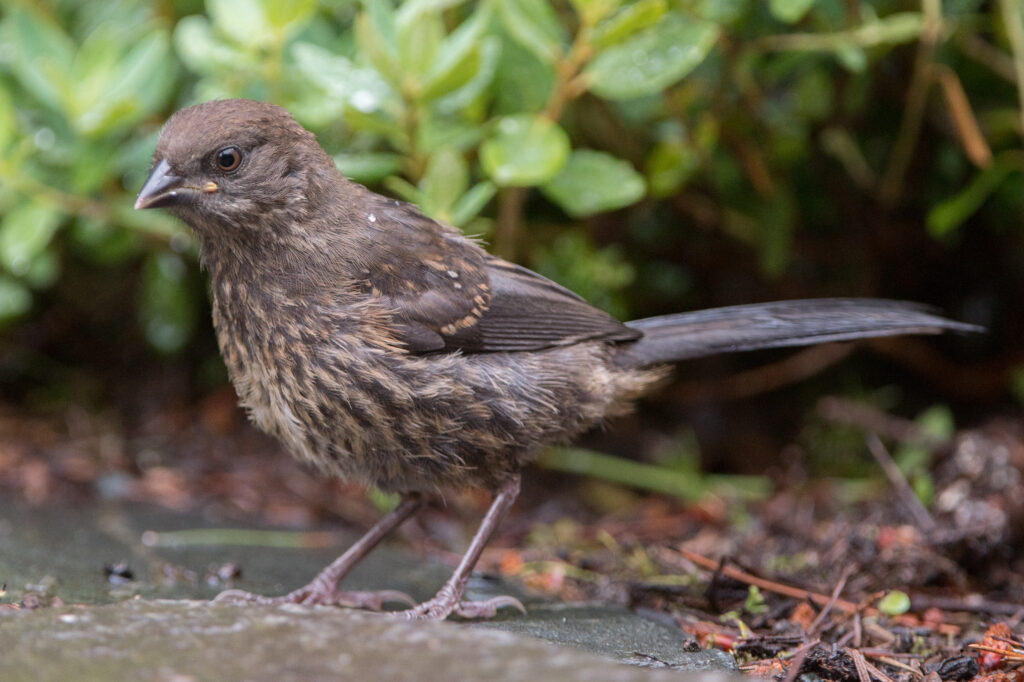
Again, note the yellow at the base of this Spotted towhee‘s bill. This juvenile has very little resemblance to the parents. The juvenile has a yellow eye which will eventually turn red. The bird’s striped breast and flanks will eventually disappear. All of the juvenile towhees I see are already independent of their parents, feeding and exploring independently.

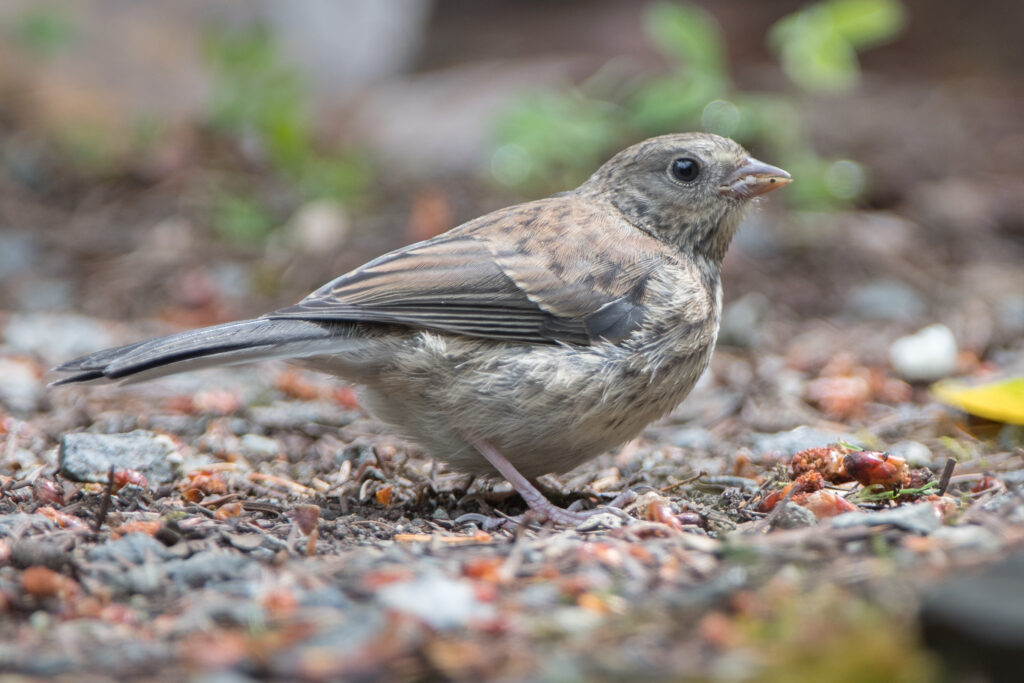
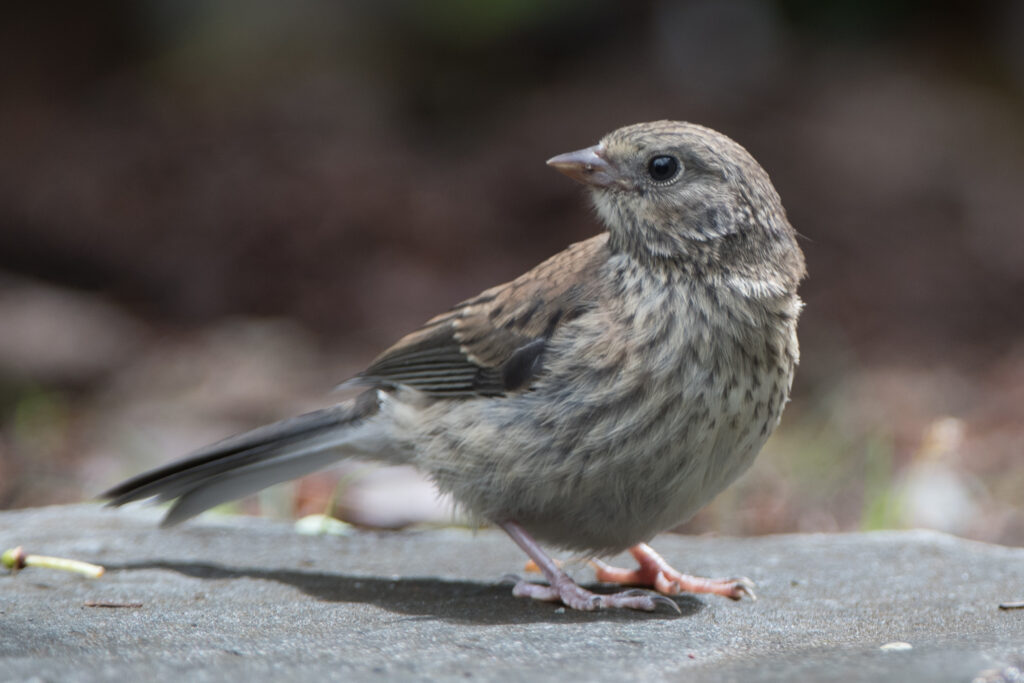
Another juvenile bird that can be difficult to identify, the Dark-eyed junco (Oregon race). These birds are ground nesters and the young are almost always independent by the time they show up in our yard. In the winter this species can constitute the most numerous species in the yard, but the adults leave in the spring to breed at higher elevations.

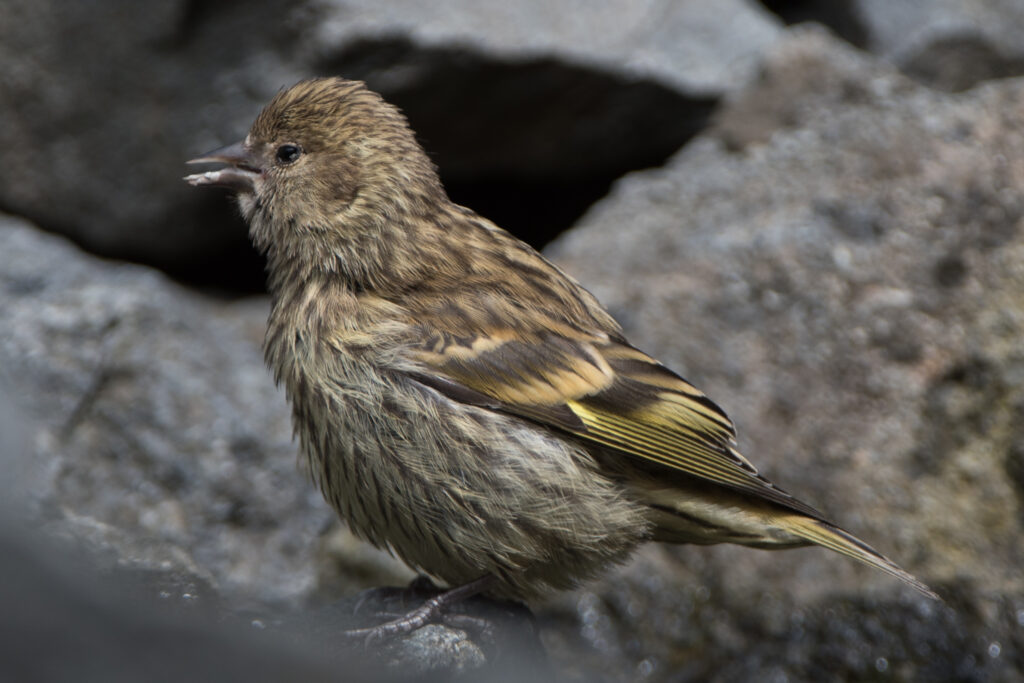
Pine siskins are more easily identified but can quite closely resemble the adults. Most, but not all, have some yellow on their backs/wings. One of this bird’s notable physical characteristics is its relatively sharp bill which it uses as a threat to defend its place at bird feeders. I usually assume that the birds with an unkempt look are juveniles… they may appear relatively ‘naive’ and approachable.

Mid-June Yard Inventory

I spent considerable time working and birding in the yard on June 14, 2020.  There were LOTS of birds in the yard but a limited number of species (23 if I haven’t forgotten any).  House sparrows accounted for the largest number of birds followed by House finches (with families of juveniles) and then American goldfinches.  I decided to provide a mid-June inventory of yard visitors but was not able to photograph each of these species. 

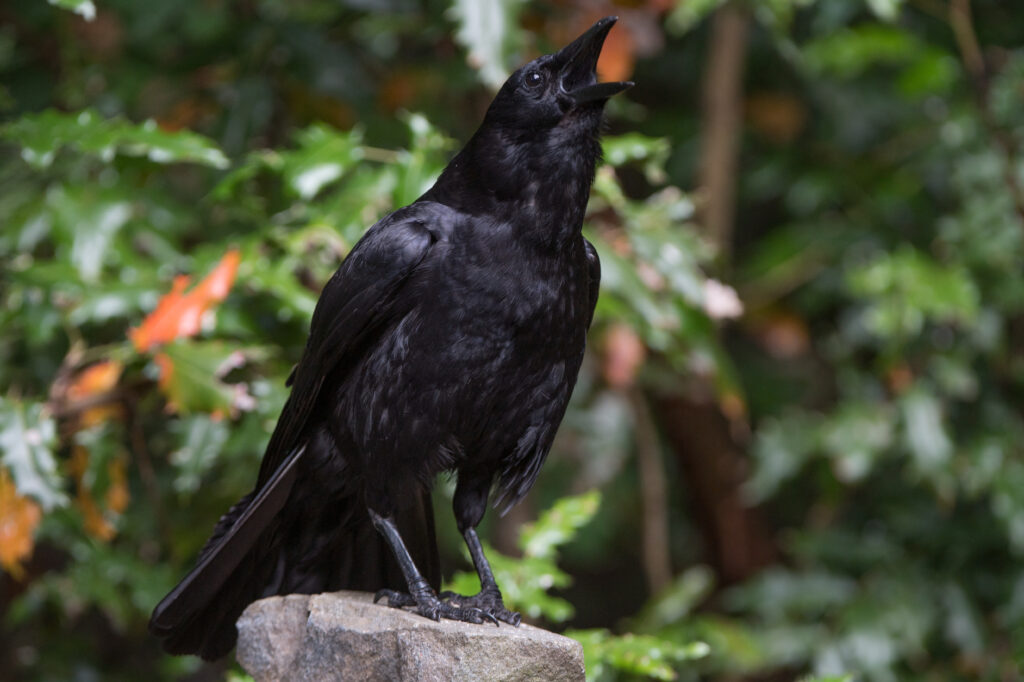
Crow 

Quail, California (2M, F, ~11j) 

Hummingbird, Rufous (M, F) 

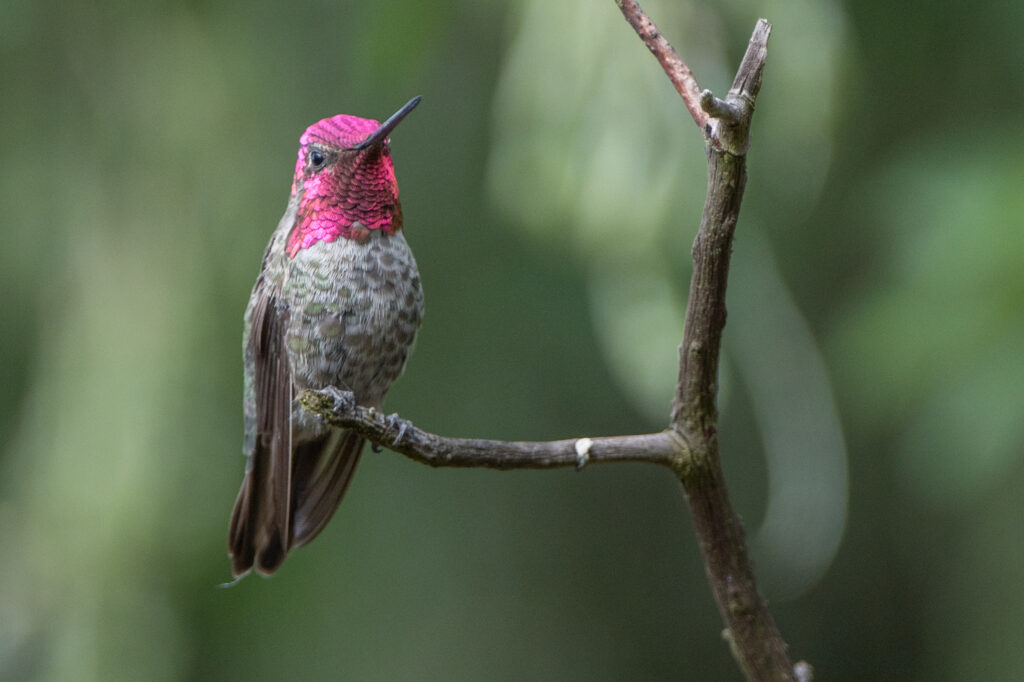
Hummingbird, Anna’s (M, F) 

Flicker, Northern (M, F) 

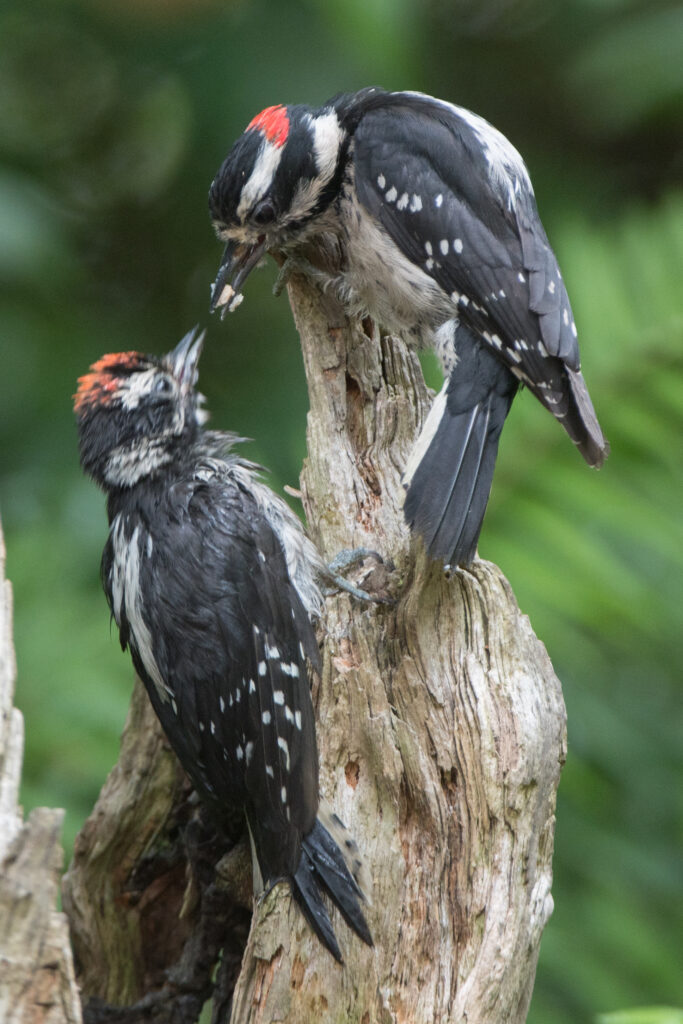
Woodpecker, Downy (M, mj) 

I obtained photos of an adult male feeding a juvenile male. 

Wren, Bewick’s 

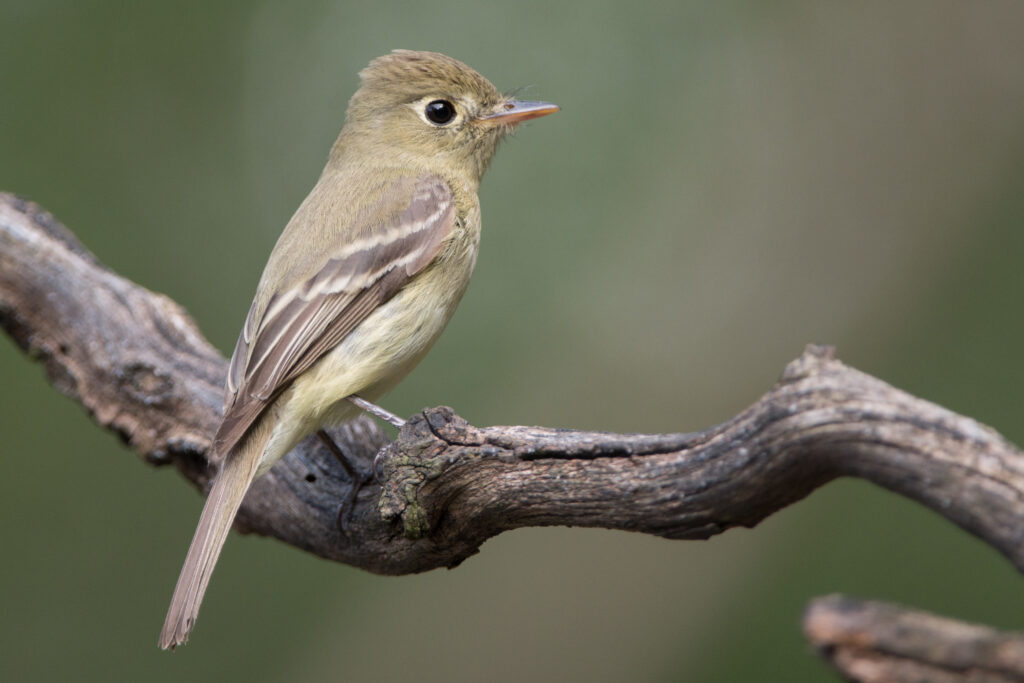
Flycatcher, Pacific Slope 

This was the bird of the day!  It’s been showing up here once about every other week for the last month or so, and considering past history, is a very rare visitor.  

Chickadee, Black-capped (A, j) 

We had chickadees breed in one of our bird houses this year and presumably fledge young.  

Chickadee, Chestnut-backed 

I had a chickadee land on my hat while I was sitting in the yard photographing birds,  I was unable to identify the species since it was on top of my head!  

Creeper, Brown 

Nuthatch, Red-breasted 

We had a family of four juveniles fledge somewhere in the area and some are apparently still frequenting the yard.  

Robin, American 

Finch, House (2M, F, j) 

Sparrow, House (M, F, j) 

Sparrow, White-crowned 

Towhee, Spotted (M, F, 2j) 

Junco, Dark-eyed (A, 2j) 

Siskin, Pine (A, j) 

Grosbeak, Black-headed (M, F) 

Goldfinch, American (M, F) 

Starling, European (A, j) 

Dove, Eurasian Collared 

Sadly, we haven’t had a single warbler visit the yard in about three weeks!

M = adult male 

F = adult female 

A = adult of on determinant sex  

j = juvenile of indeterminate sex