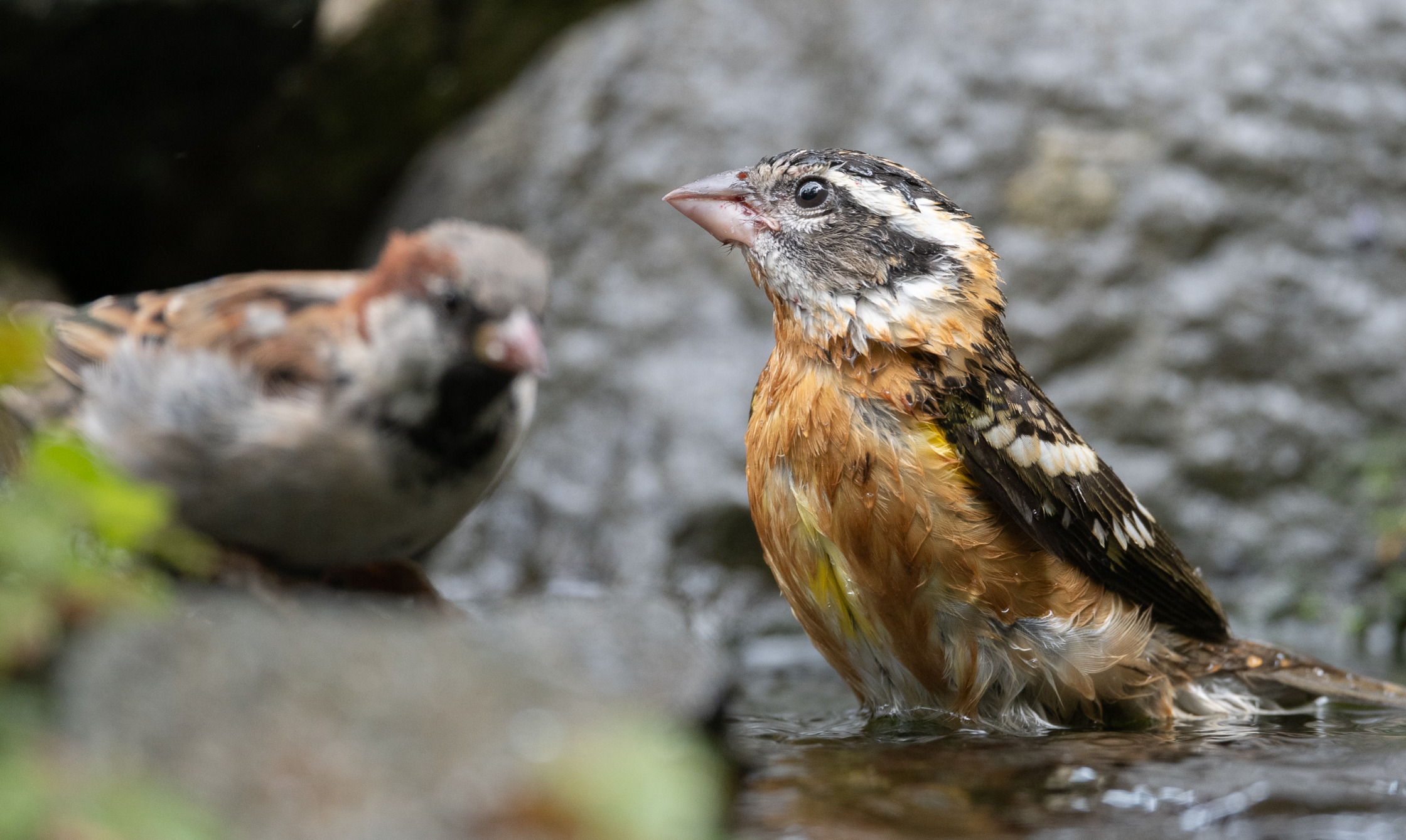
On August 22, 2026. we began the day at 57 degrees (!) with a nice overcast. It promised to be a good birding day and I was hopeful the overcast might bring some migrants. What it brought initially was an overwhelming abundance of House sparrows… I estimate at least 25. By their sheer numbers they commandeered all of the feeders and bird baths, driving most of the other birds out of the yard.
A Black-headed grosbeak eventually entered the yard and competed with the sparrow hoards for space at my stone bird bath, at the far edge of what I consider an acceptable distance for birding photography. Later, the grosbeak (or another) entered the yard and accessed the watercourse, again among sparrows but giving me a better opportunity for photos.
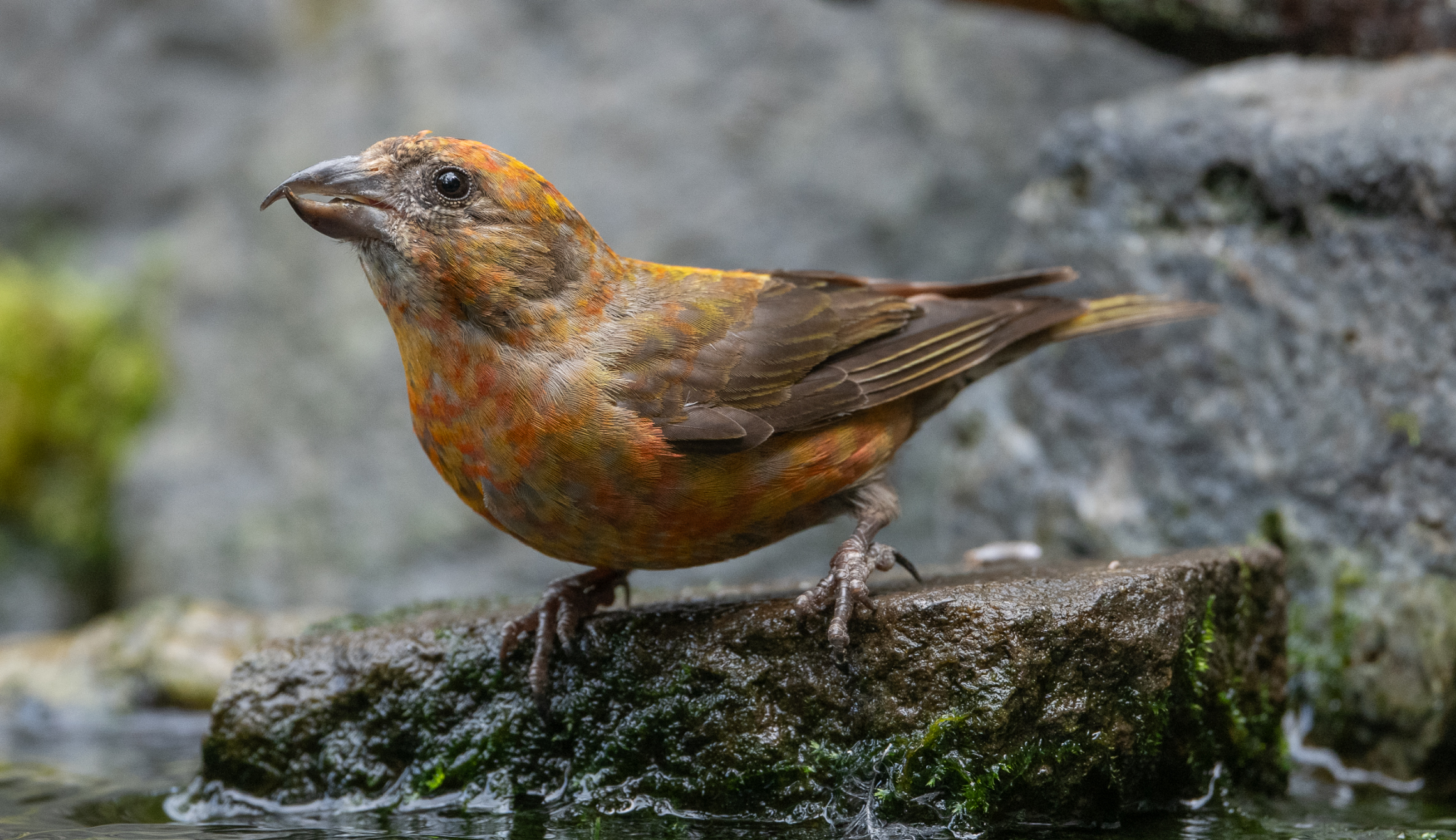
Next, a male Red crossbill visited the watercourse (among sparrows) and provided excellent opportunities for photographs.
Twenty-five minutes later, among more sparrow incursions, a male and female or juvenile Red crossbill appeared at the stone bird bath but they left after I got only a few photos of the male. The female’s back was to me and I never got an opportunity for photographs of her.
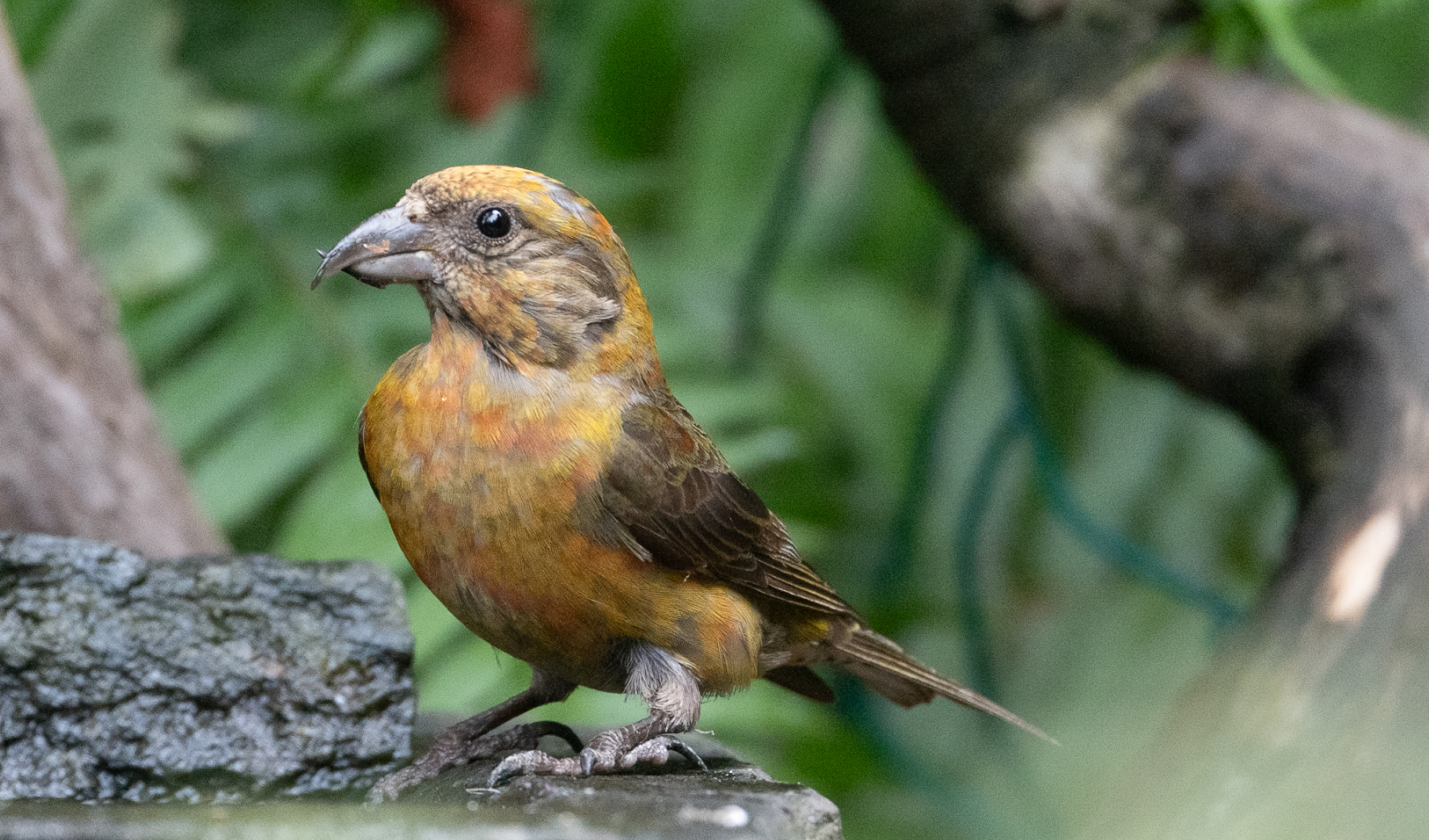
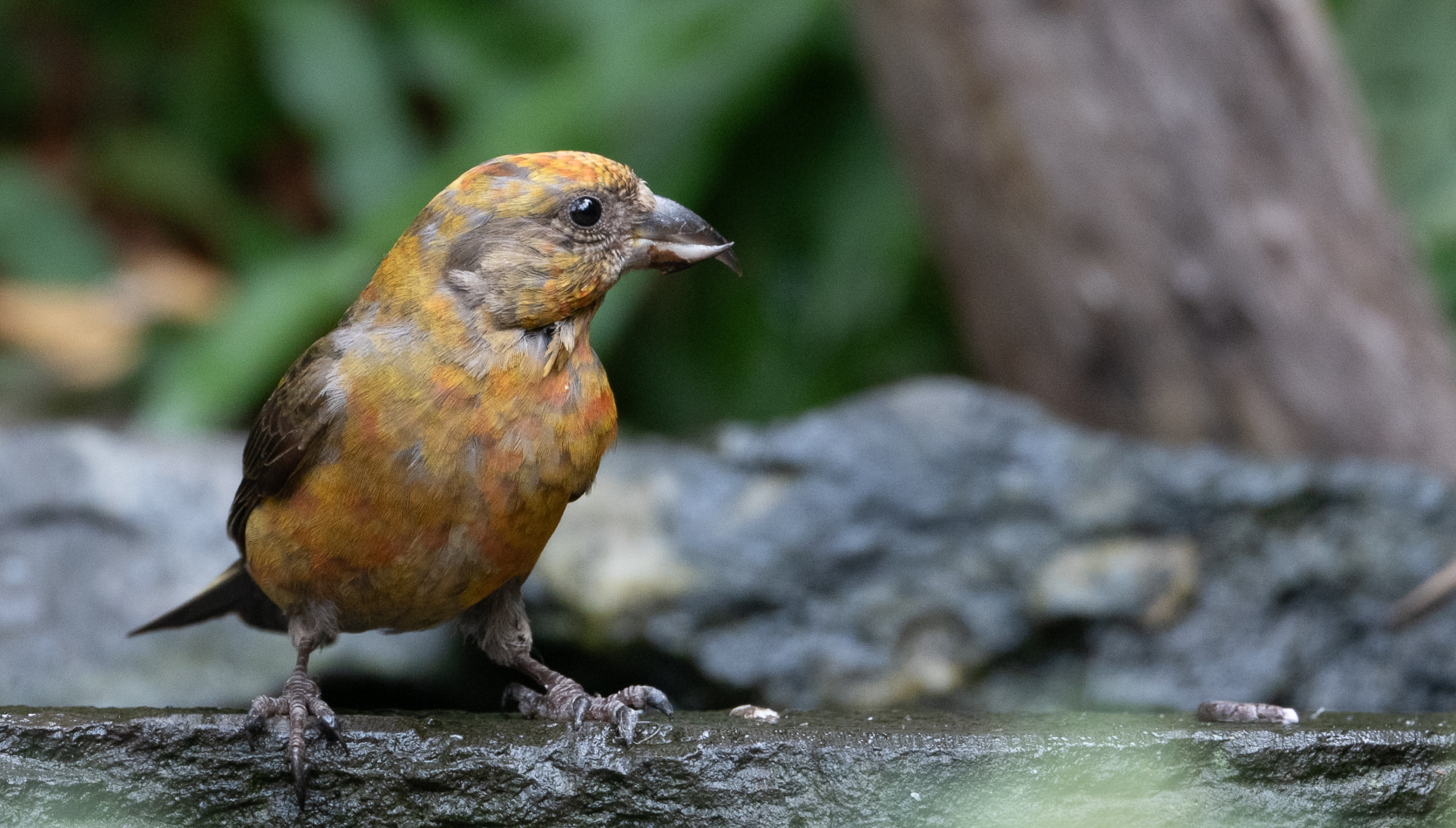
When I have multiple sightings of relatively rare birds I’m always wondering if I’ve seen the same bird more than once or if I’ve seen different birds. Despite getting good photos of the birds I usually have no way of telling them apart. Today with the crossbills it was different. Crossbills can have their beaks oriented either of two ways. The upper bill can cross over the lower bill to the right or to the left which, in itself, seems like an amazing feature of evolution. In examining my photos of the two male crossbills you can see that I photographed two different birds because of how their beaks crossed!
These are photos of the crossbill at the watercourse, and you can see that the upper bill crosses to the right over the lower bill.
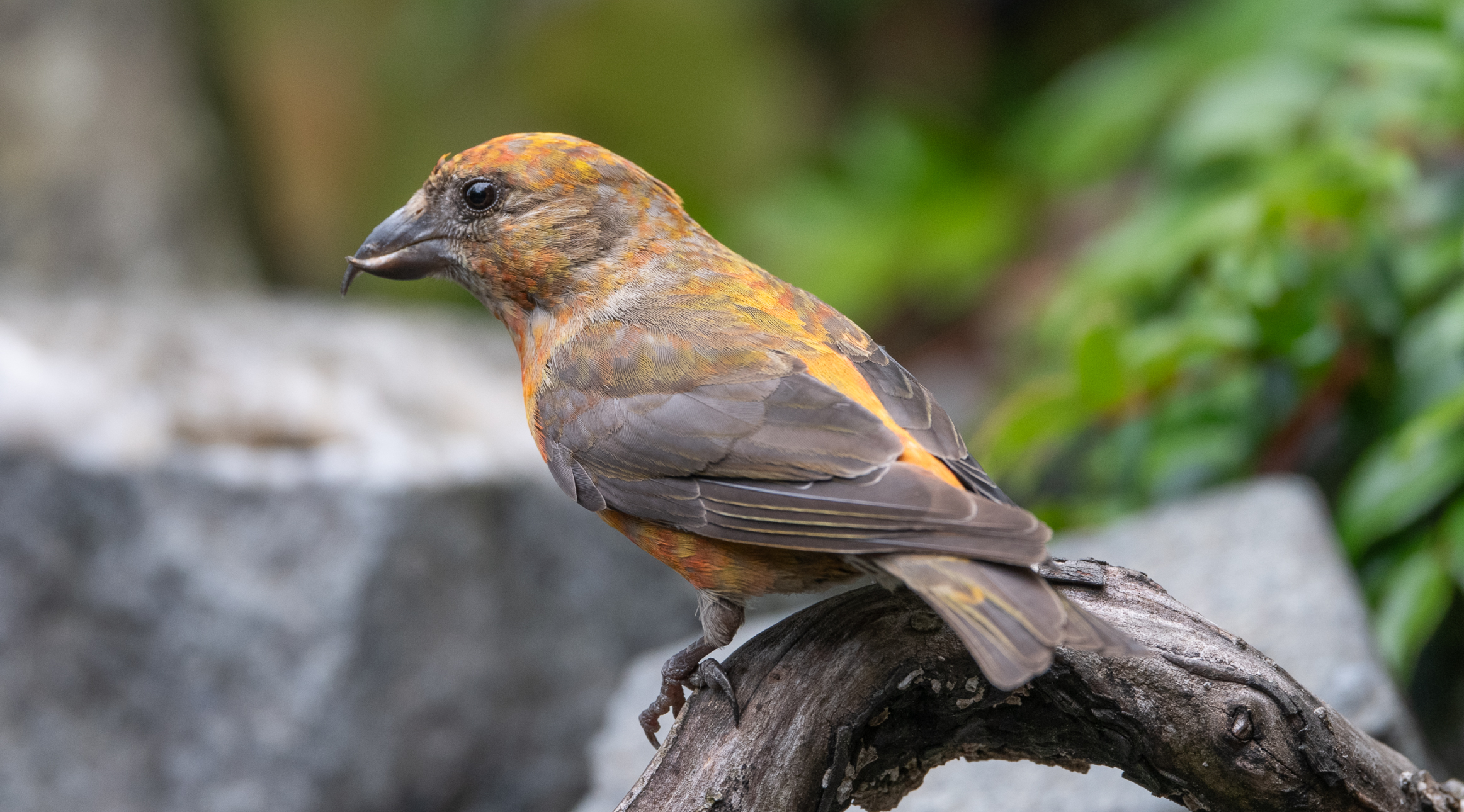
These are photos of the crossbill at the stone bird bath, and it’s upper bill clearly crosses to the left over the lower bill.
My afternoon birding ended very suddenly at 3pm when all (and I do mean all!) the birds in the yard left very suddenly… a sure indication of an accipiter’s arrival. (See note below!) I hadn’t seen one fly in but I knew there must be one close by. After a minute or so I saw some movement behind an evergreen huckleberry bush growing about twenty feet in front of me on the other side of my watercourse. I sat very still and watched as an accipiter emerged into view beside the watercourse and only about fifteen feet away! I took picture after picture (54 in all) with the accipiter being so close I couldn’t fit the entire bird in the frame! The bird seemed oblivious to the click of my camera’s shutter/mirror at each shot. The hawk finally wandered around the far side of the watercourse/huckleberry bush. I never saw it leave the yard. The hawk’s arrival was sign that my afternoon birding was over!
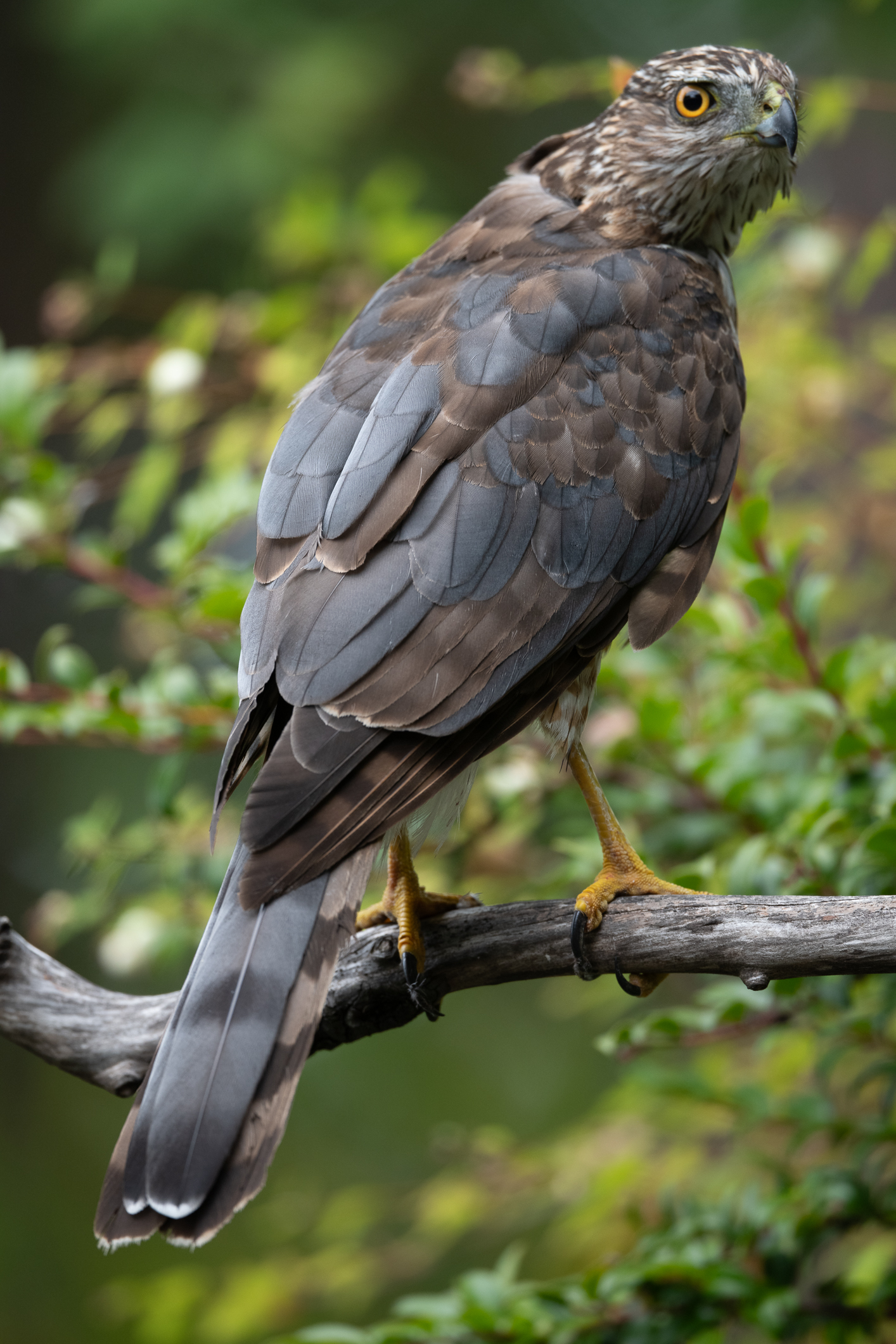
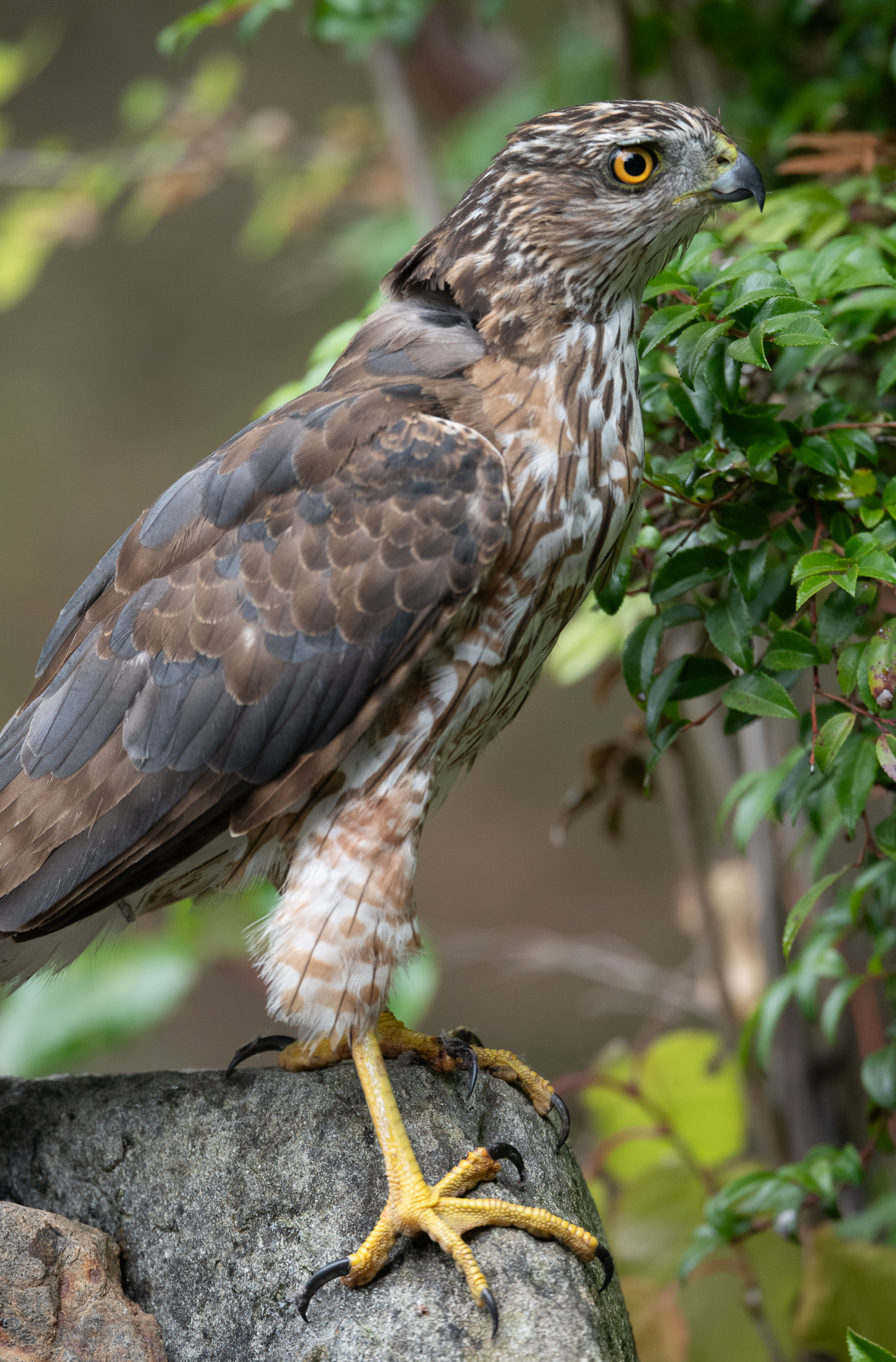
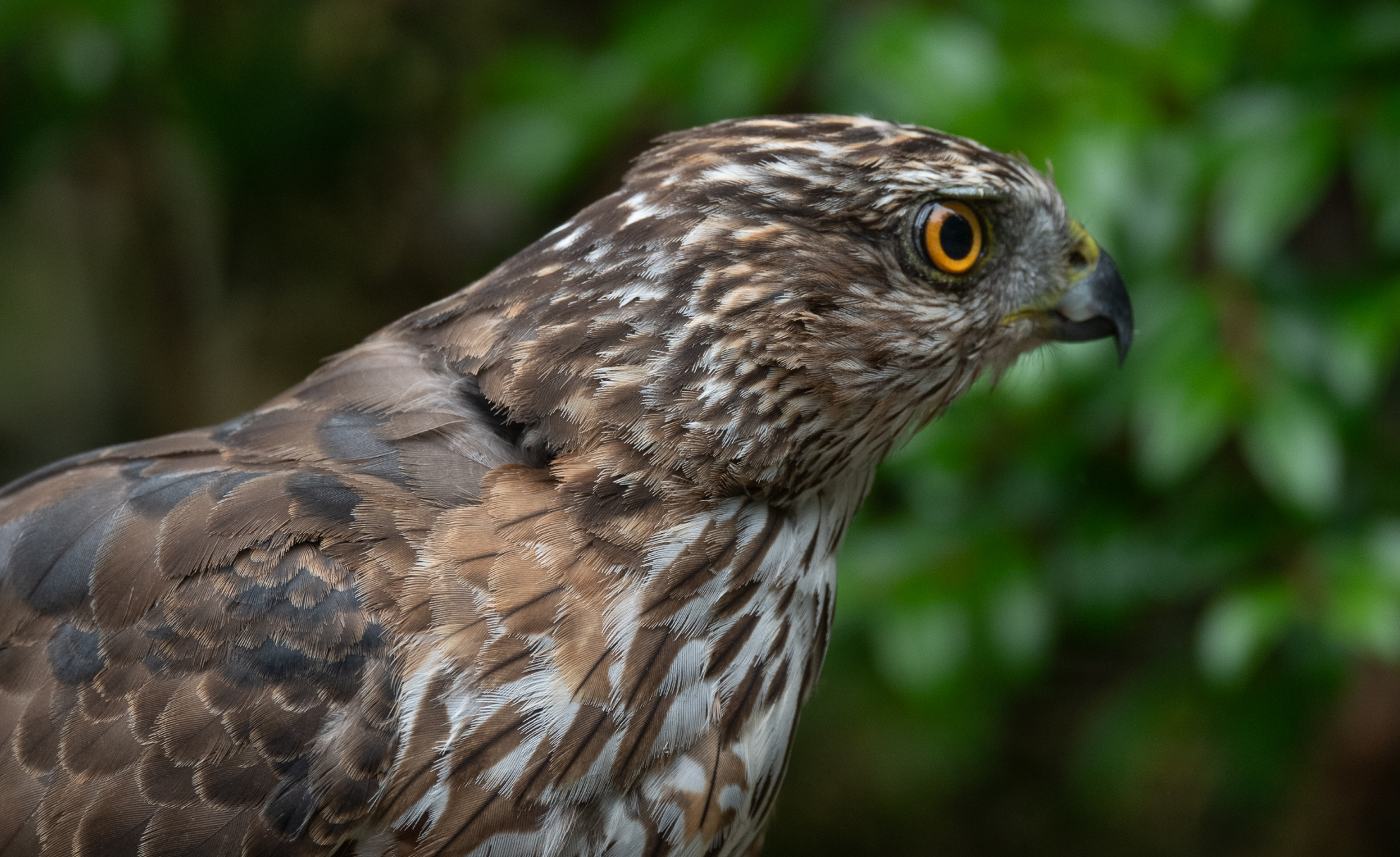
I’m never confident of my identification of accipiter species so I sent photos to a couple of people who are better birders than I. I’m told this is a Cooper’s hawk hatched in 2025 and molting into adult plumage.
NOTE: I’m in way over my head on this, but I’m told that the Cooper’s Hawk was recently reclassified from the genus Accipiter to the genus Astur, a reclassification that apparently also applied to the American goshawk. Sharp-shinned hawks remain Accipiters. Those reclassifications were a sad day for my birding identification skills!