Birds of Central TEXAS

As those of you who frequent my blog know, I’ve been somewhat remiss for the past couple of weeks about postings.  In early May I traveled to Texas to spend some time with my sister and her family and photograph some of the birds that migrated through her “migrant trap”.  (A migrant trip is a location with very desirable habitat that attracts birds on their migration by offering food and water.)  So what you will see and hear about in the next few posts concern some of the birds of Central Texas (greater Austin area), some migrants and some summer residents.

suffered my share of woes earlier this month.  Unfortunately I found after a couple of days of photography in Texas that the ‘quality’ setting on my camera had somehow been changed so that I was recording photos in high-end JPG instead of RAW, so I have a lot of great shots of birds but some are at a somewhat lower quality.  And upon returning home I found that my internet service had been interrupted and it has taken me several calls over several days to get my service restored.  And if that weren’t enough, I picked up a cold as soon as I returned home.  But let’s get to a more positive assessment of things.

Here’s MY assessment of what I experienced but it’s not necessarily shared by my sister, who is after all, the Central Texas resident.  I normally consider the height of the Central Texas migration to be sometime in late April and that is when I have targeted my visits in the past, but circumstances this year dictated that I visit beginning in early May.  My sister and her family have set their species count for Cinco de Mayo (May 5), a date easy to remember and even easier to celebrate!  Last year I visited in late April and had subsequent phone reports listing all the birds which had shown up in early May… after I left.  For this same period last year (2014) the number of SPECIES seen on their count was about the same, but the NUMBER OF BIRDS seemed down from what I had observed earlier in past years.  And many of the species seemed to have shifted… in the earlier period in past years the area was overrun with Nashville warblers (I have scores of photos of them) but this year, in the later period we saw only a single bird.  However this year the warbler du jour was definitely the Black-throated Green warbler, with a surprising number of American redstarts thrown in.

For the record, I took 1037 photographs and after processing I retained 618.  This pretty much tracks my habits of retaining about 60% of the photos I take.  If I were selling my photographs I would probably retain a lot fewer, but I don’t sell my work and I am burdened by being a birder, so in my mind photos of birds on different perches and with different orientations each tell a story and have something different to offer.  But enough of the discourse… on to the photos!

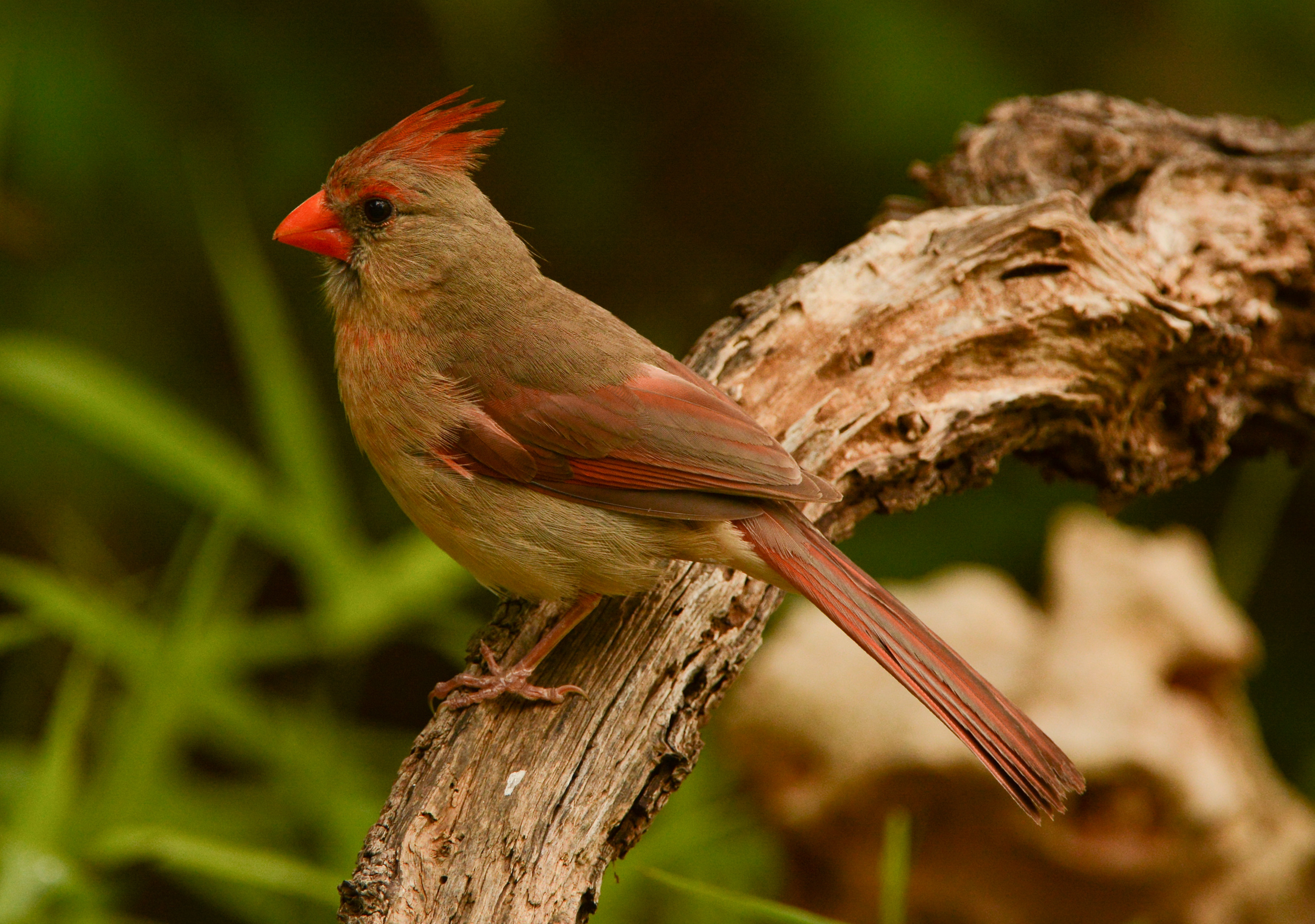
One of the predominant birds in the Central Texas landscape is the Northern cardinal, a year-round resident.  Here we have the male and female of the species:
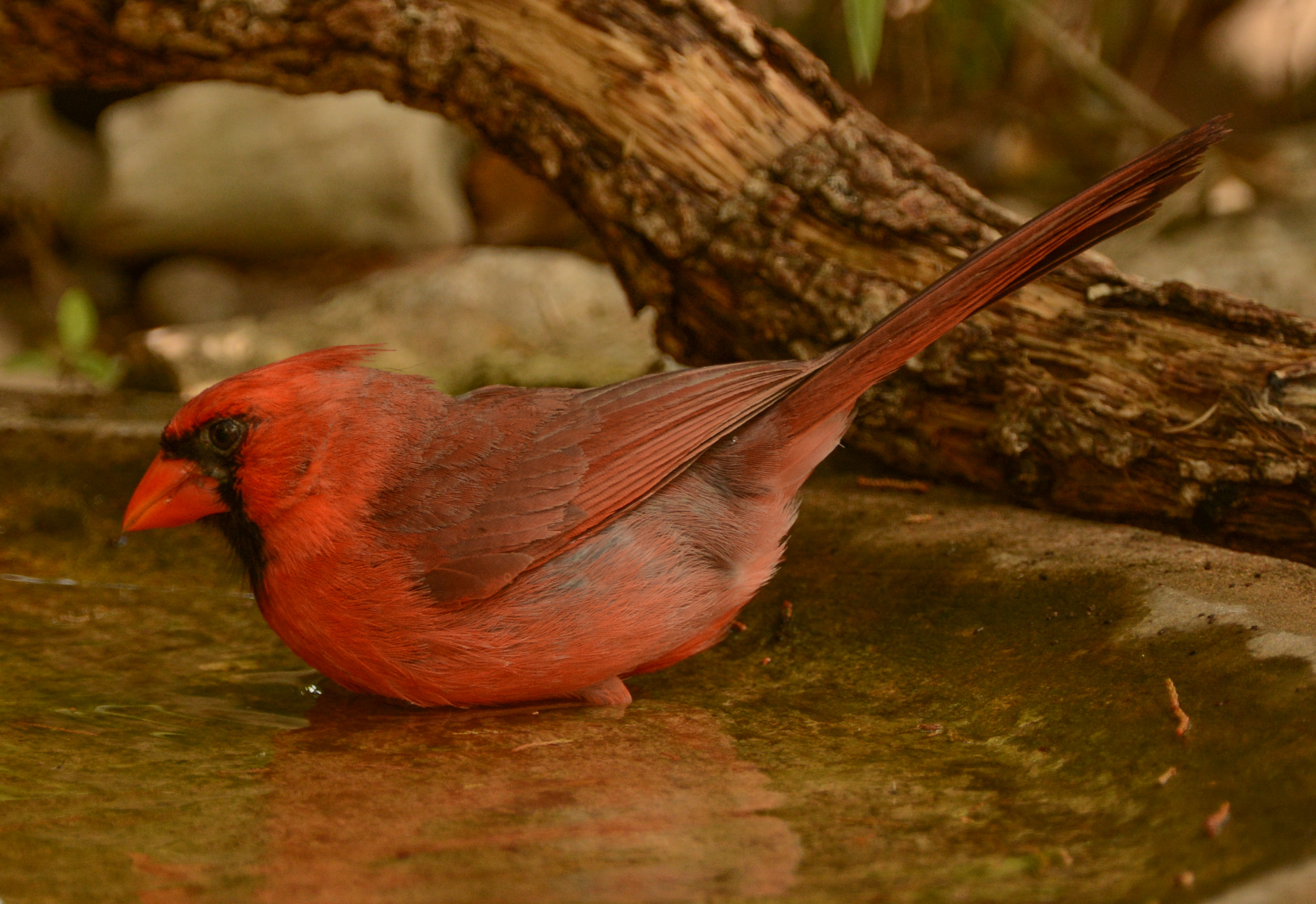
Cardinal, Northern 20150504-06Cardinal, Northern 20150504-08

Next up, a bird that migrates to Central Texas and breeds there… the Painted bunting.  The colorful male is in the top photo and the more subdued female in the lower photo.  The buntings are abundant in my sister’s habitat.
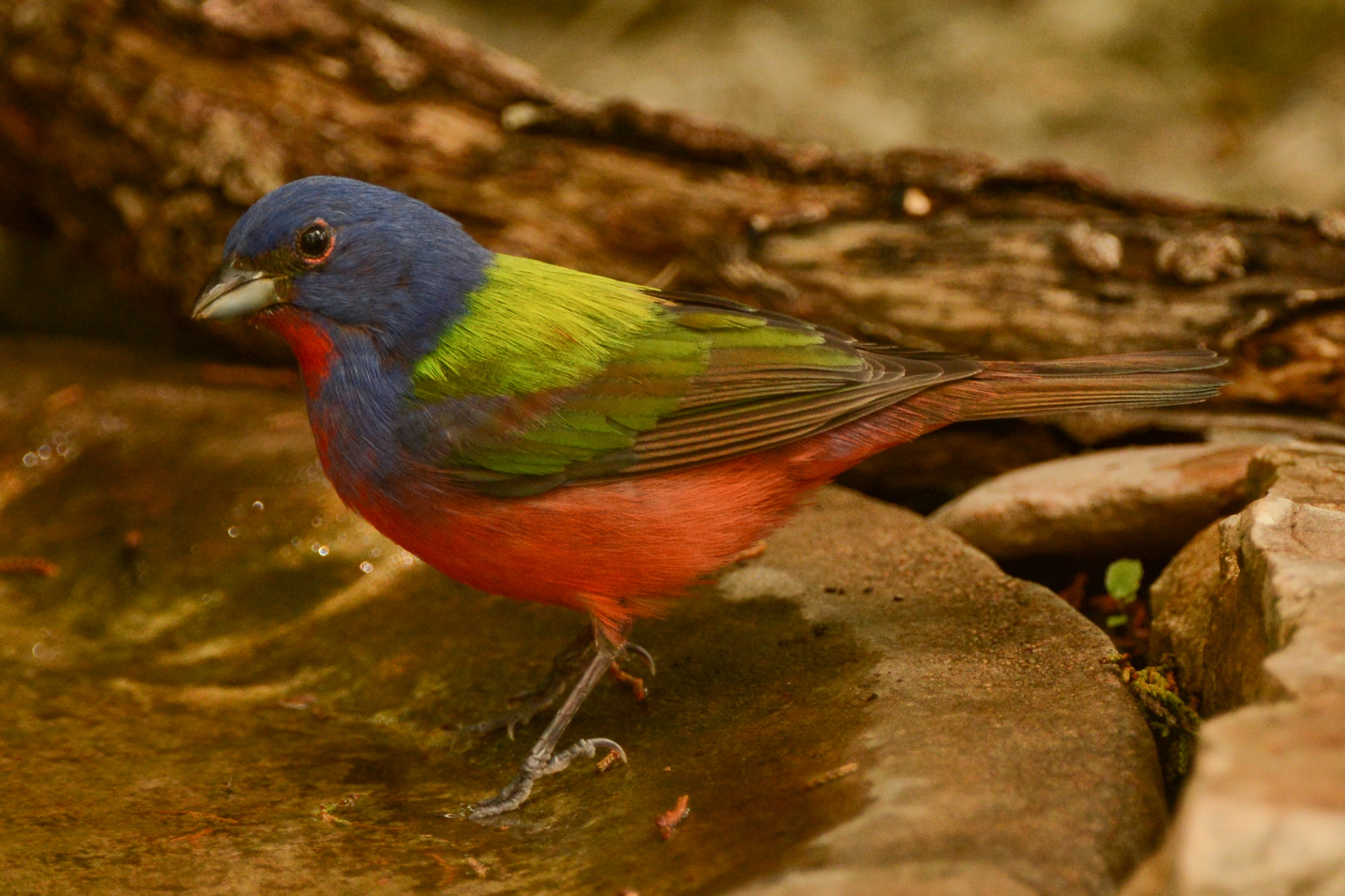
Bunting, Painted 20150504-01Bunting, Painted 20150504-26


This next photo is of a first-year male Summer tanager.  It’s in the process of acquiring its red plumage which eventually will make it a bird that’s very hard to miss.  You’ll see a photo of a male in full breeding plumage in a future post.
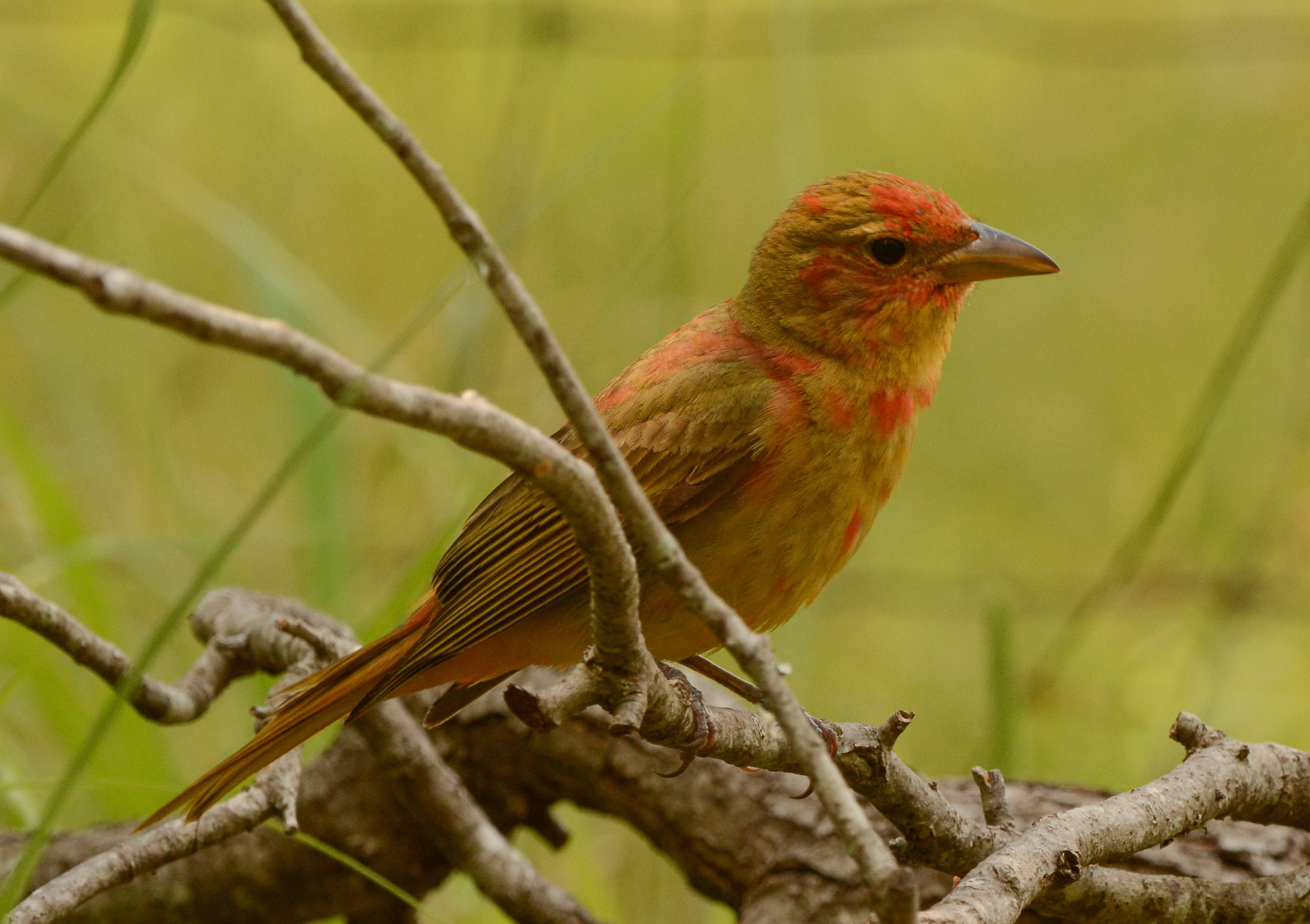
Tanager, Summer 20150504-12


This is a male Wilson’s warbler, the warbler species that I consider the most frequent visitor to our yard in the Pacific Northwest.  It’s not beyond reason that this very bird could show up in our watercourse this spring/summer!
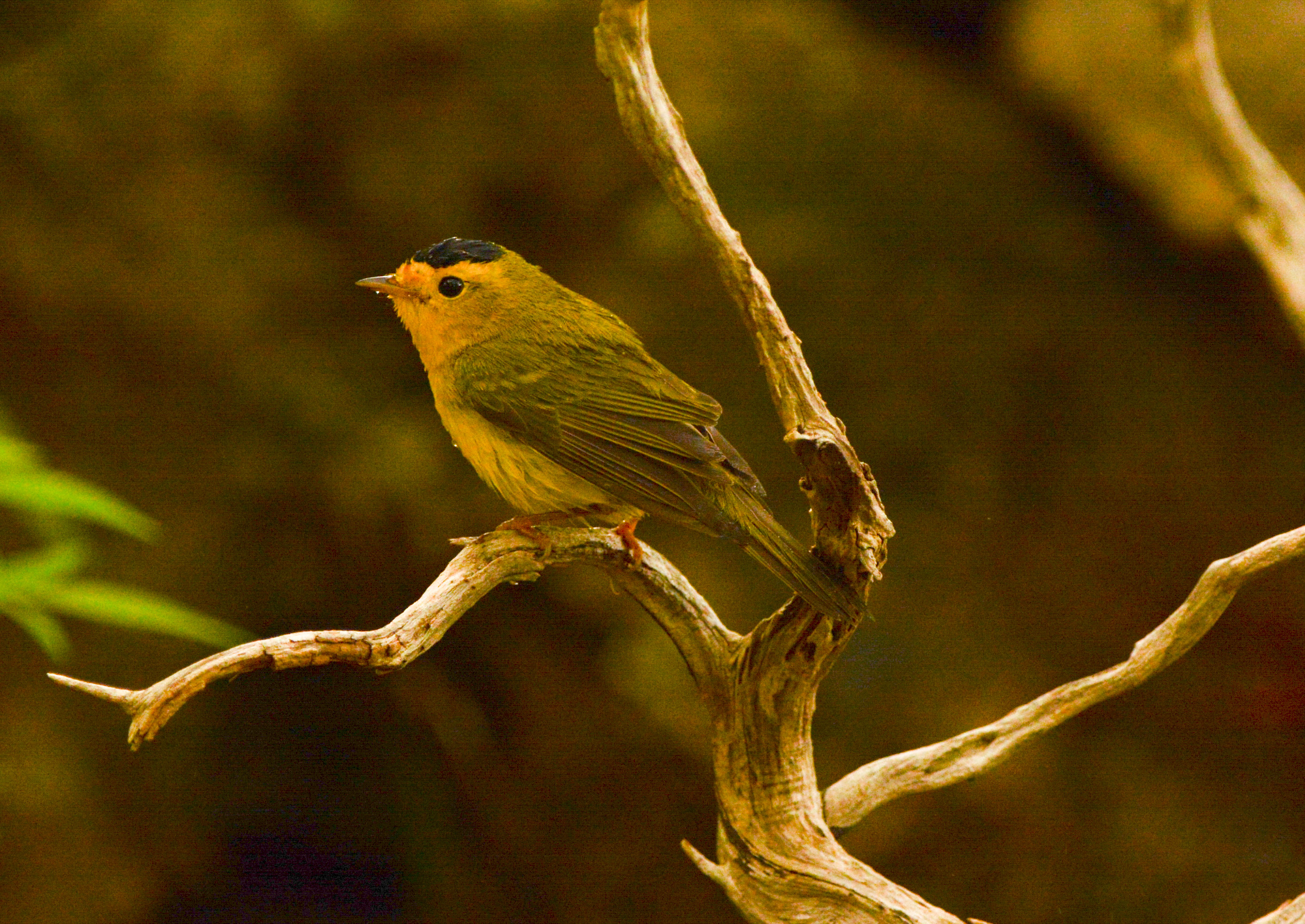
Warbler, Wilson's 20150504-02

This is a photo of the male Golden-cheeked warbler, an endangered species found only in the Central Texas area.  The bird is threatened by parasitizing of nests by Brown-headed cowbirds and by habitat loss relating to nesting materials.  The bird will only build its nests using juniper bark and the bark can only be stripped from mature junipers.  In addition many developers are motivated to clear junipers from their land to ensure that the presence of endangered birds will not threaten development.
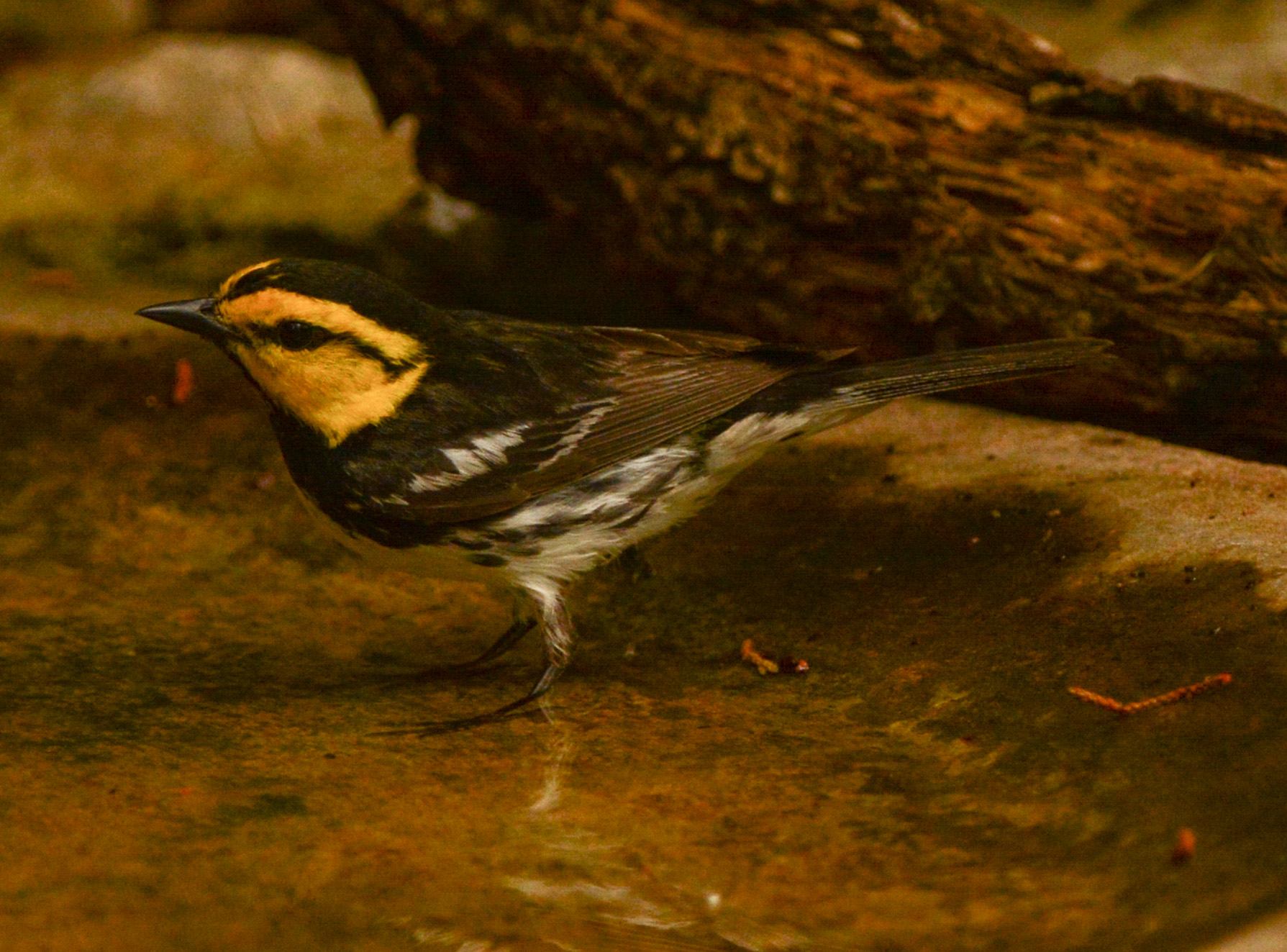
Warbler, Golden-cheeked 20150504-07

I’m jumping ahead a couple of days to borrow this photo of a male Black-throated Green warbler, which from rapid or casual observation can be confused with the Golden-cheeked warbler.
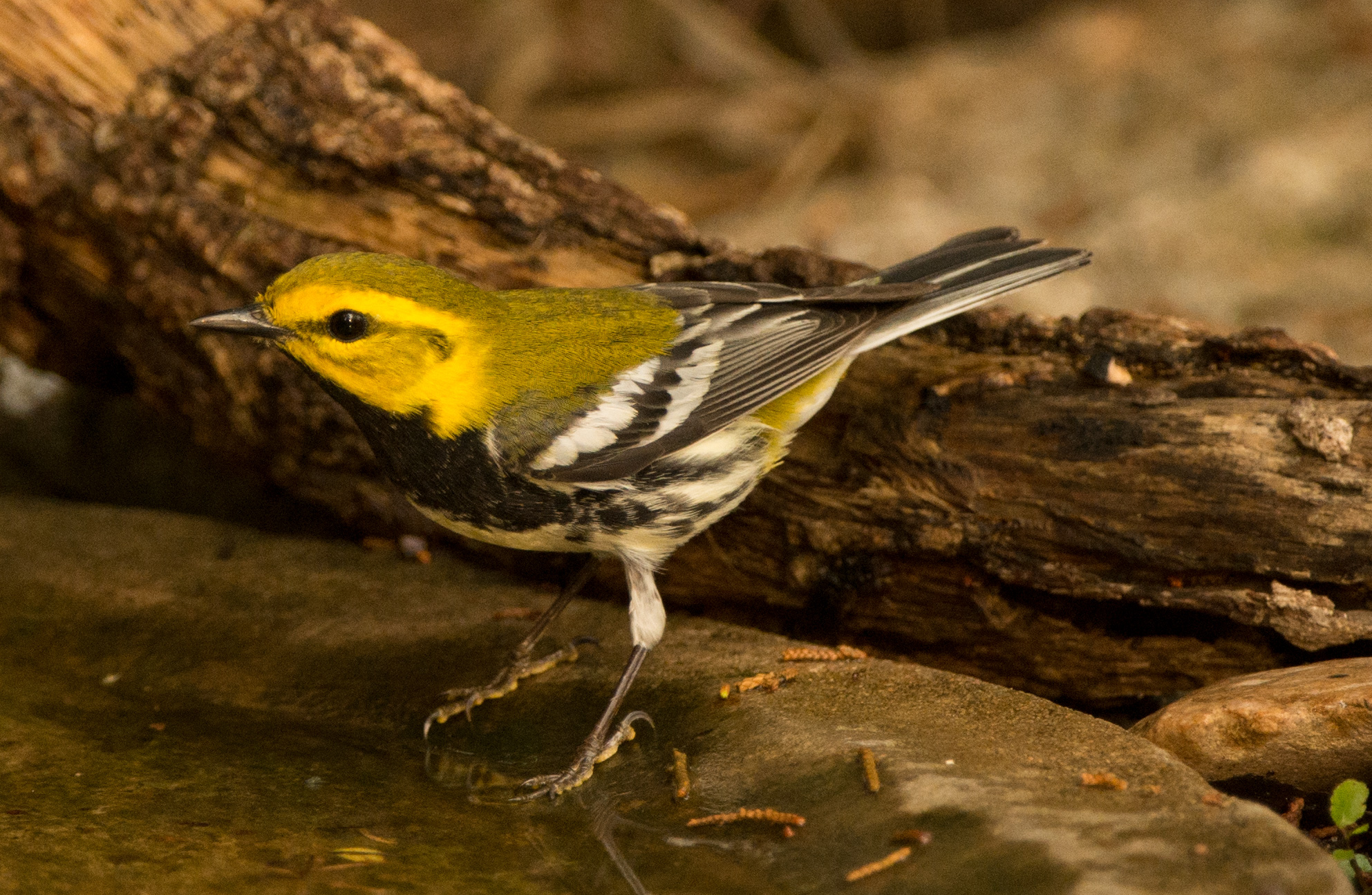
Warbler, Black-throated Green 20150506-07
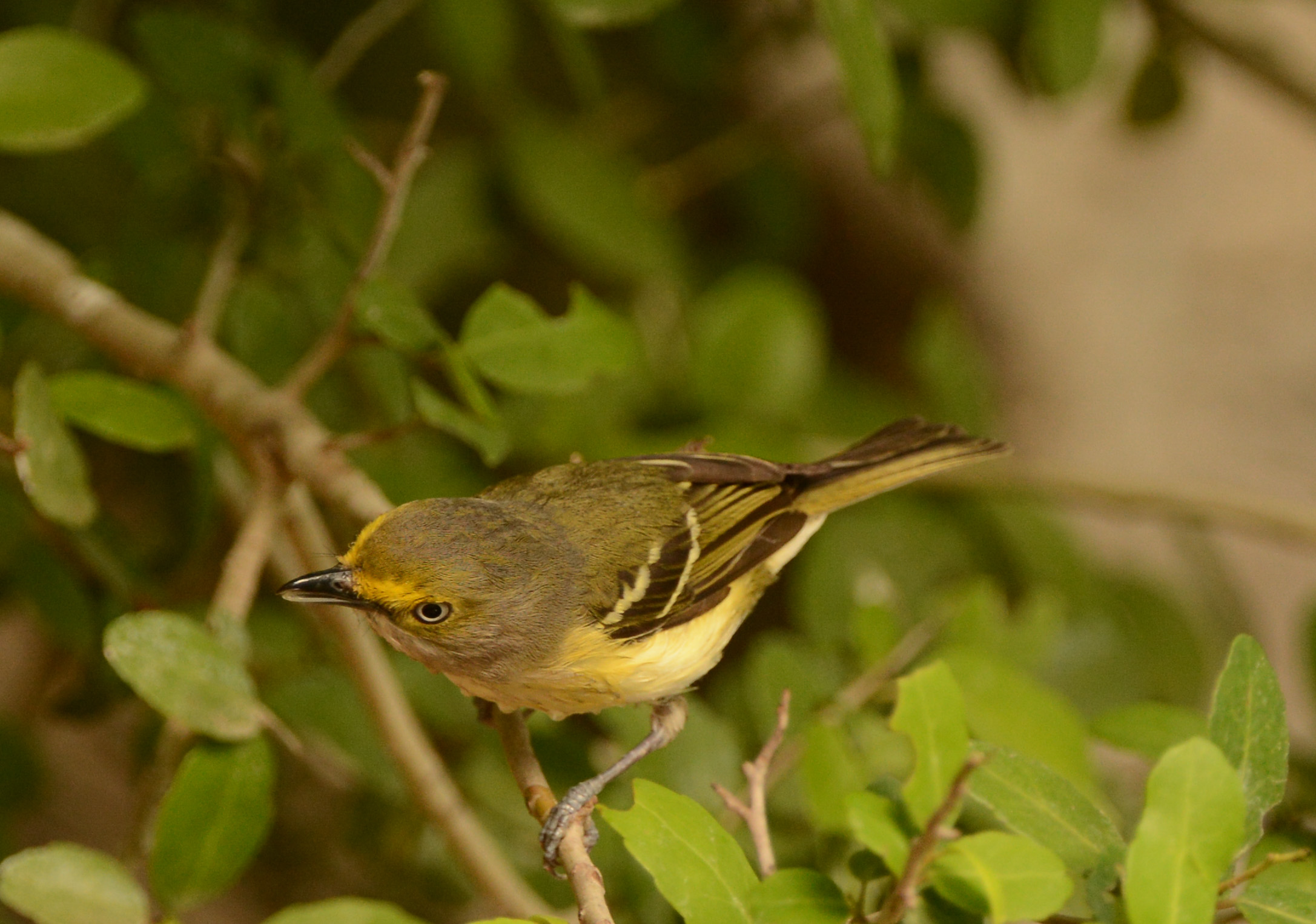
One of my personal favorites from spring in Central Texas is this White-eyed vireo which always seems to display an expression.  It bathes by flitting into and out of the water from a low perch.  These birds were in rather short supply this year.  In past years I have been frustrated at not obtaining a photo of the bird in flight, hitting the water.
Vireo, White-eyed 20150504-05

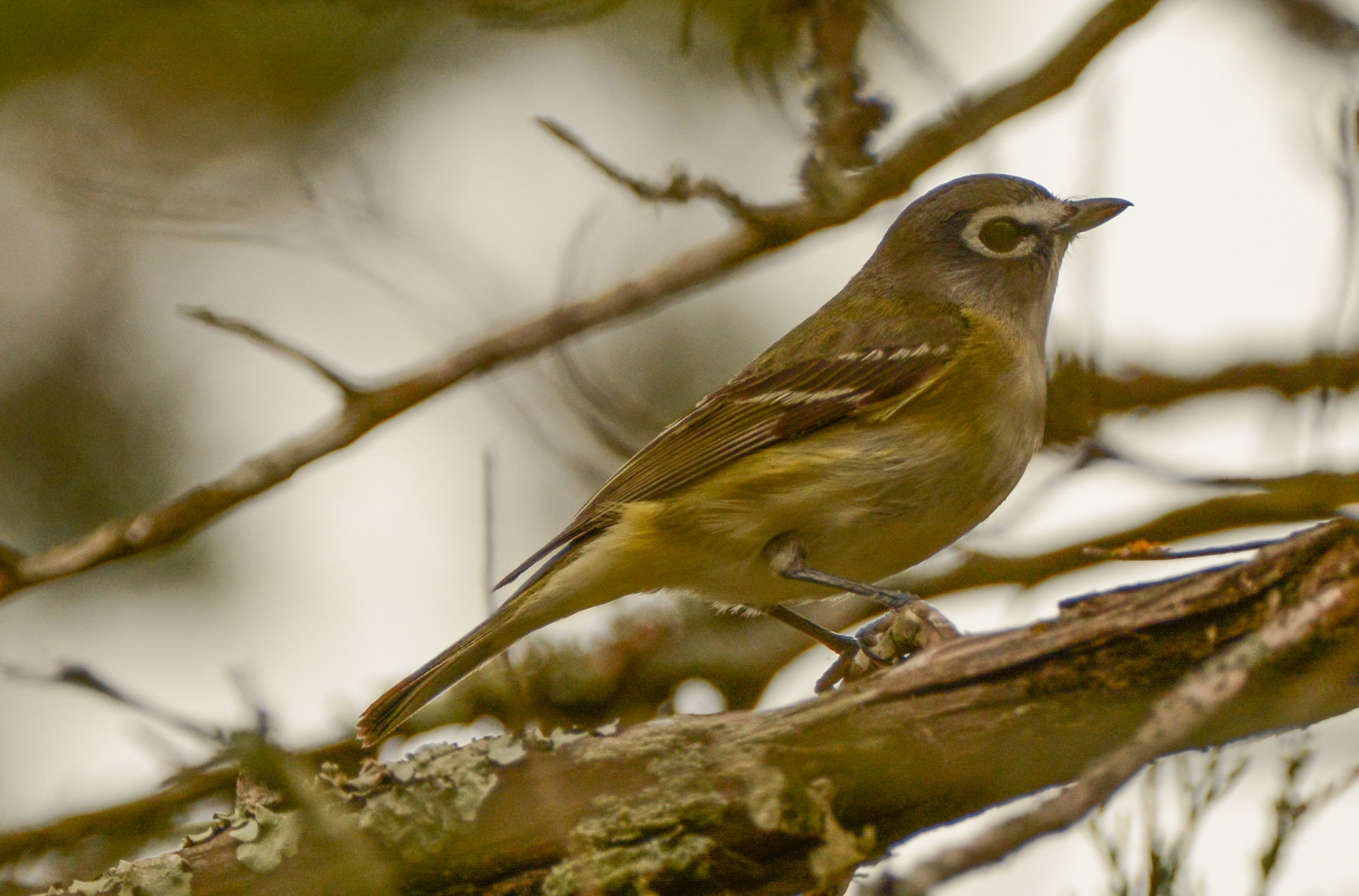
And finally for this post, a bird I’m not sure I’ve ever seen before and certainly have not photographed, a Blue-headed vireo.  This bird closely resembles another endangered Central Texas bird, the Black-capped vireo.
Vireo, 20150504-09

All of these birds, with the exception of the Black-throated Green (as noted), were photographed on May 4.  I retained 115 photos from the day’s observations!
A New Axiom

I’ve developed a new axiom regarding my bird photography…

It doesn’t often happen but from time to time an interesting bird won’t spend enough time in or near one of the water features for me to photograph it.  As you can imagine, this can be quite frustrating, especially if the bird is a rather rare visitor to my yard OR one which is difficult to photograph.

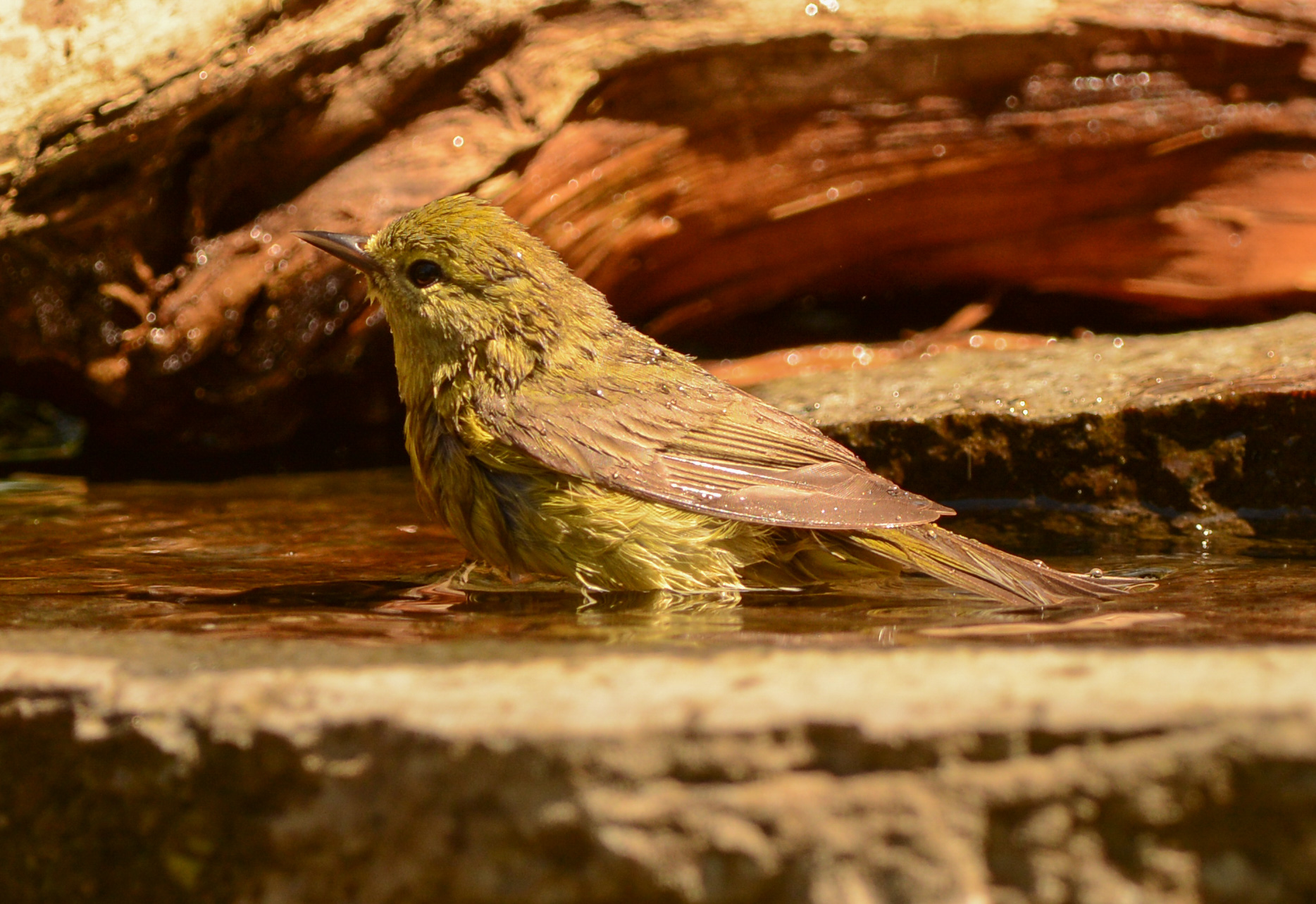
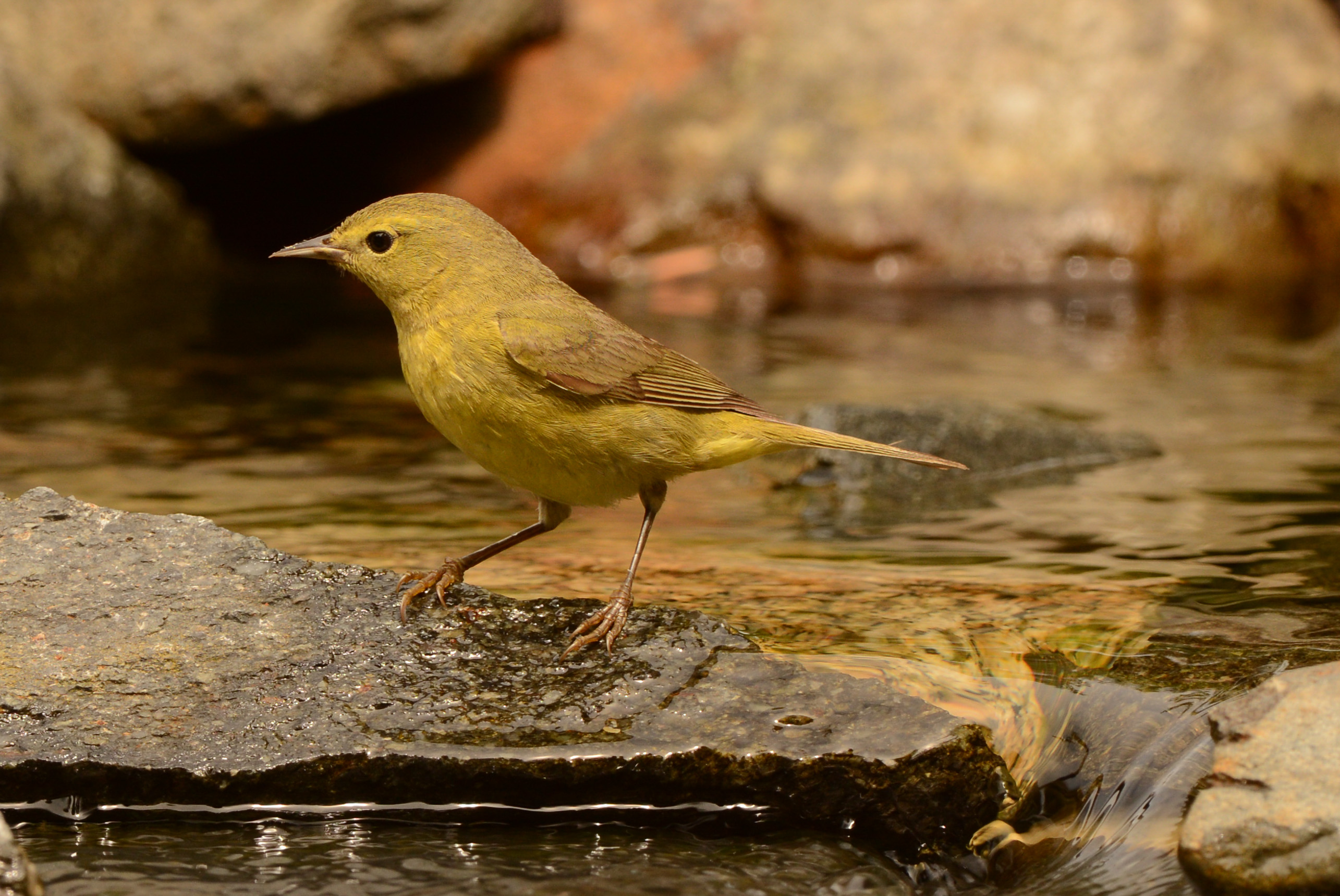
On April 30, 2015, I had at least three observed visits from one or more Orange-crowned warblers.  A few weeks previously I was ecstatic over the warbler’s visits, but they now occur often enough that I have pretty much developed a “ho-hum” attitude.  Even though I probably have over a hundred decent photos of this warbler, I still haven’t lost interest in photographing the species… or almost any other species, for that matter.

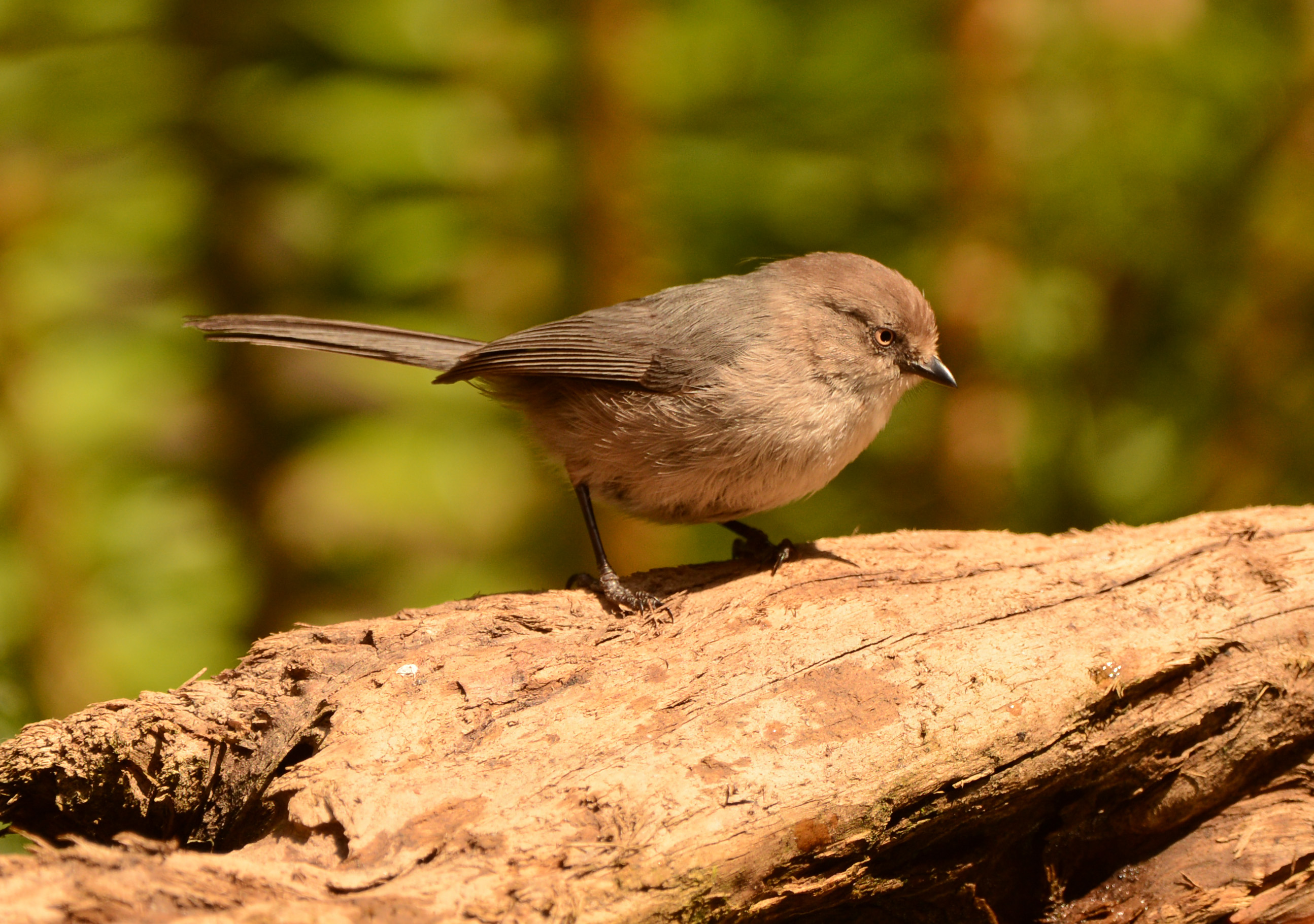
So as I sat in the yard observing the bird traffic on this particular day I had yet another Orange-crowned warbler visit one of my (static) water features.  I set to work documenting its visit.  As I took photograph after photograph of the bird I was suddenly startled to see, in the viewfinder of my camera, a different bird wanting to get into the small bird bath.  It was a female (as told by the yellow eye) Bushtit, a not uncommon bird but a rare visitor to the yard and a bird difficult to photograph due to its constant, frenetic feeding activity.  I immediately switched my attention to the Bushtit and took several photos of it as it impatiently waited for an opportunity to use the bird bath.

As I watched and photographed I developed my axiom, which I realized I recognized for several years…

When two different species of birds, who don’t share the same ecological niche, gather at the same bird bath at the same time… the photographer wins!

While both of the aforementioned birds might be found in generally the same habitat, the warbler makes its living working through the canopy looking for insects.  The Bushtit, on the other hand, is generally found in shrubs and bushes looking for seeds and insects.  They would usually not be found in close proximity, so they might be somewhat nervous about sharing space in a restricted area.  (Contrast this situation with Pine siskins and American goldfinches, or House sparrows and House finches.)  So in this case, the new arrival’s desire to access the water, but hesitation to do so, provides additional opportunities for the photographer to obtain photos.  And that’s exactly what happened in my documentation of this encounter!

DSC_2315 DSC_2376


Three Warbler Species Day!

On April 28, 2015, I spent time in the yard birding. During the prior several weeks I had been spending more time in the yard due to generally better weather and with more spring visitors. I began my monitoring on this day when I noticed a bird fluttering under the eaves of the house, a technique that some warblers and flycatchers use to glean bugs that spend the night (and subsequent day) on the sides of the house. I finally got some rather poor photos of the bird, and in processing them I identified the bird as a female Yellow-rumped warbler of the Audubon race. As those of you who monitor my blog know, I have already seen (and photographed) male Yellow-rumped warblers of the Audubon race in the yard this spring, but this was the first female I have observed.

I next had a pair of Brown-headed cowbirds visit the yard… bad news for the other birds but good news for the photography. While the male characteristically hid in the foliage, the female flew to the watercourse and I obtained several photos of her. Last season we had a pair of Dark-eyed juncos (Oregon race) raise a cowbird, and a pair of Spotted towhees did likewise. I wasn’t happy that both of these species lost a breeding season and that it basically occurred in our yard.

I needed to run a couple of errands in the afternoon and I returned to the house about 4pm. My first task was to check the watercourse from the view in the kitchen. Sitting on one of the staging sticks beside the watercourse was a(nother?) female Yellow-rumped warbler of the Audubon race. As I watched it flew out of my view but was almost immediately replaced by the first Wilson’s warbler of the season, a male. At this point I raced for my camera, stopping at the door only long enough to grab my observation chair and position it in the yard. By the time I was set up the Wilson’s warbler had decided to take a tour of the yard, and even though it stayed around the yard for several minutes, it never landed where I could take a photo. But as I got set up an Orange-crowned warbler made it’s way to the watercourse, the third visit for the species this day. Since I had photographed two prior visits by an Orange-crowned warbler earlier in the day I wasn’t that interested in more photos, but a warbler is a warbler and photos of them down’t grow on trees!

So by this point I had tallied six warbler visits and three warbler species for the day, all in my yard!

But there were a couple more notable sightings of the day, neither of which provided the opportunity for photographs. A group of Red crossbills consisting of at least two pairs of birds visited one of the static bird baths. After multiple daily visits last summer and fall their visits have grown very sporadic and I can’t count on seeing them even over a several day period.

And last, but not least, I saw movement in a small evergreen conifer bush located about six feet from me. I couldn’t make out a bird but knew that one had to be in the bush and I readied my camera just in case it popped out. It did pop out, but too close to me for a photo. It was a Bewick’s wren, a species we seldom see in the yard.

Postscript: On May 18th and 19th had other three-warbler species days.


Shorebirds and Waterfowl

Things were very in the yard for several weeks so I resorted to performing a few observations in the area around the Cap Sante Marina.  Sadly most of our shorebirds and waterfowl have either left or retreated to areas that I can’t access.  These will probably be the last of photos in that environment until sometime late next fall.

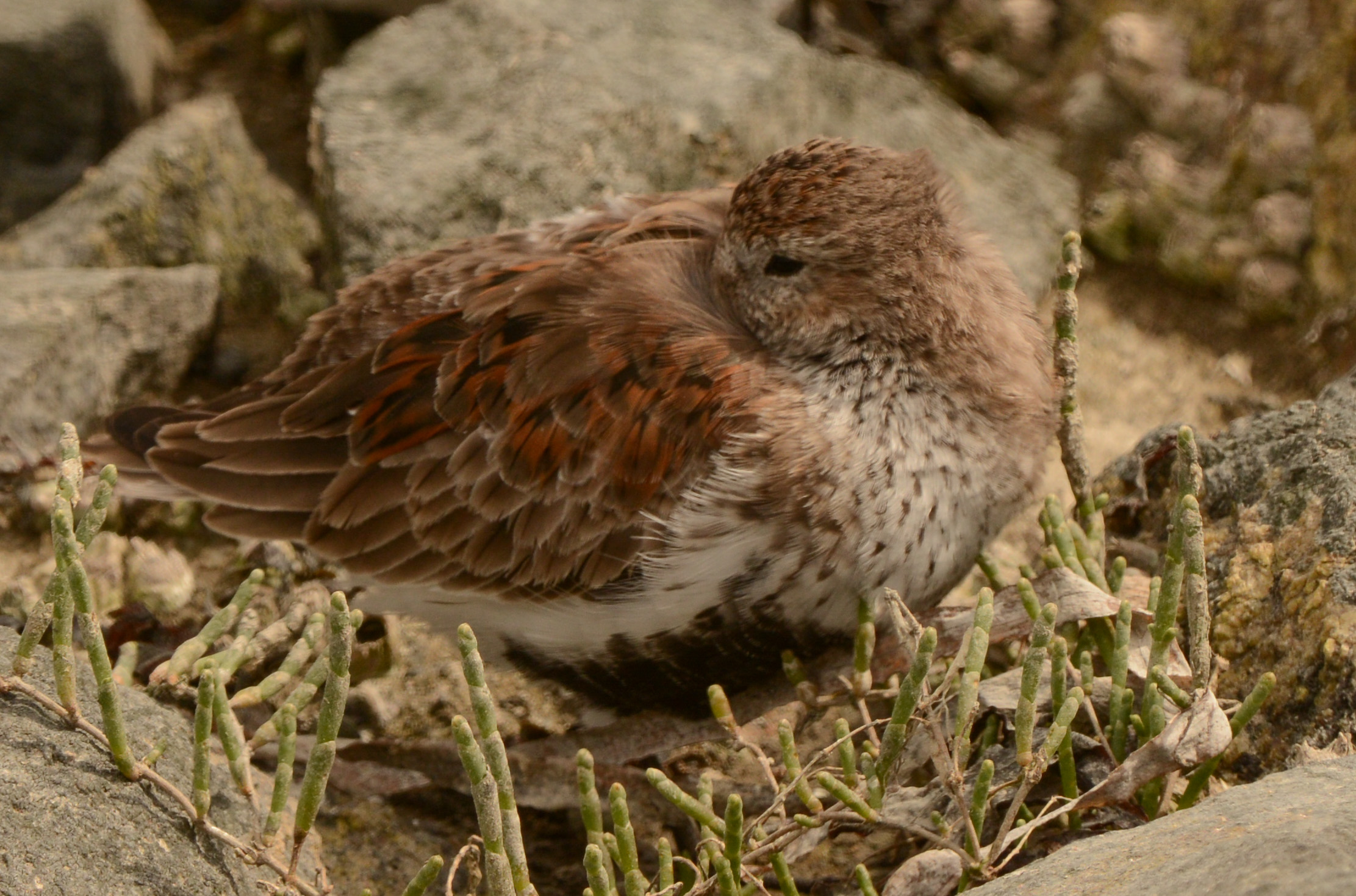
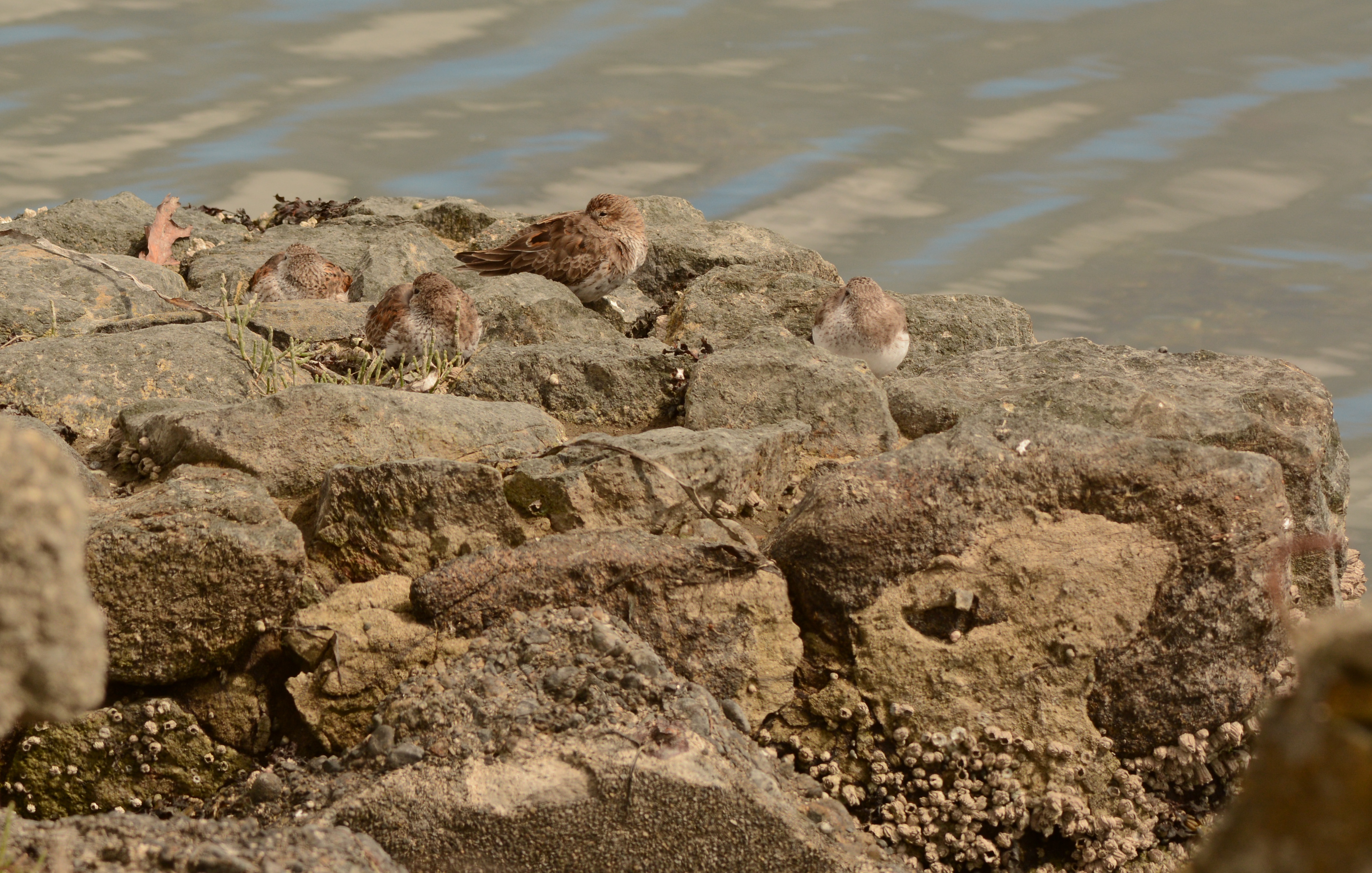
For several days a small group of Dunlin, which always seem to sleep with at least one eye open, were hanging around the marina.

Dunlin 20150414-02

They are easy to overlook, especially when napping.  You can see why in this photo which shows at least four…

Dunlin 20150414-05

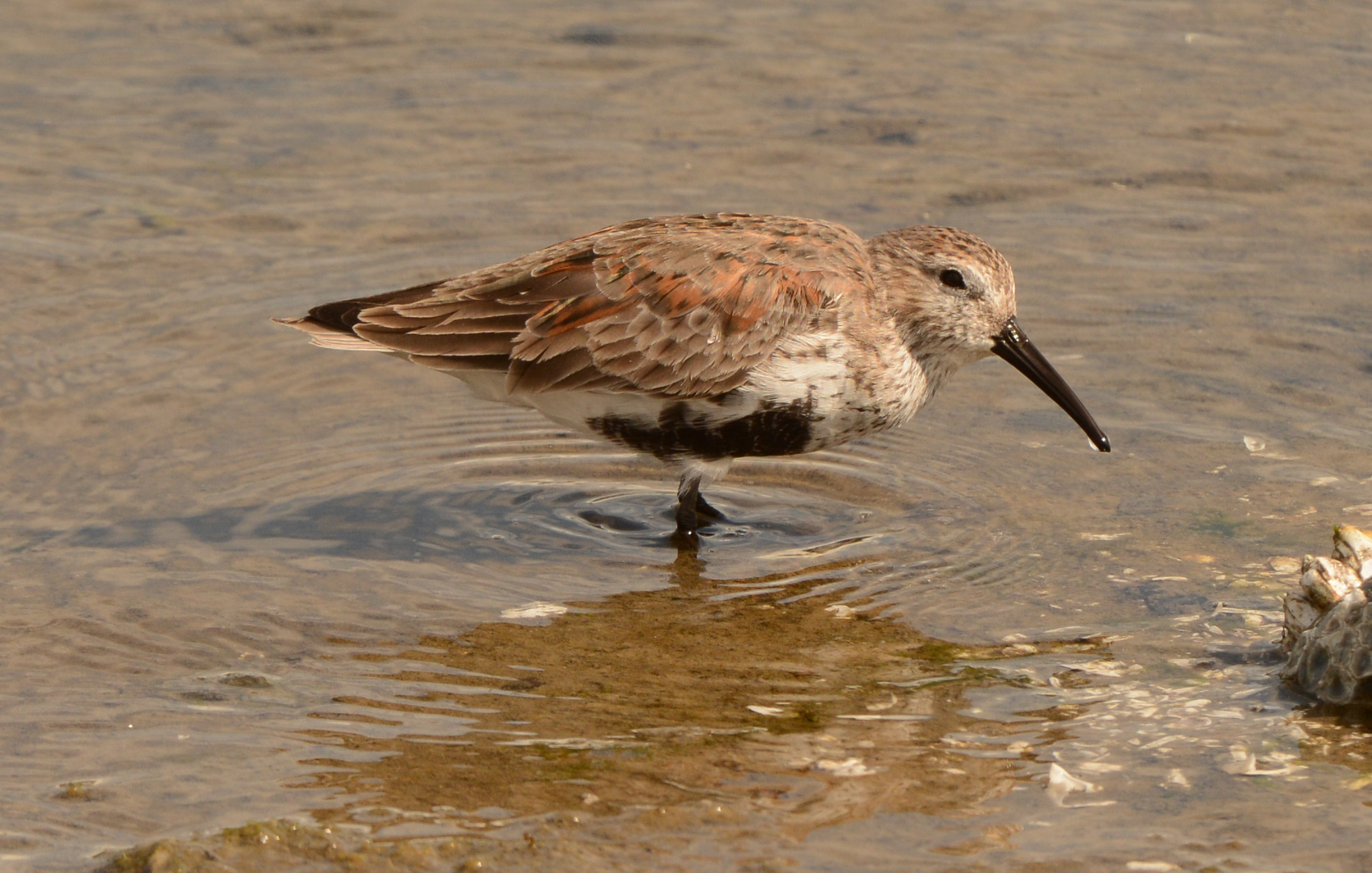
I’ve noted that they typically nap during high tide and then feed as the tide is receding.  Photographing them while feeding can be challenging as their beaks are constantly being inserted into the mud very much like sewing machine needles, and to stop the motion you either have to use a very high shutter speed or, as is the case with these photos, wait patiently for a very brief break in their feeding.  Most of this group are in their breeding plumage.

Dunlin 20150414-11

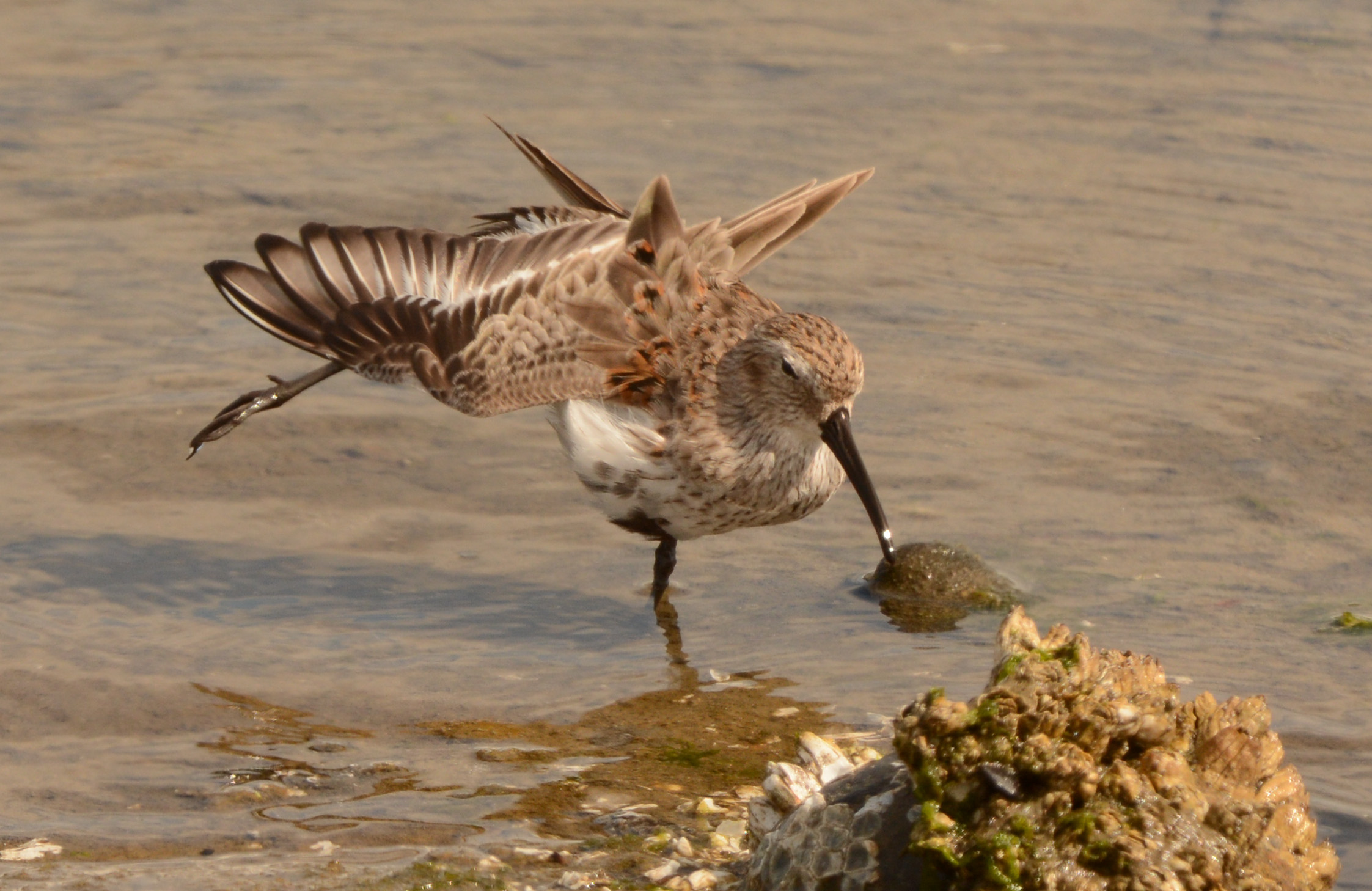
The Dunlin are readily identifiable by the way they are assembled, as shown here…

Dunlin 20150414-12

: )

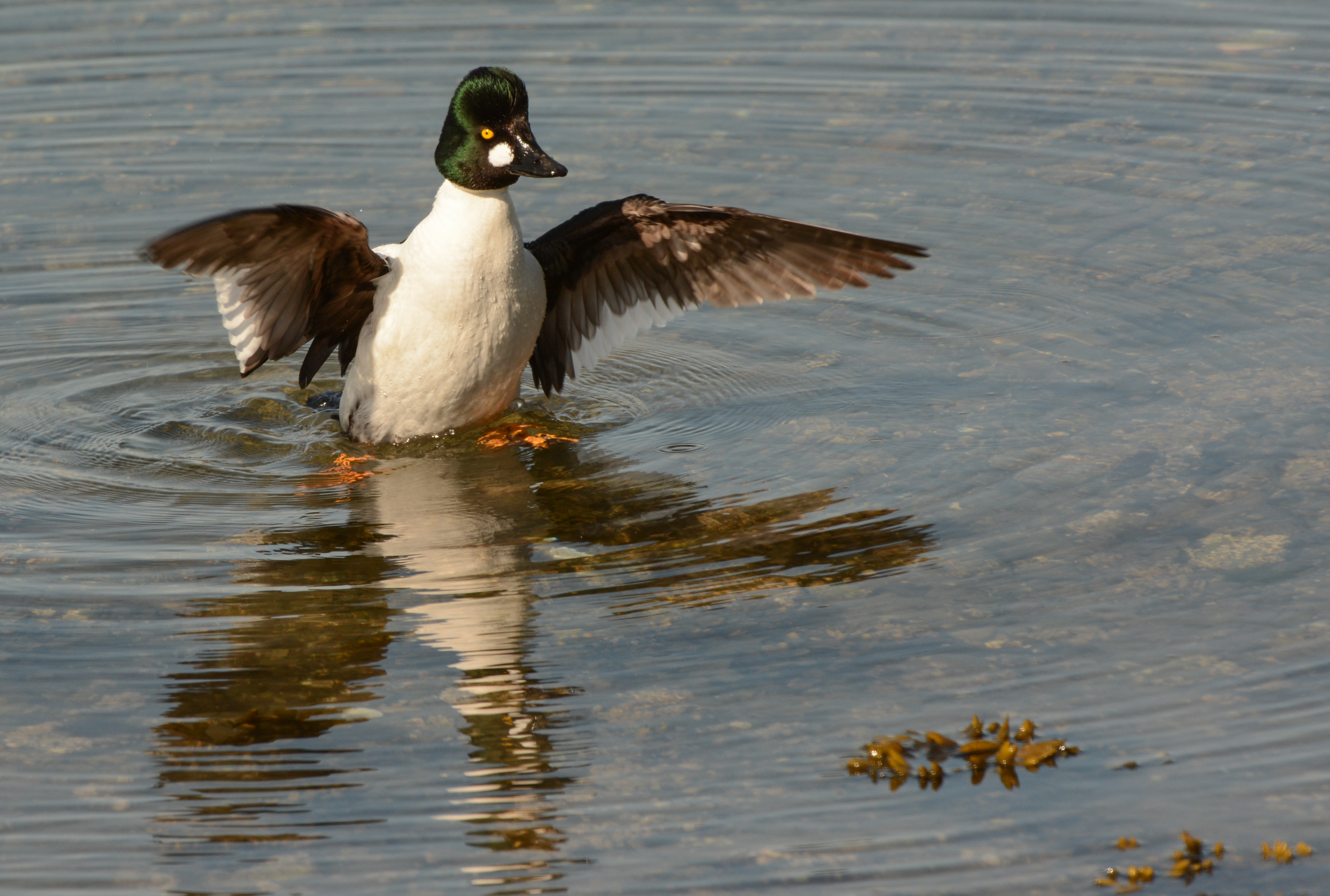
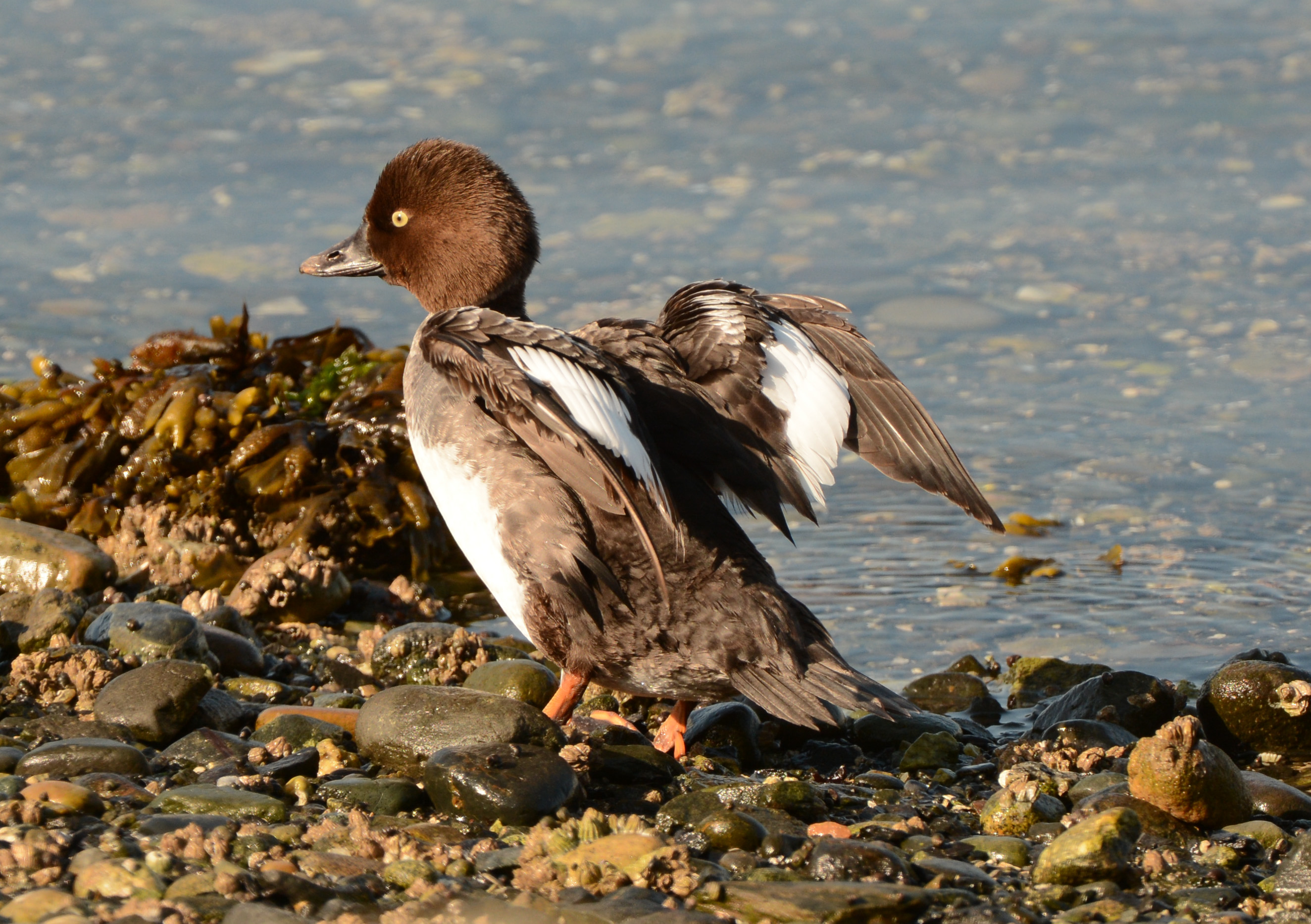
On a somewhat easier identification note, here’s a photo of a male Common goldeneye I took a couple of weeks ago.  I watched it preen for well over an hour.

DSC_1213

And here is its mate…

DSC_1178

I had been hoping for a photo of one of the Common loons, now in full breeding plumage, I’ve occasionally seen in the marina, but I just haven’t been able to get close enough to one for any good photographs.  And sadly, as I mentioned, most of the waterfowl and shorebirds that I photograph in the winter will be leaving the marina area soon, so it will be back to the yard birds.  Fortunately, after a brief lull, things have picked up again in the yard.

An Overview of Our Yard

Warbler, Orange-crowned 20150421-07

Since I take so many of my photos from the yard I thought I would provide a little overview of the area.

To the south of us (on past the area shown in the photo below) is undeveloped city parkland which stretches away from us to the top of Cap Sante.  We can assume that the forest serves as the main repository for most of the birds that enter the yard.

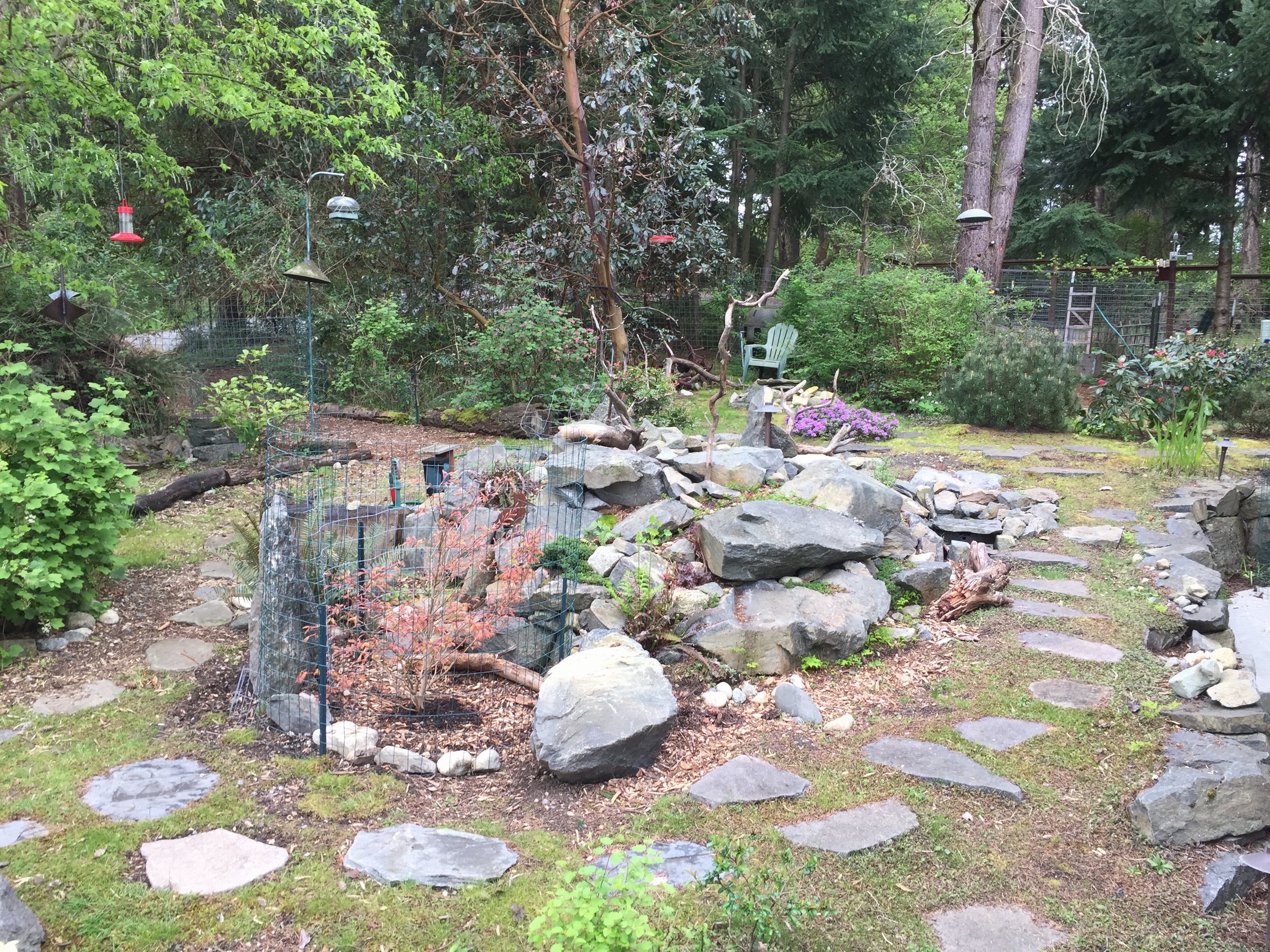
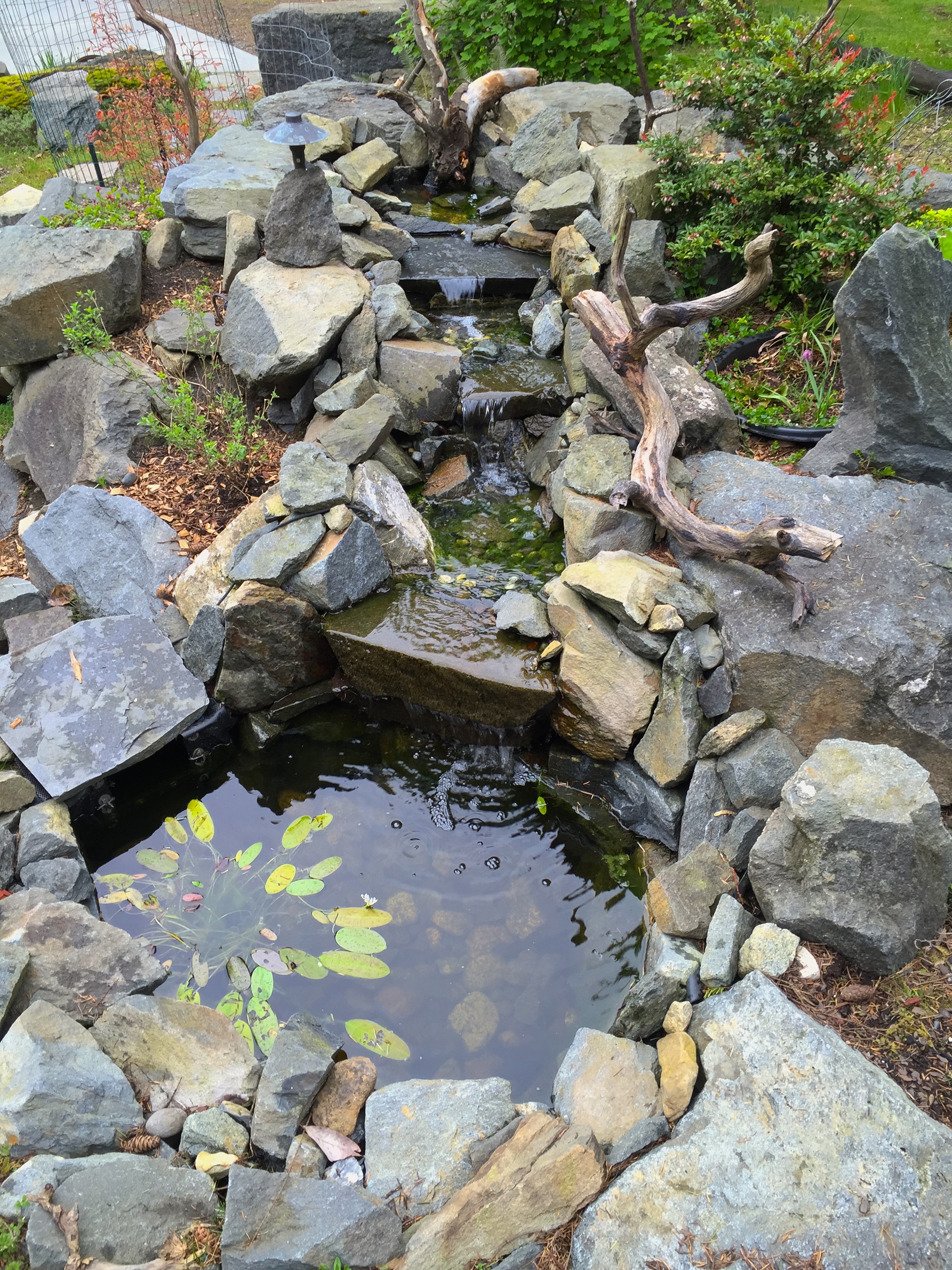
This is a view looking south over our front ‘yard’.  The rockery in the middle of the photo features our watercourse but the water flows in the other direction so you can’t see any water in this photo.  The usual spot from which I photograph birds is just behind the rhododendron on the right side of the photo… in front of what appears to be a ladder.  This allows me to have the sun behind my back for photography.  The other primary feature in the yard is an artificial brush pile located behind the hummingbird feeder on the left side of the photograph.

IMG_0940

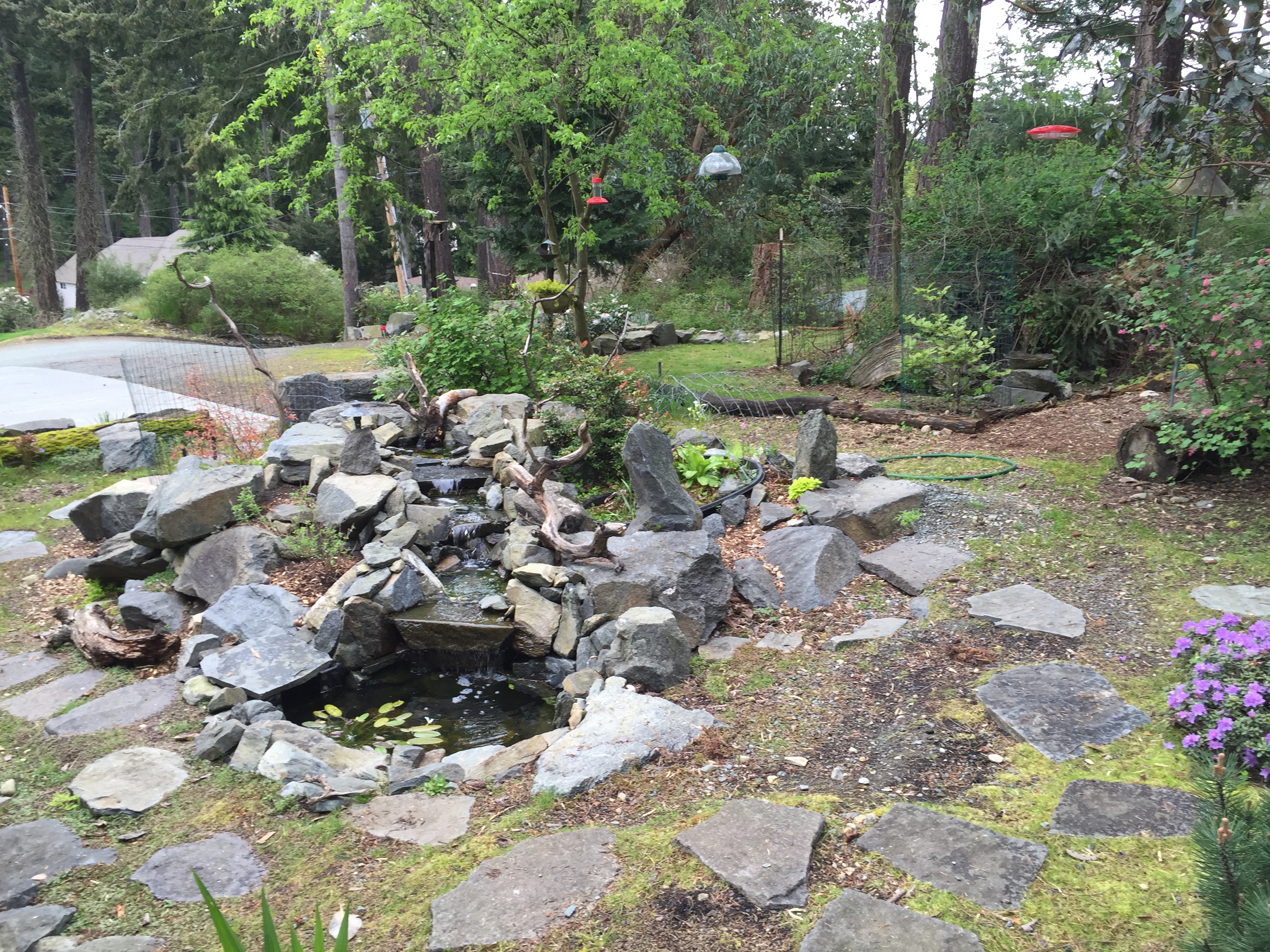
Moving around to the south side of the watercourse, and looking NNE, you can see the watercourse with the small pool at the bottom.  The brush pile is behind the hummingbird feeder in the right upper corner of the photograph.  The brush pile is the main bird repository for the yard and it has a small static bird bath on this side of it.  From my usual photo position in the yard I can view five water features.

IMG_0942

This is a closeup of the cascade in the watercourse.  Note the “staging sticks” located around the watercourse.  They offer me an additional opportunity to photograph the birds in a natural setting.  To keep my photos from all looking alike, I have to change out the sticks every few weeks.  I keep an inventory of sticks for that purpose and have one or two subscribers who remind me if too many photos of the same stick(s) appear in my photos.  Some of the sticks have already been reoriented since these photos were taken.

IMG_0943

I have several different kinds of feeders hung in the yard to attract birds, but most of what I consider the really interesting birds can’t be attracted by food that we offer.  This generally includes warblers, vireos, wrens, tanagers and several other species.  However ALL birds are attracted by water… and the presence of other birds.

An exception is sunflower seeds in the shell which seem to be preferred by Black-headed grosbeaks which have yet to arrive in my yard for the season.  Any food that falls to the ground is almost immediately consumed by ground-feeding birds such as sparrows, juncos, pine siskins and towhees.  In the eight years we’ve lived in our house I’ve only seen one rat, and while it was in our yard for a couple of days it wasn’t my yard that attracted it to the area.