Another Great Yard Birding Day

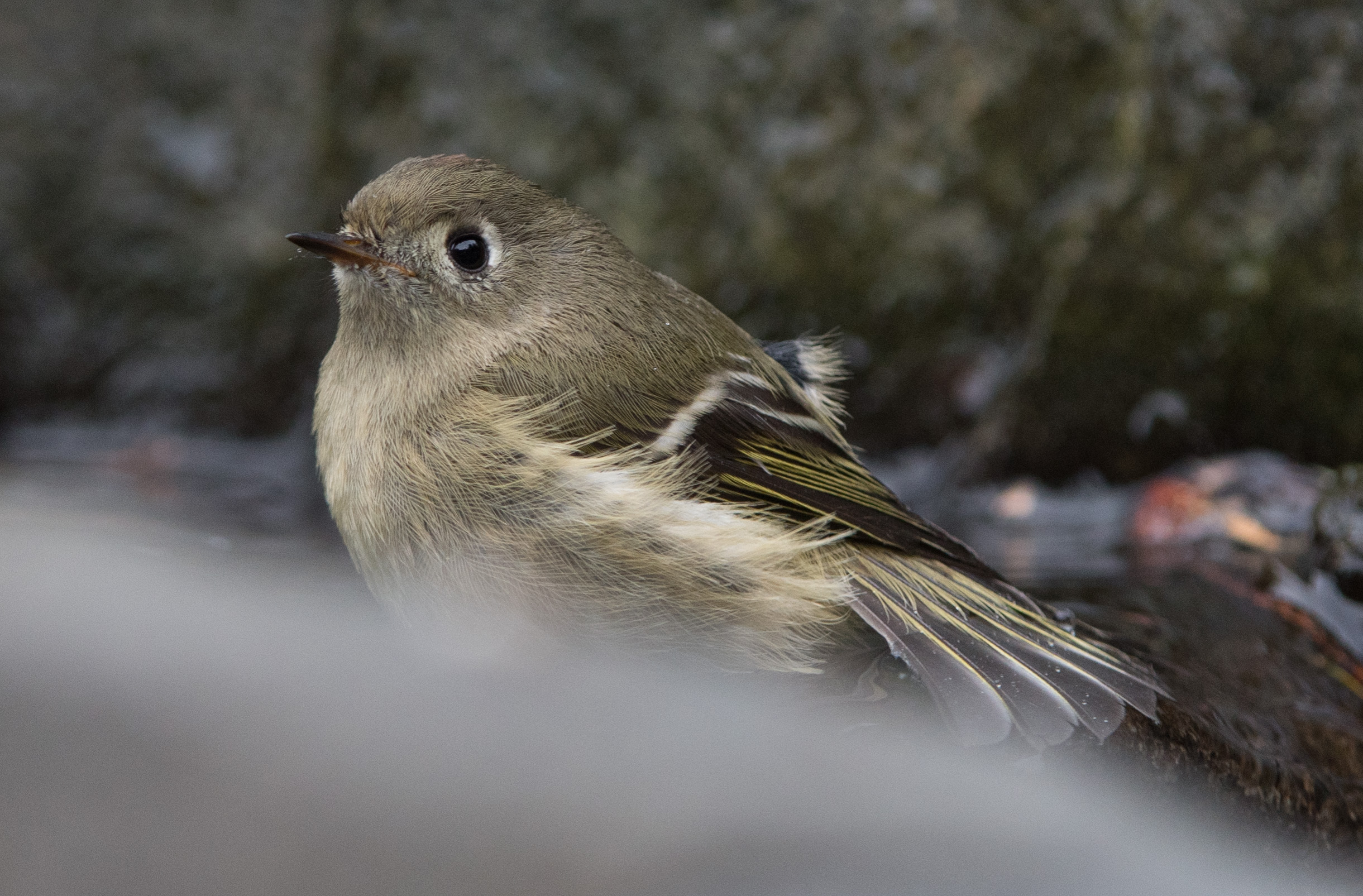
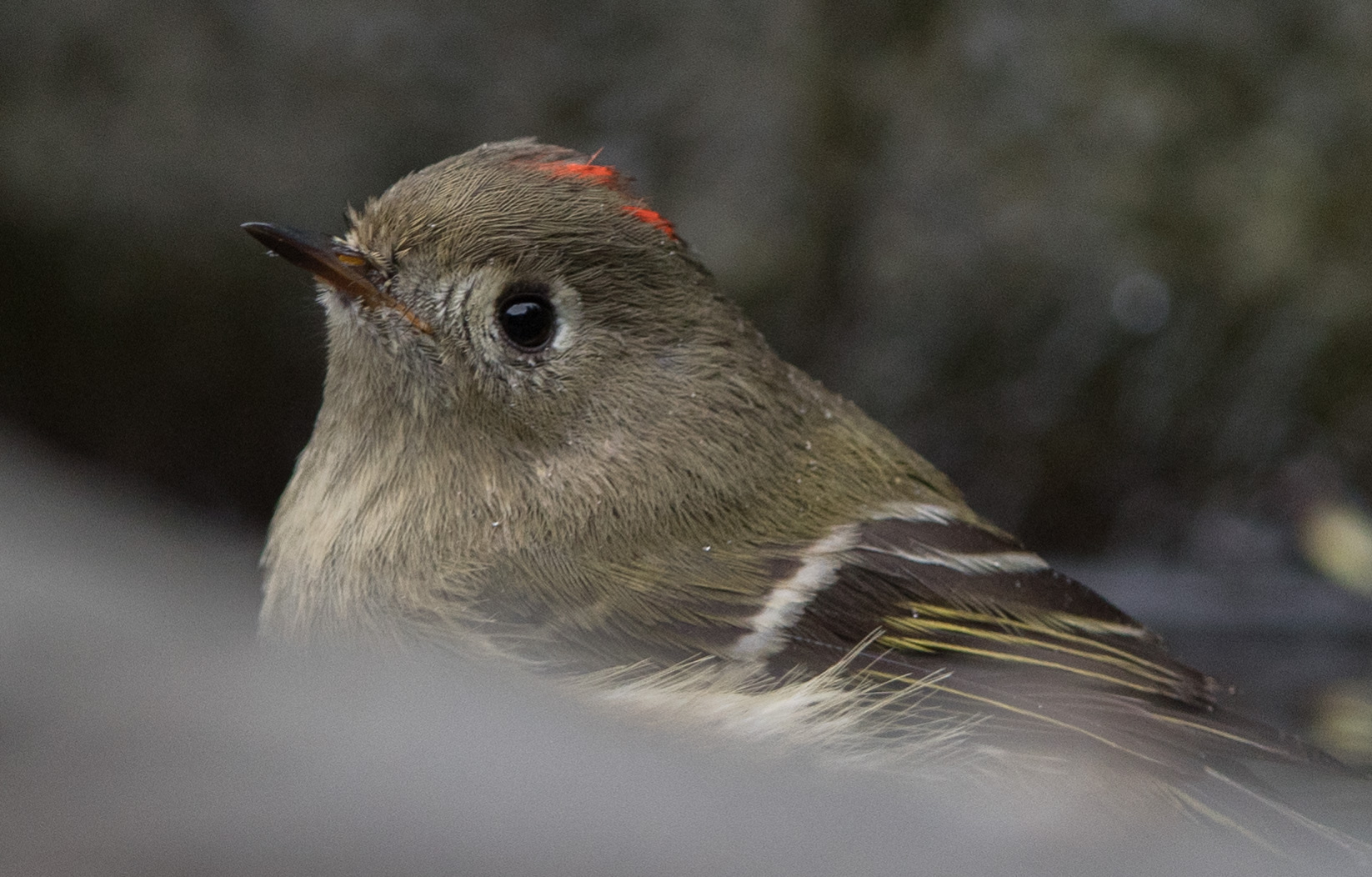
On Saturday, Sep 10, I had another opportunity to spend time in the yard and the time was productive.  I had a good many warbler visits, but unlike the previous Monday all the warblers this day were Orange-crowned warblers… unless the very young warbler pictured at the end of this warbler series is another species.  It appears that this warbler wasn’t long  out of the nest!

warbler-orange-crowned-20160910-18 warbler-orange-crowned-20160910-34

warbler-orange-crowned-20160910-38

A Black-capped chickadee landed very close to me and gave me the opportunity for some good close-ups…

chickadee-black-capped-20160910-06

We still have some juvenile American robins showing up in the yard late in the breeding season,,,

robin-american-20160910-04

Our Dark-eyed juncos (Oregon race) had been gone for several weeks but this was the species first return to the yard after their absence.  On any given day in the winter this can be our most numerous yard bird.

junco-dark-eyed-oregon-20160910-01

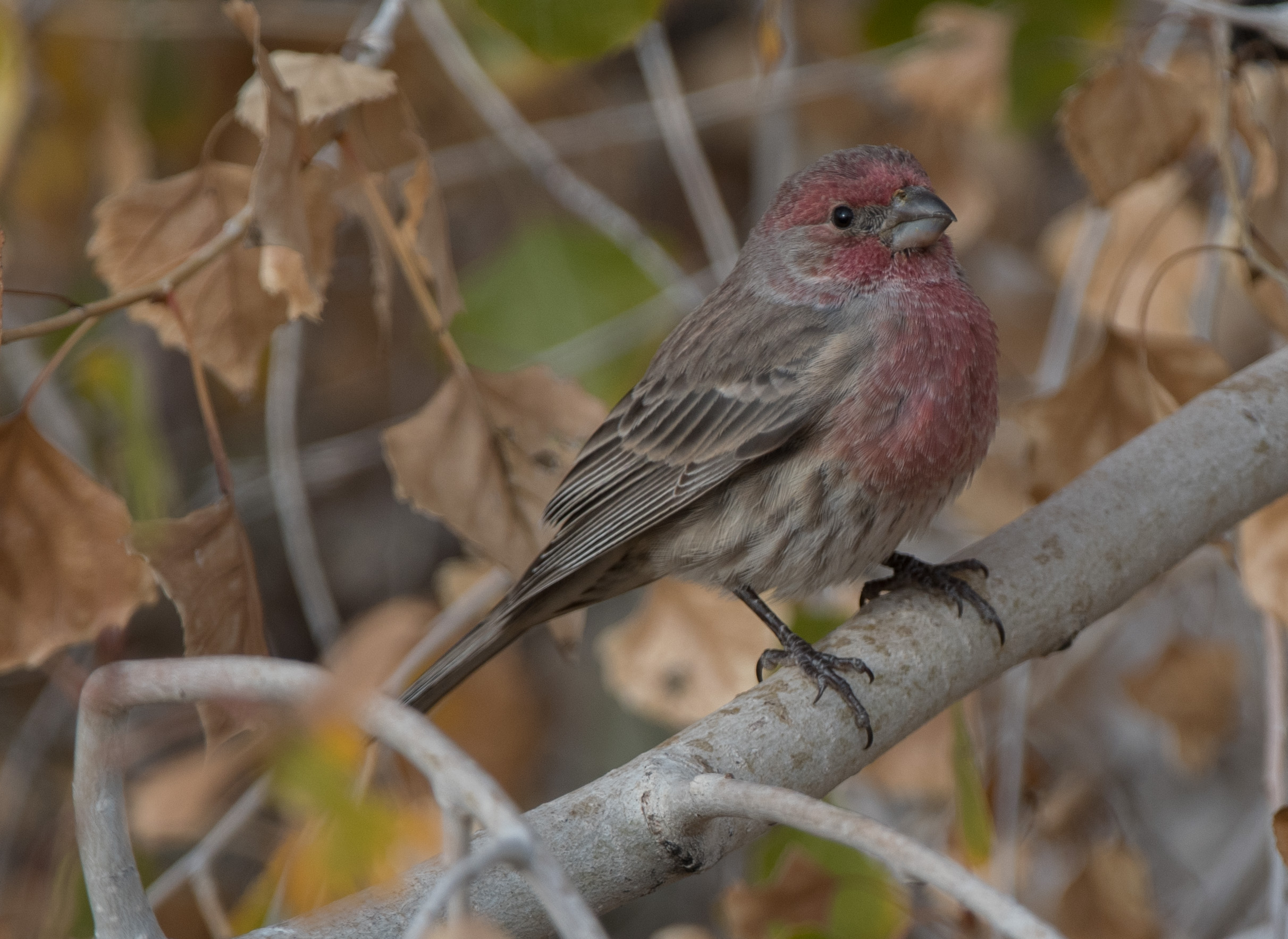
We have a good population of House finches and this male gave me a lot of opportunities for photographs.

finch-house-20160910-06

After an absence of 2-3 weeks we had a covey of California quail visit the yard briefly.  The good news for us is that there were about a dozen, and the quail are now near-adult size which makes them less vulnerable to predators.  I usually think that if the quail raise just 2-3 it’s a successful breeding year, so I have to consider this year’s crop outstanding.  My hat is off to the parents!

quail-california-20160910-03

I had two species that I managed to photograph of which I am especially proud, because they can be difficult to photograph.  This first photo is of a Red-breasted nuthatch, a fairly common bird in the yard (although not so much this summer) but they rarely stop moving and so are difficult to photograph.

nuthatch-red-breasted-20160910-03

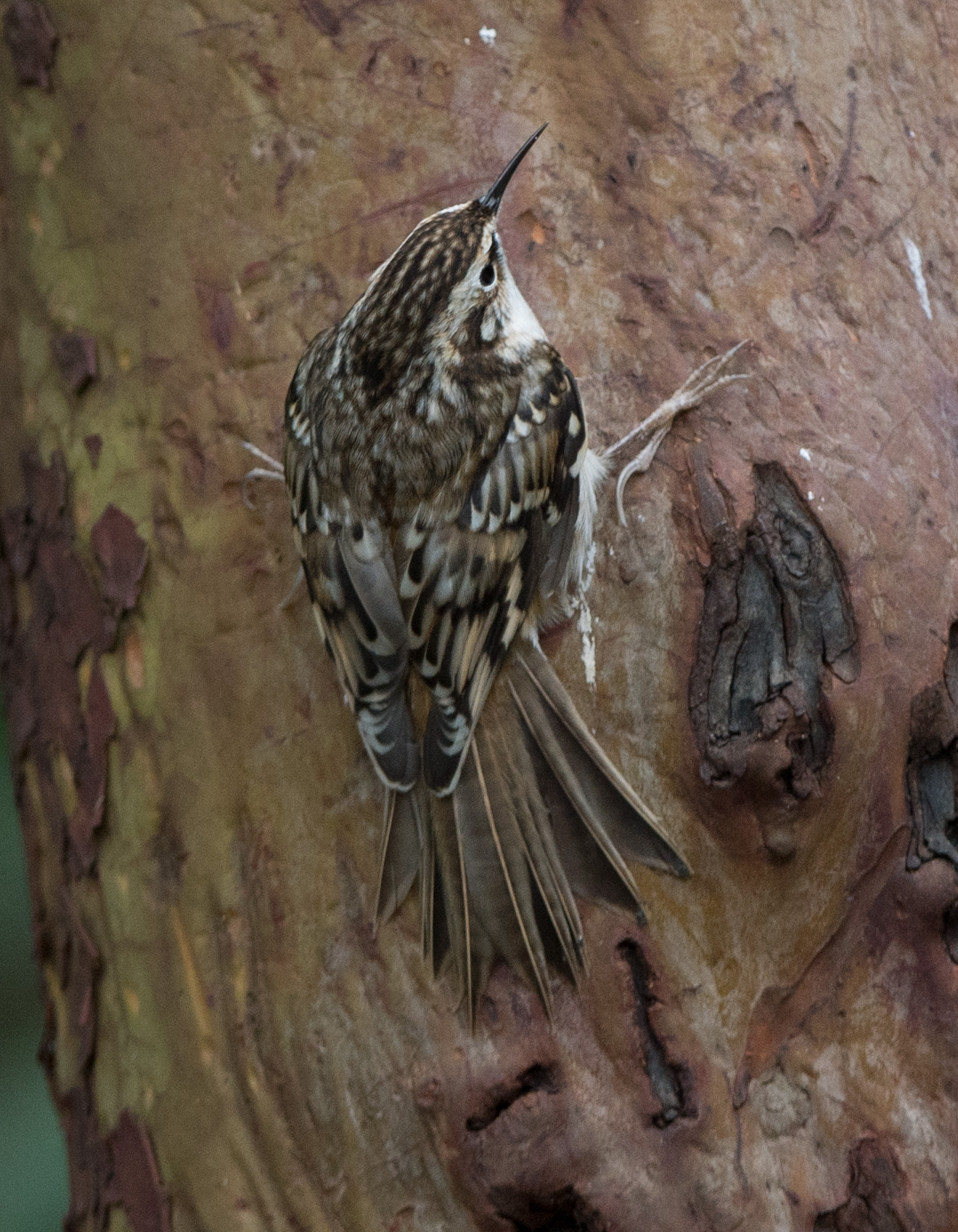
And this last bird is perhaps the most difficult bird I have found to photograph… a Brown creeper.  The creeper is usually difficult to find and is not always a consistent visitor to the yard.  And even more than the nuthatch, it seems that the creeper very seldom remains still… except perhaps for a drink of water!  Notice the long curved bill useful from extracting insects from cracks between the bark.  Notice also the plumage on the bird’s back which makes it very difficult to see on many trees.

creeper-brown-20160910-10


Four Species Warbler Day!

I had a delightful and productive couple of hours of birding in the afternoon on Monday, September 5, 2016.

The entire day was a little on the cool side and overcast. The lack of direct sunlight is actually an advantage for bird photography as there is not a problem with shadows on the birds, either from leaves and twigs or from the birds’ beaks. It also means that you don’t have to deal with the contrast that can sometimes detract from photos.

I was busy with other activities during the day and didn’t make it into the yard until about 3:30pm when I immediately saw an Orange-crowned warbler. Over the next two hours I had the following sightings in the yard:

Orange-crowned warblers
These are probably our most numerous visitors during this fall migration. Unfortunately these are easily confused casually with our second most common visitors…

Warbler, Orange-crowned 20160905-03

Yellow warblers (most juveniles or females)
The Yellow warbler is generally an unusual visitor to the yard, so it’s been somewhat of a surprise to have multiple visits from them.  I seemed to have one male, probably  a juvenile…

Warbler, Yellow 20160905-55

with the rest being juveniles or females…

Warbler, Yellow 20160905-01

Wilson’s warbler (m)
Usually our most common warbler in the yard, this year they’ve been quite scarce. In the past week or so we’ve had a couple of females, but on this day we had what was clearly a male.

Warbler, Wilson's 20160905-06

Townsend’s warbler (female or juvenile)
We generally have about one Townsend warbler visit each year, so I consider this visit unusual. It was also the crown to a four-warbler day in the yard. (My wife saw a male Townsend’s warbler the following day.)

Warbler, Townsend's 20160905-05

Golden-crowned kinglet (f)
The first bird I was able to photograph upon entering the yard was a Golden-crowned kinglet, apparently a female. I had one other sighting during the afternoon but couldn’t tell its sex and was not able to photograph it.

Kinglet, Golden-crowned 20160905-01

Brown creeper
A Brown creeper appeared very near to me, but at a bad angle for photography and with intervening foliage, so I wasn’t able to obtain a photograph. We have Brown creepers from time to time during the year but they were mostly absent this past summer.

Bewick’s wren
This is another unusual sighting, although they are probably in the general area more than my sightings indicate. I wouldn’t have seen this one if it hadn’t been vocalizing on one of my trips from the house. I wasn’t able to obtain a photograph of the wren.

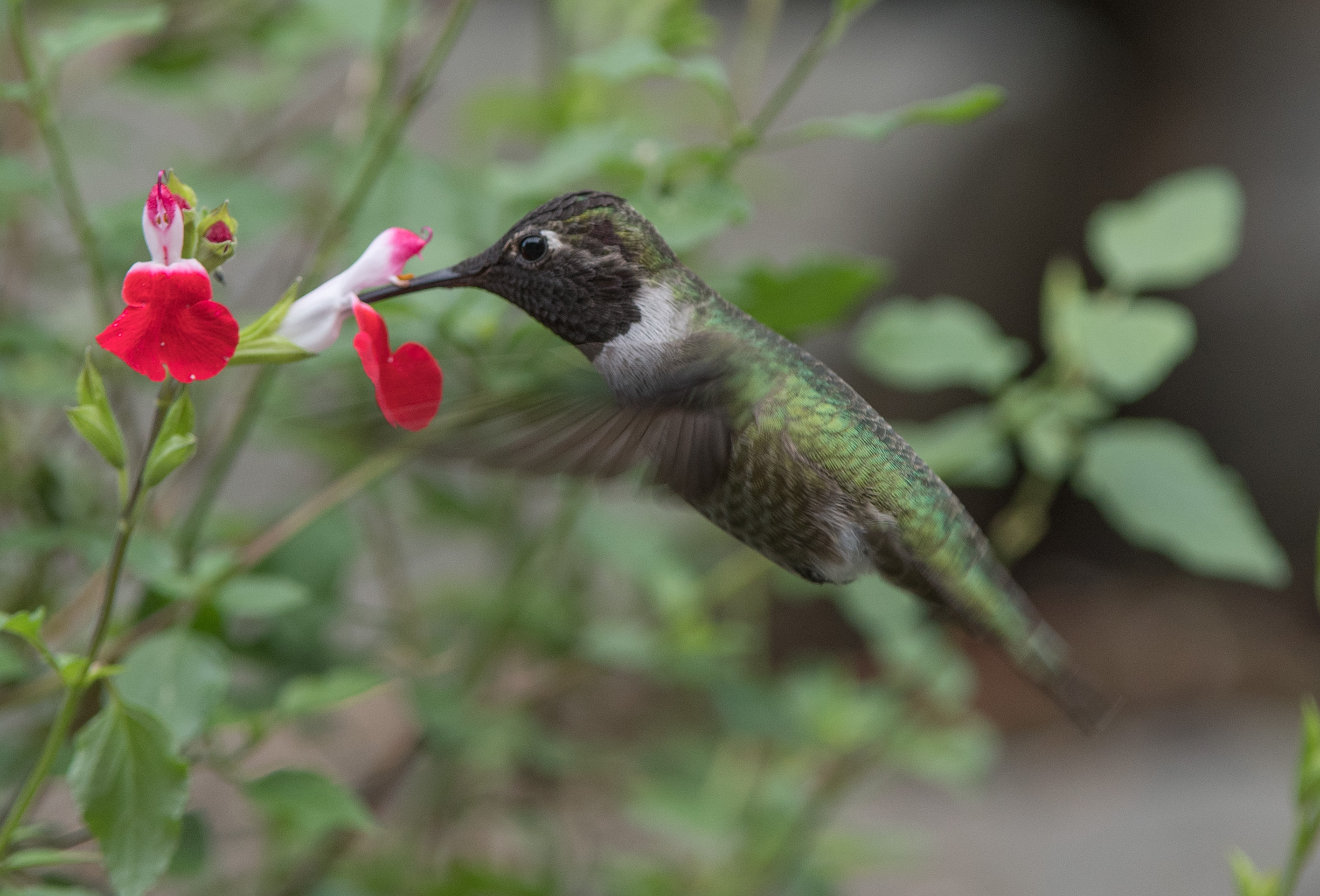
Anna’s hummingbirds (m&f)
W have at least a pair of Anna’s hummingbirds in the yard and the male, which may be a first-year juvenile, is already establishing a territory consisting of one feeder and several blooming salvia and a coleus in the front yard. This observation was noteworthy in that the male flew to the watercourse and took a bath. This has been a common activity (especially with the Rufous hummingbirds in past years), but this is only about the second time this year that I have observed a hummingbird taking a bath.

This is the male… I wasn’t able to photograph the female…

Hummingbird, Anna's 20160905-07

Other yard sightings that afternoon:
Hairy woodpecker (m)
Downy woodpecker (m&f)
Eurasian Collared doves (~10)
European starling (a single crippled juvenile that has been a daily visitor)
White-crowned sparrow with at least two juveniles
Red-breasted nuthatch, since breeding season in short supply
Chickadees, both Chestnut-backed and Black-capped
American goldfinches, some still feeding juveniles
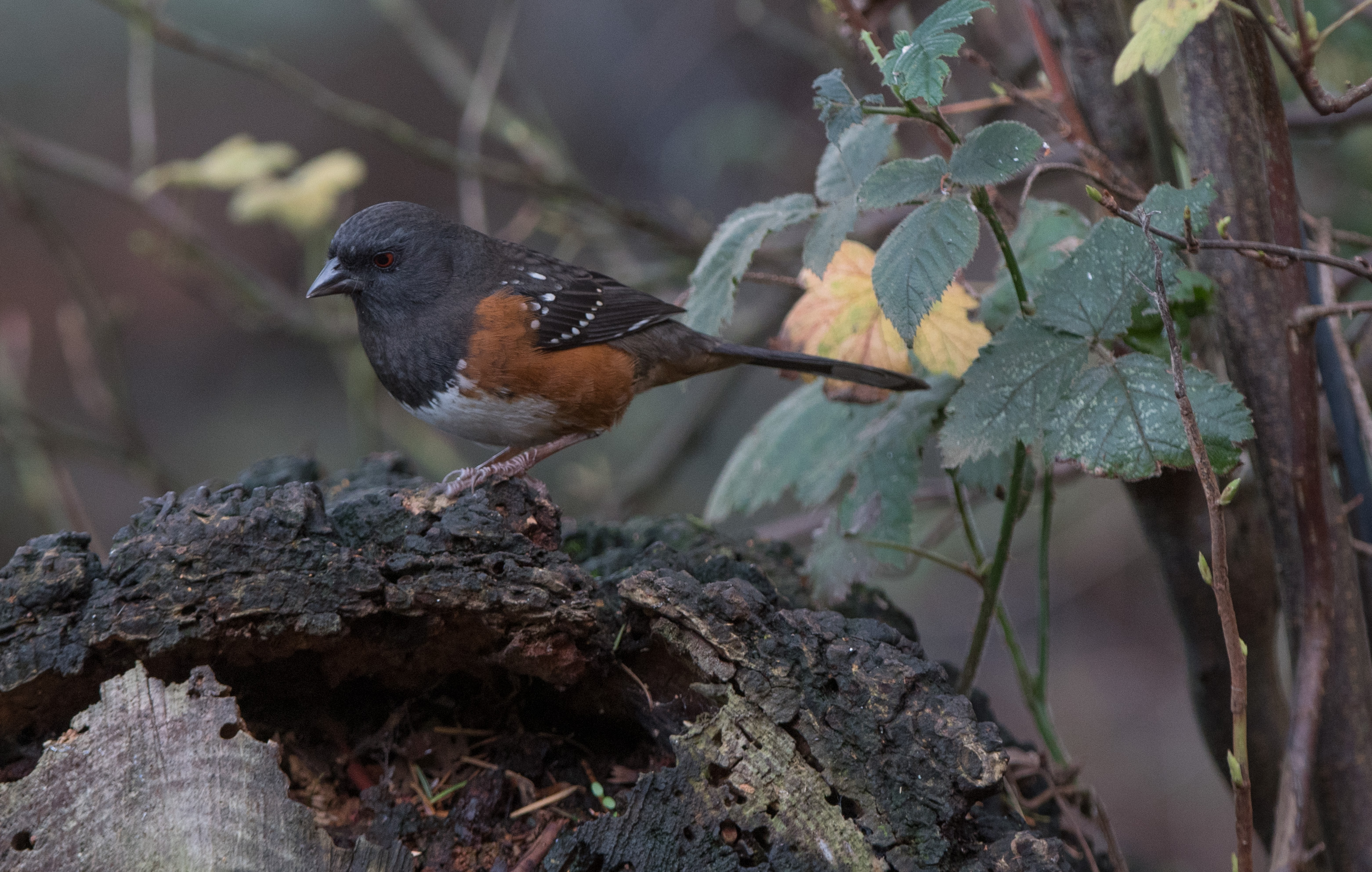
Spotted towhee (f)
American robin
House sparrows
House finches

In addition to the birds, I also had the following visitors to the yard, all of which I photographed except for the two Eastern Gray squirrels which have taken up permanent residency in the yard. Listed in reverse order of rarity:
Eastern Gray squirrels
Townsend’s chipmunk (there were two observed the following day)
Cottontail rabbit

Rabbit, Cottontail 20160905-01
Norwegian rat (a very rare visitor which better maintain its rarity or else face deportation)

Rat, Norwegian 20160905-04

So this was a four-warbler species day and I’m finally finished with processing some 200+ photos, 135 of which I retained and most of which were birds. (As a birder, if you want a real challenge, try separating into species 85 intermingled photos of Yellow and Orange-crowned warblers, many of which are either females or juveniles, some wet from baths, taken from a multitude of different angles!) Among my prizes for the day were a few photos, taken on more than one occasion, of both an Orange-crowned and a Yellow warbler in the watercourse at the same time.

And there you have it… almost exactly two hours of observation/photography time, close to double that time in photo processing, and a couple of hours in writing and creating a blog post.  And people wonder what retirees do with their time.

I believe that the fall migration is on!  This past week, with virtually no warblers for the past couple of months, we are suddenly experiencing an influx of warblers.  Our most common visitors are Orange-crowned warblers, one of which is pictured below taking a bath in our watercourse.

DSC_4365

On August 31, within the space of about 15-minutes, I saw two Orange-crowned warblers, a male Wilson’s warbler and two female Wilson’s warblers.  During this same time period I also saw a male Golden-crowned kinglet and a Brown creeper.

Here’s another photo of the Orange-crowned warbler bathing amid a group of juvenile American goldfinches.  I believe that it might have its beak open to warn the other birds not to interfere with its bath!

DSC_4356

Here’s another photo of an Orange-crowned warbler… it hardly looks like the same species, but there’s considerable variation in the coloration, especially at this time of year.  And I always think the birds look yellower when wet.

DSC_4369

And here’s a photo I took today, once again with two of the warblers in the yard (in this case the watercourse) at the same time.

Warbler, Orange-crowned 20160902-05

Today I also had two different visits from one or more Black-throated gray warblers.  At first I thought that one had been a male and the other female, but after careful examination of my photos I realized that both were male.  In these photos it’s not particularly evident that the black throat extends to the beak, which would be a characteristic of the female.

Warbler, Black-throated Gray 20160902-25 Warbler, Black-throated Gray 20160902-38

And as a little bonus, I’m including a photo of this male House finch which clearly shows the red patch on the bird’s rump.  This patch is not always visible when observing birds in the field.

DSC_4283

Here’s a little gathering of House sparrows having baths in the watercourse.  I liked the male sparrow in the center of the photograph.

Sparrow, House 20160902-01

Woodpeckers

Here is a little woodpecker lesson.  We have at least four common kinds of woodpecker-type birds here.  The smallest, and in my yard the most common, is the Downy woodpecker.  The Downy and Hairy woodpeckers have virtually identical markings but can be differentiated by size, with the Hairy woodpecker being larger.  However I maintain that trying to assess the difference in these birds by size is not reliable.  The best way to differentiate these two species is by the length of their beaks compared with head size.  Take a careful look at this male Downy’s beak (pictured immediately below).

Woodpecker, Downy 20160822-01

The photo below is of a male Hairy woodpecker on the same feeder.  Note the larger and heavier beak.  The Hairy woodpecker has been a very infrequent visitor to our yard over the years, but this year we have been fortunate to have both a mature male and a juvenile male visiting the yard.

DSC_3418

Incidentally, I have found that the Perky Pet peanut feeder pictured above is an excellent feeder for both woodpeckers and other smaller clinging birds such as nuthatches and chickadees.  Like almost all of my feeders, it discriminates against non-clinging birds which helps to minimize your feed costs.

And finally, here is a photo of a male Northern flicker.  They have been fairly consistent visitors over the years and we had both male and female adults and male and female juveniles this spring/summer.  Unfortunately we lost one earlier in a window kill.  Unlike many woodpeckers, the male sex of the flicker is denoted by the red patch on the cheek and not a red patch on the head.

Flicker, Northern 20160523-01

The other woodpecker we have in the greater area is the Pileated woodpecker.  I have seen only one in our yard and one in the Cap Sante neighborhood over the past sixteen years, but there are more heavily forested areas where these birds, which desire a large territory, can be found.  There is usually at least one pair in Washington Park each year.


August 21, 2016

It’s always a difficult decision as to what to post to my blog.  I take a lot of photos, generally every day, and I can either wait to post through the backlog or post the day’s photos immediately.  I had a good day today and so have decided to post today’s photos.

We had, for this year, an unusual visitor today.  A male Wilson’s warbler, which I usually consider the most numerous in our location, fly through the yard twice this afternoon.  The first time I saw it I was without my camera, but it returned about 20-30 minutes later when I was prepared.  It flew across and around the yard several times but never landed long enough for me to get even a single photograph.  : (

However, while I sat in the yard one of the Black-headed grosbeak juveniles raised in the area came closer to me (and my camera) than one had ever come before.  As a result I obtained several very good photographs, two of which I’m showing you here.

DSC_3999

DSC_4004This year we’ve had one, and sometimes two, Townsend’s chipmunks in the yard.  (We’ve also gotten very brief glimpses of a very small one scurrying under the undergrowth.

DSC_4019 DSC_4018


Here’s a male House finch… DSC_4007

and a Black-capped chickadee.

DSC_4023

And finally a pair of juvenile American goldfinches.

DSC_4015