On December 23, 2020, I made another birding excursion south towards Fir Island. On the way I encountered this Red-tailed hawk for at least the second time on one of my recent birding excursions.
I generally find the Red-tailed hawks rather skittish… they generally will fly if you even slow the car near them, much less stop. However this particular hawk seemed quite comfortable with me parked on the road nearby. I took a few photos and then the hawk flew away from me and landed between rows of blueberry bushes, but still relatively near to me. I moved up a bit and it became evident that it had caught something in the grass. As I watched it lifted up what seemed to be like a small rodent…
and then swallowed it whole!
Later in my travels I found this Orange-crowned warbler gleaning insects from under blackberry bush leaves…
In my last post I displayed a photograph of what I believe to be a Purple finch, and on this day I searched the same area to see if I could find it again and get a better photo. I can’t be positive that this is the same bird or even that is a Purple finch˙, but I believe it to be one.
I found this Dark-eyed (Oregon) junco taking a bath beside the road…
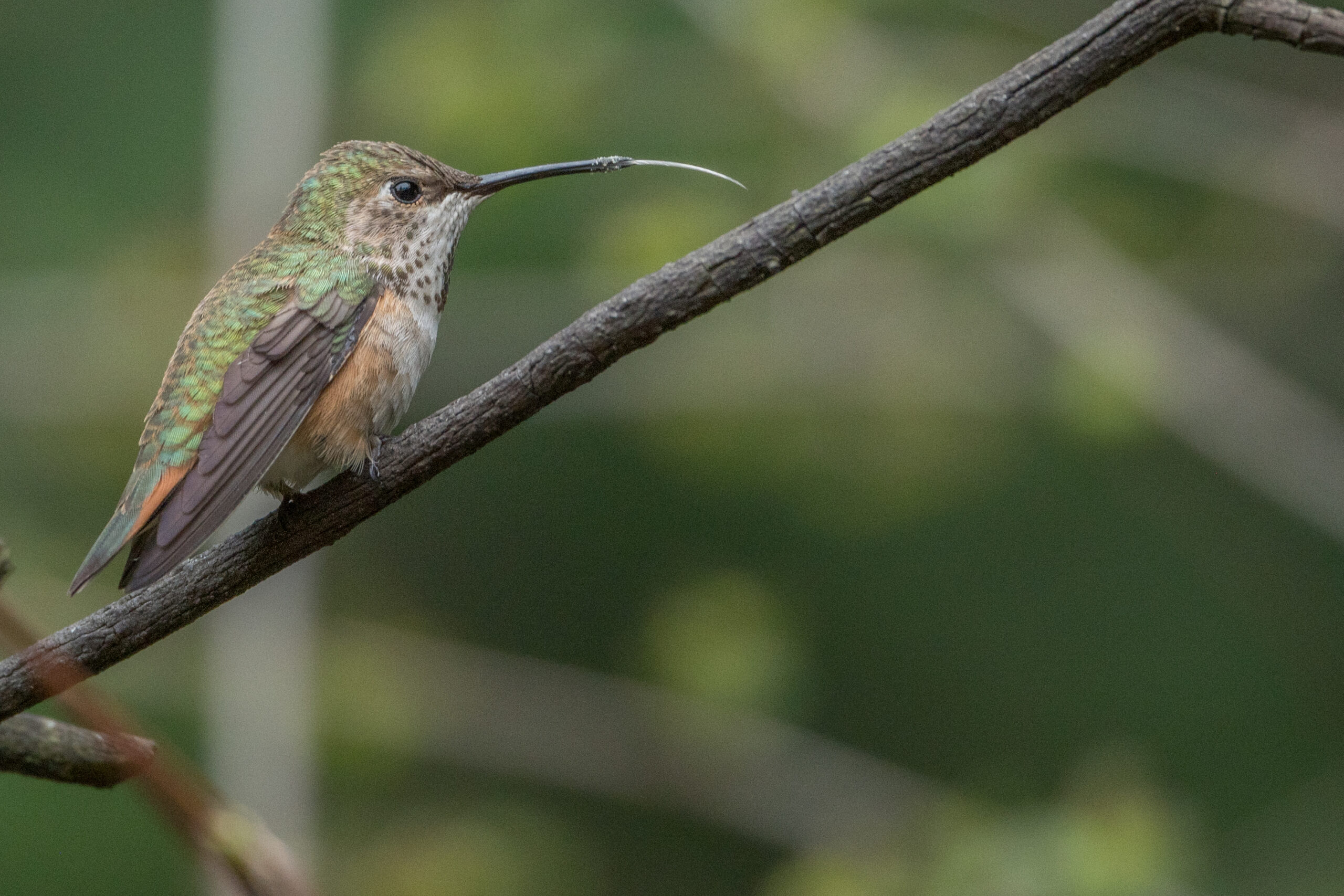
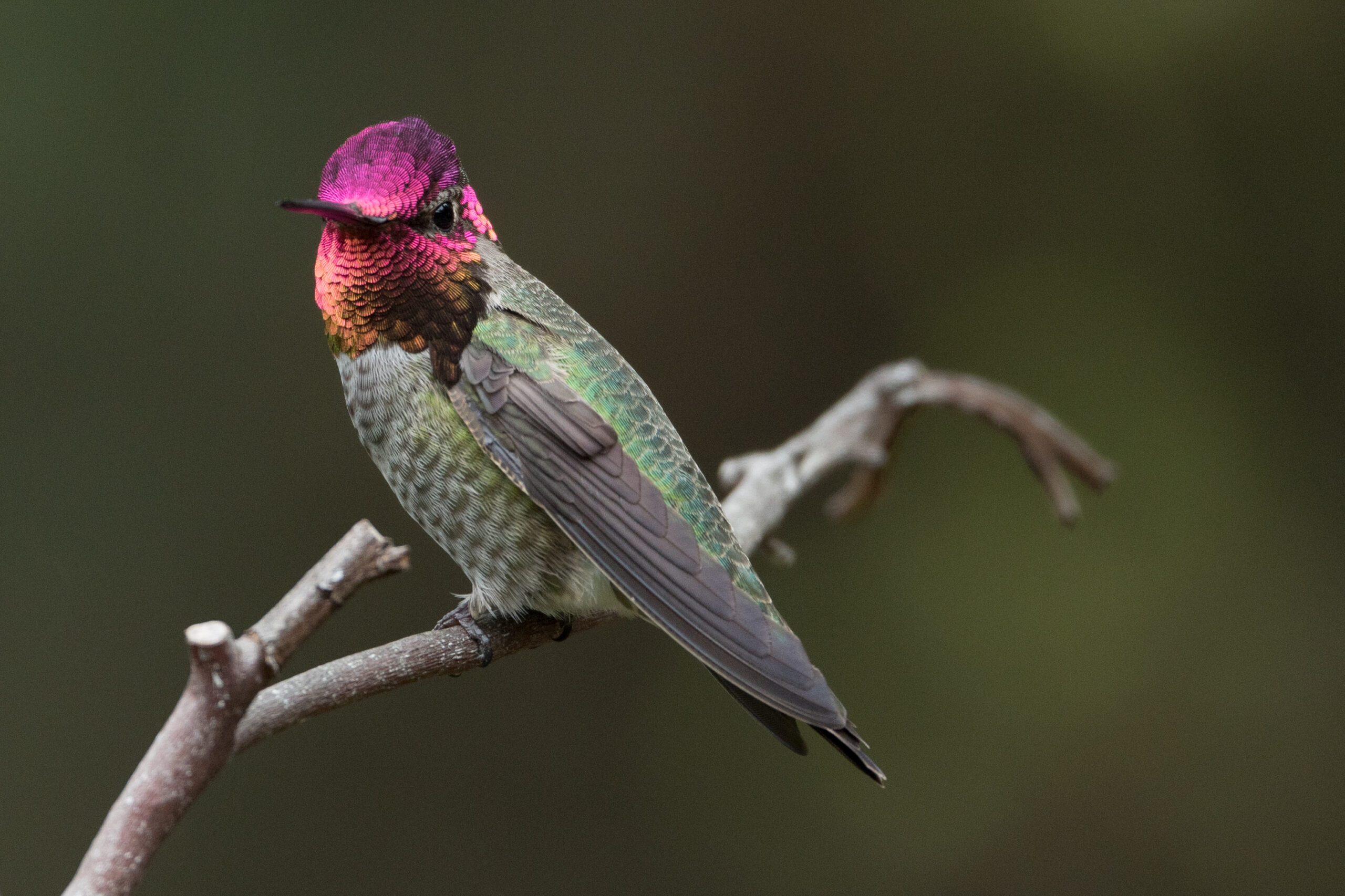
In the winter of 2019-20 I found three female Anna’s hummingbirds on or in the vicinity of a holly tree that would probably provide good cover from wind and to some extent, rain. I photographed these hummingbirds several times over a several week period a year ago. This winter I found there were two females in exactly the same area. I believe that they are all probably part of the same family that has stayed in the are for over a year.
On Thursday, December 17, 2020, I set out for an excursion to Fir Island. I visited one of my favorite birding places on the way and found many House finches, some eating dried blackberry seeds.
Nearby I was startled to find what had to be a male Purple finch, the first I had identified in many years. There is a wide variation in the colors of male House finches and I have friends who think they can distinguish male Purple finches from male House finches by color, but in my opinion color only is not a reliable differentiator between the two species. However, in this case, the red tint all the way down the bird’s back left no doubt in my mind I was looking at a Purple finch. I only managed a couple of photos before the bird flew, and unfortunately there were intervening twigs, an unavoidable impediment in birding photography, but I believe that my photo is diagnostic.
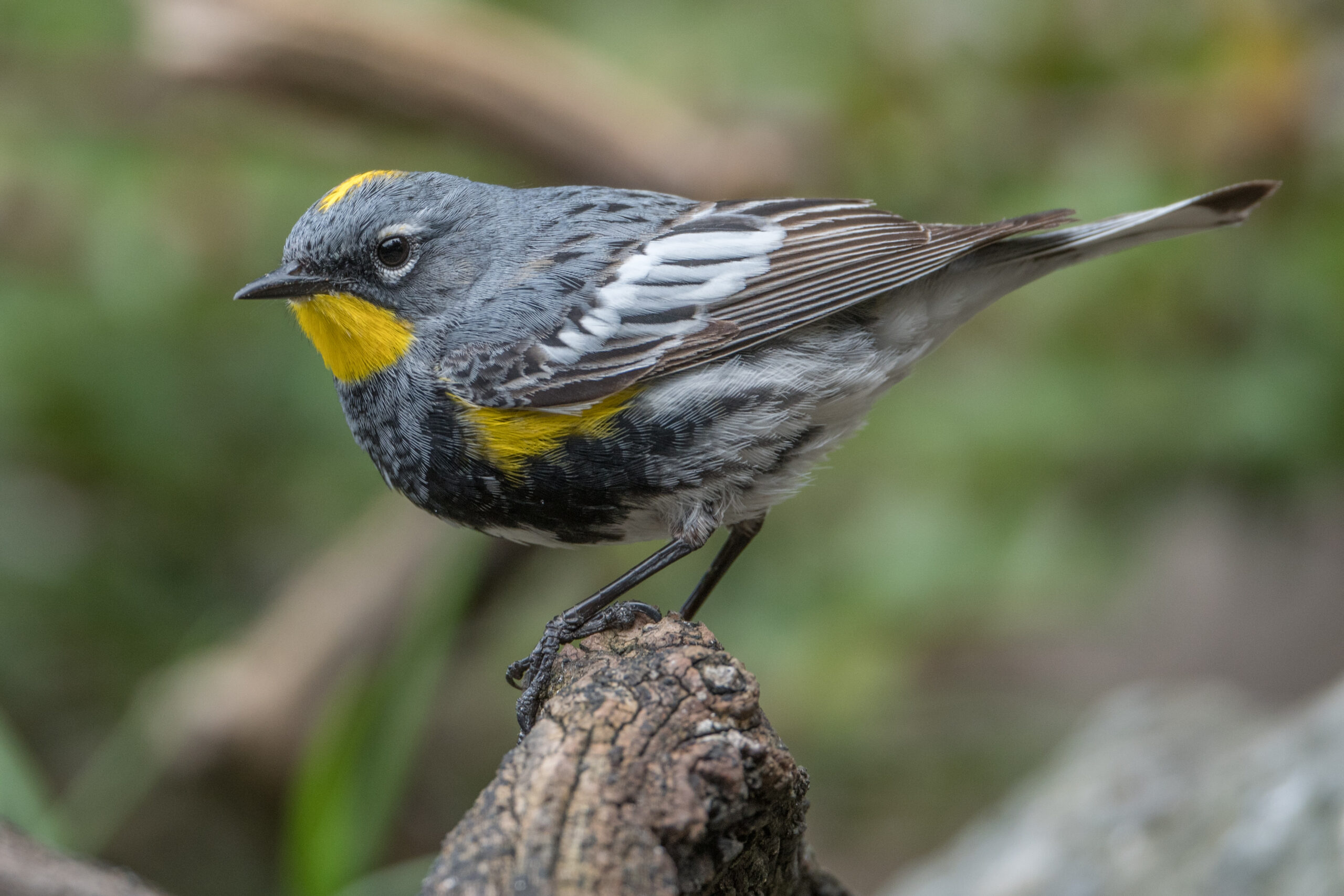
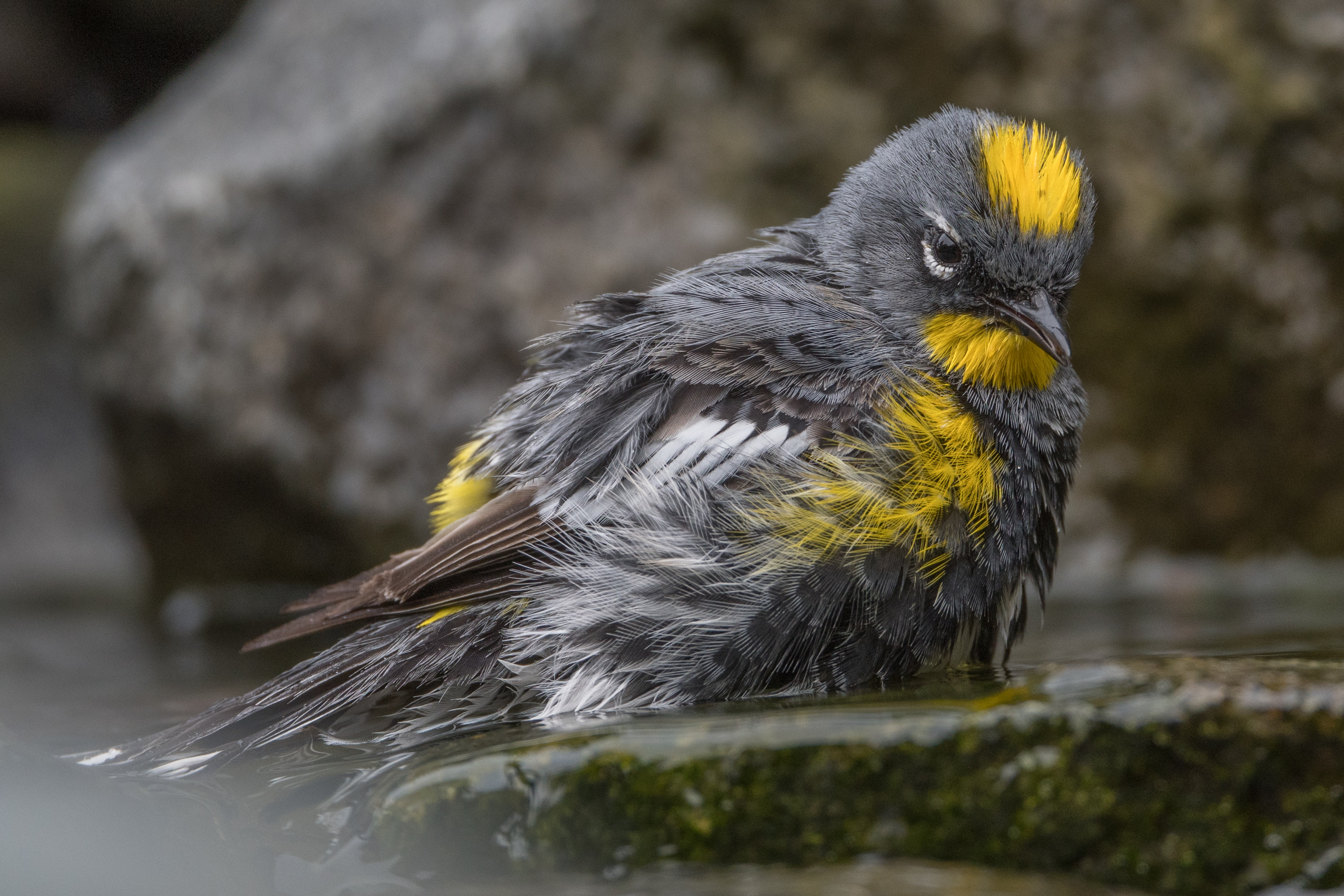
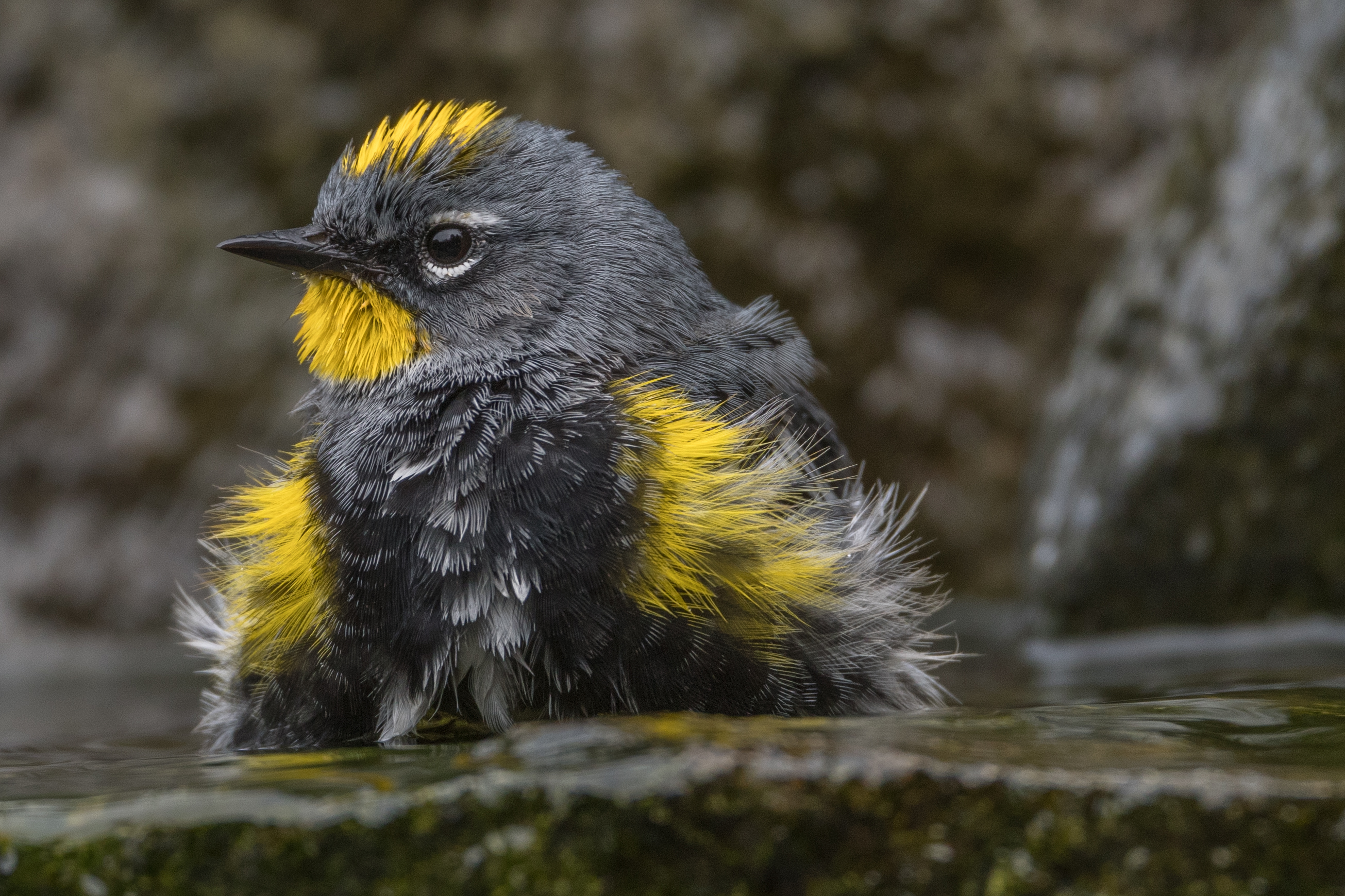
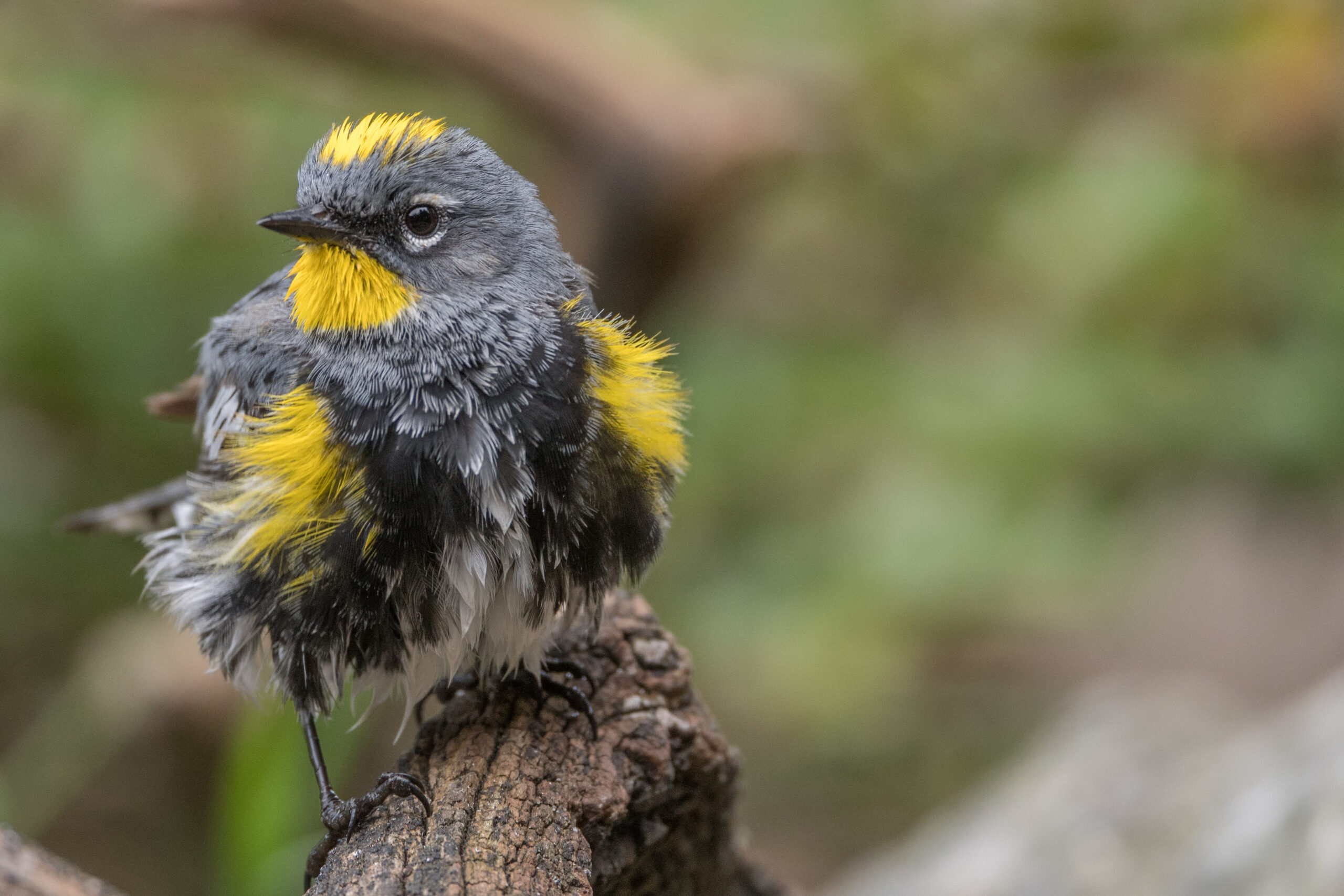
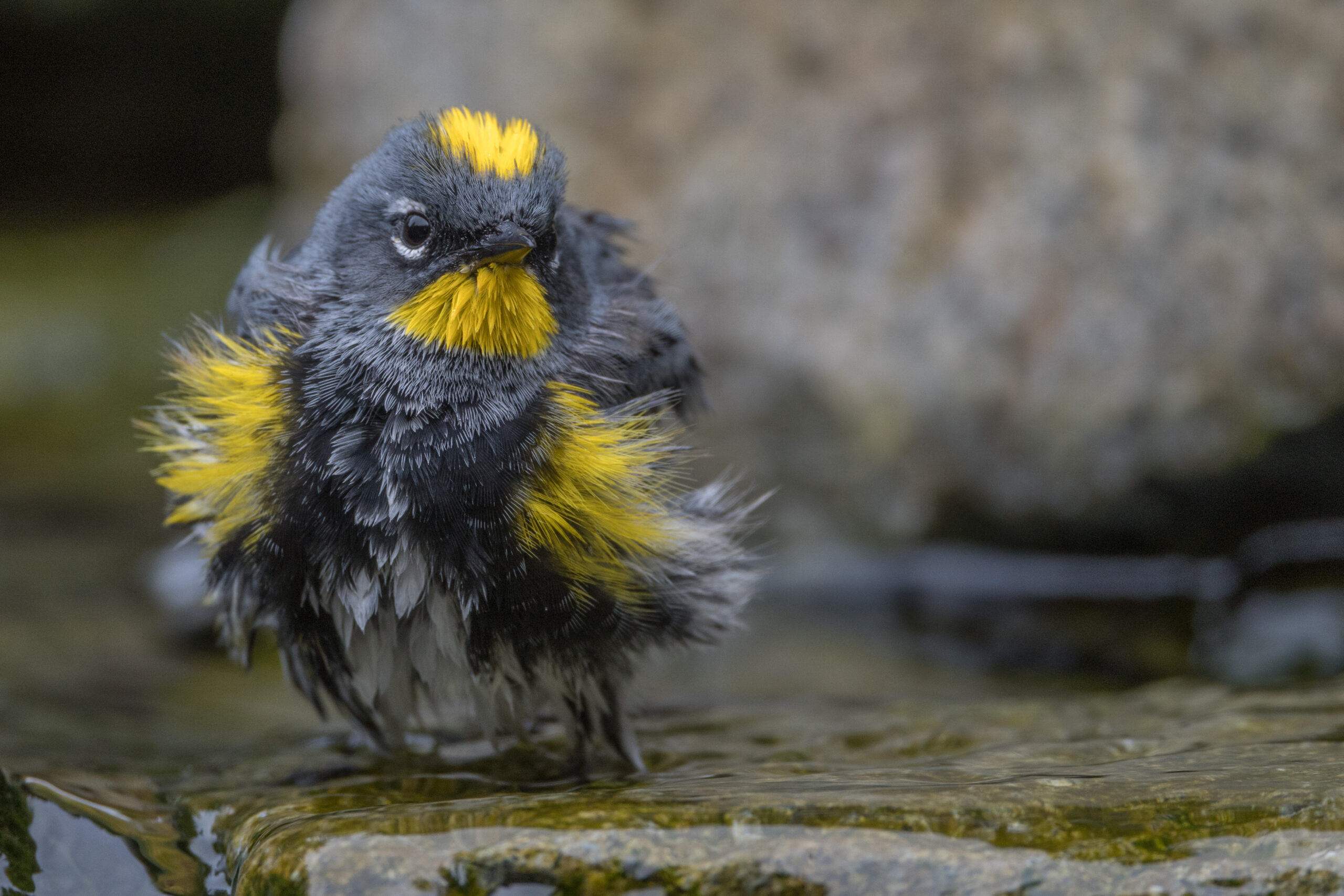
On Sunday, December 20, I was at home watching the Seahawks game when I thought I saw a bird fly in front of our French doors on where west patio. The west patio only has a small bird bath that is rarely frequented by birds. I rose to investigate and found a male Yellow-rumped (Audubon’s) warbler fly-catching from a plum tree just off the patio. I retrieved my camera and took several dozen photos of the bird between forays for some kind of flying insects I couldn’t see. The activity went on for 10-15 minutes giving me ample opportunity for many photos with the many perches the bird used.
As I watched, the warbler was joined by a male (you’ll have to take my word for it!) Ruby-crowned kinglet and several other species of birds.
I was really curious as to what the birds were plucking out of the air, but whatever they were they were smaller than I could see.
A friend pointed out recently that I haven’t posted anything in about a month. So here are a few photos from recent outings. In general, I take photos in the yard in the spring and summer and range further in the fall and winter. We have more waterfowl and raptors in the fall and winter, and that is what will be featured in this post.
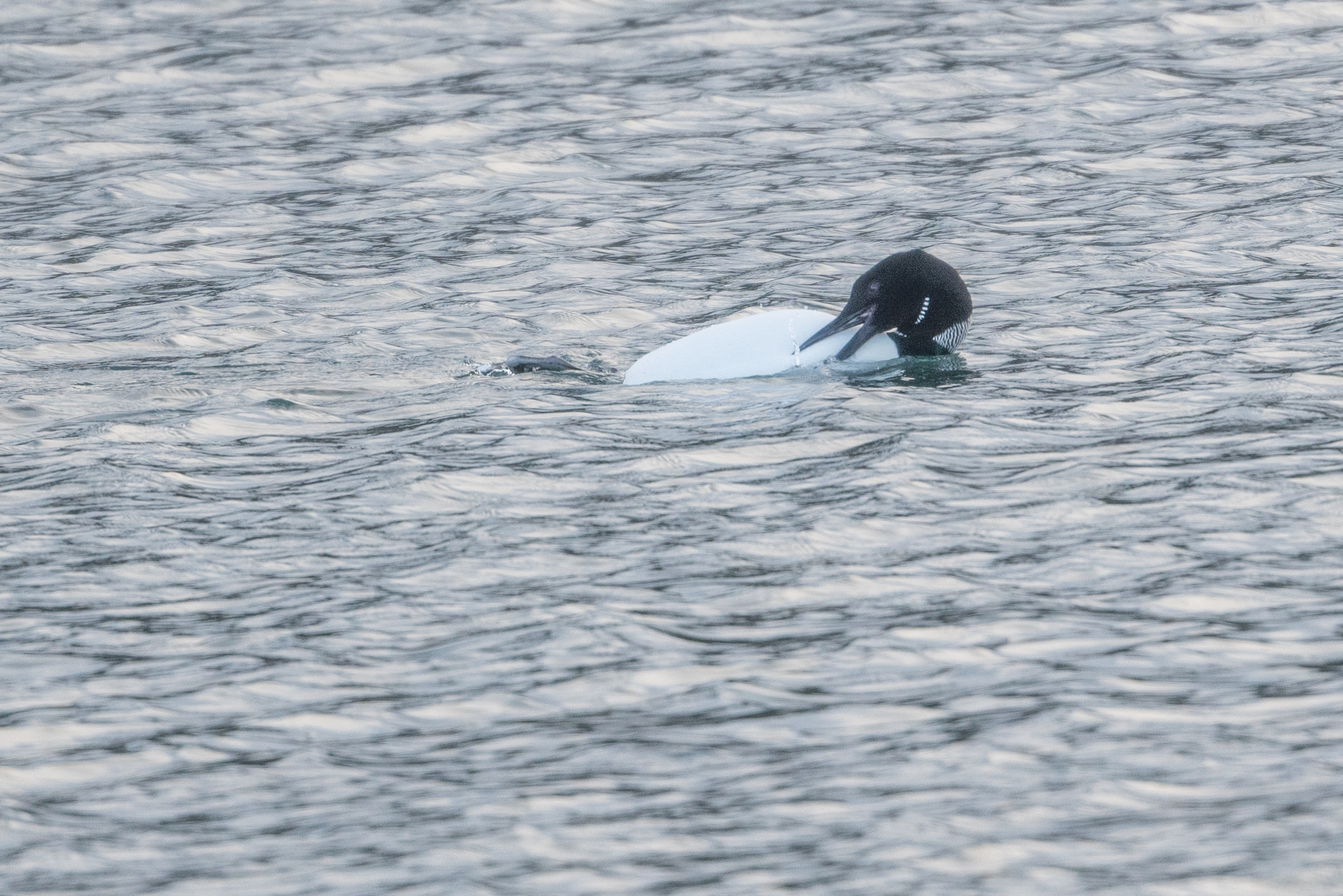
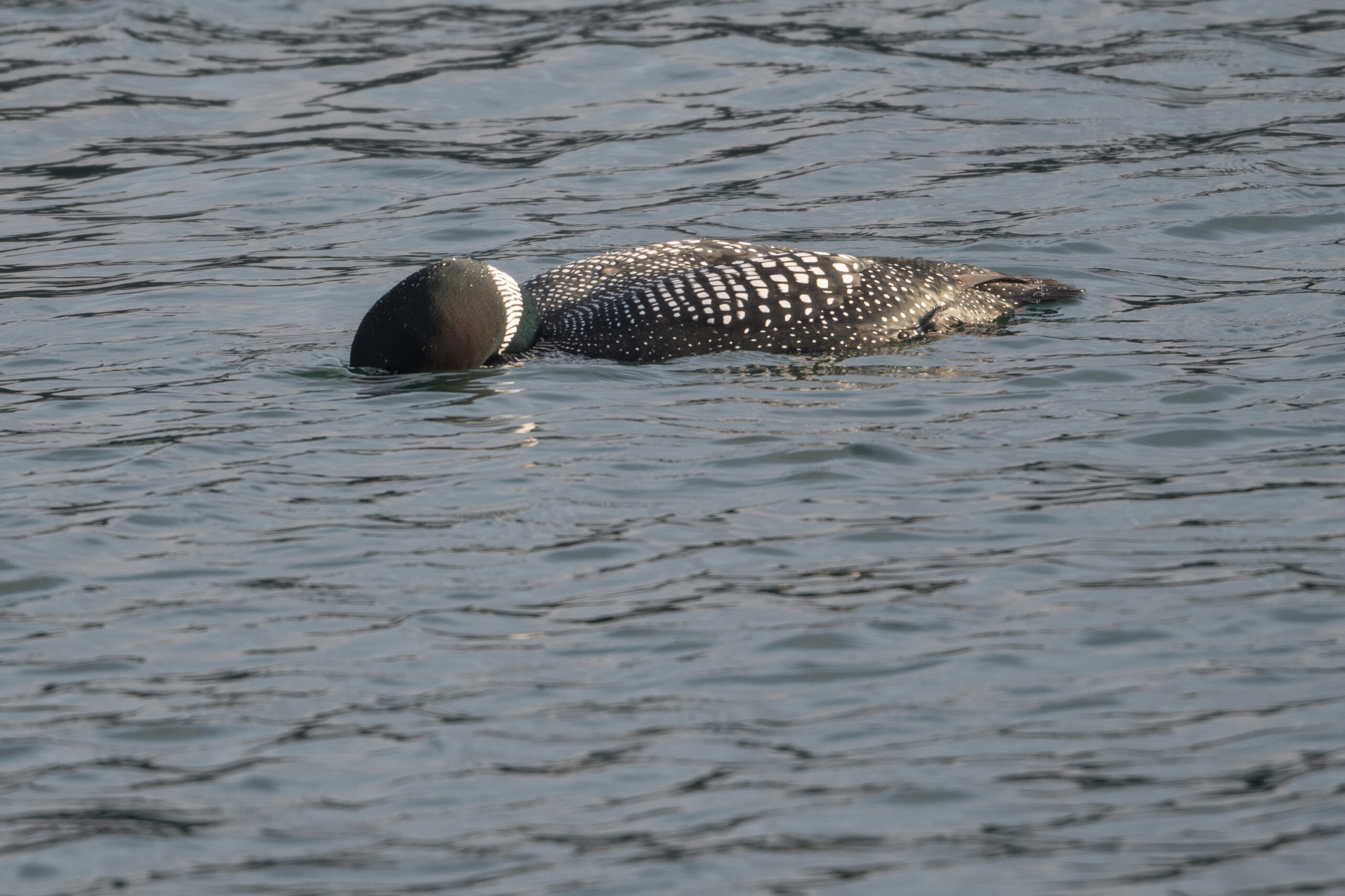
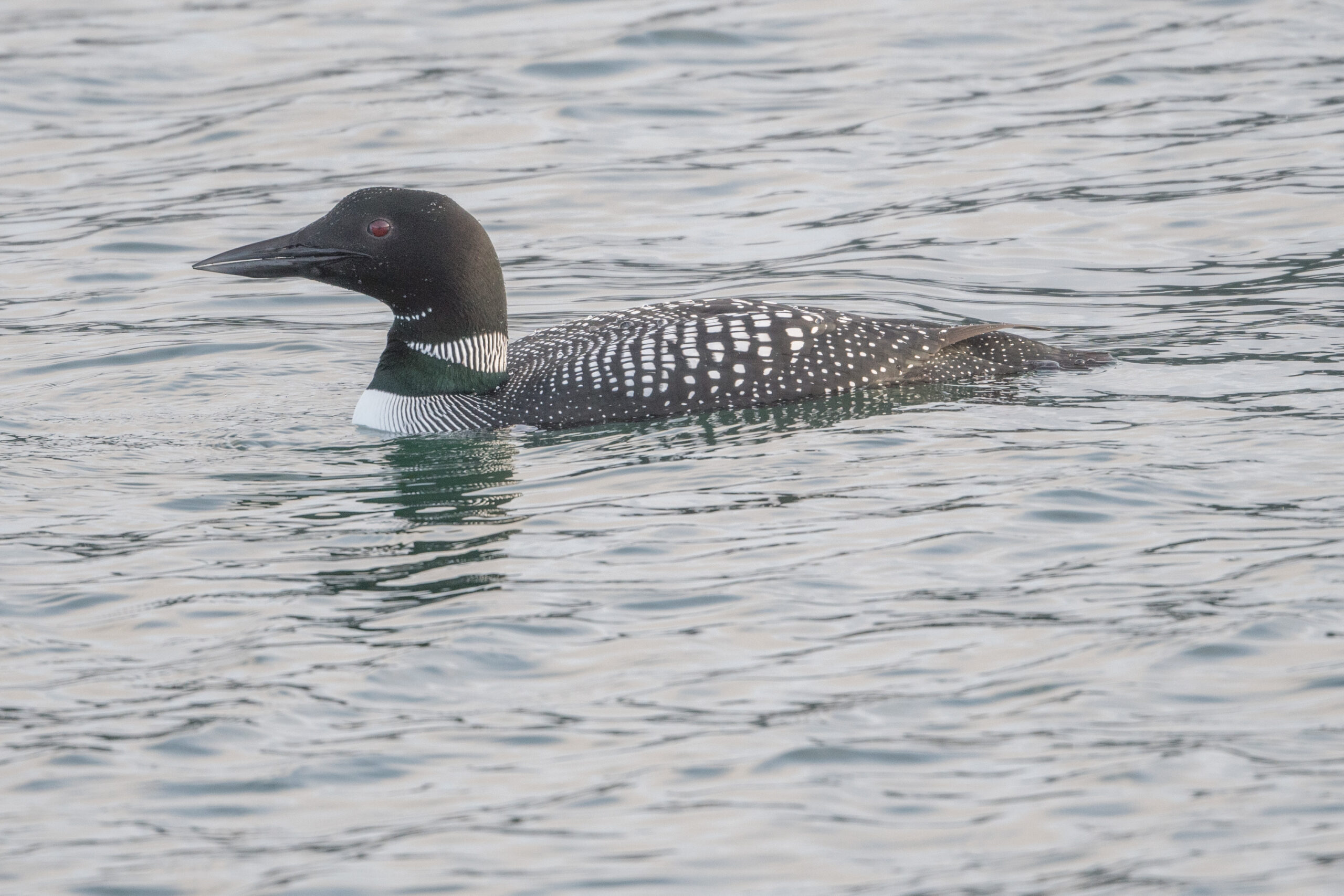
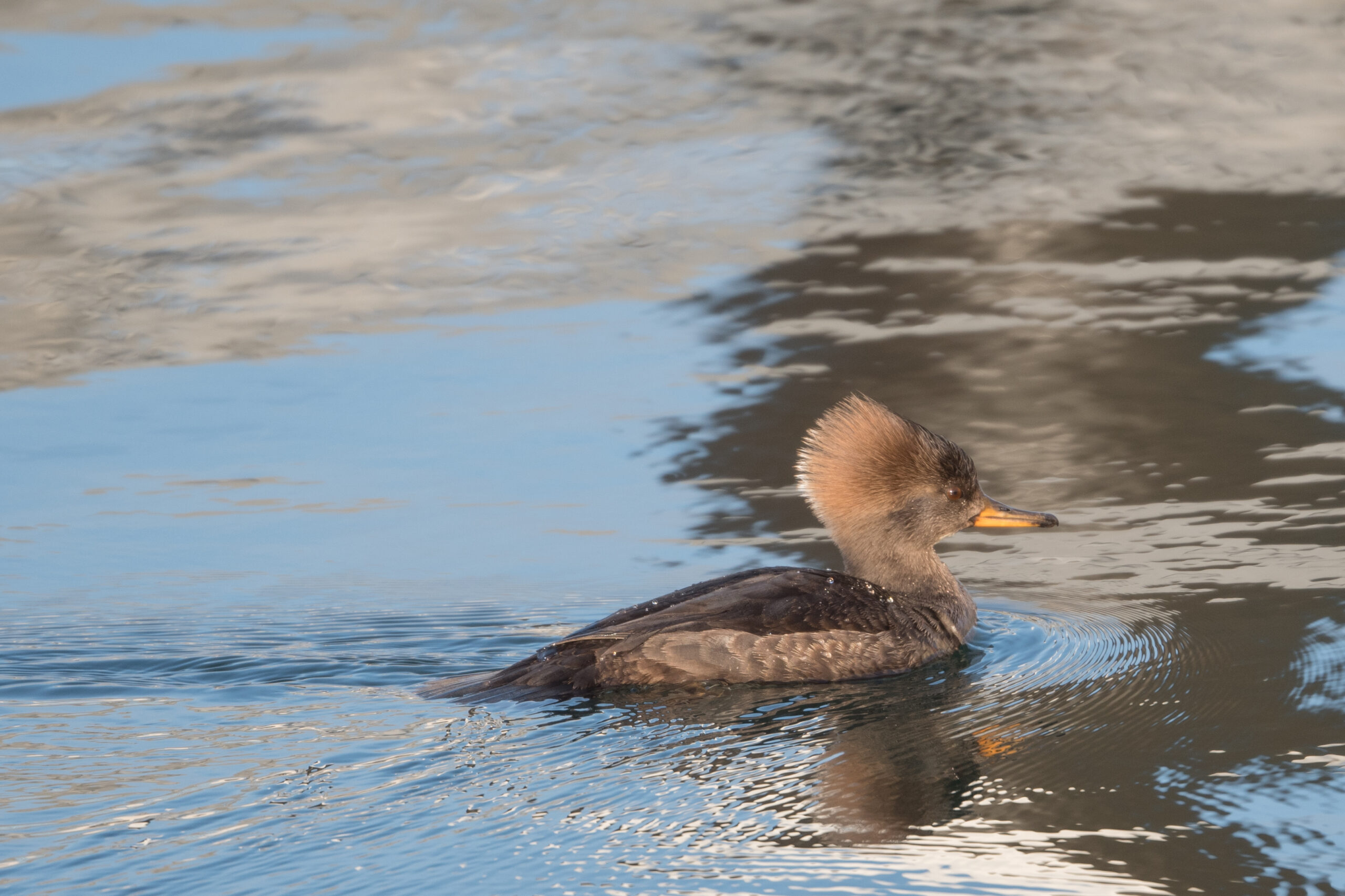
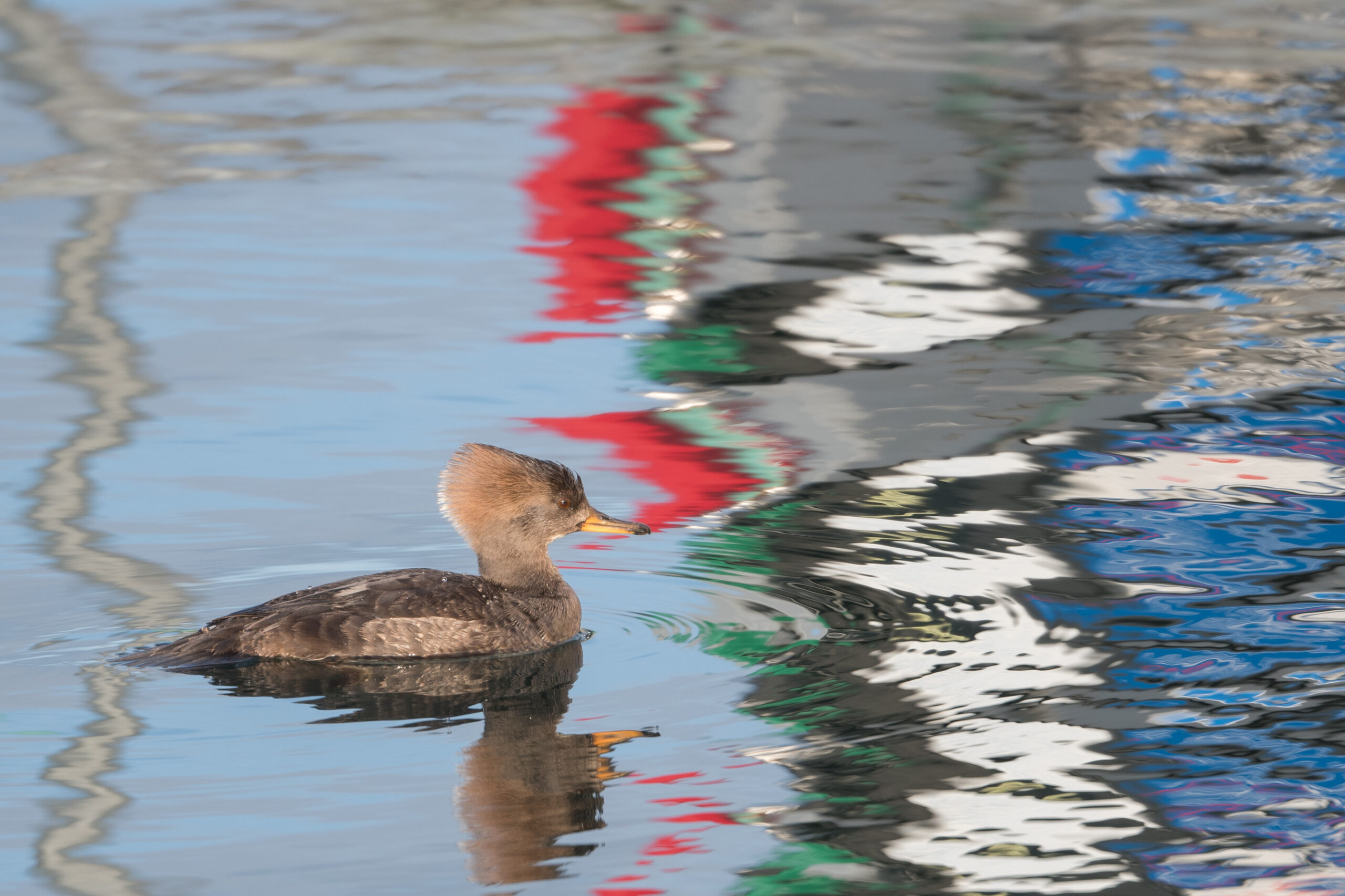
On December 5, 2020, I found a loon in the Cap Sante Marina Basin and so went home to retrieve my camera. By the time I returned to the marina the loon had vanished but there were a few Hooded mergansers swimming. I obtained the following photos of a male, initially with its hood down, but then raising it as part of its preening activity.
Here you can see that the merganser has raised it’s crest just prior to stretching.
Here the merganser is raising its wings as part of its stretching exercise…
And finally, flapping its wings…
On December 11, I drove my usual birding route to Fir Island. Just north of Fir Island I found this Great egret, a rare bird for this area. In the almost 20 years I’ve lived here I’ve only seen one other. It was just south of Samish Island.
I returned on December 14 to check on the egret, but it was not in the same area where I had previously seen it. However, once on Fir Island I found this young Bald eagle perched on top of a power pole.
I’m still trying to figure out how to get my notification system up and working again. If you sign up for notifications now you will NOT receive notifications until I figure out how to use the notification app.
I got out into the yard about 2pm on November 9, 2020, when I noticed from inside the house that the yard was absolutely filled with birds. The day was heavily overcast with not a lot of light but I decided to give photography a try. I was in the yard for maybe an hour and a half and during the entire time the yard was full of birds. I can’t overstate how many robins and siskins we had continuously coming and going.
These are the birds I saw:
Robin, American (≥ 30)
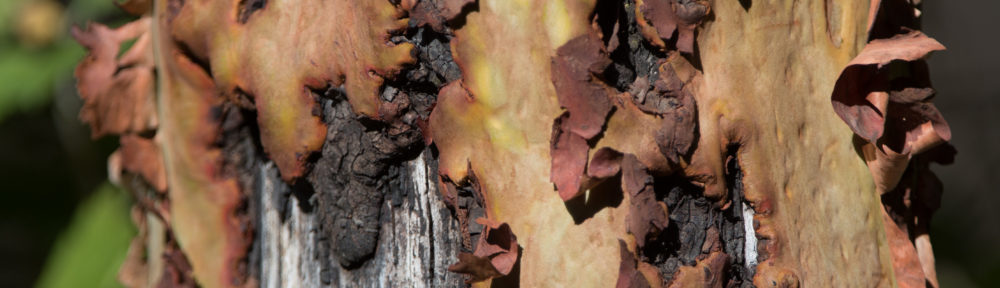
There are lots of opportunities in the neighborhood for birds to eat madrone berries. We have a few trees in the yard with berries rapidly disappearing. While a few robins availed themselves of our berries most were interested in our water features. This robin was eyeing some of the madrone berries.
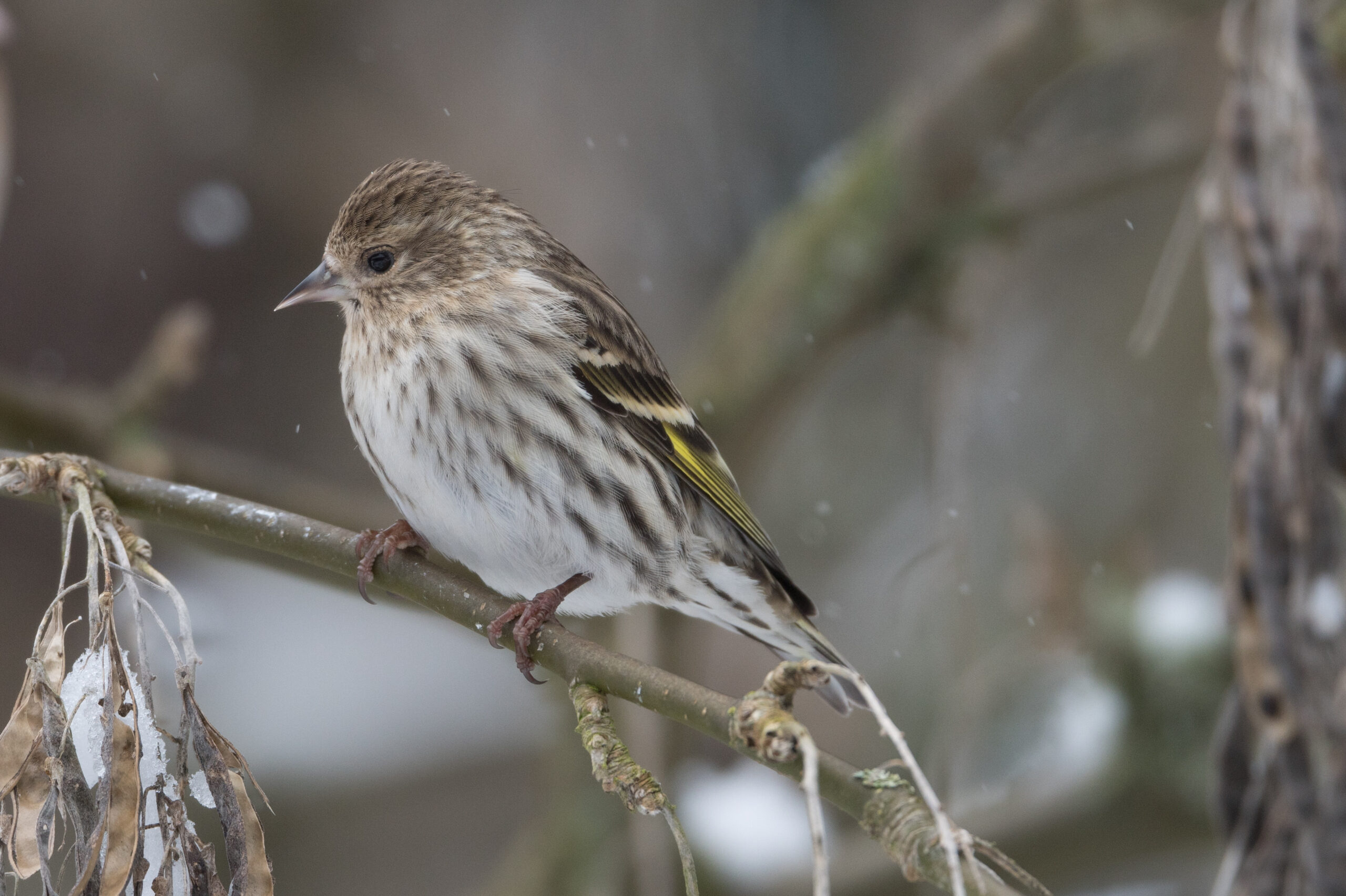
Siskin, Pine (≥ 20)
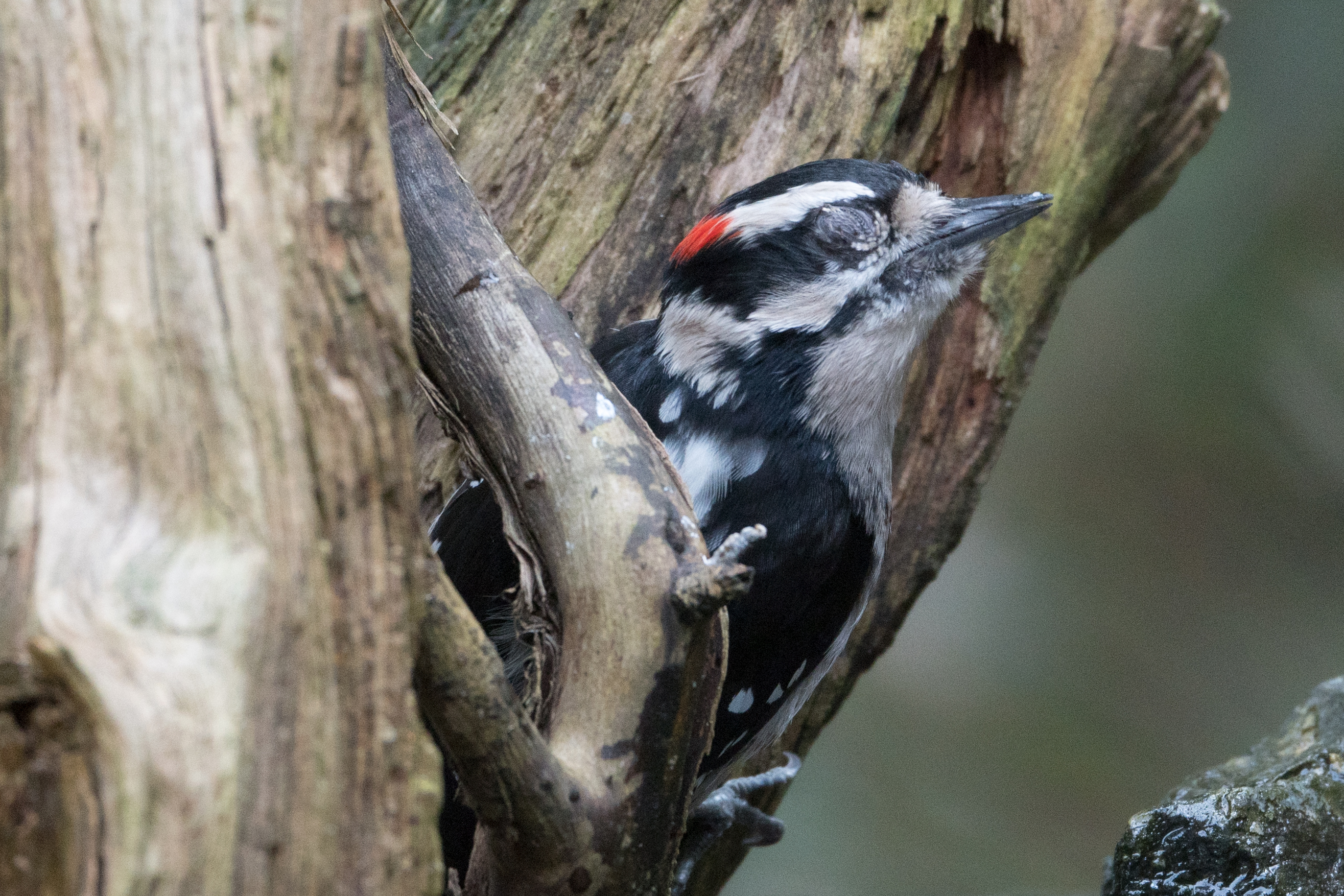
Woodpecker, Hairy (m)
Woodpecker, Downy (m)
Nuthatch, Red-breasted
Creeper, Brown (x2)
I was fortunate in that a crowd at this bird’s favorite watering feature (a stone bird bath) induced it to move to the watercourse, which is much closer to me. It also gave me the opportunity for better photographs than I usually get.
Wren, Bewick’s
This wren was a reliable visitor to our suet feeder all summer long, and the frequency of its visits led me to believe that it may have been feeding the suet to its young. It was usually content to glean fallen bits of suet that had fallen from our inverted feeder to the ground, but it was capable of accessing the feeder directly. On this day it was eating hulled sunflower seed I had thrown on the ground for other birds.
Warbler, Yellow-rumped (f/j)
This was a surprise visitor in the winter and our first warbler in some time! It was interested in the watercourse but the traffic there was apparently too great and it moved on with me just missing the opportunity for a photo.
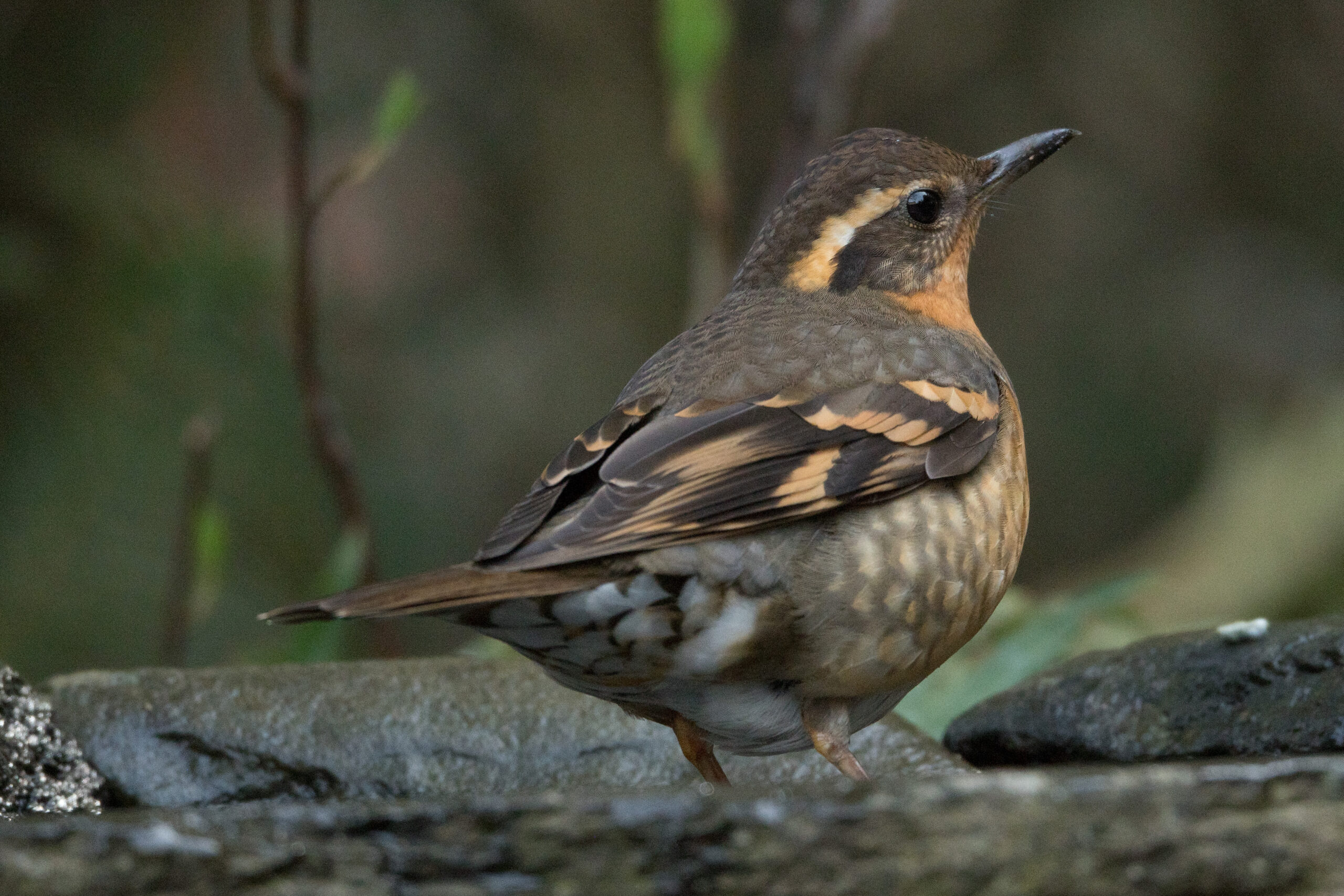
Thrush, Varied (m, x2)
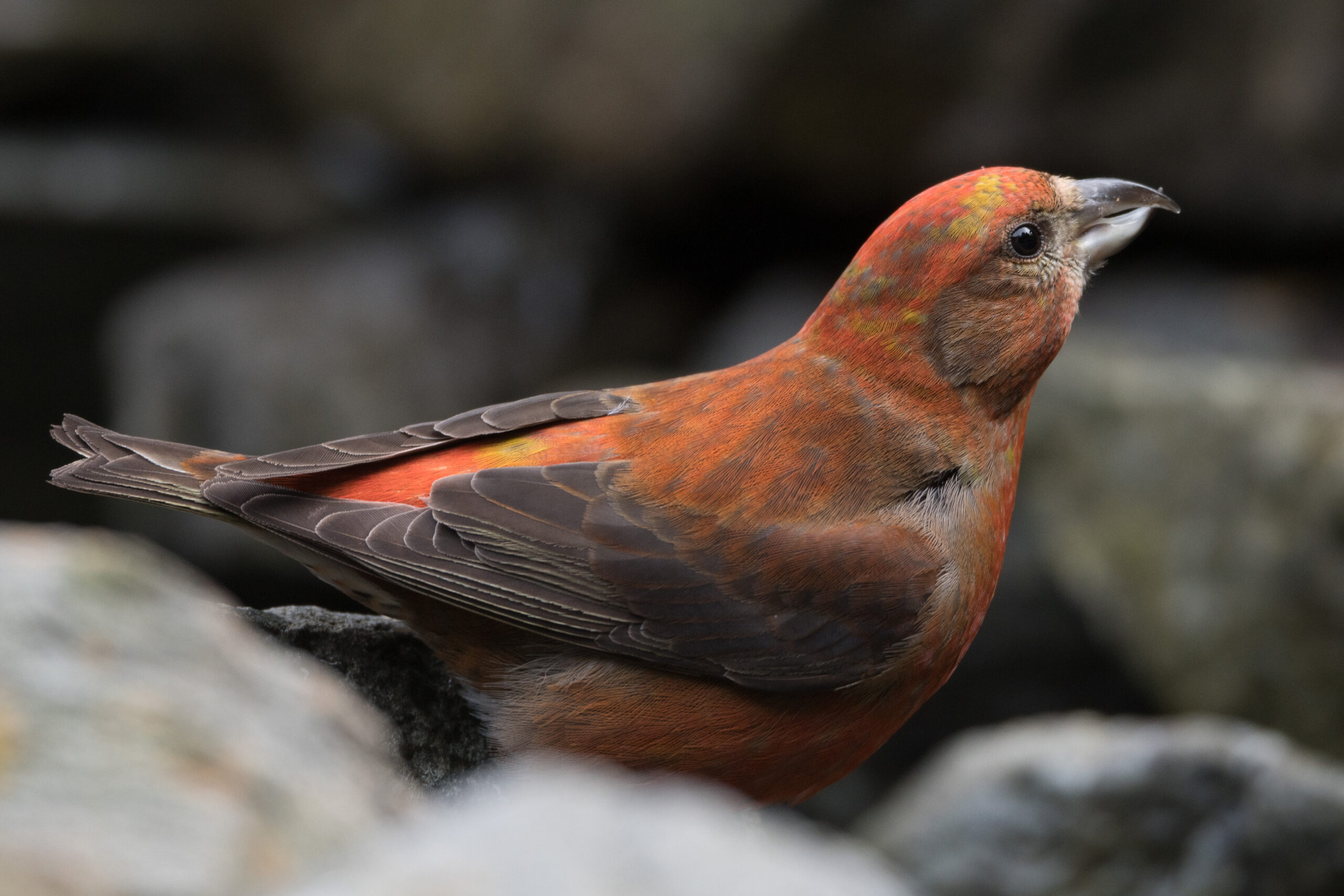
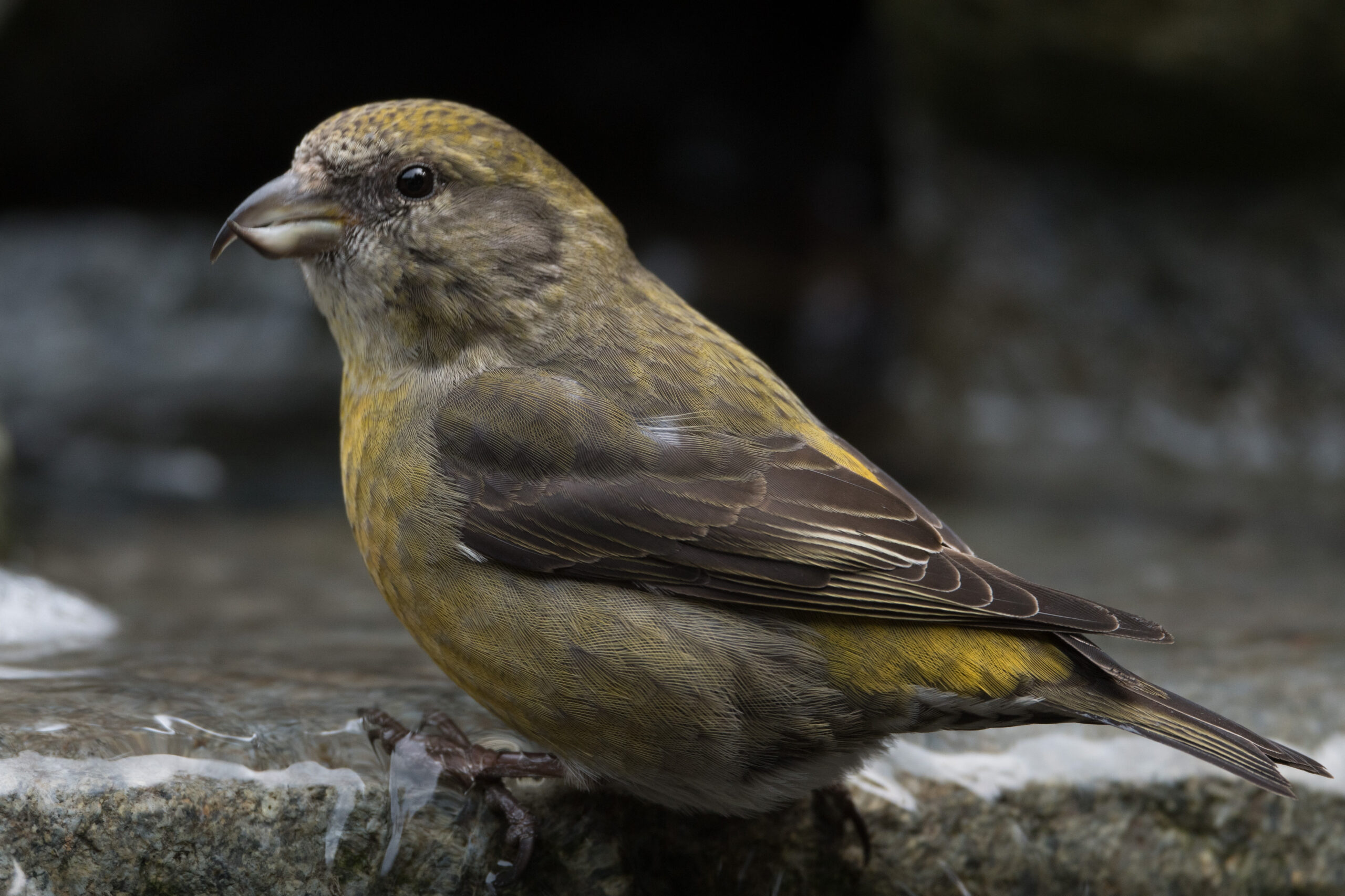
Crossbill, Red (f, 2f)
A single female/juvenile crossbill first visited the stone water feature and later a pair of females visited the watercourse. The male of this group has been a very rare visitor.
Flicker, Northern (m, f)
Chickadee, Black-capped
Chickadee, Chestnut-backed
Towhee, Spotted (≥2)
Junco, Dark-eyed – Oregon
Junco, Dark-eyed – Oregon (leucistic)
This leucistic bird has been with us for 2-3 weeks now and is an unreliable visitor. If I’m lucky I may get one sighting in a 2-3 hour sitting, but the bird is very shy, doesn’t stay long when it visits and flies from the yard at any provocation.
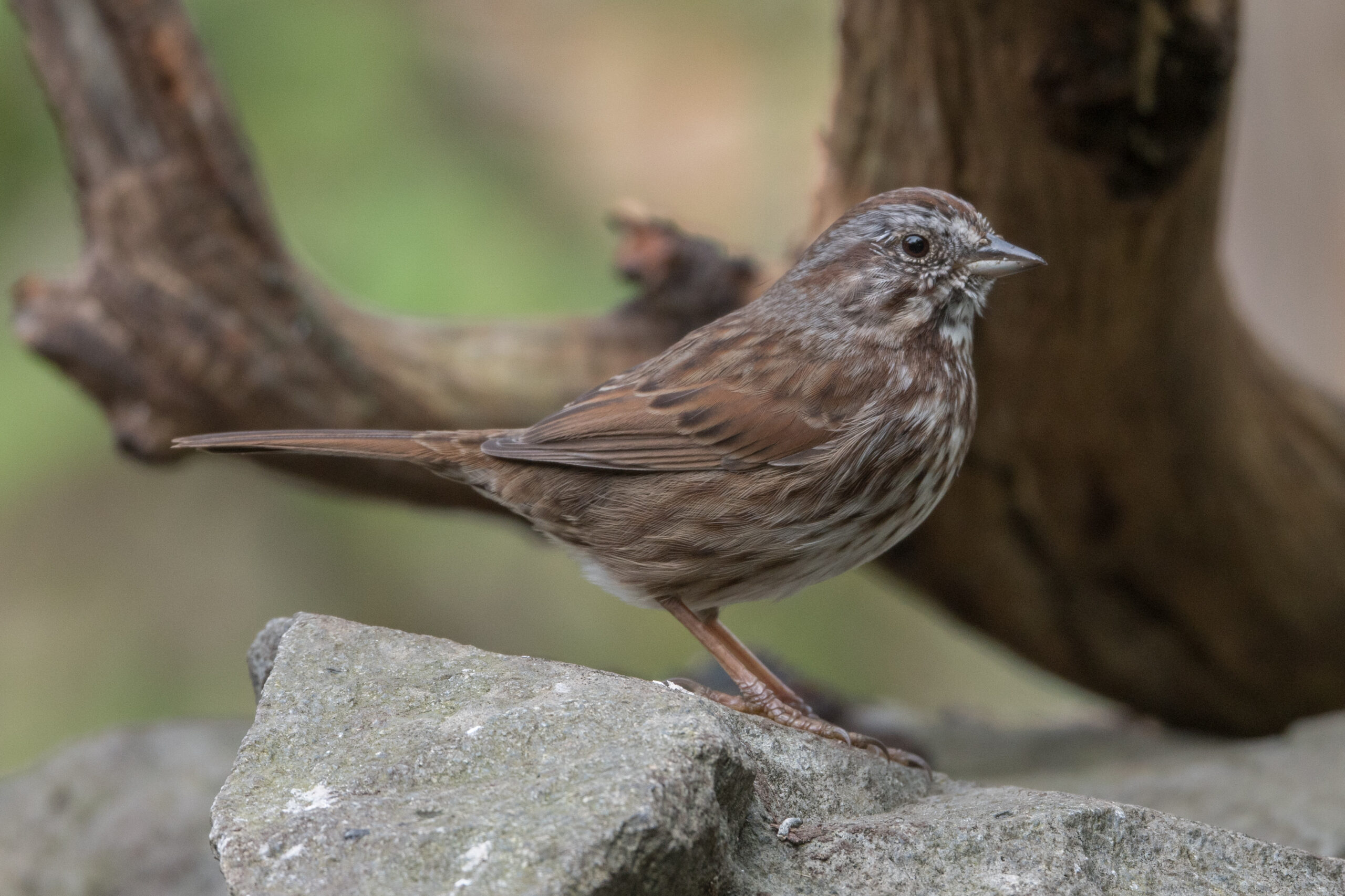
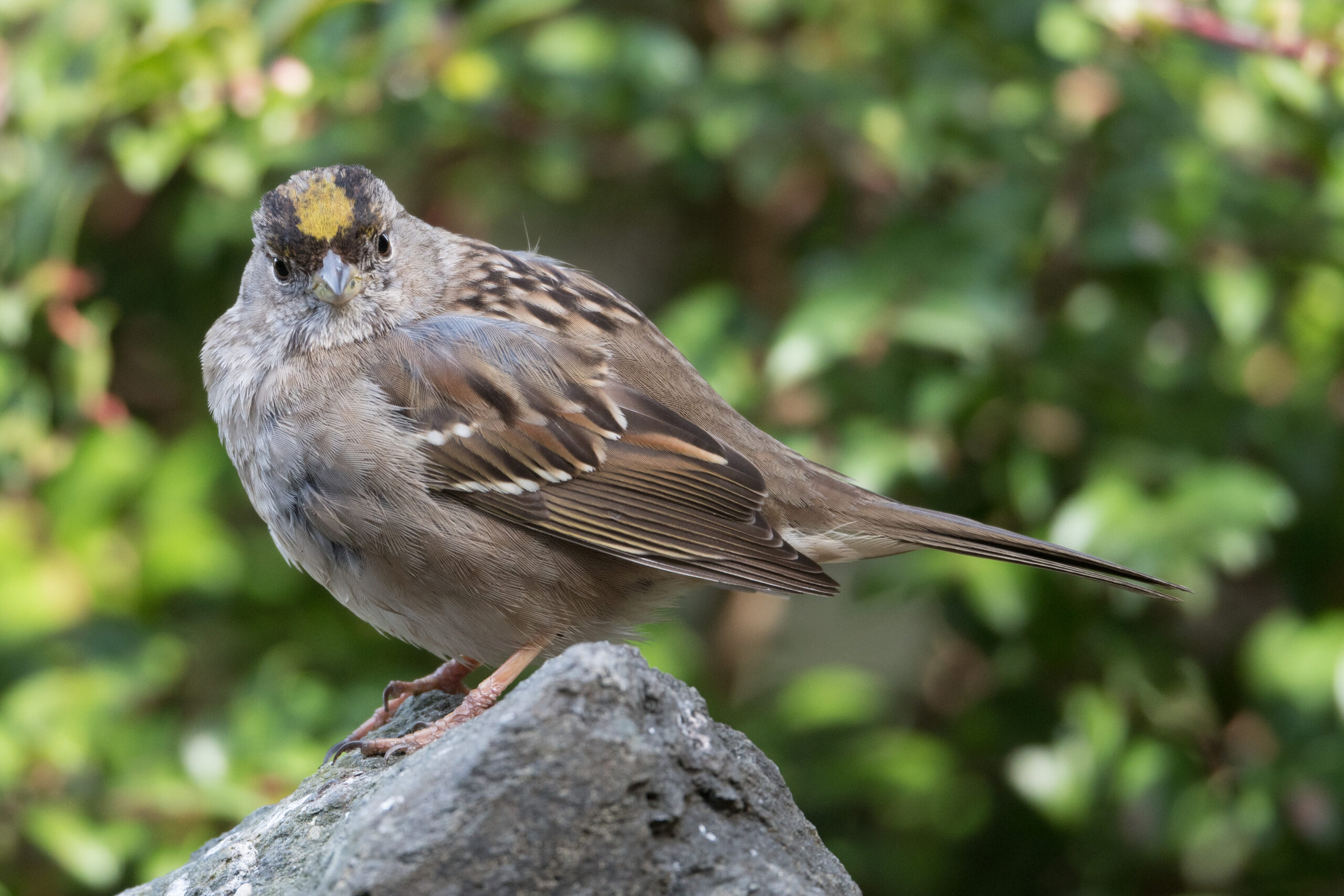
Sparrow, Golden-crowned (≥ 6)
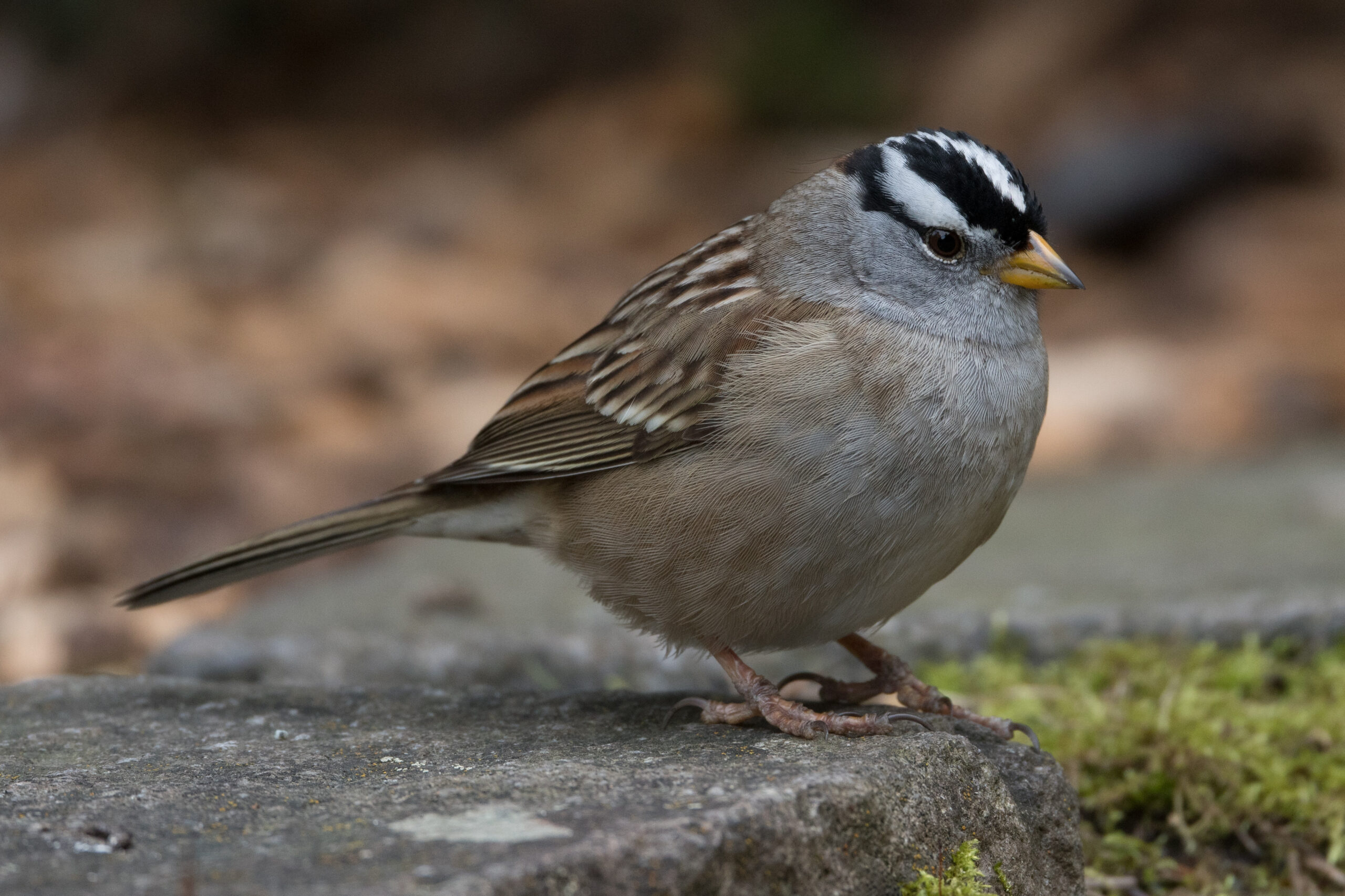
Sparrow, White-crowned
Sparrow, House (m, f)
Finch, House (m, f)
Owl, Barred
The previous day (11/8/2020) I discovered a Barred owl in the Cap Sante wetland, maybe about three blocks northeast of us as the crow flies. The owl was in the open but had managed to keep a few small branches and leaves between me and any place I could reasonably take photos. I did manage a few photos but it was late in the day, it was overcast and there wasn’t a lot of light.
I returned the next morning to see if I could find the owl but it was not in evidence. After my time in the yard this afternoon I returned to the wetland. I told myself I would increase my chances of finding the owl by not taking my camera along. It worked! The owl was back sitting on the same branch within a few feet of where it had been the previous day, but still behind one or two small branches so that I didn’t have an unobstructed view! I could have gone back for my camera but it was already getting too late for photos.
The birding photography opportunities have been coming so fast and steadily that I haven’t had much time to keep up with my blog posts. On October 28 I noticed a large number of American robins assailing neighborhood madrone trees so I drove up the street about a block and used my car as a blind to photograph the feeding. I took over 300 photographs this day and at least half of them were of robins in the madrone trees.
While photographing the robins this male House sparrow flew to the top of a nearby bush and presented a classic pose.
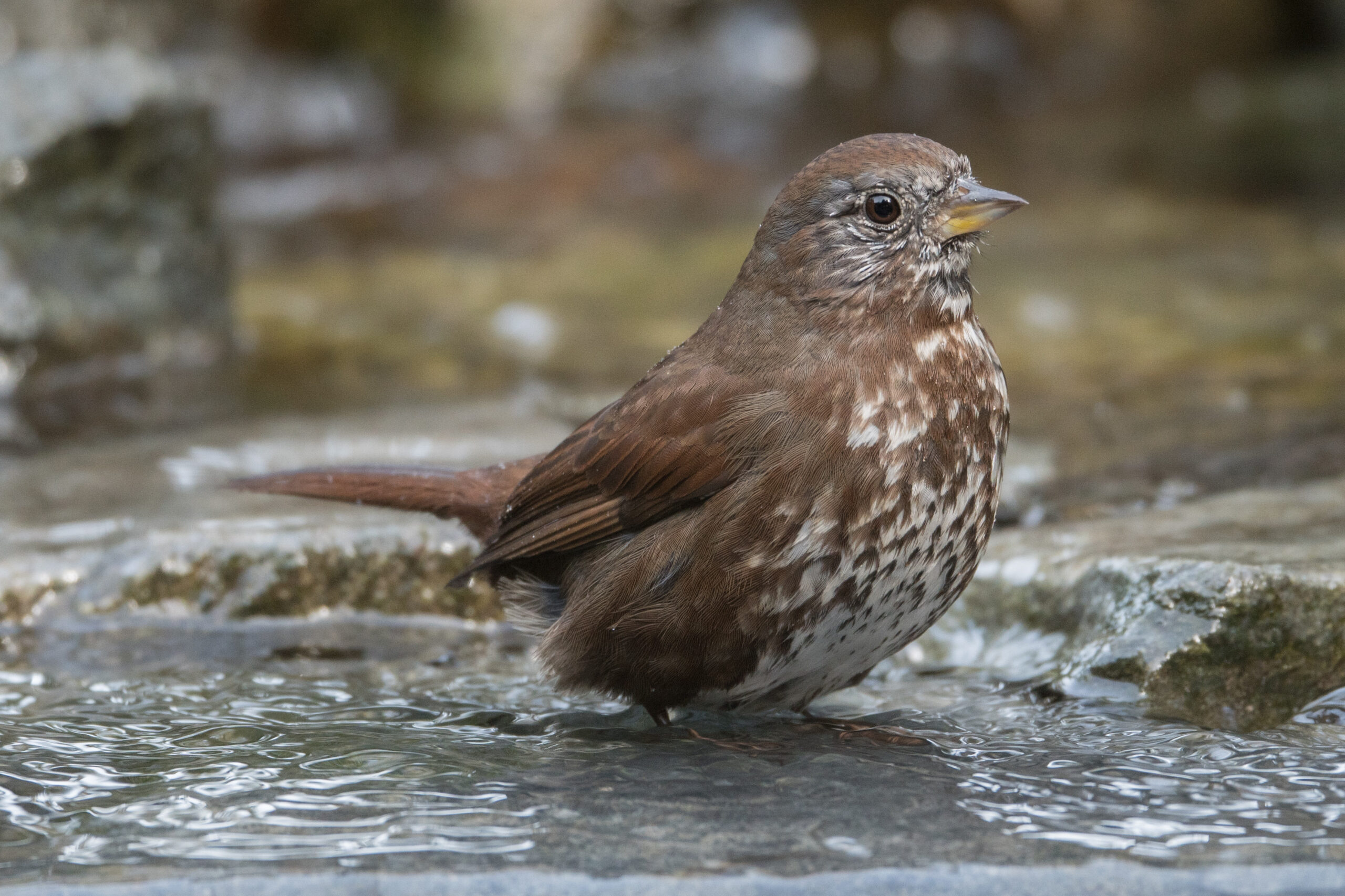
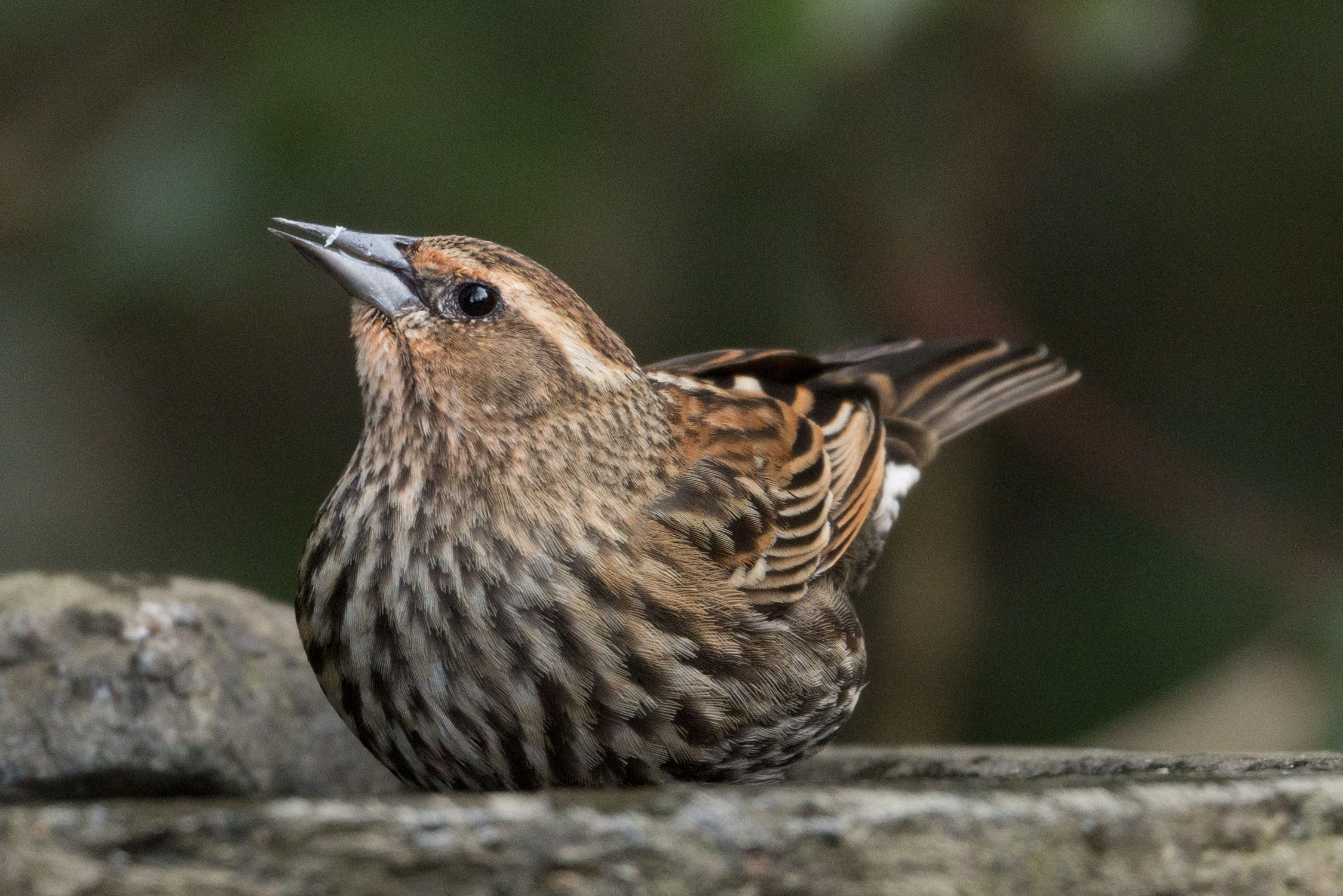
Back in the yard, this Fox sparrow visited for a drink from our stone bird bath.
This male Hairy woodpecker is probably the same one you saw in my last post, ie, the only one coming to the yard these days. We hope a female shows up before next spring so that this guy doesn’t have to leave the area to find a mate as apparently happened this year. Incidentally, the woodpecker is on a dead tree/branch that I appropriated elsewhere and ‘planted’ in the yard for a staging stick. I think you’ll agree that it serves its purpose.
This Bewick’s wren enjoys the suet feeder, mostly feeding off scraps that fall to the ground under the feeder. But the wren is not beyond making a quick trip up to the feeder if it runs out of food below. It uses this rock, on which it is perched, as a launching pad for it’s trip up to the inverted feeder. Knowing the wren likes this rock allowed me to get about a dozen photos on just one of its visits.
This was a big day for visits from female Red crossbills, although I never saw the male. I think this first photo is of a juvenile, the next photo is probably an adult female, and the third photo is apparently of a mature female.
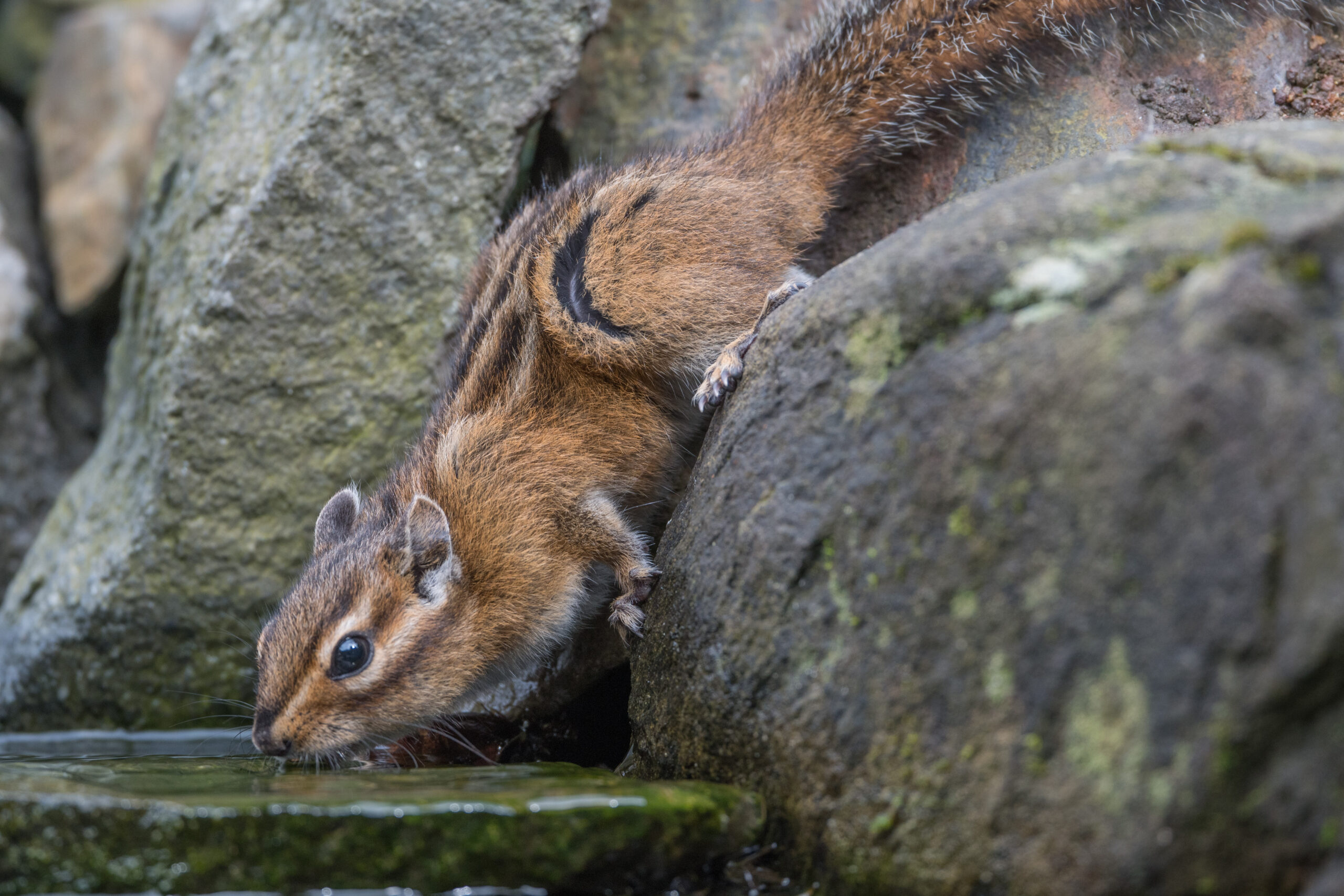
Finally… (you’ll remember from prior posts there’s always a “finally”), here’s a photo of one of my companions (a Townsend’s chipmunk) who keeps me company from time to time. It doesn’t look like he/she will be suffering any food shortages this winter, although temporary food storage problems may present a challenge!