2021 SNOW!

It should come as no surprise to most of the country that we have experienced snow here in Anacortes in mid-February. It has snowed here almost continuously from the night of Feb 12-13 until late in the afternoon of February 14. I always relish the opportunity to photograph birds in the snow because it makes for a different environment and the birds behave differently. I have been feeding birds during this time, mostly on the ground (snow) but also from a suet feeder and a chickadee feeder. I had hoped for visits from a rarer bird or two (a neighbor has had a Varied thrush and Red-breasted sapsucker) but my yard is filled with the same birds. So here are some of our residents… in the snow!

This first photo is, of course, of a male Dark-eyed junco of the Oregon race.

This photo is of the same species and sex, but is the leucistic bird that has been with us for a couple of months now. He comes with camouflage that is suddenly appropriate for the weather!

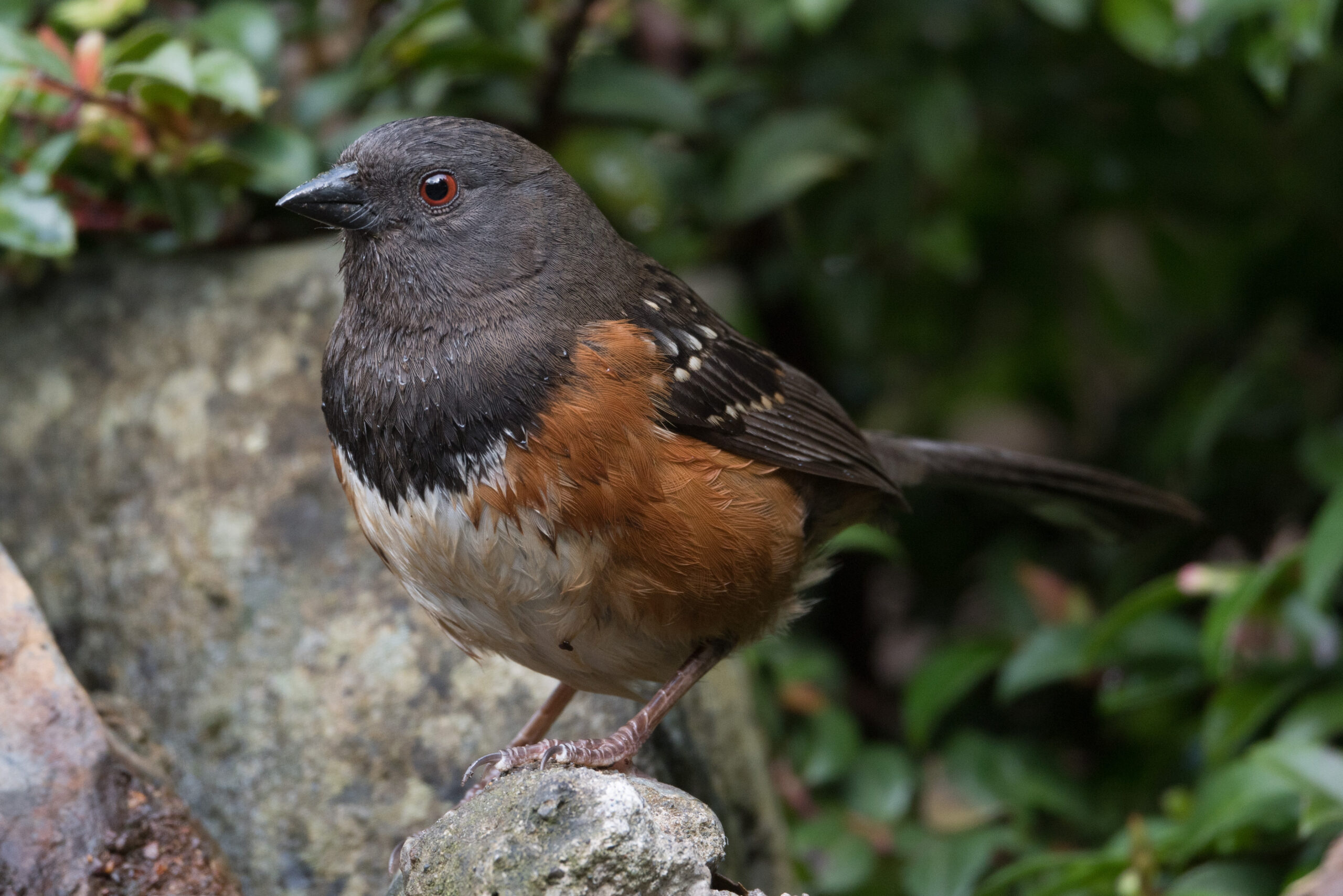
Continuing with the sparrow family, Spotted towhees… this first image is a male and the second image probably a female. (It’s sometimes a subtle difference between the sexes!)

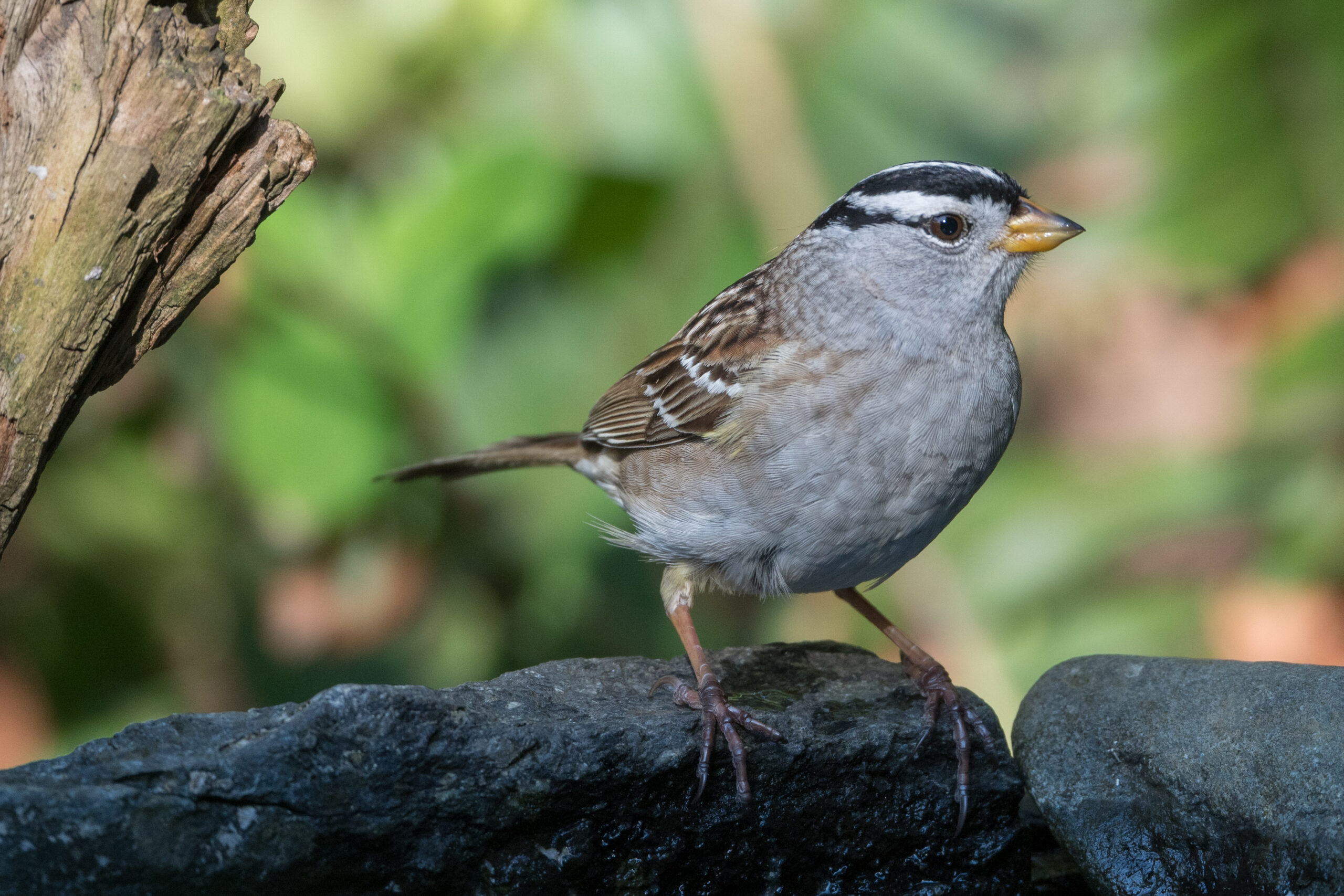
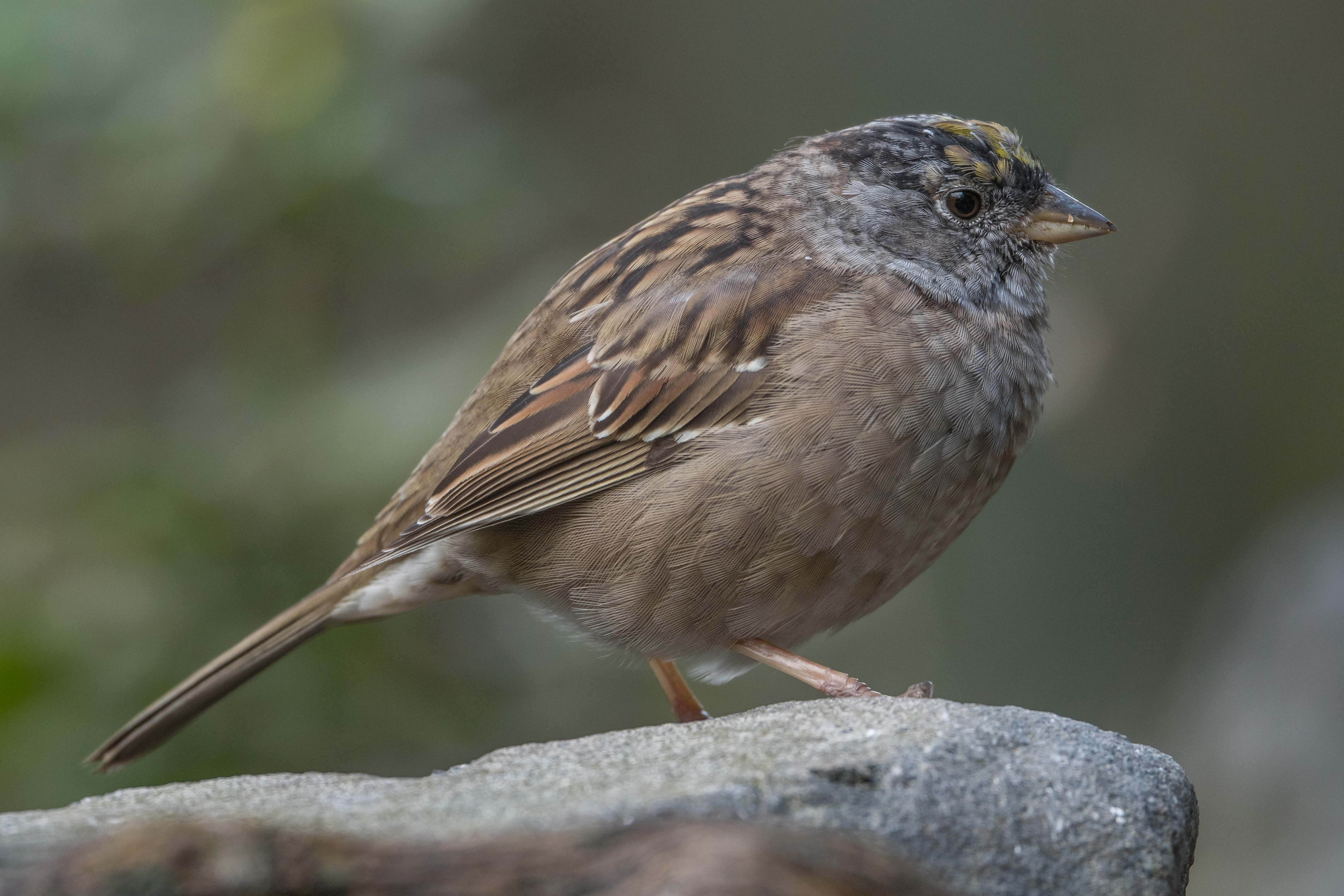
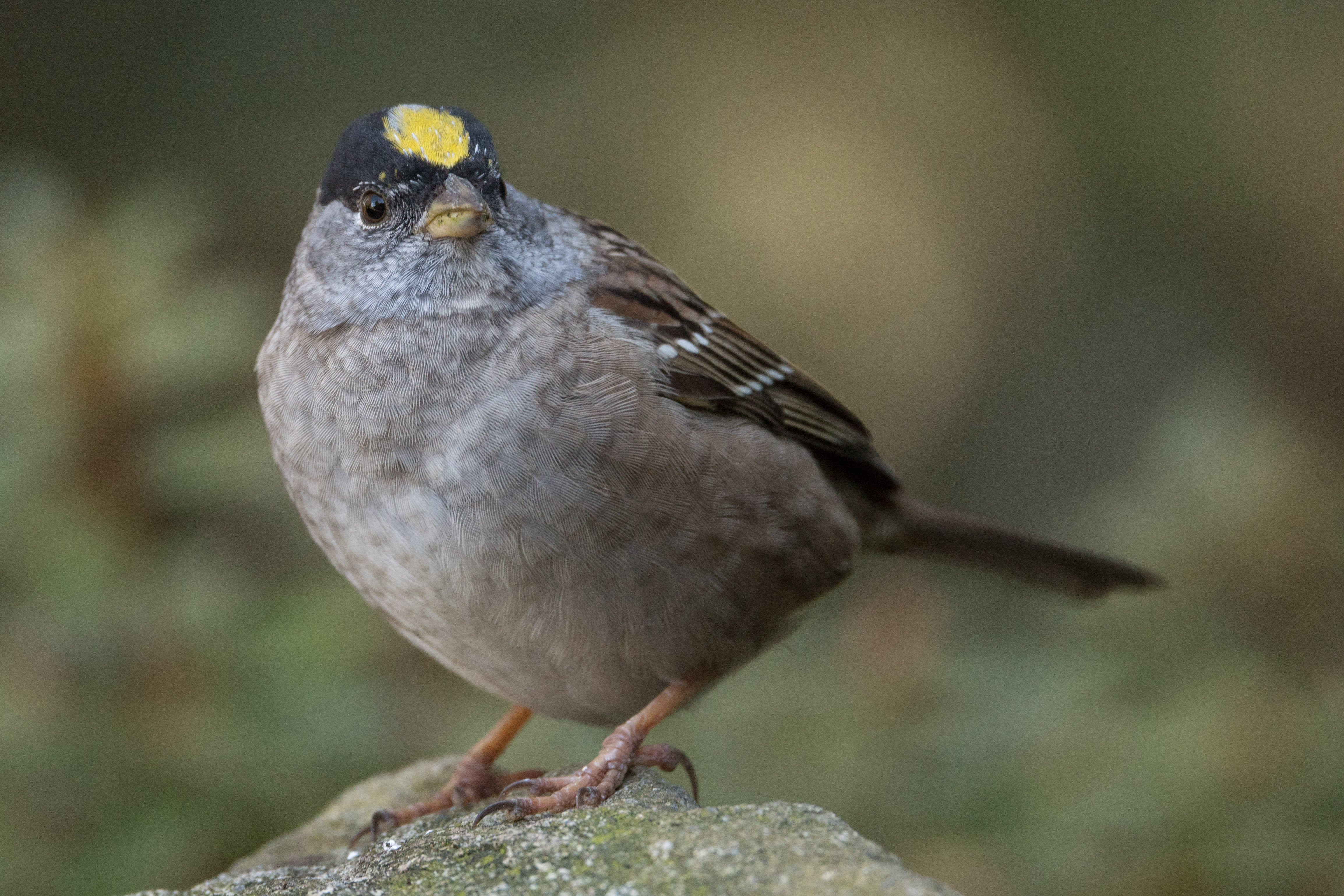
A Golden-crowned sparrow. I used to think I could tell the difference between the sexes of this species in the winter but I’ve given up the idea that I ever had that skill! If I had to guess, I would say that this first bird is probably a male and the second bird either a female or a first-year bird.

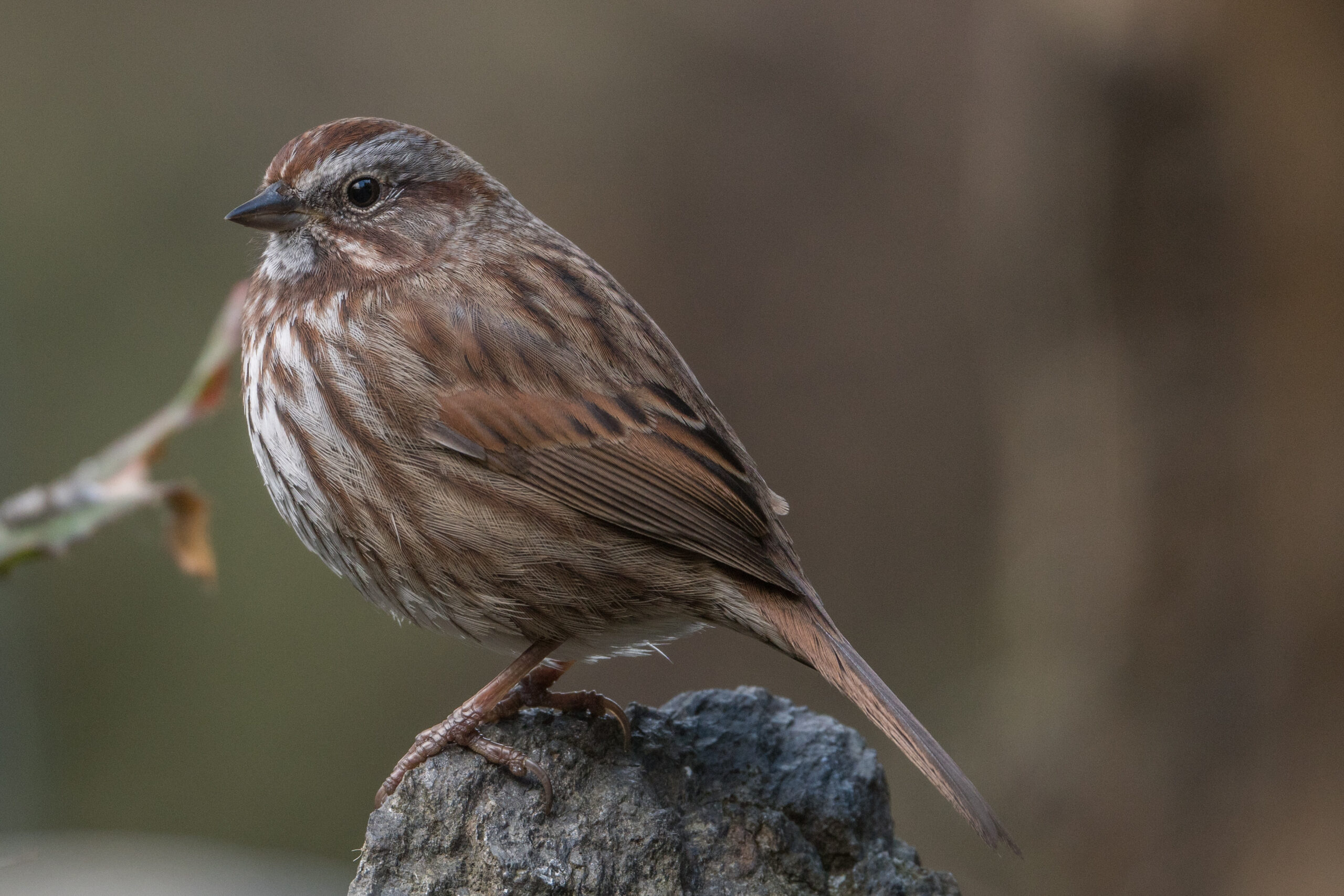
This is a Song sparrow. These birds aren’t very gregarious and I’ve only ever counted two in the yard at one time, but most of the time I can spot only one.

When I first moved to the Pacific Northwest (20 years ago from Texas) I had a very difficult time telling the Song and Fox species apart. That is no longer the case. This is a Fox sparrow

This final image is of a female Bushtit. It’s been a while since I last obtained a decent Bushtit photo and this one isn’t great, but since these birds can be difficult to photograph and this photo clearly reveals the sex of the bird, I decided to post it.

From a photography standpoint, the snow can offer special challenges. If it’s actively snowing the whiteness of the flakes can appear to be aberrations in the bird’s plumage or obscure details such as eyes or beaks. But the snow often offers opportunities to get closer to the birds and to obtain a different background for photos. The white dot above the Bushtit is probably a falling snowflake (which I could remove using Lightroom software) but you can imagine the effort if there was a lot of snow falling!

Another Outing

I managed to squeeze out a walk in Washington Park before a light morning rain began on February 2 (Groundhog Day). By noon the weather looked more promising so I set out on an excursion to Fir Island. My first stop was in the neighborhood where I found this male Anna’s hummingbird in the middle of what we locals refer to as the Cap Sante Wetland. It’s easier to photograph them in the yard, but I was pleasantly surprised to find this one ‘in the wild’! The hummingbird was busy defending a perceived territory but took a break for some preening.

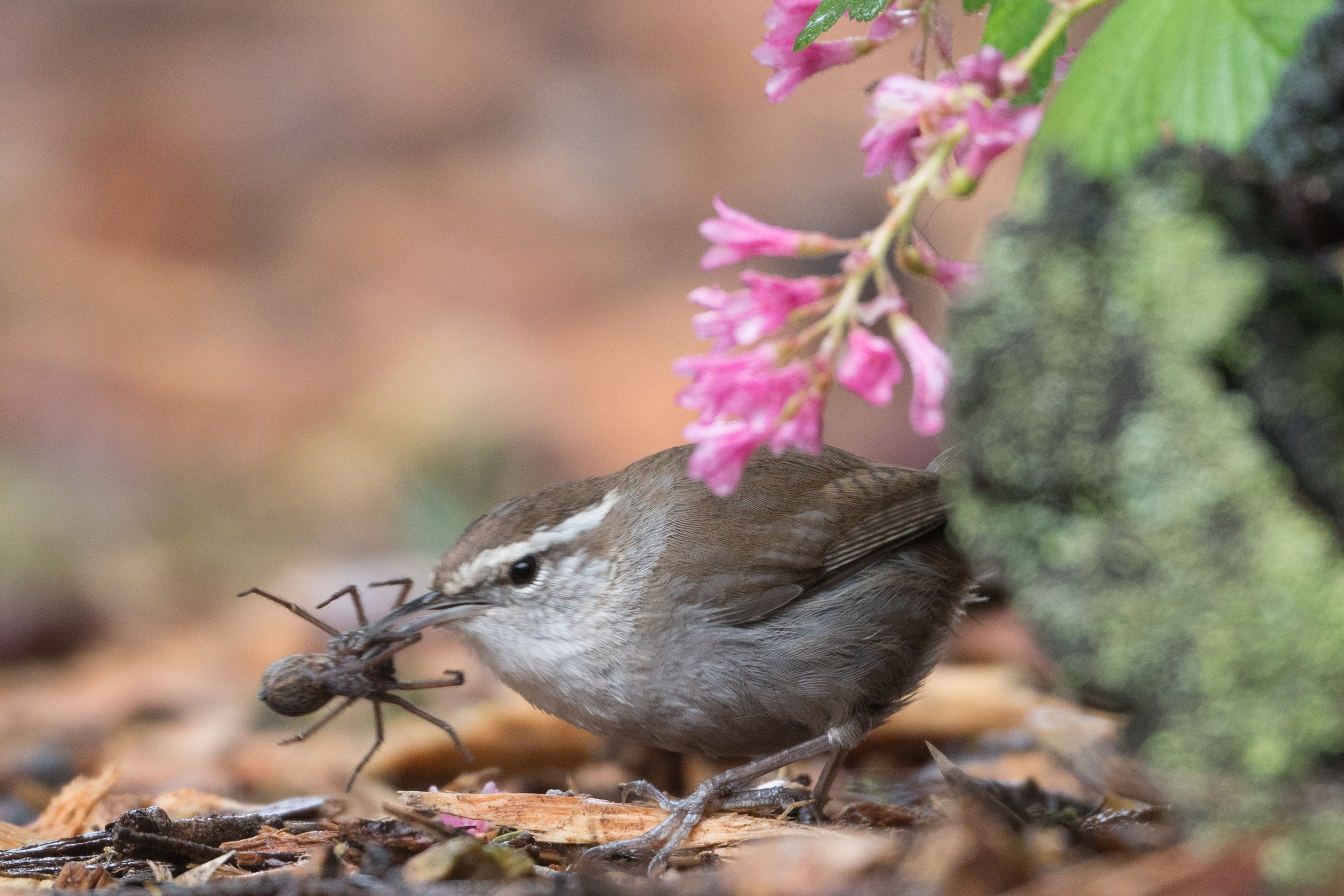
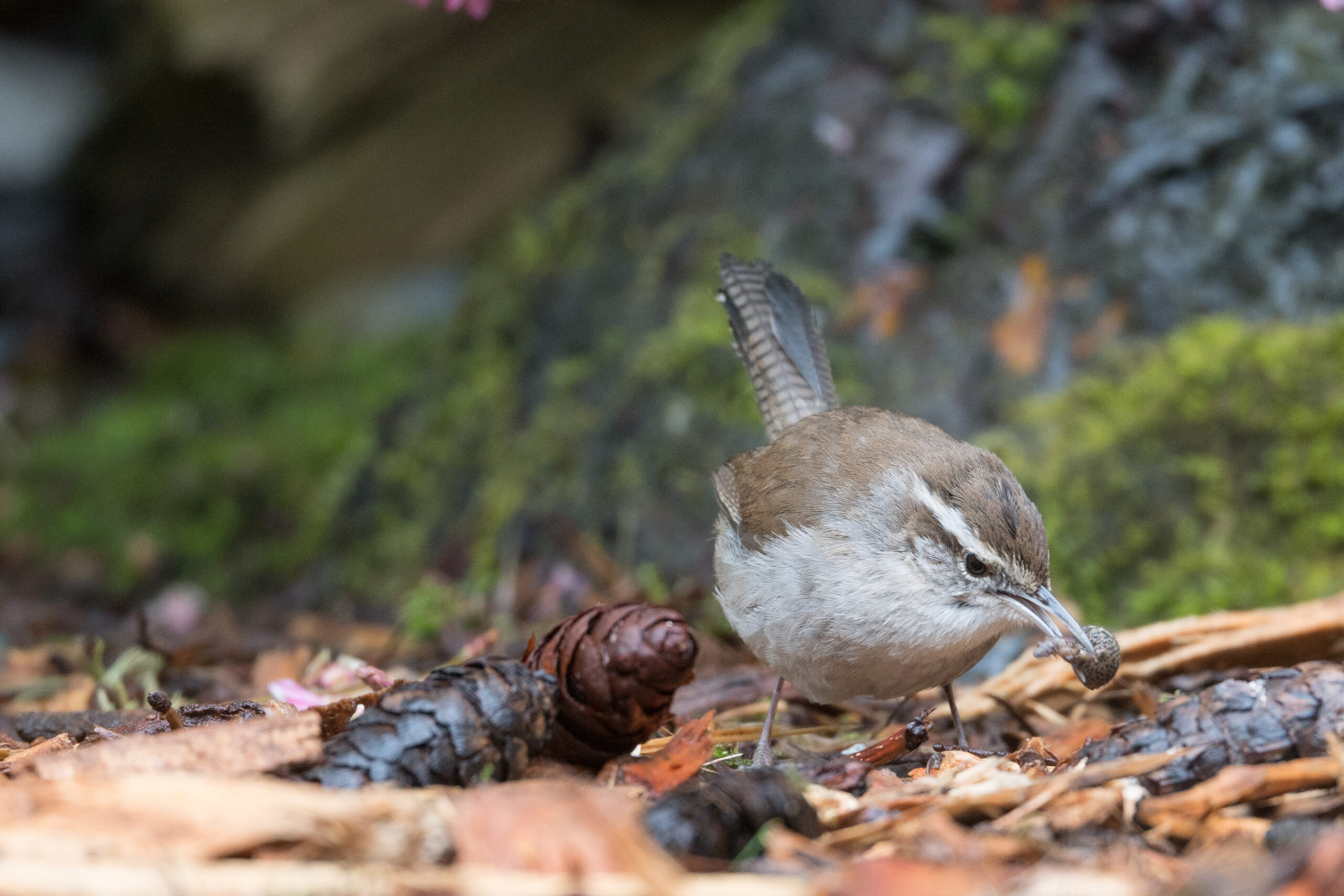
Not far away this Bewick’s wren popped up from the undergrowth and, after surveying the area from a handy perch, began singing… can spring be far behind?

On to Fir Island. This stoic Great Blue heron allowed me to stop and take photos without undue alarm.

I found two Black oystercatchers combing the rocky beach on the east side of March’s Point.

Also on March’s Point I found two juvenile Bald eagles sitting in a couple of trees. One flew, but the other hopped to a snag that made for good photography. The bird was wet from the light rain that had recently fallen and was apparently drying its feathers by lifting its wings and letting the breeze pass under its wings and next to its body. The pose made for great photography, and this was probably my closest approach to a juvenile eagle in the wild.

I continued towards Fir Island but just before reaching Pleasant Ridge I encountered a field full of Snow geese next to Calhoun Road. There was a LOT of activity, giving me an excellent opportunity to practice my skeet photography skills. I had been disappointed in previous photos I had taken of flying birds with my (relatively new) 500mm lens so I was anxious to have an opportunity to better evaluate the lens. I probably took over 100 photos of the geese and wouldn’t know the results until I got back home and processed them on my computer. As is usually the case with photographing flying birds, you end up throwing out a lot of photos for a myriad of reasons, but I got some fairly good photos, some of which are displayed below .

Steller Birding Day!

On Monday, January 25, 2021, I made yet another birding excursion south,,, March Point, Pleasant Ridge and Fir Island. It’s usually a photographic exercise of taking different photos of the same birds I’ve already photographed, but on this day I obtained some very good photos.

The first noteworthy bird I photographed was a female Belted kingfisher. I’ve photographed them previously but found them wary and have generally been unable to get very close to them. In this case I was about as close as I’ve ever gotten but I had my (relatively new) Nikon 500mm lens I’m now using and was able to get probably the best photos I’ve ever gotten of a kingfisher.

Further down West March’s Point Road I ran into this unusually cooperative Great Blue Heron which, rather than fly, gave me ample opportunity to photograph it.

While in transit, southbound on Best Road just past Christianson’s Nursery, I viewed a large white shape flying low beside the road and directly towards me. As it passed I realized that it was the Great egret I’ve recently photographed. I turned around and stopped where it had turned east across the farm fields. Another photographer who had been following the egret had pulled to the side of the road and he told me he thought the egret was going to hit me… it was that close!

Moving on to Fir Island, I rediscovered the Northern shrike that I had photographed about a week or two previously. It was flying among perches on the WF&W Jensen Access area. (A note to other birders: Please respect photographers who are attempting to photograph a bird. You will be less disruptive if you will consider your vehicle a blind and observe from it instead of getting out and stalking a bird!)

From the WF&WD Jensen Tract I drove to the WF&W HQ Tract where I briefly viewed (one of?) the Black Phoebe(s) fly-catching. There was a lot of activity in the area and the phoebe quickly headed southwest along the slough. I’ve taken better photos of the phoebe but included this as a ‘record shot’.

I was retracing my route back down Rawlings Road when a patch of brown flashed in the ditch beside me. I drove a little ways and then turned around to investigate. I found this male American Kestrel perched on the power line with its recent prize… a rodent almost as big as it was. I was amazed that the kestrel was capable with flying with such weight! I managed a few photos until another oncoming car startled it from its perch, and I then watched it fly more than 100 yards with its prey!

By now definitely on my way home, I encountered this Red-tailed hawk, a winter friend, near its usual patrol area near the road. Unlike most Red-tailed hawks, this one has repeatedly allowed me to stop nearby for photographs, and this might have been my nearest encounter to date. It was a fitting ending to a remarkable birding/photographic day!

Waterfowl

I had planned to post my observations of winter birding but my narrative grew too long and I felt I didn’t have enough current photos to supplement the narrative, so I gave up on that idea. Instead I’m going to post some of my photos I’ve taken recently of waterfowl at the Cap Sante Marina in Anacortes.

This is a male Barrow’s goldeneye

At the end of the bird’s preening ritual it usually rises from the water to stretch. It can take a good while to catch this behavior. First you have to find the bird preening, then you have to wait until it completes the ritual, which may take 15-20 minutes or more. Then, if you are lucky and ready with your camera, you can get a photo of the bird stretching. I stood watch for well over an hour and caught two instances, which last only seconds.

Hopefully this is a female Barrow’s goldeneye. The differences between the female goldeneyes (Common and Barrow’s) are somewhat subtle.

On to Hooded mergansers… this male has its crest down…

And here is a male Hooded merganser with its crest raised…

This is a female Hooded merganser which as of late (late January) has been one of a small group that are fairly frequent visitors to the northwest corner of the marina. In this photo the female has her hood fully raised.

In this photo the female has her hood only partially raised. The hood can also be folded back against the top of the head, giving the merganser a completely different look.

Other waterfowl I sometimes find in the marina are Mallards, Common loons and sometimes a Pied-billed grebe.

Staging Objects

I’ve already written, but not posted, my assessment of fall/winter birding here in Anacortes this season… stay tuned! But on my way to the forum I discovered that I had taken some photos with which I could make an important point for yard habitat and birding. On January 10, 2021, I took an unusually small number of bird photos in the yard and noted that many were of the same species, Dark-eyed (Oregon) juncos. Not very interesting from a birding point of view, although I think their feather patterns are very interesting, but from a photography/observation standpoint a good way to make an important point.

All the following photos were taken in our yard in a 20-minute period, all were taken from the same point and all were taken of subjects that were within less than 20 feet from the camera. It sounds like it could be boring, but thanks to a little creative arranging of staging objects (sticks and rocks) we have an assortment of photographs. And even if you’re not into photography, staging objects often give you more time and angles from which to view your subject. So here are a variety of photos as described above.

Have I made my point? As my OLD Latin teacher used to say, “A word to the wise is sufficient”!