July 25, 2025 – RECR, OCWA, BHGR

We’re nearing the end of July (2025) and but for the last few days I’ve been spending what probably averages an hour or two photographing birds in the yard. I personally am thankful for the cooler weather but the sun we’ve had most afternoons is not helpful for my photography.  Much of my attention for the past couple of months is not in new arrivals but in the young birds that were the product of this year’s breeding efforts. 

For a couple of months I was overwhelmed by Pine siskins but they seem now to have dispersed. The dominant species now is House sparrows which were raised by some of my neighbors but which come to my yard for food and water!  

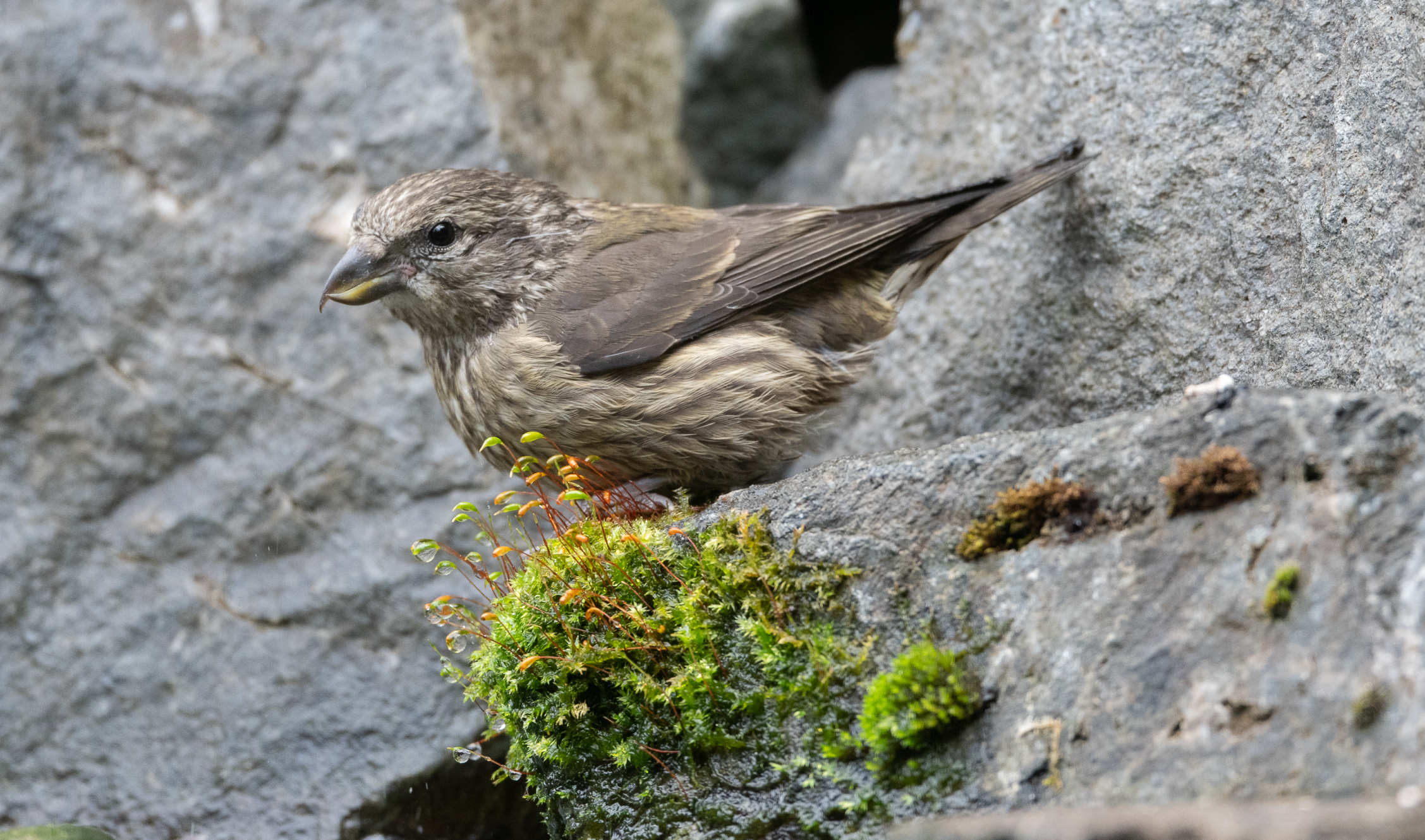
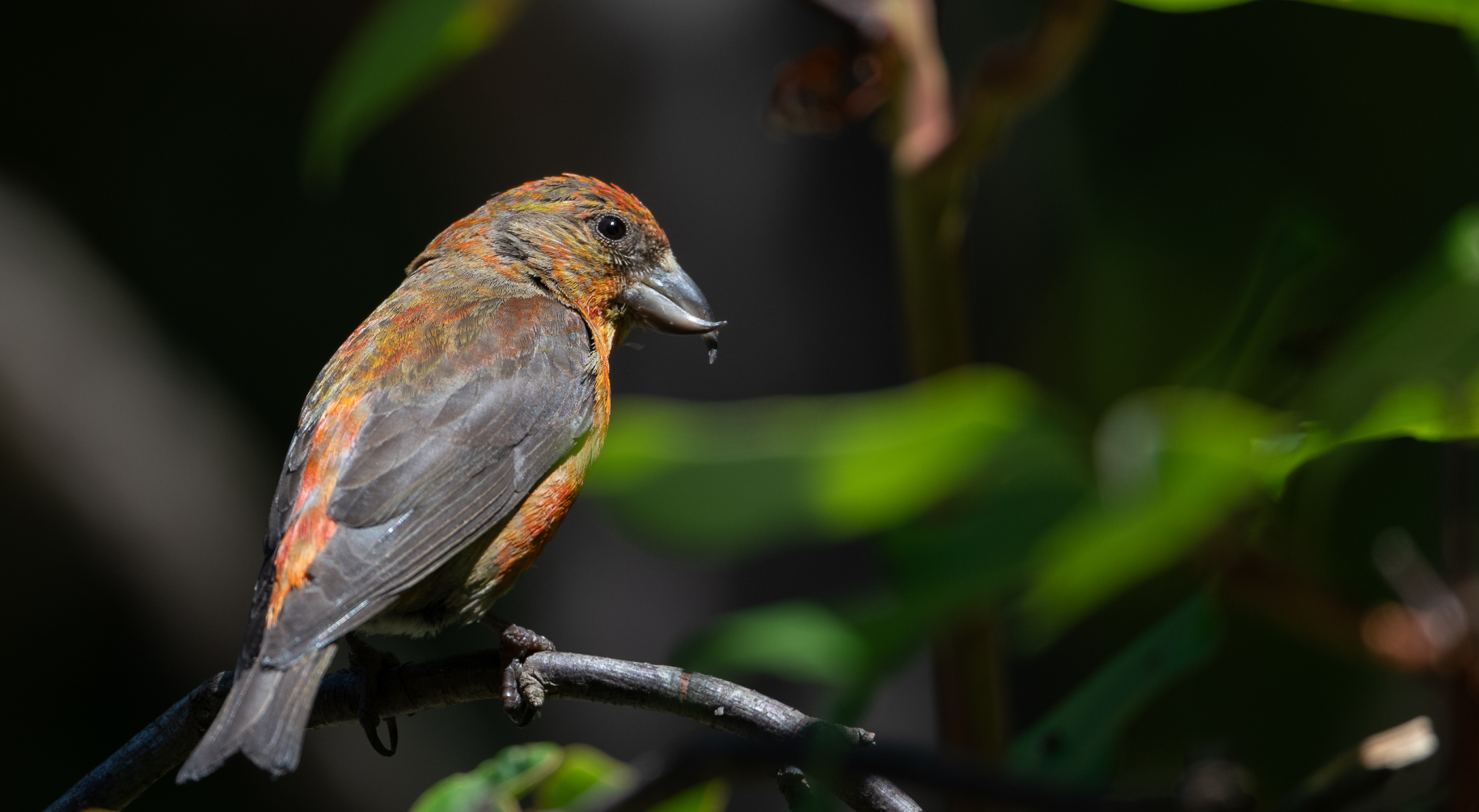
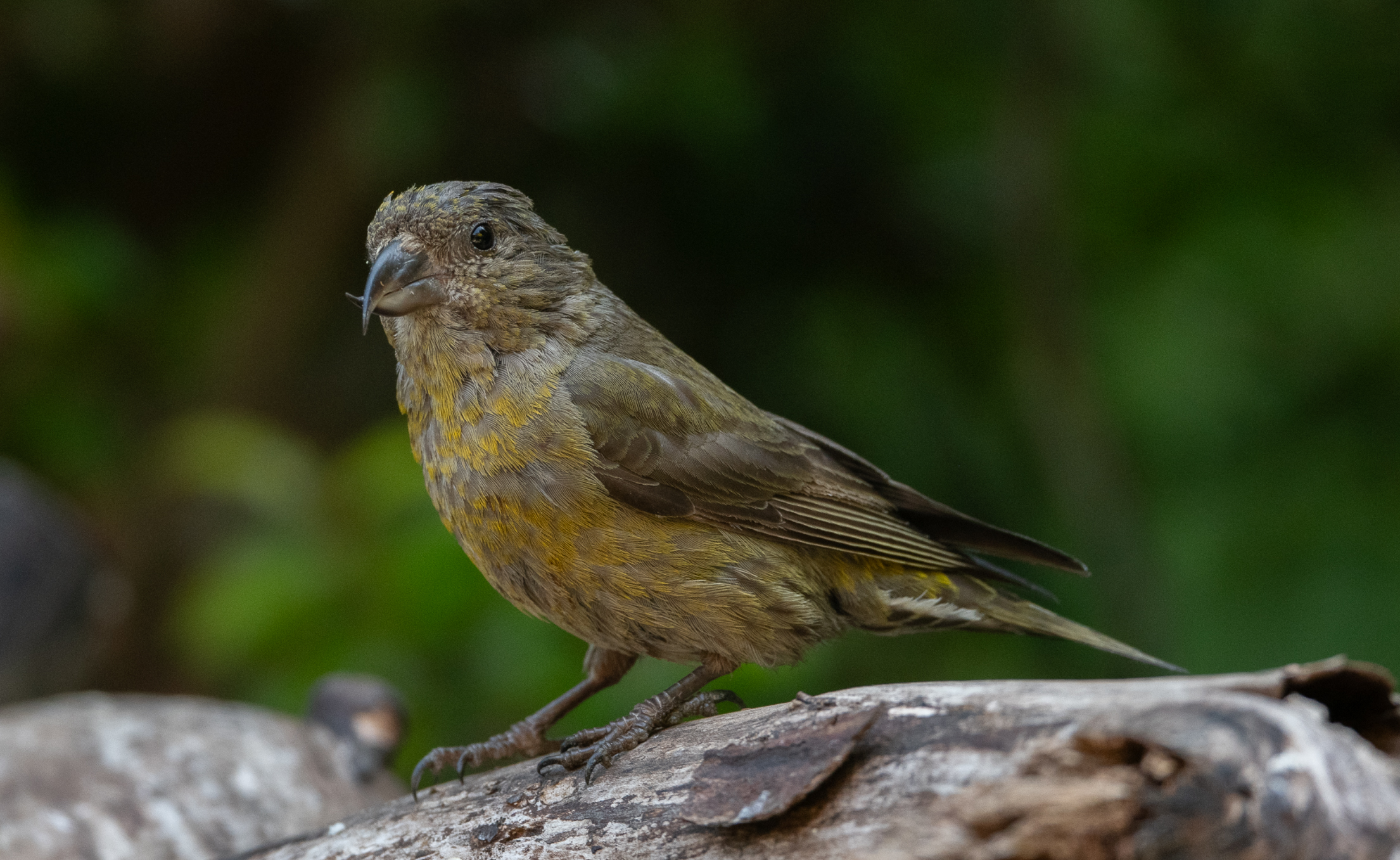
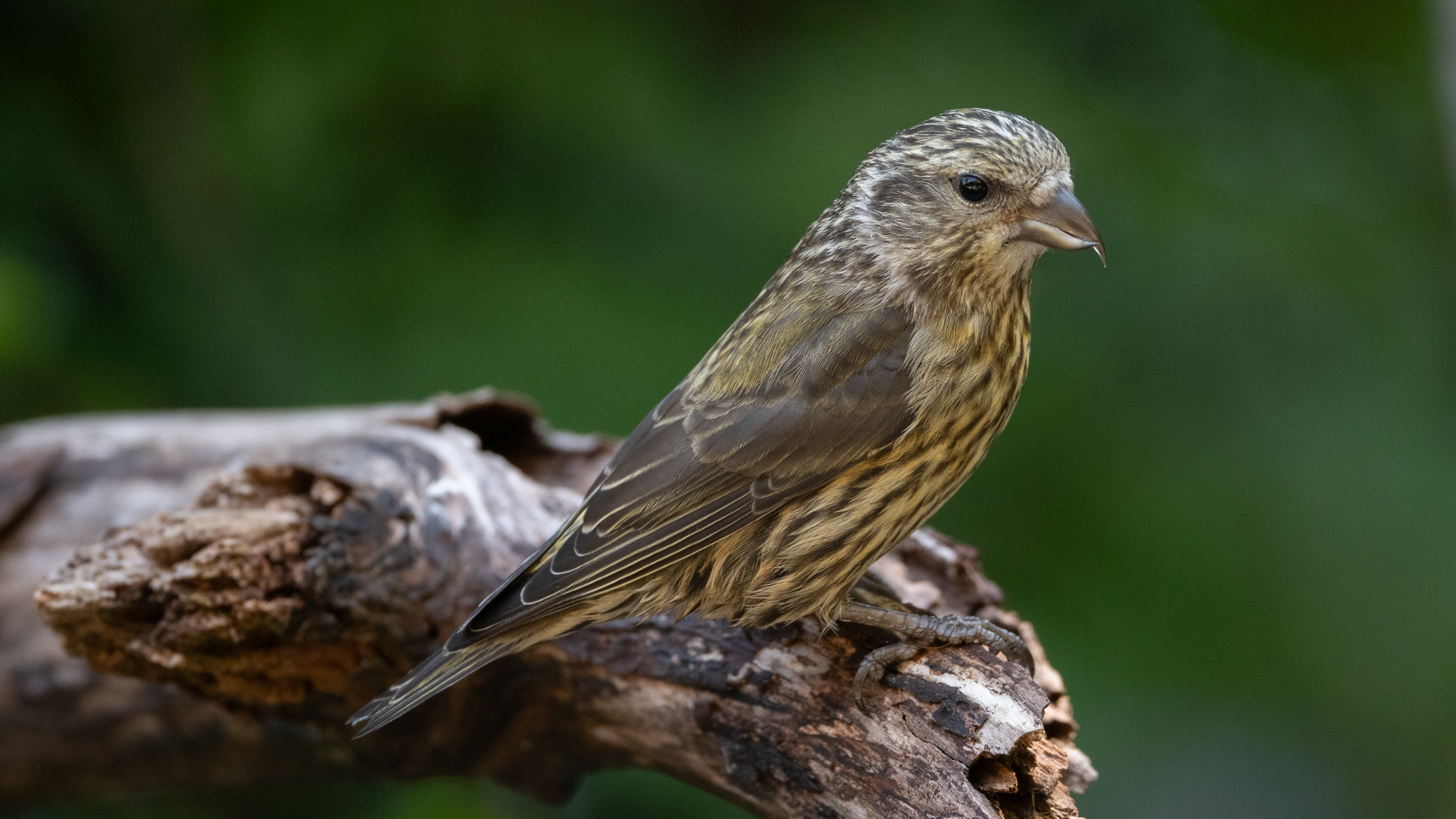
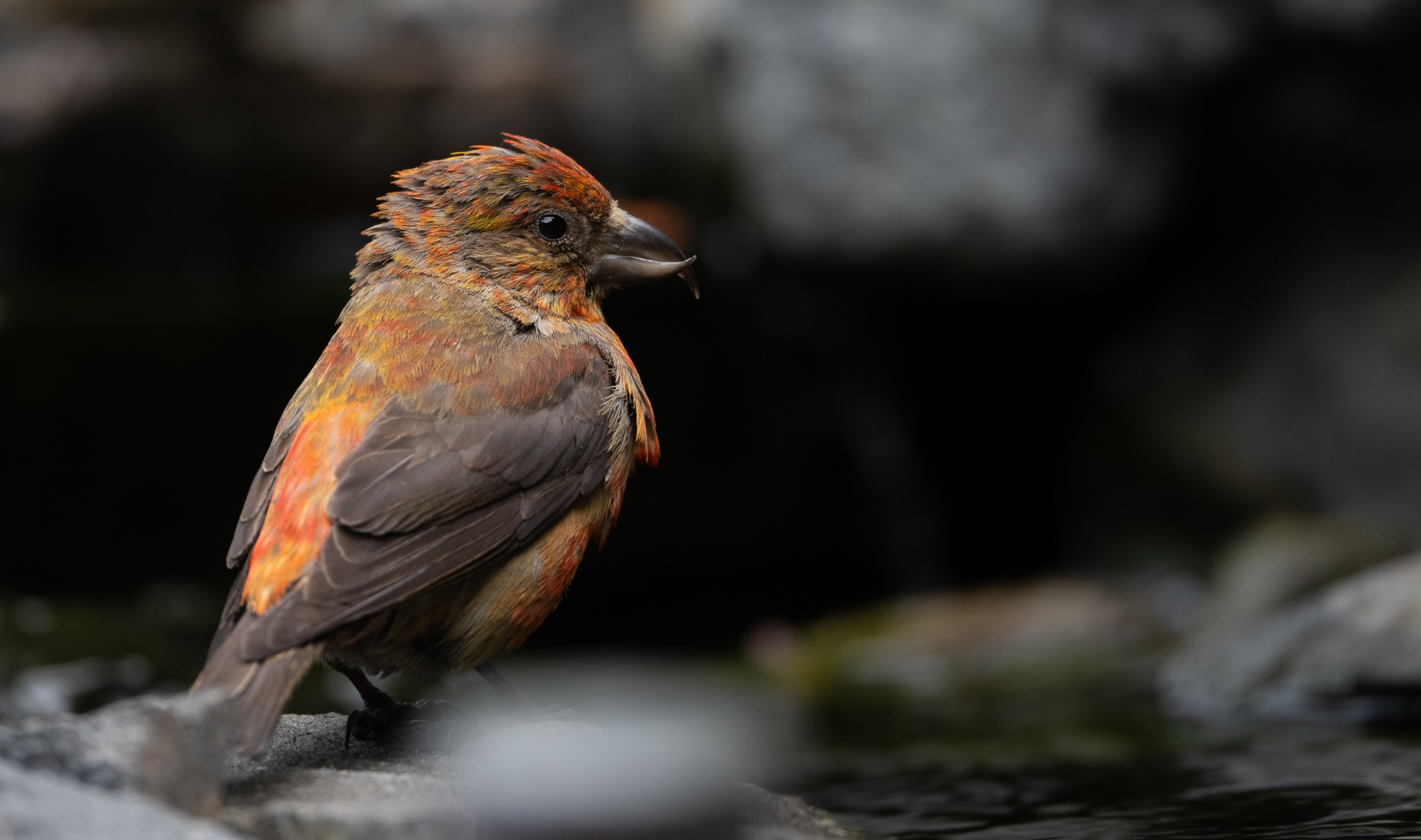
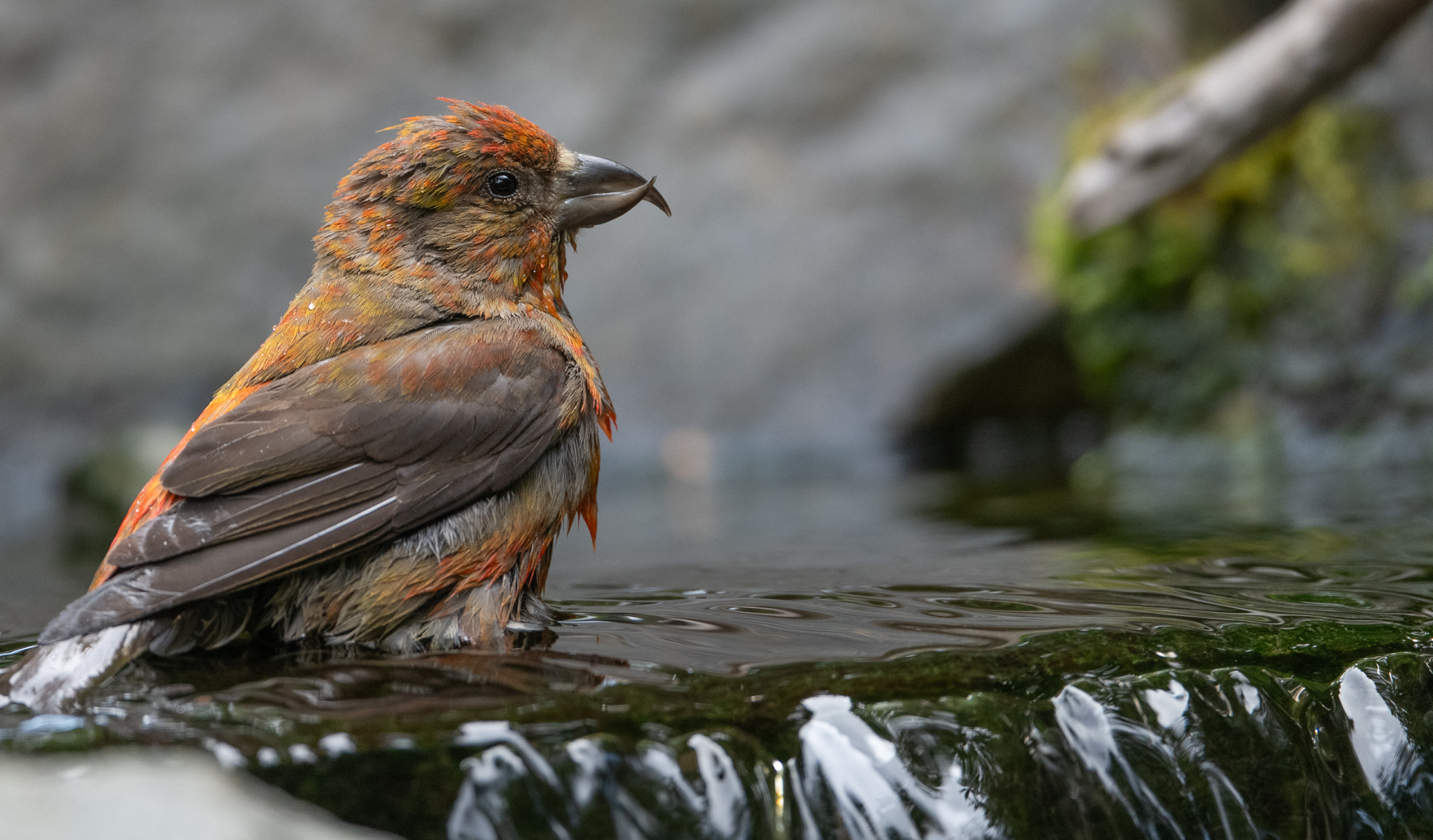
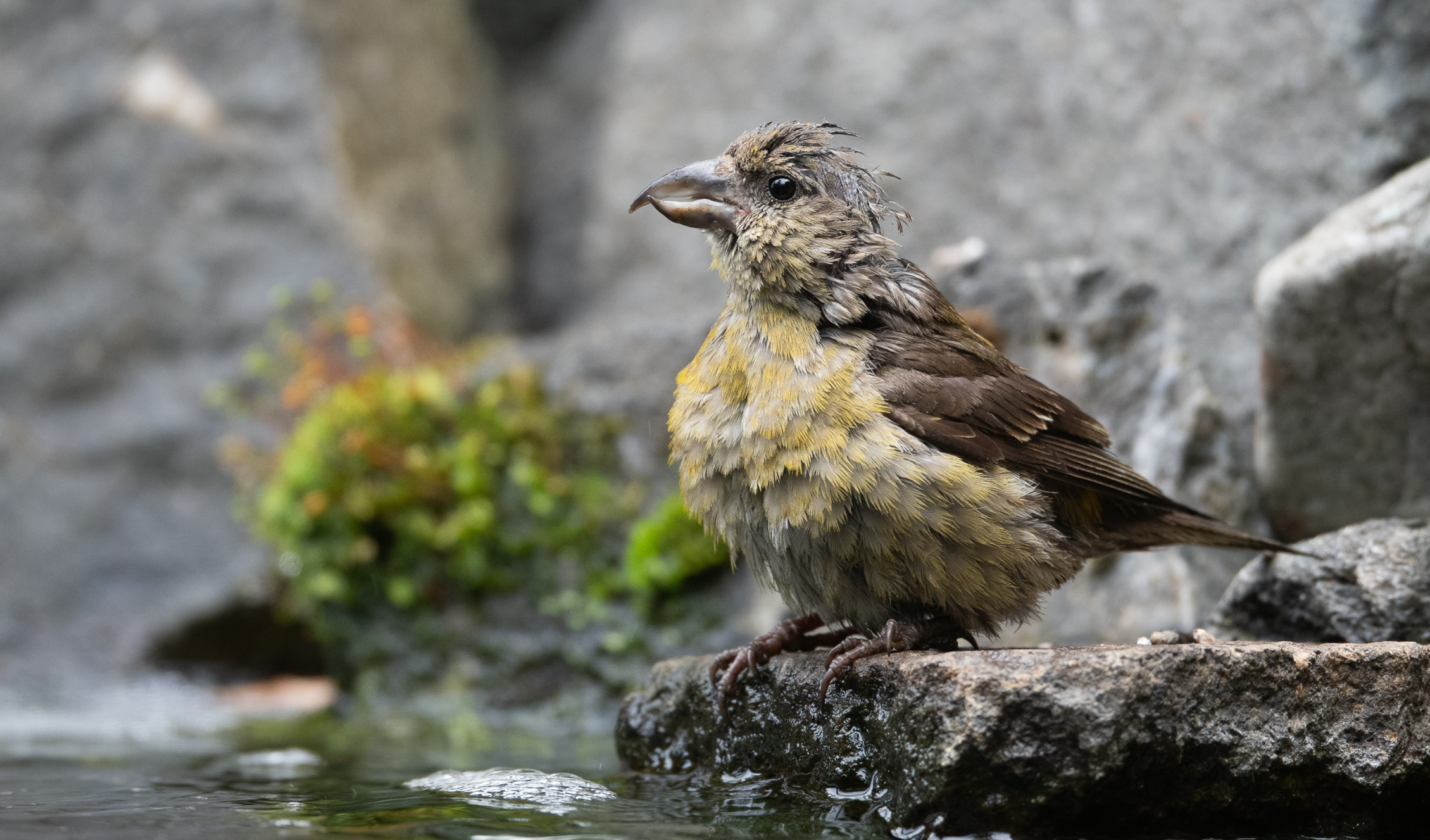
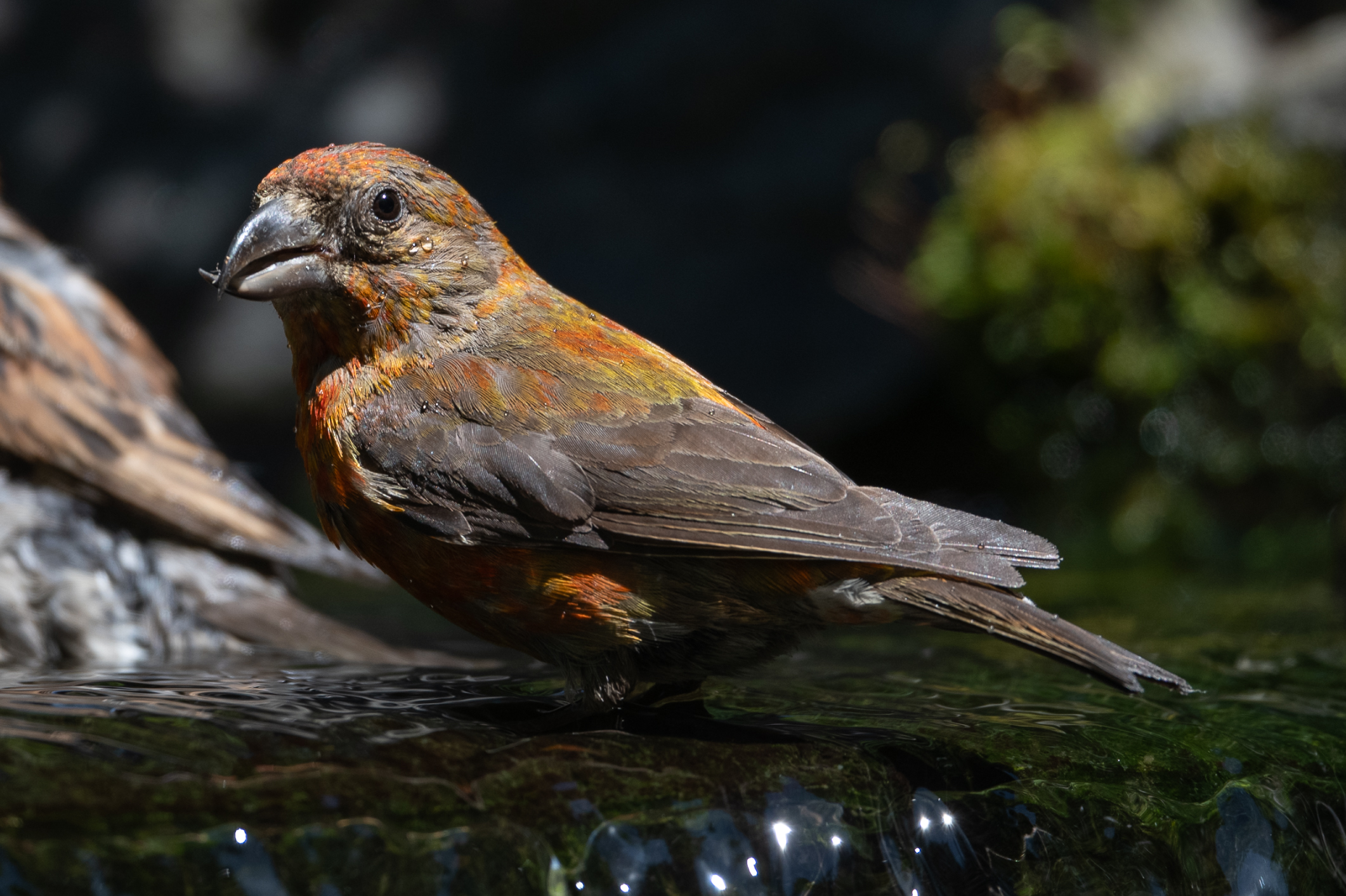
On the afternoon of July 25, 2025, I spent a couple of hours in the yard and took over 250 photographs. I had three significant sightings.  The first was two Red crossbills, one of which was a juvenile and the other perhaps a not-so-bright female parent. 
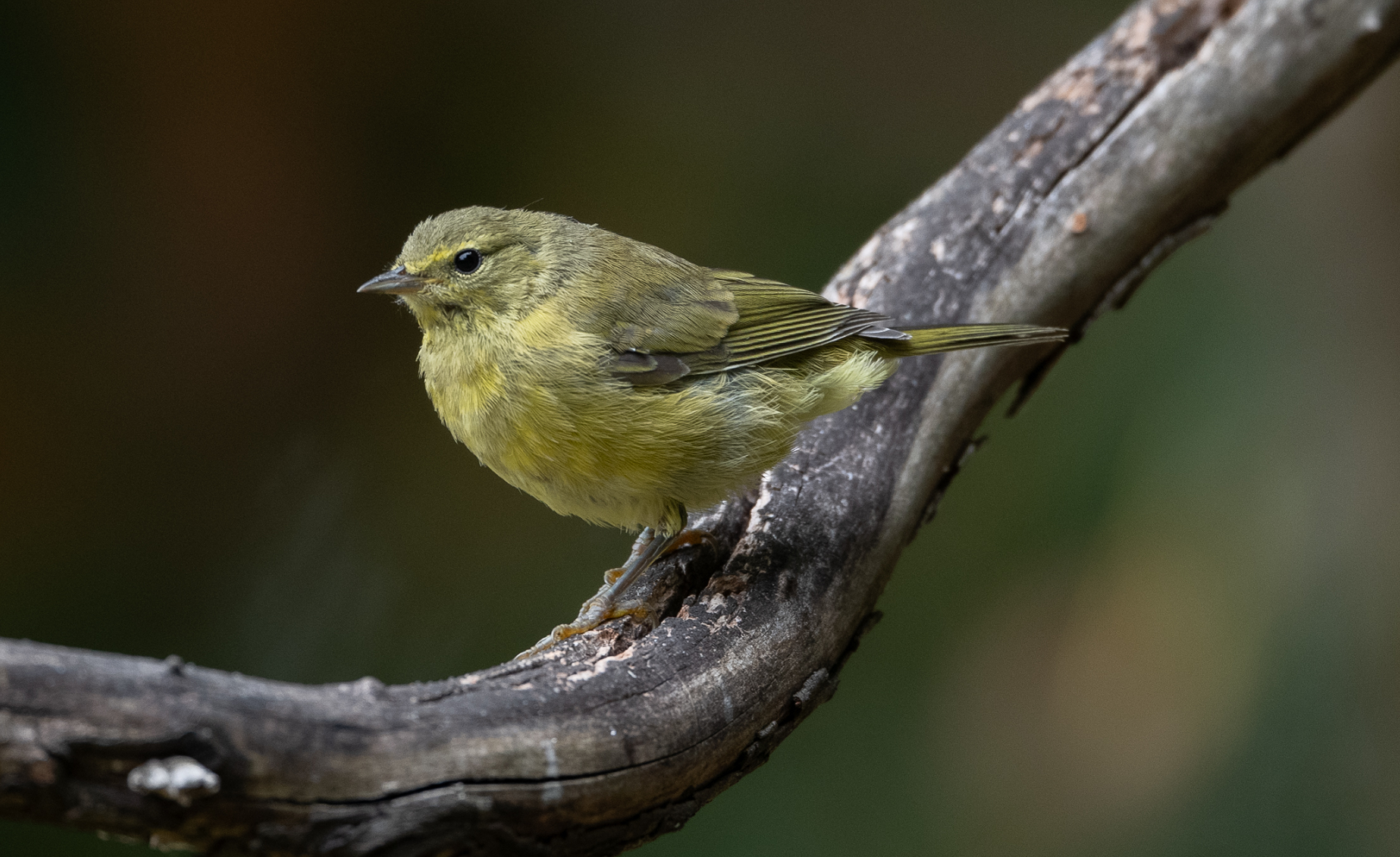
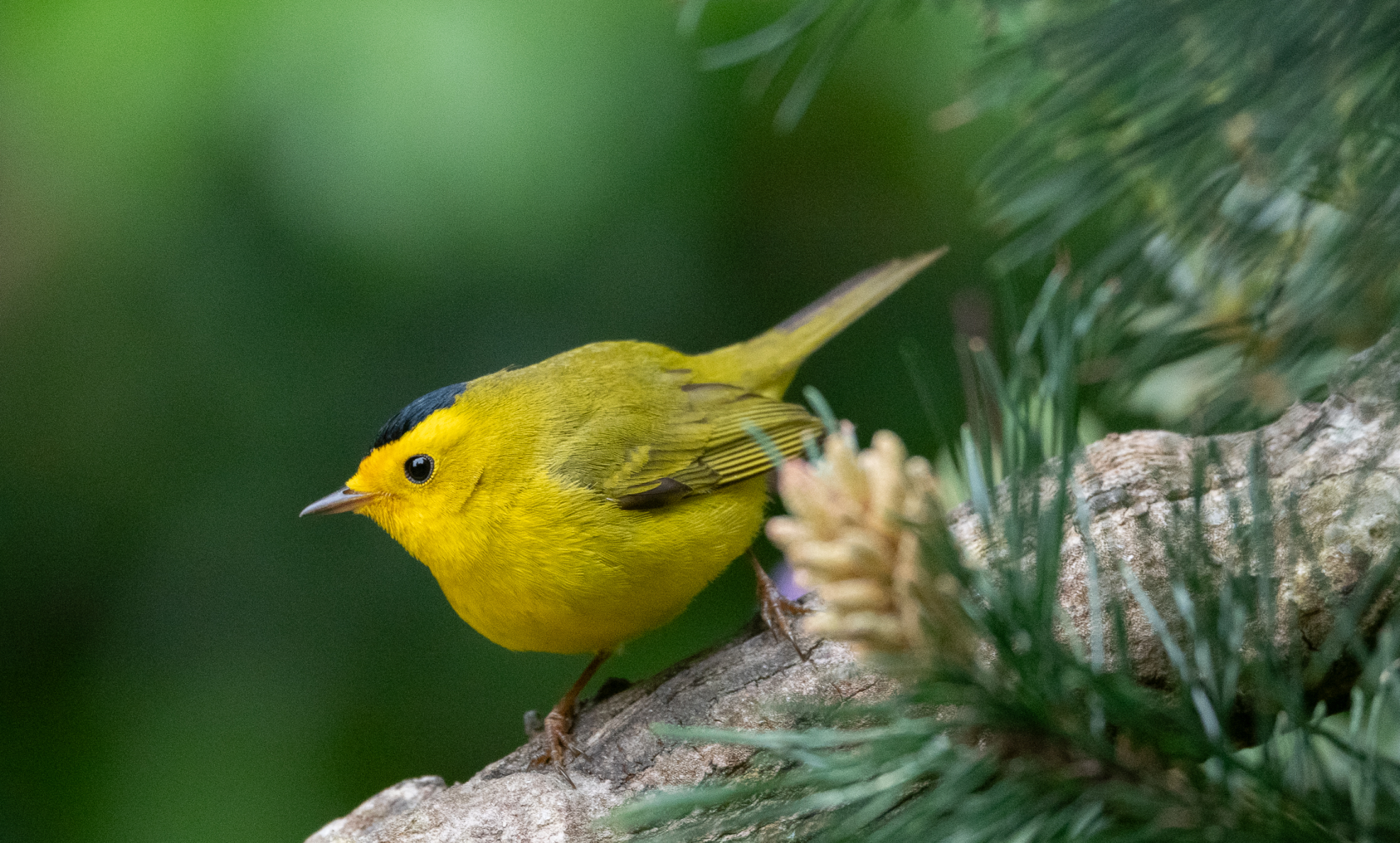
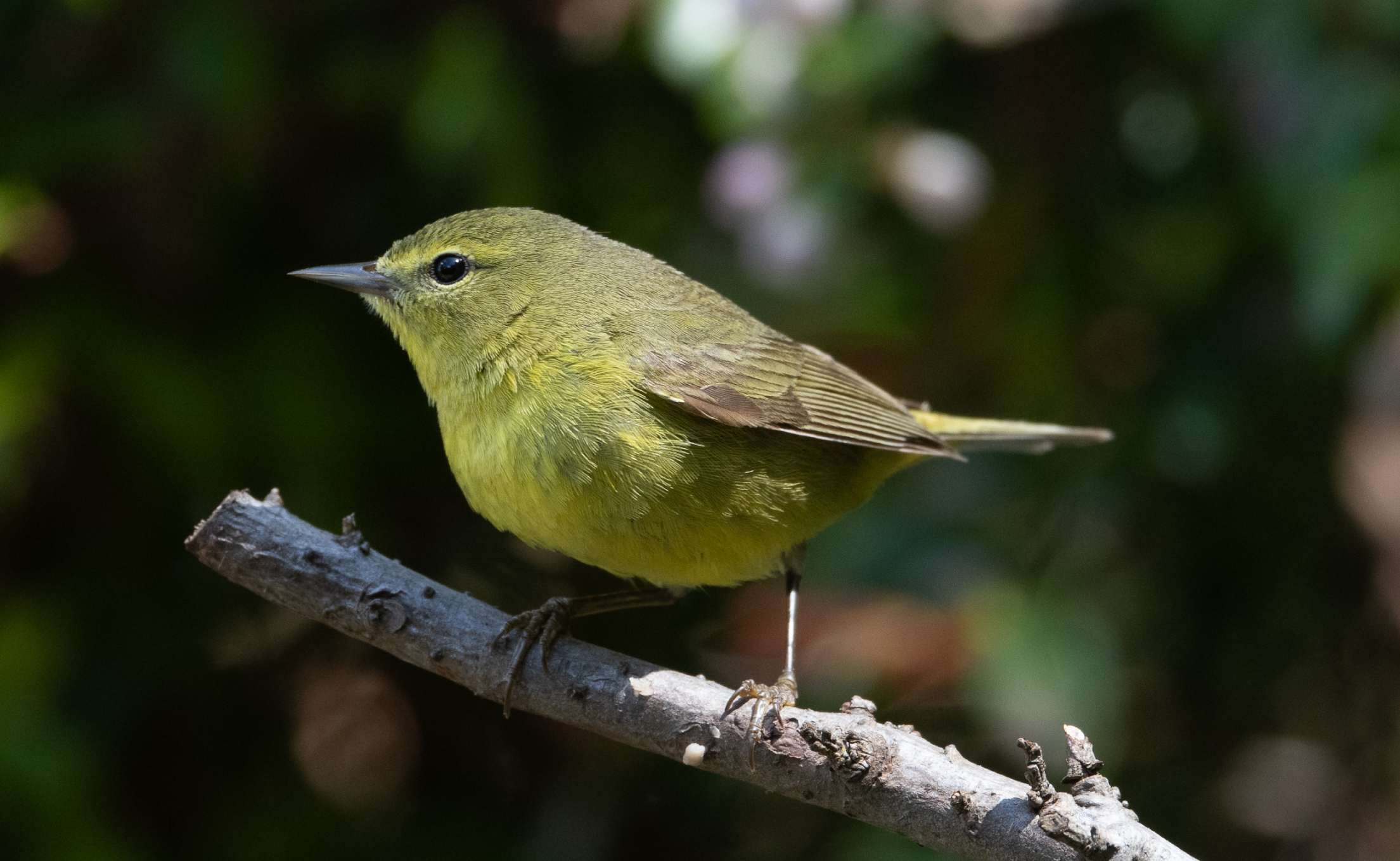
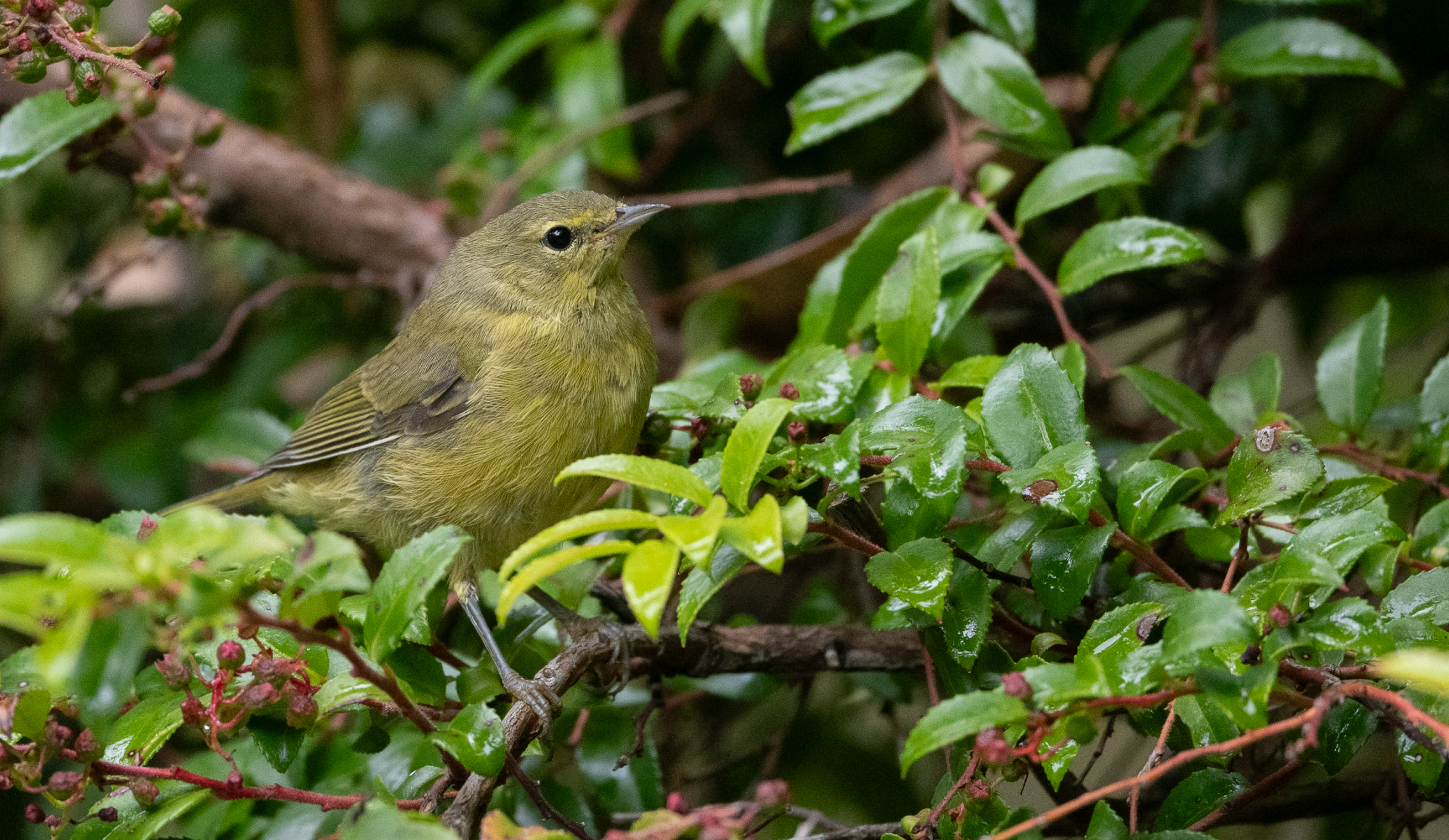
The next bird of special interest was an Orange-crowned warbler, the first warbler species I’ve seen since early June. The warbler spent significant time exploring the yard and giving me many opportunities for photographs. 
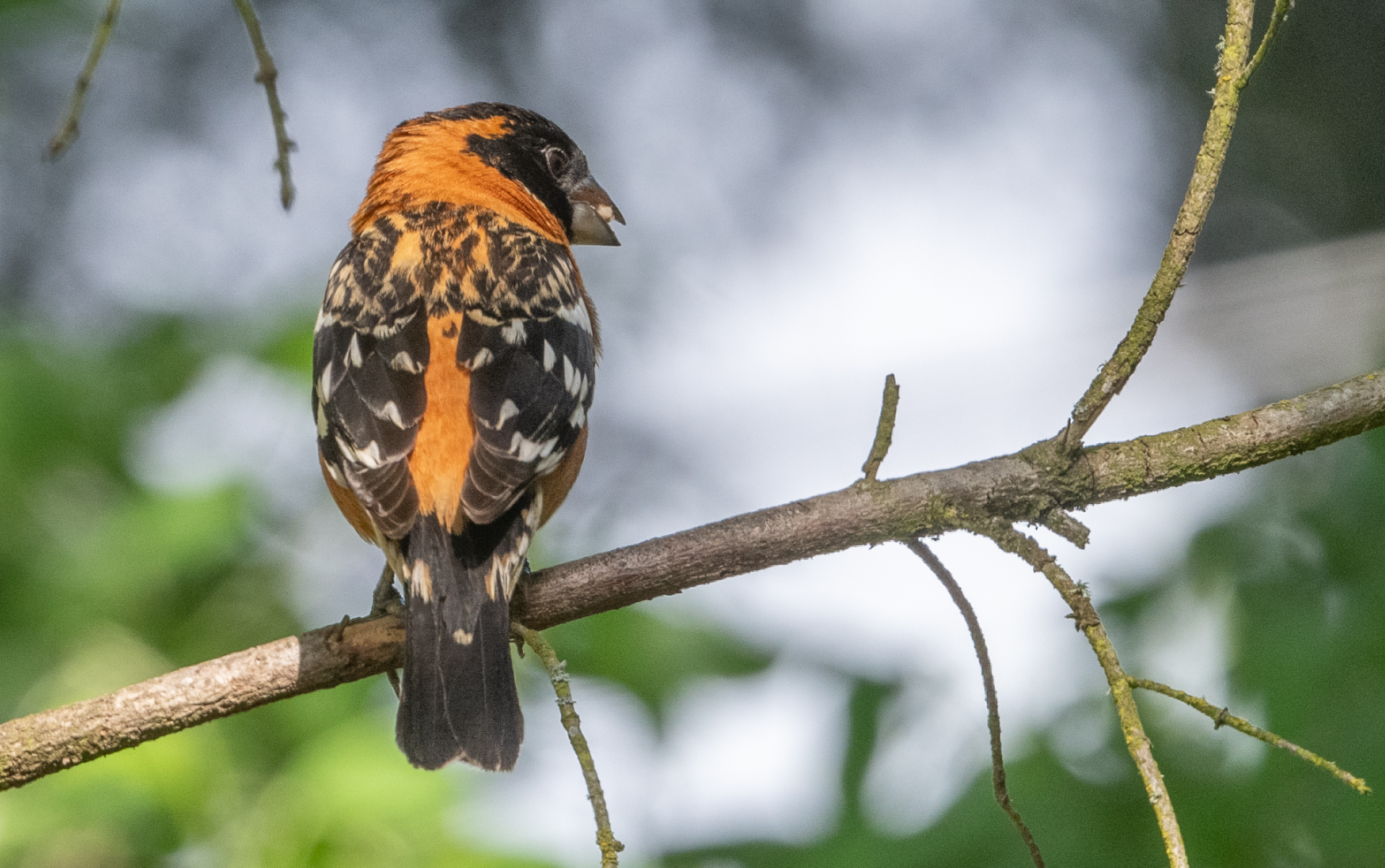
The third species of interest was a female Black-headed grosbeak.  I had seen a male on a few rare occasions in the prior week or so but this was the first female. Unfortunately I could only get a’record’ photo of the bird before she left the yard, but I did see later that she had returned. (She also returned the following day (7/26) but again I was unable to get a photograph.  

Earlier I mentioned the young birds that have held my interest for the past several weeks. Here are a few of them…

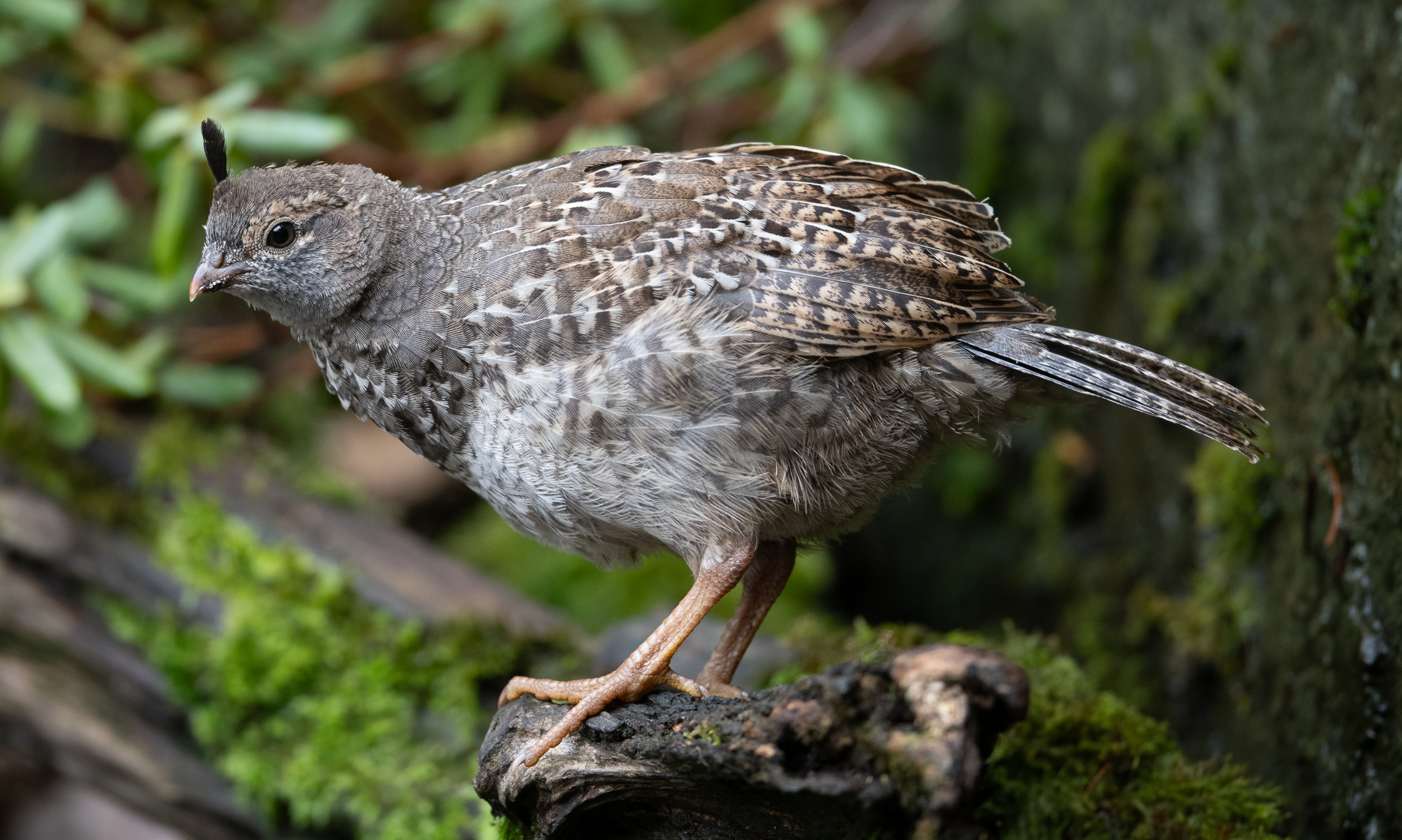
California quail… 
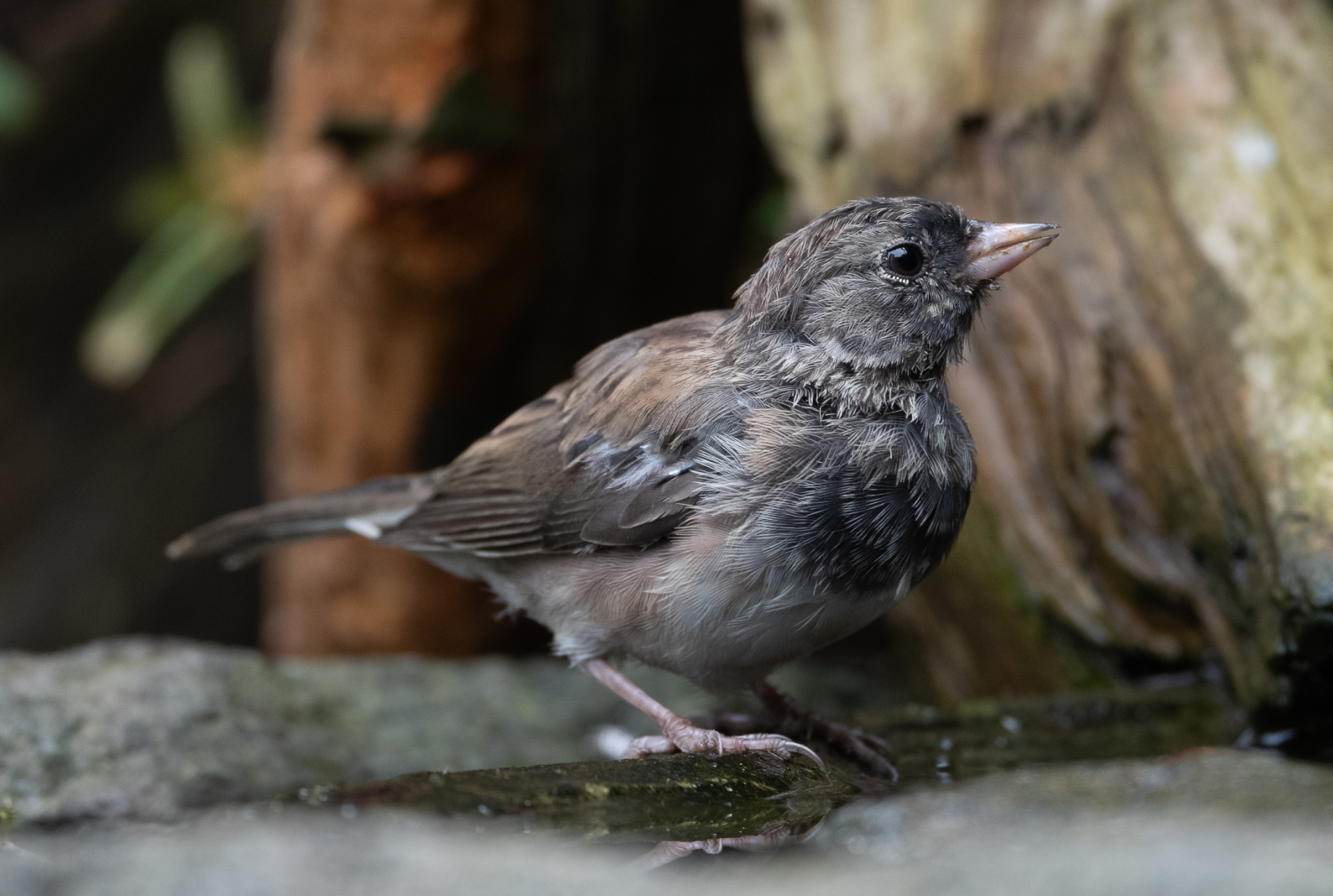
Dark-eyed (Oregon) junco...  
Spotted towhee (from 7/19)… 
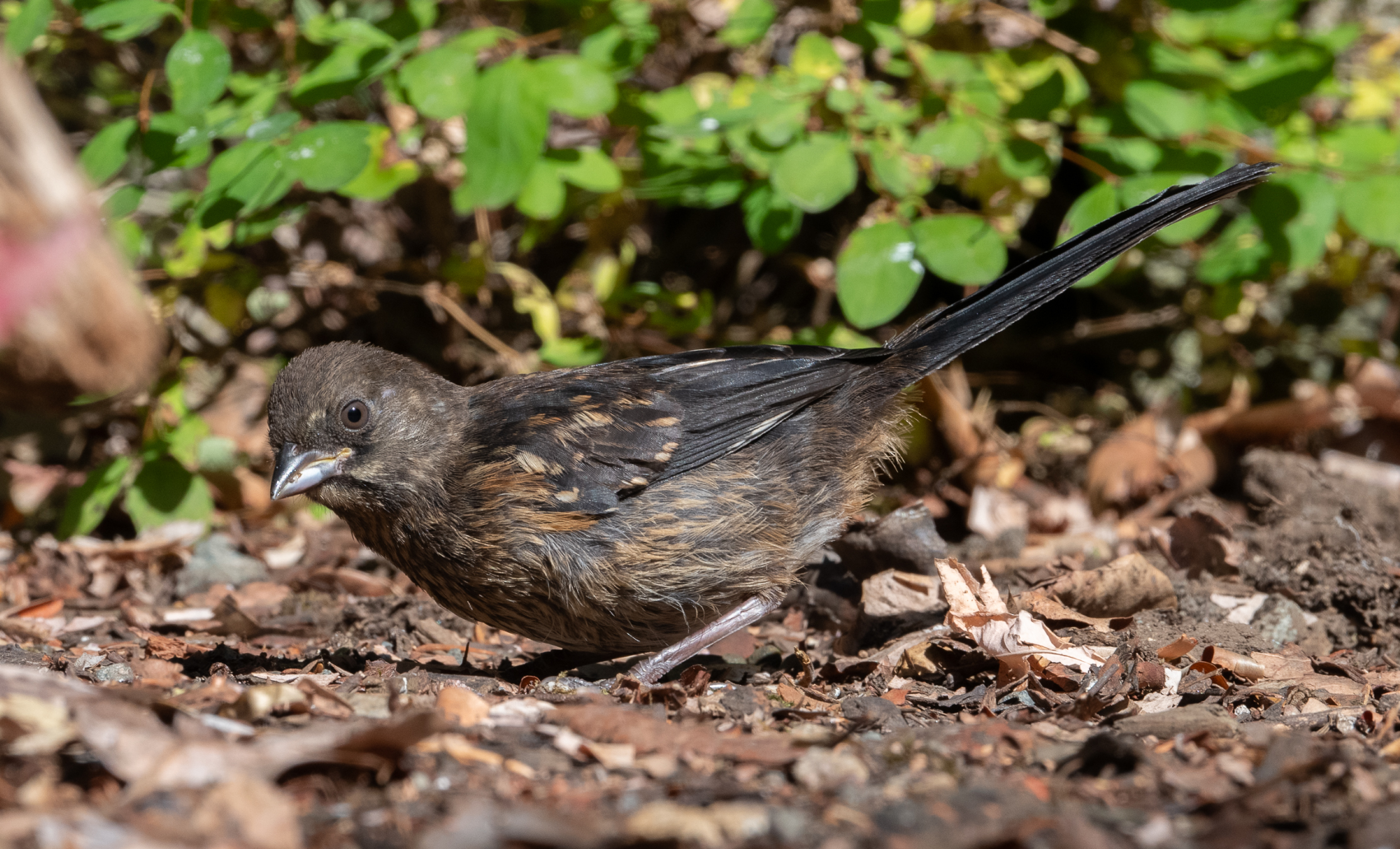
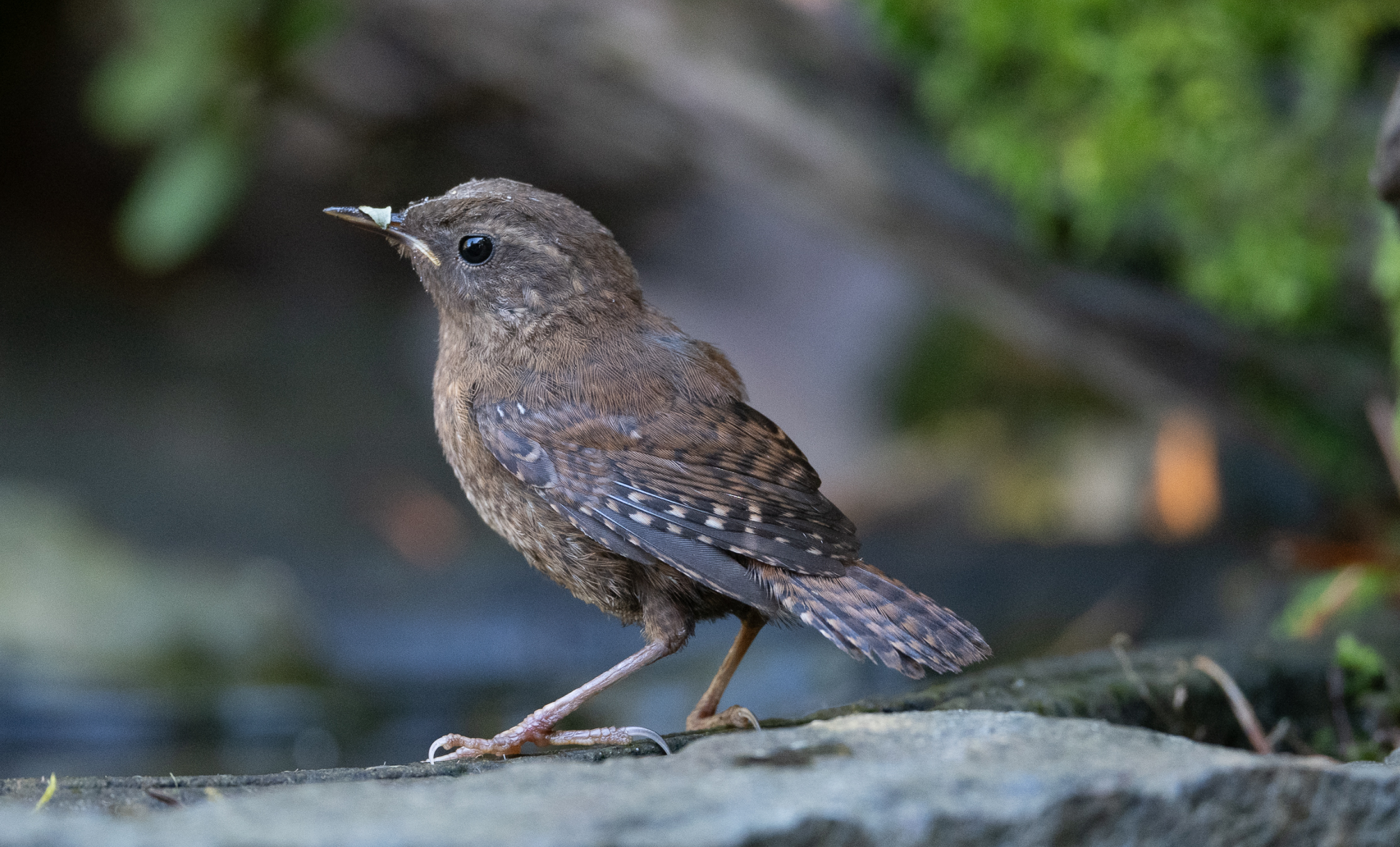
Bewick’s wren (from 7/19)
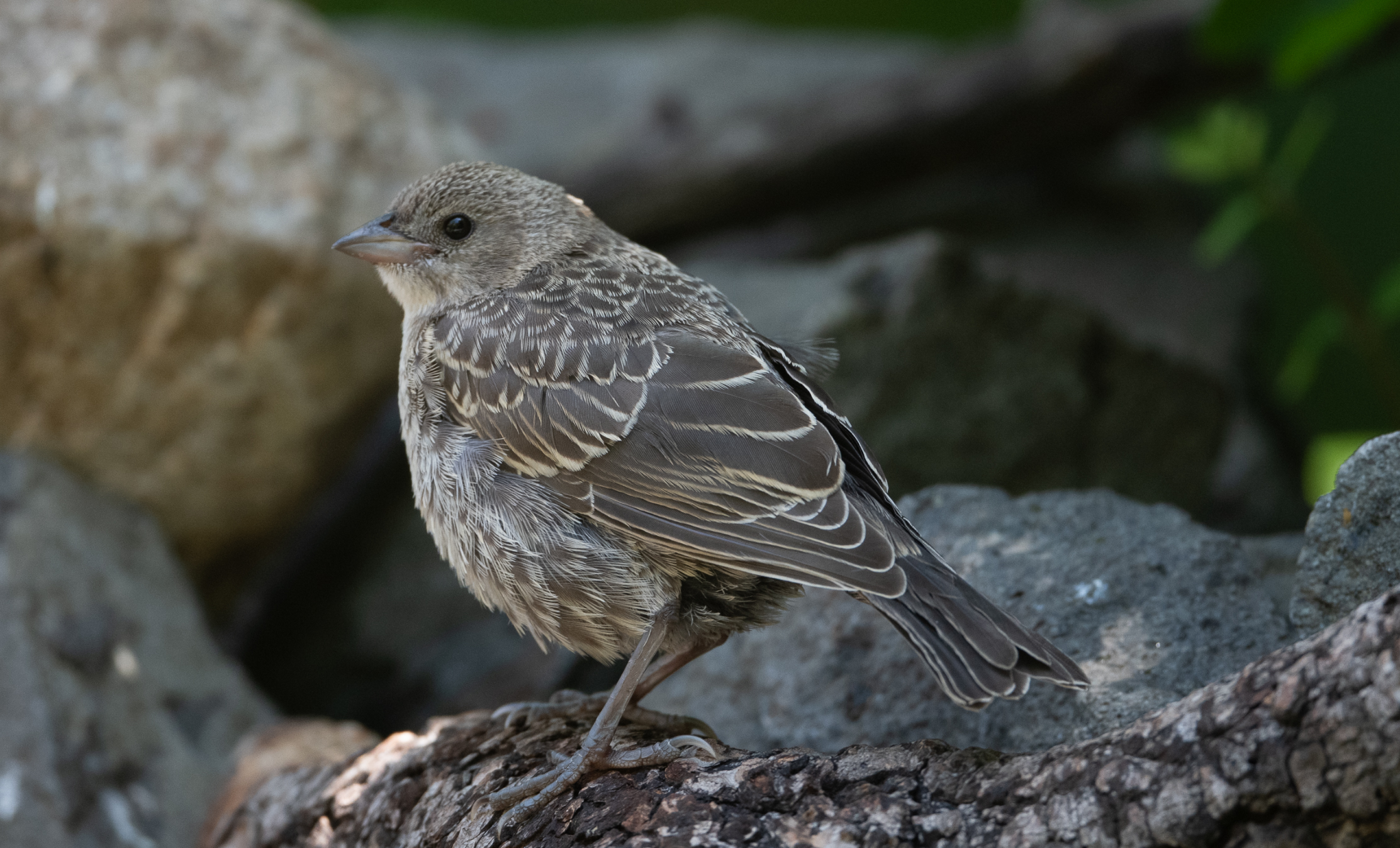
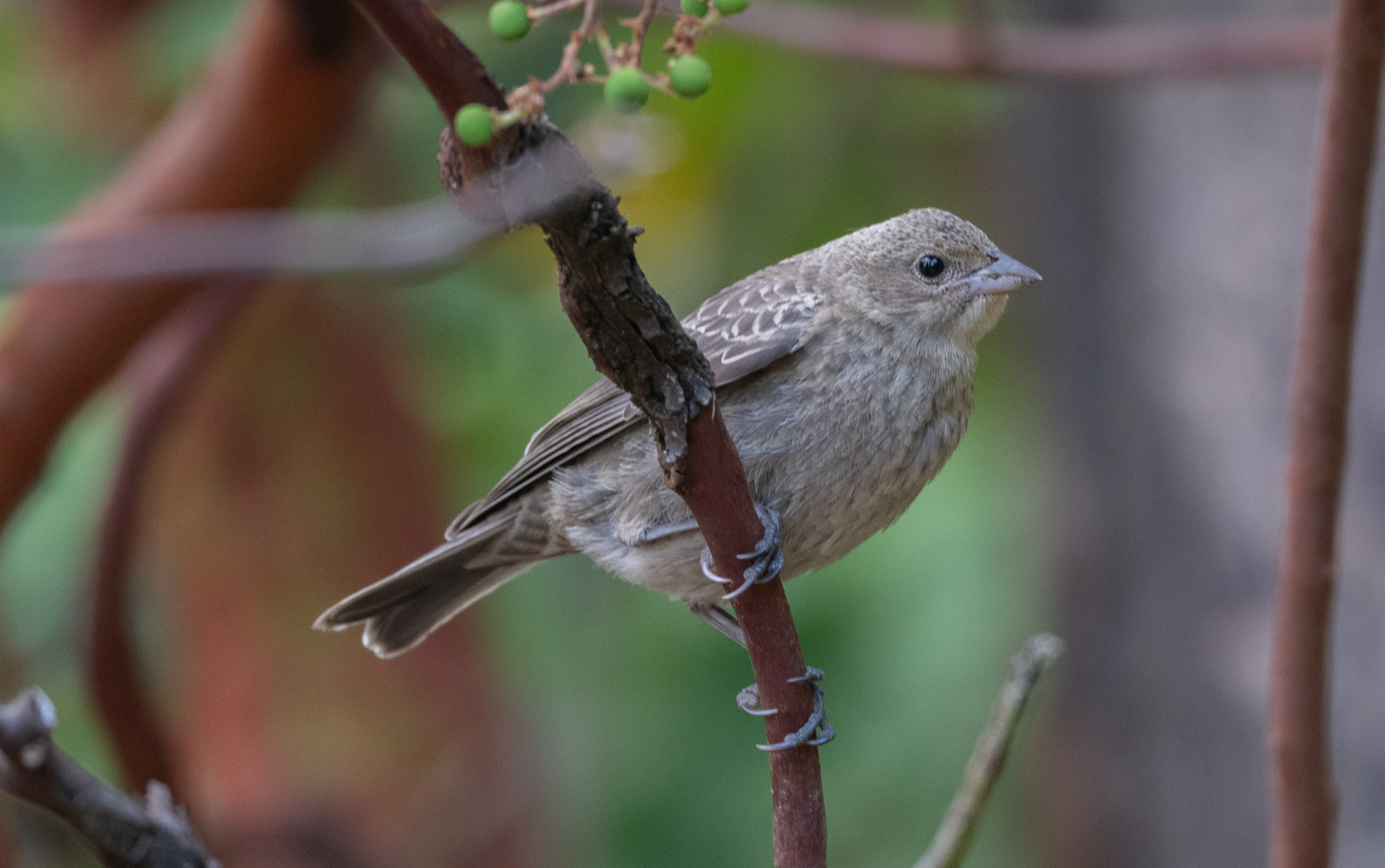
Brown-headed cowbird… 
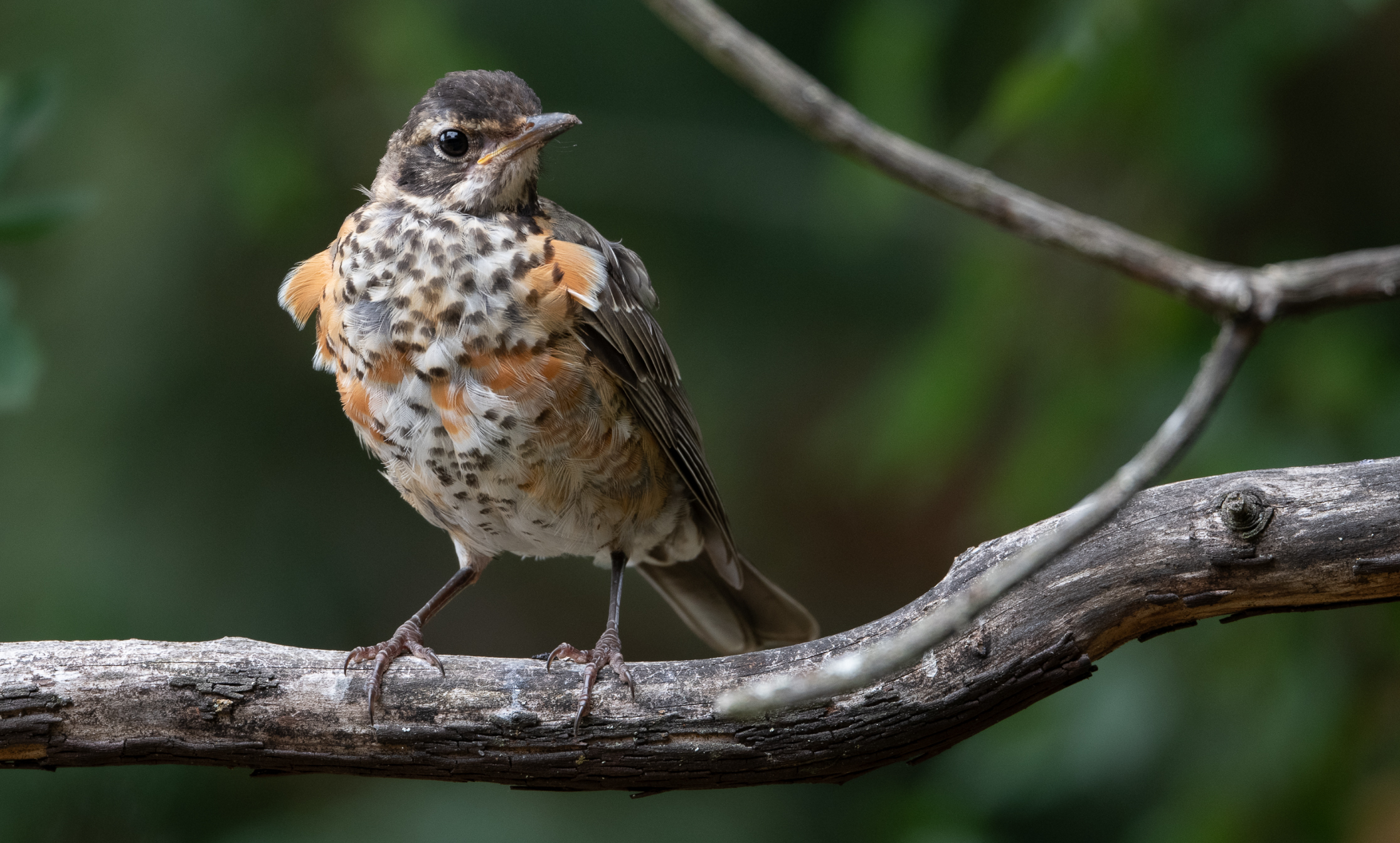
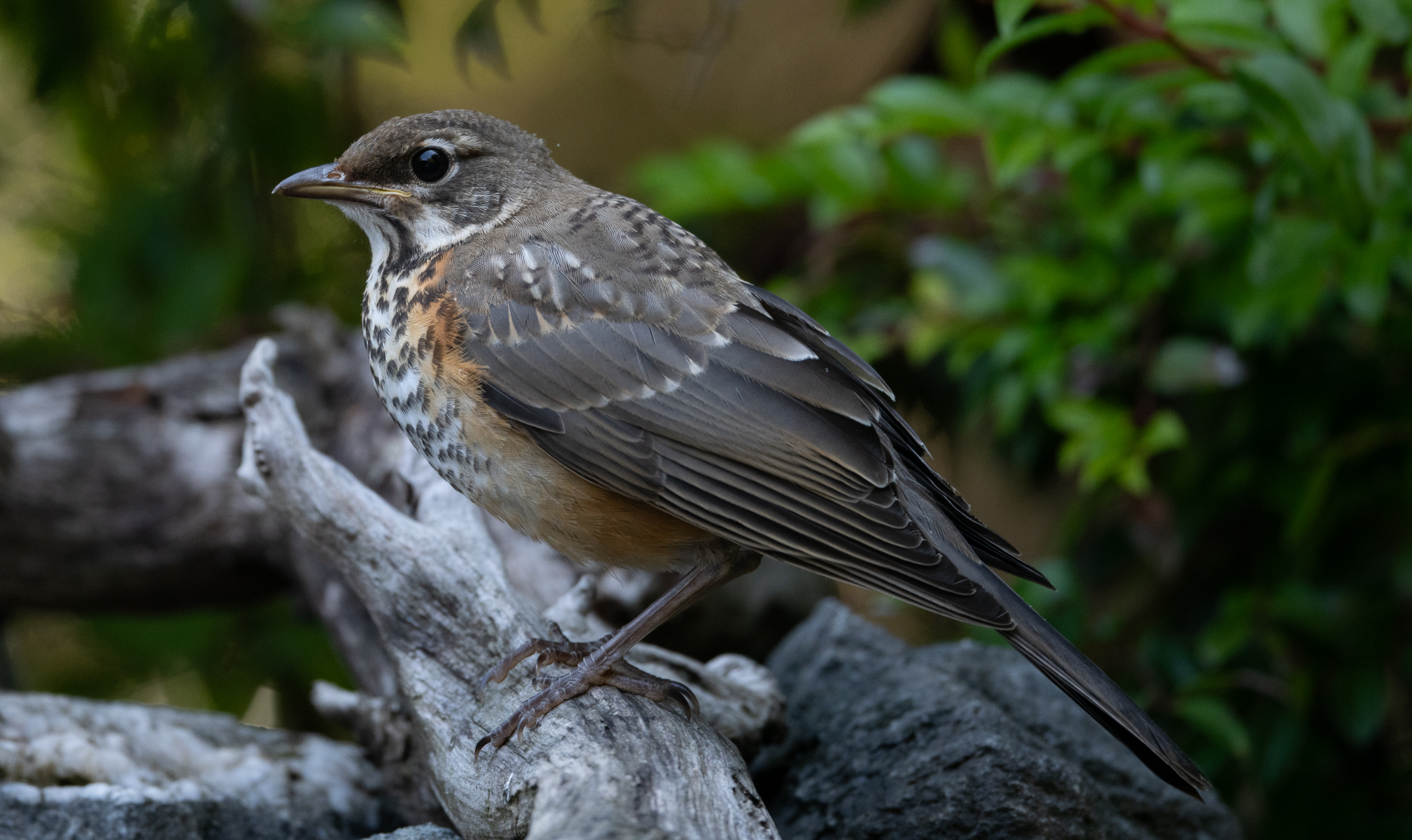
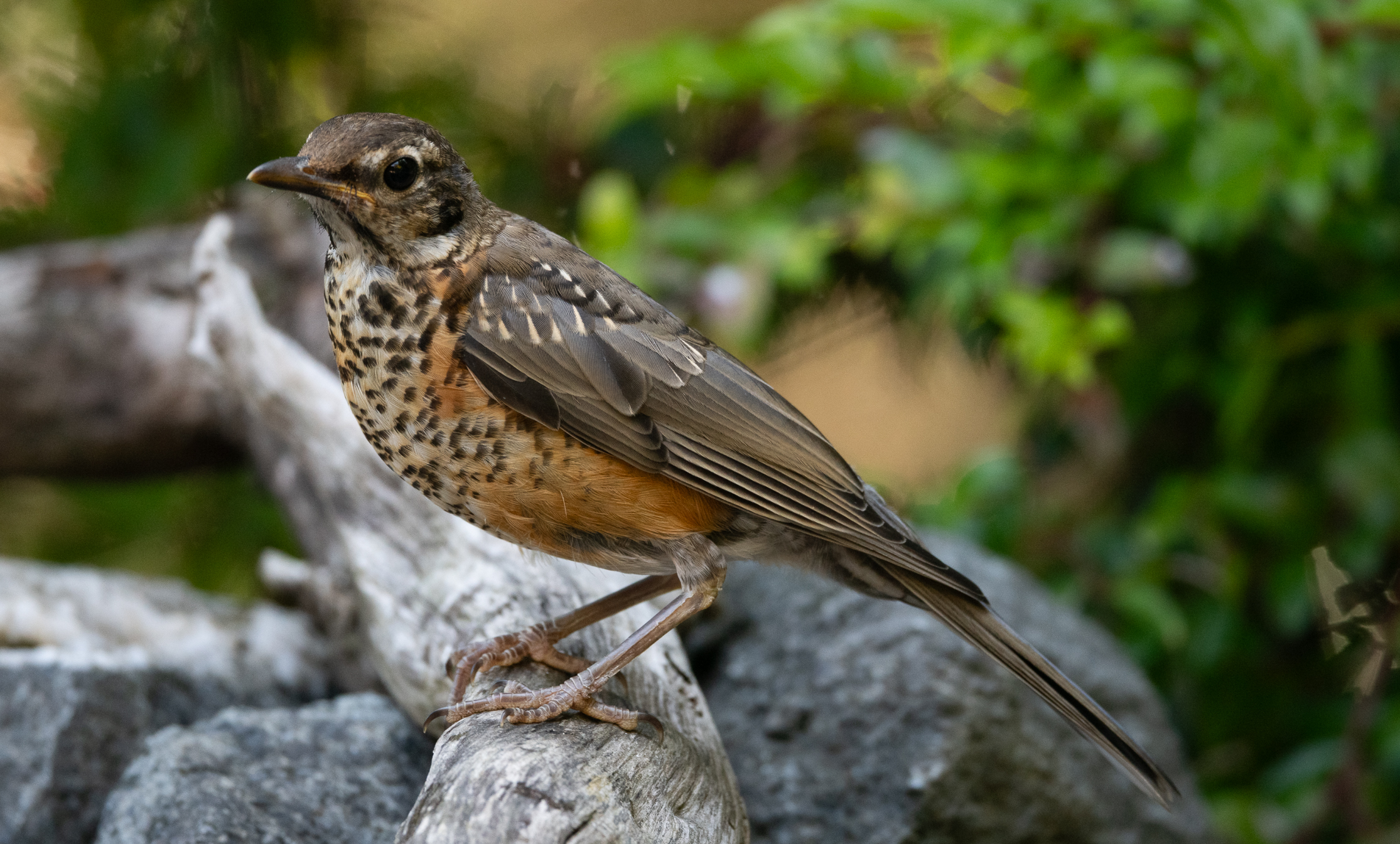
American robin

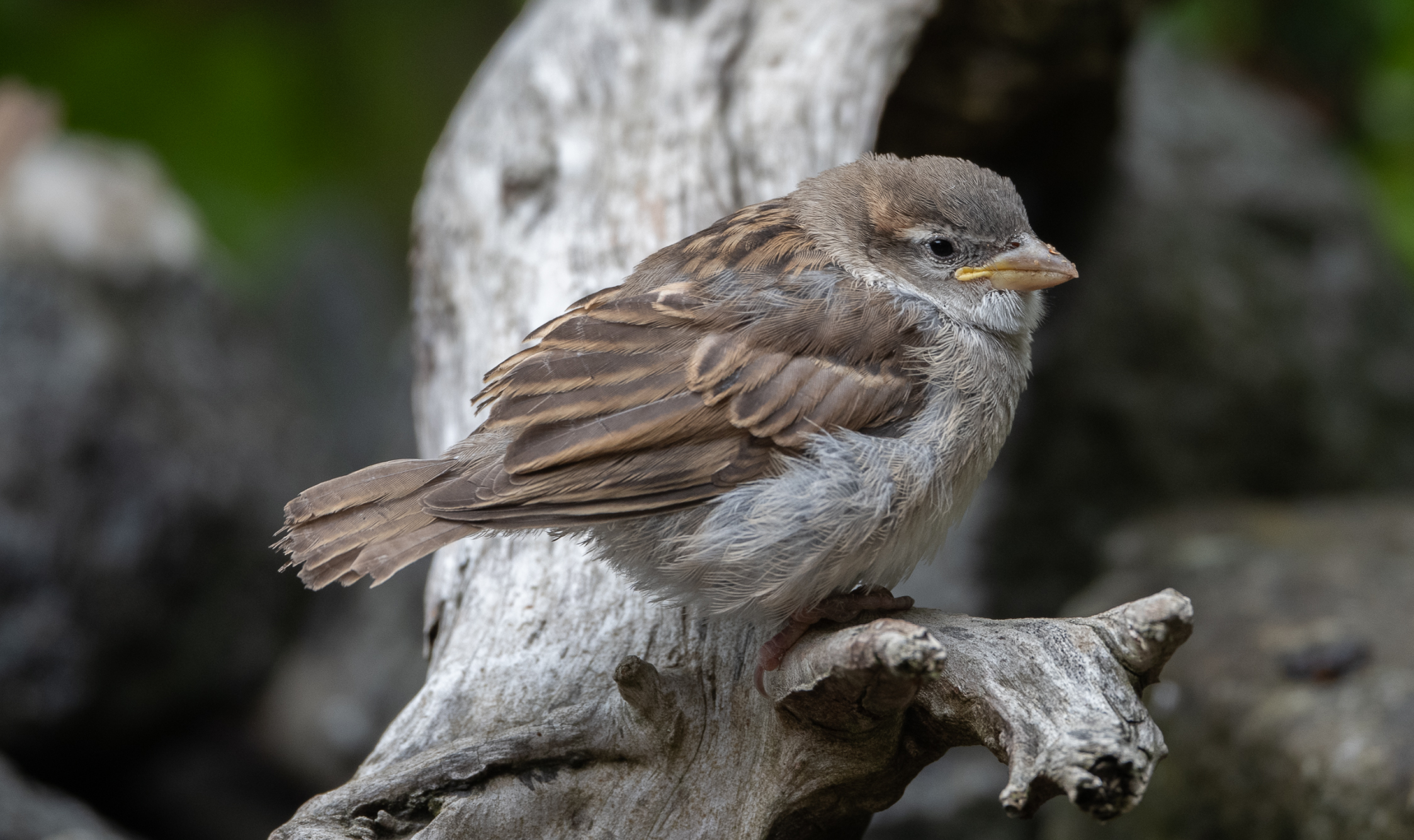
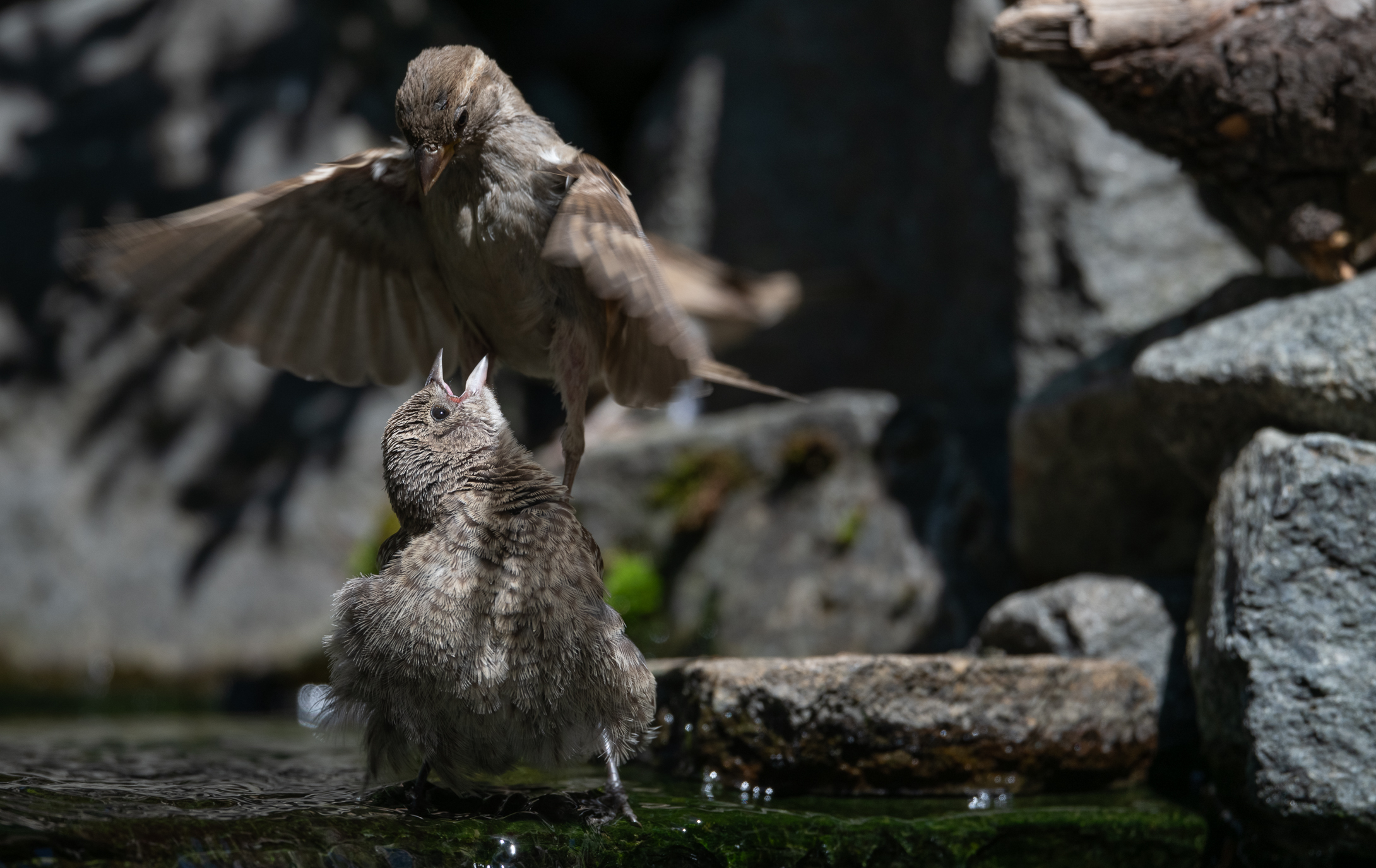
House sparrow… 

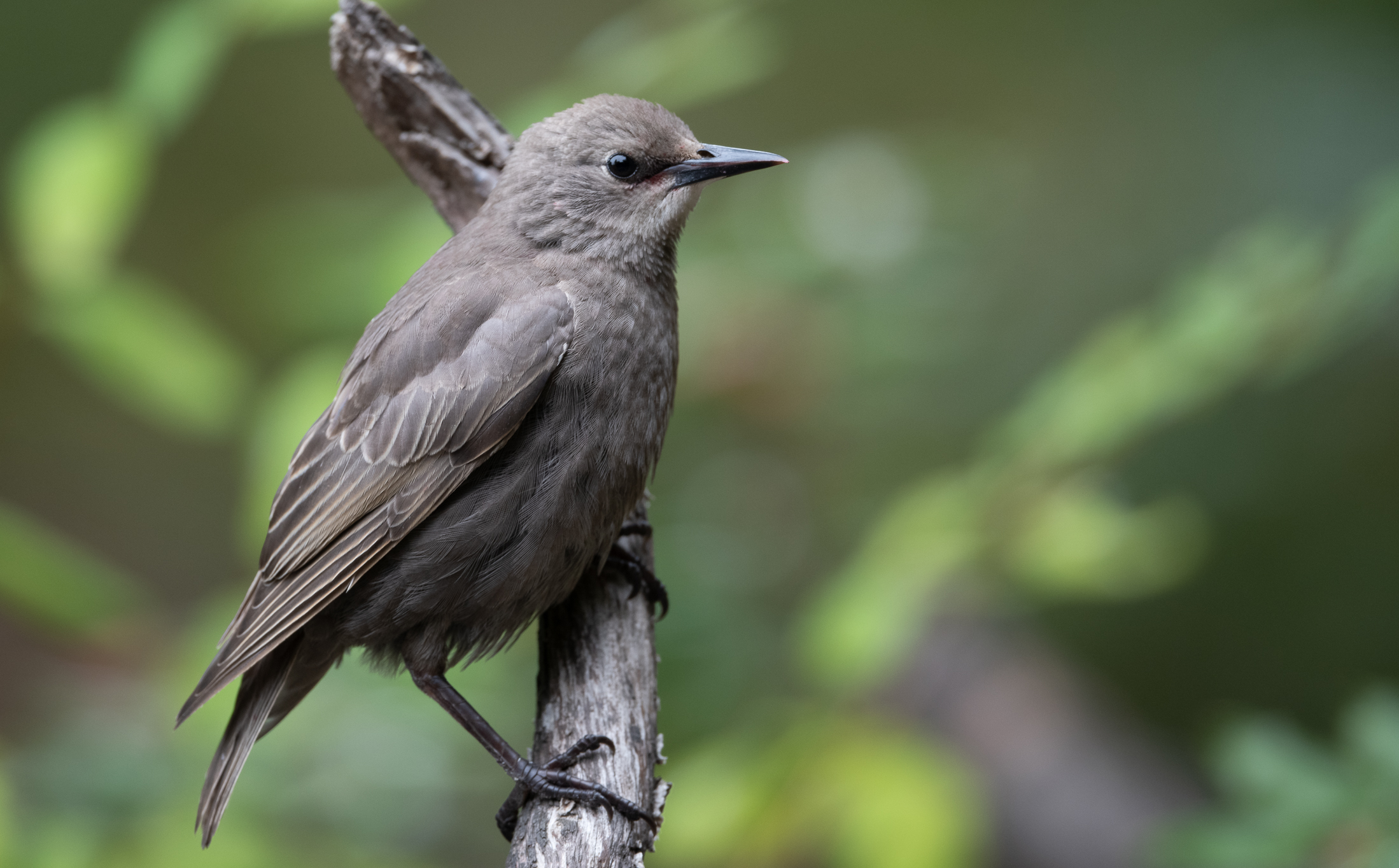
European starling… 

Other young that fledged earlier include both Black-capped and Chestnut-backed chickadees, Red-breasted nuthatches, Northern flickers, Downy woodpeckers, American robins and Bushtits, most of which I photographed earlier in the season. 
July 6, 2025 – Interesting Yard Observations

I had three different interesting bird experiences/observations on July 6, 2025. 

I went out in the yard to fill my small platform feeder and as I approached the feeder I noticed some movement by my feet. I looked down to see a very young Pine siskin eating a few tidbits of seed that had fallen to the ground. The bird seemed oblivious to my presence so I sat down on a rock to watch. 

The bird was right by my feet and almost exactly the size of a dead madrone leaf on the ground. As it ate I reached down and stroked its head and back with a finger, which didn’t interrupt its eating!  After taking a video and photo with my iPhone I picked up the bird and moved it to the watercourse rock pile, a somewhat safer environment. 

I’m certain the bird couldn’t fly so it must have come from a nest in one of the large fir trees in front of the house. I’ve had an eruption of Pine siskins this spring/summer and had many very young siskins in the yard, but most could fly. 

In between the interesting observations I had visits from Red crossbills, which included this male.

My second interesting observation was of a juvenile Brown-headed cowbird that appeared around the watercourse with surrogate White-crowned sparrow parents. It was intent on getting a bath in the watercourse but one of several female sparrows apparently recognized it as “bird non grata” and flew at it three or four times, with little effect. 

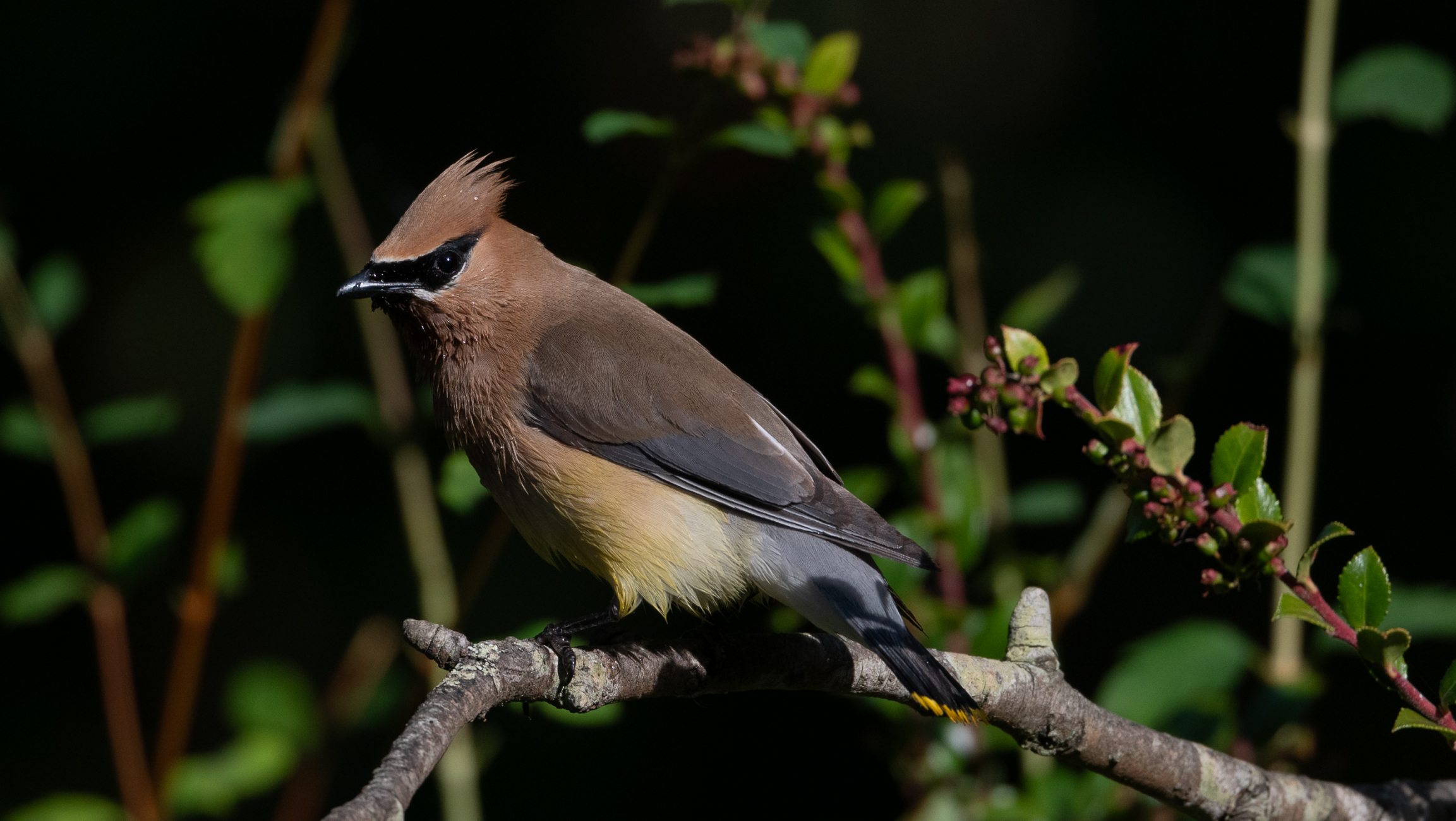
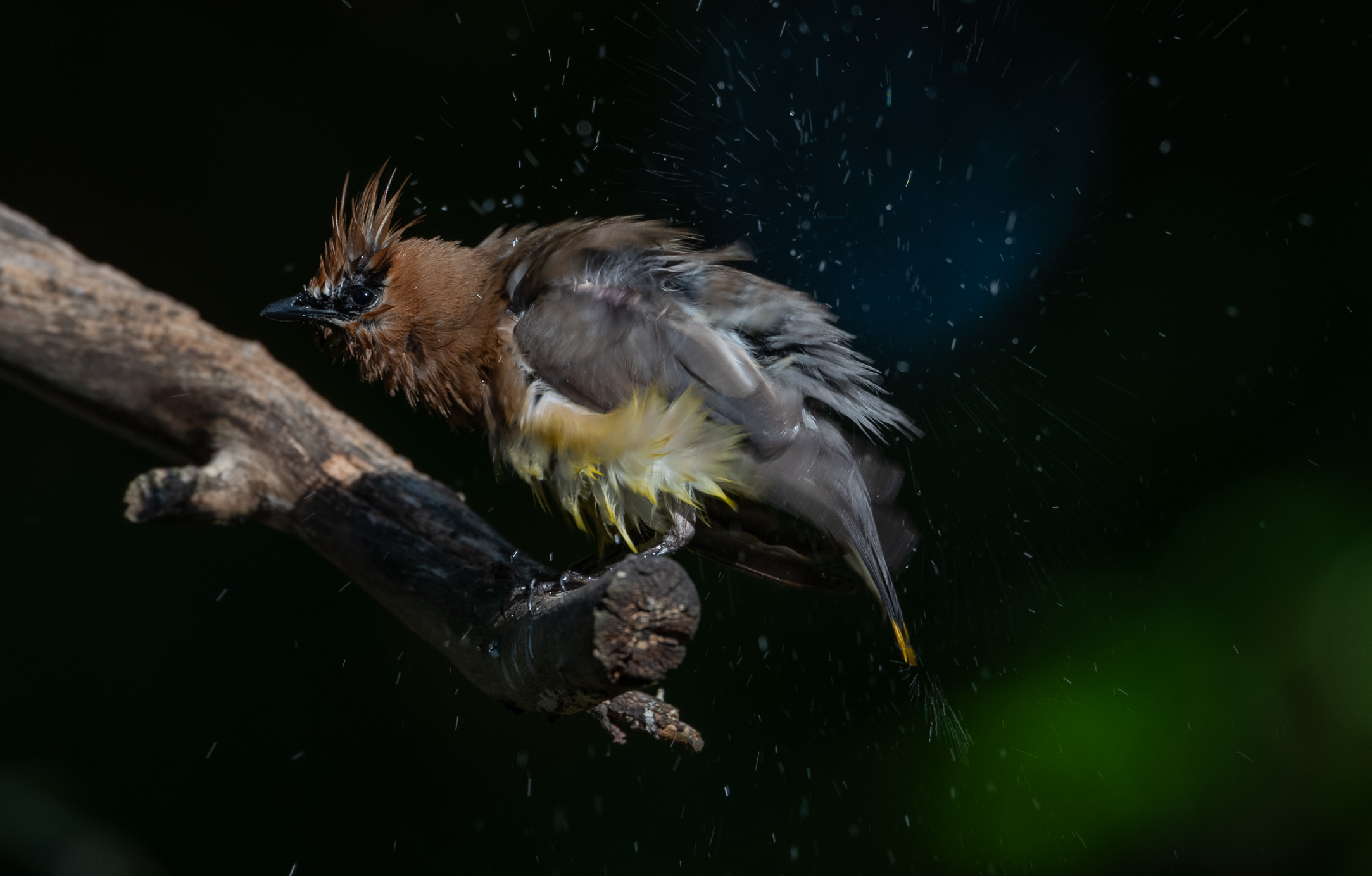
My last observation occurred while I was processing the day’s photos in my office. I looked out the window and saw a Cedar waxwing approaching the watercourse. Thinking I might have time to get to my camera I hurried downstairs. (In years past I would have said ‘ran downstairs’, but that ability has fledged!)  

I managed to sneak out the front door and set up the camera, but from the viewing angle I had I couldn’t see the actual watercourse and I didn’t want to risk moving to a better observation point.  Soon the Cedar waxwing flew to the Golden Chain tree for preening. As I watched, the bird made four more trips to the watercourse and each time retreated to the same exact branches of the tree to preen!  I managed about 80 photos but discarded the majority due to limbs and leaves that obscured a good view of the bird. 

I at first thought the bird was an adult, but in processing my photos I noticed the bright reddish/orange spots on the wings were missing, so this must have been a bird born this year. Cedar waxwings are usually very gregarious, so there must be others around. I’ll be waiting!  

July 4, 2025

It’s been almost two months since I’ve posted to this web site! May and early June are peak migration months here and I was busy taking, and processing, as many as several hundred photos a day! Other activities such as writing, gardening, hosting one of my sisters and regular household chores occupied additional time. I just didn’t have time for the posting process despite having a very large acquisition of new photos and written documentation for many days. And unfortunately I just don’t have the time to go back and post all of that material. : (

On July 4, 2025, I had a good morning of birding in the yard. By noon I was done with 230+ photos, some of which I consider not only interesting but good. So here are some of my photos for the day:

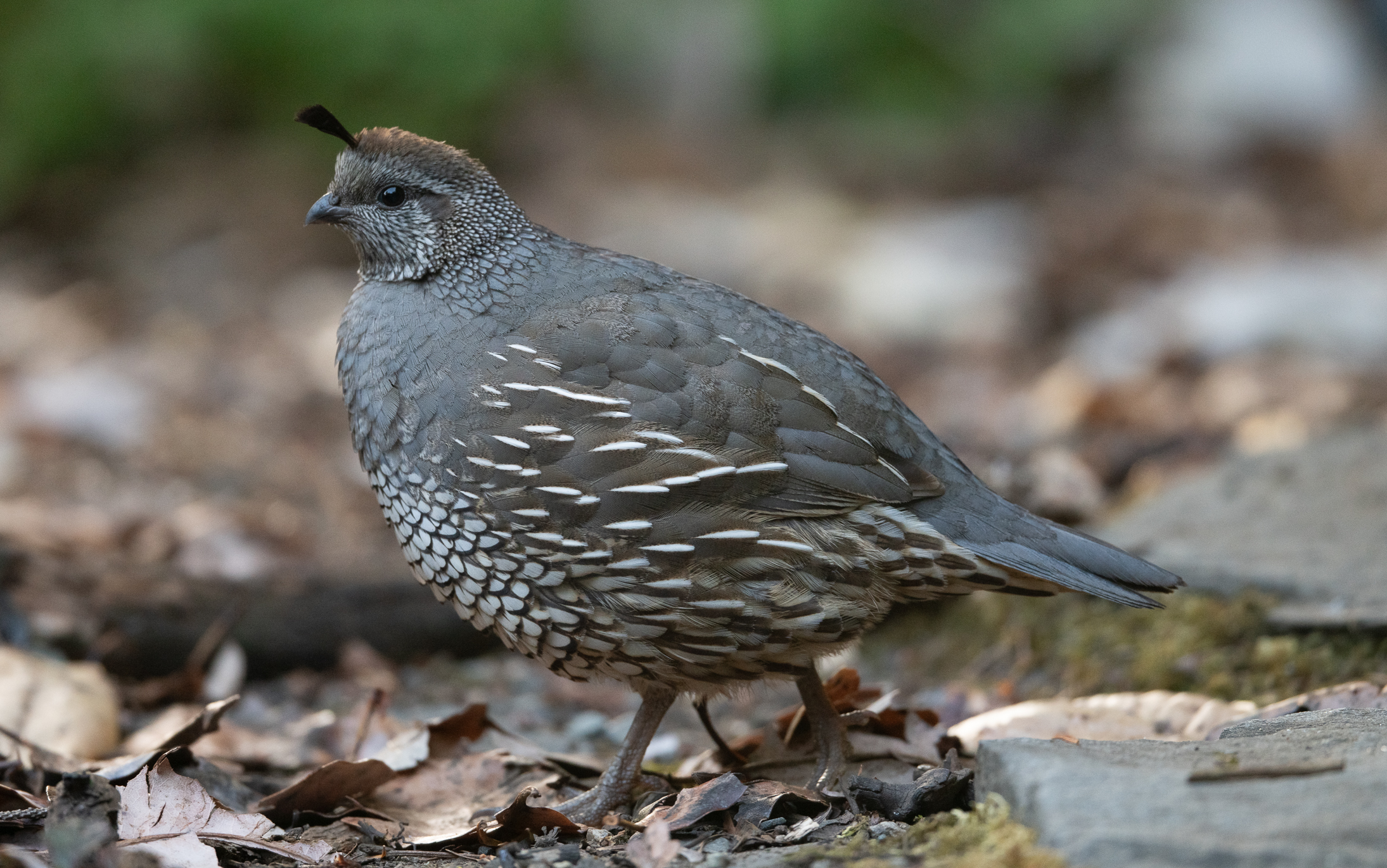
This female California quail was an early visitor (6:45am) and had a mate but no young. Another pair that visit the yard had about a dozen young which are now down to seven. It’ll be a good season if 3-4 survive.

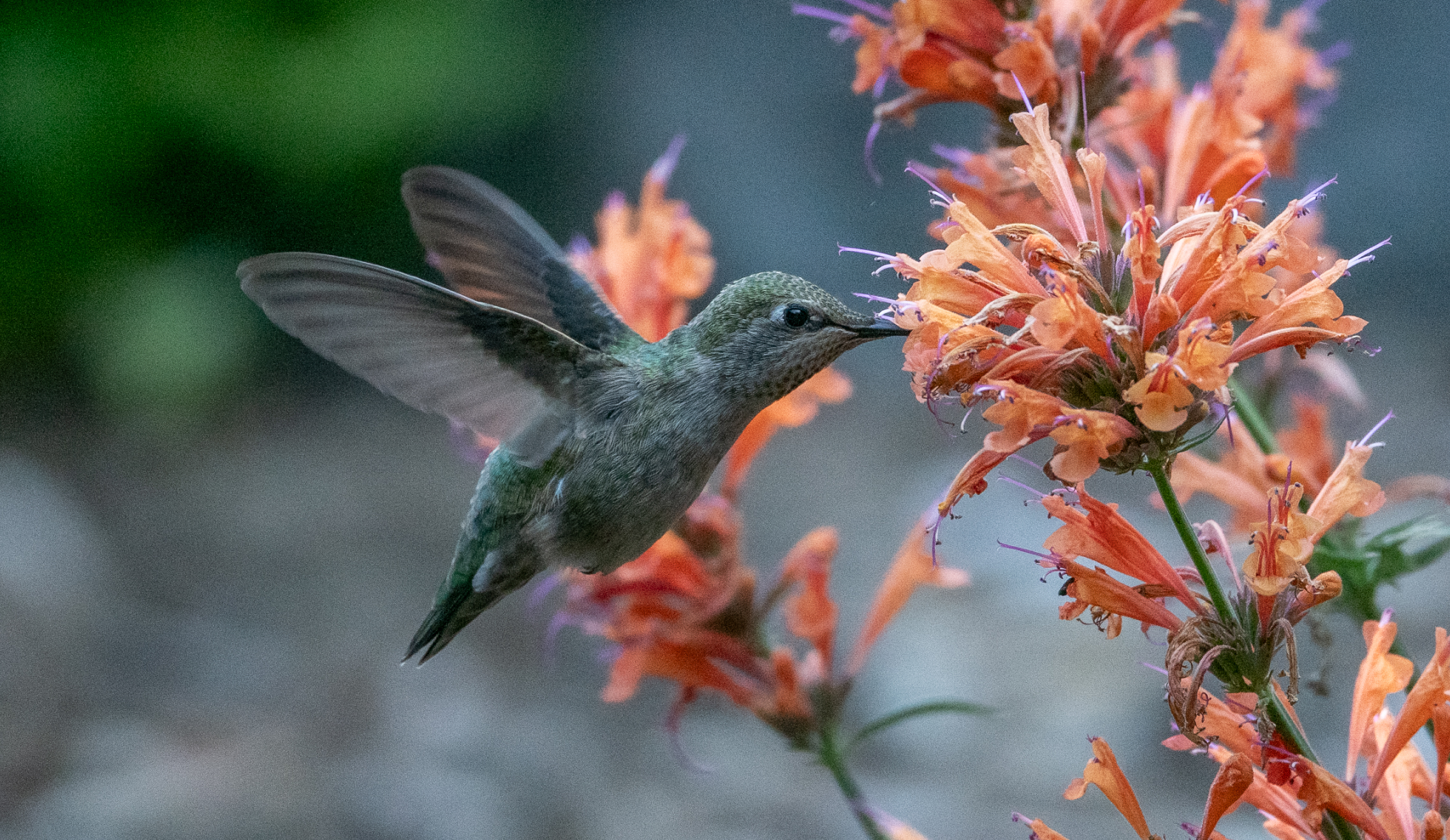
This is a female Anna’s hummingbird feeding on a plant my sister gave me.

The rest of these photos are of juveniles, part of which make this time of year so interesting!

American robins

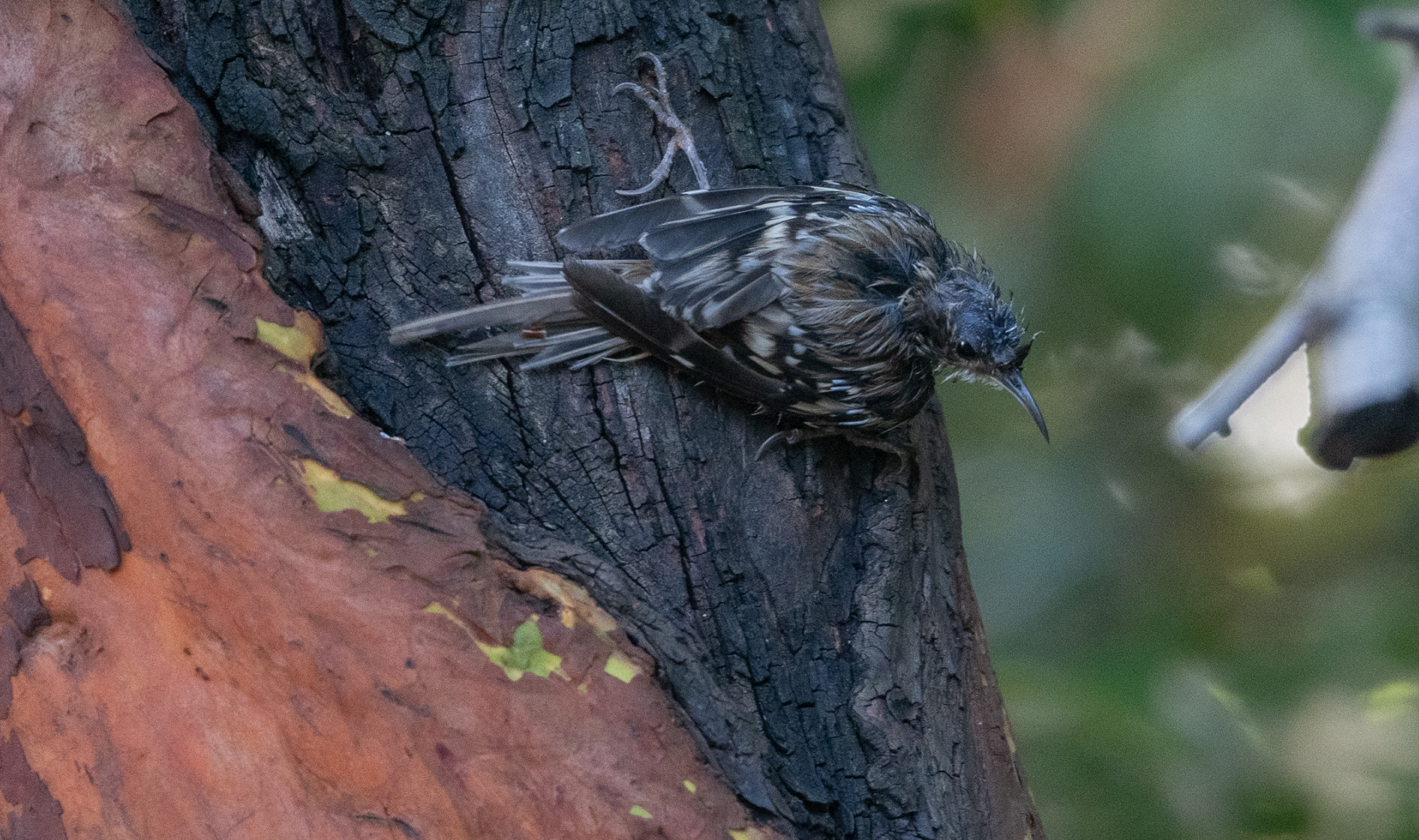
This Brown creeper, what I consider as one of our more interesting birds, can be identified as a juvenile by the lack of feathers on its head.

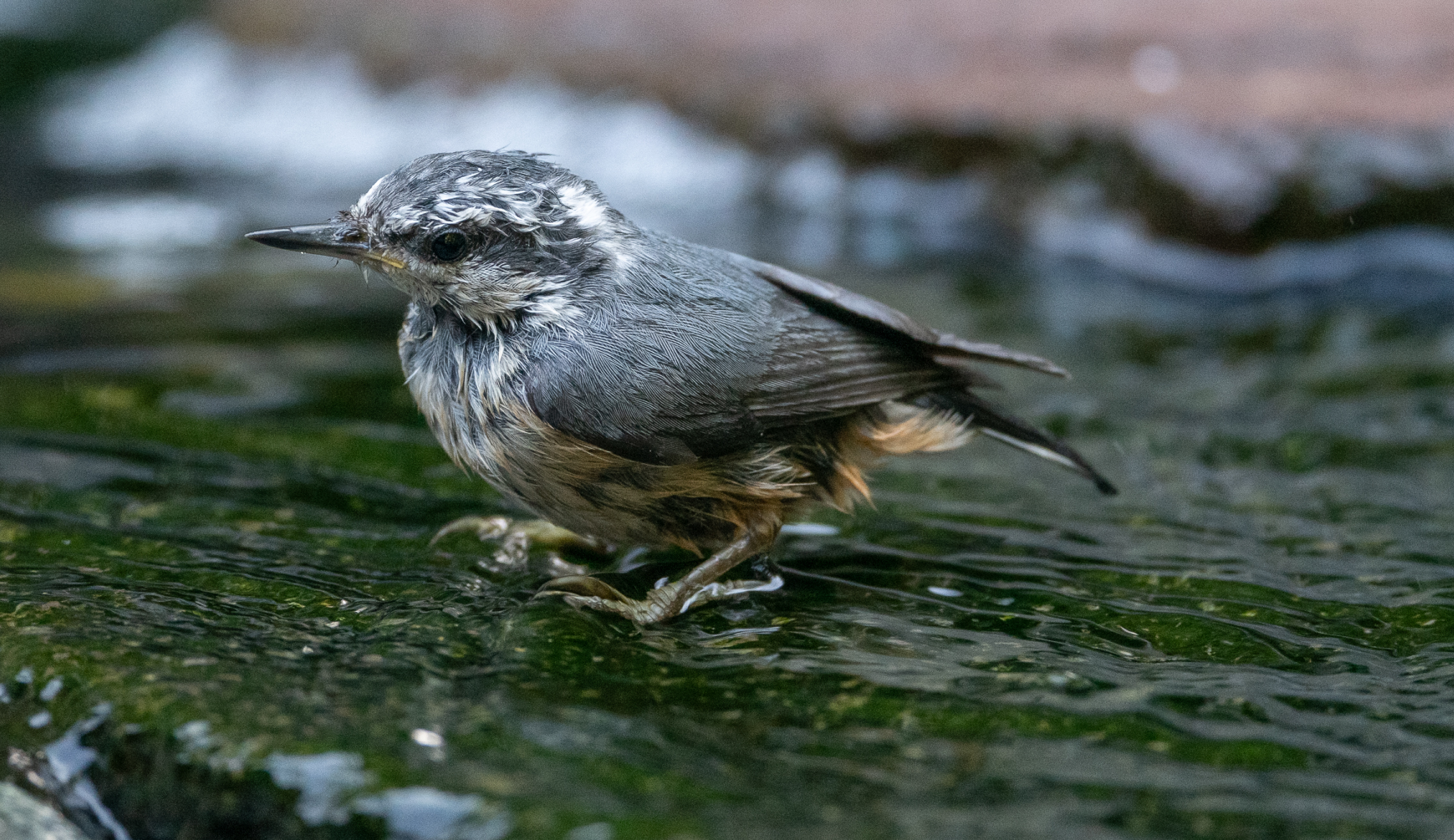
A Red-breasted nuthatch

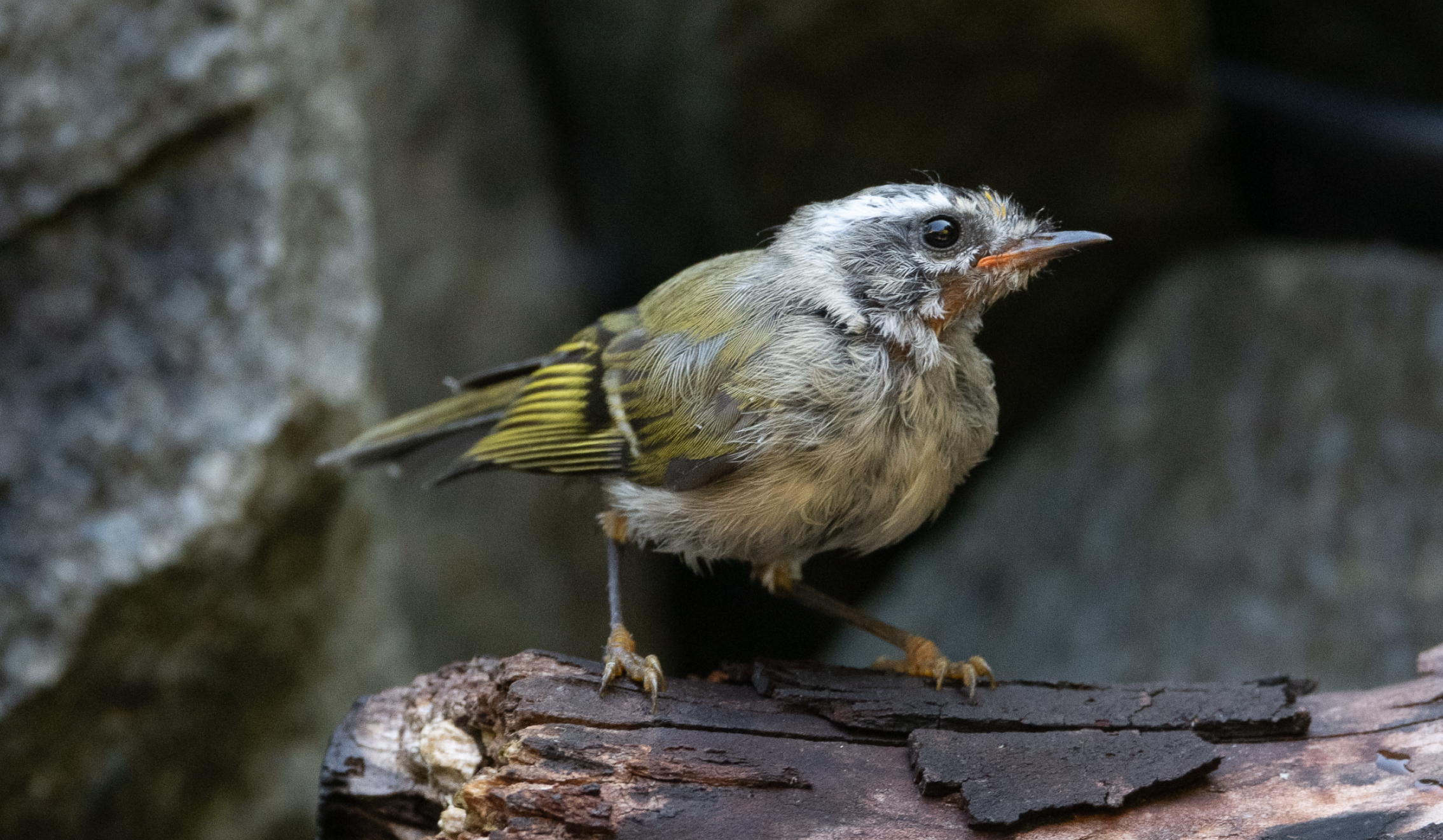
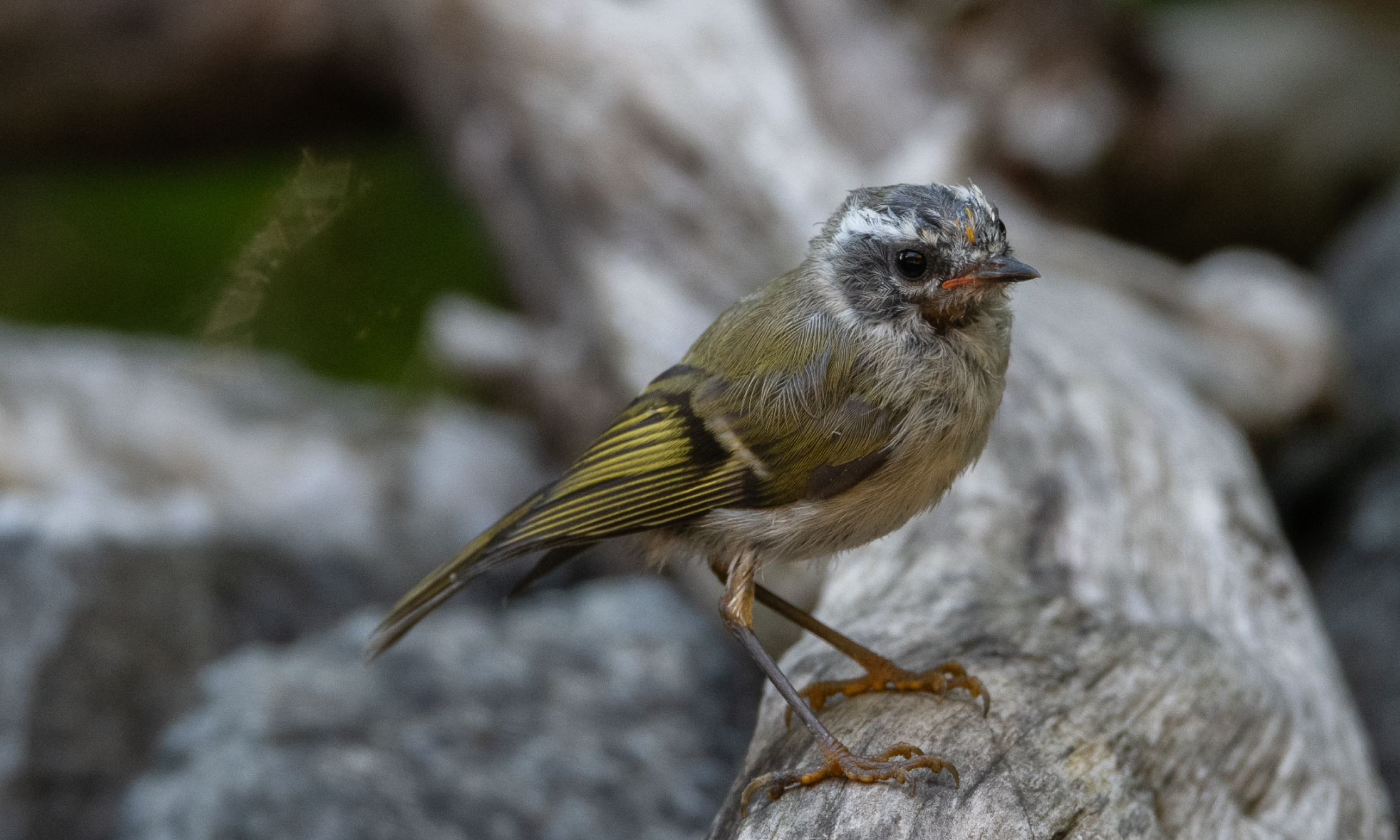
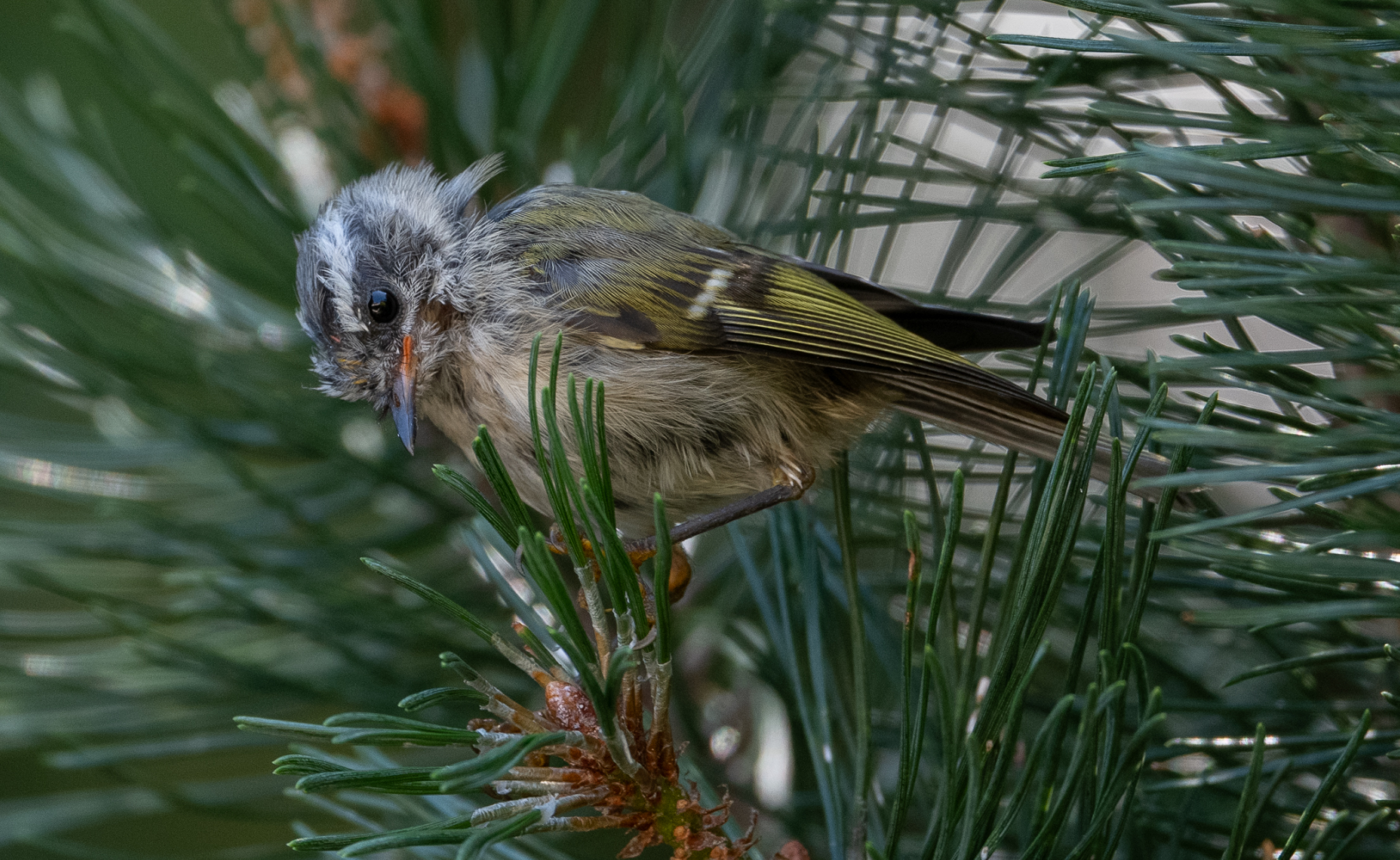
And finally (as it turns out, not quite ‘finally’!), one or more juvenile Golden-crowned kinglets, looking rather disheveled at this stage of their lives.

Oops!  Getting old and out of practice!  I omitted the most interesting part of this post!  

For the past several (6-8) weeks we have had an influx of Red crossbills!  These are usually very rare visitors to the yard. In some years I see none!  But this year, for some weeks now, I have had numerous daily visits by juvenile crossbills.  I have taken many photos. For whatever reason, the adults have either been in short supply or their plumage has not fully developed as far as color is concerned. I might encourage you to access a birding reference guide for a depiction of what the adult male and female of the species should look like. 

What follows are July 4 photos of an adult female and a juvenile of indeterminate sex. 

Adult males have been especially scarce, with only a handful of sightings and no quality photos… until July 3.  On this day I finally had an obvious adult male visit the watercourse for a bath. Fortunately his visit occurred while I was outside with my camera and, as the old saying goes, “I made hay while the sun shined!  

And before I go, I had at least two visits from single adult Cedar waxwings on July 1st & 2nd, another rare visiting species.

May 10, 2025 Spring migrants

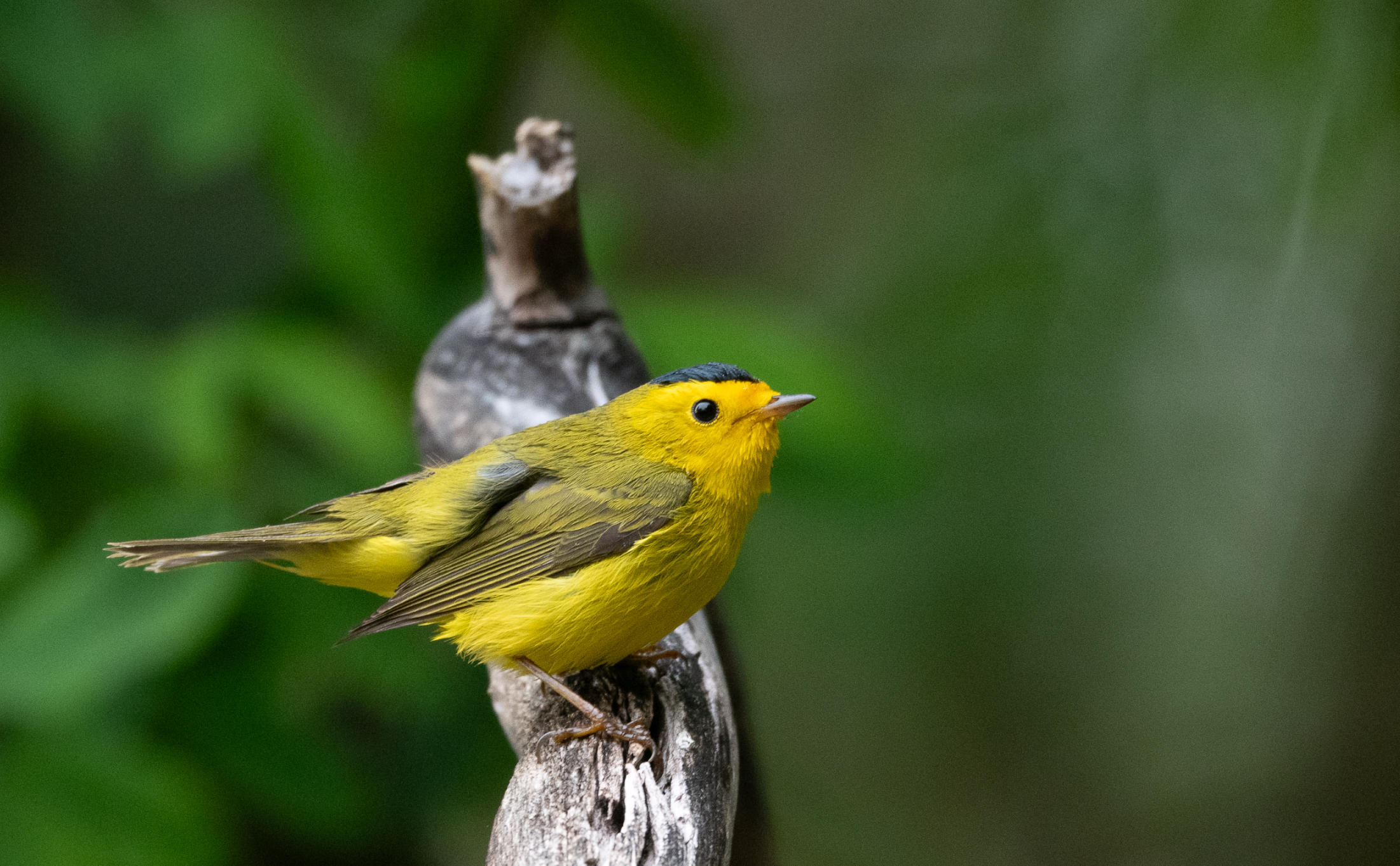
While my focus in this post will be on May 10, I want to mention that on May 8 I saw my first Wilson’s warbler of the season (a male) in the yard. I was inside the house when I spotted the warbler bathing in the watercourse. I grabbed my camera but had trouble inserting a media card, and by the time I got to the yard the bird was gone!  I waited around for some time hoping the warbler would return, but it did not so I missed the opportunity to record the event. 

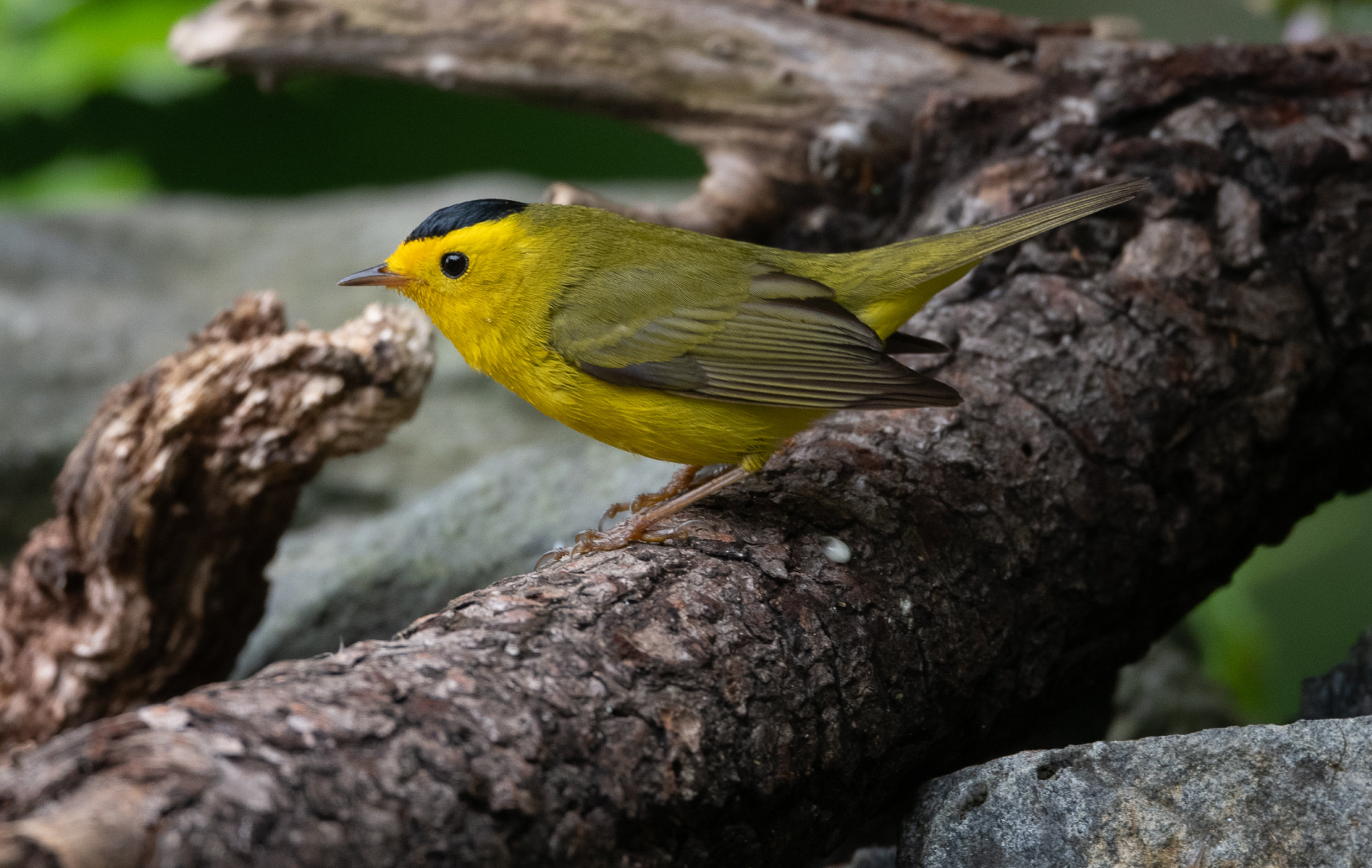
On May 10, two days later, I had the opportunity to sit outside beginning about 7am for about 50 minutes before meeting a friend for breakfast. During this time my second Wilson’s warbler (also a male) showed up, and this time I was able to obtain photos!  

I was gone a substantial part of the morning but by the time noon rolled around I had tallied three more Wilson’s warblers and an Orange-crowned warbler which was a co-visitor on one of the sightings. 

By the end of my birding day I had added another Orange-crowned warbler late for a total of two. 

As exciting as this was, the afternoon was relatively slow birding… until my first Black-headed grosbeak (male) of the season appeared!  The grosbeak visited the suet and sunflower/peanut pieces feeders and the farthest bird bath, hanging around the yard for probably about 15 minutes. I didn’t get any good photos but I was able to document the event. 

I had a friend join me for the latter part of the afternoon and while we were watching the grosbeak there was a loud and persistent song coming from outside the yard, which I thought might be a grosbeak even though the Merlin app was identifying it as a robin.  

I set up an interesting experiment. I have been unable to distinguish an American robin’s call from a Black-headed grosbeak’s call and in the past I suspected that the Merlin identification of the grosbeak’s call might be incorrectly attributed to a robin. (I’ll own this as a personal problem!) 

So this friend and I set up a little experiment. He activated his Merlin app to record and identify bird songs and I activated my Sibley app to play a grosbeak’s song. Without fail the Merlin app identified the grosbeaks’ songs as a grosbeak!  It’s now clear to me that I need to train my ear more in this regard!  

So this was my best yard birding day this season, with multiple sightings of three major migrants, and I’m not including Rufous hummingbirds, Turkey vultures, American goldfinches or White-crowned sparrows.  (The latter two species I consider migrants as far as my yard/location is concerned). 

I’ve been anxiously awaiting spring migration arrivals that began in May in past years, but have been disappointed in what I’ve seen thus far. 

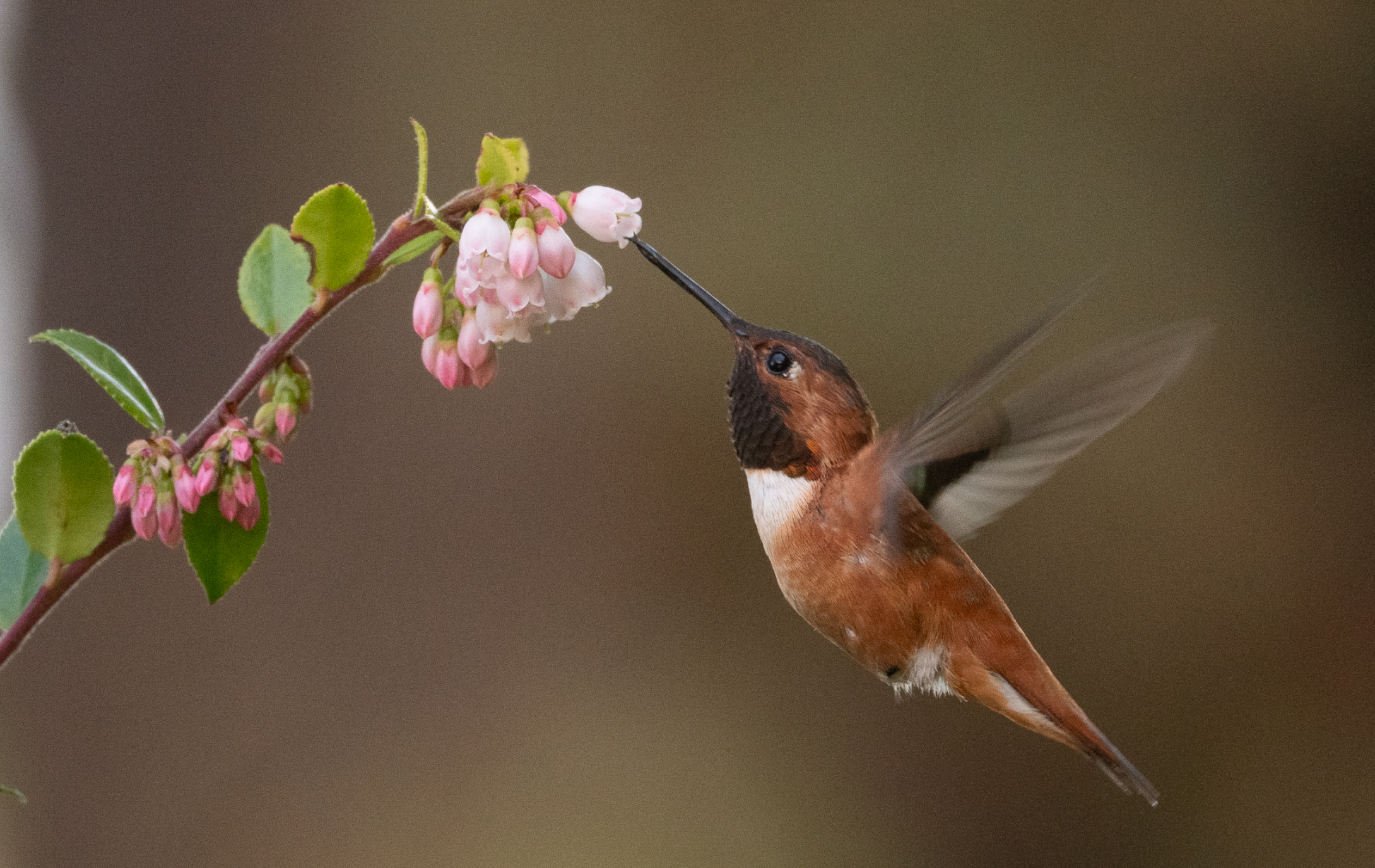
I’m getting sporadic sightings of Rufous hummingbirds but the Anna’s hummingbirds are more frequent, reliable visitors. This Rufous is feeding from blossoms on my Evergreen huckleberry bush.

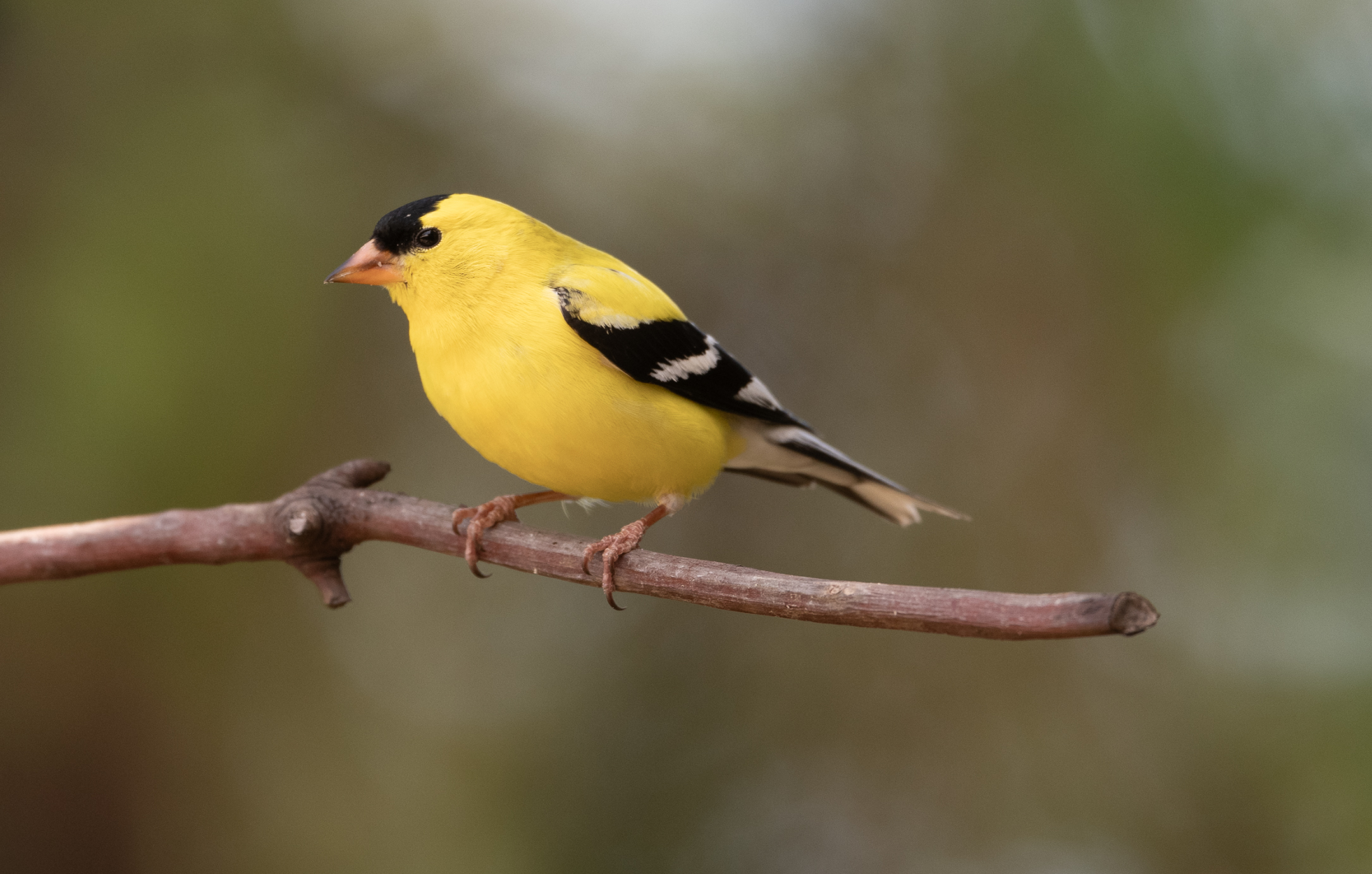
I would normally have a dozen or more American goldfinches visiting by now but I only have two pair at most. While these birds are in the greater area year-round, they are only regular visitors to my yard in the spring and summer. 

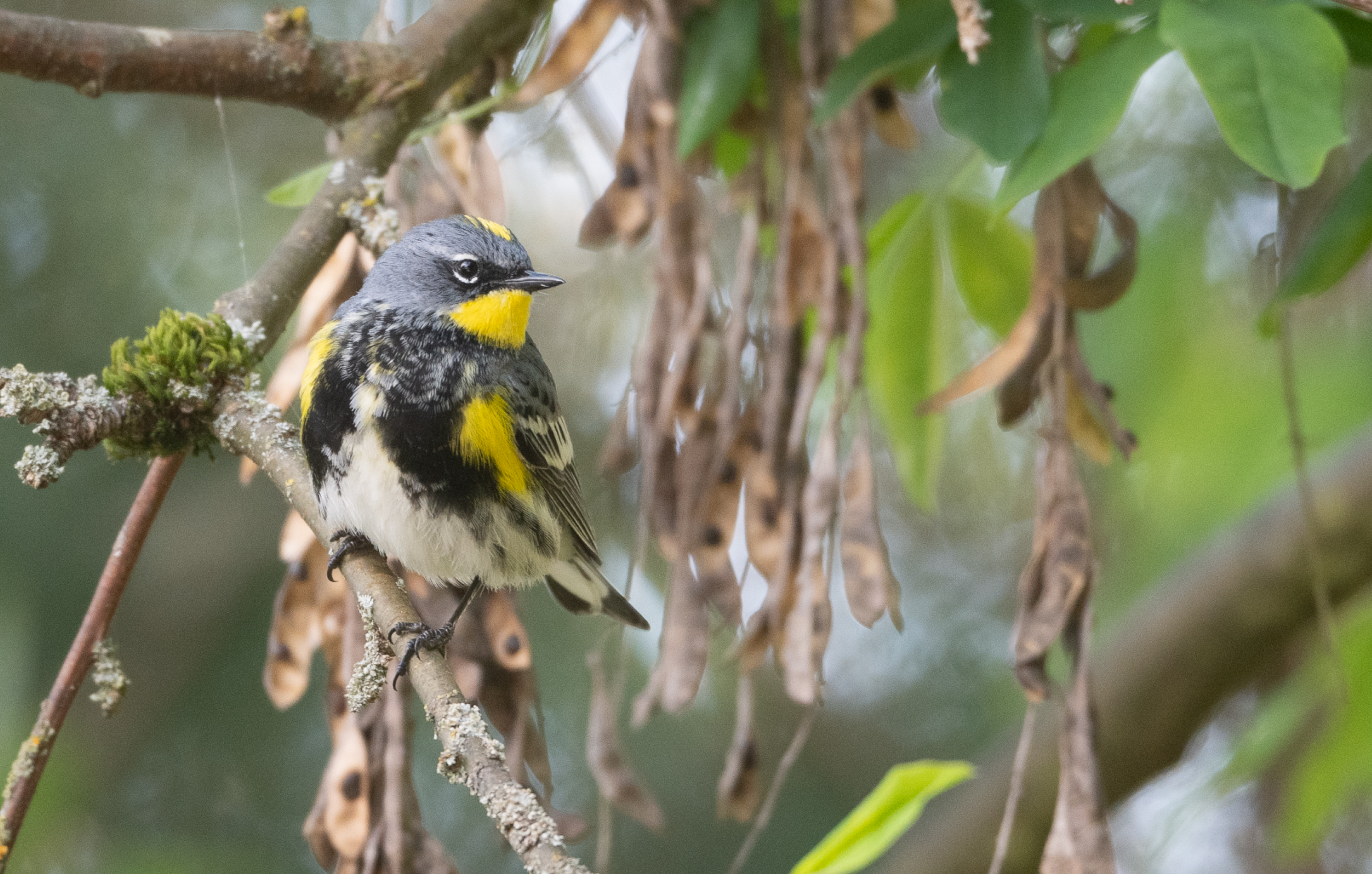
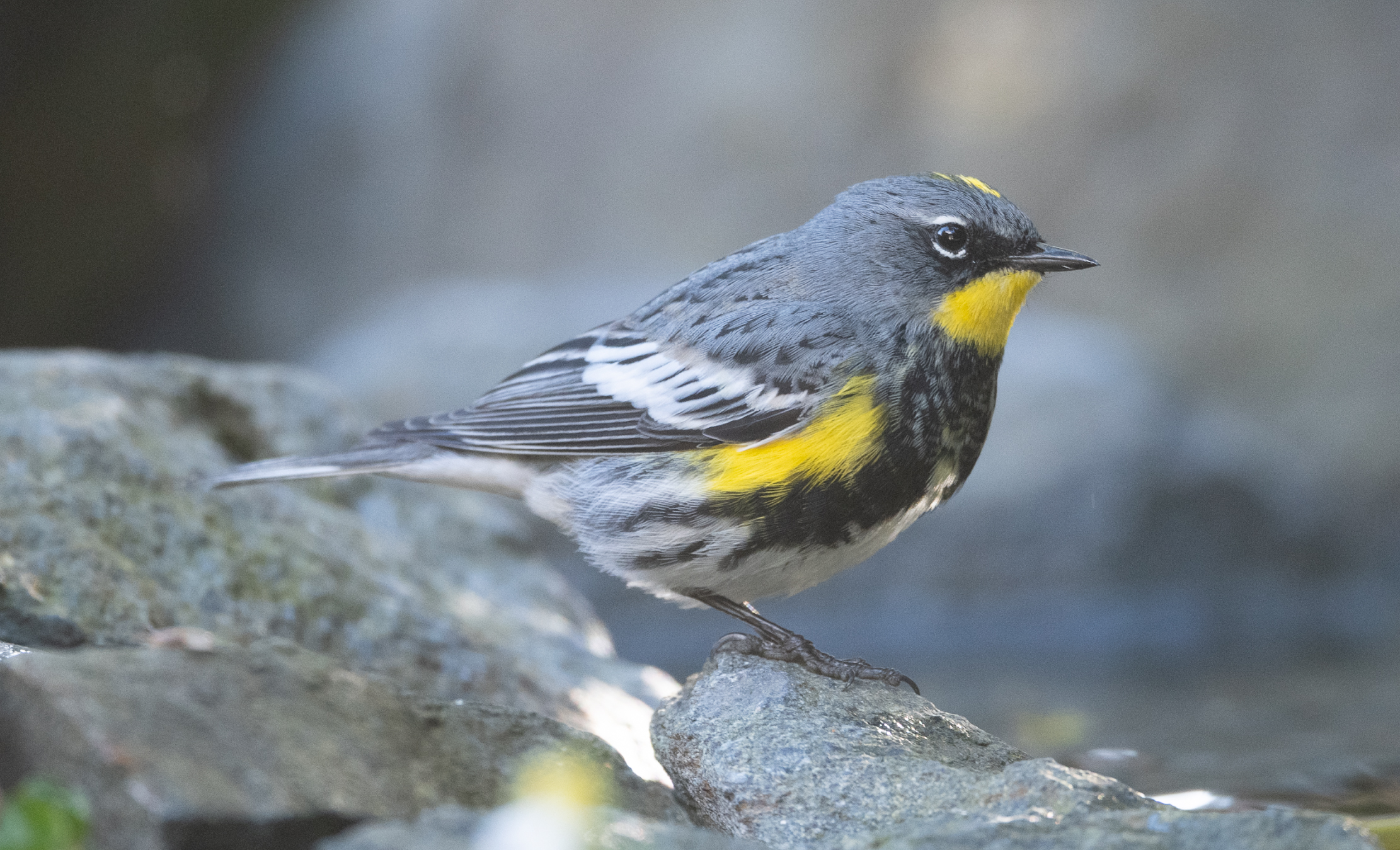
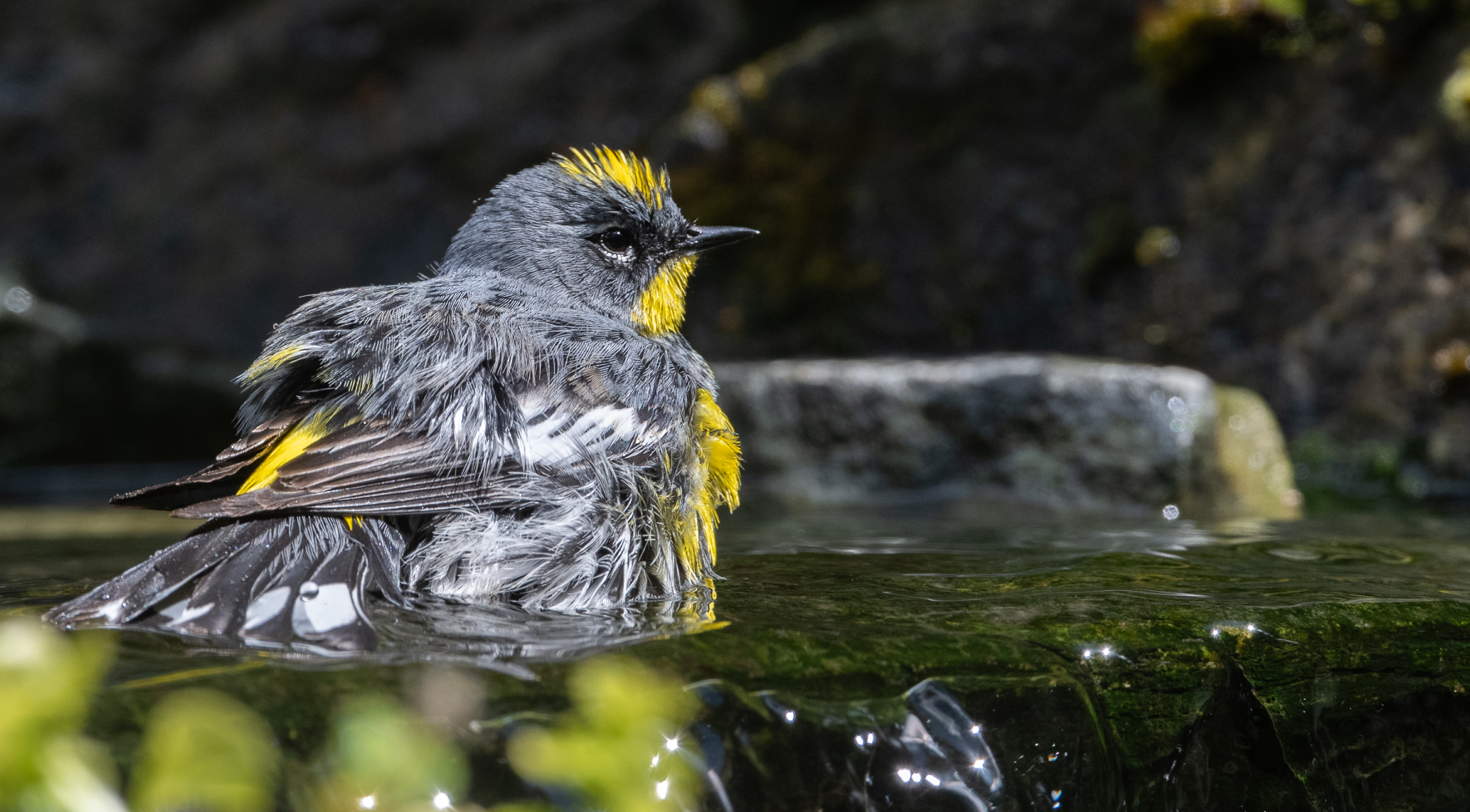
I’ve had a few sightings of warblers (Orange-crowned and male Yellow-rumped Audubon’s) but I’m only having one or two sightings per day, and some days I have none. 

On two different days I’ve had what I believe to be a female Red  crossbill briefly visit the yard but have thus far been unable to obtain photos of the bird. While I would have liked to have better observations or photos for identification, at the time of both observations my Merlin app (available for free from Cornell Lab) confirmed crossbills were in the vicinity. 

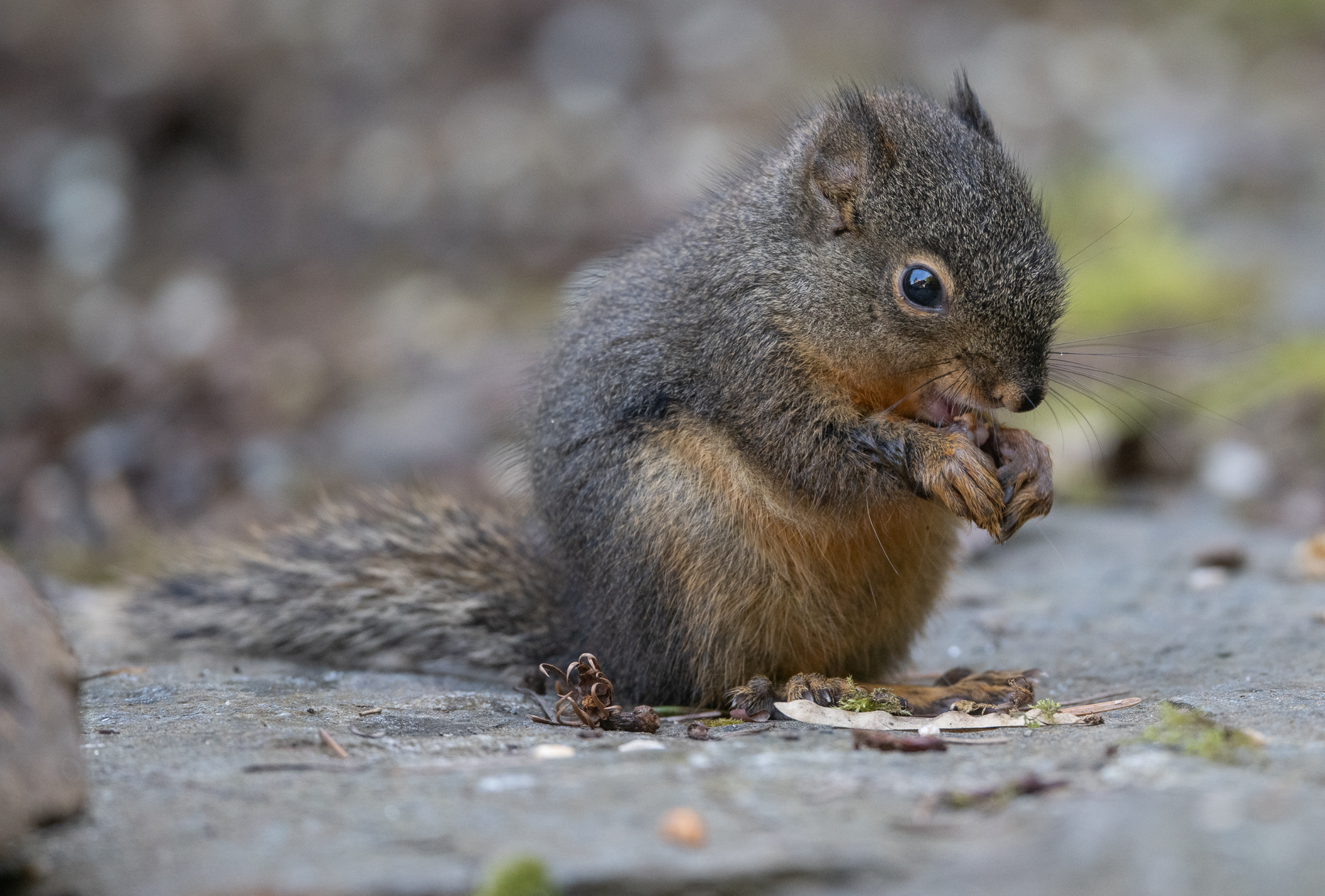
I’ve had a single, very young Douglas squirrel in the yard for several days. It made its debut by rushing from bushes directly in front of me and taking a flying leap… directly into my watercourse’s pond!  I was afraid I was going to have to resurrect my old lifesaving skills, but it managed to struggle back to land on its own. 

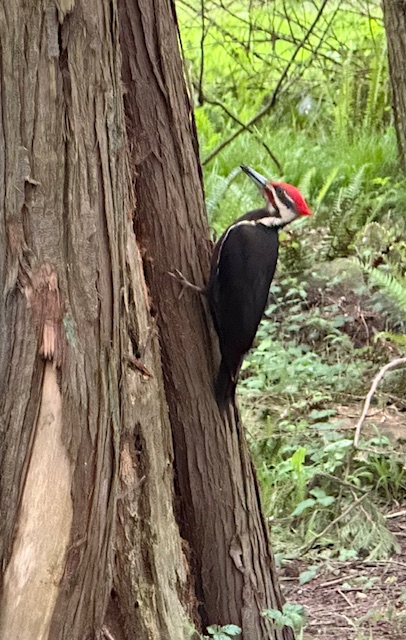
Meanwhile, out of the yard, on my morning walk in WA Park on May 7, upon arriving I decided to investigate tapping I heard and found a male Pileated woodpecker working on a  cedar tree… less than 15 feet away and only about four feet above the ground!  My only camera was an iPhone but I managed a couple of photos before the bird flew. 

Quite frankly, I’m concerned about the species and numbers of spring migrants I’m seeing in my yard thus far.