October 21-22, 2025

I had a great day of birding on October 20, 2025, as can be noted on my prior post of that day. My crop of madrona berries was significantly diminished due to two factors: 1) birds eating the berries and 2) the stems having dried as the berries ripened and tending to break off when jostled.

My success on October 20 elevated my bird observation priorities for the following days, so October 21 found me in the yard anticipating another broad slate of visitors. I was disappointed to find that I didn’t have nearly as many visitors as the previous day, but what I lacked in number I made up in quality!

I first photographed this Song sparrow defending its bathing spot from encroaching House sparrows.

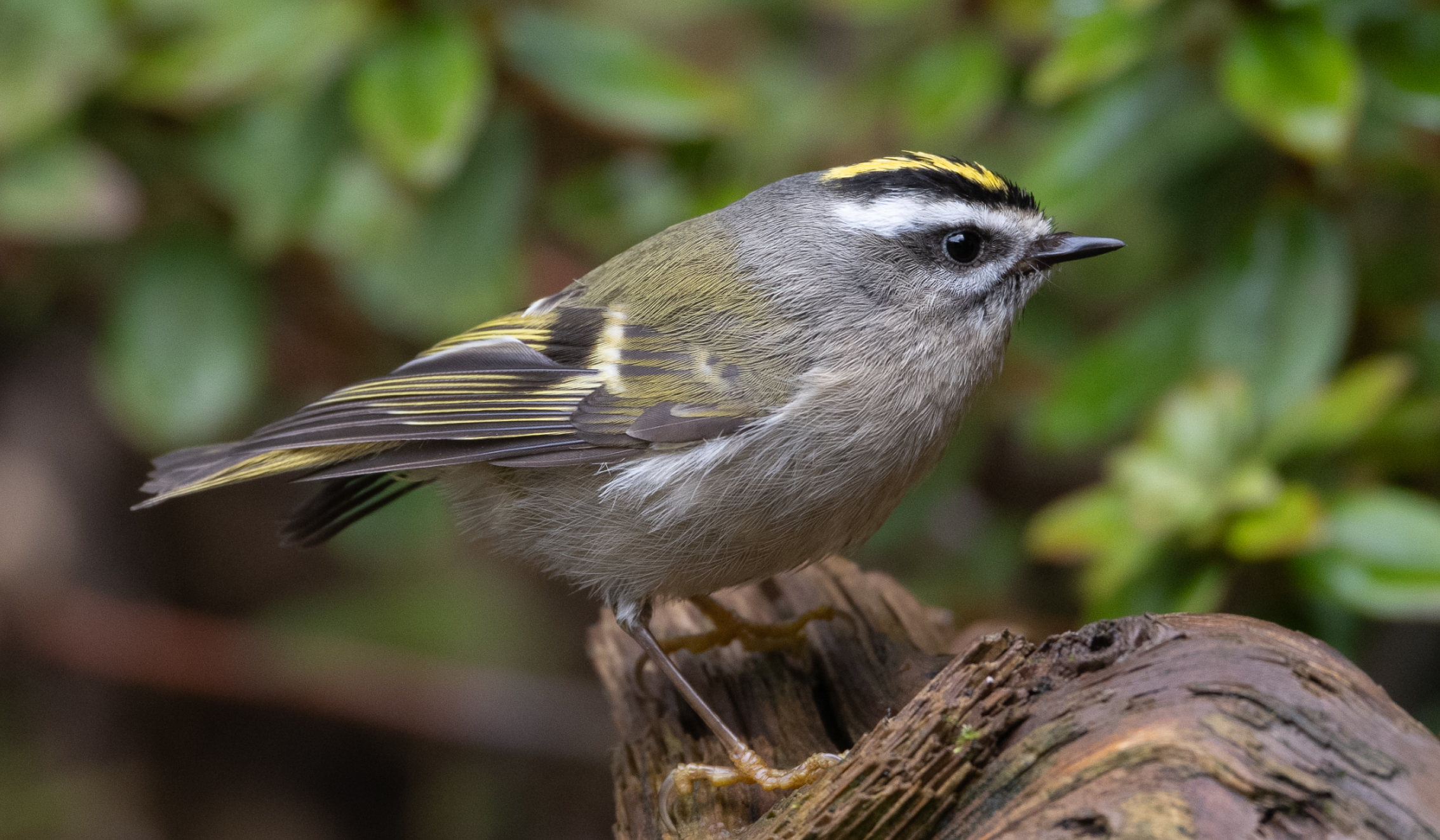
This Golden-crowned kinglet hung around the watercourse long enough for me to obtain many good photos.

This was a first appearance of a Fox sparrow, a bird I thought should have made an appearance before now. The photo wasn’t as good as I would have liked, but I wanted to document the bird’s arrival.

Finally (there’s always a “finally”), i had been occupied with my camera and was just getting ready to call it quits for the day when I saw some movement under a bush that attracted my attention. I realized that a Hermit thrush was hopping directly towards me! I froze but the bird seemed unconcerned by my presence (completely out of character for the species) approaching to within about six feet of me. It then toured the entire watercourse area, giving me ample opportunity for photographs. .

This day had been largely disappointing until the arrival of the thrush.

October 20, 2025

October 20, 2025, seemed like a good day for bird photography so I opted to spend some time in the yard. The madrona trees are full of ripe berries, maybe more than I’ve seen in prior years. There were many birds in the yard so after an early morning doctor visit I filled the bird feeders and situated myself in the yard with my camera equipment. The day was significant in the number of unusual or difficult to photograph birds that visited the yard during the day.

Early on my attention was drawn to a bird in the madrone tree and when I could get a clear view of it, I realized it was a Hermit thrush, a rarity as far as my yard photography is concerned. I managed to get several photos of it. 

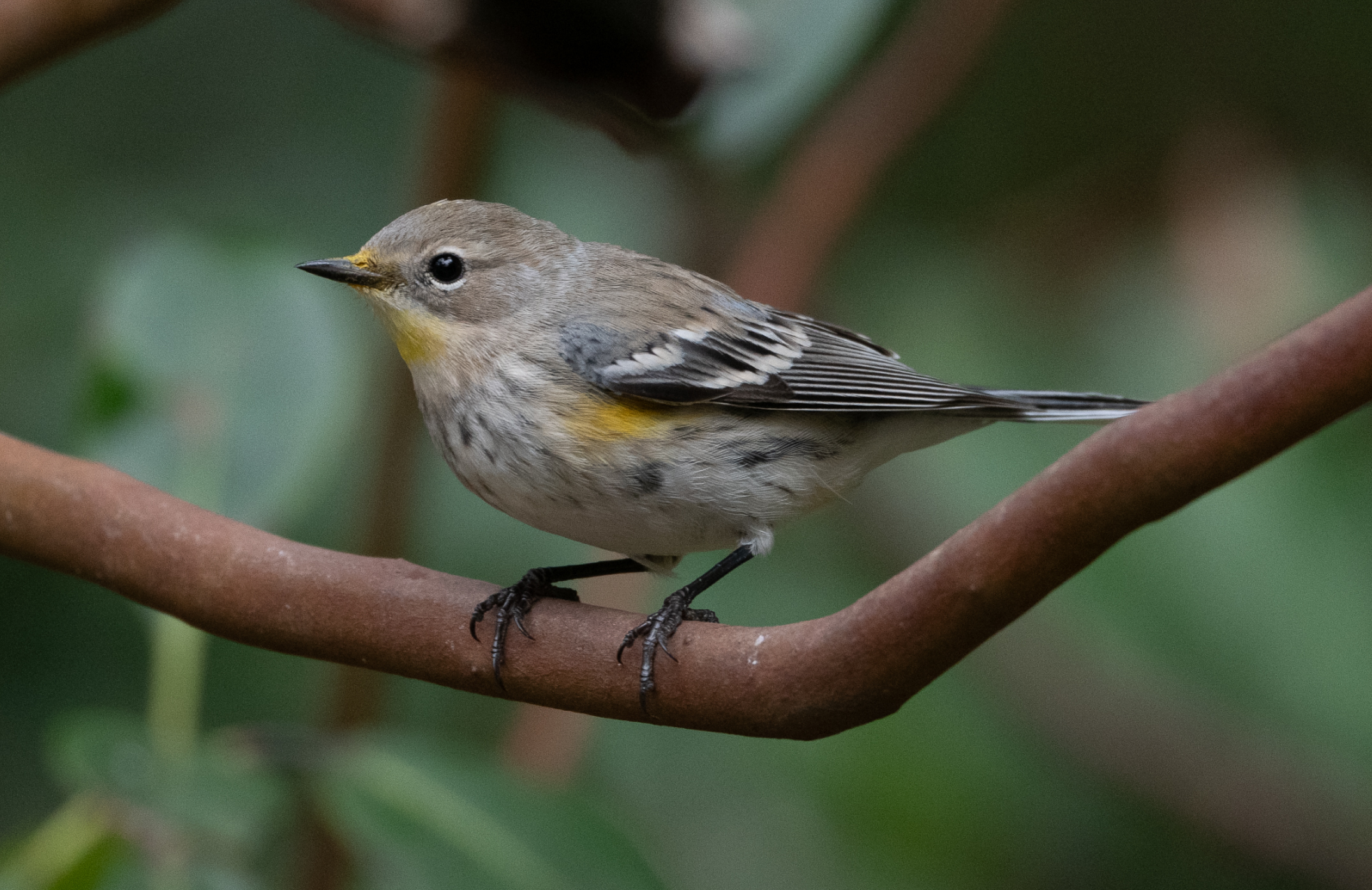
Yellow-rumped warblers, all seemingly females or juveniles, were in the yard almost constantly.  

At this point I can only confirm a single female Varied thrush visiting the yard…

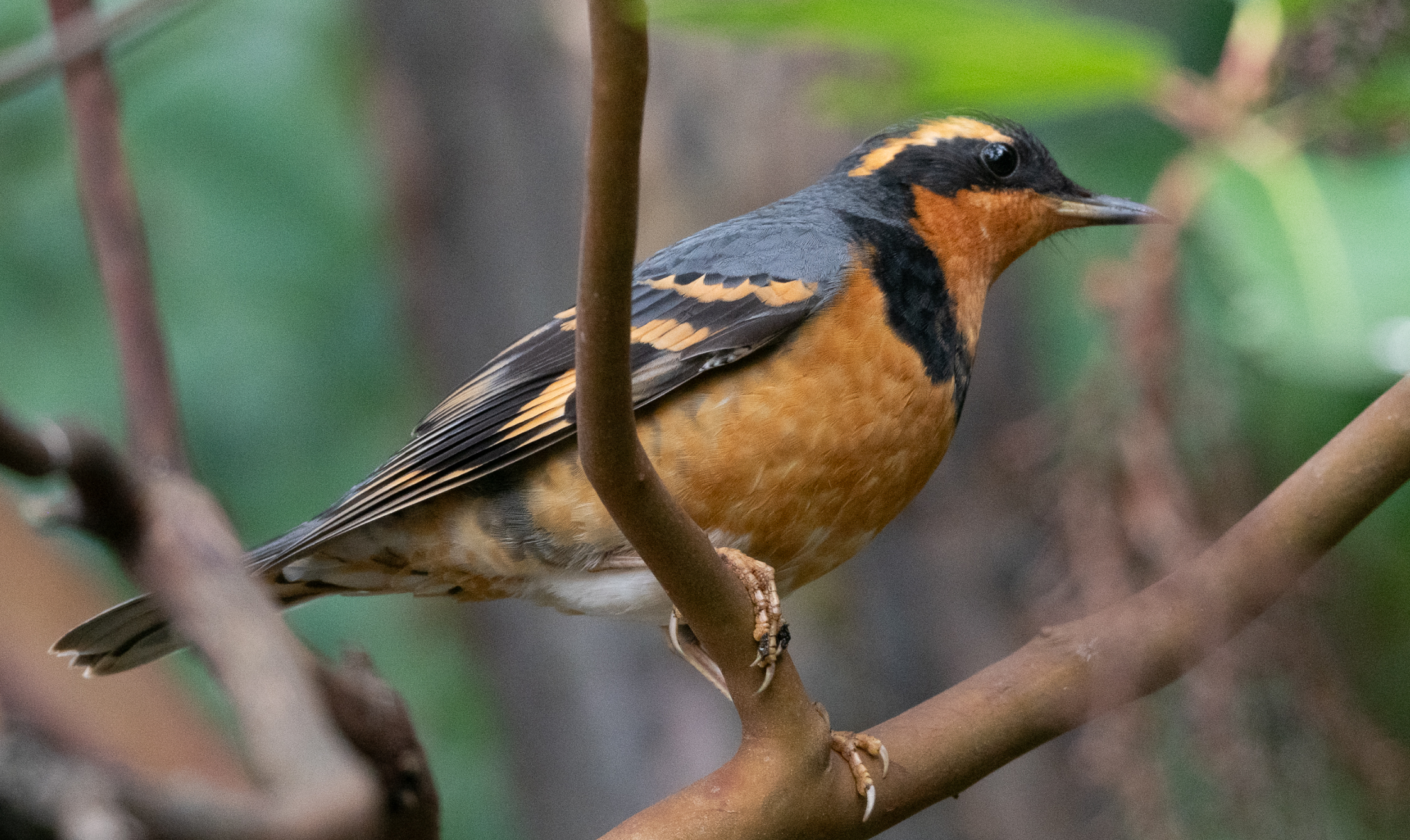
and a single male Varied thrush.

At least three juvenile Cedar waxwings were enjoying the madrona berries.

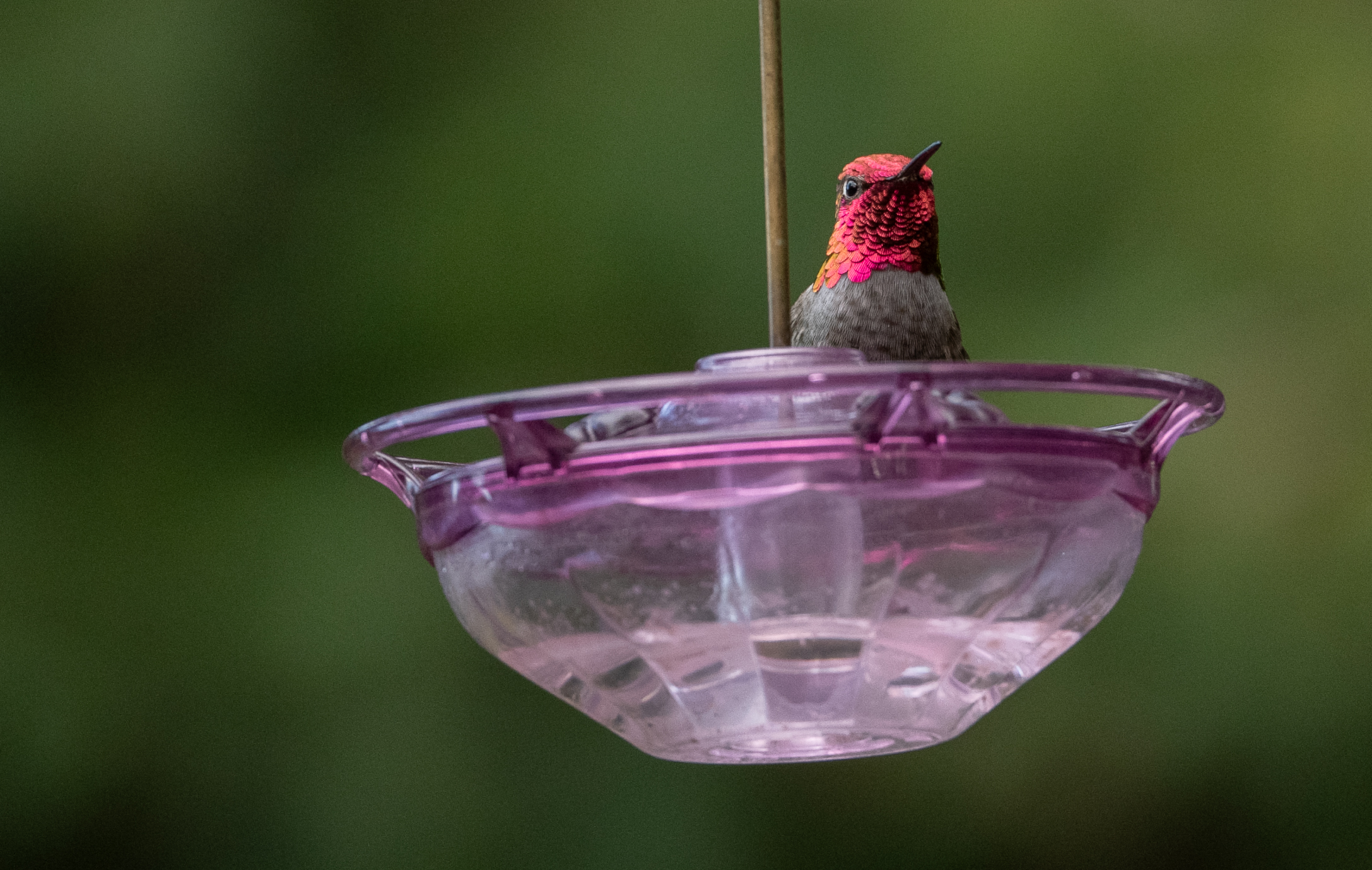
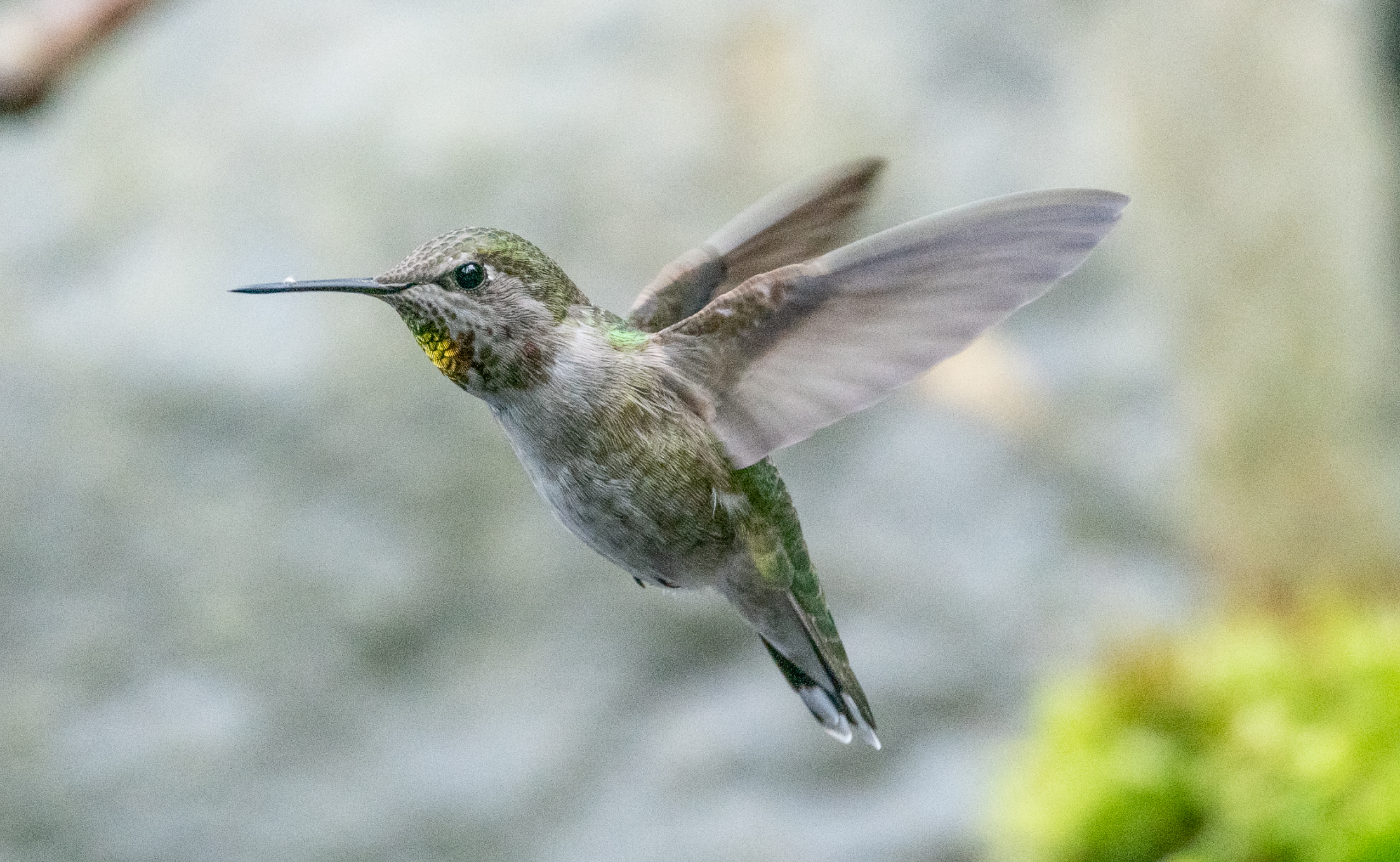
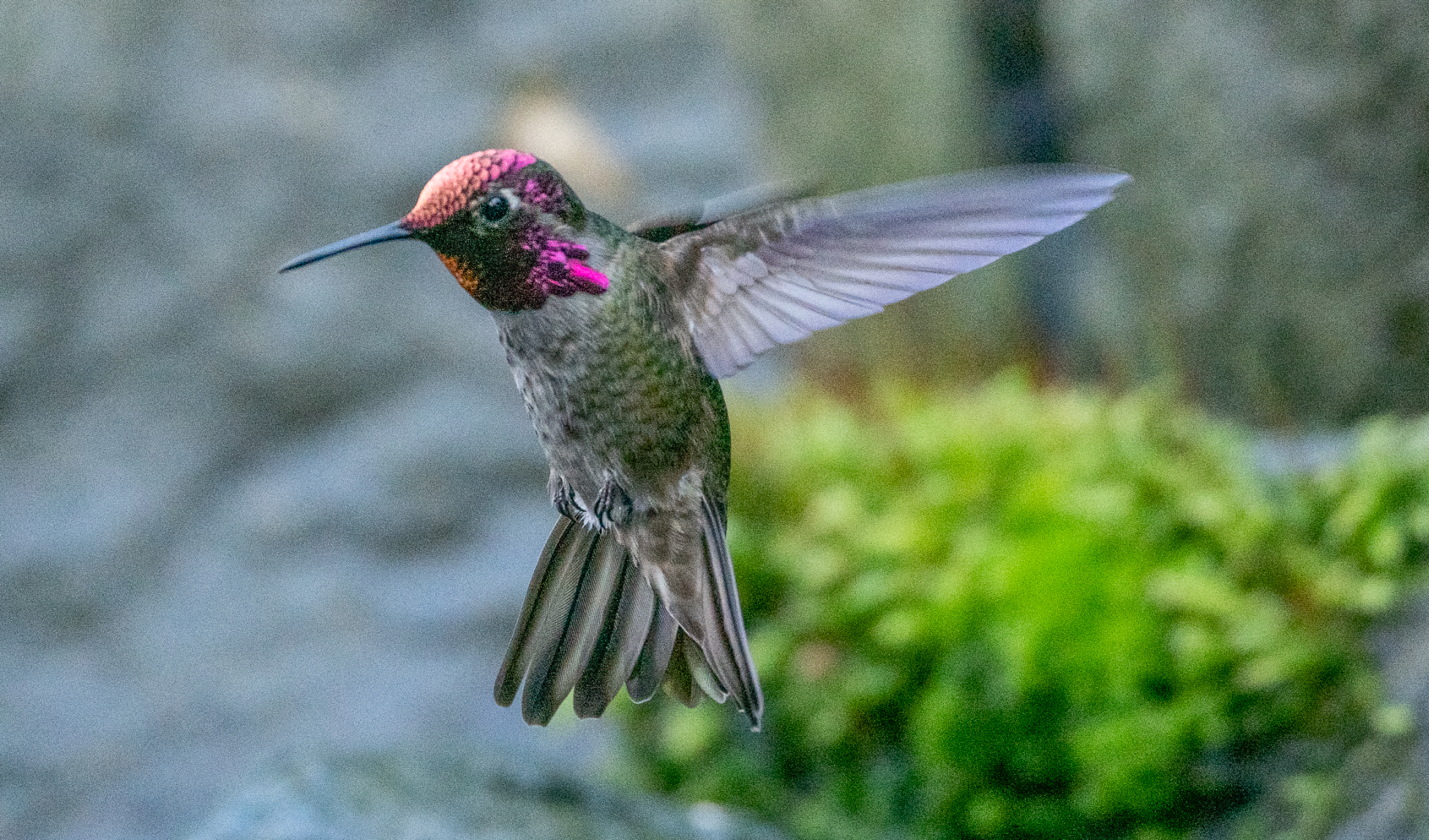
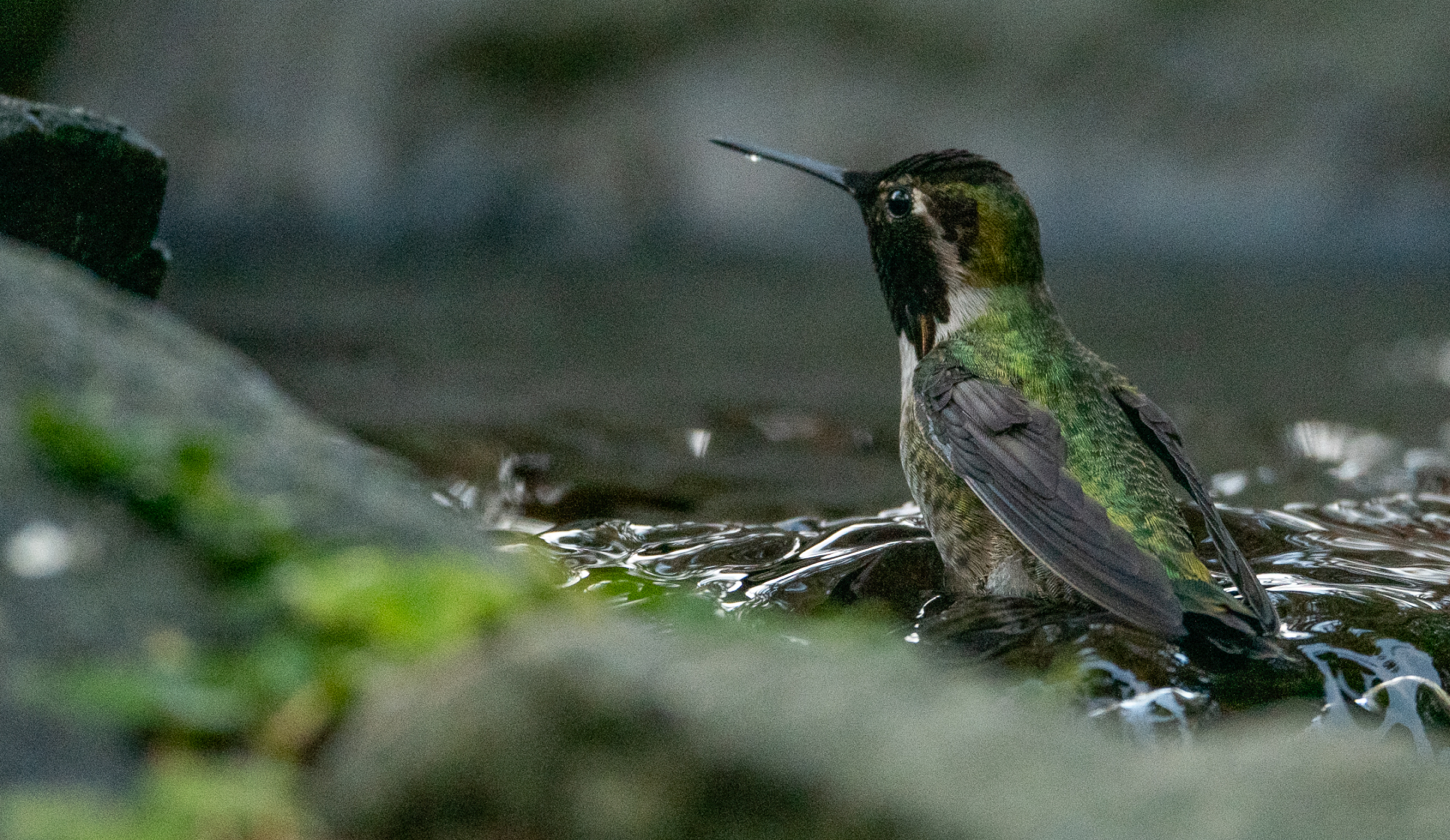
This male Anna’s hummingbird was accessing what is left of salvia blossoms.

This Golden-crowned kinglet was searching for insects among the madrona berries.

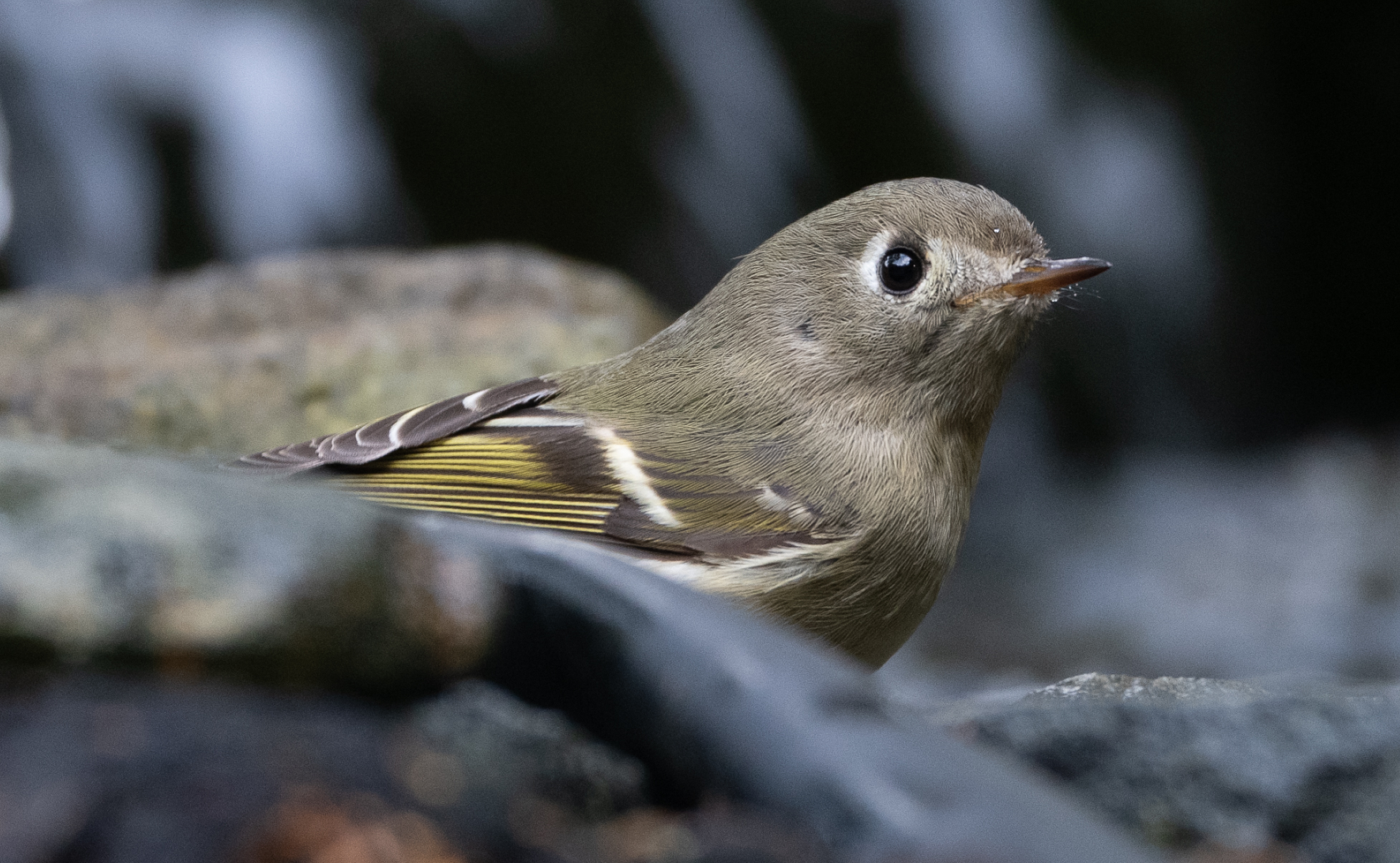
I photographed this Ruby-crowned kinglet as it accessed the watercourse.

I had another great yard birding/photography session Saturday, October 4, 2025. The day began overcast and I was out in the yard by about 11am. I remained in the yard until about 2pm, and shortly after that the sun came out. Had I remained out, my photography would have been degraded. I took 246 photos yesterday, and of those I kept 126. Of those 126 photos, 56 were of Yellow-rumped warblers!  

Yellow-rumped warblers have been migrating through all week. Here are photos of some of them…

This Golden-crowned kinglet stopped by for a bath…

I obtained several good photos of a male Anna’s hummingbird

As I might have previously mentioned, my madrone trees are full of berries. The largest consumer at this point are House finches, which gnaw at the berries instead of consuming them whole as a lot of other birds do. If you look closely you can see where this male House finch has eaten part of a madrone berry.

I had two special visitors on this day. The first was a female Red-winged blackbird. I usually only get blackbirds during the summer when those at the sewage treatment ponds are feeding young.

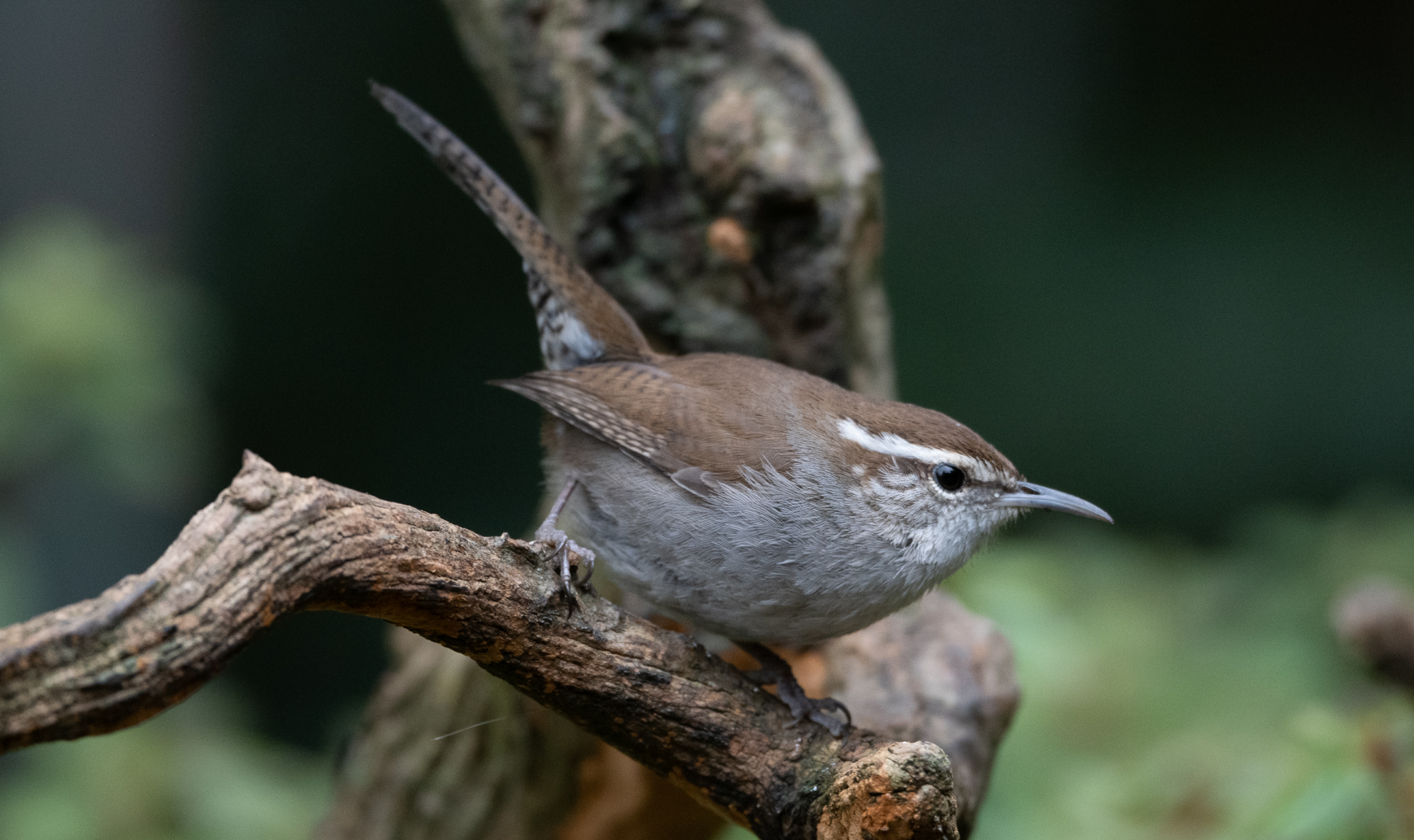
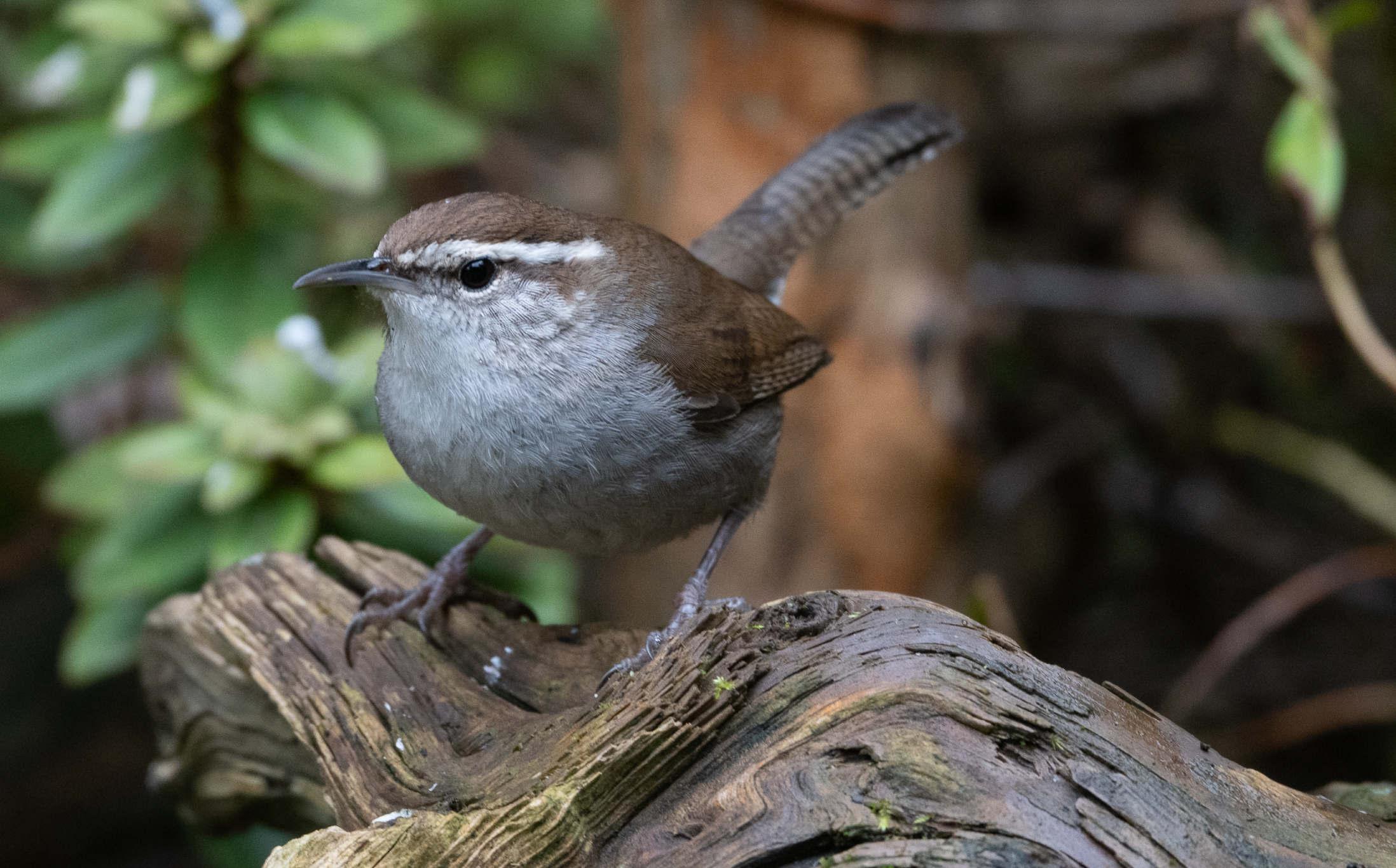
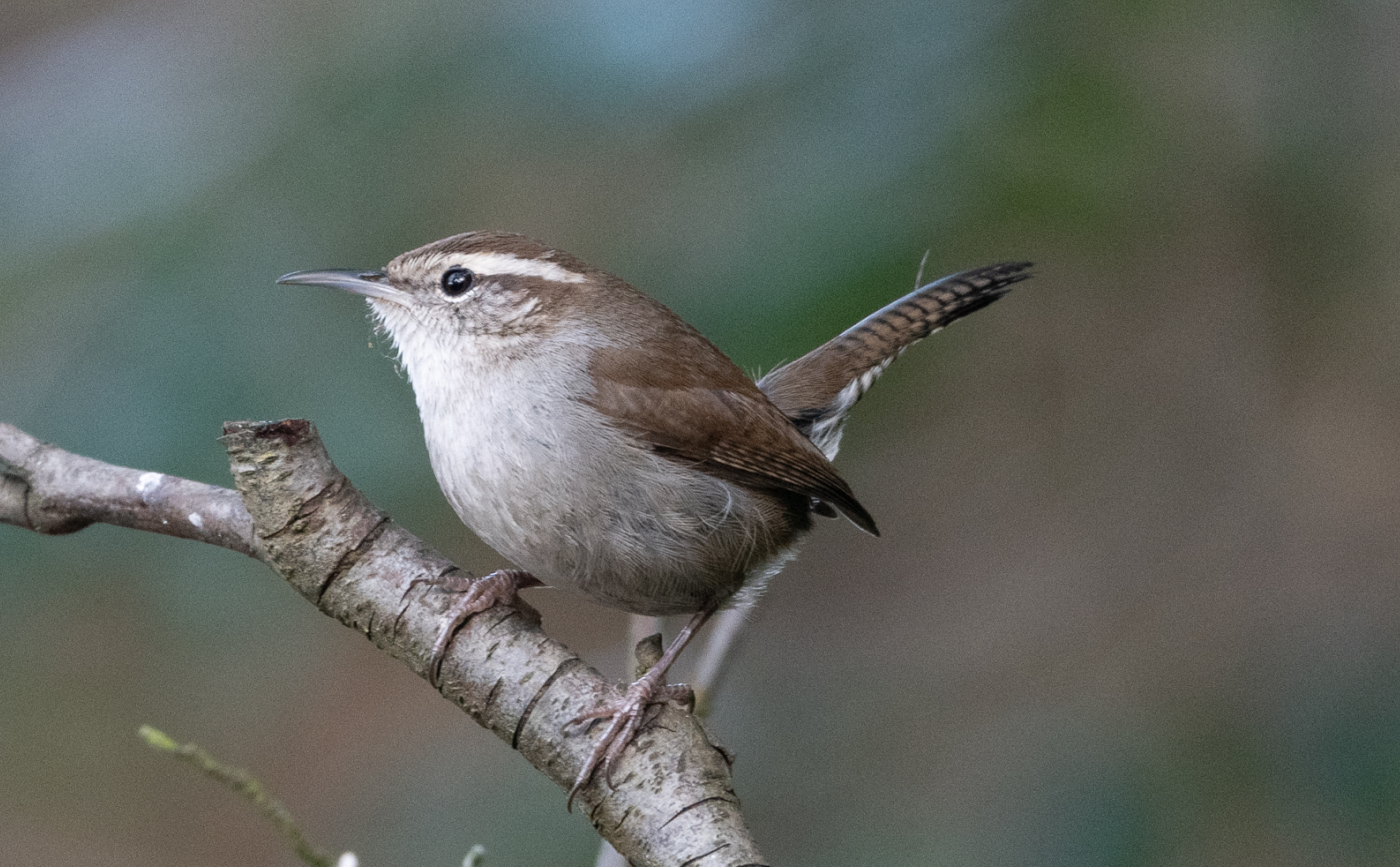
The second special visitor was a Pacific wren (formerly known as the Winter wren). This bird is a rare visitor to my yard and very difficult to photograph due to its propensity to remain in thick vegetation and its constant movement. I consider myself very lucky to have obtained photos of the bird! In the second photo you might note that the wren has found a nice-sized spider!

October 1, 2025

I’ve had a lot going on recently so I’m not posting as often. (I need an assistant!) My birding activities (observation and photography) are continuing but posting has become secondary to several other projects. In addition I’m no longer “touch-typing” so narratives take longer.

I had an unusually robust yard birding day on October 1, 2025, so I’m posting some photos from that endeavor.

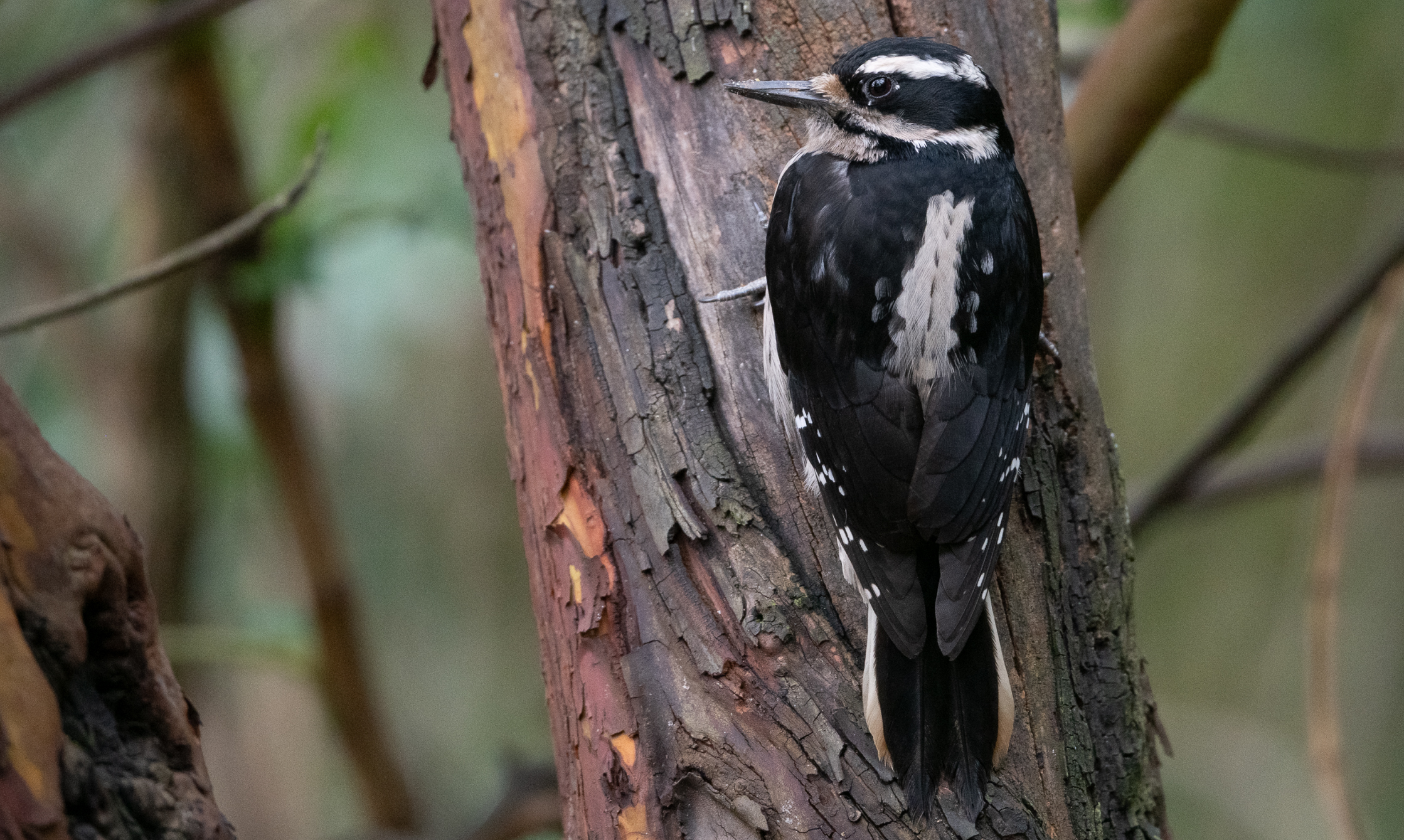
This male Hairy woodpecker first appeared several weeks ago but has been absent since an initial appearance. On this day it reappeared. A female has been here daily.

This was the second day in a row for one or more Yellow-rumped warblers. On this day I had several visiting the yard, apparently part of a migration. These two photos were taken at widely different times and are probably of different birds.

This is either an Orange-crowned warbler or a juvenile MacGillivray’s warbler.

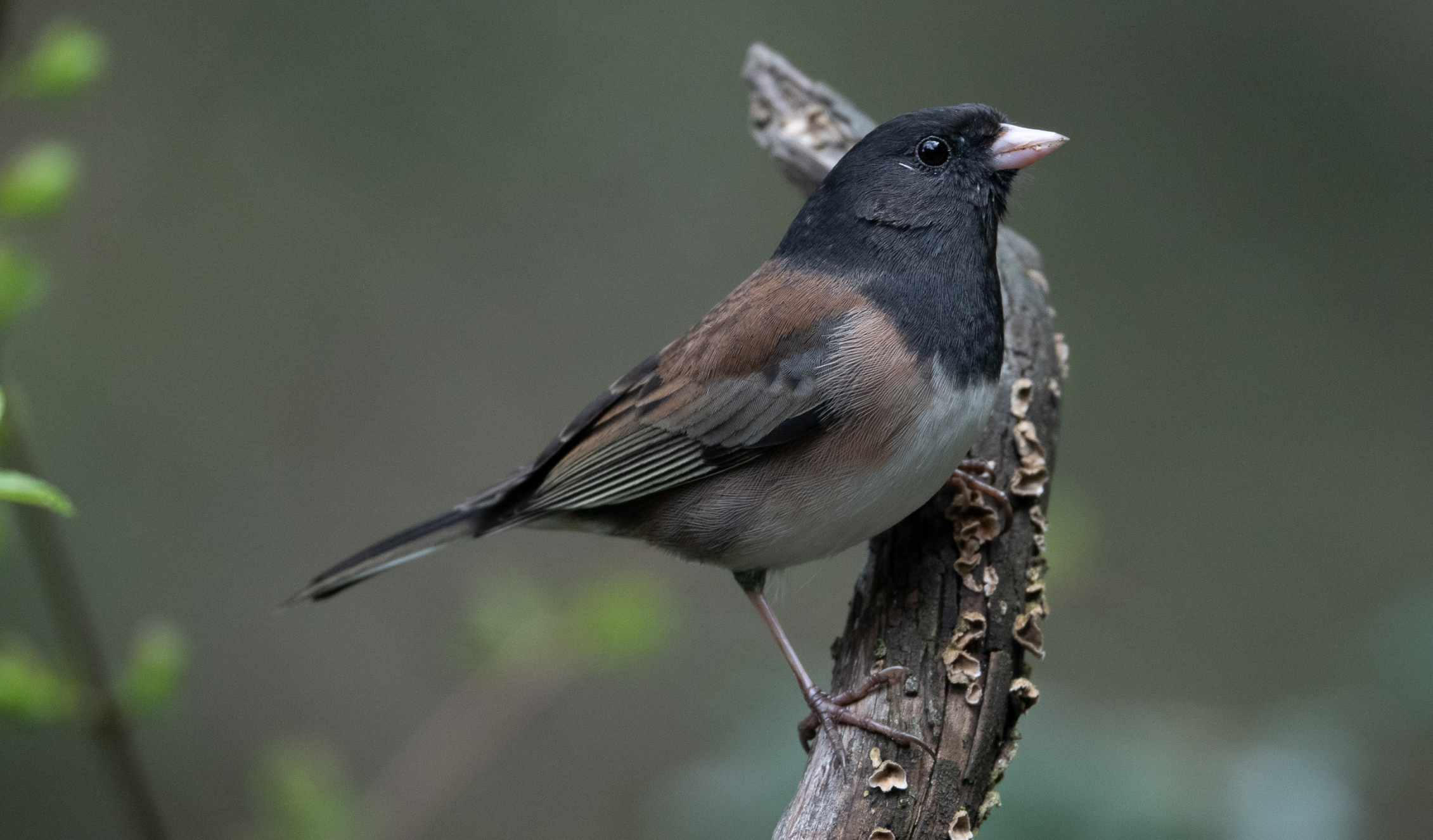
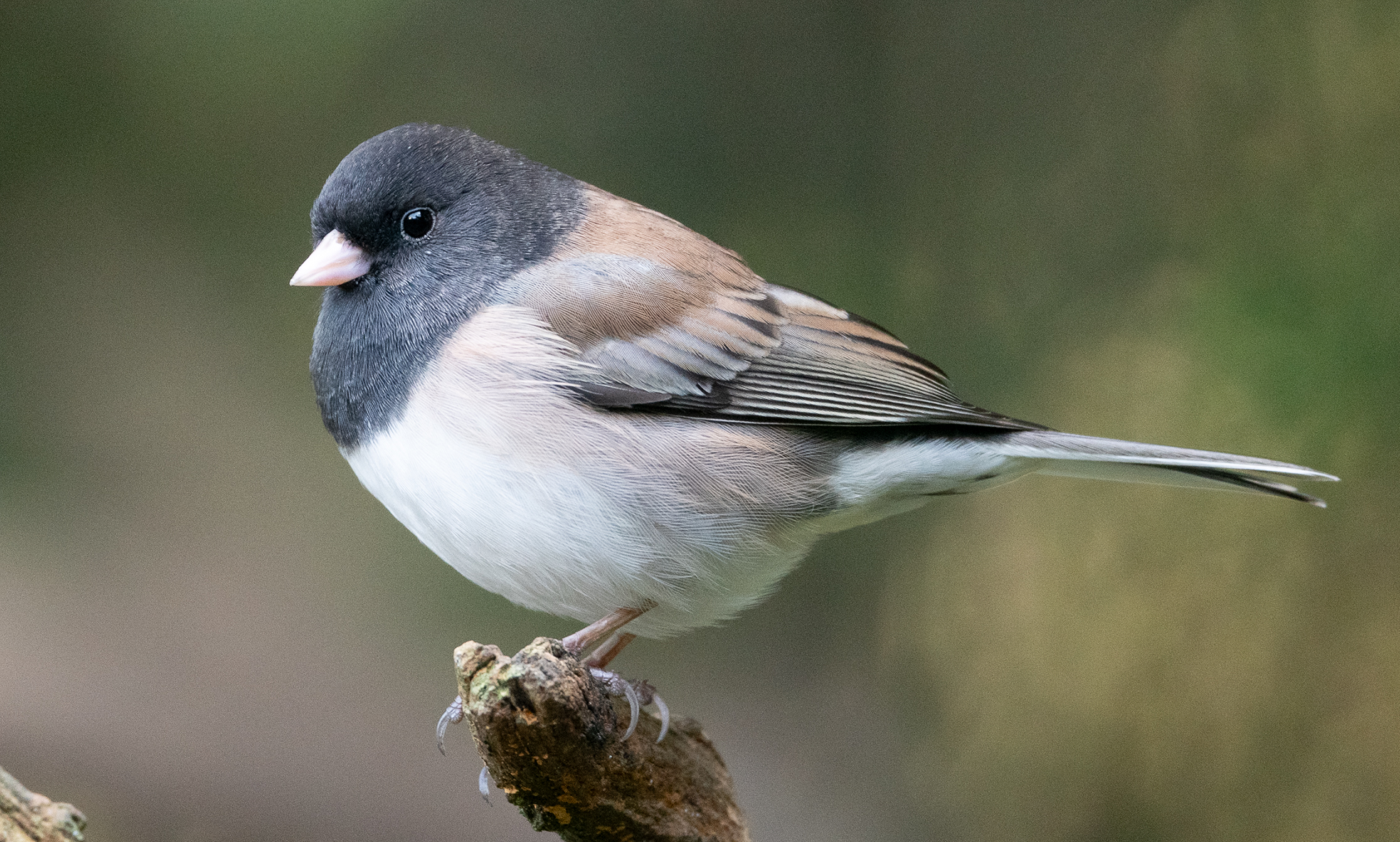
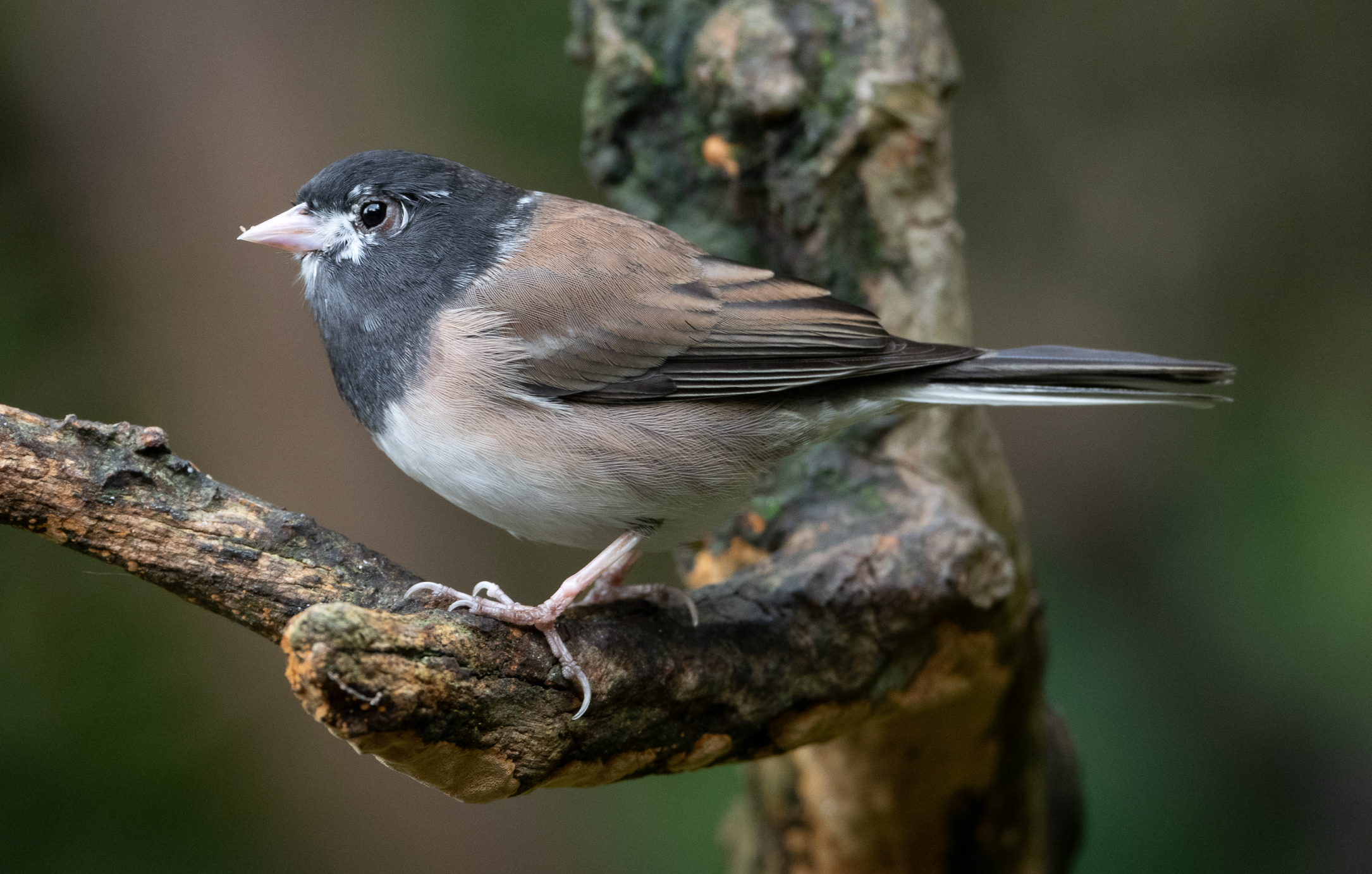
The Dark-eyed (Oregon) juncos are beginning to make a return to the yard after leaving for the breeding season. It will probably be my most numerous bird in the yard (with the possible exception of House sparrows!) during the winter season. Based on the color of the mantels, this first bird is probably a female and the second bird is definitely a male.

House finches are attracted to my madrone tree which is full of berries this year. Interestingly, the finches don’t eat the berry whole but eat the flesh and/or seeds while the berry remains attached to the stem.

One of at least three (invasive) Eastern Gray squirrels that visit the yard on a regular basis, often disrupting my birding photography by scaring birds from water features.

A White-crowned sparrow, a hangover from our recent breeding season, They are usually absent from the yard in the winter.

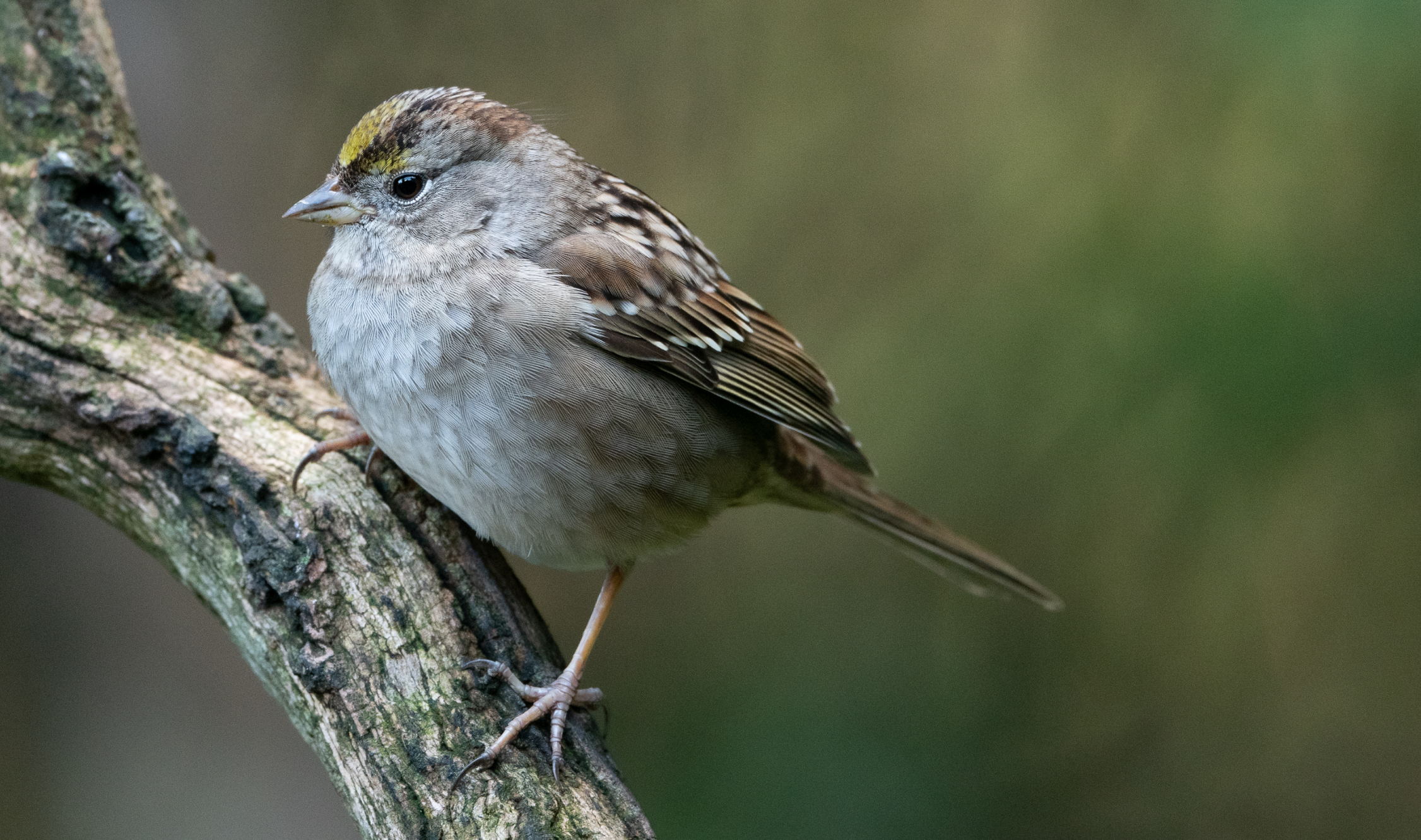
A Golden-crowned sparrow, a thee-season (fall, winter and spring) yard resident. Our first of the season appeared September 11 and the second one arrived just a day or so ago. In a few weeks I expect to have 8-10 overwintering.

This is the third day in a row a female Varied thrush has visited the yard. It’s probably the same ‘first of the season’ species that visited about three days ago. It was probably initially attracted by the abundant crop of madrona berries in my trees but it’s now a big fan of the water features.

And my favorite images of the day, a juvenile Northern flicker (female) taking a leisurely bath. It’s unusual for me to see a flicker bathing although they often frequent the water features for a drink.

An American robin enjoying a cold respite in one of the water features…

And yet another visitor utilizing one of the water features, a Golden-crowned kinglet

Just for the record, I had a relatively rare (for the yard) Hermit thrush show at one of the water features in the yard on September 13, but the photos I obtained were through double-paned glass and didn’t turn out well.

POSTSCRIPT (October 3, 2025): I had just finished posting to my blog on October 2, 2025, ending it with a note about the sighting (but no postable photographs) of a Hermit thrush I had seen on September 13, 2025.  

On this day it was 7:45am, overcast and too dark for photographs. I looked out my kitchen window and noticed what seemed like an unusual amount bird activity for that time of morning. My attention was drawn to a bird with its back to me that  I couldnt identify. As it turned, and using my binoculars, I identified it as a Hermit thrush!  

I grabbed my camera and cautiously went outside, but the bird was gone. I decided to wait awhile and about 15 minutes later the thrush returned to my most distant water feature!  I thought it too dark for photos but upped my ISO and took photos anyway. 

Adobe Lightroom, as it has done so many times before, saved the day. This isn’t what I consider a good photo, but given the conditions under which it was taken, it’s certainly acceptable under my standards. 

Fall Migration and Hairy Woodpeckers

I’ve been somewhat remiss in posting to my blog site lately. Fall migration has been in full swing since early August and I have been taking advantage of all the photographic opportunities it offers. I try to spend some time in the yard each day which provides me with numerous photos that must be processed. In some cases I try to document my sightings with written accounts. It’s a time-consuming activity. 

At the same time I’m trying to deal with home issues, the largest of which is a kitchen damaged by a leaking icemaker water line. My refrigerator has been in the garage for almost three months now and planning for and preparing meals has become an onerous task!  

But back to the birding!  On August 31, 2025, I had a stellar day of photographing unusual and migrating birds!  I took 552 photos which must be processed. In between bouts of photography I made a list of all the species of birds I had seen in the yard during the day. The list contained 21 species, many of which are rare visitors. And I got some very good photographs, both of the rarer visitors and of the more common birds I see every day. 

This preamble has already used up a lot of electronic ink with no birding images or listings being conveyed, the reason being I’ve only just begun to process the day’s photos. I’m going to post photos of a single (hopefully non-migrant!) species now and post photos of some of the migrants in a second post. 

One of my most interesting arrivals has been that of male and female Hairy woodpeckers. The male made only a single appearance but it was his presence that alerted me to the species. It was my first yard observation of the species in at least five years. My identification of the male led me to wonder if one of my presumed female Downy woodpeckers was actually a Hairy woodpecker. I shared photos of the suspected female Hairy woodpecker with more experienced birding friends and they confirmed my identification!  

I won’t launch into my shortcomings as a birder but it’s nice to have more experienced birding friends who are willing to donate their time and expertise to my occasional needs!  

So it’s finally time to arrive at some photos!  The male Hairy woodpecker was photographed on August 17 and I haven’t seen it since. The female has now become a daily visitor to the peanut and suet feeders and the photos of her were all taken on August 31.  To help with identification I measured the peanut feeder. It is 8.5” from the bottom of the feeder to the top of the top row of holes. 

The following two photos are of the male Hairy woodpecker

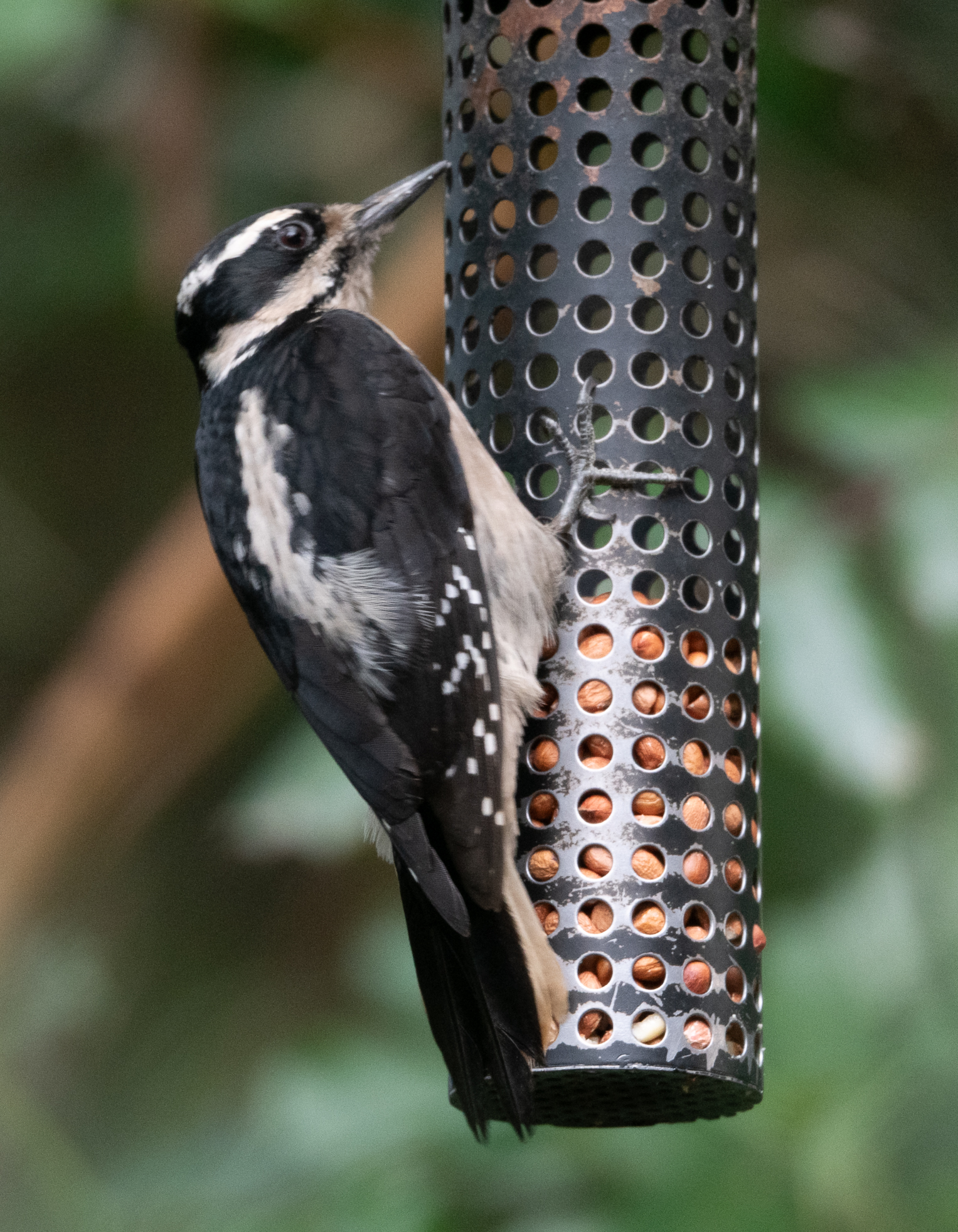
The following two photos are of the female Hairy woodpecker...

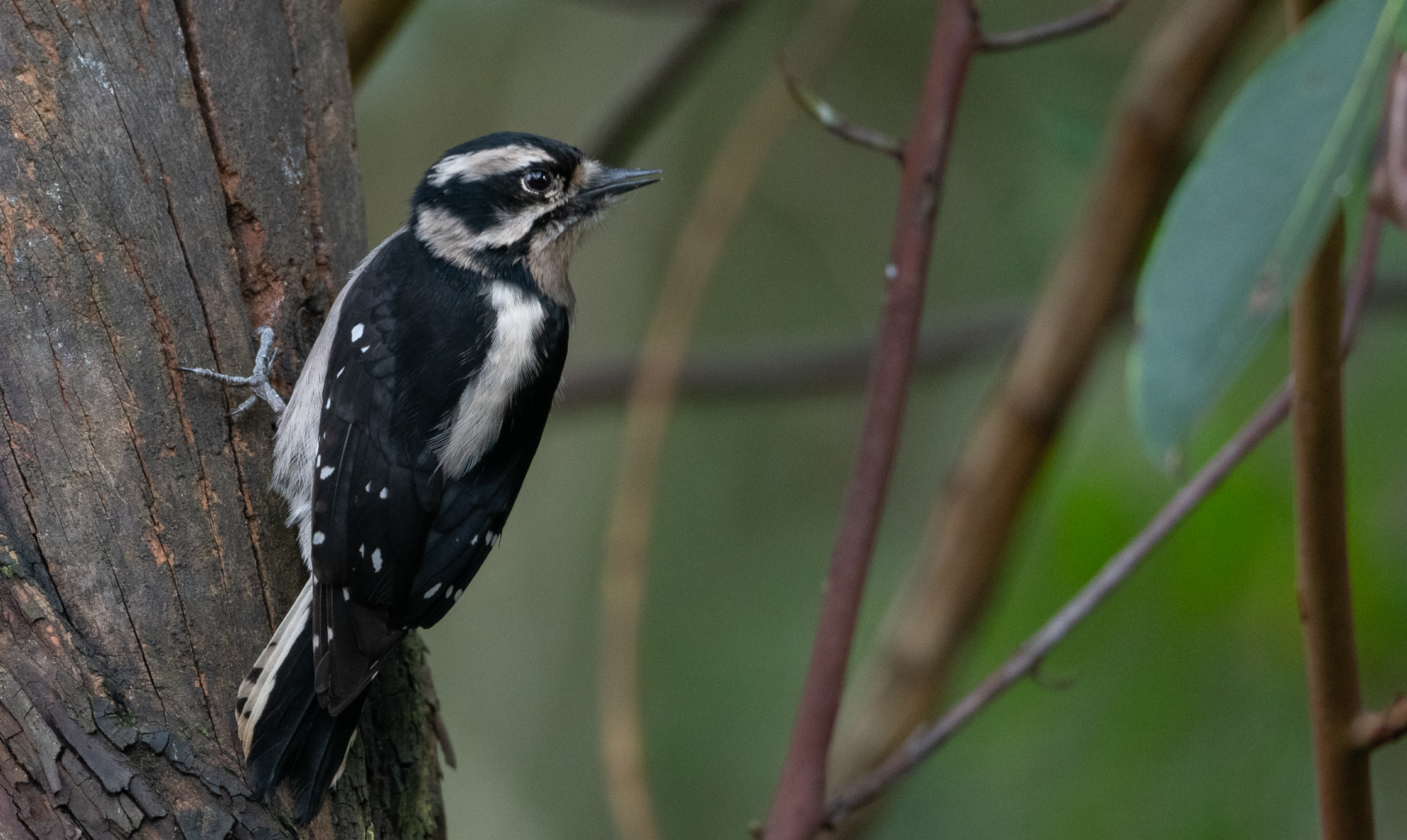
The following photo is of a male Downy woodpecker for comparison…

See the identification problem?