Accipiter!

For at least the past two weeks or so we’ve had an accipiter visiting the yard.  An accipiter is a raptor that generally makes its living feeding off of other birds, and yards with good habitat (which attracts birds) are good hunting grounds for the accipiters.  The two most common accipiters in this area are the Sharp-shinned hawk and the Cooper’s hawk, and their appearances, put mildly, are quite similar.

Several years ago I took some excellent photos of an accipiter on the same fence as the one pictured in the last photo below and sent them to several birders, all more skilled than I, for identification.  Four came down for the Sharp-shinned and four came down for the Cooper’s… the “final” identification was finally successfully defended by one of the birders who was a wildlife biologist.

So here are some photos of our visitor and the dates it was photographed…

March 26, 2016, visit.  This was my first photo (but not sighting) of the accipiter this year.  These birds will actually wade into brush piles to try to flush prey.

accipiter 20160326-02

My next photos, of presumably the same bird, occurred on March 30, 2016.  (The photos are getting better!)

accipiter 20160330-03 accipiter 20160330-06

My most recent sighting of the accipiter was on April 3, 2016.  Ironically, the bird is standing on the same fence I mentioned in my prior comments.

accipiter 20160403-07

These, as you can see, are beautiful birds but their arrival will totally flush your yard of other species of birds for a considerable length of time.  They never stay for long but make the rounds of yards in the neighborhood where feeders attract other birds.

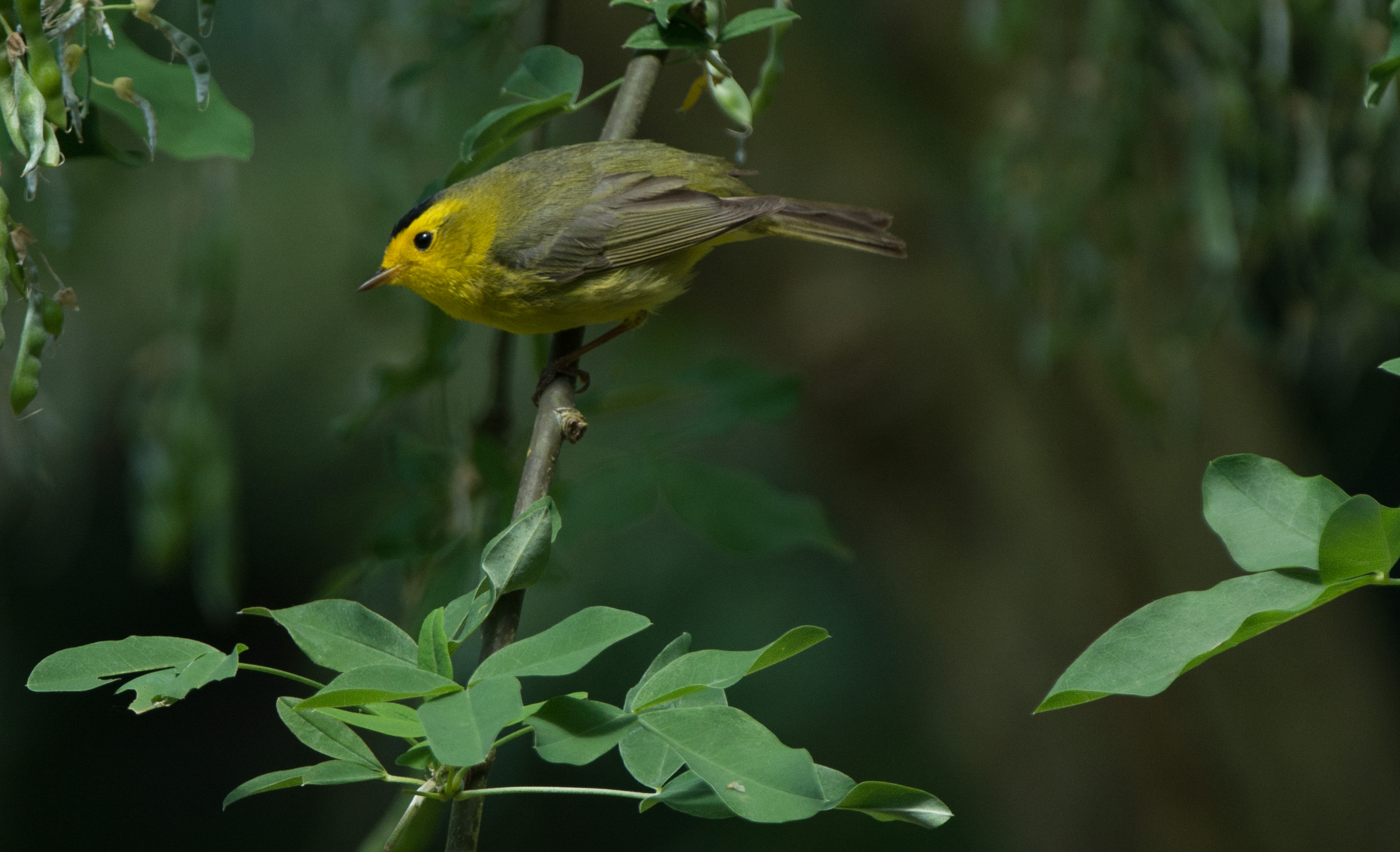
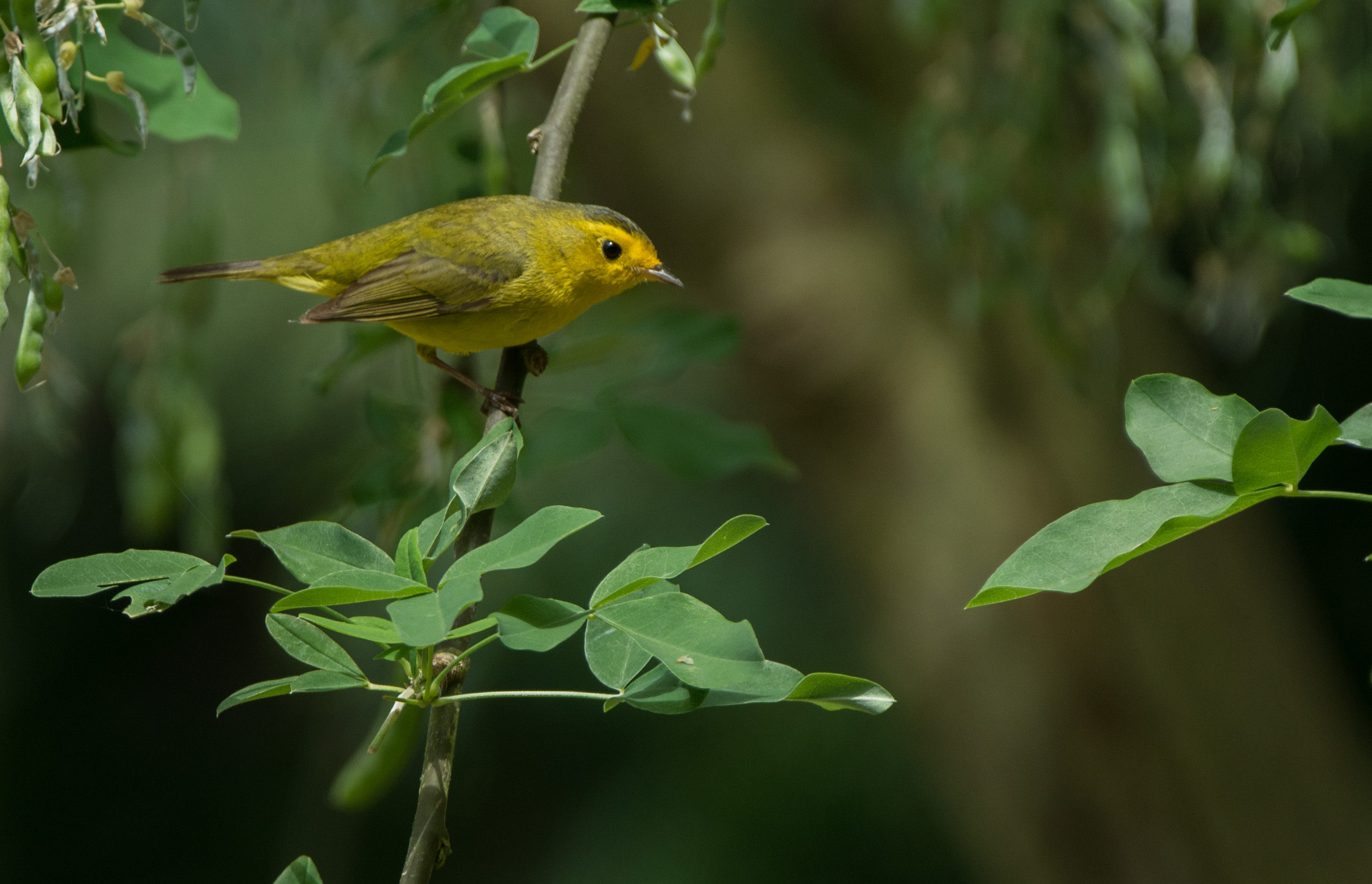
On a hopefully unrelated note, I have yet to log my first warbler in the yard.  It’s still early and I’m not behind with regard to prior years, but I’m ready to start photographing warblers!

Boat Excursion

On March 26,2016, I was invited by a birding friend for an excursion on his boat.  We left the Twin Bridges Marina early in the afternoon in full sun.  The first bird we encountered was a Great Blue Heron sunning its wings.  At the time my mental thought was that the heron was drying its wings, but on further reflection I realized that there’s very little reason for a heron to get its wings wet, so I think we can just assume that it was enjoying the warmth from the sunshine.  Although I couldn’t hear it for the boat noise, I could tell by its throat that it was apparently vocalizing, and it appeared to do it even more as we left the marina area.

DSC_6653 DSC_6657

Our next major find was a group of Brandt’s cormorants on a buoy in Fidalgo Bay.,  This was my first sighting with identification of the species.

DSC_6703DSC_6712DSC_6718

We later observed a group of 15-20 congregating in the water, something I’ve never observed with either the Double-creasted cormorant or the Pelagic cormorant.  The birds first formed a very tight-knit group, then moved off in a strung-out file.

Along our way we also observed several Long-tailed ducks, the two pictured below both being female.

DSC_6681


Common Loon

Ever since moving to Anacortes in 2001 I have wanted a quality photo of a loon in full breeding plumage.  Just about every year I have been here I have stalked loons down at the Cap Sante Marina, but although I’ve taken many photos of loons over the years I’ve never gotten one in full breeding plumage. It seems that every year the loons leave the area just before coming into their breeding plumage… which leaves me more than a little frustrated!

This year, today (3/19/2016), I finally achieved my goal  This Common loon didn’t make things easy.  When I first spotted it, it was preening which provides the opportunity to photograph the bird in the poses I posted in my blog about a week ago.  I retrieved my camera and returned to the marina, but by this time the bird had quit preening and switched to “diving for food” mode.  It was now playing “cat and mouse” and kept disappearing on the other side of the various docks.  It could stay under water about a minute, swim a hundred feet or so and necessitate my walking several hundred yards for another photographic opportunity.  I played its game for awhile, but as fortune would have it, it suddenly surfaced very near me unexpectedly and I managed to take two quick photos before it resumed its underwater hunting.  So now I have my photo(s)!

Loon, Common 20160319-02

I’m having a difficult time returning to photos I took in January and February because I continue to obtain good current photographs.

Over the past two days (March 15-16) I’ve been able to spend considerable time at photography due to the improved weather.  Here are a few of the results…

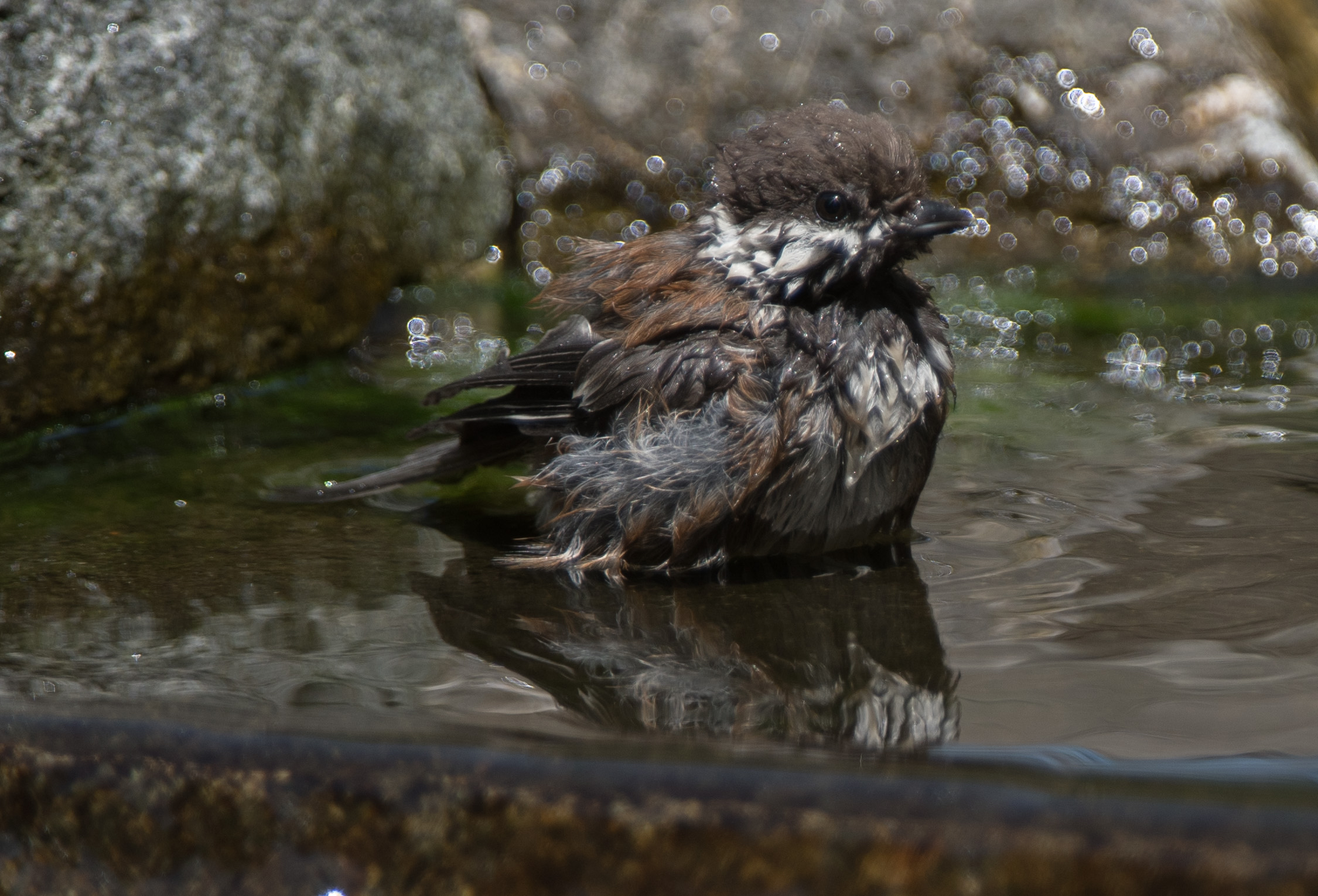
A couple of months ago I was asked what the difference was between the two most numerous species of chickadees was.  The first bird pictured here is the Black–capped chickadee, a bird that generally prefers deciduous habitats.  The second bird pictured is a Chestnut-backed chickadee, a bird that generally prefers conifers.  We have both at my house (where both of these photos were taken but in the more forested areas (such as WA Park where I walk mornings) I usually see only the Chestnut-backed chickadees.  We also have a rather rare visitor from higher elevations, the Mountain chickadee, but I’m still waiting for the first one to visit my yard.  I did see a Mountain chickadee in WA Park many years ago.

Chickadee, Black-capped 20160315-02 Chickadee, Chestnut-backed 20160315-03

This next bird is a Pine siskin.  We had many in the yard around the start of the winter and then they ALL disappeared.  Some are now making a comeback.  I’ve often wondered about the birds’ breeding habits and yesterday observed one gathering moss/lichen and flying high into the fir trees with it.  I highly suspect that it was building a nest with the material.

Siskin, Pine 20160315-02

As I believe I’ve written before, we’ve had at least one Dark-eyed junco of the Slate-colored race overwinter with us here for the past 7=8 years.  (I’m sure it’s not the same bird!)  I love looking at the junco photos because of the birds’ feather patterns on their mantles.  If you look closely at this photo (double-click on it) you can see how neatly all the feathers are laid.

lJunco, Dark-eyed - Slate-colored 20160315-09

Moving on to the Cap Sante Marina, I found one (or possibly two) Common loons preening at a couple of different locations.  I managed to observe (and photograph) the bird rising from the water to stretch its wings on four different occasions.  This bird is just coming into its breeding plumage, at which point it will exhibit a spectacular appearance.   (Consult your field guide if you are unfamiliar with its breeding plumage.)  Unfortunately, in prior years I’ve found that just as the birds are about to reach their full potential they leave the marina area.  I find it interesting that the loons are one of the few waterfowl that I see searching for prey from the surface of the water.  They stick their head under water while swimming, surveying the depths below.

Loon, Common 20160316-38 Loon, Common 20160316-31 Loon, Common 20160316-30


Bald Eagle Feeding

I think I stated my original intent was to go back and catch up on photos I had taken since the Palm Springs trip, but lately I keep happening on unusual photo opportunities that I would prefer to post in a timely fashion.  And this post somewhat continues the Bald eagle theme of my last post.

On March 13, 2016, I was on an outing with a Fir Island destination, but as always I try to maximize photographic opportunities along the way.  It had started to rain just as I left the house but I decided to tour March Point just in case.  While driving along the road I spotted an adult Bald eagle sitting in a march area eating something on the ground.  I wasn’t able to tell definitively what it was, but I could see in a couple of photos what appeared to be a deer carcass.  Here are a few of the photos I took of the eagle savaging the carcass…

Eagle, Bald - eating 20160313-05


Eagle, Bald - eating 20160313-15 Eagle, Bald - eating 20160313-14 Eagle, Bald - eating 20160313-12 Eagle, Bald - eating 20160313-11