On Sunday (8/25/2013) I decided to conduct a little experiment and document my bird sightings and observations I had in the yard. It would be a document too long to list here so I’ll just offer the highlights.
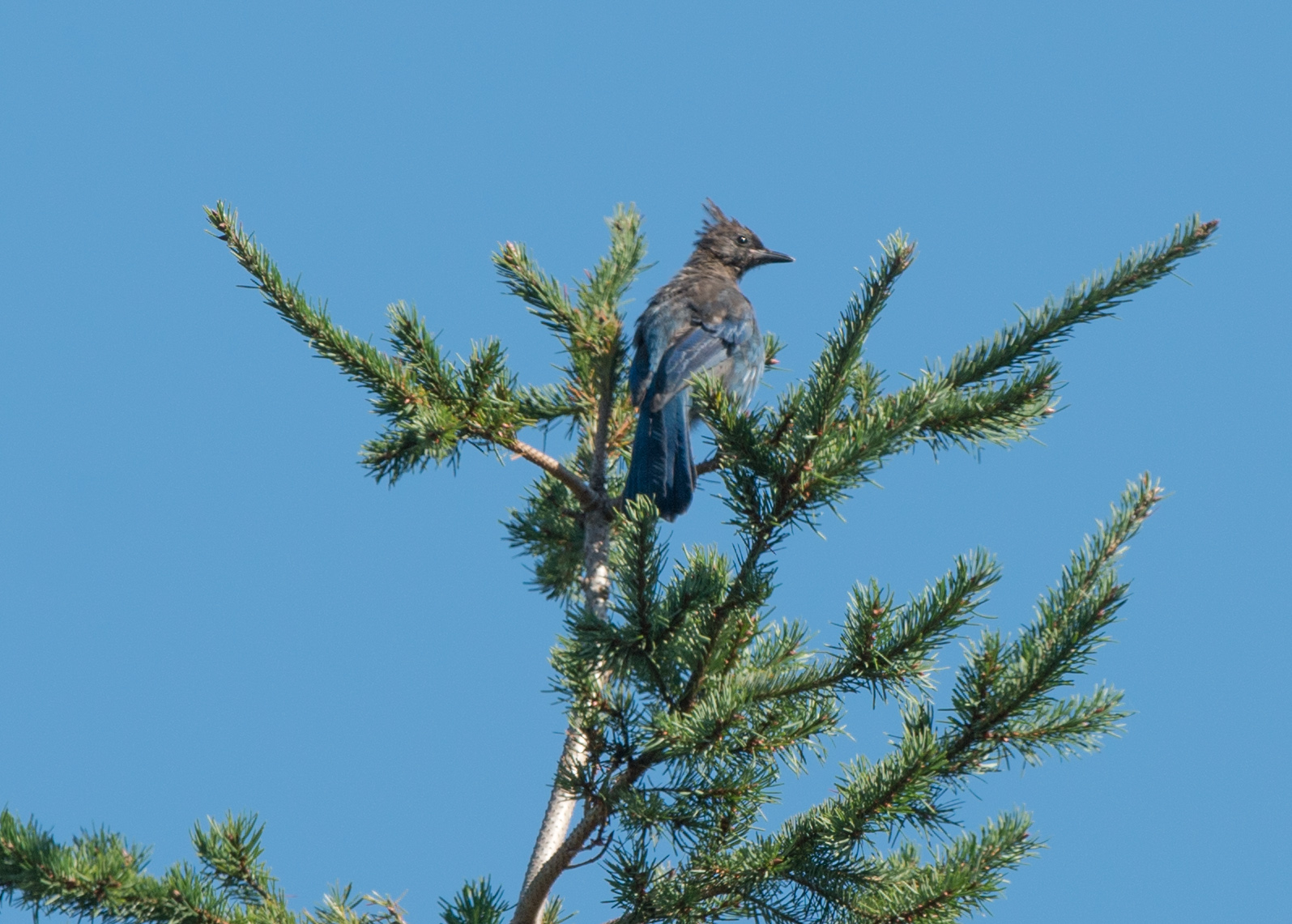
I finished filling bird baths and feeders about 10:50am, a little earlier than I usually get out into the yard. I had no sooner taken a seat in my chair when I saw a bird fly to the very top of my neighbor’s fir trees. I thought it was probably an American robin but something didn’t look right so I uncapped my telephoto lens to get a better view of the bird… and I was glad I did. The bird turned out to be a Stellar’s jay, a not by any means rare bird but certainly a rare visitor to our neighborhood. I photographed the bird and then immediately called other birding neighbors toward whose property the bird had flown. These other neighbors have better habitat than I and they guessed that they hadn’t seen a Stellar’s jay in the past couple of years, which would be about my guess as well. (In processing my photos on the computer later, I surmised that due to the feather configuration on this bird it was probably a juvenile. Maybe there’s some hope that it will stay and make its home in the neighborhood!)
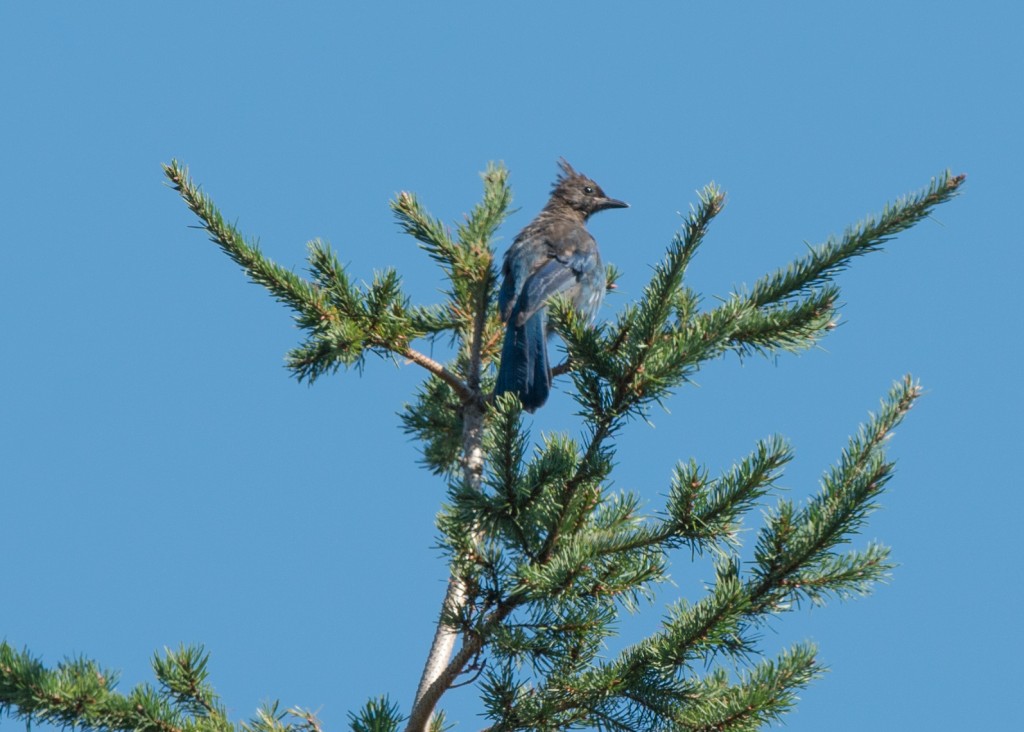
Stellar’s jay – juvenile
I was still marveling at the jay’s appearance at 11:08am when movement in the sky caught my attention. I looked up in time to see a Peregrine falcon soar overhead, heading north but veering west as it approached the end of the island. While this bird probably isn’t a rare visitor, it’s relatively rare to see one because they are almost always found flying and most of the time I’m not staring up into the sky.
At 11:27am an Anna’s hummingbird arrived in the yard and accessed a hummingbird feeder at which I never take photos because it is in the shadows. I noticed this morning that this hummingbird was nicely silhouetted against the sky and, instead of sitting on the feeder it was hovering and then dipping to the feeder. I realized that this was perhaps an opportunity of which I hadn’t availed myself in the past and I took a couple of photos of the bird silhouetted against the bright blue sky.
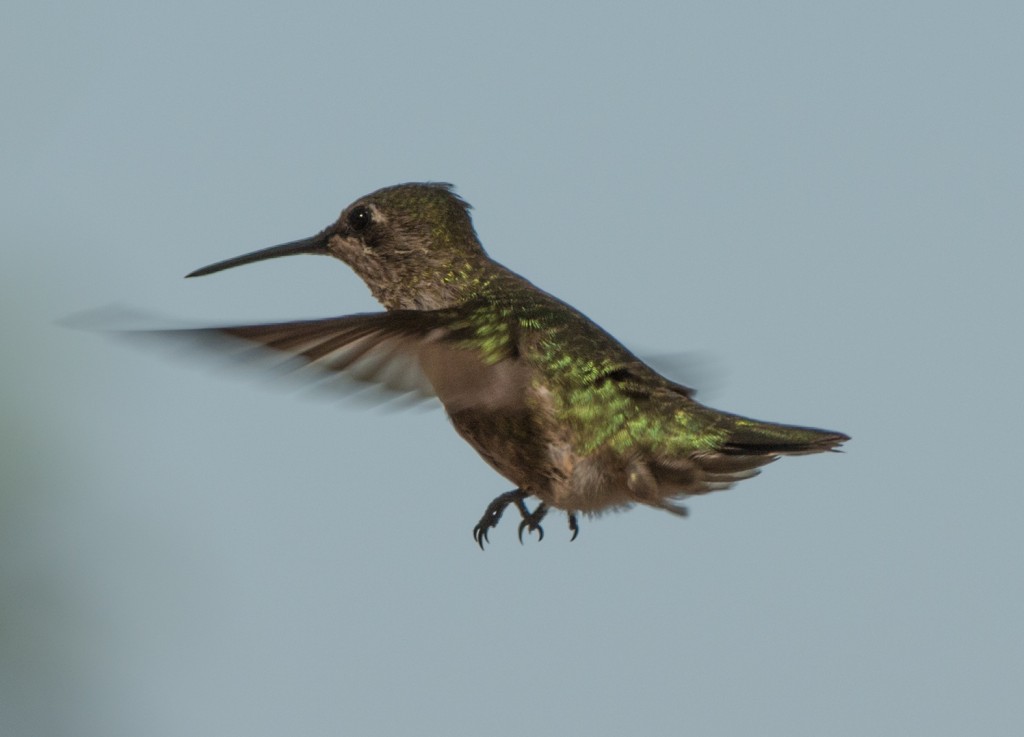
Anna’s hummingbird
At 11:58am a Rufous hummingbird buzzed the watercourse but left the yard without lingering. I’ve probably logged one or two visits a week from a Rufous hummingbird for the past 2-3 weeks, but I generally consider each sighting my last for the year. The vast majority of Rufous hummingbirds left for migration several weeks ago and we are left with mostly Anna’s, some of which will spend the winter with us.
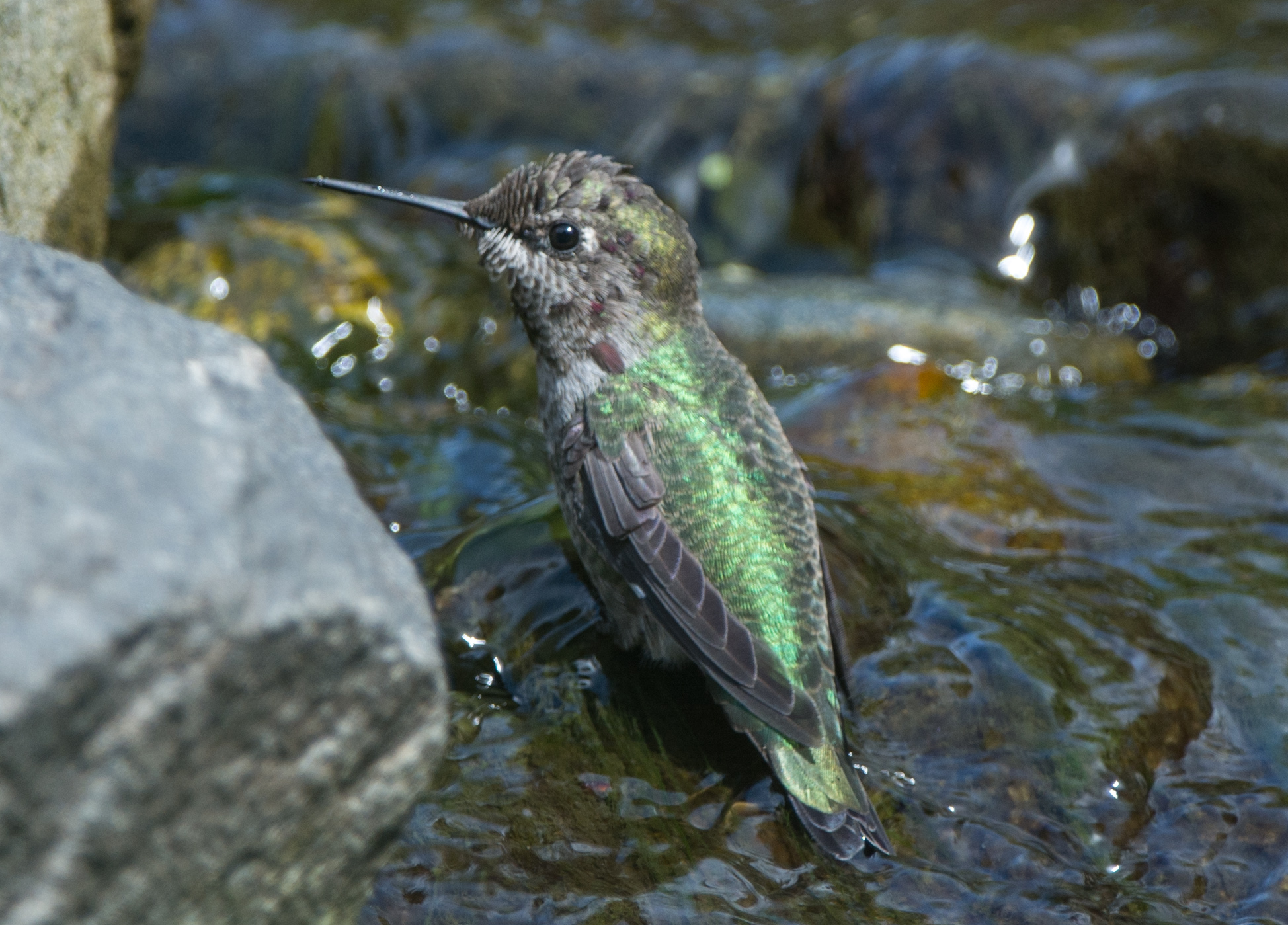
At 12:55pm a juvenile male Anna’s hummingbird entered the yard and hovered within about three feet of me while perusing the yard. It then flew from where I was sitting to the watercourse, stopping for a short bath. I was able to obtain a fairly good photo of it bathing, despite the morning light not having yet reached the watercourse. While not apparent from this photo, one of the photos I took indicated that the developing gorget extended down the side of the bird’s neck and there was a small patch of color on the bird’s head, thus the identification of a male.
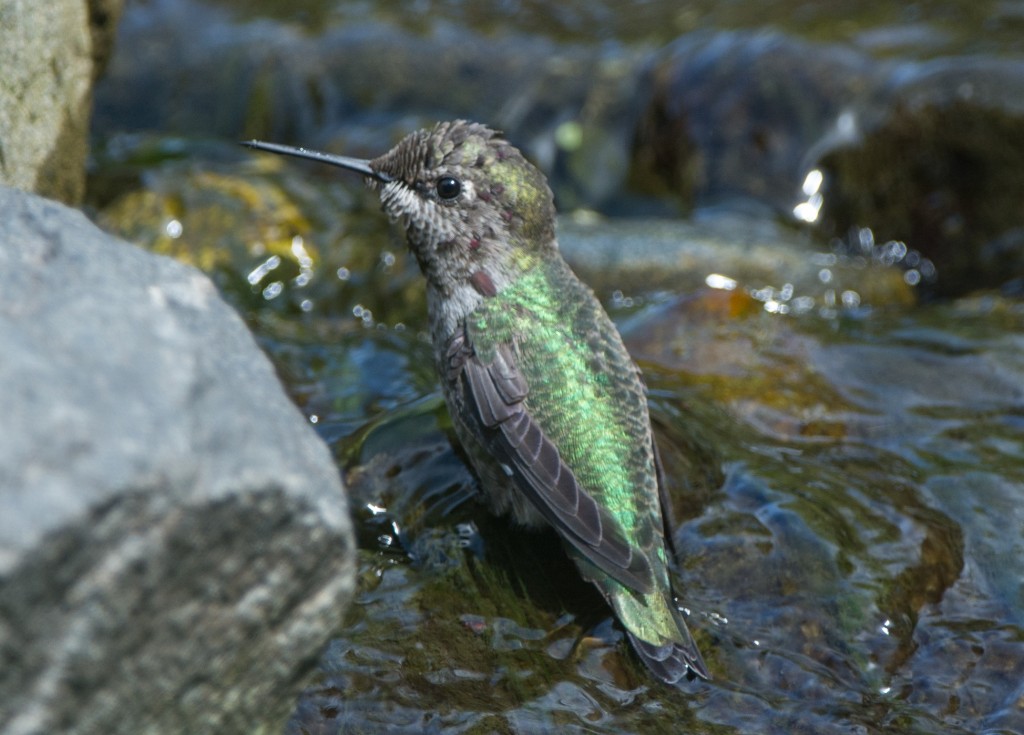
Anna’s hummingbird – juvenile male
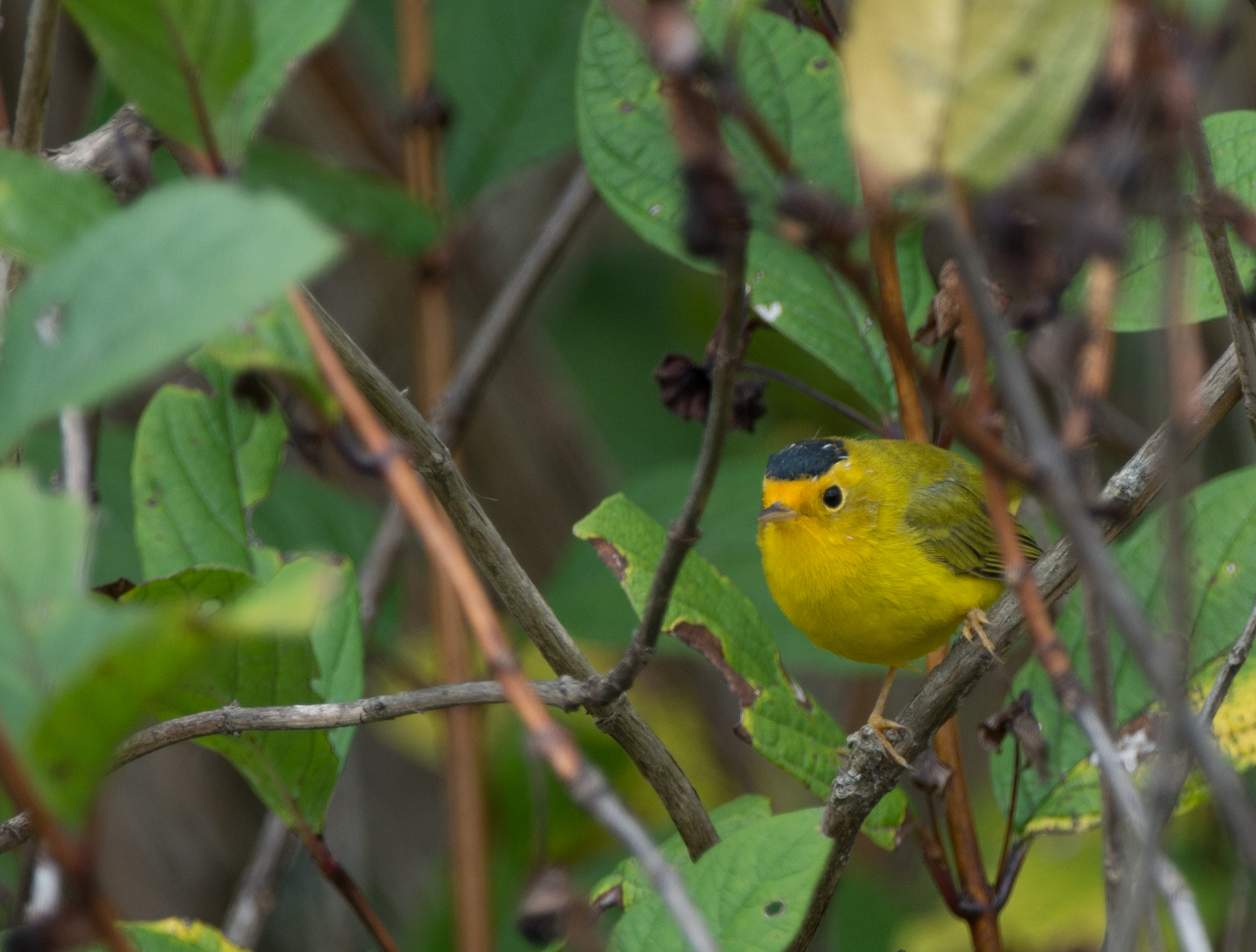
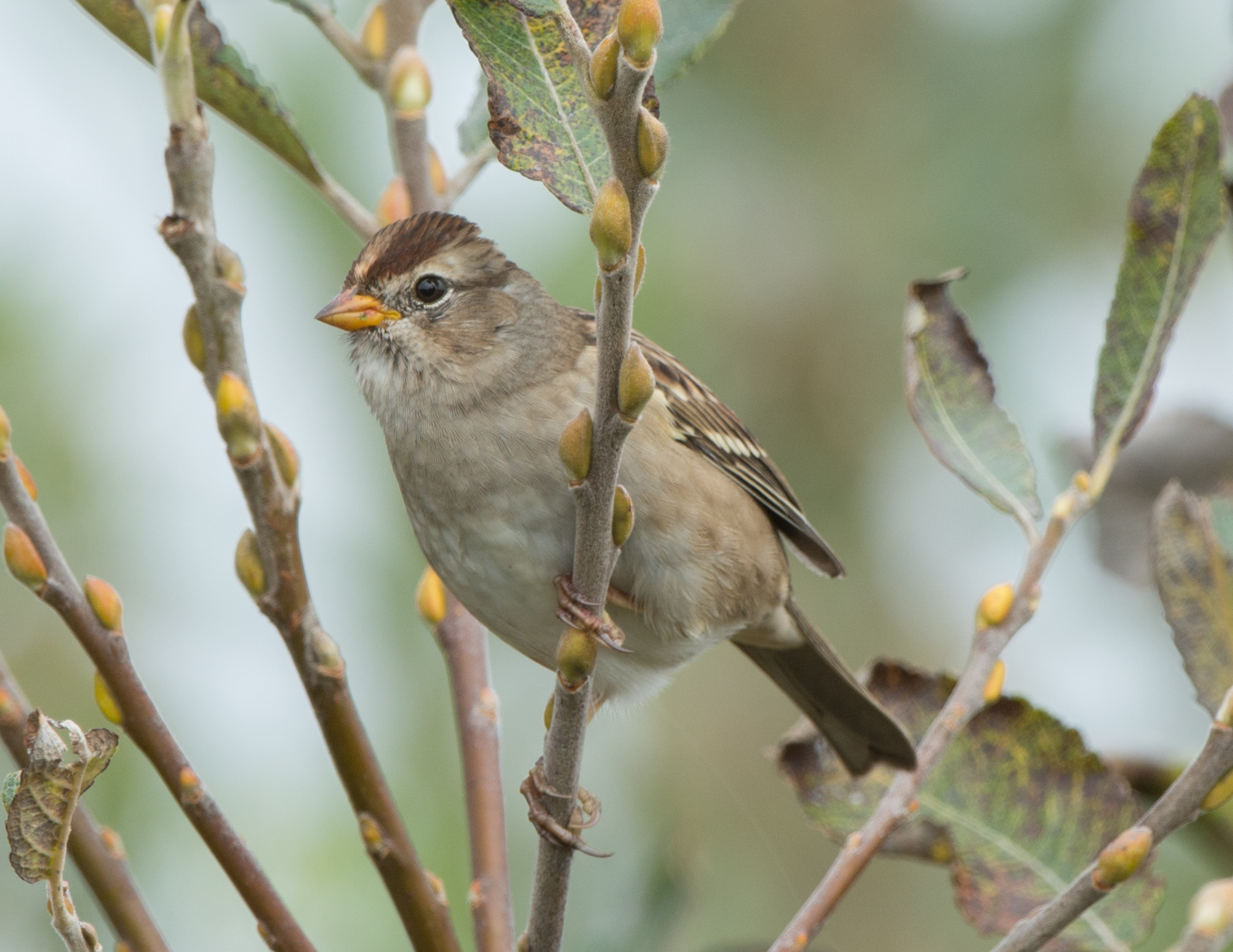
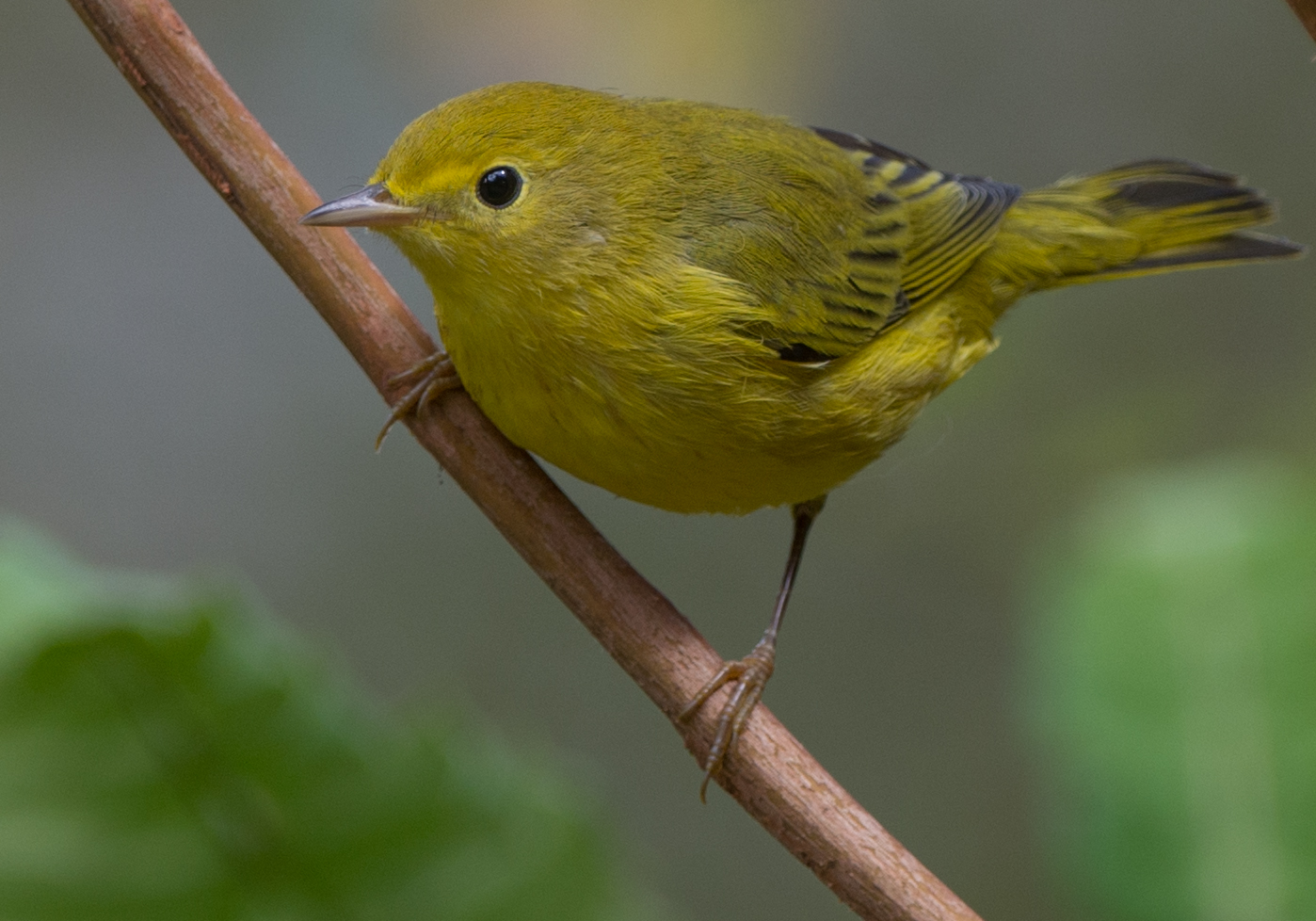
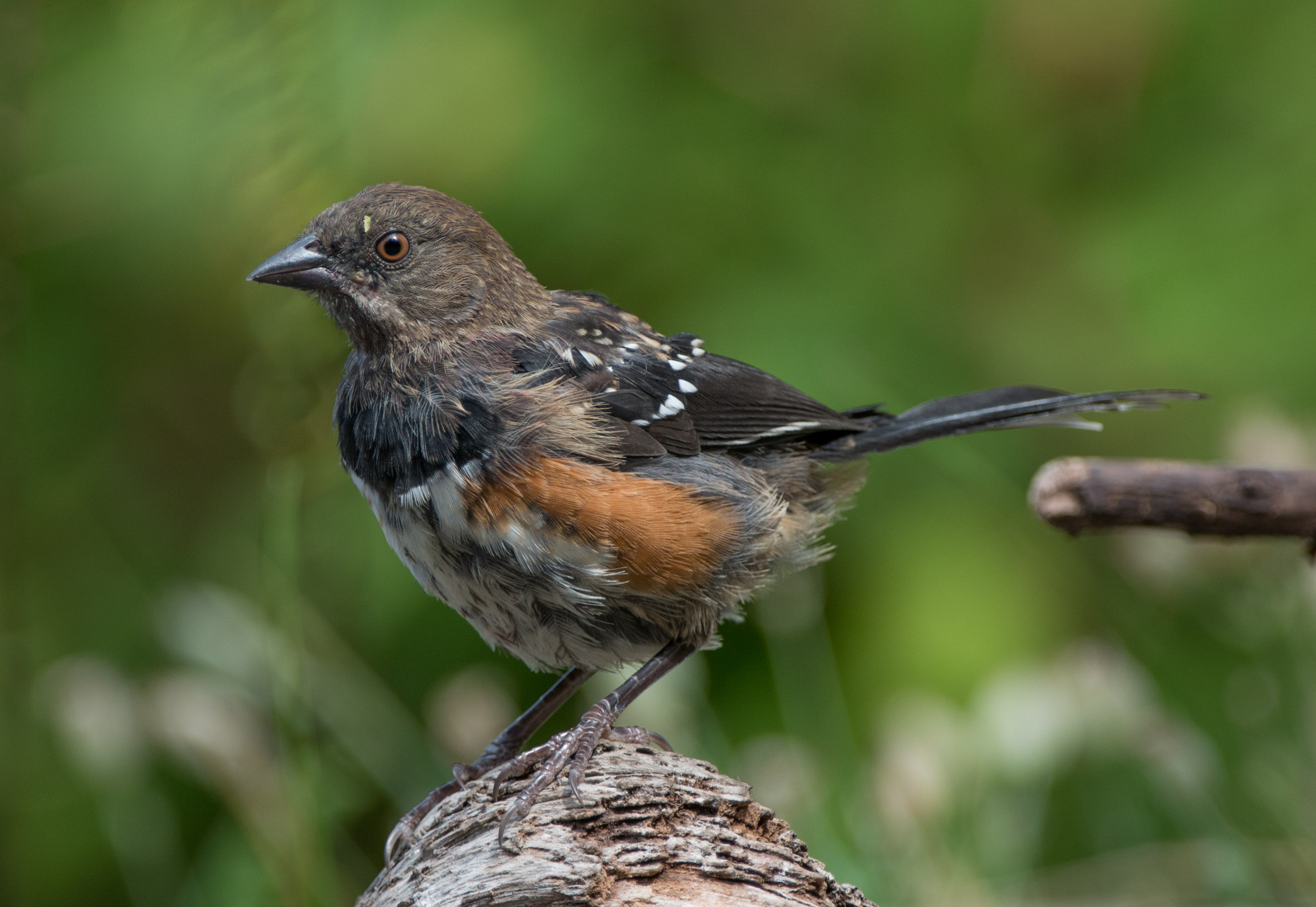
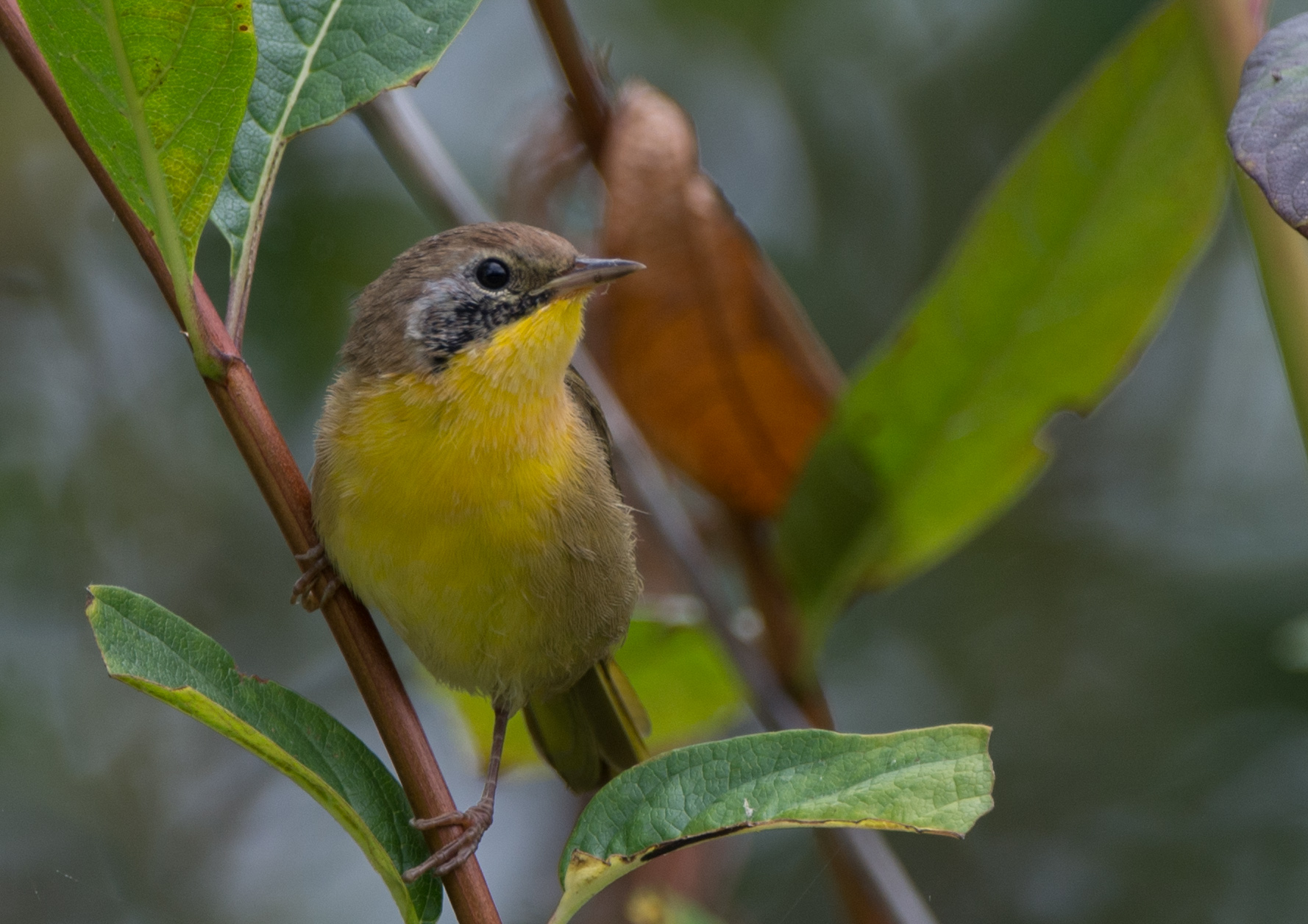
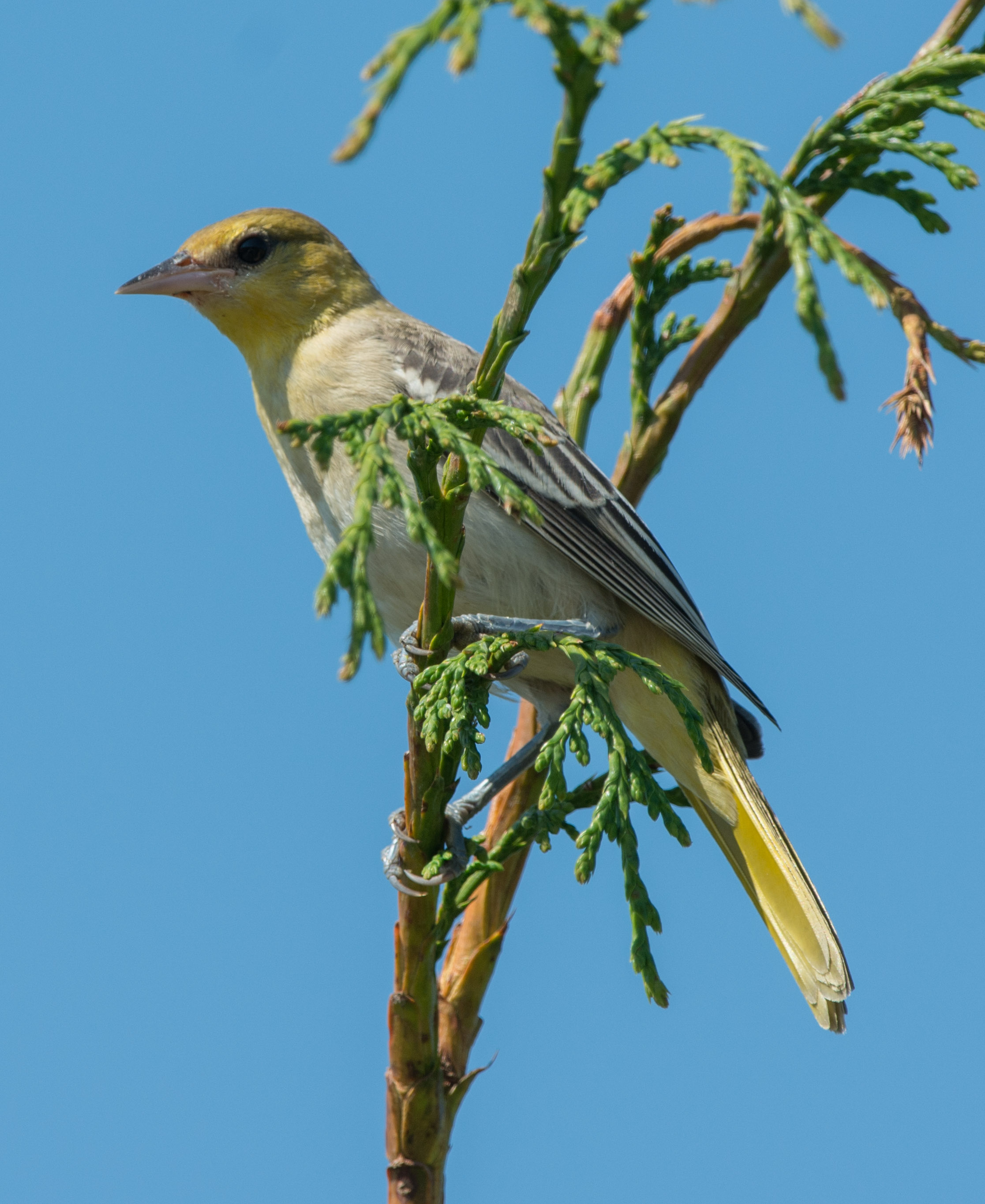
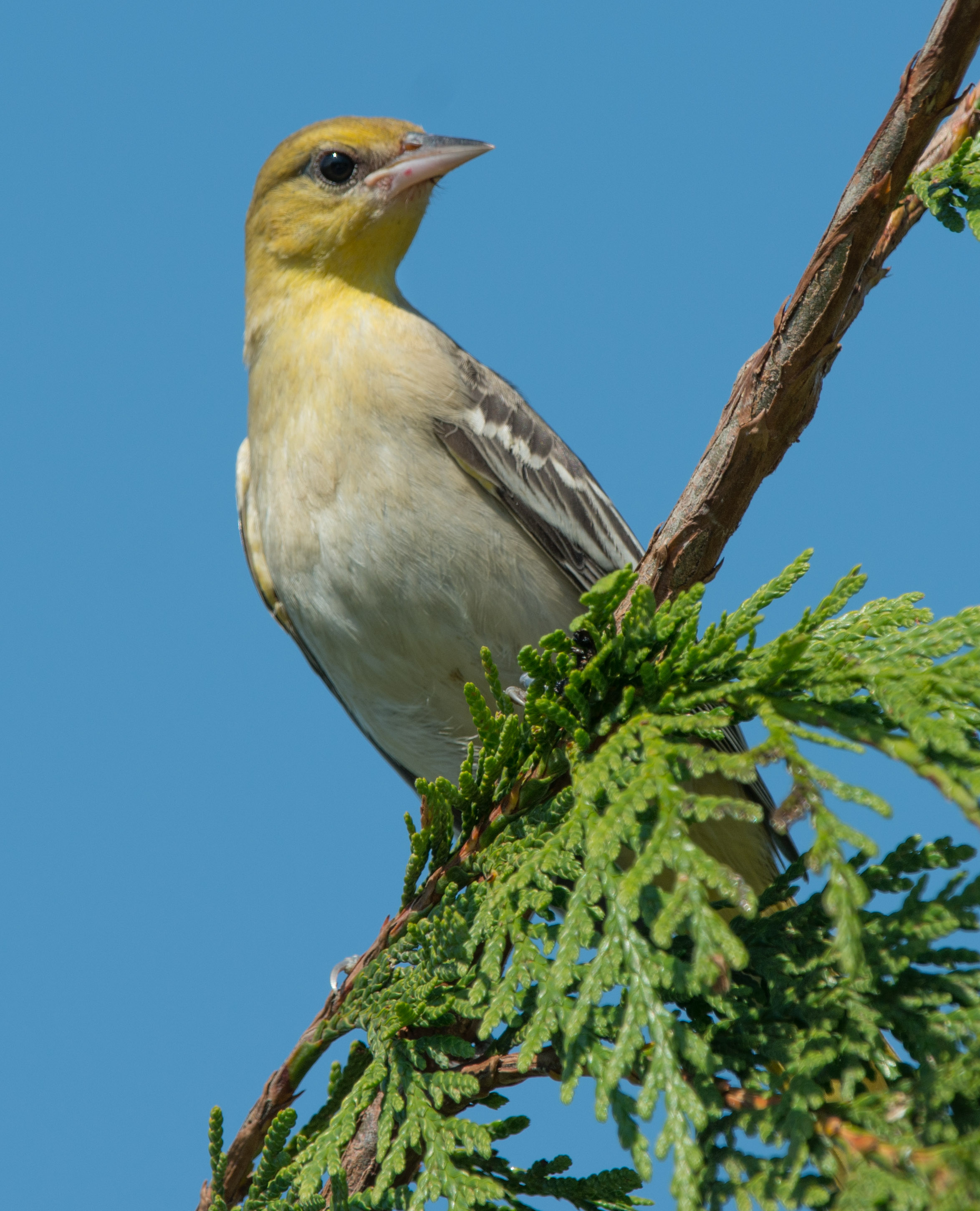
I was on the proverbial horns of a dilemma at 1:04pm when a juvenile Spotted towhee, which had been eating seed in the shadows, decided to make an appearance at the better-lit watercourse… and at the same time a female Yellow warbler showed up in the yard! Since the warbler was in motion I elected to concentrate on the towhee and snapped several photos before turning my attention back to the warbler. I managed about four photos of the warbler but only while it was sitting on a section of fencing… hardly a natural setting. (The photo appearing below was taken on the previous day – sans fence.) The warbler then flew to the watercourse but was intimidated by the towhee and they both disappeared to the other side of the watercourse mound where I couldn’t see (or more importantly, photograph) them.
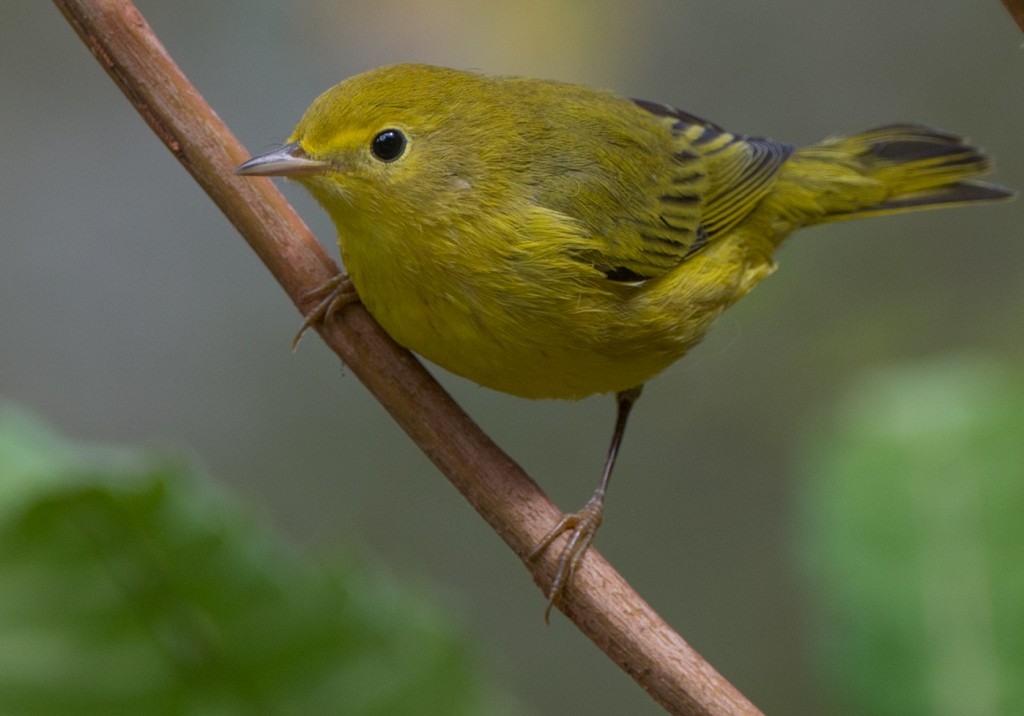
Female Yellow warbler (from 8/24/2013)
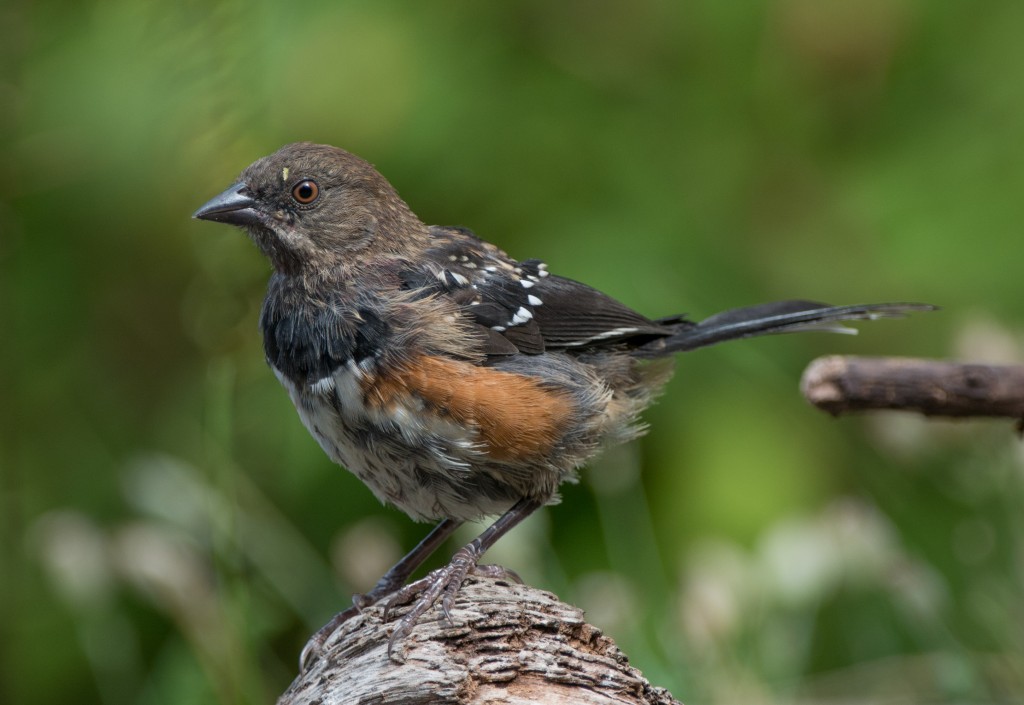
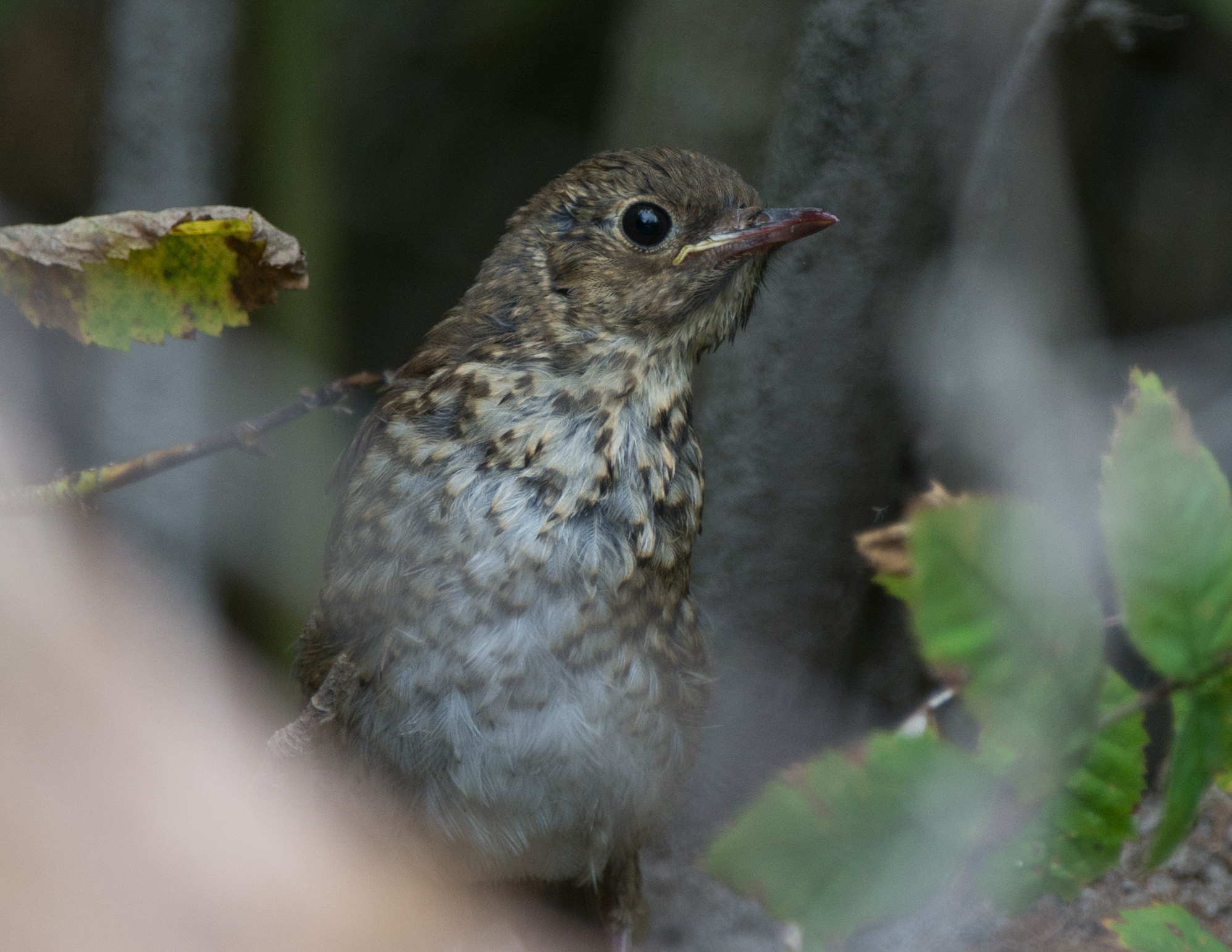
Spotted towhee – juvenile
The Yellow warbler left the yard high and flying south, but the towhee returned to the watercourse for more photos at 1:16pm.
So I spent about three hours in the yard, much of the time with highly contrasting light on what started as a sunny day. And while you’ve read only about the highlights of my sightings and photography, there was a lot of activity in the yard during this period. And virtually all of the time I spend in the yard increases my knowledge of bird behavior.