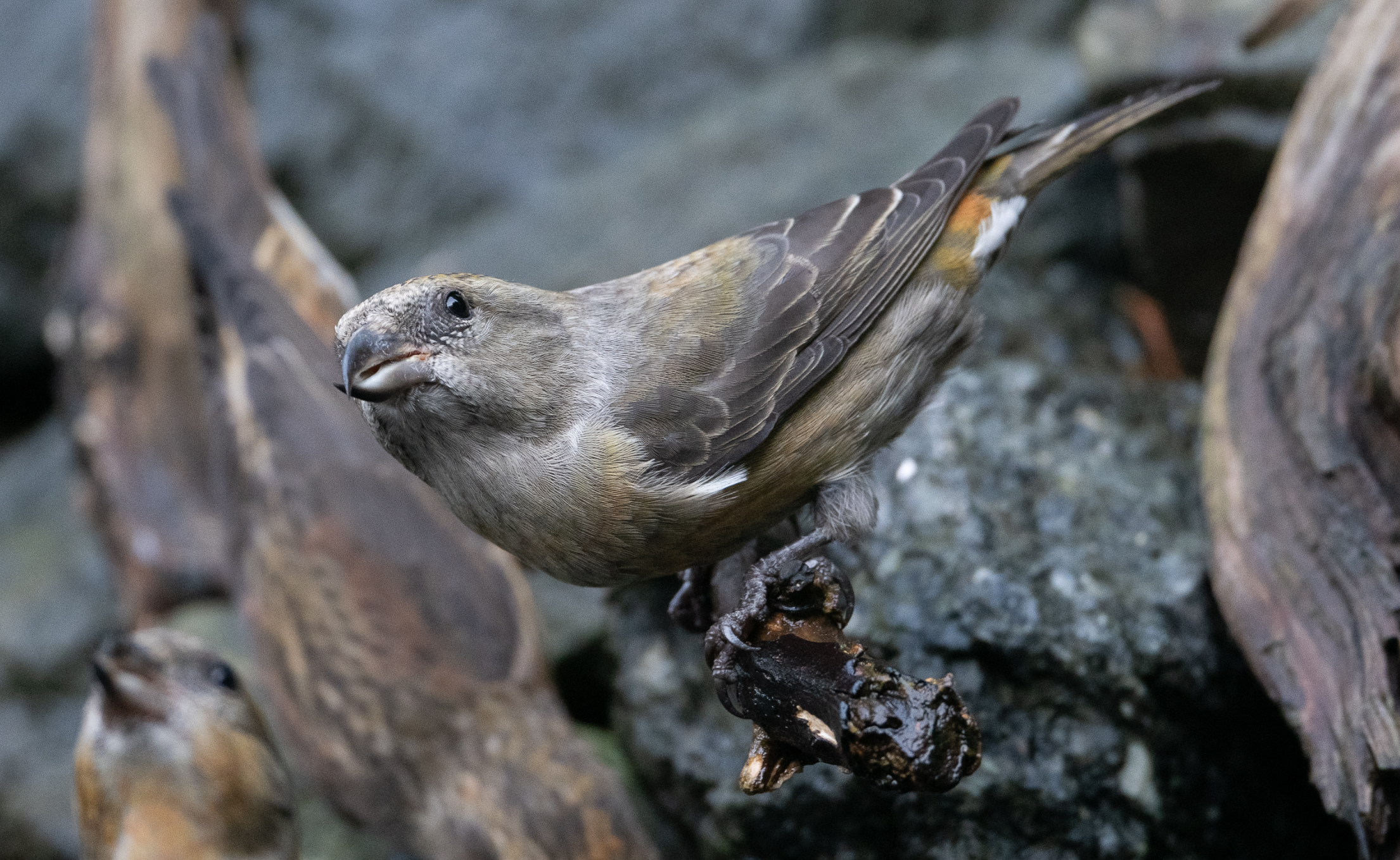
For the past several weeks I’ve been inundated by one of our more unusual bird species, the Red crossbill. In past years they have been very rare, but very welcome, visitors to my yard. I’ve gotten many good photos of the birds this fall, but adults in mature plumage have been relatively rare. The mature males are red, but most of what I see and consider mature males are a more orange color. Mature females are yellow, but again most of the mature females I see are a pale yellow. Juveniles are generally a dull brownish/gray with only hints of orange or yellow, making it difficult to differentiate the sexes and making them somewhat difficult to distinguish from female House finches.
Here are some of the things I’ve observed about the birds:
- Upon entering the trees in the yard, the crossbills are much less active than most of the other birds, often waiting almost motionless until they decide to fly down to water.
- When leaving water features the crossbills almost never pause to preen, but fly directly into the tree canopies at a sharp angle.
- I’ve never had the crossbills visit any of my feeders (suet, peanut or sunflower seed). They only seem to be interested in water for drinking and seldom bathe.
- They are fairly accepting of human presence. I often have them land on a pedestal bird bath only about five feet from me, too close for photos with my 500mm lens!
- Beaks of the birds can either cross over to the left or right (!) which can help identify individual birds.
An interesting fact gleaned from the internet: Red crossbills are fairly widely distributed across the northern United States and Canada. Although considered a single species, the bills of Red crossbills are adapted for the cones of the species of conifers specific to the birds’ location.
But enough of the textual description… on to some photos! On November 14, 2026, I finally got the opportunity to photograph a male Red crossbill in full adult plumage, something that had eluded me all fall. Unfortunately the bird turned its back on me while drinking so I only got one good photo.
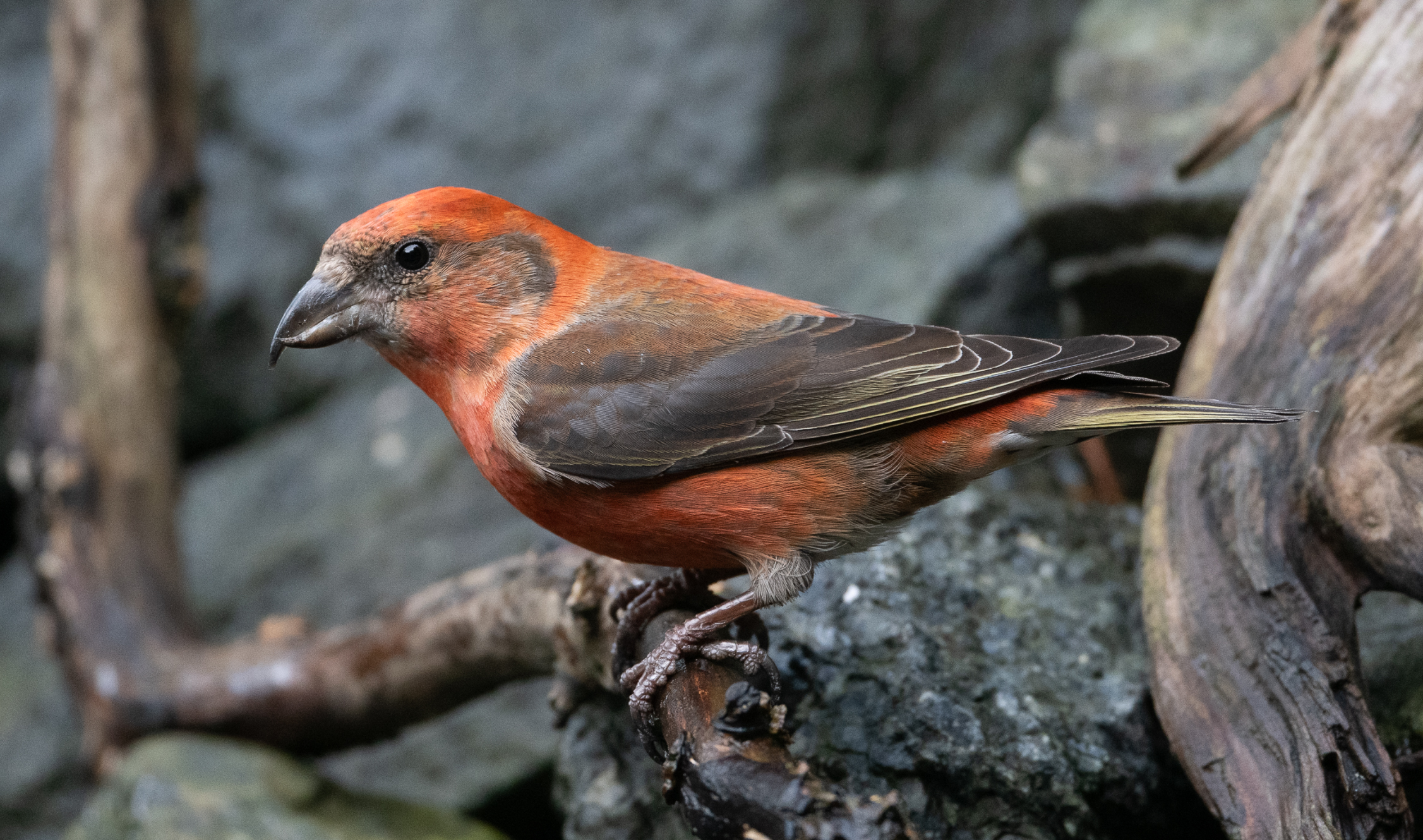
The brighter orange notes probably indicate this is a younger male that lacks mature/breeding plumage.
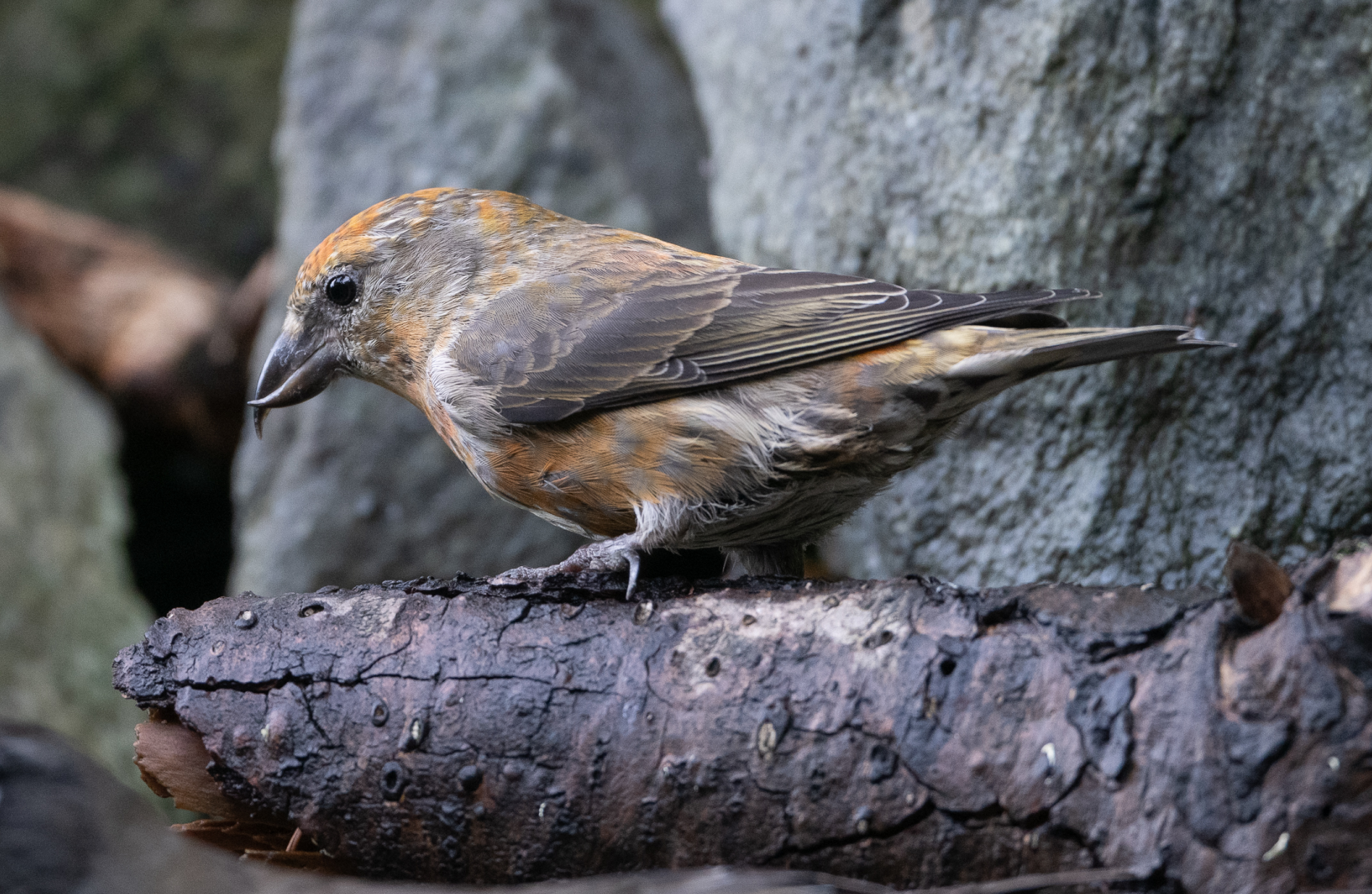
For comparison, this is one of the brighter females I’ve encountered (taken October 22, 2026).
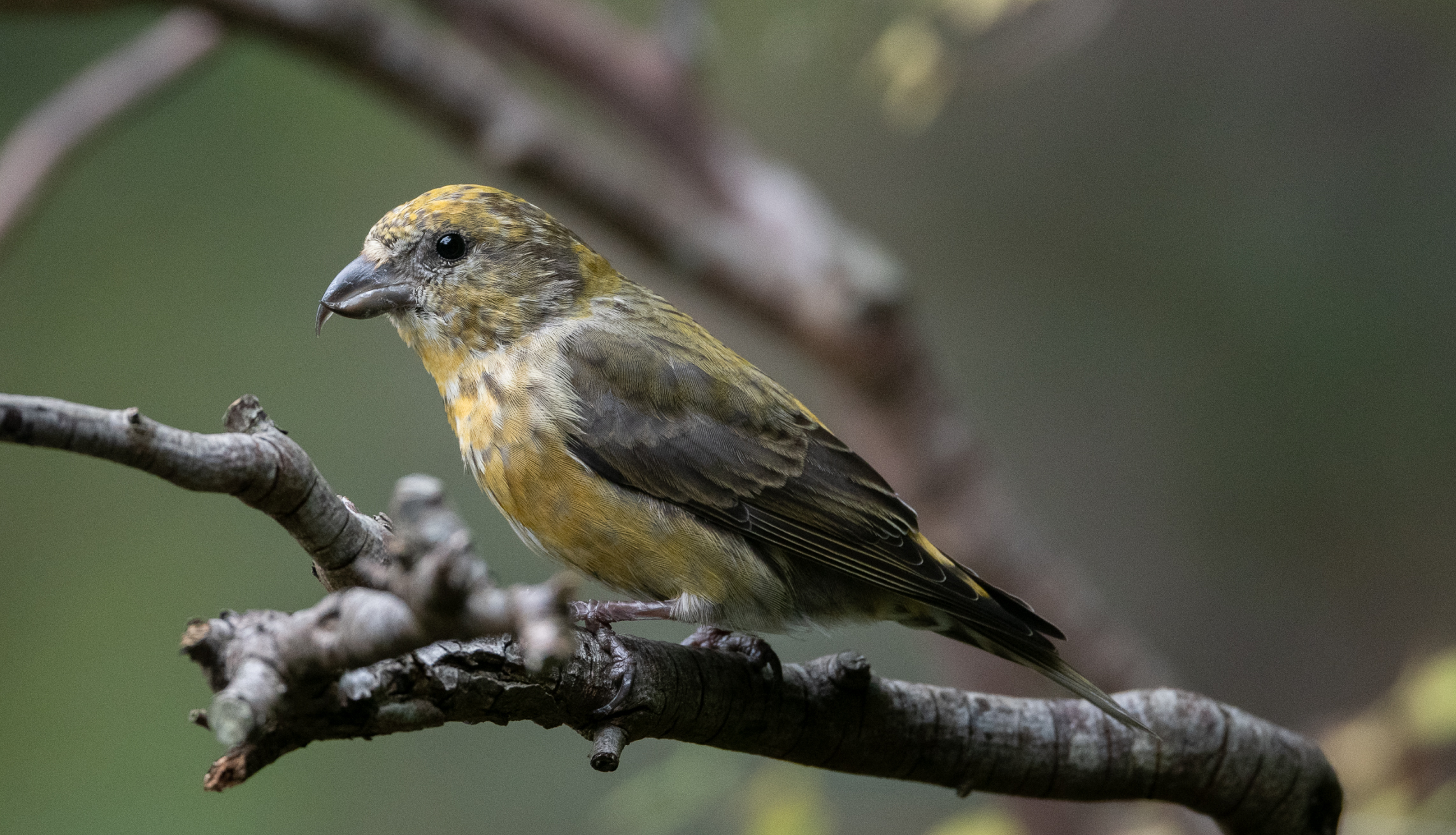
Here are photos I took of females on October 14, 2026. Notice how the beaks cross in different directions.
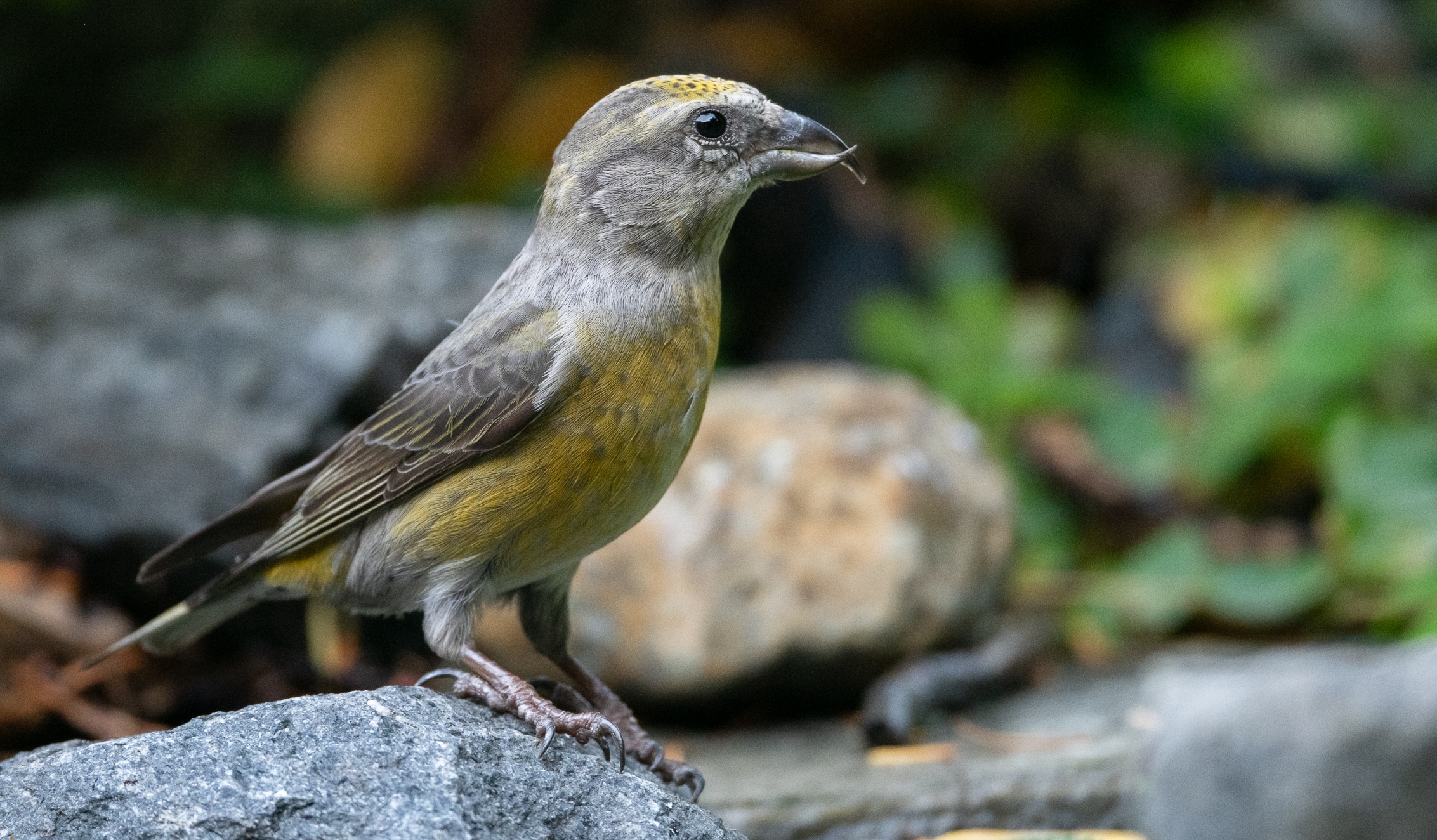
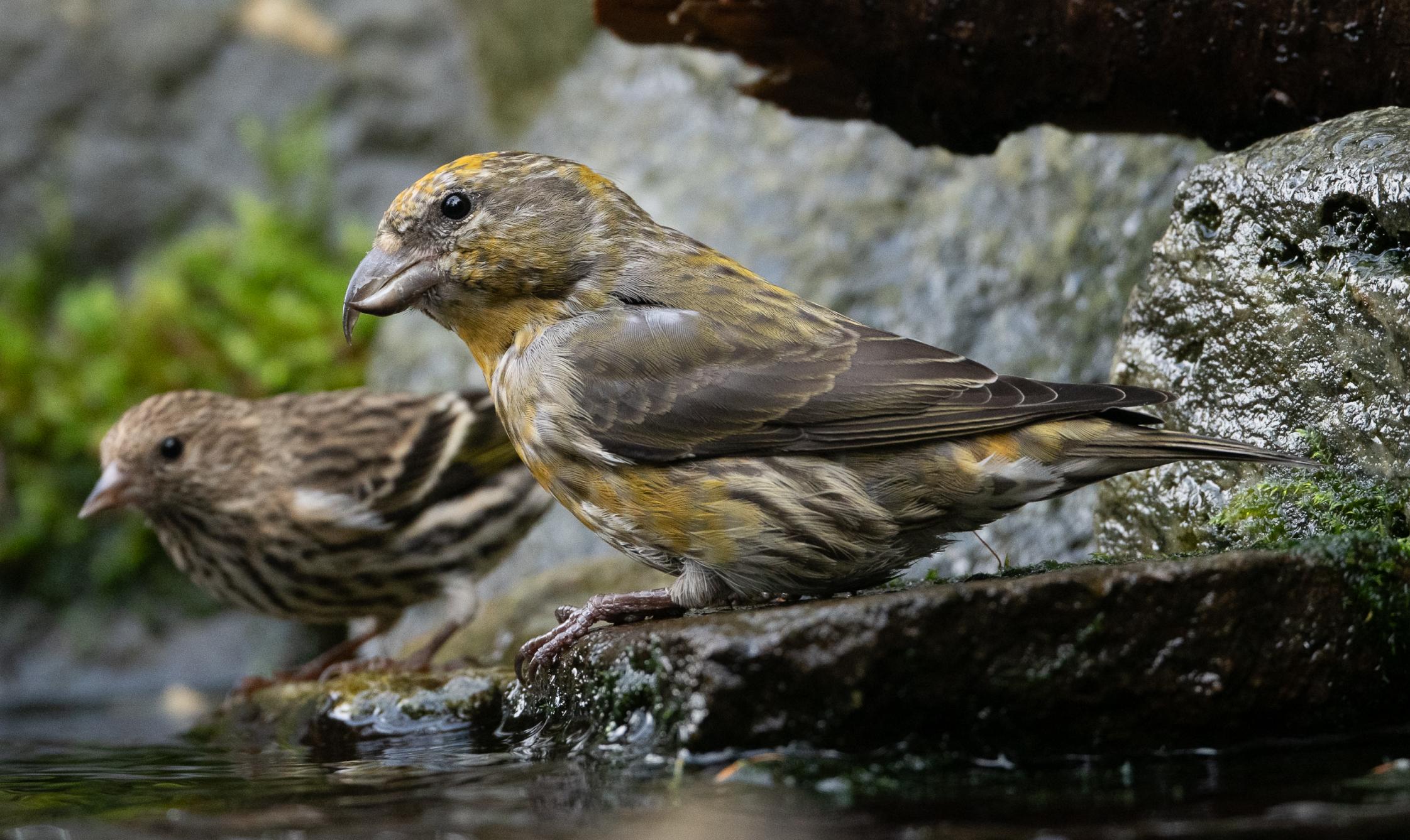
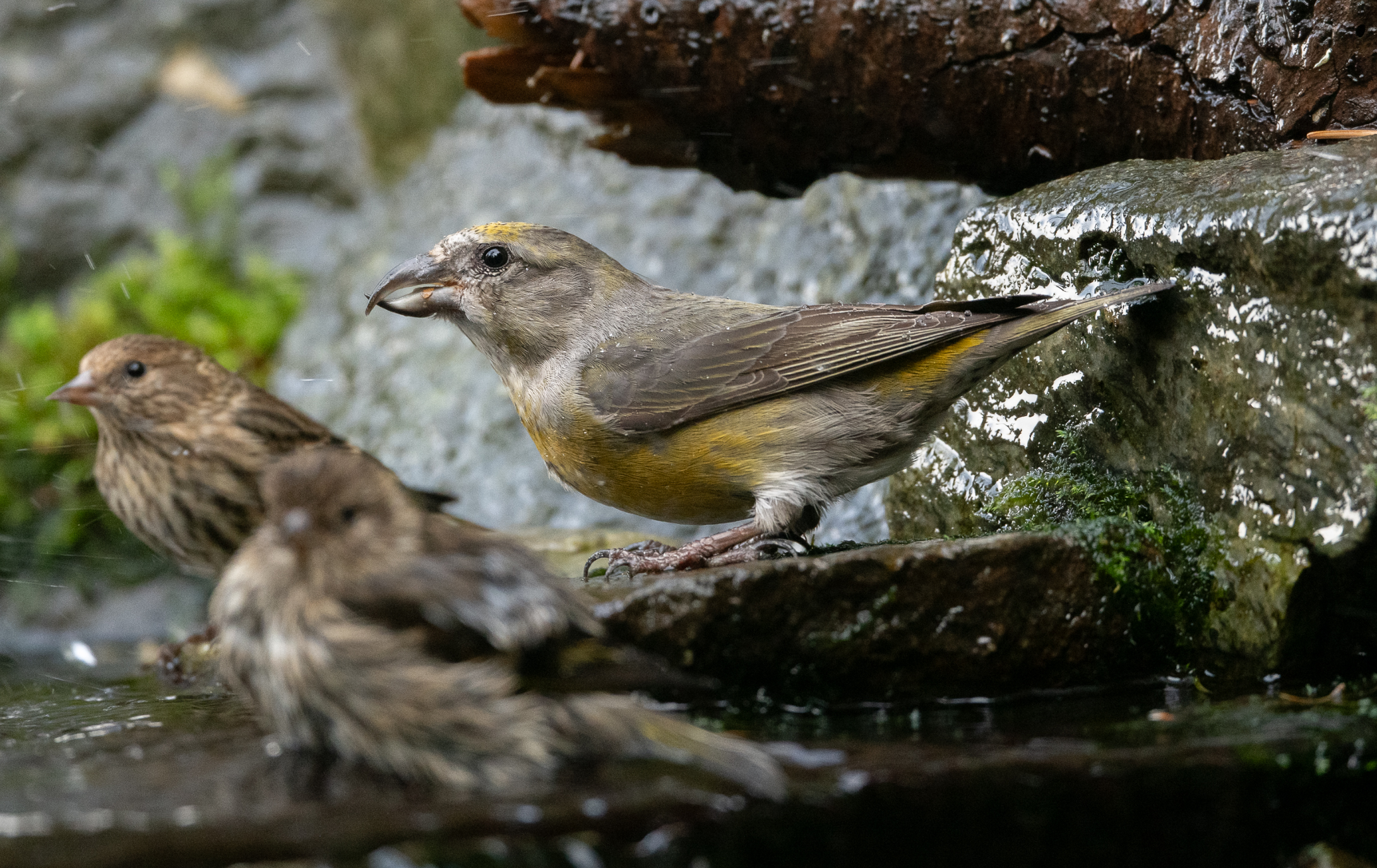
Here are some photos of juveniles which make up the preponderance of my crossbill visitors. This first one appears to be a female.
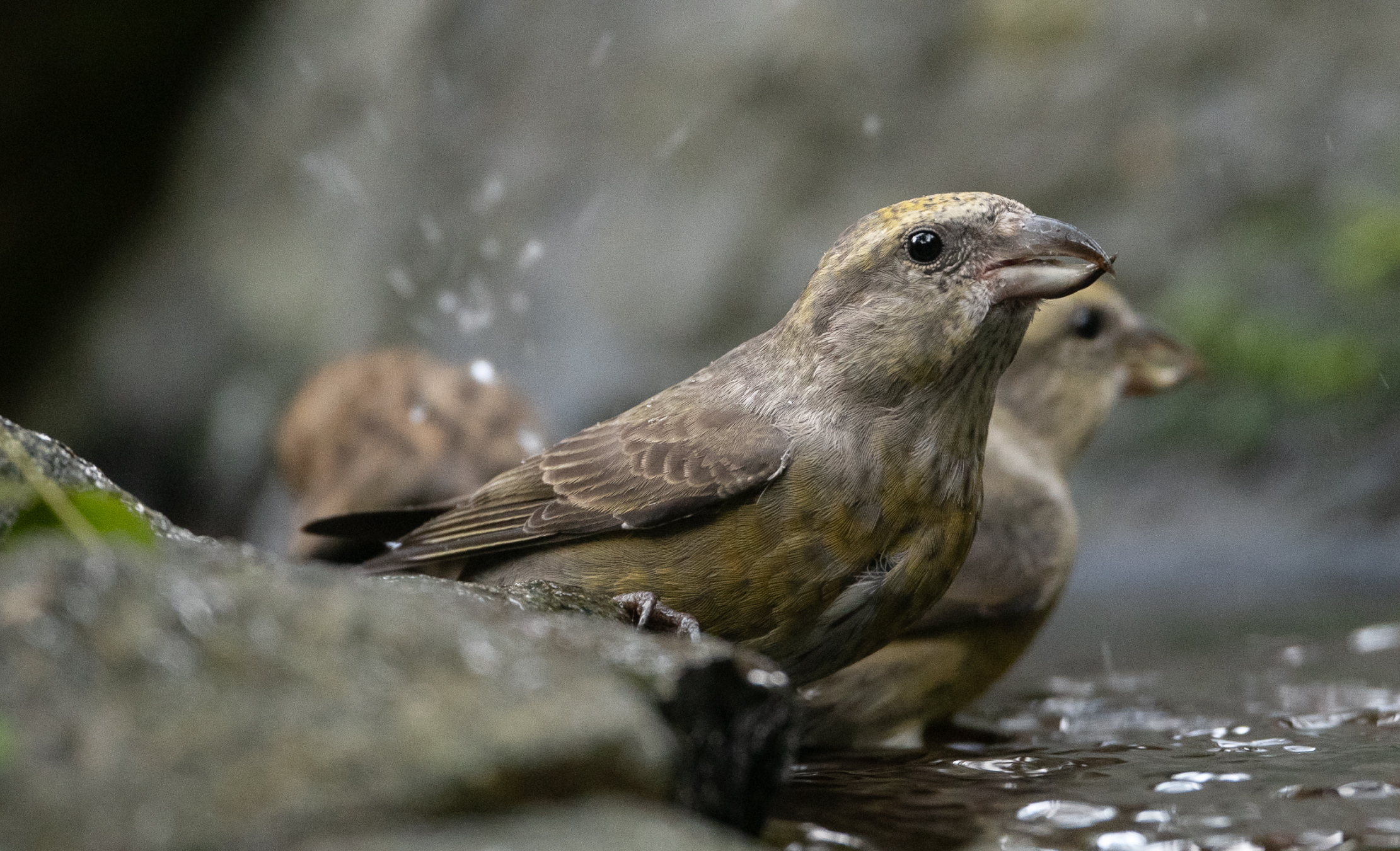
Despite the pale yellow coloring on the front of this next bird which might indicate a female, based on the small patch of orange near this bird’s tail, I suspect it is a male.