Birds of Central Texas – 5

Sadly, by May 10, 2015, my visit to family in Central Texas was winding down.  However, it wasn’t quite the end of my birding experiences.

The first thing that morning I noticed some activity on a back fence, all the way across our effective viewing area and out of the range of any hope of good photos.  It was a female House finch sitting on a fence playing with some spear grass seed stems.  I watched and photographed the bird for a full five minutes.  A slight wind was moving the stems of the plant back and forth in front of the barbed wire strand on which the bird was sitting, and the bird kept leaning out to try and grasp the stems.  As I said, these are not great photos but they provided me with some amusement watching the antics of the finch.

Finch, House - eating grass 20150510-03

The bird was finally successful at removing one of the seed stems…

Finch, House - eating grass 20150510-07I also obtained this nice photo of a Carolina chickadee.  It looks very similar to our (PacNW) Black-capped chickadee but fortunately their ranges don’t overlap either here or in Texas so identification isn’t a problem.

Chickadee, Carolina 20150510-03

And perhaps saving the best for last, on this day we took a little driving excursion to an area where we had found a Vermillion flycatcher the previous year.  It, or one of its ‘brothers’, was back!  The area this flycatcher prefers is very open, so despite my efforts I was unable to get very close to the bird and the following photograph seemed like about the best I might obtain…

Flycatcher, Vermillion 20150510-05

Not a bad photo, but if it had been the only one I was able to obtain I would have been somewhat disappointed.  However my sharp-eyed sister saw it make a couple of trips to a tree limb and she spotted a nest in the branches.  The male was feeding the female which remained on the nest.  The nest was beside the road we were on so it opened much improved possibilities for photographs… from the car!

DSC_3445 Flycatcher, Vermillion 20150510-12

And finally, the best photo I could get of the female snuggled down into the nest with sticks and a limb interfering with my view and focus…

Flycatcher, Vermillion 20150510-22

This wraps it up for this year’s series on Texas.  Since I returned I’ve been taking a LOT of photos of spring migrants in our yard on Fidalgo Island.  Some of them will be the next photos posted to the blog.

Birds of Central Texas – 4

These photos were all taken on May 7, 2015 and are of warblers in migration through Central Texas.

First up, the Black-throated Green warbler, easily the most numerous of the migrating warblers during the several days I was observing.  (The previous year, at a slightly earlier time period, the most numerous warbler was the Nashville warbler.)  And I almost hate to mention this, but in researching these photos it’s somewhat disconcerting how similar some sex/phases of the Black-throated Green warbler look to the non-male Blackburnian warbler.

Warbler, Black-throated Green 20150507-85 Warbler, Black-throated Green 20150507-70 Warbler, Black-throated Green 20150507-53 Warbler, Black-throated Green 20150507-51 Warbler, Black-throated Green 20150507-48 Warbler, Black-throated Green 20150507-45

Here we have a male American redstart, the first I had observed on my prior forays to the area, although the pervious year we did observe a female redstart displaying considerably more than these males.

Redstart, American 20150507-15 Redstart, American 20150507-05 Redstart, American 20150507-04

And finally, another photo of a male Blackburnian warbler

Warbler, Blackburnian 20150507-03


Birds of Central Texas – 3

These photos were all taken in Central Texas on May 6, 2015.

This first bird is a Gray catbird which unfortunately didn’t stick around long enough for me to obtain a good photo.  This is only the second one I ever remember seeing.  Catbird, Gray 20150506-04

This is apparently a female Common yellowthroat, a difficult identification that my sister made after looking through Sibley at all the female warblers.  Although there is no major body of water nearby, this bird was foraging through a young yaupon thicket just above the ground… much as it would be doing on the edge of a marsh.

Yellowthroat, Common 20150506-11

While I’m on the subject of warblers, here’s another photo of a male Black-throated Green warbler approaching a bird bath.

Warbler, Black-throated Green 20150506-01These next two birds are some of the chief alerters for the presence of an owl or snake.

This Black-crested titmouse is the more numerous of the titmouse species occurring on my sister’s property.  The other species is the Tufted titmouse and the two species sometimes hybridize.  I never saw a Tufted titmouse during my visit.

Titmouse, Black-crested 20150506-03

This next bird is a Carolina chickadee, very similar to our Black-capped chickadee.  The easiest way to tell the two birds apart?  Their ranges don’t overlap!

Chickadee, Carolina 20150506-03

This photo is of a male Ladder-backed woodpecker, although it doesn’t show the feature for which the bird is named.

Woodpecker, Ladder-backed 20150506-04

And finally, perhaps saving the best for last, a male Summer tanager in full breeding plumage.  A  first-year male, which has very interesting coloration, was shown in a prior post.

Tanager, Summer 20150506-03


Birds of Central Texas – 2

All of the following photographs were taken on May 5,2015, just outside Austin, Texas.

This is another photo of a first-year male Summer tanager

Tanager, Summer20150505-10

A photo of a male Black-chinned hummingbird.  The gorget of this bird reflects a bright blue color but I saw no reflections the entire time (eight observation days) that I spent in the area.  This is the predominant species of hummingbird in the area although there are occasionally Ruby-throated hummingbirds.

Hummingbird, Black-chinned 20150505-04

This next bird is a White-winged dove.  These birds were practically unknown in the Austin area when I was growing up but they are now moving north and displacing the Mourning doves as the predominant dove.

Dove, White-winged 20150505-04

This is an Ash-throated flycatcher.  My sister had a pair raising a family in a nest box and although this bird was photographed a hundred yards or so from the nest box, it was probably one of the parents.

Flycatcher, Ash-throated 20150505-10

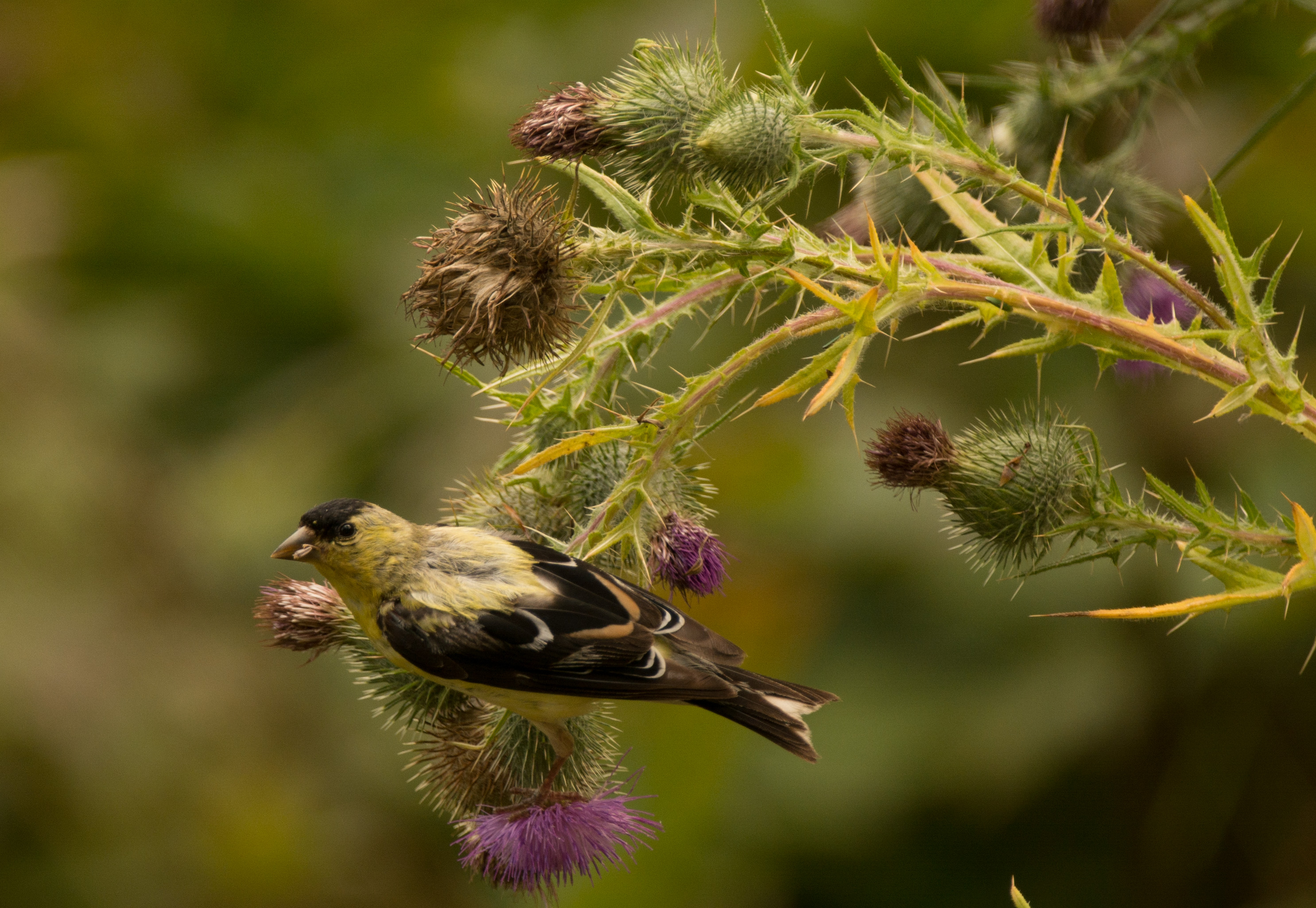
This is a male Lesser goldfinch, the goldfinch that resides in Central Texas year-round.  They also host American goldfinches, but only for the winter.  The American goldfinches have now made their way to the Pacific Northwest where we will have larger numbers all summer, but some will stay and spend the winter with us.

Goldfinch, Lesser 20150505-05

And now on to the warblers.  This first one is a male Blackburnian warbler, the first one I have ever photographed.

Warbler, Blackburnian  20150505-03

And finally, a male Chestnut-sided warbler… only the second ones I’ve ever seen and the first I have ever photographed.  (I figure that it is deserving of at least two photographs!)

Warbler, Chestnut-sided 20150505-23 Warbler, Chestnut-sided 20150505-11


Birds of Central TEXAS

As those of you who frequent my blog know, I’ve been somewhat remiss for the past couple of weeks about postings.  In early May I traveled to Texas to spend some time with my sister and her family and photograph some of the birds that migrated through her “migrant trap”.  (A migrant trip is a location with very desirable habitat that attracts birds on their migration by offering food and water.)  So what you will see and hear about in the next few posts concern some of the birds of Central Texas (greater Austin area), some migrants and some summer residents.

suffered my share of woes earlier this month.  Unfortunately I found after a couple of days of photography in Texas that the ‘quality’ setting on my camera had somehow been changed so that I was recording photos in high-end JPG instead of RAW, so I have a lot of great shots of birds but some are at a somewhat lower quality.  And upon returning home I found that my internet service had been interrupted and it has taken me several calls over several days to get my service restored.  And if that weren’t enough, I picked up a cold as soon as I returned home.  But let’s get to a more positive assessment of things.

Here’s MY assessment of what I experienced but it’s not necessarily shared by my sister, who is after all, the Central Texas resident.  I normally consider the height of the Central Texas migration to be sometime in late April and that is when I have targeted my visits in the past, but circumstances this year dictated that I visit beginning in early May.  My sister and her family have set their species count for Cinco de Mayo (May 5), a date easy to remember and even easier to celebrate!  Last year I visited in late April and had subsequent phone reports listing all the birds which had shown up in early May… after I left.  For this same period last year (2014) the number of SPECIES seen on their count was about the same, but the NUMBER OF BIRDS seemed down from what I had observed earlier in past years.  And many of the species seemed to have shifted… in the earlier period in past years the area was overrun with Nashville warblers (I have scores of photos of them) but this year, in the later period we saw only a single bird.  However this year the warbler du jour was definitely the Black-throated Green warbler, with a surprising number of American redstarts thrown in.

For the record, I took 1037 photographs and after processing I retained 618.  This pretty much tracks my habits of retaining about 60% of the photos I take.  If I were selling my photographs I would probably retain a lot fewer, but I don’t sell my work and I am burdened by being a birder, so in my mind photos of birds on different perches and with different orientations each tell a story and have something different to offer.  But enough of the discourse… on to the photos!

One of the predominant birds in the Central Texas landscape is the Northern cardinal, a year-round resident.  Here we have the male and female of the species:

Cardinal, Northern 20150504-06Cardinal, Northern 20150504-08

Next up, a bird that migrates to Central Texas and breeds there… the Painted bunting.  The colorful male is in the top photo and the more subdued female in the lower photo.  The buntings are abundant in my sister’s habitat.

Bunting, Painted 20150504-01Bunting, Painted 20150504-26


This next photo is of a first-year male Summer tanager.  It’s in the process of acquiring its red plumage which eventually will make it a bird that’s very hard to miss.  You’ll see a photo of a male in full breeding plumage in a future post.

Tanager, Summer 20150504-12


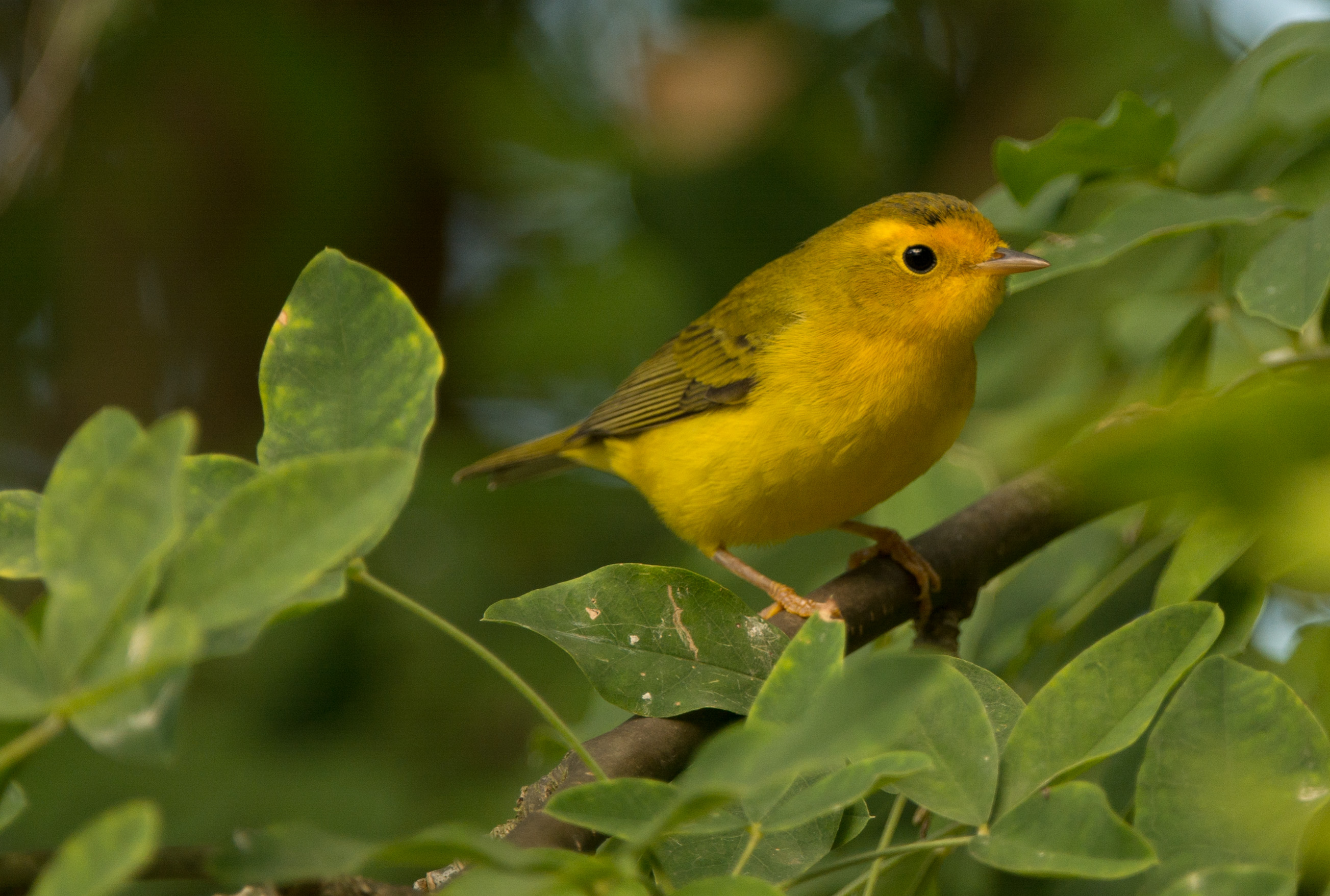
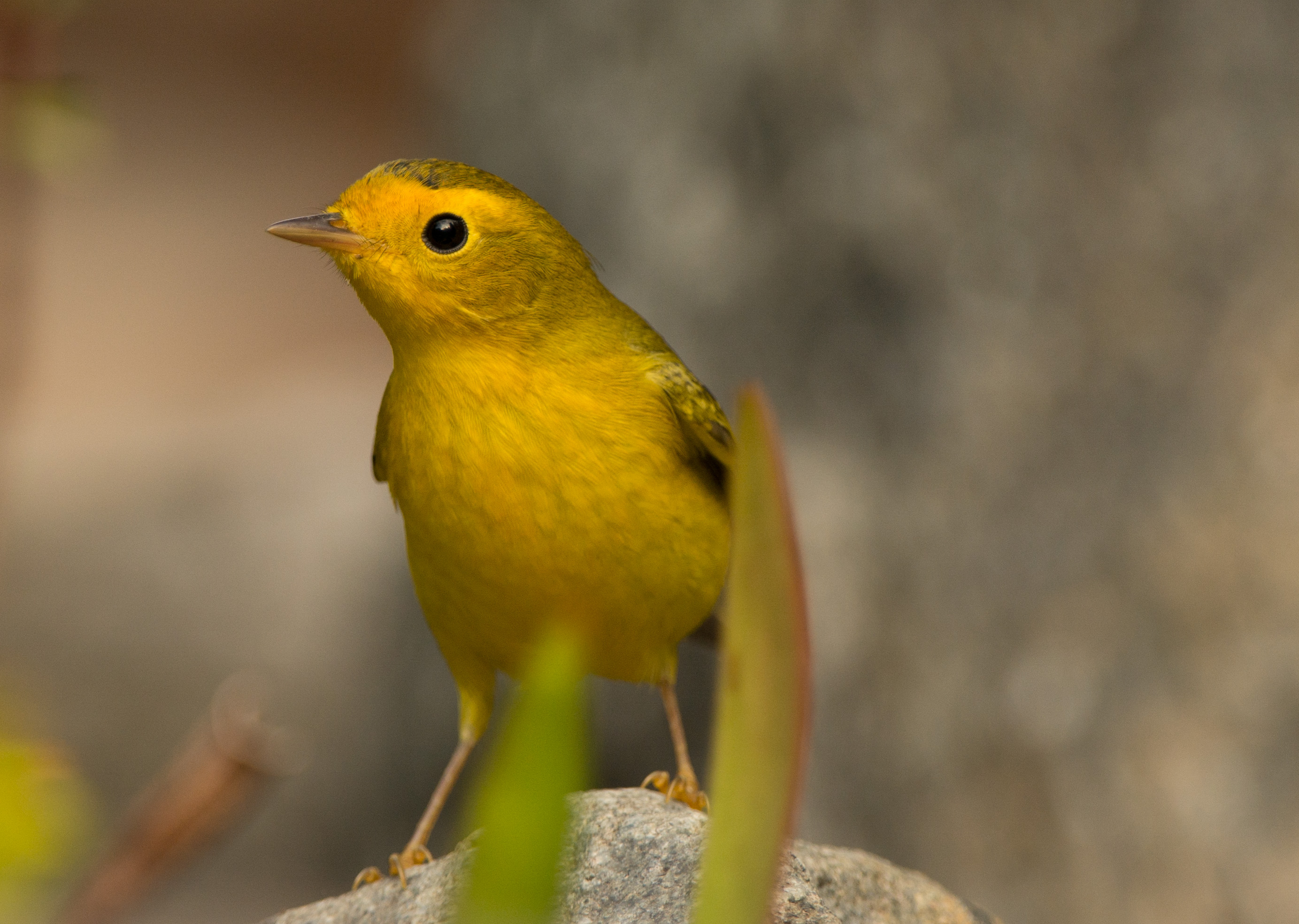
This is a male Wilson’s warbler, the warbler species that I consider the most frequent visitor to our yard in the Pacific Northwest.  It’s not beyond reason that this very bird could show up in our watercourse this spring/summer!

Warbler, Wilson's 20150504-02

This is a photo of the male Golden-cheeked warbler, an endangered species found only in the Central Texas area.  The bird is threatened by parasitizing of nests by Brown-headed cowbirds and by habitat loss relating to nesting materials.  The bird will only build its nests using juniper bark and the bark can only be stripped from mature junipers.  In addition many developers are motivated to clear junipers from their land to ensure that the presence of endangered birds will not threaten development.

Warbler, Golden-cheeked 20150504-07

I’m jumping ahead a couple of days to borrow this photo of a male Black-throated Green warbler, which from rapid or casual observation can be confused with the Golden-cheeked warbler.

Warbler, Black-throated Green 20150506-07
One of my personal favorites from spring in Central Texas is this White-eyed vireo which always seems to display an expression.  It bathes by flitting into and out of the water from a low perch.  These birds were in rather short supply this year.  In past years I have been frustrated at not obtaining a photo of the bird in flight, hitting the water.

Vireo, White-eyed 20150504-05

And finally for this post, a bird I’m not sure I’ve ever seen before and certainly have not photographed, a Blue-headed vireo.  This bird closely resembles another endangered Central Texas bird, the Black-capped vireo.

Vireo, 20150504-09

All of these birds, with the exception of the Black-throated Green (as noted), were photographed on May 4.  I retained 115 photos from the day’s observations!