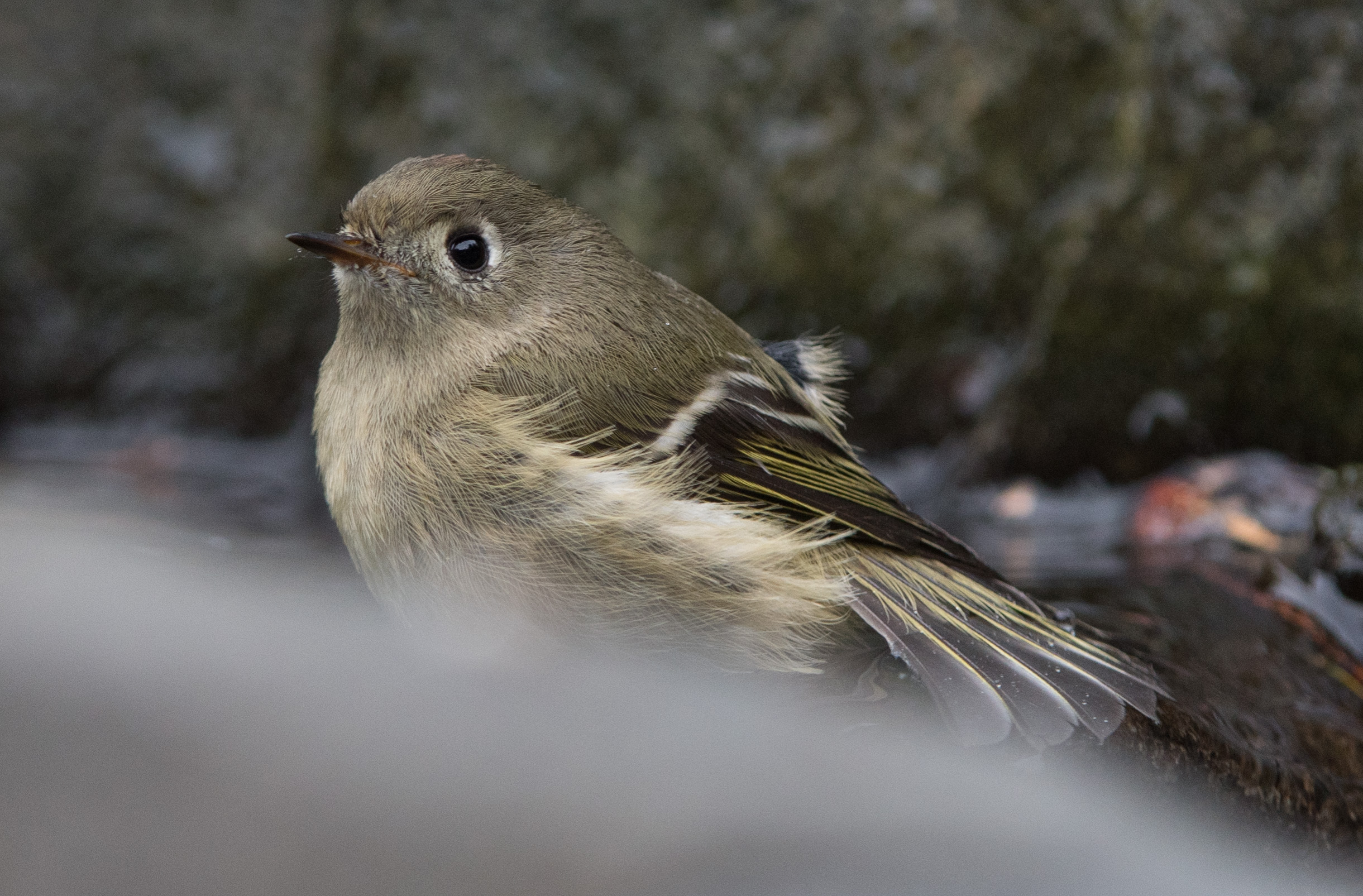
I believe that the fall migration is on!  This past week, with virtually no warblers for the past couple of months, we are suddenly experiencing an influx of warblers.  Our most common visitors are Orange-crowned warblers, one of which is pictured below taking a bath in our watercourse.

DSC_4365

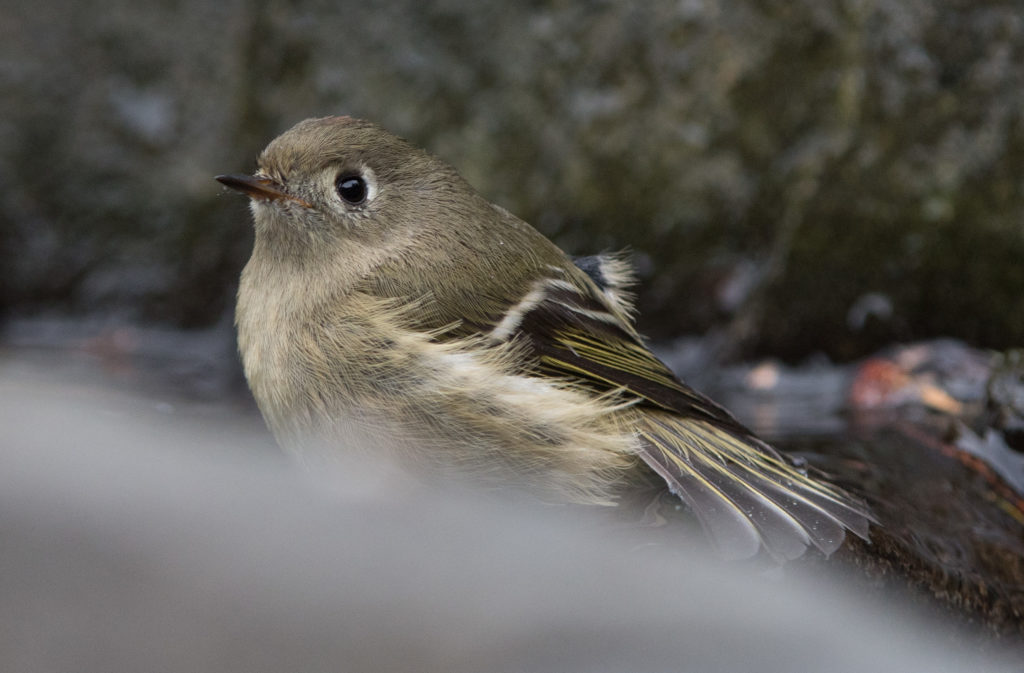
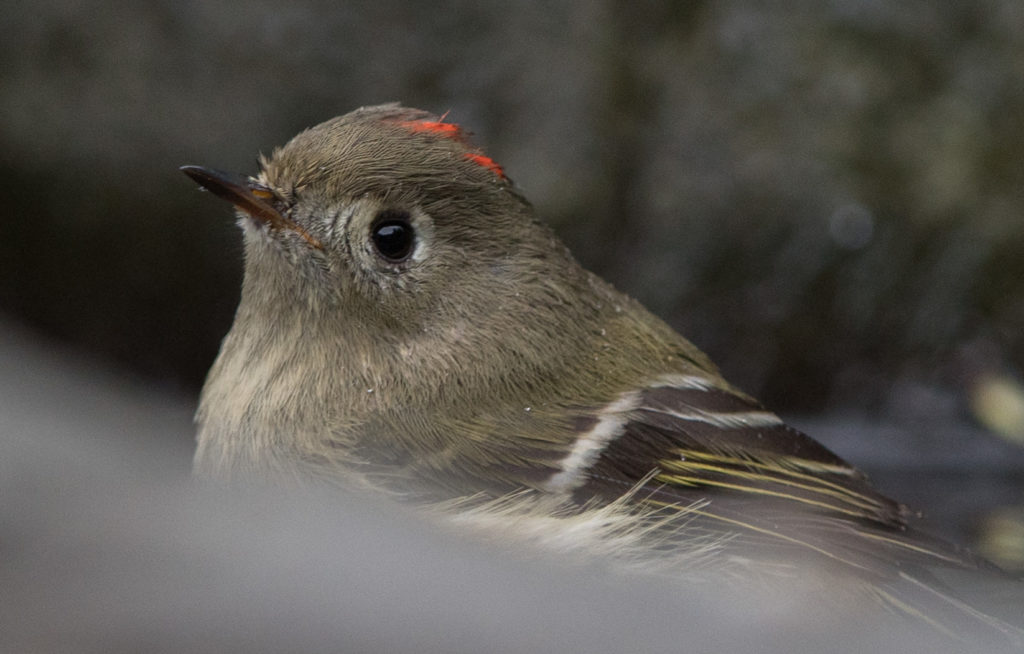
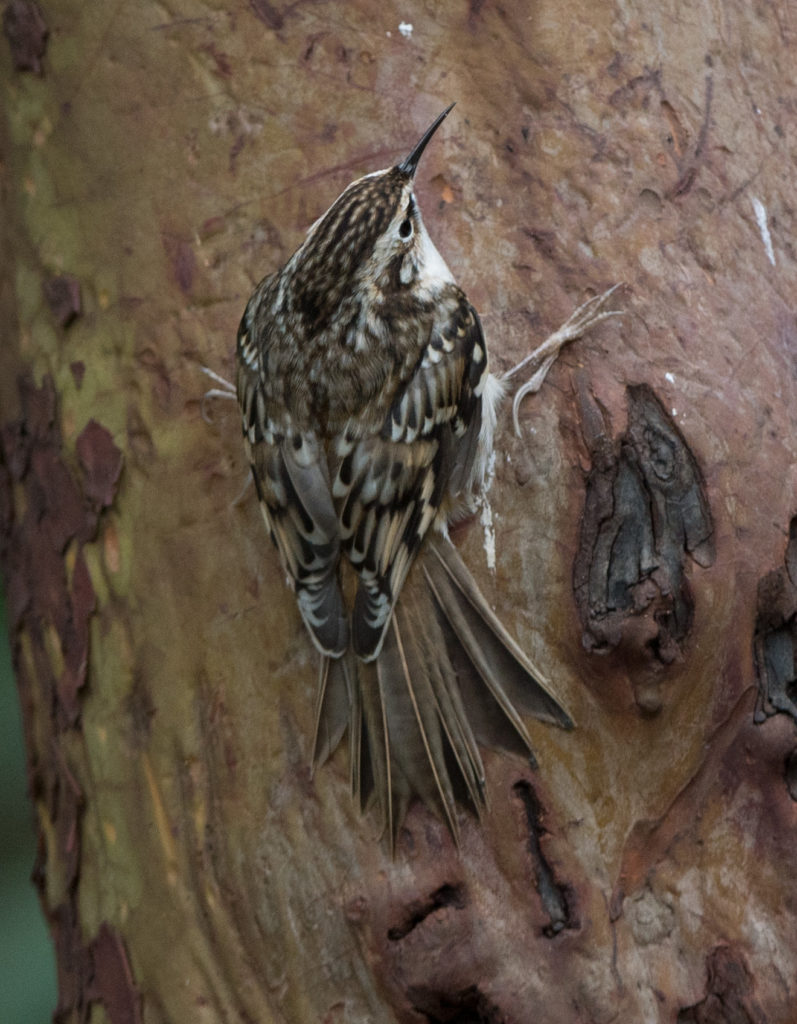
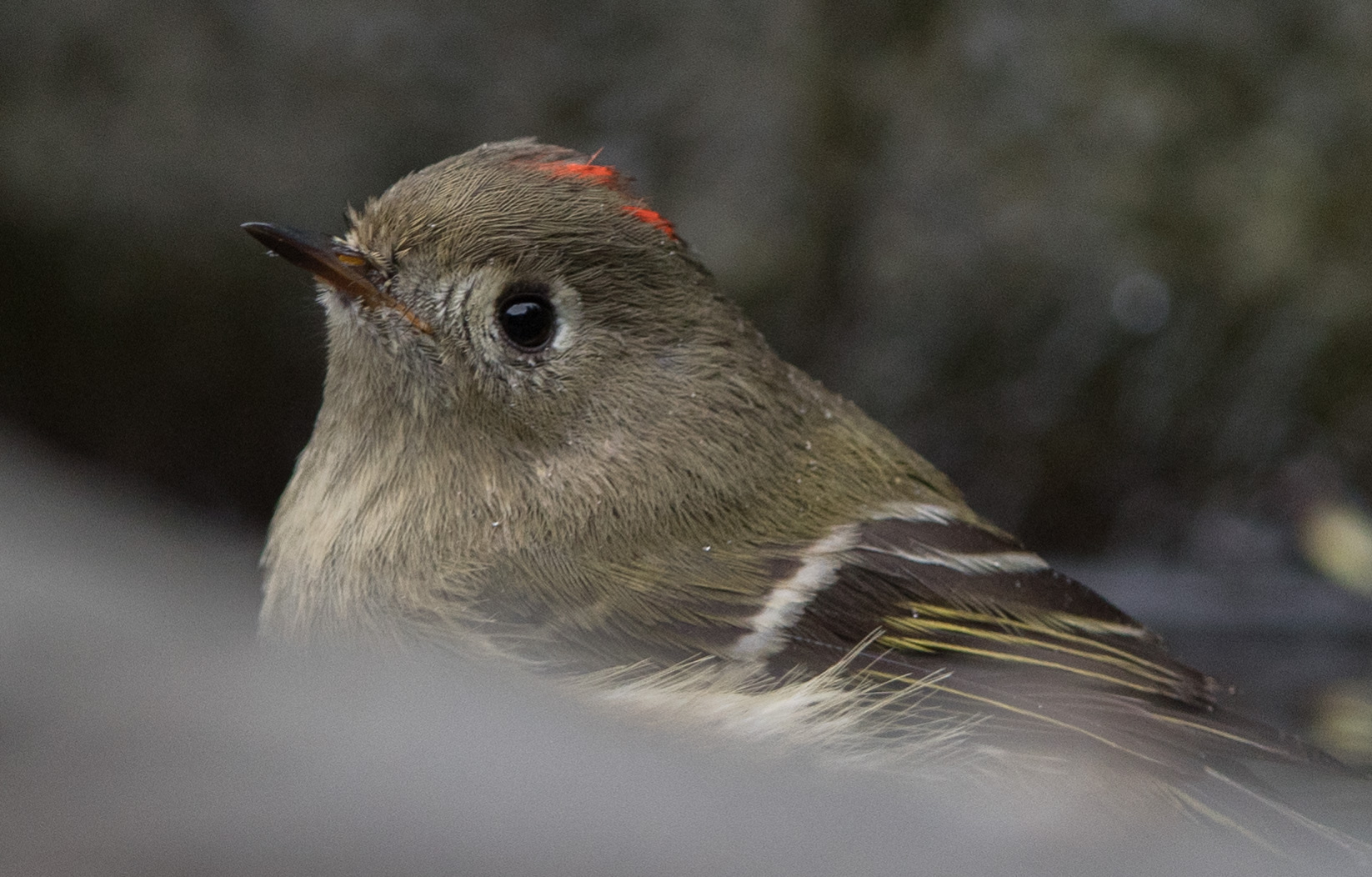
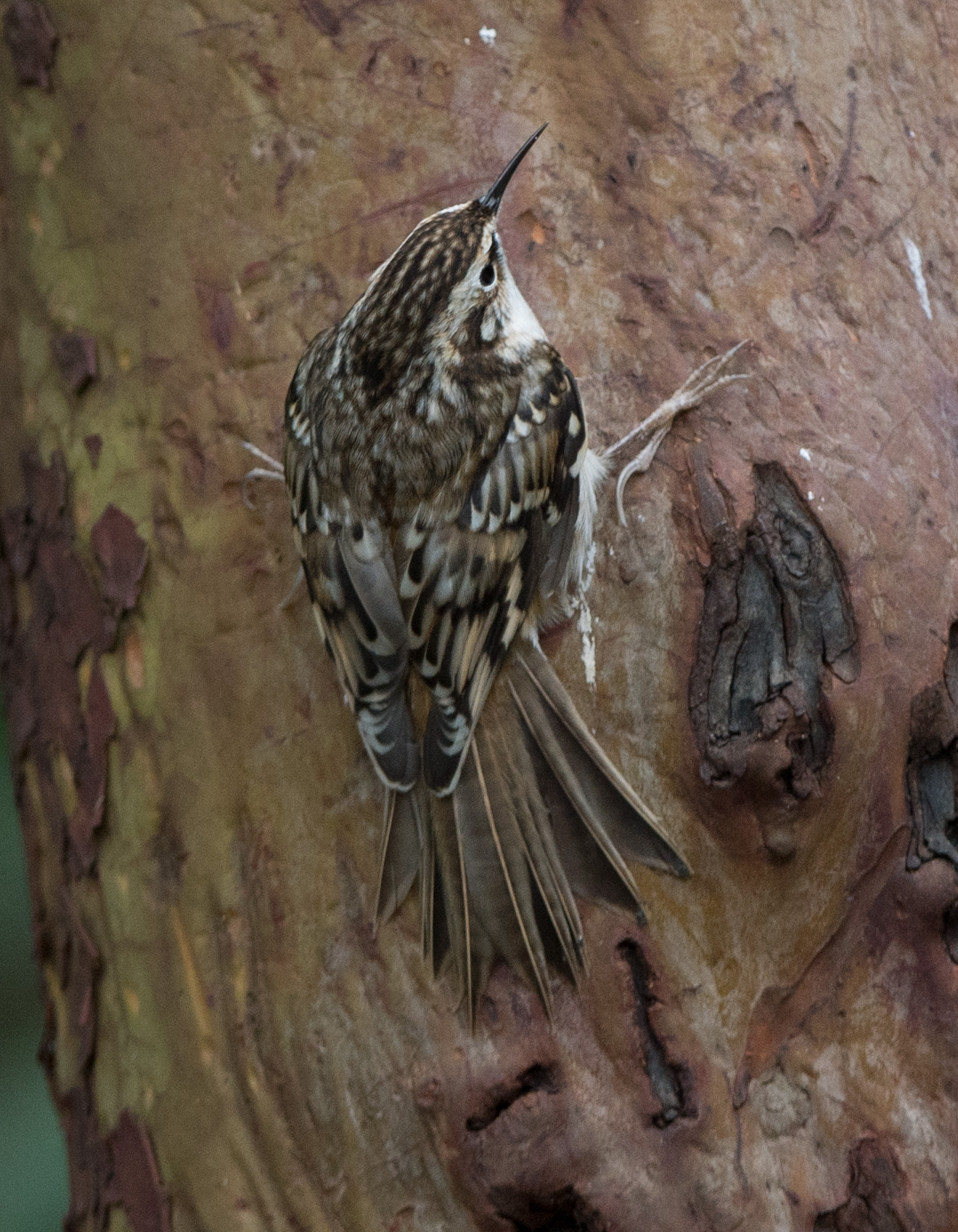
On August 31, within the space of about 15-minutes, I saw two Orange-crowned warblers, a male Wilson’s warbler and two female Wilson’s warblers.  During this same time period I also saw a male Golden-crowned kinglet and a Brown creeper.

Here’s another photo of the Orange-crowned warbler bathing amid a group of juvenile American goldfinches.  I believe that it might have its beak open to warn the other birds not to interfere with its bath!

DSC_4356

Here’s another photo of an Orange-crowned warbler… it hardly looks like the same species, but there’s considerable variation in the coloration, especially at this time of year.  And I always think the birds look yellower when wet.

DSC_4369

And here’s a photo I took today, once again with two of the warblers in the yard (in this case the watercourse) at the same time.

Warbler, Orange-crowned 20160902-05

Today I also had two different visits from one or more Black-throated gray warblers.  At first I thought that one had been a male and the other female, but after careful examination of my photos I realized that both were male.  In these photos it’s not particularly evident that the black throat extends to the beak, which would be a characteristic of the female.

Warbler, Black-throated Gray 20160902-25 Warbler, Black-throated Gray 20160902-38

And as a little bonus, I’m including a photo of this male House finch which clearly shows the red patch on the bird’s rump.  This patch is not always visible when observing birds in the field.

DSC_4283

Here’s a little gathering of House sparrows having baths in the watercourse.  I liked the male sparrow in the center of the photograph.

Sparrow, House 20160902-01

Woodpeckers

Here is a little woodpecker lesson.  We have at least four common kinds of woodpecker-type birds here.  The smallest, and in my yard the most common, is the Downy woodpecker.  The Downy and Hairy woodpeckers have virtually identical markings but can be differentiated by size, with the Hairy woodpecker being larger.  However I maintain that trying to assess the difference in these birds by size is not reliable.  The best way to differentiate these two species is by the length of their beaks compared with head size.  Take a careful look at this male Downy’s beak (pictured immediately below).

Woodpecker, Downy 20160822-01

The photo below is of a male Hairy woodpecker on the same feeder.  Note the larger and heavier beak.  The Hairy woodpecker has been a very infrequent visitor to our yard over the years, but this year we have been fortunate to have both a mature male and a juvenile male visiting the yard.

DSC_3418

Incidentally, I have found that the Perky Pet peanut feeder pictured above is an excellent feeder for both woodpeckers and other smaller clinging birds such as nuthatches and chickadees.  Like almost all of my feeders, it discriminates against non-clinging birds which helps to minimize your feed costs.

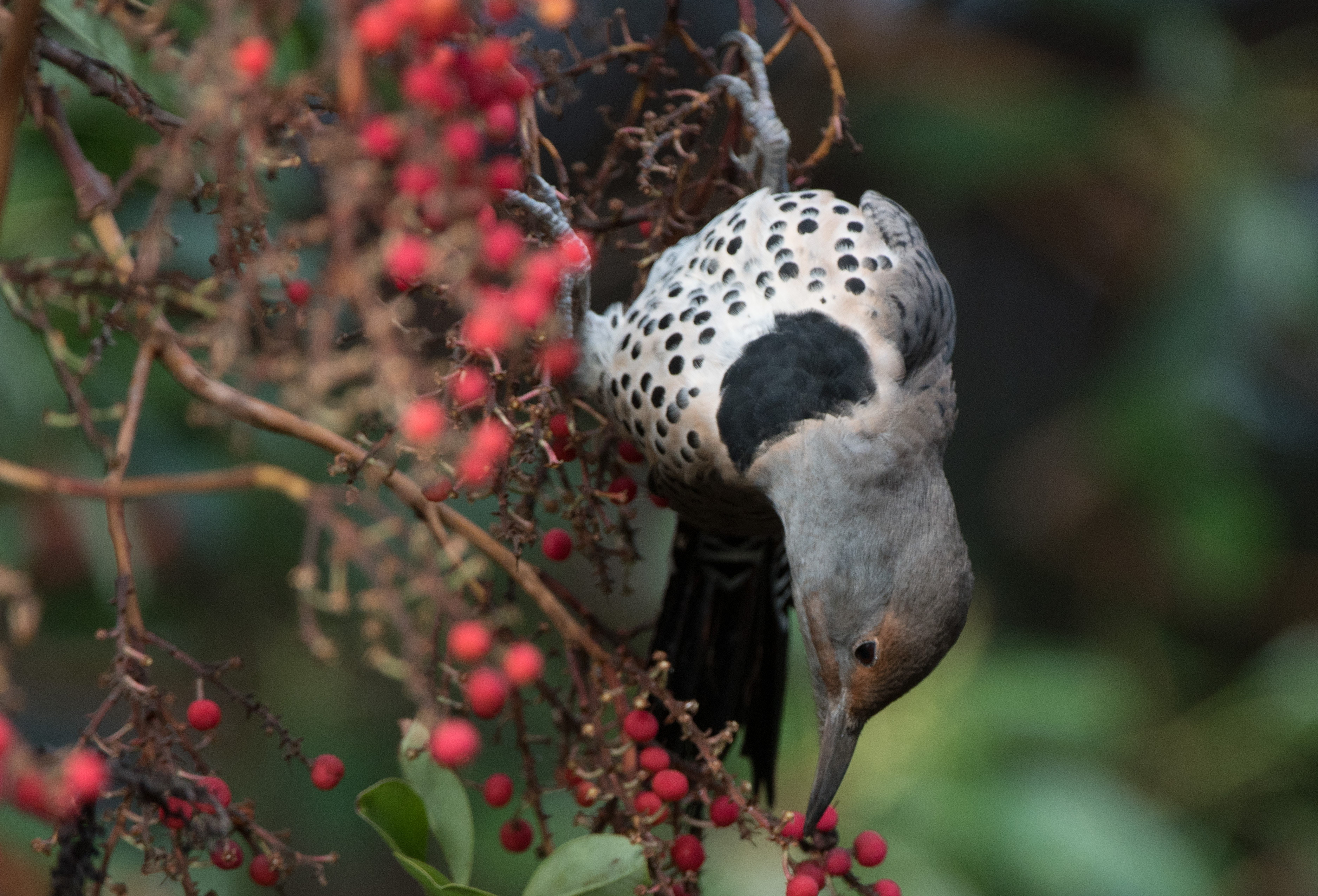
And finally, here is a photo of a male Northern flicker.  They have been fairly consistent visitors over the years and we had both male and female adults and male and female juveniles this spring/summer.  Unfortunately we lost one earlier in a window kill.  Unlike many woodpeckers, the male sex of the flicker is denoted by the red patch on the cheek and not a red patch on the head.

Flicker, Northern 20160523-01

The other woodpecker we have in the greater area is the Pileated woodpecker.  I have seen only one in our yard and one in the Cap Sante neighborhood over the past sixteen years, but there are more heavily forested areas where these birds, which desire a large territory, can be found.  There is usually at least one pair in Washington Park each year.


August 21, 2016

It’s always a difficult decision as to what to post to my blog.  I take a lot of photos, generally every day, and I can either wait to post through the backlog or post the day’s photos immediately.  I had a good day today and so have decided to post today’s photos.

We had, for this year, an unusual visitor today.  A male Wilson’s warbler, which I usually consider the most numerous in our location, fly through the yard twice this afternoon.  The first time I saw it I was without my camera, but it returned about 20-30 minutes later when I was prepared.  It flew across and around the yard several times but never landed long enough for me to get even a single photograph.  : (

However, while I sat in the yard one of the Black-headed grosbeak juveniles raised in the area came closer to me (and my camera) than one had ever come before.  As a result I obtained several very good photographs, two of which I’m showing you here.

DSC_3999

DSC_4004This year we’ve had one, and sometimes two, Townsend’s chipmunks in the yard.  (We’ve also gotten very brief glimpses of a very small one scurrying under the undergrowth.

DSC_4019 DSC_4018


Here’s a male House finch… DSC_4007

and a Black-capped chickadee.

DSC_4023

And finally a pair of juvenile American goldfinches.

DSC_4015


Early July Yard Birds

Just a reminder… all the photos on my blog from this point until further notice were taken with my new Nikon D500 camera.

This spring we had a pair of White-crowned sparrows which late in the season produced four young.  Unfortunately one met its demise against one of our windows.  In most past years we haven’t been able to retain these birds through the breeding season.

Sparrow, White-crowned 20160707-04-2 Sparrow, White-crowned 20160707-09

This year we also had two pairs of Black-headed grosbeaks, at least one pair of which successfully bred some number of young.  While the grosbeaks were frequent visitors they are fairly secretive about entering the yard and we never could get an accurate count of the number of young.  We had an accipiter visit the yard several times since last week (about 8/5) and the grosbeaks have apparently left the area, possibly for the season.

The grosbeaks are the only reason I maintain a small platform feeder during the spring and summer months.  The grosbeak pictured below is one of the breeding males.

Grosbeak, Black-headed 20160707-08

This is either one of the breeding female Black-headed grosbeaks or possibly one of the juveniles.  I have  noted that, at least for me, the young grosbeaks were difficult to diffferentiate from the adult females.

Grosbeak, Black-headed 20160707-02

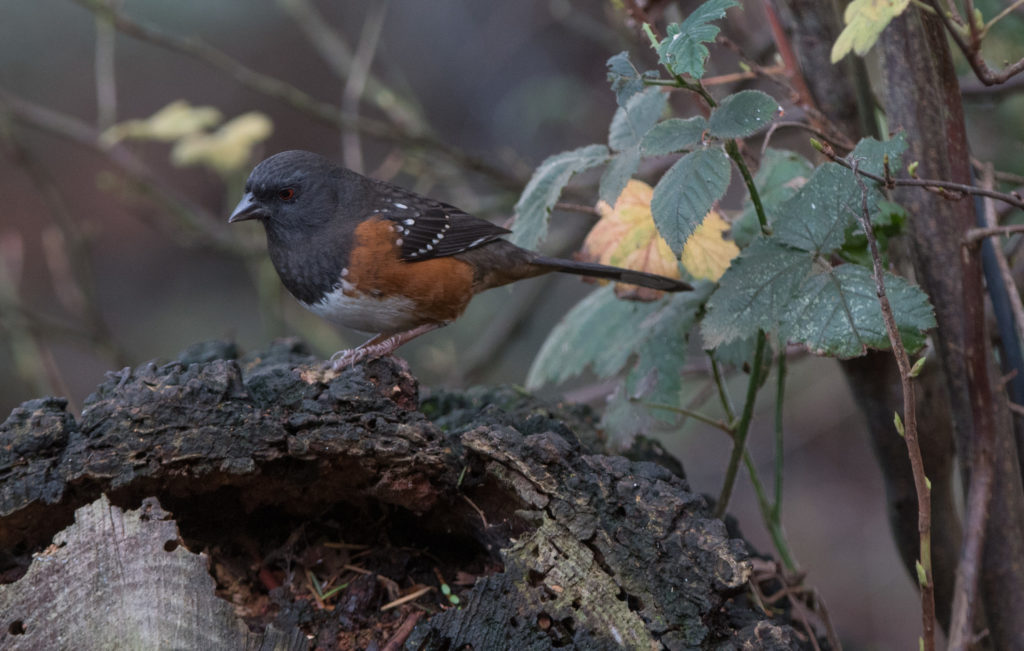
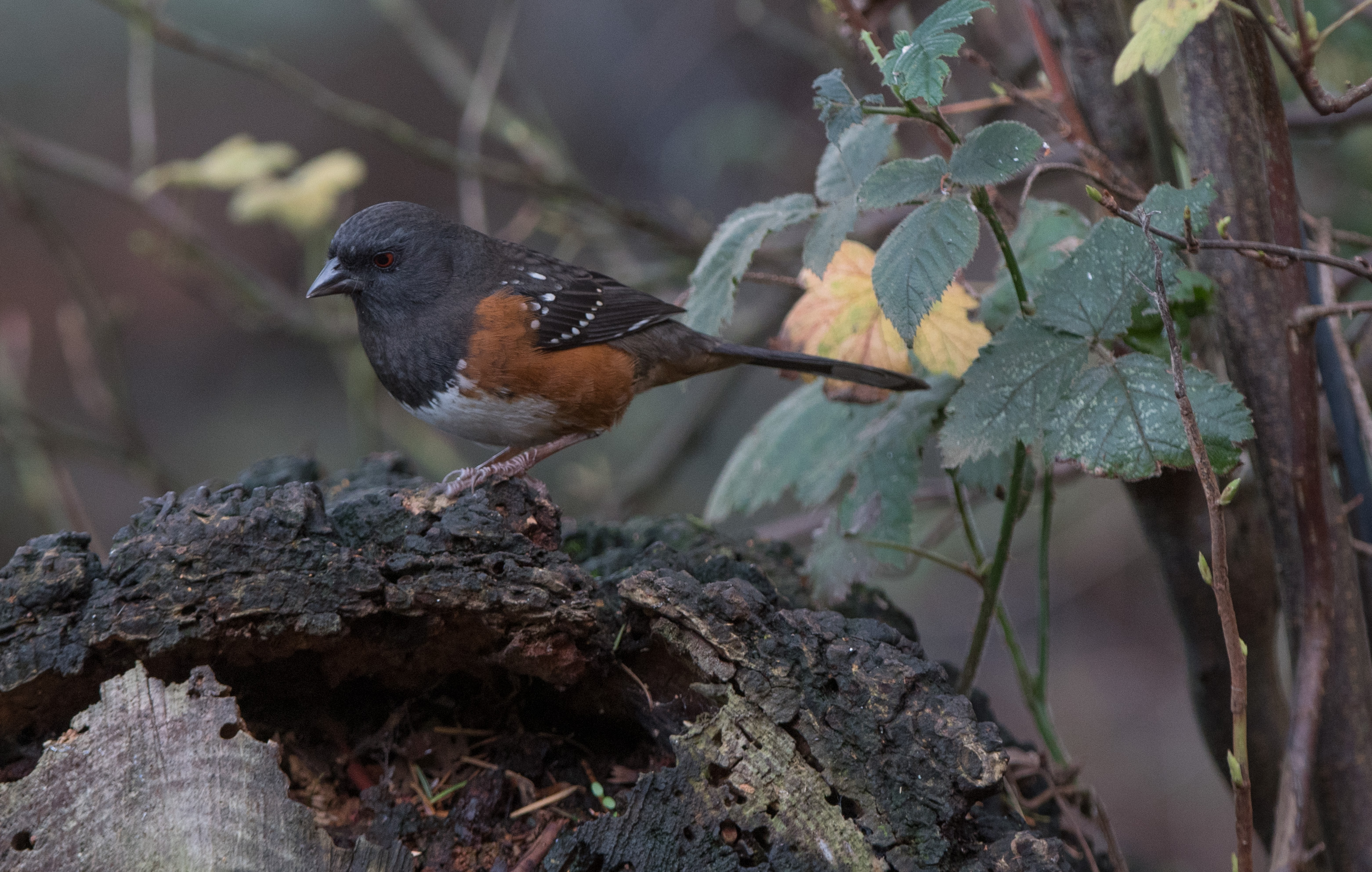
We had at least one pair of breeding Spotted towhees in the yard this spring and summer.  I’m always interested in the maturation of the young of this species.  They initially look nothing like the adults and even as they mature they look different from each other as they mature.  I think they give beginning birders one of their greatest challenges!  The bird pictured below is apparently a mature male.

Towhee, Spotted 20160707-01