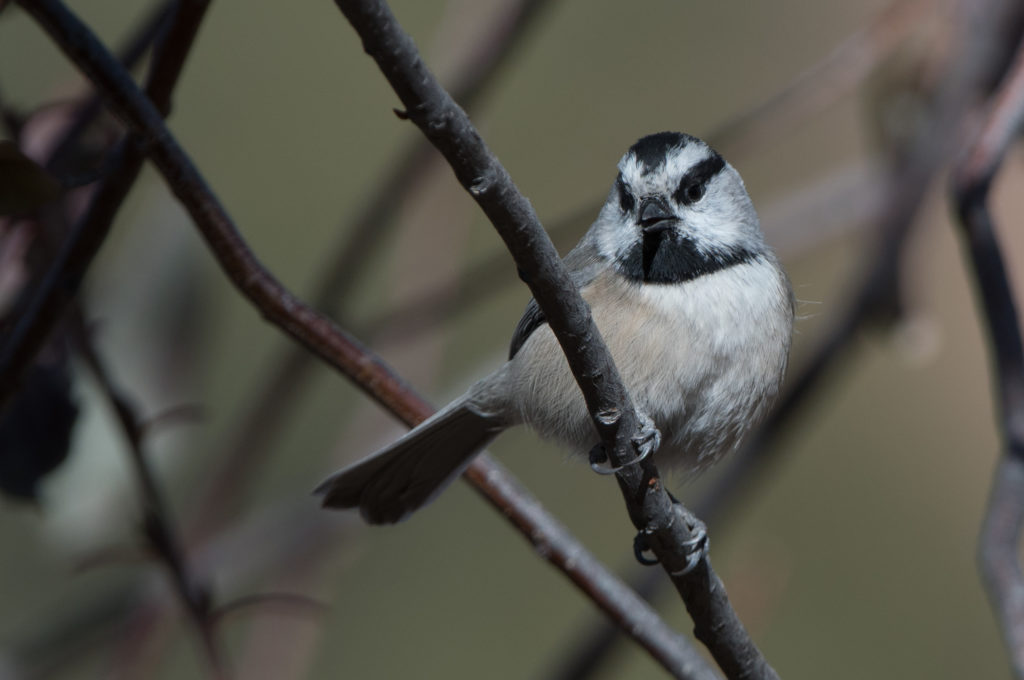
All of the following photos were taken in Madera Canyon, outside of Green Valley, Arizona.
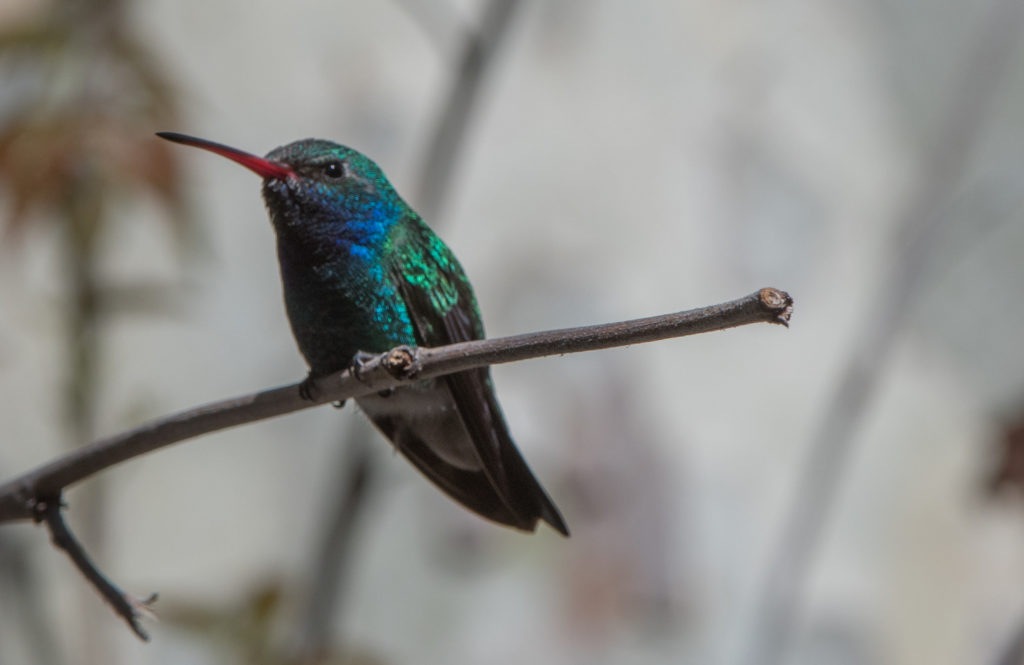
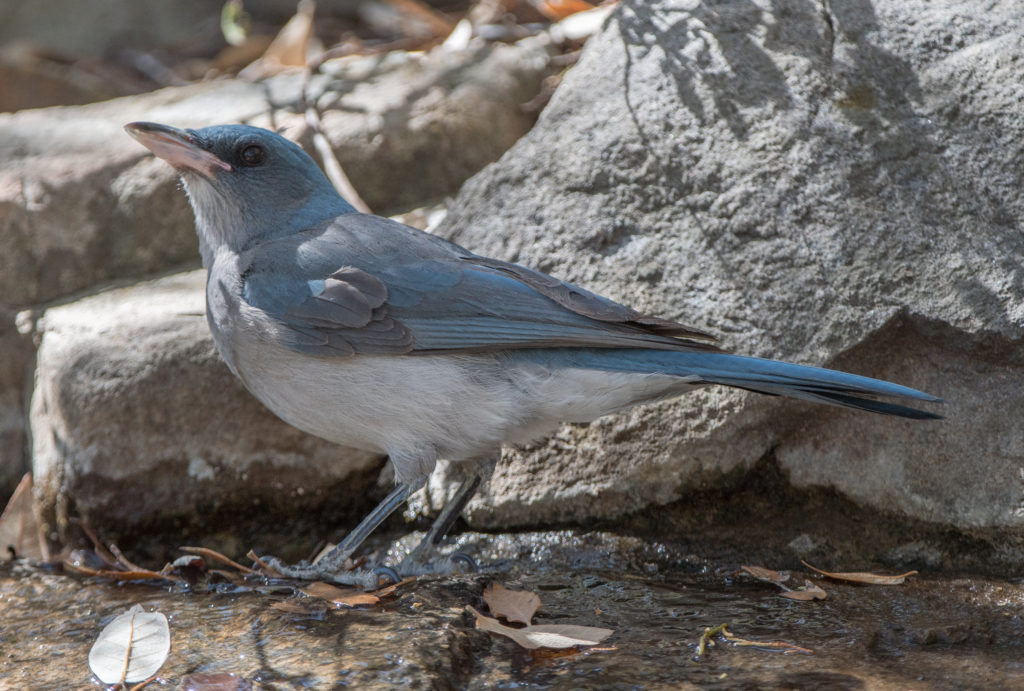
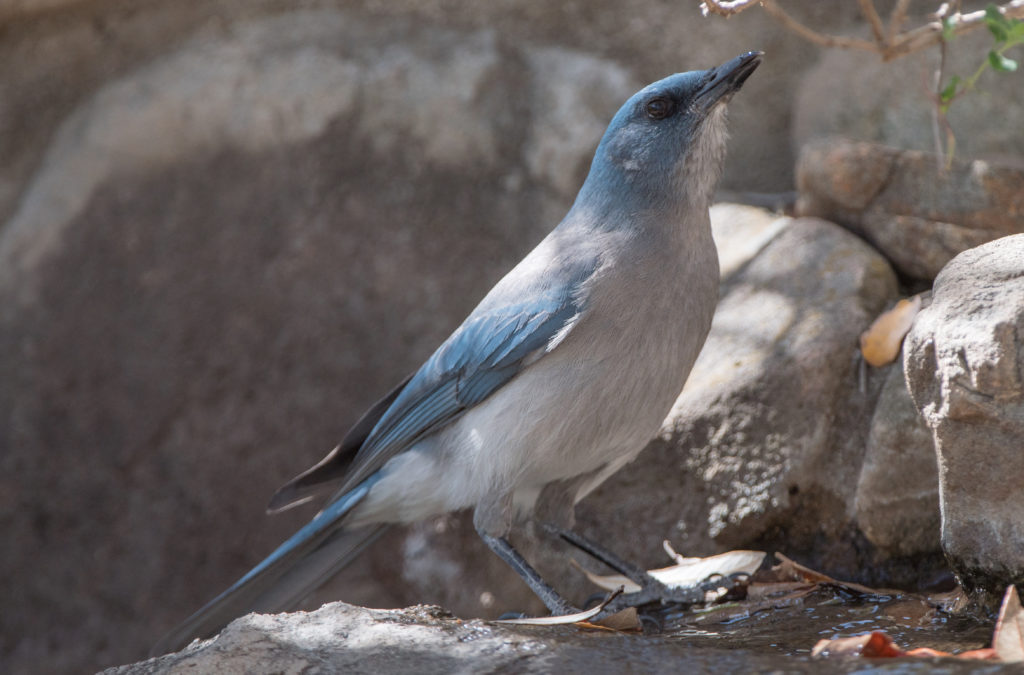
Male Broad-billed Hummingbird Mexican Jay Mexican Jay
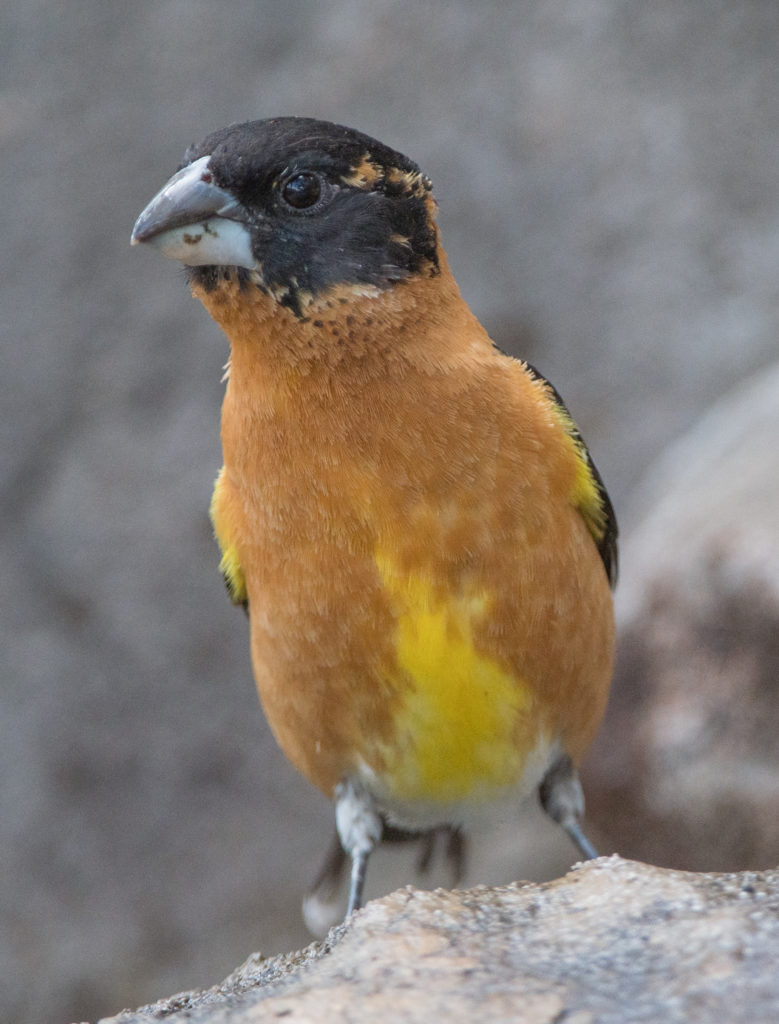
This is a male Black-headed grosbeak, a visitor to feeders at the B&B and the water seepage I mentioned in a previous post. These birds will be migrating to the Anacortes area in the spring and are frequent visitors to our feeders in Anacortes, WA, during their breeding season.
Male Black-Headed Grosbeak
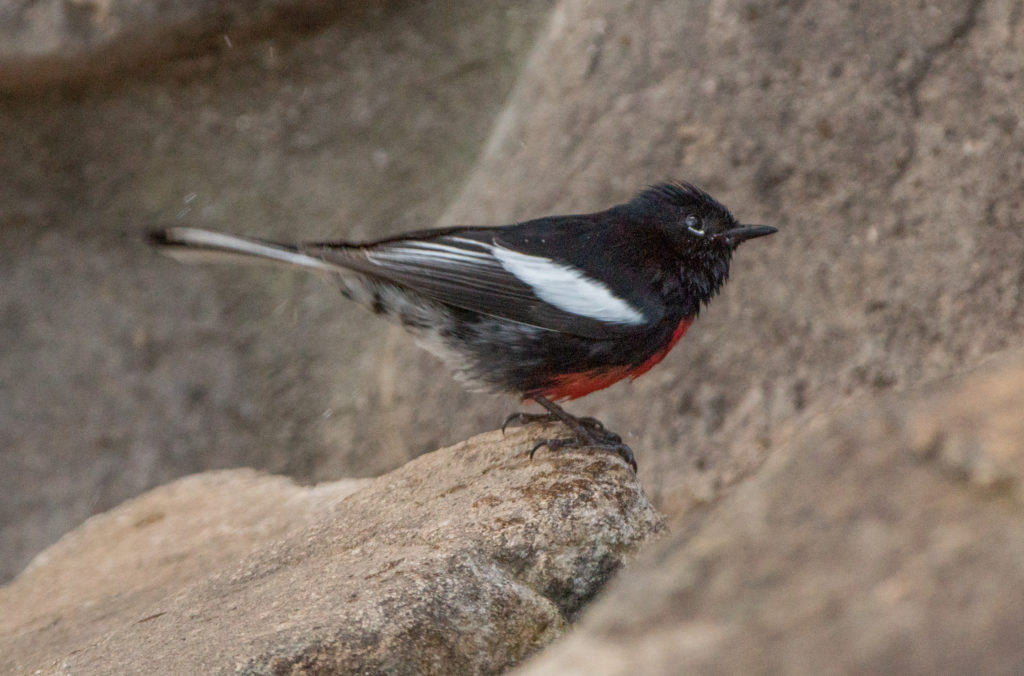
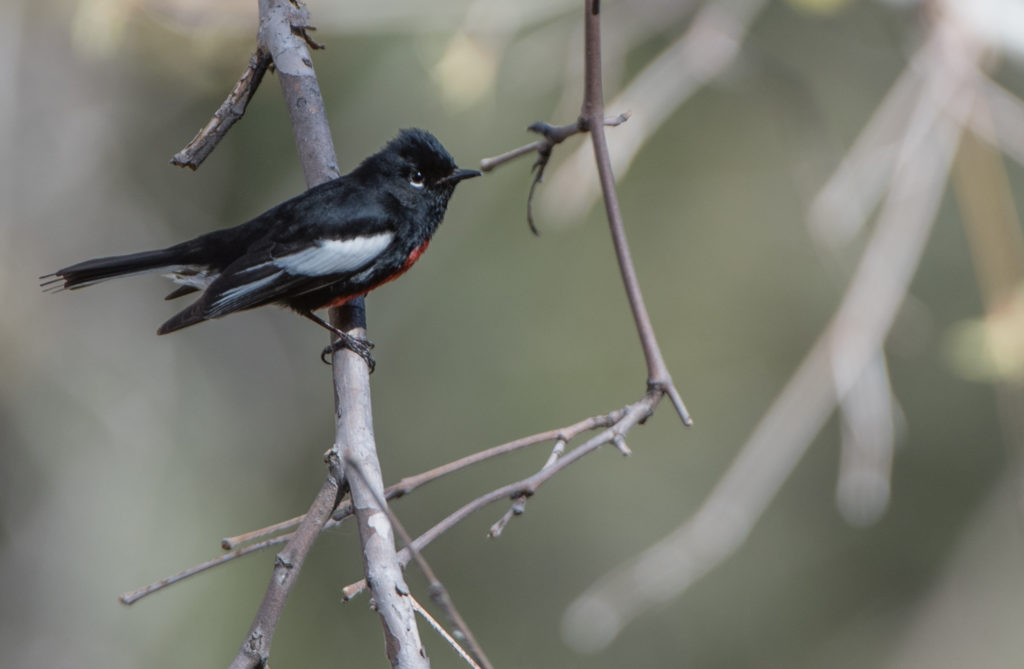
Another male Painted redstart attracted to the water seepage.
Male Painted Redstart
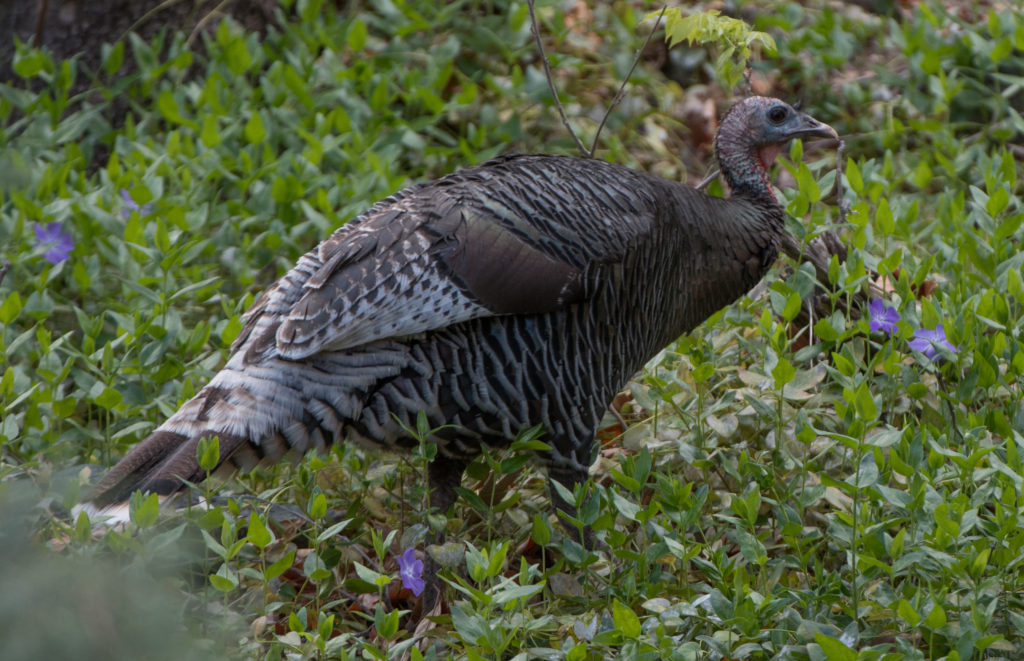
This is a female Wild turkey which was part of a band that crossed the creek just above the B&B. There is apparently a permanent presence of these birds in the area and especially at the motel where bird seed is distributed. These birds are a constant presence below the feeders at the main lodge in the canyon. In this case, I’m not sure the label “Wild turkey” is applicable… “Free-range turkey” might be more accurate!
Wild Turkey
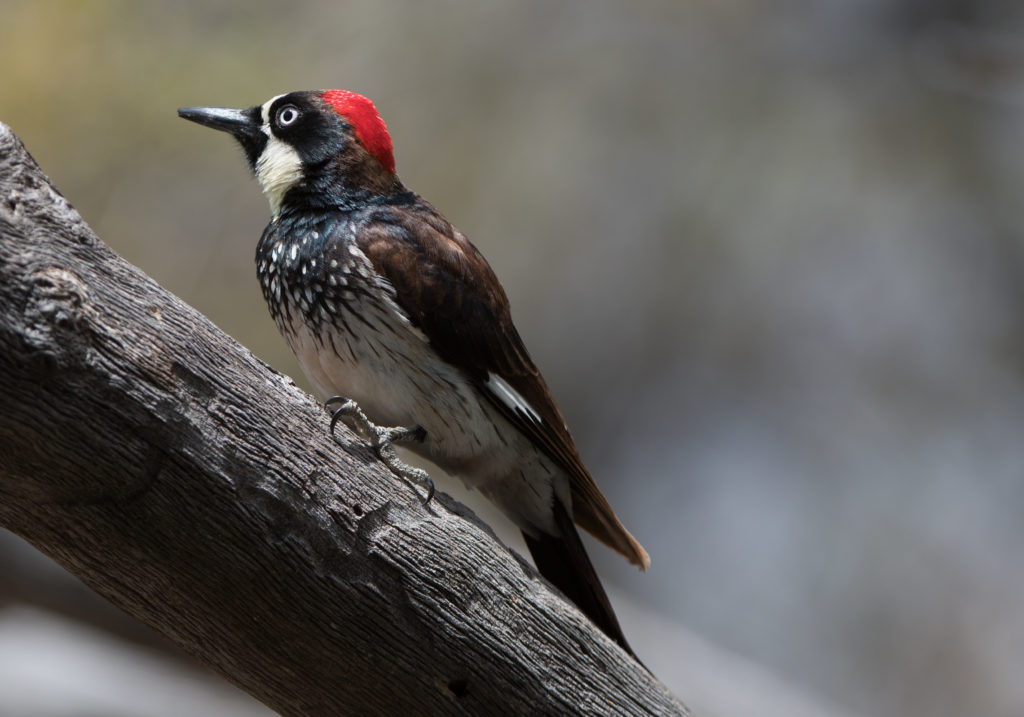
Another female Acorn woodpecker…
Female Acorn Woodpecker
I’ll have at least one more post of birds photographed in Arizona.
Muddling through our April trip to the Green Valley (Madera Canyon) area of Arizona…
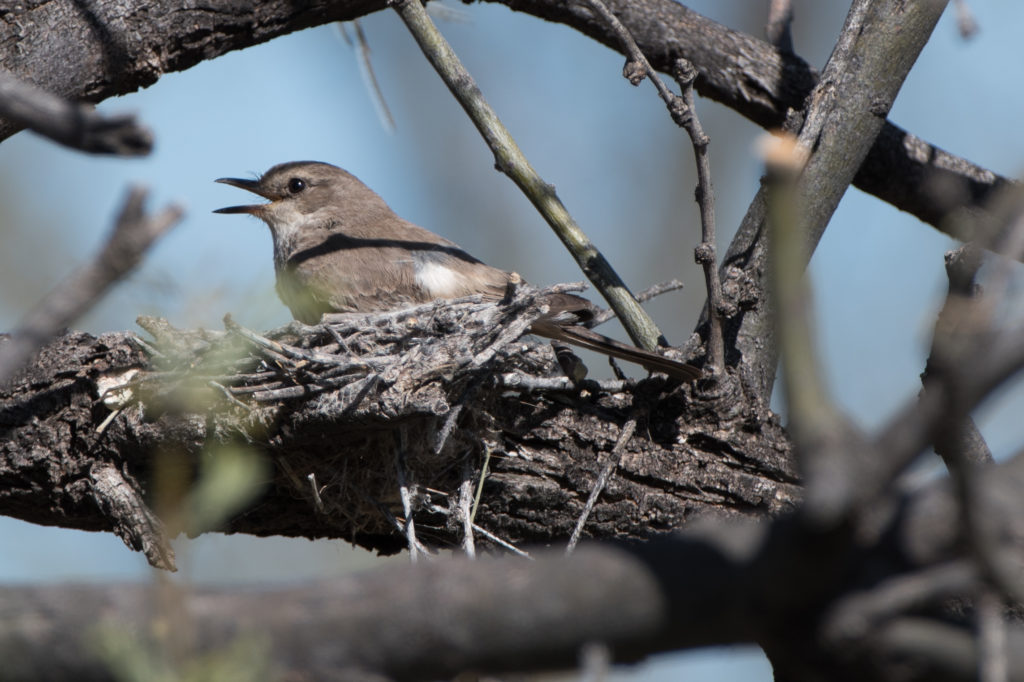
One of our best local birding areas in the desert was apparently on private property with a decrepit gate that was open. There were no signs prohibiting entry so we drove into a small dusty turnaround and began looking for birds. We almost immediately spotted a male Vermillion flycatcher flying around the area. After awhile we realized that there was also a female… with a nest!
Female Vermillion Flycatcher on Nest
This male Vermillion flycatcher was apparently her mate, although we never saw it approach the nest. While we were in the area a ‘ranch patrol’ arrived and asked us how we gained access. We told them the gate had been open. They were very nice and left, asking us to shut the gate when we finished birding! What a nice encounter!
Male Vermillion Flycatcher
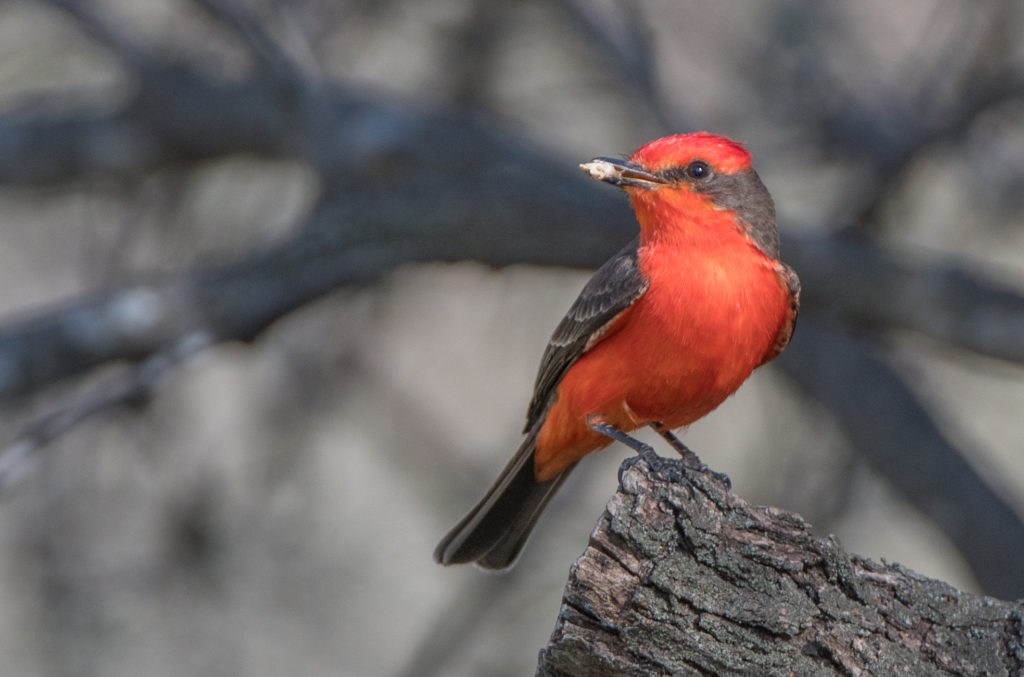
This was another male we saw in a different area…
Male Vermilion Flycatcher with Insect
Here is another photo of a male Painted redstart on the water seepage at the B&B where we stayed…
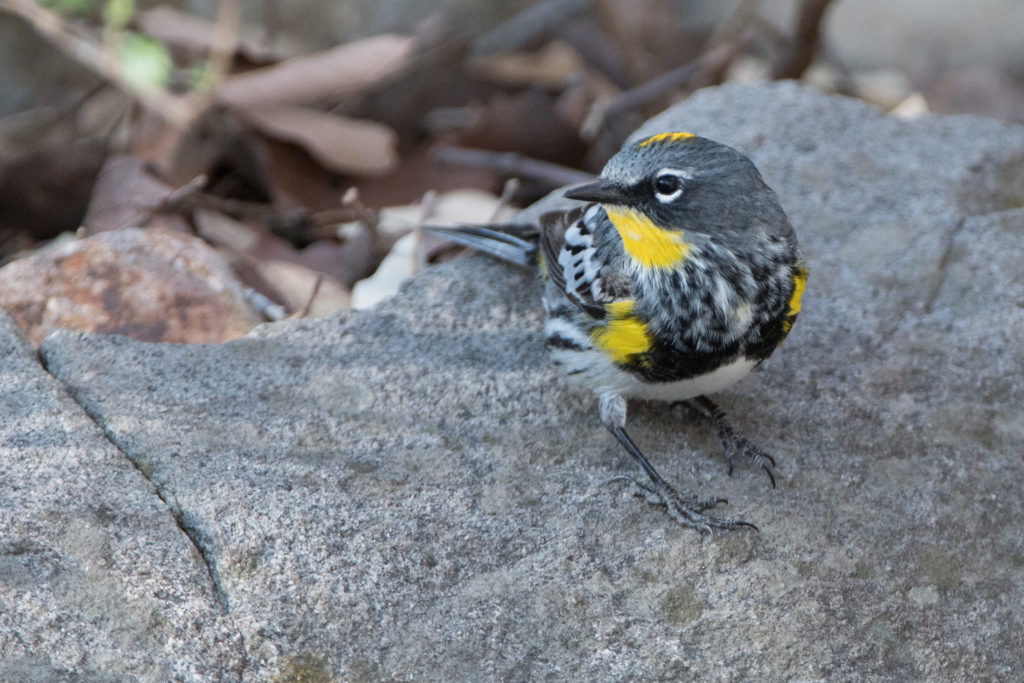
And finally, for this post, a photo of a male Yellow-rumped (Audubon’s) warbler at the same location.
This past April my wife and I and my sister and her husband traveled to Arizona for birding. I have just recently finished processing those photos. It’s always a chore processing photos from other areas as I am not as familiar with some of the birds, so I must spend additional time examining my photos and doing additional research to attempt to accurately identify species with which I’m not intimately familiar. So you might find some hedging in a few of my identifications. I’m going to go through photos in chronological (date) order so there may be some instances of the same species being featured in more than one post.
For the first several days we stayed at a B&B up Madera Canyon, (located outside of Green Valley, a city name not at all congruous with the habitat/ecology of the area), a birding area that attracts birders from around the world. We had a very private setting on the side of a small creek and we divided our time between birding at the B&B and driving down into the desert, a drastically different habitat. These first two birds were photographed outside the canyon in a desert environment.
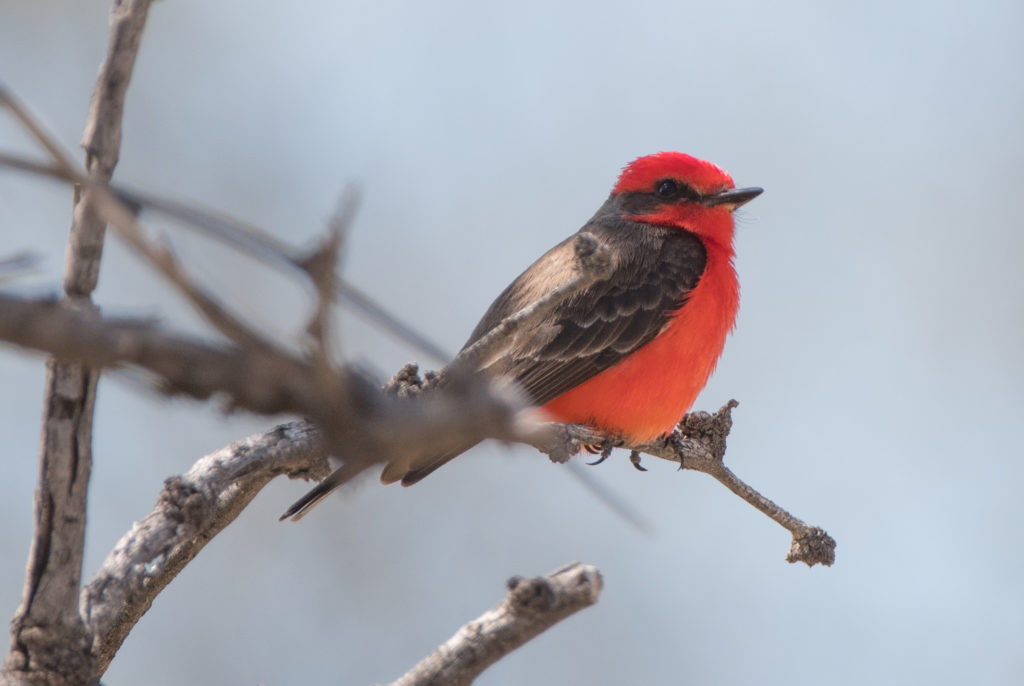
This first bird is one of the most eye-catching birds of the southwest United States… a male Vermillion flycatcher.
Male Vermillion Flycatcher
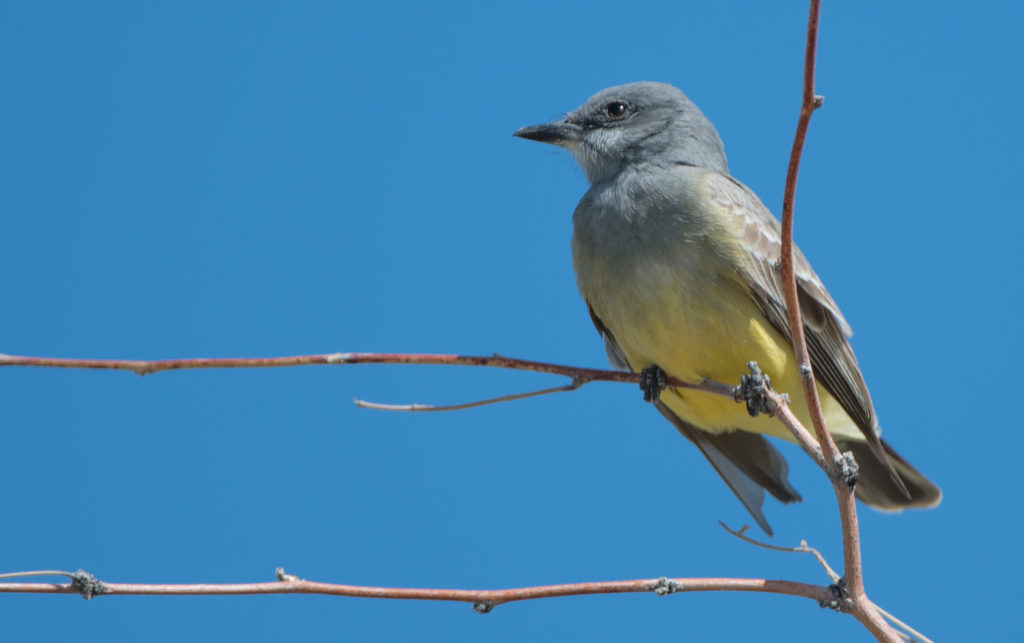
This is what I hope is a Cassin’s kingbird, which can be (in my opinion) rather easily confused with some of the other kingbirds. The bird is a flycatcher and exhibits typical flycatcher behavior, flying from a perch to nab insects in the air or on the ground.
Cassin’s Kingbird
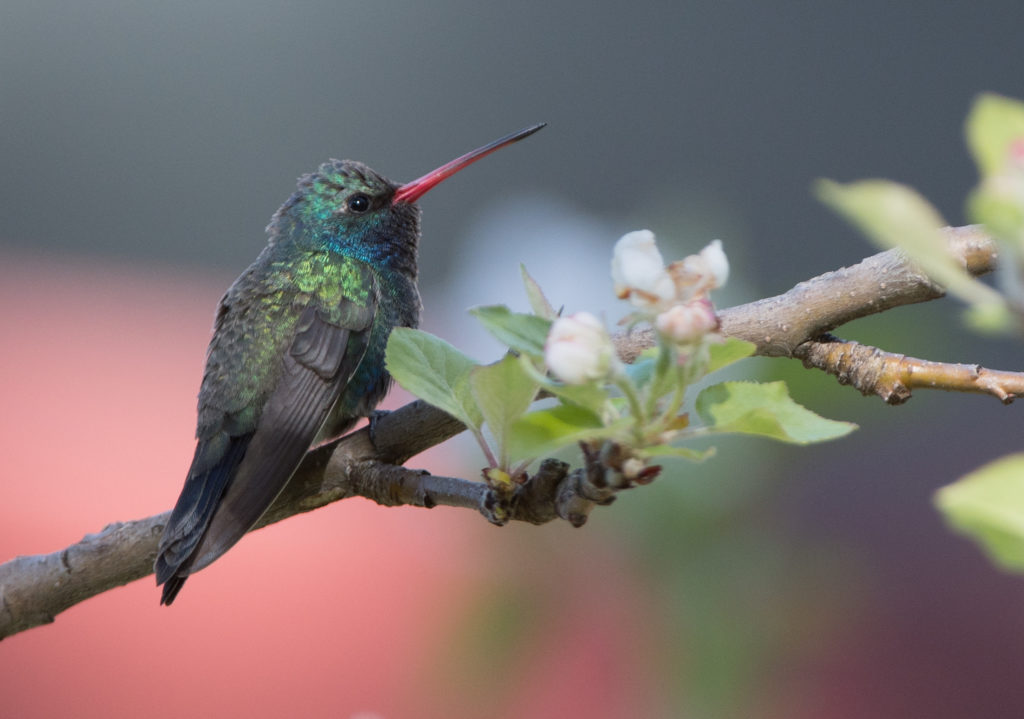
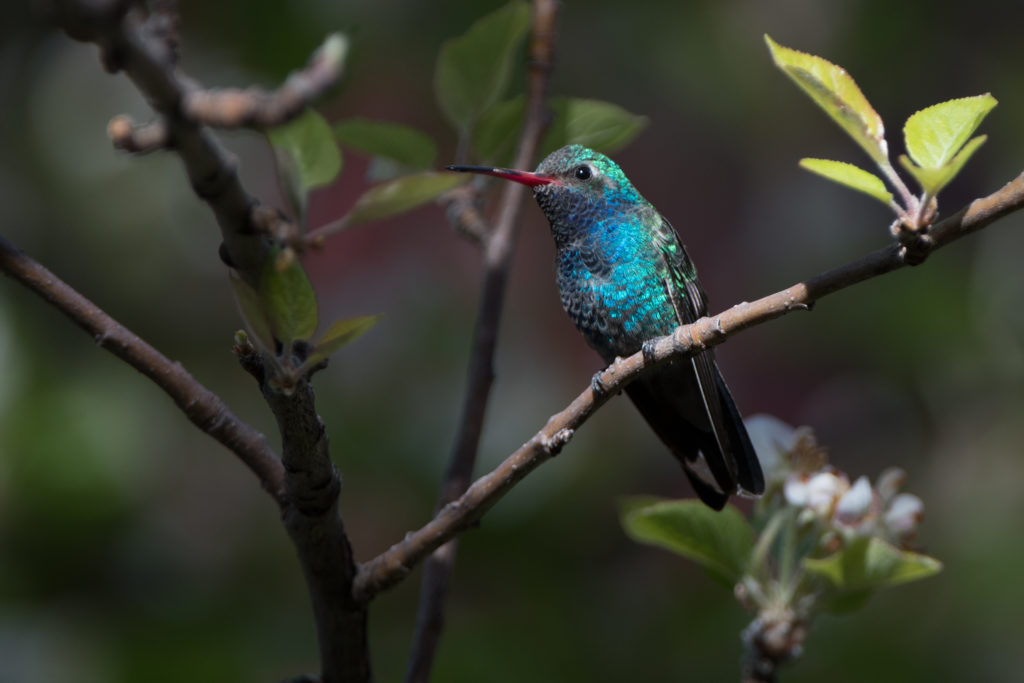
The B&B where we stayed had several blooming trees growing from the wet area near the creek and the trees and water attracted a large number of hummingbirds. I find the females almost impossible to identify and some of the males aren’t much easier. I believe that this is a male Broad-billed hummingbird.
Male Broad-Billed Hummingbird
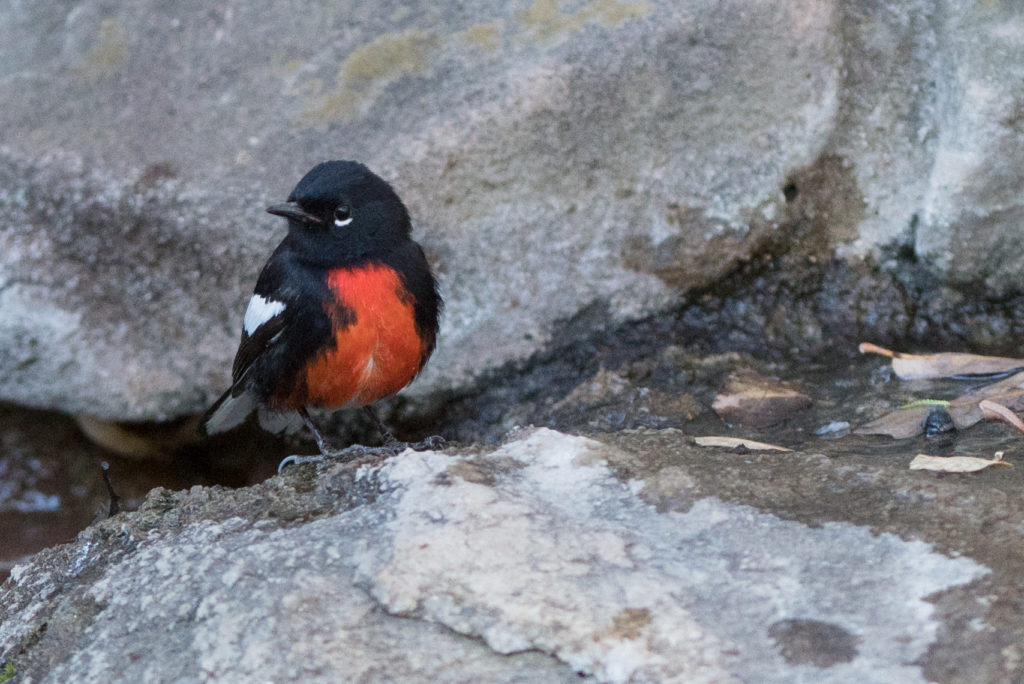
This is another interesting bird photographed in the Canyon area… a male Painted redstart. (Let the record show that a year or two ago I photographed an American redstart in our yard on Cap Sante!) There are two species of birds with the name ‘redstart’; both are warblers but they look nothing alike.
Male Painted Redstart
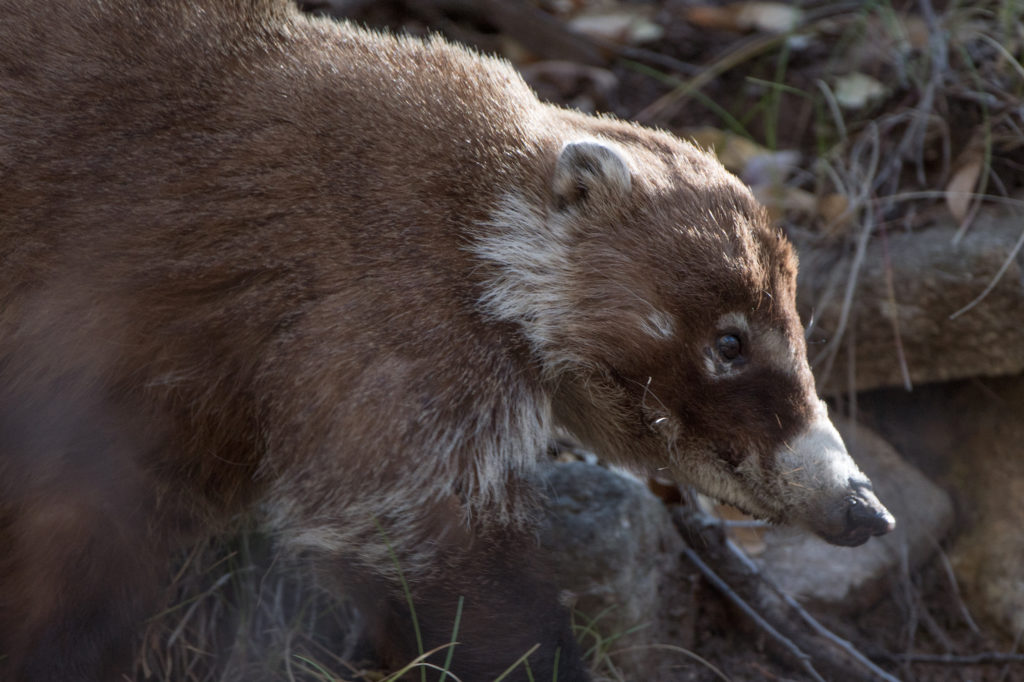
Moving on to a different day, but remaining in the canyon, this is a White-nosed coati (not a bird!) that wandered across the creek.
White-Nosed Coati
This male Magnificent hummingbird was a common visitor to the blooming trees in the canyon area.
Male Magnificent Hummingbird
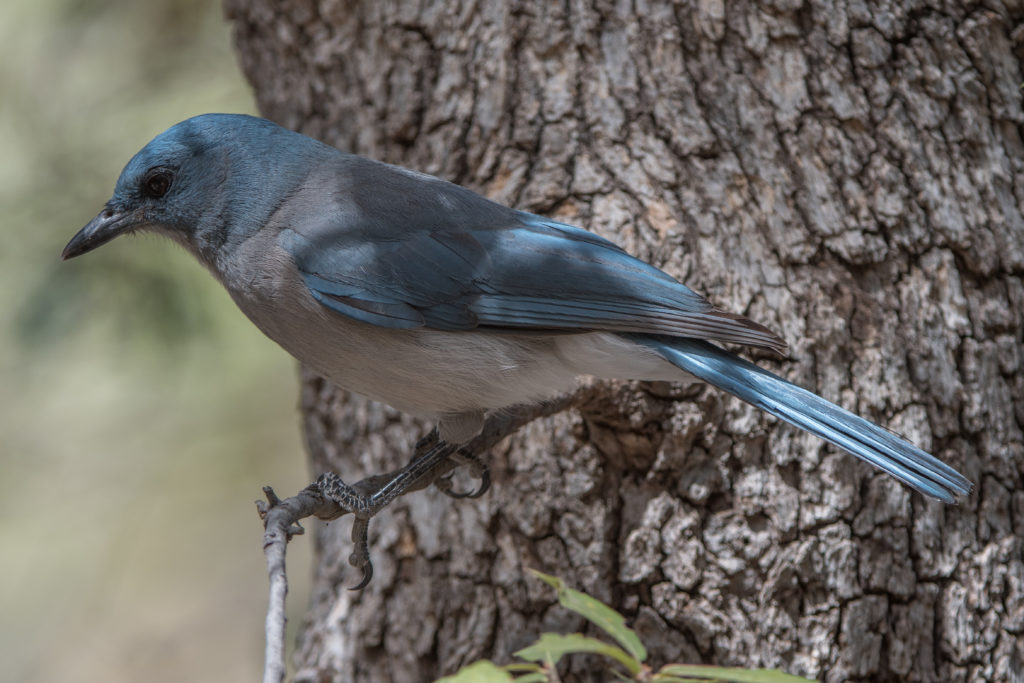
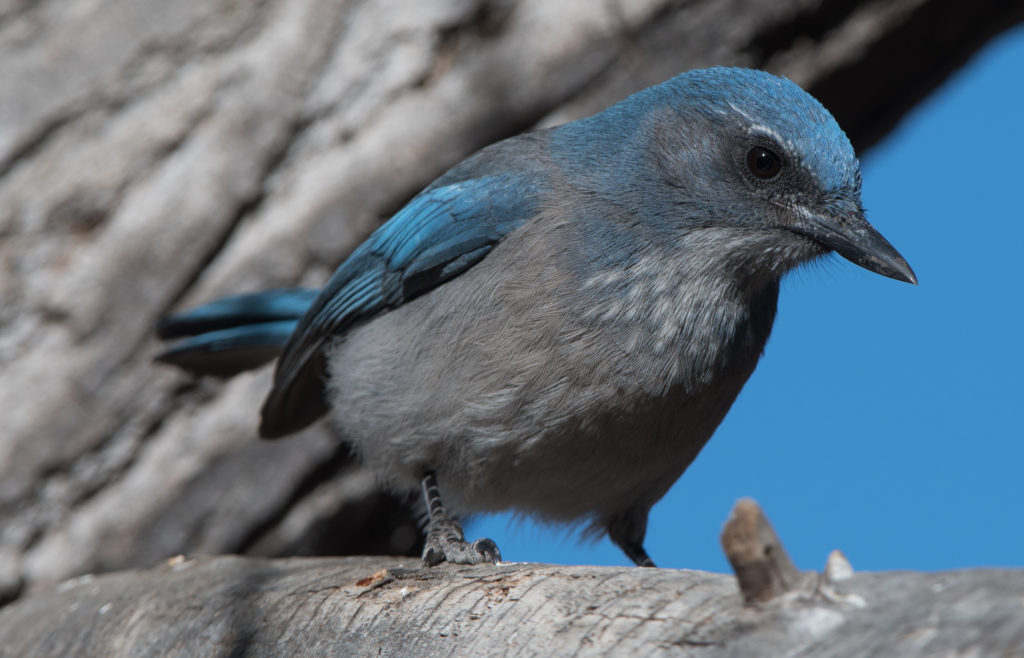
I hope that this is a Mexican jay… which was attracted to the seed feeders at the B&B. This bird can be confused with the more widespread Western Scrub Jay.
Mexican Jay
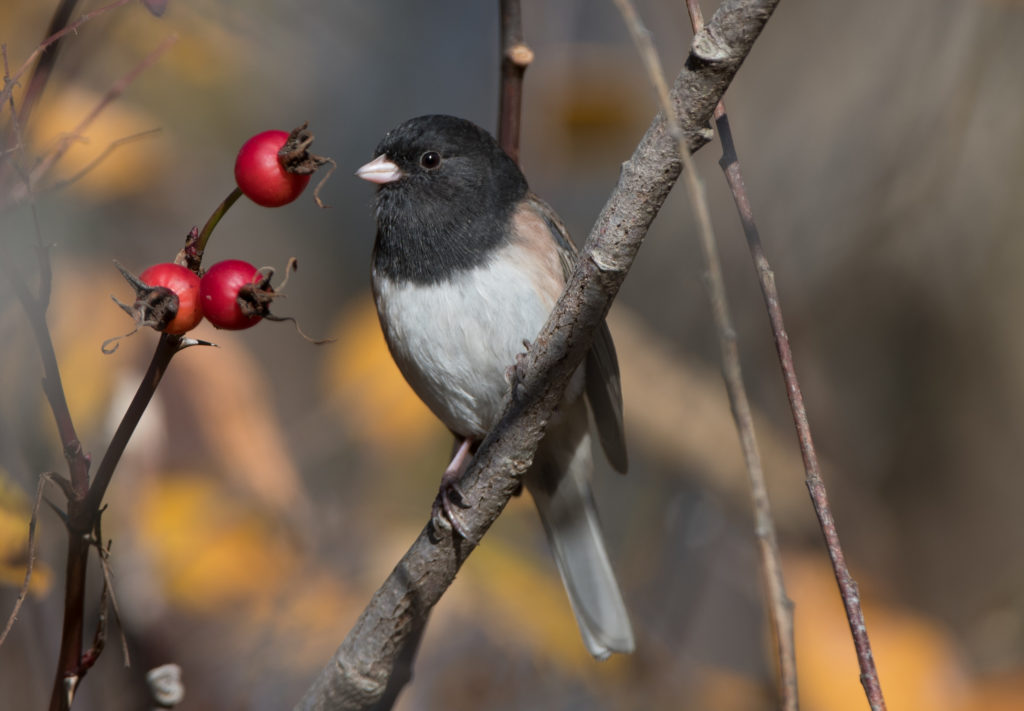
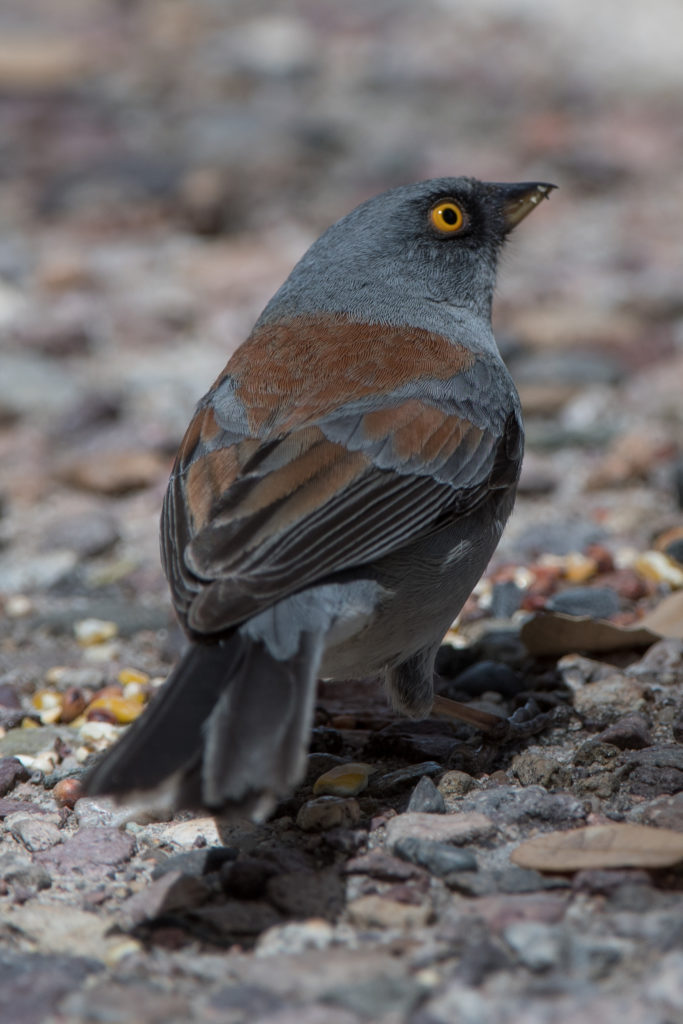
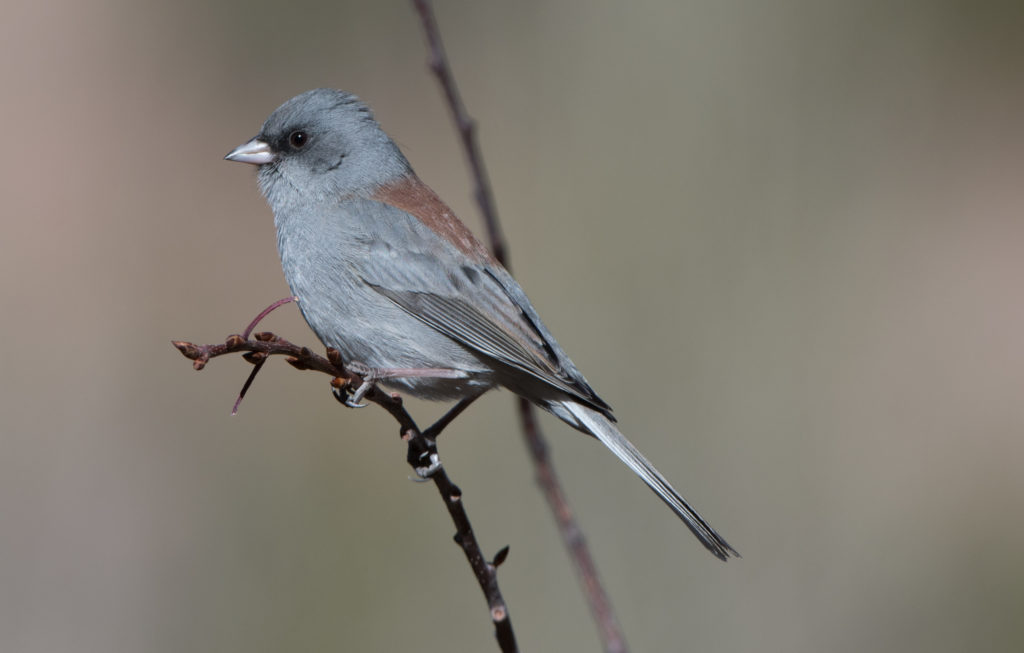
There are several different ‘races’ of Dark-eyed juncos. The Oregon race is the most prevalent in Western Washington. For the last 11-12 years we’ve had a male Slate-colored (Dark-eyed) junco in our yard in the winters, but it’s way overdue and probably won’t arrive this year. This is a Yellow-eyed junco, a separate species from the Dark-eyed junco. It’s a mystery to me how the bird could have acquired its name!
Yellow-Eyed Junco
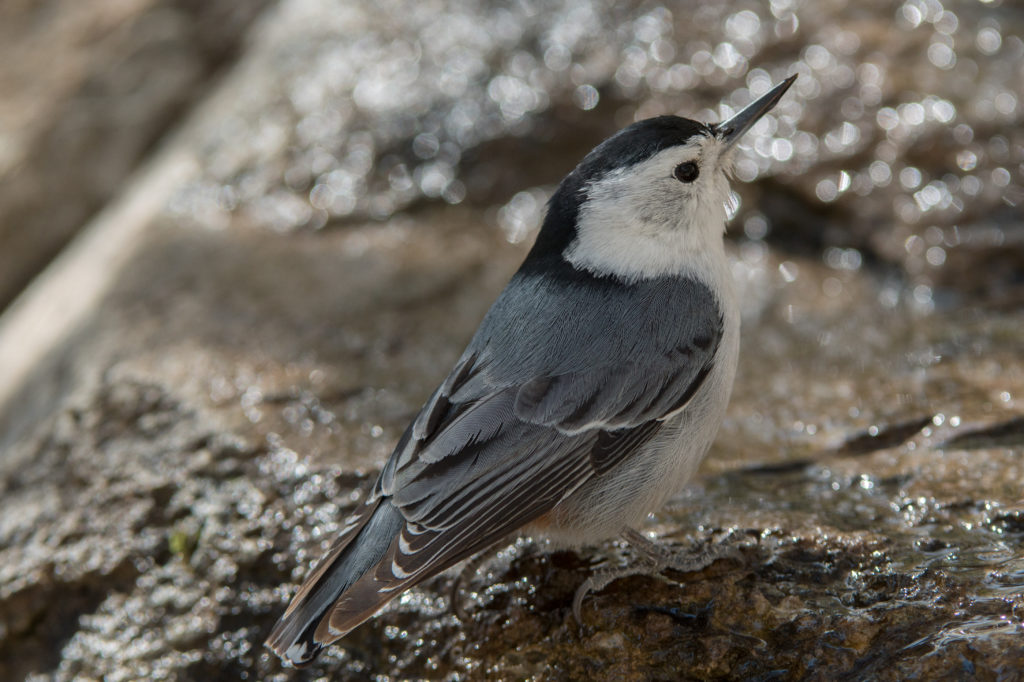
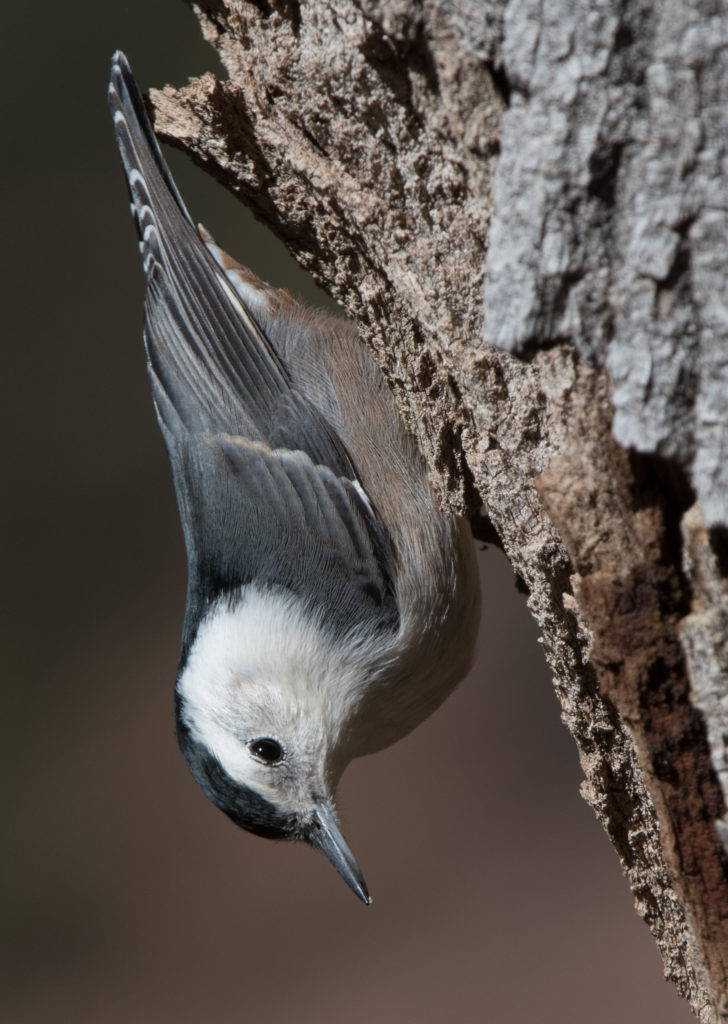
This White-Breasted nuthatch was attracted to a man-made seepage down a rock face at the B&B. This is a bird that we often see in eastern Washington, ie, east of the Cascades.
White-Breasted Nuthatch
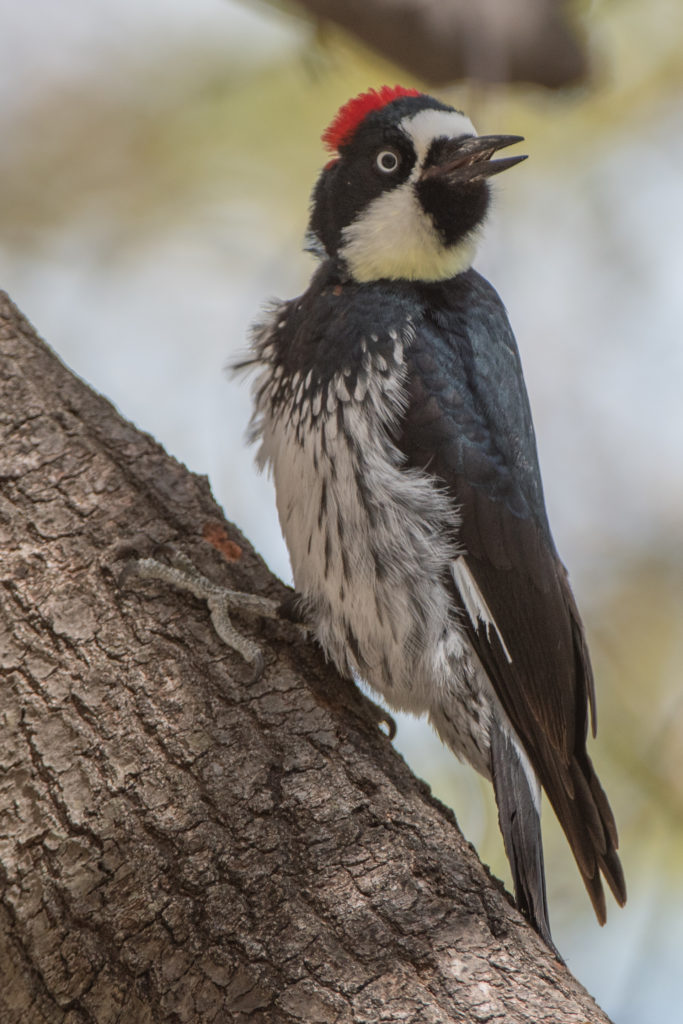
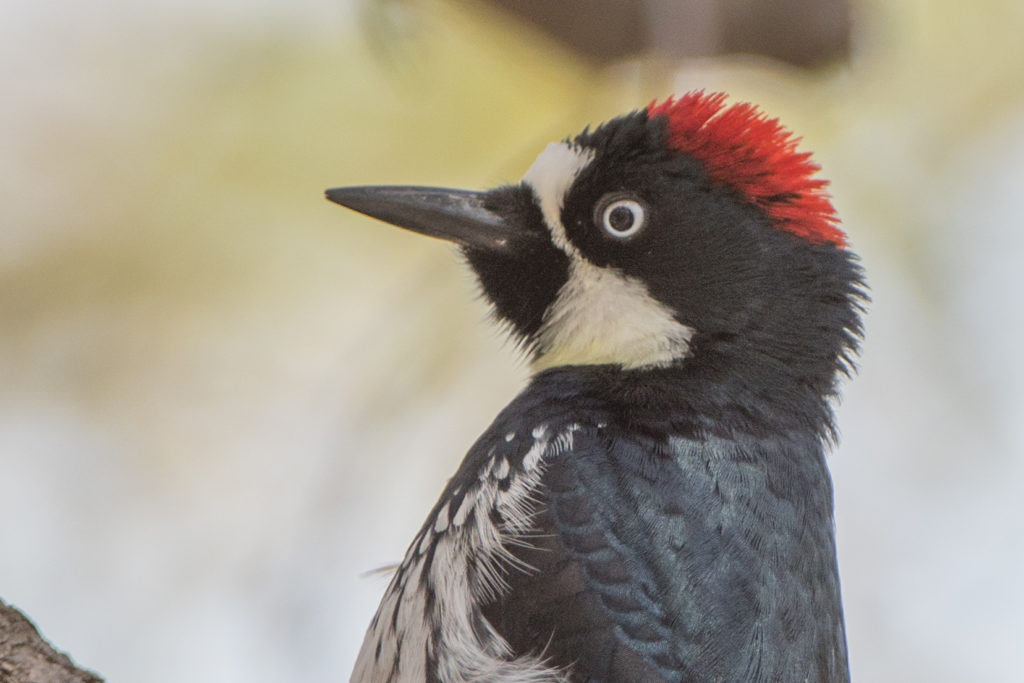
This has to be my favorite woodpecker… an Acorn woodpecker. The eye gives it such an adorable expression… one of surprise and a “Who, me?” expression. Both of these photos are of females. These woodpeckers are fond of gathering acorns and stashing them in any holes they can find. In past years they were dropping acorns in holes they had drilled in exterior cabin walls… with no hope of ever recovering their acorns!
Female Arizona Woodpecker F
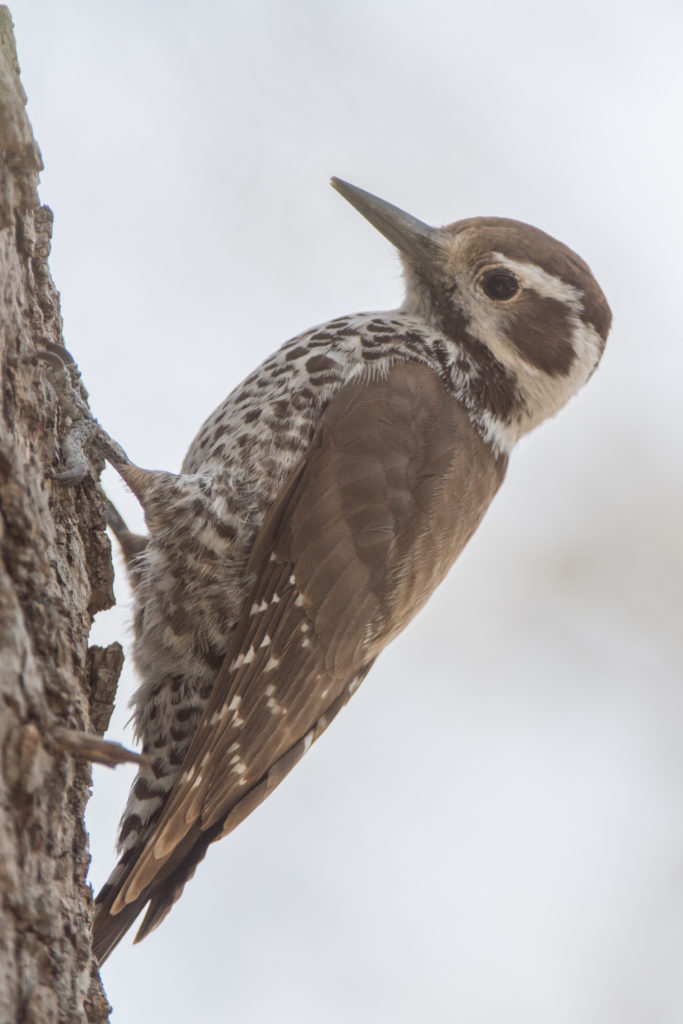
This next bird, also in the woodpecker family, is a female Arizona woodpecker. This used to be known as the Strickland’s woodpecker but that species was split and the Strickland’s woodpecker is now a portion of the population that resides in Mexico. (Such actions give me thought that in some number of years many of the labels on my photos will be nearly worthless!)
Female Arizona Woodpecker
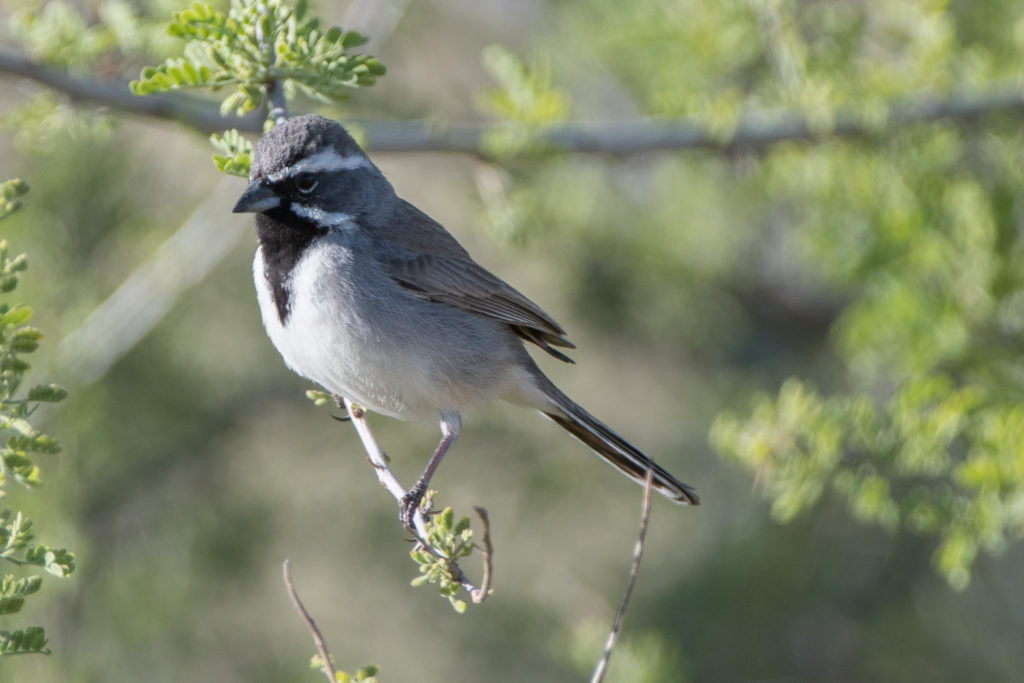
Finally (you’ll remember there is always a ‘finally!), a Black-throated sparrow, not to be confused (in name only) with the Black-chinned sparrow. This is a distinctive sparrow found in deserts/dry areas of the southwest, always a welcome addition to my portfolio.
Black-Throated Sparrow
The photos in this post represent the fist two days of Arizona birding photography, but there were several more days of birding and another location (Tucson). Barring something really unusual showing up at the house or in the neighborhood, I’ll continue with more Arizona birds in my next post.
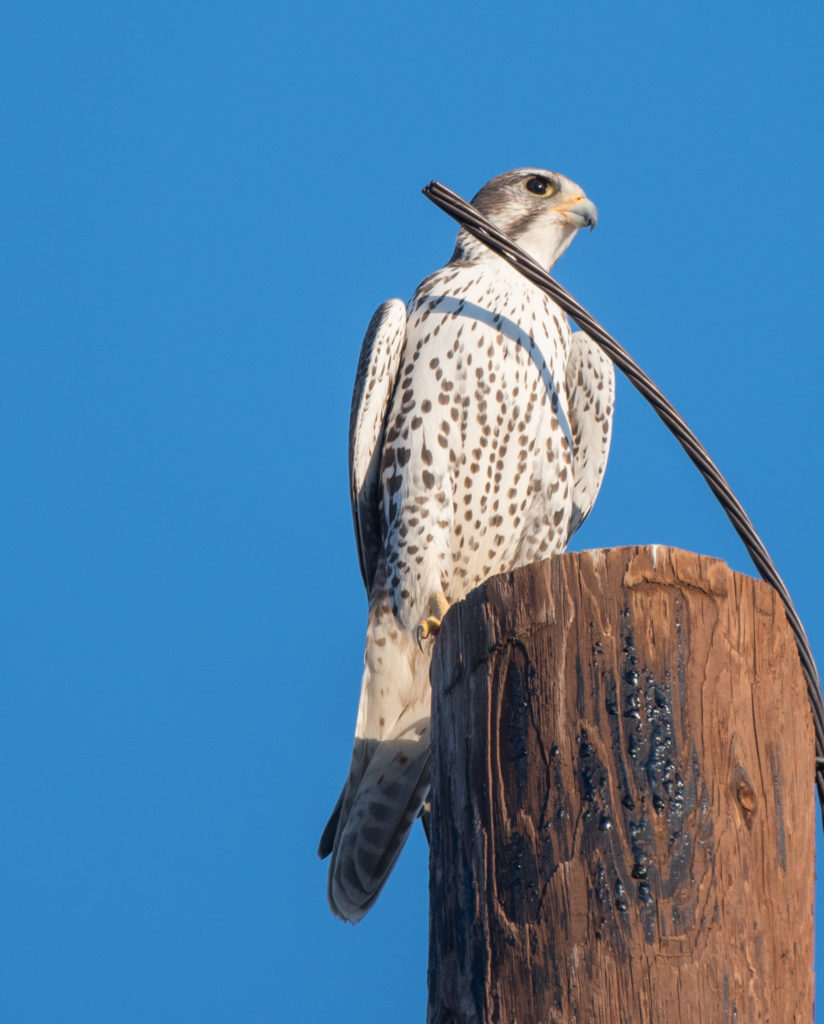
I omitted a significant image I meant to include from our Bosque del Apache visit. I gook the photo on our way out of the refuge on our last day there. I have it on good authority that this is a Prairie falcon (which I suspected at the time), only the second I’ve ever photographed and the third I’ve ever knowingly seen. Unfortunately the line crew was somewhat casual in how they terminated this cable and the falcon didn’t do itself any favors in choosing such an unflattering perch. I guess I shouldn’t complain because I did get the opportunity for a photo of what is a rare bird for me and readily identifiable from the photo.
Prairie Falcon
Moving on to the Randall Davey Audubon Center and Sanctuary in Santa Fe…
The sanctuary is at the upper end of Canyon Road and offers a chance to photograph birds up close. They could do a lot better regarding their layout, but they offer seed, suet and water which attracts a variety of local birds. The following birds are fairly common, or at least easy to see at the sanctuary.
And now the problem. For several years I have photographed jays at the sanctuary. This year as I was taking photos of the jay(s) I referred to my Sibley app and was surprised to discover the Woodhouse’s Scrub-jay, a species of which I was unaware. I inquired about the jays’ identity when at the sanctuary and was told that they were all Woodhouse’s, but I had no way of assessing the competency of the person I asked. When I got back home and started processing photos I’ve found I can’t make a definitive determination. The jay I photographed looks closer to a Mexican jay to me, but sources I accessed don’t indicate that the Mexican jay extends into Northern New Mexico. So, absent any definitive input, this bird’s species will remain undetermined.
Jay
And now a little local (Anacortes) news. Earlier in the week birding friends visited to show a guest our yard and while I stepped away one of the friends told me he saw a Yellow-rumped warbler. I told him I thought it unlikely since warblers had been unusually scarce this year and I hadn’t seen any warbler since the end of the summer. The next day I looked out the window and spied a male Audubon’s Yellow-rumped warbler in our watercourse. I spent considerable time out in the cold the next day hoping it would return and I could document its visit with a photo, but it hasn’t shown itself since.
However early Thanksgiving morning, while I was keeping an eye out for the warbler, a White-throated sparrow, a much rarer visitor than the warbler, showed up in the yard… and I managed to get photos!