Three Warbler Species Day!

On April 28, 2015, I spent time in the yard birding. During the prior several weeks I had been spending more time in the yard due to generally better weather and with more spring visitors. I began my monitoring on this day when I noticed a bird fluttering under the eaves of the house, a technique that some warblers and flycatchers use to glean bugs that spend the night (and subsequent day) on the sides of the house. I finally got some rather poor photos of the bird, and in processing them I identified the bird as a female Yellow-rumped warbler of the Audubon race. As those of you who monitor my blog know, I have already seen (and photographed) male Yellow-rumped warblers of the Audubon race in the yard this spring, but this was the first female I have observed.

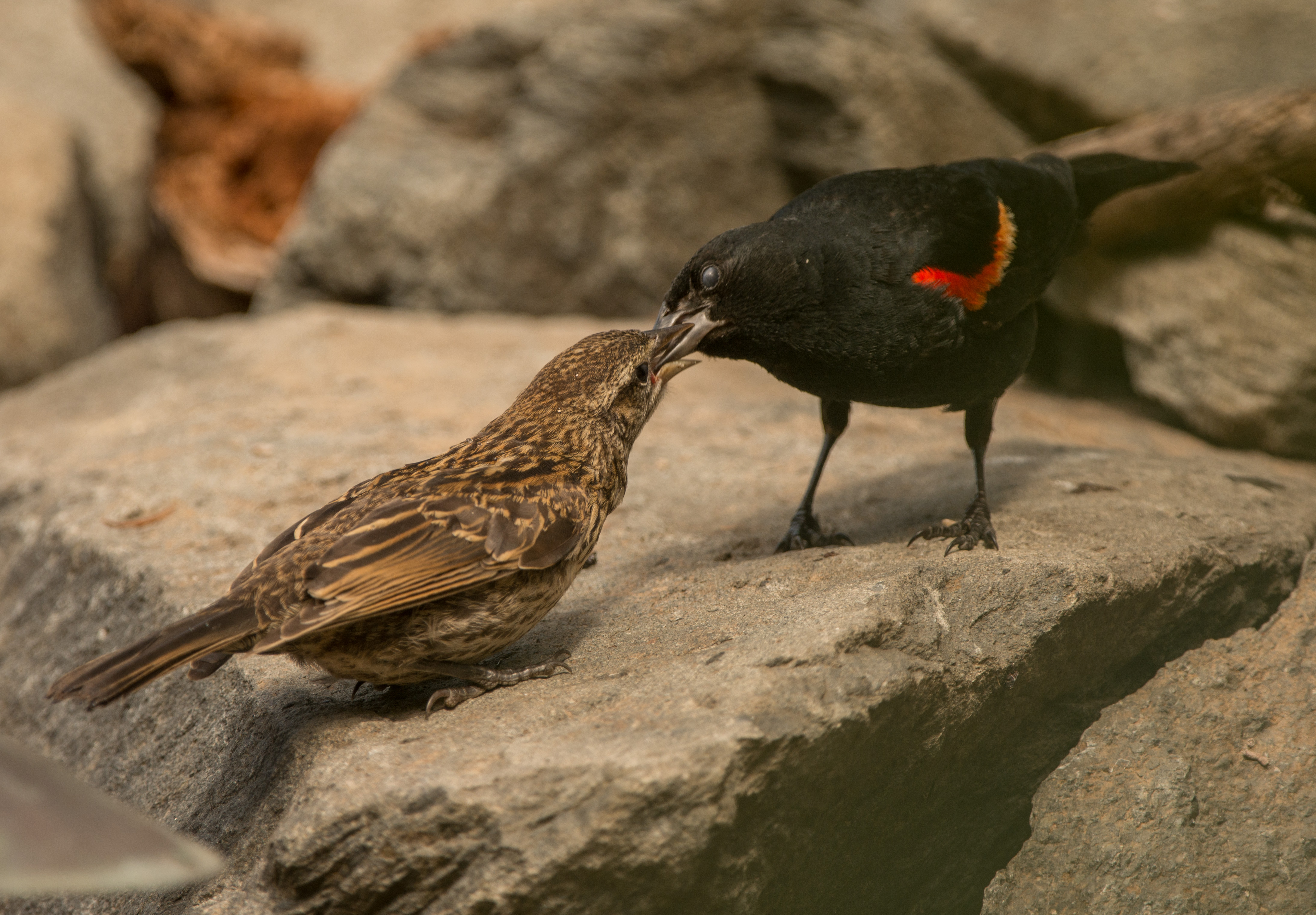
I next had a pair of Brown-headed cowbirds visit the yard… bad news for the other birds but good news for the photography. While the male characteristically hid in the foliage, the female flew to the watercourse and I obtained several photos of her. Last season we had a pair of Dark-eyed juncos (Oregon race) raise a cowbird, and a pair of Spotted towhees did likewise. I wasn’t happy that both of these species lost a breeding season and that it basically occurred in our yard.

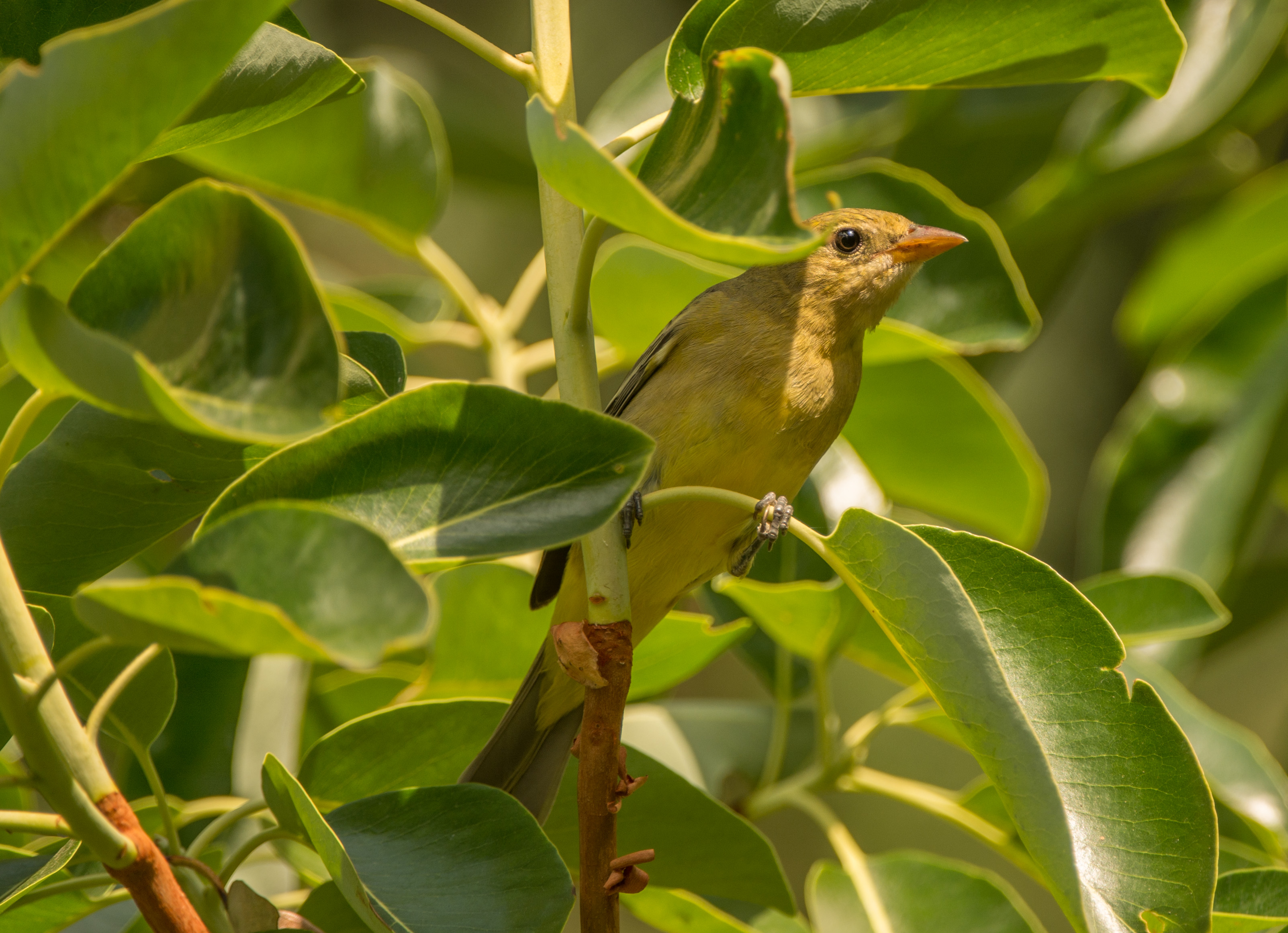
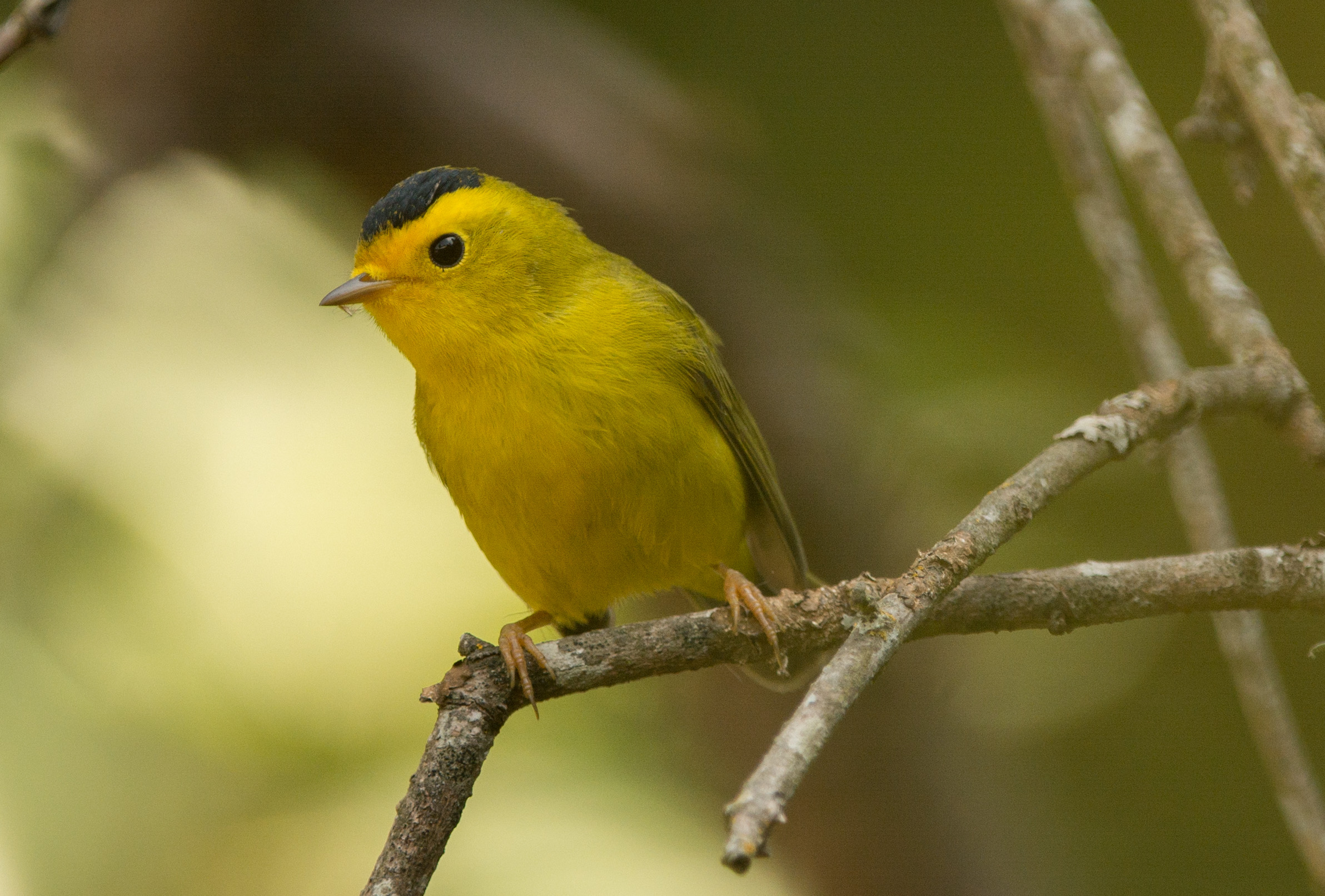
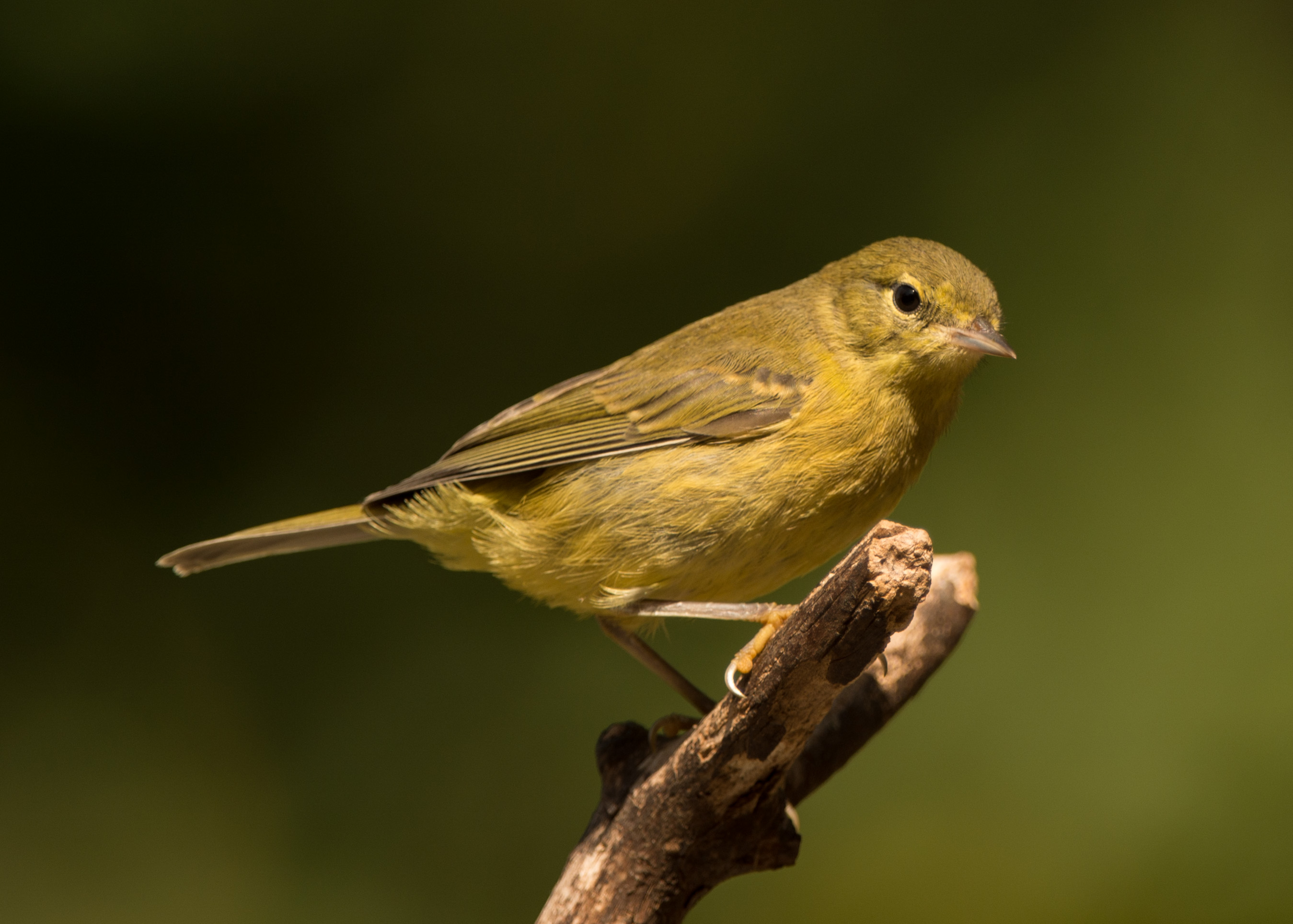
I needed to run a couple of errands in the afternoon and I returned to the house about 4pm. My first task was to check the watercourse from the view in the kitchen. Sitting on one of the staging sticks beside the watercourse was a(nother?) female Yellow-rumped warbler of the Audubon race. As I watched it flew out of my view but was almost immediately replaced by the first Wilson’s warbler of the season, a male. At this point I raced for my camera, stopping at the door only long enough to grab my observation chair and position it in the yard. By the time I was set up the Wilson’s warbler had decided to take a tour of the yard, and even though it stayed around the yard for several minutes, it never landed where I could take a photo. But as I got set up an Orange-crowned warbler made it’s way to the watercourse, the third visit for the species this day. Since I had photographed two prior visits by an Orange-crowned warbler earlier in the day I wasn’t that interested in more photos, but a warbler is a warbler and photos of them down’t grow on trees!

So by this point I had tallied six warbler visits and three warbler species for the day, all in my yard!

But there were a couple more notable sightings of the day, neither of which provided the opportunity for photographs. A group of Red crossbills consisting of at least two pairs of birds visited one of the static bird baths. After multiple daily visits last summer and fall their visits have grown very sporadic and I can’t count on seeing them even over a several day period.

And last, but not least, I saw movement in a small evergreen conifer bush located about six feet from me. I couldn’t make out a bird but knew that one had to be in the bush and I readied my camera just in case it popped out. It did pop out, but too close to me for a photo. It was a Bewick’s wren, a species we seldom see in the yard.

Postscript: On May 18th and 19th had other three-warbler species days.


Shorebirds and Waterfowl

Things were very in the yard for several weeks so I resorted to performing a few observations in the area around the Cap Sante Marina.  Sadly most of our shorebirds and waterfowl have either left or retreated to areas that I can’t access.  These will probably be the last of photos in that environment until sometime late next fall.

For several days a small group of Dunlin, which always seem to sleep with at least one eye open, were hanging around the marina.

Dunlin 20150414-02

They are easy to overlook, especially when napping.  You can see why in this photo which shows at least four…

Dunlin 20150414-05

I’ve noted that they typically nap during high tide and then feed as the tide is receding.  Photographing them while feeding can be challenging as their beaks are constantly being inserted into the mud very much like sewing machine needles, and to stop the motion you either have to use a very high shutter speed or, as is the case with these photos, wait patiently for a very brief break in their feeding.  Most of this group are in their breeding plumage.

Dunlin 20150414-11

The Dunlin are readily identifiable by the way they are assembled, as shown here…

Dunlin 20150414-12

: )

On a somewhat easier identification note, here’s a photo of a male Common goldeneye I took a couple of weeks ago.  I watched it preen for well over an hour.

DSC_1213

And here is its mate…

DSC_1178

I had been hoping for a photo of one of the Common loons, now in full breeding plumage, I’ve occasionally seen in the marina, but I just haven’t been able to get close enough to one for any good photographs.  And sadly, as I mentioned, most of the waterfowl and shorebirds that I photograph in the winter will be leaving the marina area soon, so it will be back to the yard birds.  Fortunately, after a brief lull, things have picked up again in the yard.

An Overview of Our Yard

Warbler, Orange-crowned 20150421-07

Since I take so many of my photos from the yard I thought I would provide a little overview of the area.

To the south of us (on past the area shown in the photo below) is undeveloped city parkland which stretches away from us to the top of Cap Sante.  We can assume that the forest serves as the main repository for most of the birds that enter the yard.

This is a view looking south over our front ‘yard’.  The rockery in the middle of the photo features our watercourse but the water flows in the other direction so you can’t see any water in this photo.  The usual spot from which I photograph birds is just behind the rhododendron on the right side of the photo… in front of what appears to be a ladder.  This allows me to have the sun behind my back for photography.  The other primary feature in the yard is an artificial brush pile located behind the hummingbird feeder on the left side of the photograph.

IMG_0940

Moving around to the south side of the watercourse, and looking NNE, you can see the watercourse with the small pool at the bottom.  The brush pile is behind the hummingbird feeder in the right upper corner of the photograph.  The brush pile is the main bird repository for the yard and it has a small static bird bath on this side of it.  From my usual photo position in the yard I can view five water features.

IMG_0942

This is a closeup of the cascade in the watercourse.  Note the “staging sticks” located around the watercourse.  They offer me an additional opportunity to photograph the birds in a natural setting.  To keep my photos from all looking alike, I have to change out the sticks every few weeks.  I keep an inventory of sticks for that purpose and have one or two subscribers who remind me if too many photos of the same stick(s) appear in my photos.  Some of the sticks have already been reoriented since these photos were taken.

IMG_0943

I have several different kinds of feeders hung in the yard to attract birds, but most of what I consider the really interesting birds can’t be attracted by food that we offer.  This generally includes warblers, vireos, wrens, tanagers and several other species.  However ALL birds are attracted by water… and the presence of other birds.

An exception is sunflower seeds in the shell which seem to be preferred by Black-headed grosbeaks which have yet to arrive in my yard for the season.  Any food that falls to the ground is almost immediately consumed by ground-feeding birds such as sparrows, juncos, pine siskins and towhees.  In the eight years we’ve lived in our house I’ve only seen one rat, and while it was in our yard for a couple of days it wasn’t my yard that attracted it to the area.

April 19, 2015 Yard Observations

I had a great day birding in the yard on Sunday, April 19, 2015!

Our first visitor, and a fairly rare one for the yard, was a Ruby-crowned kinglet. In the winter we usually see quite a few Golden-crowned kinglets but the Ruby-crowned kinglet is much more a rarity.  Unfortunately, even though it flew all around the yard I wasn’t outside to try to obtain a photo.

Next up was an Orange-crowned warbler which took an extended bath in one of the static bird baths.

DSC_1600

While the Orange-crowned warbler was bathing I heard another warbler call, and the Orange-crowned had hardly left the yard before I was visited by a male Yellow-rumped warbler (Audubon’s race), the first of five visits for the day. (lAt the time the visits occurred I had no way to tell whether I was seeing one bird multiple times or the same bird each time. But after processing my photos from at least two of the visits I’m fairly confident that I was seeing at least two different birds.  All of our observed Yellow-rumped warbler visits so far this year have been by male Audubon’s.

DSC_1650 DSC_1639

About the same time we experienced the first of two Bushtit visits, each by a single bird. Bushtits are very gregarious but have probably paired for the breeding season by now, so they aren’t hunting in the small groups which we observe at other times of the year.  As I recall we had a single Bushtit visit the yard several times last year and they seem to show little interest in any of the water features.  I did manage one photo…

DSC_1594

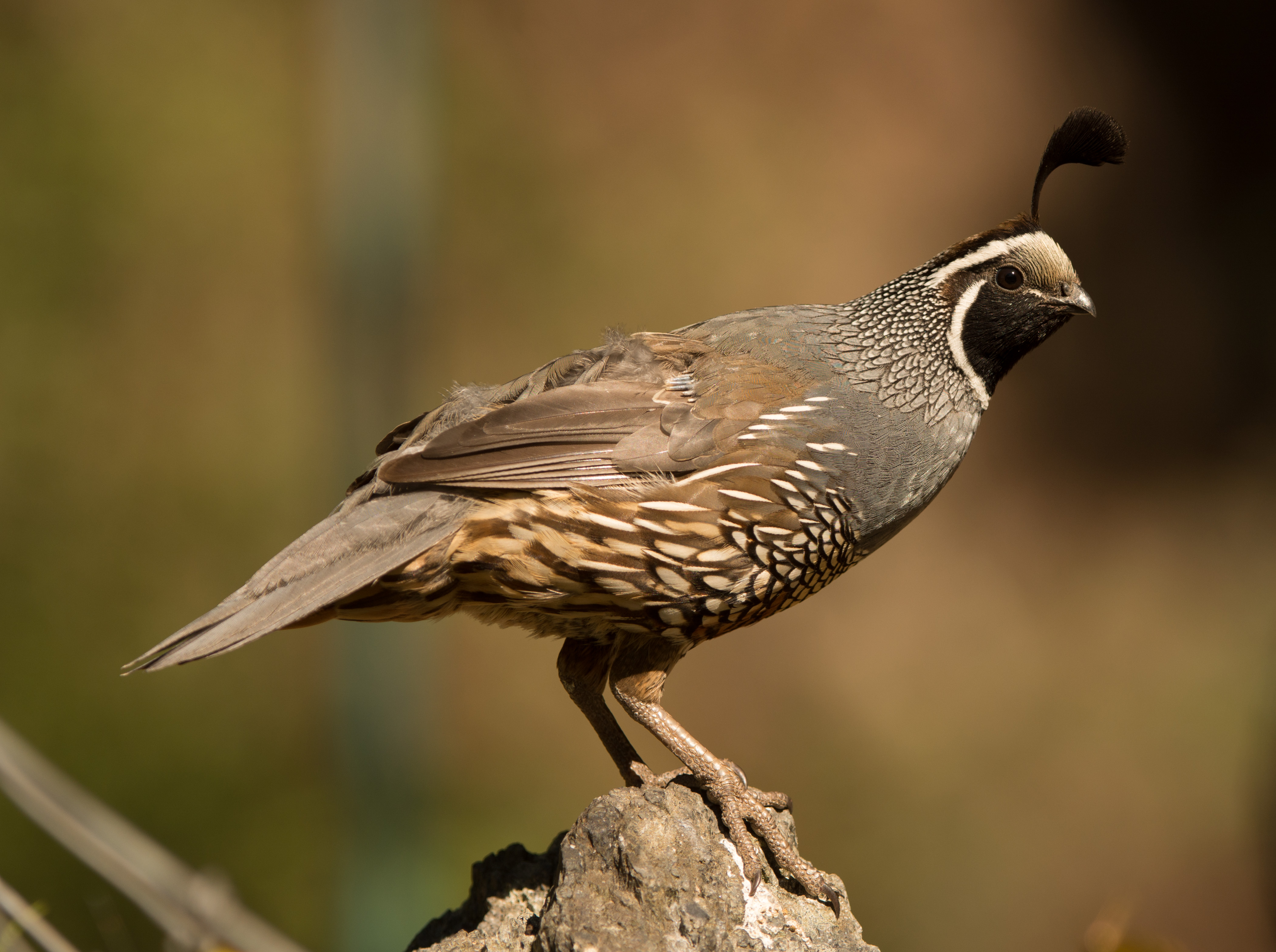
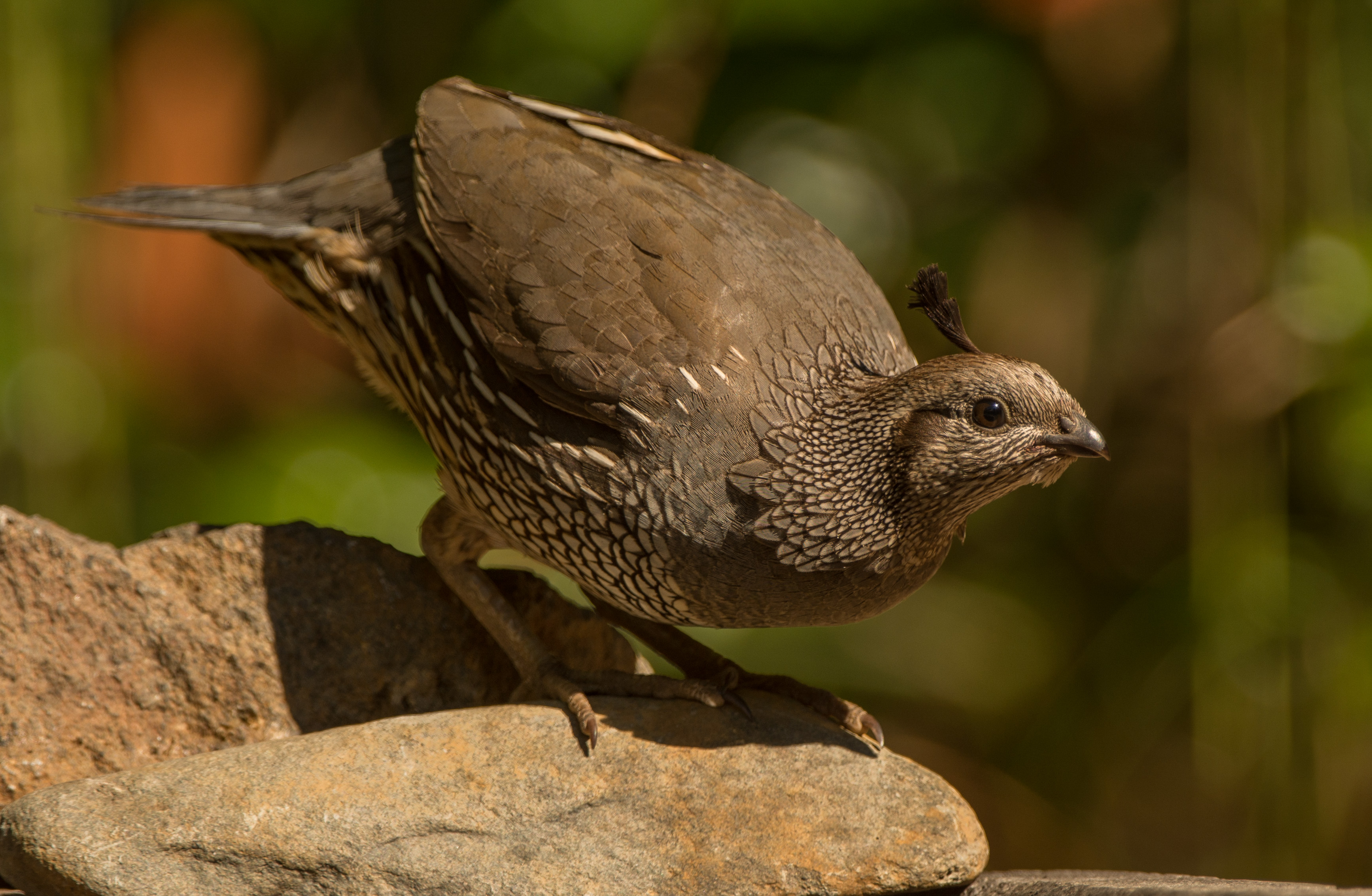
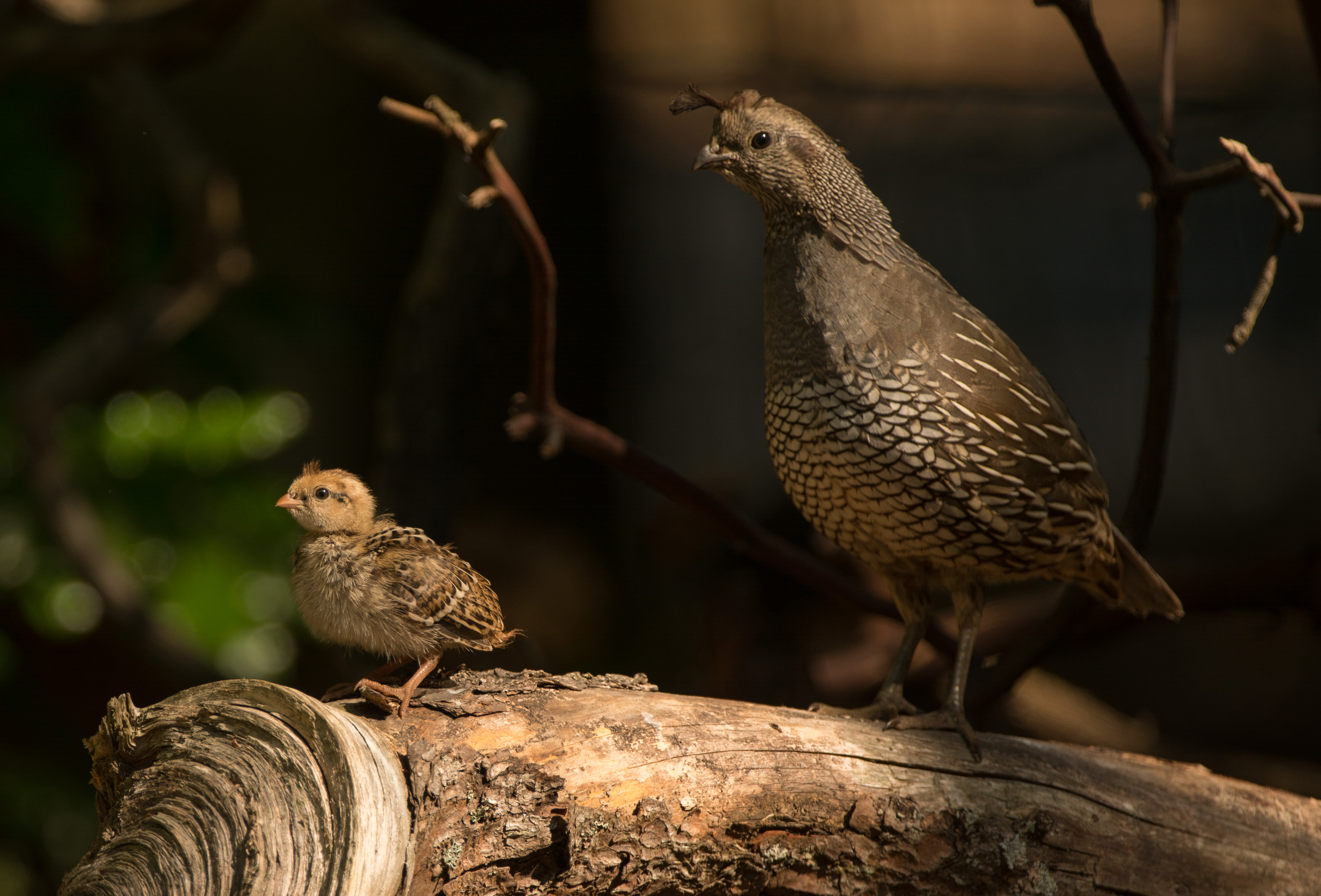
My next experience was in hearing a California quail call from across the street, where they used to be fond of hiding in a blackberry thicket. We heard no calls nor did we have any sightings all of last year and I assumed that they had been extirpated from the Cap Sante neighborhood. I didn’t see one come into the yard but since it apparently called from one of its favorite historical haunts, I would assume that it’s a remnant from one of the families that used to live in the area. I just hope that there is a breeding pair and that they can raise some number of young to adulthood, which hasn’t been an easy task historically.

My next sighting was of our first Turkey vulture of the season, and I was able to quickly snap a few photos of it as it flew over, despite a lack of warning.

DSC_1659

Finally, a flock of about 100 Snow geese flew north almost directly overhead and a few minutes later I heard, but could not see, a second group.

And while I was out I took a few more photos of some yard visitors…

DSC_1678 DSC_1623 DSC_1595 DSC_1580

I’m hoping that the activity signals the arrival of some of our spring migrants which will hopefully make the significant amount of time I have been spending in the yard, more productive!

Never Give Up!

Crows are one of my favorite subjects.  They are very intelligent and keen observers.  This time of year the crows are transitioning from their gregarious behavior to pairing for the breeding season, which involves defending a territory and gathering nesting materials.  Last week I thought I observed a pair of crows working on a nest near my yard while I was out with my camera.  A crow landed on a dead limb on one of our fir trees and I casually noted that it was attempting to gather nesting materials. Strangely enough, I have never witnessed a crow gathering sticks from the ground… they always want to break sticks out of trees for their nests.  As I watched I saw this crow break off and drop two sticks.  Undeterred, it began wrestling the same limb for yet another stick.  Fortunately I had the  presence of mind to bring my camera to bear on its activities.

These aren’t great photographs.  I could improve them but fortunately the shutter speed was high enough (1/500 of a second) to stop most of the motion.  The shots are underexposed but I like the silhouette effect.  Here’s what I observed and photographed…

In this first photo, the crow has its back to me and is wrestling with the higher level of twig, attempting to separate it from the rest of the limb.

crow with nesting material 20150409-01

In this next photo the crow has successfully broken the small limb from the larger one, but it has lost its balance, fallen below the limb but still has a firm grip on the twig.

crow with nesting material 20150409-02

In this next photo you can clearly see that the twig has separated, but it is caught on the main branch.  The crow, despite being upside down, is determined to come away with its prize!

crow with nesting material 20150409-03

The crow suddenly releases its grip on the main branch and is now hanging from the main branch by the twig that it has broken free.  At this point it’s having to use its wings for balance and support.

crow with nesting material 20150409-05

Finally it has successfully freed the twig and is on its way back to the nest!

crow with nesting material 20150409-06

It was a lot of antics for one twig, but keep in mind that I had already seen it drop twigs at least twice previously!