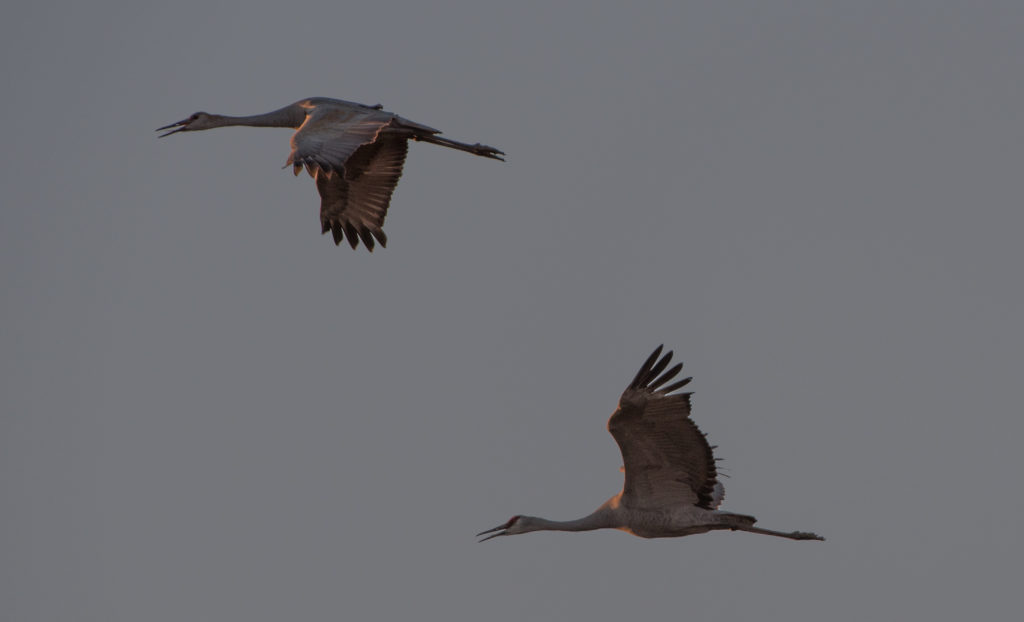
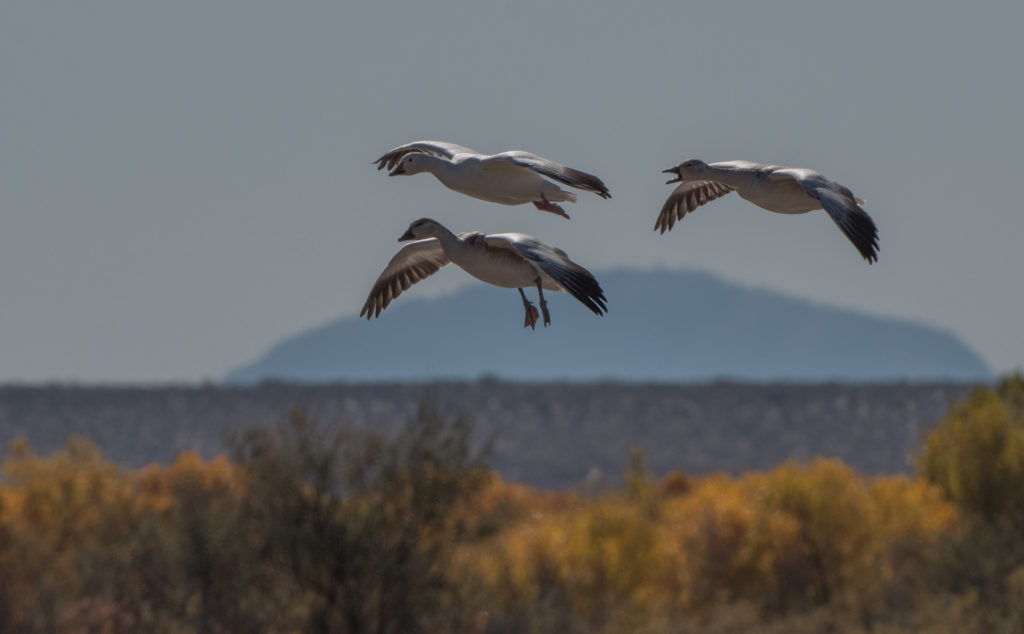
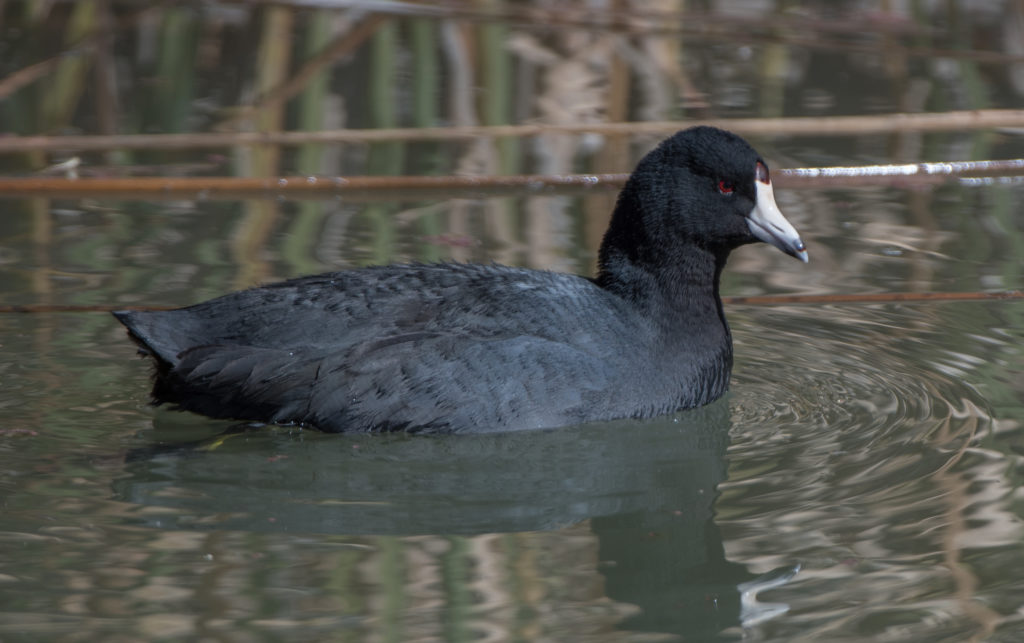
One of the big draws for the Bosque del Apache NWR is the large number of Sandhill cranes that spend the winter on the refuge. Our trip was in late October/early November and the Sandhill cranes had already arrived in great numbers… as well as Snow geese,Canada geese and all other species of waterfowl, including ducks.
Snow Geese American Coot
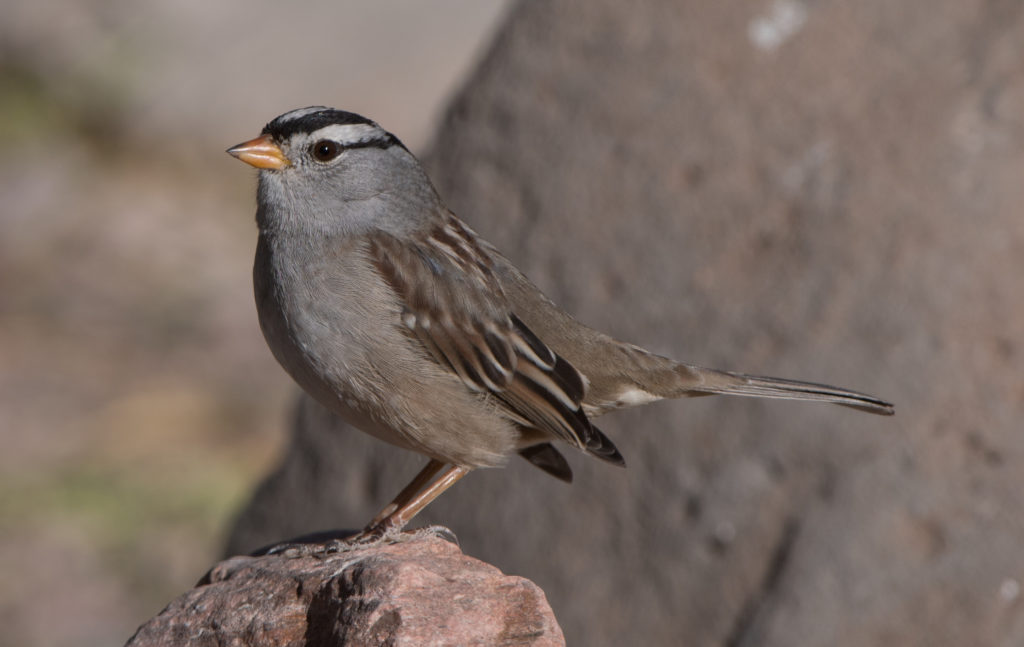
As I think I said in a post regarding the Bosque last year, I think I’ve found where any White-crowned sparrows that leave the PacNW go to winter. The Bosque has hundreds of the White-crowned sparrows and they seemed to be spread across the entire refuge.
White-crowned sparrow
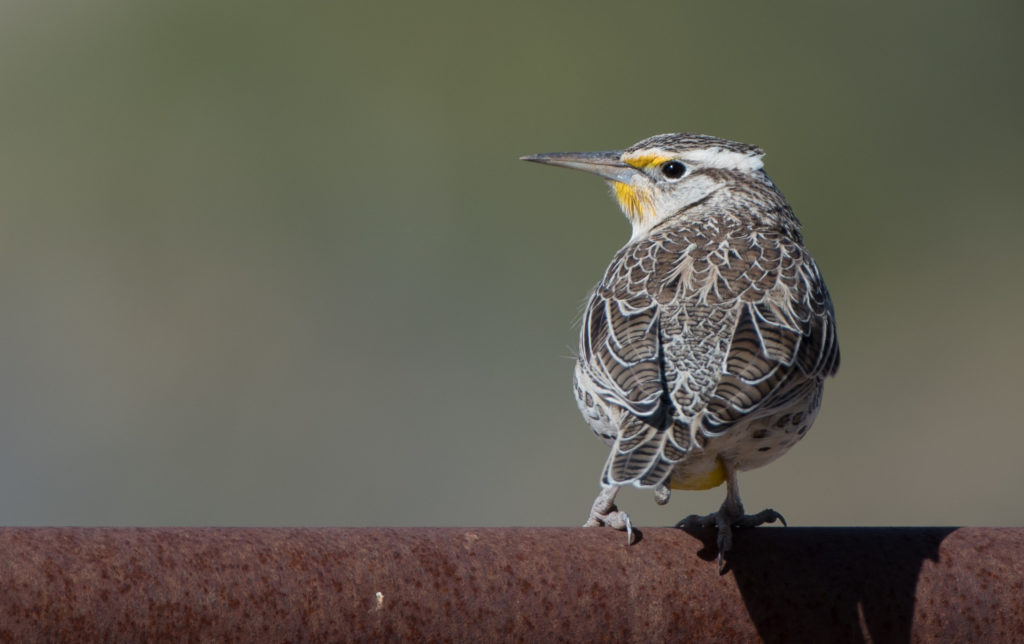
There are lots of meadowlarks both on the refuge and in surrounding farm fields. I never take the time to try to sort them out since both species can be in that area and the only apparent way to identify them is by their vocalization. I’m too busy taking photos to try to identify calls from individual birds.
Meadowlark
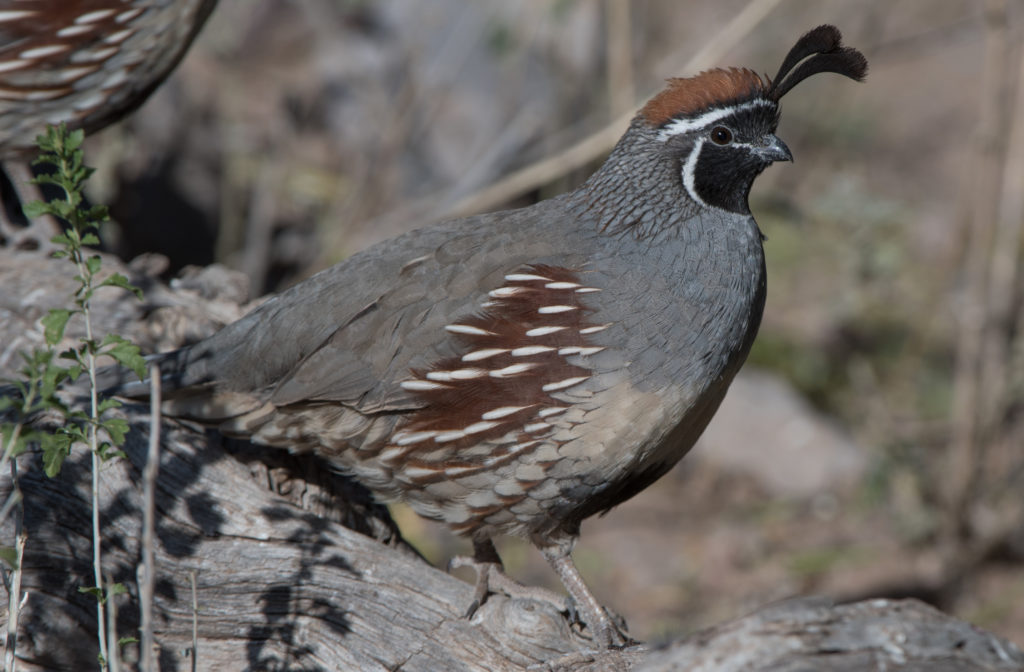
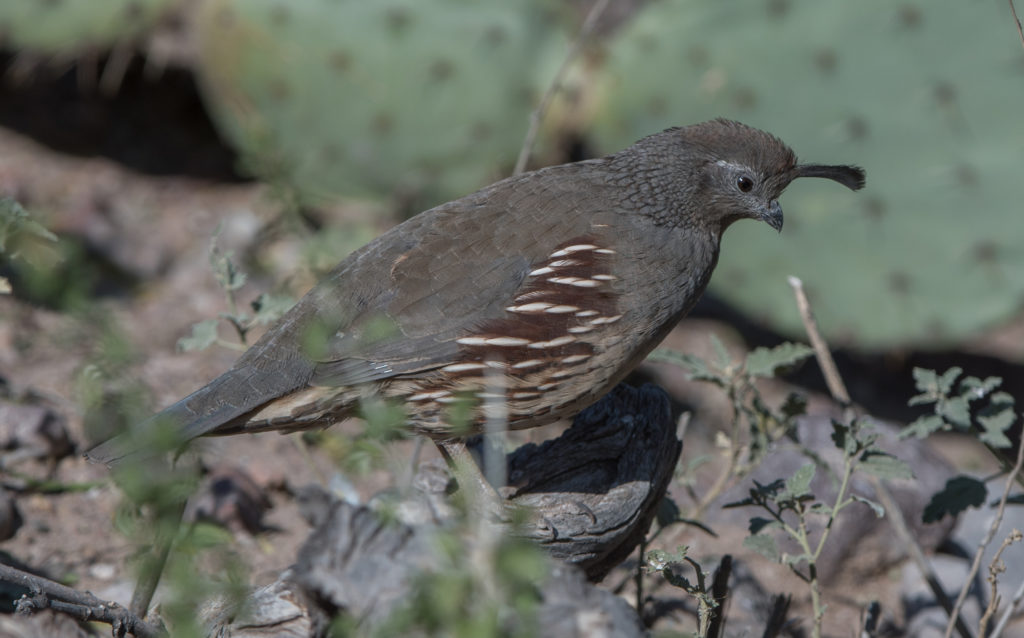
The common quail on the refuge is the Gambol’s quail, and they are very numerous in the vicinity of the headquarters complex.
Male Gambel’s Quail Female Gambel’s Quail
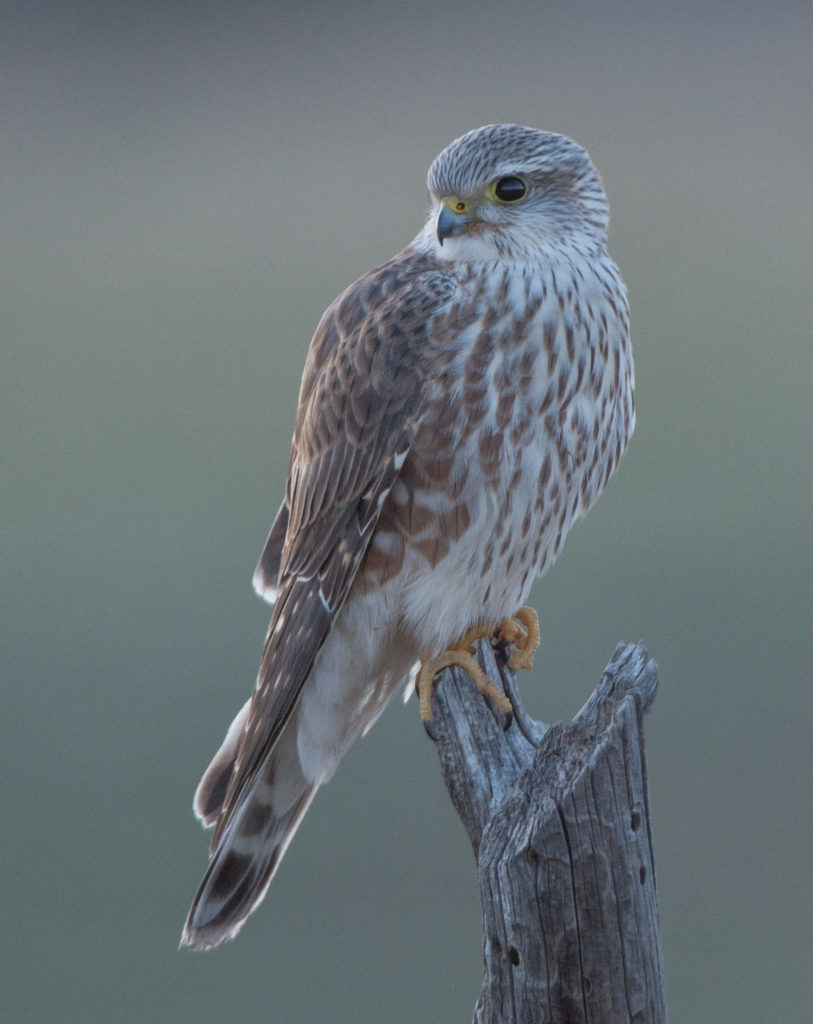
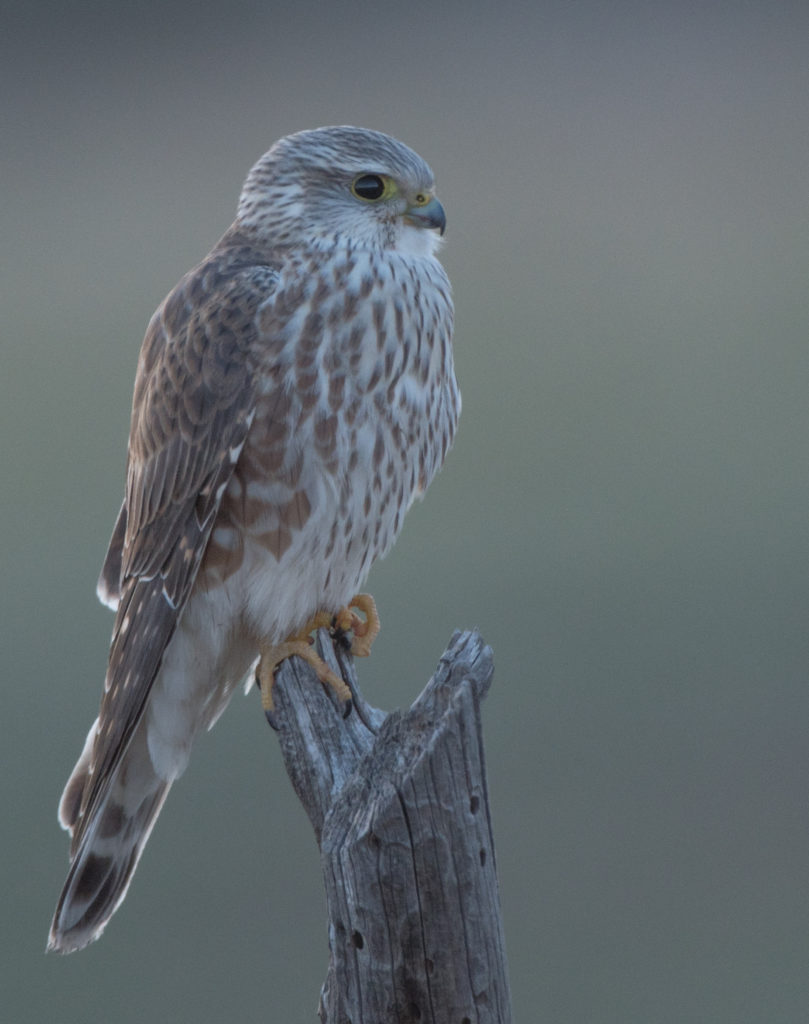
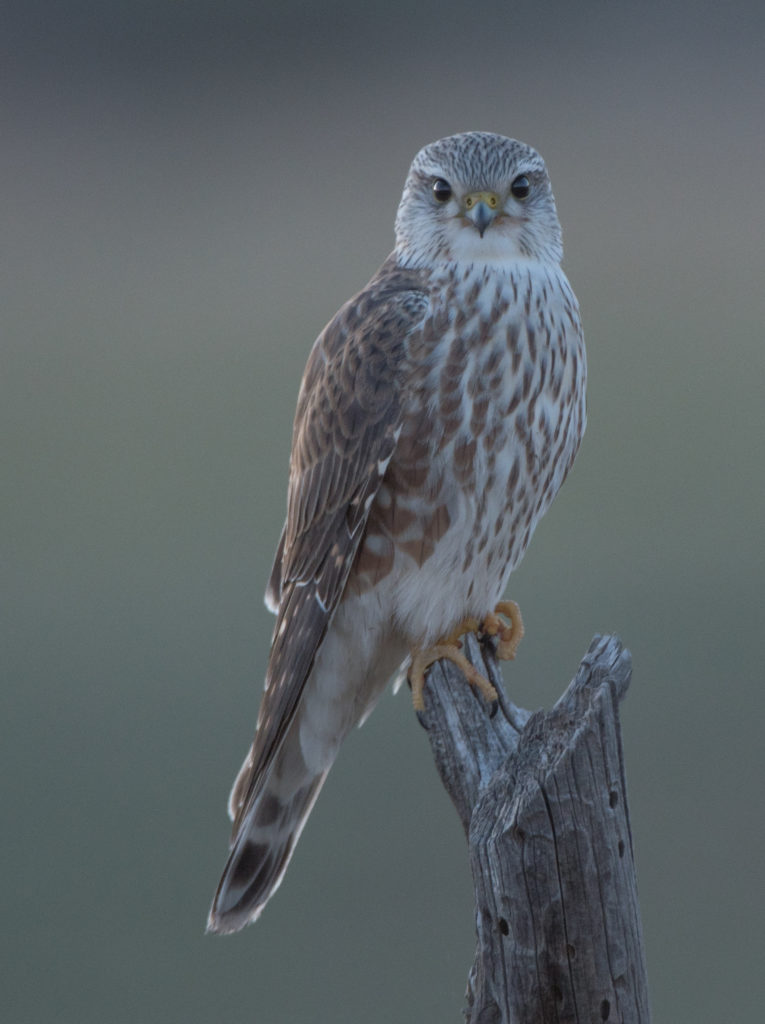
There are always a number of raptors in and around the refuge and this year was no exception. Here is a female American kestrel I located just off the refuge.
Female American Kestrel Female American Kestrel Female American Kestrel
To illustrate a point… I keep far too many images. The photos of the female American kestrel shown above are three of eight I took, and kept, of this same bird on the same perch. Which would YOU discard?
In early November my wife and I returned from what has become an annual trip to New Mexico. Our itinerary is usually the same… several days spent birding in the Bosque del Apache NWR south of San Antonio, NM, followed by several days eating good Mexican food and drinking margaritas in Santa Fe.
Despite (or I could say because of) the sunshine in that state. photography can be quite challenging. I don’t feel like I came home with a lot of good photos from the trip but I did come away with a grand experience and some good photos, and I’ll relate the circumstances here.
The headquarters of the Bosque del Apache NWR has a Cactus Garden and surrounding area that gives birders and photographers such as myself a chance to get closer to some of the species that live in a desert habitat. I’ve always taken advantage of this opportunity. Seed and suet feeders, and most importantly, running water are offered as enticements. On all our trips to the Bosque I spend time in the Cactus Garden and I consider it an excellent use of my time.
I want to mention a mystery which I’ve never solved. There is a very large rock set back in a thicket which has water emanating from a hole about the size of a quarter. I assume that the water is recirculating but it’s not evident from a casual visual survey of the area. The water apparently feeds a small marshy area in the middle of the thicket. Birds all around the area are aware of this feature. It not only provides water but also some degree of safety due to the thicket. From my point of view I can spend hours overlooking the water source and photographing what happens by. And like all areas that attract small birds, this area attracts accipiters!
On Friday, November1, 2019, my wife had signed up for a three-hour refuge tour. A perfect situation… she (and we) would get to learn more about the refuge and I would get three hours in the Cactus Garden photographing what might happen by.
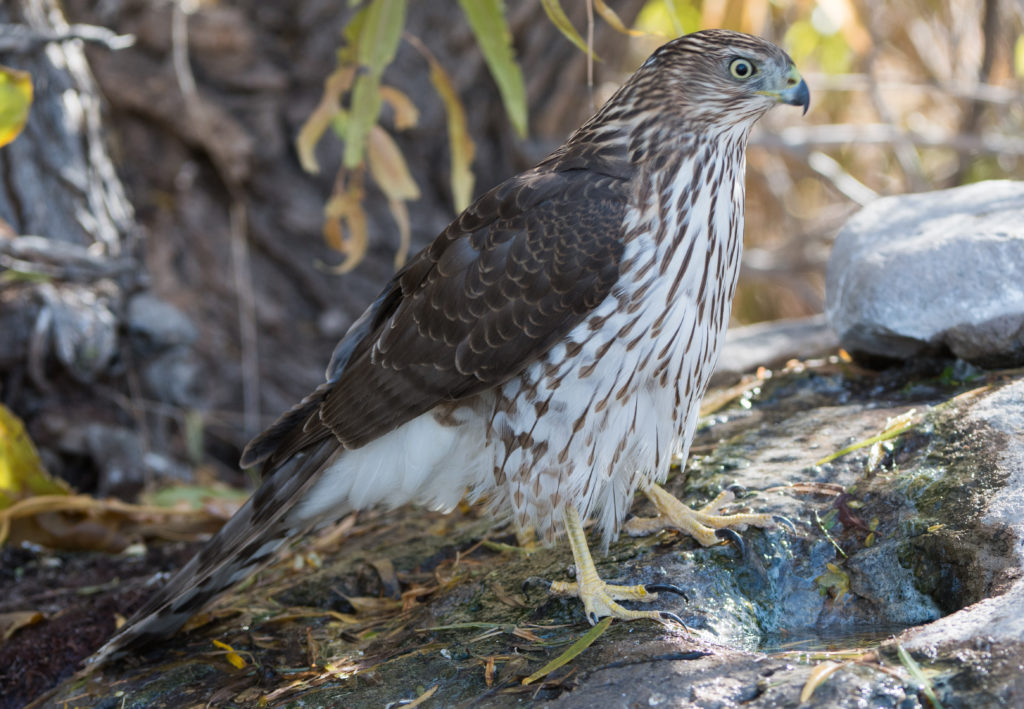
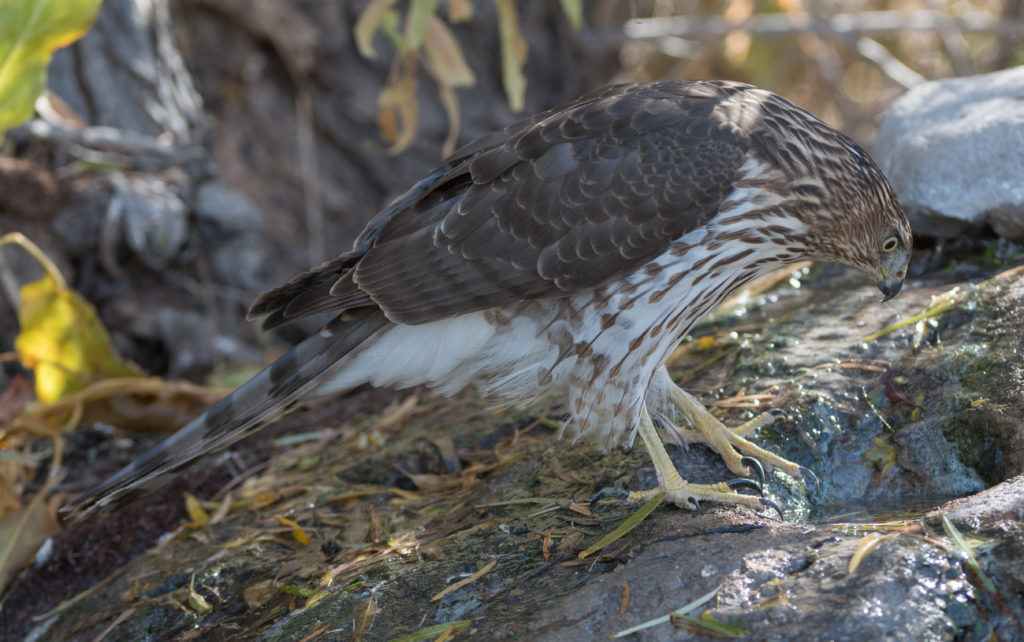
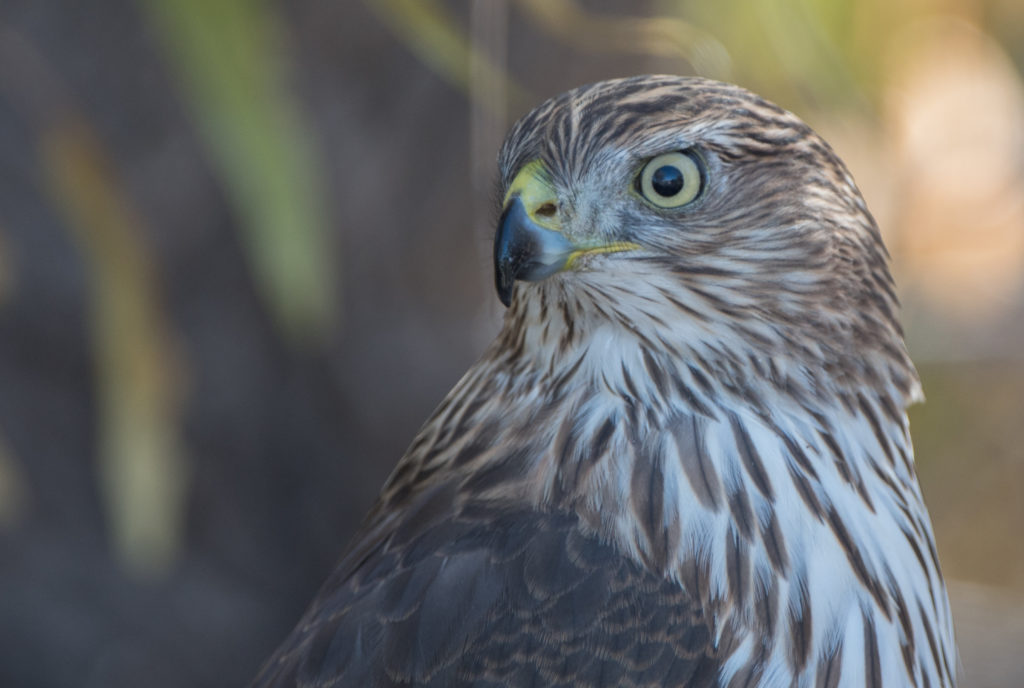
So at about 1pm I stationed myself on a picnic table seat with a good view of the small stream of water that mysteriously emanates from the small hole at the top of the very large rock. In two prior year visits I had photographed a White-throated sparrow on the rock, but that was not to happen this year. I sat, on a very hard bench, for about 45-minutes with very meager results. Suddenly there was a great commotion among all the birds, and a large (juvenile female Cooper’s hawk?) landed on an eye-level stump directly in front of me… almost exactly five feet away. I’m not sure the accipiter actually saw me… I had on a camo shirt and my trusty camo Tilley hat. Almost immediately the bird shifted about 90-degrees, orienting itself away from me and facing the rock with the water source. After only a couple of seconds on the stump the bird wheeled and flew to the water- emitting rock directly in front of me. (This was obviously not its first visit!) It was still so close that I couldn’t quite get the entire bird in the photo even with the bird positioned diagonally and with me backing off to the equivalent of 300mm, my lowest magnification with my camera and lens.
The accipiter took its time drinking and I took a lot of photos with the majority of my time and effort spent attempting to fit the entire bird within the frame.
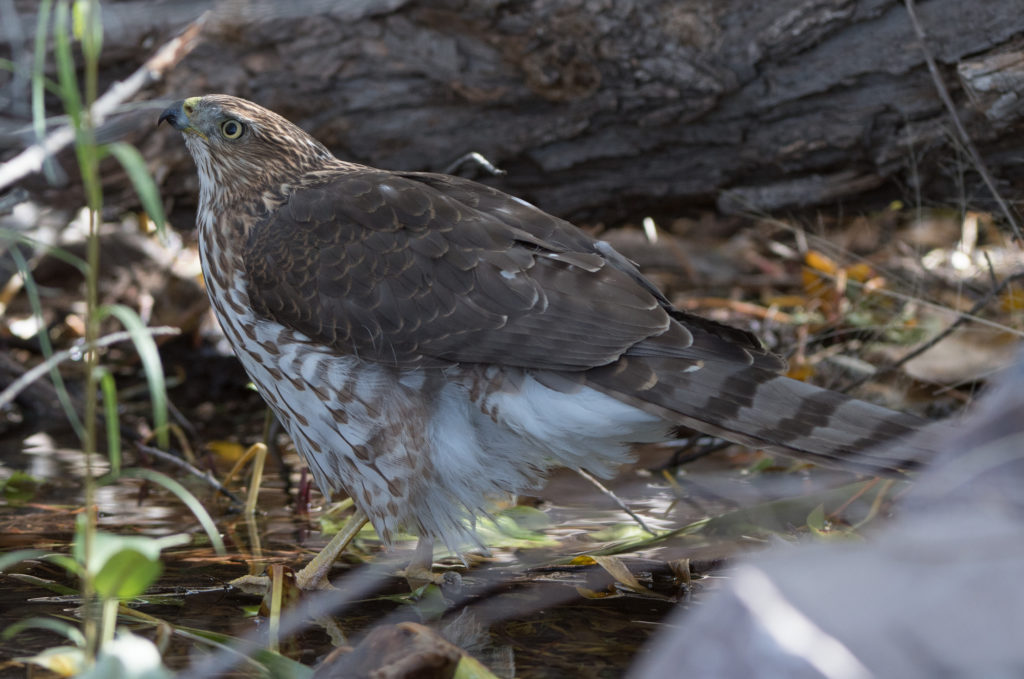
The accipiter finally had its fill of water and retired to a fallen tree trunk nearby, where I could only barely see it through intervening vegetation. After a minute or two on the fallen tree trunk it jumped down into a pool of water below the trunk where I took another couple of photos. It then went back onto the tree trunk, preened and just generally sat there for the next two hours… while my posterior became sorer and sorer! While I was relatively disappointed with my view of the bird at this point, I was still relatively close to the bird and was hopeful it might return to the water or pounce successfully on some unwary prey. Other birds were apparently aware the accipiter was, or might be, in the bushes because the water is usually a popular attractant but very few birds entered the area during my observation time. However after about two hours the accipiter finally flew… what birds were left in the general area (there weren’t many, even after two hours) also flew.
At this point I felt an overwhelming need to unlimber, so I got up and toured the Cactus Garden. After 15 minutes or so of blessed relief I sat back down on another bench located too near one of the feeders. (Every time I visit this location I’m disappointed in how their viewing benches and feeders are laid out!)
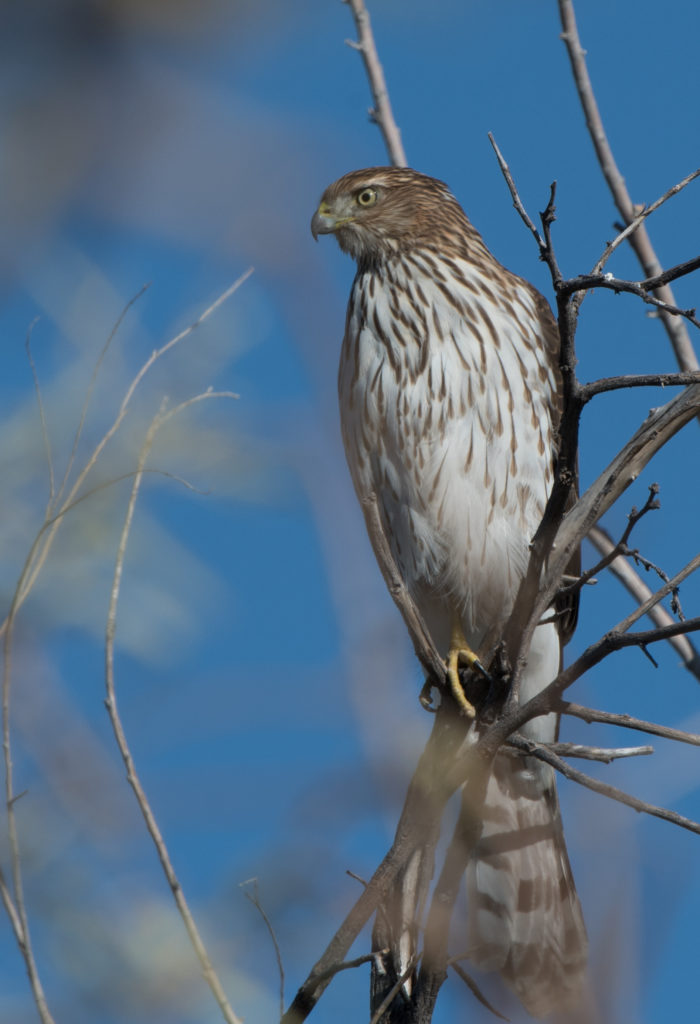
As I sat at this other bench there was another minor commotion (the birds had never fully returned in the two hours the accipiter had been in the area) and I saw a couple of neophyte birders staring at the very top of the tree over the water-emitting rock. There was the accipiter again… which prompted more photos!
I have lots of news and new photos to post. We just returned from a trip to New Mexico (Bosque del Apache NWR and Santa Fe, Randall Davey Audubon Center) where I took almost 900 photos, almost all of which were of birds. Those should eventually be posted to this blog, but it might take awhile.
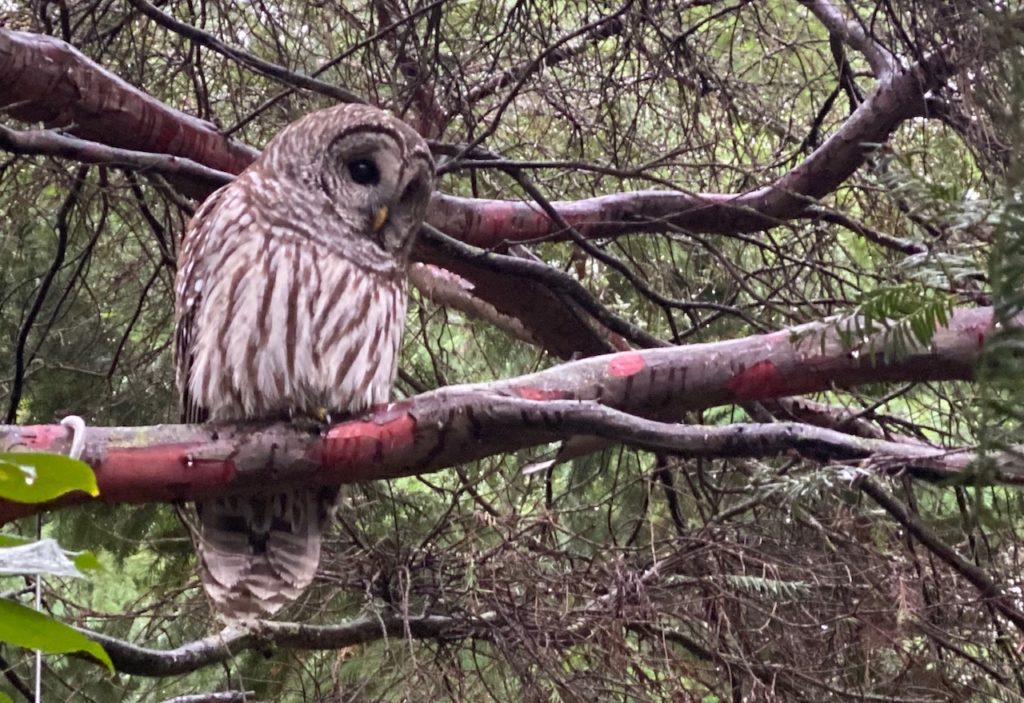
In the meantime, we hadn’t been back but a couple of days before we had a rather dramatic development here at the house. For the past six weeks or so I, and some of our neighbors, had been discovering one or more Barred owls in the neighborhood. For the most part this owl would be found in what the neighborhood refers to as the ‘wetland’, which is located roughly two blocks (“as the owl flies”) from our house. (I believe I have at least two prior posts involving this owl.)
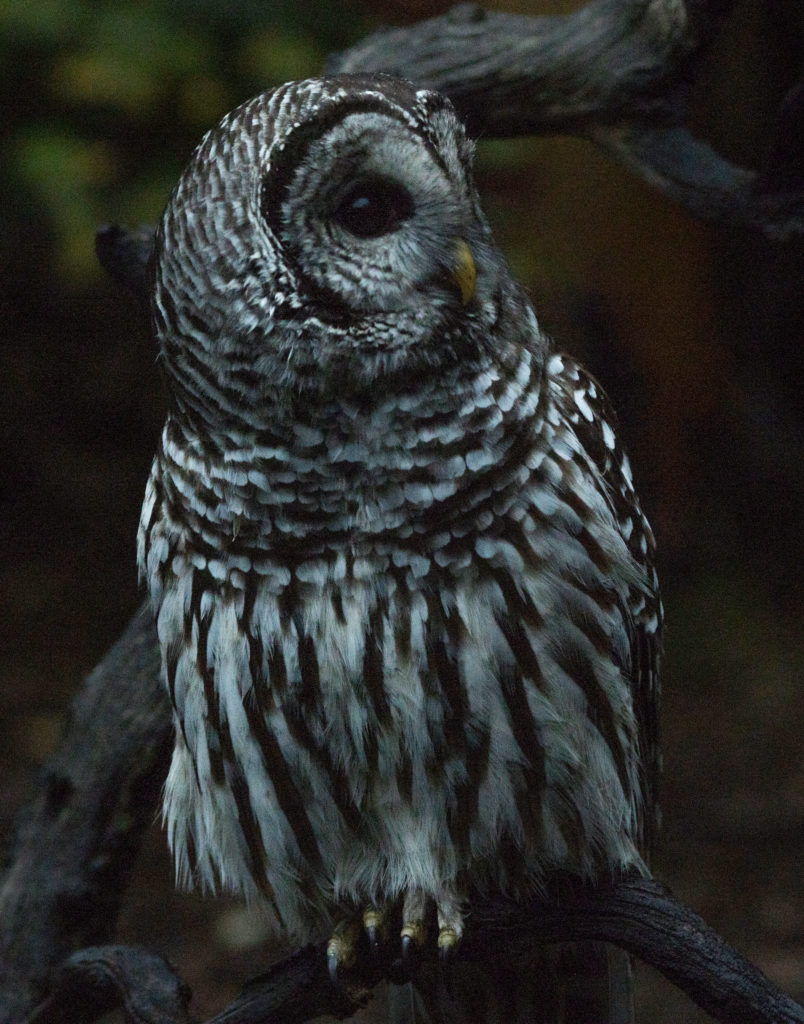
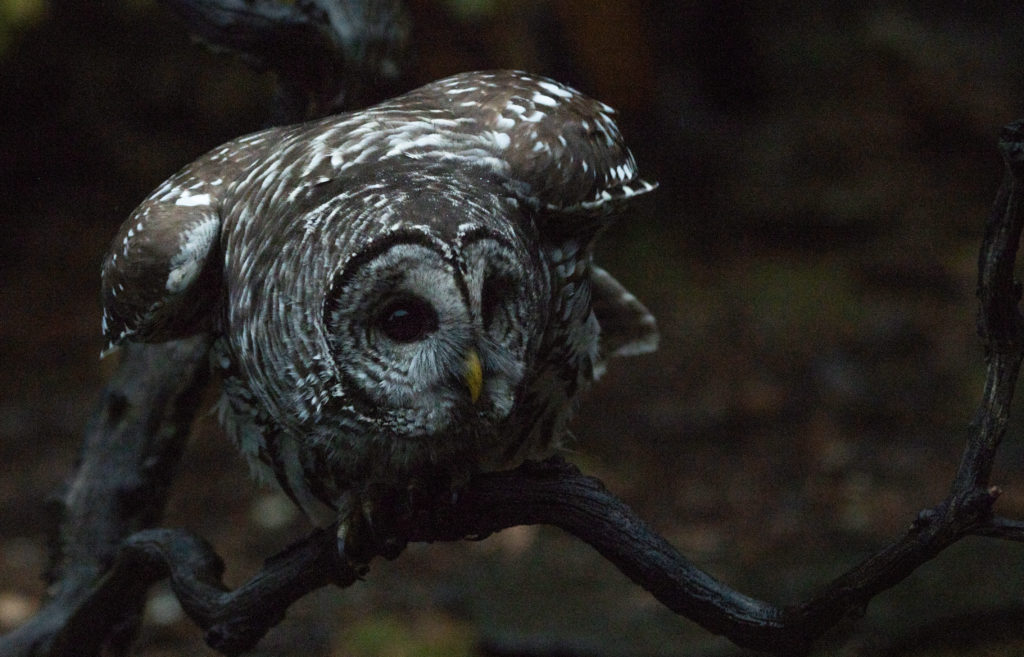
On Saturday (11/9/2019) morning my sister, who has been house-sitting for us while we were in New Mexico, was outside in the process of reentering the house when a Barred owl flew to the watercourse in our front yard, located about ten feet from the house. It took my sister several minutes to gain our attention and while she was subtly trying the owl got a drink of water. By the time I responded with my camera the owl was sitting on one of our staging sticks directly beside the pond. I took a couple of quick shots through the window (normally a no-no for me) to insure that I got some sort of photo. The owl flew out of my view to the side of the house. I sneaked out the door to try to find it but didn’t see it at first. I finally looked up in the yew tree above my head and there was the owl… less than ten feet away! My sister and wife joined me and we were able to watch the owl for about ten minutes before we had to leave for a breakfast commitment. When we returned an hour or so later the owl was gone and we couldn’t locate it.
Excuse the quality, but this is a photo of the owl in the yew tree I took with my iPhone 11 Pro!
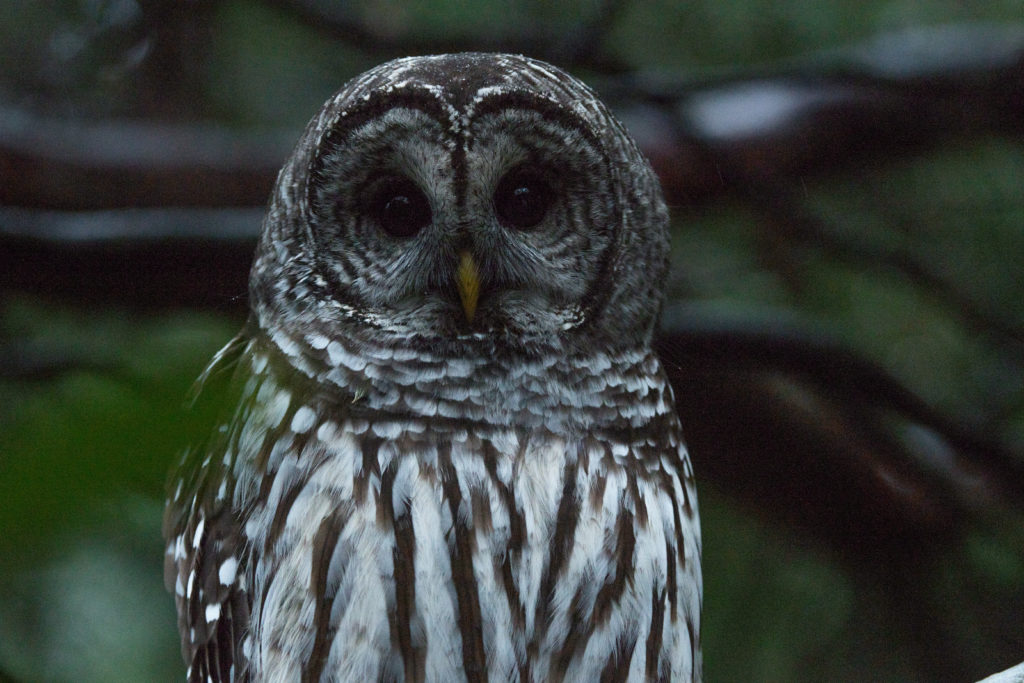
The good news is that I obtained some photos to document the event, the first known owl visit to our property! The bad news is that I had messed with my camera at the end of our trip and altered a key setting on it, resulting in rather severe underexposures that I couldn’t fix in Lightroom. However, I think the images, although underexposed, are rather interesting and have some value… and that’s why you’re seeing them here!
Barred Owl on Watercourse Staging Stick Barred Owl in Process of Moving On!
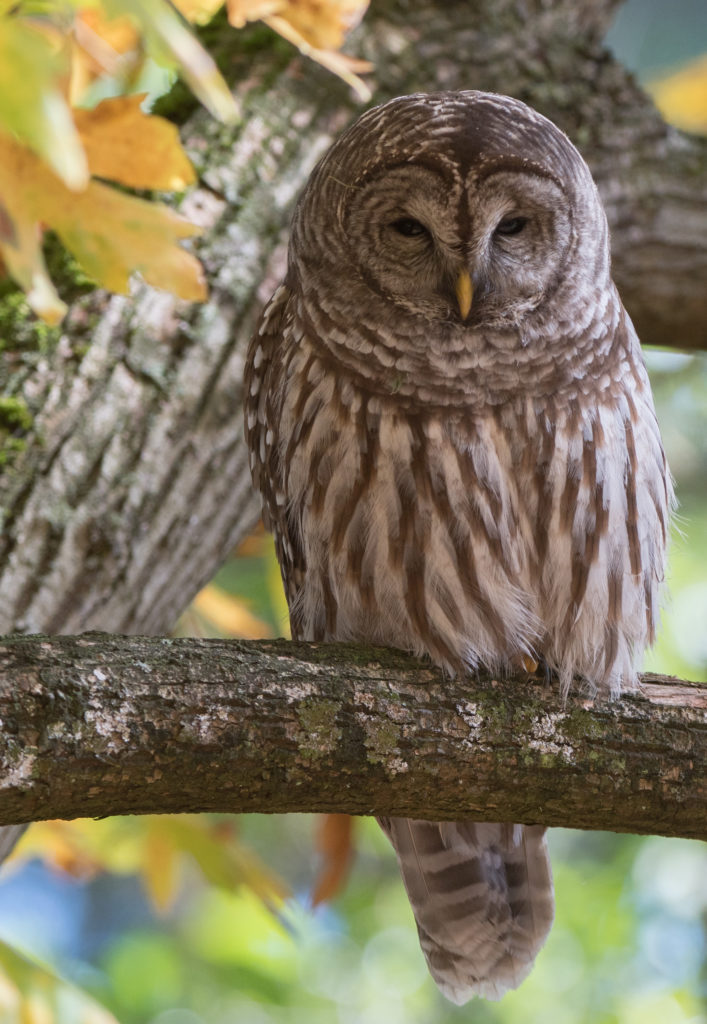
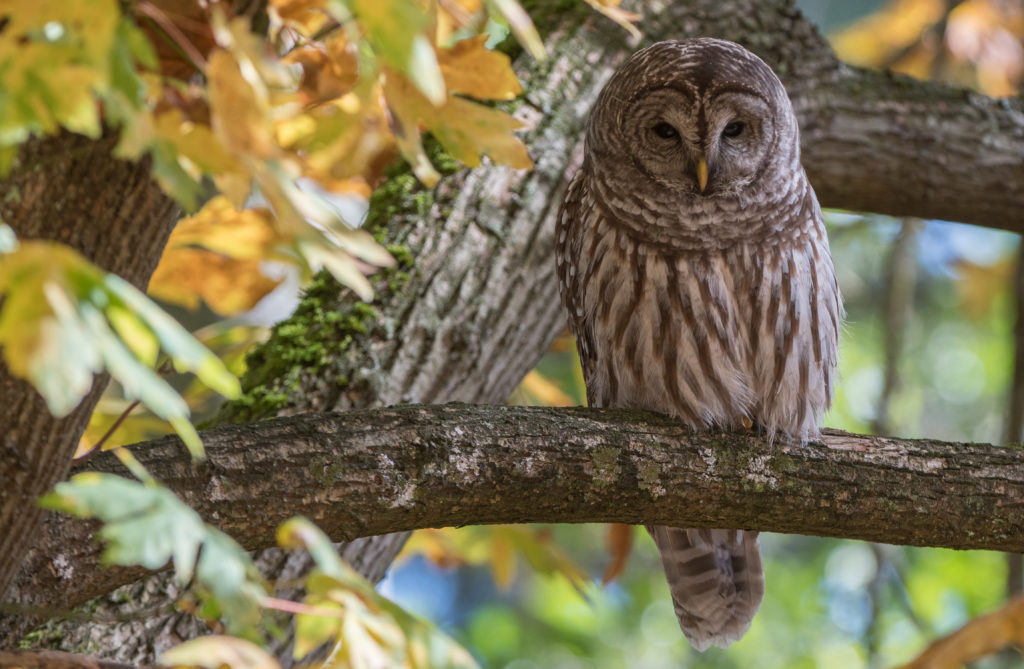
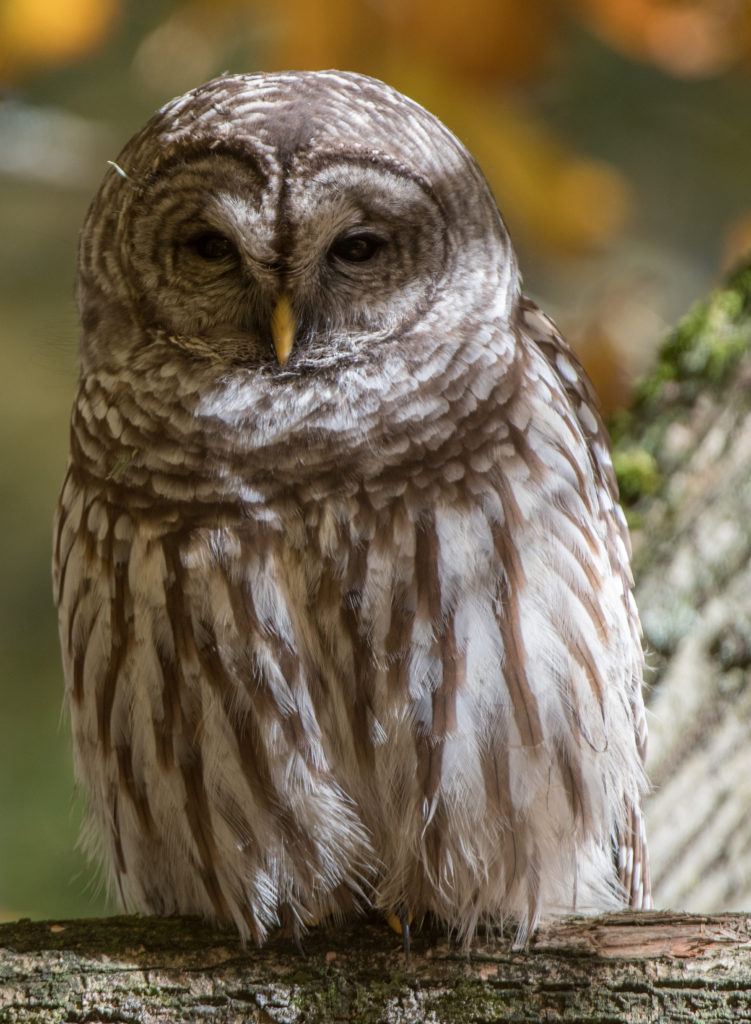
On Wednesday, October 23, I began my birding excursion by cruising through the Cap Sante neighborhood. As I got to the wetland area I gazed up at a magnificent maple tree with turning leaves and was startled to see a Barred owl, fully in the open, staring back at me! I had my camera with me and wasted no time in beginning to take photos. Over the next hour or so I was able to notify several of my neighbors of the sight and they were able to view the owl. This may be the same owl I photographed a couple weeks ago, but this time I was much closer with no intervening branches.
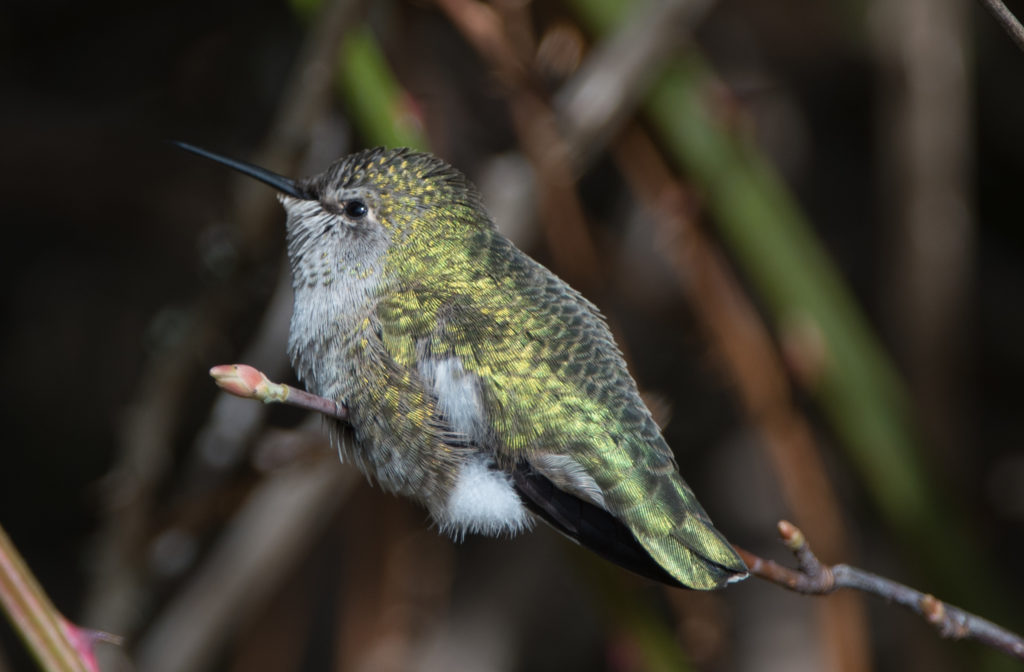
I set out for Fir Island and on the way I encountered this female Anna’s hummingbird, at almost the same location where I photographed three Anna’s hummingbirds in the winter over the last couple of years. This small brushy area seems to be a haven for the birds.
Female Anna’s Hummingbird
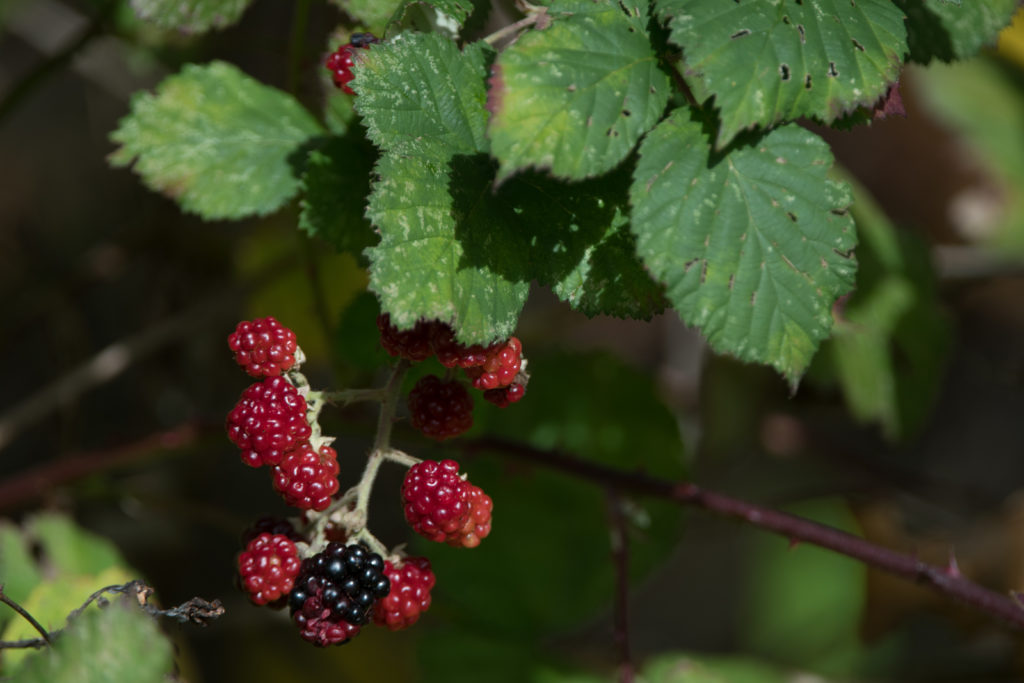
I have been surprised at how many blackberries around the greater area still seem viable in late October this year.
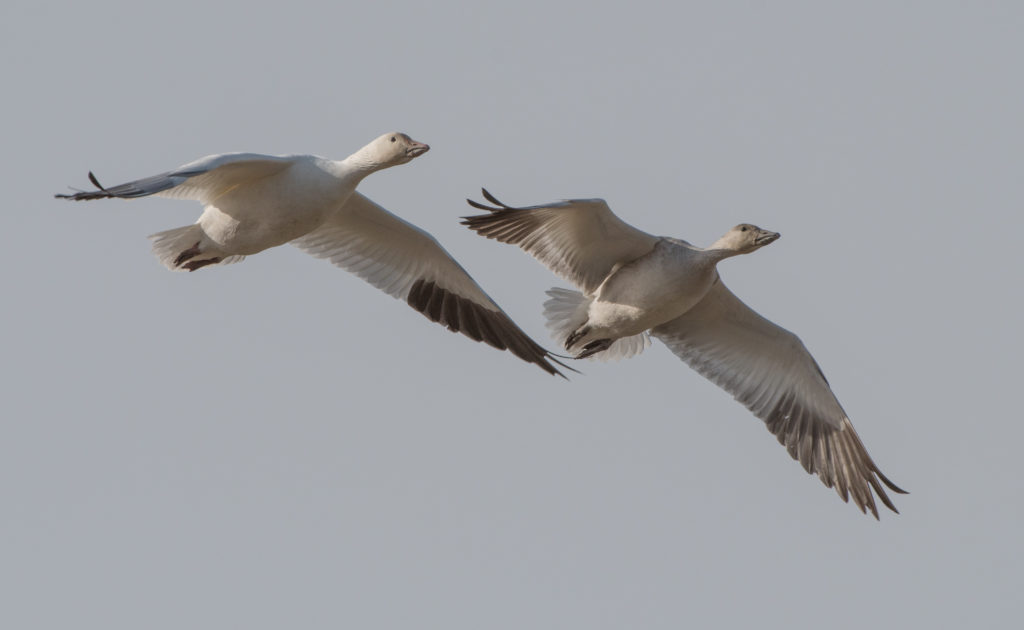
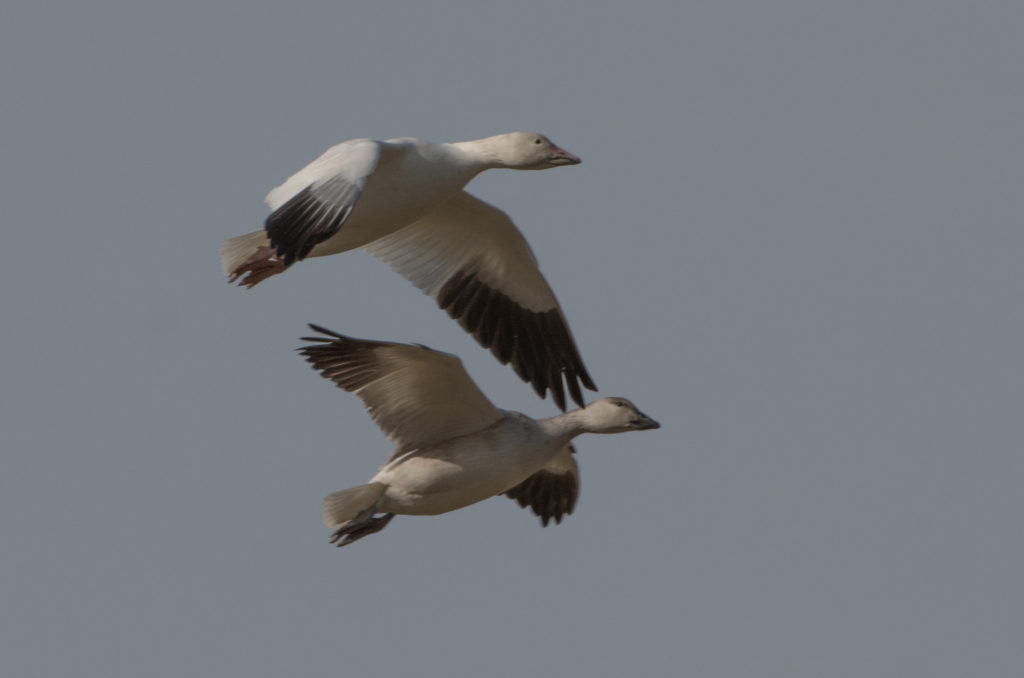
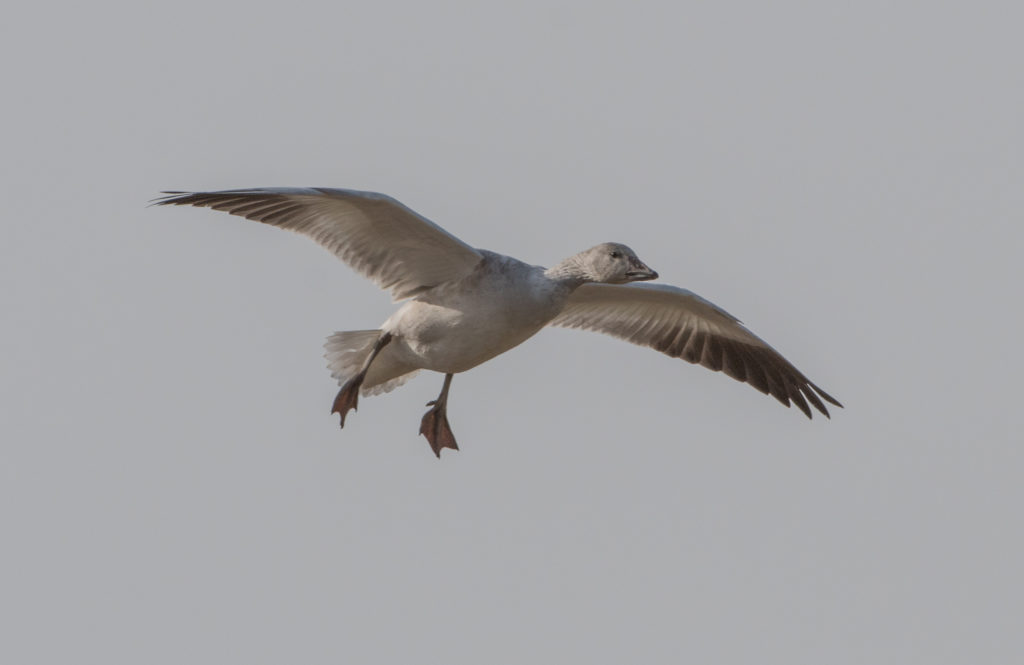
Just before arriving on Fir Island I found a field full of several thousand Snow geese, giving me the opportunity for a little “skeet” practice! It amazes me the level of detail that can be obtained on flying birds!
Saturday, October 19, 2019, began as an overcast day with a threat of rain. By mid-day I was trying to make a decision as to whether or not to go birding or stay home and watch sports. I finally opted for the birding. It rained to some extent all afternoon long and I had driven most of the route I planned to take with nothing to show for it… not a single photo! Finally, at the HQ tract on Fir Island (Wiley Slough) I found this American Robin eating blackberries, which uncharacteristically still have some ripe, viable blackberries on the vines this year. If you look closely you can see the blackberry juice stain on the bird’s beak.
American Robin Eating Blackberries
While at Wiley Slough I ran into a birding friend and had a nice chat. Shortly after our visit a more constant rain began to develop in the Fir Island area and I decided to head home. It was a beautiful day and driving across Fir Island I could see the different areas of showers developing and taking place.
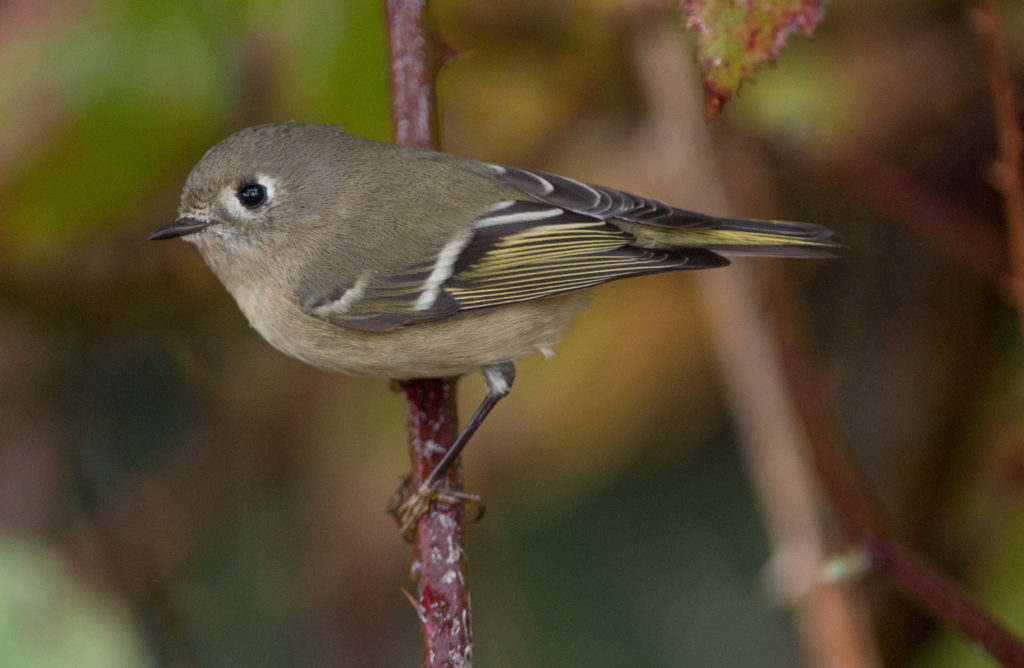
I stopped by an area I had previously visited on Pleasant Ridge and managed to ‘pish’ a Ruby-crowned kinglet out of heavy vegetation which featured some beautiful maple leaves in fall colors. The kinglet was extremely active and difficult to photograph but I finally managed one decent photo. I could justifiably label this bird a female but have realized that the males are so adept at hiding their crown (especially from this angle) that I hesitate to make a sex determination.
Ruby-Crowned Kinglet
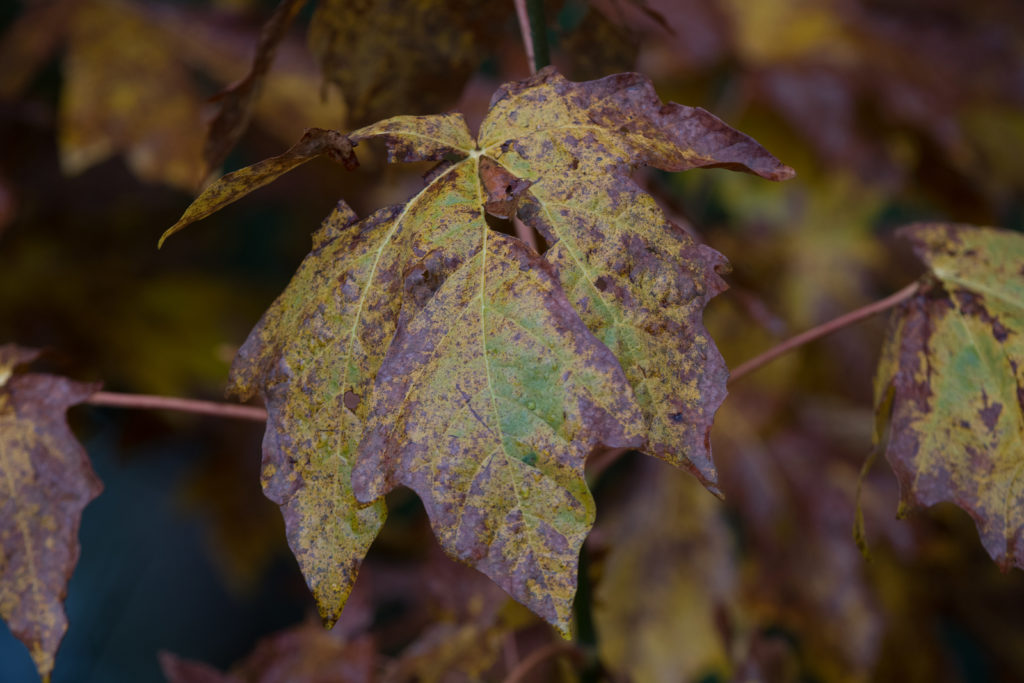
I’m not very adept at identifying trees of the Pacific Northwest and hope this is a maple leaf!
Maple Leaf (I hope!)
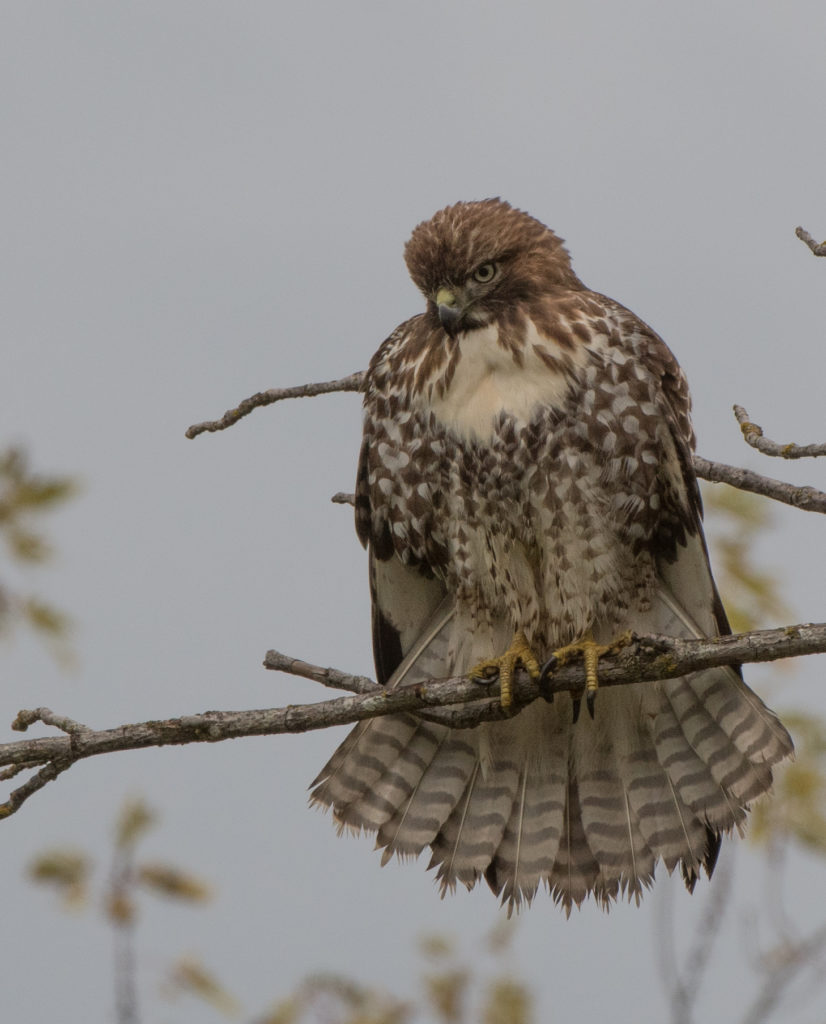
The last leg of my excursion was a trip around March Point where I photographed this Red-tailed hawk in an interesting pose.
Red-Tailed Hawk
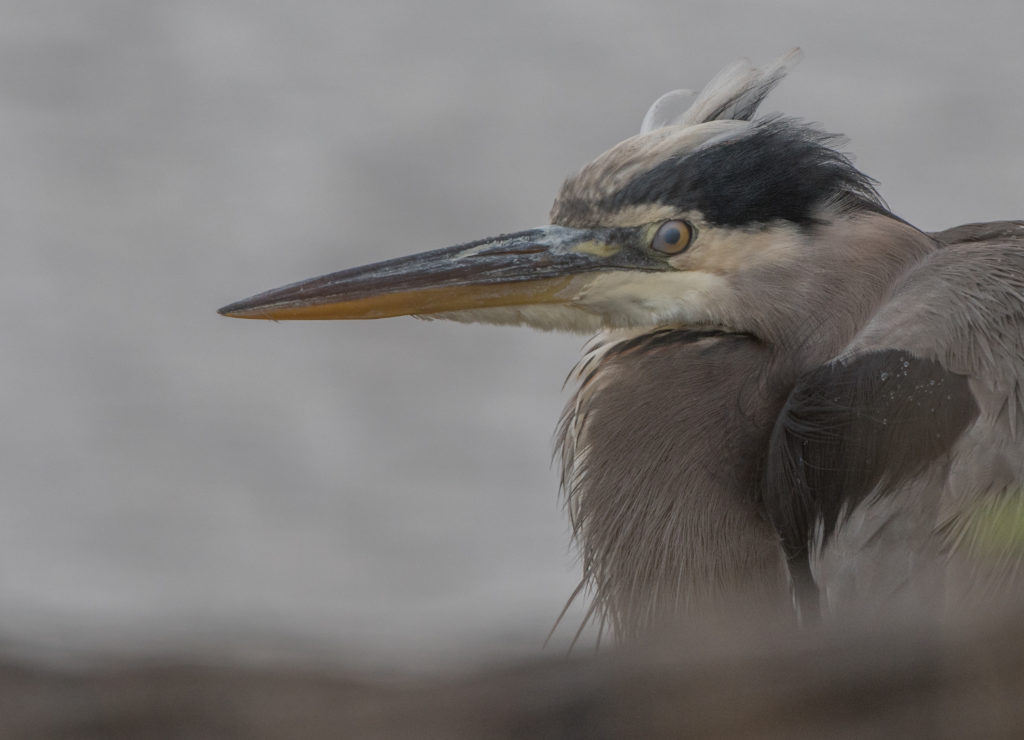
As I continued my trip I encountered this Great Blue Heron which was more ‘photographable’ than many I had seen this day.
Great Blue Heron
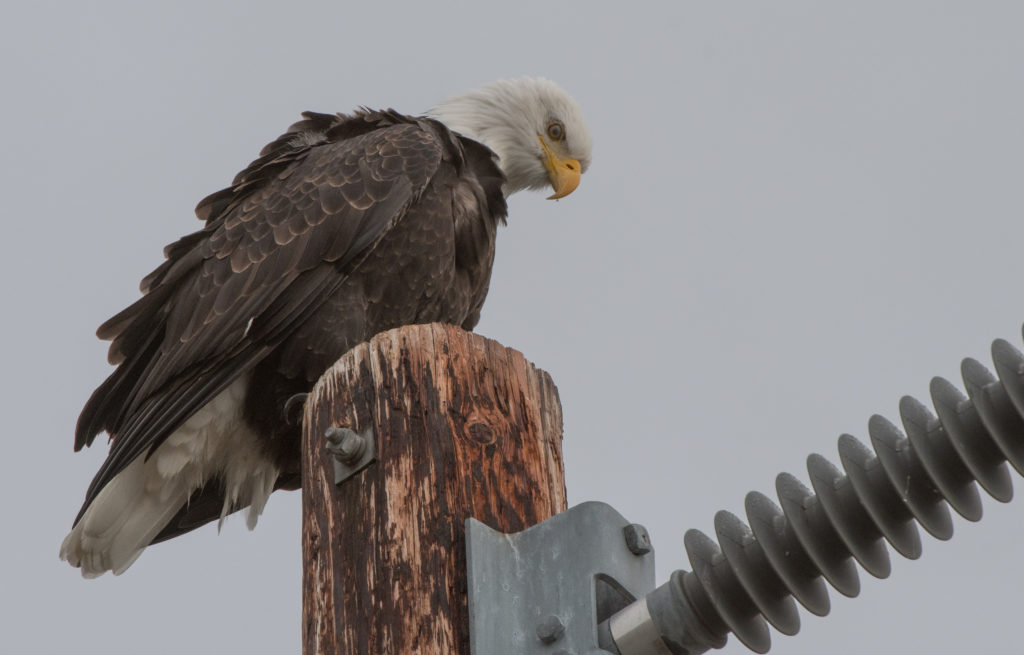
Continuing around the point I found a pair of Bald eagles sitting on top of adjacent power poles.
Bald Eagle
Not long after I returned home the sun broke through and bathed the town in a bright yellow light we could see from our house. Too late for my birding excursion but a nice tribute to another Pacific Northwest fall day!