June Visitors

I’ll start with a less than welcome visitor, a female Brown-headed cowbird photographed in the yard on June 6, 2020. Oddly enough, I have yet to see a male in the yard this year.

This Bewick’s wren has been a regular visitor to the yard and suet feeder this spring. It always leaves the yard to the east, presumably returning food to a nest.

I spent considerable time in the yard with not many results. I was just about to give it up for the day when a male Black-headed grosbeak showed up in the yard. These photos made up for all the time I had spent outside!

This photo of another less than welcome visitor from from June 8 is an introduced species, an Eurasian Collared dove. The best I can say about the three that currently visit our yard several times a day is that they help some of the other ground-feeding birds and squirrels clean up under the feeders.

June 10 began with my morning walk in Washington Park. Not long after returning home I received a call from friends/neighbors who told me that there were three Turkey vultures sitting in a dead tree in their yard. I grabbed my camera and drove to their house and took many photos.

Later in the day I obtained more photos in the yard. The overcast weather provided a great day for photography, in this case a male American goldfinch.

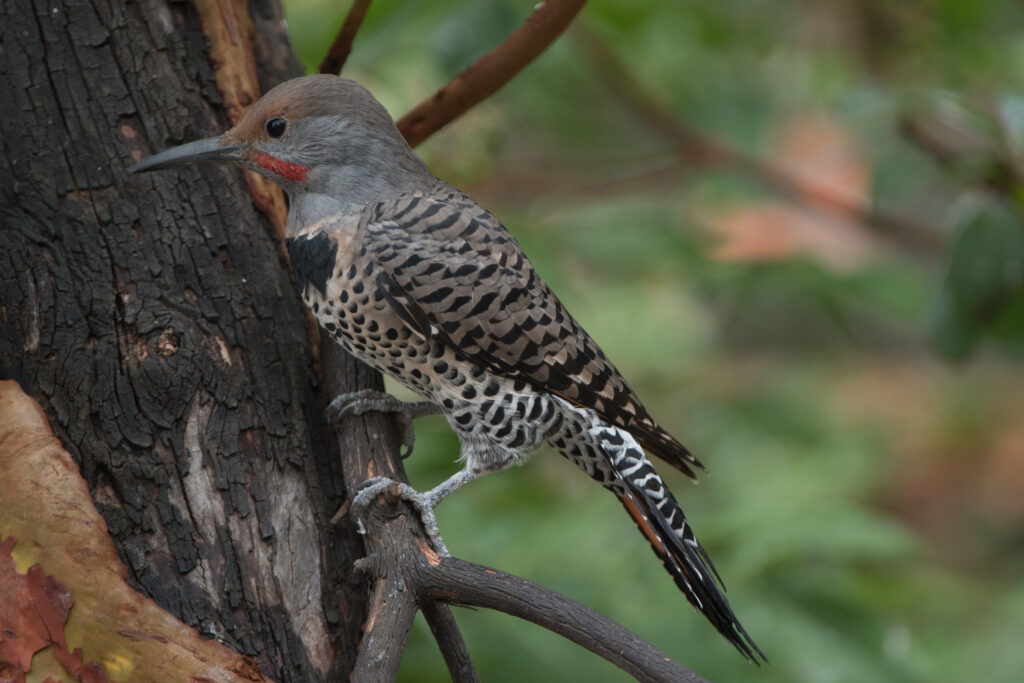
A male Northern flicker which is a versatile feeder… suet, peanuts and sunflower seed.

A Brown creeper, a daily visitor that comes only for the water. Its favorite water feature is a stone bird bath but on this day it accessed the watercourse which gave me an opportunity for closer photos.

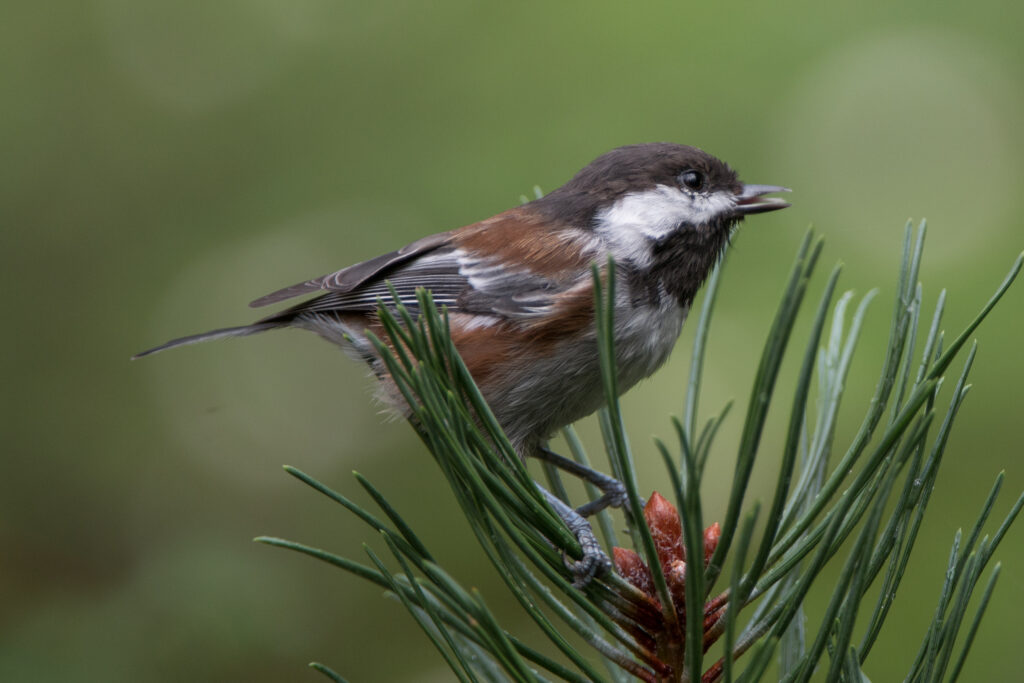
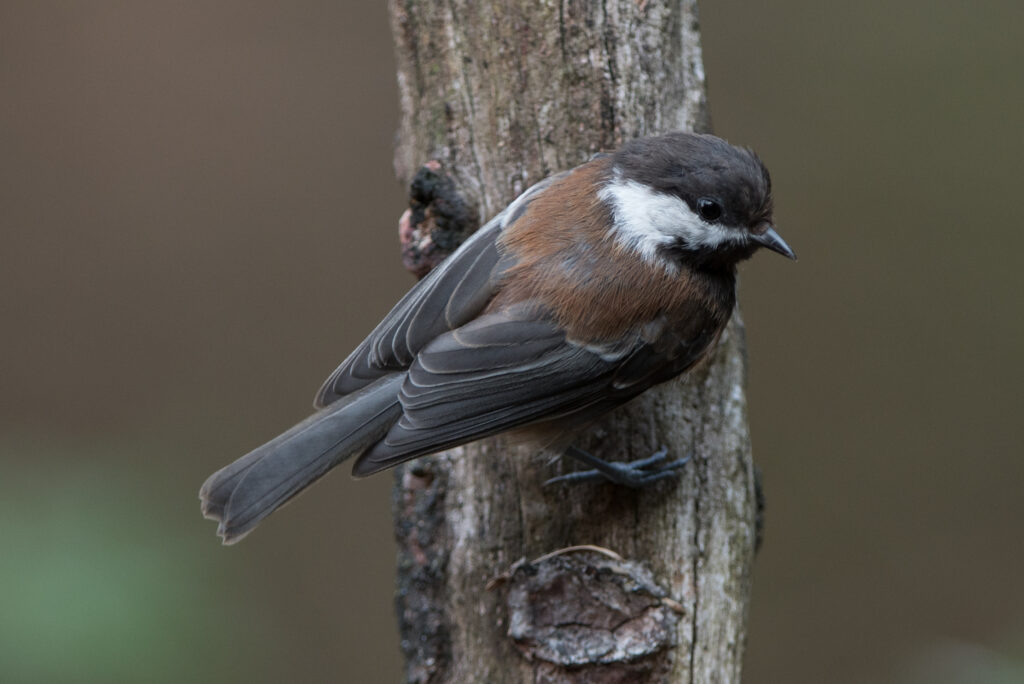
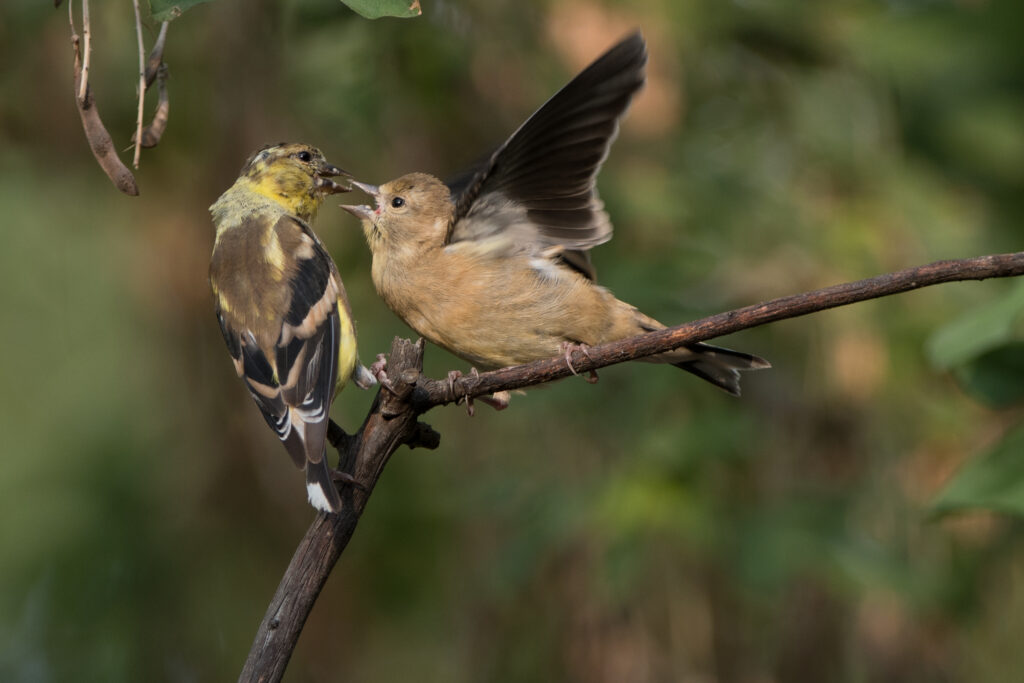
We had a pair of Black-capped chickadees which apparently fledged young on our west patio. I photographed this parent feeding a fledgling on the east side of the house.

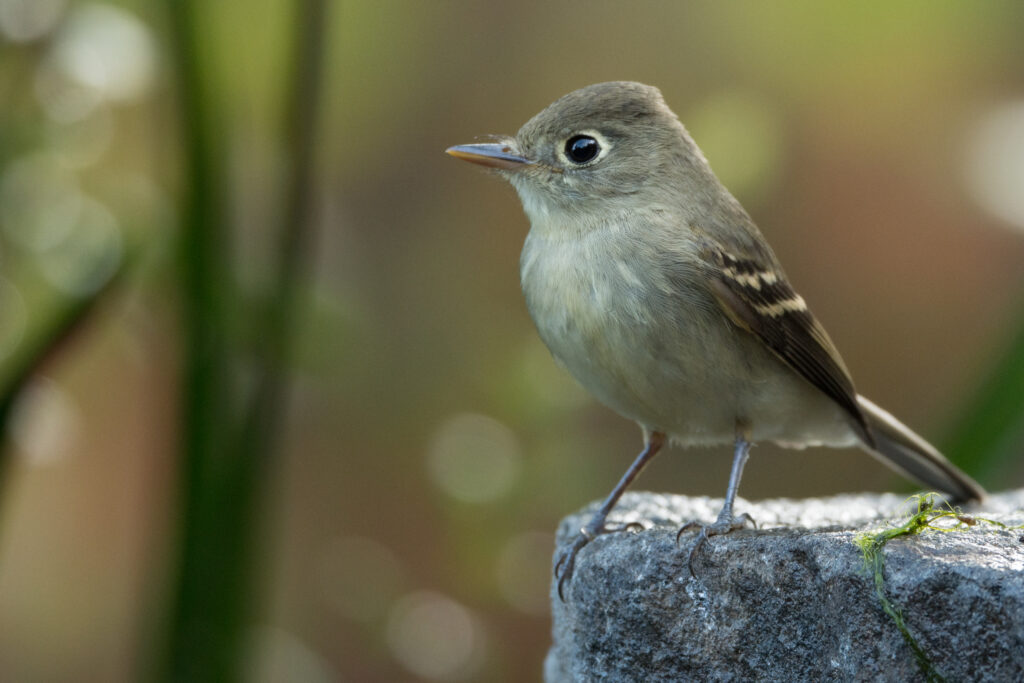
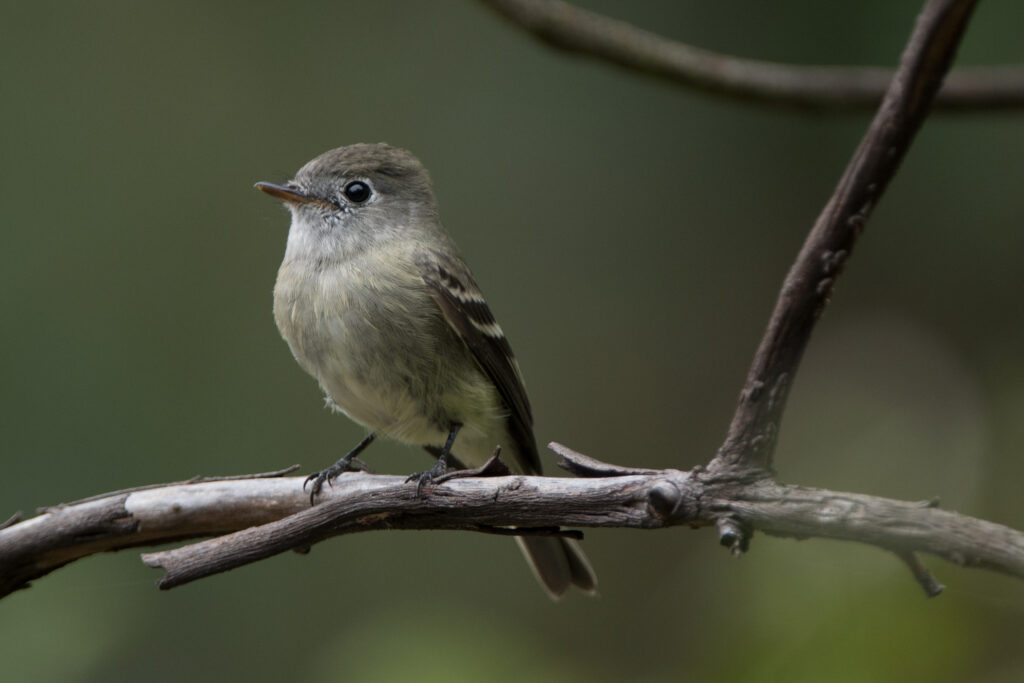
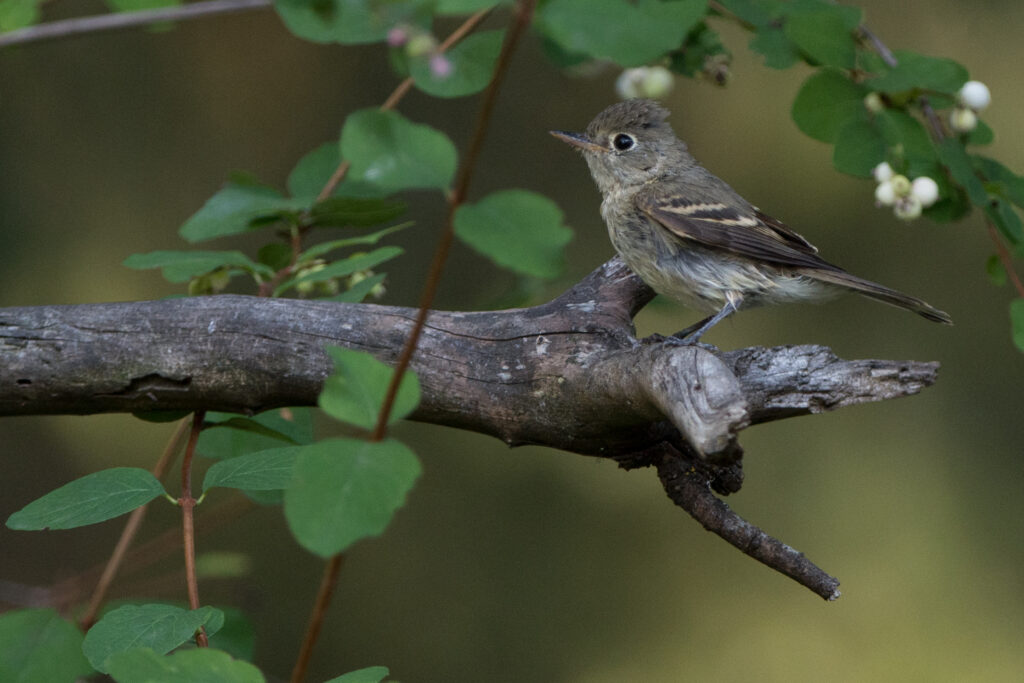
And sadly, I had a rare visit from a Pacific Slope flycatcher late in the day but was unable to obtain a photo, even though for an instant I had an opportunity to do so.

Accipiter!

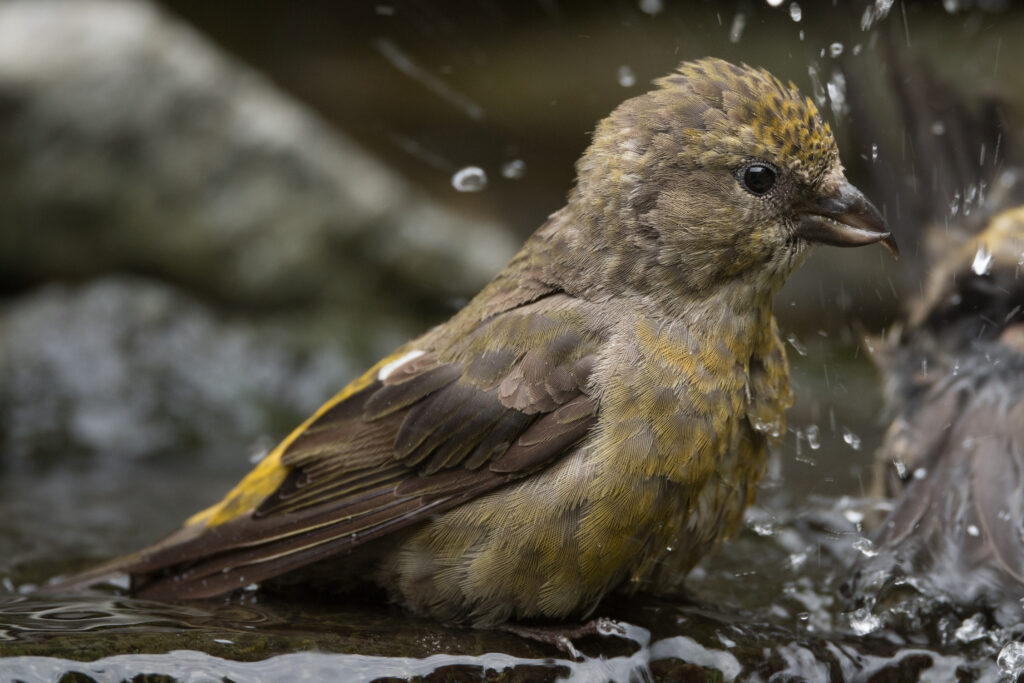
The afternoon of June 5, 2020, began rather slowly. I photographed a juvenile Brown-headed cowbird coming to the watercourse. I haven’t observed any foster parents so I don’t know who raised this bird.

About 4pm I was sitting in the yard becoming rather bored with what I was seeing. A pair of Eurasian Collared doves kept coming and going, flying down to the ground and then back up into the trees. Suddenly an accipiter launched an attack from the trees and barely missed getting one of the doves, which flew from the yard. I couldn’t see the accipiter but was aware that it had remained in our Golden Chain tree (which is no longer blooming).  I carefully positioned my hands on the camera so that I would need a minimum of movement to adjust the camera if the accipiter reappeared. 

After about three minutes the accipiter flew to staging sticks over our constructed brush pile (in our front yard).  I was about 35-40’ away but was lined up perfectly so that no movement, other than my shutter finger, was necessary to take photos. I took several photos as the accipiter peered into the brush pile for prey. I was disappointed that I couldn’t see the lower portion of the bird’s legs where it might have been banded. 

After a couple of minutes on the brush pile the accipiter flew from the yard. It’s been an infrequent visitor to the yard for the past three weeks or so.  The infrequency of its visits is somewhat surprising considering the number of birds in the yard. 

A while later we had a Bewick’s wren take a bath in our stone bird bath, which is another unusual event. We’ve had at least one Bewick’s wren around the yard all spring, but this is the first time I can remember seeing one bathing. 

My slow afternoon was picking up! A Brown creeper flew into the yard, choosing to bathe in the watercourse instead of its favorite, and more distant, stone bird bath. This gave me good opportunity for photos and at a closer distance than usual.

Before my afternoon observations ended I had visits from both male and female Black-headed grosbeaks, but unfortunately they didn’t pose for photos.

Summer Fare

Just for reference, the following photo is of an adult Spotted towhee, in this case I believe it’s a female. There is some uncertainty on my part because the female we currently have in the yard is very dark and it’s easy to confuse her with the slightly darker male towhee that is her mate. Females are generally not as dark which is usually most obvious in the bird’s hood.

The bird below is a juvenile Spotted towhee that was born this spring. In my mind this is one of the biggest disconnects between adults and juveniles in our area. We almost never see the juveniles before they are independent of the parents. I have seen only one instance this spring of this bird being fed by a parent. I initially thought we had only one juvenile but this past week we had three in the yard, but since recently I’ve also seen two pairs of adults, there’s no way I can determine whether or not the three juveniles were siblings or came from different nests.

This is the image of a male American goldfinch you usually see.

This is an image of a male American goldfinch preening after a bath in our watercourse.

Our suet feeders are always hit hard this time of year by European starlings. Not only do the parents access the suet feeders to take food back to their young, but after the young fledge they bring the young to the yard to utilize the suet feeders. I use only inverted suet feeders to try to eliminate some less desirable birds (such as starlings) and to staunch the flow of suet, but the starlings stab at the suet, dropping some to the ground and then eat the suet lying below. When I used to use non-inverted feeders the starlings could eat their way through two suet cakes per day!

We’re still seeing Black-headed grosbeaks in the yard but aren’t having nearly as many sightings as last year. This is a female at the edge of the watercourse

And finally (you may remember from a prior post there is always a “finally”!), here’s a female Anna’s hummingbird hovering above the watercourse. Good practice to hone my skeet shooting skills!

Early Summer

As I believe I expressed in prior blogs, the arrival of spring migrants has passed us by. We’re seeing very few of the spring arrivals… most of them apparently arrived and passed through, so that many of my interesting and rarer photographic subjects are gone. But there are still plenty of birds in the yard and I’ve continued my photographic efforts.

Perhaps one of the more interesting developments is our sighting of California quail chicks we saw for the first time yesterday (June 2, 2020). Unfortunately I was unable to photograph the chicks. The parents are EXTREMELY protective of the young chicks and I can’t get anywhere near them at this stage of their development. The chicks are extremely small and only spend limited time barely out from the safety of our brush pile.

We still have all four of our hummingbird species/sexes. Here is a female Rufous hummingbird feeding on one of several salvias we have in the yard. I thought for several days that the males had already left, but discovered we still have at least one in the yard.

For a day or so we had a male Anna’s hummingbird trying not just to try to dominate the hummingbird feeder in the yard, but also the watercourse, salvia and all related environs.

While photographing the hummingbirds in the yard a male Northern flicker flew in to access our suet feeder.

We have a pair of Black-capped chickadees feeding young in one of our bird houses. It’s interesting to peruse the smorgasbord served by the parents. If you enlarge this photo you can see that the chickadee has a beakful of insects and worms.

And generally continuing our new arrivals theme, we have at least one male Red-winged blackbird making several trips daily to access our various bird feeders (sunflower seed, peanut and suet) and transport the food back to a nest located somewhere near the sewer treatment pond located about two blocks away. This is the only time of year we have visits from the blackbirds. My theory is that the birds can get food much more readily from our feeders than spending the time away from the nest hunting, so they make quick trips up the hill to our yard.

I’m going to try to summarize the spring migration that has occurred in our yard over the past few weeks.  

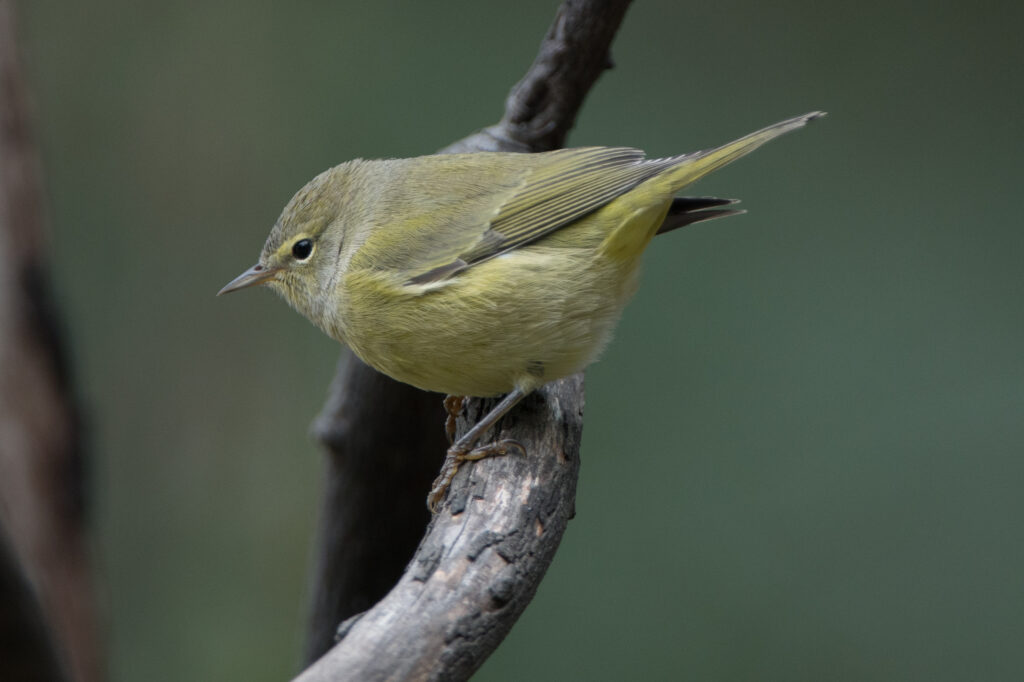
In general, the main migration seemed to begin in late April, with large numbers of migrants appearing on April 29 & 30.  With regard to warblers, Orange-crowned, Wilson’s and Yellow-rumped (Audubon’s race) provided the greatest numbers of visits. 

This is a male Yellow-rumped warbler, Audubon’s race.

This year, for I believe the first time, we had visits by the Myrtle race of Yellow-rumped warblers.  This first photo is of a female, the second photo is of a male.

There were several days of rain or cold when I didn’t spend much time in the yard and we didn’t seem to have that many visits.  But we then had two more days (May 4 & 5) of high migrant traffic. 

This season, in addition to the warblers listed above, we had confirmed/photographed visits from: 

  • Townsend’s warbler (1 visit) 
  • Black-throated gray warbler (1 visit)
  • Pacific Slope flycatcher (2 days) 
  • Warbling vireo (2 days) 
  • Brown-headed cowbird (female; late arrival but now a daily visitor)
  • Western tanager (male & female) 
  • Black-headed grosbeak (male & female) 
  • House wren (nesting) 

We thought we might have seen a MacGillivray’s warbler (twice) and female Yellow warbler (twice), but we couldn’t be sure of the identifications or obtain photographs.  

To bring things up to date, as of May 22 we seem to be getting only about one warbler visit per day.  The House wren that was in one of our nest boxes apparently fledged young. 

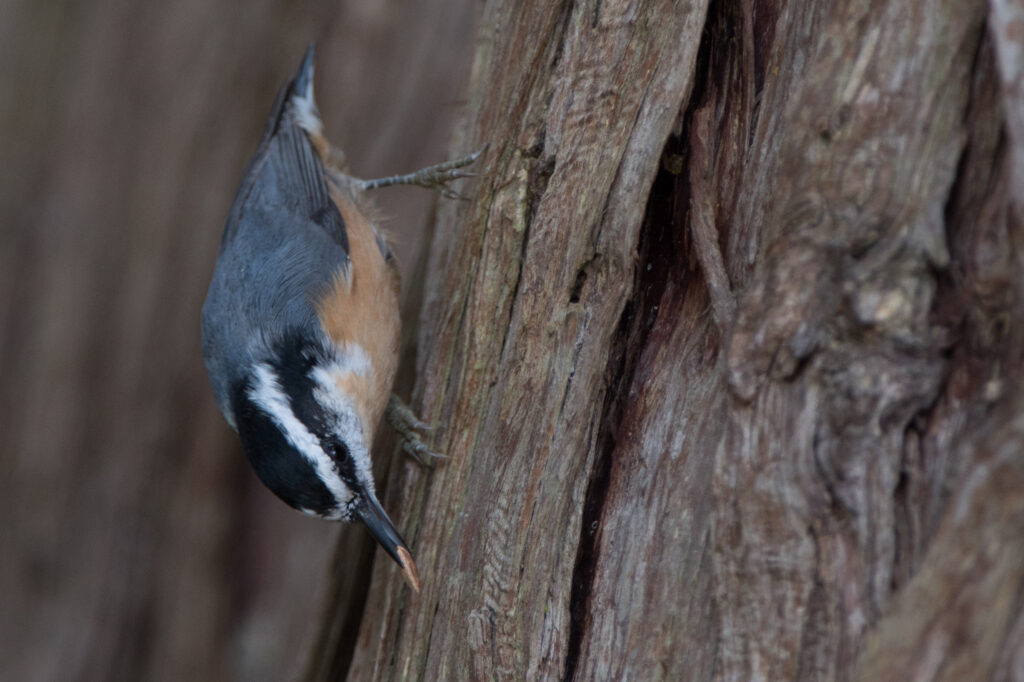
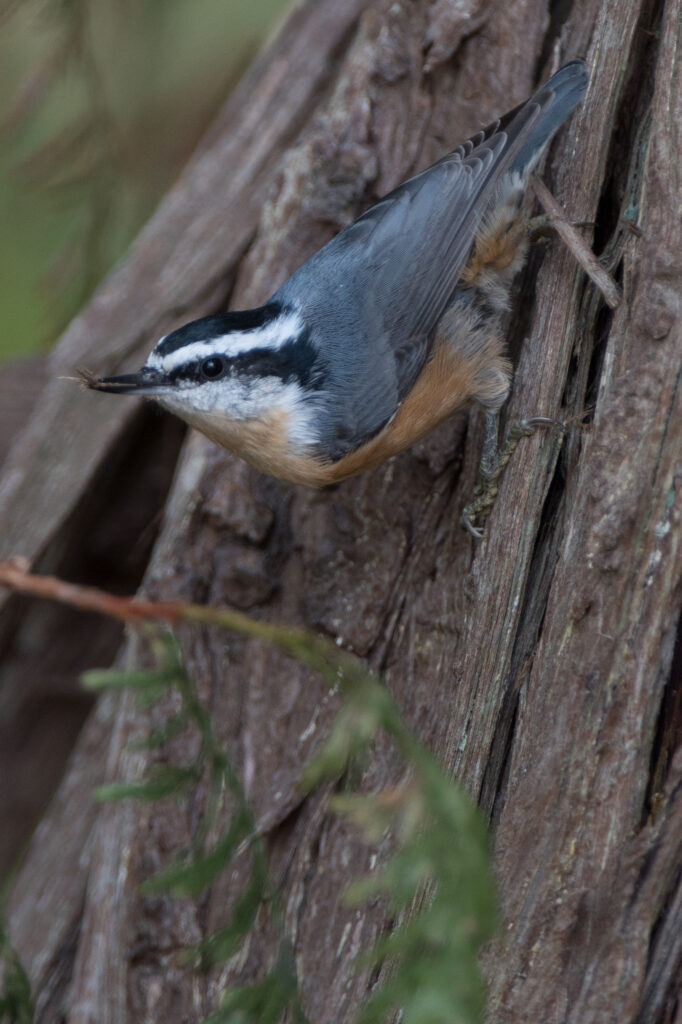
A pair of Red-breasted nuthatches raised a family of four young in the vicinity and the parents have been feeding them suet in the yard.  About a week ago one of the young ones landed on the lens of my camera, only about five inches from the front of my face, while I was photographing birds in the yard.  We have Black-capped chickadees currently occupying a nest box.  Another pair were discouraged from using a different nest box by a persistent male House sparrow that was unable to enter the box but was threatening to the nest-building process.  

Whew! I’m going to consider myself caught up and not visit the migration again!