Author Archives: admin
Common Loon
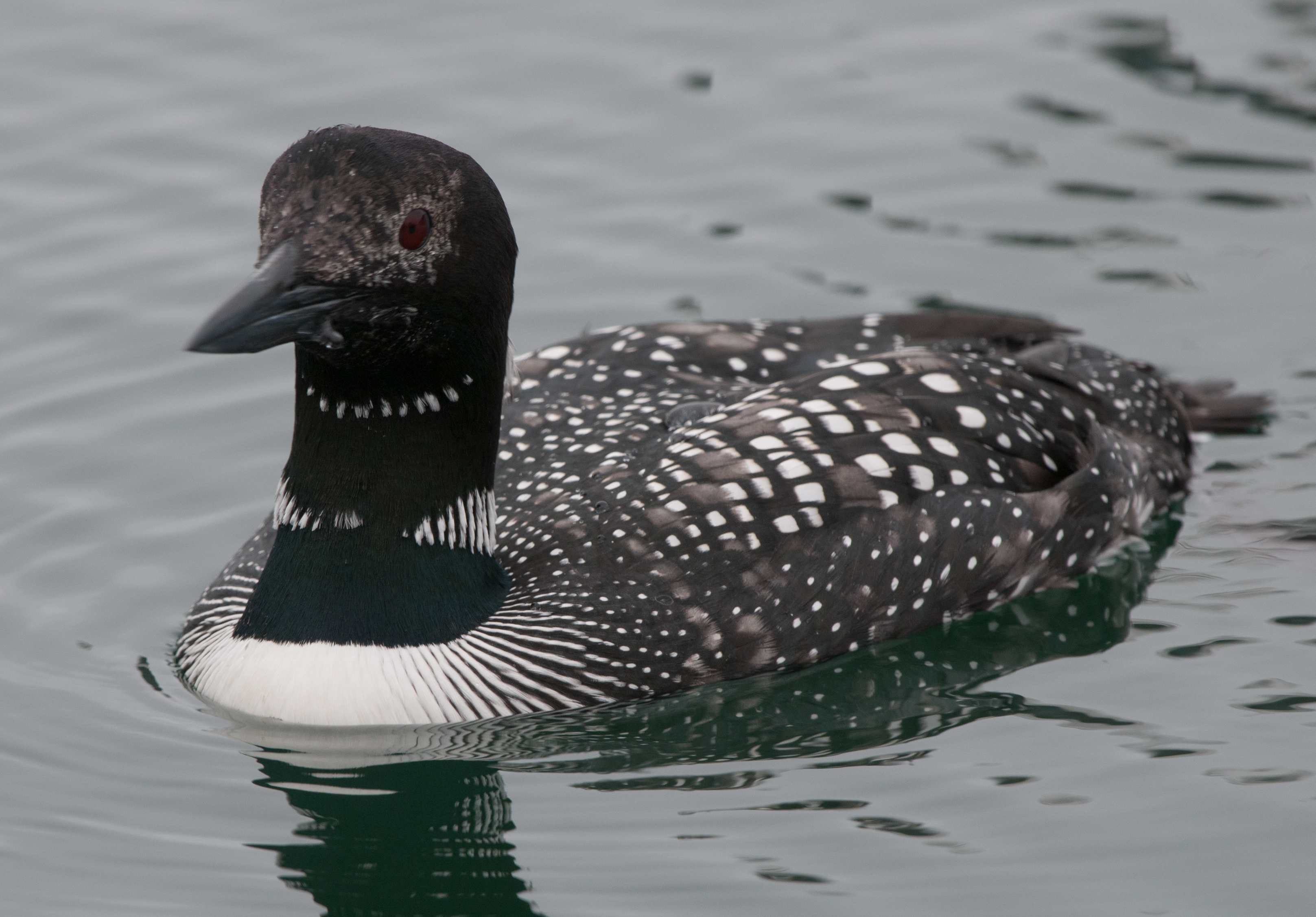
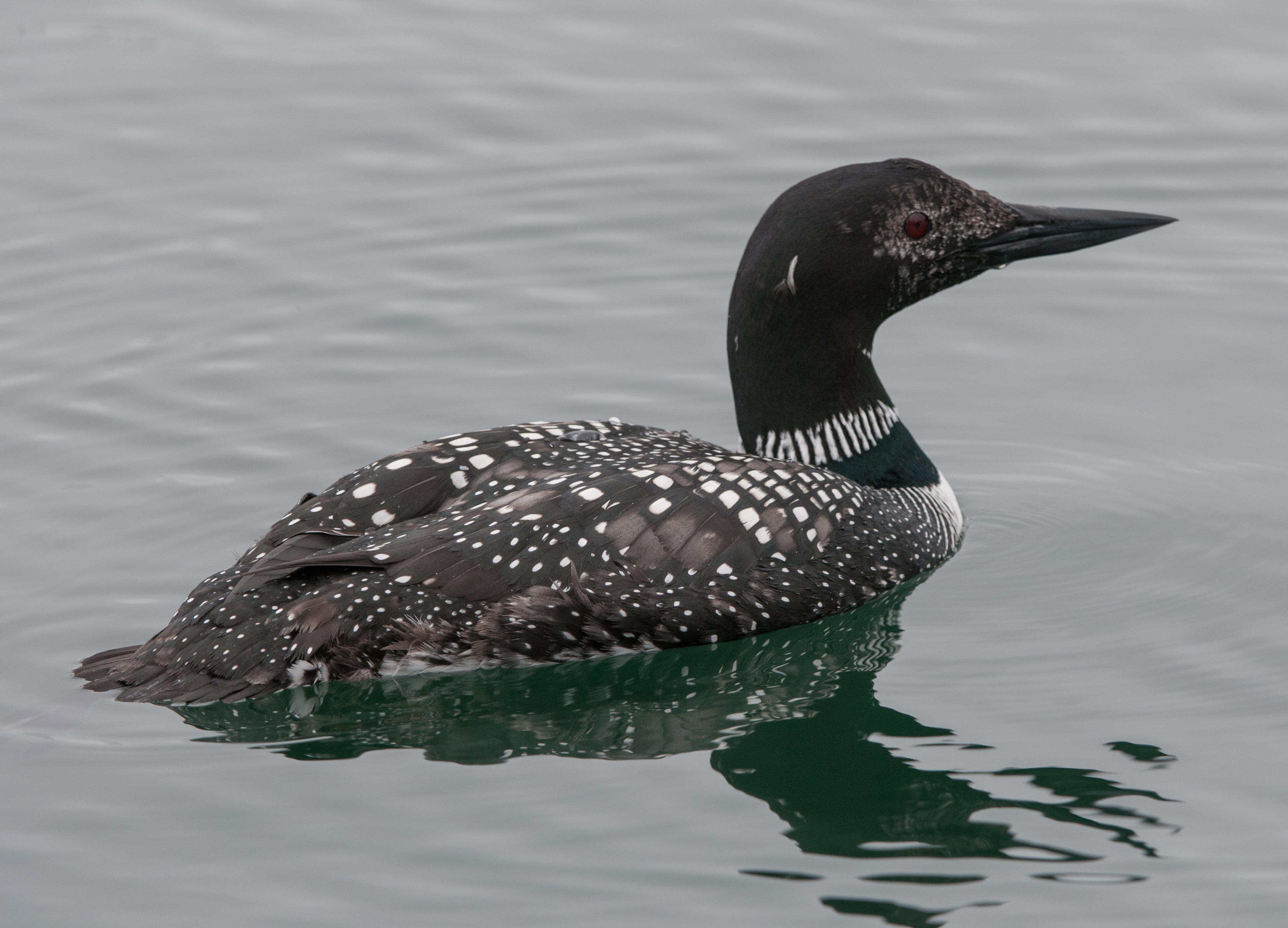
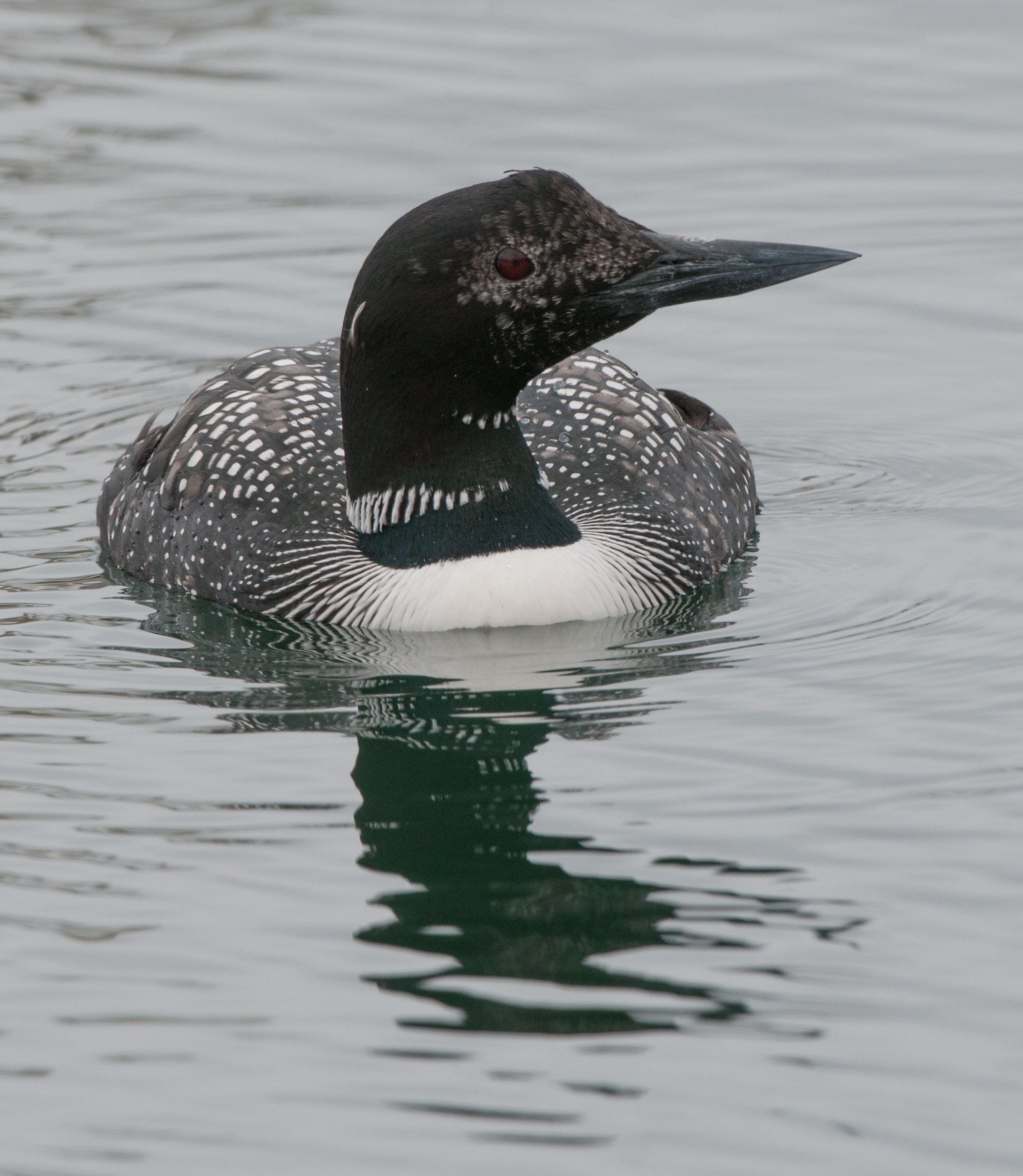
On Monday, April 8, 2013 I was on my way home from my morning walk in Washington Park (and coffee afterwards) when I decided to swing by the marina to see if there might be any interesting waterfowl. In the north basin I discovered a Common loon, probably the same one I had photographed (and posted to my blog) several weeks previously. I wasted no time in getting home to retrieve my camera, but was delayed by doing a computer chore for my wife. When I arrived back at the north basin of the marina I found the bird was no longer there.
I started a search of the marina and finally located the bird in the channel between D and E docks. The problem here is that those two docks have different access points, and if I chose the wrong one and the loon drifted the other way I could find myself too far for effective photos. I watched the loon for a few minutes and finally chose D dock, in part because even though the sky was overcast the sun would be behind me and I might get slightly better light.
As I walked out the dock I watched the behavior of the loon and saw that it wasn’t reacting to other people walking on the dock. And the loon had drifted over towards D dock, meaning I could potentially get much closer to it.
As I approached the slips where the loon was located I took a couple of shots from the main dock and noticed that, for whatever reason, the loon’s attention was very directed at the other (E) dock. I eased about halfway out the walkway between the slips, then took a lot of photos. I then noticed that a boat was leaving the marina and this tended to herd the loon even closer to me. The loon seemed to be paying absolutely no attention to me so I eased out to the end of the slips. By this time I was no further than 20’ from the loon and had to back off the 400mm my lens offered to get the entire bird in the photos. Before I left the loon was so close that I couldn’t focus on it, meaning that it was within less than the 15’ minimum focus distance of the lens. The entire time I was photographing the bird it just ignored me. This is the primary reason I think the bird might be the one I previously photographed… it exhibited none of the wariness that I have often experienced with loons.
So here are some of the photos of the Common loon…
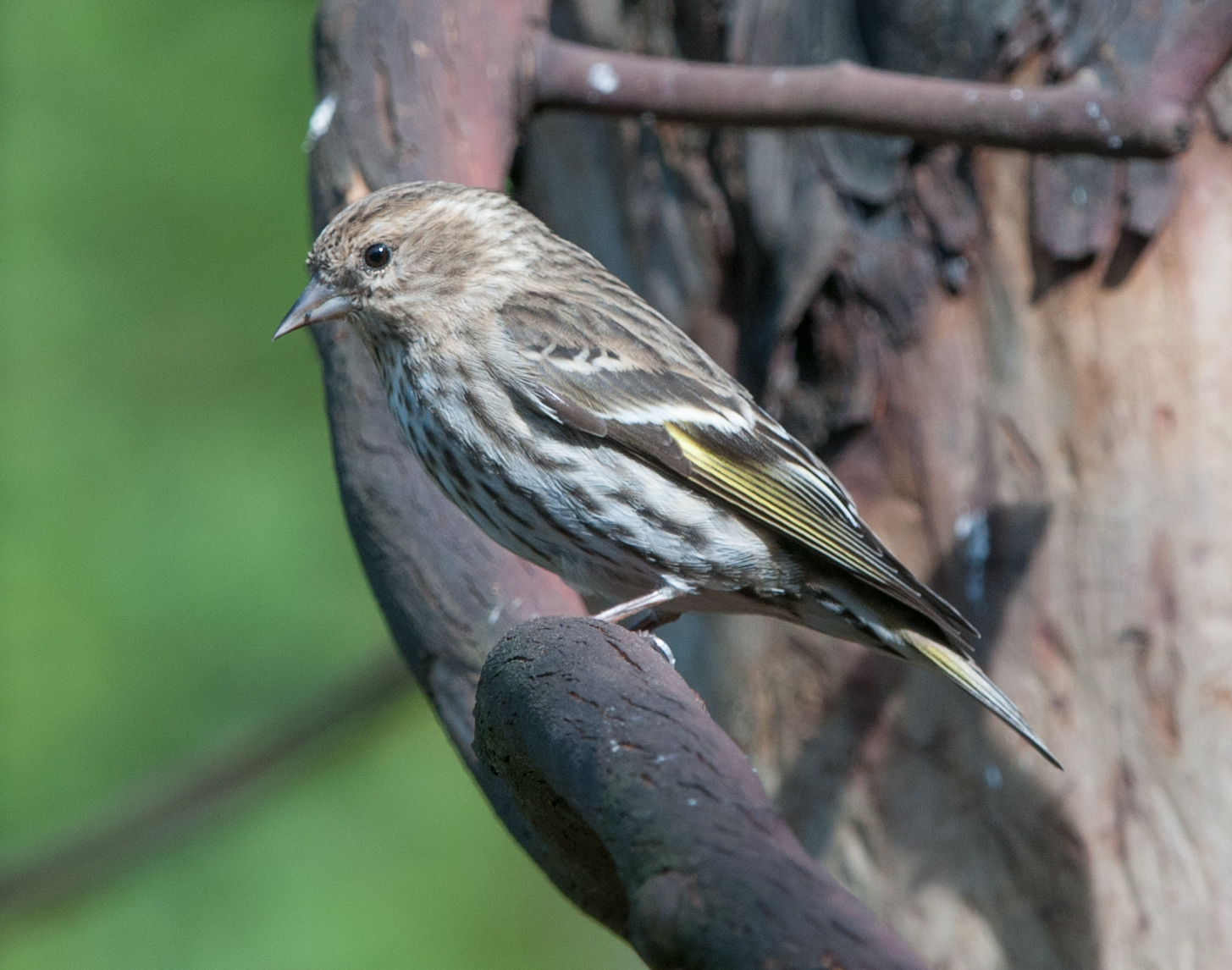
Pine Siskins
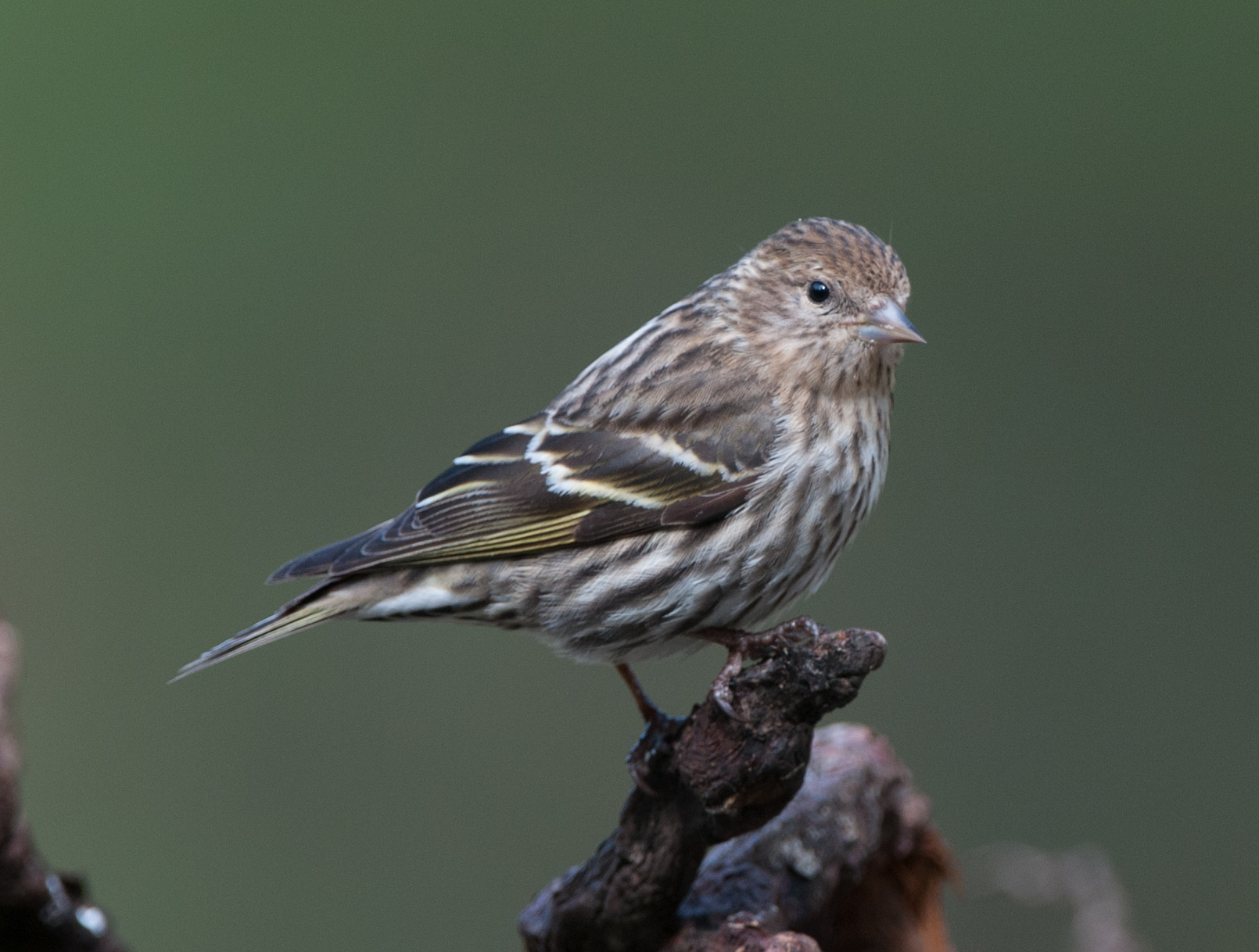
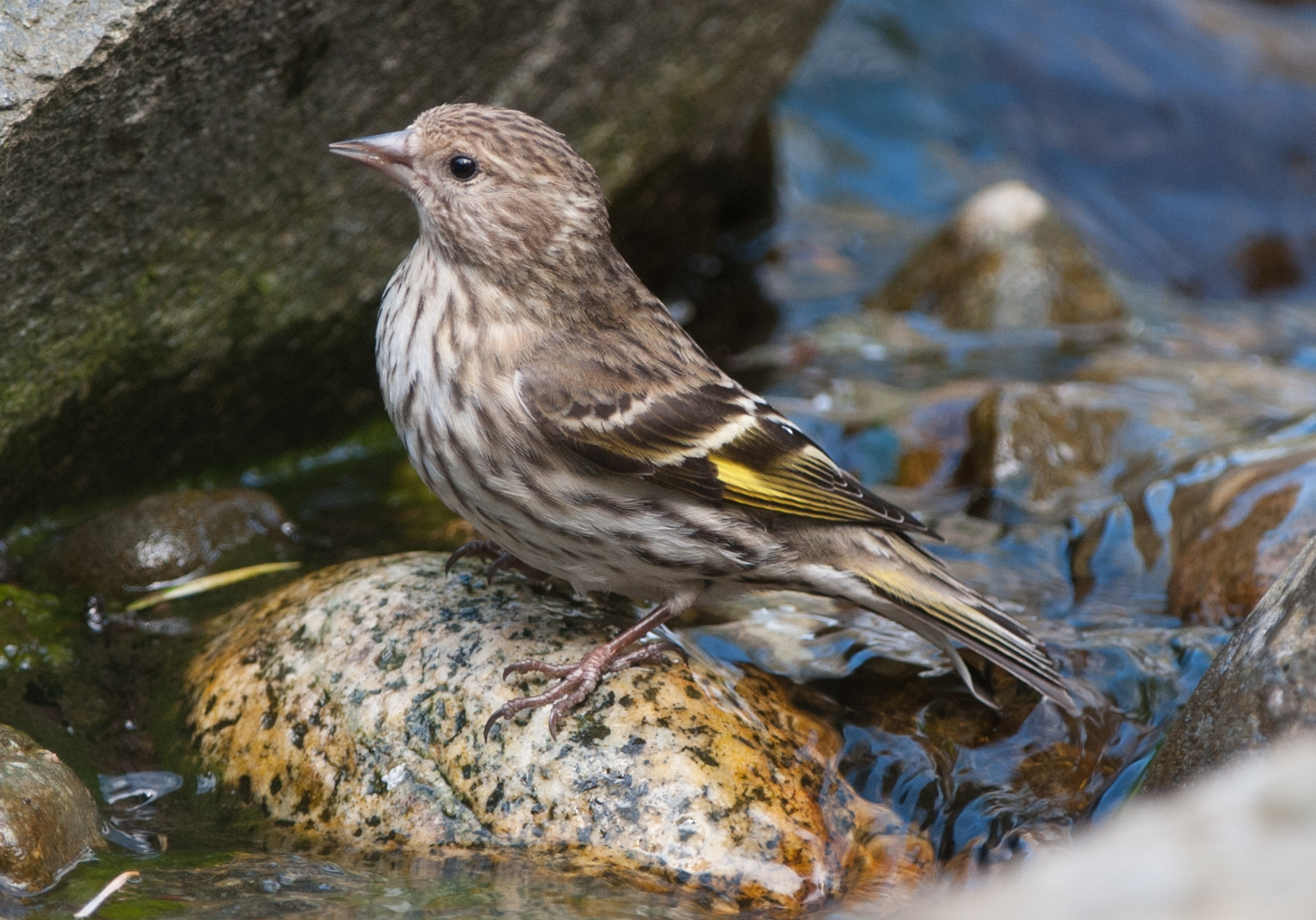
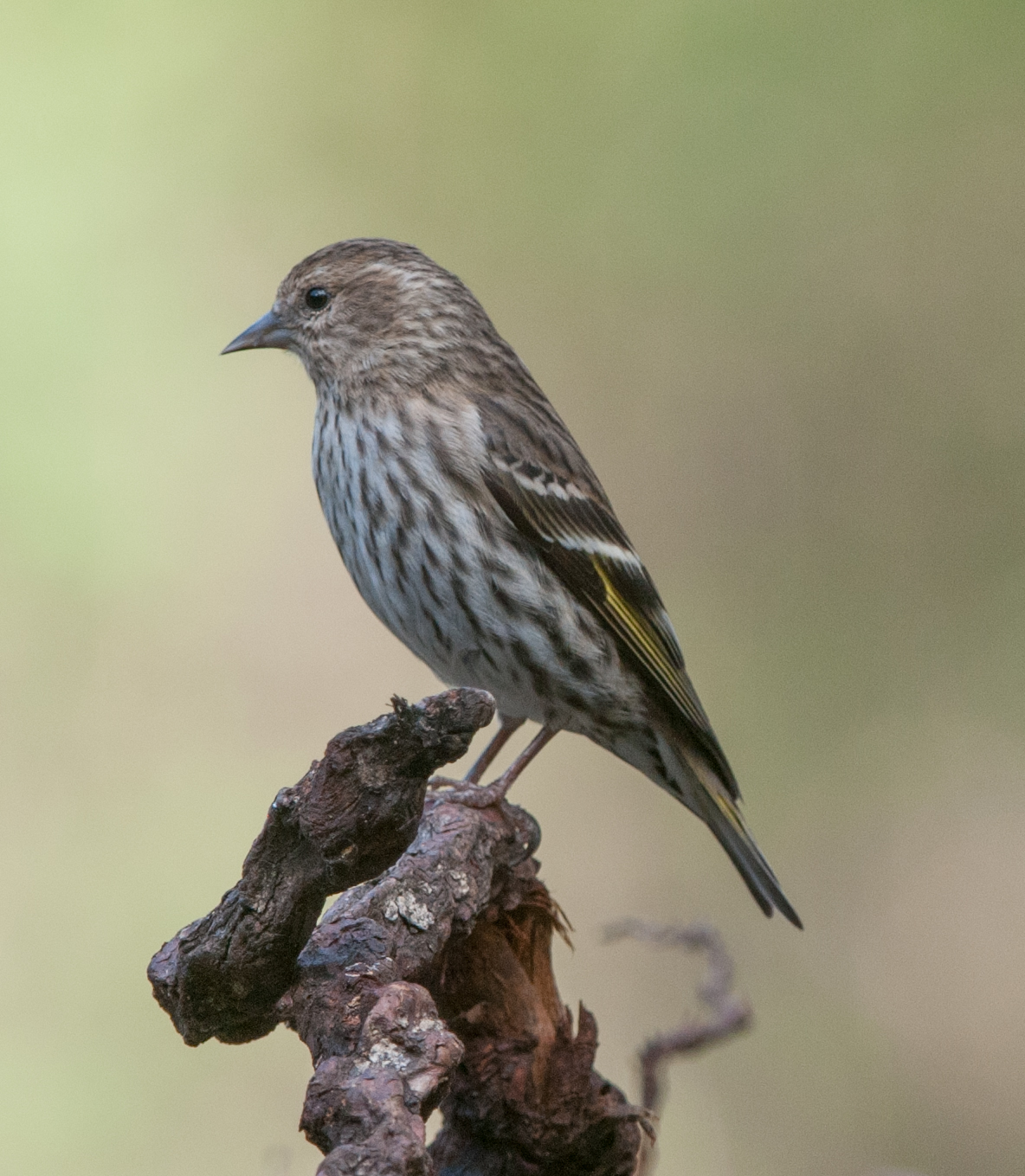
On Sunday, April 7, 2013 I was in the house when I heard the distinctive sound of the impact of a bird on one of the windows. I went outside to investigate and found a breathing, but unresponsive Pine siskin on the patio. I picked it up and cradled it in my hand to keep it warm. As I was admiring the bird I heard another impact and found that a second Pine siskin had hit the same pane of glass, but apparently not as hard. Nevertheless the second siskin was stunned. I picked it up and found myself with a Pine siskin in each hand!
We had a run in a chair on the patio so I made a small cave and placed both birds inside. Over the course of the afternoon I checked on them several times. First one disappeared and later, the other. I’m assuming a positive outcome.
As I think I’ve mentioned in a previous blog, we have been overrun with Pine siskins this spring. One morning I attempted a count and reached 22, but I’m fairly certain that count was somewhat short as I was only able to count birds on the ground and there was a constant flow of traffic from lower tree limbs to the ground. It’s also of interest to me that several years back I went for about a year and a half without seeing a single Pine siskin.
So in honor of these small birds I’m posting some recent photos of them, all taken around our watercourse.
Acquisition of a (Free!) Self-Propelled Lawnmower!
So what does a self-propelled lawnmower have to do with birding? It’s a tortured relationship, but I’ll attempt to explain…
At the time we built on our property, adjacent to city parkland, we determined that we would try to create good habitat for birds and other wildlife. To that end I created an ‘artificial’ brush pile… in the front yard. I constructed a pen-type structure made of livestock fencing… welded rod in a lattice pattern with 4″ squares. I then filled the structure with a few logs on the bottom and a lot of brush on top of that, finally topping the structure with a roof of the same fencing. I then surrounded the entire structure with more brush which is augmented from time to time with small limbs that are blown out of our fir trees.
The rationale was that the structure would provide a safe haven for birds… they can easily go through the 4″ squares, but predators such as raccoons cannot reach the interior of the sanctuary. The brush pile has worked spectacularly and is the favorite location for many of the birds in the yard… even more popular than our watercourse.
So this morning I was filling bird feeders in the front yard and glanced over towards the brush pile and discovered the lawnmower pictured below, faithfully removing grass from around the brush pile.
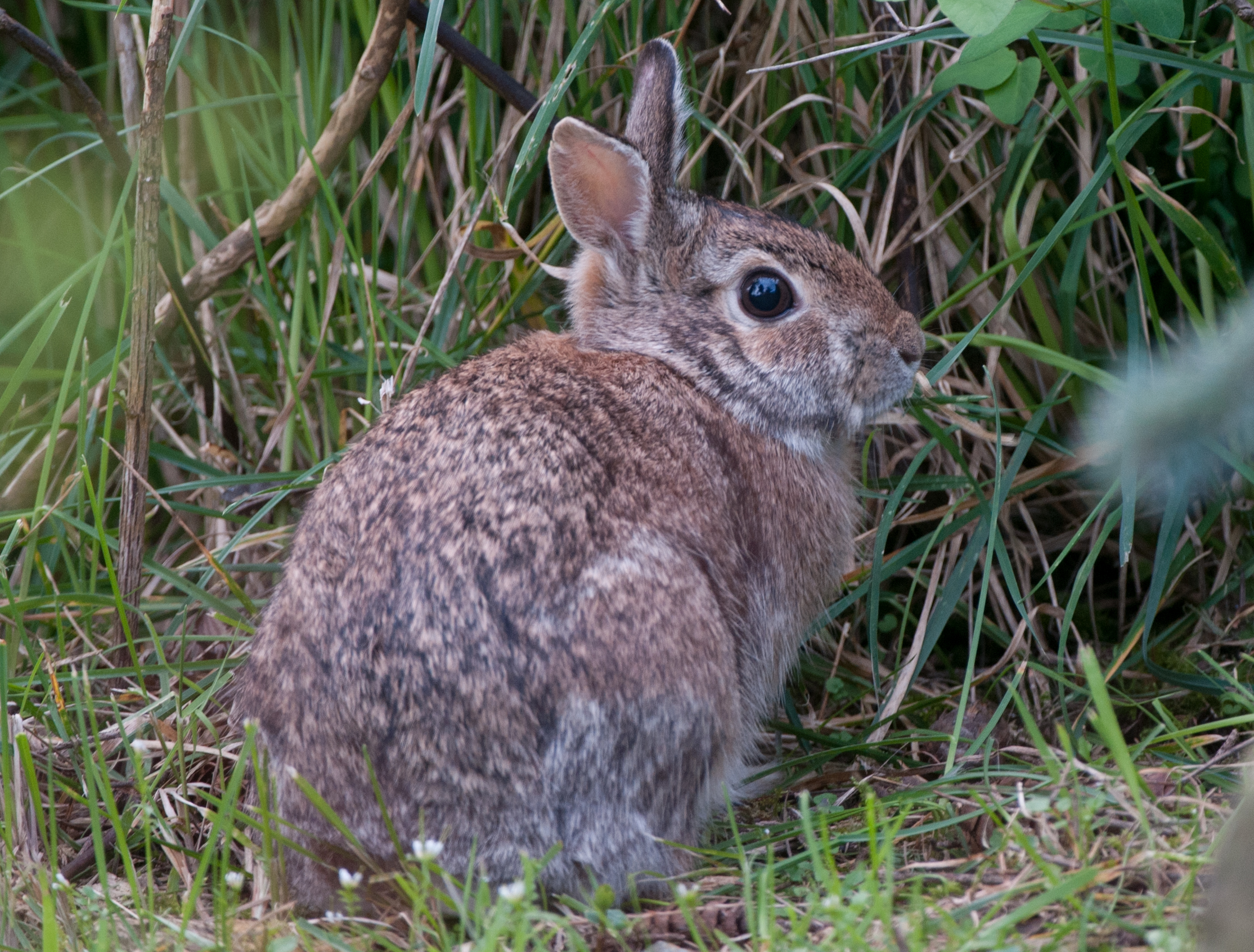
Self-Powered Lawnmower!
Since this is at least the second time we’ve sen this ‘lawnmower’ recently, and the previous time it was on the other side of the brush pile, I’m guessing that it has found a sanctuary in our yard. But life is fraught with uncertainty, and just two evenings ago we had a very healthy coyote in the yard and we have two Great Horned owls living in the neighborhood. Both parties would like to acquire our lawnmower!
And just to add a little interest, this afternoon I spent some time outside on an overcast day and after the light was well past its prime, but I was able to photograph a male Rufous hummingbird in the yard… both bathing in the watercourse and feeding on the Red current blossoms.
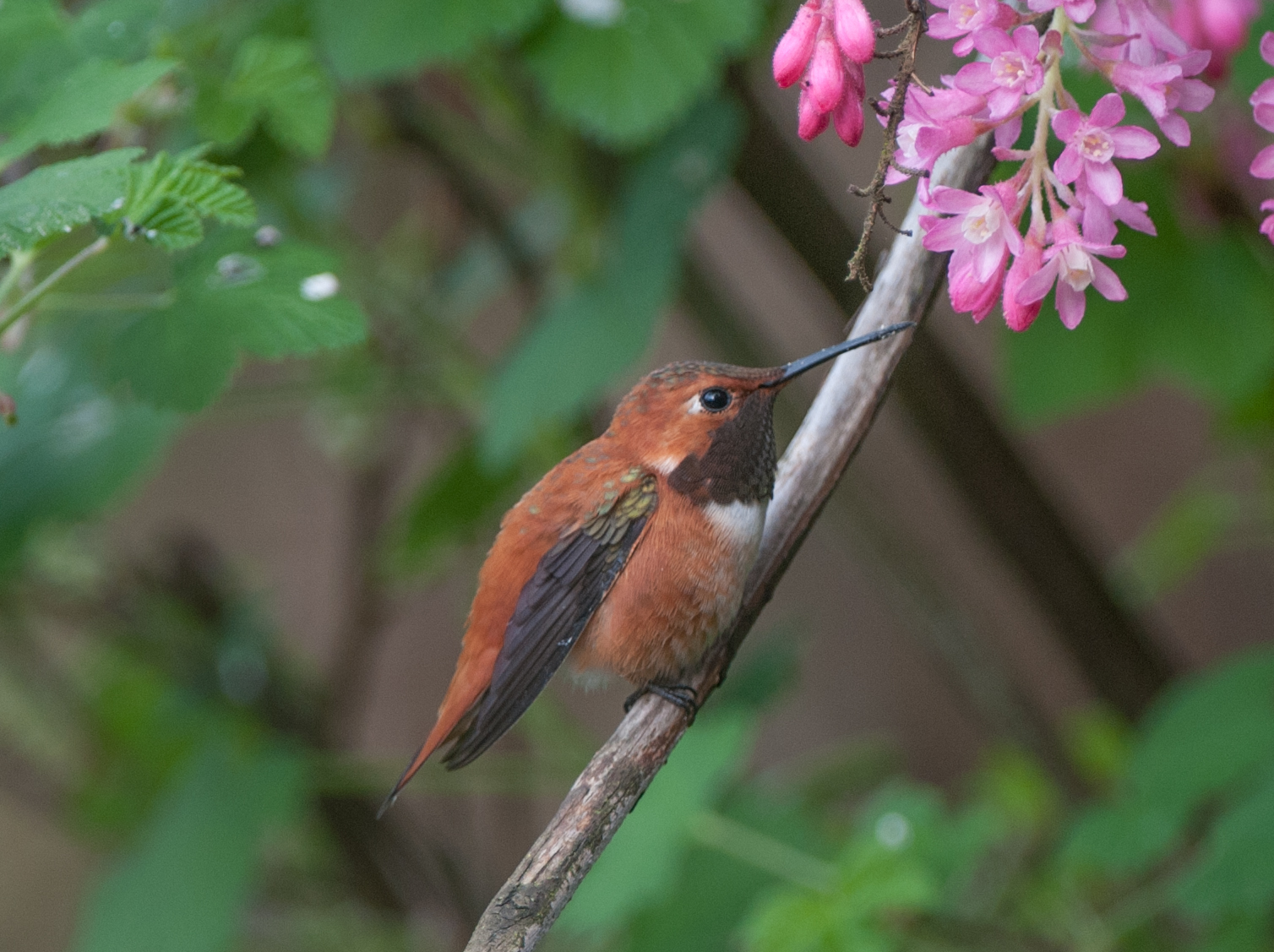
Male Rufous Hummingbird
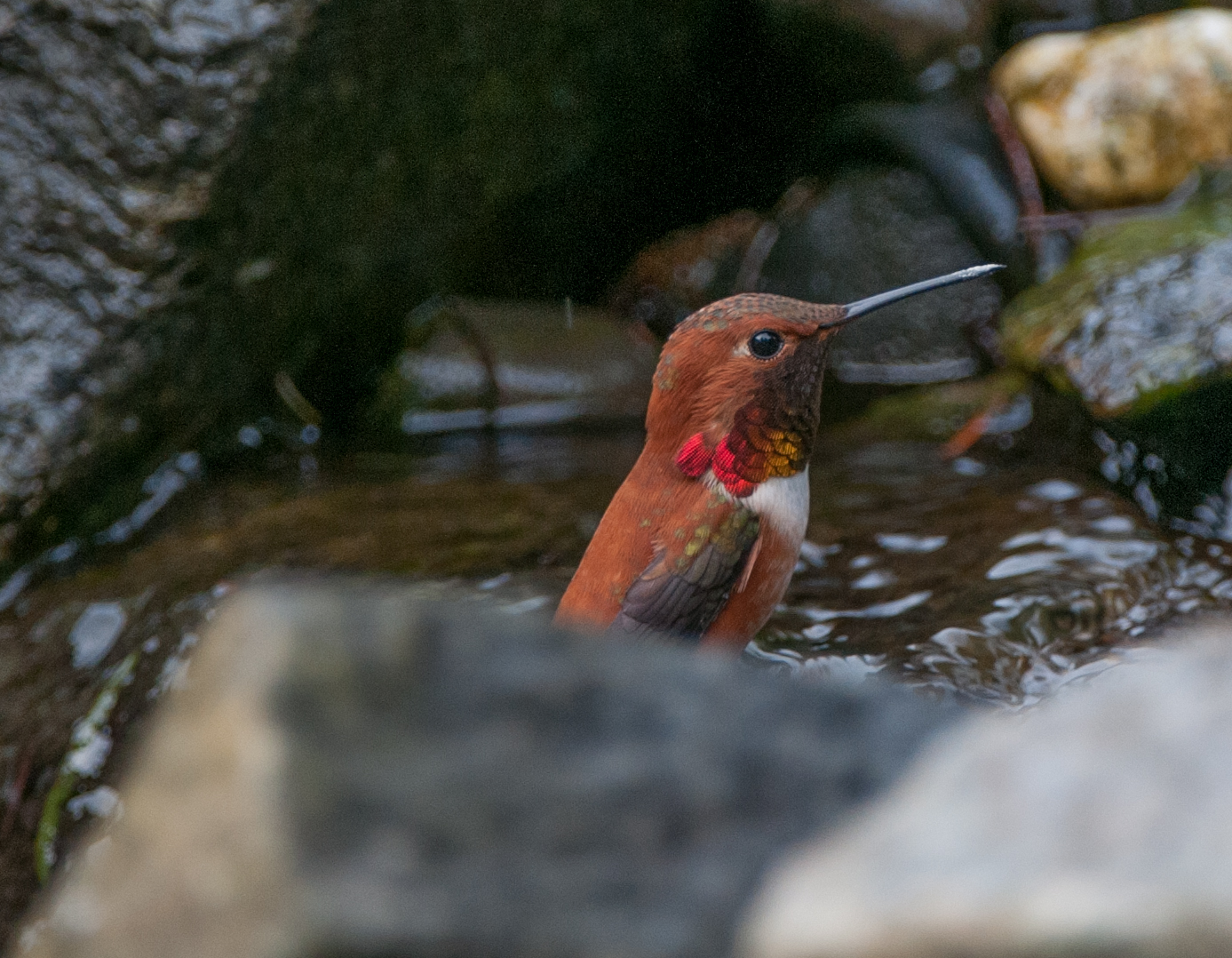
Male Rufous Hummingbird bathing in watercourse
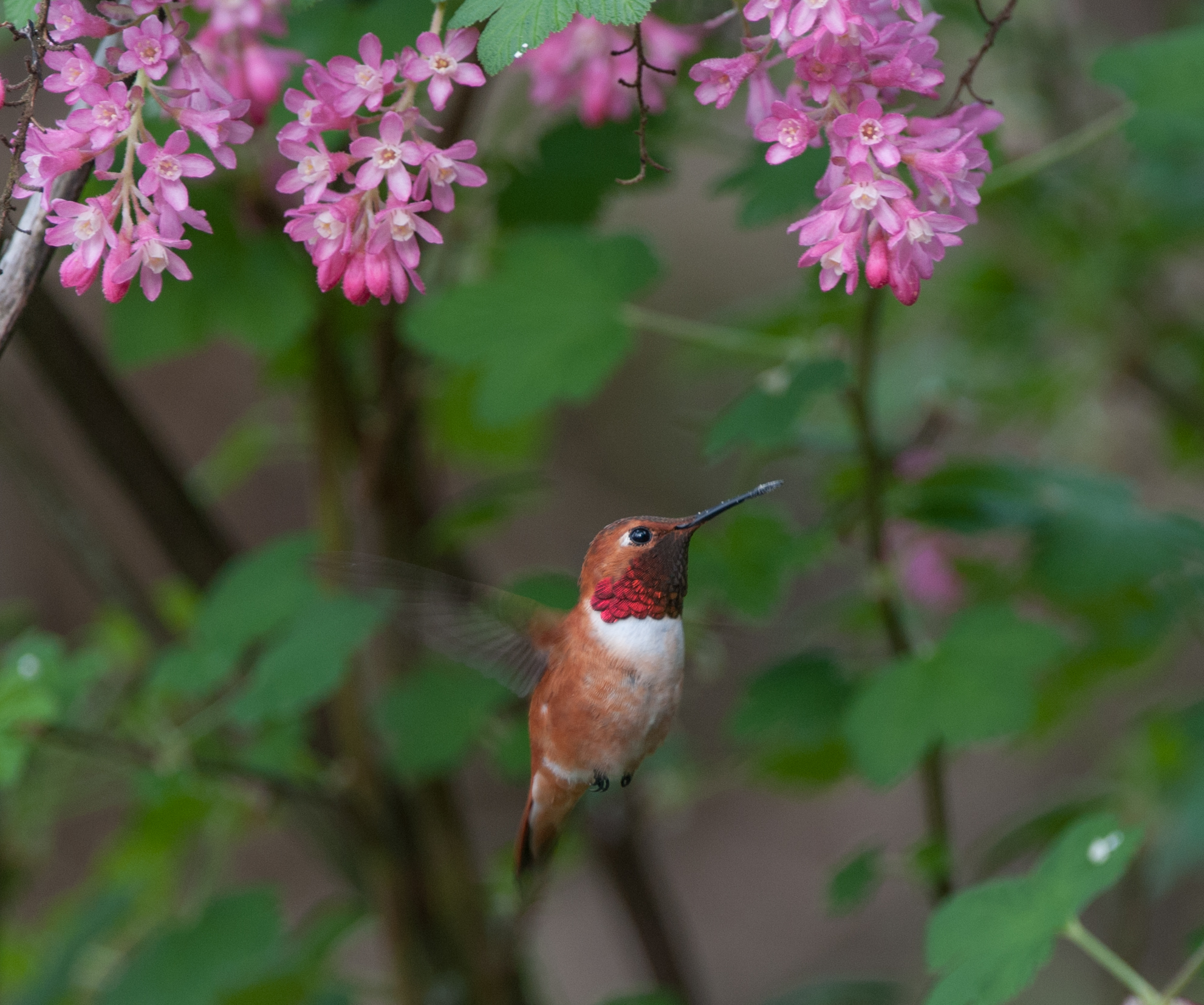
Male Rufous Hummingbird feeding on Red Current blossoms
Life is good… here’s looking at you!
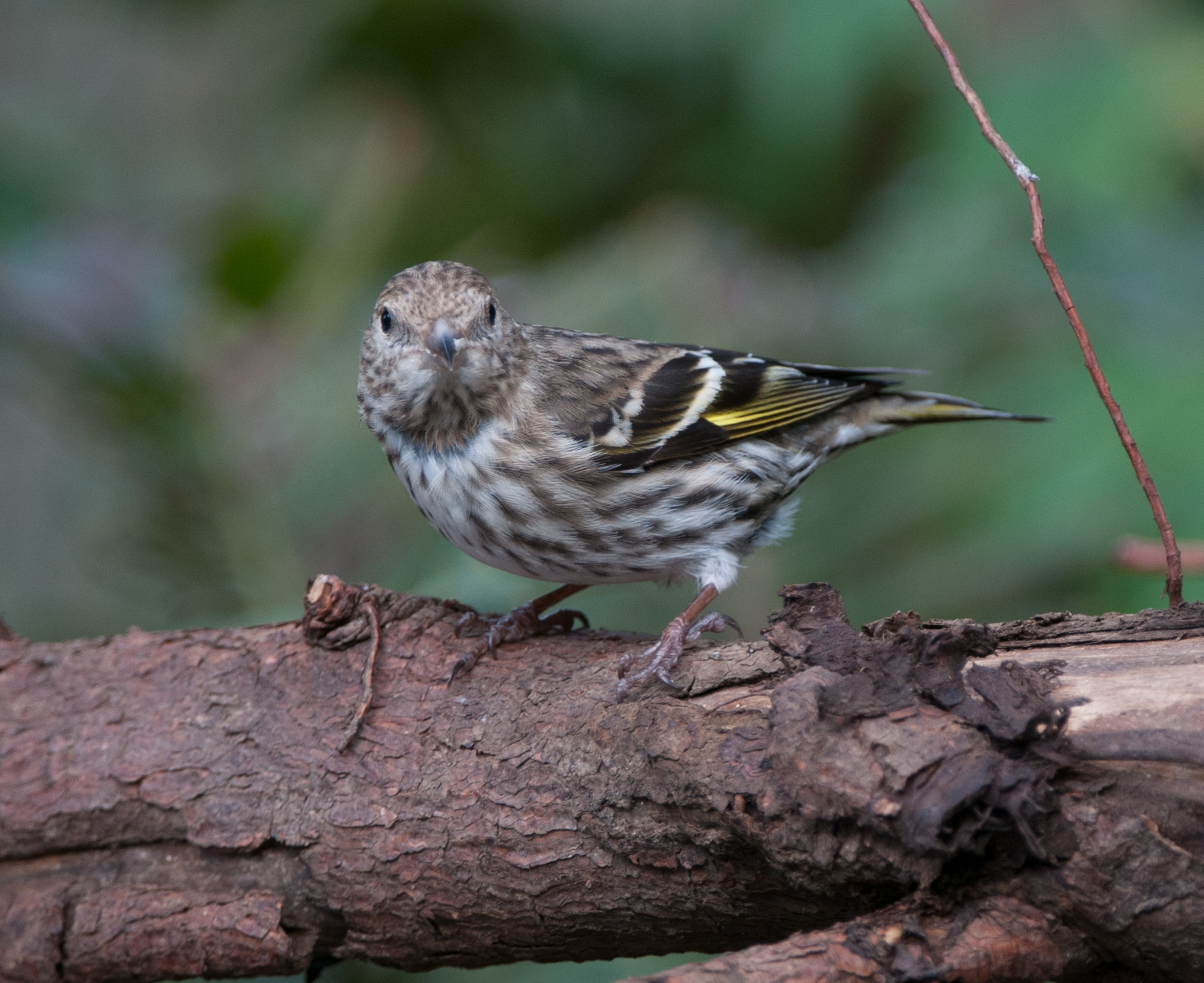
Pine Siskin
Yard Birds… They’re Back!
On the evening of April 1, 2013, at 6:50pm (still good light) I was sitting at the dining room table when movement in the yard to the south of us caught my attention. I looked up and saw a large, hairy, gray animal in the yard. Several things raced through my mind… a reflection of something in the glass, the neighbors’ dog (which is not allowed to run unattended) but I suddenly realized that I was looking at a very healthy-looking coyote. It was sniffing something on the ground inside our partially-fenced yard and only about 25 feet from the house.
One of our cats is an inside/outside cat (who has started spending more time outside with the nicer weather) and, not knowing where she was, I jumped up and rushed outside. It was probably a good thing I did… our thirteen-year old diabetic (two insulin shots per day) cat was frozen in her chair out on the patio. I chased the coyote off (it ran into the woods to the southwest of us) and the cat sprinted for the door, probably averting disaster!
We’ve lived in the neighborhood about twelve years and seen coyotes a handful of times over the years, but this is absolutely the closest one to the house we’ve seen. But I suspect they probably come through the yard later at night from time to time.
This last week we had a rabbit adjacent to our brush pile in the front ’yard’. That’s also a rather rare sighting and the closest we’ve seen a rabbit to the house since we lived in this location.
You’re probably thinking this web site is supposed to be about birding, and you’re right… so let’s get to them! One of our neighbors last week found one of the Great Horned owls that’s been frequenting our neighborhood for at least the past couple of months, high in a tree in the forest behind the amphitheater. We both obtained photographs, but due to the distance, the lack of light and some back-lighting, my photos came out very grainy. I hear a pair of the owls calling early almost every morning and evening. And a couple of weeks ago neighbors who live down by the wetland discovered one only about 20’ outside their door. I narrowly missed getting photos of it.
I’ve been spending considerable time photographing birds in the yard lately, in part due to the very good weather we’ve had over the past several days. We’re overrun with Pine siskins but have a sprinkling of other birds. We saw our first Turkey vulture on March 31. I didn’t record our first sighting in 2012 but in 2011 we saw our first Turkey vulture on exactly the same day!
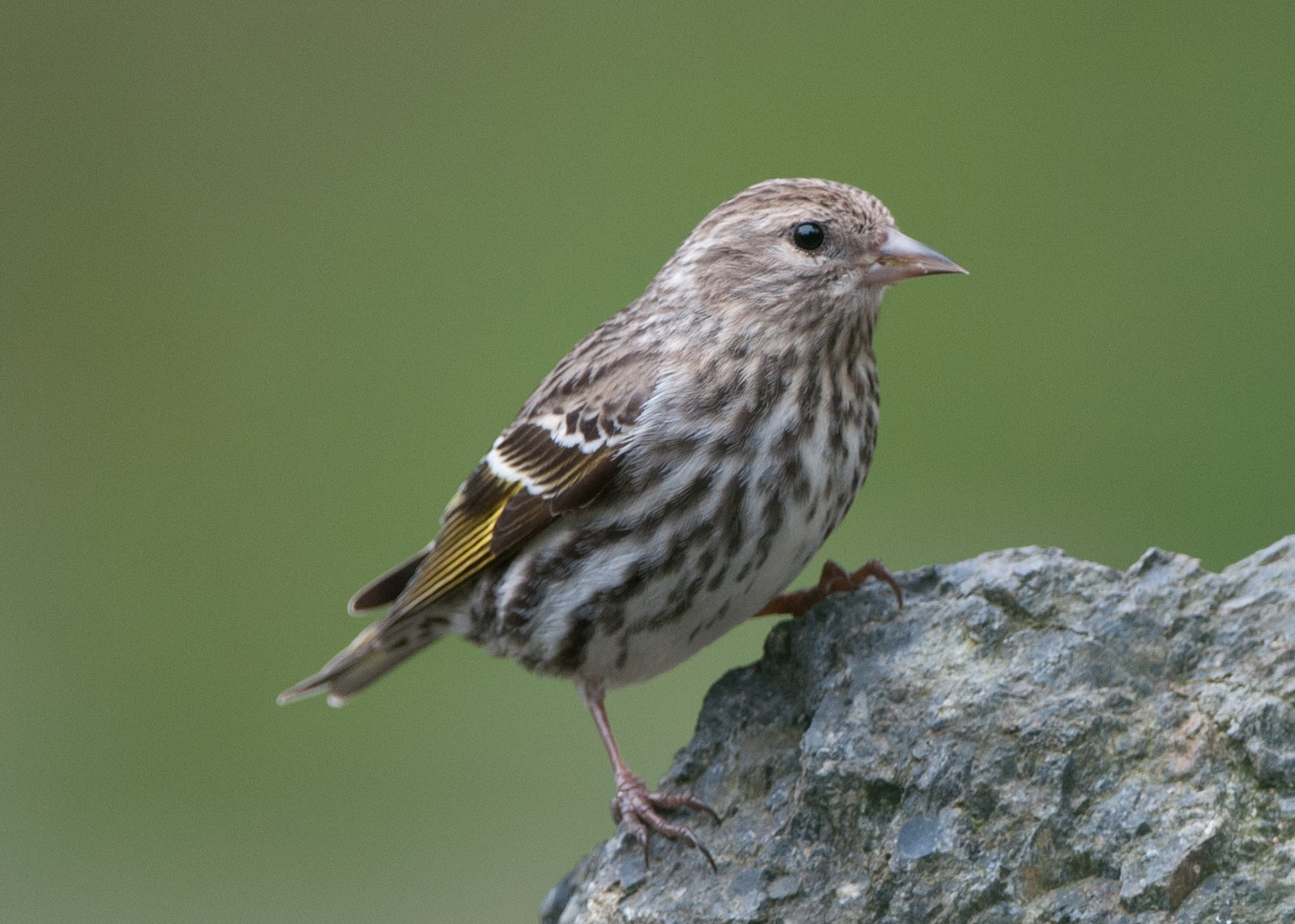
Pine Siskin
We welcomed back a single male California quail on about March 30 and it has become a daily visitor. I’m still trying to figure out where the quail are in the winter… I’m fairly sure they don’t migrate and almost certainly don’t hibernate (!), but we don’t we have never seen any during winter months. I’m concerned this year because we usually have a small covey to start with and they raise a goodly number of young… which slowly are reduced in number over the summer. The fact that we are starting with only a single male may mean that we won’t be watching any chicks this summer.
We still have at least one male and one female Anna’s hummingbird. The male is a holdover from this past winter. Both male and female Rufous hummingbirds have arrived for the spring and summer. For the first time I’m beginning to observe some behavioral differences between the two species when at the feeder. Just a couple of days ago we had a quick visit by an accipiter while I was sitting in the yard with my camera, but it was unsuccessful in snagging any of the birds in the yard and quickly left, probably after spying me sitting almost directly below it. I counted at least five Golden-crowned sparrows in the yard yesterday and they all appeared to be acquiring their breeding plumage. They’ll disappear soon for their breeding grounds further north.
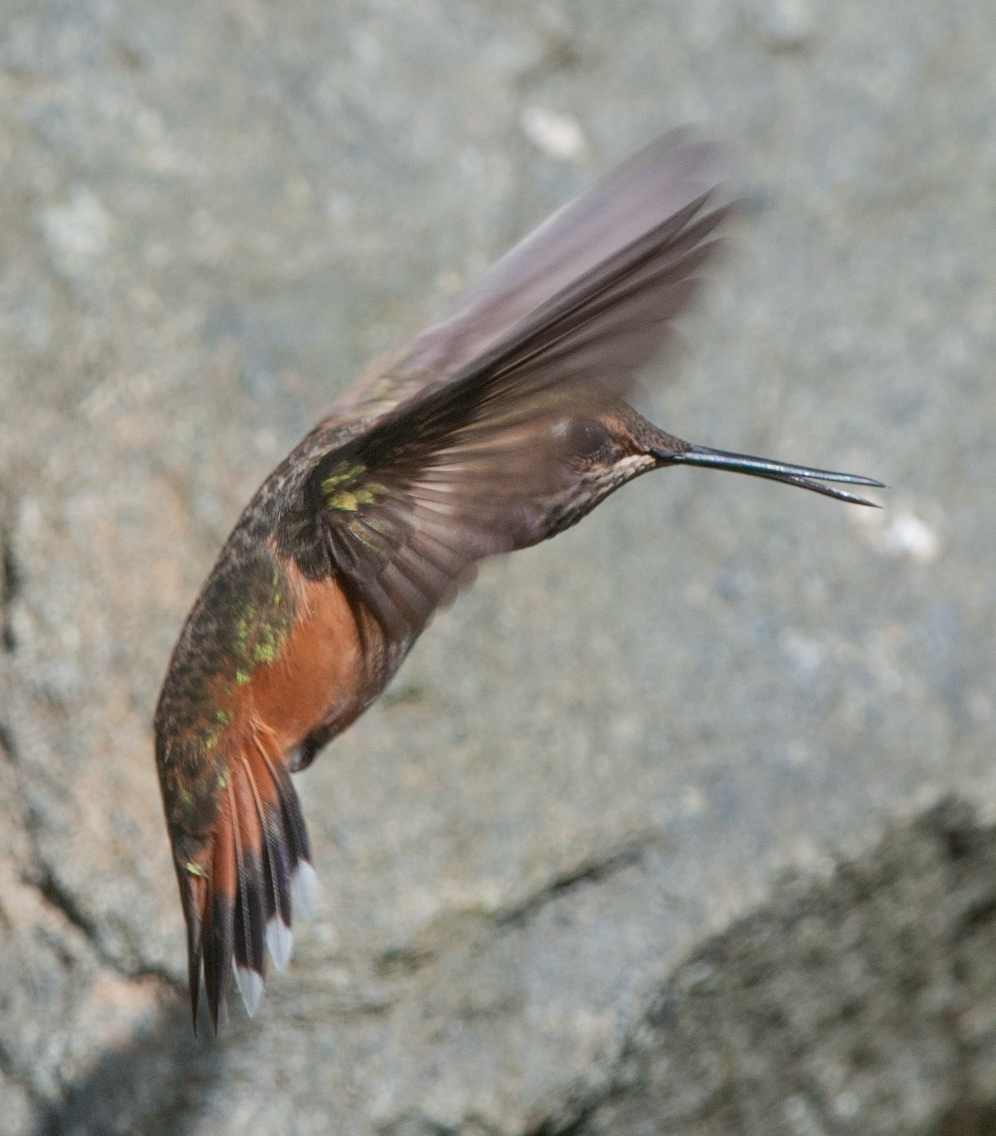
Female Rufous Hummingbird
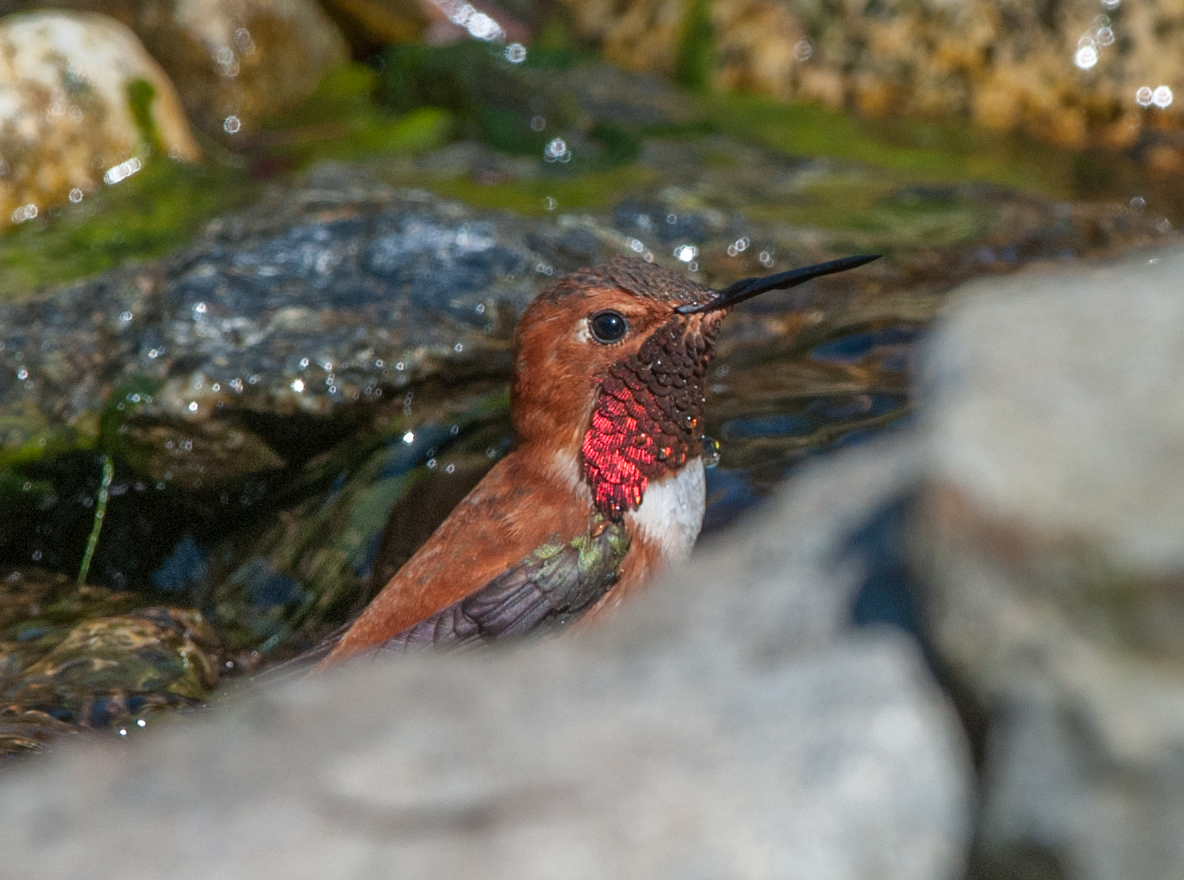
Male Rufous Hummingbird
We’ve also experiencing our share of woodpeckers… Downy, Hairy and Northern flickers. The birds are fairly easy to photograph but my preferred photography location isn’t conducive to photographing the birds at their usual location… a dead tree in the yard. If I want to photograph the woodpeckers I usually have to change my location which gives me a less than ideal opportunity to photograph the smaller, more numerous birds in the yard.
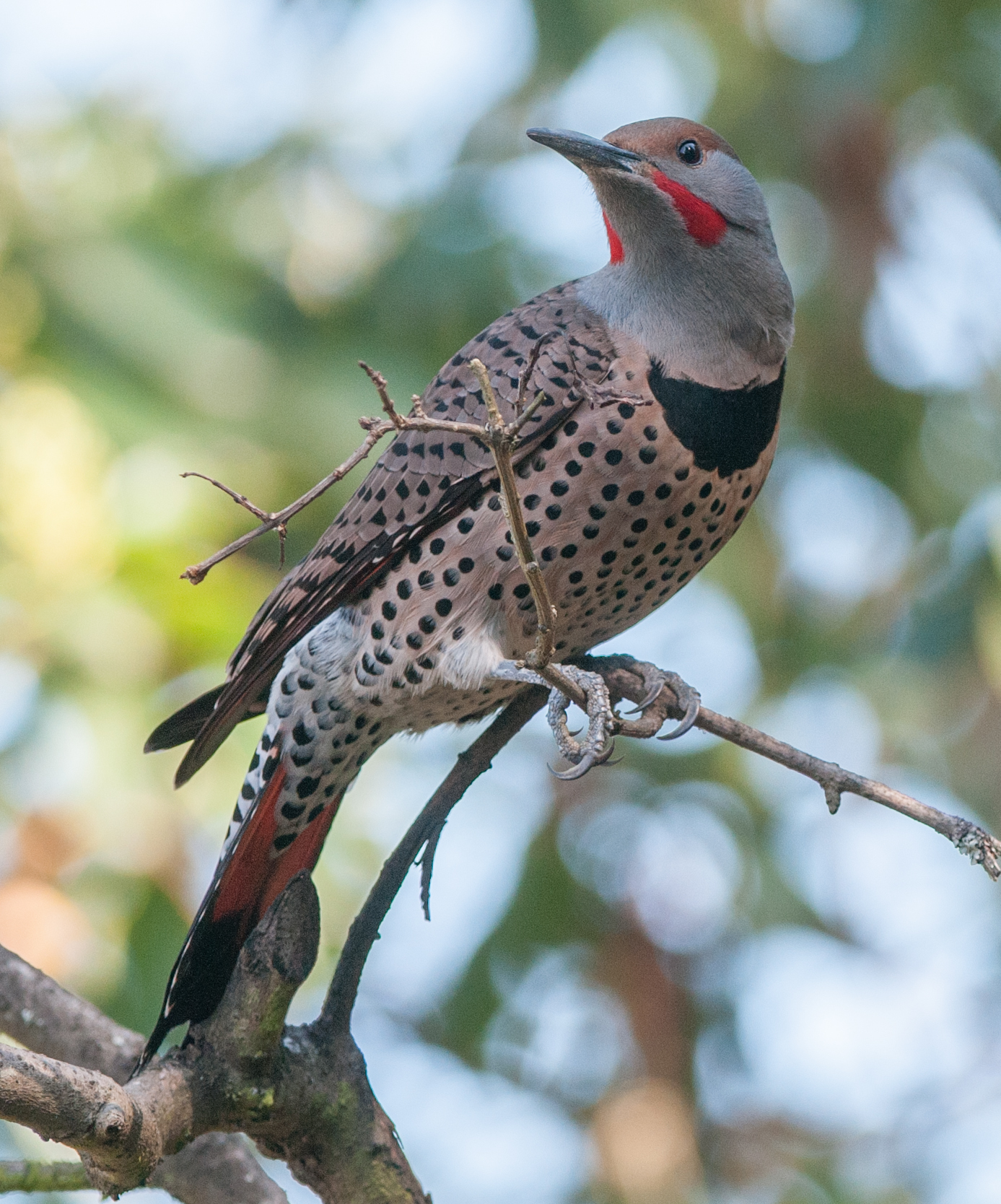
Male Northern Flicker
(All of the Red crossbills that were so plentiful and such frequent visitors into the early winter have abandoned us, but because there were so many last year and they liked our watercourse so much I’m hopeful for an early return.)
Update:
I wrote the preceding paragraph early this morning. When I returned from lunch, ready for a nap, my wife informed me that there had been a very red bird on one of the bird baths but that she was unable to get to a pair of binoculars fast enough to identify it before it left the yard. I wearily trudged out to the yard with my camera, vowing to take some time to try and see what she had seen. Within about ten minutes I took the following photos. Life is good!
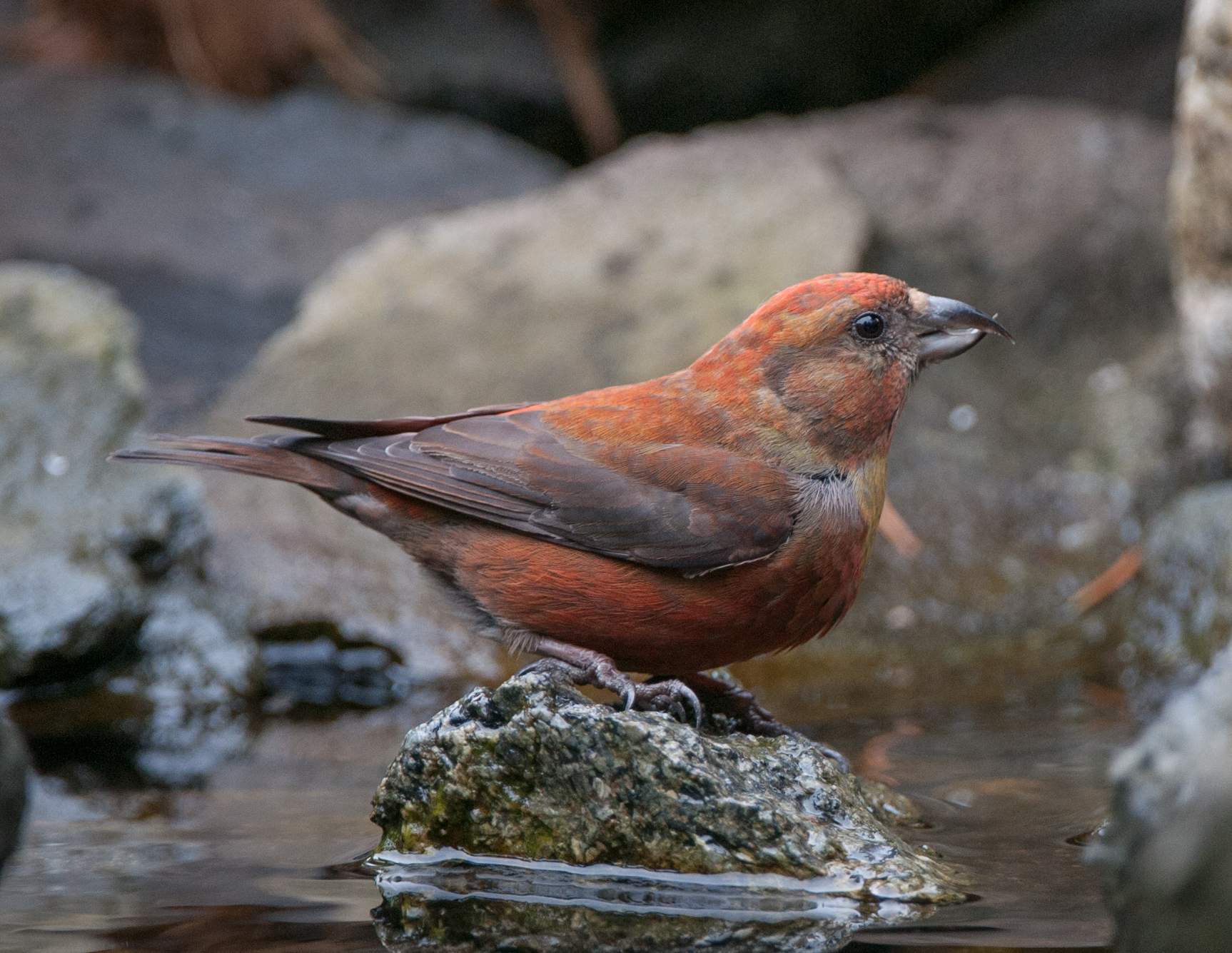
Male Red Crossbill
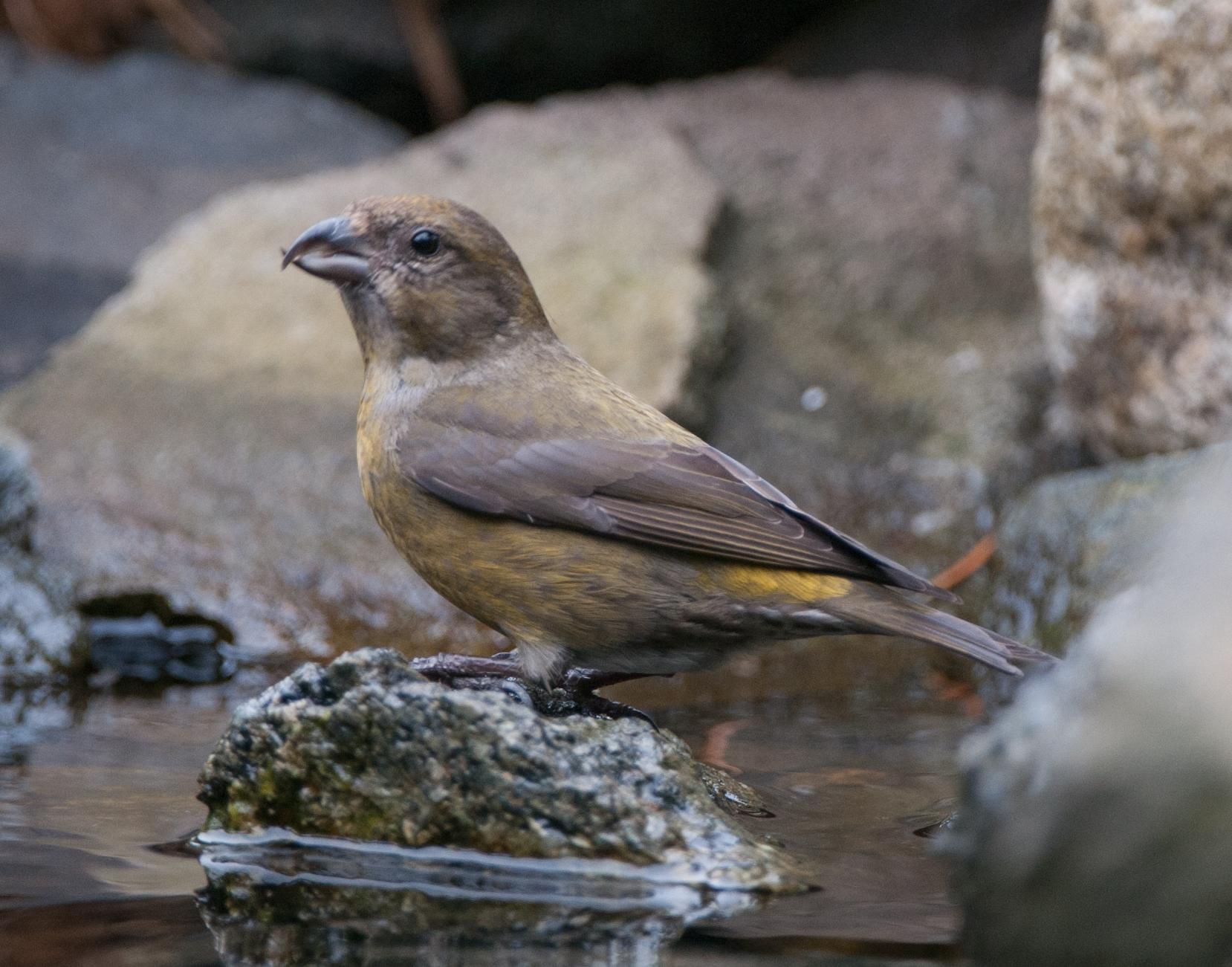
Female Red Crossbill