As I believe I mentioned in my last post, I was expecting a special spring visitor any day. Early in the afternoon of March 5, 2026, I was in the yard filling bird feeders in preparation for some birding photography when I heard the buzz of a hummingbird’s flight behind me. I turned just in time to get the barest glimpse of a flash of orange speeding out of the yard. I had no opportunity to make out details, but I didn’t need to… seeing the orange color on a hummingbird told me that this was my first seasonal sighting of a Rufous hummingbird… and a male at that!
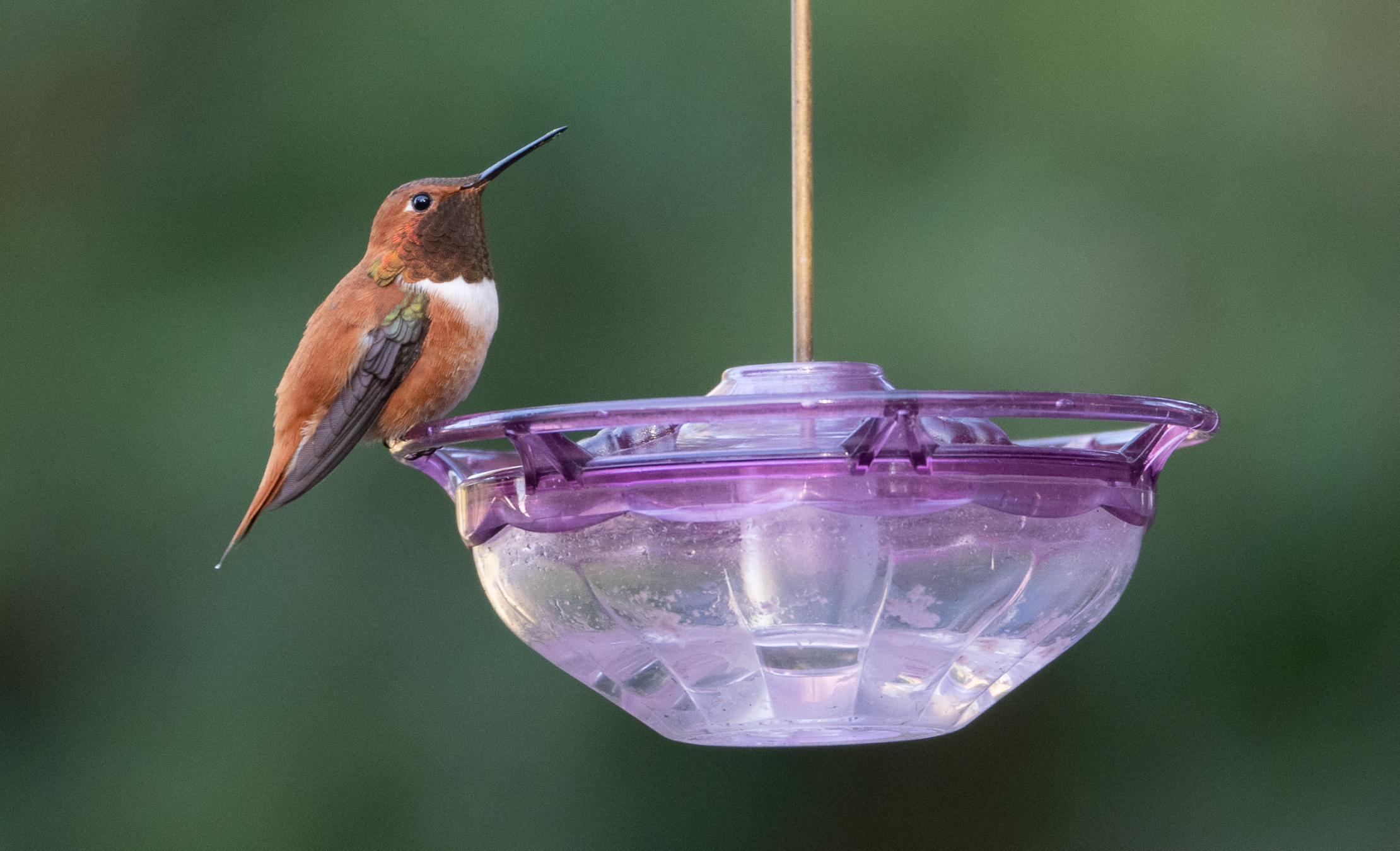
I was determined to get a photo so I retrieved my camera, vowing to wait as long as it took for me to get a photograph. While I waited I took the opportunity to photograph female…
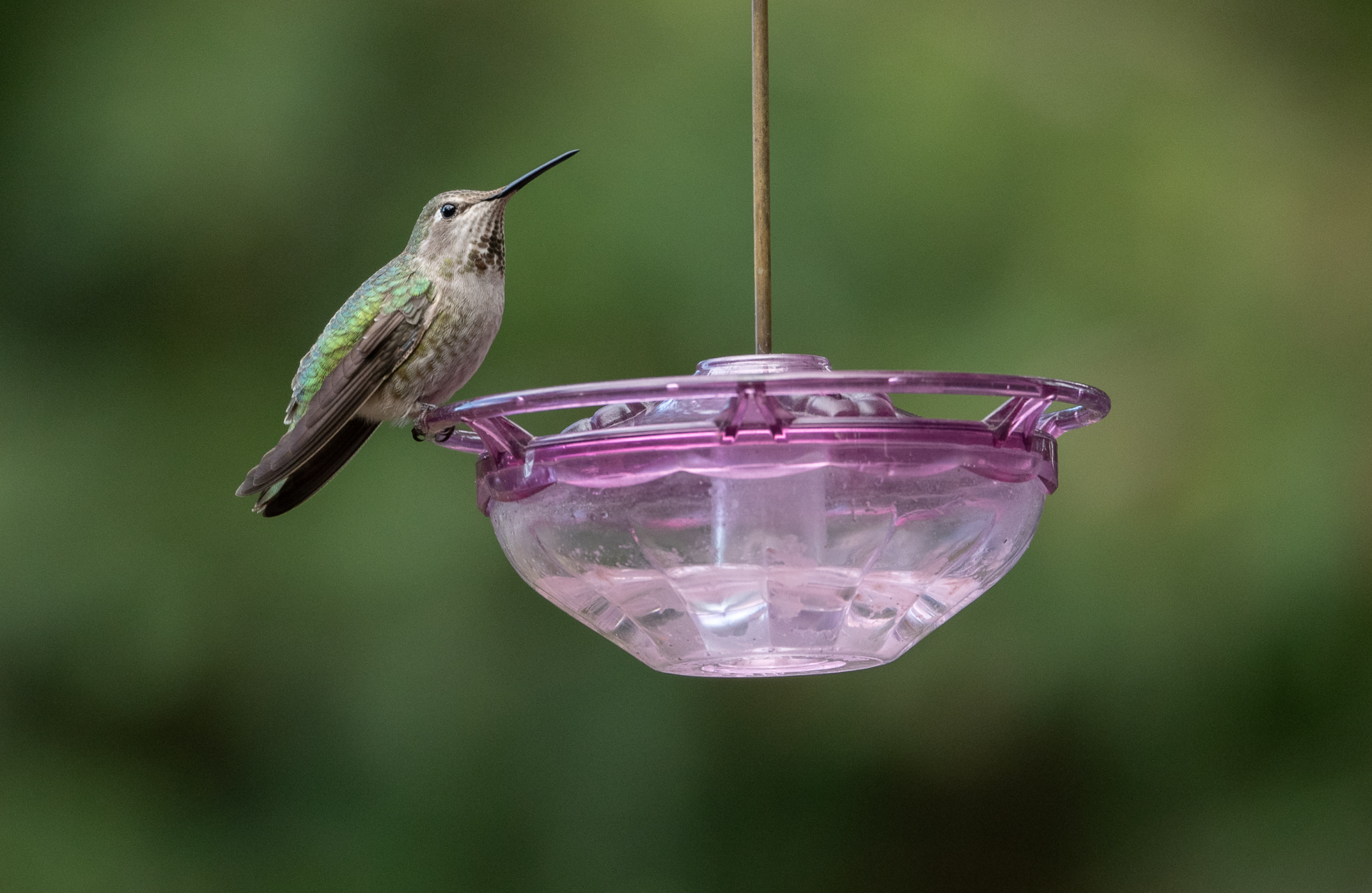
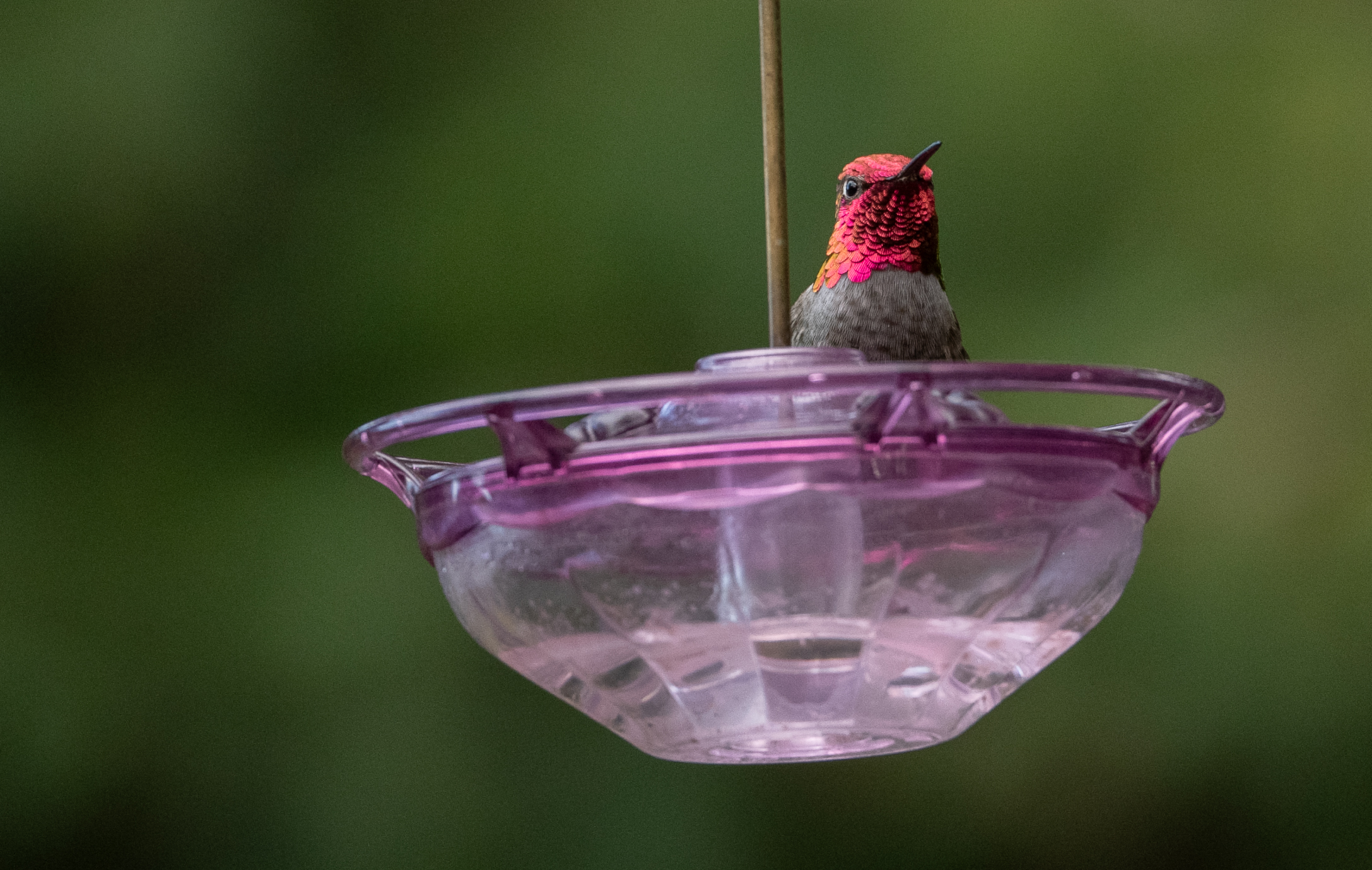
and male Anna’s hummingbirds at a feeder. They are year-round residents of the area.
About 20 minutes later I had another sighting. This time a male Rufous hummingbird came to a feeder that was only about five feet from me, too close for photos. When I made a slight movement with my camera it quickly left the yard.
I had to wait much longer for a third visit, but on this visit the hummingbird visited a feeder far enough away to provide me with an opportunity for photographs. The bird lingered on the feeder for a considerable time, but never gave me a good opportunity for photographs that didn’t include the feeder. As is true for all birding photography, I had to take the opportunity that was given to me.
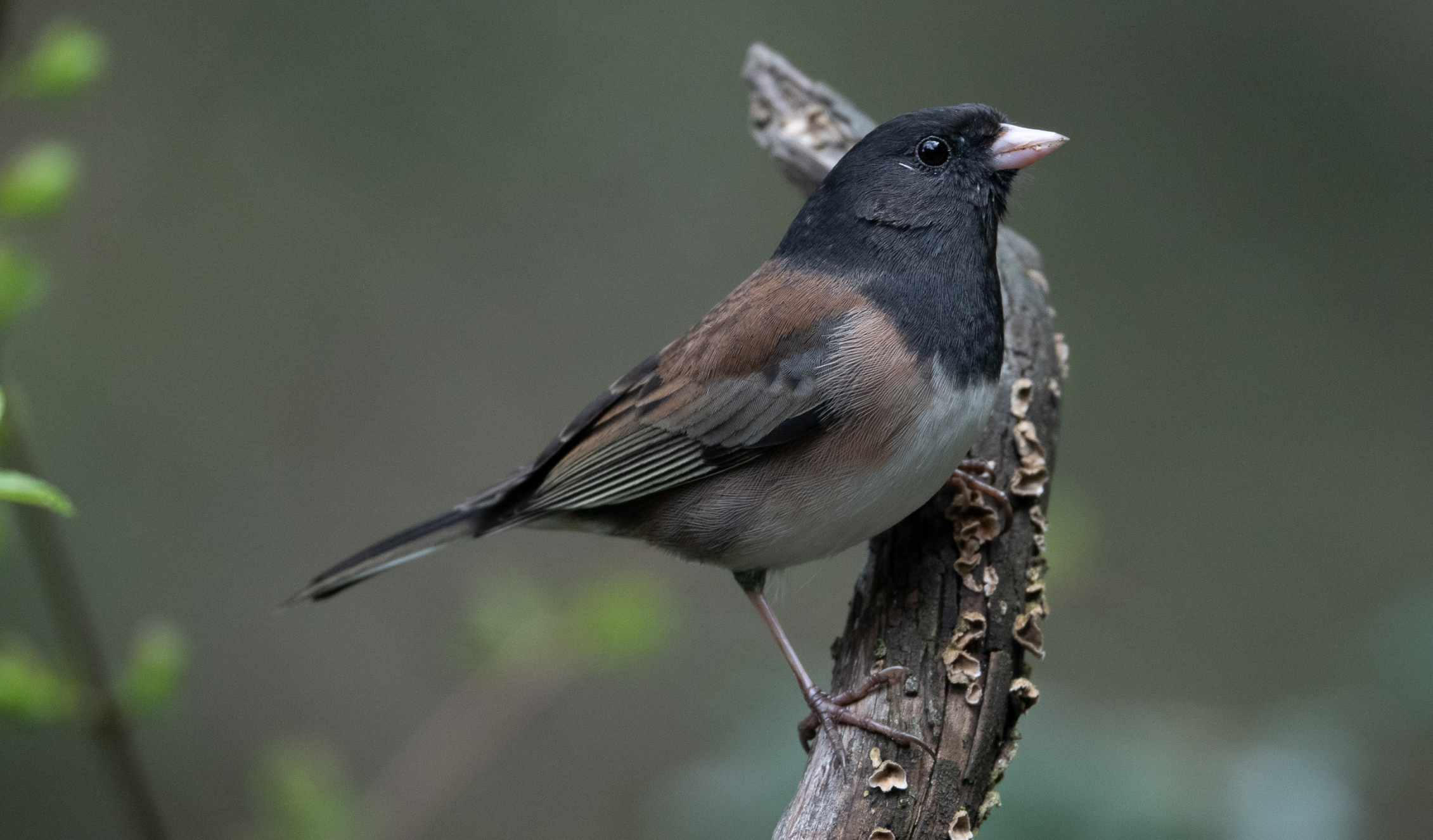
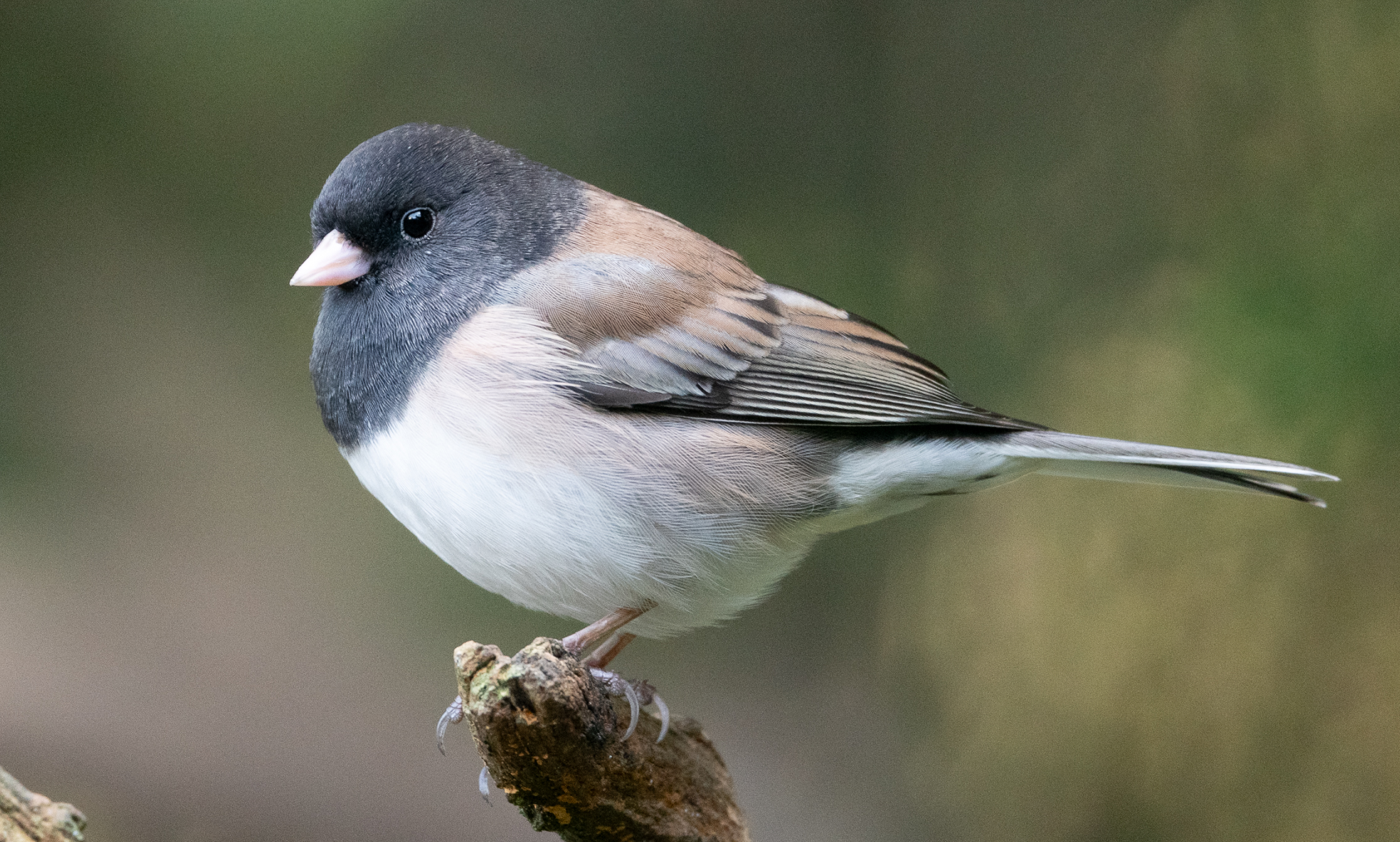
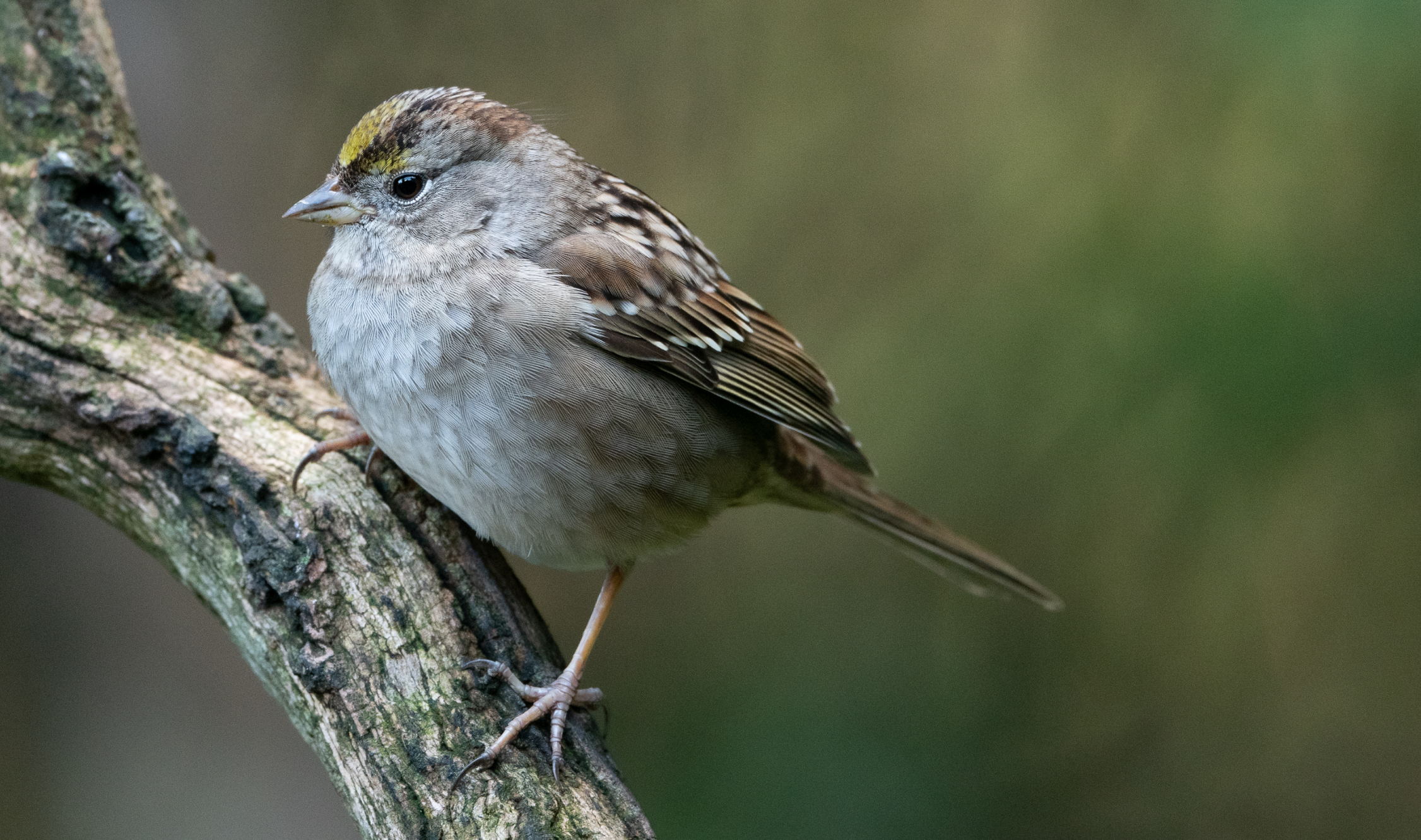
As I’m welcoming spring visitors I’ll be bidding farewell to two populous species of winter visitors… Dark-eyed (Oregon) juncos (of which I often have more than ten in the yard at a time) and Golden-crowned sparrows which can approach the same number. Both of these species will be departing for their breeding seasons… the juncos generally to higher ground and the Golden-crowned sparrows north to British Columbia and Alaska.