After having a stellar yard birding day the previous day, on Sunday, August 3, 2025, I was looking forward to the possibility of another such day. Again, the temperature was in the low 60’s and the day was overcast.
I arrived in the yard a little after noon and was occupied with some other task when I looked up to see a Black-headed grosbeak prominently perched on one of my staging sticks. I wasn’t fully prepared for photography and the bird flew before I could get a photo.
A juvenile Brown-headed cowbird accessed the stone bird bath feature but was too far away for a good photo. It seemed rather late for the juvenile cowbird. I hadn’t seen any in a couple of weeks.
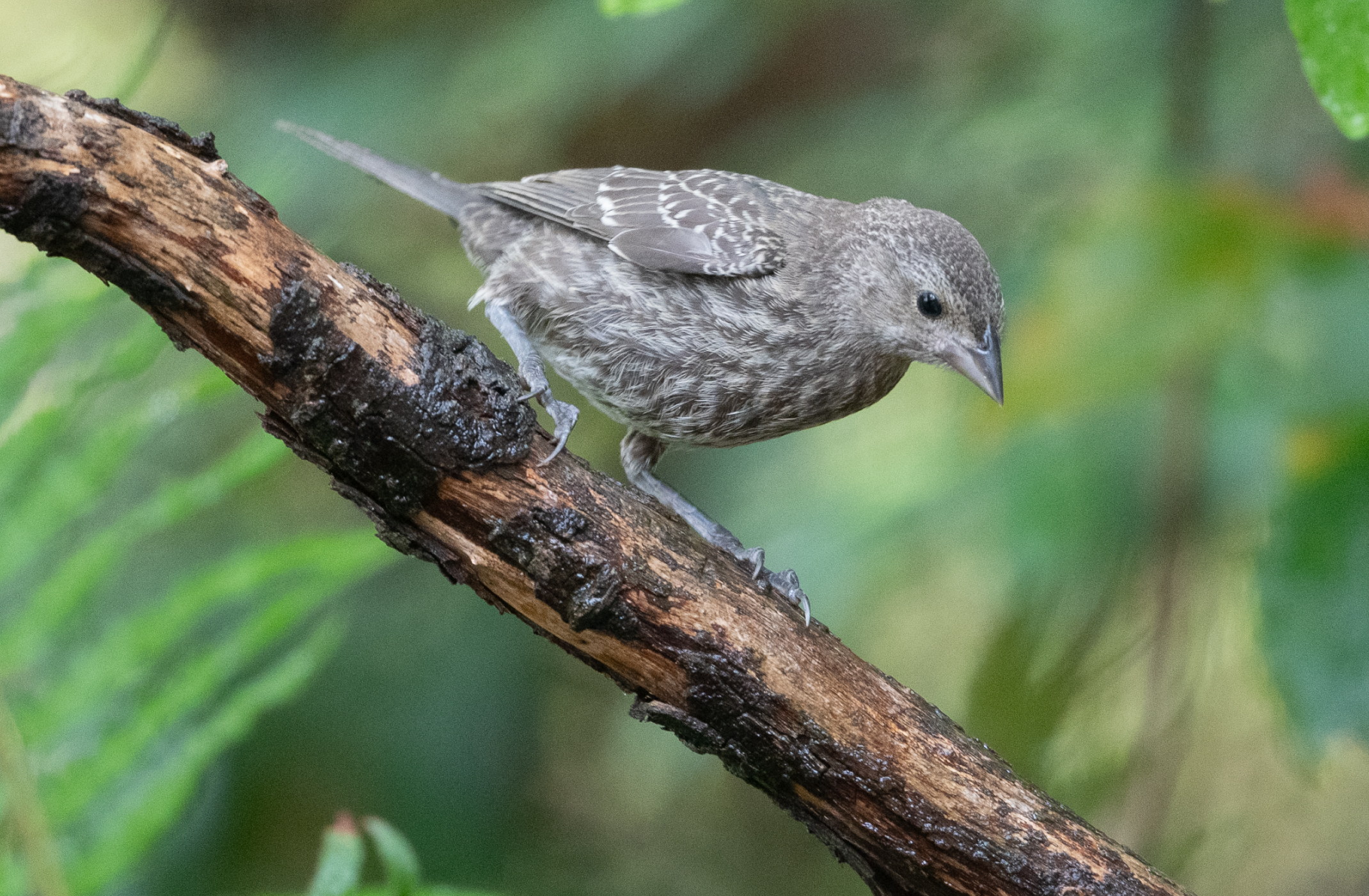
I noticed another bird at the stone birdbath and thought at first it was a juvenile sparrow, but looking through my telephoto lens I could see that it was a thrush… I was hopeful that it was a rarer thrush, but after seeing my photos I decided it was an unusually shy American robin.
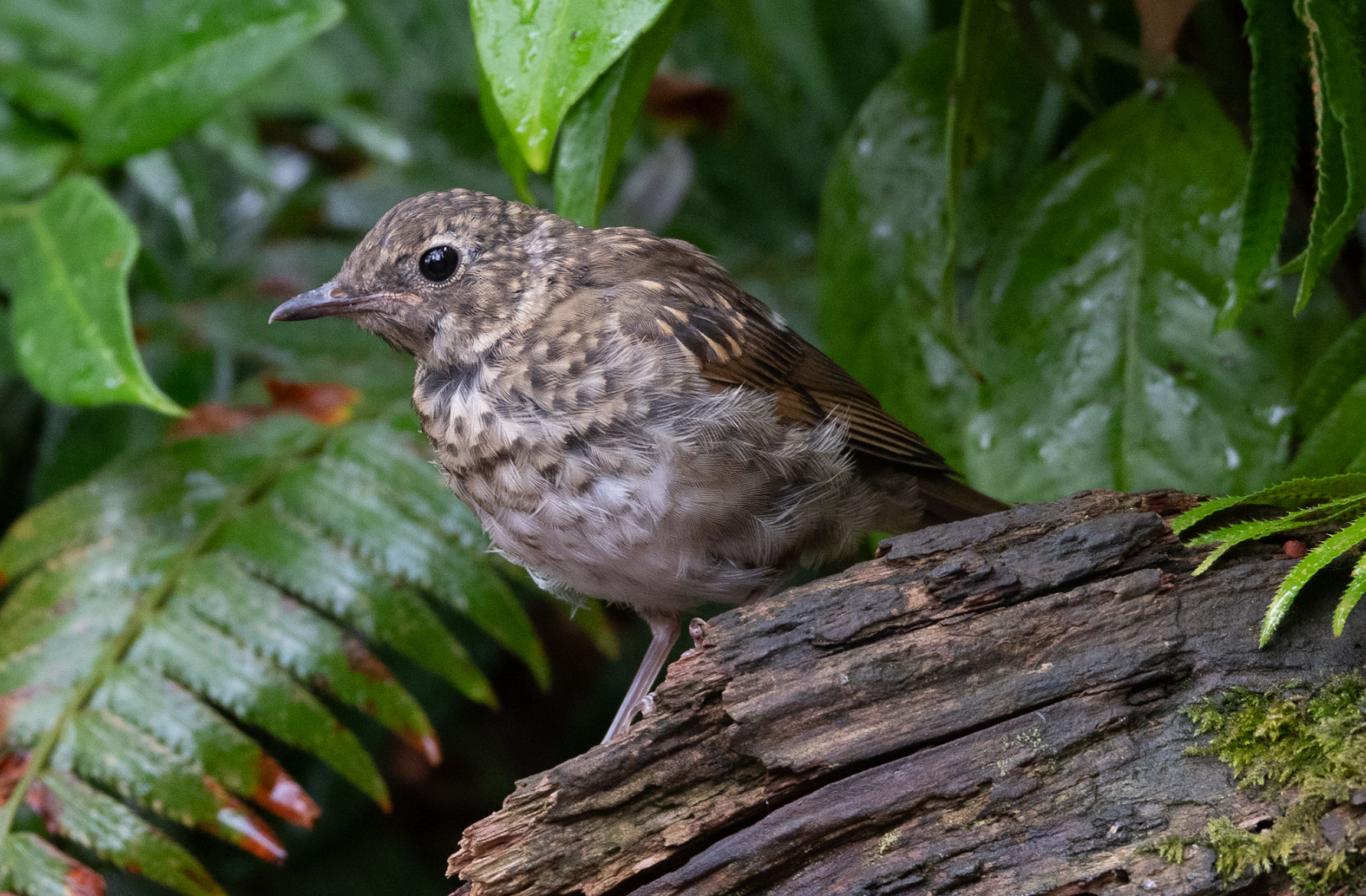
Next I was surprised by a Townsend’s chipmunk which popped up on the opposite side of the watercourse and stood on its hind legs long enough for me to get good photos. Other than the leucistic chipmunk I had seen in the yard the previous day, this was the first chipmunk I’ve seen in the yard this year.
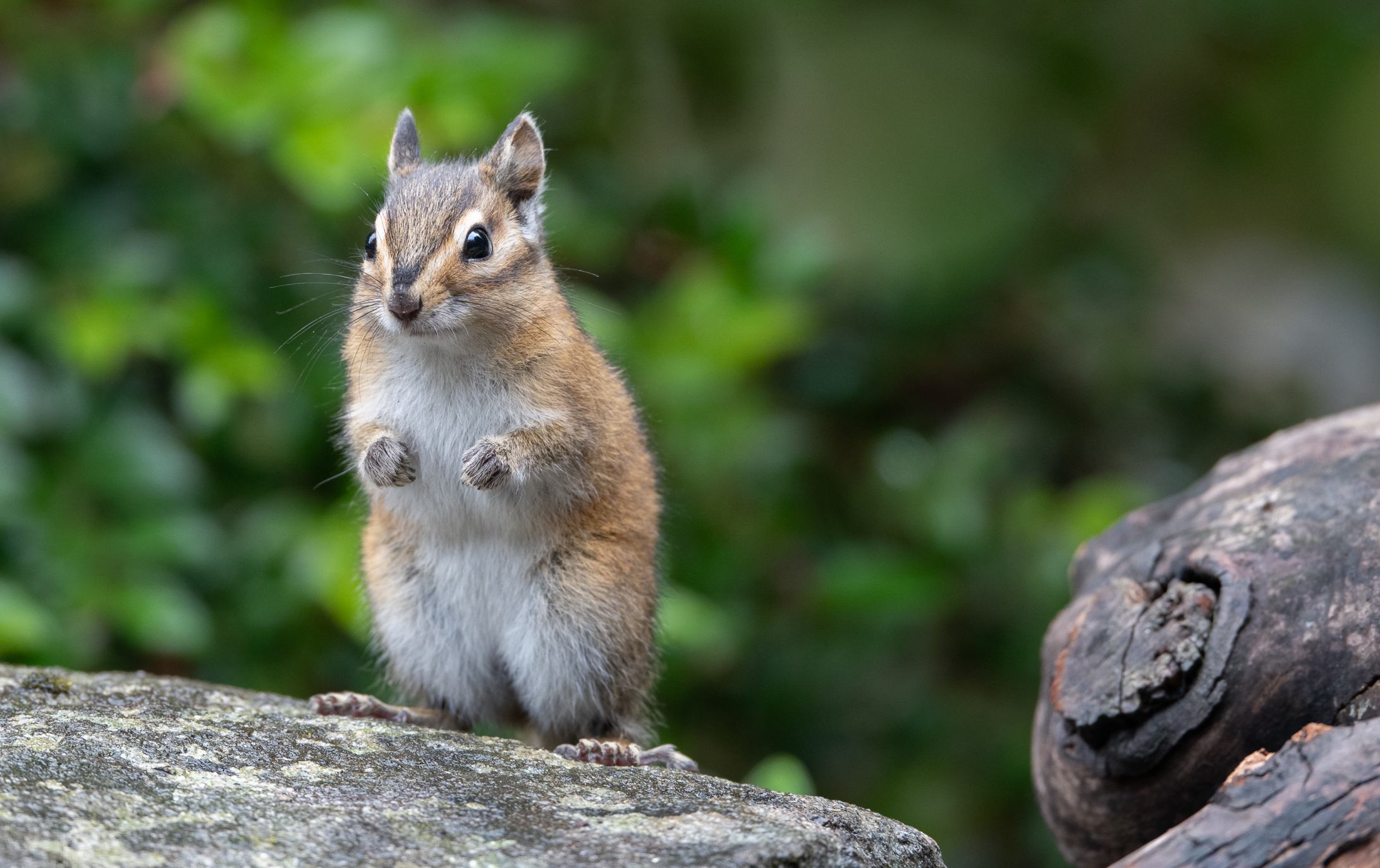
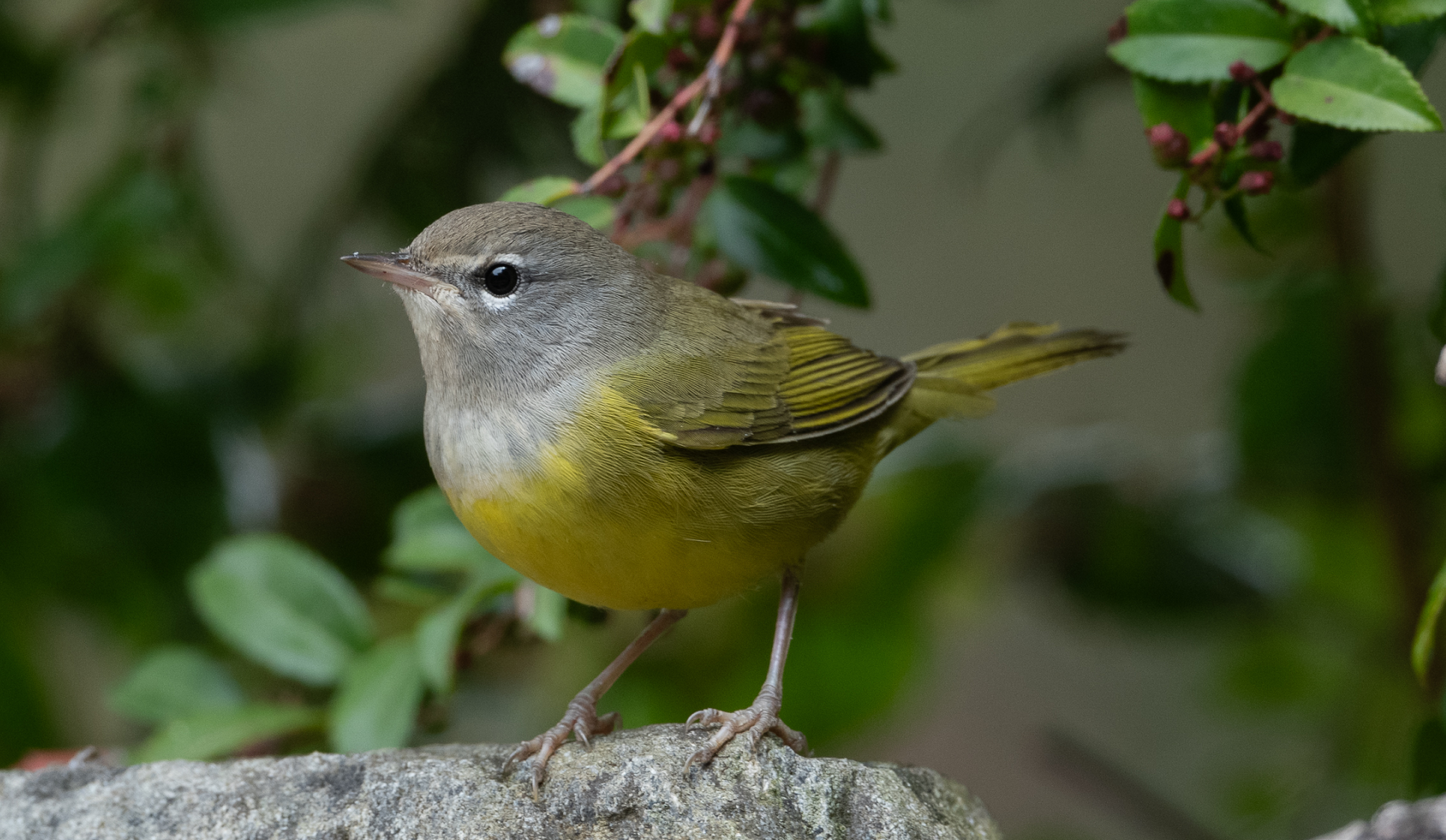
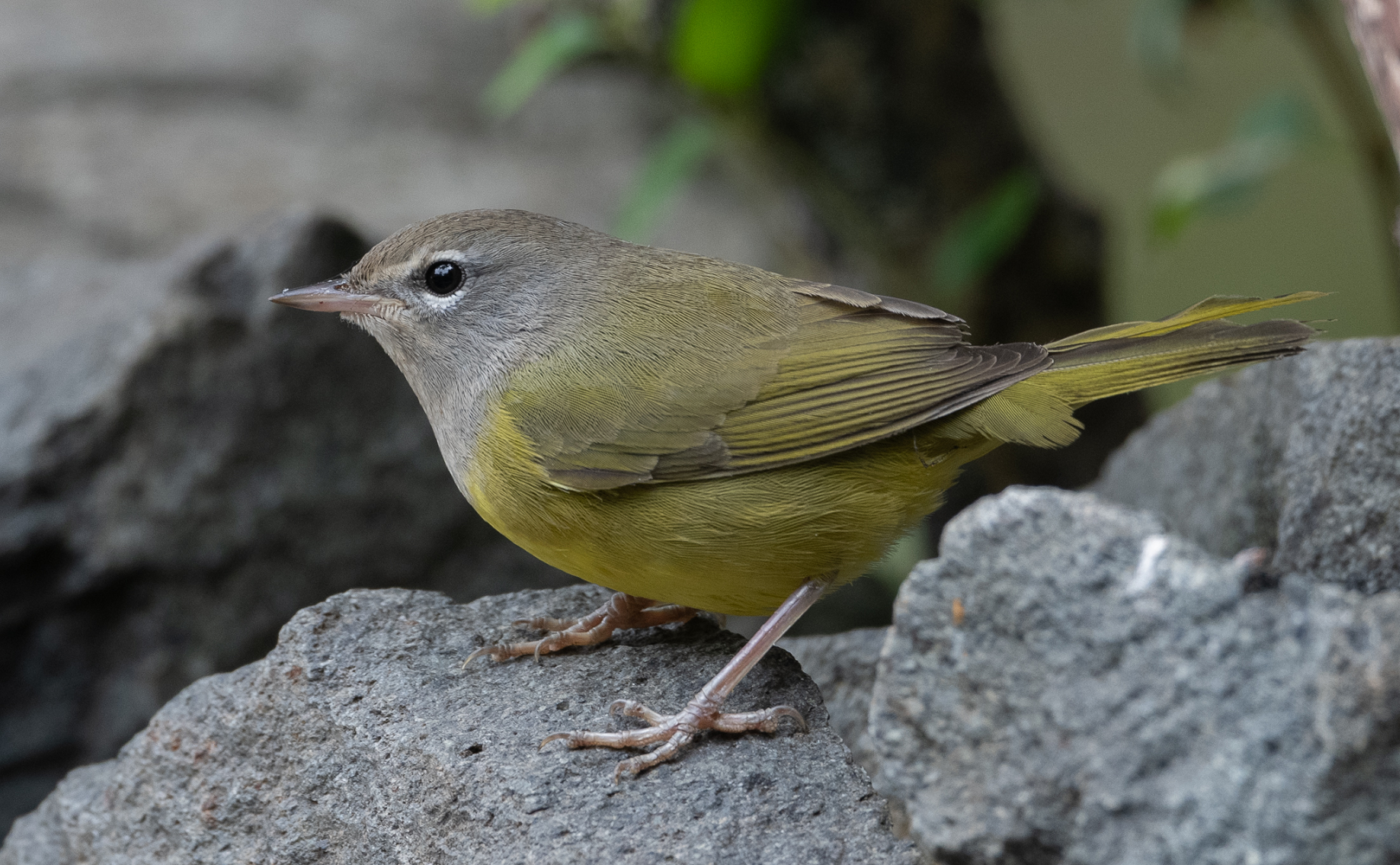
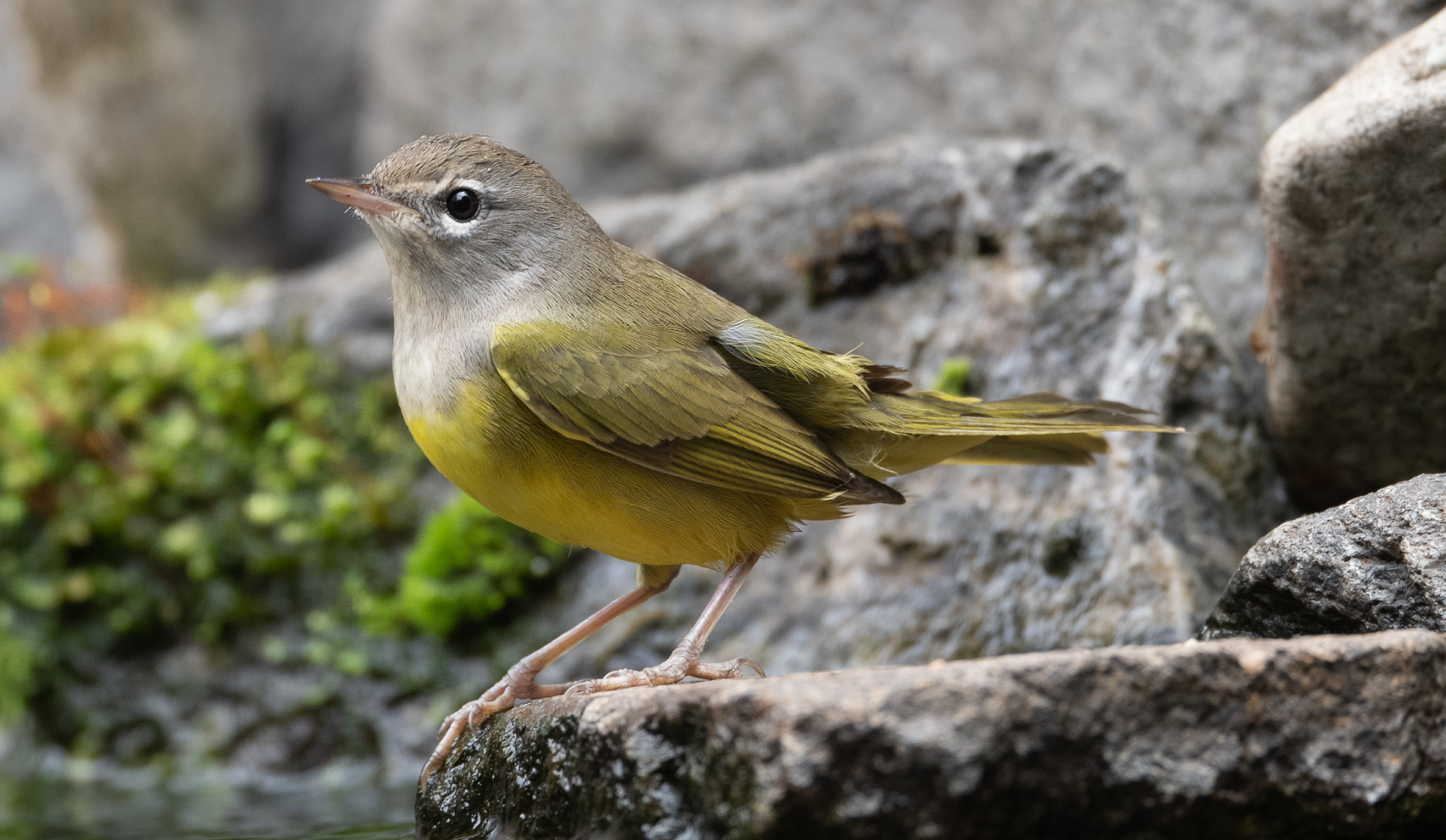
As I sat surveying the yard I was surprised to see a bird emerge from under the evergreen huckleberry tree immediately adjacent to the watercourse. My first impression, due to the prominent white eye rings, was that the bird was a vireo. (Birders may have a difficult time understanding this, but my primary objective is insuring that I get one or more good photographs… I’ll identify the bird later!). The bird was hesitant in approaching the watercourse, which gave me numerous opportunities for photographs.
As I realized I had numerous good photographs I began to look at the bird with the objective of identifying it. The split eye rings and contrast between the head and body jogged an old memory… the bird was a juvenile MacGillivray’s warbler, perhaps the second rarest warbler I’ve had in the yard and one for which I may lack any good photos.
To a great extent the eruption of Pine siskins I had in late spring and early summer are gone, with the species now a somewhat rarity in the yard.
I was fortunate to host an influx of Red crossbills for most of the summer, but now have not seen one in the past two days despite significant observation time. Most of the crossbills were juveniles and lacked the color of adults, and most of the adults were more drab than I had seen in the past.